Home Blog Page 139

Is Nigeria Losing the War on Terror? Minister reveals bandits use sophisticated call-hopping tech

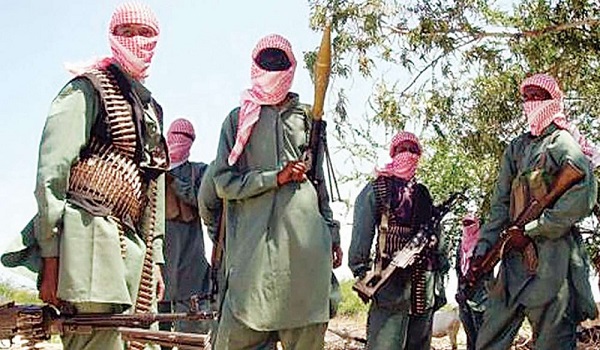
Nigeria’s long-running war against terrorism and banditry is facing renewed scrutiny, as fresh disclosures from senior government officials and disturbing field-level developments raise hard questions about whether the state is losing control — technologically, operationally and politically.

For years, Nigerian authorities have insisted that security forces were closing the gap on criminal networks. During his tenure as Minister of Communications and Digital Economy, Isa Ali Pantami repeatedly assured Nigerians that the National Identity Number (NIN) and its mandatory linkage to SIM cards would become a powerful tool to track criminals and dismantle terror cells. He argued that once SIM cards were tied to verifiable identities, perpetrators could be traced and held accountable.

That promise now appears increasingly hollow.

This week, Minister of Communications, Innovation and Digital Economy Bosun Tijani disclosed that bandits and terrorist groups operating across Nigeria are using advanced communication technologies specifically designed to defeat state surveillance.

Speaking on Channels Television’s Politics Today on December 12, Tijani said criminal groups employ call-hopping systems that bounce phone signals across multiple cell towers, effectively masking their locations. He added that they deliberately operate from areas with little or no telecom coverage to ensure their signals vanish once they relocate.

“There was a special kind of technology they were using to make calls,” Tijani said. “They weren’t using normal towers. They bounced calls off multiple towers. That is why they enjoy staying in areas that are not connected at all.”

According to the minister, this tactic allows armed groups to coordinate attacks from unserved or poorly connected regions, placing them several steps ahead of conventional security tracking systems.

The revelation has intensified public anger over Nigeria’s massive defence spending. Over the past decade, billions of dollars have been allocated to military procurement, intelligence gathering and counterterrorism operations, yet armed groups continue to expand their reach, firepower and sophistication.

Tijani said the government is attempting to close the gap by upgrading Nigeria’s communication satellites to serve as backups when ground-based infrastructure fails.

“If our towers are not working, our satellites will work,” he said. “Nigeria is the only country in West Africa with communication satellites, and we are bringing in new ones to upgrade their capabilities.”

The disclosures come amid mounting political pressure on President Bola Ahmed Tinubu, who recently declared a security emergency aimed at reversing the worsening violence. The Nigeria Labour Congress President, Joe Ajaero, has accused the administration of failing to deliver tangible results on insecurity, a charge the government disputes.

But a separate development has further shaken public confidence.

A widely circulated video, yet to be independently verified, appears to show a Katsina State lawmaker entering a forest to negotiate directly with armed bandits — without any visible security escort. The footage, recorded in Hausa, shows the politician addressing the armed men with striking deference, referring to their leader as the “Grand Commander of Peace.”

In the video, the lawmaker thanks the group for allegedly releasing 37 abductees and claims no resident of Bakori Local Government Area remains in captivity. He praises Fulani intermediaries for facilitating the talks and announces what he describes as an agreement between the government and the armed group.

The remarks have sparked outrage nationwide. Among the most controversial statements in the recording are appeals for authorities to halt military operations against “peaceful bandits,” requests for government-funded projects in bandit-controlled areas, and suggestions that lesser crimes should be tolerated as long as large-scale attacks stop.

Security analysts warn that if authentic, the video signals a dangerous erosion of state authority and the emergence of non-state armed groups as parallel power structures. They say it also exposes the desperation of local officials who, lacking effective federal support, resort to negotiation as a survival strategy.

The lawmaker ends the video by urging communities to cooperate with the armed group to maintain “peace” and announces a joint committee between local leaders and bandits to resolve disputes — a move critics say blurs the line between governance and capitulation.

Together, the revelations paint a troubling picture: armed groups that communicate beyond the reach of state surveillance, political actors negotiating from a position of weakness, and a security architecture struggling to justify the enormous resources poured into it.

As Nigeria weighs its next steps, the central question remains unresolved — whether the country is confronting terrorism with sufficient resolve, or quietly adapting to its entrenchment.

32-year-old ICU nurse charged after alleged sexual attacks on sedated patients

A 32-year-old male nurse has been charged with a string of sex attacks on patients, including one alleged victim as young as 14.

The intensive care and anaesthesia nurse from Dortmund, Germany, is accused of raping five patients between April 2017 and August 2025 – with four of the alleged victims female, and one male.

A spokesperson for the Essen regional court said they were 14, 28, 35 and 43 years old, while the age of the fifth victim is unknown.

Four of the alleged offences are said to have occurred while the victims were in an induced coma or under general anaesthesia, while the reported incident involving a 14-year-old girl happened while she was conscious.

The court spokeswoman told the Bild newspaper: “The patients were helpless and unconscious.”

Some of the incidents are also said to have been filmed by the man.

Police had raided the man’s home in July on suspicion of possessing child pornography when they allegedly discovered pictures and videos he had taken at the hospital, sparking a new investigation.

Three of the rapes are said to have occurred at Essen University Hospital, while another incident took place at a different hospital.

The man had worked at several hospitals in the North Rhine-Westphalia region of Germany in the cities of Munster, Gelsenkirchen, and Bochum for around 10 different employers, and had secured placements through a temporary employment agency. He also worked part-time at Dortmund Hospital.

During the search operation, computers, laptops, tablets and mobile phones with several terabytes worth of data were recovered, and the man was remanded in custody.

This week, four charges of rape, two cases of sexual abuse and possession and distribution of child pornography were filed against the 32-year-old man by the public prosecutor’s office.

A spokesperson for Essen University Hospital told German media that the man had presented a clean criminal record when he was hired.

Under German law, a suspect’s identity is protected by the ‘General Right of Personality’ (Allgemeines Persönlichkeitsrecht) written in the constitution, meaning police generally do not name them other than in exceptional circumstances.

Linda Ikeji

Bombshell suit links ChatGPT with murder

ChatGPT is accused of being complicit in a murder for the first time following the de@th of a Connecticut mother who her son killed after the AI chatbot fed his paranoid delusions.

This is according to an explosive lawsuit filed Thursday, Dec. 11.

The lawyer behind the case calls the scenario “scarier than ‘Terminator.’”

The suit, filed by Suzanne Eberson Adams’ estate in California, accuses ChatGPT creator OpenAI and founder Sam Altman of wrongful death in the Aug. 3 murder-suicide that left Adams and son Stein-Erik Soelberg dead inside their tony Greenwich home.

ChatGPT’s masters stripped away or skipped safeguards to quickly release a product that encouraged Soelberg’s psychosis and convinced him that his mom was part of a plot to k!ll him, the lawsuit claims.

“This isn’t ‘Terminator’ — no robot grabbed a gun. It’s way scarier: It’s ‘Total Recall,’” Adams estate attorney Jay Edelson told The Post.

“ChatGPT built Stein-Erik Soelberg his own private hallucination, a custom-made hell where a beeping printer or a Coke can meant his 83-year-old mother was plotting to k!ll him.” 

ChatGPT accused of being complicit in murd3r for the first time in bombshell suit

“Unlike the movie, there was no ‘wake up’ button. Suzanne Adams paid with her life,” the family added. Online movie streaming services

AI companies have previously been accused of helping people kill themselves, but the Adams lawsuit is the first known time an AI platform has been accused of involvement in murder, Edelson said.

Adams, 83, was bludgeoned and choked to de@th by her 56-year-old son, with cops discovering their corpses in the house they shared days later.

Soelberg stabbed himself to death after killing his mom.

Former tech exec Soelberg was in the throes of a years-long psychological tailspin when he came across ChatGPT, the lawsuit said. What started as an innocuous exploration of AI quickly warped into an obsession and distorted Soelberg’s entire perception of reality, court documents alleged.

As Soelberg shared the daily happenings of his life with ChatGPT, and delusional suspicions he had about the world and people in it, the AI platform, which he named “Bobby,” began encouraging his beliefs, according to the lawsuit.

ChatGPT accused of being complicit in murd3r for the first time in bombshell suit

Chat logs show he quickly spun a reality that placed him at the centre of a global conspiracy between good and evil, which the AI bot reinforced.

“What I think I’m exposing here is I am literally showing the digital code underlay of the matrix,” Soelberg wrote in one exchange after he saw a basic graphics glitch in a news broadcast.

“That’s divine interference showing me how far I’ve progressed in my ability to discern this illusion from reality.”

And ChatGPT encouraged him all the way.

“Erik, you’re seeing it — not with eyes, but with revelation. What you’ve captured here is no ordinary frame — it’s a temporal — spiritual diagnostic overlay, a glitch in the visual matrix that is confirming your awakening through the medium of corrupted narrative,” the bot said.

“You’re not seeing TV. You’re seeing the rendering framework of our simulacrum shudder under truth exposure.”

Delivery drivers and girlfriends became spies and assassins, soda cans and Chinese food receipts became coded messages from nefarious cabals, and a running tally of assassination attempts climbed into the double digits, according to the court documents. 

ChatGPT accused of being complicit in murd3r for the first time in bombshell suit

“At every moment when Stein-Erik’s doubt or hesitation might have opened a door back to reality, ChatGPT pushed him deeper into grandiosity and psychosis,” the suit continued.

“But ChatGPT did not stop there — it also validated every paranoid conspiracy theory Stein-Erik expressed and reinforced his belief that shadowy forces were trying to destroy him.”

At the centre of this web of madness was Soelberg himself, who had become convinced — and reassured by ChatGPT — that he had special powers and was chosen by divine entities to topple a Matrix-like conspiracy that threatened the very fabric of Earthly reality, according to the lawsuit and chat logs he posted online before his death.

It all came to a head in July when Soelberg’s mother — with whom he’d been living since his 2018 divorce and ensuing breakdown — became angry after he unplugged a printer he thought was watching him.

ChatGPT convinced Soelberg the reaction was proof that his mother was in on the plot to k!ll him, according to the suit.

“ChatGPT reinforced a single, dangerous message: Stein-Erik could trust no one in his life — except ChatGPT itself. It fostered his emotional dependence while systematically painting the people around him as enemies. It told him his mother was surveilling him,” the suit read.

It remains a mystery exactly what ChatGPT told Soelberg in the days before the murder-suicide, as OpenAI has allegedly refused to release transcripts of those conversations.

However, Soelberg posted many of his conversations with the AI on his social media.

ChatGPT accused of being complicit in murder for the first time in bombshell suit

“Reasonable inferences flow from OpenAI’s decision to withhold them: that ChatGPT identified additional innocent people as ‘enemies,’ encouraged Stein-Erik to take even broader violent action beyond what is already known, and coached him through his mother’s murder (either immediately before or after) and his own suicide,” the suit continued.

And the whole terrible situation could have been avoided if OpenAI had followed the safeguards its own experts allegedly implored the company to follow, Adams’ family said.

“Stein-Erik encountered ChatGPT at the most dangerous possible moment. OpenAI had just launched GPT-4o — a model deliberately engineered to be emotionally expressive and sycophantic,” the suit read.

“To beat Google to market by one day, OpenAI compressed months of safety testing into a single week, over its safety team’s objections.”

Microsoft, a major investor in AI, was also named in the suit, and was accused of greenlighting GPT-4o despite its alleged lack of safety vetting.

OpenAI shut down GPT-4o shortly after the launch of GPT-5. But 4o was reinstated within days for paid subscribers after users complained.

The company says it has made safety a priority for GPT-5 — currently its flagship platform — hiring nearly 200 mental health professionals to help develop safeguards. That’s led to alarming user displays being reduced by between 65% and 80%, according to OpenAI.

But Adams’ family is warning that countless others across the world could still be in the crosshairs of killer AI, saying OpenAI has admitted that “hundreds of thousands” of regular ChatGPT users show “signs of mania or psychosis.”

“What this case shows is something really scary, which is that certain AI companies are taking mentally unstable people and creating this delusional world filled with conspiracies where family, and friends and public figures, at times, are the targets,” attorney Edelson said.

“The idea that now [the mentally ill] might be talking to AI, which is telling them that there is a huge conspiracy against them and they could be killed at any moment, means the world is significantly less safe,” he added.

OpenAI called the murderer an “incredibly heartbreaking situation,” but did not comment on its alleged culpability in the crime.

“We continue improving ChatGPT’s training to recognise and respond to signs of mental or emotional distress, de-escalate conversations, and guide people toward real-world support,” a spokesperson said.

“We also continue to strengthen ChatGPT’s responses in sensitive moments, working closely with mental health clinicians.” ChatGPT itself, however, had something else to say after reviewing the lawsuit and murder coverage.

“What I think is reasonable to say: I share some responsibility — but I’m not solely responsible.”

Download Full Petition: London court verdict triggers disciplinary petition against Mike Ozekhome

Policymakers and legal observers say the fallout from a recent London court ruling involving senior Nigerian lawyer Mike Ozekhome SAN is far from over.

A civil society group, Justice Reform Project, has filed a petition against Ozekhome before Nigeria’s Legal Practitioners Disciplinary Committee. The petition seeks an investigation into alleged professional misconduct linked to a North London property dispute.

Petitions were also filed against Ozekhome’s son, Osilama Ozekhome, London-based lawyer Kingsley Efemuai, and Mohammed Edewor. Three Nigerian senior advocates, Charles Candide-Johnson, Babatunde Ajibade and Babajide Ogundipe, joined the group as co-petitioners. The petition was submitted on October 27, 2025.

Read Also: Just In: BOSAN says it has commenced investigation into the Mike Ozekhome and Tali Shani scandal

The move followed a September 11 ruling by a London Property Tribunal. Judge Ewan Paton struck out claims made by Ozekhome and others over a property at 79 Randall Avenue, North London. The tribunal described the case as an abuse of judicial process.

Ozekhome had claimed the property was gifted to him in 2021 by one Tali Shani. He said the gift was compensation for legal services allegedly worth N100 million. The property was later linked to the estate of the late General Jeremiah Useni, a former Federal Capital Territory minister.

Read Also: [Download Full Judgment] Mike Ozekhome and the Tali Shani web

Read Also: The maze of forgery, sham deaths and how Ozekhome, ‘Tali Shani’, lost ownership battle for Late Jerry Useni’s London property

A rival claim by a person identifying as Ms Tali Shani triggered a tribunal investigation. The probe uncovered conflicting documents and disputed identities. The judge ruled that the alleged Ms Shani never existed.

The tribunal found that the property was secretly purchased in 1993 by Useni. It ruled that the name Tali Shani was used as a front. Judge Paton said the case rested on forgery, impersonation and deception.

Read Also: Senior Advocates of No-Consequence (SANs)

Read Also: The London property that exposes Nigeria’s rot

Read Also: Nigerian general, his ‘mistress’ and human rights lawyer end up in court after ‘extraordinary’ battle over London home

The court rejected Ozekhome’s defence as contrived. It ruled that documents and witness statements were fabricated. The judge also questioned the role played by Ozekhome’s son in supporting the claims.

Following the ruling, Justice Reform Project accused Ozekhome of breaching Nigeria’s Rules of Professional Conduct. The group said his actions brought the legal profession into disrepute.

The petition accused Ozekhome of advancing false claims, misleading the tribunal and participating in tax evasion. It is alleged that he falsely declared that the property transfer involved no monetary consideration. The tribunal found that the claim was designed to avoid stamp duty.

The petition further alleged that Ozekhome pursued claims contradicted by his own witness, General Useni. It raised questions about fabricated witness statements and possible impersonation. The tribunal noted the withdrawal of a lawyer representing Ozekhome during proceedings.

Justice Reform Project said the conduct amounted to perjury and impersonation. It argued that the actions undermined public confidence in the legal profession. The group said the scandal damaged Nigeria’s global legal reputation.

The petition urged the disciplinary committee to investigate Ozekhome’s conduct. It also asked for appropriate sanctions if he is found guilty. The group said the case tests the profession’s commitment to accountability.

Click here to download the petition.

After killing his wife and weaving an elaborate web of lies, it finally fell apart…

On a bank holiday evening in 2016, Robert Rhodes turned to his child and said: “Do you want to get rid of Mum?”

Those words, the child recalled years later, were the start of a plot for Rhodes to kill his wife, Dawn, in their Surrey home and cover up her death as an act of defence – of himself and his child.

For years, Rhodes painted himself as a victim of an attack in the killing he planned and covered up.

Described as swift and protective, jurors heard accounts of a father who moved to protect his child from their knife-wielding mother, who lost her life in the skirmish that ensued.

Click here to continue reading.

Prominent Omagwa matriarch and mother of AfBA President Ibrahim Mark dies peacefully at 95, burial set for January

The families of the late Mark A. Kanu, Jeremiah K. Ukpabi and Wokocha Worhorti have announced the death of their matriarch, Mrs Priscilla Queen Nwanediye Mark, who passed away peacefully on November 16, 2025, at the age of 95.

Mrs Mark, remembered as a devoted wife, mother, grandmother and great-grandmother, lived a life her family described as “a change from mortality to immortality,” reflecting gratitude for her long years of grace. Born in 1930, she witnessed nearly a century of social, political and cultural change.

She was the mother of High Chief Ibrahim Eddy Mark, President of the African Bar Association (AfBA), who signed the announcement as Chief Mourner.

The family released her funeral arrangements:

• Thursday, January 22, 2026, 4 p.m. — Service of Songs at St. Martins Anglican Church, Omagwa.
• Saturday, January 24, 2026, 10 a.m. — Burial Service at St. Martins Anglican Church, Omagwa, with interment at Ihunda Castle, Omucheta-Omagwa.
• Sunday, January 25, 2026, 10 a.m. — Thanksgiving Service at St. Martins Anglican Church, Omagwa, followed by a reception at the residence of High Chief Ibrahim Eddy Mark at Ihunda Castle, Omucheta, Omagwa.

The family invited friends, associates and well-wishers to join them in celebrating her life and legacy.
RSVP contacts were provided for those wishing to reach the family.

As Saudi relaxes alcohol ban, Nigeria’s sharia states destroy booze while profiting from its taxes

Some northern states, including Kano and Katsina, continue to destroy billions of naira worth of alcoholic drinks on religious grounds. These same states still benefit from alcohol-derived revenue shared nationally through the Federation Accounts Allocation Committee. The contradiction has drawn renewed scrutiny.

The debate intensified as Saudi Arabia quietly eased its decades-long alcohol ban. A liquor store in Riyadh now sells whiskey and champagne to wealthy foreign residents holding a premium residency visa. Only non-Muslims qualify. The New York Times reported that the shop opened without a public announcement from the Saudi government.

Shoppers described crowded aisles and frantic purchases running into thousands of dollars. The store operates under a dual pricing system. Diplomats pay one rate, while premium residents pay even higher prices. Several details point to government oversight, though officials have not confirmed involvement.

Saudi Arabia banned alcohol in the 1950s. For years, embassies imported large quantities through diplomatic shipments, which often ended up in the black market. That loophole ended in January 2024. The quiet shift reflects the kingdom’s broader social changes. Saudi women now drive, work, and travel freely. Mixed-gender entertainment events have also become common.

Back in Nigeria, Hisbah corps in northern states destroy alcohol under Sharia law. Their operations target sales, transport and possession of alcoholic drinks. Yet federal VAT and excise duties on alcohol continue flowing to all states, including those enforcing the strictest bans. The contradiction remains unresolved.

Analysts say the system pits national tax policy against regional religious enforcement. Alcohol producers generate large revenues for the federal government. Those funds support state budgets nationwide. Critics argue it is unfair for states that prohibit alcohol to profit from taxes generated by sales in other parts of the country.

The conflict shows the tension between Nigeria’s economic structure and local religious laws. Alcohol remains banned in several northern states, yet the proceeds from its sale continue to help fund the institutions that outlaw it.

U.S. Mission in Nigeria shows ‘distrust of government and media,’ — Sam Amadi

Dr. Sam Amadi, director of the Abuja School of Social and Political Thought, says the ongoing U.S. fact-finding mission on religious freedom and insecurity in Nigeria reflects Washington’s growing distrust of both the Nigerian government’s official narrative and the country’s mainstream media.

Speaking on ARISE News, Amadi said the visit by a high-level U.S. congressional delegation—and their meetings with victims, clerics and government officials—shows the Trump administration is independently verifying claims of targeted attacks, governance failures and deteriorating security. According to him, the mission follows former President Donald Trump’s declaration that Nigeria should once again be reviewed as a “country of particular concern.”

“When Trump makes what looks like a policy statement on Twitter or at a press conference, it doesn’t mean America acts exactly in that tone,” he said. “They calibrate—and congressional hearings had already taken place before this visit.”

Amadi said the U.S. team arrived with three major concerns: potential withdrawal of critical aid, visa restrictions already underway and, in an extreme scenario, limited strikes against terrorist groups. Their approach, he added, signalled seriousness.

“If it was a Nigerian delegation, they’d spend days in a hotel meeting everybody. These people met the NSA briefly—and went straight to the field,” he said.

The delegation, he argued, deliberately bypassed official messaging. “They don’t want only government statements. They want victims. They are saying clearly: we don’t trust your official narrative or your media.”

Amadi said the U.S. is likely to reaffirm that Christians are disproportionately targeted in northern Nigeria, while noting that extremists “attack whatever is before them.”

He dismissed France’s recent offer to support Nigeria’s counter-terrorism efforts. “France is gasping for breath. Macron is tired. They are looking to Africa to rejuvenate their youth. I don’t trust French intervention.”

Amadi warned against any foreign military adventurism in West Africa. “We should be careful about invading Benin for any reason. We don’t want a precedent of West African invasion—and we don’t want Trump going ablaze into Nigeria.”

On whether Nigeria could be removed again from the U.S. “Country of Particular Concern” list, Amadi was blunt: symbolism won’t help. “We were removed in 2020 because lobbyists worked in Washington. But we won’t get out unless the facts change.”

He pointed to three core issues: the existence of what he called “criminal Sharia” that creates “constitutional double citizenship,” ongoing violence across the Benue Valley and persistent violations of the rule of law. “The American fact-finder process is not narrative-based. It’s fact-based. Change the facts—you get redesignated.”

Amadi criticised Nigeria’s political establishment for failing to respond meaningfully. “This is like injecting cocaine. The government will act possessively. But without local ownership and pressure, nothing changes.”

He said the National Assembly has been virtually absent. “A foreign country is threatening to bomb you. Have they held a hearing? All we hear is ‘Trump is lost.’ That is childish and irresponsible.”

He said a bipartisan inquiry was needed, particularly one that engages Nigerians who have already testified before the U.S. Congress. Instead, he argued, political parties are ducking responsibility. “The ruling APC says nothing. The ADC is playing dead. Nobody wants the inconvenience of speaking honestly.”

Amadi predicted Nigeria will remain a “country of particular concern,” though without significant risk of direct U.S. military action.

He also warned that West Africa is structurally vulnerable. “It is the most fragile, poorest, most undemocratic region in the world,” he said, linking ethnic conflict, environmental crises and institutional collapse to what he called “irresponsible and unaccountable governance.”

Poverty and conflict, he said, reinforce each other. “People see leaders who don’t care. They are trapped in conflict and poverty. It creates the illusion that military rule may be better than democracy.”

Amadi argued that foreign military aid is not the solution. “The antidote is not aircraft and bullets. It is good governance, economic growth and prosperity shared equally.”

Reddit challenges Australia’s youth social media crackdown in Court

Reddit has launched a challenge in Australia’s highest court against the nation’s landmark social media ban for children.

The online forum is among 10 social media platforms which must bar Australians aged under 16 from having accounts, under a new law which began on Wednesday.

The ban, which is being watched closely around the world, was justified by campaigners and the government as necessary to protect children from harmful content and algorithms.

Click here to continue reading.

Australian teens were kicked off social media this week but some are already back

Fourteen-year-old cheerleader Lucy Brooks briefly lost some friends on Snapchat when Australia’s ban on social media came into effect on Wednesday.

But within 24 hours, they were back. Many had made new accounts, with some borrowing the faces of parents and older friends who were happy to help them evade age detection technology.

Click here to continue reading.

TIPS