Home Blog Page 136

‘Avoidable Death’: Husband demands probe after wife dies post-delivery in Lagos

The family of Akubo Lovelyn John and the management of Gynescope Specialist Hospital in Lagos are locked in a dispute over her death hours after childbirth.

Lovelyn, who gave birth at the private facility, died in the early hours of December 4, 2025. Her family alleges medical negligence, delayed referral and mishandling during a medical emergency. The hospital strongly denies the claims.

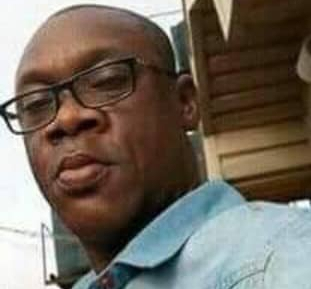
Speaking at a press briefing in Ikeja on Tuesday, her husband, Justice John, described the death as avoidable. He said the couple had been married for less than a year.

John said his wife registered for antenatal care at the hospital in her 13th week of pregnancy. He said they attended all appointments and paid N450,000 for antenatal services, excluding external tests requested by the hospital.

“All tests came back normal,” he said. “My wife had no underlying health condition before or during pregnancy.”

He said concerns were raised during the third trimester about the baby’s size. John said he suggested an elective caesarean section, but the attending consultant dismissed the option and assured them vaginal delivery was safe.

Lovelyn went into labour on December 1 and was admitted the following day. By December 3, she was moved to the labour ward and labour was induced, John said.

She delivered vaginally later that day. The baby weighed 4.2 kilograms, a size classified medically as fetal macrosomia.

John said his wife soon complained of internal fluid movement and began bleeding. He alleged that her condition deteriorated rapidly.

“She became pale and unconscious while the bleeding continued,” he said. “Five pints of blood were infused without identifying the source of the bleeding.”

John alleged there was a 15-hour gap between delivery and his wife’s death. He said the hospital delayed referring her to another facility.

He also alleged that she fell from a stretcher while being moved from the third floor during referral preparations. He demanded the release of CCTV footage from the hospital.

John called on the Medical and Dental Council of Nigeria and the Lagos State Government to investigate the incident.

Officials of the Nigerian Bar Association, Lagos Branch, also called for a probe. The NBA chairman, Uchenna Akingbade, said the association would support efforts to establish the facts.

Gynescope Specialist Hospital rejected the allegations.

Speaking by phone, Professor Jude Okohue said the hospital acted appropriately and promptly. He denied claims of delayed referral or negligence.

“It is not true that she was not referred on time,” Okohue said. “Before referral, a patient must be stabilised, and that was what we did.”

He said Lovelyn delivered successfully and was stable for hours afterward. According to him, complications developed later in the evening.

“She even ate pepper soup brought by a relative,” he said. “Then we noticed abnormal bleeding.”

Okohue said two hospital staff donated blood in an effort to save her life. He described the bleeding as unusual and unrelated directly to pregnancy.

He denied claims that she fell from a stretcher. He said she insisted on using the toilet despite being advised otherwise and was assisted by staff.

Okohue said the family requested an autopsy at Lagos State University Teaching Hospital. He welcomed a coroner’s inquest.

“We have nothing to hide,” he said. “We did not commit any infraction.”

He added that he visited the family after the incident and was surprised by the public accusations.

As investigations are awaited, the case has raised fresh concerns over maternal care, emergency response and accountability in private healthcare facilities.

Judgment Against VIO: An end to roadside lawlessness

By Sonnie Ekwowusi

The Court of Appeal sitting in Abuja has delivered a landmark judgment that strikes at the heart of one of Nigeria’s most persistent symbols of roadside oppression: the Directorate of Road Traffic Services (DRTS), popularly known as the Vehicle Inspection Office (VIO). In a unanimous decision, a three-member panel of the court affirmed the October 2, 2024, judgment of the Federal High Court, Abuja, which barred the VIO from stopping motorists on the road, impounding or confiscating vehicles, and imposing fines on citizens.

The case that produced this landmark ruling began in 2023, when a legal practitioner and public interest lawyer, Mr. Abubakar Marshall, approached the Federal High Court to challenge what he described as the unlawful seizure of his Honda car by VIO officials in the Jabi District of Abuja. Marshall contended that his vehicle was forcefully impounded on December 12, 2023, without any lawful justification or opportunity for him to be heard by a court of competent jurisdiction. He argued that the action violated his constitutional rights to freedom of movement, presumption of innocence, and fair hearing, as guaranteed by the 1999 Constitution (as amended) and the African Charter on Human and Peoples’ Rights.

In a decisive judgment delivered on October 2, 2024, Justice Nkeonye Evelyn Maha of the Federal High Court, Abuja  held that there is no law—statutory or otherwise—that empowers the VIO to stop, impound, confiscate, or seize vehicles on the road, or to impose fines on motorists. The court further found that the VIO and its officials, operating under the supervision of the Federal Capital Territory Administration, had acted outside the law. Consequently, Justice Maha granted all the reliefs sought by Marshall and issued a perpetual injunction restraining the VIO and its agents from further violating the fundamental rights of Nigerians.

Dissatisfied with the court decision, the VIO, alongside other officials and the Minister of the Federal Capital Territory, appealed the decision. That appeal has now been comprehensively dismissed.

Delivering the lead judgment of the Court of Appeal, Justice Oyejoju Oyebiola Oyewumi held unequivocally that the VIO lacks any legal authority to impound or confiscate vehicles or to impose fines on motorists. Such conduct, the court ruled, amounts to a clear breach of the rights to fair hearing, freedom of movement, and presumption of innocence. The appellate court not only affirmed the Federal High Court’s findings but also awarded an additional cost of ₦1 million against the appellants, on top of the ₦2.5 million earlier awarded initially awarded by the Federal High Court, Abuja favour of the respondent.

This Court of Appeal is appluaded. The judgment is lucid, courageous, and firmly anchored in constitutionalism. It sends a powerful message that enforcement agencies must operate within the bounds of the law and that fundamental rights are not privileges to be dispensed or withdrawn at the whim of uniformed officials.

 The claim by the Lagos State Government that the Federal High Court judgment delivered in Abuja does not apply in Lagos is fatally flawed. Under Sections 249 and 287(3) of the 1999 Constitution, the Federal High Court is one indivisible court with jurisdiction across the Federation. Its divisions are administrative conveniences, not separate courts. A judgment delivered in Abuja binds authorities and persons throughout Nigeria. The same principle applies to the Court of Appeal under Sections 237 and 287(2) of the Constitution. The Court of Appeal is one national court, and its decisions are binding across all states, including Lagos.

Beyond the legal clarity, this judgment exposes the deeper rot in the operations of the VIO. For years, the agency has been synonymous with harassment, intimidation, and extortion of motorists. There have been repeated allegations of reckless inspection practices, physical assaults, and unlawful seizures of vehicles. Public memory still recalls incidents in which vehicles allegedly caught fire while in VIO custody, including the widely reported cases involving a painter’s car years ago and the more recent burning of a vehicle impounded over a cracked windscreen.

More importantly, the VIO’s operations also overlap confusingly with those of the Federal Road Safety Corps and state traffic agencies, creating jurisdictional chaos and encouraging abuse. It was against this backdrop that former Lagos State Governor, Akinwunmi Ambode, ordered the withdrawal of VIO officials from Lagos roads—a decision widely welcomed by the public.

When enforcement officers prioritise extortion over safety, they undermine the very purpose of regulation. Uniforms should symbolise service and discipline, not unchecked power. Unfortunately, in Nigeria, they too often become tools of oppression, wielded against ordinary citizens struggling to go about their daily lives.

The time has therefore come for decisive action. In light of the Court of Appeal’s judgment, state governments across the country should permanently ban the VIO from road enforcement duties. Traffic management and safety should be entrusted only to properly trained and legally empowered agencies. Any officer—whether a traffic warden, police officer, or soldier—found to have abused their authority must be sanctioned without hesitation.

This judgment offers Nigeria an opportunity to reclaim its roads from arbitrariness and fear. It is a call to end the dictatorship of the uniform and to reaffirm that no agency is above the law. Citizens deserve to move freely, without harassment, in a country governed by the rule of law—not by the whims and caprice of the VIO and roadside abusers.

CONCLUDED

The Legal Corner Kick: How a forgotten constitutional quirk is shaking the foundations of global football

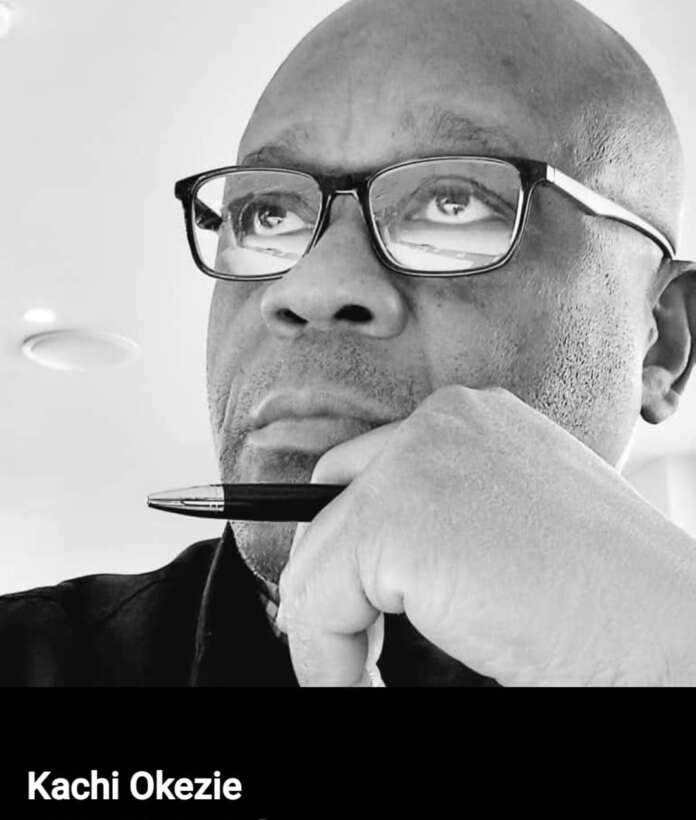
By Kachi Okezie, Esq

The roar of the crowd has faded, the cleats have been hung up, and the dramatic penalty shootout that decided the fate of the 2026 African World Cup qualification slot is supposedly etched in history. The Democratic Republic of Congo (DRC) secured their passage, leaving Nigeria and Cameroon in the ashes of defeat. Yet, in one of the most remarkable turns of events in recent football history, the battlefield has swiftly shifted from the manicured grass pitch to the sterile, wood-paneled hearing rooms of FIFA, and the weapon of choice is not a swift counter-attack but an obscure, fundamental piece of jurisprudence: the DRC’s own constitution.

This profound and bizarre legal drama offers a masterclass in the necessity of legal vigilance, a harsh lesson in the political risks inherent in regulatory compliance, and a crucial test of global governance for the world’s most powerful sporting body.

The genius, or perhaps the sheer, desperate pragmatism, of the Nigerian and Cameroonian petitions lies in their understanding that the game is not over until the rulebook says it is. When talent and tactics failed them in the continental playoffs, they did what any effective entity must do: exploit the regulatory framework to their advantage.

Their challenge pivots on Article 10 of the 2006 DRC Constitution, which strictly prohibits dual nationality. To gain Congolese citizenship, the law dictates a formal, irrevocable renunciation of any other citizenship. The contention, dramatically targeting players like Aaron Wan-Bissaka and at least eight others, is simple: these individuals, having acquired DRC passports while reportedly retaining their European or foreign nationalities, were never, in the eyes of DRC law, legal Congolese citizens. By extension, they were ineligible to represent the national team.

In the blunt, adversarial language of football, the petitioners are alleging that the DRC achieved victory using “mercenaries,” defined here not by pay, but by a legal technicality that cuts to the very core of national identity and representation.
This move underscores a critical lesson for any organization operating on a global stage: due diligence must extend beyond the immediate regulatory horizon.

For years, FIFA’s eligibility rules have relied on a relatively straightforward mechanism: possession of a valid passport issued by the relevant Member Association, coupled with a sporting connection to that nation. The system is designed for speed and simplicity, not for deep, constitutional audits. The DRC football federation, and perhaps the players themselves, assumed this was sufficient. They failed to account for the political risk of their own nation’s foundational laws. This oversight is catastrophic. It transforms what should have been a glorious triumph into a monumental administrative failure, proving that a single, forgotten clause in a distant constitutional text can possess more destructive power than the most potent opposing striker. Any corporation, any individual, any sporting body, must internalise this: success requires not just operational efficiency but absolute legal hygiene. A loophole ignored is a regulatory ticking time bomb.

This brings us to the monumental challenge facing FIFA. The governing body is trapped in a jurisprudential quagmire of its own making. On one hand, the integrity of its competitions demands that all participants adhere to eligibility criteria. On the other hand, FIFA’s historical practice has been to accept the validity of a passport issued by a sovereign state. The petitioners, however, argue that FIFA was either misled or failed to investigate a known conflict. They are not challenging FIFA’s rules; they are challenging the validity of the DRC citizenship itself, based on DRC law.

If FIFA ignores this constitutional provision, they set a dangerous precedent, essentially asserting that their sporting rules can override the foundational laws of a sovereign state—a perilous path that undermines the authority of every national federation they govern. If they uphold the challenge, they must accept that their own clearance mechanisms were insufficient, potentially opening a pandora’s box of similar challenges across multiple teams who rely on players with multiple national ties.

Effective regulatory compliance, therefore, cannot be a passive exercise of simply checking boxes. It requires proactive enforcement, especially by a global body that sets the competitive standard. FIFA must now step up and clarify the interplay between international sports law and the domestic nationality laws of its members. They must establish a robust, centralized mechanism that flags known constitutional prohibitions, particularly in cases of players switching allegiance, to prevent future, integrity-threatening crises.

This crisis forces FIFA to either become a more powerful, probing administrative body, or risk having the results of its marquee tournaments decided by last-minute legal protests rather than on the field. The integrity of the World Cup, the world’s grandest stage, is at stake.

The lessons extend beyond the realm of football. This scenario is a textbook illustration for anyone involved in high-stakes, international competition—whether in sports, finance, or diplomacy. First, the importance of legal literacy is paramount. The Nigerian and Cameroonian lawyers understood that the weakness of their opponent was not tactical, but fundamental. They executed a devastating legal counter-attack that was invisible to the millions of fans watching the game itself.

Second, never concede the battlefield prematurely. Nigeria, often referred to with a blend of affection and exasperation as a “cat with nine lives” in qualification dramas, has again proven that an opportunity, however slim, exists until the final regulatory body has rendered a final, binding decision. The pursuit of the legal path, even when qualification seems mathematically impossible, is the ultimate manifestation of fighting until the absolute end.

How FIFA escapes this predicament will define its governance for a generation. It is facing a zero-sum game: vindicate the constitutional integrity of the DRC and deny the protest, or punish the DRC for an eligibility breach, potentially reinstating Cameroon and Nigeria into a final playoff before the intercontinental one. The irony of amending a constitution too late—as the user noted, a new law cannot apply retroactively—highlights the rigid, unforgiving nature of the law. The rule was on the books when the matches were played, and that is all that matters.

As the football world holds its breath, the real World Cup final is now being played out in a legal chamber, reminding us all that in the modern global arena, the most dangerous, and ultimately decisive, weapons are often contained in a dusty, seldom-read document.

Kachi Okezie, Esq is sports lawyer.

The masquerade who drank palmwine quietly, By Funke Egbemode

This is about politicians and their needless noise.

In the early days, when the boundary between the living and the ancestral was thin as smoke, masquerades descended only at festivals. They came with thunder in their feet and secrets in their costumes, feared not because they were guttural in their voices, but because they did not need to shout.

Among them were masquerades who never danced wildly, never chased children, never raised their whips, never boasted of power. Yet, when they passed, even elders lowered their voices.

It was said they drank palmwine.

But no one ever saw them lift a gourd or a cup.

At night, when the drums had slept and the moon rested on the iroko tree, the masquerades gathered in the sacred grove. There, old palmwine tapped at dawn was poured into calabashes. Each masquerade tilted its head slightly, just enough. The wine slipped beneath the mask—unseen, unspilled. No mask was wet. No secret showed. They drank slowly, patiently, as spirits do.

The younger masquerades wondered and whispered: “How do they drink and remain spirits?”

An elder masker heard them and answered: “They do not drink to be seen. They drink to dominate.”

One season, a new masquerade arrived—loud, restless, drunk on applause. In the marketplace, it lifted its mask high, gulped palmwine before the crowd, and laughed.

The children laughed too; they clapped.

The elders did not. A taboo had been broken. And it was a mortal sin—unforgivable.

By the next festival, the masquerade’s costume had lost its beauty. Aso re ti pon; aso re ti ya. Its mask had become ragged. Its footsteps lost their thunder. When it came out again, no one stepped aside. Dogs barked at it. Children mocked it. It had drunk openly and lost the silence that made it feared.

The quiet masquerades remained.

They drank when no eyes watched. They spoke only through the drum. They never explained themselves. And so, the people continued to believe.

Till today, elders say: “The masquerade that survives is not the one that hides thirst, but the one that hides the cup.”

And that is why true masquerades still drink their palmwine quietly—keeping the mask, keeping the myth, keeping the power that noise cannot buy.

Did you see or hear the APC hold a press conference or organise a summit on how all the governors of the PDP would move their beds to APC? Did you hear a gong or town crier summoning anybody to a village square meeting on how the PDP masquerade would be unmasked and stripped? No. The party knew its target and went right to the roots of the tree with the right armour. The tree did not suspect. PDP stalwarts were shocked to the bones.

Unlike in the days of the Ebora Owu, when EFCC officials flooded a state PDP wanted by fire and force, there were no striped EFCC jackets. DSS did not lay siege to anybody’s compound. Armoured vehicles did not line any street. The only move that looked like an impeachment did not even culminate in one. The APC masquerade chewed silently and drank its palmwine without its mask shifting or shaking. Eégún s’enu jeje muti—that is how the Yoruba describe the APC moves. The opposition governors continue to register at their wards to become APC members.

It is like the sacrifices placed at road junctions, what politicians do. Only the diviner and his client know the ingredients in the calabash and what they want to achieve. The rest of us only know when the akalamagbo bird has done the job and the mothers of the night have accepted the sacrifice. That is what APC did. It made its moves while the opposition was sleeping. It did all the heavy lifting when nobody was looking. It deployed a strategy different from the one used by the ruling party in the past. It achieved its aim and got what it wanted. Every other thing happening now is pouring water on the back of a calabash.

So, is Funke here to pat the APC on the back and rub PDP’s nose in the mud? No. Yes, I am worried about both parties, but this piece is strictly about needless noise and empty noises. Nigerians, Africans—we talk too much and do so little.

Opo oro kò k’agbon; afefe´ ni n gbé lo.

A million words will not fill a basket; it is the wind that blows them all away.

There is something to be learnt from the APC’s quiet move on the opposition parties. It was steady, behind closed doors. There were no statements. So why is it difficult for officials of government, especially federal government agencies, to borrow as many leaves as they can from APC’s ways, after all, they are APC members? Why can’t ministers, permanent secretaries and directors-general do what they are paid to do and announce the results later? Why do they come to the media first, announce the big thing they want to do, and after that the big deals become no deals? Yes, they make front pages the following morning and become talking points on morning television shows. The media benefits from it. We get easy headlines and juicy talking points that attract viewers and followers. But none of that helps the minister or the D-G.

This is also about our children, their exams, and miracle centres. Just last Sunday, the Federal Government, through the Federal Ministry of Education, announced a nationwide ban on the admission and transfer of students into Senior Secondary School Three in both public and private secondary schools across Nigeria. The new policy is aimed at curbing examination malpractices in our secondary schools, including the use of special centres where miracle results are “produced”. Laudable decision, long overdue. I was happy. Then suddenly, the implication of the statement hit me.

The ministry has tipped off the proprietors of the special centres and their corrupt clients. I am sure the ministry knows that these proprietors have registered and unregistered unions. By now, they would have put together ways and means to tackle this policy, which they would have concluded was targeted at putting them out of business. It is, really. If the FG stops the inflow of intakes or candidates into special centres, their taps would dry up. But that won’t happen. I can almost categorically say nothing will change. The special centres will continue to operate and thrive in good health. Why? The Ministry of Education spoke too soon. It deliberately put the cart before the horse. For a policy designed to take off in the 2026/2027 academic session, why are we making this statement now, knowing the FG is going after a mafia?

Yes, it is important to let parents know well ahead of time, but isn’t that the whole point of school administration via Parents-Teachers Associations and similar platforms? Couldn’t this have been done more neatly through the ministries of education in each state? If the Federal Ministry of Education had gone after the miracle centres, hauled their proprietors to court, and arranged speedy arraignments and trials, there would have been a good chance of shutting down the corrupt centres. If principals had been directed to hold PTA meetings to inform parents and students that there would no longer be transfer into SS3, the real stakeholders would have been properly briefed.

Not that I totally agree with the policy in its entirety. What if I am transferred from Oyo State to Akwa Ibom and my daughter is in SS3? Should I leave her behind in Ibadan—with whom?

Anyway, back to the premature announcement angle.

This is not the first time the business of special centres is being threatened, unsuccessfully. Those proprietors know their ways around the ministries of education. By now, they would have held a dozen survival meetings. And they won’t announce their strategies. Only their regulators do that. And so, once again, they will survive and carry on with their miracle business. They know what to do. They have partners in crime that they diligently service. They also almost always get results, which is why they are miracle centres. It is only government agencies that wake an armed, war-tested general first before attempting to disarm him. Who does that? Once again, the Federal Ministry of Education has kicked from the penalty box into the throwing area.

Back to the Alajebanu masquerade who drank and was seen. In later years, the elders began to say without calling names that kingdoms too had their masquerades. Some ruled like spirits, acting quietly, letting results speak, never lifting the mask of power before the crowd. Others, drunk on praise, exposed themselves daily in the marketplace, explaining every move, shouting their strength, drinking palmwine in public to prove they were men and not myths. But the people noticed that the louder a masquerade spoke of power, the faster belief drained from it. For authority, like masqueradehood, survives on restraint. Once the mask is lifted too often, the mystery dies…

My conclusion: there is something beyond politics to be learnt from APC and how it has disarmed the opposition. Do not announce your strategy with a loudspeaker. You cannot kill a tree by removing its leaves; you go for the roots. You cannot go after the special centres by alerting them nine months ahead of the time of trouble. If APC had done that, PDP and LP would have survived the onslaught. If government really wants to do something, it will do it. The civil servants have the knowledge, the experience, and the reach to get things done. I know them. I was once among them.

The views expressed by contributors are strictly personal and not of Law & Society Magazine.

‘Extortionate and Illegal’: NBA urges Tinubu to rein in IGP over tinted glass policy

The Nigerian Bar Association (NBA) has urged President Bola Ahmed Tinubu to intervene and rein in the Inspector General of Police (IGP), warning that the planned resumption of enforcement of the controversial Tinted Glass Permit policy amounts to contempt of court and an unjustified burden on Nigerians.

At a press conference in Abuja, NBA President Mazi Afam Osigwe, SAN, condemned the Nigeria Police Force’s announcement that enforcement of the suspended policy would resume on January 2, 2026, describing the move as unlawful, extortionate and reckless while litigation over the policy remains before the courts.

Osigwe said the decision directly contradicts an understanding reached between the NBA and the police, as well as ongoing proceedings at the Federal High Court.

“The planned resumption of enforcement is against the grain of an ongoing court case and an understanding reached between the Nigerian Bar Association and the Nigeria Police Force,” he said.

He accused the police of transforming a law enforcement function into a revenue-generating scheme. “The Nigeria Police Force is not established to generate revenue,” Osigwe said, adding that the policy’s structure raises serious transparency concerns.

According to the NBA, payments for the permit are allegedly being made into a private account rather than a government-approved revenue channel, with no clarity on how funds are managed or what became of previously issued permits.

“If this policy is truly about security, why are earlier permits suddenly invalid?” Osigwe asked. “Why must Nigerians renew them? What this does is empower officers on the roads to extort and harass civilians.”

The NBA also criticised the timing of the announcement, saying it was designed to pressure Nigerians during the festive season.

“Nigerians are already groaning under harsh economic conditions, struggling to travel and provide for their families,” Osigwe said. “Now they are being compelled to submit to an extortionate process to obtain a so-called permit.”

He questioned why, if legitimate, the permit could not be integrated into routine vehicle documentation during registration or renewal, describing the policy as opaque and poorly justified.

The association said the matter is already before the Federal High Court in Abuja, where hearings have been concluded and judgment reserved. It warned that any attempt to enforce the policy before a ruling is delivered could amount to contempt of court.

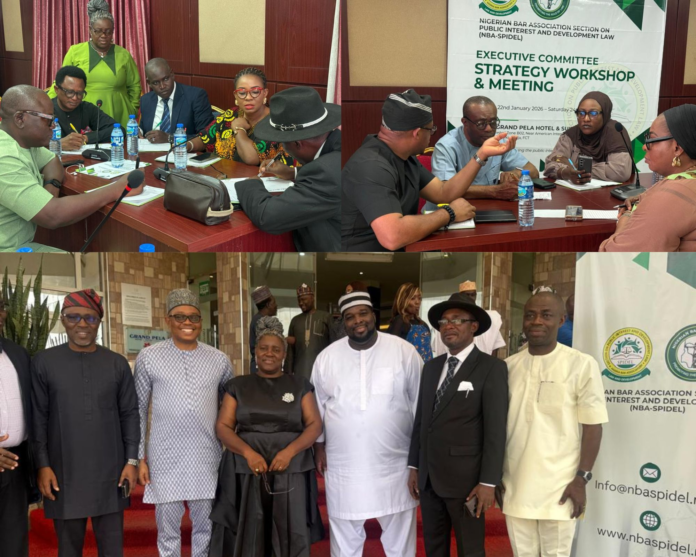
In a detailed statement, the NBA said its Section on Public Interest and Development Law (NBA-SPIDEL) filed Suit No: FHC/ABJ/CS/1821/2025 on September 2, 2025, challenging the legality of the policy and the police’s authority to impose fees on citizens.

The suit argues that the Motor Tinted Glass (Prohibition) Act of 1991 is a military-era law incompatible with the 1999 Constitution and that its enforcement would trigger widespread extortion, given what the NBA described as the police’s long record of abuse, harassment and misconduct.

The NBA further warned that the levy adds to Nigeria’s growing tax burden, undermines investor confidence and contradicts tax reform measures scheduled to take effect in January 2026.

The association also cited an October 3 order of the Federal High Court in Warri directing parties to maintain the status quo in a related suit, an order it said prompted an agreement with the police to suspend enforcement pending judicial determination.

It described the Force Public Relations Officer’s announcement of a January 2 resumption as “shocking and disturbing” and evidence of “a troubling disregard for the rule of law.”

The NBA warned that it would initiate contempt proceedings against the IGP, Kayode Egbetokun, and police spokesperson CSP Benjamin Hundeyin if enforcement resumes. It also directed its branches and Human Rights Committee to provide immediate legal assistance to any Nigerian harassed or arrested under the policy.

Osigwe stressed that representations made in open court by police counsel constitute binding judicial undertakings, warning that any deviation would amount to overreaching the court, as established by the Supreme Court.

The NBA called on President Tinubu to intervene, warning that resuming enforcement would not only undermine the judiciary but impose fresh economic hardship on Nigerians already under strain.

Dangote drags NMDPRA boss in explosive petition to ICPC

Africa’s richest man, Aliko Dangote, has formally petitioned Nigeria’s anti-graft agency, accusing the head of the Nigerian Midstream and Downstream Petroleum Regulatory Authority (NMDPRA) of corruption, abuse of office and illicit enrichment.

In a petition submitted on December 16 to the Independent Corrupt Practices and Other Related Offences Commission (ICPC), Dangote urged the agency to investigate, arrest and prosecute the NMDPRA’s Managing Director, Ahmed Farouk, over allegations that he is living far beyond his legitimate income as a public official.

The petition, written on Dangote’s behalf by senior advocate Ogwu James Onoja, SAN, and addressed to ICPC Chairman Musa Adamu Aliyu, SAN, alleges that Farouk spent more than $7 million on the education of his four children in Switzerland over six years—payments Dangote claims are inconsistent with Farouk’s earnings in public service.

According to the petition, the fees were paid upfront and covered tuition at multiple Swiss institutions. Dangote provided the names of the children, their schools and the specific amounts allegedly paid, urging the ICPC to verify the claims through a full financial investigation.

Dangote further alleged that Farouk used his position at the NMDPRA to divert public funds for personal benefit, actions he said have fueled public anger and protests directed at the regulatory authority in recent months.

The industrialist argued that Farouk has spent his entire adult life in Nigeria’s public sector and could not have lawfully accumulated the resources required to fund such expenses.

“It is without doubt that the above facts amount to abuse of office, breach of the Code of Conduct for public officers, corrupt enrichment and embezzlement,” the petition states, adding that such offences fall squarely within the ICPC’s statutory powers under Section 19 of its enabling Act.

The petition noted that a conviction under the Act carries a penalty of up to five years’ imprisonment without an option of a fine.

Dangote urged the ICPC to act decisively, saying the matter has entered the public domain and poses reputational risks to the administration of President Bola Ahmed Tinubu if left unresolved.

“We have no reservation that the Commission, under your leadership, will not close its eyes to these allegations but will act to ensure justice is done,” the petition said.

Dangote also pledged full cooperation with investigators, stating that he is prepared to present documentary and testimonial evidence to support claims of corrupt enrichment, abuse of office and impunity against the NMDPRA chief.

As of the time of filing this report, neither Farouk Ahmed nor the NMDPRA had issued a public response to the allegations.

Nollywood star Tonto Dikeh reveals years-long struggles with smoking addiction, and spiritual turning point

Popular Nollywood actress Tonto Dikeh has publicly shared what she described as a personal transformation after years of addiction and emotional struggles.

Dikeh gave the testimony during a Sunday service at Streams of Joy International Church in Abuja. The account was also broadcast during the New Season Prophetic Prayers and Declarations livestream on Monday, led by Pastor Jerry Eze.

The actress told the congregation she began smoking at age 13 and later struggled with alcohol use and other personal challenges. She said the habits persisted for decades before what she described as a turning point through faith.

“I smoked since I was 13,” Dikeh said, adding that her struggles ended only after seeking spiritual intervention.

She explained that her decision to speak publicly was driven by gratitude rather than publicity. She said she briefly considered staying silent to protect her public image.

“The God who gave me the image can take it away,” she told worshippers.

Dikeh said a major shift followed her attendance at the Ghana Prayer Conference. She described the experience as the end of years of emotional and spiritual turmoil.

She also spoke about long-standing anger issues, which she said affected her relationships and personal life.

“That anger destroyed my life,” she said, adding that sustained prayer brought calm and emotional stability.

Dikeh said the peace she now feels is unfamiliar and deeply personal.

“I am 40 years old, and I have never known peace like this,” she said.

The actress disclosed that her smoking habit lasted nearly three decades. She traced its origins to early exposure at home and warned parents about the long-term impact of such habits on children.

“Something small can affect your children for life,” she said.

She added that she no longer experiences cravings for cigarettes or alcohol.

“My body is rejecting it,” she said. “It is broken.”

During the service, Pastor Eze prayed for the actress, declaring her restored and called to inspire others.

Dikeh later shared photos from the service on Instagram, describing herself as “a living testimony of mercy.”

Tribute To My Mother: Madam Rose Adafor Aduba (1942-2025)

By Mrs. Esther Eluemunor

Nnem… writing this still feels unreal. You were not just my mother;
you were my everything, my friend, my strength, my prayer partner, and
my comforter. You loved me like no one else could, and your love
shaped every part of who I am today.

Suddenly, my world has changed. I used to enjoy my 8: AM video phone
call with “Nnem Oma”, my Sweet Mother, which prepared me to face the
day. “Nnem” (my mother) was my anchor in the sea of life. Her voice
always caressed my soul, her prayers gave me succor and her advice was
lamp to my feet.

Now, those morning calls with Nnem have stopped. Often I bury my face
in my palms and cry as a difficult question buffet my soul; “will I
never see my mother again in this life?” This question engulfed me
since Sunday 19th October 2025 , when my world shattered at 11 p.m; Nnem passed on. A day
before that, I drifted into a light sleep and you appeared in my
dream; young, pretty, regally attired, smiling and waving at me. But
you were walking away. I phoned when I woke up but you couldn’t talk.
You only waved at me. Nobody told me it was Nnem’s goodbye to me.

Nnem, I will forever cherish the way you called me “Essy nwam, (Essy,
my daughter). The tenderness in your voice whenever you mentioned that
your short form for Esther melted my heart; the smile it came with was
pure sunshine to me. It reminded me of how deep your love for me truly
was; mega stuff!

Being your first child was an honour and a blessing. I watched you
live a life of sacrifice, humility, and grace. You taught me what it
means to love without limits and to give even when it costs much. You
carried all your children in your heart, but somehow, you always made
me feel special.

I remember one Saturday morning when I was about nine years old. Nnem
was leaving early to join other women to sweep and mop the St. Marks
Anglican Church, Ubulu-Uku, Aniocha LGA, Delta State. She pointed at a tuber of choice specie of
yam, and instructed me to prepare it. I noted that she had called it
“asukwulu sulu onweee” (rough translation: the yam that pounds itself
– perhaps because it was easy to pound). So, I quickly boiled the yam
and placed it in a mortar and covered it up …for it to pound itself.
And I rushed outside to join other kids at play. When Nnem returned,
the yam had stiffened. I saw a heavily pregnant Nnem huddled on a
seat, weeping softly. She didn’t yell at me; she didn’t beat me. She
just sat there and cried. Innocently, I asked over and over: “why are
you crying?” She didn’t say a word. I returned to my playmates on the
sandy playground. Later, she called me in for breakfast; she had
performed her magic and food appeared. Her face was serene, her eyes
soft as she hugged me.

Nnem was a trader, and I learnt the art and science of business from
her. She worked from sunrise to sunset. She taught her children the
virtue of hard work and showed us the dignity in labour. I owe
whatever I am today to Nnem – after God.

Yes, she cooked food for sale, especially to school children. I didn’t
join her in that; I only joined her and Nne Ngozi, Mrs Blackie
Enuanwa, her life-long friend in their trade, taking a bag of rice to
retail at the Eke main market of Ubulu-Uku, Aniocha LGA, Delta state,
and selling it all. Yes, they taught me more than what professors
teach students at Harvard Business School about how to make a sale.
Sometimes, we would walk and walk and walk to an Idumu Osume quarters
of Ubulu-Uku farmland curiously named “E jeke ojeli” (a walker would
have his fill of walking – is the best way I can interpret that) to
carry home the tubers of yams she had bought. Nnem would take just a
little rest and would face other tasks.

Yes, growing up with Nnem wasn’t easy as she was always busy,
struggling to provide for her children. But looking back, I thank God
for her love and the example she gave me. Nnem depended on no one and
didn’t beg for anything. She taught me that the helping hand I will
ever need is there at the end of my arm. Hard work provided for her
needs; she even fried akara and crowds gathered to buy it. She
inculcated those lifestyles into her children, especially the girls,
as though she was preparing them to be able to compete with, and even
outpace, their male counterparts. Even now, my siblings joke that she
petted the boys more than the girls.

Nnem taught me to be independent, to stand strong, never to cheat or
lie. She was popular, she was beloved, especially by the children and
she loved them in return. She left us no enemies but countless
admirers.

Oh yes, my friends say they never saw me exchange words or blows with
anyone. I learnt that from Nnem, the most peaceful person I have ever
known; soft-spoken, easy-going, yet utterly confident and unflinching
in her beliefs and totally supportive of friends and relations. To
her, family was everything and was worth every sacrifice.

Everyone who knew Nnem has wondered why I shed tears at her passing at
age 83. They asked that I celebrate her because she was
compassionate yet strong, gentle but firm, and that her heart
overflowed with understanding and empathy for others. They said that
she handled life’s struggles with courage, resilience, and grace that
left a lasting mark on everyone who knew her and that her kindness,
patience, and understanding were extraordinary, and her integrity was
solid.

That is fine, but simple love is all my woe. How do I accept that I
can’t see Nnem again or hear her angelic voice calling me “Essy” (for
Esther)? I will see her face in the sunrise and sunset and even in the
rainbow because she was truly gorgeous. I will hear her placid voice
when the gentle breeze blows.

Now, my life can never be the same. My siblings have made matters
worse; saying I am their mother, now. Can my feet ever fill my mum’s
shoes? I doubt it because she was as deep as the ocean as strong as
Mount Kilimanjaro, as gentle as a mother’s kiss, as comforting as a
mother’s embrace, as soothing as a mother’s prayer. What will never
change are the memories of her in my heart; Nnem calling her Essy to
come to her, the aroma of Nnem’s food cooking in the kitchen, the
touch of her hands on my shoulders, her smiling face, blessing me
again and again. Yes, I will carry my mother in my heart wherever I
go.

I was blessed to have had a mother and a home that fully prepared me
for the battle of life, and still keep warm me with their fond
memories, and challenge me with their examples to be the best I can be
and remember God in all I do.

Ah, a simple love is all my woe; the love that binds me with Nnem, Nne
Nkwa (Nkwa’s mum as people popularly called after my immediate younger sister), my Sweet, sweet mother, with a chain that can never be broken.
You are in my heart, in my love. Always. I still cry because I miss
you. Oh, but it is not out of weakness or a lack of faith. No, crying
and heartbreak is the price of love when a loved one is no more. Yet,
a million tear drops can’t bring you back. I know that to be true
because I have cried them.

Nnem, with pride I call your name and thank God for His love and
mercies to you because our people have always prayed for the evening
of our lives to be better than the morning. The evening of your life
was better than the morning for you enjoyed the fruits of your labour.
That comforts me, and I glorify God for heaping His blessings upon you.
Yes, I was there at your interment on Thursday November 20th 2025, but
I have not accepted the thought that you are totally and completely
gone from me. And if this dream that you will never come back to me
becomes a reality, then, Nnem, you will be the most beautiful memory I
have carefully locked in my heart as I trust in that beautiful Bible
passage (Mathew 5:4) – “Blessed are those who mourn, for they shall be
comforted”. And as “Blessed are the peacemakers for they shall see the
face of God”, I know you have gone to a much better place to rest in
heavenly bliss.

I will miss our long talks, your laughter, your stories, and your
prayers that always lifted my spirit. You were my covering, my
strength, and my peace. Losing you has left a space no one can ever
fill, but I take comfort knowing you are resting in the Lord.

An American journalist, Grantland Rice, wrote that “When the One Great
Scorer comes, To mark against your name, He writes – not that you won
or lost – But HOW you played the Game”. Sleep well, Nnem; in the game
of life, you showered God’s love on all that came across you. You ran
your race beautifully. You loved deeply and lived a life that
reflected God’s goodness. You were simply amazing – especially towards
me, your Essy.

I love you deeply, Nnem, always. Your legacy and your love will live
on in me…all lifelong. NNEM OMA! YOU ARE IN MY HEART, IN MY LOVE. ALWAYS. ALWAYS. YES, ALWAYS.

Mrs. Eluemunor, a business lady, lives in London

National Insecurity: The trouble with Gen Dambazau’s treatise

By Tony Eluemunor

I read with an interchange of intense pleasure and intense pain, the insightful lecture which the much decorated Lt Gen (Rtd) Abdulrahman B. Dambazau delivered on the 4th of November 2025. That 7th Annual Public Lecture of the “Just Friends Club of Nigeria” (JFCN), with the theme, “Nigeria’s Security Challenges and the Quest for National Cohesion: A New Paradigm for Internal Security Architecture”, should have so engaged the attention of the nation that it should have given rise to a national discourse on Nigeria’s present security tragedy.

This is because Dambazau as a former Chief of Army Staff and Minister of Interior at different times must know the national security terrain expertly. He is also superlatively educated; holds a PhD degree in Criminology and he is also the Pro-Chancellor, Capital City
University, Kano, so he must have been interfacing with Professors. So, it is curious that his most topical lecture didn’t elicit a national discourse.

In a sense, Dambazau didn’t disappoint; he traversed the field expertly, espousing every aspect of it in a way that would make a layman an expert. Hear him:

“Security must be approached from a comprehensive and holistic perspective, as a concept centered on people rather than territories and on investment in human development rather than armaments, a broader construct that extends beyond traditional military concerns to
encompass the protection of individuals’ lives, property, and their overall well-being.

Military security is primarily concerned with protecting a nation’s territorial integrity and sovereignty against external threats, typically using armed forces and defence strategies. Being state-centric, it focuses on safeguarding the state from military aggression, invasion, or armed conflict. In contrast, human security is people-centric and encompasses a broader range of concerns. It emphasizes the protection of individuals’ lives, properties, and
overall well-being.

Human security addresses threats such as poverty, illiteracy, disease, unemployment, corruption, and environmental degradation, issues that cannot be resolved by military force alone but require effective governance and social investment. In the Nigerian context, these threats pose significant human security challenges.

Nigeria is confronted with a range of complex security challenges that demand a robust and adaptive internal security architecture. Foremost among these are threats to the safety of lives and property. This “freedom from fear” has been eroded by the activities of groups such as Boko Haram, bandits, IPOB, Yoruba Nation agitators, militants, urban criminal gangs, and other violent offenders engaged in armed robbery, murder, and ritual killings.

In addition to physical threats, Nigeria faces significant human security challenges that undermine its survival and livelihoods- poverty, unemployment, hunger, disease, and illiteracy have denied many citizens their “freedom from want.” Despite its abundant
resources, Nigeria continues to rank low on the United Nations Human Development Index.

For instance, extreme poverty is expected to rise from 30.9% in 2018 to 46% in 2024, with approximately 90 million Nigerians living below the poverty line. Multidimensional poverty, encompassing deprivation in health, education, and living standards, affects 63% of the
population and is exacerbated by inflation, economic stagnation, insecurity, regional disparities, and inadequate social protection. Population growth further compounds these challenges, with projections indicating that Nigeria’s population will exceed 400 million by 2050, and over 70% of the population is young, including approximately 10
million out-of-school children”.

Freedom from want? This should remind us of the “Four Freedoms of Man” as articulated by U.S. President Franklin D. Roosevelt in 1941. They are universal principles for a just world: Freedom of Speech, Freedom of Worship, Freedom from Want, and Freedom from Fear, representing essential democratic values that should exist everywhere, and inspiring global Human Rights ideals like those in the UN’s Universal Declaration of Human Rights.

It is actually from here that I began to disagree with Gen. Dambazau. He attributed the problem to: “The proliferation of firearms, driven by porous borders, regional instability, and illicit local production, the widespread availability of unregistered and unmarked weapons has fueled insurgency, banditry, armed robbery, and other violent crimes.
Reports indicate that Nigeria accounts for a significant share of illegal weapons in West Africa, with the Lake Chad region remaining a hotspot for arms trafficking and local manufacture of arms, including components used by groups such as Boko Haram.

2; Root Causes, Triggers, and Drivers of Insecurity: The persistence of Nigeria’s security challenges can be attributed to a complex interplay of root causes, triggers, and drivers. A significant factor is the tendency to oversimplify complex issues, often influenced by
emotions, sentiments, and the denial of reality. Religious and ethnic intolerance frequently clouds objective reasoning, leading to a fragmented national perspective and undermining collective efforts to address insecurity.

Key drivers include poor governance, inadequate welfare for security personnel, insufficient coordination among security agencies and underdeveloped criminal justice institutions. Additional factors, such as limited legislative oversight, corruption, inconsistent enforcement of law and order, an overstretched military, misallocated police resources, underutilized civil defence units, and the absence of a comprehensive strategy for rural security, further exacerbate the situation”.

All the points he mentioned above could have contributed to Nigerian terrorism, but it is curious that Gen. Dambazau could have left off listing killer cattle herders among the terrorist groups just as he left off fundamental Islamic influences among the triggers of that terrorism. He failed to condemn the calls for cattle routes and government-provided cattle settlements or colonies or Rural Grazing Areas (RUGA), a controversial government project for cattle herders. I say this for two strong reasons. One, a militia apparently exists for the sheer purpose of fighting for the interests of the Fulani cattle herders. Such a militia or militias visit mayhem on villages and towns in furtherance of cattle herders’ interests around the Middle Belt area. They appear suddenly, do their deadly deed and disappear
instantly.

Two, if animal husbandry is a personal business, what is wrong with requiring those in that business to sequester their cattle in personal ranches? The government could provide the initial take-off loans. Government-sponsored RUGA is like robbing Peter to pay Paul. No
personal business should be so subsidized. And to talk about Cattle Routes in year 2025 is to escape from modernity and leap into the dark ages. Introduce Cattle Ranches and the so-called farmers and cattle herders’ clashes will disappear as cattle will stop destroying farms and cattle herders will stop moving with A.K 47 assault weapons because they won’t be moving about at all, let alone other economic fruits.

Yes, Northern Muslims have experienced insurgency but the explanation for this is clear; as the terrorists become more and more confident, they exert territorial controls and impose taxes. It requires force to impose such and that explains the troubles the non-Christians in the North-West and North-East face. But to deny that there is an orchestrated attack or even genocide against Christians in Nigeria, as Dambazau did, will fall flat against the evidence.

And what is this evidence? For starters, the religious terrorists are all unpretentious Islamic jihadists going by their names. Second, their roots go far into history, especially the escalating events like the 1980s Maitatsine riots, the introduction of Sharia law in the
North (starting from 1999), and the rise of Boko Haram, have been creating cycles of violence over resources, identity, and governance, impacting stability despite coexistence efforts. Unfortunately, religious crisis didn’t begin with Boko Haram. It just happened that
despite the failures of the earlier attempts, Boko Haram’s attempt has given rise to a full-fledged terrorism. The Armed Conflict Location & Event Data Project (ACLED) reported that, as of 2025, just under 53,000 Muslims and Christians had been killed in targeted political
violence since 2009. Organisations that monitor political violence in Nigeria have reported that the majority of victims of jihadist groups are Muslim. According to ACLED’s 2022 report, although Christians constitute roughly 50% of the population, violence explicitly
targeting Christians on the basis of religion accounted for only 5% of reported civilian-targeting events”.

In the face of such indices, why would anybody, including the American President, Donald Trump claim otherwise? The answer is this: Religious conflict in Nigeria, when it befalls the Christians, religion and not
mindless theft and mayhem is often the issue. From the Wikipedia comes
this: “This was the case of the mayhem in Tafawa Balewa town to 1948.
The 1980s saw an upsurge in violence due to the death of Mohammed
Marwa (“Maitatsine”). In the same decade, the military ruler of
Nigeria, General Ibrahim Babangida, enrolled Nigeria in the
Organisation of the Islamic Conference. This was a move which
aggravated religious tensions in the country, particularly among the
Christian community. In response, some in the Muslim community pointed
out that certain other African member states have smaller proportions
of Muslims, as well as Nigeria’s diplomatic relations with the Holy
See.

Thus, when Boko haram began, it clearly had religion as its aim. And the various groups are affiliated to known Islamic fundamentalist organs from the Middle East. Boko Haram wasn’t fighting against bad governance nor hunger and want per see, it fought because of Islam trying to impose its own version on other people. I must add that although direct conflicts between Christians and Muslims were rare, eruptions often happened as in October 1982 when Muslim zealots in Kano were able to enforce their power in order to keep the Anglican House Church from expanding its size and power base. They saw it as a
threat to the nearby Mosque, even though the Anglican House Church had been there forty years prior to the building of the Mosque.

Two student groups came into contestation; the Fellowship of Christian Students and the Muslim Student Society. In one instance there was an evangelical campaign organised by the FCS and brought into question why one sect should dominate the campus of the Kaduna State College of Education in Kafanchan. This quarrel accelerated to the point where the Muslim students organised protests around the city and burned a Church within the college. The Christian majority at the college retaliated on March 9. Twelve people died, several Mosques were burnt in that war.

Since the restoration of democracy in 1999, the Muslim-dominated Northern states have implemented strict Sharia law. Religious conflict between Muslims and Christians has erupted several times since 2000 for various reasons, often causing riots with several thousands of victims on both sides. Since 2009, the Islamist movement Boko Haram
has fought an armed rebellion against the Nigerian military, sacking villages and towns and taking thousands of lives in battles and massacres against Christians, students and others deemed enemies of Islam; not enemies of bad governance.

So, the religious tension has been rife for decades before Boko Haram emerged. But it emerged because the ground was fertile enough to nurture it. On this, I give the last word to Wikipedia: “Despite Mohammad Marwa’s death, Yan Tatsine riots continued into the early
1980s. In October 1982 riots erupted in Bulumkutu, near Maiduguri, and in Kaduna, to where many Yan Tatsine adherents had moved after 1980. Over 3,000 people died. Some survivors of these altercations moved to Yola, and in early 1984 more violent uprisings occurred in that city. In this round of rioting, Musa Makaniki, a close disciple of Maitatsine, emerged as a leader and Marwa’s successor.

Ultimately, more than 1,000 people died in Yola and roughly half of the city’s 60,000 inhabitants were left homeless. Makaniki fled to his hometown of Gombe, where more Yan Tatsine riots occurred in April 1985. After the deaths of several hundred people Makaniki retreated to Cameroon, where he remained until 2004 when he was arrested in Nigeria. Some analysts view the terrorist group Boko Haram as an extension of the
Maitatsine riots”.

Gen Dambazau did not go this far in his analysis of the Boko Haram problem. Please, remember that in 1991, the German evangelist Reinhard Bonnke was accused of attempting to start a crusade in Kano, a religious riot ensued killing 12 persons. That would not have been the work of miscreants who were simply worried about their poverty and bad governance. Religion was involved. And religion runs through Nigeria’s present insurgency.

The views expressed by contributors are strictly personal and not of Law & Society Magazine

From Forum Shopping to Judicial Capture: Senior Advocates warn Nigeria’s justice system is failing

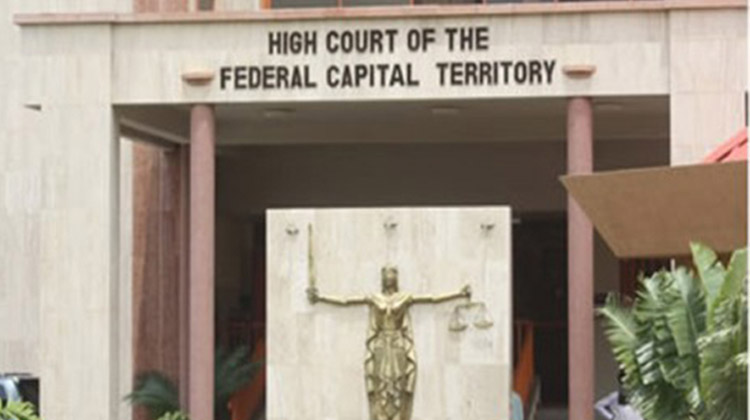
Nigeria’s legal establishment opened the 2025/2026 Legal Year of the Federal High Court amid unusually blunt warnings about judicial delay, political interference and what senior lawyers now describe as a creeping crisis of credibility within the justice system.

Speaking at the opening ceremony in Abuja on December 15, Nigerian Bar Association (NBA) President Afam Osigwe, SAN, warned that unpredictability in court sittings, prolonged delays and the politicisation of judicial processes are eroding public confidence and threatening the moral authority of the courts.

Osigwe said justice that is uncertain or erratic in its administration ultimately becomes inaccessible, stressing that repeated adjournments, unexplained cancellations of sittings and poor communication from court registries were imposing real costs on litigants and lawyers.

“Justice that is unpredictable in its administration risks becoming inaccessible in its outcome,” he said, noting that Nigerians routinely expend scarce resources and brave insecurity only to be told that courts are not sitting.

While commending judges for working under intense pressure, Osigwe said efficiency was no longer optional but a constitutional and moral obligation. He called for disciplined adjournment practices, fixed sitting hours, digital case management systems and publicly available court calendars to restore predictability.

Beyond efficiency, the NBA president raised concerns over what he described as an unhealthy drift of political disputes into the courts, warning that intra-party conflicts are increasingly being weaponised for tactical advantage rather than genuine adjudication.

“The court must not become a political theatre,” Osigwe cautioned, urging judges to exercise restraint in disputes that fall within the internal affairs of political parties and are traditionally non-justiciable.

He warned that judicial legitimacy rests on public confidence, not coercive power, and that any perception of political capture undermines the rule of law.

Osigwe also highlighted systemic weaknesses within the Federal High Court, including case backlogs, inadequate infrastructure, inconsistent application of practice directions, technology gaps, manual case assignments that invite perceptions of bias, and weak enforcement of court orders—particularly against government agencies.

He called for urgent reforms, including expanded judicial capacity, full digitalisation of court processes, electronic case assignment, stronger sanctions for disobedience of court orders, and wider use of alternative dispute resolution to decongest dockets.

The NBA president also renewed calls for monthly judicial inspections of detention facilities, warning that abuse of holding charges continues to inflate Nigeria’s prison population, and urged the commissioning of the long-delayed Federal High Court complex in Lagos.

But even as the ceremony drew praise for its candour, senior advocate Chief Jibrin Okutepa, SAN, issued a sharper critique, arguing that Nigeria’s justice sector has moved beyond diagnosis and into a phase of institutional decay driven by failure to act.

Okutepa, who attended the event alongside the Chief Justice of Nigeria, senior judges and leaders of the bar, said the profession excels at eloquent speeches but lacks the courage to implement reforms.

“The problems have been identified for too long,” he said. “We should not still be talking about forum shopping and conflicting judgments. We should have eliminated them.”

He warned that perceptions of judicial capture by political actors are no longer merely perceptions but are increasingly becoming reality, citing judgments he said defy logic, jurisprudence and basic notions of justice.

According to Okutepa, delay, abuse of process and what he described as “legal abracadabra” have become disturbingly normalised within the profession.

Calling for urgent intervention, he said the National Judicial Council must decisively sanction judges who issue conflicting decisions, while the NBA should publicly pursue lawyers engaged in forum shopping and frivolous litigation.

“There should be no sacred cows,” Okutepa said, urging stronger funding for the Legal Practitioners Disciplinary Committee and stricter screening of candidates admitted to the Law School.

He also turned his criticism inward, accusing the NBA of drifting away from professional ideals and operating increasingly like a partisan political structure dominated by godfathers.

“The NBA is facing an existential crisis,” he said, warning that declining participation by senior lawyers and internal patronage threatens the association’s credibility as a moral compass for the profession.

Unless the bar reforms itself and enforces discipline, Okutepa warned, even the strongest judicial speeches will lose their force.

As Nigeria’s judiciary enters a new legal year under heightened public scrutiny, both speeches underscored a shared message: the crisis of justice is no longer rhetorical—and credibility now depends on action.

TIPS