Home Blog Page 135

The Ghost of Minamata and Nigeria’s pivotal fight against mercury pollution

By Kirsten Okenwa

Minamata Bay is located in the small factory town of Minamata, Kumamoto Prefecture, Japan. The waters of Minamata Bay are calm now. Along the Japanese coastline, tourists stroll past a gleaming ecological museum that documents one of the world’s most devastating industrial disasters. Few traces remain of the invisible poison that once devastated this fishing community. Yet Minamata’s lesson, that mercury poisoning is slow, merciless, and generational, has never been more relevant. Thousands of miles away, Nigeria is confronting its own version of that ghost.

In late November 2025, Nigeria announced it would fully implement the Minamata Convention on Mercury, a global treaty born from Japan’s tragedy. For Africa’s most populous nation, the declaration was more than a diplomatic milestone. It was an acknowledgement that mercury pollution, embedded in artisanal gold mining, imported consumer goods, and fragile waterways, has become a national public health threat. The question now is whether Nigeria can turn promise into protection for millions of vulnerable citizens.

A Tragedy That Shaped Global Law

Minamata’s story is a cautionary tale written in human suffering. From the 1930s to the 1960s, the Chisso Chemical Corporation discharged mercury-laden wastewater into Minamata Bay. Bacteria converted the waste into methylmercury, which accumulated in fish and shellfish, the community’s primary food source. What followed was a slow catastrophe. Cats convulsed and died. Fishermen lost control of their limbs. Children were born with severe neurological deformities.

Despite early warnings from local researchers, official recognition came only in 1968, long after thousands had been poisoned. Minamata became synonymous with corporate negligence and regulatory failure. It also became a catalyst. In 2013, the international community adopted the Minamata Convention on Mercury, a legally binding treaty designed to prevent such disasters by regulating mercury across its entire life cycle.

The convention seeks to phase out mercury-added products, ban new mercury mines, control industrial emissions, and protect populations most at risk. It targets batteries, certain lamps, cosmetics such as skin-lightening creams, pesticides, and medical devices, while also addressing mercury use in artisanal and small-scale gold mining (ASGM), the sector most relevant to Nigeria.

Nigeria’s Long Road to Commitment

Nigeria signed the Minamata Convention in 2013 and ratified it in 2018, formally binding itself to its provisions. Early steps followed a familiar pattern: committees were formed, assessments conducted, and action plans drafted. A National Action Plan for artisanal mining emerged, supported by international partners such as the United Nations Environment Programme and the Global Environment Facility.

But implementation lagged. Mercury remained overshadowed by more visible environmental crises: oil pollution in the Niger Delta, deforestation, and climate stress. That changed in November 2025, when Environment Minister Balarabe Abbas Lawal announced Nigeria’s move toward “full implementation” of the convention. Environmental analysts described the declaration as Nigeria’s most decisive stance yet against a pollutant that has quietly infiltrated homes, markets, and mining communities.

For a country of more than 200 million people, the stakes could not be higher.

A Silent Epidemic in Gold-Rich Soil

Mercury’s most devastating footprint in Nigeria lies in artisanal gold mining. Between half a million and one million Nigerians depend on ASGM for survival, particularly in states such as Zamfara, Niger, Osun, and Kwara. The process is crude and hazardous. Liquid mercury is mixed with crushed ore to bind gold particles into an amalgam, which is then burned over open flames. Mercury vapor fills the air, inhaled by miners, their families, and neighbors, while residues contaminate soil and water.

“You see children playing near processing sites,” says Grace Okon, a public health worker in Zamfara. “They breathe it, touch it, ingest it. Mercury doesn’t stop with the miner; it spreads through the whole community.”

The symptoms are often subtle at first: tremors, memory loss, fatigue, and impaired coordination. Over time, mercury damages the nervous system, kidneys, and developing brains of unborn children. Unlike Minamata, where poisoned seafood offered a clear culprit, Nigeria’s exposure is diffuse and poorly documented, making accountability elusive.

Lives Behind the Statistics

In Bagega, Zamfara State, global attention once focused on lead poisoning linked to gold mining. Mercury followed quietly. Aisha Bello, a 32-year-old mother of four, has never worked in a mine, yet she experiences chronic tremors and numbness. “My husband burns gold in our compound,” she says. “When the smoke comes, we close the door, but it still enters.” Two of her children struggle with delayed speech and learning difficulties.

In Niger State, miner Musa Sadiq admits he learned mercury use from older miners. “We didn’t know it was poison,” he says. Now he complains of blurred vision and coughing blood, but rural clinics lack the capacity to test for mercury exposure.

Urban Nigeria tells a different, quieter story. In Lagos and Aba, doctors continue to treat women with kidney and neurological damage linked to mercury-containing skin-lightening creams. One Lagos physician recalls a 26-year-old fashion retailer whose illness traced back to prolonged cosmetic use. “She wasn’t a miner,” the doctor says. “She was just trying to look lighter.”

Along rivers feeding the Niger and Osun systems, fishermen report declining catches and deformed fish near informal mining zones upstream. Environmental researchers have detected elevated mercury levels in sediments, echoes, however faint, of Minamata Bay.

The Treaty’s Limits and Nigeria’s Test

The Minamata Convention is ambitious, but its effectiveness depends on national enforcement. While it restricts the manufacture and trade of mercury-added products, it does not automatically ban the use of items already in circulation. Countries must go further if they want faster results.

Nigeria’s challenge is immense. More than 80 percent of artisanal mining operates informally, beyond regulatory reach. Mercury remains cheap, accessible, and familiar. Border controls struggle to intercept banned products, while environmental agencies are underfunded and understaffed. Reliable data on mercury emissions and contamination hotspots is scarce.

“We are fighting a ghost we cannot fully see,” admits a mid-level official in the Federal Ministry of Environment.

Yet Nigeria’s 2025 pledge suggests a shift from rhetoric to resolve. Under initiatives such as GEF-GOLD+, miners in pilot communities are being trained in mercury-free techniques like gravity concentration and direct smelting. Retorts, devices that capture mercury vapour, are being introduced as interim risk-reduction tools. Regulators are coordinating more closely to intercept mercury-laced cosmetics and lamps at ports and markets, while public awareness campaigns in local languages are beginning to take root.

Beyond Compliance

True “full implementation” will require Nigeria to go beyond minimum treaty obligations. That means tightening border enforcement, formalising artisanal mining, expanding health surveillance in mining communities, and enacting national bans on the most dangerous mercury-added products still in use. It also means confronting the legacy stockpile: millions of mercury-containing items already in homes and clinics.

If Nigeria succeeds, the implications will reach far beyond its borders. As West Africa’s economic heavyweight, Nigeria could set a regional precedent, attracting international funding and pressuring neighbours to follow suit. Failure, however, would reinforce the notion that global environmental treaties falter where governance is weakest.

A Slow Reckoning

Mercury pollution rarely announces itself with spectacle. It creeps through smoke, dust, water, and skin. Minamata taught the world that delay multiplies suffering. Nigeria now stands at a crossroads, armed with foresight that Japan lacked and with global support forged from past mistakes.

Whether Nigeria’s 2025 declaration becomes a turning point will be decided far from conference halls, in mining pits, border posts, markets, and maternity wards. That is where the true fight against mercury will be won or lost.

The waters of Minamata Bay are finally clean. The lesson they carry is eternal: prevention is not optional, and memory must translate into action. Nigeria has declared it is ready to confront the ghost of Minamata. The world is watching to see if it can lay that ghost to rest.

Kirsten Okenwa is an Industrial Chemist. She is fervent about social enterprise, rural development, agriculture and food systems.

Stray bullet hits 8-month-old baby during police operation, sparks nationwide outrage

An eight-month-old baby narrowly escaped death on Tuesday evening after being struck by a stray bullet during a security operation in a residential neighbourhood—an incident that has once again raised alarm over civilian safety during law enforcement actions.

According to the child’s mother, the incident occurred while she was in the kitchen preparing a meal for her family. The baby was reportedly playing on a mat inside the house when sudden gunshots rang out across the neighbourhood.

Eyewitnesses said law enforcement officers were pursuing suspected criminals, resulting in sporadic gunfire within the residential area. Moments later, the baby began crying uncontrollably, prompting the mother to rush to the child—only to discover that a stray bullet had hit her baby.

Remarkably, the bullet caused only a minor scratch near the child’s side rib, narrowly missing vital organs. The baby was immediately attended to and is currently alive and stable.

Overcome with emotion, the mother described the incident as a divine intervention, expressing profound gratitude to God for sparing her child’s life. Her emotional testimony, which she shared on social media, has since gone viral, sparking widespread reactions under the hashtag #The_Mother.

The incident has triggered public outrage online, with many Nigerians questioning the safety of civilians—particularly women and children—during security operations in residential areas. Growing calls are being made for stricter rules of engagement, improved operational discipline, and greater accountability to prevent future stray bullet incidents.

As of the time of filing this report, security authorities have yet to release an official statement regarding the incident.

    The Wig That Defines the Law: Inside the room where 300-year-old legal traditions are still made by hand

    In a discreet corner of London, a centuries-old tradition endures—one strand of horsehair at a time. Beneath the historic storefront of Ede and Ravenscroft, the city’s oldest tailor, artisans continue to craft the wigs that have defined Britain’s legal identity for more than 300 years.

    Founded in 1689, Ede and Ravenscroft remains the primary supplier of wigs for barristers, judges and ceremonial occasions. Hidden below street level is the wig room, where each piece is still made largely by hand, following methods that have changed little since the early days of the English courts.

    “These aren’t costumes,” Christopher Allan, court and ceremonial manager at Ede and Ravenscroft, told Newsweek. “The legal profession today dresses much the same way it did several hundred years ago.” The system, he explained, is built on hierarchy, symbolism and continuity—values reflected in the wigs themselves.

    There are three primary types. Barristers wear the simplest design in open court. Judges don a more elaborate version, while the full-bottom wig—long, flowing and unmistakable—is reserved for ceremonial and state occasions. Each style serves a distinct role, and each requires weeks of painstaking labour.

    A standard barrister’s wig takes around three weeks to complete. A full-bottom ceremonial wig can take up to two months. All are made from carefully treated horsehair, which is colour-graded to avoid an unnaturally bright appearance. New barristers often request wigs that appear slightly aged, a subtle way of avoiding any visual suggestion of inexperience.

    Beyond tradition, the wigs serve a functional purpose. Andrew Eborn, a barrister since 1985, said there are three reasons they remain essential: to preserve the solemnity of court proceedings, to maintain continuity with the past and, critically, to provide anonymity.

    “The wig acts like a uniform,” Eborn explained. “It removes individuality. In court, you are not there as yourself—you are there as a representative of the law.” He likened putting on the wig to “a knight donning his armour.”

    For many barristers, that moment marks a rite of passage. After years of training and study, the wig signals a psychological shift—from student to advocate, from observer to defender. Despite broader changes in society and the legal profession, that symbolism has endured.

    To outsiders, the practice may seem antiquated, even theatrical. But within the justice system, the wigs remain powerful markers of responsibility and restraint. In an age of fast fashion and digital disruption, their continued use reflects a deep reverence for legal heritage.

    From powdered horsehair to polished legal arguments, Britain’s courtroom wigs continue to bridge past and present—an enduring symbol of authority, anonymity and tradition in modern law.

      My Tiger Base Owerri experience, By Chinedu Agu

      Distinguished members of the press, leaders of civil society, my learned colleagues at the Bar, comrades in the human-rights movement, ladies and gentlemen.

      I am grateful to the Coalition Against Police Tigerbase Impunity [CAPTI] for the courage and diligence that produced this report. Today is not merely about unveiling a document; it is about confronting a painful truth that many Nigerians live with daily but are often afraid to articulate. I speak to you as a lawyer, as a former Secretary of the Nigerian Bar Association, Owerri Branch, as a human-rights activist, and more importantly, and as a victim and survivor of police impunity, qualified by lived experience to speak on this matter. What I say today is not conjecture. It is testimony.

      In September 2025, I was arrested by the police. I was detained in police custody beyond the constitutionally prescribed period. I was later arraigned and remanded in prison custody for twenty-eight days by *His Worship, Obinna Njemanze,* of the Magistrate Court, Owerri. While in custody, I approached the Federal High Court sitting in Owerri for bail. My application was refused by the court, coram *Honourable Justice Chituru Joy Wigwe-Oreh,* on the ground that there was no pending charge before her upon which bail could be anchored. I recount these facts deliberately and carefully. At no point was I convicted of any offence. At no point was I found guilty by any court of competent jurisdiction. Yet, I lost my liberty. That experience places me not merely as an observer, but as one of the survivors of the high-handedness of law enforcement, a high-handedness that is too often embellished, legitimised, or permitted by systemic failures within the justice architecture.

      That experience was not abstract. It was lived. And it exposed me to the grim realities of detention practices in Imo State, particularly as they relate to the operations of the Anti-Kidnapping Unit popularly known as Tigerbase.

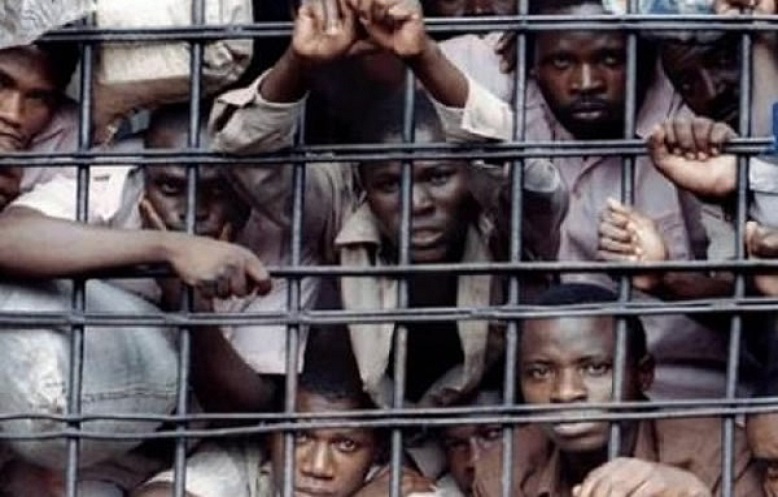
      While I was in custody, I witnessed something deeply disturbing. On a routine basis, weekly, and sometimes more frequently, Tigerbase operatives brought groups of detainees into the prison. A striking number of them had never been arraigned before any court. Many had spent prolonged periods in custody without formal charges. What was even more troubling was that a significant number of those transferred from the unit to the prison were individuals who could not afford the exorbitant sums running into millions of naira that they were allegedly demanded to pay for their release. In effect, liberty had become monetised. Freedom was no longer tied to innocence or guilt, but to financial capacity. Detention itself had become a tool of coercion and punishment for the poor.

      I listened to confessions volunteered to me by fellow inmates, not in the comfort of a lawyer’s office, but in the raw vulnerability of incarceration. Men spoke of brutal beatings, of prolonged suspension, of mock executions, and of crucifixion-style torture, where limbs were stretched, tied, and suspended in positions calculated to break the human body and spirit. They spoke of threats of death, of harm to family members, and of being forced to sign statements they did not write, admitting to crimes they did not commit. These were not isolated allegations. They were recurring patterns, told with the same fear, the same exhaustion, and the same sense of abandonment.

      What makes these abuses particularly alarming is that they persist in open defiance of clear provisions of the law. To properly contextualise this, permit me to quote directly from a public broadcast by the Secretary of the NBA Owerri Human Rights Committee, Ikechukwu Godwin Umah, delivered on 10 December 2025 to mark International Human Rights Day. He stated:

      “Section 36 of the Administration of Criminal Justice Law of Imo State provides for the Inspection of Police cells by the Chief Magistrates once every month. During this inspection, the chief Magistrates would sit in a location as a full court and hear cases, granting bail in deserving cases and ordering the arraignment of others within a specific time frame. We would usually inspect the detention centres within the premises of the police headquarters as well as divisions within the metropolis. Usually, they would remove the detainees they do not want us to meet and present the ones they want us to see. Most of the featherweight cases would have their detainees relocated from the cells while presenting to us the very serious ones whose bail applications the Chief Magistrate would refuse to grant either for want of jurisdiction or for the severity of their cases.*_

      “But guess what? No one dares enter the cells of the anti-kidnapping unit [Tigerbase Unit]. Against extant provisions of the law and without justification whatsoever, the successive officers in charge of the legal unit [OCs Legal] have succeeded in convincing the Commissioner of Police Imo State, Aboki Danjuma, that a minimum of three days’ notice was required to be given to the police before the chief Magistrate could be allowed to visit and inspect the cells. This aberration has given the police enormous opportunity to always relocate detainees of their choice ahead of the inspection. But in the case of the Anti-Kidnapping Unit, the gates of the unit are permanently locked without either entrance or exit until the exercise is over. Chief Magistrates have been locked out of the Tigerbase Unit severally.

      _*”The claim by the Imo State Police Command Public Relations Officer that no detainee spent more than two days in the anti-kidnapping unit without a court order is an outright falsehood. It is, however, known that a certain Magistrate, whom I am told retired recently, was in the habit of issuing remand orders without the defendants being arraigned in his court. This has seen some detainees moved straight from the Tigerbase Unit to the prison without stepping foot in any courtroom for arraignment.”*_

      That quotation is not rhetoric. It is a factual account from within the justice system itself. It confirms that the Anti-Kidnapping Unit has been deliberately insulated from judicial oversight and placed above the safeguards provided by law.

      The consequences of this insulation are already manifest. In Suit *No. CC/GB/35/2025, Ugorji v. Ajurunwa,* a customary court sitting at Mmahu in Ohaji/Egbema Local Government Area of Imo State, delivered judgment in a land dispute. Instead of complying with the judgment or exercising his right of appeal, the judgment debtor employed the services of the Tigerbase Unit. The operatives arrested the judgment creditor, led the judgment debtor to the disputed land, supervised his fencing of the land, and stopped judgment creditor from burying his deceased relative on that land. This occurred despite the judgment creditor informing them that a court of competent jurisdiction had already delivered judgment in the matter. In that moment, a court judgment was rendered useless by police action. When that happens, the rule of law is no longer under threat; it has been suspended.

      Let me be clear and fair. Kidnapping is a grave crime and on the rise in Imo State, and we appreciate the efforts of the Tigerbase Unit in combating it. The legitimate successes recorded by them in protecting lives and property are acknowledged. However, no operational achievement can excuse torture, extortion, illegal detention, contempt for court orders, or the systematic erosion of due process. Professional policing and respect for human rights are not competing ideals; they are inseparable obligations. When good work is used as a shield to cover unprofessionalism, corruption, and lawlessness, public trust is destroyed.

      What is required is not denial, propaganda, or defensiveness, but a total and transparent overhaul of the Anti-Kidnapping Unit in Imo State; an overhaul that restores judicial oversight, enforces strict compliance with the Administration of Criminal Justice Law, sanctions erring officers, and re-centres human dignity as the foundation of security operations.

      My own ordeal did not diminish my faith in the law; it deepened it. This report must not end as a press event. It must mark the beginning of accountability. For when law enforcement operates without restraint, justice becomes accidental, and freedom becomes fragile.

      Thank you for listening to me. ■

      Being remarks by Chinedu Agu, Esq., on the occasion of the public presentation of the “Tiger Base Files”, a report by the Coalition Against Police Tigerbase Impunity (CAPTI, at Social Action 20 Yalinga Street, Wuse 2, Abuja, on Monday 15th December, 2025.

      Classrooms Under Siege: What Niger Catholic school kidnapping reveals about Nigeria

      When Schools Become Targets: Nigeria’s Security Breakdown Exposed

      The abduction last month of more than 300 children and staff by gunmen from an elementary and secondary school in Nigeria’s north-central Niger State was dramatic in scale, but it represents just one more incident in the country’s tragic history of rural insecurity.

      That there has been no public explanation by the authorities over who exactly the kidnappers are – and why they are still at large – is symptomatic of a security system that is failing woefully to protect its citizens, analysts suggest.

      Click here to continue reading.

      Nigeria’s tax reform faces legal test after MPs claim tax laws were changed behind closed doors

      A group of lawmakers in Nigeria’s House of Representatives on Wednesday accused the executive of altering sweeping tax reform laws after they were passed by the National Assembly and signed by President Bola Tinubu, triggering fresh questions about the legality of the statutes now in circulation.

      The legislators alleged that versions of the tax laws gazetted and distributed by the Federal Ministry of Information contain substantive changes that were never approved by parliament, rendering them constitutionally defective and legally vulnerable.

      The issue was raised during plenary by Abdussamad Dasuki, a lawmaker from Sokoto State, who invoked a matter of privilege to draw attention to what he described as “clear discrepancies” between the harmonised versions of the tax bills passed by both chambers of the National Assembly and the copies officially gazetted by the Federal Government.

      According to Dasuki and other concerned lawmakers, the differences go far beyond clerical errors.

      A report compiled by the lawmakers—sighted by PUNCH but released anonymously because its custodian was not authorised to speak publicly—states that a House Select Committee on Post-Passage Alterations was constituted after concerns emerged that tax bills passed in 2025 had been changed after legislative approval.

      “The committee’s review, supported by forensic comparisons and independent legal opinions, establishes that substantive provisions were inserted, deleted, or modified after passage by both chambers,” the report said.

      It added that several oversight, accountability and reporting mechanisms approved by parliament were removed from the final Acts, while new coercive and fiscal powers appeared without legislative consent.

      “These include arrest powers, garnishment without court orders, compulsory U.S. dollar computation, and appeal security deposits,” the report noted. “These changes cannot be classified as clerical or editorial corrections.”

      The lawmakers argued that Sections 4 and 58 of Nigeria’s 1999 Constitution vest exclusive law-making authority in the National Assembly, leaving the executive with no power to alter legislation after passage.

      “Any post-passage alteration is ultra vires, unconstitutional, and void to the extent of the alteration,” the report said, warning that the affected provisions are vulnerable to judicial invalidation and could create serious legal and fiscal uncertainty.

      The committee said its findings were based on six annexures, including forensic comparisons of votes and proceedings, Clerk-certified as-passed bills, and final gazetted Acts, as well as formal legal opinions and side-by-side comparisons highlighting material deviations.

      Lawmakers warned that the alleged alterations undermine legislative supremacy, weaken parliamentary oversight and accountability, and expose Nigeria to litigation risks and potential loss of investor confidence.

      Among their recommendations were an immediate legislative review of all disputed provisions, rectification or re-enactment through due parliamentary process, and the summoning of officials responsible for the alleged alterations under Sections 88 and 89 of the Constitution.

      Speaking on the floor, Dasuki said his parliamentary privilege had been breached.

      “Mr Speaker, what was passed on this floor is not what is gazetted,” he said. “I gave my vote, it was counted, and I am now seeing something completely different.”

      He said he reviewed the votes and proceedings of both the House and the Senate and compared them with the gazetted versions currently being circulated.

      “What is before Nigerians—what is being sold to Nigerians at the Ministry of Information—is not what was passed,” Dasuki said, urging the House to revisit the original versions approved by the National Assembly.

      “This is a breach of the Constitution and our laws, and it should not be taken lightly by this Honourable House,” he added.

      In response, Speaker Tajudeen Abbas assured lawmakers that House leadership would investigate the allegations and take appropriate action in the national interest.

      The disputed laws are part of a far-reaching tax reform package signed by President Tinubu as part of his economic overhaul aimed at boosting revenue, widening the tax base and reducing Nigeria’s reliance on borrowing.

      The reforms—covering the Nigeria Tax Administration Act, the Nigeria Revenue Service Act and amendments to the Joint Revenue Board framework—were passed in 2025 amid persistently low government revenue, rising debt-servicing costs and mounting pressure on public finances following fuel subsidy removal and foreign exchange reforms.

      With implementation of the new tax regime slated for January 2026, the controversy has reignited concerns about legislative oversight, the integrity of Nigeria’s law-making process and the potential legal fallout for one of the Tinubu administration’s flagship economic policies.

      2026: What manner of federal budget!

      By PUNCH Editorial Board

      The Federal Government has once again plunged its fiscal operations into disarray, ordering ministries, departments, and agencies to roll over 70 per cent of the 2025 capital budget into 2026.

      This directive, outlined in the 2026 Abridged Budget Call Circular from the Ministry of Budget and Economic Planning, prioritises completing ongoing projects amid weak revenues and inflation pressures.

      Only 30 per cent of 2025 capital allocations will be released this year, with the rest forming the backbone of next year’s spending. No new projects are allowed.

      This development extends the budgetary carry-overs begun in 2023, as only 20 per cent of the capital components of the 2025 budget have been released as of August. Indeed, the 2023, 2023 supplementary, 2024 and 2025 budgets are still running concurrently just days before this fiscal year ends. This is chaotic.

      While the government has framed the latest directive as fiscal prudence, it exposes deep-seated flaws in budget preparation and execution. It signals fiscal indiscipline, a chronic failure that stifles infrastructure development, chokes businesses, and undermines Nigerians’ well-being.

      The government attributes the decision to revenue shortfalls and the need to align with priorities like national security, economy, education, health, agriculture, infrastructure, power, energy, and social safety nets for women and youth in all 8,809 wards under its Renewed Hope Agenda.

      The circular cites rising debt service, from N13.94 trillion in 2025 to N15.52 trillion in 2026, and a tighter overall envelope of N54.46 trillion available for the 2026 federal budget.

      Aggregate capital expenditure drops sharply to N22.37 trillion from N26.19 trillion, with MDA capital falling from N12.39 trillion to N8.67 trillion and project-tied loans halving to N2.05 trillion. The deficit balloons to N20.12 trillion, up from N14.10 trillion.

      The underlying assumptions of the budget include an oil benchmark price of $64.85 per barrel and an anticipated daily production target of 2.06 million barrels from the oil sector. However, the budget conservatively uses a benchmark of 1.8 million barrels to account for potential unexpected production disruptions, along with an exchange rate of N1,512 per $1.

      The Minister of Finance and Coordinating Minister of the Economy, Wale Edun, admitted on Tuesday that the Federal Government recorded a N30 trillion revenue shortfall in 2025, making just N10.7 trillion compared with the projected N40.8 trillion, underscoring the fiscal crisis.

      Yet, as Sheriffdeen Tella, an economics professor at the Olabisi Onabanjo University, notes, “There is no basis for any budget because what they had, they have not implemented.”

      With the 2025 implementation barely underway in December, projecting a N20 trillion deficit lacks an empirical foundation.

      It is troubling that this rollover departs from the January-to-December budget cycle, which was restored under the previous Muhammadu Buhari administration but now derailed under President Bola Tinubu.

      In addition, the late submission to the parliament flagrantly breaches the Fiscal Responsibility Act, which specifies that the proposals be laid before the chambers not later than September, the third time under Tinubu.

      Under the military, budgets were delivered without fail on January 1, with the Minister of Finance engaging the stakeholders in comprehensive breakdowns in the days following. It is an aberration that this culture of transparency is lacking under the so-called democracy. Nigeria should be going forward, not backwards.

      In this era, budgets are opaque, more so as at least three budgets run concurrently.

      MDAs rushed their respective budget submissions to beat the December 9 deadline via GIFMIS, and state-owned enterprises through the Budget Information Management and Monitoring System.

      This deepens the confusion in the concurrent 2023, 2024, and 2025 budget implementation, which the administration says it plans to resolve. As it stands, the 2026 budget is already late and appears dead on arrival.

      The President of the Nigerian Economic Society, Adeola Adenikinju, decries this as undermining predictability: “The 2026 budget should have been in the National Assembly for consultation so that we can keep to this January 1st thing. That makes our fiscal system predictable.”

      Similarly, Tella noted that the late approval of the Medium-Term Expenditure Framework, almost six months after the June deadline, will result in rushed scrutiny of budgetary provisions and allocations.

      It will allow National Assembly padding just like the 11,122 projects worth N6.93 trillion smuggled into the 2025 budget, including scandalous allocations such as N393.29 billion for 1,477 streetlight projects at an average cost of N266 million per unit!

      The World Bank has long flagged such disruptive practices. In its 2023 Nigeria Development Update, it warned that “persistent delays in budget approval and execution… erode fiscal credibility and complicate private sector planning.”

      Similarly, the IMF’s 2024 Article IV Consultation notes Nigeria’s budgets suffer from “unrealistic revenue assumptions and poor execution,” leading to implementation rates below 50 per cent for capital votes.

      A Collaborative Africa Budget Reform Initiative study identifies failures, including delays in preparation and the late passage of appropriation bills by the National Assembly, overambitious project lists, corruption, weak oversight, the non-release of CAPEX funds, diversion of funds to unbudgeted items, and project abandonment due to procurement bottlenecks.

      BudgIT, a civic-tech NGO, echoes this, criticising “inflated figures without visible improvements” and concurrent budgets that breed confusion.

      Despite N107.2 trillion appropriated since 2023, only 20 per cent (N4.99 trillion) of 2025’s N24.9 trillion capital was spent by mid-year, according to a PUNCH report. Unexecuted projects now exceed N17 trillion, badly affecting roads, power, healthcare, education and housing nationwide.

      Development economist Aliyu Ilias of CSA Advisory calls it “poor fiscal discipline,” arguing that it denies citizens project benefits and invites corruption: “How do we know what they are rolling over?

      The national debt has surged to N152 trillion from N97 trillion in late 2023, with debt service consuming 45 per cent of revenues, leaving little for growth. IMF data shows Nigeria’s capital spending averages just 3.5 per cent of GDP, far below the 7-10 per cent needed for emerging economies.

      The World Bank’s 2024 Public Expenditure Review attributes this to “fragmented planning and weak monitoring,” and recommends the deployment of digital tools and MTEF deadline enforcement under the Fiscal Responsibility Act, 2007, which provisions are largely ignored.

      The fallout of persistent poor budget planning and execution has been catastrophic. Infrastructure projects are stalled or abandoned by unpaid contractors, roads remain pothole-riddled, blackouts persist, and schools crumble, contrary to promises made under the Renewed Hope Infrastructure Plan.

      Businesses suffer the most. Since private sector investment is largely tied to predictable fiscal signals, erratic budgets drive away investors. SMEs are hit by poor power supply and escalating logistics costs, which often lead to business collapse in a hostile environment.

      However, Muda Yusuf of the Centre for the Promotion of Private Enterprise sees the rollover as “cleaning an anomaly” from backlogs, but admits that unrealistic assumptions plague planning efforts.

      The government must clean up its budgeting process. It must enforce January-December cycles via legal deadlines, digitise GIFMIS for seamless releases, coordinate the Budget and Economic Planning and Finance ministries, and publish real-time implementation reports.

      The parliament should ensure rigorous oversight of the budget, ensuring realistic revenue projections and underlying assumptions, rather than seeking its share through padding and frivolous “constituency projects”. Crucially, lawmakers must ensure that the government gets value for money.

      Nigeria cannot borrow into oblivion with the fiscal deficit rising while projects remain stagnant. The government must refloat its finances by transparently disposing of assets, beginning with drainpipes like the NNPCL’s refineries, to reduce the deficit. The tax reforms should be carefully implemented to encourage compliance and higher inflows.

      Crucially, the Tinubu administration must rein in waste and needless overheads. It must rise above political considerations by significantly cutting the government’s costs along the lines proposed in the Oronsaye report.

      ‘Catastrophic’ delays and political favouritism crippling Nigeria’s judiciary — Oditah

      • Warns Nigeria’s justice system is failing investors and the poor

      Nigeria’s judiciary is locked in a crisis of delay, technical obsession and misplaced priorities that is choking economic growth, eroding public trust and entrenching inequality, senior lawyer Fidelis Oditah KC, SAN warned on Monday.

      Delivering a keynote address at the 40th Call to the Bar anniversary celebration of his 1985 Nigerian law School set at the Oriental Hotel in Lagos, Oditah said Nigeria’s courts have become gridlocked by decades-long litigation, procedural ambushes and what he described as a self-destructive fixation on technicalities over justice.

      “The problem in Nigeria is not access to justice,” he said. “It is exit from justice.”

      Oditah argued that while the judiciary should be a driver of democracy, economic development and social cohesion, it has instead become a bottleneck that discourages investment, prolongs disputes and denies ordinary Nigerians meaningful remedies.

      He cited cases that lasted between 20 and 70 years, including the landmark Okafor v Nweke land dispute, which began in 1955 and ended in 2025 after seven decades of litigation, not on the merits but because court documents were signed in the name of a law firm rather than an individual lawyer.

      “This is hyper-technicality at its most destructive,” Oditah said, warning that Nigerian courts increasingly nullify entire proceedings over procedural defects that should be curable.

      He traced the gridlock to chronic underfunding, weak case management, outdated infrastructure, political interference in judicial appointments, and what he described as a dangerous conflation of jurisdiction and admissibility.

      According to Oditah, Nigerian courts routinely treat procedural irregularities—such as signing errors, filing defects or failure to meet preconditions—as jurisdictional flaws, rendering years of litigation worthless.

      “This misunderstanding of jurisdiction is strangling our justice system,” he said, adding that many issues wrongly labelled as jurisdictional should instead be treated as matters of admissibility, which can be waived.

      The senior advocate also criticised the culture of endless interlocutory appeals and adjournments, describing them as weapons in an “unending war of attrition” that benefits delay over resolution.

      But the most damaging distortion, Oditah said, is the elevation of electoral and political litigation above all other forms of justice.

      He noted that constitutional timelines and special tribunals ensure election disputes are resolved within months, while land, commercial, labour and human rights cases languish for years or decades.

      “This has created a two-tier justice system,” he said, “where politically connected litigants get fast-track justice and ordinary Nigerians get trapped in procedural quicksand.”

      He cited data showing that thousands of judges were diverted to election tribunals during the 2023 general elections, forcing the suspension of regular court business nationwide. In contrast, socio-economic disputes affecting livelihoods, businesses and property rights were left unresolved.

      The consequences, Oditah warned, are severe.

      Judicial delay discourages domestic and foreign investment, weakens contract enforcement, cripples small and medium-sized businesses and fuels capital flight. He pointed to long-running commercial disputes involving aircraft leases, oil contracts and arbitral awards that have remained unresolved for more than a decade.

      International observers have taken notice. Nigerian courts have been described by foreign judges as “catastrophic,” “sclerotic” and “hyper-technical,” damaging the country’s reputation as a place to do business.

      Beyond economics, Oditah said the gridlock undermines democracy itself.

      “When citizens lose faith in the courts, they turn to self-help, mob justice and violence,” he warned. “That is how the rule of law collapses.”

      He also criticised Nigeria’s derisory cost regime, arguing that token cost awards encourage frivolous litigation and penalise successful parties, unlike arbitration where losing parties routinely pay millions in legal costs.

      To reverse the crisis, Oditah proposed sweeping reforms, including better funding, zero tolerance for judicial corruption, stronger case management, limits on interlocutory appeals, clearer jurisdictional boundaries between courts, realistic cost awards, and a merit-based judicial appointment system free from political patronage.

      He said many of the solutions are “low-hanging fruits” that require judicial courage rather than constitutional amendments.

      “Our justice system will not fix itself,” Oditah said. “Credible justice is the product of deliberate choices. Unless we make those choices, no amount of funding will cure the gridlock.”

      Ex-Harvard Medical School morgue manager jailed for stealing and trading in human body parts

      58-year-old former morgue manager at Harvard Medical School, Cedric Lodge, has been sentenced to eight years in prison for stealing and selling human body parts donated for scientific research, according to the United States Department of Justice.

      Lodge was sentenced on Tuesday after pleading guilty in May to trafficking in stolen human remains. 

      Prosecutors said the illegal activity occurred from 2018 through at least March 2020 and involved body parts including internal organs, brains, skin, hands, faces and dissected heads, according to CBS News.

      The Justice Department said Lodge abused his position at the prestigious medical school, which is located near Boston, to remove donated remains without authorization. 

      Harvard University confirmed that Lodge was dismissed from his role in May 2023 following the investigation.

      Investigators revealed that Lodge, alongside his wife, Denise Lodge, transported the stolen body parts from the medical school to their residence in Goffstown, New Hampshire, as well as to other locations in Massachusetts and Pennsylvania. 

      The remains were taken “without the knowledge or permission of his employer, the donor, or the donor’s family” before being shipped to buyers in other states.

      Denise Lodge, 65, was sentenced to one year in prison, the Justice Department said. She pleaded guilty in April 2024 for her role in the scheme.

      Reacting to the sentencing, Wayne A. Jacobs, special agent in charge of the FBI’s Philadelphia Field Office, said, “Today’s sentencing is another step forward in ensuring those who orchestrated and executed this heinous crime are brought to justice.”

      Christopher Nielsen, Inspector in Charge of the Philadelphia Division of the U.S. Postal Inspection Service, also condemned the crimes, saying, “The trafficking of stolen human remains through the US Mail is a disturbing act that victimises already grieving families while also creating a potentially hazardous situation for Postal employees and customers. 

      “I hope our efforts, and these sentencings bring some amount of closure to those affected by this terrible crime.”

      According to the Justice Department, many of the human remains sold by Cedric Lodge were later resold by buyers at a profit. 

      Authorities added that several of those involved in purchasing the stolen remains have already been sentenced to jail terms or are still awaiting sentencing.

      SaharaReporters

      Ohuabunwa returns to Ajayi Crowther Memorial School for expanded ‘Morning Flight’ outreach

      Ten years after an impactful crusade and empowerment programme at Ajayi Crowther Memorial School, Port Harcourt, renowned broadcaster and Group Managing Director of Multimesh, Sir Godfrey Ohuabunwa, is set to return for an even grander initiative.

      This time, through his humanitarian organisation, Help Without Boundaries Initiative (HWBI), Sir Godfrey, alongside his wife, Queen Angela Ohuabunwa, will lead the 2025 Morning Flight Soul-Reaching Outreach and Crusade.

      The highly anticipated event, scheduled to build upon the success of its predecessor, promises a comprehensive blend of spiritual ministration, fervent prayers, faith-healing sessions, and crucial practical humanitarian services.

      HWBI aims to address the multifaceted needs of attendees, offering not just spiritual solace but tangible support for their physical well-being.

      Central to the outreach will be a robust medical care programme and a dedicated food bank. These provisions are designed to alleviate immediate burdens for attendees, demonstrating HWBI’s commitment to holistic care.

      Furthermore, the initiative will leverage this opportunity to award scholarships and provide empowerment opportunities to deserving individuals, underscoring HWBI’s ongoing mission to foster transformation and break down barriers to progress.

      Expectations are running high for the 2025 edition, with organisers confident that it will surpass last year’s significant impact.

      The event is poised to leave a lasting positive impression on the Port Harcourt community, serving as a powerful testament to HWBI’s unwavering dedication to its core principles of hope, compassion, and empowerment.

      Founded ten years ago by Sir Godfrey Ohuabunwa, HWBI has a proven track record of positively impacting numerous lives.

      The initiative’s scholarship programmes, in particular, have been a source of profound change, with many beneficiaries consistently testifying to their academic advancements and personal successes.

      These success stories stand as powerful evidence of the programme’s effectiveness in fostering opportunity and enabling upward mobility.

      Speaking about his motivation, Sir Godfrey Ohuabunwa has consistently emphasised his deep-seated desire to give back to the community.

      He points to the increasing number of indigent individuals who openly attest to the sincerity and transformative impact of his humanitarian work as clear validation of his genuine dedication to service and humanity.

      The upcoming Morning Flight outreach is expected to further amplify this commitment and reach even more lives in need.
      It would be recalled that Ohuabunwa had last year refurbished and fully restored classroom blocks with school desks and teaching aids at the same school before the Community installed him as a traditional chief.

      TIPS