By Lillian Okenwa
Nigeria’s revenue story is improving. Its governance story is not.
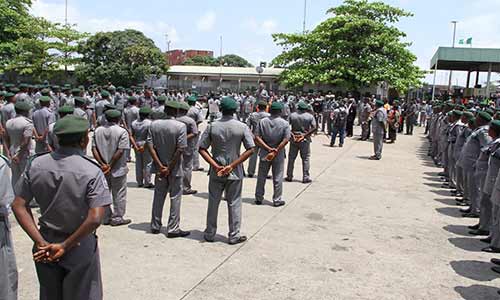
The Nigeria Customs Service (NCS) says it collected a record ₦7.281 trillion ($4.7 billion) in 2025, one of the highest non-oil revenue performances in the country’s history. The figure exceeds the agency’s target by more than 10 percent and marks a 19 percent increase from the previous year.
Yet for most Nigerians, the announcement has raised a familiar and uncomfortable question: what happens to the money?
The revenue milestone was disclosed in Abuja by Comptroller-General of Customs Bashir Adeniyi during the 2026 World Customs Day celebration. Adeniyi credited reforms, digital tools, and improved compliance, insisting the gains were achieved without stifling legitimate trade.
“These figures are not for self-congratulation,” Adeniyi said. “They demonstrate that reform is producing tangible outcomes.”
But Nigeria’s recent history suggests that strong revenue performance rarely translates into improved living conditions.
Despite decades of oil wealth, rising tax receipts, and repeated revenue windfalls, Nigeria remains mired in failing infrastructure, chronic power shortages, overstretched hospitals, and deepening poverty. More than 133 million Nigerians—over half the population—are classified as multidimensionally poor, according to official figures.
The credibility gap is widened by the country’s long record of corruption and mismanagement. Since its independence, Nigeria is estimated to have lost over $582 billion to corruption and illicit financial flows. Even recovered stolen assets have not escaped controversy. Billions of dollars looted by former military ruler Sani Abacha were returned to Nigeria over the past two decades, yet citizens struggle to point to any visible, transformative public projects funded by the recovered money.
In a further blow to public trust, former Attorney General Abubakar Malami is currently facing prosecution over allegations linked to the mismanagement of recovered funds, fuelling concerns that looted money is simply recycled through new hands.
Nigeria’s oil sector remains a major drain. Despite being Africa’s largest crude producer, theft and smuggling have reportedly cost the country billions of dollars annually. Outside oil, systemic leakages persist through inflated contracts, opaque procurement, and so-called “ghost workers” embedded across public institutions.
Transparency International continues to rank Nigeria among the world’s most corrupt countries. In its latest Corruption Perceptions Index, Nigeria scored 26 out of 100—well below the global average.
Meanwhile, the social consequences are stark. Youth unemployment remains among the highest globally. Public investment in health and education is weak.
And despite allocating over ₦17 trillion to security between 2021 and 2025, violence, banditry, and kidnappings continue to spread across large parts of the country.
Customs revenue growth, analysts say, highlights a deeper paradox: Nigeria’s problem is not revenue generation—it is governance.
Without transparent tracking of public funds, independent oversight of revenue agencies, and credible prosecution of financial crimes, record collections risk becoming accounting achievements with little impact on real lives.
For international observers, the Customs announcement underscores a troubling reality: Africa’s largest economy is generating more money, yet delivering less for its people.