Home Blog Page 133

Gumi and his terrorists, By Lasisi Olagunju

During the Kiriji War of the nineteenth century, a grim parable of war came and became a subject of racial slur and morbid joke. An Oyo-Ibadan warrior, disarmed and cornered by an Ijesa fighter, collapsed to the earth and begged for his life. The Ijesa man, scornful of pleas, mocked him with a cruel logic: he threw his machete at the captive and ordered him to beg the blade, not the man. “Ada lo a bè; èmi kó a bè.”

The unarmed warrior rose, took the weapon, and killed his captor. The war taught its lesson: in the theatre of enemies, negotiation, just as begging, is surrendering the weapon that will undo you.

Sheikh Ahmad Abubakar Mahmud Gumi is a trained soldier and a medical doctor. He left the Nigerian army as a captain. Two days ago, Gumi was on Facebook calling on Nigeria to arm the enemy with begging and surrender. He wrote: “They say: negotiation doesn’t work. It’s a lie. It worked with militants in Niger Delta creeks. Rather, it is war that doesn’t work, 16 years we’re still fighting BH (Boko Haram) and 11 years fighting bandits. It’s stupidity doing the same thing and expect different results.”

Imagine if Gumi had remained in the army, and had risen to become a General and Chief of Army Staff, and was asked by his Commander-in-Chief to fight and defeat Boko Haram in the North East, bandits in the North West and kidnappers in Niger, Kogi and Kwara States. What would have become of that Commander-in-Chief and the order he gave?

If you think Gumi would have carried out that order and spare his lord, the president, it means you haven’t been following his consistent advocacy on how to treat terrorists. He wants negotiation with the enemy as the sure way to peace.

He didn’t start today. In a February 2021 interview with the AIT, Gumi came out with a weird suggestion that bandits destroying his North were taught kidnapping by Niger Delta militants: “They learnt kidnapping from MEND (Movement for the Emancipation of the Niger Delta). I do not see any difference. They were the first victims of rustling, their cattle is their oil,” he said.

In a May 2021 BBC report, Gumi was quoted comparing terrorist bandits with coup plotters: “If the country could pardon coup plotters who committed treasonable offences in the era of military administration, the bandits can as well enjoy similar forgiveness even better under democratic rule,” he said.

In that same report of more than four years ago, he said what he has been saying repeatedly recently: “Kidnapping children from school is a lesser evil because in the end, you can negotiate and now bandits are very careful about human lives.”

Nigeria dodged a bullet in Gumi, exiting the army before his Iroko became problematic, exacting tributes. How many more Gumis do we have in the officer corps of the Nigerian Army? Imagine him rising to the very top, becoming a General, and making a case for the enemy.

Born in 1960, Ahmad Gumi arrived as son of the late Sheikh Abubakar Mahmud Gumi, one of Northern Nigeria’s most influential and outspoken Islamic scholars, who also served as Grand Khadi of the Shariah Court of Appeal. From anyone from such a lineage you would expect moral clarity, intellectual rigour, and principled leadership. Those are expectations that make today’s Gumi’s public interventions impossible to treat lightly.

Anyone who chose an early formation as Gumi did clearly chose a path that combined science, discipline, and service. The sheikh studied medicine, then enlisted in the Nigeria Defence Academy, and served as a medical officer in the Nigerian Army Medical Corps. Rising to the rank of captain, it is given that his training was to heal and also to understand the brutal arithmetic of conflict. At the NDA, people who know say every cadet was taught that violence against the violent is neither abstract nor negotiable. The soldier-doctor is schooled in a hard truth: forces that threaten life must be subdued decisively, they are not candidates for indulgence and accommodative rhetoric.

Gumi’s academic journey and his present politics are diametrically irreconcilable. After retiring from military service, Gumi relocated to Saudi Arabia where he immersed himself in Islamic scholarship. In Mecca, he earned a PhD in Usul al-Fiqh, the principles that govern Islamic jurisprudence. I do not think people of knowledge would dismiss this credential as casual. My findings tell me that his specialisation, Usul al-Fiqh, “concerns itself with moral reasoning, justice, public interest (maslahah), and the limits of tolerance in the face of disorder.” People of knowledge say his area of Islamic scholarship prioritises justice for the victim, and guiding societies away from chaos. They say his background makes his advocacy for negotiating with terrorists troubling, troublous and self-deconstructing.

It is hard to hear or read Gumi and not see contradiction hardening into failure of his callings: he was trained to protect life and confront mortal threats without illusion. He was also schooled to appreciate the value of justice. He failed spectacularly in all three. 

The more we read some people’s lives, the more we see contradiction in starker hues. Where in his religious books, including jurisprudence, did Gumi read sanctifying terror and asking society to wear “soft gloves” when faced with those who murder the innocent and destabilise the society? Should we not tell Gumi that to blur the line between justice and appeasement is to betray both the uniform he once wore and the faith he now invokes? Someone who saw me write this said that in matters of terror it is neither courage nor wisdom to preach accommodation.

How do we tell a soldier, doctor and a PhD that it is suicidal to confuse mercy with surrender? Yet we have to tell him that what he advocates is suicide. We saw it in the Kiriji War story above. The enemy appeased today is the death of tomorrow.

Why is it difficult for Gumi and his supporters to see that Boko Haram, banditry and other criminal gangs in Northern Nigeria are not pursuing the same objectives as the militants of the Niger Delta? Terror organisations destroying the very basis of the existence of Gumi’s society are not misunderstood political movements waiting for a conference table; they are a machinery of horrendous violence who kill and abduct without borders. They are forever dangerous to freedom and to, even religion.

Governments across continents have long understood this danger. Britain’s Margaret Thatcher vowed to never negotiate with the IRA terrorists: “We do not negotiate with terrorists,” she declared. US’s George W. Bush bluntly insisted that: “You’ve got to be strong, not weak. The only way to deal with these people is to bring them to justice. You can’t talk to them. You can’t negotiate with them.” His position echoed the same logic as Thatcher’s. Scholars such as Paul Wilkinson and Walter Laqueur argue that talks with terrorists confer recognition, and recognition, like sunlight to mold, allows terror to spread. As some others observed, terrorism seeks legitimacy more than victory; it longs to be seen as a political equal rather than a criminal aberration. To grant Gumi’s wish is to reward criminals and criminality; defeat and destroy society.

History and scholarship teach that there is a moral grammar to politics, and terrorists deliberately violate it.

Paul Gilbert is a British moral and political philosopher who has been very stellar for his work on terrorism, political violence, war ethics, and the moral limits of negotiation. My reading of his works shows that he has written extensively to draw a very thick line between terrorism and legitimate political struggle. He argues that because terrorism targets civilians, it collapses the moral conditions that make dialogue, compromise, or negotiation intelligible. More directly, it is his position in a 1994 article that by engaging in violence against civilians, terror groups had breached the “conventions of debate required for negotiations”. Another scholar, Jan Narveson, also hold that ‘terrorists’ put themselves in “Hobbes’ state of nature with respect to us” and thus do not deserve a roundtable treatment. “Engaging with terrorists would translate their violence into a legitimate means to be heard and thus lead other groups to engage in similar activities.” That quote, if you don’t mind, you find with other viewpoints in Harmonie Toros’ ‘We Don’t Negotiate with Terrorists!: Legitimacy and Complexity in Terrorist Conflicts’.

In plainer terms, what Gumi professes is equal in criminal foolishness as one bargaining with the arsonist while the house is still burning.

Gumi, soldier, physician and religious scholar, wants Nigeria to turn crime into curriculum. He must stop what he is saying or be asked to stop. In his prescription is quiet injustice to those who choose peaceful paths. The state should stop pretending that it does not know how to tell him that what he preaches is that violence pays.

Some would say that his call is a camouflage for politics. Gumi wants to negotiate with criminal bandits. Negotiate with whom among the disparate leaders of the terrorists? Does this explain why previous peace agreements entered into with bandits by the north failed? In the North, communities organise colourful engagements with those destroying them today; tomorrow they receive death from those who visited yesterday. Yet, one of their leaders say they must keep negotiating. The enemy is right inside their bedroom.

Why would a religious leader seek to make a political class of kidnappers, and elevate terrorists to statesmen? In a normal society, it won’t be difficult to accept that negotiation with terror undermines citizens who pursue change without violence, telling them, after the fact, that bombs speak louder than ballots. Rejecting Gumi and his doctrine of negotiation with terrorists will not be a rejection of peace, it will be a defensive wall against assaults on peace and justice. Anyone who is not a lover of terrorism would know that criminalization, not conversation, is the language the rule of law understands.

People who wage war against society deserve war. To approach the enemy with votaries of appeasement is to strengthen them to do more harm. We must never be forced to misunderstand who the enemy is. Peace, like poetry, has rules; when those rules are shattered by criminal bloodshed, the answer is justice and protection, not glass-clinking at the negotiating table.

In the savannah lived a hyena who seized the riverbank and called himself its lord. When drought came and society was starved of the river’s nourish, other animals sent the tortoise to negotiate access, carrying calabashes of honey and promises of peace. The hyena laughed, took the gifts, and demanded more; each concession tightening his grin. “Talk is cheaper than teeth,” he said, and the river remained closed.

At last the terrorised animals learned what the tortoise had not: the hyena fed on bargaining itself. Each plea taught him the shape of their fear. So the herds moved together, guarded the springs, and starved the hyena of leverage. Access to the river opened again, not because words softened the hyena, but because unity denied him profit. And the forest remembered: when a predator thrives on terror, negotiation becomes its meal.

The views expressed by contributors are strictly personal and not of Law & Society Magazine.

ECOWAS Court case targets Nigeria over alleged Army killings of women protesters

Nigeria has been dragged before the Economic Community of West African States (ECOWAS) Community Court of Justice over the alleged killing of women protesters by security forces in Adamawa State.

The suit was filed by Cadrell Advocacy Centre, a non-governmental organisation that provides legal assistance to victims of violence, on behalf of women reportedly killed during a peaceful protest and their surviving family members.

Read Also: Just In! Horror as Nigerian soldiers escorting Brigade Commander in Yola shoot dead seven protesting women, many injured

The case stems from a demonstration held on December 8, 2025, in Lamurde Local Government Area of Adamawa State. The protest was organised by women who gathered along a major roadway to express concern over the enforcement of a government-imposed curfew amid ongoing clashes between the Bachama and Chobo communities.

Read Also: Army blames local militias, denies killing women protesters in Adamawa, for attack

According to court filings, the protest was peaceful until soldiers of the Nigerian Army arrived at the scene. The applicants allege that after protesters temporarily blocked the road, one soldier fired shots into the air, after which other soldiers opened live fire on the women.

The suit claims that at least nine women were killed instantly, while several others sustained gunshot injuries.

Amnesty International Nigeria has also confirmed and condemned the incident. In a statement cited in the filing, the human rights organisation said the killings were carried out by soldiers of the Nigerian Army, based on eyewitness accounts and testimonies from victims’ families.

The Nigerian Army has denied responsibility for the deaths, blaming a local militia for the violence.

However, the applicants argue that no soldier has been arrested, prosecuted, or disciplined in connection with the incident, and that no compensation has been paid to the families of the deceased.

Cadrell Advocacy Centre is asking the ECOWAS Court to declare that the killings constitute violations of multiple provisions of the African Charter on Human and Peoples’ Rights, including Articles 1, 3, 4, 5, 9, and 26, and to hold Nigeria liable for the actions of its military.

The suit further seeks an order compelling Nigeria to conduct an independent, impartial, and transparent investigation into the killings and to prosecute those responsible. The applicants are also requesting compensation for injured victims and general damages totalling ₦10 billion ($X million) for the alleged unlawful deprivation of life.

The case was filed by legal counsel Evans Ufedi and Emmanuel Olalekan and is to be served on the Nigerian Army, the Attorney-General of the Federation, and the Federal Ministry of Defence.

    Farewell, Professor Adamu Baikie

    This accomplished scholar, university administrator and public servant has left behind huge, definitive legacies, writes MONDAY PHILIPS EKPE

    Aoiri Obaigbo, a distinguished alumnus of the University of Benin, Benin City (Uniben) couldn’t have captured the quintessential Professor Adamu Baikie better on his Facebook account: “We nor go gree o/ We nor go gree/ Adamu Baike/ We nor go gree! Don’t ask me why we were chanting at Ekenwan Campus, we, students of the greatest, of the greatest, greatest Uniben. It was probably in 1984, and I have forgotten what we were sounding so fierce about. In those days, we didn’t need the rubber stamp gavel of Akpabio to trigger ‘Aluta’ songs and dance of a forest. We shall pluck leaves and stir some dust.

    “Then a rumour blew in that Professor Baikie had driven into our campus. Someone shouted, ‘Lock the gate, lock the gate!’ He should have kept his mouth shut. Division sprang up. ‘For what?’ ‘Is he a prisoner?’ Whether we shut or do not shut the gate, the campus belonged to Adamu Baikie. In the evening, students were enthusiastic about how he mounted something and spoke nicely to the students. If I were Leo Oronsaye, I would have captured my first vice chancellor on a dais talking nicely to irate young men and women. Now that he has passed, I remember him more vividly standing elevated.” Courageous. Empathetic. Charming. Disarming….

    I had my undergraduate education at Uniben in the 1980s under two vice chancellors, namely Baikie and, later, Professor Grace Alele Williams. Writing this tribute to the former exactly on the 93rd posthumous birthday of the latter accentuates my nostalgia. Professor Alele Williams who encountered plenty of storms left behind several indelible achievements nonetheless. And Baikie, known more as northern Nigeria’s first professor of education, gave an enduring account of himself against all odds.

    Those two great Nigerians were true barrier breakers. Coming from the north at a time when it could only boast of very few professors, Baikie knew that it would take more than his curriculum vitae to convince the people down south that he merited that appointment. On her part, Alele Williams was acutely aware that the gender-galvanised prejudices which had so far probably hindered women from attaining that position in Africa and elsewhere were not cosmetic and would not be dethroned by a mere feminine mystique. She was instantly confronted by a university community that couldn’t figure out quickly why it was its own lot to host that novelty.

    Part of Professor Williams’ initial problems was that her leadership style was constantly compared with Baikie’s who had earned his own flowers – after surmounting some primordial hurdles – as a worthy, competent and admirable helmsman. Again, Alele’s travails couldn’t be divorced from the shock of having a woman call the shots in an unfamiliar terrain. But, thankfully, by every decent standard, both education majors became Uniben legends, having successfully defeated the demons of their time and left the nation’s last of the first-generation universities better than they met it.

    Baikie’s career is a classic grass-to-grace narrative. Born in Zaria in 1931, his father who worked at some point with some Christian missionaries latter became a storekeeper with Nigerian Railway Corporation. The young Adamu attended primary, middle schools and teacher training college in Zaria; travelled to Gusau to teach after his Grade III; returned to Zaria in 1953 for his Grade II and became a headmaster afterwards; finished his first tertiary schooling in 1962 and was promptly recruited by Ahmadu Bello University (ABU) Zaria as a graduate-in-training and sent to America for postgraduate studies with the support of United States Agency for International Development (USAID). And returned to ABU to lecture before heading back to the US.

    A PhD was in his bag by the time he journeyed home in December 1969 to head ABU’s education department the following year. There, professorship came his way in 1971 at 40 years. ABU was the only university in the north then, and Baikie only had professors like Ishaya Audu, Iya Abubakar and Umaru Shehu as his seniors from the same region. His Uniben posting in 1978 wasn’t anywhere in his imagination. So, accepting it wasn’t easy. But he already had in-built mechanisms to checkmate negativity and self-defeat. That mindset propelled him to also scale the challenges in his next two vice chancellorships at the National University of Lesotho (1988-1996) and Nasarawa State University, Keffi (2001-2009), and the other less prominent offices he held throughout his active years on earth. Baikie truly lived a life of selfless service and devotion.

    His interview with Daily Trust, published on February 19, 2017, revealed a bit about his well-groomed personality: “You must work very hard to prove yourself. My first test was to go to Benin, a place I had never been to. In all the places I served as vice chancellor I put three things into my head, namely God, the North and my family. These were my guiding principles. I worked to make sure I did not disappoint the people who sent me there and the people I represented. How would I face my people, particularly my family, if they heard that I stole money somewhere? So, I went all out to give my best.”

    Another personal recollection of his college days provides a window into his illustrious past: “There was absolutely no issue of religion, tribe or any other sentiment. I was responsible for ensuring that the allowances were paid. I was the one who checked the list, and if I certified the list, the payment would be made. There was no discrimination at all. I can remember that when there was a strike at the College, Sardauna (Ahmadu Bello) came down to Zaria with his top ministers and asked for the leader of the northern students. And I was the one.” Here was a Christian from the north east whose father had made Zaria and Kano his home, proudly flying the flag of the then heavily educationally disadvantaged part of Nigeria.

    Quite sadly, however, the north that the late titan spoke glowingly about appears to have faded away. The one north that the late Sardauna forged so wisely has since been decimated mainly by the regional leaders who took over from him. It’s reassuring though that true to his stable character, Baikie’s faith in his region and country stood unshaken till his last breath.

    Obaigbo is right. Even in death, the holder of the Commander of the Order of the Niger (CON) stands uplifted and unconquered by the numerous vicissitudes that are threatening to bring the nation to its knees.

    Ekpe, PhD, is a member of THISDAY Editorial Board

    How poor oversight, regulatory failure expose Nigerians to slow death from battery recycling (2)

    Men and women known as pickers salvage dead batteries from the streets of Lagos and sell them to companies that recycle the lead inside (CREDIT: Taylor Turner and Grace Ekpu for The Examination)

    The residents who tested positive for lead poisoning live between 100 and 500 metres from True Metals Nigeria Limited and Everest Metal Nigeria Ltd, two of the most prominent companies engaged in Used Lead-Acid Batteries (ULABs) in Ogijo.

    This is the second part of this two-part investigation. You can read the first part here.

    The lead found in the blood of residents and in the soil of Ewu Oloye, Ipetoro, and Ewu Eruku communities in Ogijo, a border town in Ogun State, pointed to a clear source: the cluster of battery-recycling factories that powers Ogijo’s small economy while slowly poisoning the people and their environment.

    Residents who tested positive for lead poisoning live within 100 to 500 metres of True Metals Nigeria Limited and Everest Metal Nigeria Ltd, two of the most prominent Used Lead-Acid Batteries (ULAB) recyclers in Ogijo.

    Read Also: The Ghost of Minamata and Nigeria’s pivotal fight against mercury pollution

    True Metal Nigeria Limited is a metal recycling facility located at Km-16, Ikorodu-Sagamu Road, Ogijo, Ogun State. According to its website, the company specialises in the export of non-ferrous metals, including lead alloys, lead ingots, and copper products.

    Click here to continue reading.

    The task ahead for Nigeria’s new Minister of Defence

    By Bulus Y. Atsen, Esq.

    Nigeria’s new Minister of Defence is new in title, not in terrain. He assumes office already fluent in the system he has been asked to reform. That familiarity is both an advantage and a burden. The country will measure him not by intention, but by whether he can change outcomes long assumed to be fixed.

    Nigeria’s security crisis is no longer defined simply by guns, checkpoints or uniforms. It is defined by trust and by its erosion. What the country now confronts is violence that has moved beyond the language of insurgency or conventional crime. Carl von Clausewitz observed that war is a continuation of politics by other means. In Nigeria, insecurity has begun to resemble governance by violence. Armed groups tax communities, control territory, negotiate ransoms and decide movement. The Defence Minister is therefore not confronting a single enemy, but a broken social contract: the strained relationship between the state and the people it exists to protect.

    Nigeria’s security architecture was inherited rather than designed, with a measured philosophical evolution away from its origin. From the colonial era through independence, it was built for a centralised state facing conventional threats. The 1963 Constitution reflected this assumption, placing security within a federal framework that presumed cohesion and limited internal fragmentation. The 1979 Constitution, shaped by military rule, reinforced central control over the armed forces, reflecting fears of secession and disorder rather than contemporary dispersed internal threats.

    By the 1999 Constitution, Nigeria recommitted to democracy but retained much of the same security logic. Section 14(2)(b) declares that the security and welfare of the people shall be the primary purpose of government. Yet practice has drifted from promise. The constitutional focus on national security has not been matched with equal attention to community trust, local intelligence and civilian cooperation as pillars of effective defence.

    Nigeria’s challenge is not merely that the enemy is within, but that force has been applied without resolving the conditions that sustain violence. Sun Tzu warned that the supreme art of war is to subdue the enemy without fighting. Nigeria has fought extensively, yet the underlying drivers of conflict remain. Operations succeed strategically, but often fail tactically, revealing a strategic defect. Intelligence failure at the implementation level, weak local trust and unresolved grievances continue to regenerate violence.

    Recent data support this diagnosis. The Nigerian Bureau of Statistics Crime Experience and Security Perception Report 2024 indicates that a significant proportion of households experienced at least one form of crime within the reporting period, while public confidence in security agencies remained low. The report also notes that fear of crime is widespread, even among those not directly victimised. This perception gap is as damaging as the violence itself.

    Banditry illustrates the problem. It is often treated as a crime in isolation. It is not. It is a method. It functions as a cover for deeper criminal economies: illegal mining, arms trafficking, kidnapping markets, cross-border smuggling and organised extortion. A response focused only on armed confrontation addresses symptoms while leaving structures intact.

    Sun Tzu also warned that knowing the enemy begins with understanding the nature of the war being fought. Nigeria is not engaged in a traditional war. It is confronting organised criminality operating in spaces created by weak institutions, slow justice and public distrust. Force alone, therefore, struggles to deliver sustainable outcomes.

    One visible consequence of this distrust is the rise of opportunistic self-help actors. Across several states, informal negotiators and vigilante groups now claim to mediate kidnappings, arrange ransom payments and guarantee outcomes. They present themselves as filling a vacuum. Many exploit it. Their growth reflects a declining confidence in official channels to deliver timely rescue or accountability.

    This is not only a criminal issue but a sociological one. When families turn to unregulated intermediaries in moments of crisis, they are expressing a loss of faith in the state. Parallel power centres emerge. Incentives distort. Criminal activity becomes normalised rather than deterred.

    Thucydides opined that societies decay when fear replaces trust in public institutions. Nigeria has reached that point in parts of the country, not because law is absent, but because it is inconsistently felt. Forceful eviction and reoccupation of local communities, and ransom negotiations rather than rescue, are not just a loss of sovereignty, but a pledge of allegiance.

    The correctional system offers further evidence. Official figures show that Nigeria’s custodial centres operate far beyond capacity, with occupancy levels exceeding 150 percent nationwide. Many detainees are awaiting trial. Overcrowding strains resources, weakens rehabilitation and reinforces public perception that enforcement prioritises arrest over investigation. This runs counter to the Administration of Criminal Justice Act, which emphasises efficiency, proportionality and the reduction of pre-trial detention.

    The courts have repeatedly warned against this culture. In Eda v. Commissioner of Police (1982) 3 NCLR 219, the court held that arrest should not be used as a tool of oppression or investigation. Policing that arrests before investigating undermines legality and public cooperation.

    At the centre of the Minister’s task is legitimacy. Security in a constitutional democracy rests on the idea that coercive power is exercised in service of civilian life, not in substitution for it. Soldiers are trained for combat and territorial defence. They are not designed to administer civilian society or resolve routine criminal disputes. Where military force drifts into daily civil affairs, it signals institutional failure elsewhere.

    This distinction matters in practice. When communities encounter a uniformed force, where they expect lawful process, cooperation declines. Ambiguity corrodes discipline. Morale within the armed forces suffers when deployments lack clear legal boundaries or public support. Professionalism erodes not from malice, but from uncertainty.

    Clear mandates, defined roles and respect for civilian authority protect both the soldier and the citizen. Dwight Eisenhower cautioned that leadership produces results through people, not over them. A security policy that ignores this principle invites resistance rather than compliance.

    The Defence Minister’s familiarity with the system places a duty on him to realign roles rather than expand them. His task is to ensure security institutions operate with civil authorities, not as substitutes for them. State resources must target criminal networks rather than political anxieties. Justice must flow from institutions, not bargaining power or desperation.

    Helmuth von Moltke observed that strategy is a system of expedients. Nigeria does not need spectacle. It needs coherence. Security policy and implementation must reflect social realities and rebuild confidence patiently.

    The Minister is not new to Nigeria’s security story. That may prove decisive. If experience translates into reform, power into restraint, and force into legitimacy, he will have achieved the convergence of strategic and tactical successes. He will have begun the harder work of renewing the terms of the social contract, restoring faith in the idea that the state exists to protect.

    Insecurity thrives where law feels distant, and trust runs thin. The task ahead is to bring both back within reach.

    Bulus Y. Atsen, fsi, Esq., is a legal practitioner and a Fellow of the Security Institute. He can be reached through [email protected].

    The views expressed by contributors are strictly personal and not of Law & Society Magazine.

    The Nigerian Bar Association and the Nigerian Law Society: On the impossibility of parallel bar associations in a single jurisdiction

    By Prof. Ernest Ojukwu, SAN

    I have read reports of Chief Mela Audu Nunghe, SAN, President of the Nigerian Law Society (NLS), and his presentation at the public hearing on the Legal Practitioners Bill 2025. In his address, he urged the Senate Committee on Judiciary, Human Rights and Legal Matters to incorporate a pluralistic framework for national bar representation.

    While I acknowledge and support the right of legal practitioners to establish and join professional associations such as the Nigerian Law Society, it must be clearly stated that there cannot be two Bar Associations within one jurisdiction. The establishment of lawyers’ associations is constitutionally protected under the right to freedom of association; however, this right does not extend to the creation of parallel Bar Associations with overlapping regulatory mandates.

    There is nothing in the Nigerian Constitution that grants a right to establish more than one Bar Association within the same legal jurisdiction. To do so would be conceptually and institutionally wrong. The Nigerian Law Society, therefore, should not aspire to function as an alternative Bar Association. There exists no precedent for such an arrangement within the Commonwealth or the United States. Nigerian Bar Association leadership should stop blocking the establishment of the Nigerian Law Society, and the Nigerian Law Society should stop canvassing to be regarded as an alternative Bar Association. There is nothing like an alternative Bar anywhere else.

    Comparative Jurisdictions

    England and Wales
    In England and Wales, the nearest equivalent to a Bar Association for barristers is the Bar Council of England and Wales, whose regulatory counterpart is the Bar Standards Board (BSB). For solicitors, the representative body is The Law Society of England and Wales, regulated by the Solicitors Regulation Authority (SRA).

    Scotland
    Scotland maintains a similar distinction. Barristers, known locally as advocates, belong to the Faculty of Advocates, while solicitors are represented and regulated by the Law Society of Scotland.

    Northern Ireland
    In Northern Ireland, the Bar of Northern Ireland represents and regulates barristers, while the Law Society of Northern Ireland performs similar functions for solicitors.

    Canada
    Canada’s legal profession is organized around voluntary bar associations for advocacy and professional development, and law societies that exercise regulatory control.
    At the national level, the Canadian Bar Association (CBA) serves as the principal voluntary association for legal professionals, complemented by specialized associations such as the Canadian Association of Black Lawyers (CABL), Canadian Defence Lawyers (CDL), Criminal Lawyers’ Association (CLA), and the Canadian Corporate Counsel Association (CCCA).

    Each province and territory also has its own branch of the CBA—e.g., CBA–Alberta, CBA–British Columbia (CBA-BC), Manitoba Bar Association, CBA–New Brunswick (CBA-NB), CBA–Newfoundland & Labrador (CBA-NL), CBA–Nova Scotia (CBA-NS), Ontario Bar Association (OBA), CBA–Prince Edward Island (CBA-PE), CBA–Québec (CBA-QC), CBA–Saskatchewan (CBA-SK), CBA–Yukon (CBA-YT), CBA–Northwest Territories (CBA-NT), and CBA–Nunavut (CBA-NU).

    Regulation, however, is reserved to the provincial law societies, such as the Law Society of British Columbia, Law Society of Alberta, Barreau du Québec, Law Society of Ontario, and their counterparts across the provinces and territories. Membership in these bodies is mandatory for legal practice.

    United States
    In the United States, the American Bar Association (ABA) serves as a national voluntary professional organization but does not license lawyers. Each state maintains a single Bar Association—some of which are regulatory (mandatory), others voluntary. Examples include the Alabama State Bar, State Bar of Arizona, Colorado Bar Association, New York State Bar Association, and State Bar of California (regulatory), alongside the California Lawyers Association (voluntary). Where dual systems exist—such as in North Carolina—there is a clear distinction between the North Carolina State Bar (regulatory) and the North Carolina Bar Association (voluntary).
    Across the U.S., there is no jurisdiction with two competing Bar Associations exercising regulatory authority.

    The Nigerian Context

    The Nigerian Bar Association (NBA) is sui generis. Although registered as a voluntary association, it enjoys statutory recognition and regulatory functions under the Legal Practitioners Act (LPA) and the Rules of Professional Conduct.

    In Suit No. OB/27/2020 — Ben Oloko v. The Incorporated Trustees of the Nigerian Bar Association (judgment delivered on 29 July 2022), the Enugu State High Court, following the precedent in Chinwo v. NBA (SUIT NO FHC/PH/CS/518/2011), declared membership in the NBA mandatory for all legal practitioners upon call to the Bar and for continued practice. This decision reaffirmed the NBA’s special status within Nigeria’s legal architecture. It does not matter whether you agree with the decisions- that is the current status of the Nigerian Bar Association.

    Nowhere within the Commonwealth does one find multiple Bar Associations operating within a single jurisdiction. The Legal Practitioners Bill 2025 reinforces the NBA’s regulatory role — a continuation of Nigeria’s long-standing legal tradition. While there may be debate over the scope and nature of these regulatory functions, the reality remains that the NBA occupies a unique and indispensable position in the professional governance of lawyers.

    Nigeria’s regulatory framework for the legal profession already comprises several bodies — the Body of Benchers, Bar Council, Council of Legal Education, Legal Practitioners Privileges Committee, Legal Practitioners Disciplinary Committee, and the Supreme Court. Previous attempts, such as the 2018 Legal Profession Regulation Council Bill, to remove the NBA’s regulatory powers were rejected by the Body of Benchers when they rejected the entire bill and made attempt with their draft bill to become the complete regulator for the legal profession.

    Comparative analysis from the Commonwealth and the United States confirms that, whether or not a Bar Association has regulatory powers, it remains a singular and foundational institution.

    Accordingly, the Nigerian Law Society may validly exist as a voluntary professional association — promoting networking, welfare, and advocacy — but cannot share regulatory powers with the Nigerian Bar Association. To do otherwise would constitute a clear aberration in both principle and precedent.

    Prof. Ernest Ojukwu, SAN (Teacher)

    The views expressed by contributors are strictly personal and not of Law & Society Magazine.
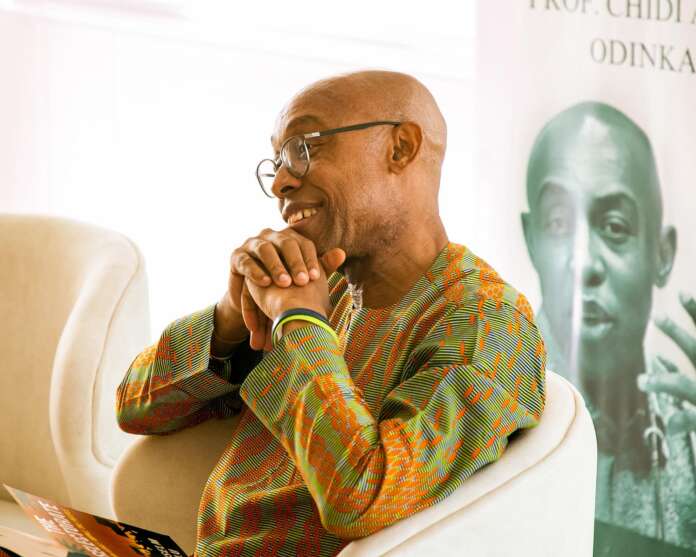
    The Supreme Court’s emergency politics

    By Chidi Anselm Odinkalu

    “All judges are politicians whether they know it or not.”

    Enrique Petracchi, former Chief Justice of Argentina, (2002).

    Among lawyers trained in the traditions of the Common Law, judicial power is often misunderstood. In Nigeria, the 1999 Constitution divides the powers of the federation between the legislature, the executive and the judiciary. The first two are elected. Judges are not. In the elected arms, it vests the legislative and executive powers of the federation. In turn, the same constitution vests the “judicial powers of the Federation” in the courts. This suggests that judicial power is political, not institutional.

    Yet, the tradition of Nigerian law is largely to equate judicial powers with the jurisdiction of courts to both adjudicate over cases and fashion remedies in accordance with the pleadings of the parties and with judicial interpretation of the applicable laws. That is an error. Jurisdiction is inherent in the judicial office; judicial power is functional in how the judicial deploys its jurisdiction behind the party or cause that it prefers. This is the sense in which lawyers trained in the methods of the Civil Law system speak of le pouvoir judiciaire – the judicial power.

    On 15 December 2025, Nigeria’s Supreme Court indulged in a dramatic demonstration of judicial power in a case in which it determined that it lacked jurisdiction on the facts. The dispute arose over the proclamation by President Bola Ahmed Tinubu of a State of Emergency in Rivers State on 18 March 2025. The declared duration of the emergency was an initial period of six months. In the proclamation, the president also pronounced the suspension of the elected governor and House of Assembly of the state.

    At the time, the governor of Rivers State, Siminalayi Fubara – who has recently christened himself a lifelong “progressive” – was in supposedly retrograde company in the Peoples’ Democratic Party (PDP), on whose platform he was elected.

    23 days after the emergency proclamation, 11 Governors elected on the platform of the PDP – naturally suffering from a profound bout of “there but for the grace of geography go I” – invoked the original jurisdiction of the Supreme Court to challenge the constitutionality emergency proclamation. Under Nigeria’s constitution, the Supreme Court is the final court of appeal in the country and most cases get to the court by way of an appeal from lower courts. However, the court also has original jurisdiction as a court of both first and final instance in legal disputes between the federation and states or between states among themselves.

    When this case was filed, the emergency still had five months and one week to run. A Supreme Court which desired could easily have accorded it due priority and dealt with it expeditiously. The case concerning Local Government autonomy filed in May 2024 (which arrived the court by similar means), for instance, took only 45 days from filing to judgment on 11 July of the same year.

    In this case concerning emergency rule in Rivers State, however, the Supreme Court chose a deliberately somnolent route to scheduling. Everything the court did subsequently appeared to have been underpinned by that imperative.

    On 18 September 2025, the emergency proclamation in Rivers State became spent and the suspended institutions and officials were restored to office. By the time the Supreme Court found time to address the issues posed for it in the case three months thereafter, five of the 11 governors who filed the original action had relocated their party loyalty from the PDP to the president’s All Progressives Congress (APC). Two more would do so in the days immediately following the judgment. No one will ever truly know whether the jurisprudence of political coercion confirmed in this case had anything to do with the desperation of these gubernatorial acts of party political transfiguration.

    After their judgment, the Supreme Court released an unsigned, 14-page media summary of the majority judgment of Mohammed Baba Idris, who led a majority of six of seven Justices. There followed a public race to unravel what the Justices had decided. The media reported that the Supreme Court had licensed the president to suspend elected state officials under colour of an emergency. Femi Falana SAN, provided a spin on the judgment from a segment of the legal profession initially in shock, which argued that the court did not go as far. In reality, it did that and much more and the initial media reports were very accurate.  

    Five things are notable about the decision of the court in this case. First, in a mere four pages, all seven Justices made short shrift of the case as filed, declining jurisdiction on the basis that “the plaintiffs failed to disclose any reasonable or justiciable dispute between them and the federation capable of invoking the original jurisdiction of the court.”

    At this stage, the job of the court was done. However, the Justices decided to “undertake a considered discussion on the scope and exercise of the powers” under the constitution concerning emergency proclamations. It is notable that the court framed what it undertook in the remaining two-thirds of its “summary” as a “discussion”, rather than an exercise in judicial decision making. Scholars and jurists will expend considerable froth in the years to come on the import of what may well become known as “Supreme discussion”.

    Second, the court embarked on its self-appointed discussion by locating the bases of emergency powers in an invented doctrine of “a temporary expansion of federal powers” which lacks any foundations in the text or structure of Nigeria’s constitution. Indeed, emergency powers under Nigeria’s federal system are not an expansion of federal powers. On the contrary, they are contingent powers, ripe to be exercised upon the fulfilment of twin requirements of substantive and procedural compliance with constitutional pre-conditions.

    Third, turning to the constitutional pre-conditions, the Supreme Court continued its disquisition by pronouncing the emergency proclamation in Rivers State as having fulfilled the substantive pre-conditions under the constitution.

    Fourth, the Court turned to the procedural arithmetic preceding the emergency proclamation. Nigeria’s constitution requires an emergency proclamation to be sustained by a joint resolution supported by two-thirds majority of each chamber of the National Assembly. The court ruled that this implies that the voting “process adopted renders the attainment of the two-thirds majority clearly ascertainable.” In this case, the National Assembly used a voice vote to ram through its joint resolution in support of the emergency rule. The Supreme Court managed to see this as competent constitutional computation, not parliamentary voodoo.

    Fifth, the Court discussed whether the president had the power under an emergency proclamation to suspend elected state officials, including the governor and legislators. It laid down one constraint to the effect that “emergency measures must be temporary, corrective, and proportionate”; and added that “any permanent displacement or abrogation of democratically elected institutions would constitute a constitutional aberration.” “Outside a validly declared state of emergency”, the court further discussed “the President possesses no power whatsoever to interfere with State executive or legislative institutions.”

    It was an odd way to phrase arguably the most cynical and gratuitous expansion of presidential power in the history of the Nigerian Supreme Court. In other words, the Supreme Court clearly discussed its way to supporting the assertion by the president of a power to suspend any governor he does not like under colour of an emergency proclamation. It is also cynical because the court does not offer this as a decision but as a discussion, without even the ceremony of a declaratory import.

    One of the seven Justices, Obande Ogbuinya, concurred in the decision that the court lacked jurisdiction but reportedly dissented on judicial tolerance of a presidential power to suspend elected state officials. Unlike the majority decision, the court did not bother to provide a summary of his dissent.

    The decision of the Supreme Court to become a “discussion” forum on such an issue of extraordinary constitutional significance is guaranteed to roil governance and politics in Nigeria for a long time. As an exercise of judicial power, it supremely wilful, cynical, and political.

    A lawyer and a teacher, Odinkalu can be reached at [email protected]

    Demas Nwoko: A concrete thinker’s 90 dazzling years, By Max Amuchie

    David Herbert Dale was a great artist, one of Nigeria’s greatest. He created artworks in beads, water colour, stained glass, etching and more.

    I met Dale around 1998, when I got an appointment to interview him at his Adebola, Surulere Street, Lagos, residence for ThisDay Style. That first meeting marked the beginning of friendship that lasted for years and his house almost became a second home for me.

    When Dale died on August 6, 2019 three months shy of age 72, I remembered our discussions which always centred on art. He belonged to a group in the Nigerian art community called the Zaria Art Society known to many people as the Zaria Rebels, and occupying a significant, magisterial position in that community of artists is Prof Demas Nwoko, internationally acclaimed artist, architect, designer and cultural icon, who is today marking his 90th birthday.

    The Zaria Rebels were a group of art students at the Nigerian College of Arts, Science, and Technology (now Ahmadu Bello University), who fundamentally reshaped modern African art.
    They led a “decolonisation” of the Nigerian art world, moving away from European imitations toward a style that felt authentically African.

    Demas Nwoko was born on 20 December 1935 at Idumuje Ugboko in Aniocha North Local Government Area of Delta State. His father, Obi Nwoko II, designed an architectural monument as his palace, among other building activities. This kindled his son’s interest in architecture from an early age.

    But in 1957 he was admitted into the Nigerian College of Arts, Science and Technology to read fine arts, graduating in 1961.

    The childhood love for architecture made him to pursue private studies in creative architecture from 1956 in Ibadan, Nigeria. He later moved to France where he first studied theatre architecture and design (scenography) at Centre Francais Du Theatre. At the Ecole Des Beaux-Art both in Paris, he studied Fresco Painting and architectural decoration from 1961 to 1962.

    He became a pioneer staff of the School of Drama, University of Ibadan, Nigeria, teaching Designs, Directing and Applied Aesthetics from 1963 – 78.

    He practised architecture alongside arts. Apart from private residences among his architectural and construction works are:
    •The Independence Pavilion, 1960;
    •The Dominican Institute, Samonda Ibadan;
    •The New Culture Studios, Oremeji, Ibadan;
    •The Oba Akenzua Centre for Arts and Culture, Benin City, Nigeria;
    •The Benedictine Monastery, Ewu, Edo State;
    •Pierce Chapel, Issele-Uku, Delta State Nigeria;
    •Godfrey Okoye University, Enugu.

    In art he carried out experimental production styles which resulted in ‘The Palmwine Drinkard’ for a travelling theatre troupe in 1963. This was also presented as Nigeria’s entry at the Pan African Cultural Festival held at Algeria in 1969.

    He produced a dance play, ‘Dance’ which was presented at the first Negro Art Festival of Dakar, Senegal in 1966.

    Demas Nwoko also produced a dance titled the ‘Olympic Dance’ and it became the Nigerian cultural presentation at the Olympic Games of Mexico 1968.

    When Nigeria hosted the Second World Festival for the Black world, FESTAC in 1977, he presented another dance-play called the ‘Children of Paradise’.

    In 1978, Nwoko left teaching at the University of Ibadan to establish the African Design Development Centre, a building component and materials development centre in his birthplace, Idumuje Ugboko. All theatre fittings for the Oba Akenzua Cultural Centre were designed and manufactured there. These include structural steel, wood works, theatre seats and some light fittings.

    The Centre has trained and converted many artists, architects and technologists into entrepreneurs who produce culturally and industrially viable buildings, equipment and goods.

    According to a statement shared by his daughter, Mrs Anyibofu Nwoko-Ugbodaga, Demas Nwoko along with other art giants like, Wole Soyinka, Chinua Achebe, Christopher Okigbo, J.P Clark (to mention a few) were pioneering members of the Mbari Club established in 1961 in Ibadan. It was a centre for cultural activity by African writers, artists and musicians. The Mbari Club became synonymous with optimism and creative exuberance of Africa’s post-independence era. It is worthy of note that it acted as the publisher of Black Orpheus magazine founded by Uli Beier in the 1960s.

    Nwoko has been recognised and honoured internationally. One of such came in May 2023 when he received The Golden Lion for Lifetime Achievement at the International Architecture Exhibition of La Biennale Venezia, further cementing his global influence.
    The Golden Lion for Lifetime Achievement is an award given at the Venice Film Festival. It is awarded to directors, actors and other personalities from the world of cinema who have distinguished themselves in the art.

    In December 2023, he was invited to speak on architecture for the people and honoured at the Night of Ideas hosted by the Embassy of France in Nigeria and French Institute for research in Africa.

    Even at an advanced age, Nwoko is still active, deeply engaged in design, writing, and mentorship. He founded The New Culture School of Arts and Design, dedicated to nurturing future generations of artists and architects. He has two published books—”Concrete Thinking” and “The Happy Little African Prince”—which give account of decades of artistic and architectural philosophy and offers an interesting account of his life and creative journey, respectively. This is a clear indication that he continues to shape global conversations on African creativity, architecture, and cultural identity.

    Demas Nwoko, the nonagenarian, lives with his wife Eunice Nwoko and is blessed with five children, Adaoha, Ashim, Anyibuofu, Oluchukwu and Chibututu; 14 grandchildren and eight great grand-children.

    39-year-old Ekiti teacher cries for help, after hospital surgery left him without kidneys

    Although the Government of Ekiti State has ordered the dismissal of a surgeon at the Ekiti State University Teaching Hospital (EKSUTH) after a probe into claims that two kidneys of a 39-year-old teacher were removed without consent during surgery, the helpless teacher is crying out for help.

    The surgeon’s dismissal followed the submission of a report by a seven-member Panel of Enquiry chaired by Professor Francis Faduyile, which was set up to investigate allegations by Joshua Afolayan, a staff member of the Ekiti State Teaching Service Commission.

    Afolayan said he was admitted to EKSUTH in August 2025 after sustaining injuries in a road accident. According to him, medical tests showed that his right kidney was damaged and required removal, while his left kidney was healthy and functioning normally.

    “I agreed to the surgery because we confirmed the other kidney was working 100 percent,” Afolayan said. “They were only supposed to remove the bad one.”

    But after the operation, he said his condition deteriorated rapidly. Follow-up scans were allegedly withheld, raising suspicions that both kidneys had been removed. He said doctors later claimed he had a “horseshoe kidney,” an explanation he rejected, insisting multiple pre-surgery scans showed two separate kidneys.

    “They were confused,” Afolayan said. “Later, they changed the story. That was when I went public.”

    He said he now lives with chronic pain and depends on regular dialysis to survive.

    “I want to live like others,” he said. “I’m 39 years old. I have a wife and three children. I want to eat, drink, urinate, sleep and take care of my family.”

    In a statement signed by the Commissioner for Health and Human Services, Dr. Oyebanji Filani, the Ekiti State Government said the panel’s findings confirmed serious professional failures during the procedure.

    The government approved the immediate dismissal of the surgeon who had primary responsibility for the operation. Other members of the surgical team present in the operating theatre were suspended for one month pending further administrative review.

    The state also pledged to fund a kidney transplant for Afolayan and cover post-transplant care and related medical expenses for two years. In addition, authorities ordered a comprehensive reorganisation of relevant departments at EKSUTH to strengthen clinical governance, accountability and patient safety.

    While rejecting claims that the incident involved organ harvesting, the government acknowledged that the case represented a grave surgical complication that warranted decisive sanctions.

    “Following a thorough review of actions before, during and after the operation, it was confirmed without doubt that this was a case of surgical complication and not organ harvesting for rituals as alleged,” the statement said.

    Hospital management, through Professor Jude Okohue, denied wrongdoing, insisting the medical team acted appropriately and provided emergency care, including blood transfusions from staff members.

    The government said it remains committed to restoring public confidence in the state’s health system, warning that it would not hesitate to act where professional standards are breached.

    Afolayan, however, said beyond free dialysis, he has received little intensive medical support and urged the state to move quickly, warning that further delays could be fatal.

    Full List: As Nigeria, others are barred from U.S. green cards and citizenship

    Following the proclamation signed by President Donald Trump on Tuesday, further restricting entry into the United States for nationals from countries deemed high-risk, the Trump administration has directed the US Citizenship and Immigration Services (USCIS) to suspend green card and citizenship applications filed by Nigerians and nationals of other countries newly added to the expanded US “travel ban.”

    According to the US government, the decision was based on what it described as “demonstrated, persistent, and severe deficiencies in screening, vetting, and information-sharing” that pose risks to US national security and public safety. Citing national security concerns and an ongoing review of immigration vetting procedures, CBS News reported the development on Thursday.

    Among the 15 additional countries newly subjected to partial restrictions is Nigeria.

    Below is the full list of countries revealed to be affected by the suspension of green card and citizenship applications:

    Countries affected

    Full travel ban

    • Burkina Faso
    • Mali
    • Niger
    • South Sudan
    • Syria
    • Laos
    • Sierra Leone

    Partial travel restrictions

    • Angola
    • Antigua and Barbuda
    • Benin
    • Côte d’Ivoire
    • Dominica
    • Gabon
    • Gambia
    • Malawi
    • Mauritania
    • Nigeria
    • Senegal
    • Tanzania
    • Tonga
    • Zambia
    • Zimbabwe

    Previously affected countries

    • Afghanistan
    • Burundi
    • Chad
    • Cuba
    • Republic of the Congo
    • Equatorial Guinea
    • Eritrea
    • Haiti
    • Iran
    • Libya
    • Myanmar
    • Somalia
    • Sudan
    • Togo
    • Turkmenistan
    • Yemen
    • Venezuela

    The latest suspension expands earlier restrictions announced in June, under which nationals of several countries faced partial limits on immigration processing. In the most recent proclamation, Laos and Sierra Leone — which previously faced partial restrictions — were upgraded to a full entry ban, prompting USCIS to extend the freeze on immigration petitions, including green card and citizenship applications.

    PUNCH

    TIPS