Home Blog Page 132

My man of the season

By Suyi Ayodele

Christmas is two days away. This is a season of celebration. It is a time we celebrate relations, friends and those close to us. I have a family I want to celebrate this season. I stumbled on a video clip of a comedy show by the Waffi-born master of jokes, Bovi Ugboma. In the video, Bovi said that it is profitable to ‘curse’ the head of the family of my choice to attract political patronage. Bovi is a ‘bad’ boy. He was acerbic in his jokes as he made jokes of those who criticised the head of the family and got ‘compensated’.

I don’t share that idea. This family is too fanciful to be ‘harassed’. It is also too powerful to be undermined. Ceteris paribus, our nearest future may as well be in the hands of the members of this family. Like they say in my place, this family has the scabies and the fingernails to scratch them (wón ní ifòn, wón ní èékánná). I am celebrating this family today with the hope that it may have mercy on us and lessen our burdens.

This is a great family as I mentioned, great in all parameters, negatively or positively. The family is like the proverbial talking drum which backs someone and faces another. The head of the family is the current President and Commander-in-Chief of the Nigerian Armed Forces. Before then, he was governor of Lagos State for eight years. But his fortune did not start with the Lagos governorship. He was a ‘Distinguished’ Senator of the Federal Republic of Nigeria in the aborted Third Republic. Besides, he holds the title of Asiwaju (Leader) of Lagos.

I should also not forget that before becoming President, he was the self-styled National Leader of the All Progressives Congress (APC). Soon enough, my mind tells me, one smart-aleck king may confer on him the title Asiwaju of the Universe. That is highly probable in a Nigeria where anything goes, where raw cash takes the front row, while reason and morality are relegated to the background. I know someone whose name is Owonikoko, meaning money is the ultimate. I am yet to encounter a truer truth than that.

The man is not the only ‘fortunate’ member of his family. As he progresses in life, his wife also gets elevated. From being a housewife to becoming the wife of a ‘Distinguished’ senator, the woman of the house became the First Lady of Lagos, courtesy of her husband’s stint as governor. Those eight years in Alausa, Lagos State Secretariat, were colourful. Whoever needed anything in Eko Akete then must first worship at the shrine of Her Excellency. She was the mother of Lagos, and she played the role very well.

Then a time came. Madam became an ex-First Lady. The title was not befitting enough for the wife of a National Leader and a kingmaker. Something must be done. One of the leader’s lapdogs in the Senate was asked to bury his further ambition. Madam needed the prefix, senator, to up the ante of the family political hegemony. Pronto, the obedient servant complied, and Madam became Her Excellency, Distinguished Senator of the Federal Republic. Trust the leader; he does not abandon his own. The boy who yielded his field for the leader to plan the seed of his wife’s senatorial ambition was adequately compensated with a ministerial slot. Loyalty pays.

A man with ambition is always ambulant. Having successfully installed a perennial presidential candidate as the President, the National Leader decided to take a shot at the Presidency himself. He invented the Èmilókàn philosophy. While other presidential aspirants were still counting on the docile president to anoint them, the National Leader went after the presidential baton, grabbed it and ran away with it. The rest is history. Those who dared challenge the National Leader then are sent to permanent political purgatory!

Good parents do not forget their offspring. So it is with the man of the moment. He realised long ago, while his opponents were sleeping, that a good Muslim must teach his children the value of fasting from the cradle (kékeré ni Ìmàle tó ń kọ́ ọmọ rẹ̀ ní àwẹ̀). He understood that his children must grow alongside him as he progressed in life. The Benin multi-billionaire and icon, Chief Gabriel Osawaru Igbinedion, the Esama of Benin Kingdom, once opined that “a success without a successor is a failure.” That, indeed, is philosophy at its finest.

So, shortly after the demise of his adopted mother, the man, who at the time already had one of his godsons as the governor of Lagos State, had his first daughter installed as the Iyaloja of Lagos. That was the same title held by his late, celebrated adopted mother. Do not bother about the nature of the title or whether it is hereditary or not. We are in Nigeria. Here, a man of means can get anything he wants, by all means. With money and influence, a man without royal ancestry can become a king. Go to Ijebu Ode and ask what money and influence are doing to the revered Awujale throne. May we never run short of owó, a pé kánúkọ. Amen.

When a man has a huge ambition, he must keep servicing it. With the coming of the leader’s protege as president, the first daughter of the kingmaker transmuted from Iyaloja of Lagos to Iyaloja General of Nigeria. The simple implication is that all markets in Nigeria are under the control and management of the First Daughter of the Federal Republic of Nigeria. Trust the super-rich and influential lady. She tested the waters recently in Benin when, against the traditional Iye Ekiti title of the Benin people, the Iyaloja General of Nigeria appointed an Iyaloja of Edo for all markets in Edo State.

The investiture took place at the New Festival Hall of the Edo State Government House! After the ceremony, the Omo N’Oba N’Edo Uku Akpolokpolo, Oba Ewuare II, Oba of Benin, was merely informed of the development and asked to cooperate with the new Iyaloja of Edo! To date, Benin people are still contending with that sacrilege! But guess what: Iyaloja General of Nigeria has moved on. When your father is rich, influential and powerful, shifting ancient landmarks is as easy as drinking water and putting the cup down. Like Pastor Chris Oyakhilome is wont to pray, ‘I must be rich!’

Before you shout sacrilege, remember that when power, influence and money meet tradition, the latter becomes inconsequential. Stop being envious of this noble family. Just pray to be powerful and ask the ancestors to give you the courage to deploy your powers appropriately to suit your fancies! Only a few men know how to use power. Our man of the season numbers among them. Kudos!

Nigeria is, to a larger extent, patrilinear. Our man also knew that, given the anthropological and cosmological composition of the society he lives in, his male offspring must also be in the eyes of the public. Our elders say when the fire glows to its limits, it covers itself with ashes (bí iná bá kú, áá f’eérú b’ojú). A wise man is one who eats and keeps some aside for his child. Our man wasted no time in putting his heir apparel in the subconsciousness of the people. After his inauguration as President, the first son of the powerful man had a space in the nation’s Executive Council Chambers.

While the Federal Executive Council (FEC) held in those early days of his administration, the President’s son sat in the chambers, observing proceedings. Some ‘enemies’ of the man said that the President was giving his son the necessary tutelage in cabinet matters for a future assignment. A few of us believed that it was an honest mistake.

Even when the rumour about a Lagos governorship job for the boy broke out, we still believed that our President was too strategic to be that madcap. Thankfully, sanity prevailed. Someone who had the ears of the President spoke sense to him and he stopped his son from attending the weekly FEC meetings.

That, however, did not happen until after all ministers and other political appointees of cabinet rank had taken judicious, judicial and administrative notice of the fact that in our President’s reasoning, and as in the Holy Writs’ injunction, the father and the son are one because the President is in the son and the son is in the President. An amebo said that most ministers go through the son to reach the father, but this piece does not believe in conjectures. There should still be a few men of honour and self-worth around. Or what do you think?

The fact that government officials from different states of the Federation fall over one another to receive the President’s son whenever he visits any state would still not make us believe that the boy is being prepared for the Lagos number one job. Lagosians are not that biddable; they are not that docile. Sorry, I mean Lagos people are not that slavish to serve the god, the father; god, the mother; god, the daughter and later, the son. But money, that evil spirit called money! Whoever has it in abundance can buy anything, get anything and do anything here in Nigeria. Jesus! What an evil idea on a Tuesday, a day I should be in Digging Deep!

Why on earth should the thought of the President’s son’s convoy being longer than some governors’ convoys come to my mind today? Why should the picture of our own Nobel Laureate, Professor Wole Soyinka, being stranded in a hotel premises because the number one son of the Federation had to move his convoy around the same location be of significance today?

I struggled to bind the temptation of saying: ‘so WS also had a bitter taste of the bitter pills his friend, the President, and his family members have been serving Nigerians for over two years now’? WS is a world figure (forget that the US recently cancelled his Visa; who needs America in the first place?), and as such, I dare not say ‘the academic also cry!’ This is what you get when those who are supposed to talk decide to go into self-induced amnesia in the face of rudderless leadership. This generation has a way of describing the situation. They say: all of us will chop breakfast!

Our man of the season is calculating. He knows that no matter how well-integrated his family is politically, the traditional institution must also recognise that the family exists. Charity, they say, begins at home. The best way to start the traditional induction of the members of the First Family is the source itself. Without much ado, our amiable Adimula of Oodua, the Ooni of Ife, was called and instructed to do the needful.

Two weeks or so ago, our First Lady of the Federation, Her Excellency, the former First Lady of Lagos State, ex-Distinguished Senator of the Federal Republic of Nigeria and the Ugosimba 1 of Enugu, was installed as the Yeye Asiwaju Oodua by the Ooni of Ile Ife. A senior ‘troublemaker’ asked me which is higher between Yeye Oodua title conferred on the revered matriarch of the Awolowo dynasty, Late Chief (Mrs) Hannah Idowu Dideolu Awolowo and the recent Yeye Asiwaju Oodua title given to our President’s wife by the Ooni. You all know how much I run away from controversy. Let us all hope that the palace of the Ooni will make that clarification itself. And truly, the public needs to know if the present title is a replacement of the former or just to make the man of the moment feel good.

While we await that clarification, the ugly rivalry between the Ooni and the Alaafin of Oyo reared its hydra-head. Pardon my manners. We are talking about Oriades here. Before the dust of the Yeye Asiwaju Oodua and the drama of our First Lady chasing a sitting governor away from the state podium for wasting the Lady of means’ time settled down, Oyo Alaafin responded to Ile Ife’s audacity to give a Yoruba universal title to an individual. By the way, how do we get Governor Ademola Adeleke of Osun State to learn to sing less when Mother Nigeria is around? He was lucky the First Lady did not take away his prepared speech. The governor might not be lucky next time! May God give us power (Amen).

Our Ikú Bàbá Yèyé, the Alaafin, decided to go a step further by conferring on the President’s son the title of Òkanlomo of Yorubaland. Ask me what Òkanlomo means. How do I translate this? Or would a transliteration suffice? Ok, let’s do it this way. Òkanlomo, by closest definition, means the primus inter pares non secundum- first among equals, equal to non – child of Yorubaland. I should think that is correct enough. But if you are confused here, note that I am equally confused about the Òkanlomo title.

What Alaafin is saying here is that every other child in Yorubaland (including the princes and princesses in the Alaafin Palace), is secondary to the President’s son. By that title, the fortunate boy is the only and number one child of Yoruba Race! That is what the Alaafin said. And in case you don’t know, you can’t dispute whatever Alaafin says. He is a Kábíyèsí (the one that cannot be questioned). The law is what the judge says it is, so says Legal Realism. So it is with the Alaafin; a child is what Ikú Bàbá Yèyé says he is!

I am a child of culture. I value the Yoruba traditional system. Alaafin does not need to explain that he is the only king in Yorubaland who has the right to give a Yoruba universal title to anybody. His forebears held that position. All Ààre Ònà Kakanfo (the Generalissimo) of Yorubaland are appointed by the Alaafin. The Alaafin’s prime position among Yoruba monarchs is a given. So, why the struggle to justify the conferment of a universal title by the Alaafin?

Nobody is allowed to question any king in Yorubaland over his actions or inactions. When the people are tired of their kings, there is a traditional way of settling that. I don’t question the Alaafin over the title he dashed the President’s son. I cannot even, in my wildest imagination, ask Kábíyèsí what informed the title. I dare not, as a Yoruba, ask what pedigree qualified the President’s son for the title. The Alaafin knows how he arrived at that title. My only worry is the implication of the Alaafin making Oyo princes and princesses inferior to the Òkanlomo of Yorubaland. That itself is understandable. When your father is the president, kings don’t regard culture anymore!

Yes, it is true that the elders of Yorubaland say that ká tó fi ènìyàn j’oyè, ó ní lâti jé eni rere (for a man to be given a chieftaincy, he must have proven to be worthy of it). How worthy is the Òkanlomo of Yorubaland? What are the parameters used by the Alaafin? Apart from being the son of the president, what else has the guy brought to the table? If the Òkanlomo and the Àrèmo Alaafin (heir apparent) stand together, who is superior now? Or is it that since the Ooni gave the mother a title, the Alaafin must also give the son? Oh, no! This is Alaafin. Nobody questions him! I rest.

Hate them or love them, President Bola Ahmed Tinubu’s family is the luckiest family of this era. It is rare for fortune to smile on a family continuously and in multiple folds the way the Tinubus are experiencing it. Their diviner must be a strong one. Whoever gave the àféká layé ńfé’ná (love-inducing charm) must also be strong.

I am not Bovi. I am not the Ambassador-in-waiting, Reno Omokri. Yet, I am in no way close to Buoda Femi Fani- Kayode. The latter duo are members of the nation’s egbé bú mi kó o gba’ke (abuse me and be compensated club). I am just a simple Nigerian wishing the most powerful family in the country today, MERRY CHRISTMAS!

The views expressed by contributors are strictly personal and not of Law & Society Magazine.

General Aguiyi-Ironsi and The Burden of History: A reappraisal of responsibility, persecution and Nigeria’s unfinished nationhood

By Sylvester Udemezue

In the course of an ongoing discussion on the Rule of Law Platform on 21 December 2025, a comment by Mr. Ikeazor Akaraiwe, SAN, particularly caught my attention. He wrote:

“The January 1966 coup messed up this country. We have General Aguiyi-Ironsi, the man who scuttled the coup to blame. The coup failed. Why not hand power back to the civilians? The Prime Minister died in the coup. The next most senior minister, Minister of Defence, Alhaji Ribadu, should have assumed office as PM. But Ironsi, having scuttled the coup, announced himself as Head of State. How illogical!!! Arguably, the 1966 constitution would still be in place if Gen. Ironsi had simply handed over power to the surviving rump of the 1st Republic government.”

I agree, one hundred per cent, with Ikeazor Akaraiwe’s view. General Johnson Thomas Umunnakwe Aguiyi-Ironsi occupies a tragic yet pivotal position in Nigeria’s history. His actions, particularly between January and July 1966, set in motion a chain of events whose consequences Nigeria has neither fully confronted nor resolved. In my considered opinion, Aguiyi-Ironsi bears singular historical responsibility for many of Nigeria’s enduring crises, most notably the tragic persecution, alienation, and marginalisation of the Igbo people. This unresolved injustice continues to undermine Nigeria’s peace, unity, and development.

THE FATAL DECISION TO RETAIN POWER

After the January 1966 coup was suppressed, Aguiyi-Ironsi assumed power. At that moment, Nigeria stood at a delicate crossroads. The most patriotic and stabilising course of action would have been either:

  1. To assume power briefly, stabilise the polity, announce a clear and short timetable, and return power to a civilian government; or
  2. To allow a non-Igbo officer to lead a transitional administration while he remained as Head of the Armed Forces.

Instead, Aguiyi-Ironsi retained power without a defined transition plan, thereby transforming Nigeria from a constitutional democracy into a military-ruled state. That single decision fundamentally altered Nigeria’s political trajectory. And given the ethnic imbalance of the casualties of the January coup, where most of those killed were non-Igbo, it was deeply insensitive, politically naïve, and strategically imprudent for an Igbo officer to remain Head of State, irrespective of his intentions or personal integrity. Leadership is judged not by intentions alone but by perception, prudence, and foresight. His failure to announce a definite timeline for a return to civilian rule bred suspicion, resentment, and fear. Even more troubling, he appeared either oblivious or indifferent to the rising tension and distrust across the country. This was not statesmanship; it was a catastrophic failure of political judgment. In this sense, Aguiyi-Ironsi was not merely unfortunate; he was profoundly insensitive. That insensitivity sowed the seeds of ethnic hostility that would later explode with devastating consequences for his own people.

THE FAILURE TO PROSECUTE THE JANUARY 1966 COUP PLOTTERS

Aguiyi-Ironsi’s second grave error was his refusal to promptly and publicly prosecute those responsible for the January 1966 coup and the assassination of the Prime Minister and other senior government officials. In a volatile post-coup environment, justice delayed was justice denied. Part of his reported justification, namely: that too much blood had already been spilled, was/is in my opinion, weak, illogical, and politically disastrous. In moments of national trauma, swift and transparent justice is not vengeance; it is reassurance. His inaction created a false but powerful impression that the coup had an ethnic agenda and that the new government was shielding its own. It was reported that Northern officers and non-Igbo political leaders had demanded public trials and executions of the January 1966 coup plotters as proof of good faith. Aguiyi-Ironsi ignored this counsel. That failure directly contributed to the July 1966 counter-coup, which claimed his life and unleashed unspeakable violence against innocent Igbo civilians across Nigeria.

Unfortunately, although General Aguiyi-Ironsi’s personal miscalculations were not the collective actions of Ndi Igbo, yet, it was the Igbo people (men, women, and children) who paid the ultimate price through mass killings, dispossession, and enduring marginalisation. Truth is, history exposes the moral bankruptcy of this collective punishment. (a). General Gowon overthrew Aguiyi-Ironsi in July 1966. Nigeria rightfully and wisely did not hold Gowon’s ethnic group responsible for his actions or omissions? (b). General Muhammadu Buhari overthrew a democratic government in 1984. Buhari’s ethnic group were not collectively punished for Buhari’s military adventurism? On the contrary, Buhari and his ethnic group later presided over multiple presidential terms, including eight uninterrupted years under Buhari himself. (c). Generals Babangida and Abacha also seized power, ruled for extended periods, truncated democracy, and deepened Nigeria’s crisis. Yet, their ethnic groups were never subjected to collective punishment. To be clear, this is as it should be; this is the right way to go. In my humble opinion, and this is the point I am trying to make, no ethnic group should bear responsibility for the personal actions of individual soldiers or rulers. What I do not understand is why this reasonable principle has been so persistently denied to the Igbo in Nigeria.

DECREE NO. 34 AND THE DEATH OF TRUE FEDERALISM

Perhaps Aguiyi-Ironsi’s most enduring and destructive legacy was Decree No. 34 of 1966, which replaced Nigeria’s genuinely federal 1963 Constitution with a rigid unitary system. This decision defied Nigeria’s historical and sociological realities. Even colonial administrators in Nigeria had recognised Nigeria’s diversity and governed through indirect rule:

  1. The Emirate system in the North,
  2. The Oba-in-Council system in the West, and
  3. The Warrant Chief system in the East.

Aguiyi-Ironsi ignored these realities and imposed an alien unitary structure on a deeply plural society. This error remains Nigeria’s original constitutional sin. Both the 1979 and 1999 Constitutions are fundamentally unitary documents: direct descendants of Decree No. 34. Until Nigeria dismantles this constitutional architecture and returns to genuine federalism, the country will continue to stagger under the weight of its contradictions.

COLLECTIVE GUILT AND THE UNANSWERED QUESTIONS

In my opinion, judging from disinterested research, it is historically inaccurate and morally indefensible to label the January 1966 coup in Nigeria an “Igbo coup”. While Aguiyi-Ironsi’s post-coup decisions were reckless and utterly condemnable, they were his decisions, not those of the Igbo people. This reality gives rise to troubling questions Nigeria has consistently refused to confront:

  1. Why have the Igbo continued to suffer persecution for decisions that were never theirs?
  2. Even assuming, wrongly, that punishment was justified, have they not suffered enough after nearly six decades?
  3. Over three million Igbo lives were lost during the pogroms and the civil war. Was that not sufficient suffering?
  4. Can Nigeria not see that the continued alienation of the Igbo is a major cause of its stagnation and decline?
  5. Why has the Nigerian state failed to fully implement the post-war promise of Reconstruction, Rehabilitation, and Reconciliation (the 3Rs)?

CONCLUSION: THE CHOICE BEFORE NIGERIA

Nigeria cannot build a viable future while remaining imprisoned by selective memory, inherited prejudice, and ethnic injustice. True nationhood calls for honesty, equity, forgiveness, and inclusion. Perhaps the time has come for Nigeria to thoughtfully address the so-called Igbo Question, in a spirit of understanding and reconciliation, so as to ease long-standing distrust, reduce ethnic tensions, and strengthen our shared commitment to building a more united Nigeria, politically, economically, and constitutionally. Although one of the key figures who formally received the instrument of surrender marking the end of the Nigerian civil war, former President Olusegun Obasanjo would later remind Nigeria and Nigerians that genuine nation-building rests on justice, equity, mutual respect, and equality of opportunity. He warned that without these foundational principles, the Nigerian project itself stands imperilled.
In his words, on 6 March 2022:
“…there is no substitute for steady and uncompromised process of nation-building …. God is not to blame if we fail.It would appear that we are not getting our priorities right, and that can spell doom on our country if we fail to do what we should do for nation-building in terms of fundamentals of equity, justice, common ideals …mutual respect and equality of opportunity anchored and propelled by leaders across the board … with the fear of God.… If we derail from nation-building process with solid principles, Nigeria will be shipwrecked. I will, at this juncture, leave it to fair-minded Nigerians who believe in the continuation of the process of nation-building to decide which way Nigeria should go…. If we are going fault-finding zonally or regionally, no region or zone can claim absolute innocence…”.

The choice remains ours.

To be continued.

Respectfully,
Sylvester Udemezue (Udems)
Lawyer, Law Teacher &
Proctor, The Reality Ministry of Truth, Law and Justice (TRM)
08021365545 [email protected]
(21 December 2025)

The views expressed by contributors are strictly personal and not of Law & Society Magazine.

‘The Law Must Speak for the Voiceless’: NBA–SPIDEL unveils new Public Interest Litigation Committee

Nigeria’s legal community was issued a sharp call to action on Monday as the Nigerian Bar Association Section on Public Interest and Development Law (NBA–SPIDEL) inaugurated the newly constituted membership of its Public Interest Litigation (PIL) Committee, positioning the body as a frontline force against injustice, abuse of power, and systemic failure.

Speaking at the inauguration, Chair of NBA–SPIDEL, Uju Agomoh, PhD, described public interest litigation not as a technical exercise, but as a moral duty—one that must give voice to the voiceless and restore public confidence in the justice system.

“This Committee is not merely procedural,” Agomoh said. “Public Interest Litigation is a moral instrument. It is the shield of the vulnerable and the legal pathway through which society confronts injustice.”

Her address came at a time of growing public scepticism over the capacity of state institutions to protect citizens’ rights, a reality she said makes PIL more urgent than ever.

‘You Are Entrusted With Causes, Not Just Cases’

Agomoh charged committee members to see their mandate as far more than courtroom advocacy. She said they are now custodians of causes tied to environmental degradation, unlawful detentions, gender-based violence, economic exclusion, executive overreach, and constitutional violations.

“You are entrusted not just with briefs, but with burdens—the burdens of communities that may never stand before a court themselves,” she said.

Rejecting performative activism, Agomoh warned that the Committee must not become loud without purpose or passive in the face of injustice. Instead, she called for strategic, principled, and outcome-driven litigation rooted in sound legal reasoning and ethical clarity.

Three Non-Negotiables: Collaboration, Integrity, Impact

The SPIDEL chair outlined three core expectations for the committee’s work.

First, collaboration—with the Bar, civil society, academia, and affected communities. “No single institution can carry the weight of public justice alone,” she said.

Second, integrity, which she described as the foundation of legitimacy in public interest work. The Committee, she stressed, must remain above partisanship, personal ambition, and political pressure.

Third, impact. Agomoh urged the Committee to move beyond symbolic litigation toward cases that deliver measurable outcomes, including policy reforms, institutional accountability, improved governance, and restored public trust.

“We must be proactive, not reactive,” she said. “This Committee must identify emerging public interest issues and shape strategic litigation agendas that advance national development and democratic consolidation.”

Senior Advocates Sound Warnings Against Political Capture

The call for integrity was echoed by senior members of the Bar present at the event.

In a goodwill message, Paul Ananaba, SAN, former Chair of SPIDEL, cautioned the new leadership against allowing the platform to be hijacked by political interests.

“You must choose your fights,” Ananaba said. “Do not turn this into a vehicle for politicians. If you build integrity, you will save the NBA and the nation.”

He warned against pursuing headline-grabbing cases that drain resources without serving the public good, urging the Committee to focus squarely on development and accountability.

Similarly, J.S. Okutepa, SAN, emphasised that integrity must remain the watchword, cautioning against litigation driven by selfish or hidden interests.

Commitment, Partnerships, and a Global Outlook

Bulus Atsen, Alternate Chair of the Public Interest Litigation Committee, pledged that the new team would uphold the principles of collaboration, integrity, and impact in carrying out its mandate.

Renowned human rights lawyer Prof. Chidi Odinkalu advised SPIDEL to strengthen, not strain, its relationship with the NBA.

“The NBA is your biggest partner, not your competitor,” Odinkalu said. “Be intentional in what you do. That is what will make you effective.”

International support was also affirmed. Adaobi Ebuka, representing the Cyrus R. Vance Center for International Justice in New York, said the Centre was ready to partner with SPIDEL and provide legal support where needed.

‘Select Matters That Move the Nation Forward’

Closing the event, Paul Daudu, SAN, Vice Chair of NBA–SPIDEL, urged the committee to pursue cases that add tangible value to national development.

As Nigeria grapples with rising governance challenges and shrinking civic trust, the inauguration of the NBA–SPIDEL Public Interest Litigation Committee signals a renewed determination within the legal profession to reclaim the law as an instrument of accountability—and a defender of the public good.

Below is the list of members of the newly reconstituted NBA SPIDEL Public Interest Litigation Committee:                                                                                                               

1. Ntufam Mba  E.  Ukweni,  SAN (Chair)

2. Paul Daudu,  SAN

3. Chinyere  Moneme,  SAN

4. Bulus Yohanna  Atsen,  fsi (Alternate  Chair)

5. Vincent  Adodo  (Secretary)

6. Dr Lilian Ojimma  (Assistant  Secretary)

7. Jennifer  Nwado

8. Daniel  Asomeji

9. Olajide  Abiodun

10.  Mohammed  Danjuma

11. Mojirayo  Ogunlana

12. Daniel  Kip

13. Chikordi  Okeorji

14. George  ltodo

15. Godspower   Eroga

16. Charles  Okon

17. James lbor

18. Chuks Odelugo

19. Joy Obianuju   Nnani

20.  Gozie Reginald  lwuala

21. Abdullahi  Karaye

22. Ibrahim Baba Saliu

23. Saleh, Mohammed  Tirmizi

24. Abba Shuarbu

25. Chinedu  Agu

Advisors:

•     Samuel  J.  Okutepa  SAN

•     Prof Chidi Odinkalu

Nigeria to make taxpayers pay for ₦23.8 trillion budget gap amid spending transparency questions

Nigeria’s federal government has announced plans to fund a ₦23.85 trillion ($15.3 billion) budget deficit in its proposed 2026 national budget through what it calls an “aggressive, digitised revenue mobilisation drive,” a move that is drawing scrutiny amid lingering concerns over fiscal transparency and accountability.

The announcement comes against the backdrop of unresolved allegations that lawmakers inserted trillions of naira worth of projects into the 2025 budget without adequate justification.

In May 2025, civic technology organization BudgIT alleged that the National Assembly added more than 11,000 projects valued at approximately ₦7 trillion ($4.7 billion) to the 2025 budget. BudgIT described the projects as “corruption-ridden constituency insertions,” many of which allegedly fund non-existent, duplicated, or low-impact initiatives such as boreholes and streetlights—an indication, the group said, of entrenched patronage and waste.

Despite the allegations, no comprehensive public report has been released detailing how the 2025 capital allocations were eventually utilized, reinforcing accusations that Nigeria’s budget system continues to operate with limited accountability.

Multiple Budgets, Blurred Oversight

The Tinubu administration is currently running the 2024, 2025, and 2026 budgets concurrently—an unusual practice that opposition figures and economists say violates basic public finance principles. Critics argue that overlapping budget cycles undermine transparency and create opportunities for abuse.

Those concerns deepened after the government ordered that 70 percent of the 2025 capital budget be rolled over into 2026, citing revenue shortfalls and weak project execution. Analysts say the rollover further blurs responsibility for spending outcomes and makes oversight more difficult.

‘Aggressive’ Revenue Push

Speaking Monday at the federal government’s end-of-year press conference in Abuja, Minister of Information and National Orientation Mohammed Idris said the administration intends to close the 2026 budget gap through improved revenue collection rather than heavy borrowing.

“The deficit will be funded through an aggressive, digitised revenue mobilisation drive, ensuring that every liable entity pays its fair share, without imposing unfair burdens on anyone,” Idris said at the event held at the Nicon Luxury Hotel.

He added that the strategy would rely on what he described as “prudent assumptions,” including oil priced at $64.85 per barrel, daily production of 1.84 million barrels, and an exchange rate of ₦1,400 to the dollar.

Critics, however, say the plan effectively signals a tougher approach to taxation and enforcement at a time when households and businesses are already under pressure.

Tinubu’s ‘Budget of Consolidation’

President Bola Ahmed Tinubu last week presented the 2026 Appropriation Bill to the National Assembly, branding it the “Budget of Consolidation, Renewed Resilience and Shared Prosperity.” The proposal pegs total expenditure at ₦58.18 trillion, with ₦26.08 trillion allocated to capital projects—the largest capital spending figure in Nigeria’s history.

According to a statement from the presidency, the projected deficit of ₦23.85 trillion represents 4.28 percent of Nigeria’s gross domestic product.

Idris said the budget would coincide with the implementation of recently enacted tax reform laws, which he claimed would strengthen accountability and deepen the social contract between the government and citizens.

“That budget sets the stage for a year in which the landmark new Tax Reform Laws will go into operation, ushering in an era of fiscal growth and a deepening of the social contract between the government and the people,” he said.

Acknowledging that the reforms could cause short-term hardship, the minister urged Nigerians to support the government’s fiscal direction.

“The temporary pains of reform are yielding to permanent gains,” Idris said, adding that the administration remains committed to “building a nation where every citizen has the agency to thrive.”

Tragedy as man kills cousin over ₦1000 dispute

A family gathering turned tragic in Delta State when a 47-year-old man allegedly killed his first cousin during a heated argument over the refund of a ₦1,000 contribution.

The incident, which occurred on December 12, 2025, in Ughelli South, was confirmed by the spokesperson for the Delta State Police Command, SP Edafe Bright, in a video shared on X on Monday.

According to Edafe, the family had recently returned from the burial of a relative and convened a meeting.

The atmosphere, however, soured when a dispute broke out regarding a ₦1,000 contribution refund.

“This young man was dragging and bringing all down fire and brimstone that they must give him back his 1,000,” Edafe said.

He continued, “In the process of dragging, he started fighting. Somewhere along the line, according to him, while he was trying to wriggle his way out of the fight, he used his hand to hit one of the brothers, a relative of his, who eventually died.

“Now, N1,000 argument has led to the death of a family member. He was being cautioned even by this very guy who eventually passed.

“The spirit that possessed him, according to him, would not allow him to listen to the voice of wisdom. The man who died is 42 years. Somebody has died just because of N1,000.”

The suspect, identified as 47-year-old Ezekiel, expressed remorse while speaking and claimed that the death was accidental.

He admitted that several relatives, including the deceased, had pleaded with him to calm down. “It was by mistake. I didn’t know when I hit him,” he said.

Ezekiel explained that the ₦1,000 in question was a contribution made for the burial rites, which is traditionally refunded to the owner after the ceremony.

“After everything, they always shared it. That’s how we return the money to the owner,” he stated.

Edafe used the tragic incident to urge the public to exercise emotional restraint even in the face of minor provocations.

“Mine is to talk to our listeners to understand the importance of controlling your temper. You have to calm down. Any form of fighting could lead to death. It can turn into manslaughter. It could turn to murder. Please, a word they say is enough for the wise. Prevention is better than cure,” Edafe concluded.

PUNCH reported in 2023 that a man, Ibrahim Dauda, allegedly killed his brother, Tunde, during a fight over N1,000 at their residence in the Igando area of Lagos State.

Recently, in September, the Anambra State Police Command arrested one Okwuchukwu Ezimuo for stabbing his relative to death over a family land dispute in Idemili South Local Government Area of the state.

PUNCH

All 230 abducted schoolchildren released in Niger state—but insecurity still haunts Nigeria, kidnappings keep rising

The 230 schoolchildren abducted from St. Mary’s Catholic School in Papiri community, Agwara Local Government Area of Niger State, have been released, Nigerian authorities confirmed Sunday, ending weeks of uncertainty for families and communities shaken by the mass kidnapping.

The final group of 130 students was released over the weekend, bringing the total number of children freed to 230. Presidential spokesman Bayo Onanuga said the children were expected to arrive in Minna on Monday and reunite with their parents ahead of Christmas.

“The remaining 130 schoolchildren abducted by terrorists at St. Mary’s Catholic School in Papiri, Niger State, on November 21, have now been released,” Onanuga said. He attributed the outcome to a “military intelligence–driven operation,” but did not address whether ransom was paid.

The release brings relief to families but has reignited national debate over Nigeria’s worsening security crisis and the relentless wave of kidnappings that continues to grip the country.

From schools and highways to farms and private homes, abductions have become routine, underscoring what critics describe as a failure of decisive state action against armed groups operating with near impunity.

Just days before the schoolchildren’s release, suspected herdsmen reportedly killed a poultry farmer and shot his son near a farm in Delta State. The son survived with injuries. The incident is one of several violent attacks recorded across the country in recent days.

On Sunday, Osun State Governor Ademola Adeleke warned of the growing risk of bandits infiltrating his state from neighbouring Kwara, urging the Nigerian Army to sustain robust security operations along border areas.

Civil society groups say the crisis shows no sign of abating. Atrocities Watch Africa (AWA), a non-partisan organisation focused on preventing mass violence, warned that Nigeria’s security situation is deteriorating rapidly.

“Nigeria’s security crisis is worsening, with insurgency, banditry, communal violence and kidnappings overwhelming the state,” the group said. “Without urgent action to address these threats and their root causes—such as unemployment and weak governance—the country risks further violence and potential mass atrocities.”

While the release of the Papiri schoolchildren marks a rare positive outcome, analysts warn that without sustained reforms and decisive security action, kidnappings will remain a defining feature of daily life in Africa’s most populous nation.

Christmas and a motherless child, By Lasisi Olagunju

If we were Christian, Christmas would have been for us a mixture of joy, mourning and remembrance. But still, it is. When others celebrate Christmas, I mourn my mother. We call it celebration of life; it is a forever act that undie the dead. She died just before dawn on December 24, 2005. But she lived long enough such that even I, her second to the last child, enjoyed her nurture for over forty years. She died happy and fulfilled. She was extremely lucky; she even knew when to die.

A mother’s death strips her child naked. With a mother’s exit, the moon pauses its movement of hope; morning stops arriving with its proper voice. For me, since it happened 20 years ago, dawn still breaks as forever, but nothing raps my door to announce a new day and the time for prayers; no mother again chants my oríkì. No one, again, softly drops ‘Atanda’ by my door before sunrise. Nothing sounds the way it used to. No one again wets the ground for the child before the sun fully unfurls its rays.

History and literature, from Rousseau’s idealisation of the “good mother” to Darwin’s notion of “innate maternal instincts,” framed motherhood narrowly; yet she inhabited it fully. She bore and reared in very inclement weather; she thought and questioned, endured and, quietly, shaped lives in her care beyond the ordinary. She was a princess who knew she was a princess. Like Frances Hodgson Burnett’s princess in ‘A Little Princess’, her voice – outer and inner – shouted an insistence that “whatever comes cannot alter one thing.” Even if she wasn’t a princess in costume, she was forever “a princess inside.” The princesshood in her inheritance ensures that her father’s one vote trumps and upturns the 16 votes cast by multi-colour butterflies who thought themselves bird.

Sometimes quiet, sometimes shrill, she showed in herself that the true measure of a woman lies in the fullness of her humanity, the strength of her mind and character, and the depth of her influence. She embodied all these with grace until her final breath.

Geography teaches us that harmattan is dry, cold, hash, unfriendly wind. The harmattan haze of Christmas is metaphor for the blur the child who misses their mother feel. It hurts. The day breaks daily with silence performing the duty the mother once did. What this child feels is hurting silence where her song caressed. In the harshness of the hush, the child remembers how mornings were once gold, how a day felt owned simply because she announced it. Without her, time still moves, but it no longer rises to meet the child with its promise of warmth.

When a mother dies, her child’s gold goes to rust and dust. Because a mother is the cusp that scoops to fill her child’s potholes, in her death something essential goes missing. And it is final. Everything that was a given is no longer to be taken for granted; nothing is henceforth granted; everything now makes bold demands, even illness speaks a new language. Fever comes creepy and no one reads the child’s body before they speak. Across the wall at night, other women sing their children to sleep, the tune that reaches the motherless is far from the familiar; it is unfaithful.

A child without a mother is what I liken to walking helplessly in a windy rain. No umbrella, whatever its reach and promise, is useful. Again, living is war. When wronged, or terrified by life, the child who has no mother discovers how far they can walk without refuge; they daily face bombs without bunkers.

For the one without a mother, each victory, each success; each survival; every loss, every defeat, asks for a sharer and a witness who is no longer seated where she used to.

Winning can be very tasteless. It is a very bad irony. The muse says that when a child is motherless, joy, when it appears, arrives incomplete; good news, when it comes, comes and pauses at the lips – in search of mother, the one person it is meant for.

Motherhood and its echo teach that a mother’s loss, like a father’s, is erasure, loss, negation, unpresence. It is permanence of loss of love and security.

The child remembers that in their mum’s lines were elegant, restrained refinements that moved from the gently lyrical to the aphoristic. But they are no more. The old sure shoulder to lean on has slipped away, thinning into memory. 

The orphan learns early that those who say, “I will be your mother,” are not always mothers, and those who say, “I will be your father,” are rarely fathers. For the orphan, it is a cold, cold-blooded world.

And yet, the child soon finds out that the mother’s exit has not emptied the world; it has simply rearranged its content.

In the new arrangement, the mum becomes a mere memory kept going in inherited habits, in routine and practice, in the instinct to call a name they know will not answer – again.

“Each new morn…new orphans cry new sorrows…” says Shakespeare in Macbeth. Every forlorn child fiddles with the void. But the muse insists that children that are counted fortunate do not simply outgrow their mother; they outlive her absence and grow new muscles and new bones; they learn slowly to carry and endure what cannot be put down.

Multiple conflicts risk overwhelming Nigeria’s Centre — Atrocities Watch Africa

Atrocities Watch Africa (AWA), a non-partisan civil society organisation providing continental leadership in the prevention of and response to mass atrocities across Africa, in its 2026 watchlist warns that Nigeria’s deteriorating security situation risks spiralling further unless urgent action is taken.

Overview

Nigeria is facing a deepening security crisis marked by insurgency, banditry, communal violence, militancy, and widespread kidnappings. These overlapping threats are increasingly overwhelming state capacity and exposing civilians to grave harm. Without decisive measures to address both the violence and its underlying drivers—including poverty, youth unemployment, climate stress, and weak governance—the risk of large-scale atrocities will remain high in the coming year.

A Nation Under Strain

Violence now affects virtually every region of the country.

In the North-East, Islamist extremist groups, including Boko Haram and the Islamic State West Africa Province (ISWAP), continue a long-running insurgency. In the North-West, particularly in Zamfara and Katsina states, heavily armed criminal groups raid villages and carry out mass kidnappings for ransom, treating violence as a profitable enterprise.

The Middle Belt remains a major flashpoint, where recurrent clashes over land, identity, and religion fuel cycles of revenge attacks and large-scale civilian casualties. In the South-East, gunmen linked to separatist and criminal networks carry out deadly raids and kidnappings, while in the Niger Delta, armed groups periodically target oil infrastructure to press political and economic demands.

These security challenges are compounded by structural weaknesses, including widespread poverty, high youth unemployment, climate-related pressures, porous borders, weak institutions, and limited security capacity—leaving many communities effectively unprotected.

Escalation in 2025

In 2025, existing patterns of violence persisted and, in several cases, intensified and expanded geographically. During the first half of the year alone, at least 2,266 people were killed by bandits or insurgents—surpassing the total number of such deaths recorded throughout all of 2024.

ISWAP and Boko Haram increased the tempo of attacks in states such as Borno and Yobe, targeting both civilians and military infrastructure. In May, ISWAP launched its most sophisticated offensive in years, temporarily capturing strategic locations and attacking military installations and transport routes.

The group sustained its momentum into the second half of the year, including the September 5 Darul Jamal massacre, in which more than 60 civilians were killed. Clashes between ISWAP and Boko Haram also escalated in the Lake Chad area toward the end of the year, despite a temporary truce reached in October. Boko Haram attacks during this period reportedly resulted in between 50 and 200 fatalities across six clashes, making it one of the deadliest episodes since February 2023.

Banditry and Communal Violence

Banditry remained concentrated in Zamfara State, though violence spread further across the North-West. A newly emerged armed group, Lakurawa, integrated banditry with Islamist tactics across parts of Sokoto, Kebbi, and Zamfara, raising concerns about further ideological and operational convergence.

In the Middle Belt, inter-communal violence surged sharply. More than 100 people were killed in April, followed by an overnight attack on Yelwata village in Benue State in mid-June, where at least 150 people were reportedly killed. By early 2025, approximately 580,000 people had been displaced by violence in the region.

In the South-East, attacks by so-called “unknown gunmen” continued, alongside a rise in kidnappings linked to separatist and criminal networks.

Renewed Tensions in the Niger Delta

Tensions in the Niger Delta have begun to resurface after years of relative calm. In 2024, the Niger Delta Liberation Movement claimed responsibility for bombings targeting Chevron-operated pipelines, raising fears of renewed militancy. While attacks have remained limited, they signal growing frustration and the potential for escalation.

Kidnappings as an Industry

Kidnapping for ransom has become one of Nigeria’s most pervasive and profitable criminal activities. Between July 2024 and June 2025, at least 4,722 people were abducted in 997 incidents, with 762 victims killed. An estimated ₦2.57 billion was paid in ransom during this period.

In November, Nigeria experienced one of its worst mass abductions in years when 315 children and school staff were kidnapped. The incident prompted President Bola Tinubu to declare a nationwide security emergency, acknowledging both the scale of the crisis and the state’s limited capacity to respond.

Outlook and Risks

If current trends continue, violence in Nigeria is likely to escalate further in the coming year. Multiple, overlapping security crises are unfolding simultaneously, stretching already overstretched security institutions and creating conditions in which mass atrocities could occur.

Violence in the North-East and Middle Belt is expected to persist, while kidnap-for-ransom operations—often used to finance criminal and extremist activities—are likely to expand in scale and geographic reach. Militancy in the South-East and Niger Delta also remains a significant risk.

The convergence of these crises is particularly concerning, as escalation in one region could create security vacuums that other armed actors exploit. Without stronger, coordinated security responses and sustained efforts to address underlying structural drivers—such as poverty, youth unemployment, climate stress, weak governance, and lack of accountability—the risk of mass atrocities in Nigeria remains alarmingly high.

Gumi and his terrorists, By Lasisi Olagunju

During the Kiriji War of the nineteenth century, a grim parable of war came and became a subject of racial slur and morbid joke. An Oyo-Ibadan warrior, disarmed and cornered by an Ijesa fighter, collapsed to the earth and begged for his life. The Ijesa man, scornful of pleas, mocked him with a cruel logic: he threw his machete at the captive and ordered him to beg the blade, not the man. “Ada lo a bè; èmi kó a bè.”

The unarmed warrior rose, took the weapon, and killed his captor. The war taught its lesson: in the theatre of enemies, negotiation, just as begging, is surrendering the weapon that will undo you.

Sheikh Ahmad Abubakar Mahmud Gumi is a trained soldier and a medical doctor. He left the Nigerian army as a captain. Two days ago, Gumi was on Facebook calling on Nigeria to arm the enemy with begging and surrender. He wrote: “They say: negotiation doesn’t work. It’s a lie. It worked with militants in Niger Delta creeks. Rather, it is war that doesn’t work, 16 years we’re still fighting BH (Boko Haram) and 11 years fighting bandits. It’s stupidity doing the same thing and expect different results.”

Imagine if Gumi had remained in the army, and had risen to become a General and Chief of Army Staff, and was asked by his Commander-in-Chief to fight and defeat Boko Haram in the North East, bandits in the North West and kidnappers in Niger, Kogi and Kwara States. What would have become of that Commander-in-Chief and the order he gave?

If you think Gumi would have carried out that order and spare his lord, the president, it means you haven’t been following his consistent advocacy on how to treat terrorists. He wants negotiation with the enemy as the sure way to peace.

He didn’t start today. In a February 2021 interview with the AIT, Gumi came out with a weird suggestion that bandits destroying his North were taught kidnapping by Niger Delta militants: “They learnt kidnapping from MEND (Movement for the Emancipation of the Niger Delta). I do not see any difference. They were the first victims of rustling, their cattle is their oil,” he said.

In a May 2021 BBC report, Gumi was quoted comparing terrorist bandits with coup plotters: “If the country could pardon coup plotters who committed treasonable offences in the era of military administration, the bandits can as well enjoy similar forgiveness even better under democratic rule,” he said.

In that same report of more than four years ago, he said what he has been saying repeatedly recently: “Kidnapping children from school is a lesser evil because in the end, you can negotiate and now bandits are very careful about human lives.”

Nigeria dodged a bullet in Gumi, exiting the army before his Iroko became problematic, exacting tributes. How many more Gumis do we have in the officer corps of the Nigerian Army? Imagine him rising to the very top, becoming a General, and making a case for the enemy.

Born in 1960, Ahmad Gumi arrived as son of the late Sheikh Abubakar Mahmud Gumi, one of Northern Nigeria’s most influential and outspoken Islamic scholars, who also served as Grand Khadi of the Shariah Court of Appeal. From anyone from such a lineage you would expect moral clarity, intellectual rigour, and principled leadership. Those are expectations that make today’s Gumi’s public interventions impossible to treat lightly.

Anyone who chose an early formation as Gumi did clearly chose a path that combined science, discipline, and service. The sheikh studied medicine, then enlisted in the Nigeria Defence Academy, and served as a medical officer in the Nigerian Army Medical Corps. Rising to the rank of captain, it is given that his training was to heal and also to understand the brutal arithmetic of conflict. At the NDA, people who know say every cadet was taught that violence against the violent is neither abstract nor negotiable. The soldier-doctor is schooled in a hard truth: forces that threaten life must be subdued decisively, they are not candidates for indulgence and accommodative rhetoric.

Gumi’s academic journey and his present politics are diametrically irreconcilable. After retiring from military service, Gumi relocated to Saudi Arabia where he immersed himself in Islamic scholarship. In Mecca, he earned a PhD in Usul al-Fiqh, the principles that govern Islamic jurisprudence. I do not think people of knowledge would dismiss this credential as casual. My findings tell me that his specialisation, Usul al-Fiqh, “concerns itself with moral reasoning, justice, public interest (maslahah), and the limits of tolerance in the face of disorder.” People of knowledge say his area of Islamic scholarship prioritises justice for the victim, and guiding societies away from chaos. They say his background makes his advocacy for negotiating with terrorists troubling, troublous and self-deconstructing.

It is hard to hear or read Gumi and not see contradiction hardening into failure of his callings: he was trained to protect life and confront mortal threats without illusion. He was also schooled to appreciate the value of justice. He failed spectacularly in all three. 

The more we read some people’s lives, the more we see contradiction in starker hues. Where in his religious books, including jurisprudence, did Gumi read sanctifying terror and asking society to wear “soft gloves” when faced with those who murder the innocent and destabilise the society? Should we not tell Gumi that to blur the line between justice and appeasement is to betray both the uniform he once wore and the faith he now invokes? Someone who saw me write this said that in matters of terror it is neither courage nor wisdom to preach accommodation.

How do we tell a soldier, doctor and a PhD that it is suicidal to confuse mercy with surrender? Yet we have to tell him that what he advocates is suicide. We saw it in the Kiriji War story above. The enemy appeased today is the death of tomorrow.

Why is it difficult for Gumi and his supporters to see that Boko Haram, banditry and other criminal gangs in Northern Nigeria are not pursuing the same objectives as the militants of the Niger Delta? Terror organisations destroying the very basis of the existence of Gumi’s society are not misunderstood political movements waiting for a conference table; they are a machinery of horrendous violence who kill and abduct without borders. They are forever dangerous to freedom and to, even religion.

Governments across continents have long understood this danger. Britain’s Margaret Thatcher vowed to never negotiate with the IRA terrorists: “We do not negotiate with terrorists,” she declared. US’s George W. Bush bluntly insisted that: “You’ve got to be strong, not weak. The only way to deal with these people is to bring them to justice. You can’t talk to them. You can’t negotiate with them.” His position echoed the same logic as Thatcher’s. Scholars such as Paul Wilkinson and Walter Laqueur argue that talks with terrorists confer recognition, and recognition, like sunlight to mold, allows terror to spread. As some others observed, terrorism seeks legitimacy more than victory; it longs to be seen as a political equal rather than a criminal aberration. To grant Gumi’s wish is to reward criminals and criminality; defeat and destroy society.

History and scholarship teach that there is a moral grammar to politics, and terrorists deliberately violate it.

Paul Gilbert is a British moral and political philosopher who has been very stellar for his work on terrorism, political violence, war ethics, and the moral limits of negotiation. My reading of his works shows that he has written extensively to draw a very thick line between terrorism and legitimate political struggle. He argues that because terrorism targets civilians, it collapses the moral conditions that make dialogue, compromise, or negotiation intelligible. More directly, it is his position in a 1994 article that by engaging in violence against civilians, terror groups had breached the “conventions of debate required for negotiations”. Another scholar, Jan Narveson, also hold that ‘terrorists’ put themselves in “Hobbes’ state of nature with respect to us” and thus do not deserve a roundtable treatment. “Engaging with terrorists would translate their violence into a legitimate means to be heard and thus lead other groups to engage in similar activities.” That quote, if you don’t mind, you find with other viewpoints in Harmonie Toros’ ‘We Don’t Negotiate with Terrorists!: Legitimacy and Complexity in Terrorist Conflicts’.

In plainer terms, what Gumi professes is equal in criminal foolishness as one bargaining with the arsonist while the house is still burning.

Gumi, soldier, physician and religious scholar, wants Nigeria to turn crime into curriculum. He must stop what he is saying or be asked to stop. In his prescription is quiet injustice to those who choose peaceful paths. The state should stop pretending that it does not know how to tell him that what he preaches is that violence pays.

Some would say that his call is a camouflage for politics. Gumi wants to negotiate with criminal bandits. Negotiate with whom among the disparate leaders of the terrorists? Does this explain why previous peace agreements entered into with bandits by the north failed? In the North, communities organise colourful engagements with those destroying them today; tomorrow they receive death from those who visited yesterday. Yet, one of their leaders say they must keep negotiating. The enemy is right inside their bedroom.

Why would a religious leader seek to make a political class of kidnappers, and elevate terrorists to statesmen? In a normal society, it won’t be difficult to accept that negotiation with terror undermines citizens who pursue change without violence, telling them, after the fact, that bombs speak louder than ballots. Rejecting Gumi and his doctrine of negotiation with terrorists will not be a rejection of peace, it will be a defensive wall against assaults on peace and justice. Anyone who is not a lover of terrorism would know that criminalization, not conversation, is the language the rule of law understands.

People who wage war against society deserve war. To approach the enemy with votaries of appeasement is to strengthen them to do more harm. We must never be forced to misunderstand who the enemy is. Peace, like poetry, has rules; when those rules are shattered by criminal bloodshed, the answer is justice and protection, not glass-clinking at the negotiating table.

In the savannah lived a hyena who seized the riverbank and called himself its lord. When drought came and society was starved of the river’s nourish, other animals sent the tortoise to negotiate access, carrying calabashes of honey and promises of peace. The hyena laughed, took the gifts, and demanded more; each concession tightening his grin. “Talk is cheaper than teeth,” he said, and the river remained closed.

At last the terrorised animals learned what the tortoise had not: the hyena fed on bargaining itself. Each plea taught him the shape of their fear. So the herds moved together, guarded the springs, and starved the hyena of leverage. Access to the river opened again, not because words softened the hyena, but because unity denied him profit. And the forest remembered: when a predator thrives on terror, negotiation becomes its meal.

The views expressed by contributors are strictly personal and not of Law & Society Magazine.
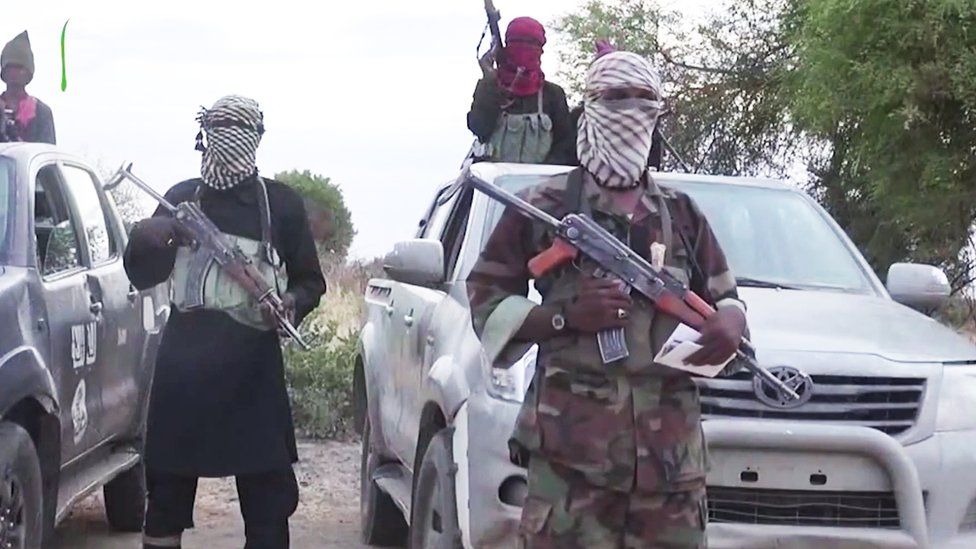
ECOWAS Court case targets Nigeria over alleged Army killings of women protesters

Nigeria has been dragged before the Economic Community of West African States (ECOWAS) Community Court of Justice over the alleged killing of women protesters by security forces in Adamawa State.

The suit was filed by Cadrell Advocacy Centre, a non-governmental organisation that provides legal assistance to victims of violence, on behalf of women reportedly killed during a peaceful protest and their surviving family members.

Read Also: Just In! Horror as Nigerian soldiers escorting Brigade Commander in Yola shoot dead seven protesting women, many injured

The case stems from a demonstration held on December 8, 2025, in Lamurde Local Government Area of Adamawa State. The protest was organised by women who gathered along a major roadway to express concern over the enforcement of a government-imposed curfew amid ongoing clashes between the Bachama and Chobo communities.

Read Also: Army blames local militias, denies killing women protesters in Adamawa, for attack

According to court filings, the protest was peaceful until soldiers of the Nigerian Army arrived at the scene. The applicants allege that after protesters temporarily blocked the road, one soldier fired shots into the air, after which other soldiers opened live fire on the women.

The suit claims that at least nine women were killed instantly, while several others sustained gunshot injuries.

Amnesty International Nigeria has also confirmed and condemned the incident. In a statement cited in the filing, the human rights organisation said the killings were carried out by soldiers of the Nigerian Army, based on eyewitness accounts and testimonies from victims’ families.

The Nigerian Army has denied responsibility for the deaths, blaming a local militia for the violence.

However, the applicants argue that no soldier has been arrested, prosecuted, or disciplined in connection with the incident, and that no compensation has been paid to the families of the deceased.

Cadrell Advocacy Centre is asking the ECOWAS Court to declare that the killings constitute violations of multiple provisions of the African Charter on Human and Peoples’ Rights, including Articles 1, 3, 4, 5, 9, and 26, and to hold Nigeria liable for the actions of its military.

The suit further seeks an order compelling Nigeria to conduct an independent, impartial, and transparent investigation into the killings and to prosecute those responsible. The applicants are also requesting compensation for injured victims and general damages totalling ₦10 billion ($X million) for the alleged unlawful deprivation of life.

The case was filed by legal counsel Evans Ufedi and Emmanuel Olalekan and is to be served on the Nigerian Army, the Attorney-General of the Federation, and the Federal Ministry of Defence.

    TIPS