Home Blog Page 1130

Senior UN official loses his appeal against sexual misconduct sacking

Karkara was found to have sexually harassed, exploited and abused younger colleagues. Photograph: JCI/UN Foundation

Tribunal rules that Ravi Karkara, an adviser to UN Women, was rightfully dismissed for harassing younger men

A former senior UN adviser who contested his sacking over sexual misconduct has lost his appeal at a tribunal.

Ravi Karkara, who was tasked with promoting gender equality and youth partnerships at UN Women, was dismissed in 2018 following allegations of harassment against younger men, including an intern.

The agency previously declined to name the former employee, but details of the allegations against him were published in a judgment this month after Karkara took his case to the UN dispute tribunal.

UN Women found Karkara had sexually harassed, exploited and abused two non-UN personnel, harassed a UN intern, and used his work email account to distribute pornography.

The key complainant, Steve Lee, filed allegations in June 2017 after working with the UN as the founder of a youth-led organisation. He was given speaking opportunities and access to working groups by Karkara.

But, according to the judgment, the senior adviser increasingly wielded his power over Lee and suggested he perform sexual acts in return for favours.

At the hearing Karkara said Lee had misunderstood his messages as sexual.

In December 2016, Lee was assaulted after helping Karkara to take his luggage to a Montreal hotel room. The senior adviser opened pornography websites on Lee’s laptop and grabbed his genitals through his trousers.

The judgment reveals that a second non-UN employee made allegations against Karkara. They claimed he sent them photographs of himself in the bath and requested pictures in return.

The unnamed complainant also said Karkara followed him to the toilets at an event in New York and asked to see his genitals.

An intern with the UN also made a complaint, saying Karkara would text requesting photos.

Karkara claimed UN Women’s investigation was biased and that testimonies had been fabricated with the assistance of people in the organisation with whom he’d had disputes.

The tribunal concluded UN Women was right to sack Karkara after finding “clear and convincing evidence” he inappropriately touched Lee and asked for oral sex via WhatsApp. It found his behaviour towards the intern amounted to harassment.

Sharanya Kanikkannan, legal adviser for campaign group Code Blue, welcomed the judgment, but said the system is made harder for victims to navigate by differing rules, standards and complaints processes across the UN.

“A high profile case like this gets held up as an example of how things are working but we learn from it and examine what reforms can be made to improve the system.”

The tribunal confirmed “credible oral victim testimony alone may be fully sufficient to support a finding of serious misconduct, without further corroboration being required”. It also recognised that victims responding to harassment in the context of a power imbalance may not react as expected.

But Kanikkannan said that in another complaint Code Blue had seen, “case investigators rejected the complaint as the exchanges seemed ‘friendly’”, while in other UN cases allegations that could not be corroborated by an eyewitness had been dismissed.

The UN was contacted for a response.

Theguardian

Oscar 2021: Desmond Obviagele’s “The Milkmaid” is Nigeria’s Official Submission

Tell Me More

Every country has a slot to submit for the International Feature Film category at the Oscars.

A  certified Nigerian Oscar Selection committee of 12 called for entries back in September.

They receive entries and determine which ones meet the standard requirements to be eligible to contest.

After that, a voting process would ensue for the features that could compete and a winner emerged.

For this year “The milkmaid” directed by Desmond Obviagele won and will take the slot to represent Nigeria, subject to IFF executive committee for official confirmation.

milkmaid nollywood oscar - Oscar 2021: Desmond Obviagele’s “The Milkmaid” is Nigeria’s Official Submission

Who made the cut?

The Nigerian Official Selection Committee (NOSC) for the IFF category of the Academy Awards says it received several entries out of which six films –

“Sanitation Day”

“Voiceless”

“Oloture”

“Ibi” (The Birth)

“The Milkmaid”

and “Eyimofe” – sailed through the first vetting exercise.

The last stage of three films had “The Milkmaid”, scoring overwhelming majority votes.

69544864 2351509154947082 4015173290706404741 n - Oscar 2021: Desmond Obviagele’s “The Milkmaid” is Nigeria’s Official Submission

The Milkmaid which was shot in Taraba follows a Fulani milkmaid who confronts religious extremists in rural Sub-Saharan Africa in a quest to locate her missing sister, but efforts to recapture her disrupted past prove complicated.

Censorship

I know, you are now asking where to watch this film, yea??

The Milkmaid was officially meant to screen in cinemas early this year but the Nigerian video censors board refused it classification stating it was not palatable to screen for the domestic audience.

Not sugar coating this, they “censored” the raw depiction of insurgents in the film and ask them to go reshoot/re cut or forget a cinema run.

By November, after much back end campaigns and meetings .

The film got a classification with a forgone narrative that was chopped to please the board.

Whatever you get to see on the screens when you watch will absolutely be different from the truth desmond aimed to tell and that is quite sad.

We are currently working on a full story on how this act of censorship is a suppression to limit filmmakers to tell true stories depicting terrible parts of the country.

The Nigerian constitution clearly provides citizens the freedom of speech and in a democratic nation, we should be free to express our views and ideas.

So if any Nigerian movie is banned or censored then it can be said as an act of abolition on freedom of expression.

The audience should have the right to see what they want and should be left to bear the consequences on their own self.

Censorship of art should be fully fought against with words, money and voices by the industry and denounced as undemocratic.

Classify and Go! should be the Mantra not otherwise.

We are refuse to be in Ominous Big Brother State.

“Without freedom of speech there is no modern world, just a barbaric one” – Ai Weiwiei

Back to the Oscars

Milkmaid will be in competition with other films submitted by other countries.

The winner in the category will be announced in April 2021.  Congratulations to the Executive visionaries who worked on this project.

Milkmaid deserves every award it gets.

https://youtube.com/watch?v=yy6zTDiHLhY%3Fversion%3D3%26rel%3D1%26fs%3D1%26autohide%3D2%26showsearch%3D0%26showinfo%3D1%26iv_load_policy%3D1%26wmode%3Dtransparent

Shock NG

Top British Professor Praises ‘Strategic Turnaround,’ Book Written By Dakuku Peterside

Says It’s A Case Of Successful Change Management

Dr Chris Bellamy a Professor Emeritus of Maritime Security at the University of Greenwich, United Kingdom has described the book ‘Strategic Turnaround’ as a definitive case of successful high-level change management and essential insight into the maritime sector of an emerging maritime power.”

Strategic Turnaround’  is a yet-to-be unveiled book written by Dr Dakuku Peterside, a former governorship aspirant and Director General of the Nigerian Maritime Administration and Safety Agency (NIMASA).

Bellamy in a sneak preview before the book launch, further stated that “Dr Dakuku Adol Peterside’s book, Strategic Turnaround, showcases the radical reform of NIMASA, and the entire maritime sector in Nigeria by its leaders and key stakeholders”. 

The former professor of military science and doctrine at Cranfield University said the book is a story of how strategic change was initiated, instigated, and successfully managed in the maritime sector in Nigeria with far-ranging relevance within the horn of Africa and beyond. Adding that the story is briefly and eloquently told in ‘Strategic Turnaround’.

“Nigeria is the most populous country in Africa and the seventh most populous in the world with 206 million people in late 2019. Its maritime sector is highly significant as it has Africa’s largest economy and the 24th in the world, with a GDP estimated by the International Monetary Fund (IMF) at about $500 billion.

“Sometimes called the ‘Giant of Africa’ because of its large population and economy, it is one of the MINT countries named in 2011 – Mexico, Indonesia, Nigeria, and Turkey – having great potential and offering potential great returns on investment in the next decade. 

“Nigeria’s maritime sector is of great importance, not only for indigenous transport but potentially globally. Oil is one of the critical cargoes. Nigeria hopes to compete with the Philippines in the provision of seafarers. However, it also faces challenges.

“It lies on the Gulf of Guinea, which in 2013 surpassed Somali-based piracy in the western Indian Ocean as the world hot-spot for piracy and armed robbery at sea,” Professor Bellamy further explained. 

The top university don, who had the opportunity to preview the yet-to-be-released book, has praises for the story style writing of serious leadership, management, and maritime concepts.

He also praised the book for its straightforward narrative that makes it easy for every scholar to understand how Dakuku’s leadership team applied leadership and management principles to change the maritime industry in Nigeria.

Sultan’s bravery meets reality

[email protected]

Last week Thursday, while at the fourth quarterly meeting of the Nigeria Inter-Religious Council in Abuja, the Sultan of Sokoto, Alhaji Sa’ad Abubakar, delivered a damning verdict on the abject state of insecurity plaguing northern Nigeria. According to media reports, the Sultan specifically stated that the northern region was the worst place to live in the country. This was not the first time that the Sultan would complain about the decay of northern Nigeria. In February, while at a security meeting in Kaduna, he also warned that the setting up of a security outfit, Operation Shege-Ka-Fasa, by the Coalition of Northern Groups, was another terror group in the making. In that meeting, he complained about the number of solutions they had proffered on the northern situation, but which had not been implemented by their governors and other members of the political elite.

In the light of the recent Zabarmari massacre that saw around 110 people killed in Borno State, the urgency of the worsening insecurity feels even more acute. This year alone, hundreds of people have been killed. Given what we know of Nigeria, we can take it for granted that the deaths are underreported.

Two days after the Sultan spoke in Abuja, a group of elders under the aegis of Coalition of Northern Elders for Peace and Development issued a press statement commending him for his bravery in speaking out on the deplorable state of security. Their national coordinator, Zana Goni, and the National Women Leader, Hajia Mario Bichi, stated that the Sultan had vindicated their frequent alarm-sounding on the crisis of insecurity besieging the region. While it is puzzling that stating the obvious should be considered heroic, it also reflects their relief that a high-ranking member of the conservative northern establishment is breaking what looks like an enforced code of silence to speak to issues.

 Northerners are not exactly known for anti-government agitation, especially when a fellow northerner is the ruling authority in Aso Rock. We saw how this played out during the #EndSARS protests when some folks interpreted the demonstrations as an indictment of a northern president. They could have seized the opportunity to canvas the issues of insecurity that imperil their lives too, but they chose to turn matters on their head and announced their support for the status quo. Shortly after the protests, northern leaders from various spheres gathered in Kaduna to reflect on the issues around #EndSARS. What they came up with, and which they read out in their communiqué, was a poor assessment of the grim situation that ignited those protests. They gave themselves away as people who will protect tribal alliances at the expense of the nation.

However, when you piece the Sultan’s February speech together with the recent one, you also find a man frustrated with politicians who are not ready to change a thing about the dysfunctionality of northern Nigeria. Like the rest of the leadership class that plagues Nigeria, they are unimaginative, corrupt, and innately sadistic.

 There is not much anyone can achieve with a set of leaders impervious to reason and progress other than just talk. While talk is useful, it can also be cheapened when it does not stimulate corresponding relevant actions. One or two more speeches like the one the Sultan gave last week, and he may end up like former Emir Muhammad Sanusi II. Sanusi talked and talked about the many northern Nigeria problems at every opportunity he got until the sharp edge of his criticisms blunted. Sanusi’s criticisms were important, no doubt, but their potential effectiveness was also circumscribed by the limits of what is possible for a traditional ruler whose legitimacy partly subsists on the upside-down world he was seeking to overturn. It also did not help that the ghosts of his hypocrisies stood on his shoulders and haunted his message. It is only a matter of time before the Sultan’s talk too gets overwhelmed by unrelenting reality.

What is happening in the north is sad, but it is not a problem whose surface can even be scratched by the “bravery” of merely speaking up. The problem in that region has much to do with the power to unleash inordinate violence that successive governments, composed of either power jobbers or moral cowards, ceded to the ordinary folks as a weapon of social control. Nigeria has always treated their right to be offended over just about anything as superseding the tenets of democracy itself and gradually institutionalised that attitude.

The scale of violence being witnessed in the region is not surprising neither is it shocking that the north has become the worst place in Nigeria—actually, one of the worst in the world—in which anyone could live. It is also not a coincidence that they suffer from gross insecurity of lives and property, along with some of the highest poverty rates in the world. Both deprivation and violence are intrinsically linked. For their religious and political leaders to effectively deprive them of their basic rights as citizens, they have had to feed them with the idea they are super citizens and above the reach of the law that binds the rest of us. The wretched of the earth that populate northern Nigeria have been allowed to do and undo, as long as the myth that they are special citizens is sustained. Some of them have taken the illusion of being above all laws beyond attacking those they perceive as cultural outsiders and are now turning against themselves. Well, it was only a matter of time before the supremacist ideology they had imbibed backfired and reduced their empires to rubbles.

For years, that region has bred a vast army of fanatics, poverty-ridden, uneducated, and prone to violence. We cannot merely chalk the high rate of violence in the north to poverty and illiteracy. Poverty and illiteracy exist in the south too, but you hardly hear them demanding that learning French in schools be proscribed or that a French coach working with a local football team be sacked because they were unsatisfied with how the French president handled the religious tension in faraway France. People who have that kind of issue need more than the proposals of solutions such as giving them the much-needed education or adding more investments to the region.

 We start by dismantling the social and political structures that have facilitated their prerogative to decide who lives or dies, a belief system that now facilitates all kinds of violence. We need to reach for democratic ideologies to shatter the illusion that religion or culture gives anyone the privilege to determine other people’s right to life. You have to take away the sense of entitlement that predisposes these people to petition the Inspector-General of Police about someone’s social media commentary, and rather than the law protect their target, such a person would be at their mercy! You have to start dealing with the ingrained bad habit that has allowed them to routinely break beer bottles, and flagrantly destroy people’s business investments without any punishment. You have to forcefully stop the impunity that makes their little courts hand out death sentences for the “crime” of blasphemy, while blatantly disregarding the constitution. You have to censure those who have been emboldened enough to sentence a 13-year-old to prison for 10 years for blaspheming. In Kano, they have even graduated to the point of writing an official letter to censor language while also threatening to mount surveillance against private organisations who do not succumb to their whims.

You cannot have a society where some people constitute themselves into law and order, and not eventually descend into maniacal orgies of violence where they kill at will. The people who butchered folks at Zabarmari are not acting out of sync. What they manifested is the lower end of the spectrum of a socio-political culture that has always pampered people who believe they have a right to define other people’s humanity. If the Nigerian leadership cannot develop the backbone to confront the structures that support this sense of privilege, northern Nigeria will continue its unrelenting march towards becoming a proper dystopia.

PUNCH.

Immigration: UK Opens New Visa Routes For Skilled Workers

The United Kingdom (UK) has launched a number of immigration routes under its new points-based immigration system, including the skilled worker route (formerly known as the Tier 2 Visa).

Applications for the new skilled worker visa by the UK, according to the Senior Press and Public Affairs Officer, British High Commission, Abuja, Christopher Ogunmodede, opened on December 1.

The launch of the new immigration routes, Ogunmodede added, will ensure the UK businesses and universities continued to attract people from around the world, including Nigeria, to complement the skills and talent already present in the UK.

“Applications for the new skilled worker visa are now open on December 1, meaning the brightest and the best from around the world can now apply

Crime gangs threaten COVID-19 vaccine campaigns, Interpol warns

The International Criminal Police Organisation (Interpol) has raised the alarm over plans to sell fake COVID-19 vaccines, thereby disrupting the supply chain and endangering lives.

Globally, 65 million COVID-19 cases have been recorded with nearly 1.5 million deaths.

In Nigeria, over 67,000 COVID-19 cases have been confirmed with more than 1,100 deaths according to data from the Nigeria Centre for Disease Control (NCDC).

Successes have been recorded on vaccine production globally, as the United Kingdom has approved the Pfizer/BioNTech COVID-19 vaccine for public use.

On Wednesday, in a statement titled “Interpol Warns of Organised Crime Threat to COVID-19 Vaccines”, Jürgen Stock, Interpol secretary-general, said law enforcement agencies in various countries must be at alert.

He said the criminal gangs will target unsuspecting members of the public via fake websites and false cures.

“As governments are preparing to roll out vaccines, criminal organisations are planning to infiltrate or disrupt supply chains,” the statement reads.

“Criminal networks will also be targeting unsuspecting members of the public via fake websites and false cures, which could pose a significant risk to their health, even their lives.

“It is essential that law enforcement is as prepared as possible for what will be an onslaught of all types of criminal activity linked to the COVID-19 vaccine, which is why Interpol has issued this global warning.”

The global police organisation said an analysis by its cybercrime unit revealed that of 3,000 websites associated with online pharmacies suspected of selling illicit medicines and medical devices, around 1,700 contained cyber threats, especially phishing and spamming malware.

It urged members of the public to adopt caution during online searches for medical equipment or medicines.

Adamu Adamu Appointed Technical Adviser To Commonwealth Scholars

THE Minister of Education, Adamu Adamu, has been appointed the Technical Adviser of the Commonwealth Scholars and Fellows Alumni Association, Nigeria, (COSFAN).

The appointment was made in Abuja when the association led by its president, Dr Adimula Abiola, paid a working visit on the minister.

Abiola said the appointment was in recognition of government’s efforts aimed at improving the nation’s educational standard, as well as ensuring viable scholarship opportunities for Nigerian students.

During the investiture, Adamu Adamu, who was represented by the Minister of State for Education, Honourable. Chukwuemeka Nwajiuba, said the Federal Government in its effort to guarantee qualitative educational opportunities for Nigerians, was willing to explore ways of working with COSFAN in developing the education sector.

Adamu Adamu commended the association for its zeal for improving educational standard in the country, urging it not to relent on its efforts in linking Nigerian students with good scholarship opportunities.

Speaking earlier, the President of COSFAN, Dr Adimula Abiola, said the visit was necessitated by the association’s desire to have a better working relationship with the ministry.

She stressed that maintaining a good relationship with the ministry was important so as to advance the association’s cause to make scholarship opportunities available to Nigerians.

Dr Adimula revealed that the association which comprised educational alumni members of institutions in commonwealth countries such as Canada, Australia and the United Kingdom, had assisted Nigerian students to access scholarship opportunities in reputable foreign institutions.

She lamented that Nigerian students were not fully embracing and utilising scholarship opportunities from commonwealth countries.

According to her, “most times the slots for Nigerian students are not filled, thus, we will like to work with the Federal Ministry of Education to ensure that our students no longer miss such opportunities.”

The president made some demands from the ministry which include effective collaboration for mutual benefits, Memorandum of Understanding, (MoU) between the association and the ministry an annual subventions to aid its work as well as participation in the ministry’s activities, among others.

Again, Sultan Laments Worsening Insecurity, Says Nowhere is Safe

*Govs: We are frustrated, military overwhelmed
*Tinubu writes Zulum, says more efforts needed to win anti-terror war

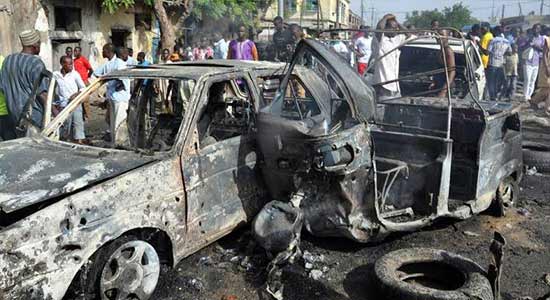
For the second time in a week, the Sultan of Sokoto, Alhaji Muhammad Sa’ad Abubakar III, has expressed concern about the worsening insecurity in Nigeria.

The sultan, who last Thursday described the North, ravaged by terrorism and banditry, as the worst place to live in Nigeria, said yesterday that nowhere is safe in the country.

The sultan, in a statement by the apex Islamic body, Jama’atu Nasril Islam (JNI), in reaction to the killing of over 43 rice farmers in Borno State, enjoined Islamic clerics nationwide to embark on special prayer sessions against insecurity five times daily.

However, governors, under the aegis of the Nigerian Governors’ Forum (NGF), have attributed the flagging efforts at combating the security challenges to the fact that the military is overstretched and overwhelmed.

They are also planning to meet President Muhammadu Buhari over the security crisis confronting the country.

Meanwhile, All Progressives Congress (APC) National Leader, Senator Bola Tinubu, yesterday wrote Borno State Governor, Prof. Babagana Zulum, to condole with him and the people of the state over the farmers’ killing.

Tinubu decried the gruesome murder of the farmers and said more efforts would be required to win the anti-terror war.

The sultan, who on November 26 at the fourth quarterly meeting of the Nigeria Inter-Religious Council in Abuja, had lamented the high rate of insecurity in the North, restated yesterday that bandits now rule in some communities in the North.

He called on the federal government to rise up to its responsibilities and go beyond the traditional condemnation and payment of lip service to security matters.

The statement, signed by the JNI Secretary-General, Dr. Khalid Aliyu, said: “Wanton killings, acts of banditry, kidnapping for ransom, high rate of unemployment amongst the youths, rape and all forms of terrorisms have now become the ‘New Trend’ in our communities.

“Nigerians have become so much terrified, as nowhere is safe; the home, the farms, and the roads. Bandits now rule in many communities, they set rules that must be obeyed.”

The sultan condoled with the government and people of Borno State over the massacre of the rice farmers in Zabarmari in Jere Local Government.

He said: “Forty-three human beings as reported by the media were slaughtered without any intervention by the security forces in the area. The senseless act stands condemned in the strongest of terms.

“Unfortunately, the common man is now caught in-between two contending phenomenon; when he goes to the farm, he gets killed; and when he stays at home, he dies of hunger. It should be known that this singular act of Zabarmari was a calculated attempt to instill fears among farmers and jeopardise the frantic efforts of returning Internally Displaced Persons (IDPs) to their localities by the Borno State government under the leadership of Governor Babagana Umar Zulum.

“For how long, would we continue to live a life in fear? For how long, can we continue to wait in vain? For how long, shall we continue to condemn acts of terrorism without any concerted efforts in ending it? For how long, would we continue to remain indolent? And for how long can we continue to remain hopeless in a precarious situation such as what we are in presently?”

He sent his heartrending condolences to the families of those martyred in the Zabarmari massacre, the people and government of Borno State and Nigeria in general.

The sultan faulted the lethargic reaction of the federal government to the incident.

According to him, “All that was needed immediately the incident occurred was a proactive measure(s) by the federal government of Nigeria, such as a prompt visit within 24 hours to the affected areas.

“This will assuage the affected communities to have more confidence in their leaders, seeing that they are not left alone in their ordeal and it will also send a strong signal to insurgents that the government is ready to go to any length to protect its people.”

The JNI suggested ways the federal government could handle such an incident in the future to reassure the people of its commitment to their safety and wellbeing.

It said: “We call on the government to: Always identify with victims and places of attacks by being physically on the ground to commiserate with the people. A national broadcast after the visit is very necessary. “Reprimand/prosecute officials that are found wanting in the discharge of their assignment(s), so as to serve as a deterrent to other nonchalant officials.

“Collaboration with relevant security agencies with a timeline to bringing an end or at best decapitate all security threats bedeviling the country and also mop small arms and light weapons (SALWs) in the hands of criminals or else Nigeria will continue to witness the rise in arms proliferation for self-defence amongst Nigerians since the government failed to do so.”

It urged the federal government not to spare efforts in supporting all affected communities since many people have been turned into internally displaced persons (IDPs).

“We note with dismay that our societal values have been relegated to alien norms, thus parents and community leaders must be very vigilant and always remain to introspect over their wards and/or children, as the prevalence of illicit drugs intake amongst the youths is getting out of hand.

“These and many more similar gestures may not immediately bring insurgency to an abrupt end, but will reassure the masses and calm frayed nerves seeing that the authorities are truly on top of the situation,” the JNI added.

Govs: We’re Frustrated, Military Overwhelmed

Expressing worry over the inability of the nation to effectively tackle insecurity, state governors said yesterday that they were frustrated by the situation.

They said the nation’s security challenges are beyond the military, which is overstretched and overwhelmed and cannot single-handedly handle the crisis.

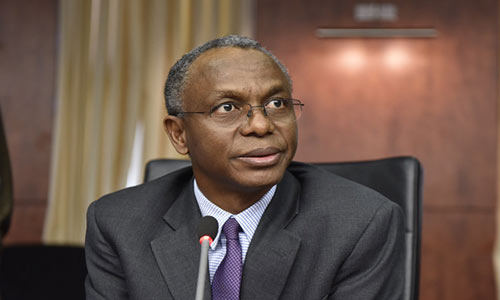
The NGF Chairman and Governor of Ekiti State, Dr. Kayode Fayemi, spoke on behalf of his colleagues and said the various security challenges, including insurgency, banditry, kidnapping and armed robbery, affecting many parts of the country, have overstretched the military.

Fayemi, who led a delegation of governors to Maiduguri, on Tuesday to console Zulum, said: “We are here, Your Excellency, first to express our condolences to the families and loved ones of our lost citizens, and also to the good people of Borno State and yourself as the leader of our people here.

“But what happened in the last three days is by far beyond any imagination, it was a massacre and it was one that none of us could come to terms easily with.

“I know there is an element of fatigue that will creep into this. Every time this happens, we never let you rest on your phones, expressing sympathies. We come here as a delegation; you speak to us about your genuine believe in what could help us tackle this challenge that is depleting our country and we pledge to take steps to engage the leadership of our country. So there is very little we can say to you now that we haven’t said before as your brothers.

“There is nothing new that you haven’t told us, that you haven’t told the delegation from Mr. President yesterday. We have all heard directly from you, your six-point agenda. We have read it and you have just expressed it to us in our private conversation. All I can say to you sir is that we fully and wholeheartedly endorsed every single point on that agenda.

“I personally as a security scholar, the reality I can see is that our military is overwhelmed. Our military is no longer in a position to single-handedly tackle this menace effectively.

“It is not a criticism of our military. If one were to suggest a coalition beyond that will even include our neighbouring countries which are probably more experienced in fighting an asymmetrical war. It will not be a loss of our pride as a country if that were to happen and this certainly something that we as your colleagues and brothers will put before Mr. President.”

However, when THISDAY contacted the military to react to Fayemi’s claim that its personnel are overstretched, a source he craved anonymity since he didn’t get clearance to speak on the issue, said: “He’s on his own. He is entitled to his own opinion. We do not want to take issue with political officeholders.”

Fayemi was accompanied to Maiduguri by the Governor of Sokoto State and the Vice Chairman of the forum, Hon. Aminu Tambuwal, Governor of Kebbi State, Atiku Abubakar Bagudu and that of Niger State, Abubakar Bello.

Fayemi also described their visit to Borno as an expression of their frustration for not being able to make any meaningful headway in the security problems facing the country, despite many attempts.

He said: “This is not a visit to gratify ourselves that we have come to you; no, it is expression also of our own frustration that we have not been able to make changes because we have held series of meetings. You have been present at these meetings; some with Mr. President, meetings with security chiefs. We have highlighted all the issues. You have spoken frankly on all those occasions, but we are still where we are.

“We can’t bring back the people we have lost in the last couple of days, but if we do not take the necessary steps the entire nation will be consumed by this insurgency.”

According to him, despite the problem, the NGF will continue to support the government of Borno State in engaging appropriate authorities to find solutions to the insecurity.

“We need to stand solidly with you, assist in whatever way you want us to, ensuring that our government takes the right position in order to tackle this problem. I want to assure you that we shall not relent as your brothers in conveying this to the appropriate authorities,” Fayemi said.

Zulum, who decried the continuous attack on innocent people, said: “We need to address the underlying causes of the insurgency. While appreciating the efforts of the federal government in implementing some policies that are geared towards addressing poverty in the entire nation, Borno State deserves more.

“We have said all; there is nothing new that I can say. But when shall we end this insurgency? That’s something very important.”

Governors Seek To Meet Buhari

THISDAY, however, gathered yesterday that NGF, after a meeting yesterday resolved to book an appointment to see the president on the insecurity in the country.
The 36 state governors had met on insecurity in the country with a source confiding in THISDAY that they all lamented how the insecurity is affecting their states.

Earlier, a statement on Monday by Head, Media and Public Affairs, NGF, Alhaji Abdulrazaque Bello-Barkindo, had said the 22nd NGF teleconference meeting would hold yesterday with governors of the 36 states seeking to evolve a new national security order that will ensure safety of lives and property nationwide.
“As part of the effort, beginning at the subnational level, the forum will be receiving zonal updates on SARS and internal security at its Wednesday meeting.
“Similarly, the forum will also revisit the issue of CACOVID palliatives with updates on its current status’ in all the states.”

Tinubu Writes Zulum, Says More Efforts Needed to Defeat Terrorism

In the meantime, the APC National Leader, Tinubu, has commiserated with Zulum and the people of Borno State over the killing of farmers in Zabarmari by Boko Haram insurgents.

In a letter to the governor made available to journalists by his Media Office, Tinubu said: “The cold-blooded murder of these innocent citizens, toiling to eke out a living for themselves and their families and provide food security for our nation is not only callous but satanic.

“I recall your strident sacrifices to ensure that millions of displaced Borno residents are resettled in their ancestral homes and return to their various occupations. These efforts have not only helped in increasing agricultural output but have also given joy to the displaced.

“Your Excellency, this unfortunate incident despite your spirited efforts in complementing the efforts of the federal security forces is a sad reminder that the war against these desperate and blood-thirsty insurgents will require more efforts to win.

“My hope and prayer are that Allah will give you the courage to continue to provide succour to your people even in the face of this rather depressing event.”

Judiciary Tops Corruption Index With N9.4b Bribes

By Yusuf Alli

The Independent Corrupt Practices and Other Related Offences Commission (ICPC) on Tuesday said the Judiciary is on top of the Nigeria Corruption Index between 2018 and 2020.

It claimed that about N9, 457,650,000.00 (N9.457 billion) was offered and paid as bribe by lawyers.

Six female judges, according to the agency, reported that they were offered N3, 307,444,000.00 (N3.307billion) and five male judges reported N392, 220,000(N392.2million).

The anti-corruption commission said the cases of outright demand and offer of bribes were “mostly linked to election matters.”

These details are contained in a report: “Nigeria Corruption Index: Report of a pilot survey”, which was made available on Tuesday by the Chairman of ICPC, Prof. Bolaji Owasanoye (SAN) in Abuja.

The survey was carried out by the Anti-Corruption Academy of Nigeria, the intellectual arm of the ICPC.

Owasanoye said the Nigeria Corruption Index(NCI) “indicates that both the public and private sectors are complicit in the high corruption levels in Nigeria.

“The survey also identifies the specific practices that are contributing to the corruption levels. This is the sort of information that stakeholders require to plan and evaluate their anti-corruption work.

“ICPC is committed to stopping corruption in Nigeria using all lawful means and capabilities, including deployment of knowledge and data for effective anti-corruption action.”

The NCI explained in details the rot in the Judiciary.

The report reads: “Overall, the justice sector had the highest level of corruption with a score of 63. The level of corruption in the justice sector was heightened by stupendously high amounts of money offered as bribes to judges by lawyers handling high electoral and other political cases.

“A large percentage, 73 per cent of justice sector respondents did not experience a situation of outright demand or offer of bribe. Nevertheless, it remains alarming that 16 per cent of respondents had experienced such blatant demands or offers of bribes.

“Follow up discussions indicated that the cases of outright demand and offer of bribes are mostly linked to election matters.

“Money involved in the high-level corruption in this sector was categorized into money demanded, offered or paid. Demands are made by court officials including judges, while bribery offers and payments are made by lawyers or litigants.

“The total amount of money reported by the Justice sector respondents as corruptly demanded, offered and paid between 2018 and 2020 was N9,457, 650,000.00 (N9.457 billion).

“78 respondents constituting 8.7 per cent of all justice sector respondents reported offers or payments of bribes to influence the judicial process. Out of the 78 justice sector respondents that reported amounts of money offered or paid, 63 were lawyers. This number makes up 9.9 per cent of all lawyers surveyed in the justice sector. The 63 lawyers that reported payments were mostly male being 69.8 per cent, while their female colleagues constituted 30.2 per cent of that population.

“In all, the total amount of money reported by lawyers was N5,733,986,000.00. The amount reported by female lawyers was N918,045,000 while male lawyers reported N4,815,941,000(N4.8billion).

“These amounts made up 9.71% and 50.92 per cent respectively of the total amount reported by justice sector respondents. Lawyers reported 60.63 per cent of the bribes offered and paid by justice sector respondents.

“The amount of money offered to judges was next in volume to payments made by lawyers. In all, N3,699,664,000 (N3.699billion) was reported by 11, that is 8.9 per cent of the 123 judges surveyed. 6(54.5 per cent) out of the judges that reported the offers were female, while 5(45.5 per cent) were male.

“Although, the females were just slightly more in number than the males, the females reported a substantially higher amount of money.

“The total reported by the six(6) female judges was N3,307,444,000 while the five (5) male judges reported N392,220,000.00. These amounts made up 34.97 per cent and 4..15 per cent respectively of the total amount reported by justice sector respondents. Judges reported 39.12 per cent of the bribes offered and paid by justice sector respondents.

“The court staff reported the lowest amount of money offered as bribe to influence the outcome of a judicial process. The total amount of money reported by court staff was N24,000,000…”

The document gave the breakdown of the percentage of those most responsible for bribe for judgment situations as follows: Lawyers (27.17 per cent); Litigants personally(21.96 per cent) Court Staff(Clerks, Registrars etc)—(21.54 per cent); Judges (16.88 per cent), Government MDAs (7.37 per cent); No experience on the matter(3.06 per cent); Chose not to say(1.01 per cent) and others 1.01 per cent.

ICPC also cited alteration of court documents as part of the corruption in the Judiciary.

The report said: “Grand corruption in the justice sector also manifests in the form of fraudulent alteration of court documents.”

“In the experience of justice sector respondents, court staff are most responsible for this corrupt practice.

The report gave further insights into other forms of corruption in the Executive and the Legislative sectors.

The report added: “The private business sector ranked next to the justice sector in corruption levels, although this sector had a score of 33 in monetary corruption, it had score of 55 in non-monetary corruption.

“Corrupt practices in the private business sector contributed greatly to the national level of corruption. This sector had an overall corruption score of 44.

“The high level of corruption in the private business sector can be easily overlooked while concentrating on corrupt practices in governmental spaces. The high corruption score of the private business sector serves as a reminder of the need to stop corruption in both private and public spaces.

“Many of the corrupt practices found in the private business sector involve collaboration or joint participation with government officials.

“The Executive and Legislative sectors had overall corruption scores of 42 and 41 respectively. In monetary corruption, the Executive sector with a score of 33 had a higher level of corruption than the Legislative sector, which had a score of 27.

“However in non-monetary corruption the Legislative sector with a score of 55 surpassed the Executive which had a score of 51. Some of the corrupt practices found in these two sectors involved the joint involvement of parties from both sectors. “

The report indicted MDAs of engaging in corrupt practices by footing the bills of legislators on oversight visits.

It also highlighted the methods being used by MDAs to perpetrate fraud.

It said: “The link between absence of transparency and corruption is illustrated by the sponsorship of legislative oversight visits by MDAs. Legislators conduct oversight visits of MDAs. Some MDAs facilitate these visits by providing transportation, accommodation and outright cash payments.

“The sponsorship of oversights by the inspected MDAs has been said to be unavoidable because of the number of MDAs and the absence of provisions for such visits in the legislative budget.

“Any merit in this position is whittled down by the absence of public availability of the details of the legislative budget.

“So, it is possible that legislators whose oversight visits are sponsored by MDAs could also be receiving payment for the same purpose from the legislative arms of government.”

The report also uncovered abuse of legislative office through project inspections.

It said: It is not ordinarily a legislative function to inspect governmental contracts awarded to private businesses.

“However 31 per cent of private sector respondents indicated that they had experienced situations where projects were inspected by legislators.

“Money involved in facilitation of legislators’ project inspection visits are paid by private companies.”

Editors Note; Written By Yusuf Alli and originally published in TheNation

Influx Of Substandard Goods In Nigerian Markets Worries Appeal Court President

President of the Court of Appeal, Justice Monica Dongban-Mensem

The President of the Court of Appeal (PCA), Justice Monica Dongbam-Mensen has decried the increasing influx of substandard products into Nigerian markets.

Justice Dongbam-Mensen, who spoke in Abuja on Wednesday when a delegation from the Federal Competition and Consumer Protection Commission (FCCPC), led by its Executive Vice Chairman, Mr Babatunde Irukera, paid her a courtesy visit at her Chambers, decried that the country has become a dumping ground for all sorts of junks.

She said there was a need for strict enforcement of existing laws to ensure that products brought into the country are of good standards.

According to the PCA, “When you look at products coming into Nigeria, you will realize that Nigeria is being taken very much for granted. I know that some people prefer to buy products made for use in Europe than the ones made for Nigeria.

“Unfortunately, some of our businessmen go out and ask that the minimum standard should be made and brought for us. So once you buy, you are on your own.

“Some times, some of the products that come into this country, we buy them as new, but in reality, they are not even second-hand, maybe they are tenth-hand or they were deliberately fabricated not to work at all.

“So we end up with a lot of junks in our nation and we have no means of cleaning up our environment, we are like a dumping ground”, She said and called for economic balancing, saying, “the gap between the rich and the poor is getting too much, it is getting too wide.”

According to her, “If there is a deliberate and conscious attempt to ensure that there is equity, balance in the distribution of wealth, such that the not so wealthy or totally downtrodden are given an opportunity to participate in the economic development of the nation, I think a lot of our problems would be solved.”

While imploring the Commission to inline with its mandate, ensure strict enforcement of existing laws, Justice Dongbam-Mensen said, there are strict laws that ensure that good standards are maintained and that products brought into a nation are of good standards.”

Similarly, another Justice of the appellant court, Peter Ige, said there was a need for wider consultation with stakeholders when amendments are effected on Acts regulating operations of government agencies.

He said the duty of the Court was to declare what the law stipulated. “For instance, right now we don’t even have complimentary copies of your Act to know the areas that are in conformity or in conflict with the constitution.”

More so, Justice Ige said there was a need for the National Assembly to amend the laws to guarantee the enforceability of Chapter 2 of the Constitution.

“You do know that Chapter 2 of the constitution is a non-justiciable provision. When people talk about restructuring and all the rest, one would have thought that everybody will concentrate on Chapter 2 of the Constitution and make our National Assembly make them enforceable.

“This is so that everybody will know that all these rights or provisions, which is the purpose of government that are provided for in Chapter 2, we can enforce them and everybody can enjoy the benefits of governance, whether politically, socially, economically, commercially or otherwise.”

On his part, the Chairman of FCCPC, Mr Irukera, said the purpose of the visit was to intimate the Court of Appeal about operations of the Commission.

“The FCCPC is keenly interested and looks forward to the Court of Appeal’s kind indulgence in collaborating with the agency.

“One of our more urgent and crucial objectives is a knowledge-sharing opportunity where we present a more in-depth analysis of the FCCPA through knowledgeable faculty working with and through the National Judicial Council, and learning from this senior bench too, what the judicial considerations are in dispute resolution, as well as how best to present questions of law for the fairest and most meaningful outcomes and disposition,” he added.

TIPS