Home Blog Page 1129

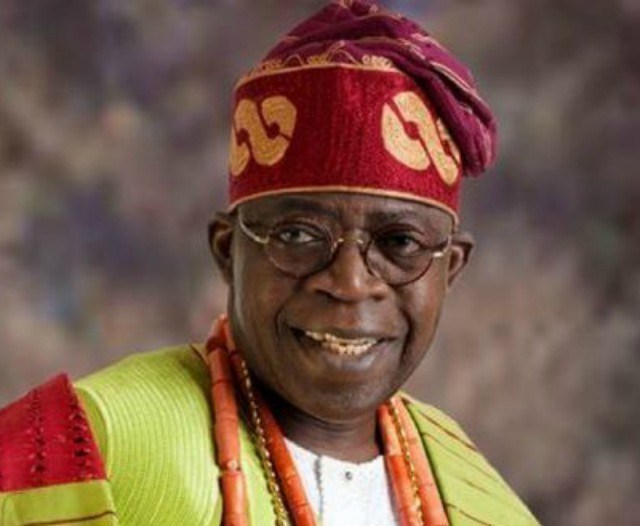
Tinubu, Run! Please, Run!

What could have prompted Aunt Adelina to declare in The Feast of the Goat that “Well, that’s what politics is, you make your way over corpses…”? After seeing what politics and politicians do with us in Nigeria, should I have asked that question in the first instance? Optimists that Nigerian politicians are, they have started a race ahead of God to the year 2023; and they do not appear to mind stepping on the blood and the corpses of their brothers into that office they covet so badly. While at it, they are most times unmindful of how the people feel about their sprinting ahead of the Creator. Not even the perishability of their own selves do they give consideration. Being humans, can any sprinter be sure they will see that selfsame 2023? This time around, however, they seem to be hushing the 2023 permutations and projections.

So when last week, a group of loyalists of former governor of Lagos State and one of the leaders of the All Progressives Congress, (APC) Senator Bola Ahmed Tinubu, stormed the ancient cities of Ibadan and Oyo, in Oyo State to canvass his 2023 presidency, the picturesque that was hitherto operating at the realm of conjecture, about a kingmaker who wants to transmute to become the king, began to take a life of its own.

A very instructive statement from the leader of the group, Dayo Adeyeye, a former federal lawmaker, ex-AD, ex-PDP, currently in APC, brought home the raison d’être of the team, named South West Agenda (SWAGA ’23). While explaining SWAGA ’23’s agenda, Adeyeye said it was to “champion a common front for the Yoruba race.” It must be borne in mind that Tinubu has not publicly told anyone he is interested in the presidency. However, he has embarked on some gallivanting of recent to the North which some readers of Nigeria’s political barometer labelled political moves ahead of 2023. Counterpoising this is also an alleged attempt by the feudal north, desirous of eating its cake and having it, to bring back former Nigerian president, Goodluck Ebele Jonathan, into the presidential contest, so as to speed up the north’s return to power.

There is always a tomorrow. And when that tomorrow comes, the pounded yam of twenty years ago will burn the finger of the sinner. Adeyeye’s SWAGA ’23 reminds me of a sad occurrence that took place around 1969 in Ila Orangun, an ancient town in present-day Osun State. It happened during the Agbekoya tax revolt in the Western Region. The General Adeyinka Adebayo government’s increment of tax in the region had engendered the peasants’ revolt. Shouting, “Oke mefa l’ao san! Oke mefa l’ao san! (we are only paying 30 shillings) the peasants marched from one village to another in the whole of the region, killing and destroying anything that had the imprimatur of government, from courthouses to government buildings.

In September 1969, they broke prisons, especially the Ibadan Agodi prisons and set free thousands of prisoners. Chanting that they would only pay $1.10 as tax, they inflicted mayhem on the streets and made government ungovernable for General Adebayo. It took the avatar himself, Chief Obafemi Awolowo, to quench the fire by walking into the forest on foot to negotiate with Tafa Adeoye, leader of the revolt. He was the only one the peasants trusted.

As an aside, let us note some historical trajectories in the above. First, did you notice some similarities in government concerns that Agbekoya revolt kingpins chose to unleash their mayhem on and that they bear some similarities with the targets of the recent EndSARS protesters? Did you notice that Awolowo, who just left the Calabar prisons during this time, was trusted by the Agbekoya and upon meeting them, there was détente? Can you recall that Tinubu also issued some placatory statement as Lagos boiled and did you notice that this did not prevent the destruction that was unleashed on Lagos?

The Soun of Ogbomoso, Oba Olajide Adeoye, was killed right inside his palace, while the mayhem lords set the palace ablaze. Oba Adeoye’s body was dismembered by the rioters. In Ila Orangun, the rioters also attempted to replicate the Ogbomoso mayhem on the monarchy. A senior member of Ila traditional council, Chief Elemona, was killed in a similar fashion as the Soun. The king, Oba Williams Adetona Ayemi, was forced to flee the palace for safety. It was suspected that the attack on the Oba and his chief was a carryover from Ila local first republic politics, the divide between First Republic rumps of S. L. Akintola’s NNDP and the Action Groupers in the town. The Oba was the leader of the Action Group before he became a king while the murdered chief was his main backer.

Then came 1978/79 and the return of party politics; the NPN group loyal to those who hounded Oba Ayeni out of the palace, moved to have an upper hand in the political equation of Ila Orangun and the UPN locals went into their vengeance archive. For those who know, payback is real in Yoruba politics. Indeed, from time immemorial, recriminations are permanent features of politicking and inter-party relations in the land. Thus, as this Ila political rump attempted to secure ascendancy, the locals, through incendiary songs, vengefully reminded them that they had not forgotten how they sneaked murderous politics into the Agbekoya uprising, killing Elemona and hounding Oba Ayeni out of the palace. They sang: E gbagbe ibo ni? Igba ti e p’Elemona ti e l’Oba lu’gbo, e gbagbe ibo ni? translated, meaning, “did you forget that there would be elections when you killed Elemona and chased the Oba into the bush?”

If Adeyeye does not know, he should ask any deep Yoruba son or daughter to tell him the potency of payback politics of the people. Yoruba do not forget, they also very rarely forgive. As he mouthed his “a common front for the Yoruba race,” he probably had forgotten a woman named Mulikat Akande-Adeola. This Ogbomoso-born woman was a member of the House of Representatives and was highly favoured by all permutations, including the support of the presidency and a zoning formula which slated the House of Representatives Speakership to the Yoruba of the South West in 2011. All of a sudden, Tinubu and his Action Congress of Nigeria (ACN) Yoruba ensemble forgot the propriety of that same “common front for the Yoruba race.”

Tinubu not only opposed the Yoruba woman, he strongly backed then 45-year old Aminu Tambuwal, lawmaker and lawyer from Tambuwal Federal constituency of Sokoto State, even though he was not of their party. Tinubu’s party ordered all its legislators to vote the Fulani as Speaker and ditch their own sister from Ogbomosho. Now, the selfsame actors who didn’t realize that Yoruba needed a common front in 2011 have suddenly realized the need for Yoruba interest to be protected in 2023.

The Ila Orangun anecdote is a strong dip into and a reminder that, if not anywhere else, payback time politics is real and potent in Yorubaland. As we trudge towards 2023, Yoruba will remember those who had sacrificed the so-called Yoruba interest on the altar of self ambition in the past. They amusingly watch how same people who sold them for ten shekels of silver now appropriating the moral right to call them to queue behind them in 2023, “for the sake of the Yoruba race.”

On Wednesday 27 January 1999, twenty-three leaders of Afenifere/Alliance for Democracy converged in a hotel called D’Rovans in Ibadan. It was a concave for the purpose of choosing the presidential flag-bearer of the mainstream Yoruba party. Bola Tinubu, a new entrant in that circle, was a delegate there. The roles Tinubu and all other leaders played in that assembly are well documented. The messy details are contained in that must-read book entitled Yoruba Elites and Ethnic Politics in Nigeria authored by one of the most brilliant Yoruba of this generation, Professor Wale Adebanwi, of the University of Oxford.

Believing that Olusegun Obasanjo didn’t represent the Yoruba ideal, Afenifere chose to nominate its own candidate between Chiefs Bola Ige and Olu Falae. Against popular expectations, Falae defeated Bola Ige.
In dissecting who each of the Yoruba leaders voted or didn’t vote for, resulting in Ige’s loss, the author conducted a very diligent investigation. In Tinubu’s case, the issue was not really whom he voted for, but the reasons he gave for the choice he made. Adebanwi said: “Tinubu…ostensibly told both sides what they wanted to hear as the reason why he voted for Falae. (Bisi) Akande said Tinubu told him that he was threatened by the ‘old men,’ the Ijebu Four, to vote the way he did. On the other hand, during my fieldwork, the old men disclosed (to me) that Tinubu told them that he couldn’t have voted for Ige because Ige had supported Funso Williams against him in the party primaries in Lagos…” Interesting! Again, if you want to argue that Tinubu is a reincarnation of Awolowo, please take time to read this book, especially the difference between Awo’s ideologically driven politics and Tinubu’s power-driven politics.

The author submits on page 235 that Tinubu “has a prudent fancy for ideology but a fierce commitment to power.” Power here is euphemism for the end that justifies the means of that deadly French theorist, Niccolo Machiavelli. Indeed, “for him, whatever works and works well in politics is ‘good’ politics. That, perhaps, explains his politics of bringing down his Ogbomosho sister for the Sokoto/Fulani boy to rise in Speakership race of 2011. Awoism and Yoruba progressive politics would never endorse calling cow brother because you want to eat beef. Till today, Tinubu is held to be the one who single-handedly dissembled Afenifere and literally destroyed the Yoruba group.
Besides, the present focus of the Yoruba is how to stop Nigeria from further wrecking their lives.

They call it restructuring. It is not the same as the presidency of Nigeria. The Yoruba are aware that, as it is presently constituted, Nigeria is an empty and spent shell deodorized from the outward by its demographics. That shell, even if bequeathed to any of their children in 2023, will explode in their very before. Today’s Nigeria, the Yoruba know, is retarding their progress. The beautifully decorated shell will end up worse than the current fate of the North in the hands of Muhammadu Buhari.

In 2015 when Buhari contested for the Nigerian presidency, the North obsessively campaigned for him, believing that with him in the saddle, there would be a revamp of their worsening destiny. As it is now, apart from a coterie of northerners whose nape of babanriga had widened diametrically through cronyistic awards of contracts and unmerited juicy positions from government, the north’s situation has worsened terribly in the last five and half years. It will seem that Satan and his minions had effectively relocated to the North and made it their empire. No prophet needs tell the South or South West that an empty Nigeria in this form, without a proper restructuring of its failing institutions, would end up an unmitigated disaster.

Today, terrorism and violence have torn the north apart. Emir palaces, hitherto sacred grooves, are targets of bandits and jihadists. Northern feudal lord politicians hardly live within the space of their places of birth. They run to neighbouring countries to hide their heads from insipid violence. Perhaps, if the north had insisted on producing the best of the north and not a man they all knew his serial and manifest incompetence and health failings, that region would have been spared this unenviable tag of one of the most volatile and dangerous places to live in the world today. It would have also saved Nigeria from being infected with its miserable virus of a Buhari presidency.

As said above, the rest parts of Nigeria also became recipients of this wonky decision to make Buhari president. There is a humongous and I dare say, unprecedented influx of northerners into the South today, the preponderance of whom are escaping from the miserable existence in the north. They flee to the south to work as beggars, menacing irritant Okada riders or as Fulani pastoralists fingered in the wide kidnapping ring inflicted on the region.
This was probably why the governor of Oyo State, Seyi Makinde towed the path of the unimportance of a Yoruba presidency in 2023. At a recent handing over of 33 operational vehicles and 396 motorcycles to the Oyo State Security Agency, better known as Amotekun, Makinde deplored politicians who he said were gallivanting round the country seeking to feather their presidential nests. He submitted that Yoruba need adequate security, restructuring of the country, much more than occupying the presidency.

For the South West, borrowing from that ancient Yoruba pun, the eku to da’yi le – the rat that is the harbinger of this dross – was no other than Tinubu and his ACN/APC gang. For selfish political gains, they effectively dressed Buhari in borrowed robes, placed sachet of beverages before him to evoke imageries of frugality, put suit on a man whose mind is grossly dank against modernity, told us he was our best friend and shielded him from the presidential debate where we would have had a peep into his empty mind. Today, those selfsame people want to replace Buhari in 2023, citing the need to “champio a common front for the Yoruba race.” Yoruba will sing the Ila Orangun song for them.

I think Tinubu should not to take a plunge into the potentially destructive brackish waters of Nigeria’s presidential contest. This is because, it will make either an MKO Abiola or Umaru Yar’Adua of him. Both paths are ruinous. The Nigerian power configuration, effectively manned by the feudal north, would be committing their most unpardonable mistakes to allow a man the Buhari government has stabbed this consistently without a word from him the Nigerian president. Abiola paraded such credentials too. I doubt if Tinubu enjoys the best of health too. It is obvious that if Yar’Adua hadn’t taken the plunge into the presidency, the pressure on his health mightn’t have been as fatal as to lead to his untimely death. So, Tinubu, please run, run from the SWAGA gang.

All the above notwithstanding however, if you ask me, I am sure as the sun will rise that Tinubu will run from the presidency, rather than run for the presidency. The Jagaban is too smart, too street-wise to bite the bullet that campaigning for the presidency will be for him. I think SWAG and all the swags about contesting for the 2023 election are basically more of an attempt to keep the Master relevant in the power calculus post-2023 than for him to run for any presidential race.
The picture of what lies ahead of him if he runs for another elective office in Nigeria had already been shown him, less than six months into the Buhari presidency. A back page piece in the Sun in 2015 had asked the then young Buhari presidency to move against Tinubu, using the Russian Vladimir Putin model.

The Putin presidency was said to have been sponsored by some drug barons and one of the first actions he took upon becoming president was to run those same sponsors out of town. They were sure Putin’s sponsors wore the same soiled garments as the Jagaban. They even alleged in the piece that Tinubu owned almost half of Lagos State. It is obvious that those who engineered this to scare Tinubu from eating from the fruits of his labour in the Buhari presidency would not think twice in rekindling the same dirty model.
Thus, in the hands of this set of people, are the pre-governorship allegations against Tinubu which had Tokunbo Afikuyomi starring prominently. I see the Buhari presidency, which Tinubu himself knows doesn’t believe in him, reactivating all the old allegations of old and using them to smear Tinubu to his hilt. So, enjoy the Tinubu presidential contest drama while it lasts. Let me confirm to you, however: Tinubu will run from the presidential contest, rather than run for it.

Ayinde Barrister: In memoriam of a musician who peaked by the graveside of Ayinla Omowura

Wednesday last week, the fifteenth day of December, marked the tenth anniversary of the departure and transformation from mortality to immortality of the body and soul of Yoruba Fuji Iroko tree, Chief Sikiru Ayinde Balogun, popularly known as Ayinde Barrister. He was a musical prodigy who contributed substantially and immensely to the musical, cultural and lingual development of the Yoruba people. He was a bundle of talents whose life could be regarded as woven round music like a tapestry. That day, ten years ago, it was as if there was a permanent stillness in the musical heartbeat of Yoruba land. Barrister had battled an undisclosed ailment for years and gave up at the feet of a cardiac arrest in London.

A few weeks ago, while listening to a live play of a popular Juju musician, some friends and I conducted a peremptory investigation and interrogation of the state of music in Yorubaland. We concluded that with Barrister’s exit, rigour, candour and panache ended with his exit. For instance, the Juju maestro, who had played at a funeral ceremony, only rehashed his old crowd-pulling songs and unable to meander into the present, research into the personalities of his crowd and audience, thus giving them a very flat, uninspiring line of music.

That was not Barrister. He brought rigour into his live plays and even studio recordings, so much that, even his live plays are today evergreen and eternal. No one needs to be a prophet to be able to predict that Barrister cannot die. A century from now, no matter the configuration of modernity, a world that is thirsty to navigate the contours of traditional African music cannot but drink from the brooks of his Fuji music. And don’t tell me that Wasiu Ayinde (KWAM 1) will fill the void. He cannot. His music lacks the grits and rigour that Barrister paraded. Yes, it is fast-tempo and conduces to the musical voraciousness of the present age but when it comes to research and songs that set the brain on a wild wonder into ancient and contemporary issues, KWAM 1 isn’t there at all. His songs are too ephemeral, too peremptory to withstand any comparison. Perhaps, in the song of Saheed Osupa (Saridon P) can be found the satisfaction of that lacuna that Barrister left behind. His songs are very deep, philosophical and also set one on a mental assignment, even while the feet are gyrating to his beats.

My admiration for Barrister dates back to the 1970s. I lapped up his songs at the same time I did that of the man who today is my musical idol, Egunmogaji Ayinla Omowura. Omowura’s death placed him a step higher in my admiration, compared to Barrister’s. My research into Omowura confirmed a thesis which, whenever I submit it, angers some die-hard Barrister fans. The thesis is that, if Omowura had not died, there would never have been the Barrister who supervened over the traditional Yoruba African music stratosphere of the 1980s to 2010 like a wild wind. Omowura had a majesty, aura and eclectic appreciation that Barrister didn’t have and could not have had, placed side by side Omowura.

Not the age differential between them; not even the crowd appeal of the 1970s which Omowura had but which Barrister could not withstand. Certainly not the fact that Barrister was Captain of Omowura’s Fans Club while both were musical stars. Not also because Barrister lapped up some of Omowura’s songs at his death, prominent of which was the Ajikogba ede track which belonged to Omowura. It was the fact that Omowura was like a tempest which would swallow the wind of an Ayinde Barrister any day, any time. In 1978 or thereabout, when Barrister attempted to cross the musical railway pathway of an Omowura moving train, the Egunmogaji gave him a jab in Ayinde ma je ki ngbo… (Ayinde, perish the thought of your imagined superiority). Frightened, Barrister replied like a dog whose tail was tucked into its anus.

Barrister was not a counterpoise to Omowura as both didn’t sing the same variant of Yoruba traditional music. While he sang Fuji, Egunmogaji sang Apala. In my book, Ayinla Omowura: Life and Times of an Apala Legend, I attempted to state that in the history of Yoruba traditional music, there had always been seemingly fratricidal wars between musical counterpoises. While Abibu Oluwa (I enjoy his panegyrics for Herbert Macaulay, playing musical pun with his alias, Ejo ngboro) was like the forerunner of such traditional music. Lefty Salami was also in that mould. S. Aka Baba Wahidi dueled with fellow Egba kinsman Yusuph Olatunji because they sang same Sakara music. Kasumu Adio, born 1928, who died very young, sang better Apala than Haruna Ishola (recall his elegy to Col Adekunle Fajuyi and the Odale Ore track). Adio also engaged in a musical spat with Ishola, alias Babangani Agba, as well as Raji Owonikoko and his self-styled Kwara System Originator Band. However, Ibadan-based anecdotal musical lord, Epo Akara, was in a world of his own.

I had engaged an Egba man, a very brilliant lover of arts, culture and language of the Yoruba people and a huge boardroom giant (I didn’t get his permission to mention his name here) in a comparative analysis of Omowura and Barrister recently. He confirmed this thesis of mine. He agreed with me absolutely. Gani Kola Balogun; our journalism forebear, Elder Dayo Odeyemi, popularly known as Hunter (by the way, please accept my belated happy birthday, sir) and my friend, Adebayo Ojo, former Oyo State Attorney General, who are all fanatics of Barrister’s songs, won’t agree with me, I presume. I may also not be on same page with even musical history researchers like Professor Saheed Aderinto and Waliu Alao.

No doubt, however, Barrister approximated and appropriated the absence of Omowura in an awesome way for his flourishing and died greater than Omowura. He garnered a huge contemporary audience than Omowura probably gathered in his lifetime. However, if both musicians had existed side by side into 2010 when Barrister died, Barrister could never have been able to unbuckle the musical shoes of Omowura who bestrode the Yoruba traditional music scene of the 1970s like a talismanic colossus. Or, what do you think?

#EndSARS: We Need Scholarship, Not Money – Children of Policemen

Some children of police officers killed during the EndSARS protests in Oyo State have urged both the federal and state governments to sponsor their education.

The children of the slain police officers appealed to good-spirited Nigerians to support them in ensuring that they have a good education.

DAILY POST recalls that no fewer than six policemen were killed during the EndSARS protests in the state.

Some of the officers killed during the protests in Ibadan were; Peter Abegunde and Rotimi Oladele.

Our correspondent recalls that the protests rocked some states including Oyo State where economic activities were grounded for some days in October.

But, some children of the policemen who lost their lives during the protests told journalists on Saturday that the death of their fathers has created vacuums in their lives.

One of the children of Peter Abegunde, implored government at all levels to support their education.

She said that she and her siblings were broken when the news of the death of her father was broken.

She, however, added that her fear is how to get education without stress.

She said; “When we heard about the gruesome murder of our father, we were heartbroken.

“My fear is our education. Many of our mothers are not working and we need to go to school.

“I want to appeal to the government to come to our rescue.

“We have nobody, except God.

“In fact, they don’t need to give us money but they should give us scholarship”.

Dailypost

Lagos State Govt To Close Third Mainland Bridge During Yuletide

The Federal Controller of Works in Lagos State, Olukayode Popoola, has tipped the public towards the possibility that the Third Mainland Bridge might be closed next week during the Christmas holidays. Speaking with News Agency of Nigeria, Popoola condemned the disruptive activities of miscreants, otherwise called ‘area boys’, who sometimes open the closed section of the bridge to traffic and endanger the safety of motorists.

He said that their actions have negatively affected the work of contractors but noted that the project is progressing smoothly.

“On the Island-bound lane where we are working now, the contractor is ready to cast another three expansion joints this weekend, but because of the festive period, we have a lot of vehicles on the road.

“We were advised to leave it until next week, maybe during the public holiday where we will do the total closure,” Popoola said.

According to him, the work on the surface of the bridge was over 70 percent completed, but the entire project was 22 per cent completed.

FULANI: The Unfinished Work of Danfodio

FULANI: The Uninished Work of Danfodio

By Aliyu U. Tilde

The Fulani in the past few years are in our minds and news for the wrong reason—the banditry that has plagued the Northwest countryside. In the North today, Fulani in popular parlance connotes the cattle Fulani, whom I humorously classified as Fula naturalis in my 1999 column.

Unlike their cousins, the town Fulani—Fula domesticus—who have enjoyed and partook in building civilizations across West and Central Africa, F. naturalis have very limited contact with civilization. Their life is defined by cattle and forest.

The Master

The cow—the master of the F. naturalis—is their sole merchandise and currency. It defines their geography. They follow the master to wherever its interest of pasture and water lead, thus denying them a permanent address or nationality but assuring them over the centuries of an enduring economy that sustains their republican disposition and freedom from political subservience of numerous city states and empires. With the guide of this master, they witnessed the rise and fall of ancient Ghana, Mali, Songhai, Borno and the Hausa States and negotiated the Continent’s savanna forests from Senegal in the West to The Sudan and Ethiopia in the East and Congo in the South.

When they lose the master—or the master loses them—due to natural disaster, war or religion, they become sedentary and morph into the domesticus species. Within the first generation of settling, the F. domesticus integrate into society and engage in civilizational pursuits like trade, scholarship, politics and war. They acquire a new master—the law—which they must obey, as do other peoples, in order to survive and propagate.

The acquisition of a permanent address guarantees them national identities, rights and the opportunity for industry and to indulge in capital accumulation. Thus, since they started to settle in the Chad and Rima basins in the 16th Century, the Fulani became farmers, traders, court clerks, magistrates, local chiefs, emirs and in-laws to millions that are attracted by their morphology, economic status or political position so much so that the Fula DNA today is inextricably embedded the cells of the majority in Hausaland.

Jihad

From the F. domesticus stock came the 19th Century inventor of the Sokoto Caliphate, Shehu Usman Danfodio. The Jihad he waged contributed in unifying Hausaland—for the first time in its history—and opened up for the Hausa and others lands beyond theirs and sustained an order that guaranteed the civilizational opportunities of peace and industry throughout the 19th Century. The F. domesticus, except in towns and the numerous settlements they formed, have become culturally swallowed by the Hausa through the principal agent of Hausanization—the Hausa language. Thus, the ultimate fate of the F. domesticus in Hausaland is the acquisition of a new socio-political identity called Hausa-Fulani or just Hausa as they are collectively regarded by others.

At the advent of his Jihad, Danfodio looked up to the Fulani stock and appealed for their support. The F. domesticus answered his call from all regions of Hausaland, Borno Empire and the Gongola valley. They became his students and bearers of his flag. Within few years, they conquered the entire Hausa states and engaged the mighty Borno in unending battles in the Northeast for the next 100 years. The disciples of Danfodio and his F. domesticus followers enjoyed the benefits of conquests and became rulers of Hausaland and beyond until they were stripped of power by the white man.

A portion of the F. naturalis answered the call of Danfodio to Islam, some to his appeal to kinship and the rest to the promise of prosperity that his conquests started to fulfil. However, their majority who were still pagans, by the accounts of some historians, refused to substitute their master with Danfodio. They stuck to the cow, lived in the forests, paying cattle tax sometimes, and moving farther away from the areas under the effective political domination of the caliphate, avoid the restraints of religion and constraints of the law—the master in the civilizational order commanded by Danfodio and other F. domesticus cousins.

Danfodio was not happy with the rejection from his cousins, the F. naturalis. He abandoned their chase and said, according to oral tradition, “Go and continue to live the life of nomads, in which you will never settle down.” The words of the Shehu took effect. From the highlands of Adamawa to the basins of Chad, Rima, Niger and Benue rivers, the old and new F. naturalis enjoyed the bliss promised by the forest and the wild order associated with paganism.

Over the years, many were compelled by circumstances listed above to abandon the master, settle down, embrace Islam and move with civilization. Most, however, remained pagans and nomads until of recent when a new political order in post-colonial Nigeria encroached into the forests.

The New Order

The new order introduced high doses of the downside of civilization—corruption and poverty—and gave back little of its benefits—equity, rights and prosperity. In some places the F. naturalis is denied even dwelling the forest by ascendant forces of ethnic nationalism that finds expression in tribal politics and mass killings. In others, population explosion and desert encroachment have colluded to deprive the forest of pasture and water. In some, still, the entire forests were sold to urban bourgeoisie who want monopoly of its gold and other mineral resources. Such acquisitions usually come with the attendant depopulation of the forest by fomenting crisis to make the areas ungovernable, as we see in most mineral rich regions of the world.

That is how Fula who fled from the theocratic government of Danfodio are today faced with the monster of a government that is set to wipe them out altogether. Their protector—the forest—is itself a victim and their master—the cow—cannot take them anywhere as all forests have come to be within the reach of this monster. They are trapped. They must, as any living thing would do under the dictates of its survival instinct, fight back with all the tools at its disposal. Ignorant of precepts of religion and the refinement of law, the forest species of the Fulani does not respect order. To him everything is about strength. Looting, killings, rapes, whatever, can be employed to revenge or to acquire.

Here lie the foundations of the extreme savage behaviour of the F. naturalis in the ongoing banditry of the Northwest that no Hausa or F. domesticus can ever contemplate. Had they answered the call of Danfodio or had the 19th jihadist had the fortune of taking civilization to the forest zones, this banditry would have never occurred. Had nature today been as generous to the savanna as it was yesterday and kept the desert at bay, had we the civilized lived according to the dictates of civilization and being the disciples of its egalitarian concepts of equity and public interest, the forests would have remained, yielding the promise of prosperity to its natural inhabitants and shielding us from the savagery of its population.

Government

In the task of carrying civilization to the forest population or forcing it down their throat, I see as well defined the roles of different stakeholders, if we are serious about ending the ongoing savagery.

That of government is as clear as daylight. It must enforce the law as much as it can. Nothing must prevent it from applying it on anyone abusing the rights of other Nigerians to live peacefully with their lives and property. No compromise. No excuse. This must be applied without respect to any ethnicity—to the Fulani as it is to the Hausa.

Government must also rush to protect what is left of the forest. That will ameliorate the situation as it will revamp hope of successful free-range husbandry among the forest Fulani. In addition, additional economic benefits can be applied through improving the genetics of the stock and the processing of its products. The animal husbandry component in our agricultural policies, programs and projects need to be scaled up. So far, the Fulani gains nothing from them. I cannot find a single centre where I can acquire a $1 straw of virile semen for artificial insemination of my cows, not even in Vom. Government makes perennial noise about fertilizer but has never cared about animal feed and drugs beyond the demand of poultry conglomerates. Grazing reserves and other facilities needed to sustain the health and virility of our large ruminants which were established between 1960s and 1990s are all abandoned, encroached, dysfunctional and dilapidated. That is not to mention security of their cows and lives of their families which are plundered and killed at advent of every crisis especially in Northcentral Nigeria. The cattle Fulani have been on their own.

The activities of miners that allegedly precipitated this crisis and the unmitigated expansion of agriculture into forest reserves need to be checked by local and state governments. Land grabbing and mineral prospecting without environmental impact assessments that would foresee and avoid the consequences of such commercial activity in our forests must be checked by our state governors and the Federal government. Experts on the crisis in the Northwest have specifically implicated this institutional banditry of the elite as its cause—and it goes unabated in other areas as well.

Government must also undertake mass campaigns of educating the forest Fulani. The nomadic education schools invented in the 1990s are moribund and underfunded today, as all attention from Universal Education Board and its state branches—the SUBEBs—focus on schools amongst sedentary populations. The nomadic schools are abandoned in every state, even in states non-hostile to the Fulani. Education is the principal vehicle of civilization. All the bandits arrested confess to having no education, formal or informal, western or Islamic. And they all fall within the age category that would benefit from our Nomadic Education scheme.

Government must reach out to the forest populations with campaigns and establish its presence there. Broadcasts over radio in their languages and increasing the presence of law enforcement agents and military encampments will go a long way to effacing the safe haven status of such forest. The presence of government must be felt everywhere. With military and police presence, the availability of modern surveillance and communications technology, the F. naturalis cannot be beyond the reach of government as he eluded Danfodio 200 years go.

Finally, government must also prevail on its agents, especially the police, from exploiting the ignorance and helplessness of the forest Fulani to extort him and deprive him of his property. The cows appeal to the primitive acquisition instincts of police officers. Once they arrest a Fulani, they are sure that they have hit a goldmine that will last them months. This too is among the major grudges of our forest stock. Unfortunately, they are not alone. Other Nigerians daily fall victims of this exploitative practice. It is only worse with the Fulani.

Citizens

The second stakeholder is the Nigerian citizen who comes into contact by address or business with the forest Fulani. In this world, we get what we give. The reaction of the Katsinawa Hausas in Zamfara worsened matters during the early stages of the crisis. Banditry started in the Northeast and Northwest in the mid-1990s and it heightened in the Northeast just after 1999. The northeast approached its purely from the point of view of criminality and its governors controlled it through law enforcement. States like Kano and Kaduna to a large extent also treaded the path of the law and the banditry in places like Falgore forest was stopped.

In Zamfara, however, banditry became ethnicized by the Katsinawa Hausas there. After the police failed to control the banditry, the elites mobilized illiterate village vigilantes who attempted to stop it through meting brutal treatments to the entire ethnic Fulani, not just the suspected culprits. The vigilantes were the law, the police, the judge and the executioners all in one.

Settlements were rounded up and massacred; ardos—Fulani leaders—were humiliated before being executed amidst their family members. So collective was this treatment that the Fulani fled the area and migrated southward into the forests of Birnin Gwari and Niger. There, they acquired, and trained in, firearms before returning to their previous homes in Zamfara some few years later. Tam! 😳 They started their revenge by picking on leaders and members of the vigilantes who meted injustice to them in the past.

Then the crisis moved to a collective level on both sides. For example, at a meeting of Katsinawa vigilantes a resolution was passed to kill any Fulani wherever he is seen. The news instantly leaked to the Fulani who quickly responded by attacking the venue and killing anybody they could reach. Hordes of Hausa passengers returning from markets could be ambushed and killed just as the Fulani were killed by the vigilantes.

The crisis escalated beyond the police and the Yari government did not do sufficiently much to stop it by alternative means. The Kastsinawa elites in the South too did not show interest in stopping the crisis as they frustrated the reconciliation effort of late Sheikh Abubakar Tureta Committee which brought peace in Northern Zamfara for two consecutive years. Even as I left Gusau in 2014 after a four day assessment visit, my contact narrated to me how a 71 year old Fulani was killed the previous day after selling his bull and the N145,000 seized by his Hausa vigilante murderer in the glare of the market, just 20 kilometres outside the state capital, Gusau.

As if to worsen an already bad situation, criminal elements among the Fulani who were used to cattle rustling introduced kidnapping into the mix and it soon gained currency among the Fulani and, to a lesser extent, the Hausas as well. In a short time, it spread to neighbouring states of Kaduna, Katsina and Sokoto. The hands of the Fulani became full with ethnic revenge on the one hand and the lucrative business of kidnapping by their criminals on the other.

It is now too late to waste time apportioning blames. A resolve by both ethnicities to make the law their master will go a long way in resolving the crisis. Community leaders have to be mobilized. Present governments of Zamfara and Katsina States have largely succeeded in taming most of the kidnappers but there are many who for economic reasons are still defiant. Governments, in addition to the many roles we listed above which their overarching position necessitates, must preach and practice the law and encourage mutual respect and forgiveness between the two groups in order to avoid lasting consequences of the ethnic divide.

Religion

A week ago, a lady sent me a video showing how indigenous Fulani are increasingly evangelized by Christian preachers. I told her it is a good development. They need religion—Christianity or Islam—to refine them and tame their unbridled orientation. Both will teach them the existence of God, Judgement and restrain them from evil, at least notionally, and where possible cultivate in them a level of piety. They need religion to drag them away from the vagaries of paganism and introduce them to civilization the same way it saved their town brothers, Fula domesticus over the past millennium.

It is wrong to associate the Fulani with Islam as we often do. The Fulani are just as any African folks. Though overwhelmingly Muslim, an allowance must be created in our minds for some becoming Christians, just as there have been many Europeans and Americans converting to Islam.

Here, as Dr. Ahmad Gumi noted recently, the Ulema are found wanting. They have not continued with the work of Danfodio with the required vigour. That there are still many pagan Fulani in Nigeria is indicting of their failure. Instead of attending to their self-chosen mission, many of the Ulema are today engaged in the race for material accumulation, which shamelessly makes them guests of government houses and agents of political parties! All the kidnappers arrested answer Muslim names but hardly know anything about Islam. The forest is yearning for Islam. The Ulema must hearken to its call. If this will be done, a lot will be mitigated.

Kinship

The detachment of the F. domesticus from his forest cousin is most disappointing. Few town Fulani bother to know the conditions of the indigenous Fulani they left behind in the forest and come to their aid. They learn about their extortion by the police but do nothing about. They see their ignorance, poverty and primitivity but fail to help them overcome them. Instead, the cultural organizations of the F. naturalis join in the fray of extortion and negligence. The F. domesticus are preoccupied with material accumulation—building the tallest houses, riding the best cars, marrying their choice and having the fattest accounts amassed through corruption—the complete antithesis of the Danfodio jihadi principles.

The Fulani respect kinship, pulaaku, that is almost religion in status amongst them. It is a lever that can be used to raise them to the level of civilization where their town cousins are today. It can also be used in conflict resolution as seen in the go-between role played recently by the National President of Miyetti Allah Cattle Breeders Association of Nigeria (MACBAN) to resolve the Kankara students’ abduction crisis.

The goodwill that the Fulani has in Northern Nigeria must be harnessed to solve the problems facing their indigenous stock. From the exalted position of the Emirs to the respected position of the ulema and intelligentsia, the opportunity exists to salvage the cattle Fulani from the precipice they stand on today.

Sheikh Tureta through his reconciliation committee in Zamfara had proven that before his death. He wondered why the noble stock of the Fulani would be allowed to degenerate into lawlessness. He went to Zamfara and against even the cooperation of the police braved the fears and travelled into the forests to meet with the forest Fulani. A success story followed his effort. It was a huge loss that he died when his courage, scholarship and pragmatism was most needed.

It is time for others to rise and be counted. We must be the voice of the indigenous Fulani, seeking to establish his rights to education and social amenities, guarding his right to the forest and a large chunk of the agriculture budget of all tiers of government, building bridges of harmony between him and the multitudes of ethnic groups he lives with, etc. Only when the Fula domesticus rise to the occasion would Danfodio’s work be completed. Otherwise, the task will remain unfinished and the nation will continue to taste the unpleasant consequences of our failure for some time to come.

Hope

It is not theory. I and a number of F. domesticus have related in the field with issues involving our F. naturalis cousins. Some are our elders in their 90s—the Ahmed Jodas, for example; some in their 80s—the Jibril Aminus and Angos; and down the age ladder including many emirs, intellectuals and above all, our grand patron the Sultan. All of us have first hand information of the problems of our indigenous cousins. We often intervene along with their cultural organisations and the support of government to resolve momentary short term issues like the ethnic conflicts in Northcentral Nigeria and then go our ways.

The response I have witnessed from our helpless cousins was encouraging and appreciative. What is lacking is the unification of these efforts into a single roadmap that draws human and material resources from individuals and governments with the sole purpose of achieving their holistic emancipation and integration into different facets of the larger Nigerian society. Such a roadmap must be made up of practical short, medium and long term strategies devoid of the empty elitist grammar of conference sessions.

This will perhaps be the subject of another article. Sorry, my reader, this one has been long enough to be stopped here and give you a break and salute your tenacity. 😁

As a takeaway, however, I will appeal to all Nigerians not to lose hope in my cousins. I and many of my kind understand the urgency of the matter and the expectations rightly placed on us. We will do our best in completing the task of Danfodio, soon, in sha Allah.

May the Lord help us.

Tilde is the commissioner for education, Bauchi State.

Victim recounts how Abba Kyari-led team forced him to transfer N41 million at #EndSARS Panel

Afeez Mojeed, a real estate manager and haulage consultant, has narrated his ordeal in the hands of men of the Special Anti-Robbery Squad (SARS), who were supervised by Abba Kyari, the then Officer-in-Charge, OC of the unit.

The victim told the Lagos Judicial Panel on Saturday how SARS officers forced him to wire a sum of N41 million to one Edward Obinna and unlawfully collected other sums from him on different occasions.

Mr Mojeed, 38, was accosted at his residence at Victory Estate, Ajah, on October 18, 2014, and was 32 years at the time of the arrest.

“I was in my apartment around 8-9 p.m. in my sitting room with my 2-year-old son and my mother in law watching the TV. My wife was in the kitchen cooking, she was five-month pregnant

“I heard a big bang on my door with a voice saying open this door or I bring down the door,” Mr Mojeed told the panel.

He said he thought it was armed robbers but summoned courage and opened the door, only to see four armed men in mufti, who pounced on him the moment he opened the door.

Confused about what the issue was, Mr Mojeed said the men beat him to the ground and his pregnant wife who was shouting and asking what the problem was, was slapped countless times.

“They chained my legs on the floor and handcuffed my both hands behind. In the process of doing that, one of the men pulled my wedding ring from my finger and collected Tissot wristwatch from my table. They also collected my wife’s wedding rings with several slaps.

“They went to my room, approached my cupboard, they picked the sum of N280, 000 and ransacked all aspects of my house,” he told the panel. 

Mr Mojeed said the armed men, whose identities were unknown at the time, collected several documents from him.

These included his Zenith current account chequebook, Atm card, Diamond corporate account chequebook, four documents of landed properties, two shop documents, ID card, car documents and car key to Honda accord 2008.

He added that the men searched his car, took the sum of N50,000 from the car, took him to their Sienna car and drove off.

“They took me to Ikeja command, we got there around 11 p.m. The allegation as at then was that my car was a stolen vehicle,” he narrated.

He told the panel that he was tortured by the SARS officers till around 2 a.m. and was thereafter put in a cell.

The victim said the police came the next day to ask for the password to his phone which he gave and on seeing his alerts, they came back for him.

“They came back that I should give them the password to my personal account. They collected the atm, I gave them the wrong pin, they sent and came back, they could not cash out.

“Later that day, they pointed at Edward Obinna that I defrauded him of N97 million. Immediately I asked Mr Edward how much I defrauded him. He said he paid to my corporate account and I asked them to allow me get the bank statement to show proof.RELATED POSTS

“He later changed it that he paid to Yusuf Olatunji Balogun which is my cousin, the sum of N97million to procure some earth – moving equipment and he has been working with Mr Olatunji Balogun for the past two years and that Mr Balogun paid into my account and the money was with me, ” he told the panel.

The victim further narrated that the said Mr Balogun is his cousin and indeed pays him some money to buy properties on his behalf.

“I have never seen Mr Obinna or had any business dealings with him, he also admitted that he does not know me,” he said.

The victim said the torture by the police continued as he was handcuffed, hung and beaten with the flat side of a machete by the police.

“On October 22, under the supervision of Abba Kyari, I signed a check from my personal account, N150,000 twice, to a faceless Nurudeen Alabi.

“I was taken to Eco bank at Ikota, Ajah that same day that I had money there. There was an amount I fixed with Eco bank, they brought me to unfix it and transfer the money to them. The total amount was N15 million. The account manager suspected something was off and did not accept my application,” he told the panel.

They wanted me to transfer N41 million from my diamond corporate account to Edward Obinna. Due to the process of terminating the fee, they asked me to come back the following day, he added.

Mr Mojeed said he was returned to Ikeja, where the police started another round of torture saying he played a prank on them.

“At this time, they beat me that I could not see anymore, I was just hearing words,” he said with tears in his eyes.

“After I regained consciousness, they took me back to the cell. Around midnight, they brought me out with some inmates to unload three dead bodies in Hilux bus and threatened that if I didn’t comply, that is how they will waste me.

“On October 23, the following day, they took me back to Ajah, Diamond Bank. Before getting to the bank, they branched a boutique and bought me new clothes, jeans and cleaned me up and wore me the new clothes they bought for me.

“Mr Edward Obinna was behind us in his own car, following us. I was being led inside the bank, two officers went inside with me and sat like customers,” he said, now crying.

He further narrated that Mr Obinna accompanied him to where he picked a transfer form and wired N41 million to his account, adding that they waited at the bank until he received the alert.

Mr Mojeed further narrated that he was tortured and told to write a note and sign it that he transferred N41 million to Mr Obinna willingly.

The victim added that on October 24, 2014, he was taken to another Zenith bank branch, where he transferred N800, 000 to the same Mr Edward. He also paid another sum of N150, 000 through a cheque to Nurudeen Alabi under the supervision of Abba Kyari, the then OC, SARS.

“After achieving their objective, the police put a call through to my wife that she can terminate the presence of my lawyer that they are going to resolve the matter,” he said.

With the persistence of his lawyer, he was arraigned and released on bail on October 31, 2014, after spending 14 days in police custody.

The victim said he suffered poor sight and could not hear properly after the incident. He went to Ajeromi General Hospital, Ajegunle, where he was treated.

How NERC officials share billions as perks while Nigerians lament increased electricity tariff

Premium Times report shows how Nigeria’s regulatory agency’s staff share billions as perks while Nigerians are burdened with increased electricity tariff that has left many consumers unable to pay.

Nigerians have always raised doubts about the neutrality of NERC, but the report by Premium Times exposes a high level of compromise by the officials of NERC.

The report is reproduced below

________________________________________________________

At a time many Nigerians are grumbling about the increase in electricity tariff, commissioners and members of the board of the Nigerian Electricity Regulatory Commission (NERC), have illegally paid themselves billions as salaries, severance entitlements and to purchase exotic cars, which were allegedly registered in their names, PREMIUM TIMES has learnt.

The decisions of the commissioners are in clear violations of the extant regulations such as the Procurement Act 2007 and the Electric Power Sector Reform Act 2005.

PREMIUM TIMES is in possession of a petition sent to the Economic and Financial Crimes Commission by a concerned individual, who did not want to be named, with details of the illegal jumbo payments.

James Momoh, the immediate past chairperson of the commission, confirmed that the payments were indeed made, adding that the decision was jointly taken by the board.

NERC was established in October 2005 after the enactment of the Electric Power Sector Reform Act 2005. The commission’s mandate includes licensing, determining operating codes and standards, establishing customer rights and obligations and setting cost reflective of industry tariffs.

The agency, by law, is funded through 1.5 per cent of charges paid to the distribution companies by electricity customers.

But since its establishment, the agency has been mired in financial scandals.

Its first board, led by Ransome Owan, was dissolved in 2008 over an allegation of corruption. An administrator was appointed to head the commission until 2010 before a new board led by Sam Amadi was constituted.

However, the Mr Amadi-led board was also accused of illegally allocating huge sums as severance packages for the board members, among other allegations. The allegations were denied by Mr Amadi.

Exotic cars

According to the petitioner, the seven commissioners of NERC recently paid N75 million each to themselves amounting to a total sum of N525 million for the purchase of exotic cars. The cars were also registered in their names.

Earlier in 2018, the board, through its supervising ministry, submitted a memo to President Muhammadu Buhari through the Federal Executive Council (FEC) to seek approval for the purchase of sport utility vehicles (Toyota Land Cruiser) for its seven commissioners to the tune of N450 million.

Irked by what was described as an insensitive request, the FEC reportedly rejected the request and advised the agency to patronise Innoson Vehicle Manufacturing Company Limited, a local vehicle manufacturing company that is based in Anambra State.

Dissatisfied with the president’s decision, the board reportedly circumvented the directive by paying each of the commissioners N75 million.

According to the petitioner and other sources, the money was then used by the commissioners to import sport utility vehicles from the United Arab Emirates (UAE), while other sedan vehicles were purchased from other unidentified sources.

The petition reads in part; “From these monies, six exotic and expensive jeeps were bought from Dubai, the United Arab Emirates and seven utility vehicles from various sources with each commissioner having one SUV jeep and another sedan vehicle, while the chairman only bought a sedan, having inherited upon resumption, a newly acquired SUV as his operational vehicle.

“All procured vehicles were bought and registered in the names of these commissioners despite the fact that they had, from inception, allocated to themselves, the best of the commission’s SUV and other cars as operational vehicles, fully maintained by the commission, inclusive of attached drivers by the commission for close to 42 months.”

The petitioner added that the vehicles were bought less than 16 months to the end of the tenure of the commissioners and that the process did not follow the Public Procurement Act.

“The intent of this fraudulent and brazen act of the seven commissioners is to go with these highly-priced vehicles upon the expiration of their tenure in 16 months’ time,” the petition further noted.

According to Section 19 (a) of the Procurement Act 2007 “Subject to regulations as may from time to time be made by the public procurement bureau, under the direction of Council, a procuring entity shall, in implementing its procurement plans: (a) advertise and solicit for bids in adherence to this Act and guidelines as may be issued by the Bureau from time to time.”

Severance package

In a manner similar to its predecessor, the current board of the agency has also allegedly approved the payment of huge sums to the commissioners as severance packages even while its tenure is far from ending.

According to the petition, the illegal increase in the salaries of the commissioner amounting to about 200 per cent of the approved scale by the National Salaries, Incomes and Wages Commission, has further increased what each of the commissioners budgeted for themselves as severance package.

“The current remuneration of the commissioners of NERC is also against the directives of the house committee on power as shown in the attached report. The commissioners also approved and paid themselves a humongous sum as Covid-19 palliative and special duties allowance with total disregards to the same section of the Act,” the petitioner wrote.

According to the report referred to by the petitioner, the chairperson of the NERC board currently earns an annual income of N83.4 million as against N59.9 million approved by the wages commission.

Arbitrary salary increase/ Appointment of aides

The commissioners also jerked up their salaries and emoluments in total disregard for Section 42, Subsection 1 (a) of the Electric Power Sector Reform Act 2005. The act recommends that payments of salaries and emoluments to the commissioners and staff of the agency must be approved by the National Salaries, Incomes and Wages Commission.

According to the petition, the commissioners allocated more than N320 million as severance packages to each of themselves. Their aides and those of their predecessors, who were said to have been appointed illegally, were also beneficiaries of the severance largesse.

In violation of the federal government’s circular referenced B63833/73 of January 7, 2000, which pegs political appointees capable of appointing special and personal assistants to ministers and special advisers to the President, the board is said to have consistently approved the appointment of personal assistants and special advisers to all the commissioners.

The aides, who are appointed from outside the commission, are reportedly indiscriminately placed on various ranks with “remuneration well above N13 million per annum.”

Meanwhile, a 2013 audit report from the office of the Auditor General of the Federation on the agency, frowned on such appointments and demanded retrieval of all the financial benefits enjoyed by such appointees from their principals.

However, rather than heeding the caution of the auditor general, the incumbent board of the commission allegedly went on to pay severance packages of up to N12 million to each of the former aides to the ex-commissioners.

The auditor general’s report, which is contained in a memo dated April 30, 2013, and referenced DCS/MUC.189/CORP/5, listed nine “illegal” aides appointed by the then commissioners to include Bubara Dakolo, Sam Okoro, Falua Ayoka, Maude Buba, Ogbu Dennis, among others.

The memo reads in part; “These appointments, however, contravenes the provision of Circular Ref. No. B.63833/73 dated January 7, 2000, which implied that only Hon. Ministers and Special Advisers to Mr President are entitled to and can appoint one SA and one PA each from outside the service. Therefore, the appointment of SA and PA by political office holders such as chairman and commissioners of the commission who are not in the category identified in the circular was wrong and improper.

“More so, the various sums paid to these assistants in the form of salaries, allowances, DTA, estacode, etc, are viewed as illegal disbursement of public funds since their appointment clearly violates the provision of extant circular.”

The memo, therefore, recommended official disengagement of the assistants, and that “amounts so far paid to each of these assistants in form of salaries, allowances, duty tour allowances and estacodes allowances, etc, should be ascertained and recovered from each of the commissioners who enjoyed their services and evidence of recovery should be forwarded to my office for confirmation.”

PREMIUM TIMES cannot ascertain whether the refunds were made, but further findings revealed that the circular referenced by the auditor general has not been vacated by the government.

Budgeting N2bn for office partitioning

In its 2021 budget proposal, the agency allocated N2 billion for the partitioning and furnishing of its eight-storey headquarters’ building.

This angered the House of Representatives’ committee on power, especially following the failure of the then chairperson of the commission, Mr Momoh, to give details of the budgetary allocation.

The lawmakers threatened to delete the allocation from the agency’s proposal if they could not be provided with contract sum and other details.

But in less than 24 hours after the lawmakers’ decision, the agency, on November 5, posted a statement on its website, denying what was contained in its budget proposal submitted to lawmakers.

The statement, which was simply credited to the management of the agency, stated that; “The Commission further clarifies that no contracts in the sum of NGN2bn (Two Billion Naira) have been awarded to any person or company for the purpose of renovating and/or furnishing of the head office complex in Abuja. The ONLY capital project included in the 2021 budgetary appropriation is a request for the provision of a sum of NGN294,064,276 for the partitioning and furnishing of the head office complex in Abuja. This project is being implemented in phases in alignment with the projected cash flows of the Commission and in accordance with the approval granted by the Federal Executive Council at its meeting of July 11, 2018.”

I’m ready for handcuffs – Ex-chair

Speaking on the phone with our reporter, the immediate past chairperson of the commission, Mr Momoh, confirmed that the EFCC had earlier raised similar queries with the commission and that responses were already submitted to the anti-graft body.

He, however, declined further comments on the matter, saying he had already stepped down and that his successor and former deputy, Sanusi Garba, was in the best position to answer PREMIUM TIMES’ questions.

“I appreciate that you are asking me these questions. Maybe I will refer you to talk to the new chair of NERC. I stepped down last week. So I can no longer be answering official questions. You can call the new chairman, Sanusi Garba,” he said.

Mr Momoh, however, noted that similar questions were asked by the EFCC and answers “were given when I was there.”

“It will not be proper for me to speak on behalf of the commission now because I have handed over everything in my possession to my successor. So Sanusi should be able to answer you. More so, the decisions of the commission were not reached by one person. They are collective decisions and if there is any allegation, it is the six or seven plus one that must take responsibility. I’m ready whenever you are set to handcuff us. So I have not run out of the country yet,” Mr Momoh added.

Meanwhile, Mr Momoh also expressed regret that he could not complete his five-year term of office having attained the 70-year-age which the Act recommends as the age limit for any official of the agency.

PREMIUM TIMES had exclusively reported Mr Momoh’s appeal to President Muhammadu Buhari to be granted an exception to continue his term in office. But the president instead nominated Mr Garba, an engineer from Katsina, to take over as the chairperson.

“Even though my appointment was for five years, it is the prerogative of Mr President to allow me to continue as chair. That was not done, so a new chair is in place. He is Sanusi Garba. My appointment was terminated based on age since they said the Act says so. But the Act also forgets to state that when you are given an appointment for a five-year term, you are meant to serve out your term. But unfortunately, they didn’t follow my appointment letter,” he told our reporter on the phone.

Incumbent chairperson keeps mum

When contacted, the new NERC chairperson neither picked calls to his two telephone lines nor responded to both text and WhatsApp messages sent to him.

But the agency’s spokesperson, Michael Faloseyi, said though he does not attend the board meeting of the commission, he could confirm that the allegations are spurious.

Speaking on the phone with our reporter, Mr Faloseyi said; “The commission is a credible organisation; we don’t engage in anything without following due processes. And as far as I’m concerned, all the issues raised are considered rather spurious. There is no truth in all the issues raised. But you must know that I don’t attend board meetings. However, the commission has been transparent enough to communicate most of its decisions appropriately. So most of the issues being raised are considered non-existent and spurious. They are a figment of some people’s imagination.”

Another 80 abducted pupils rescued in Katsina

A combined team of security operatives on Saturday rescued 80 abducted pupils of Hizburrahim Islamiyya, an Islamic school in Mahuta, Dandume Local Government Area of Katsina State.

This was made public in a statement issued on Sunday in Katsina by the Police Public Relations Officer in Katsina State, Gambo Isah.

The statement said in part: “On 19/12/2020 about 2200hrs, a distress call was received by DPO Dandume that some Islamiyya students of Hizburrahim Islamiyya, Mahuta village, Dandume, Katsina state, numbering about 80, while on their way back from Maulud occasion celebrated at Unguwan-Alkasim, Dandume to Mahuta, were accosted by bandits.

“The bandits had already kidnapped four persons and rustled 12 cows from Danbaure village, Funtua, and were trying to escape with them into the forest.

“On receipt of the report, the DPO led Operations Puff Adder, Sharan Daji and Vigilante group to the area and engaged the bandits in a fierce gun duel.”

The statement said the team succeeded in dislodging the bandits and rescued all the kidnapped victims as well as recovered all the 12 rustled cows.

It said search parties are still combing the area with a view to arresting the injured bandits or recovering dead bodies while investigation is on-going.

Just a few days ago, 344 students kidnapped from a secondary school in Kankara, Katsina State, were successfully rescued without the loss of any of them. (Sundiatapost)

Illegal structure: Enugu court orders demolition of university chancellor’s residence

•Coal City University Chancellor Chidenu Ani

ENUGU – A chief magistrate court sitting in Enugu State has ordered the demolition of a building belonging to the Chancellor of Coal City University, Mr. Chidenu Ani.

News Express learnt that the order was sequel to an action filed by the Enugu Capital Territory Development Authority, ECTDA.

In the ruling issued on December 16 by Chief Magistrate grade 1, Alex Amalu, it ordered the respondent, Chinedu Ani, to open the access road linking Onoh crescent and Oshimili street.

The court said: “The respondent is ordered to open the waterway illegally acquired and annexed to his property.”

It also ordered Ani to provide the ECTDA all approved building plan and title documents within 21 days, adding that if he has no approval, he should pay the contravention fees and violation charges to the state government within seven days.

“And the commissioner of police and Commander of Nigeria Security and Civil Defence Corps are directed to provide security during the execution by the applicant if the respondent fails to comply with the directives of the applicant to maintain law and order at all times,” it ordered.

Ani was alleged to have blocked a thoroughfare linking Onoh quarters in Ekulu GRA to Oshimili up to Enugu-Ontisha expressway.

Sources hinted that there used to be a road that crossed Ekulu River with a hanging bridge from GRA to the Express road, but a visit to the area on Saturday, showed that the road terminated into Ani’s residence.

Residents who were fetching water from a public tap close to the former road said the road doesn’t exist anymore.

“If you want to go to Oshimili, you have to turn back and follow the Trans-Ekulu bridge and go through the express. The road was closed long ago. We don’t know why it was closed,” the water fetchers said.

Before the court process, the ECTDA said that it had on two occasions written to Mr. Ani, asking him to furnish the agency with his building approval, survey plan and any other relevant document to prove that he did not contravene town planning regulation.

The agency also said that it confirmed from the state ministry of Lands and Urban Development that the road which Ani blocked exists in its record, adding that there was no rezoning that approved for closure of the access road and the natural waterway.

It further disclosed that it received a letter from Karastan Company limited denying sale of any land directly to Mr. Ani but to three others whom Ani bought the portions of land from to make his plot a total land area of 5,081.72 square meters in addition to another 727.720 square meters, as shown in plan No. DA/EN231/2015.

Chairman of ECTDA, Dr. Josef Onoh alleged that Mr. Ani had come to his office with policemen and threatened him and his workers for investigating the illegal annex and blockage of public access road.

“But the outcome of this will now be a test for ECTDA that has been accused by even the clergy for enforcing development control on only the poor and will prove if there are separate justices between the poor and the rich.

“I’ve always been accused of selective justice but we have always tried to exercise a professional approach in all our dealings and we are not biased. This administration has never held selective justice between the rich and the poor but has always done to the best of our knowledge,” Onoh said.

Meanwhile, it was gathered that trouble started when Rockonoh Property Company limited petitioned the ECTDA, alleging that Ani in 2015 illegally blocked the thoroughfare, adding that it had approached an Enugu high court over the matter.

Chairman/Managing Director of Rockonoh property, Mr. GB Onoh disclosed that the matter was in the public domain.

“Never mind the punk, these are all public documents, I’ve already taken him to court,” he said.

In the petition to ECTDA, GB Onoh had said: “Chinedu Ani’s actions, who was not even born when the bridge was constructed should in no way be condoned and should face the same fate as others like him who arrogates their individual interests over that of the masses. His illegal blockage should be brought down and the Bailey bridge restored.”

However, Ani has denied any wrongdoing, declaring: “That’s how I found it, I bought (land) from the Onohs. They sold to me and said there is no road there. Those people that are telling you to do that report are the same people that sold that place to me and said there is no road there.

“I am sure you can’t jump the bridge and you have to add to your report that I tarred that place with my private money and I put up those street lights and I am paying for it.” (News Express)

Nigerian couple found dead in Texas home, injured children move in with uncle

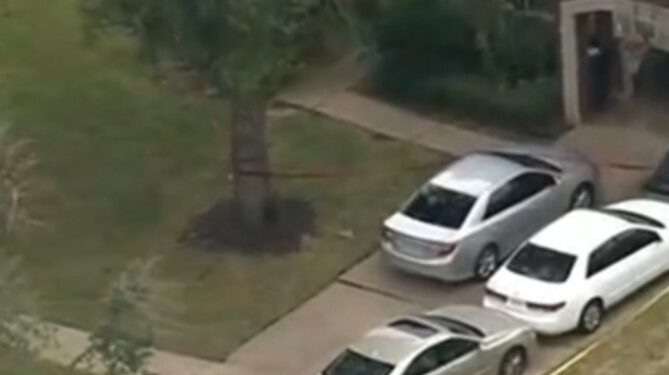
An investigation is underway after a husband and wife were found dead Friday morning at a Sugar Land home, according to police.

The discovery was made around 10:05 a.m. at the Greatwood Subdivision in the 1500 block of Brookstone Lane.

“One of the kids dialed 911 apparently there was a fight or disturbance going on inside the resident,” Chief Eric Robins said.

Police said when officers arrived they found the couple dead inside of the home.

“It appears that it could be a potential murder-suicide but it has not been totally ruled,” Chief Robins said.

Police said the couple’s three adult children were also at the scene. Police said two of the three children suffered non-life-threatening injuries.

Many neighbors were shocked when they heard the news.

Ace Walker lives nearby and was shocked to see police cars and crime tape in his neighborhood.

“It’s like right down the street so that’s really wild,” he said.

Steven Nelson lives down the street and says the neighborhood has always been quiet. Nelson said he has seen the husband before, while walking his dog.

“It’s shocking for all of us because you just don’t expect something like that to happen here it’s always somewhere else,” he said.

It’s still unclear about what happened and how the couple died.

“My heart goes out to them that’s really sad,” Walker said.

Chief Robins said it’s a tough situation, especially with Christmas a week away.

“We try to make sure our residents are safe in the City of Sugar Land but when these types of things happen especially during this time of the year holiday season with everything else that is going on we ask that people have crisis in their home to seek out and reach help,” he said.

The cause of death is unknown and under investigation. Police have not identified the couple, but in a Facebook post the Rector at The Episcopal Church of the Epiphany in Houston said,

Dear friends,

The causes for grief in 2020 seem to multiply. I am very sad to inform you that Ben and Theresa Okigbo died this morning at their home in Sugarland. Their sons Peter and Paul were transported to Memorial Sugarland Hospital, but have since been released. Currently they are with their sister Laura, in the care of their uncle, Ben Okoh. This news is absolutely devastating for our Epiphany family, especially for many of our Nigerian members, whose lives and hearts were touched so profoundly by Ben and Theresa. We have no good answers, only broken hearts to bring to our Lord Jesus. And there is no better place for our broken hearts to be, than in his care. I assured Ben and Laura that their Epiphany family is ready to surround them with grace and mercy, and to be of any assistance we can to these three children who will now grapple with the loss of two parents. Keep them in your prayers. More information will follow as plans are made.

Yours in Christ,

Patrick Hall

Rector, Epiphany Church

▪︎ By Click2Houston.com

TIPS