Home Blog Page 1131

Remove Terrorist Label On IPOB, Ohaneze Tells FG

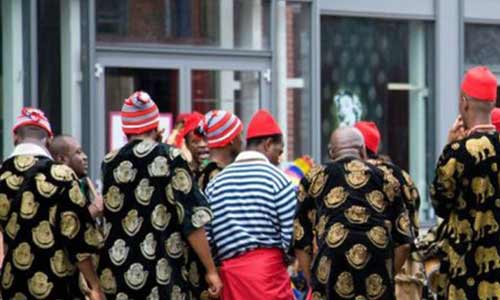
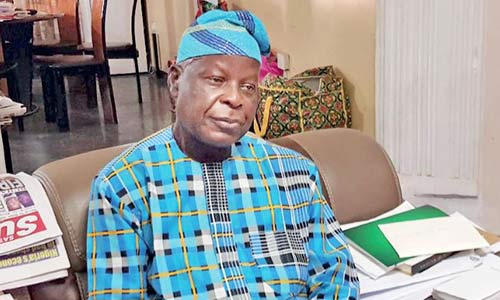
Anambra State President of Ohanaeze Ndigbo, Chief Damian Okeke-Ogene has called on the Federal Government to remove the terrorist label on the Indigenous People of Biafra, IPOB because, he argued, the organization does not threaten lives and property. Addressing reporters in Awka, Okeke-Ogene urged security operatives to concentrate more in the Northeast to end the unwanted killings by those who, he said, hate the unity of Nigeria.

He described as unfortunate and unacceptable the declaration of IPOB as a terrorist organization, while other agitating groups, especially in the northern part of Nigeria that specialize in kidnapping and killing of innocent Nigerians on daily basis were moving freely without trial and prosecution.

Okeke-Ogene, who is aspiring for the position of national vice president of Ohanneze in the election slated for January, 2021, said it was unfortunate that a group that does not carry arms could be labeled terrorist.

He wondered why the federal government has refused to prosecute the Fulani herdsmen, bandits and other dangerous groups responsible for the kidnapping and killings going on in the northern part of Nigeria.

He said: “Have you ever heard that IPOB kidnapped or killed anybody unjustly? Why should the government go to court within 24hrs after a misunderstanding between Operation Python Dance II of the Nigerian Army and IPOB without a proper investigation and declared the group a terrorist organization, while those with intention of tarnishing the image of the country before the international community are operating freely in the society without any government action?

“The Federal Government was totally wrong in declaring IPOB a terrorist organisation.” According to him, IPOB is a group of young men of Igbo extraction that do assemble when the need arises to deliberate on issues affecting their welfare and the region as enshrined in Nigeria Constitution.

“I think that what we should do as one people is for us to continue to pray and work together to ensure that the current security challenges tormenting the country come to an end and not to tag a particular group in a region that happens to be the safest region in Nigeria, as terrorist organization,” Okeke-Ogene said.

He, however, commended the effort of the Katsina State governor, Aminu Bello Masari and the security agencies on the safe rescue of theabducted school children of Government Science School, Kankara and urged the security agencies and other authorities to also checkmate the activities of Niger Republic and Lake Chad immigrants.

Nigeria To Start Manufacturing Vaccines Soon — NAFDAC

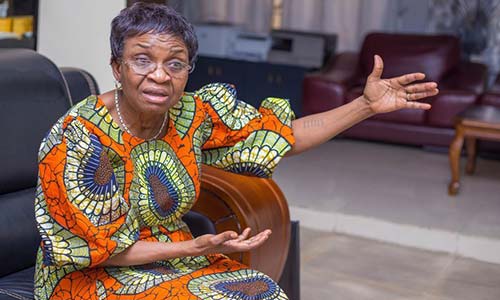
The Director-General of the National Agency for Food and Drug Administration and Control (NAFDAC), Prof. Mojisola Adeyeye, on Friday expressed confidence that Nigeria would soon start manufacturing its own vaccines, with the upgrading of existing laboratories across the country.

She disclosed that achieving the ISO 9001 in June 2019 which is the world’s most recognised Quality Management System (QMS) standard places the country in good standing to strive to get to the maturity level three which enables the country manufacture its own vaccines.

Adeyeye noted that the agency is leveraging technology to trace vaccines, especially when the covid-19 vaccines arrive the country. She explained that this will enable it track and trace vaccines received to ensure that they are safe and monitored for adverse reactions on patients.

Speaking during the NAFDAC’s Staff Recognition Award Ceremony for 2019 and 2020, where serving and retired staff were rewarded for excellence and dedication, Prof. Adeyeye said, “NAFDAC is a leading national regulator in Africa. The agency is driven by international standards and best practices.

“Our new normal started three years ago when we started quality management system that now makes us to focus more on the customers, the image of the organisation in order to ensure that we are a standard operating procedure-driven organisation. This led us to achieving ISO 9001 in 2019 June. We moved on to the global benchmarking where we adopted international best practices and we are still adopting international best practices.

“With regards to the establishment of the World Health Organization’s (WHO’s) global benchmarking and adoption of international best practices, we want to get to the maturity level three so that Nigeria can manufacture her own vaccines and we are all working on this every day.

“We are upgrading the agency’s laboratories to international standards using equipment that are compliant to ISO 17025. NAFDAC laboratories are changing very rapidly with improvements in new equipment and supplies.

“Our four laboratories that were accredited before I came have received re-accreditation. We have also gotten a new lab – the Yaba Biologies and Vaccines Lab accredited for the first time. And our two other labs will be accredited very soon.”

She added: “In similar efforts to enhance the local production of pharmaceuticals in Nigeria, the agency has renewed and updated its 5 + 5 validity policy because we want local content. We want more local manufacturing – to reverse it from 70 percent imports to 70 percent locally manufactured products.

“We are building traceability because our supply chain is chaotic to say the least. Now we have adopted traceability of track and trace that will make sure that the products that leave the manufacturers site is what the patient is taking. This is a technologically-driven initiative and NAFDAC is the second country in Africa to adopt this. We are using this for covid-19 vaccines when they come.

“NAFDAC is leading on the continent in terms of ensuring that the covid-19 vaccines can be tracked and traced to the patients and also adverse long reactions can be monitored. This is our new normal and it is because we are changing the way we think because we want to safeguard the health of our people.”

Concerning the Agency’s financial status, the NAFDAC boss said, “We created directorate for cost budgeting because part of quality management system is to have financial sanity. I inherited N3.2 billion debt.

“NAFDAC is now solvent because we have removed NAFDAC from insolvency by paying the debt of N3.01 billion in one year. We have learnt lessons, and we are still learning lessons of how not to be wasteful, and how to conserve for the rainy day.”

Kankara Abduction Not Stage-Managed – FG

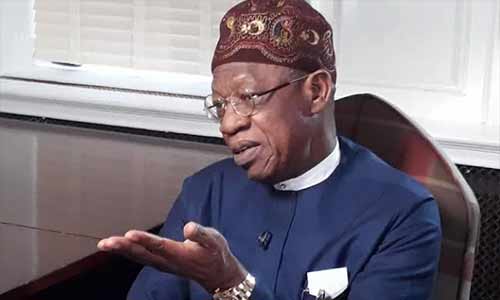
Information Minister Lai Mohammed speaking to DW's Conflict Zone in London. Photo: Deutsche Welle

The Federal Government has described as senseless the claim in certain quarters that the abduction of some students from a boarding school in Kankara, Katsina State, and their release was stage-managed.

The Minister of Information and Culture, Alhaji Lai Mohammed, dismissed the claim on Saturday when he featured on a special edition of the Nigeria Television Authority programme, “Good Morning Nigeria’’

The special edition of the usual weekday programme dedicated to the rescue of the 344 school boys abducted from their school on Dec. 11 in Kankara was monitored by the News Agency of Nigeria (NAN) in Abuja.

NAN also recalls that on Feb. 19, 2018, 110 schoolgirls were abducted from Government Girls Science Technical College, Dapchi, Yobe.

When the government secured the release of 104 of the schoolgirls and two other children in March 21, 2018, certain groups, including the opposition Peoples Democratic Party, had also alleged that it was stage-managed to score cheap political point.

Reacting to the claim, the minister said it does not make sense for any administration to stage-manage the abduction of students or any of its citizens.

“What precisely does the government want to achieve? Is it to prove the deficiency of the military or what.

“In the case of Dapchi, we had all kinds of bizarre theories.

“You have to be in government to know how many sleepless nights the president, ministers and head of security outfits spent until the matter is resolved,’’ he said.

Mohammed said many people were disappointed that the Kankara abduction was resolved so fast just like that of Dapchi.

He said: “Many naysayers would have loved the incident to linger and become the igniting rod for their attacks

“Otherwise, how do we describe the spurious organisation like the Bring Back Our Boys that emerged within a few days of the capture of the students.

“Within a few days of the abduction, the so-called organisation had moved to Katsina.

“When you have a situation like this, naysayers who are bent at bringing down the government will come up with all kinds of theories that do not make sense.

“Dapchi abduction was in 2018, how come two years down the lane, nobody has come out to tell us how it was stage-managed?”

The minister admonished politicians and other interest groups to stop politicising and commercialising issues of security and national tragedy.

“In times of crisis and tragedy, people normally come together to address the issue.

“It is not a time to politicise and even trade or commercialise the misery and tragedy of a nation.

“We can have our differences but when it comes to issues of security, we should come together and fight it,’’ he said.

Mohammed noted that it was disappointing that days after the Kankara boys were abducted, some political groups had come to Abuja distributing vests and placing banners all over the streets.

He stressed that times of national crisis such as the kidnapping of children should not be used to denigrate the military, adding that people should rather come together to proffer solutions.

(NAN)

Gov. Masari Lied, We’ve No Contact With Schoolboys’ Adductors — Miyetti Allah

Miyetti Allah Cattle Breeders Association (MACBAN) has denied entering into a discussion with anybody over the abduction of students of Government Science Secondary School, Kankara, Katsina State.

Katsina State governor, Aminu Bello Masari had last Wednesday, said that the state government had contacted Miyetti Allah to enter into discussion with bandits on how to free the over 330 students they abducted from the school.

The National Secretary of Miyetti Allah Cattle Breeders Association, Baba Othman Ngelzarma, told Saturday Sun in a brief telephone interview that he was not aware of such discussion with MACBAN.

According to him, “ unless the governor was discussing with the Katsina State branch of the association, but definitely not with the national leadership.”

However, Ngelzarma later confirmed that he has spoken with the Katsina State branch of MACBAN, which also denied ever being approached by the state government to enter into discussion or negotiation with the bandits to free the school children.

In the same vein, the National President of Miyetti Allah Kautal Hore, Bello Abduallahi Bodejo, said nobody contacted them or discussed with them over the same matter. He said: “ We don’t know the bandits and we don’t want to know them and we don’t have anything to do with them. No member of Miyetti Allah Kautal Hore even at local levels knows the bandits.”

Katsina State governor, Aminu Bello Masari had last Wednesday, said that the state government had contacted Miyetti Allah to enter into discussion with bandits on how to free the over 330 students they abducted from the school.

The National Secretary of Miyetti Allah Cattle Breeders Association, Baba Othman Ngelzarma, told Saturday Sun in a brief telephone interview that he was not aware of such discussion with MACBAN.

According to him, “ unless the governor was discussing with the Katsina State branch of the association, but definitely not with the national leadership.”

However, Ngelzarma later confirmed that he has spoken with the Katsina State branch of MACBAN, which also denied ever being approached by the state government to enter into discussion or negotiation with the bandits to free the school children.

Battle For New IGP: Don’t Appoint Junior AIG, Okiro, Others Caution FG

By Aruga Joe Omokaro

The battle for next In­spector-General of Po­lice (IGP) is taking new dimension, as former IGP Sir Mike Okiro and other retired officers are stressing on the implication of appointing a junior officer as the next IGP.

Speaking with Crime Track­er on phone on Tuesday, Okiro said, “there is nothing wrong if the President picks from the rank of Deputy Inspec­tor-General of Police (DIG). Ir­respective of tribe or religion, he should pick a capable hand. But not a junior officer because those that may be forced to re­tire have the experience and it is not healthy to just ask them to retire.”

Also speaking in the same vein, a retired DIG from Katsi­na State, DIG Yakubu Moham­med said on phone that, “it is not healthy to appoint a junior AIG (Assistant Inspector-Gen­eral of Police) because many AIGs who are senior to the ap­pointed IG would be forced to retire The next IG should not be appointed based on ethnic or on religion basis but an officer who has the experience. There is genocide going on the north. I did not really want to talk because you can only give an advice when your advice will be valued. He opined that, if possible, “the judiciary system should be applied in appointing IGs.”

He noted that, in the judi­ciary, the most senior judge is appointed when the incumbent judge retires.

Toeing the same ideology, an aide to chairman of Police Ser­vice Commission (PSC), retired Commissioner of Police (CP) Dr. Yinka Balogun from Ogun State said:

“It is not ideal to appoint a junior AIG. Of course the Constitution states that an IG must be appointed not below the rank of an AIG. But it is not healthy to appoint a junior AIG because the new IG may want to retire all those ahead of him. And if he needs an advice in a particular area, he may not get it because one of those retired may be the one who has the an­swer to the problem.”

There had been intense lobbying for more than three months, over who succeeds the incumbent IGP Mohammed Adamu, who is statutorily due for retirement on February 1, next year 2021.

A lot of intrigues have been manifesting on the next IGP.

The crisis became height­ened last month, when Ada­mu promoted former Force Secretary, an Assistant Inspec­tor-General of Police (AIG) Us­man Alkali Baba to the rank of acting Deputy Inspector-Gener­al of Police (DIG), and deployed him to head “A” Department, the most senior department.

By his promotion, Alkali is heading existing DIGs.

We exclusively reported this supposed anomaly last month titled, Outrage At Police Force Headquarter As AIG Heads DIGs.

The DIGs are Aminchi Baraya, Taraba, who is due for retirement on February 1, 2021 Anthony Michael Ogbizi rep­resenting South South region from Cross River, due for stat­utory retirement on February 1, 2021.

Celestine Okoye, from Anambra representing South East due for retirement on De­cember 22, 2020. Another DIG is Lawal Shehu, from Katsina State, also due on December 24-12-2020.

Others are: Abdul Dan­wawu from Kano who has re­tired on 26-10-2020; DIG Adeleye Oyebade, from Lagos State due on, 01-02-2021.

However, Okoye, Oyebade and Ogbizi have submitted let­ters of retirement last month and have proceeded on retire­ment leave.

Investigations reveal that the new Police Act stipulates that only officers who have up to four years and above should be appointed IGP as contained on Section 7(6), while for retire­ment age or length in service is on section 18(8).

Among 22 AIGs on a seniority basis, Usman Alkali Baba from Borno State, has less than four years in service. He is due for retirement 01-03-2023.

He is followed by Tijani Baba who also has less than one year to go, 08-10-2021.

Others are Karima Hassan, Taraba – 08-01-2021; Ibrahim Lamorde, Adamawa – 01-02- 2021; Mohammad Mustapha, Borno – 01-02-2021; David Oye­banji, Oyo – 21-11-2021; Zanna Mohammed, Borno – 26-11-2022; Nkpa lnakwu, Cross River – 01- 02-2021; Moses Jitoboh, Bayel­sa – 10-06-2029; Jonah Mava, Adamawa – 01-02-2021; Olush­ola David, Lagos – 01-02-2021; Yunana Babas, Bauchi – 01-02- 2021; Dan-William Mohammed, FCT Abuja – 18-12-2023; Sanusi Lemu, Niger is 31-01-2023; Armed Iliyasu, Kaduna – 27-05- 2021; Zaki Ahmed, Kebbi, 15-02- 2022; Gwandu Abubakar, Kebbi – 01-01-2022; Zama Senchi – Kebbi – 05-10- 2022; Bello Zadiq, Kebbi – 20-11-2022; Austin Agbonlahor – Edo – 30-08-2021 and Lawan Ado, Kano, 27-03-2021.

Among the AIGs from the North, only Alkali Baba, Sa­nusi Lemu and Dan William Mohammed have up to three years more in service.

If Buhari has to appoint­ment any officer from the north, he will have to pick one of the three officers.

If he picks a junior AIG either from the north or from the south, over 35 AIGs would be forced to retire prematurely.

Another retired senior offi­cer from the north told Satur­day INDEPENDENT on phone that, “that idea is not helping the system, because many of them were trained and have proven ability to perform. And you just retire them, it discour­ages and does not encourage patriotism.”

And in the south, only Mo­ses Jitoboh has more than four years to serve among the first 25 AIGs on seniority basis. If he is appointed, only two AIGs would be forced to retire, or retain them. That will favour majority AIGs, who will still be in service.”

Meanwhile, the IGP Mo­hammaed Adamu last Friday paid unscheduled visit to the chairman of Police Service Commission (PSC) Alj Musiliu Smith a retired IGP, in his office.

Details of the closed-door meeting were not made public, but a source at PSC disclosed that, “it was a mutual meeting, both of them came out of the meeting with cheerful faces.”

Also at Force Headquarters, a senior officer who does not want his name in print con­firmed the meeting. He said, “we were very happy that he (IGP) was there. We are now confident that, those of us due for promotion that have been delayed since July will now be promoted. There is now peace between them.”

It will be recalled that the IGP and Chairman of PSC had been at loggerhead over power supremacy, especially in rela­tions to recruitment. The im­broglio resulted into litigation.

A source at Force Headquar­ters opined that, “the IG is al­ready aware that his tenure would not be extended maybe that was why he went to rec­oncile with the chairman, so that his candidates would be promoted next (this) week.”

Why Deposits In Closed Banks Remain Unclaimed — NDIC

Nigeria Deposit Insurance Corporation (NDIC) on Friday revealed that a limited understanding and the widespread misconception of the Deposit Insurance System (DIS) in Nigeria was largely responsible for the pool of unclaimed deposits following bank closures.

Executive Director (Corporate Services) of NDIC, Mrs Omolola Abiola-Edewor, made this disclosure on Friday while delivering an address at the opening ceremony of the 2020 Sensitisation Seminar for Judges of the Federal High Court in Abuja with the theme: The Challenges to Deposit Insurance Law and Practice in Nigeria.

In a statement issued by Director, Communication & Public Affairs Department, Bashir A. Nuhu, Abiola-Edewor explained the phenomenon had informed the efforts by NDIC to continuously collaborate with the judiciary and other stakeholders in promoting sound knowledge and understanding of the deposit insurance system over the years.

Abiola-Edewor, who said the situation was a global challenge to deposit insurance system, commended the collaboration by the judges of the Federal High Court and the National Judicial Institute in the last nine years that the corporation commenced the annual seminar.

She added that the current economic situation occasioned by the COVID-19 pandemic has further underscored the need to strengthen the collaboration towards enhancing the stability of the financial system.

While describing judgments against the corporation for liabilities of failed banks under liquidation as another challenge confronting the corporation, she noted that effective resolution of legal issues affecting the administration of the deposit insurance system was critical to the enhancement of safety and soundness of the banking system.

N5tn Debt: AMCON Requires Radical Power To Recover Debt — FHC CJ, Justice Tsoho

The Chief Judge of the Federal High Court, Hon. Justice John Tsoho has said the Asset Management Corporation of Nigeria (AMCON) requires radical complementary power in a bid to recover a N5 trillion debt.

He noted that the purpose for which AMCON was established was in order to regularize some misnomers in the banking system as a result of the 2008/2009 financial crisis, and to achieve this, there is a need for the institution to be vested with radical powers to achieve this mandate.

He was quoted in a statement by AMCON as saying this on Thursday, with the title ‘N5tn Debt: AMCON requires complementary radical powers – Justice Tsoho’.

The Chief Judge made this known at the 36th Annual Judges Conference while addressing Judges of Federal High Court at an interactive session with the management of AMCON in Abuja.

The Chief Judge highlighted 8 factors responsible for the crisis in the banking system, that led to the establishment of AMCON.

Justice Tsoho said “Eight factors were primarily responsible for the crisis in Nigeria. They include macro-economic instability caused by large and sudden capital inflows; major failures in corporate governance in banks;

“Lack of investor and consumer sophistication; inadequate disclosure and transparency about the financial position of banks; critical gaps in regulatory framework and regulations; uneven supervision and enforcement;

“Unstructured governance and management processes at the Central Bank of Nigeria as well as weakness in the business environment”, he said .

Besides, he said there is a need for the country to support AMCON’s quest in the debt recovery process and that the abnormalities leading to its establishment must be avoided.

Justice Tsoho also said that Nigeria responded by establishing AMCON to help in stimulating recovery of the Nigerian banking system through the buying of non-performing assets of troubled banks and recapitalise the banks.

He however added that the concerns for the country’s financial system is genuinely imperative because the crisis exposed other challenges in the financial system that needed urgent attention before relapse into a total collapse.

Nigeria Has No Sufficient Evidence To Prosecute Sowore — American Bar Association

The American Bar Association (ABA), a voluntary bar association of lawyers and law students, has said that the Nigerian government does not possess sufficient evidence to prosecute Sahara Reporters publisher, Omoyele Sowore.

The association has been monitoring the treason trial of Mr Sowore by the Nigerian government.

The group said this in its preliminary report on criminal proceedings against Mr Sowore.

The former presidential candidate was arrested alongside another activist, Olawale Bakare, on August 3 2019, for planning the #RevolutionNow protest.

The demonstrations were against bad governance and other issues.

They were charged with treasonable felony, fraud and insulting President Muhammadu Buhari.

The court granted the duo bail twice but the SSS refused to release them until December 5.

However, less than 24 hours after it finally obeyed the court order, the SSS rearrested the two men within the Federal High Court in Abuja, sparking national outrage.

Mr Sowore was finally released on December 24, 2019 but his movement has been restricted to Abuja as part of his bail conditions.

Justifying the action of the SSS, the presidency said Mr Sowore’s call for revolution was aimed at overthrowing the democratically elected president of Nigeria.

Several human rights activists, both in Nigeria and in diaspora, have repeatedly called on the Nigerian government to drop the charges against the journalist.

However, in a recent report by ABA, the group concluded that the prosecution never “possessed sufficient evidence on which to predicate a criminal case against Mr. Sowore.”

The group restated that calls for peaceful protest do not constitute treason and that the proceedings have violated Mr. Sowore’s right to freedom of expression, right to freedom of assembly, and “right to trial without undue delay, as well as best practices in prosecutorial ethics.”

“The AGF should withdraw the charges or, alternatively, the Federal High Court should dismiss the case. At the very least, the court should allow Mr. Sowore to return to the United States and reunite with his family pending resumption of his trial on January 25,” the group urged.

Citing the basis for its conclusion, ABA explained that Mr. Sowore had explicitly stated that his calls for revolution were non-violent and had created a code of conduct forbidding violence at the August 5 #RevolutionNow demonstrations.

“Indeed, the protest held on August 5 was entirely peaceful. Second, Mr. Sowore was not notified of the reasons for, or legal basis of, his arrest at the time it occurred. DSS’s statement to the press in the immediate aftermath of the arrest vaguely referenced threats of disorder but did not provide specifics as to Mr. Sowore’s allegedly criminal behavior.

“Third, following Mr. Sowore’s arrest the DSS sought an ex parte order – a decision made by a judge without requiring all of the parties to the dispute to be present – of detention on the basis of an anti-terrorism statute, arguing that Mr. Sowore should be detained so as to enable further investigation.

“When Mr. Sowore was charged 48 days later, the offenses alleged were unrelated to the anti-terrorism statute. This shift suggests that the statute was but a vehicle for the prosecution to continue detaining Mr. Sowore until it could figure out what charges to bring.”

Also, the group emphasised that eight months into the proceedings, the prosecution dropped five of the seven charges without explanation, adding that the repeated requests for adjournment and refusal to share key materials with the defense, is further indication that the state lacks evidence of anything against Mr. Sowore.

“Notably, the amended charge sheet, which contains the two remaining counts of treason and conspiracy to commit treason, does not set forth any facts to support the allegation that Mr. Sowore had sought to overthrow the government by unlawful means; it simply cites Mr. Sowore’s involvement in the #RevolutionNow demonstrations.”

“Fifth, the conduct of the trial, including the prosecution’s In light of the above, the DSS and AGF’s pursuit of the case against Mr. Sowore breaches prosecutorial ethics, which mandate that that the State drop charges once it becomes apparent that the evidence is insufficient.

AGF, Malami, The Politician As Law Officer

There are suggestions that Abubakar Malami, Justice minister and Attorney General of the Federation (AGF), may be coveting the Kebbi State governorship in 2023. The soothsayers who claim to perceive his ambition insist Mr Malami is such an open book that he is easy to read. He has so far comported himself in a manner that even if that book is open, the text is nevertheless tiny. What is neither tiny nor indistinguishable, however, is that since he became AGF, he has not stopped playing politics in such an open and affronting manner that a Nigerian would be blind not to see either his governorship interest or his passion for hegemonic politics. In whatever way he carries himself, Mr Malami is first and foremost a politician, then secondarily a lawyer, and finally, but only as an afterthought, the nation’s chief law officer. It presents the nation a worrisome and curious window into his mind that he has not played any of the three roles with the astuteness, ethicalness and candidness his qualification and office demand of him.

For a moment, ignore his politics. He will continue to play politics till his dying day. Today, instead, consider his office as the nation’s chief law officer, to which he has brought his qualification as a lawyer. Whether he becomes governor of Kebbi or not as many Nigerians have read into his life, it is already established that he is AGF, and will remain so to the end of the Muhammadu Buhari administration. Since the president does not have an eye for competence and skillfulness, and is chary of sacking any of his aides or ministers, including the worst performers ever, it can be presumed that Mr Malami’s position is safe till 2023. What cannot be presumed, however, is whether he will leave a great legacy behind, in the manner of other great Nigerian chief law officers. Indeed, there is no proof, his qualification notwithstanding, that Mr Malami is substantially bothered about any legacy other than his preoccupation with his personal and probably group interests.

The AGF has not betrayed any suspicion that he knows the juristic contempt he is held by his contemporaries and Nigerians at large. But by nearly universal consensus, Nigerians have very low opinion of Mr Malami as the nation’s chief law officer. In fact they think he disgraces that position, has actively undermined the rule of law, which triggered a short-lived campaign to derobe him, has no mastery of law nor is he interested, and thinks little about the future of law as an indispensable principle of both justice and democracy. Rarely does Mr Malami intervene in matters of law strictly defined and interpreted. If political advantages cannot be derived from the legal issues he has made controversial, the AGF can hardly be bothered beyond his official duty. But when politics is involved, especially when that politics touches on his private and group interests, Mr Malami can be trusted to muscle in uninvited, and offer so-called expert opinion, even if far-fetched.

Such was his enthusiasm in 2015, only a few months after he assumed office, that he waded into a political controversy brewing in Kogi State at the death of the All Progressives Congress (APC) candidate moments before the governorship election of that year was called. Prince Abubakar Audu, the candidate, had just died before the electoral umpire, INEC, declared the result. A few polling units were slated for a rerun, but even if the opposition won the rerun 100 percent, it was not enough to alter the outcome from the unassailable lead the APC had achieved. As the body saddled with the responsibility of organizing the election, INEC was still contemplating how to interpret the Electoral Act when Mr Malami barged in and offered his unsolicited view. That view scandalously suggested that Yahaya Bello, who came a distant second in the APC primary and actively worked against Prince Audu’s election, should inherit the party’s votes instead of the running mate, Abiodun Faleke. INEC welcomed the AGF’s needless intervention and concurred with its conclusions, thus indicating that rather than adhere to a strict interpretation and application of the law, a conspiracy was involved and preferred.

Here is how Mr Malami framed his intervention: “The issue is very straightforward. Fundamentally, Section 33 of the Electoral Act is very clear that in case of death, the right for substitution by a political party is sustained by the provisions of Section 33 of the Electoral Act. And if you have a community reading of that section with Section 221 of the constitution it clearly indicates that the right to vote is the right of a political party and the party, in this case, the APC has participated in the conduct of the election. It is, therefore, apparent that the combined community reading of the two provisions does not leave any room for conjecture. APC as a party is entitled to substitution by the clear provisions of Section 33 of the Electoral Act. Also, Section 221 of the Constitution is clear that the votes cast were cast in favour of the APC. Arising from that deduction, it does not require any legal interpretation. The interpretation is clear, APC will substitute, which right has been sustained by Section 33 of the Electoral Act. So be it. The supplementary election has to be conducted along the line.”

The AGF was not INEC’s legal officer, but that did not matter. Nor did he say anything about why Mr Faleke, who was already on the ticket, did not merit being adopted by the party, even going by the community reading of the relevant provisions of the Electoral Act. Worse, it did not matter to Mr Malami that Mr Bello, whom his convoluted interpretation of the constitution and the Electoral Act benefited, was not registered to vote in Kogi State as at the time of the 2015 election. The number of those qualified to vote in the rerun election was also less than the difference between the votes cast for the Audu/Faleke ticket and the votes of the nearest challenger, the Peoples Democratic Party (PDP). Mr Malami simply glossed over this and rushed headlong into his partisan conclusions. Perhaps he truly forgets the weight of his office, or the huge and sacred responsibility which that office thrusts upon his sagging shoulders.

In June, justifying his deep involvement in the affairs of the APC, particularly why he presided over the swearing in of the controversial Governor Mai Mala Buni-led caretaker convention committee, Mr Malami offered this extraordinary argument: “Entrenchment of democracy and democratic culture is not only a desirable responsibility, but a constitutional one regardless of being added to the constitutional provisions and the demand for sustenance of democracy in the country. The office of the attorney general exercises dual functions inclusive of that of minister of justice which is a political and advisory function. Administration of justice is one of such functions. A federation is an embodiment of the governance inclusive of the executive, legislature, and Judiciary with a possible expansion to accommodate private, corporate and associated entities. Within that context, it will not be out of place for an attorney general of the federation to administer an oath on any one inclusive of leadership of any political party whether he belongs to it or not.” In the eyes of Mr Malami, nothing is off limit; absolutely nothing. For him, there is nothing and no involvement that cannot be justified.

Apart from swearing in anyone and anything, a task very menial compared with the far more onerous job of justifying tyranny, the AGF seized upon a 2006 judgement by the Supreme Court in the treason trial of Asari Dokubo to declaim upon the highly vexed issue of how to balance national security and individual rights. The court had ruled that “Where national security is threatened or there is the real likelihood of it being threatened, human rights or the individual right of those responsible take second place; human rights or individual rights must be suspended until the national security can be protected or well taken care of.” A more astute AGF would have seen the pitfalls in the apex court making an obviously political statement destitute of legal principles, but Mr Malami hungered for excuses to underscore his unsavoury pursuits.

He was in fact believed to have inspired the address read by President Buhari at the annual Nigerian Bar Association (NBA) conference in August 2018, an address drawing inspiration from the Supreme Court judgement in the Asari Dokubo case. Said the president two years ago: “The Rule of Law must be subject to the supremacy of the nation’s security and national interest. Our apex court has had cause to adopt a position on this issue in this regard and it is now a matter of judicial recognition that where national security and public interest are threatened, or there is a likelihood of their being threatened, the individual rights of those allegedly responsible must take second place, in favour of the greater good of society.” Mr Malami echoed this sentiment in 2019 during his Senate screening in July. According to him, “The Minister of Justice and Attorney General, as stipulated by sections 36, 37 and 39 of the constitution, is supposed to protect the rights of any citizen from being violated even by the state, but where such rights conflict with the public interest, the latter overrides the former.” The devil is of course in the detail as to what the AGF really meant, and what he is prepared to do when the state, to which he is subservient, clashes with the individual’s rights for which he demonstrates considerable loathing.

It was not surprising, therefore, that when Mr Malami waded into the so-called December 1 House of Representatives ‘summon’ of the president on insecurity, he seemed to have overridden the president’s initial preparedness to honour the invitation. Here is his controversial argument: “The confidentiality of strategies employed by the President as the commander in Chief of the Armed Forces of the Federal Republic of Nigeria is not open for public exposure in view of security implications in probable undermining of the war against terror…The National Assembly has no Constitutional Power to envisage or contemplate a situation where the President would be summoned by the National Assembly on operational use of the Armed Forces. The right of the President to engage the National Assembly and appear before it is inherently discretionary in the President and not at the behest of the National Assembly…The management and control of the security sector is exclusively vested in the President by Section 218 (1) of the Constitution as the Commander in Chief of the Armed Forces including the power to determine the operational use of the Armed Forces. An invitation that seeks to put the operational use of the Armed Forces to a public interrogation is indeed taking the constitutional rights of law making beyond bounds. As the Commander in Chief, the President has exclusivity on security and has confidentiality over security. These powers and rights he does not share. So, by summoning the President on National Security operational Matters, the House of Representative operated outside constitutional bounds. President’s exclusivity of constitutional confidentiality investiture within the context of the constitution remains sacrosanct.”

Mr Malami is of course talking gibberish. Even if the legislature cannot summon the president, given public apprehensions, should the president not take the initiative to address the nation on insecurity, speak to the legislature, engage all stakeholders, and do much more? In the end, the president came across as lackadaisical, Mr Malami as partisan and meddlesome, and the administration as incompetent. Regardless of what anybody says, Mr Malami will not concern himself with the law when it conflicts with politics, and will rarely mind the delicate issue of legacy as the nation’s chief law officer. It is not because he cannot tell the difference when a distinction is drawn before him; it is simply because he is naturally incapable of the discipline needed to do anything noble and different. He will remain partisan to the very end, law and legacy be damned.

Editors Note; Written By UnderTow and originally published in TheNationonlineng

How Masari, Matawalle Caused Rise In Kidnapping – Ex-DSS Director

By Chuks Ekpeneru

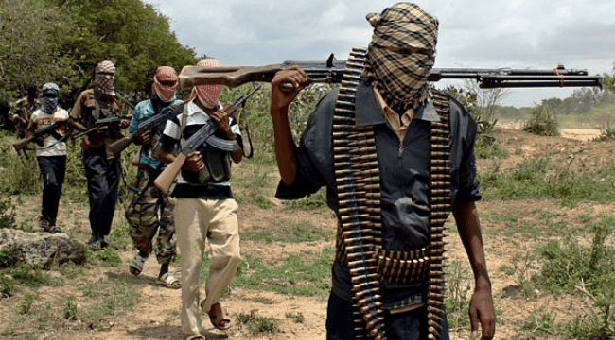
The Governors of Katsina State and Zamfara State, Aminu Masari and Bello Matawalle, have been blamed for the upsurge of Kidnapping in the North-West.

A former Director of the Department of State Services, Mike Ejiofor speaking on Channels Television’s Sunrise Daily programme said the two governor’s laid the foundation for kidnapping in error by negotiating with bandits.

“The state governments –both Zamfara and Katsina States –mistakenly laid the foundation for what is going on now; they started negotiation with the bandits who were not even ready to give up on their activities and this is what we are witnessing now.

“Even this Kankara incident, the governor came out to say they are negotiating, that is unacceptable. And you give these people the boldness and courage to continue to perpetrate this act,” Ejiofor said on Friday morning.

The former director condenmed negotiation with bandits and called for strengthening of the security apparatus to crush the criminals.

“I am not a pessimist but these things will continue to happen unless we strengthen the security of these states and take decisive actions. The Federal Government should take decisive actions against these bandits operating in the North-West. These well-organised bandits are looking for money. Anytime they do such kidnap, they are paid, and they use such money to buy more arms.

“This definitely is not the work of Boko Haram but the work of bandits in the two states.

“It’s sad that they were moved from Kankara to Zamfara undetected by any security operative,” Ejiofor stated.

TIPS