Home Blog Page 1012

Effect of an Application Brought Under a Wrong Order or Rule of Court.

Effect of an Application Brought Under a Wrong Order or Rule of Court.  Daily Law Tips (Tip 751) by Onyekachi Umah, Esq., LL.M, ACIArb(UK)

Introduction:  

Lawyers are trained to be diligent. However, there are several cases of lawyers that have brought cases of their clients to court, seeking for reliefs, under wrong Orders or Rules of Court. Every court in Nigeria has its own Rules and when a lawyer appears before a court, the lawyer must abide by the Rules of the court and address the court with the correct and relevant Rules of the court. This work focuses on the effect of an application brought under a wrong Order or Rule of Court in any part of Nigeria.

Lawyers and Rules of Courts:

Courts are established in Nigeria to dish out justice. Lawyers are trained to accept and understand the disputes of their clients, as well as to represent their clients before the courts. In courts, lawyers make cocktails of facts and laws for judges, while advocating for the position of their clients. Like any other human being, lawyers are not perfect, so, lawyers can make mistake in court. This may lead to a lawyer appearing in a court to seek justice for his client but under a wrong Order or Rule of Court. In such cases, some opposing lawyers will jump on their feet to capitalize on such mistakes and seek for the dismissal/refusal of the application.

In the interest of justice, the apex court (the Supreme Court of Nigeria) has at several times emphasized that a wrong Order or Rule of Court should not affect the case of any party, so far as there is in existing correct Order or Rule of Court that permits the application sought. It simply means that, where a lawyer is seeking for an application that a court has powers to grant, the mere fact that the lawyer based his application on a wrong Order or Rule of Court will not affect the power of the court to grant such application.

For the avoidance of doubt, below are the words of the Supreme Court on this issue;

  1. “… this Court is replete with multiplicity of decided authorities to the effect that a Court is entitled to grant an application brought under a wrong rule of Court or statute provided there is legal basis for it. See Maja v. Samouris (2002) FWLR (Pt. 98) 818, (2002) 9 NSQR 546 at 567. In fact, this Court had this to say in Uchendu v. Ogboni (1999) 5 NWLR (Pt. 603) 337 at 351, (1999) SCNJ 64. “It is trite that a particular rule of Court or law under which a motion is brought is generally stated in the motion paper but failure to do this will not make the motion incompetent nor the order upon which the motion is granted invalid, so long as there exists a rule of law which can back up the motion.”  Per OKORO ,J.S.C (Pp. 21-25 paras. F) in the case of BODE THOMAS v. FEDERAL JUDICIAL SERVICE COMMISSION (2016) LPELR-48124(SC).
  2. “…where a court has jurisdiction to make an order, the fact that the power of the court, is invoked under a wrong law or rule of court, is no reason, for not making the order or where it is made, it is no reason for setting it aside. See also the cases of Salawu Oke & Ors v. Musilim Aiyedun & Anor (1986) 2 NWLR (Pt. 23) 548: (1986) 4 SC 61 at 68 and Dr. Maja v. Mr. Costa Samouris (2002) 3 SCNJ 29 at 50, (2002) 7 NWLR (Pt. 765) 78.”  Per OGBUAGU ,J.S.C (Pp. 26 paras. A) in the case of WITT & BUSCH LIMITED v. DALE POWER SYSTEMS PLC (2007) LPELR-3499(SC)

Conclusion: 

Orders and Rules of Courts are made to be obeyed. However, a court has the powers to bend its Rules, where such Rules will cause injustice. Denying the case/application of a party, over an issue that the court has powers to grant, merely because the application was brought under a wrong Order or Rule of court will do injustice. After all, clients should not be allowed to suffer due to mistakes of their lawyers. Justice should be above mere legal jargons and technicalities. This is part of the reasons why the effect of an application brought under a wrong Order or Rule of Court, is that the application is valid and as good as one brought under a correct Order of Rule of Court.

My authorities, are:

  1. Sections 1, 2, 3, 4, 5, 6, 36, 318 and 319 of the Constitution of the Federal Republic of Nigeria, 1999.
  2. Judgment of the Supreme Court of Nigeria in the case of BODE THOMAS v. FEDERAL JUDICIAL SERVICE COMMISSION (2016) LPELR-48124(SC).
  3. Judgment of the Supreme Court of Nigeria in the case of WITT & BUSCH LIMITED v. DALE POWER SYSTEMS PLC (2007) LPELR-3499(SC)
  4. Onyekachi Umah, “Why Courts Must Hear Stupid Applications/Motions?” (LearnNigerianLaws.com, 17 September 2020) <https://learnnigerianlaws.com/why-courts-must-hear-stupid-applications-motions/> accessed 7 March 2021.
  5. Onyekachi Umah, “When Courts Must Refuse To Consider Issues/Applications Before It” (LearnNigerianLaws.com, 10 September 2020) <https://learnnigerianlaws.com/when-courts-must-refuse-to-consider-issues-applications-before-it/> accessed 7 March 2021.
  6. Onyekachi Umah, “Oral Application for Bail is Allowed in High Courts” (LearnNigerianLaws.com, 31 August 2020) <https://learnnigerianlaws.com/oral-application-for-bail-is-allowed-in-high-courts/>  accessed 7 March 2021.

Sabi Law Projects:

#SabiLaw

#DailyLawTips

#SabiBusinessLaw

#SabiElectionLaws

#SabiHumanRights

#SabiLawOnBeatFm

#SabiLawLectureSeries

#CriminalJusticeMonday

#SabiLawVideoChallenge

Speak with the writer, ask questions or make inquiries on this topic or any other via [email protected], [email protected] or +2348037665878 (whatsapp).

To receive free Daily Law Tips, join our free WhatsApp group via https://chat.whatsapp.com/GAEPC3mH1ik0Ghq0yvzbvv or Telegram group, via the below link: https://t.me/LearnNigerianLaws

To keep up to date on all our free legal awareness projects of Sabi Law Foundation, follow us via

Facebook Page:@LearnNigerianLaws, Instagram: @LearnNigerianLaws, Twitter: @LearnNigeriaLaw and YouTube: Learn Nigerian Laws

Please share this publication for free till it gets to those that need it most. Save a Nigerian today! NOTE: Sharing, modifying or publishing this publication without giving credit to the author or Sabi Law Foundation is a criminal breach of copyright and will be prosecuted. This publication is the writer’s view not a legal advice and does not create any form of relationship. You may reach the writer for more information.

This publication is powered by www.LearnNigerianLaws.com {A Free Law Awareness Program of Sabi Law Foundation, supported by the law firm of Bezaleel Chambers International (BCI).} Sabi Law Foundation is a Not-For-Profit and Non-Governmental Legal Awareness Organization based in Nigeria.

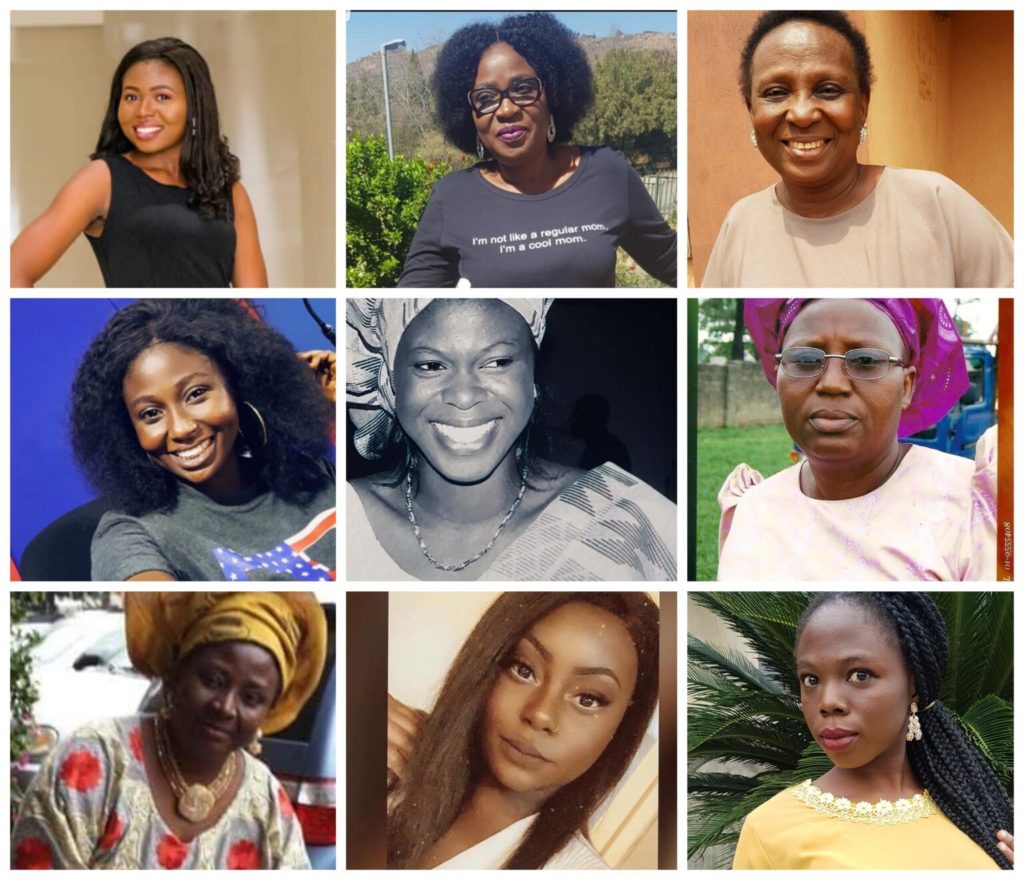
IWD 2021: Celebrating 13 Nigerian women who deserve a place on the naira note

Across the world, International Women’s Day (IWD) is celebrated every March 8. To mark the day, feats of remarkable women, both living and late, are celebrated.Advertisement

The 2021 theme for IWD, as announced by United Nations, is ‘Women in leadership: Achieving an equal future in a COVID-19 world’.

The theme encourages people globally to spotlight the role women play in the process of nation-building and the promotion of democracy.

To mark the 2021 International Women’s Day, TheCable celebrates 12 women — dead and alive — who have pushed for social change, political reforms, and economic development.

QUEEN AMINA OF ZARIA

Commonly known as the warrior queen, Amina was born in 1533 and was the first woman to rule the Zazzau Kingdom, present-day Zaria in Kaduna state. She was on the throne for 34 years during the 16th century.

Three months after becoming the queen, Amina set off on her first military expedition.

She waged military campaigns to expand Zazzau territory and ensure safe passage for Hausa traders throughout the Sahara region.

Amina died in 1610 and is still remembered as a brave, smart, and talented leader. In honour of her accomplishments, her statute was built and placed at the National Arts Theatre, Iganmu, Lagos state.

FUNMILAYO RANSOME-KUTI

Born on October 25, 1900, Funmilayo Anikulapo-Kuti was not only the first Nigerian woman to drive a car but also a prominent political campaigner and women’s rights activist.

In the 1940s, Ransome-Kuti established Abeokuta Women’s Union (AWU) and fought for women’s rights, demanding better representation of women in local governing bodies and an end to unfair taxes imposed on market women.

She was described as the ‘Lioness of Lisabi’ for mobilising women to demand their rights. She established the Nigerian Women’s Union (NWU) to fight the disenfranchisement of women across the country.

In February 1978, Ransome-Kuti was brutalised by Nigerian soldiers during a raid of the home of her son, Fela Anikulapo Kuti, a renowned Afrobeat musician. She later died of her injuries on April 13 that year.

MARGARET EKPO

Ekpo, born on July 27, 1914, was a renowned activist who fought for the rights of women and against their subjugation.

In the 1950s, she teamed up with Ransome-Kuti to protest killings at an Enugu coal mine.

They both travelled to different regions to mobilise women to join the NWU and be a part of Nigeria’s decolonisation journey.

In 1954, Ekpo established the Aba Township Women’s Association, which later became a political pressure group.

In 2001, Calabar Airport was renamed Margaret Ekpo International Airport. She died five years later on September 21, 2006.

GAMBO SAWABA

Born on February 15, 1933, Gambo Sawaba is widely regarded as the most jailed Nigerian female politician. Sawaba experienced it all; she was publicly flogged, suffered police brutality, and imprisoned a reported 16 times.

Sawaba was a women’s rights activist, politician, and philanthropist. She delved into politics at age 17 and served as the deputy chairman of the Great Nigeria People’s Party and was elected leader of the national women’s wing of Northern Element Progressive Union (NEPU), a party that supported women’s education.

In July 1958, during NEPU’s second congress, the women’s wing decided to team up with the Nigerian Women’s Union, which was under the leadership of Ransome-Kuti.

Sawaba was a campaigner against child marriage, unfair taxes, forced and unpaid labour. She also canvassed for jobs for women, education for girls, and full voting rights.

She died aged 71 in October 2001. She is regarded as a pacesetter in the fight for the liberation of northern women.

In honor of her activism, a general hospital was named after her in Kaduna, and a hostel at Bayero University, Kano, is also named after her.

DORA AKUNYILI

Dora Akunyili, born in July 1954, was the director-general of the National Agency for Food and Drug Administration and Control (NAFDAC) from 2001 to 2008.

She was an exemplary public servant who was honest, dogged, unflappable, and renowned for her integrity.

During her reign at NAFDAC, she led by example, serving as the general at the forefront of the fight against fake drugs and counterfeiters.

As a result of her celebrated commitment to transparency and selfless service, she won several awards for her work in pharmacology, public health, and human rights.

Akunyili died in an Indian hospital on June 7, 2014, after a battle with uterine cancer.

STELLA ADADEVOH

Ameyo Stella Adadevoh played a key role in curbing the spread of the Ebola virus in Nigeria after preventing the first case, in July 2014, from leaving the hospital at the time of diagnosis.

As a result of her efforts, the federal government declared a national public health emergency and the ministry of health stepped up to trace all possible contacts of the index patient, Patrick Sawyer.

She was also the first to diagnose and alert the ministry of health when H1H1 (swine flu) spread to Nigeria in 2012.

The Dr. Ameyo Adadevoh Health Trust (DRASA), a non-profit health organisation, was created in her honour. The film ‘93 Days, is dedicated to Adadevoh and depicts the story of the Ebola outbreak in Nigeria.
In February 2020, a road was named after her in Abuja. The ‘Ameyo Adadevo Way’ is directly linked to Ahmadu Bello Way, one of the city’s major and longest roads.

There were 20 recorded Ebola cases in total; 11 were healthcare workers and of those healthcare workers, six survived and five died, including Adadevoh who passed away on August 19, 2014.

TheCable, in January 2020, unveiled her as the ‘Nigerian of the Decade’ based on her role in preventing Ebola from ravaging the country.

ADERONKE KALE

Kale became the first female brigadier-general and major-general in the Nigerian army in 1990 and 1994 respectively.

She was the first woman to rise to the top of the Nigerian military, especially at a period when many women could not be found in senior positions in government and the military.

The trained psychiatrist would later become the Commandant of the Nigerian Medical Corps — another first for a woman.

In 2011, shortly after the introduction of women into the Nigerian Defence Academy (NDA) programme, the female hall of residence was named after her.

Kale is the mother of Yemi Kale, statistician-general of the federation of the National Bureau of Statistics (NBS).

AYO OBE

The story of Nigeria’s return to democracy cannot be told without including Ayo Obe, a leading lawyer and human rights activist.

For the past few decades, she has been an important figure in the country’s social, legal, and human rights movements.

As the president of the Civil Liberties Organisation, she was at the forefront of the crusade to actualise the 1993 presidential election victory of the late MKO Abiola.

Obe has been in the thick of the fight for democratic reforms in  Nigeria for several years.

In March 1996, Obe’s passport was seized while she was leaving Nigeria to attend a meeting of the UN Human Rights Committee in New York.

From 1999 to 2001, Obe chaired the Transition Monitoring Group, an election-monitoring and democracy-building coalition of Nigerian non-governmental organisations. She also represented human rights NGOs while at the Police Service Commission (PSC) from November 2001 to 2006.

Obe is currently a managing partner at Ogunsola Shonibare, a Lagos-based law firm.

SARA JIBRIL

Sarah Nnadzwa Jibril is Nigeria’s first female presidential candidate, a position she vied for on four occasions.

In 1992, she contested to be president under the Social Democratic Party (SDP) but placed fourth in the primary election. She recontested in 1998, under the Peoples Democratic Party (PDP) but lost to Olusegun Obasanjo.

In 2003, she defected from PDP to Progressive Action Congress (PAC) to become the first woman to be a presidential candidate but lost to Obasanjo again.

After losing out in the 2011 presidential elections primaries to Goodluck Jonathan, she was appointed as a special adviser on ethics and values to the president in 2012.

Jibril has won various awards, including the Dr. Martin Luther King Award for Leadership Excellence.

NGOZI OKONJO-IWEALA

Okonjo-Iweala is an economist and international development expert who became the first African and first female to emerge as director-general of the World Trade Organisation (WTO) in March 2021.

She sits on the boards of corporate and non-profit organisations such as Twitter and Global Alliance for Vaccines and Immunization (GAVI).

Prior to being named head of WTO, she had a 25-year career at the World Bank. She was the first woman to serve as Nigeria’s finance minister and the only finance minister to serve under two presidents— Olusegun Obasanjo and Goodluck Jonathan.

In 2020, she was appointed by the African Union (AU) as a special envoy to solicit international support to help the continent deal with the economic impact of the COVID-19 pandemic.

She has won several awards and received honorary degrees in over 14 universities worldwide.

AMINA MOHAMMED

Mohammed is a Nigerian diplomat and politician who is serving as the fifth UN deputy secretary-general and chair of the UN sustainable development group.

She led the process that resulted in a global agreement on the 2030 agenda for sustainable development and the creation of sustainable development goals.

Previously, she was the minister of environment from 2015 to 2016 when she oversaw the country’s efforts on climate action and efforts to protect the environment.

Mohammed also held the position of adviser on poverty, public sector reform, and sustainable development to three successive presidents.

OBY EZEKWESILI

Ezekwesili is a public analyst and senior economic advisor at the Africa Economic Development Policy Initiative (AEDPI).

The convener and chair, Fix Politics, has a rich track record of public service and work in development.

Ezekwesili is a co-founder of Transparency International and was vice-president of the World Bank’s Africa division.

She also served as a former minister of education, minister of solid minerals, head of the budget monitoring and price intelligence unit and is also the former chairperson of the Nigerian Extractive Industry Transparency Initiative (NEITI).

When over 200 girls were abducted by Boko Haram in Chibok, Borno state, in 2014, she used the Bring Back Our Girls (BBOG) platform to draw global attention to the issue.

In March 2019, Ezekwesili won the Forbes Woman Africa social influencer award for her efforts on the #BringBackOurGirls campaign.

Credit: TheCable

Supreme Court dismisses Dickson’s appeal

The apex court in Nigeria on Tuesday dismissed the appeal of Senator Henry Seriake Dickson against the decision of the Court of Appeal, Port Harcourt Division.

The Court of Appeal had ordered the Federal High Court to hear the suit seeking to disqualify the former Governor of Bayelsa State from contesting the Senatorial election having allegedly submitted false and forged documents to the Independent National Electoral Commission.

The suit which was filed by Dickson’s kinsman, Owoupele Eneoriekumoh with Independent National Electoral Commission (INEC), Peoples Democratic Party (PD) and Dickson Seriake as first, second and third respondents in suit no: FHC/YNG/72/2020 was dismissed by the trial court for want of jurisdiction having been allegedly filed out of time.

The Appeal Court disagreed with Hon. Justice J. E. Inyang of the Federal High Court, Yenagoa, but acceded to the argument of Plaintiff’s counsel, E. A. Aluzu, Esq that the suit was filed within the stipulated time by law. Consequently, it reversed the decision of the trial court.

The penultimate court further ordered an accelerated hearing of the matter on merit.

Dissatisfied, the former Governor appealed to Supreme Court with Owoupele Eneoriekumoh, INEC and PDP as first, second and third respondents respectively in appeal no: SC/CV/54/2021.

Dickson’s lawyer F. N. Nwosu Esq had sought to abandon his notice of withdrawal and rely on his brief of argument insisting that he made a mistake in filing it.

The Legal team

P. D. Pius Esq, counsel to the first respondent however countered that he could not do that and submitted that the appeal is deemed dismissed upon filing notice of withdrawal.

The Supreme Court agreed with P. D. Pius Esq and dismissed the appeal.

Likewise, the Supreme Court dismissed the appeal filed by the PDP in appeal number SC/CV55/2021 on discovering that their appeal was incompetent.

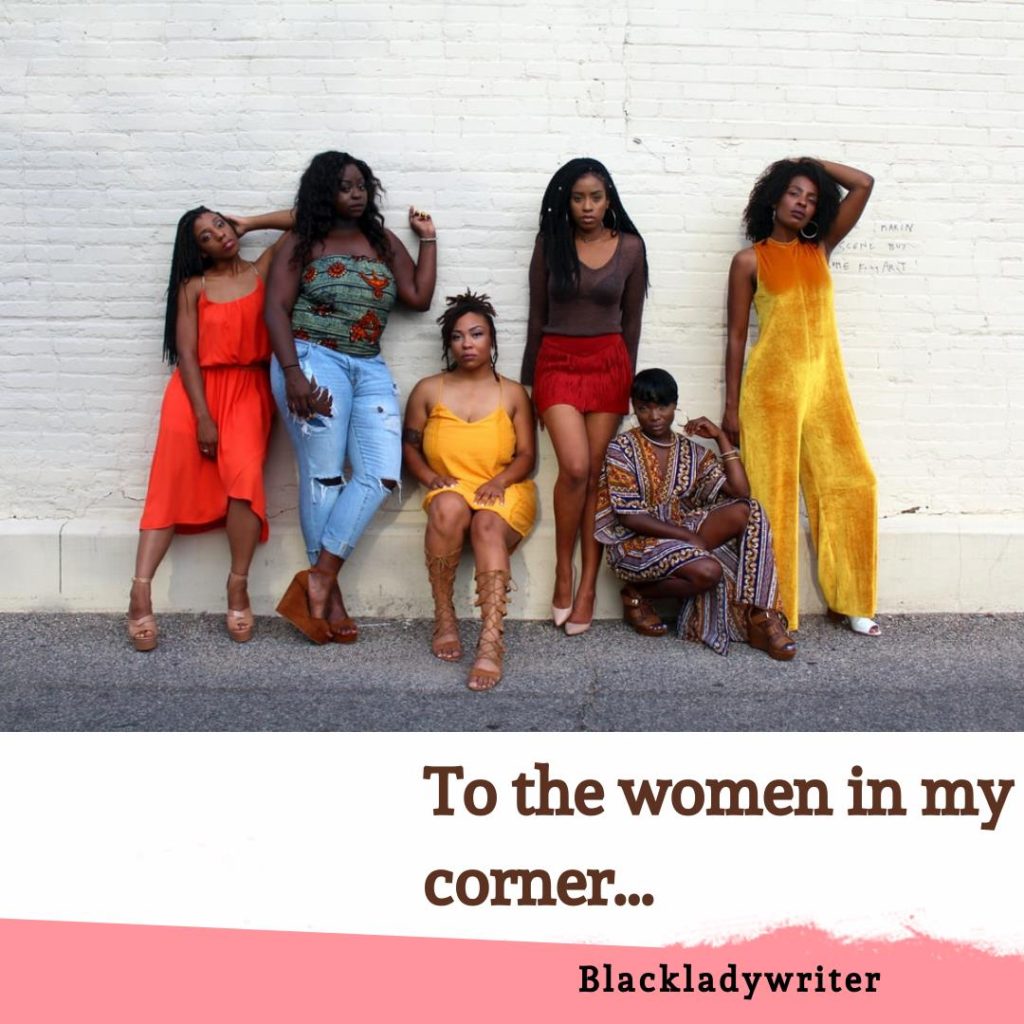
To the women in my corner

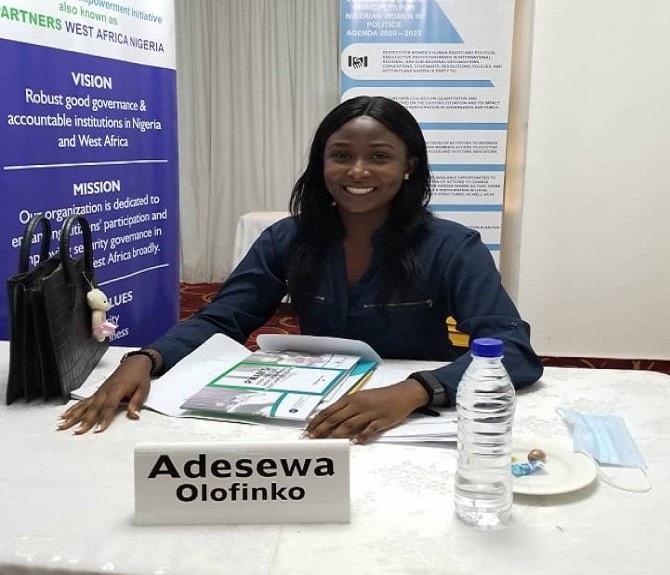
By Adesewa Olofinko

Today’s International Women’s Day, 2021! Lots of beautiful fliers are expected to storm social media and grace all of our statuses today. I love to see it! However, while celebrating today, please take stock of the women in your life (yourself inclusive) and think on how amazing they (you) are. As you do this, also spare a moment to pray for the countless women around the world who needs to have the veil fall off their eyes so they can explore the genius in themselves.

As always, today, we are not only celebrating and honouring the cultural, social, economic and political achievements of women, we also shine the light on some of the oppression, abuse and mistreatment women have to suffer around the world just because the universe says she is amazeballs, but society thinks “that’s a threat to us”, then goes on to unleash the beast called Patriarchy.

The year is 2021;

In some part of the world, women still lack access to Education; Women still experience major inequality at work (even in developed nations like the US), and no woman has ever occupied the top 3 political positions in Nigeria, till date.

The year is 2021;

This year we ‘choose to challenge’— challenge ourselves, challenge norms and sentiments against the woman, as well as ‘call out’ gender bias and inequity in every day situations. We can choose to tell our own stories and celebrate women’s achievement.

Don’t let anyone tell you you are weak because you are a woman! Please challenge that impostor syndrome you’ve got and reclaim your identity. Then, every day through your actions, fight the oppressive hierarchies in the structural levels, change the laws, inspire others, re-write the narrative, and step up!

Despite how direct this post is to women, men also need to step up to challenge these systems. We need the collective effort of all who care about human rights. Women’s rights are human rights too you know.

Celebrating International women’s day isn’t saying you think women are better than men, it simply mean that you support gender equity, and you support attention being drawn to the places and areas where women are still subject to oppression, after all, spirits have no gender!

Special shout-outs to the women in my life and all the fantastic women around the world, you are all phenomenal!

To the women in my family;

To the friends I can boast of;

To the women who recently made it to my corner, my PWAN lovelies,

Happy International Women’s Day!!!

You All Inspire Me.

Adesewa Olofinko is a broadcast journalist, podcaster, voice-actor and writer; a graduate of Mathematics and Integrated science from the Obafemi Awolowo University.

She is the editor of blackladywriter.com, an online blog dedicated to writing about women and their peculiar issues. Adesewa has a vision to build a global community of strong purposeful women who will help one another succeed, as well as mentor girls as they ascend the ladder into adulthood

She has worked as a script writer on Television series and soaps. She was also presenter and producer on the Breakfast show with Kingdom Africa Television and Dexterity Television. Adesewa has also worked as presenter and producer with radio stations–  Splash FM, Lead city FM, and Wellsradio in Ibadan Nigeria where she has produced over 300 episodes of podcasts on Tech, Business, and Family.

She is the convener of “Christmas with the elderly”, an outreach that caters to the needs of elderly people in the society. She is passionate about good governance and hosts weekly political discourse on radio.

Adesewa won the 2020 “creative writer of the year” at the Young Writers and Creative Awards show.

IWD 2021: The women in my life

By Sunusi Musa

My entire life is tied to women. If as at today my life is a success story, definitely the credits goes to women -my mother, my step mother, my sisters and lately my wife.

Having experienced and still experiencing the positive effect of women, I have committed my self to the advancement of women.

I don’t subscribe to the idea of limiting the lives of women to the kitchen alone. Far from that, I am of the absolute belief that if our women were to be given the necessary support to unleash their potentials for the benefit of our society, Northern Nigeria and indeed Nigeria could have been a better place.

For our society to prosper, we must see girl child as an asset not a liability.

Asma’u bint Fodiyo, Aisha Matawalle, late Halima Shitu, Prof Batoul, Professor Ruqayyatu Rufa’i and Huwaila Esq., are few testimonials of what women can do in making our society great if given the opportunity.

As I join the world in celebrating the Women’s day, I call on our youths to have a paradigm shift on the role of women in the society.

May our Women prosper and may the society allow the women play the their role and make our society better.

Sunusi Musa Esq is an Abuja, Nigeria based lawyer.

#HerStoryIsMyStory

#IWD2021

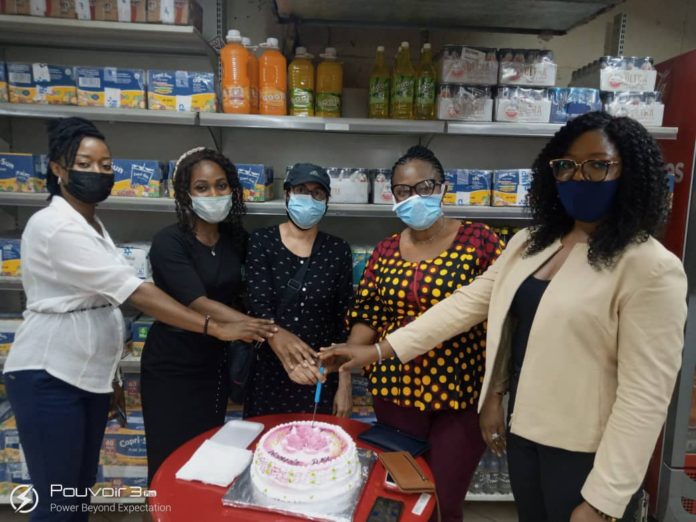
Spar stores celebrate International Women’s Day

A Cross section of female staff and customers at Spar stores Wuse 2, Abuja cutting a cake to mark the event.

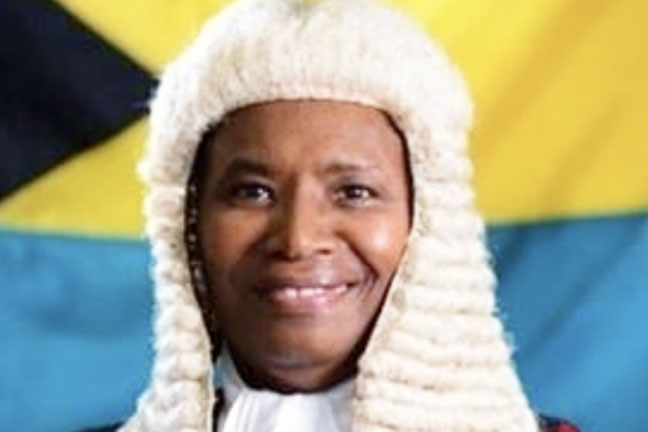
FIDA recognizes Honorable Senior Justice Estelle G. Gray Evans on International Women’s Day

Aligned with the priority theme of the 65th Session of the Commission on the Status of Women (CSW65), the theme for the United Nations (UN) Observance of International Women’s Day 2021 is “Women in leadership: Achieving an equal future in a COVID-19 world, on the way to the Generation Equality Forum.”

The International Federation of Women Lawyers (FIDA) is an international nongovernmental organization (NGO) in consultative status with the UN. In March of 2011, the UN launched UN WOMEN, an organization within the UN which focuses on the progress of the world’s women, in the pursuit of justice.

FIDA was organized in Mexico City in 1944, to promote the principles and aims of the UN in their legal and social aspects. With members in over 73 countries around the globe, FIDA works to establish friendly international relations on a basis of mutual respect and equality and to promote the welfare of women and children.

On this International Women’s Day 2021, FIDA Grand Bahama Chapter joins with the UN in celebrating the tremendous efforts by women and girls around the world in shaping a more equal future and recovery from the COVID-19 pandemic. We take this opportunity to spotlight a woman in leadership who epitomizes the goals and objectives of FIDA and UN WOMEN, the Honorable Senior Justice Estelle G. Gray Evans.

Justice Evans is a native of Forbes Hill Exuma; a product of Prince William Baptist High School in Nassau, New Providence; Shaw Business College in Toronto, Canada; and, the College (now University) of The Bahamas. She was admitted to practice as a Counsel and Attorney-at-Law in The Commonwealth of The Bahamas on the 16th of December, 1988 after articling in the law firm of Callenders & Co., the firm with which she also served as Secretary, Bookkeeper, Office Manager (September, 1974 to December, 1988), and Associate Attorney from December, 1988 to December, 1994.

Justice Evans joined the Public Service and served as the first Acting Assistant Registrar, then Acting Deputy Registrar, of the newly opened Supreme Court in the Northern Region, during the period March 7, 1994 to June 30, 1994. She then returned to private practice. In January, 1995 Justice Evans returned to the Public Service in the dual role of Acting Stipendiary and Circuit Magistrate and Deputy Registrar of the Supreme Court, Northern Region.

She served in the former position for one year and in the latter until April, 1999 when she relocated to New Providence to take up the position of Project Coordinator for the computerization of the Courts, a post she held until February 28, 2004. On March 1, 2004, Justice Evans was appointed Registrar of the Supreme Court, the first female to hold that substantive post, and she served in that position until August 31, 2007 when she was appointed, on September 1, 2007 to act as a Justice of the Supreme Court.

She was later confirmed in her appointment on November 1, 2008. She was appointed a Senior Justice on January 1, 2019. Justice Evans also acted as Chief Justice of The Commonwealth of The Bahamas on three occasions in December 2018, April 2019 and February 2020, due to the absence on leave of the substantive holders of that post. Justice Evans is the daughter of Shirley Weech. She is married to former Assistant Commissioner of Police, Shannondor H. Evans and together they have five children, 10 grandchildren, one great-grand child, in addition to the scores of others who call them “mom” and “dad.” Justice Evans is a Christian and currently worships at Beth-El Ministries, which is pastored by her son, Rev’d Adrian Bethel. Her community activities include the establishment and operation of Grace House, a half-way house for pregnant teens and their babies, in Freeport, Grand Bahama, during the period August 1998 through 2007. During that time 48 young woman and several of their babies were assisted with shelter – some short-term and others as long as 18 months.

She still maintains contact with some of the young women and their children whom she considers as her “grands.” She continues to work with some of the young women and their children, providing such assistance as she can, including a full four-year scholarship to one of her “grands” and partial scholarships to two others. Through her church, Beth-El Ministries, she coordinates the bi-monthly rummage and give-away of clothing and household items to persons in need in Grand Bahama. Her Professional Membership/Fellowship/Affiliations (Current and former) include:

• Judicial and Legal Service Commission (Member)

• Bahamas Judicial Education Institute (BJEI) Board of Directors

• International Federation of Women Lawyers (FIDA)

• Commonwealth Judicial Education Institute (CJEI)

• International Association of Women Judges (IAWJ)

• Caribbean Association of Judicial Officers (CAJO)

• Caribbean Magistrates and Judges Association (CMJA)

• Caribbean Association of Female Judges (CAWJ

• International Bar Association (IBA)

• Organization of Commonwealth Caribbean Bar Association (OCCBA)

• University of Windsor (Alternative Dispute Resolution Program)

• Founding member and Secretary of Zonta Club of Freeport

• Former President of Zonta Club of Freeport

• Former Coordinator of Grand Bahama Junior Bowling League • 1982 Bahamas Bowling Association Champion

• Sunday School Teacher

• Youth Ministry Coordinator

• Small Group Facilitator

• Former member of the Grand Bahama Crisis Centre Committee

Justice Evans is an avid reader and loves to travel and take long walks. FIDA GB Chapter was established in 1993 with Justice Evans as one of its founding members.

On this International Women’s Day 2021, FIDA Grand Bahama Chapter proudly salutes as its Woman in Leadership, a woman who continues to make a positive impact on the lives of women and children, particularly girl children, in her community, the Honorable Senior Justice Estelle G. Gray Evans. (Thefreeportnews)

Policy formulation and implementation, FIDA calls for more inclusion of women and girls

The International Federation of Women Lawyers, FIDA Nigeria has challenged government at all levels to incorporate the diversity of women and girls in policy formulation, implementation of laws, and in all response and recovery programmes of COVID-19 and post-pandemic.

Speaking at a press conference in commemoration of the International Women’s Day (IWD), at Abuja, Chairperson of FIDA Abuja, Mrs. Rekia R. Adejo-Andrew also expressed grave over the continual rise violence against women noting that cases of sexual violence on women and girls, along with domestic violence top the list.

R-L: Rekia R. Adejo-Andrew, Chair FIDA Abuja, Chibuzor Nwosu, Vice Chair, Mojirayo Ogunlana-Nkanga, PRO, June Etim-Idang, Welfare Secretary, Ijeoma Agwu, Fmr. PRO FIDA National

FIDA according to Mrs. Adejo-Andrew insists: “That effective participation of women in decision–making; elimination of violence against women and girls; and the empowerment of women must be priorities for all if gender equality will be achieved.”

Full text of her speech co-signed by FIDA (Nig.) Abuja’s Publicity Secretary, Mojirayo Ogunlana-Nkanga reads:                   

“Happy International’s Women’s Day to women all over the World and particularly to women in Nigeria. As women all over the world gather today to celebrate International Women’s Day, it is important that we salute and celebrate the women in all diversities: faith, race, ethnicity, disability, work choice and social background. We choose this day to embrace the progress made in promoting the rights of women and entrenching an equal world where every woman’s right is acknowledged and defended as a human right in all strata of the Society.
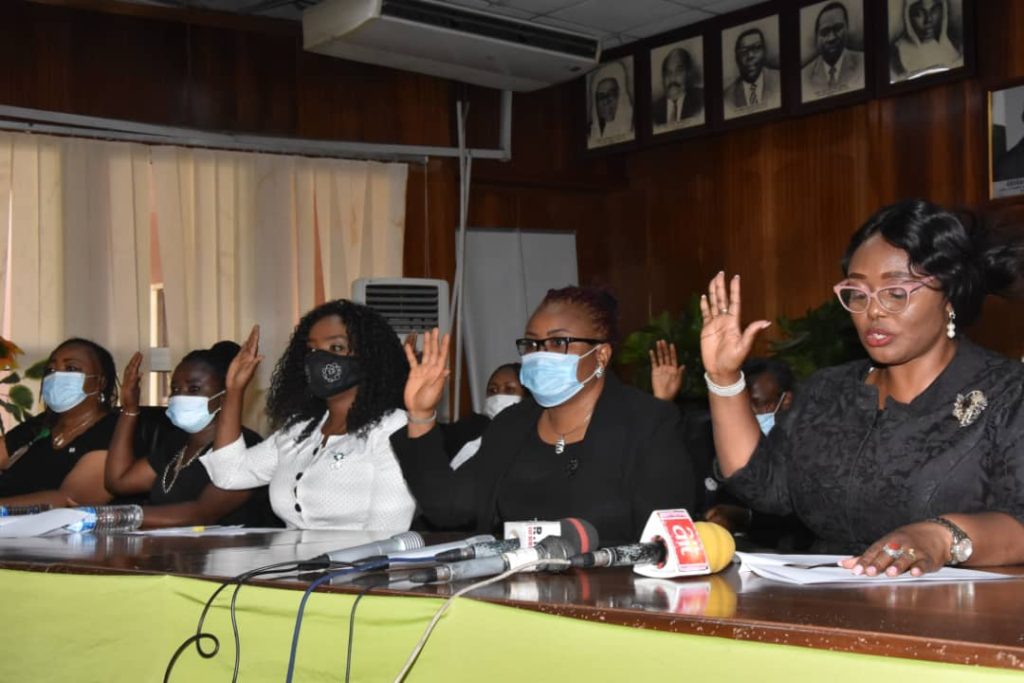
FIDAns at the Press Conference

“The campaign theme of the International Women’s Day 2021 is: ‘Choose To Challenge.’ This invariably means that women are responsible for their own thoughts and actions every day and thereby challenging the world they live in every day. The theme further signifies that women can choose to challenge gender bias and inequality in the world. People need to celebrate women’s achievements and also make the world a better place to live in with equality. 

“Since the year 1908 when 15,000 women took to the streets of New York to protest against work exploitations and demanded for shorter hours, better pay and voting rights, it became a move which necessitated changes around the world. This also invariably affected the call for women’s rights in Nigeria and to mention a few, the 1929 Aba Women’s riot which saw over 10,000 women on the streets of Calabar and Owerri protesting against the policies imposed by the British Colonial Administration which prompted colonial authorities to drop their plans to impose a tax on the market women and to curb the power of the warrant chiefs.

“This year’s campaign theme is very peculiar because it sums up the entirety of what International Women’s Day stands for: #choose to challenge. In the expression of the International Community:

“A challenged world is an alert world and from challenge comes change. So, let’s all choose to challenge….”

“There is no doubt that there is much to be challenged in Nigeria today. Even as we celebrate the progress made so far, there’s a lot of gap to be filled and this can only be achieved when both men and women rise up to bring to the attention of Governments, businesses and everyone else that women’s rights are human rights.

Furthermore, we focus on the United Nations theme: “Women in Leadership: Achieving an Equal Future in a COVID-19 world” The theme celebrates the tremendous efforts by women and girls around the world in shaping a more equal future and indeed, recovery from the COVID-19 pandemic.

“The COVID-19 pandemic had a devastating impact on humanity generally. Apart from health, there was a myriad of social and economic downturn with a disproportionate impact on women. The pandemic exacerbated poverty and gender inequality; the violation of women’s rights which was recorded all over the world in forms of rape, harmful workplace conditions, domestic violence which increased the vulnerability of women as many in the informal sector were out of jobs during the lockdown. The pandemic most unfortunately also increased women’s unpaid jobs as caregivers to sick and elderly members of their household.

“Women, as usual, rose to the occasion and carried disproportionate burdens during the pandemic as health workers at the frontline, caregivers to sick family members and breadwinners; we remember them and applaud their efforts.

“We note and also appreciate that the pandemic elicited the skills and perspectives that women bring onboard, for which leadership traits are worth celebrating as a way to encourage more women in leadership, to shape a more equal future and recovery from the COVID-19 pandemic.

“Despite the pandemic and its challenges, women defied all odds and still championed and accomplished great things, rising to the pinnacles of their careers, in sports, beauty and fashion, media, entertainment, healthcare, education, as entrepreneurs, in government appointments and even the Judiciary. We appreciate you and join in blowing the trumpet for you all as great Nigerian women breaking boundaries.

“Article 21 of the Universal Declaration of Human Rights embraces the right of every person to take part in leadership of his or her country. As such, FIDA has always promoted the equal access of men and women to power, decision-making and leadership at all levels as being a necessary precondition for the proper functioning of any democracy, such as ours.

“This year’s theme is also in consonance with the priority theme for the 65th Session of the Commission on the Status of Women: “Women’s full and effective participation and decision –making in public life, as well as the elimination of violence, for achieving gender equality, and the empowerment of all women and girls.” These are all efforts towards achieving gender equality and women’s full participation in the public sphere.

“FIDA Nigeria sadly notes that Violence Against Women is still rising astronomically with cases of sexual violence of women and girls, and domestic violence topping the list. FIDA states that effective participation of women in decision–making; elimination of violence against women and girls; and the empowerment of women must be priorities for all if gender equality will be achieved.

“Accordingly, FIDA Nigeria calls on government at all levels, agencies, policymakers, legislators and corporate organizations, to incorporate the diversity of women and girls in policy formulation, implementation of laws, and all response and recovery programmes of COVID-19 and post-pandemic.

“FIDA Nigeria celebrates all women in leadership positions at the local, national and international levels and encourages them to be steadfast and resilient in dealing with the challenges they face. We are still demanding for equal rights, equal pay, an end to all forms of discriminations, violence and an end to exploitation. We will not rest on our oars as we know that we have a lot to achieve because the progress made so far is not equal. We must remember that as long as one woman faces discrimination, prejudice, harassment, sexual assault, offensive and inhuman cultural practices, inequality or oppression, we all do.

“FIDA Nigeria continues to work to support credible, hardworking, meritorious women to break the glass ceiling in their respective spheres of operations.

“We implore everyone to rise up to raise their challenges on behalf of all Nigerian women as we celebrate this remarkable day in history. We, therefore, enjoin all women and men of goodwill to raise their hands high to show and choose to challenge inequality.

Happy IWD2021.#IWD2021 #Ichoosetochallenge.”

‘AS FOOD INSECURITY KICKS US IN THE FACE’

Inside Stuff With MARTINS OLOJA

There comes a time when the authorities need to heed a certain call, when we need to come together as one. Borrowing some brilliance from the masterminds of USA for Africa, 1985 concert for Ethiopia, we need to tell our leaders that there may be more people dying soon, and so it is a time to lend a hand to life, the greatest gift of all…This is a time to tell our leaders at all levels that we can’t go on pretending day-by-day that someone somewhere will soon make a change that they promised us…We need to stress this as the 1985 legends told the world then that, we’re part of God’s big family, and the truth we all know is: love is all we need from our duty bearers now, not oratory, nor sophistry as – food insecurity, the deadliest of all insecurities, is staring us fiercely in the face.

The commander-in-chief of the armed forces and his security and service chiefs have been promising and promising that they will sooner than later end the rampaging insecurity posed by the combined effects of insurgency, banditry, abduction in the country.

As we stand on the promises upon promises since 2015, as we continue to smart from the debilitating consequences of even extra-budgetary allocations to secure the country, there is a need to alert the authorities about the implications of the vilest of all insecurities, yes the strain that can make other forms of insecurity pale into insignificance. The name of that monster is food insecurity!

The governors of southern Nigeria were told to ‘buckle up on food production…’ last week when they were reminded that, ‘If tiny Israel could feed self, why not South East…?’
The origin of the construct: Stakeholders in agriculture and farmers in the South West, last week allayed fears of food scarcity following the alleged stoppage of food supply to the region. But the concerned stakeholders were quick to challenge state governments in the region to take full advantage of massive fertile land in South West for food production and stop paying lip service to the development of agriculture and its value chains.
The southwest chairman of All Farmers’ Association of Nigeria (AFAN), Mr. Olusegun Dasaolu, had then noted that the stoppage of food supply to the South was a warning of what to expect in the future. His words: “It is a warning sign. The signal therein is telling us that we need to buckle up as far as agricultural production is concerned. They blocked the supply, and within two or three days, these products are not in the market. It should not be so. We have the land and other resources enough for us to produce in the South West. We need to restrategise. It is a good development that has taught us to buckle up…In the South West, we have the capacity to feed ourselves and export. If you move from Lagos to Ibadan, left and right, what you see are thick forests…We talk much on agriculture. We need to actually walk the talk by focusing more on agriculture because people that can’t feed themselves are slaves. So, much as we have all other resources, there is a need for our government and the private sector to strongly collaborate and see how we can harness the resources surrounding us so that there can be abundant food production in the South West. We have the capacity to produce and even export…”
In the same symposium interviews that led to the significant story in ‘The Guardian’, (Nigeria) Dr. Olabode Badiru, a lecturer at the Faculty of Agriculture, University of Ibadan (UI), Ibadan, said regional states could feed their citizens if they practised smart agriculture, using the right technologies. He said: “We have some of the best researchers in the continent domiciled in the region. That is, we have the know-how. However, this potential won’t transform into food security overnight.” The university don lamented as we often do that states lacked coherent policies on agriculture but just key into national policy half-heartedly.

In the same vein in the South-East, a chieftain of Ohanaeze Ndigbo, Chief Chekwas Okorie, described the action of the northern farmers who blocked food items to the South as most thoughtless and self-inflicted damage any set of Nigerians could unleash on unsuspecting and hapless traders and farmers alike.
According to him, although the protesters who erected the blockade have called off their action, the economic setback, business losses and social dislocations they caused might never be redressed in a long time. Okorie’s lamentation as our power elite often do here:
“If Israel that occupies a far smaller and desert land space than the south-east geopolitical zone can feed itself and export their surplus, there is no reason any section of Nigeria should willfully surrender the critical issue of food production to any other section of the country”.

Which is why political authorities in Abuja and the 36 state capitals should not deconstruct the story of the boycott of food transport from the north as a political story. The development should be read by state risk analysts as an intelligence on the state of the nation. It is a pointer to the fact that we are gambling with another crisis that can shake the nation if authorities dismiss the development as a mere political story by the enemies of this administration. The deep that should call to the deep in the capitals should contextualise the developing story as an update on some similar warning signals from December 2020, to January 2021.
In a business-and-economy data-rich story last month, we read that, “It now costs Nigerians twice the average amount spent on food five years ago to purchase the same today. That’s after food prices rose to the highest level in more than 12 years, according to inflation data published by the National Bureau of Statistics (NBS). According to the story, the prices of food have soared to 20.57 per cent in a monthly inflation survey, which is the highest record in the last 12 years.
The last time Nigeria recorded a similar significant rise in food inflation was between 2008 and 2009, according to the National Bureau of Statistics (NBS). The Consumer Price Index (CPI) report released by NBS in the same vein showed that the headline inflation rose to 16.47 per cent in January 2021, higher than 15.75 per cent recorded in December 2020. However, the high prices of meat, bread and other consumables pushed the food inflation to 20.57 per cent from 19.56 per cent recorded in December 2020.
Rise in the food index was caused by increases in prices of bread and cereals, potatoes, yam and other tubers, meat, fruits, vegetables, fish and oils and fats, the report stated but as Nigeria had been in recession since the third quarter of last year but as analysts had projected, the country exited recession the order day in a way that wasn’t so promising. Analysis had shown then that the food sub-index increased by 1.83% in January as it declined by 0.22% from 2.05% in December, 2020. The economic outlook then also showed that the urban inflation rate increased by 17.03% in January from 16.33% in December, while the rural inflation rate rose by 15.92% from 15.20% in December last year. A comment by the Bureau in the report said: “The highest increases were recorded in prices of passenger transport by air, medical services, hospital services, passenger transport by road, pharmaceutical products, paramedical services, repair of furniture, vehicle spare parts, motor cars, miscellaneous services relating to the dwelling, maintenance and repair of personal transport equipment.”
At the same time, specifically in the middle of December last year, the Central Bank of Nigeria (CBN) warned that its economic and financial policies would amount to nothing if the issues around food prices volatility could not be addressed as a nation. The governor of the apex bank, Mr Godwin Emefiele, made the remark in a message to the input distribution flag-off and loan recovery drive under the RIFAN-CBN Anchor Borrowers’ Programme (ABP). Emefiele’s message was instructive: “With a population of about 200 million people, importation of any major food item will continually drain the country’s external reserves, export our jobs to countries where those food items are produced and distort our commodity value chains as we will not be able to guarantee the supply of raw materials for the agro-allied companies.’’ These are vital pieces of evidence of imminent food crisis and indeed food insecurity as FAO has always warned.
According to experts, Food Insecurity is defined as the disruption of food intake or eating patterns because of lack of money and other resources. Food insecurity does not necessarily cause hunger, but hunger is a possible outcome of food insecurity. Adults who are food insecure may be at an increased risk for a variety of negative health outcomes and health disparities. For example, a study found that food-insecure adults may be at an increased risk for obesity. Another study found higher rates of chronic disease in low-income, food-insecure adults between the ages of 18 and 65. Food-insecure children may also be at an increased risk for a variety of negative health outcomes, including obesity. They also face a higher risk of developmental problems compared with food-secure children. In addition, reduced frequency, quality, variety, and quantity of consumed foods may have a negative effect on children’s mental health.

As recently reported, by an international organisation, in Nigeria, where recurrent conflict is already resulting in high food assistance needs, the COVID19 pandemic and measures to prevent its spread have concomitantly driven needs even higher. Besides, macroeconomic conditions have deteriorated sharply, following the drop in international oil demand, which led to a decline in revenue; the subsequent depreciation of the naira has pushed up staple food prices. As a result of higher food prices, in combination with reduced access to income given movement restrictions, poor households are facing increased difficulty meeting their basic food needs. What is more, farmers’ ability to engage in planting for the agricultural season has been limited and this has been due to movement restrictions and contractions in household income, which reduced households’ ability to purchase agricultural inputs; as such, a below-average main season harvest is expected. Overall, six to seven million people will require humanitarian food assistance in Nigeria during the lean season, and while food security may improve with some harvest, needs are expected to remain higher than normal. The Government of Nigeria (GoN) and humanitarian actors should plan for continued high food assistance needs through at least the beginning of 2021…
I think this is a fact file on food insecurity that risk analysts and indeed intelligence chiefs in all our political capitals should take more seriously than the wailings and meretricious suggestions by the Gumis and other sundry conflict entrepreneurs in the country. Certainly, food insecurity not properly managed at this time could be a tinderbox that may be more ticklish to manage than the challenges of insurgency, banditry and abduction.

#

Poverty of the mega-rich, By Osmund Agbo

It so happened that the loss of someone dear to his heart was what sent my friend George, cascading down the path of searching for life and its very meaning. At 22, his kid brother Kelvin was already a soccer phenom, brimming with high hopes and carrying big dreams. Described as affable and gregarious, the young chap was well on his way to landing a coveted spot in a Premier English club. But just like a light bulb, he flickered out so abruptly, while playing the very game that gave him so much joy and fame. “Kelvin’s short but rich life brought to me the importance of thinking about life and death. When we think about death, we also pause to think about life, and we then decide how we want to live”, my friend had said. Since we are living in times when there are many humans but not enough humanity, George seems to have come to his epiphany moment. That’s right, every single individual could use a little more time pondering about the whole essence of life and the inevitability of death.

Erik Prince, the former head of the infamous private security contractor-Blackwater, whose employees killed 17 Iraqi civilians and injured 20 in 2007, is in the news again. This time, according to a recent New York Times report, Mr. Prince, a retired Navy SEAL is under a United Nations investigation as a gun-runner. He is accused of violating a U.N arms embargo on Libya by sending weapons and deploying a force of foreign mercenaries in support of a military campaign attempting to overthrow the internationally backed Government of National Accord (GNA). The beneficiary of his effort is no other than Khalifa Haftar, the powerful militia commander believed to be responsible for the instability in the North African nation today. In fact, a Libya specialist and The Royal United Services Institute (RUSI) Senior Research Fellow, Alison Pargeter regarded Haftar as the “biggest single obstacle to peace in Libya.”

Recall that Libya began to fracture about a decade ago. Following the death of Col. Muammar el-Qaddafi, whose violent ouster set in motion a spiral of political crisis, the country splintered into armed factions that have so far resulted in brutal murder of thousands of Libyans. Mr. Prince is being accused of actively promoting this carnage. If the charges prove to be true, the big question is how much happiness can one man buy with cash that he has to go that far?

Whether Eric Prince would be found guilty or not remains to be seen. What is indeed most unfortunate is that the world is never short of men who not only built a fortune but sustain their luxury and influence by engaging in actions that cause record human catastrophe. In this league are a long line of African dictators, the likes of the late Joseph Mobutu of Zaire, gun-runners fueling wars all over the world and blood merchants fighting to take control of the vast gold and diamond reserves across the whole continent of Africa. These soulless creatures live in outlandish opulence from proceeds of crime that directly cause heavy human toll. Thankfully, not everyone is interested in primitive acquisition.

Chuck Feeney is the founder of one of the largest private charitable foundations in the world. The American businessman who made his fortune as a co-founder of the Duty Free Shoppers Group is arguably one of the most genuine philanthropists you have never heard. 

He had thus far given away more than $8 billion of his personal fortune, choosing to remain anonymous until a business dispute in 1997 resulted in his identity being revealed.

Chuck is known for his legendary frugality. He does not own a car, lives in an apartment and wears a ten dollar Casio F-91W. According to a New York Times article  in 2017, “Until he was 75, he traveled only in coach, and carried reading materials in a plastic bag.”

At the Daily Journal annual meeting in Los Angeles recently, Charlie Munger, the billionaire best remembered as Warren Buffet’s long-time business partner was asked what his secret to a long and happy life is. His response; “easy, because it’s so simple.” Charlie, who is nearly a centenarian, rattled off a long list of commonsense prescriptions but summarised by asking us to stay cheerful no matter the situation.

Of course staying cheerful is a wise thing to do, except if your model of success is stealing millions meant to feed the poor and the vulnerable or better still, if you profit from wars that kill and maim thousands of human beings. In such case, one might have murdered sleep in the process and easy doesn’t do it.

We are all wired differently and so no one expects all billionaires to be a Chuck Fenney. It’s however, not unreasonable to question if Mobutu Sese Seko is created by the same God that made Chuck Feeney? I believe it’s also fair to ask if such is within the limit of rational behaviour to steal billions that one doesn’t need and watch your fellow citizens die while begging for food in the streets.

For certain individuals, the demand for the mundane is comparable to the compulsion of narcotics addiction. They are driven by the emotional needs to achieve something but are never satisfied because it’s the elusive attempt of measuring progress against an emotional need. Psychiatry calls it the Great Gatsby Syndrome a.k.a Wealth Accumulation Disorder. Framed differently, it seeks to suggest that the pursuit of happiness premised on material acquisition is a distant mirage. 

Yet people don’t even have to be rich to suffer this disorder. A morbid obsession to build wealth is all it takes.

Of course ambition and success are both good and necessary. Our society finds it compelling and very attractive. Too much emphasis however, pushes it to the realm of greed and makes it difficult to acknowledge how such an attitude and belief could be potentially catastrophic to all.

My colleague was consoled that even though his brother, Kelvin died young, he lived full and brought so much joy and laughter to so many. He wasn’t wealthy but he touched countless lives. Unfortunately, a good number of men suffer from the fatal attraction of PowerWealth and Privilege and in the process, valuable life lessons that helps one live a rich and fulfilled life is lost. Sadly, greed and narcissism have their roots anchored in self-doubt and to paraphrase Patrick Meagher, the victims end up becoming so poor that all they have is money. They fail woefully in their understanding of life.

Dr. Agbo, a public affairs analyst is the coordinator of African Center for Transparency and Convener of Save Nigeria Project. Email: [email protected]

TIPS