Home Blog Page 1011

Nigeria must acknowledge her own complicity in colonialism, By Benjamin Maiangwa and Muhammad Dan Suleiman

This is expressed through identity battles which sometimes harm people of “other” religions and ethnicities. Such battles have even led to a call for the state to be dissolved.

In our paper, we trace the history of how this came about. We use frameworks provided by three philosophers and historians. To trace the first phase – what we refer to as the invented phase, from 1885 to 1914 – we use a framework by historians Eric Hobsbawm and Terence Ranger.

The second phase we describe as the imagined phase. For this, we draw on a framework provided by political historian Benedict Anderson. Finally, we look at the formation of ‘native-settler’ identities as set out by political philosophers such as Mahmood Mamdani. They describe the colonial construction of a dominant majority and minority based on race, ethnicity and religion.

We assert in our paper that the first phase of adversarial identity formation in Nigeria was ‘invented’ by foreigners. The second phase was born out of the ‘imaginations’ of colonially anointed African leaders. And the last phase has been primarily by Africans’ own making and design.

We conclude that Africans need to take responsibility for their own actions. They need to consciously expose the effects that the colonial project had – and continues to have. And they need to look for ways to undo these. This includes accepting responsibility in instances where the mentality of coloniality has been internalised.

Three phases unpacked
The first phase, the ‘invented’, came out of splitting and joining societies along ethnic and cultural lines. For example, under British colonial rule, people were placed into different groups – which cut short their history and upset their social arrangements. While British colonialism sought to form one Nigeria, it created destructive divisions. This happened in two ways.

The colonial administration created physical borders to demarcate people and enable economic exploitation. Unsurprisingly, many conflicts have arisen over identity tied to power distribution and the control of resources. Groups that once flourished together with minor tensions and skirmishes have become intractable enemies due to these meaningless borderlines.

Psychological borders were also created to build hatred and bigotry. This can be seen in the way black skin and Africa are perceived or talked about. For instance, colourism favours black people of lighter hue while stigmatising and marginalising black people of darker hues.

Centuries of normalised anti-blackness have unsurprisingly resulted in skin bleaching and hair straightening practices. These are still common on the continent.

This form of colonialism remains in the oversimplification and generalisation of African practices and cultures to associate them only with negative connotations and undesirable traits.

Acts of creating difference were continued during the second phase (between 1914 and 1960). In this period British colonialism promulgated several policies to control African people. Leading scholars of Nigeria’s colonial and postcolonial societies such as Adiele Afigbo, Claude Ake and Peter Ekeh have set out how this was done.

For example, the North of Nigeria was ruled distinctly through an indirect system that governed through Fulani and Hausa aristocrats or “subcolonials” as described by Moses Ochonu.

These sorts of policies, as Peace Scholar Surulola Eke wrote:

facilitated the colonial objective of nurturing and exacerbating an “us” vs. “them,” Muslim vs. Christian, northerner vs. southerner, and Hausa–Fulani vs. Yoruba vs. Igbo syndrome in Nigeria.

The third phase can be subdivided into two periods. The first was from 1954 when preparations for independence started, through independence to just around the Nigeria-Biafra civil war (1967–1970). The second was the period starting from perhaps 1979 to the present.

The first phase saw the beginning of the quest for political dominance and superiority by the three major ethnic groups in Nigeria – Yoruba, “Hausa-Fulani”, and Igbo. All three groups, representing their respective regions of East, West, and North, rigorously competed for the dominance of the political space. The result was that the postcolonial state continued – and continues – to design its statecraft based on the colonial legacy.

The third phase has its roots in the political decision of elites to create a federal system of laws and social categories that hinged on where a person was born. It created a context in which post-independence Nigerian leaders exploited ethnic and religious sentiments to get political and social patronages.

Next steps
We conclude that the most enduring hindrance to national unity in Nigeria is not that colonialists created ethnicities and traditions. It is that Nigerians make them now.

Colonialism cannot continue to be responsible for the divisions and clashes that tear at the Nigerian state. Given the peculiar ethno-politics of the groups, even dissolving the federation would leave them with internal strife. The modern Nigerian state needs to look hard at what it has created. It must come up with practical Nigeria-specific solutions to continued tensions arising from paranoia and distrust of groups “othered” in strictly ethno-religious terms.

The postcolonial thinker Sabelo Ndlovu-Gatsheni argues this process would entail a journey of “self-critique, self-negation, and self-rediscovery”.

This needs to take into account the role of every sphere of Nigerian society in creation of mutually exclusive identities that deny the legitimacy and existence of the “other”.

A process like this could redeem Africa from inferior standards and complexes that justify behaviour like corruption and violence. But, crucially, African countries like Nigeria must start this process by identifying and acknowledging their own complicity in coloniality. This would require a shift in the concentration of blame and faultfinding on external forces.The Conversation

Muhammad Dan Suleiman, Research Fellow/Sessional Lecturer in Political Science and International Relations, University of Western Australia and Benjamin Maiangwa, Teaching Fellow in International Relations and Peace and Conflict Studies, Durham University.

Source: theafricareport

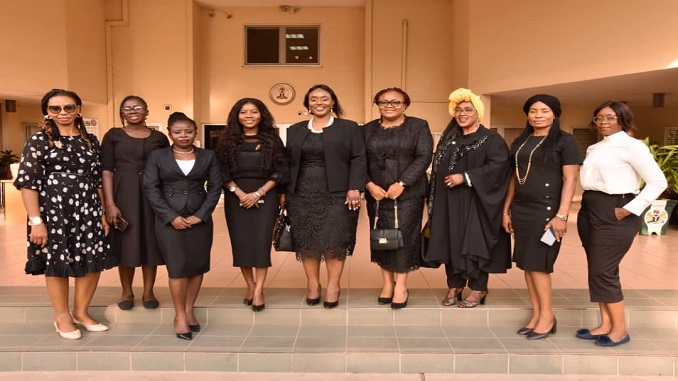
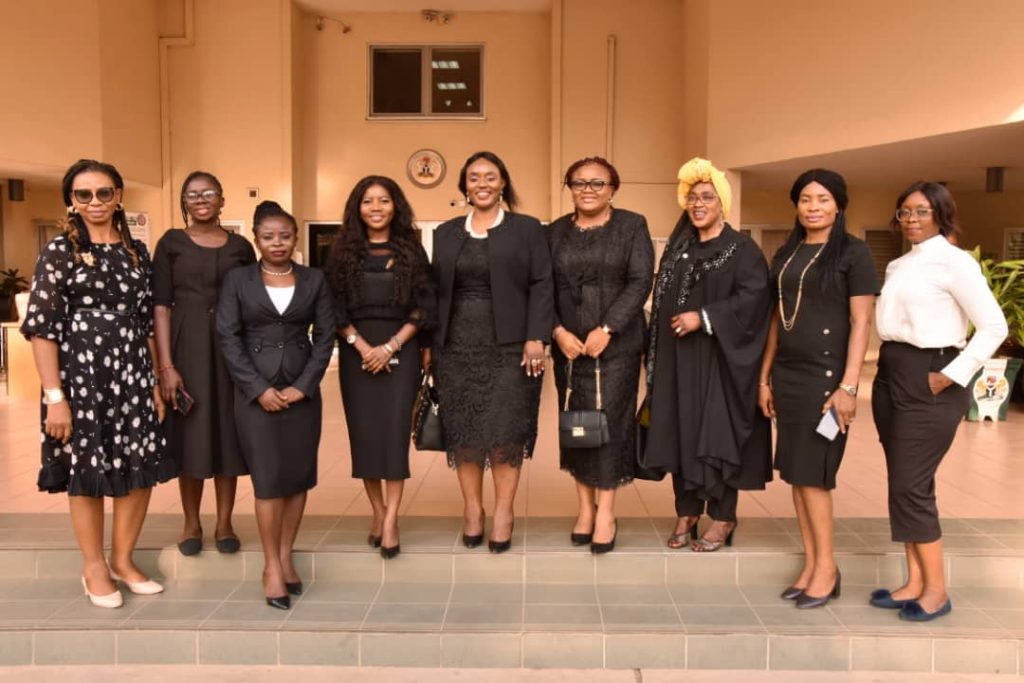
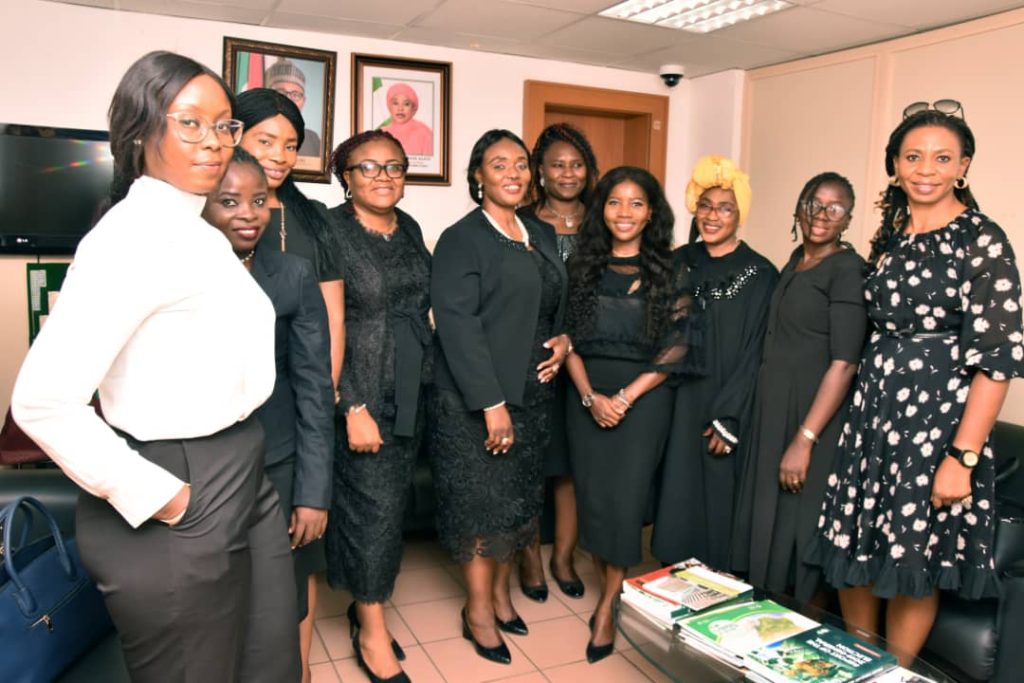
International Women’s Day: FIDA Pays courtesy visit to Minister of State, FCT

As part of the activities marking International Women’s Day (IWD) 2021, the Executive Committee and members of the International Federation of Women Lawyers (FIDA) Abuja, paid a courtesy visit to the Minister of State for Federal Capital Territory (FCT), Hajiya Ramatu Tijjani Aliyu.

The delegation was led by Chairperson of FIDA Abuja Mrs Rekiya Adejo-Andrew.

FIDANs
FIDA members and Executive Committee


I Can Stay In Office Till 2023 Or 2024 If…. IGP Adamu

The Inspector-General of Police, Mohammed Adamu has submitted that the IGP’s office and appointment is not governed by general provisions of the law which apply to the rest of the police force.

Adamu argued that the tenure of his appointment as the Police IG would only lapse in either 2023 or 2024 depending on when counting started.

He added that a special status which supersedes normal rules has been accorded to him following his appointment as the Police IG which can be regarded as a quasi-political appointment with a four-year tenure.

According to him, the 35 years in service which ended on February 1, 2021, has no effect on his appointment as the Police IG, noting that the office of the IG is only answerable to the President of Nigeria and the Nigeria Police Council.

Adamu further noted that the new Nigeria Police Act gave him a four-year tenure which would only lapse in 2023 if counted from 2019 when he was appointed by President Muhammadu Buhari or in 2024 if counted from 2020 when the new Nigeria Police Act came into force.

IGP Adamu made the submissions in the counter-affidavit and notice of objection filed by his lawyer, Alex Iziyon (SAN) in response to a suit filed by a lawyer, Maxwell Opara before the Federal High Court in Abuja, challenging Adamu’s continued stay in office beyond February 1 when he clocked 35 years in service.

The IGP noted the provision of “section 18(8) of the Nigeria Police Act, 2020 which is that ‘Every police officer shall, on recruitment or appointment, serve in the Nigeria Police Force for a period of 35 years or until he attains the age of 60 years, whichever is earlier,’ is with due respect, inapplicable to the office of the Inspector General of Police in the circumstance.”

He added that section 7(6) of the Nigeria Police Act, 2020 translates to the fact that “immediately a person is appointed into the office of the Inspector-General of Police, a new legal regime is triggered off,” noting further in the affidavit that “the office of the Inspector-General of Police is conferred with a special status, unique and distinct from other officers of the Nigeria Police force.”

The IGP upon appointment “is only accountable to the President of the Federal Republic of Nigeria and the Nigeria Police Council and this fact we submit makes his office a quasi-political office with a tenure of four (4) years pursuant to Section 7(6) of the Nigeria Police Act, 2020.”

“Therefore based on our submission above, the combined effect of Sections 215 and 216 of the Constitution of the Federal Republic of Nigeria 1999 (as amended) and Section 7 of the Nigeria Police Act, 2020, is that the 2nd defendant can validly function as the Inspector General of Police after midnight of February 1, 2021 in so far as he was a serving member of the Nigeria Police Force during the period of his appointment, as his tenure in office is specially regulated by Section 7(6) of the Nigeria Police Act which stipulates in unambiguous terms that upon his appointment he stays in office for four(4) years.

“Therefore, if the 2nd defendant’s tenure in office is calculated from January 15, 2019 when he was appointed into the office of the Inspector General of Police, his tenure lapse in 2023.

“However, if his tenure in office is calculated from 2020 when the Nigeria Police Act, 2020 came into force. his tenure in office ends in 2024,” his lawyer noted before the court.

He argued further that Opara as a lawyer is not in a position to directly know if the IGP’s tenure had ended and also failed to prove how he knew Adamu’s time in service has ended as the lawyer “is clearly not a staff member of the 2nd defendant (IGP) and the Nigeria Police Force.”

“He failed woefully to state in his affidavit how he got the information that the 2nd defendant had retired from the Nigeria Police. He also failed woefully to tender any document to support his claim.”

Furthermore, the IGP in his notice of objection to the suit on why he has remained in office beyond February 1, 2021 said the Federal High Court lacked jurisdiction to hear the matter since its subject matter is related “to employment and condition of service of the 2nd defendant.”

He added that by virtue of section 254(c)(1) of the 1999 Constitution (as amended) only the National Industrial Court has the jurisdiction to hear the suit.

Opara wants the court to among others, hold that the failure of President Muhammadu Buhari and the Nigeria Police Council (NPC) to name a new IGP on February 1 when Adamu allegedly completed his tenure amounted to an abdication of duty.

He, therefore, wants the court to compel President Buhari and the NPC to immediately appoint a new IGP.

Meanwhile, the lawyer who filed a lawsuit against 50 people, including celebrities during the EndSARS protest, Kenechukwu Okeke, has been confirmed fake and never called to the bar.

The development was confirmed by the Nigerian Bar Association on Monday, adding that Okeke is not on the list of directory of lawyers in Nigeria.

Source: Newspot

UK Sanctions Work Permit For Nigerian Students, Others

The United Kingdom Government has announced that international students in England can apply for work permit after successful completion of their academic at bachelor’s degree level or above.

The British government disclosed that graduates are free to search for work after studying for a maximum period of two years and three years for PhD students.

This was contained in a statement on Thursday, titled, ‘New UK post-study graduate route to open to Nigerian students this summer,’ signed by the second Secretary Political/Head of Communications, British High Commission, Dean Hurlock.

“Today, the UK government has confirmed the new Graduate route will open for applications on 1 July 2021, to international students who successfully complete a degree at undergraduate level or above in the UK.

“International students on the Graduate route will be able to work or look for work after their studies for a maximum period of two years (three years for PhD students). This will allow the UK to retain the brightest and the best students to continue to contribute to the UK post-study,’’ it stated.

Available statistics indicated that over 13,000 Nigerian students were granted a UK study visa in 2020, an increase of 56 per cent on the year before.

According to a statement by the British High Commission, the recent development would allow the UK to retain the brightest and the best students to continue to contribute to its post-study.

It added that applications for the graduate route will open on July 1, 2021, ensuring Nigerian students would continue to choose the UK as the destination to study and build their careers.

The high commission also disclosed that the coronavirus concessions for students unable to travel to the UK due to the COVID-19 pandemic have also been extended, recognising the continuing disruption many face in international travel.

It said applicants who began their studies in autumn 2020 will have to have been in the UK by June 21 (updated from 6 April 2021) to be eligible to apply to the Graduate route, adding that students who began their studies in January or February 2021 would need to be in the UK by September 27.

“The Graduate route will be unsponsored, meaning applicants will not need a job offer to apply for the route. There will be no minimum salary requirements nor caps on numbers – Graduates on the route will be able to work flexibly, switch jobs and develop their career as required.

“To be eligible, international students must have completed a UK degree at bachelor’s degree-level or above, or an eligible professional qualification at a higher education provider, with a track record of compliance with the UK Government’s immigration requirements,” the statement noted.

Credit:thenigerialawyer

Army Tackles Gumi Over Comment On Muslim/Non-Muslim Soldiers

*Says Nigerian Army Does Not Deploy Its Troops Along Ethnic Or Religious Lines

The Nigerian Army has cautioned controversial Islamic scholar, Sheikh Ahmed Gumi, not to drag the image of the Service to disrepute.

The Director Army Public Relations, Brigadier General Mohammed Yerima, in a statement, warned the Islamic cleric and others to show restraint on the way to malign the image of the Nigerian Army.

He said: “The attention of the Nigerian Army has been drawn to a viral video-clip showing the renowned and respected Islamic scholar, Sheikh Ahmed Gumi alleging that non-Muslim soldiers were responsible for the attacks against bandits.

“In the video clip, the Islamic scholar was seen telling the bandits that the soldiers involved in most attacks against them were non-Muslims. He further stated that they should be aware that soldiers are divided into Muslims and non- Muslims.

“While the Nigerian Army would not want to join issues with the respected Sheik Ahmed Gumi, it is however important to restate that the Nigerian Army as national institution does not deploy its troops along ethnic or religious lines.

“Therefore Sheikh Ahmed Gumi and other opinion merchants are please enjoined to exercise restraint not to drag the image and reputation of one of the most reliable national institutions to disrepute”.

It added: “The Nigerian Army remains the pride of the nation and has continually defended the territorial integrity of this great nation.

“Comments suggesting to mudslide the image and reputation of the Nigerian Army are not only inimical but tended towards creating bad blood amongst Nigerians.

“Furthermore, most operations conducted by the Nigerian Army were done in strict adherence to rules of engagement, code of conduct and respect for the fundamental human rights of the citizenry without any exception.

“It is therefore, disturbing that an opinion leader would deliberately want to disparage the Nigeria Army to portray it in bad light.

“The Nigerian Army wishes to seize this opportunity to advise opinion leaders to be more courteous while expressing their views, taking into cognisance the imperative for national security, particularly at these difficult times when our gallant troops have redoubled their efforts to tackle the myriads of security challenges facing our dear nation.

“What our troops need now is public support to discharge their responsibility effectively and in the most professional manner”.

Credit:thenigerialawyer

Despite Clocking 60: Accountant-General, FRSC Boss Still In Office

— IGP, Service Chiefs, NIS, NCS, FSCG, NSCDC Bosses Also Had Similar Controversial Extensions

There has been growing disquiet over the continuous active service of the Federal Road Safety Corps [FRSC] Boss, Boboye Oyeyemi, as well as the Accountant General of the Federation, Ahmed Idris, after clocking the mandatory retirement age of Sixty [60] Years months before now.

According to an investigation carried out by Daily Trust [Not TheNigeriaLawyer], Idris and Oyeyemi, according to available records were expected to have vacated their positions when they clocked 60, precisely November 25 and 26, 2020, respectively. The Investigation also found that whilst the Public Service Rule had made no exceptions with regards the age of retirement being 60 years or 35 years of service, the duo have however laid credence to what they refer to as ‘Tenured Appointment’ to justify their continuous stay in office, and no response or action has been taken by the Federal Government in this regards.

From available records, Idris appointment as Accountant General of the Federation first came in 2015, prior to which he had served as the Director of finance and accounts at the Federal Ministry of Mines and Steel Development. Less than two years into retirement, in 2019, President Muhammadu Buhari led Federal Government reappointed Idris for another four [4] years term. It is noteworthy that a civil society organization called, Youth Empowerment and Equal Justice, has approached the Federal High Court in Abuja to declare that Idris is illegally occupying the office of the AGF.

Oyeyemi on the other hand, was first appointed in 2014 by the Goodluck Jonathan-led Federal Government, whereafter he was reappointed in 2018 for an extended period of another four years despite his expected mandatory retirement in about two years time. Oyeyemi started his career as a career officer in 1988. The controversy with Oyeyemi’s tenure is that in addition to his continuous stay in office, the Federal Road Safety Act does not envisage any reappointed of any commissioner of the agency, and same applies to the Corp Marshal.

However, whilst addressing reporters and journalists after a meeting with General Buhari, the minister of Labour and Employment, Chris Ngigi, has noted that the actions of the President in reappointing Idris was carried out in line with the law and in accordance with the discretionary powers associated with the office of Mr. President, as enshrined in section 177 of the 1999 Constitution.

“We have had two meetings on that and I have educated them that the 1999 Constitution, the supreme law of the land, is the grundnorm, all other laws rose from it and any law that is in conflict with the provisions of the constitution doesn’t stand, it’s struck down.

“Therefore Mr. President has exercised his powers under Section 171 of 1999 Constitution as amended in reappointing Mr. Ahmed Idris with effect from June 25, 2019, not even today. So the man has a tenure of four years which by terms of appointment elapses June 2023,” he said.

When contacted by Daily Trust [not TheNigeriaLawyer], the spokesperson for the FRSC, Bisi Kazeem, said that the the appointment of Mr. Oyeyemi is one of a political nature, one which is tenured and has the currency of the appointment, at the pleasure of the President.

“The corps marshal is a political office and his tenure of office is at the pleasure of the president unlike a career civil/public servant’s appointment whose appointment is governed by Civil/Public Service Rules and Section 7 (1) of the FRSC Act, 2007 provides that the corps marshal shall be appointed by the president.”

“The only qualification required by Section 7(1) FRSC Act, 2007 is that the person so appointed by the president shall be a person possessing sound knowledge or ability in the organization and administration of road traffic and road safety matters.” She noted.

Incidents of tenure elongation in sharp conflict with the statutory provisions have once again reinvented the debate as to the place of statute in determining resignation and retirement in civil and public service works, for instance:

The four service chiefs replaced last month by the Presidency spent five years, six months in office, outliving many of their juniors in service, due to a number of extensions they got from the president. Same scenario played out with the tenure extension granted to the Controller General of Immigration [CGI], Muhammad Babandede, thereby affecting his statutory retirement date if September 12, 2020.

The alleged arbitrary actions of Mr. President has however been challenged by a legal practitioner, Daniel Makolo, at the National Industrial Court. The said lawyer is urging the court to declare that Babandede could not lawfully remain in office beyond September 12, 2020, in the face of the provisions of the Public Service Rules (PSRs) 100238 and 020810 made pursuant to sections 160, 169 and 172 of the Constitution and sections 2 and 3 of the NIS Act 2015.

Other notable examples Include; the Controller General of the Nigerian Correctional Service (NCS), Jafaru Ahmed, also had his tenure extended by President Buhari before his eventual exit in January 2020. Appointed in 2016, he was supposed to retire in July 2019 after clocking the statutory age of 60.

Also, the Fire Service Controller General, Joseph Anebi, was expected to retireas of September 2018, but had his tenure extended by General Muhammadu Buhari, which saw him leaving in 2019.

Similarly, the former Commandant General of the Nigeria Security and Civil Defence Corps (NSCDC), Abdullahi Gana, was given a six months extension on July 17, 2020, despite being due to retire after clocking the statutory 60 years of age. He was eventually replaced by Abubakar Audi as the substantive Commandant on February 18.

The Inspector General of Police, Mohammed Adamu, also had his tenure on February 4 extended by President Buhari after he attainment of the statutory 35 years of service as provided in the Service Rules. An action which is being challenged by the Nigerian Bar Association [NBA] at the Federal High Court in Lagos, on the grounds of the action being Ultra Vires.

The somewhat frequency and outright derogation of statutory provisions by the Federal Government necessitate the relevance of the memo issued by the then Head of Service of the Federation, Stephen Orosaya in 2009 and titled, “Interpretation of Public Service Rules on Compulsory Retirement Age/Yes of Service in Relation To Tenured Appointment of Serving Public Officers”, wherein he insisted on the need for Public officers to respect the provisions of retirement terms.

The said memo reads in part, “For the avoidance of doubt, and in order to maintain discipline and integrity of the public service, extant Public Service Rules, which prescribe 60 years of age or 35 years of service for mandatory retirement should strictly be complied with. Accordingly, the following guidelines shall apply:

“(i) that career officers who wish to take up tenured appointments should, at the point of taking up the appointment, retire from service to ensure they run their term uninterrupted;
“(ii) that career officers who have not retired or choose not to retire from service, before the commencement of their tenured appointment, must leave office on the attainment of the mandatory age/years of service for retirement; and
“(iii) career officers who are currently holding tenured appointments are required to retire from the service with immediate effect and continue to run their term. Failure to do so would mean that they would vacate office on attaining the mandatory retirement age or at the expiration of their term, whichever comes first.”

Credit:thenigerialawyer

Canada Takes Steps To Make ‘Feminist’ Budget Addressing Women’s Post-Pandemic Challenges

OTTAWA (Reuters) – Canada on Monday took a step to ensure that its upcoming spring budget, which will also outline a promised post-pandemic stimulus package, includes measures to get women working and address gender inequality.

The finance department set up the Task Force on Women in the Economy to advise the government on actions to address gender imbalances exacerbated by COVID-19, a statement said. It will be co-chaired by Finance Minister Chrystia Freeland.

“Canada’s future prosperity and competitiveness depend on the ability of women to participate equally – and fully – in our workforce,” Freeland said in a statement.

Since being named finance minister in August, Freeland has repeatedly spoken about having a “feminist agenda,” and has promised a national childcare plan will be part of a stimulus package worth up to C$100 billion ($79 billion) over three years.

Prime Minister Justin Trudeau has said the stimulus – to be detailed in the spring budget – is needed to jump-start Canada’s post-pandemic recovery.

“This crisis has created a she-cession and has threatened to roll back the hard-fought social and economic progress of all women,” Trudeau said in a statement in honor of International Women’s Day.

“To build a fairer and more equal Canada, we must ensure a feminist, intersectional recovery from this crisis.”

Canadian women are more likely than men to have lost jobs in the pandemic, and three times more women than men have left the labor force entirely since February 2020. Mothers, racialized women and young women have all been disproportionately affected.

“There is definitely plenty of runway to help shape the budget,” a government source said of the panel, which is made up of a diverse group of women from across Canada, including politicians, academics, social advocates, economists and business leaders.

Credit:thenigerialawyer

IWD: Google Pledges $25m To Empower Women, Girls In Africa

Google’s philanthropy arm Google.org has pledged $25 million to empower women and girls in Africa.

The pledge is to commemorate the 2021 International Women’s Day.

Google.org has opened call for applications for grant funding from its new Global Impact Challenge (GIC) to non-profits and social enterprises creating pathways to prosperity for women and girls in Africa.

According to the country director, Google Nigeria, Juliet Ehimuan, empowering women and girls in Africa to reach their full economic potential, and to thrive, is more critical now than ever before, as they bear the brunt of the COVID-19 pandemic.

The GIC for women and girls according to her is focused on changing the status quo, noting that job cuts, income losses and lack of education aren’t simply side effects of the pandemic, but will negatively impact the economic strides made by women and girls for many years to come.

“As economies and societies rebuild, we need bold new ideas that will propel us forward. We can’t afford to go back to the way things were, and we certainly can’t do it alone. If we lift up women and girls, the rest of the world will rise too,” Ehimuan said, stressing that, when women and girls have the tools, resources and opportunities to turn their potential into power, it not only changes the trajectory of their individual lives, but also strengthens entire communities.

Quoting the Foresight Africa report 2021, Ehimuan stated that the coronavirus has ‘exacerbated already-existing gender inequalities, laying bare serious fault lines in safety, physical and mental health, education, domestic responsibilities, and employment opportunities.’

”Despite decades of work aimed at achieving gender equality, the disparity between men and women not only remains, it is growing alarmingly, largely thanks to the global pandemic,” the report said.

Grantees, who will be announced later this year, are eligible to receive funding ranging from $300,000 to $2 million while selected organizations will also receive capacity building support and mentoring from Googlers.

Organisations have until Friday, April 2, 2021 to submit their applications at g.co/womenandgirlschallenge.

An all-female panel of expert Google executives and world business leaders, including the Executive Director of UN Women, Phumzile Mlambo-Ngcuka, Senior Special Assistant to the President of Nigeria on SDGs, Victoria Adejoke Orelope-Adefulire; Founder, Graça Machel Trust, Graça Machel and Kenyan information technology entrepreneur Juliana Rotich, will preside over the application review and selection process once applications closed.

Credit:thenigerialawyer

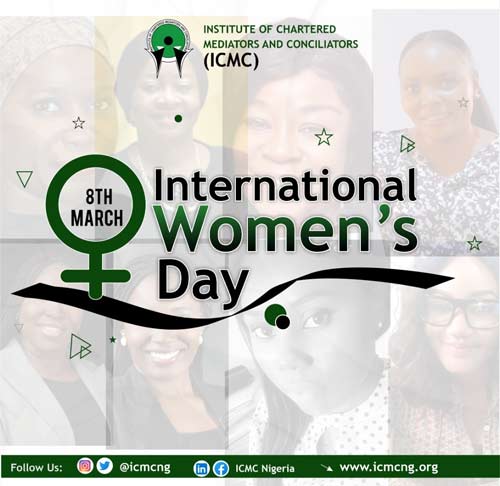
ICMC Celebrates International Women’s Day

“In essence, women’s participation in Mediation is simply a question of equality and fairness. Women make up half of a community. Their voices should be heard.” – Hanna Tetteh

Today, the Institute of Chartered Mediators joins hands with women across the globe to celebrate International Women’s Day.

Women are the foundation of the home, caring for, and lending strength to, their partners and children. The home is the beginning of the society, and as women work to maintain a sense of normalcy in the face of hardships, and keep the peace in the face of conflicts, they demonstrate the fundamental traits of a Mediator.

As an institution dedicated to advocating the use of Mediation, and other dispute resolution methods, we appreciate the strength, determination and courage of women everywhere, who at their core, are remarkable peacebuilders. We acknowledge the invaluable efforts of our staff, our leaders, and our members, who make up half our membership body

Man may work from sun to sun, but a woman’s work is never done, so to the women accomplishing great feats, and to the women who feel their efforts go unseen; we see you, we appreciate you, and we support you as you challenge the status quo.

Happy International Women’s Day.

For the Institute of Chartered Mediators and Conciliators:

Agada John Elachi, PhD, FICMC, FCIArb (UK)
President

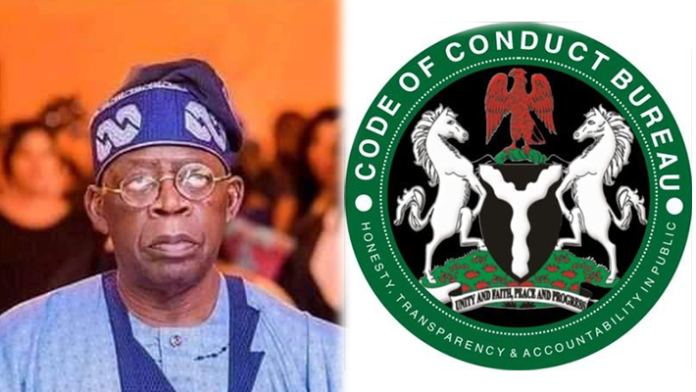
EXCLUSIVE: CCB in disarray as Bola Tinubu’s case file disappears from asset declaration vault

Anti-graft officials told the Gazette they are treating the file drama more as a temporary setback for concerned agencies than a day of reckoning averted for the ruling party chieftain.

Panic and confusion have gripped officials at the Code of Conduct Bureau after records relating to Bola Tinubu’s asset declaration suddenly disappeared from the storage facility that has held them for years, Peoples Gazette has learnt, heralding the latest in desperate larcenies of incriminating documents that have been the lifeblood of Nigerian politics for decades.

The disappearance could frustrate ongoing corruption investigation into Mr. Tinubu’s asset by the EFCC, Nigeria’s frontline anti-corruption outfit, which has apparently ignored the embattled politician’s political ties to President Muhammadu Buhari. 

Three officials familiar with the matter told the Gazette that the bureau started looking for Mr. Tinubu’s asset filings after the EFCC requested copies as part of an ongoing investigation into the former Lagos governor’s financial and material possessions. Several offices have been rummaged at the bureau as officials scrambled to produce the documents for EFCC’s use — all to a dead end. 

“We have searched for the case file everywhere because we want to comply with the lawful request made by the EFCC,” a top management official at the bureau told the Gazette. “We have not been able to find the documents either at the main head office or the annexe office in Asokoro.”

EFCC-Head-Office, Abuja 2
EFCC-Head-Office, Abuja

Another official who interacted with one of the mid-level staffers tasked with finding the documents told the Gazette the matter had become “terribly embarrassing” and a cause for unending worry at the bureau, which is the primary anti-corruption agency in charge of collecting and keep assets of schedule government officials before and after assumption of office.

“We cannot find the asset documents at all,” the official said. “We cannot even find photocopies that we can certify for the EFCC.” 

Mr. Tinubu was the governor of Lagos from 1999-2007. Officials said he declared his asset when he assumed office and when he concluded his second term in May 2007. 

Anti-graft agencies had previously investigated and charged Mr. Tinubu on the basis of the documents in 2011, but the Code of Conduct Tribunal, which primarily hears cases brought by the bureau, dismissed the matter on technical grounds, leaving the merit of the case floating for nearly a decade. No further charges had been preferred against the ruling party chief ever since.

Code of Conduct Bureau chairman Mohammed Isa. [PHOTO CREDIT: Facebook page of Mr Isa]

But as he prepares to seek Nigeria’s presidency in 2023, anti-corruption officials told the Gazette they’re now convinced by “institutional memory” that Mr. Tinubu’s asset filings were incriminating and must revisit the matter to prevent “another rogue” from assuming power in a country still reeling from decades of infamy.


“His asset declaration form will not be the only reason for us to arrest and charge him,” an EFCC official said under anonymity over the weekend. “But our detectives and lawyers working on the case said it is likely to be seriously incriminating.” 

Both CCB and EFCC officials who spoke with the Gazette for this story urged strict protection of their identities, citing especially their active engagement status and a lack of clearance to speak to journalists on a matter still under investigation. The officials’ personal details have been withheld in accordance with the Gazette’s policy on anonymous sources.

‘So convenient’

A spokesman for the CCB did not return a request seeking comments on the missing files. An EFCC spokesman also declined comments.

Although the EFCC has yet to escalate the disappearance of Mr. Tinubu’s asset filings to the presidency, concerns have nonetheless been flaring amongst top officials of the CCB, an official said. While some officials believed the document might have been stolen by an intruder, others blamed “an inside job” for the development, citing its security.

“Tinubu’s file is one of the VVIP files that is kept with either the chairman or someone he trusts immensely,” an official said. “So claiming that it was stolen from an outsider at the time the EFCC is requesting for it is just so convenient.” 

The official said an internal investigation has yet to commence about the disappearance, but the EFCC might be forced to report the CCB, which is a department under the federal cabinet secretary’s office. 

“We don’t know how many palms have been oiled to make a sensitive document disappeared from our vault,” the CCB chief said. “We are not going to blame Tinubu for it because he did not come in here to snatch it from us, some people were used.” 

Abdulrasheed Bawa
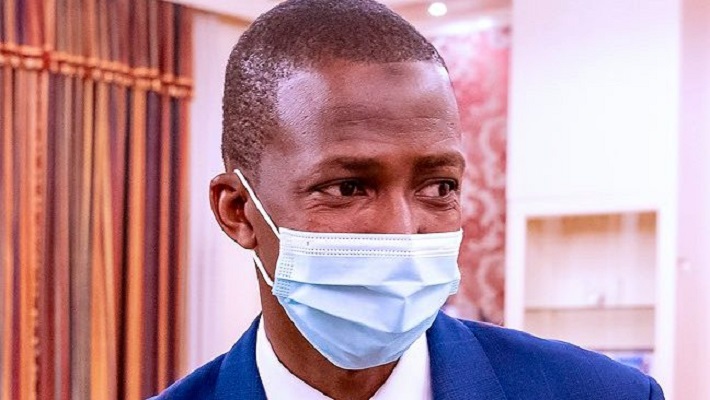
Abdulrasheed Bawa, EFCC boss.

The EFCC first wrote to the CCB requesting Mr. Tinubu’s asset declaration details in September, according to a letter obtained by the Gazette and published last week, but the anti-graft agency was forced to repeat the request when the asset fraud office could not produce Mr. Tinubu’s case file. 

Since then, the CCB has not been able to comply with EFCC’s request, effectively stalling the case, according to officials at CCB and EFCC.

Still, anti-graft officials said they are treating the file drama more as a temporary setback for concerned agencies than a day of reckoning averted for Mr. Tinubu himself. 

“We take all corruption cases very seriously,” an official said. “So we will find a way out of every setback that we are likely to encounter before the prosecution stage.”

‘Other routes’

Anti-graft officials also emphasised to the Gazette that Mr. Tinubu’s asset filings, while potentially incriminating enough, will not be the only ground for his arraignment, which they said Mr. Buhari has not commented on despite Mr. Tinubu’s attempt to quash the matter.

“We have other petitions bordering on his corruption,” an official said. “We are proceeding with every lead we have because we have not heard anything from the presidency to the contrary.”

The president has powers to stop a criminal trial as all law enforcement institutions are under his absolute control, but a presidency official said Mr. Buhari might be reluctant to wade into the matter because of the weighty allegations against Mr. Tinubu.

“The president still respects Ashiwaju Tinubu as a strong ally,” the official said under anonymity. “But the allegations against him are weighty and if they are not thrashed out now another government may eventually be forced to do so in future.” 

Although no official memo has been circulated in respect to the charges against Mr. Tinubu, there are strong indications that his infamous bullion vans on the eve of 2019 elections and his involvement in the movement of suspicious funds from Lagos treasury into Alpha-Beta Consulting might be his undoing.

“We have a petition from a group in Abuja that we should investigate the bullion vans,” an official said. “It is possible that both the bullion vans and the case with Alpha-Beta will complement each other if the matter goes to trial.”

A bad hand

A spokesman for Mr. Tinubu did not return a request seeking comments from the Gazette about his principal’s missing files. 

The former Lagos governor has long denied all claims of corruption as a handiwork of his political detractors, and he was even more confident of not facing any charges following his undisputed role in bringing Mr. Buhari to power. Respected political analysts said Mr. Tinubu, through funding and resources, led the efforts to make Mr. Buhari appealing to Nigerians who have rejected him at the poll as an ethnic and religious partisan. 

Whereas he expected a great degree of influence under Mr. Buhari’s government, Mr. Tinubu has been left largely disappointed, and, in some cases, deliberately slighted by those with domineering influence on the president. 

President Muhammadu Buhari

In 2018, Remi Tinubu said her husband was “trashed” after Mr. Buhari assumed power in 2015, with the president allowing those who did not play any crucial role in the election to have a say in his government instead. 

Still, Mr. Tinubu supported Mr. Buhari’s reelection, with the grapevine saying it was based on a mutual understanding that Mr. Buhari would hand over to the Lagos politician because it would be the turn of Southern Nigeria to nominate the next president in 2023. 

People close to Mr. Tinubu told the Gazette that it was on the back of Mr. Buhari’s assurances that he opened a campaign office in Abuja last year.

But as politics gradually shifts towards 2023, the president’s people now appear to be coming after Mr. Tinubu in order to frustrate his ambition, said political analyst Felix Adebija. 

“The EFCC has powers to investigate and charge Tinubu if he is found wanting of financial crimes,” Mr. Adebija said. “But the process, in this case, could be as important as the substance of the case itself.” 

Mr. Adebija said Mr. Tinubu wields enough influence to dismantle the 2013 accord to produced the APC, and it would be a shame to destroy the party after producing one president. 

“From feelers, we know Tinubu has been dealt a bad hand in the recent revalidation exercise of APC membership, going after him with EFCC could push him towards the edge and make him pull out his political structure,” the analyst said. “In that respect, APC will easily collapse and it will be a shame that a party that has become one of the largest in Africa is asphyxiated after producing just one president,”

Credit:Gazettengr

TIPS