Home Blog Page 1013

Why We Won’t Obey South-West Govs’ Ban On Open Grazing – Miyetti Allah

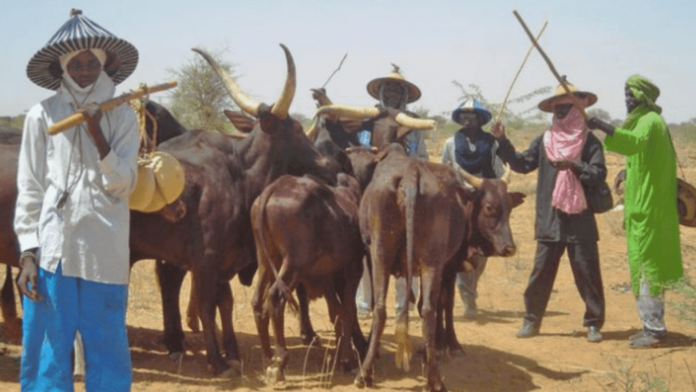
The Miyetti Allah Kautal Hore has insisted that it is opposed to the ban imposed on open grazing of cattle by South-West governors because the enforcement of the ban was tantamount to an eviction notice.

The governors had in Akure, the Ondo State capital, on January 25, declared the ban.

Abdullahi Bello Bodejo, President of the Miyetti Allah Association, addressing a press conference in Abuja on Thursday.
The meeting in Akure was attended by the Chairman of the Nigeria Governors’ Forum and Governor of Ekiti State, Dr Kayode Fayemi; Governors Adegboyega Oyetola of Osun State, Muhammad Badaru of Jigawa State, Rotimi Akeredolu of Ondo State and Atiku Bagudu of Kebbi State.

Apart from South-West governors, governors in the South-East had previously banned open grazing and movement of cows on foot into the South-East.

But speaking with the Punch, the Secretary General of Miyetti Allah Kautal Hore, Saleh Alhassan, said the ban on open grazing was targeted to destroy the means of livelihood of the herdsmen and radicalise the herders.

He said, “They can’t put an end to open grazing by fiat because grazing is not motorcycle business; there must be an alternative. Secondly, if they say they are going to end open grazing, what is the timeline for it?

“They want to displace herders from where they earn their livelihood. It is not different from an eviction notice – it is just putting the eviction notice into effect. This is very unfortunate because they cannot come out to say they are embracing peaceful herders and then say they are ending open grazing. What do they mean by that? Is there closed grazing?

“From history, right from the time of Moses, grazing is open. By now, they should realise that they will not get the result they are looking for. We are in total support of the National Livestock Transformation Plan. I was part of the committee that reviewed the final document. The programme has a lot of components, and if implemented, it will address a lot of challenges.

“Look at Benue State and how the approach has created a militia. You can’t end open grazing by fiat as if someone is looking for a crisis, and these crises have a way of reverberating.”

Alhassan argued that asking herdsmen to stop open grazing and begin ranching was tantamount to asking farmers to begin mechanisation, without which they wouldn’t be able to do their farming activities.

He added, “If they say herders must begin ranching today, where is the ranch? For someone to develop a ranch, they need at least three to five years for it to mature. The facts are there. Ranches cannot be created overnight but they are just playing politics.”

On the issue of insecurity, he said herders had been victims of rustling and kidnapping and that if insecurity was to be addressed, it was not by making it an ethnic issue, because according to him, there are criminals in every ethnic group.

“It’s sad, because at the end of the day, we end up radicalising the herders,” he said. “When they are radicalised, who will benefit? The country will suffer worse insecurity. That’s why we are against this issue of eviction or ultimatum because it doesn’t work like that. There have not been proper laws at the national level to address these challenges and the National Assembly is just playing to the gallery. Let there be proper laws.”

He said if there had been an increase in the herders moving from the North to the South, it could be due to climate change, insecurity in the North-East, drought caused by environmental factors or Boko Haram. (Thepledge)

Insecurity: No state is under compulsion to release land for ranching – Osinbajo

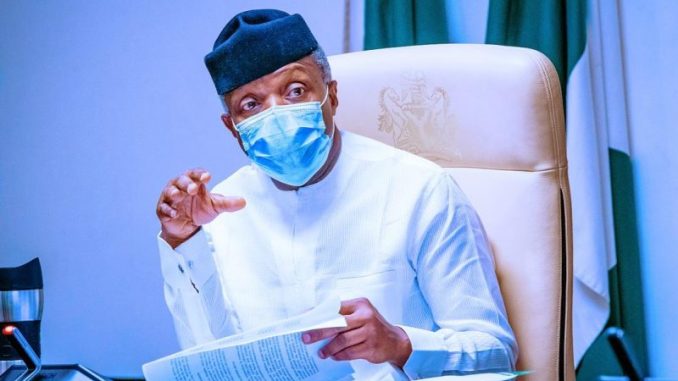
•Vice President Yemi Osinbajo

By Chibuike Nwabuko

Vice President Yemi Osinbajo has reacted to the insecurity in the country with particular reference to herders and farmers conflicts, clarifying that no state or community in the country is under any compulsion to release land for ranching.

Osinbajo made the clarification on Saturday during the 2021 International Zoom Conference with the theme: Patriotism, Security, Governance and National Development in Nigeria organised by Global Patriot Newspapers in collaboration with Nigerian Consulate, New York, NiDCOM and NIDO New Jersey Chapter held virtually and monitored by Sundiata Post.

The Vice President, who noted that the topic presents an opportunity to reinvent our economy, said that our security situation in not insurmountable and that government is prepared to co-operate with state governments, community leaders and vigilantes as well as other relevant stakeholders to stamp out insecurity in the country.

He expressed confidence that with the appointment of the new Service Chiefs and the new approach introduced to the fight against insecurity being put it place, life will soon return back to normalcy. Osinbajo also informed that the police is doing it’s best but said that we must admit that there is need for decentralization of the police and that very soon, with the help of the National Assembly, we will see steps to actualising that.

Earlier in his welcome address, the Consul- General, Nigerian Consulate, New York, U.S.A, Ambassador Ben Okoyen said that patriotism is key to building a nation with bond of unity.

According to him, the theme of the conference is an attempt to seek answers to Nigeria’s developmental challenges and what will be done to reverse the bad perception of the country. He also emphasised that Nigeria’s greatness has been challenged and there is need to seek the rebirth and what we need to do to get out of the wool.

To achieve this, he said, “Patriotism is key to redefine Nigerian ideology and Nigerians are obligated to be patriotic to the homeland and that the media has a role to play towards reshaping this negative perception of the country, especially in the area if security.”

Also in his presentation, the Nigerian in Diaspora boss, Abike Dabiri-Erewa while dwelling on patriotism, called for concerted effort to build our country as no one will do it for us.

She also called on government to build infrastructure, build institutions, reward merit and ensure that erring citizens are punished to prevent impunity.

In her words, patriotism is being a Nigerian even when things are going wrong not calling the country a zoo because government will come and go but Nigeria remains our country. It is also sad to see more qualified people ignored when it comes to employment or appointment whereas unqualified people are chosen- that is not patriotism. Patriotism is putting in your best in all areas you find yourself as a citizen, government must play it’s role and we the citizens should do our best. Patriotism is that whoever that falls foul of the law must be sanctioned. Some of the negativities we carry on social media is not patriotism and I expected that journalists should have been part of the panelists in this program to give us clue as to how this fake news would be curtailed.

On his part, the immediate past Director General of the Nigerian Maritime Administration and Safety Agency (NIMASA), Dakuku Peterside, who sounded furious on the failure of leadership in the country and the dangers of nepotism to the corporate existence of Nigeria today, said patriotism includes rising up to challenge what is wrong and speaking up against the ills in the society even as the expense of our life.

He said patriotism must be a way of life and it also means that we should preserve our culture. He recalled how the likes of Nnamdi Azikiwe, Obafemi Awolowo and Ahmadu Bello dropped their English names due to patriotism and believe in culture and called for the reintroduction of history in our curriculum.

Others who made contributions at the virtual meeting are: former Senate President and Secretary to the Government of the Federation, Senator Anyim Pius Anyim, Femi Falana (SAN), President of Nigerian Guild of Editors, among others

Credit:sundiatapost

Supreme Court’s Justice Ngwuta dies at National Hospital

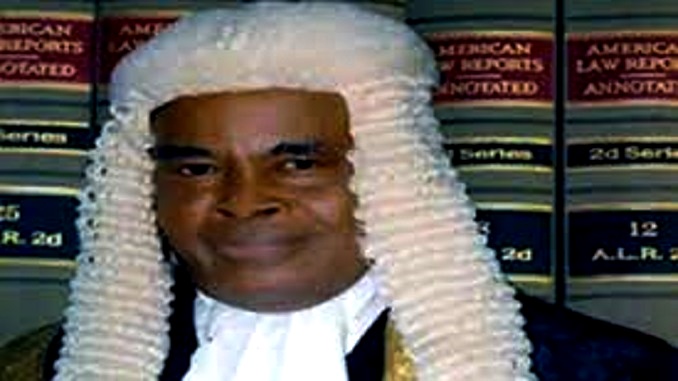
Death paid its cold unscheduled visit Sunday morning on the Supreme Court of Nigeria and took away Hon. Justice Nwali Sylvester Ngwuta.

Justice Ngwuta died this morning at the Intensive Care Unit (ICU) of the National Hospital, Abuja having been admitted there since Saturday, 27 February 2021.

The apex Court in a press statement signed by its Chief Registrar, Hadizatu Uwani Mustapha, Esq. has confirmed his death.

Ngwuta was to retire from the Supreme Court of Nigeria on March 30, 2021 by which time he would have attained the mandatory retirement age of 70.

The press statement reads: “The Supreme Court of Nigeria regrets to announce the death of the Hon. Mr. Justice Nwali Sylvester Ngwuta, JSC, CFR, by 2.30 am of Sunday March 7, 2021.

“He felt sick and was admitted in the last one week in the National Hospital, Abuja, but before he was moved to the intensive care unit (ICU) of the hospital on Friday March 5 he tested negative to COVID-19 investigative test conducted on him.

“Hon. Justice Ngwuta was due to retire from the Supreme Court bench on attaining mandatory retirement age of 70 years on March 30, 2021.

“His remains have been deposited in the National Hospital mortuary pending the arrangement for his burial.

“Hon. Justice Ngwuta who was appointed Supreme Court Justice on March 22, 2011 was born on March 30, 1951 in Amofia-Ukawu, Onicha Local government of Ebonyi State. His lordship had his basic education in the Eastern part of Nigeria and got his LLB in University of Ife (Now Obafemi Awolowo University). lle-ife in 1977 and BL at the Nigerian law school in 1978.

“May the late Hon. Justice Nwali Sylvester Ngwuta rest in perfect peace and grant his family, Judiciary and the apex court to bear the irreparable loss.

According to Wikipedia: Justice Sylvester was born in 1951 Amofia-Ukawu,  Onicha local government area of Ebonyi State, South-Eastern, Nigeria.

He obtained a bachelor’s degree in Law from Obafemi Awolowo University and was called to the Nigerian Bar in 1978 after he graduated from the Nigerian Law School.

Justice Sylvester began his Law career in 1978 as a State counsel in Benue State Ministry of Justice, the same year he established his own law firm.

On October 1995, he was appointed as a Judge of the Abia State High Court.

On 22 May, 2011, he was appointed to the bench of the Nigerian courts of appeal and on May 2013, he was appointed to the bench of the Supreme Court of Nigeria as Justice.

He presided over the ruling of the Supreme Court that affirmed Olusegun Mimiko as the governor elect of Ondo State in the May 2013 governorship election.

He also presided over the ruling of the Supreme Court that affirmed Kayode Fayemi as the governor elect of Ekiti State in the June 2013 governorship election and was supported by Justices Ibrahim Tanko Muhammad and Suleiman Galadima.

He was arrested by the Department of State Security Services (DSS) on 8 October 2016 on allegations of bribery and corruption.

However, the Court of Code Tribunal (CCT) ruled that they could in May 2018 that only the National Judicial Council could determine whether or not Ngwata would face trial.

In September 2019, Ngwuta resumed his duties as a Supreme Court Justice after a three year suspension.

He was Member, Nigerian Bar Association; member, International Bar Association; and, member, Nigerian Body of Benchers.

Zamfara Air Traffic Ban: Too Little, Too Late?

Something remarkable happened on Tuesday March 2, 2021; President Muhammadu Buhari placed a no-flight ban on Zamfara State and directed that all mining activities there should cease. Ordinarily, such far-reaching news items should have been celebrated across the nation. 

To appreciate the implications of the orders, we have to get the exact words used. Unfortunately, the President did not appear in person to deliver such far-reaching decisions; a remarkable squandering of an immense opportunity to put the Buhari mark on the anti-insurgency fight. Also that meeting of the Nigerian Security Council held for five straight hours and was chaired by the President himself should have shown his commitment to the fight if only he announced the decisions. 

Yet, the President chose to forgo this great opportunity of reassuring his nation, and the National Security Adviser, Maj. Gen Babagana Monguno (rtd) delivered the President’s message to the nation. Addressing the State House Correspondents, he said: “His Excellency the President has approved the imposition and enforcement of a ban on all mining activities in Zamfara State with immediate effect until further notice. He has directed the Honourable Minister of Defence and the National Security Adviser to deploy massive military and intelligence assets to restore normalcy to that part of the country. He has also approved that Zamfara State be declared a no-flight zone with immediate effect. 

Now, all non-state actors that have been causing problems to the innocent peoples, not just in Zamfara State or the North-West zone but also in the North-East and other parts of the country, the South-South, have been placed under surveillance by the Intelligence Agencies. We have heard of collusion with peoples from all walks of life, therefore both the Defence Intelligence and the organisations have been charged that while we look forward to having a non-kinetic peaceful resolution, we will not allow this country to drift into state failure. 

With effect from today, the new Service Chiefs have been given a new directive by the Minister of Defence, from the President and conveyed by the Minister of Defence, to reclaim all areas that have been dominated by bandits, by kidnappers, and other scoundrels and scallywags.

Already the President has given directives to all the military and intelligence organisations to trail and flush out all the peoples that have been on our watch list. And I can assure you there are quite a handful of people on our watch list. They will be trailed and be rooted out and they will be brought to book and be prosecuted and be made an example of.” 

Three far-reaching directives are in that short speech, unfortunately, only one, the no-flight zone imposition, has caught the nation’s attention. Analysts overlooked “to deploy massive military and Intelligence assets to restore normalcy to (the North-West)”. Does that imply that Buhari was publicly snubbing the theatrics of Sheikh Gumi, many Governors and Northern groups who have made wild and unimaginable cases for the equally wild bandits; that they be compensated, 

 be whitewashed with immunity … as the only way towards peace?

I think so. But it is even more far-reaching than that; (that all non-state actors all across the country have been under surveillance and that) “We have heard of collusion with peoples from all walks of life”. 

Hey, what is the nature of such collusion for which people have been under surveillance? Time will tell. The NSA said: “Now, all non-state actors that have been causing problems to the innocent peoples, not just in Zamfara State or the North- West zone but also in the North-East and other parts of the country, the South-South, have been placed under surveillance by the Intelligence Agencies.” This must include the killer herdsmen or the entire speech would be as worthless as an empty puff of smoke. 

And here is the big question: why the need to slap a no-flight ban on Zamfara or anywhere for that matter? Or has even the President himself become convinced now that the bandits have been receiving supplies by air? If so, has Nigeria not wasted valuable time disdaining this charge? May we please recall a great controversy: “Storm over alleged helicopter supplies to herdsmen in Delta” was the exact title of the Vanguard story of March 25, 2017. Delta State House of Assembly member, Chief (Hon) Evance Ivwurie, representing Ethiope East Local Government Area, alleged that “suspected sponsors of Fulani herdsmen were allegedly making arms supplies to them with a helicopter at the barren region of Ovre-Abraka and Ovre-Eku in his constituency”. The state’s then Commissioner of Police, Mr. Zanna Ibrahim, and the Department of State Service, DSS, according to that Vanguard report invited Ivwurie to “identify the helicopter and probably show it to the police, or else, they would take him into custody”. 

That was four years ago. As of the time of writing, Mr. Zanna Ibrahim is an Assistant Inspector-General of Police, having been promoted and has moved on to higher responsibilities. Perhaps, the DSS man who behaved like him could have been promoted too, they may yet play important roles in solving the mystery of who supplies hoodlums by air. That would be a remarkable irony; they would have had a head start of many years if…if what? And that is a great if. What kept them? 

In August 2019, the Niger Delta Voice published a confessional statement: Helicopters Drop Arms For Us in the Forest: I have Killed At least 5 People. – Fulani Herdsman”. According to the story; “Aliu Musa (20) an Arrested Fulani Herdsman has revealed that helicopters drop weapons for his boss inside Dinya Forest in Kankara Local Government Area of Katsina State. 

Salmanu Isa (18) another herdsman was paraded alongside Aliyu Musa. He said: “I once saw that aircraft with fans on its head (helicopter) drop weapons for my boss while we were inside the forest at Dinja. 

“It was hovering and was very near ground. The man inside would drop the weapons for my boss who would now couple the weapons for our use. 

“It is only my boss who would go and pick the weapons while we would be watching from where we stood.” Musa said he had killed at least five people during their various operations, adding that he was paid N17, 000 after each operation.

For six years, a discussion on a social media group, Nairaland has witnessed free for all cursing and abusage because of a news item lifted from January 29, 2015 Leadership newspaper “We Saw Helicopters Dropping Arms, Food For Boko Haram – IDPs” 

Leader of the Nigeria Vigilante Group in Monguno, Muhammed Sani, 50, said he had, on several occasions, spotted unusual delivery of items in big wooden boxes by air, and sacks being dropped in the bushes around Marte and Monguno where Boko Haram terrorists were camped. 

“Even before then, some of my colleagues and I have been sighting helicopters dropping items in sacks and some in boxes to them at the camp of Boko Haram near Chikungudu and Kwalaram villages. Many helicopters came to drop items packed in boxes and sacks to the Boko Haram insurgents at a bush camp between Monguno and Marte; then we would see the Boko Haram gunmen rushing to the spot to pick the dropped items,” he stated. 

Just after the FG announced the banning of flights over Zamfara, the Arewa Consultative Forum, asked that it be extended to Benue, Taraba and Borno states saying there were rumours that helicopters frequently dropped arms for bandits and insurgents operating in these states. “We believe that such an extended ban will curtail the operations of the criminals in these areas,” ACF said. 

Then on Thursday March 4, 2021, the Nation newspaper joined the air-supply-for-hoodlum’s allegation chorus with a story titled “Helicopters Dropping Weapons, Food for Bandits”. The story claimed: “There is credible intelligence that the bandits get their arms and ammunition by airdrop. Although Zamfara State has no airport, helicopters routinely fly into the state on a high number. It is believed that the action will lead to the cut off supplies to bandits’ cells in the forests by 70 to 90 per cent”. 

Yet, it added that “Besides, helicopters are also used to illegally transport gold minerals from (Zamfara) state. Top licensees and illegal gold miners were said to be involved in bitter guerilla ‘war’ in the state. The affected gold merchants include a firm belonging to a former Head of State, ex-governors, ex-ministers and influential businessmen. The rivalry led to the formation of banditry clusters by licensees and illegal miners”. 

Why did we waste all the precious years before Buhari decided to act on the reports that hoodlums were being supplied by air? If all the trouble makers are to be checkmated, and that includes the killer herdsmen, why has it taken this long to send a clear message to them, publicly? Especially after Shiekh Gumi who has enjoyed a cozy relationship with them and has served as their Ambassador has equated the herdsmen with angry Fulani herders? So, why did the NSA not mention them directly by name? 

Also why did it take years before action is taken against illegal mining of a mineral as valuable as gold? If Nigeria regulates crude petroleum exploitation, why did it surrender the Zamfara gold to illegal miners? And why didn’t Nigeria learn a fast lesson from the terrible experience three African countries reaped from “Blood Diamond” – the Angola, Democratic Republic of the Congo, and Sierra Leone’s bloody conflicts? If the illegal mining is not for ever so that the central government would take it over as it does the oil deposits, we may have just postponed the evil day. 

That is why this great move, this wholesome move, this worthy-of-applause move, to curb insurgency everywhere in the country, may just be too little, too late. 

For six years, a discussion on a social media group, Nairaland has witnessed free for all cursing and abusage because of a news item lifted from January 29, 2015 Leadership newspaper “We Saw Helicopters Dropping Arms, Food For Boko Haram – IDPs” 

Leader of the Nigeria Vigilante Group in Monguno, Muhammed Sani, 50, said he had, on several occasions, spotted unusual delivery of items in big wooden boxes by air, and sacks being dropped in the bushes around Marte and Monguno where Boko Haram terrorists were camped. 

“Even before then, some of my colleagues and I have been sighting helicopters dropping items in sacks and some in boxes to them at the camp of Boko Haram near Chikungudu and Kwalaram villages. Many helicopters came to drop items packed in boxes and sacks to the Boko Haram insurgents at a bush camp between Monguno and Marte; then we would see the Boko Haram gunmen rushing to the spot to pick the dropped items,” he stated. 

Just after the FG announced the banning of flights over Zamfara, the Arewa Consultative Forum, asked that it be extended to Benue, Taraba and Borno states saying there were rumours that helicopters frequently dropped arms for bandits and insurgents operating in these states. “We believe that such an extended ban will curtail the operations of the criminals in these areas,” ACF said. 

Then on Thursday March 4, 2021, the Nation newspaper joined the air-supply-for-hoodlum’s allegation chorus with a story titled “Helicopters Dropping Weapons, Food for Bandits”. The story claimed: “There is credible intelligence that the bandits get their arms and ammunition by airdrop. Although Zamfara State has no airport, helicopters routinely fly into the state on a high number. It is believed that the action will lead to the cut off supplies to bandits’ cells in the forests by 70 to 90 per cent”. 

Yet, it added that “Besides, helicopters are also used to illegally transport gold minerals from (Zamfara) state. Top licensees and illegal gold miners were said to be involved in bitter guerilla ‘war’ in the state. The affected gold merchants include a firm belonging to a former Head of State, ex-governors, ex-ministers and influential businessmen. The rivalry led to the formation of banditry clusters by licensees and illegal miners”. 

Why did we waste all the precious years before Buhari decided to act on the reports that hoodlums were being supplied by air? If all the trouble makers are to be checkmated, and that includes the killer herdsmen, why has it taken this long to send a clear message to them, publicly? Especially after Shiekh Gumi who has enjoyed a cozy relationship with them and has served as their Ambassador has equated the herdsmen with angry Fulani herders? So, why did the NSA not mention them directly by name? 

Also why did it take years before action is taken against illegal mining of a mineral as valuable as gold? If Nigeria regulates crude petroleum exploitation, why did it surrender the Zamfara gold to illegal miners? And why didn’t Nigeria learn a fast lesson from the terrible experience three African countries reaped from “Blood Diamond” – the Angola, Democratic Republic of the Congo, and Sierra Leone’s bloody conflicts? If the illegal mining is not for ever so that the central government would take it over as it does the oil deposits, we may have just postponed the evil day. 

That is why this great move, this wholesome move, this worthy-of-applause move, to curb insurgency everywhere in the country, may just be too little, too late. (Independent)

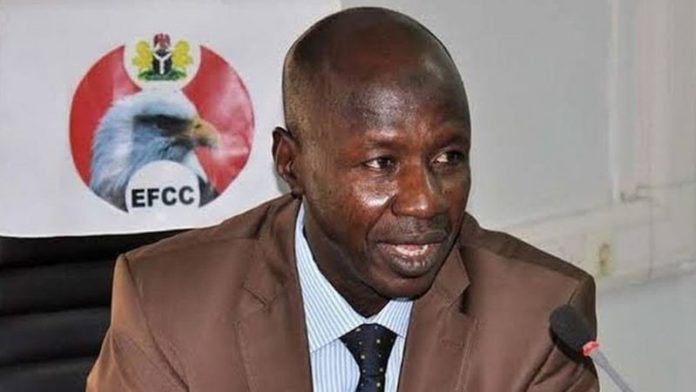
Witness in maina’s trial narrates how Magu allegedly denied receiving 222 properties handed over to EFCC

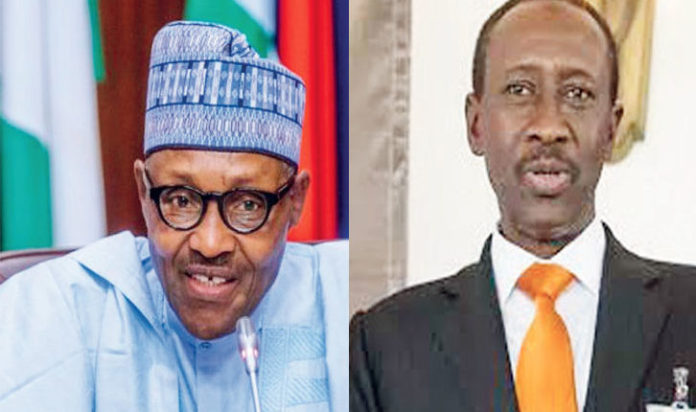
Magu, former acting chairman of the EFCC, was suspended in July 2020 following allegations of corruption levelled against him.

Ihuoma, a management consultant, whose firm, Crincad & Cari Nigeria Ltd, was contracted by the PRTT for consultancy service, told the Abuja federal high court on Thursday about monies and properties recovered through Maina.

“By January 2016, the attorney-general of the federation (AGF) and the national security adviser (NSA) met with Maina in Dubai, United Arab Emirate (UAE),” he said.

“After the meeting in Dubai, Maina gave the delegation intelligence report that led to the recovery of N1.3 trillion out of the N3 trillion promised to recover.

“The money was reported to the senate committee that investigated Maina’s reinstatement back to the civil service in 2017.

“Equally, the task team petitioned the senate on the need to revisit the 7th assembly joint committee that its report was quashed by the federal high court in view of the fact that the 222 choice property valued at N1.63 trillion that was handed over to the EFCC was being mismanaged.

“One of the properties in question located at No 42, Gana Street, Maitama, had been illegally acquired by a renowned lawyer while the property was still subject to litigation.”

He said the property valued at N6 billion in 2011 was sold to the lawyer in 2015 at N1 billion.

“We believe that the task team stood by her integrity and accountability, not minding the persecution by the EFCC before this honourable court,” he said.

MAGU SHARED PROPERTIES TO FRIENDS, ASSOCIATES’

Ihuoma alleged that when Magu appeared before the house of representatives committee that investigated the reinstatement of Maina, he denied that the EFCC was a member of PRTT and that properties recovered were not handed over to the commission.

The witness said he had petitioned the AGF through his company, informing him of the lies told by the former acting chairman of the EFCC.

“That led to Malami petitioning Mr President and demanding that EFCC should account for the 222-property valued at 1.63 trillion which eventually led to the setting up of Justice Ayo Salami-led Judicial commission of inquiry,” he said.

“Magu admitted before Salami that he shared and allocated most of these properties to most of his friends, associates, colleagues under some presidential directives but failed to make available to the commission the evidence of that presidential directives.”

Narrating further, Ihuoma stated that Maina gave an intelligence report to the Independent Corrupt Practices and Other Related Offences Commission (ICPC) of a plan to siphon N35 billion from the head of service pension office.

He said that led to the questioning of Winifred Oyo-Ita, former head of service, and five other management committee members, adding that the ICPC indicated readiness to prosecute the matter.

He also said in March 2013, the defendant gave intelligence to Ngozi Okonjo-Iweala, the then minister of finance, and the EFCC, leading to the mop-up of N15 billion from customs, immigration, prison pension office.

Ihuoma said despite that the running cost of the PRTT was not paid, Maina was the only member of the team that was sacked.

He added that Maina “deserves to be reinstated back as approved by the Federal Civil Service Commission in 2017” and should be returned to the civil service.

Okon Abang, the presiding judge, adjourned the matter to March 5 for the continuation of trial.

Maina is on trial for alleged money laundering to the tune of N2 billion.

(Midpointmall)

For 11 unbroken years, China retains world’s largest manufacturer position

Chinese factory; sectors do a quick reboun

By Wang Zheng, People’s Daily

China has maintained its pole position of the world’s largest manufacturer for 11 years in a row, with its value-added industrial output increasing from 23.5 trillion yuan (about $3.63 trillion) to 31.3 trillion yuan during the past five years, said Xiao Yaqing, minister of the Ministry of Industry and Information Technology (MIIT).

The country has achieved obvious progress in developing itself into a manufacturing power and a cyber power, and all major tasks have been completed as scheduled, Xiao noted.

Last year, the value-added industrial output of China reached 31.3 trillion yuan, accounting for nearly 30 percent of the global manufacturing output.

During the 13th Five-Year Plan period (2016-2020), the average growth rate of the value-added output from China’s high-tech manufacturing sector reached 10.4 percent, 4.9 percentage points higher than that of the overall industrial output. The value-added industrial output of information transmission and software and information technology service industries also soared from around 1.8 trillion yuan to 3.8 trillion yuan.

The country has made great strides in innovation capability, information infrastructure construction, digitalization-industrialization integration, and green and low-carbon industrial development.

From 2016 to 2019, the total R&D investment of enterprises above designated size went up by 27.7 percent. As of the end of 2020, household penetration of fixed broadband in China reached 96 percent, while the mobile broadband penetration rate stood at 108 percent.

As of the end of last year, digital design tools had been available in 73 percent of major enterprises in key industries of China, 11 percentage points higher from 2015. Besides, energy consumption per unit of added value for large-scale industrial enterprises dropped 16 percent in the past five years.

Traditional industries accelerated the progress of upgrading and transformation from 2016 to 2020. The country completed its goal of cutting 150 million tonnes of iron and steel production two years in advance, and has preliminarily finished the building of a green manufacturing system by setting up 2,121 green factories, 171 green industrial parks, and 189 green supply chain enterprises.

China’s emerging industries of strategic importance experienced rapid development, and new breakthroughs have been achieved in frontier areas.

The country maintained its position as the world’s largest producer and seller of new energy vehicles for six straight years. Last year, the value added of high-tech manufacturing and equipment manufacturing sectors accounted for 15.1 percent and 33.7 percent of that created by industries above designated size, making the two sectors a major force driving industrial restructuring.

The innovation capability of China has been significantly enhanced, with a batch of key technologies and products achieving major breakthroughs.

During the past five years, China established 17 national manufacturing innovation centers. The country’s aerospace equipment technology has been obviously increased, and its deep-sea engineering equipment and high-tech vessel technologies also experienced rapid development. China is one of the first-tier countries that hold the most number of patents in major AI areas, including facial recognition.

Besides, solid steps of 5G commercialization have been made in China. By the end of the last year, the country has opened 718,000 5G base stations that connected over 200 million 5G terminals. The average household dataflow under 5G mobile network was 50 percent higher than that under the 4G mobile network, and the unit price of 5G services has been reduced by 46 percent in the past two years.

Apart from building the world’s largest 5G network, China also established the largest optical and 4G networks of the globe during the past five years. Over 100 million households were connected to gigabit optical network. So far, 99.9 percent of incorporated villages have been covered by 4G and optical networks. Since 2016, the average price of fixed broadband and mobile data services has plunged by more than 95 percent.

Credit: Africachinapresscentre

The Law Officers for COVID-19 Enforcement.


The Law Officers for COVID-19 Enforcement.
 Daily Law Tips (Tip 746) by Onyekachi Umah, Esq., LL.M, ACIArb(UK)

Introduction: 

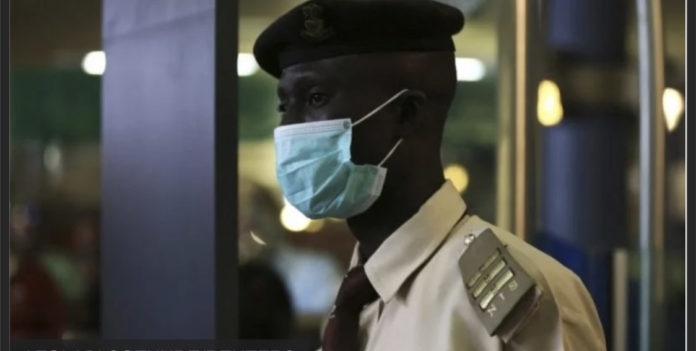
For no clear reasons, COVI-19 is not feared in Nigeria as it is feared in Europe and America. While governments in Nigeria strive to increase awareness and to prevent COVID-19, many Nigerians doubt the existence or deadliness of COVID-19.  Even with the surge in reported cases of COVID-19, many Nigerians argue that the reports are political and deceitful. To further ensure compliance with COVID-19 protocols, the Federal Government of Nigeria signed a new COVID-19 health regulation in January 2021. The regulation mentioned and empowered some specific law enforcement agencies and agents in Nigeria to enforce the COVID-19 regulations across Nigeria.

Law Enforcement Officers and the COVID-19:

Nigeria is a democratic state that operates on written laws. So, nothing can be an offence in Nigeria, unless it is clearly written in a state or federal law as an offence. Also, laws in Nigeria often mention the persons that can arrest, detain and prosecute offenders. President Buhari of Nigeria, signed into law the Coronavirus Disease (COVID-19) Health Protection Regulations 2021 on 26 January 2021. The said Regulations came into force immediately and operates in all parts of Nigeria.

By the Coronavirus Disease (COVID-19) Health Protection Regulations 2021, certain actions and inactions relating to COVID-19 protocols where criminalized. As such, specific punishments were created for them, with the maximum punishment being imprisonment for six (6) months or a fine of not more than Two Hundred Naira (N200.00) (that is less than $1). Relying on the fine contained in the Quarantine Act of 1926 in making the Coronavirus Disease (COVID-19) Health Protection Regulations 2021 has made a mess of the fine. The fine is too poor and the federal legislature should increase it ensure deterrence.

The Coronavirus Disease (COVID-19) Health Protection Regulations 2021, further selected and mentioned the law enforcement agencies and agents that can enforce the Regulations. The law enforcement or security agencies vested with the statutory power to investigate and prosecute any person in respect of any offence under the COVID-19 Regulations, are; Personnel of the Nigeria Police Force, the Nigeria Security and Civil Defence Corps, the Federal Road Safety Corps, the Nigeria Immigration Service, the Federal Airport Authority of Nigeria, and other relevant Local Government, State and Federal Government agencies.

Conclusion: 

Whether a person in Nigeria believes in the existence or nature of COVID-19 is immaterial, every person in Nigeria must obey and observe all COVID-19 health protocols. This includes, wearing of face mask, using of soap/hand sanitizers and keeping of healthy distances. Failure to adhere to any of the COVID-19 health protocols in the Coronavirus Disease (COVID-19) Health Protection Regulations 2021 is a criminal offence. And, the law enforcement officers mentioned above, have the right and power to arrest, investigate and prosecute such offenders.

My authorities, are:

  1. Sections 1, 2, 3, 4, 5, 6, 36, 318 and 319 of the Constitution of the Federal Republic of Nigeria, 1999.
  2. Sections 1, 2, 3, 4, 5, 7 and 8 of the Quarantine Act of 1926.
  3. Regulations 5, 6, 7, 8, 10, 15, 18, 24, 31, 32, 33, 34, 35, 36, 37, 38, 39, 40, 42 of the Coronavirus Disease [COVID-19] Health Protection Regulations 2021
  4. Onyekachi Umah, “Why the Poor Fine of N200.00 for Not Wearing Face Mask Can’t Change” (LearnNigerianLaws.com, 11 February 2021) <https://learnnigerianlaws.com/why-the-poor-fine-of-n200-00-for-not-wearing-face-mask-cant-change/> accessed 26 February 2021.
  5. Onyekachi Umah, “N200.00 is the Highest Fine for Not Wearing Face Mask.” (LearnNigerianLaws.com, 4 February 2021) <https://learnnigerianlaws.com/n200-00-is-the-highest-fine-for-not-wearing-face-mask/> accessed 10 February 2021.
  6. Onyekachi Umah, “Not Wearing a Face Mask Is Now A Crime” (LearnNigerianLaws.com, 29 January 2021) <https://learnnigerianlaws.com/not-wearing-a-face-mask-is-now-a-crime/> accessed 2 February 2021.
  7. Onyekachi Umah, “Failure To Wear Nose Mask Is Not An Offence In Nigeria.” (LearnNigerianLaws.com, 28 April 2020) <https://learnnigerianlaws.com/failure-to-wear-nose-mask-is-not-an-offence-in-nigeria-daily-law-tips-tip-557-by-onyekachi-umah-esq-llm-aciarbuk/> accessed 28 January 2021.
  8. Onyekachi Umah, “Nigeria Has No Law Against Public Gathering During COVID-19 Era.” (LearnNigerianLaws.com, 14 April 2020) <https://learnnigerianlaws.com/nigeria-has-no-law-against-public-gathering-during-covid-19-era-daily-law-tips-tip-547-by-onyekachi-umah-esq-llm-aciarbuk/> accessed 28 January 2021.
  9. Onyekachi Umah, “Is There a Quarantine Act Made in 2004, After That of 1926 in Nigeria?” (LearnNigerianLaws.com, 5 May 2020) <https://learnnigerianlaws.com/is-there-a-quarantine-act-made-in-2004-after-that-of-1926-in-nigeria-daily-law-tips-tip-562-by-onyekachi-umah-esq-llm-aciarbuk/> accessed 28 January 2021.
  10. Onyekachi Umah, “Court That Can Try Cases On Quarantine And Lockdown In Nigeria.” (LearnNigerianLaws.com, 23 April 2020) <https://learnnigerianlaws.com/court-that-can-try-cases-on-quarantine-and-lockdown-in-nigeria-daily-law-tips-tip-554-by-onyekachi-umah-esq-llm-aciarbuk-2/> accessed 28 January 2021.
  11. Onyekachi Umah, “Punishment For Violation Of The COVID-19 Regulations Or The Quarantine Act.” (LearnNigerianLaws.com, 6 April 2020) <https://learnnigerianlaws.com/punishment-for-violation-of-the-covid-19-regulations-or-the-quarantine-act-daily-law-tips-tip-541-by-onyekachi-umah-esq-llm-aciarbuk/> accessed 28 January 2021
  12. Onyekachi Umah, “Illegality Of Covid-19 Regulations Of 2020 And The Toothless Quarantine Act Of 1926” (LearnNigerianLaws.com, 1 April 2020) <https://learnnigerianlaws.com/illegality-of-covid-19-regulations-of-2020-and-the-toothless-quarantine-act-of-1926-daily-law-tips-tip-538-by-onyekachi-umah-esq-llm-aciarbuk/> accessed 28 January 2021.
  13. Onyekachi Umah, “How To Legally Declare State Of Emergency Over Covid-19 In Nigeria Or Any State.” (LearnNigerianLaws.com, 15 May 2020) <https://learnnigerianlaws.com/how-to-legally-declare-state-of-emergency-over-covid-19-in-nigeria-or-any-state-daily-law-tips-tip-570-by-onyekachi-umah-esq-llm-aciarbuk/> accessed 28 January 2021
  14. Onyekachi Umah, “Can “NCDC” Make Regulations For Nigeria?” (LearnNigerianLaws.com, 29 April 2020) <https://learnnigerianlaws.com/can-ncdc-make-regulations-for-nigeria-daily-law-tips-tip-558-by-onyekachi-umah-esq-llm-aciarbuk/> accessed 28 January 2021.
  15. Onyekachi Umah, “Management and Disposal of COVID-19 Corpses in Nigeria.” (LearnNigerianLaws.com, 27 April 2020) <https://learnnigerianlaws.com/management-and-disposal-of-covid-19-corpses-in-nigeria-daily-law-tips-tip-556-by-onyekachi-umah-esq-llm-aciarbuk/> access 28 January 2021.
  16. Onyekachi Umah, “COVID-19 and Landlords: Can Government Force Landlords Not To Eject Tenants?” (LearnNigerianLaws.com, 15 April 2020) <https://learnnigerianlaws.com/covid-19-and-landlords-can-government-force-landlords-not-to-eject-tenants-daily-law-tips-tip-548-by-onyekachi-umah-esq-llm-aciarbuk/> accessed 28 January 2021.
  17. Onyekachi Umah, “Punishment For Price Increment During COVID-19 Lockdown In Lagos State.” (LearnNigerianLaws.com, 13 April 2020) <https://learnnigerianlaws.com/punishment-for-price-increment-during-covid-19-lockdown-in-lagos-state-daily-law-tips-tip-546-by-onyekachi-umah-esq-llm-aciarbuk/> accessed 28 January 2021.
  18. Onyekachi Umah, “Persons That Must Provide Medical Equipment For COVID-19.” (LarnNigerianLaws.com, 10 April 2020) <https://learnnigerianlaws.com/persons-that-must-provide-medical-equipment-for-covid-19-daily-law-tips-tip-545-by-onyekachi-umah-esq-llm-aciarbuk/> accessed 28 January 2021.
  19. Onyekachi Umah, “Can An Offender Be Convicted Under The Lagos State Infectious Diseases Regulations Or Other States’ Regulations?” (LearnNigerianLaws.com, 9 April 2020) <https://learnnigerianlaws.com/can-an-offender-be-convicted-under-the-lagos-state-infectious-diseases-regulations-or-other-states-regulations-daily-law-tips-tip-544-by-onyekachi-umah-esq-llm-aciarbuk/> accessed 28 January 2021.
  20. Onyekachi Umah, “The COVID-19 Laws In States Or State Of Emergency: Best Tool In Fighting Coronavirus?” (LearnNigerianLaws.com, 8 April 2020) <https://learnnigerianlaws.com/the-covid-19-laws-in-states-or-state-of-emergency-best-tool-in-fighting-coronavirus-daily-law-tips-tip-543-by-onyekachi-umah-esq-llm-aciarbuk/> accessed 28 January 2021.
  21. Onyekachi Umah, “House Rent And COVID-19: Can Landlords Evict Tenants?” (LearnNigerianLaws.com, 7 April 2020) <https://learnnigerianlaws.com/house-rent-and-covid-19-can-landlords-evict-tenants-daily-law-tips-tip-542-by-onyekachi-umah-esq-llm-aciarbuk/> accessed 28 January 2021.
  22. Onyekachi Umah, “Shooting Of Isolation Centers’ Escapees Is Unlawful And Punishable.” (LearnNigerianLaws.com, 3 April 2020) <https://learnnigerianlaws.com/shooting-of-isolation-centers-escapees-is-unlawful-and-punishable-daily-law-tips-tip-540-by-onyekachi-umah-esq-llm-aciarbuk/> accessed 28 January 2021.
  23. Pic credit: bbc.com

Sabi Law Projects:

#SabiLaw

#DailyLawTips

#SabiBusinessLaw

#SabiElectionLaws

#SabiHumanRights

#SabiLawOnBeatFm

#SabiLawLectureSeries

#CriminalJusticeMonday

#SabiLawVideoChallenge

Speak with the writer, ask questions or make inquiries on this topic or any other via [email protected], [email protected] or +2348037665878 (whatsapp).

To receive free Daily Law Tips, join our free WhatsApp group via https://chat.whatsapp.com/GAEPC3mH1ik0Ghq0yvzbvv or Telegram group, via the below link: https://t.me/LearnNigerianLaws

To keep up to date on all our free legal awareness projects of Sabi Law Foundation, follow us via

Facebook Page:@LearnNigerianLaws, Instagram: @LearnNigerianLaws, Twitter: @LearnNigeriaLaw and YouTube: Learn Nigerian Laws

Please share this publication for free till it gets to those that need it most. Save a Nigerian today! NOTE: Sharing, modifying or publishing this publication without giving credit to the author or Sabi Law Foundation is a criminal breach of copyright and will be prosecuted. This publication is the writer’s view not a legal advice and does not create any form of relationship. You may reach the writer for more information.

This publication is powered by www.LearnNigerianLaws.com {A Free Law Awareness Program of Sabi Law Foundation, supported by the law firm of Bezaleel Chambers International (BCI).} Sabi Law Foundation is a Not-For-Profit and Non-Governmental Legal Awareness Organization based in Nigeria.

Any Law Sacking Local Government Chairmen Is Illegal.

Any Law Sacking Local Government Chairmen Is Illegal; The Theory of “Ekere Oru Eke”. Daily Law Tips (Tip 745) by Onyekachi Umah, Esq., LL.M, ACIArb(UK)

Introduction: 

Politics is the collection of processes and activities for the acquisition, consolidation and retention of power. Simply, politics leads to powers. In Nigeria and other countries with weak institutions, politics has nothing to do with authority, governance and the morals of democracy. No wonder the popular saying in Nigeria, “… it is better to be in power than in government”.  Hence, there are really no just or unjust means for the acquisition, consolidation and retention of power in Nigerian politics.

This ugly fact is seen when legislatures and executives, connive to enact laws that are draconic, demonic, anti-national, anti-people and rather selfish. For example, imagine where democratically elected members of the legislature and executive, conspire to enact laws that will permit the unconstitutional removal of democratically elected members of local government authorities. This work analyses the Igbo theory of “Ekere Oru Eke” vis-a-vis the illegality of state laws that permit the removal of elected members of local government authorities in Nigeria and the position of the Supreme Court of Nigeria.

The Theory of “Ekere Oru Eke”, Illegal Laws and the Constitution of Nigeria: 

A popular saying in Igbo communities, says; “Ekere Oru Eke” (there is division of labour) hammers on the separation of power and the rule of law. To avoid confusion and abuse of power, the constitution of Nigeria clearly created three (3) arms of government (the Legislature, the Executive and the Judiciary). The Legislature is to listen to the people of Nigeria and make laws that will promote Nigeria and Nigerians. The Executive is to implement the laws of the people made by the legislatures. The Judiciary is to interpret the laws of the people made by the legislatures. Also, the constitution of Nigeria went further to create three levels of governments (the Federal government, State government and the Local government) with clear functions and powers because “Ekere Oru Eke” (there is division of labour).

By the constitution of Nigeria, legislatures and executive arms of governments (in all the 3 levels of government) are to be filled and manned by democratically elected Nigerians. And, such elected Nigerians are not to be removed from office, except in accordance with the constitution (by impeachment and recall). So that, any removal or attempt to remove elected persons, contrary to the provisions of the constitution of Nigeria, is unlawful, illegal, invalid and unconstitutional.

To ensure that the impact of government is felt around all parts of Nigeria, the constitution of Nigeria created 744 local government authorities across Nigeria. That is the government that sits closest to families in Nigeria, with families being the smallest institutions in Nigeria. However, the constitution of Nigeria gave some powers to the states’ governments (the states’ legislatures) to make laws that empower/allow the operations of local governments in states across Nigeria.

Some states’ governments have sworn to frustrate their local government authorities, squander local government resources and to control elected members of the local governments. To achieve such unconstitutionalities, state executives and state legislatures enact obnoxious state laws that allow state executives (especially, the Governor) to dissolve local government authorities, sack local government executives and to appoint new persons as local government executives. Such state laws are often the basis for the notorious crippling of the local governments.

By section 7 of the Constitution of Nigeria, all members of a local government council must be democratically elected. This clear provision means that there cannot be any appointment of members of a local government council (including chairmen, vice chairmen, councilors and other elected members). To this, the Supreme Court of Nigeria, has added its voice to decry the illegality of laws that dismiss local government authorities or that sack local government executives. Below are the golden words of the apex court of Nigeria;

“Section 7(1) of the Constitution states that: “7(1) The system of Local Government by democratically elected Local Government Councils is under this Constitution guaranteed; and accordingly the Government of every State shall, subject to Section 8 of this Constitution ensure their existence under a law which provides for the establishment structure, composition, finance and functions of such councils.” On a careful reading, of the above it becomes clear that it is the duty of the Governor to ensure that the system of Local Government continues unhindered. Dissolving Local Government Councils and replacing them with Caretaker Committee amounts to the Governor acting on his whims and fancies, unknown to our laws, clearly illegal. It is the duty of the Governor to ensure their existence rather than being responsible for destroying them.” Per OLABODE RHODES-VIVOUR ,JSCÂ (Pp. 22-23, paras. E-C) in the case of HON. CHIGOZIE EZE & ORS v. GOVERNOR OF ABIA STATE & ORS (2014) LPELR-23276(SC).

The Supreme Court of Nigeria is not alone on this, as the second highest court (the Court of Appeal) has this to say; “Indeed, the powers conferred on the Government of every State by S.7(1) of the 1999 Constitution to ensure the existence under a law which provides for the establishment, structure, composition, finance and functions of a local government can only be executed within the confines of the provisions of the Constitution. Thus, the power of the State House of Assembly under S.4(7) of the Constitution cannot extend to truncate the tenure of a democratically elected local government council. The Constitution only recognizes elected members of the local government council. It is ultra vires the Constitution for any State Legislature to make a law which has the effect of dissolving a local government council made up of elected chairmen and councilors and replacing it with members of a Caretaker Committee selected by the State Government. As said earlier the law under scrutiny affected only tenure and is thus not illegal even if retroactive. It is the subsequent action of the State Governor in dissolving democratically elected local government councils and replacing them with undemocratic ones that is outside the contemplation of S.7 of the Constitution which states specifically that-

“The system of local government by democratically elected local government councils is under this Constitution guaranteed” The 1999 Constitution does not recognize Transition or Caretaker Committees for the local governments and it is ultra vires any State Governor to appoint Caretaker Committee to replace elected Local Government office holders. After the expiration of the tenure of office, it was the duty of the State Governor to arrange speedily for fresh local government elections pursuant to S.197(1)(b). Third Schedule Part II (B) paragraph 4 of the 1999 Constitution. The Government cannot set up administration for the local government unrecognized by the Constitution except when there is a clear State of Emergency calling for extraordinary action.

The Constitution provides for the democratic election of the three tiers of government. Under the Federal System of Government, the States are fully autonomous of the Federal Government within the provisions of the Constitution Section 7(1) provides that the State Government exercises democratic but not autocratic control of the local governments within its territorial jurisdiction. Yes, the State Government has the power to regulate the tenure of office of the local government elected officials, but in a democracy, the State Government has no legal or moral right to pass a retroactive legislation to shorten the lifespan of a democratically elected council in order to replace it with non elected members. In this particular case, the Governor dissolved the local government council even before the expiration of the shortened two year tenure. It is a slap on the face of the electorate. Any attempt to short circuit democracy for whatever reason by any tier of government will be vehemently resisted by the Courts.”   Per OGUNWUMIJU ,J.C.A (Pp. 35-38 paras. E) in the case of ETIM A. AKPAN & ORS v. HON PETER JOHN UMAH & ORS (2002) LPELR-7099(CA).

Conclusion:

Ahead of 2020 and the election of President Biden of United States of America, many people had argued that the black man is naturally selfish and power drunk. However, the “we die in power syndrome” which was assumed to affect only African leaders, seem to have shown its color in the White House in the portraits of former President Trump. Hence, it is obvious that man (men and women of all colours, race and location) is naturally power dunk, selfish and pretentious, and only gets saved by personal discipline, rule of law (public discipline) and strong institutions.

This explains why democratically elected state legislatures and executives will spend months planning and executing the enactment of illegal laws, just to remove members of another tier of government (the local government). And, as usual, most politicians are eager to be unlawfully appointed into the local government authority via the illegal state laws. The shameful acts of the states’ governments are contrary to the sprits of “Ekere Oru Eke”, since they act over and beyond their powers.

Above all, the state laws that remove elected officers or that sack local government authorities are invalid, unlawful, unenforceable, unconstitutional and undemocratic.  All actors (including Governors that have immunities) in enactment of such unlawful laws and sacking of elected officers should be investigated and prosecuted. The immunity of a governor is not forever and criminal cases can be filed at any time, it cannot expire. No one is above the constitution of Nigeria.

My authorities, are:

  1. Sections 1, 2, 3, 4, 5, 6, 7, 318 and 319 as well as Schedule 4 to the Constitution of the Federal Republic of Nigeria, 1999.
  2. Judgment of the Supreme Court of Nigeria (on the unconstitutionality of dissolution of local government councils) in the case of HON. CHIGOZIE EZE & ORS v. GOVERNOR OF ABIA STATE & ORS (2010) LPELR-4133(CA)
  3. Judgment of the Supreme Court of Nigeria (on the definition of “Government”) in the case of THE GOVERNOR OF KWARA STATE & ORS v. JEROME OLADELE DADA (2011) LPELR-8132(SC)
  4. Judgment of the Court of Appeal (on whether the State Government has the power to dissolve a Local Government Council) in the case of ETIM A. AKPAN & ORS v. HON PETER JOHN UMAH & ORS (2002) LPELR-7099(CA)
  5. Onyekachi Umah, “Constitutional Powers and Functions Are Not Enough Powers for Any Local Government Council In Nigeria to Act And Exercise” (LearnNigerianLaws.com, 22 May 2018) <https://learnnigerianlaws.com/daily-law-tips-by-onyekachi-umah-esq-tip-106-constitutional-powers-and-functions-are-not-enough-powers-for-any-local-government-council-in-nigeria-to-act-and-exercise/> accessed 12 February 2021.
  6. Onyekachi Umah, “Radio, Television And Communication Mast License Fee By Local Governments In Nigeria” (LearnNigerianLaws.com, 5 March 2020) <https://learnnigerianlaws.com/radio-television-and-communication-mast-license-fee-by-local-governments-in-nigeria-daily-law-tips-tip-519-by-onyekachi-umah-esq-llm-aciarbuk/> accessed 12 February 2021
  7. Onyekachi Umah, “List and Details of Approved Local Government Levies, Rates, Fees and Charges for Edo State” (LearnNigerianLaws.com, 27 April 2019) <https://learnnigerianlaws.com/list-and-details-of-approved-local-government-levies-rates-fees-and-charges-for-edo-state-daily-law-tips-tip-423-by-onyekachi-umah-esq-llm-aciarb-uk-2/> accessed 12 February 2021.
  8. “Free Copy of “Edo State Local Governments Uniform and Harmonised Levies, Rates, Fees and Charges Law, 2017” (LearnNigerianLaws.com, 25 September 2019) <https://learnnigerianlaws.com/free-copy-of-edo-state-local-governments-uniform-and-harmonised-levies-rates-fees-ad-charges-law-2017/> accessed 12 February 2021.
  9. Onyekachi Umah, “State Governments Cannot Collect Tenement Rates In Nigeria” (LearnNigerianLaws.com, 6 March 2019) <https://learnnigerianlaws.com/daily-law-tips-by-onyekachi-umah-esq-tip-282-state-governments-cannot-collect-tenement-rates-in-nigeria/> accessed 12 February 2021
  10. Onyekachi Umah, “No Person/Firm Can Collect Tax/Levy On Behalf Of Any Government In Any Part Nigeria” (LearnNigerianLaws.com, 2 March 2019) <https://learnnigerianlaws.com/daily-law-tips-by-onyekachi-umah-esq-tip-279-no-person-firm-can-collect-tax-levy-on-behalf-of-any-government-in-any-part-nigeria/> accessed 12 February 2021.
  11. Onyekachi Umah, “Latest Developments On Liquor Licenses In Karu LGA, Nasarawa State” (LearnNigerianLaws.com, 28 February 2020) <https://learnnigerianlaws.com/latest-developments-on-liquor-licenses-in-karu-lga-nasarawa-state-daily-law-tips-tip-515-by-onyekachi-umah-esq-llm-aciarbuk/> accessed 12 February 2021.
  12. Onyekachi Umah, “Any Appointment of Local Government Chairmen Is Unlawful” (LearnNigerianLaws.com, 12 February 2021) <https://learnnigerianlaws.com/any-appointment-of-local-government-chairmen-is-unlawful/> accessed 25 February 2021.

Sabi Law Projects:

#SabiLaw

#DailyLawTips

#SabiBusinessLaw

#SabiElectionLaws

#SabiHumanRights

#SabiLawOnBeatFm

#SabiLawLectureSeries

#CriminalJusticeMonday

#SabiLawVideoChallenge

Speak with the writer, ask questions or make inquiries on this topic or any other via [email protected], [email protected] or +2348037665878 (whatsapp).

To receive free Daily Law Tips, join our free WhatsApp group via https://chat.whatsapp.com/GAEPC3mH1ik0Ghq0yvzbvv or Telegram group, via the below link: https://t.me/LearnNigerianLaws

To keep up to date on all our free legal awareness projects of Sabi Law Foundation, follow us via

Facebook Page:@LearnNigerianLaws, Instagram: @LearnNigerianLaws, Twitter: @LearnNigeriaLaw and YouTube: Learn Nigerian Laws

Please share this publication for free till it gets to those that need it most. Save a Nigerian today! NOTE: Sharing, modifying or publishing this publication without giving credit to the author or Sabi Law Foundation is a criminal breach of copyright and will be prosecuted. This publication is the writer’s view not a legal advice and does not create any form of relationship. You may reach the writer for more information.

This publication is powered by www.LearnNigerianLaws.com {A Free Law Awareness Program of Sabi Law Foundation, supported by the law firm of Bezaleel Chambers International (BCI).} Sabi Law Foundation is a Not-For-Profit and Non-Governmental Legal Awareness Organization based in Nigeria.

Can Money Spent on Repairs be Recovered from Rent?

Can Money Spent on Repairs be Recovered from Rent?  Daily Law Tips (Tip 744) by Onyekachi Umah, Esq., LL.M, ACIArb(UK)

Introduction:

Often, tenants are forced to repair the property they occupy, instead of waiting for their nonchalant landlords. Some tenants also seek to recover the monies expended on such repairs from their landlords. Most times, landlords refuse to refund tenants for the repairs done by tenants, even where the consent of the landlord was obtained before the repairs. This works answers the question; “Can Money Spent on Repairs be Recovered from Rent?”

Landlords, Repairs and Tenants: 

Repairs and the person to conduct them or pay for such repairs are issues that should be contained in a good tenancy agreement. Where there is no agreement or good agreement, it is taken that structural repairs are for landlords while repairs on ordinary wear and tear are for tenants. Above all, a tenant can perform any repairs on behalf of a landlord and be refunded by the landlord, where there is a written permission from the landlord. Oral consent of a landlord is not sufficient.

On the issue at hand; whether money spent on repairs be recovered from rent by a tenant, below are the words of the Court of Appeal on the issue.  “In Property Holding Co. Ltd. v. Clarke (1945) 1 All ER 165 at 173, Evershed, L. J, approved a passage in Holdsworth History of England – ‘In modern law rent is not conceived of as a thing, but rather as a payment, which the tenant is bound by his contract to make to his landlord?. From all indications, rent is in a class of its own, and it also stands very tall because the agreement to pay the rent outshines any other considerations. In other words, a tenant is not at liberty to engage in a rent strike because its covenant to pay rent is independent of the landlord’s obligation to effect repairs – see Oke V. Salako (1972) 11 CCHCJ 88, wherein Kassim, J., held – “- – A tenant’s covenant to pay rent is independent of the landlord’s covenant to repair the premises; the tenant is not discharged from his obligation to pay rent merely because his landlord is unwilling to fulfill his obligations.” Per AMINA ADAMU AUGIE ,J.C.A ( Pp. 22-26, paras. D-A ). BOCAS NIGERIA LTD v. WEMABOD ESTATES LTD (2016) LPELR-40193(CA)

Conclusion: 

Rent is a specific benefit of a landlord from a tenant for renting out a property. An agreement to pay rent is not subject to an agreement to make repairs by a landlord. The rent is to be paid with or without repairs by a landlord. Rent is independent duty of a landlord to repair. A tenant is to pay for rent, whether or not repairs are made by the landlord. So, a tenant cannot deduct or recover any cost of repairs from the rent to be paid to a landlord. Rather, a tenant can bring an action for recovery of cost of repairs against a landlord.

On the other hand, things will be different where a landlord and a tenant agrees in writing that rent will be short of cost of repairs or that rent will not be paid where there are no repairs by the landlord. There is need for lawyers to start drafting tenancy agreements with a mind to avert common tenancy difficulties. My work on a hybrid tenancy agreement is instructive and accessible via; https://learnnigerianlaws.com/the-making-of-a-hybrid-tenancy-lease-agreement-a-guide-for-lawyers-and-landlords-in-nigeria/

My authorities, are:

  1. Sections 1, 2 and 15 of the Recovery of Premises Act 1945, Laws of the Federation of Nigeria (ABUJA) and other similar tenancy laws across the states in Nigeria.
  2. The judgment of the Court of Appeal in the case of BOCAS NIGERIA LTD v. WEMABOD ESTATES LTD (2016) LPELR-40193(CA)
  3. Onyekachi Umah, “The Condition For A Landlord To Refund His Tenant For Repairs Made On A Rented Apartment In Nigeria” (LearnNigerianLaws.com, 2 July 2018) <https://learnnigerianlaws.com/daily-law-tips-by-onyekachi-umah-esq-tip-132-the-condition-for-a-landlord-to-refund-his-tenant-for-repairs-made-on-a-rented-apartment-in-nigeria/> accessed 24 February 2021
  4. Onyekachi Umah, “Can a Landlord Increase Rent During Economic Hardship?” (LearnNigerianLaws.com, 8 September 2020) <https://learnnigerianlaws.com/can-a-landlord-increase-rent-during-economic-hardship/> accessed 24 February 2021.
  5. Onyekachi Umah, “Should Landlord Stop Rent-Owing Tenants from Moving Out?” (LearnNigerianLaws.com, 26 August 2020) <https://learnnigerianlaws.com/should-landlord-stop-rent-owing-tenants-from-moving-out/> accessed 24 February 2021.
  6. Onyekachi Umah,”Should A Landlord Remove Roof Of A Tenant For Failure To Pay Rent/Pack Out?” (LearnNigerianLaws.com, 3 August 2020) <https://learnnigerianlaws.com/should-a-landlord-remove-roof-of-a-tenant-for-failure-to-pay-rent-pack-out-daily-law-tips-tip-624-by-onyekachi-umah-esq-ll-m-aciarbuk/> accessed 24 February 2021
  7. Onyekachi Umah, “Should A Landlord Lock Gates/Doors Of A Tenant For Failure To Pay Rent/Pack Out?” (LearnNigerianLaws.com, 29 July 2020) <https://learnnigerianlaws.com/should-a-landlord-lock-gates-doors-of-a-tenant-for-failure-to-pay-rent-pack-out-daily-law-tips-tip-620-by-onyekachi-umah-esq-ll-m-aciarbuk/> accessed 24 February 2021
  8. Onyekachi Umah, “Should A Landlord Cut-Off Tenant From Water/Electricity Supply For Failure To Pay Rent/Pack Out?” (LearnNigerianLaws.com, 17 July 2020) <https://learnnigerianlaws.com/should-a-landlord-cut-off-tenant-from-water-electricity-supply-for-failure-to-pay-rent-pack-out-daily-law-tips-tip-612-by-onyekachi-umah-esq-ll-m-aciarbuk/> accessed 21 February 2021.
  9. Onyekachi Umah, “Can A Landlord Increase Rent Without Consent Of His Tenant?” (LearnNigerianLaws.com, 9 June 2020) <https://learnnigerianlaws.com/can-a-landlord-increase-rent-without-consent-of-his-tenant-daily-law-tips-tip-585-by-onyekachi-umah-esq-llm-aciarbuk/> accessed 24 February 2021
  10. Onyekachi Umah, “House Rent And Covid-19: Can Landlords Evict Tenants?” (LearnNigerianLaws.com, 7 April 2020) <https://learnnigerianlaws.com/house-rent-and-covid-19-can-landlords-evict-tenants-daily-law-tips-tip-542-by-onyekachi-umah-esq-llm-aciarbuk/> accessed 24 February 2021
  11. Onyekachi Umah, “How To Legally Make Landlord Pay Back Or Deduct From Rent, Money Spent On His Property By Tenant.” (LearnNigerianLaws.com, 9 November 2019) <https://learnnigerianlaws.com/how-to-legally-make-landlord-pay-back-or-deduct-from-rent-money-spent-on-his-property-by-tenant-daily-law-tips-tip-454-by-onyekachi-umah-esq-llm-aciarb-uk/> accessed 24 February 2021
  12. Onyekachi Umah, “Landlords Are Entitled To Rent Sum Even Where Notices To Quit Are Served On Tenants” (LearnNigerianLaws.com, 23 October 2018) <https://learnnigerianlaws.com/daily-law-tips-by-onyekachi-umah-esq-tip-211-landlords-are-entitled-to-rent-sum-even-where-notices-to-quit-are-served-on-tenants/> accessed 24 February 2021.
  13. Onyekachi Umah, “Punishments For Landlords and Tenants In Nigeria” (LearnNigerianLaws.com, 1 February 2021) <https://learnnigerianlaws.com/punishments-for-landlords-and-tenants-in-nigeria/> accessed 24 February 2021
  14. Onyekachi Umah, “Effect Of A Notice To Quit In Nigeria.” (LearnNigerianLaws.com, 3 August 2018) <https://learnnigerianlaws.com/daily-law-tips-by-onyekachi-umah-esq-tip-156-effect-of-a-notice-to-quit-in-nigeria/> accessed 19 January 2021.
  15. Onyekachi Umah, “The Making of a Hybrid Tenancy/Lease Agreement; a Guide for Lawyers and Landlords in Nigeria.” (LearnNigerianLaws.com, 6 July 2019) <https://learnnigerianlaws.com/the-making-of-a-hybrid-tenancy-lease-agreement-a-guide-for-lawyers-and-landlords-in-nigeria/> accessed 19 January 2021.
  16. Onyekachi Umah, “Estate Surveyors and Valuers Cannot Prepare Tenancy/Land Documents” (LearnNigerianLaws.com, 30 November 2020) <https://learnnigerianlaws.com/estate-surveyors-and-valuers-cannot-prepare-tenancy-land-documents/> accessed 19 January 2021.
  17. Onyekachi Umah, “After A Property Occupied By Tenants Is Sold, Who Should Such Tenants Hold Responsible?” (LearnNigerianLaws.com, 16 July 2018) <https://learnnigerianlaws.com/daily-law-tips-by-onyekachi-umah-esq-tip-142-after-a-property-occupied-by-tenants-is-sold-who-should-such-tenants-hold-responsibile/> accessed 19 January 2021
  18. Onyekachi Umah, “Rights of Tenants and Landlords in Nigeria” (LearnNigerianLaws.com, 2 September 2018) <https://learnnigerianlaws.com/rights-of-landlords-and-tenants-in-nigeria/> accessed 19 January 2021.
  19. Onyekachi Umah, “How To Prove Payment of Rent and Who Must Prove It.” (LearnNigerianLaws.com, 1 October 2020) <https://learnnigerianlaws.com/how-to-prove-payment-of-rent-and-who-must-prove-it/> accessed 19 January 2021.
  20. Onyekachi Umah, “Why Tenant Should Accept Letters & Notices From Landlord” (LearnNigerianLaws.com, 20 January 2021) <https://learnnigerianlaws.com/why-tenant-should-accept-letters-notices-from-landlord/> accessed 31 January 2021.
  21. Onyekachi Umah, “Rights of a Tenant In Nigeria.” (LearnNigerianLaws.com, 11 March 2016) <https://learnnigerianlaws.com/rights-of-a-tenant/> accessed 19 January 2021.
  22. Onyekachi Umah, “Rights of a Landlord In Nigeria” (LearnNigerianLaws.com, 11 March 2016) <https://learnnigerianlaws.com/rights-of-a-landlord/> accessed 19 January 2021.

Sabi Law Projects:

#SabiLaw

#DailyLawTips

#SabiBusinessLaw

#SabiElectionLaws

#SabiHumanRights

#SabiLawOnBeatFm

#SabiLawLectureSeries

#CriminalJusticeMonday

#SabiLawVideoChallenge

Speak with the writer, ask questions or make inquiries on this topic or any other via [email protected], [email protected] or +2348037665878 (whatsapp).

To receive free Daily Law Tips, join our free WhatsApp group via https://chat.whatsapp.com/GAEPC3mH1ik0Ghq0yvzbvv or Telegram group, via the below link: https://t.me/LearnNigerianLaws

To keep up to date on all our free legal awareness projects of Sabi Law Foundation, follow us via

Facebook Page:@LearnNigerianLaws, Instagram: @LearnNigerianLaws, Twitter: @LearnNigeriaLaw and YouTube: Learn Nigerian Laws

Please share this publication for free till it gets to those that need it most. Save a Nigerian today! NOTE: Sharing, modifying or publishing this publication without giving credit to the author or Sabi Law Foundation is a criminal breach of copyright and will be prosecuted. This publication is the writer’s view not a legal advice and does not create any form of relationship. You may reach the writer for more information.

This publication is powered by www.LearnNigerianLaws.com {A Free Law Awareness Program of Sabi Law Foundation, supported by the law firm of Bezaleel Chambers International (BCI).} Sabi Law Foundation is a Not-For-Profit and Non-Governmental Legal Awareness Organization based in Nigeria.

Court rules in favour of female inheritance of property in A’Ibom community

The ancient traditional practice in Etinan local government area of Akwa Ibom state which denied female children the right of inheritance to their father’s properties have finally been nullified.

A State High Court sitting in Etinan presided by Justice Idiong quashed the practice on Wednesday while delivering a judgment in a suit brought before the Court, by eight children of late Obong Patrick Joseph Noah of Edem Ekpat in Etinan council area.

They had filed the suit against their aunt, Mrs. Gertrude Ekanem to stop her from inheriting the landed property of her sister, late Immaculata Noah, who died and left behind the property without a husband or a child.

The case with the suit number HET/3A/2019 between Mr. Michael Patrick Noah and seven others and Mrs. Gertrude Ekanem, originated from the Etinan District Court, whose judgment the appellants appealed to the Chief Magistrate Court and the High Court.

In their evidence, the appellants contended that their aunt cannot inherit her sister’s property located at number 24 Iman Street, Etinan, because she is a woman and had also been married out of the family.

In his judgment, Justice Pius Idiong described such practice as anachronistic, primitive and unconscionable, which should not exist in the 21st Century society.
The Court held that any custom that denies a woman an inheritance on the ground of her sex, is not only unfair, but runs contrary to the fundamental objective of the 1999 Constitution of the Federal Republic of Nigeria.

Justice Idiong argued that although the Courts are enjoined to apply, administer and give effects to the custom and tradition of the people of its area of jurisdiction, the Court does not have to apply customs, which are unreasonable, discriminatory and an affront to the law.

He further held that the custom of the people of Edem Ekpat in particular and Etinan Local Government Area in general, denying a woman the right to inherit intestate property of her parents or siblings, where the deceased died without a male child, debases such a woman and contravenes section 42 of the 1999 constitution.

The Judge also disagreed with the Village Head of Edem Ekpat, Chief Emmanuel Okokon Eboh, who had testified as a witness that when a woman dies in Edem Ekpat without a child or husband, her property reverts to her family and not her sister, who has been married out to another family.

Justice Idiong saluted the trial District Court in Etinan for refusing to uphold such offensive customs and the appellate Chief Magistrate Court, for upholding the decision of the lower Court.

The higher Court declared that the native laws, discriminating against women, whether married or not, are nullity and unenforceable throughout Etinan Local Government Area.

Justice Idiong dismissed the appeal with cost awarded against the eight siblings, including two married sisters, who joined their brothers to deny their married aunt the right to inherit the landed property of her only sister.

TIPS