Government says the programme will tackle poverty and social problems, but critics argue the funds could transform the lives of thousands of vulnerable children and unemployed youths in a state grappling with deep economic hardship.
The Kano State Government’s decision to commit ₦1.5 billion to a mass wedding programme for 1,500 couples has ignited a fierce debate over public spending priorities, with critics arguing the funds could have a far greater impact if invested in education, job creation and poverty alleviation.
The controversy erupted after the Kano State Hisbah Board announced that preparations were in full swing for the initiative, which will provide financial and material support to 1,500 couples as part of Governor Abba Kabir Yusuf’s campaign promises.
Under the scheme, each groom is expected to receive ₦100,000 to cover dowry expenses, while every bride will be given ₦100,000 in empowerment support to start a small business. The government will also provide furniture, beds, mattresses and food items, bringing the estimated expenditure to about ₦1 million per couple.
Hisbah Commander-General Sheikh Aminu Daurawa said applicants are undergoing medical screening, including HIV, hepatitis B and genotype tests, while authorities are verifying that prospective husbands have a source of income and accommodation before approval.
“The government will spend ₦1 million on each couple, totalling ₦1.5 billion,” Daurawa said, adding that more than 5,000 people applied for the programme, with 3,000 beneficiaries ultimately selected as 1,500 couples.
Officials say the initiative is designed to strengthen families and address broader social challenges, including poverty, adultery and the spread of disease. The board also plans to organise seminars on marital responsibilities and has indicated it will monitor participating couples after the ceremonies.
But the announcement has drawn sharp criticism from policy analysts and development advocates who question whether such a substantial public expenditure reflects the state’s most pressing needs.
Among the most outspoken critics is public relations expert and XLR8 Chief Executive Officer Calixtus Okoruwa, who argued that ₦1.5 billion could permanently change the economic fortunes of thousands of struggling Nigerians.
“₦1.5 billion can pull 10,000 citizens out of poverty permanently and make them economically productive,” Okoruwa said. “Why do Nigerians allow leadership to mismanage the country in this manner?”
He also pointed to the broader education crisis confronting northern Nigeria, noting that the region continues to account for a significant share of the country’s out-of-school children.
“This is in a region where millions of children are out of school,” he said. “Nigeria today is regarded as the global headquarters of out-of-school children, yet government appears more inclined to sponsor religious pilgrimages and weddings while the elite remains conspiratorially quiet.”
The criticism taps into a wider national conversation about how limited public resources should be allocated in a country battling widespread poverty, youth unemployment and chronic insecurity.
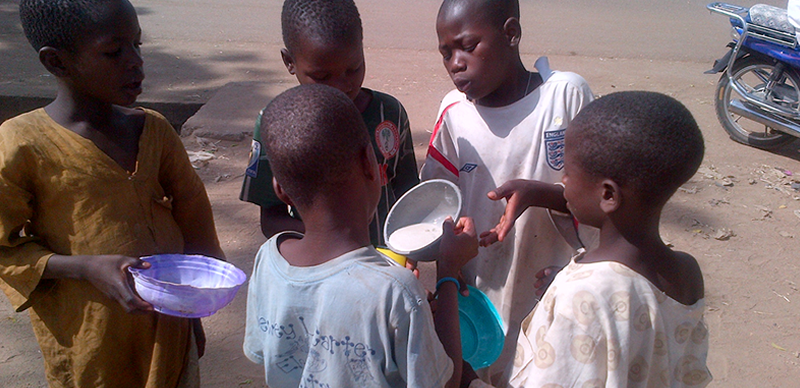
Kano, one of Nigeria’s most populous states, has long faced challenges associated with child poverty, street begging and educational deprivation. Observers argue that investments in schools, vocational training, social welfare and small-business financing could yield broader and more lasting economic returns for vulnerable populations.
Supporters of the mass wedding initiative, however, contend that helping couples establish stable households can itself serve as a poverty-reduction strategy by easing financial barriers to marriage and promoting social cohesion.
Whether viewed as a worthwhile social intervention or a misplaced spending priority, the ₦1.5 billion programme has become the latest flashpoint in the debate over governance and resource allocation at a time when many Nigerians are struggling with rising living costs and limited economic opportunities.