Nigeria’s customary courts — where millions of disputes over land, inheritance, marriage and community rights are decided — are not bound by the strict technicalities of the Evidence Act.
That was the blunt message delivered at a high-level judicial refresher course at the National Judicial Institute in Abuja.
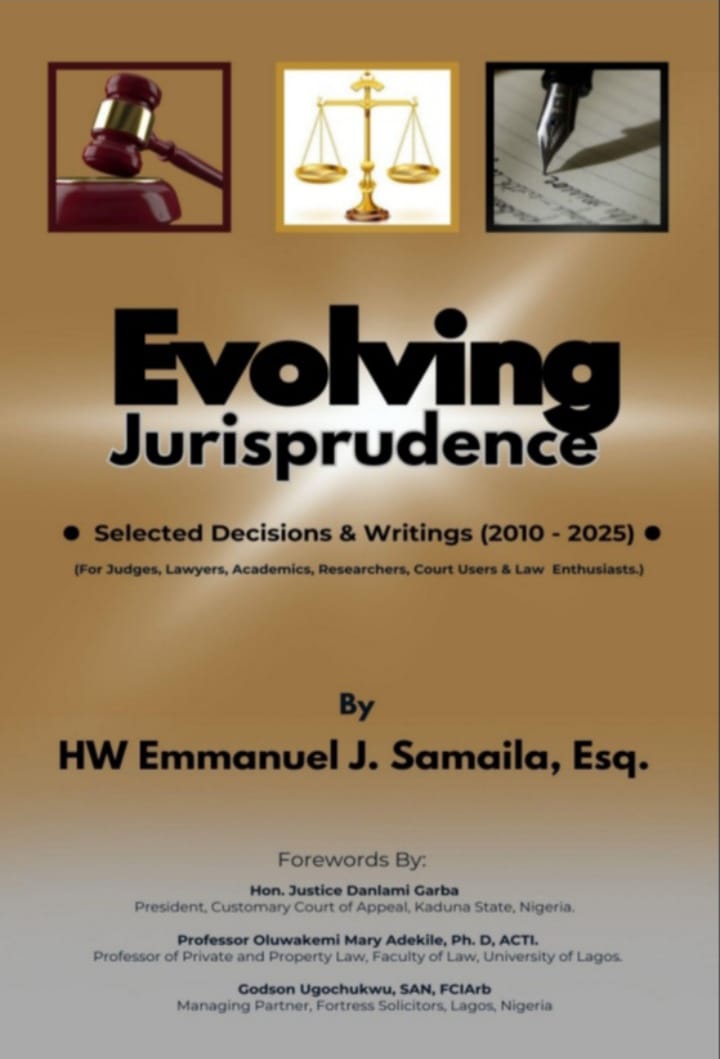
In a lecture that could reshape how lower courts handle disputes across the country, His Worship Emmanuel J. Samaila, Judge of the Upper Customary Court, Kafanchan, warned that rigid reliance on technical admissibility rules risks miscarriages of justice in customary proceedings.
Samaila, who was the facilitator for the refresher course —Evidence under Customary Law: Handling Oral Testimony, Conflicting Traditions, Appellate Ambiguities, and Weight of Evidence —organisedfor judges of the lower courts on management of evidence in trial in collaboration with Judicial College of England & Wales stressed that “Technical justice must yield to substantial justice.”
Evidence Act “Guides — But Does Not Fetter”
Customary courts operate differently from superior courts of record. Their proceedings are informal, community-based and heavily reliant on oral testimony.
While the Evidence Act 2011 may offer guidance, it does not strictly bind customary adjudication.
Undue reliance on its technical provisions, participants were told, can become a ground for appellate reversal — a recurring problem in Nigeria’s lower courts.
Oral Testimony Takes Centre Stage
Unlike in common law proceedings, where documentary evidence often dominates, customary disputes are typically proved through:
- Family elders
- Traditional leaders
- Community members
- Neighbours
A single credible witness — male or female — may suffice to establish a fact or even a custom.
But judges were warned: credibility must be weighed carefully.
Demeanour, internal consistency, possible bias, community practice and corroborating circumstances all matter.
“Evidence must be weighed, not counted,” Samaila emphasised.
No One-Size-Fits-All Custom
One of the most striking reminders from the session: there is no universal customary “common law.”
Customary law is:
- Flexible
- Unwritten
- Context-specific
What applies in one community may not apply in another — even within the same ethnic group.
Judges were cautioned against assuming the existence of a custom without proof, a mistake that has triggered appellate reversals in the past.
Where conflicting traditions are presented, courts must prefer the version that is credible, widely accepted and consistent with actual community practice.
However, any custom found to be repugnant to natural justice, contrary to public policy, or incompatible with written law remains unenforceable.
Why Decisions Get Thrown Out on Appeal
The lecture outlined common pitfalls that frequently lead to decisions being set aside:
- Failure to resolve material contradictions in oral evidence
- Improper evaluation of testimony
- Over-reliance on procedural technicalities
- Denial of fair hearing
- Sitting with a non-statutory panel
Appellate courts generally respect findings of fact made by trial courts — but only where evidence has been properly evaluated.
Push for Reform and Training
The refresher course, organised in collaboration with the Judicial College of England and Wales, also highlighted the need for:
- Continuous judicial education
- Clearer procedural guidelines for customary adjudication
- Stronger training in handling non-statutory evidence
The event was held under the leadership of the Chief Justice of Nigeria, Honourable Justice Kudirat Kekere-Ekun, who chairs the NJI’s Board of Governors.
For a legal system serving diverse communities across Nigeria, the stakes are high.
If customary courts mishandle evidence, justice is delayed, decisions are nullified, and disputes linger for years.
But if judges properly weigh oral testimony, resolve conflicts clearly and prioritise substantive justice over technicalities, Nigeria’s grassroots justice system may yet become stronger — and harder to overturn on appeal.
Click here to download the paper.