


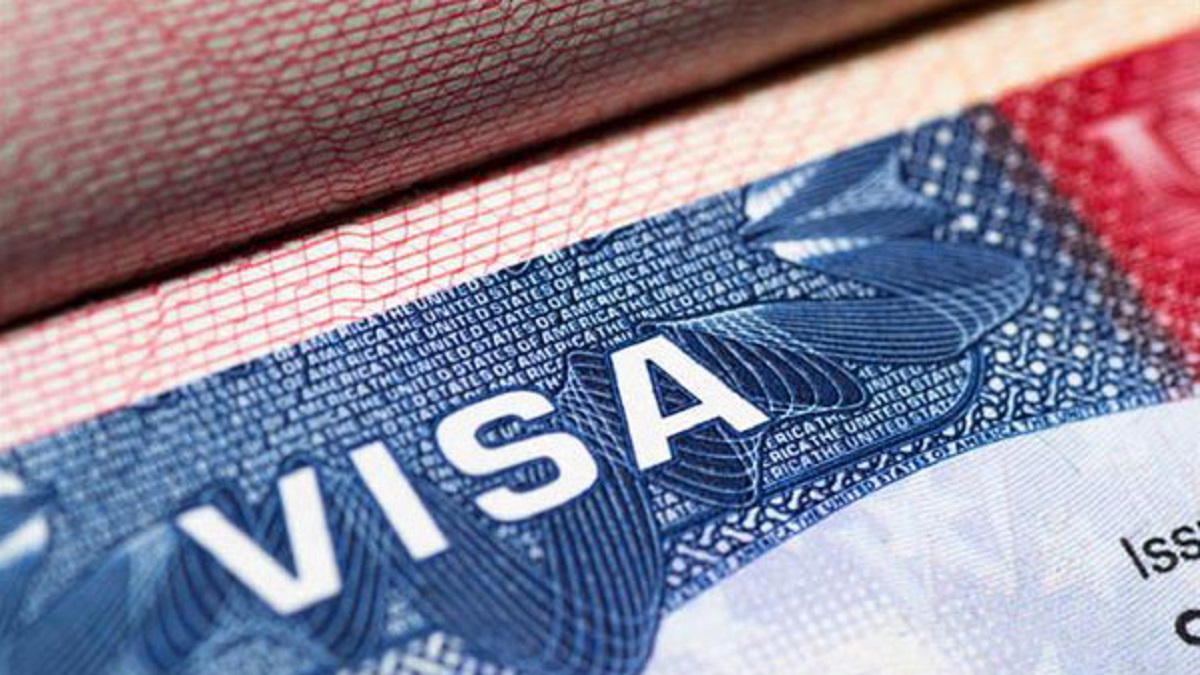
- Nigerian non-immigrant visas to the US reduced to three months, single entry
The United States Transportation Security Administration (TSA) will no longer require travellers to remove their shoes during security checks at U.S. airports, Department of Homeland Security Secretary Kristi Noem announced on Tuesday, ending an unpopular policy.
This is even as the United Arab Emirates (UAE) and the United States have introduced new visa restrictions policies for Nigerian passport holders, further restricting travel opportunities for citizens of the West African nation.
TSA had been requiring most U.S. air travellers to remove their shoes during screening for nearly two decades.
The new policy began nationwide implementation on Tuesday.
“We expect this change will drastically decrease passenger wait times at our TSA checkpoints, leading to a more pleasant and efficient passenger experience,” Noem said in a statement.
The TSA began requiring passengers to remove their shoes for screening in August 2006. The policy was implemented nearly five years after the 9/11 attacks, and when Richard Reid, who is known as the “shoe bomber,” used matches in an attempt to ignite explosive devices hidden in his shoes on a flight from Paris to Miami.
More than 1 billion passengers flew through U.S. airports in fiscal 2023 on over 10 million flights, according to the U.S. Department of Transportation.
“We are very confident that we can continue to provide hospitality to folks and for American travelers and for those visiting our country, while maintaining the same standard of security for passengers and for our homeland,” Noem said at a news conference at Ronald Reagan Washington National Airport in Arlington, Virginia.
Noem highlighted advancements in security technology and processes as reasons for the removal of the policy but noted that some individuals may be asked to remove their shoes “if we think there’s additional layers of screening that is necessary.”
In 2013, TSA launched the PreCheck Trusted Traveller programme, whose members are not required to remove their shoes. Children under 12 and adults 75 years or older are exempt from removing their shoes.
Noem did not think the new policy would degrade the PreCheck program.
“I believe PreCheck will still be something that many travelers will want to utilize, because when they have TSA PreCheck, they won’t have to take off their belt or their coat or remove things out of their bag such as laptops or compliant liquids,” he said.
In a statement, the Department of Homeland Security said other aspects of TSA’s security process would remain unchanged for most other travellers.
“For example, passengers (must) still clear identity verification, Secure Flight vetting, and other processes,” the department said.
In the meantime, a press release issued by the US Embassy in Abuja on Tuesday announced that: “most non-immigrant and non-diplomatic visas issued to citizens of Nigeria will be single-entry visas with a three-month validity period.”
The new visa restrictions take immediate effect.
While the US has halted the issuance of multiple-entry visas to certain categories of Nigerian travellers, citing “reciprocity” as the reason for the policy change, the UAE government has banned transit visas for Nigerians.
According to reports, the UAE’s new directive—communicated to travel agencies on Tuesday—restricts Nigerian applicants aged 18 to 46 who are travelling alone from obtaining tourist visas.
Applicants aged 45 and above, under the new rules, must submit a personal Nigerian bank statement for the past six months, with a minimum ending balance of $10,000 or its naira equivalent.
The US policy change, effective July 8, 2025, limits most non-immigrant and non-diplomatic visas issued to Nigerian citizens to single-entry with a three-month validity.
However, existing US non-immigrant visas issued before July 8, 2025, will remain valid under their original terms.
Travel expert Ikechi Uko believes the US visa policy change could prompt the Nigerian government to modernise its outdated visa system. “Our visa policy is not modern,” Uko said. “Multiple-entry visas, long-term visas, and airport visa-on-arrival for countries that offer Nigeria the same would be beneficial.”
He noted that countries like Ghana, Morocco, Kenya, and Qatar have adopted more relaxed visa policies to attract visitors.
The new visa restrictions have raised concerns about their potential impact on travel, business, and diplomatic relations between Nigeria and the two countries.
The US Embassy in Nigeria emphasized that visa reciprocity is an ongoing process subject to review and change, with the aim of ensuring secure travel documentation, managing visa overstays, and enhancing security cooperation.
As the Nigerian government navigates these developments, stakeholders are calling for reforms to make the country’s visa policy more attractive and competitive.
With the UAE and US tightening their visa policies, frequent flyer Bode Oluwafemi believes Nigeria must find a balance between addressing security concerns and facilitating travel and commerce.
Reuters/Tribune








“Visa rules can be a real barrier. What’s the solution when security meets red tape?”