By Kachi Okezie, Esq.
Words from the top of football never stay in the room where they are spoken. They move fast, they harden as they travel, and they land hardest on the people who have the least power to answer back. That is why Aleksander Ceferin’s reported remark about the 48-team World Cup was more than a slip about tournament quality. To say that the expanded format produces “a lot of matches that are completely uninteresting” may sound like technical analysis from a UEFA president who has spent years arguing over calendars and competitive balance.
But context is everything, and the context here is a World Cup that, for the first time, gives Cape Verde, Curaçao, Uzbekistan and Jordan their debut on the biggest stage, while Congo and Haiti return after five decades in the cold. To those nations, and to the millions of supporters who waited lifetimes to hear their anthem in a World Cup stadium, no game is uninteresting. No game is a filler. Every game is history.
The 13 member associations that responded in a joint statement understood that immediately. They did not shout. They did not insult. They chose the harder path of collective dignity. “We respectfully but firmly reject these comments,” they wrote. “For our countries, there is no such thing as an unimportant World Cup match.” That line should be framed and hung in every executive office from Nyon to Zurich. It is a correction, but it is also a lesson.
Football’s strength, as they reminded us, comes from its universality, not from a hierarchy that ranks some nations as worthy of attention and others as background noise. The member associations were right to speak up and right to do it in one solid voice. That unity is the team spirit football preaches on the pitch, and it must be practiced off it too. When small nations stand together, they are not asking for charity. They are demanding the respect they earned on the field, and they are showing larger associations how solidarity actually works.
What this episode exposes most clearly is the burden that comes with high office. A UEFA president is not a fan with a microphone. Every sentence he utters is read as policy, every criticism is read as a verdict, every offhand remark is treated as doctrine. That does not mean leaders must speak in riddles or avoid hard truths. It means they must be exceptionally guarded in how they say them.
You can debate fixture load, commercial pressure, or the dilution of quality without ever implying that a nation’s participation is trivial. You can defend elite competition without diminishing the dignity of emerging teams.
Ceferin’s office has since said it has “no knowledge” of the quote, which only proves the point further: in 2026, a leader must assume that every word will be recorded, shared, and interpreted. Caution is not censorship. It is responsibility. The higher the office, the smaller the margin for error, because the damage done by careless language is never distributed equally. It falls on the players who have already fought harder for less.
There is a parallel test of that same responsibility that deserves the same public defence, and the quiet around it is telling. Somali referee Omar Artan was denied entry to the United States for the World Cup over alleged links to militant groups, allegations he denies. He held a FIFA badge, a diplomatic passport, and, by his account, the right visa. He called it the “biggest dream of his life.” If the football family is serious about universality, then the exclusion of a FIFA-rated official from the sport’s showcase must draw the same condemnation as the belittling of member nations. The principle does not change because the person carries a whistle instead of a jersey. Merit, process, and dignity apply to referees as much as to players. To defend every match but stay silent on every official is to make solidarity selective, and selective solidarity is just another form of exclusion.
It would have been equally in order for football’s leadership to speak with one voice on Artan’s case, to demand transparency and due process, and to remind host nations that the World Cup belongs to the whole game, not just to the teams that sell the most shirts.
Lessons must be learned from both moments if we want a healthier football culture. The first lesson is for leaders. Power requires discipline of speech. A president must see the whole board, not just his corner of it. He must weigh not only the tactical point he wants to make about format or quality, but also the cultural signal he sends about who matters in the game.
The second lesson is for the associations. The joint statement from 13 nations is a model for how football should govern itself. Respectful, firm, collective. It shows that dignity is defended in chorus. When Ghana stands with Morocco, when Haiti stands with Uzbekistan, when Cape Verde stands with Senegal, the message is louder than any press release from a single federation.
The third lesson is for all of us who love the game. A culture that rejects the idea of unimportant matches must also reject the idea of expendable people. Every player who earns his place deserves to play. Every referee who earns his badge deserves to officiate. Every fan who saves for years to attend deserves to believe their game counts.
Football is more than sport because it mirrors the world. It reflects our best instincts for teamwork and our worst instincts for hierarchy.
Ceferin’s words, whether misquoted or not, remind us that leaders must be judged by the impact of their language, not just the intent. The 13 nations’ response reminds us that unity is still football’s sharpest weapon against condescension. And Artan’s case reminds us that the work of inclusion is never finished.
The game will be healthier when every executive chooses words as carefully as a captain chooses a pass, when every association defends every member as fiercely as a defender blocks a shot, and when we all understand that the value of a World Cup is not measured only in goals or revenue, but in the number of people who feel seen. That is the standard now. That is the standard we should hold, from the top office down to the last qualifier.
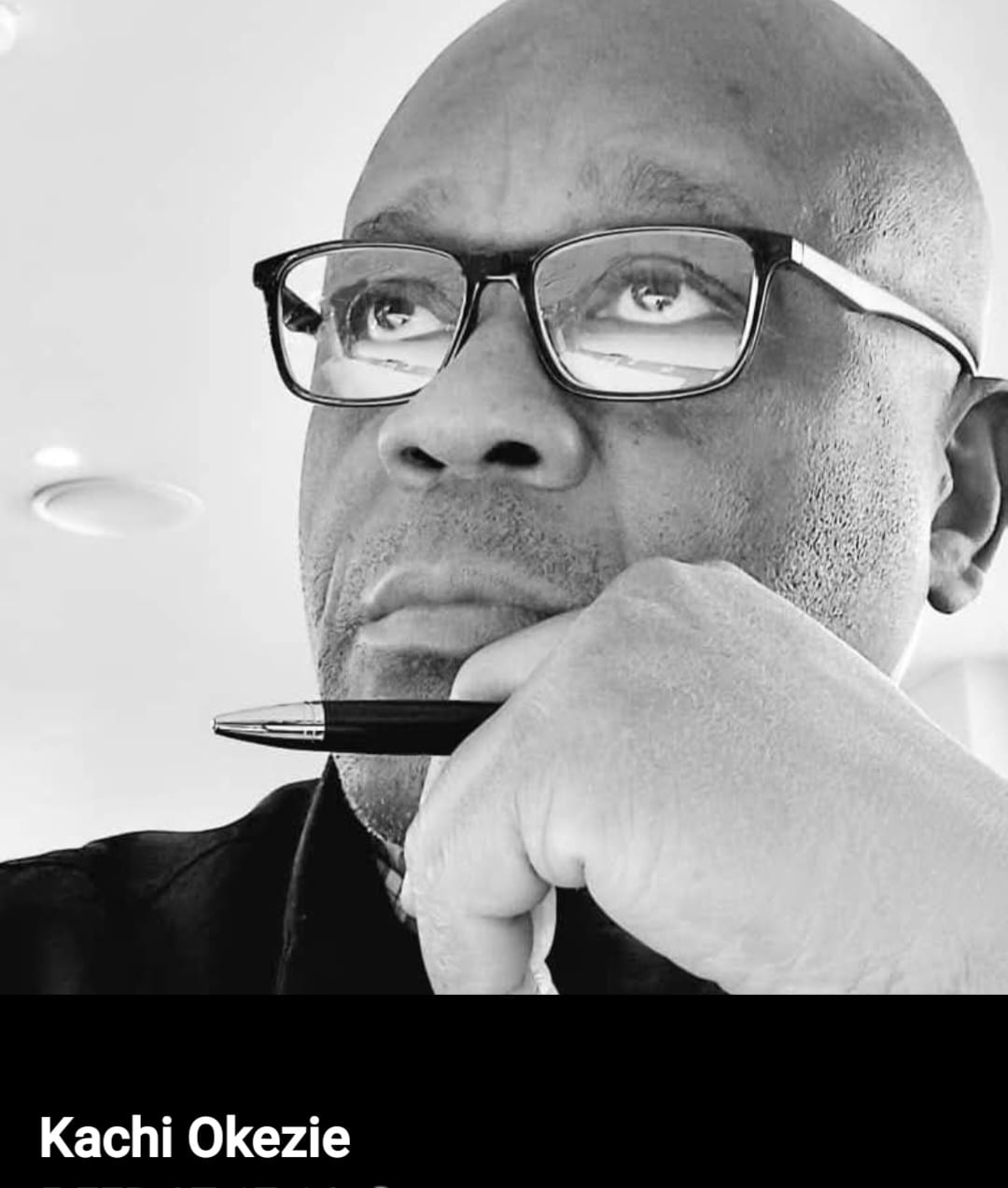
Kachi Okezie, Esq is a sports lawyer and commentator.
The views expressed by contributors are strictly personal and not of Law & Society Magazine.