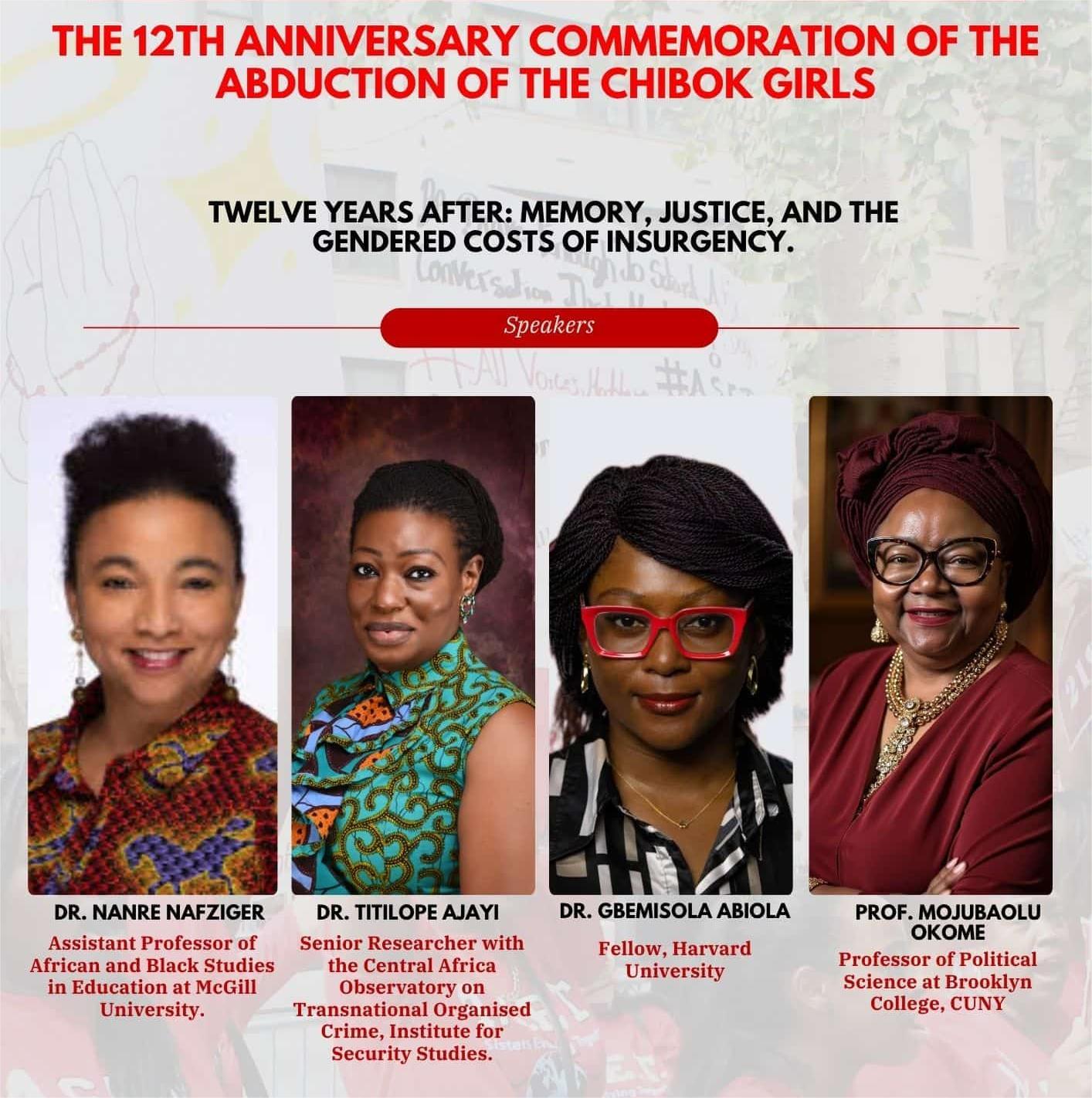
Telve years after the mass abduction of 276 schoolgirls in Chibok by Boko Haram, survivors, scholars, and advocates say Nigeria—and the world—are still far from delivering justice.
At a high-level commemorative event titled “12 Years After: Memory, Justice and the Gendered Costs of Insurgency,” speakers issued a stark warning: the violence that shocked the globe in 2014 has not ended—it has evolved, deepened, and in many ways, been normalized.
Held at the Brooklyn College Library Auditorium on April 14, 2026, the panel brought together leading voices including Nanre Nafziger, Titilope Ajayi, and Mojubaolu Olufunke Okome to interrogate what accountability looks like more than a decade after one of Nigeria’s most defining tragedies.
The Gendered Toll of Terror
Panelists argued that the insurgency unleashed by Boko Haram created a uniquely gendered crisis—one that continues to reverberate across communities in northern Nigeria.
Women and girls, they said, have borne the brunt of the violence: from abductions and forced marriages to sexual violence, social stigma, and the collapse of educational and economic futures.
“These are not isolated harms,” one speaker noted. “They are layered, systemic, and ongoing.”
The discussion framed the Chibok abduction not as a closed chapter, but as a symbol of a broader pattern of insecurity that continues to threaten women’s lives and agency across the region.
Justice Still Out of Reach
A central question dominated the conversation: what does justice look like 12 years later?
For some, it means transparency and accountability—clear answers from authorities and consequences for perpetrators. For others, justice must go further, encompassing long-term rehabilitation for survivors, economic reintegration, and structural reforms to address the root causes of insurgency.
The lack of a unified response, panelists warned, reflects deeper governance challenges—and risks entrenching a cycle of impunity.
Fading Attention, Persistent Pain
Despite the global outrage that followed the Chibok kidnappings, speakers expressed concern that international attention has waned, even as violence persists.
The act of remembrance, they argued, is itself a form of resistance.
“Memory is political,” one panelist said. “Forgetting enables repetition.”
The event underscored the urgency of sustained advocacy—not only to honor the victims but to prevent future atrocities.
Stories That Refuse to Be Silenced
The commemoration concluded with a screening of Mothers of Chibok, a documentary by Joel Kachi Benson. The film follows four mothers of the abducted girls over the course of a farming season, offering an intimate portrait of grief, resilience, and unrelenting hope.
As the credits rolled, one message lingered: twelve years on, the story of Chibok is not over.
It is still being written—in the lives of survivors, in the demands of families, and in the unanswered questions that continue to haunt a nation.