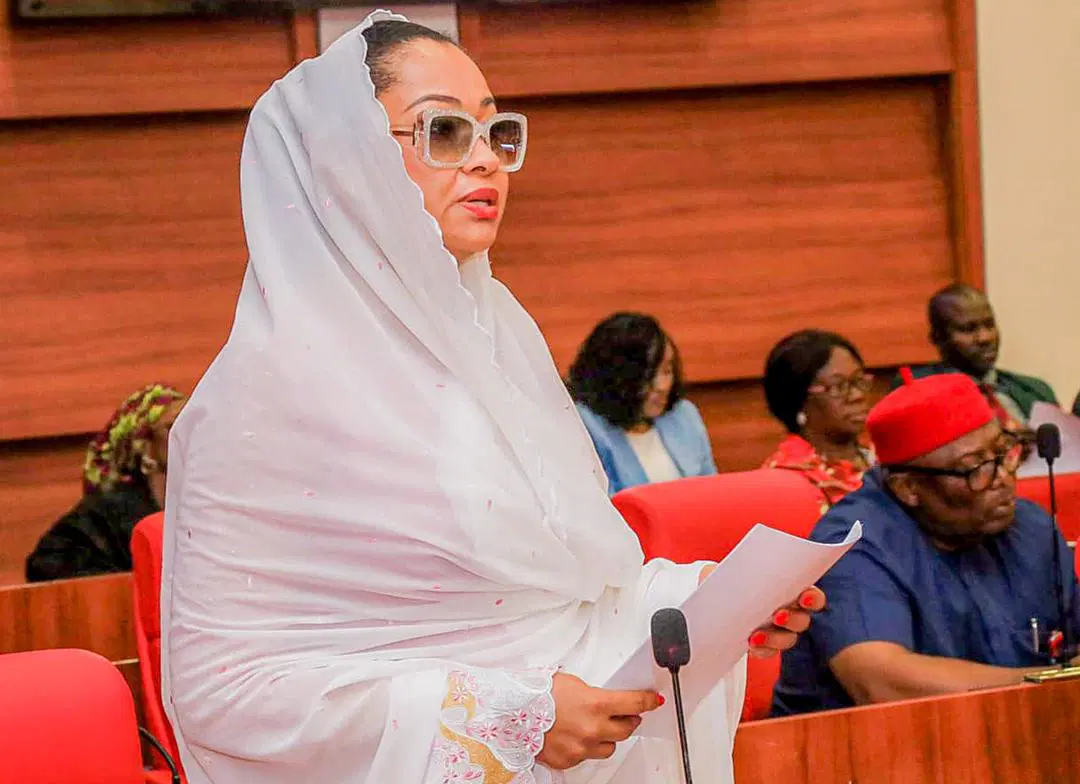
President Bola Ahmed Tinubu has reversed the pardon earlier granted to Maryam Sanda after widespread public backlash.
Sanda, convicted in 2020 for killing her husband, Bilyaminu Bello, will now serve a 12-year sentence instead of going free.
She had spent six years and eight months at the Suleja Medium Security Custodial Centre before her name appeared on the clemency list.
The President’s decision follows intense criticism from Nigerians who saw her pardon as a betrayal of justice.
Many condemned the initial pardon as a blow to the fight against gender-based violence and impunity.
The revised clemency list, signed by President Tinubu, includes 86 individuals who received either pardons or commuted sentences.
The President stated that the review was guided by national security, public sensitivity, and the need to maintain public confidence in the justice system.
Convicts of kidnapping, fraud, drug trafficking, and arms dealing were deleted from the original list after consultations with the Council of State.
Others had their death sentences reduced to life imprisonment rather than full release.
Among those granted clemency are Oroka Michael Chibueze, Adesanya Olufemi Paul, Daniel Bodunwa, and Ex-Corporal Michael Bawa.
Notably, Tinubu also approved posthumous pardons for Major General Mamman Vatsa, Ken Saro-Wiwa, and members of the Ogoni Nine.
Other notable names include Herbert Macaulay, Farouk Lawan, and Anastasia Daniel Nwaobia.
To improve accountability, Tinubu ordered that the Presidential Advisory Committee on Prerogative of Mercy be moved to the Ministry of Justice.
He also directed the Attorney-General to issue new clemency guidelines requiring mandatory consultation with prosecuting agencies.
Officials said this ensures only qualified individuals benefit from presidential mercy.
The Nigerian Correctional Service has received the approved list for immediate implementation.
President Tinubu thanked citizens and stakeholders for their feedback on the controversial matter.
He reaffirmed his commitment to justice reform and fairness in Nigeria’s judicial system.
The decision, though controversial, signals a shift toward stricter oversight of presidential pardons in the country.