Fake medicines are only part of a much larger problem. From toothpaste and yoghurt to cosmetics, beverages and other everyday products, Nigerians are increasingly discovering suspected counterfeits for themselves. The disturbing question is how so much can reach the market under the watch of the agencies created to keep dangerous products out.
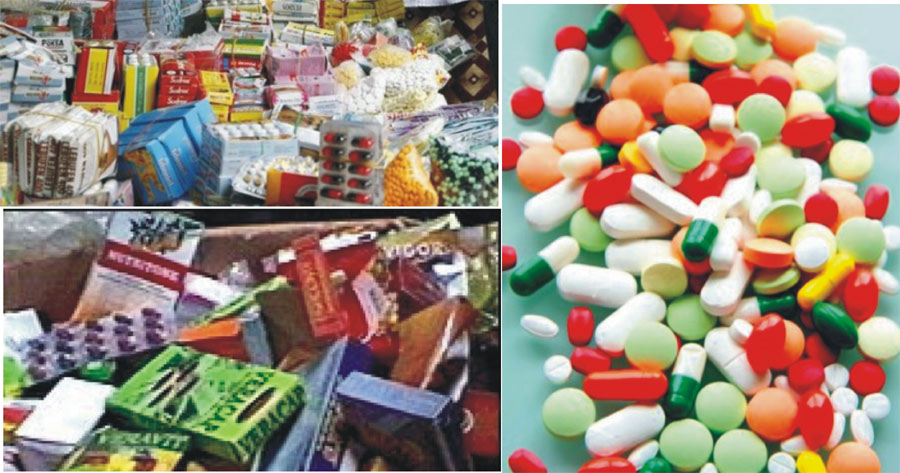
For years, Nigeria’s counterfeit problem was largely associated with fake medicines hidden away in notorious open drug markets. There were periodic raids, seizures, arrests and public destruction of confiscated products. NAFDAC would announce another breakthrough, the seized goods would be destroyed and the country would move on.
The pattern has become much harder to ignore.
Across social media, Nigerians are now posting products they believe are fake or substandard: toothpaste, yoghurt, paracetamol, palm oil, beverages, cosmetics, bottled water and other household goods. Some of the claims are unverified and some may turn out to be wrong. But the sheer volume of the warnings is creating a problem that regulators cannot dismiss as social-media hysteria.
In June, NAFDAC itself said cosmetics, food and beverages accounted for more than half of the counterfeit products seized by the agency. It also warned that counterfeit and substandard medicines containing wrong or insufficient ingredients, or no active pharmaceutical ingredients at all, were being found during its operations.
The uncomfortable part is that many of the latest discoveries are not being made by inspectors.
They are being made by consumers.
That raises a basic question about the regulatory system: If an ordinary customer can walk into a shop, buy a product and find reason to suspect that it is counterfeit, why did the regulator not find it first?
From fake toothpaste to fake medicine
One of the recent cases involved suspected counterfeit Oral-B toothpaste.
A Nigerian doctor, Somto Okonkwo, posted a comparison between a genuine tube and one he suspected was fake, pointing to differences in the packaging, seals, texture, translucency and taste. The video was widely circulated after it was amplified by UK-based Nigerian doctor Olufunmilayo Ogunsanya.
Okonkwo said he visited several shops and repeatedly encountered suspected counterfeit products, with some traders apparently unaware that the goods they were selling might not be genuine.
Other warnings soon followed.
Videos showing suspected counterfeit Hollandia yoghurt circulated online. Consumers posted comparisons of different products bought from different locations. Another widely shared post showed two paracetamol tablets allegedly from the same manufacturer but with visibly different colours.
The social-media campaign has since expanded into a catalogue of alleged counterfeit goods, ranging from palm oil and beverages to cosmetics, water and food products.
None of those claims should automatically be treated as established fact. A difference in colour, texture or packaging does not by itself prove that a product is counterfeit. Laboratory testing, verification of batch numbers and tracing through the manufacturer’s supply chain are necessary before such allegations can be confirmed.
But that is precisely the job of the regulatory system.
A consumer’s video should be the beginning of an investigation, not the end of one.
NAFDAC is seizing billions. So why does the problem keep returning?
NAFDAC cannot fairly be portrayed as an agency that has stopped enforcement.
Its operations have produced enormous seizures.
In 2025, the agency conducted major operations at the Bridge Head Market in Onitsha, Ariaria and Eziukwu markets in Aba and the Idumota drug market in Lagos. The agency described the operation as one of the largest in its history, involving more than 1,000 security personnel and the seizure of banned, expired, unregistered, substandard and falsified medical products.
Yet the counterfeit trade has continued.
A BusinessDay investigation published in August found that NAFDAC had seized counterfeit, falsified and substandard medicines worth more than N1.1tn between 2023 and 2025. More revealing was the recurrence of the same major distribution centres in the agency’s enforcement records, including Bridge Head Market in Onitsha, Eziukwu Market in Aba, Idumota and the Trade Fair Complex in Lagos.
That should concern the government more than the size of any individual seizure.
If the same markets continue to feature in enforcement operations year after year, seizure is clearly not solving the underlying problem.
The question is what happens after the raid.
Are the manufacturers identified?
Are the financiers traced?
Are the importers prosecuted?
Are the distributors convicted?
Are the assets acquired from the proceeds of the trade recovered?
Are compromised officials investigated?
And are the same businesses simply returning under different names?
Without answers to those questions, enforcement risks becoming a recurring cycle of raids, press conferences and destruction ceremonies, while the supply chain survives intact.
The regulators cannot keep working in separate compartments
The counterfeit trade does not respect bureaucratic boundaries.
NAFDAC regulates food, drugs, cosmetics, medical devices, chemicals and other products within its statutory mandate. SON is responsible for standards and conformity assessment. Customs controls the country’s borders. The Federal Competition and Consumer Protection Commission has consumer-protection responsibilities. The police and other security agencies deal with criminal investigations and prosecution.
A counterfeit shipment can therefore pass through several hands before reaching a market stall.
That makes cooperation essential.
Yet the response to counterfeit products often appears fragmented. When the problem involves medicines, one agency points to another aspect of the regulatory chain. When it involves food or consumer products, the boundaries become even less clear to the public.
SON’s responsibility is not simply a matter of issuing standards. Its product-certification and surveillance functions are intended to ensure that products circulating in Nigeria meet prescribed requirements.
The public is entitled to ask whether those systems are working as they should.
The same question applies to Customs.
How many suspicious consignments are intercepted at the border?
How many are released?
How many are subjected to laboratory testing?
How many importers are prosecuted?
And how often do regulators receive intelligence from Customs before dangerous products reach the market?
A serious counterfeit operation should be treated as a supply-chain investigation rather than as an isolated offence committed by the trader behind a shop counter.
Is corruption part of it?
This is the most serious allegation being made and the one that requires the greatest care.
Several Nigerians have alleged that officials, importers and distributors may be complicit in the circulation of counterfeit goods. Others accuse regulatory agencies of becoming more concerned with revenue than enforcement.
Those allegations require evidence.
But the possibility of regulatory corruption cannot simply be dismissed.
The World Health Organisation identifies corruption among the factors that can facilitate the production and distribution of substandard and falsified medical products. Weak regulatory systems, poor enforcement and complex supply chains create opportunities for dishonest operators to exploit the system.
Nigeria has also had disputes over the conduct of enforcement itself.
In 2025, lawmakers questioned NAFDAC over allegations concerning levies and enforcement activities involving drug traders. Such allegations do not establish corruption, but they demonstrate why regulatory agencies handling seizures, fines, closures and prosecutions need strong internal controls and independent oversight.
The public needs to know where confiscated goods go, how fines are collected, how proceeds are accounted for and what happens to officials accused of misconduct.
A regulator exercising enormous powers must itself be subject to rigorous accountability.
The death toll needs investigation, not speculation
The latest debate has taken an even more troubling turn as Nigerians try to connect counterfeit products with an apparent rise in illness and deaths.
This is where the reporting needs to be particularly disciplined.
There is no evidence currently available to establish that the death of veteran actor Taiwo Hassan, for example, was caused by counterfeit medicines or food. His reported death from cancer cannot reasonably be converted into evidence of a counterfeit-products epidemic.
The same caution applies to claims circulating online about kidney failure, liver disease and sudden deaths.
There is, however, a legitimate public-health question beneath the speculation.
How many Nigerians become seriously ill after taking medicines that do not work?
How many poisoning cases are investigated for possible exposure to contaminated products?
How often do hospitals preserve suspicious medicines or product packaging for laboratory examination?
How many cases of unexplained kidney or liver injury are investigated for possible chemical exposure?
And how many deaths are ever linked back to the product that may have contributed to them?
Without such surveillance, Nigeria cannot establish the true human cost of counterfeit products.
That gap should concern the Federal Ministry of Health as much as it concerns NAFDAC.
The danger is not confined to medicines
The public conversation has understandably focused on fake drugs, but the problem is broader.
A counterfeit medicine can fail to treat malaria or an infection.
A contaminated food product can cause poisoning.
A cosmetic containing dangerous substances can damage the skin or internal organs.
A counterfeit electrical component can cause a fire.
A substandard vehicle part can fail while a car is moving.
The common problem is a product entering the market under a false identity or without meeting the standard consumers have been led to expect.
NAFDAC’s own 2026 figures underline the breadth of the problem: cosmetics, food and beverages accounted for more than half of the counterfeit products seized by the agency.
This is therefore no longer a story about fake drugs alone.
It is a story about whether Nigeria’s marketplace can be trusted.
The counterfeiters have moved online
There is another challenge the regulators can no longer ignore.
The counterfeit market has moved into the digital economy.
A consumer no longer needs to visit a notorious open market to encounter an unregistered or falsified product. A seller can advertise through social media, receive payment electronically and send the goods through a courier.
That makes traditional market inspections insufficient.
Regulators now need the ability to identify online sellers, trace supply chains, work with payment platforms and logistics companies, and preserve digital evidence for prosecution.
The April 2026 decision by NAFDAC to establish a special task force in Kano to tackle fake drugs and unwholesome food products shows that the agency recognises the need for stronger intelligence and enforcement at state level. The task force was given responsibilities including intelligence gathering, surveillance, seizures, arrests and prosecution.
The question is whether similar intelligence-led operations can be sustained across the country.
Nigeria does not lack warnings. It lacks consequences.
This is perhaps the most important part of the story.
Nigeria has had laws against counterfeit and adulterated products for years. NAFDAC has enforcement powers. SON has standards and surveillance responsibilities. Customs has border-control responsibilities. The police have investigative powers. The courts have the authority to punish offenders.
What remains uncertain is whether the entire system is producing enough consequences to deter a highly profitable criminal trade.
A manufacturer who loses one warehouse but retains the proceeds from several others has not suffered the kind of loss that would necessarily discourage the business.
An importer whose goods are seized but who escapes prosecution may regard the seizure as an occupational hazard.
A trader who knowingly sells dangerous products and pays a fine may simply include the cost in the price.
And an official who compromises an inspection without fear of detection creates another opening in the system.
That is why the government needs to look beyond seizures.
It needs to measure prosecutions, convictions, asset forfeitures, repeat offenders, compromised officials and the movement of counterfeit products from ports to markets.
The figures should be published.
What Nigerians should be demanding
Consumers have a role to play. They should buy medicines and other regulated products from reputable sources, check packaging and registration information and report suspicious products.
But the burden cannot be transferred to the consumer.
A patient buying paracetamol cannot be expected to determine its chemical composition.
A parent buying baby food cannot perform a laboratory test at the supermarket.
A family buying toothpaste cannot reasonably be expected to know whether a subtle difference in packaging represents a counterfeit product.
The State created regulatory agencies precisely because ordinary citizens cannot perform those functions.
The immediate response should therefore be a coordinated national surveillance programme involving NAFDAC, SON, Customs, FCCPC and the security agencies.
Products flagged by credible consumer reports should be sampled and tested promptly. Confirmed counterfeits should be traced through the supply chain. Manufacturers, importers and distributors should be identified. Where criminal conduct is established, prosecution should follow.
And where an official is found to have facilitated the trade, the investigation should not stop with the trader.
The real test is what happens after the seizure
NAFDAC has shown that it can find counterfeit products.
The agency has seized them in enormous quantities.
It has shut premises, arrested suspects and destroyed dangerous products. It has established new task forces and warned Nigerians about the threat.
Yet the counterfeit economy continues to regenerate.
That is the problem the government now has to confront.
The country does not need another impressive seizure figure if the same networks simply rebuild their businesses a few months later.
It needs to know where the products came from, who financed them, who brought them into the country, who moved them through the distribution chain, who sold them and whether anyone inside the regulatory system helped them along the way.
The social-media campaign may eventually prove to contain exaggerations, mistaken identities and products that are perfectly genuine.
But it has done something valuable.
It has forced a question into the open.
Who is watching the products Nigerians eat, drink, swallow and put on their bodies?
NAFDAC and SON were created so that the answer would not have to be ordinary Nigerians with smartphones.
If consumers have become the first line of detection, government has a much larger problem than counterfeit toothpaste.
It has a regulatory problem.
And if the regulatory problem is being made worse by negligence, incompetence or corruption, Nigerians deserve to know which one it is.