A Christian friend called me a few days ago after news spread that scores of my Borgu cousins who had gathered for Juma’at prayers at Kpenya Mosque in Dekara District of Borgu Local Government Area of Niger State were abducted by terrorists. He said the international publicity that attends attacks such as this must have contributed to the waning of the “Christian genocide” narrative that had reduced Nigeria’s complex security crisis to a simplistic, one-dimensional story of Muslims killing Christians.
I told him it was more complicated than that. It’s true that the abduction of Muslim worshippers from a mosque punctures the fiction that Nigeria’s terrorists check the religion of their victims before they kill, kidnap or dispossess them.
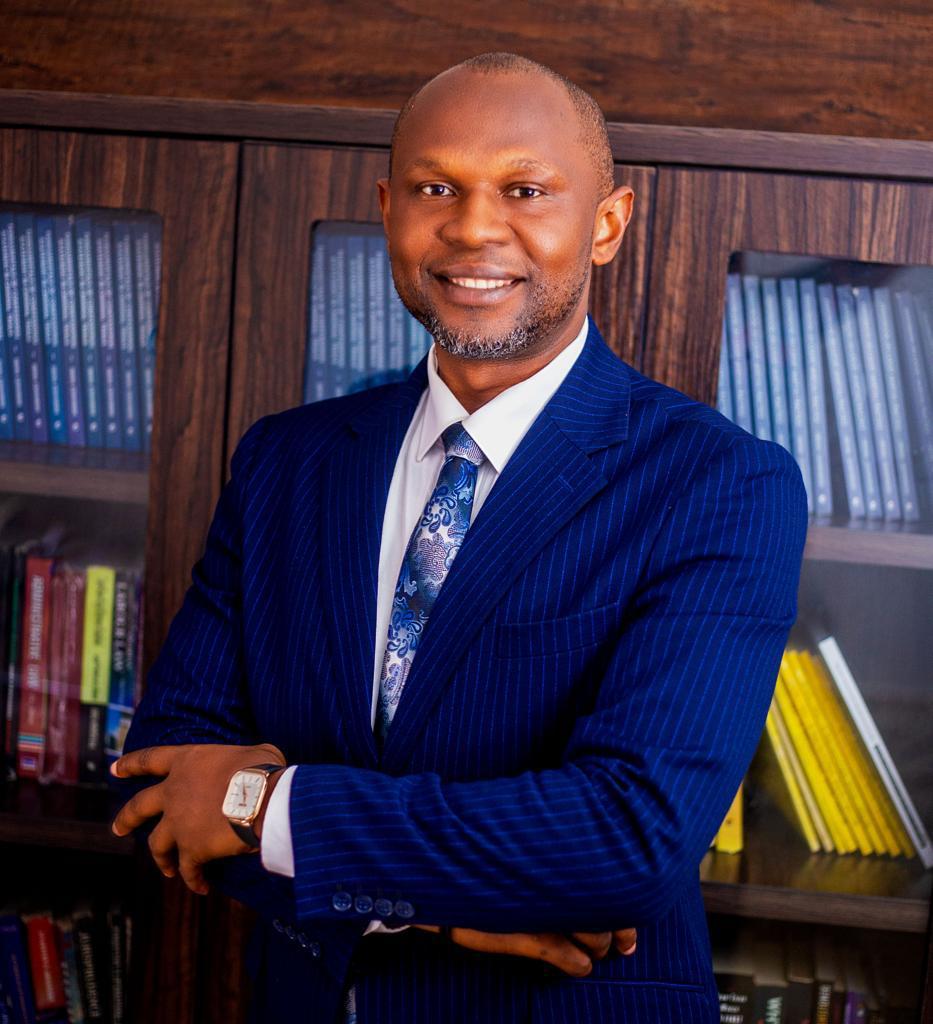
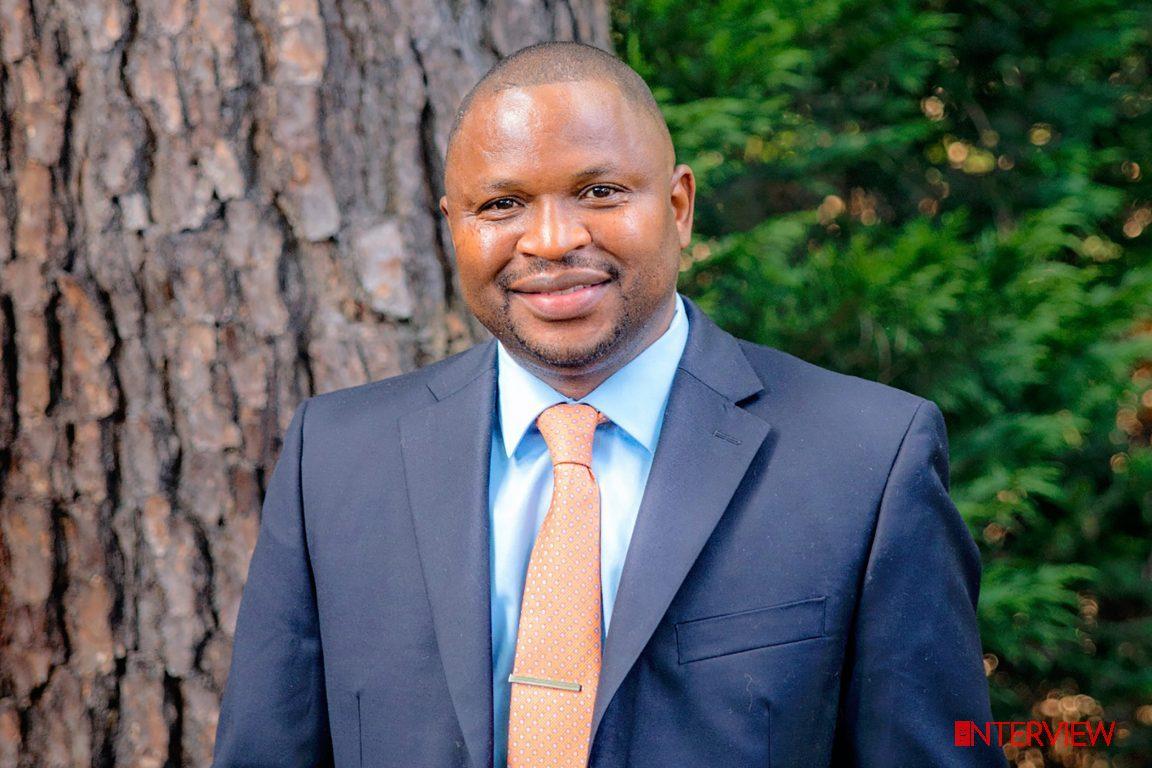
Nonetheless, what seems to be the retreat of the Christian-genocide rhetoric in Washington cannot be explained by these sorts of inconvenient facts alone. Facts rarely defeat politically useful narratives by themselves. Someone has to organize the facts, carry them into the right rooms and translate them into the political idiom of people who have the power to act. That person, more than anyone else in the Tinubu government, appears to have been National Security Adviser Nuhu Ribadu.
Fifteen years ago, Ribadu was effectively a political exile in the United States. He was removed as the chairman of the Economic and Financial Crimes Commission after he fell out with the Umaru Musa Yar’Adua government. He fled the country after surviving at least two failed assassination attempts and several death threats.
He spent about 18 months as a visiting fellow at the Washington-based Center for Global Development and also had an affiliation with Oxford. Washington became a classroom as well as a refuge.
In May 2009, Ribadu testified before the US House Financial Services Committee on corruption and illicit financial flows. In February 2010, he appeared before the Senate Foreign Relations Subcommittee on African Affairs to discuss Nigeria’s political crisis.
At the Senate hearing, Ribadu thanked Senators Russ Feingold and Johnny Isakson for intervening when the Yar’Adua government was after him. “You stood up, you spoke, and it has made a difference,” he told them.
He had personally experienced how congressional pressure, think-tank advocacy, media visibility and executive-branch attention can converge to influence a foreign government.
That knowledge became useful late last year when Donald Trump elevated allegations of a “Christian genocide” in Nigeria into a major foreign-policy confrontation. Trump returned Nigeria to the list of Countries of Particular Concern, threatened to cut US assistance and instructed the Pentagon to prepare for possible military action if Nigeria failed to stop the killing of Christians. He even used the phrase “guns-a-blazing.”
Whatever one thought of the factual basis of the genocide claim, the diplomatic danger to Nigeria was potentially politically, even existentially, fatal. Nigerian officials protested that insecurity afflicts people of all religions. True as that was, the argument did little to address the American political machinery powering the accusation.
Within weeks, Ribadu led a heavyweight Nigerian delegation to Washington that included the Attorney General, the inspector general of police and the Chief of Defence Staff. He met Congressman Riley Moore, one of the loudest congressional voices on Christian persecution in Nigeria, and Defence Secretary Pete Hegseth. In the aftermath of the meeting, the language of confrontation soon began to give way to the language of cooperation.
Then came the lobbying operation. In December 2025, Aster Legal, acting on Ribadu’s behalf, hired DCI Group, a Washington public affairs and lobbying firm, under an agreement worth as much as $9 million over a year. The contract said DCI would help Nigeria communicate its efforts to protect Christian communities and sustain American support for the fight against West African jihadist groups.
This was expensive. But the mechanics of the campaign are instructive. DCI went directly into the American conservative Christian ecosystem from which much of the genocide narrative drew its political and rhetorical energy. Its FARA filings show outreach to evangelical and religious-freedom figures, invitations to a dinner with Nigeria’s First Lady and efforts to arrange interviews for her. The filings record invitations to figures such as Sam Brownback, Nina Shea, Ralph Reed and Penny Nance, along with subsequent congressional engagements.
Oluremi Tinubu was an unusually useful messenger. She is an ordained Christian pastor married to a Muslim president. At the National Prayer Breakfast in February, Trump publicly recognized her as a Christian pastor and called her “a very respected woman.” Her presence complicated the picture of a Muslim government presiding over the slaughter of Christians.
Ribadu kept returning to Washington. From May 4 to May 6, he met Vice President JD Vance, Secretary of State Marco Rubio and senior State Department and Pentagon officials. In August, he led another Nigerian delegation for the second session of the US-Nigeria Joint Working Group created to deal with the Country of Particular Concern designation.
These high-profile meetings caused the tenor of the relationship between Nigeria and the United States to change dramatically. The United States still speaks about protecting Christian communities, and Nigeria remains on the religious-freedom list, but Washington now increasingly treats Nigeria as a security partner.
The clearest evidence of the change came from Marco Rubio. In congressional testimony in June, he said in many cases Nigeria’s problem was a lack of capability in confronting heavily armed terrorist groups and described US-Nigeria cooperation as a “success story.”
Then Trump himself wrote Tinubu in July praising his “decisive leadership” and his efforts to confront violence affecting Christian communities. Months after threatening military action, Trump was telling Tinubu that it was an honor to stand with him against terrorists.
Ribadu’s American exile helps explain his aptitude for managing this transition. I doubt that he simply dusted off his 2009 contact list and called old friends. In any case, Washington has changed profoundly since the Obama years, and many of the Trump people who mattered in 2025 and 2026 were outside Ribadu’s old think-tank circle. His advantage appears to have been what is called institutional literacy.
He had learned that Washington is a collection of overlapping constituencies. You need to know how the US Congress works, which congressional staff to contact, which think tanks matter, which lobbyists can get the job done, which religious organizations are central to narrative reframing, what alternative media narratives to construct, and which executive agencies can help the most. He had also learned that access becomes more useful when it is attached to something the United States wants.
Of course, the Tinubu government has bargaining chips that no opposition politician can match. Nigeria can offer intelligence cooperation, military access, counterterrorism operations, arrests and prosecutions. That helps explain why the government’s Washington campaign has so far produced more tangible results than Atiku Abubakar’s much smaller lobbying effort. Money matters, but state power gives lobbying something concrete to sell.
Just so I am not misunderstood, this is not a celebration of Ribadu’s diplomatic wizardry. It’s merely an analysis and an acknowledgement of my sense of what and who are responsible for the thawing of the tensile stress between the Trump and Tinubu administrations.
There is, however, a more immediate test of the government’s security competence than anything that happens in Washington. It is in Dekara, where scores of my Borgu cousins were abducted from a mosque while performing Juma’at prayers. The government must secure their release and ensure that such an outrage does not become another entry in Nigeria’s grim catalogue of mass abductions.
Borgu deserves particular attention because an axis of the country long known for relative peace has been bleeding with increasing regularity lately. Communities that used to regard terrorism and mass kidnapping as distant horrors are now learning the vocabulary of ransom, displacement, fear and mass graves. The federal and Niger State governments must move beyond episodic reactions and establish a security structure capable of preventing recurrence.
It was in Borgu that Bola Tinubu received the title “Jagaba,” or champion, long before it became inseparable from his political identity. The people of the land that gave him that name should not have to live at the mercy of terrorists. If Washington now regards his government as a serious partner in the fight against insecurity, that partnership must produce security where Nigerians actually live, worship and sleep.
For Borgu, the most meaningful dividend of all the lobbying, diplomacy and international security cooperation will be the safe return of the Kpenya Mosque abductees and the restoration of the peace for which Borgu was once known.
The same must be true for every part of Nigeria now bleeding from insecurity, from Benue and Plateau to Zamfara and Katsina, from Borno to the forests of Niger and Kwara states and other communities where Nigerians, Christian and Muslim alike, live with the daily fear of blood-thirsty terrorists, bandits and kidnappers.