My very dear brother, Dr. Mofe Atake, SAN,
I would like to sincerely acknowledge your kindness and graciousness toward me. Not only did you take my concerns seriously, but you also responded with remarkable patience and generosity, despite what I readily admit were largely uninformed and deeply personal opinions. For that, I am truly grateful.
I had privately indicated in my previous message that it would be my last contribution to this exchange. However, your eloquent and thoughtfully crafted response was simply too compelling for me to let the conversation end there. So, with your indulgence, I shall engage once more.
On the “Same Politicians” Argument
The point about the “same politicians” cuts both ways, and I am sure you can appreciate the source of my skepticism. In fact, I would venture to say that very few—if any—of the politicians currently pushing this bill through the National Assembly could articulate its rationale with the level of depth, clarity, and intellectual rigor that you have demonstrated.
You have approached the matter as a conscientious citizen, carefully considering its legal implications, weighing the competing interests involved, and arriving at a position that you have defended with admirable elegance and conviction. I wonder, however, what proportion of our legislators possess a similarly nuanced understanding of the bill they are so eager to advance. My suspicion is that the number would be disappointingly small.
Read Also: A Reply to Professor Ajovi Scott-Emuakpor on State Police, in Plain Terms
Read Also: “Eighty Percent Is Implementation”: A reply to Professor Ajovi Scott-Emuakpor, By Eyimofe Atake, SAN
This concern lies at the heart of my unease. In my admittedly bewildered view, the individuals who make up much of Nigeria’s political class are often among the least qualified to constitute its ruling class. That reality inevitably makes me cautious whenever sweeping legislative initiatives are championed with great urgency. The merits of an idea may be sound, but confidence in its stewardship is often undermined by the quality of those entrusted with its execution.
On Your “Count How Many Must Fail” Argument
Your “Count How Many Must Fail” argument is truly fascinating. What strikes me most is the remarkable optimism that underpins it—an optimism that is both refreshing and, I must admit, almost contagious.
You appear genuinely confident that, when confronted with clear and egregious abuses of power, the various institutional safeguards within the system will function as intended: that the Governor will act responsibly; that the State Assembly will exercise independent oversight and, where necessary, challenge the executive; that the Police Council will subject matters to rigorous scrutiny; that the certifying authority will assert its independence and withdraw certification where warranted; that the Federal Government will intervene when necessary; that the National Assembly will raise its voice in defense of constitutional principles; that the courts will issue judgments that are respected and enforced; that other states will speak out in condemnation; and, ultimately, that the electorate will hold political leaders accountable at the ballot box.
It is an inspiring vision of how democratic checks and balances are meant to operate.
My difficulty, however, lies in the reality of our experience. I am far less confident that these safeguards can be relied upon to function as effectively as you envisage. In my view, each of these layers of oversight is vulnerable to compromise because the key decision-makers at every stage are drawn from the same political establishment whose judgment and integrity many citizens have reason to question. Consequently, while the framework of accountability may be impressive on paper, my concern is whether those charged with making it work possess either the independence or the resolve required to uphold it in practice.
That, in essence, is the source of my skepticism. Where you see a robust chain of institutional protections, I see a chain whose links may be far weaker than we would hope.
On “The Protector You Left Out”
Your section on “The Protector You Left Out” may well be the most amusing part of this entire exchange. The “citizens and the ballot box” as the ultimate safeguard? Forgive me, but I find that proposition difficult to accept without a measure of disbelief.
When you speak of the ballot box as a meaningful check on political excesses, I cannot help but reflect on my own experience of elections in Nigeria. The last election in which I was able to cast my vote freely and with confidence was many decades ago. In subsequent elections, the atmosphere of intimidation and insecurity often made participation feel less like a civic duty and more like an act of personal risk.
And when we speak of “the citizens,” which citizens do we have in mind? The ordinary men and women seeking accountable governance, or the armies of political loyalists and hired enforcers who frequently dominate the electoral landscape in support of one flawed candidate or another?
Likewise, when we invoke “the ballot box,” are we referring to an electoral process whose outcomes are often so fiercely contested that the final verdict is routinely transferred from polling stations to courtrooms?
My dear brother, I continue to admire your unwavering faith in the corrective powers of our democratic institutions. It reflects a level of optimism that is both admirable and enviable. Yet my own assessment, shaped by years of observing our political environment, leads me to a far more cautious conclusion. While you see the citizen and the ballot box as the ultimate guardians of accountability, I remain unconvinced that they currently function with the effectiveness necessary to inspire such confidence.
Nevertheless, I must confess that your enduring belief in the possibilities of our political system is one of the most engaging aspects of this conversation. Even where I disagree, I cannot help but admire the hopefulness that informs your position.
The “Thirty-Six Experiments” Argument Presupposes Competent Governance
I acknowledge that the strongest aspect of your argument is its appeal to federalism. Decentralization, in theory, allows individual states to function as policy laboratories: successful states become models for others, while failures remain geographically contained.
The difficulty with this argument is that it assumes the existence of a sufficient number of competent, accountable, and well-governed states capable of producing these success stories. What evidence suggests that the political class at the state level is materially more competent or trustworthy than the political class at the federal level?
If the same political culture, patronage networks, electoral weaknesses, and governance deficiencies permeate every level of government, then multiplying centers of authority may simply multiply opportunities for abuse rather than innovation, as I argued previously.
The distinction between one national failure and thirty-six state-level failures is meaningful only if state governments are demonstrably more accountable and effective than the federal government. I remain unconvinced that they are. By the same reasoning, one could argue that every local government should maintain its own police force, an extension of decentralization that few would seriously advocate.
The “Failure Is Local” Argument Underestimates the Consequences
Your argument further suggests that abuse by a state police force would be geographically limited and therefore more manageable. But manageable for whom?
For citizens living in a state where the police have become instruments of political intimidation or oppression, the fact that the abuse is “local” offers little consolation. A localized tyranny remains tyranny for those who must endure it. The scale of abuse may be smaller than that of a nationwide police force, but the violation of fundamental rights is no less severe for the individual affected.
The question, therefore, is not simply whether abuses are geographically contained, but whether citizens have meaningful protection against them. Localization alone does not provide that assurance.
The Argument Relies More on Federalist Theory Than on Nigerian Experience
The proposition that states will learn from one another and emulate successful policies is attractive in theory. The more relevant question is whether Nigeria’s political history supports that expectation.
For decades, state governments have exercised substantial constitutional authority over education, healthcare, local government administration, and economic development. Yet differences in performance have seldom produced widespread adoption of successful policies by other states. Good governance has too often remained isolated rather than replicated.
What reason is there to believe that political actors who have generally failed to emulate successful state models in these sectors will suddenly become eager to adopt best practices in policing?
Structures Cannot Substitute for the Quality of Those Who Govern
You also argue that if I distrust politicians and institutions, then my preferred reforms are equally vulnerable because they must ultimately be implemented by the same political actors. That observation is fair.
The difference between our positions, however, lies in where we place our emphasis. Your argument focuses primarily on institutional design—structures, safeguards, standards, oversight mechanisms, and accountability frameworks. My concern is more fundamental. Institutions are only as effective as the people entrusted with operating them.
Without a political culture that rewards integrity, competence, and respect for the rule of law, even the most carefully designed institutions can be manipulated or rendered ineffective. Consequently, I regard the quality and character of those exercising authority as the decisive variable. Structural reforms are necessary, but they cannot compensate for the persistent absence of ethical and competent leadership.
My dear brother, I often find myself wondering why someone of your intellect, thoughtfulness, and seriousness of purpose is not serving as a Senator, a Member of the House, or even a Governor. Yet perhaps the answer lies in the very qualities that make you so compelling. I sometimes question whether our political establishment readily accommodates individuals who approach public affairs with the depth of reflection, independence of mind, and intellectual rigor that you consistently demonstrate.
Why do we not see more people of your caliber aspiring to leadership? Why are our political spaces not attracting and elevating more individuals who are guided by principle, informed analysis, and a genuine commitment to the public good?
You possess credentials, experience, and a capacity for thoughtful engagement that would enrich public discourse. Yet one cannot help but wonder how often such voices are actively sought out when important decisions are being made. Perhaps they are; I certainly hope so. But the evidence is not always reassuring.
For what it is worth, if you ever decide to seek elective office, you can count me among your earliest supporters. I would gladly volunteer my time and effort to help advance the candidacy of someone whose judgment, integrity, and intellect I hold in such high regard.
Ajovi
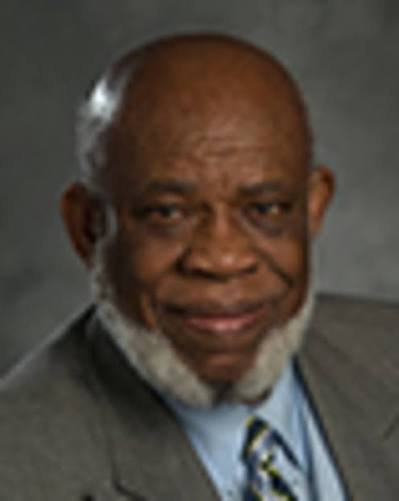
Professor Ajovi Scott-Emuakpor writes from Michigan State University.