By Lillian Okenwa
As Nigerians grapple with hunger, insecurity, failing hospitals and crumbling schools, the Federal Government has budgeted more than ₦8 billion for the construction and renovation of churches and mosques. The debate extends far beyond religion. It is about what a budget says a nation values most.
Budgets are often mistaken for accounting documents. They are much more than that. Every appropriation law is a declaration of priorities, a catalogue of political choices and, ultimately, a moral statement about what a government believes deserves public money.
Every line in a national budget answers the same question: If resources are limited, what should come first?
That question has become particularly urgent in Nigeria.
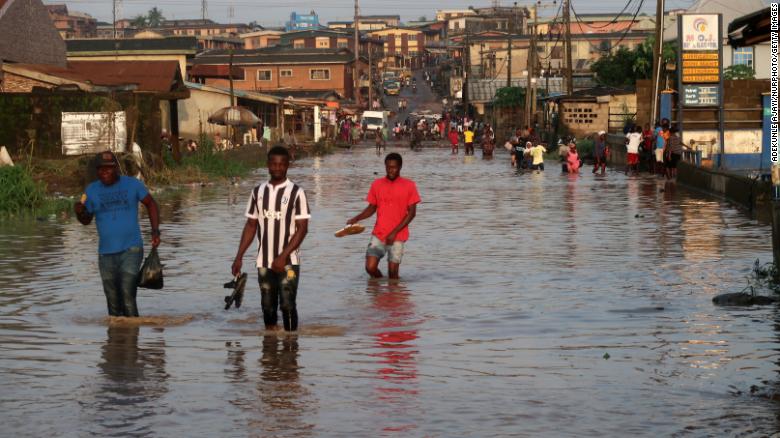
Across the country, millions of households continue to struggle with soaring food prices. Public hospitals routinely ask patients to purchase basic consumables before treatment. Primary healthcare centres in many communities operate without essential medicines or qualified personnel. Schools battle overcrowded classrooms, inadequate teaching materials and deteriorating infrastructure. Businesses spend billions of naira annually powering factories, offices and shops with private generators because electricity remains unreliable. Insecurity continues to reshape daily life, forcing communities to abandon farms, discouraging investment and driving up the cost of food and transportation.
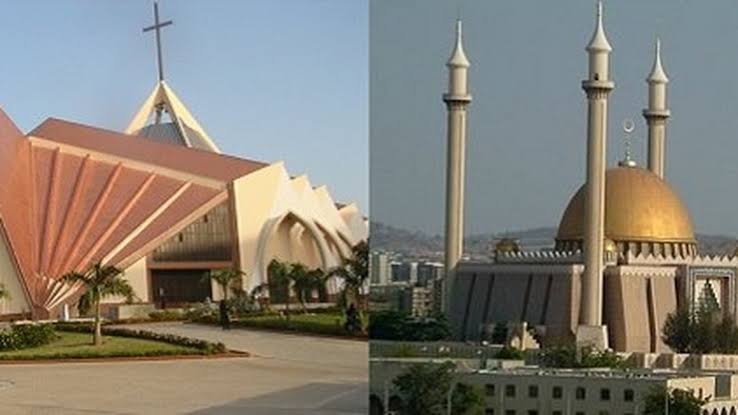
Against that backdrop, one allocation buried within the 2026 Appropriation Act has ignited an unusually emotional national conversation. The Federal Government has earmarked ₦8.05 billion for the construction, renovation and rehabilitation of churches and mosques across the country.
On its face, the amount represents only a tiny fraction of the ₦68.32 trillion national budget. Yet public controversies are rarely driven by percentages. They are driven by symbolism and priorities. A relatively modest allocation can provoke profound questions when citizens are forced to choose daily between competing necessities.
The figures contained in the approved budget show that approximately ₦1.91 billion is allocated to church-related projects, while about ₦6.14 billion is set aside for mosque-related projects spread across several Ministries, Departments and Agencies. Some projects involve the construction of new worship centres; others provide for the rehabilitation or renovation of existing religious facilities, including those located within federal institutions.
Predictably, the disclosures have divided public opinion.
Critics argue that government has misplaced its priorities, asking why scarce public funds should be spent on religious infrastructure when hospitals lack equipment, universities struggle for funding, security agencies remain overstretched and millions of Nigerians face worsening economic hardship. Supporters counter that some of the affected worship centres serve public institutions, including schools, hospitals and government establishments, making the expenditure part of broader infrastructure development rather than religious patronage.
Both arguments deserve careful consideration. Yet they also risk overlooking a more fundamental issue.
The real controversy is not whether churches or mosques should exist. Nor is it a contest between Christianity and Islam. Rather, it is whether, in a constitutional democracy confronting multiple social and economic emergencies, religious infrastructure ought to rank among the priorities for federal capital expenditure.
That question goes to the very heart of constitutional governance.
Nigeria’s Constitution proclaims the country a secular state in the sense that Section 10 forbids the adoption of any religion as a State religion. At the same time, successive governments have long maintained institutions such as the National Hajj Commission of Nigeria and the Nigerian Christian Pilgrim Commission, funded chaplaincies within the armed forces and correctional services, and supported religious activities in various public institutions. The relationship between religion and the Nigerian state has therefore never been one of complete separation but of continuous engagement, often raising difficult constitutional and policy questions.
The latest budget has reopened those questions with unusual force.
Is spending public money on the construction and renovation of places of worship compatible with the constitutional obligation of government to promote the welfare and security of the people? Does such expenditure represent legitimate public infrastructure where the facilities are located within government institutions? Or does it blur the line between facilitating freedom of religion and financing religious activity with taxpayers’ money?
These are not merely legal questions. They are questions of governance, fiscal responsibility and national priorities. Budgets, after all, are not judged only by what they include. They are also judged by what they leave behind.
Every naira appropriated to one purpose is a naira unavailable for another. Economists call this opportunity cost. Citizens experience it more simply. It is the health centre that remains unequipped because funds were directed elsewhere; the classroom left uncompleted; the rural road that remains impassable; the security outpost never built; the laboratory never commissioned.
That is why the debate over the ₦8.05 billion allocation is ultimately much larger than the sum itself. It is a debate about the values embedded in public finance, the meaning of constitutional neutrality in matters of religion and the difficult choices governments must make when resources are finite but national needs appear almost limitless.
For every budget tells a story.
The question Nigeria now confronts is this: What story does this one tell?