By Johnson Agu
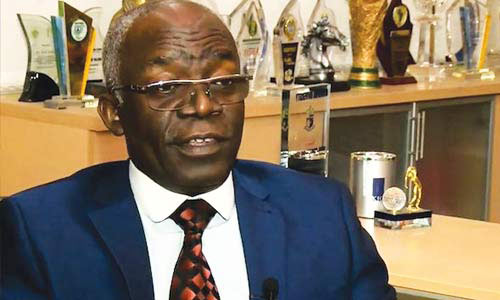
In a country where darkness has become a defining feature of daily life, senior advocate Femi Falana has ignited a fierce national debate, questioning why solar-powered comfort appears reserved for the political elite while millions of Nigerians remain trapped in a cycle of blackout, soaring energy costs and broken promises.
At the heart of the controversy are reports that solar power systems have been installed at the Presidential Villa, Aso Rock—a move that has triggered outrage in a country where millions of households and businesses endure daily blackouts, crippling costs, and a chronically unstable national grid.
Falana’s intervention cuts to a deeper question: if renewable energy is viable and effective for the seat of power, why is it not a national priority for the people?
He argues that if public funds were used to install solar infrastructure at the Villa, then equity demands that similar solutions be scaled across the country—not confined to government enclaves insulated from the harsh realities facing ordinary Nigerians.
His remarks land at a time when public frustration is reaching boiling point. The national grid continues to suffer frequent collapses, plunging cities into darkness and forcing businesses to rely on expensive diesel and petrol generators. For many Nigerians, electricity is no longer a basic utility—it is a luxury.
Yet critics say this moment is not just about access to power, but about years of policy failure, mismanagement, and questionable spending priorities. Successive administrations have poured billions into the power sector with little to show for it, while reports of massive expenditure on generators and alternative power solutions within government circles continue to fuel public anger.
Falana’s position reframes the issue beyond outrage into a constitutional and moral argument: energy access is not a privilege—it is a right tied to dignity, economic survival, and national development.
He insists that renewable energy—particularly solar—offers a practical pathway out of Nigeria’s electricity crisis. But without deliberate government policy to democratize access, it risks becoming yet another symbol of inequality.
The backlash has been swift and widespread. Across social media and policy circles, Nigerians are echoing a common refrain: why should the government enjoy uninterrupted, clean energy while citizens are left to navigate darkness and rising costs?
Still, some analysts caution that scaling solar infrastructure nationwide requires significant investment, coordination, and long-term planning. But even among skeptics, there is consensus on one point—the current system is unsustainable.
As pressure mounts, stakeholders are demanding transparency over the funding and scope of the Aso Rock solar project, alongside a clear, actionable roadmap for expanding renewable energy across Nigeria.
For many, this is more than a policy debate—it is a defining test of governance.
Because in a nation where the lights keep going out, the question is no longer whether Nigeria can fix its power crisis.
It is whether the political will exists to fix it for everyone—not just those at the top.