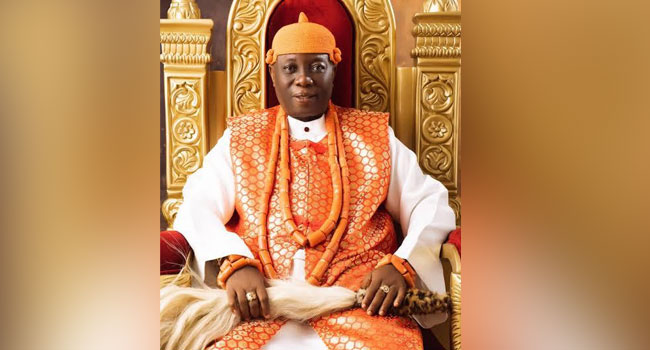
ASABA, Nigeria — The Asagba of Asaba, His Royal Majesty Prof. Epiphany Azinge (SAN), has issued a stark warning that Nigeria’s rapidly expanding cities risk becoming ungovernable unless governments urgently address chronic failures in urban planning, infrastructure, security and governance.
Speaking at the Fifth Public Lecture in honour of retired Supreme Court Justice Samuel Osaji in Asaba on Tuesday, the renowned legal scholar and traditional ruler argued that urbanization in Nigeria has increasingly evolved from an opportunity for economic transformation into what he described as “a crisis of governance.”
“The future of Nigeria will largely be shaped by the future of Nigerian cities,” Azinge declared, warning that population growth has continued to outpace planning, infrastructure and institutional capacity across the country.
Using Asaba as a case study, the monarch painted a picture familiar to many Nigerian cities: worsening traffic congestion, housing shortages, flooding, environmental degradation, youth unemployment, waste management challenges and growing security concerns.
Nigeria, one of the world’s fastest-urbanizing countries, continues to witness a steady migration of people from rural communities into urban centres in search of jobs, education, healthcare and improved living conditions. However, Azinge argued that successive governments have failed to match that demographic shift with the investments and policy reforms needed to sustain modern cities.
“The paradox is striking,” he said. “Nigeria possesses enormous human and natural resources, entrepreneurial energy and strategic geographic advantages, yet many of its cities struggle to provide the basic services expected of modern urban societies.”
The Asagba identified weak urban planning as one of the country’s most serious challenges, criticizing obsolete master plans, poor implementation and political interference in development control mechanisms.
“A city without planning eventually becomes ungovernable,” he warned.
Azinge proposed a sweeping agenda for urban renewal centred on ten key priorities, including integrated urban planning, massive infrastructure investment, affordable housing, climate resilience, economic development, security, healthcare, education, cultural preservation and institutional accountability.
For Asaba specifically, he called for the implementation of a modern and enforceable master plan, digitized land administration, preservation of green spaces, improved transportation networks, smart traffic management systems and stronger flood-control infrastructure.
The monarch also stressed that infrastructure should no longer be viewed as a luxury but as a prerequisite for economic productivity and human dignity.
“Roads, bridges, drainage systems, electricity, broadband connectivity and public transportation are not luxuries; they are necessities,” he said.
Beyond infrastructure, Azinge warned that rising unemployment and poverty in urban centres could fuel deeper insecurity if governments fail to create economic opportunities for young people.
He urged authorities to invest in technology hubs, manufacturing clusters, tourism, entrepreneurship and digital skills programmes capable of absorbing the country’s growing youth population.
On security, the monarch argued that effective urban safety extends beyond policing and should incorporate intelligence gathering, surveillance technology, improved street lighting, judicial efficiency and community participation.
He also called for a more prominent role for traditional institutions in urban governance, noting that community leaders remain critical actors in conflict resolution, social cohesion and grassroots mobilization.
The lecture highlighted the growing impact of climate change on Nigerian cities, with Azinge identifying flooding, pollution and rising temperatures as emerging threats to urban sustainability.
He advocated large-scale recycling programmes, urban greening initiatives, renewable energy projects and stronger environmental regulations to improve resilience.
Drawing lessons from cities such as Singapore, Kigali, Dubai and Curitiba in Brazil, the Asagba argued that successful urban transformation depends on visionary leadership, strong institutions and long-term planning.
Perhaps his strongest message was directed at public officials.
“Infrastructure alone cannot build great cities,” he said. “Institutions, transparency and ethical leadership are indispensable.”
Azinge urged governments at all levels to embrace accountability, open budgeting, citizen participation and data-driven policymaking, warning that development built on weak institutions would ultimately prove unsustainable.
He concluded with a broader challenge to political leaders, traditional rulers, businesses and citizens alike, insisting that Nigeria must move beyond mere urban growth and pursue genuine urban transformation.
“The urban question is not merely about roads and buildings,” he said. “It is fundamentally about human dignity, governance, justice, opportunity and the quality of collective existence.”
As Nigeria’s cities continue to swell under the pressures of population growth and economic migration, the Asagba’s intervention adds to a growing debate over whether the country’s urban centres can become engines of prosperity—or slide deeper into congestion, inequality and dysfunction.
“The future of Nigeria will be written largely in its cities,” he said.