Nigeria’s federal government has announced plans to fund a ₦23.85 trillion ($15.3 billion) budget deficit in its proposed 2026 national budget through what it calls an “aggressive, digitised revenue mobilisation drive,” a move that is drawing scrutiny amid lingering concerns over fiscal transparency and accountability.
The announcement comes against the backdrop of unresolved allegations that lawmakers inserted trillions of naira worth of projects into the 2025 budget without adequate justification.
In May 2025, civic technology organization BudgIT alleged that the National Assembly added more than 11,000 projects valued at approximately ₦7 trillion ($4.7 billion) to the 2025 budget. BudgIT described the projects as “corruption-ridden constituency insertions,” many of which allegedly fund non-existent, duplicated, or low-impact initiatives such as boreholes and streetlights—an indication, the group said, of entrenched patronage and waste.
Despite the allegations, no comprehensive public report has been released detailing how the 2025 capital allocations were eventually utilized, reinforcing accusations that Nigeria’s budget system continues to operate with limited accountability.
Multiple Budgets, Blurred Oversight
The Tinubu administration is currently running the 2024, 2025, and 2026 budgets concurrently—an unusual practice that opposition figures and economists say violates basic public finance principles. Critics argue that overlapping budget cycles undermine transparency and create opportunities for abuse.
Those concerns deepened after the government ordered that 70 percent of the 2025 capital budget be rolled over into 2026, citing revenue shortfalls and weak project execution. Analysts say the rollover further blurs responsibility for spending outcomes and makes oversight more difficult.
‘Aggressive’ Revenue Push
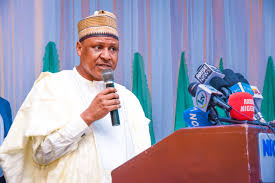
Speaking Monday at the federal government’s end-of-year press conference in Abuja, Minister of Information and National Orientation Mohammed Idris said the administration intends to close the 2026 budget gap through improved revenue collection rather than heavy borrowing.
“The deficit will be funded through an aggressive, digitised revenue mobilisation drive, ensuring that every liable entity pays its fair share, without imposing unfair burdens on anyone,” Idris said at the event held at the Nicon Luxury Hotel.
He added that the strategy would rely on what he described as “prudent assumptions,” including oil priced at $64.85 per barrel, daily production of 1.84 million barrels, and an exchange rate of ₦1,400 to the dollar.
Critics, however, say the plan effectively signals a tougher approach to taxation and enforcement at a time when households and businesses are already under pressure.
Tinubu’s ‘Budget of Consolidation’
President Bola Ahmed Tinubu last week presented the 2026 Appropriation Bill to the National Assembly, branding it the “Budget of Consolidation, Renewed Resilience and Shared Prosperity.” The proposal pegs total expenditure at ₦58.18 trillion, with ₦26.08 trillion allocated to capital projects—the largest capital spending figure in Nigeria’s history.
According to a statement from the presidency, the projected deficit of ₦23.85 trillion represents 4.28 percent of Nigeria’s gross domestic product.
Idris said the budget would coincide with the implementation of recently enacted tax reform laws, which he claimed would strengthen accountability and deepen the social contract between the government and citizens.
“That budget sets the stage for a year in which the landmark new Tax Reform Laws will go into operation, ushering in an era of fiscal growth and a deepening of the social contract between the government and the people,” he said.
Acknowledging that the reforms could cause short-term hardship, the minister urged Nigerians to support the government’s fiscal direction.
“The temporary pains of reform are yielding to permanent gains,” Idris said, adding that the administration remains committed to “building a nation where every citizen has the agency to thrive.”