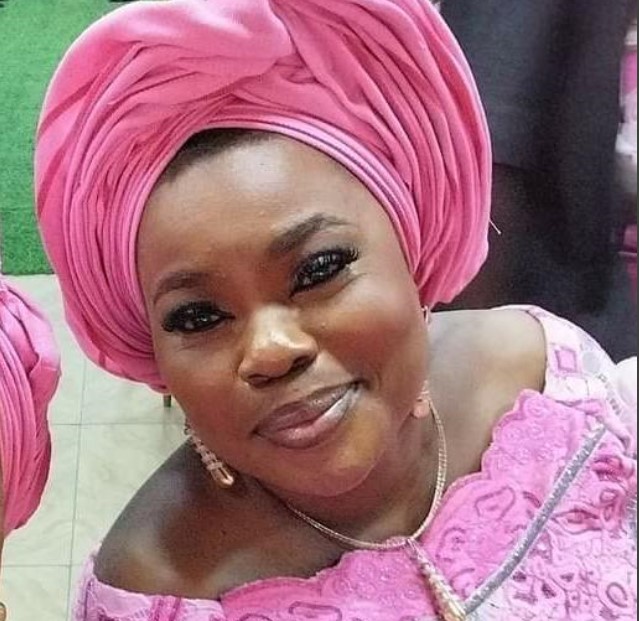
After years of waiting for love and motherhood, what doctors thought was one pregnancy turned into four babies, giving a Lagos woman a life-changing answer to a prayer she never stopped saying.
For countless women across Nigeria and much of Africa, the hardest part of life is not simply waiting for marriage or a child. It is carrying the weight of expectations, answering uncomfortable questions from relatives and neighbours, and watching others build the families they have always dreamed of.
For Mrs. Olushola Olonode, that season of waiting stretched across nearly five decades.
She married on December 12, 2023, at the age of 48. After waiting so long to find a husband, there was one prayer she said she carried in her heart every day.
“I had waited for a husband, and I didn’t want to wait again for children,” she recalled.
Less than three years later, that prayer has become a remarkable story of hope.
Read Also: 53-year-old Nigerian woman welcomes quadruplets
Read Also: Doctors said they’re infertile but two sets of twins arrived a year apart
At 50, Olonode is now the mother of quadruplets—an outcome so unexpected that even repeated ultrasound scans struggled to determine how many babies she was carrying.
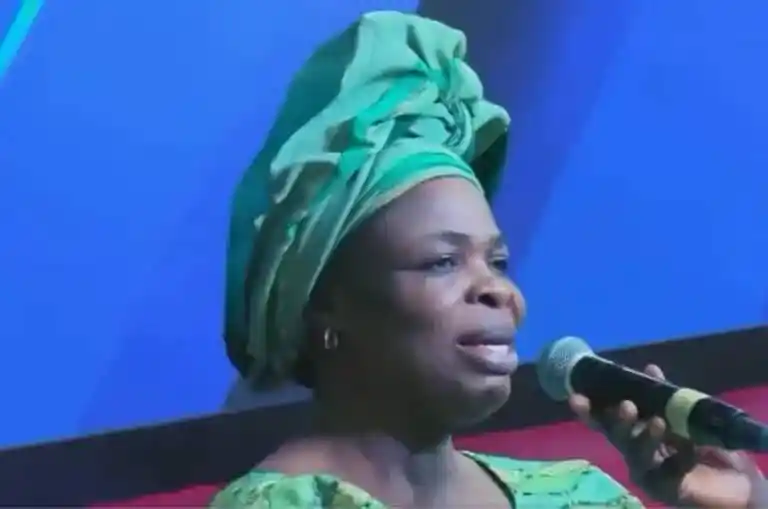
Speaking during a thanksgiving service at the Redeemed Christian Church of God (RCCG), Solid Rock Parish, Ojodu Berger, Lagos, Olonode recounted how different scans produced different answers throughout her pregnancy.
One examination suggested twins. Another indicated triplets. Subsequent scans also produced conflicting results, leaving her and her family uncertain about what to expect.
The surprise came in the delivery room. There were not two babies.
There were not three. There were four.
For Olonode, the moment represented far more than an extraordinary multiple birth. It marked the end of years of waiting, uncertainty and hope.
Across many African societies, marriage and childbearing remain closely tied to cultural expectations. Couples who experience delayed marriage or infertility often face intense emotional pressure, while women frequently shoulder the greater burden of blame despite medical evidence showing that fertility challenges can affect both men and women.
For many families, the journey to parenthood is far more complicated than society sometimes acknowledges.
Medical specialists explain that the chances of natural conception generally decline with age, particularly after 35. Pregnancies later in life also require closer medical supervision because they carry increased health risks for both mother and babies.
Multiple pregnancies such as quadruplets are exceptionally rare and usually demand specialised antenatal care to improve outcomes.
Against those odds, Olonode’s experience has resonated with many Nigerians, especially couples who have spent years praying, seeking medical care or enduring the emotional toll of delayed parenthood.
Her testimony is not simply about four babies.
It is about perseverance through years of uncertainty, the resilience to keep hoping despite disappointment, and the joy that can accompany long-awaited dreams.
As applause echoed through the church auditorium during the thanksgiving service, many worshippers celebrated more than the arrival of quadruplets.
They celebrated a woman whose years of waiting finally gave way to laughter.
For countless couples walking their own path to parenthood, Olonode’s story offers neither a guarantee nor a formula.
It offers something equally powerful.
Hope.
Understanding Delayed Motherhood and Multiple Births
• Infertility affects millions of couples worldwide. According to the World Health Organization, about 1 in 6 people globally experience infertility at some point in their reproductive lives, underscoring that it is a widespread medical condition affecting families across all regions.
• Fertility challenges affect both men and women. Medical experts estimate that male factors contribute to roughly one-third of infertility cases, female factors to another third, with the remainder involving both partners or unexplained causes.
• Pregnancy after 35 requires closer monitoring. Obstetricians generally classify pregnancies from age 35 onward as higher risk because of increased chances of complications such as hypertension, gestational diabetes, premature birth and chromosomal abnormalities. Many women nevertheless go on to have healthy pregnancies with appropriate prenatal care.
• Quadruplet pregnancies are exceptionally uncommon. Naturally conceived quadruplets are extremely rare. Advances in antenatal care and neonatal medicine have significantly improved survival rates for mothers and babies, although such pregnancies remain medically complex.
• The emotional cost can be immense. Across Nigeria and many African societies, delayed marriage and childlessness often carry profound social, cultural and psychological pressures. Experts in reproductive health have repeatedly called for greater public understanding, reduced stigma and increased access to fertility counselling and treatment for couples navigating these deeply personal challenges.