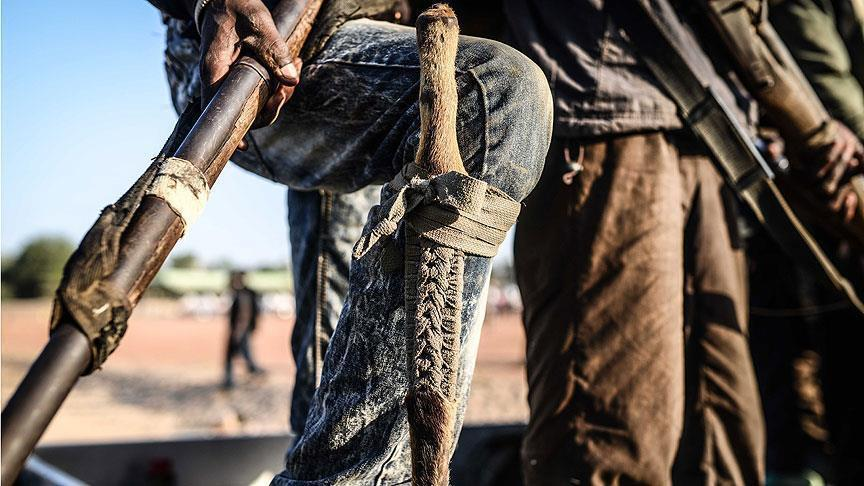
Nigeria’s long-running war against terrorism and banditry is facing renewed scrutiny, as fresh disclosures from senior government officials and disturbing field-level developments raise hard questions about whether the state is losing control — technologically, operationally and politically.
For years, Nigerian authorities have insisted that security forces were closing the gap on criminal networks. During his tenure as Minister of Communications and Digital Economy, Isa Ali Pantami repeatedly assured Nigerians that the National Identity Number (NIN) and its mandatory linkage to SIM cards would become a powerful tool to track criminals and dismantle terror cells. He argued that once SIM cards were tied to verifiable identities, perpetrators could be traced and held accountable.
That promise now appears increasingly hollow.
This week, Minister of Communications, Innovation and Digital Economy Bosun Tijani disclosed that bandits and terrorist groups operating across Nigeria are using advanced communication technologies specifically designed to defeat state surveillance.
Speaking on Channels Television’s Politics Today on December 12, Tijani said criminal groups employ call-hopping systems that bounce phone signals across multiple cell towers, effectively masking their locations. He added that they deliberately operate from areas with little or no telecom coverage to ensure their signals vanish once they relocate.
“There was a special kind of technology they were using to make calls,” Tijani said. “They weren’t using normal towers. They bounced calls off multiple towers. That is why they enjoy staying in areas that are not connected at all.”
According to the minister, this tactic allows armed groups to coordinate attacks from unserved or poorly connected regions, placing them several steps ahead of conventional security tracking systems.
The revelation has intensified public anger over Nigeria’s massive defence spending. Over the past decade, billions of dollars have been allocated to military procurement, intelligence gathering and counterterrorism operations, yet armed groups continue to expand their reach, firepower and sophistication.
Tijani said the government is attempting to close the gap by upgrading Nigeria’s communication satellites to serve as backups when ground-based infrastructure fails.
“If our towers are not working, our satellites will work,” he said. “Nigeria is the only country in West Africa with communication satellites, and we are bringing in new ones to upgrade their capabilities.”
The disclosures come amid mounting political pressure on President Bola Ahmed Tinubu, who recently declared a security emergency aimed at reversing the worsening violence. The Nigeria Labour Congress President, Joe Ajaero, has accused the administration of failing to deliver tangible results on insecurity, a charge the government disputes.
But a separate development has further shaken public confidence.
A widely circulated video, yet to be independently verified, appears to show a Katsina State lawmaker entering a forest to negotiate directly with armed bandits — without any visible security escort. The footage, recorded in Hausa, shows the politician addressing the armed men with striking deference, referring to their leader as the “Grand Commander of Peace.”
In the video, the lawmaker thanks the group for allegedly releasing 37 abductees and claims no resident of Bakori Local Government Area remains in captivity. He praises Fulani intermediaries for facilitating the talks and announces what he describes as an agreement between the government and the armed group.
The remarks have sparked outrage nationwide. Among the most controversial statements in the recording are appeals for authorities to halt military operations against “peaceful bandits,” requests for government-funded projects in bandit-controlled areas, and suggestions that lesser crimes should be tolerated as long as large-scale attacks stop.
Security analysts warn that if authentic, the video signals a dangerous erosion of state authority and the emergence of non-state armed groups as parallel power structures. They say it also exposes the desperation of local officials who, lacking effective federal support, resort to negotiation as a survival strategy.
The lawmaker ends the video by urging communities to cooperate with the armed group to maintain “peace” and announces a joint committee between local leaders and bandits to resolve disputes — a move critics say blurs the line between governance and capitulation.
Together, the revelations paint a troubling picture: armed groups that communicate beyond the reach of state surveillance, political actors negotiating from a position of weakness, and a security architecture struggling to justify the enormous resources poured into it.
As Nigeria weighs its next steps, the central question remains unresolved — whether the country is confronting terrorism with sufficient resolve, or quietly adapting to its entrenchment.