What happened? Why did it take 19 years? How did he win?
ABUJA — In 2007, Adebayo Afolabi Victor graduated from the Federal University of Technology, Akure (FUTA) with a Second Class Lower Division degree. Most students in his position would have moved on. Victor did not.
Convinced that errors in the marking and computation of his examination results had cost him a Second Class Upper Division, he embarked on a legal battle that would consume nearly two decades, take him through every level of Nigeria’s judicial system, and ultimately end at the Supreme Court.
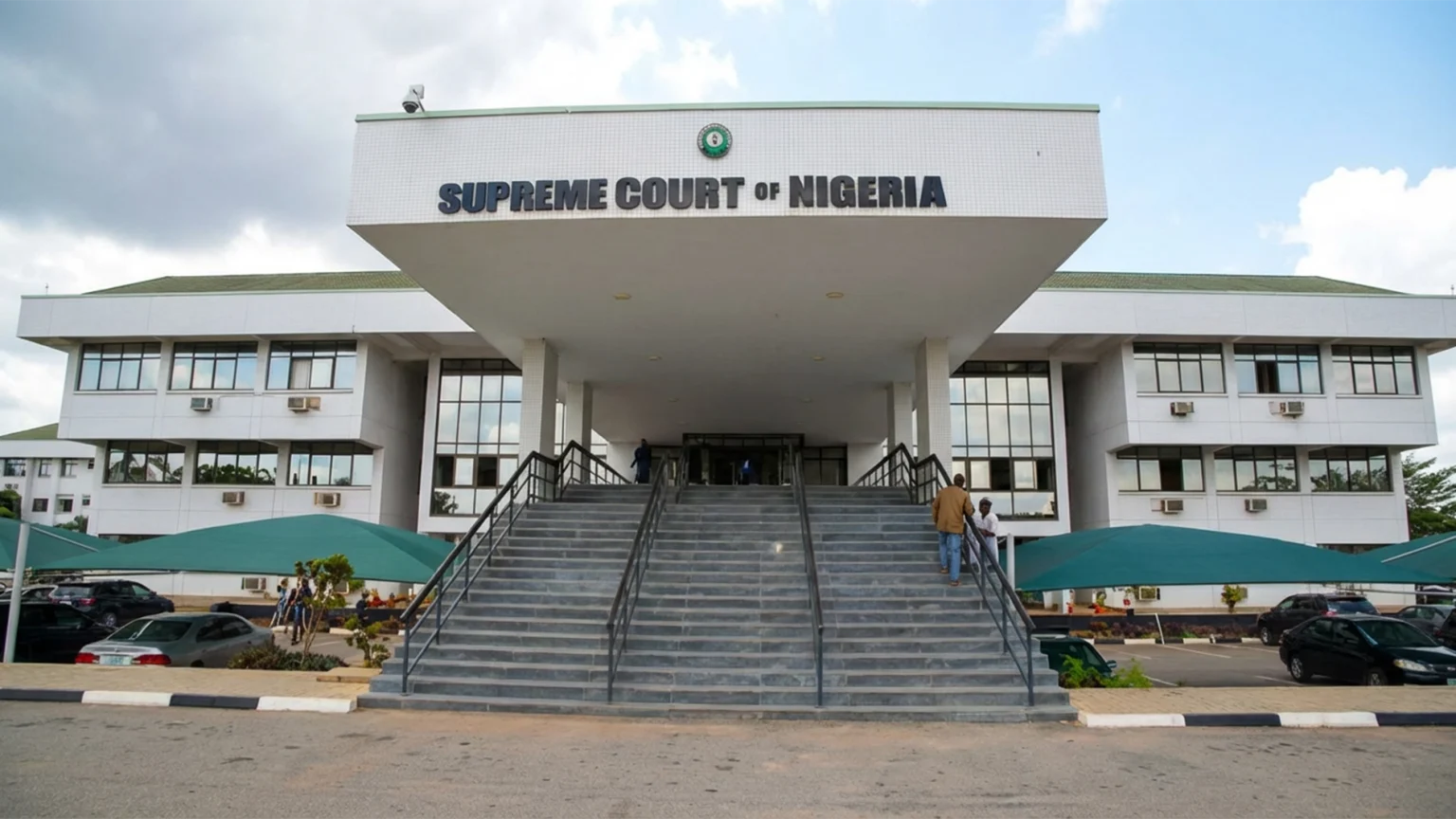
On December 12, 2025, the country’s highest court vindicated him.
In a landmark judgment in Victor v. Federal University of Technology, Akure (2026) 8 NWLR (Pt. 2044) 33, the Supreme Court not only upheld the correction of his degree classification but also awarded him ₦18 million in damages and ₦2 million in litigation costs, bringing his total compensation to ₦20 million.
The decision is already being hailed as one of the most significant judicial pronouncements on the rights of students and the limits of university autonomy in Nigeria.
What makes the case even more remarkable is that Victor is not a lawyer. He prosecuted the matter himself.
From the Federal High Court to the Court of Appeal and ultimately the Supreme Court, he personally pursued the case against one of Nigeria’s leading universities.
The dispute began shortly after his graduation.
Victor believed that several Mechanical Engineering examination scripts had either been improperly marked or incorrectly processed, resulting in a lower cumulative grade point average than he had actually earned.
He repeatedly petitioned university authorities and exhausted internal procedures, insisting that a review of the disputed courses would reveal that he qualified for a Second Class Upper degree. The university disagreed.
After years of unsuccessful attempts to resolve the matter internally, Victor approached the Federal High Court in 2011. What followed was a legal marathon.
The case was initially dismissed on technical grounds, revived by the Court of Appeal, retried at the Federal High Court, appealed again, and eventually reached the Supreme Court.
Along the way, a Federal High Court ordered the university to remark his examination scripts through external examiners and issue a transcript reflecting his actual performance. The university resisted.
But when the scripts were eventually remarked pursuant to court orders, the outcome validated Victor’s long-standing claim. His degree classification was upgraded from Second Class Lower to Second Class Upper.
For the Supreme Court, however, the case was about more than one student’s result. The central issue was whether universities enjoy absolute immunity from judicial scrutiny when students allege negligence or unfair treatment in the handling of academic records.
The court’s answer was a decisive no.
Delivering the lead judgment, Justice Helen Moronkeji Ogunwumiju reaffirmed that universities possess academic autonomy and that courts do not sit as examiners. However, she stressed that academic independence does not place universities above the law.
The court held that institutions owe students a duty of care in academic administration, including the proper marking of scripts, accurate recording of scores, fair handling of complaints and transparent decision-making processes.
Where that duty is breached, the court ruled, judicial intervention becomes not only permissible but necessary.
According to the Supreme Court, FUTA failed to adequately address Victor’s complaints for years despite his persistent efforts to obtain a review.
The justices concluded that the university’s conduct subjected him to avoidable hardship, frustration, emotional distress and the loss of opportunities that may have flowed from a higher degree classification.
One such opportunity, Victor argued, was a fully funded international postgraduate scholarship he believed he lost because of the disputed classification.
Although the court declined some claims for special damages, it agreed that the compensation awarded by the lower courts was grossly inadequate.
By the time the Federal High Court awarded Victor ₦500,000 in damages in 2017, he had already spent approximately a decade fighting for recognition of what he maintained was his rightful academic standing.
The Supreme Court described the award as insufficient and increased it dramatically to ₦18 million. An additional ₦2 million was awarded in litigation costs.
The ruling establishes an important distinction in Nigerian law. Universities retain the exclusive authority to set academic standards and award degrees. But that authority is not absolute.
Academic discretion remains protected. Administrative negligence does not.
For students, the judgment signals that courts may intervene where there is credible evidence of errors, procedural unfairness or a breach of duty in the processing of academic results.
For universities, it serves as a warning that institutional autonomy cannot be used as a shield against accountability.
For Victor, the decision brings an extraordinary chapter to a close.
Nineteen years after he first challenged the result he believed was wrong, he finally received the degree classification he said he earned all along.
And in doing so, he secured a Supreme Court precedent that may reshape how Nigerian universities handle student complaints for years to come.
See also, Adebayo Afolabi Victor v. FUTA lawsuit citation (2025) LPELR-83156(SC) for the full decision.