By Lillian Okenwa
To some, he is a major headline. To many, he is much more than news.
So, when word filtered through on Friday, June 6, 2025, that Hon. Justice Mohammed Lawal Uwais had passed away, I froze. Then I found myself screaming and pacing around my bedroom in disbelief.
When my father died 20 years ago at the age of 63, I convinced myself that people whose parents or loved ones died in their 80s or 90s probably did not feel the loss as intensely. After all, I reasoned, the deceased had lived a full life. I have now come to realise how wrong I was.
Loss does not negotiate with age.
When someone you love dies, the pain arrives all the same.
I struggle to write tributes for people close to me. This is only the second time I have attempted one. Since his passing, I have wrestled with these words, starting and stopping repeatedly. Even now, I am not sure I have found the right ones.
Read Also: A Legacy for Posterity – https://youtu.be/tPR5BGCf-fg?si=CPEpElmNXkn-8HM0
Since that Friday morning when Justice Uwais passed away, just six days before what would have been his 89th birthday, I have searched for a fitting way to honour him. I am still searching.
Although he had been ill for some time, the news hit hard. It reminded me that grief does not measure years lived. It simply measures love.
When I arrived at the house that morning, part of me hoped there had been some mistake. Perhaps someone had misunderstood. Perhaps the message was wrong.
But the faces at the gate told a different story.
When I eventually entered his room and saw him wrapped up on his bed, all I could say to Aunty Maryam was, “So it’s true.”
Later, when he was wheeled on a stretcher into the ambulance that would take him to the mosque for the final rites, and I heard that loud thud of the ambulance trunk closing with forceful finality, it became clear to me that it’s really over. As the ambulance pulled away from the compound for the last time, I simply stood and watched. I could not cry. My heart was too heavy.
Then another thought struck me.
It was Friday.
For decades, Friday meant one thing: Baba would leave for prayers at the Abuja National Mosque and return home. But not this Friday.
This was also Eid al-Adha, the sacred day when Muslims across the world commemorate Prophet Ibrahim’s obedience and sacrifice. Yet on this day of faith and devotion, it was Baba himself making his final journey to the mosque.
And this time, there would be no return.
He would never again walk through the doors of his home.
His grandchildren, whom he adored and who adored him in return, would never again hear his voice, sit by his side, or on his thighs.
That reality was difficult to bear.
Hon. Justice Mohammed Lawal Uwais lived an extraordinary life of service. He remains the longest-serving Justice of the Supreme Court of Nigeria, spending 27 years on the nation’s apex bench and serving for 11 years as Chief Justice of Nigeria from 1995 to 2006.
Yet what set him apart was not merely the offices he held.
It was the simplicity with which he carried them.
In a country where public office is too often treated as a family inheritance, he remained committed to fairness and institutional integrity. Throughout his years as Chief Justice, he resisted pressures to use his position to advance relatives, friends, or associates. He believed judicial appointments should be earned through merit, not personal connections.
That commitment earned him respect across generations of judges, lawyers, and public servants.
Duty came first.
It was only after he retired that I realised he had never used a siren, despite holding one of the highest offices in Nigeria. That quiet restraint mirrored the way he exercised power generally: without ostentation and without entitlement.
There is another irony that has not escaped me.
Justice Uwais was born on June 12, a date that would later assume profound significance in Nigeria’s democratic journey. Long after his birth, June 12 became synonymous with the struggle for electoral justice following the annulment of the 1993 presidential election, widely regarded as the freest in Nigeria’s history.

Perhaps it was fitting that a man born on that date would, decades later, chair the Electoral Reform Committee whose recommendations remain the most ambitious blueprint for fixing Nigeria’s troubled electoral system.
Following the controversial 2007 general elections, President Umaru Musa Yar’Adua turned to Justice Uwais to lead a national conversation on electoral reform. The committee’s recommendations were bold and far-reaching: insulating INEC from political control, guaranteeing its financial independence, creating an Electoral Offences Commission and ensuring that election disputes were resolved before winners assumed office.
Many of those recommendations remain unimplemented today. Yet as politicians position themselves for the 2027 elections and Nigerians once again debate the credibility of the electoral process, the Uwais Report endures as a reminder that some of the solutions to our democratic challenges have long been identified. We simply lacked the political will to embrace them.
In many ways, Justice Uwais spent a lifetime defending the integrity of institutions. His work on electoral reform was merely an extension of that enduring commitment.
Away from the courtroom, national and international limelight, he was simply himself. A man of utmost simplicity. No airs.
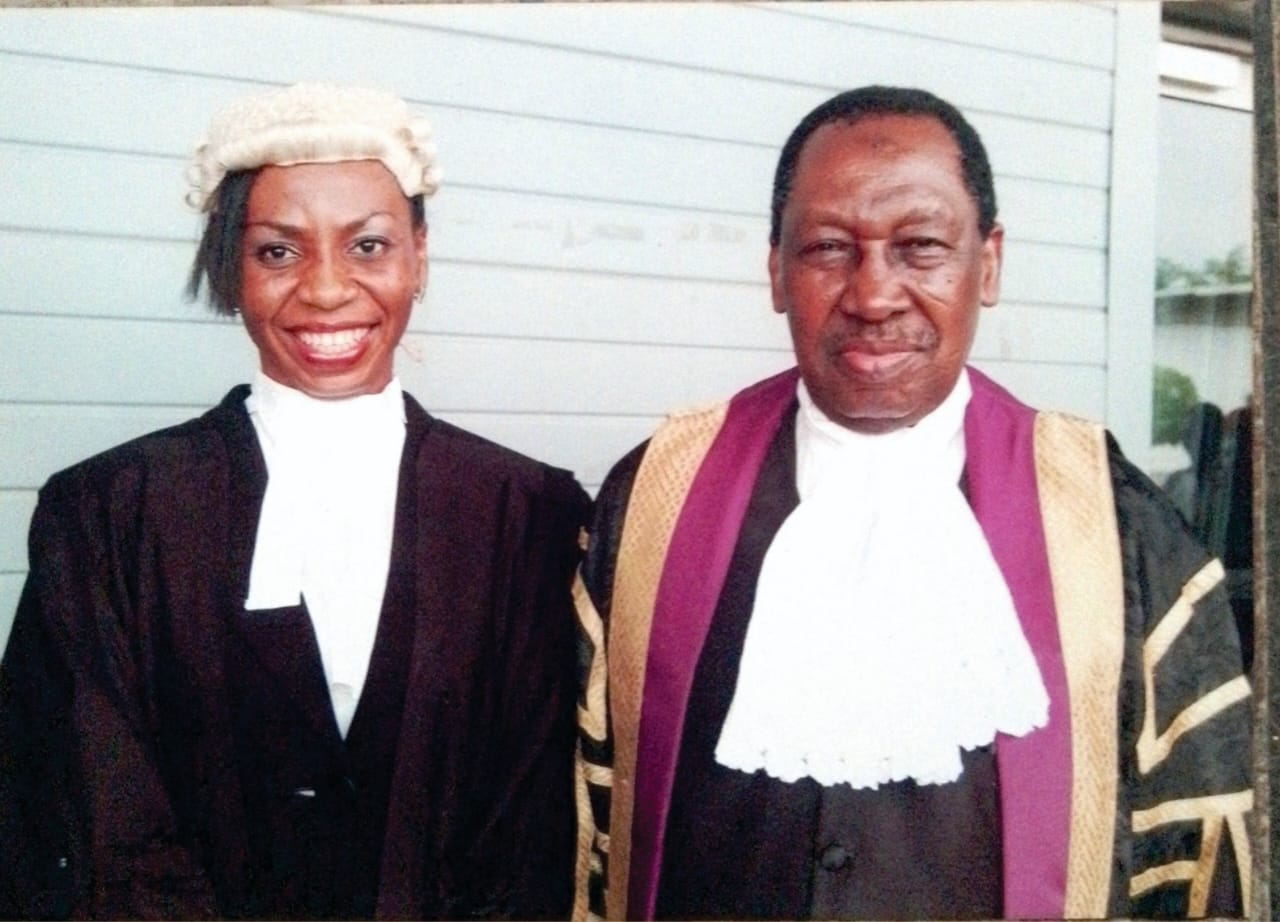
My visits to him were always heartening. He was a gifted conversationalist. We would sit and talk for hours, sharing stories and laughter. He had a remarkable memory and an endless supply of fascinating anecdotes from decades in public service.
Listening to him was an education.
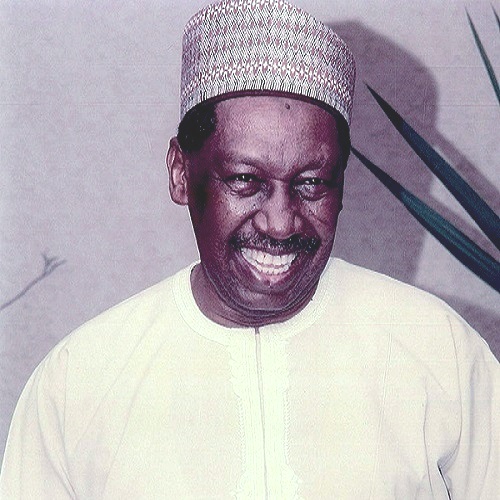
Sometimes we sat in companionable silence, before drifting into conversation. Other times we read and exchanged newspapers; then talk about trending issues. I will always remember him asking, “Lillian have your read this?” while raising a newspaper for me to see.
I remember him introducing me to a classmate that came visiting from Kaduna, as ‘his friend’. My Lord Justice Uwais was a rare breed.
Despite all he achieved, there was no trace of arrogance.
Chief Justice Uwais belonged to a generation of public servants whose humility was as remarkable as their accomplishments.
Today, he would have been 90.
Though he is no longer physically present, he lives on in the lives he touched, the institutions he strengthened, and the countless people who were privileged to know him.
Mama Saratu, Aunty Maryam, and those closest to him will understand this loss far more deeply than words can capture.
Happy birthday, Your Lordship.
And goodnight.