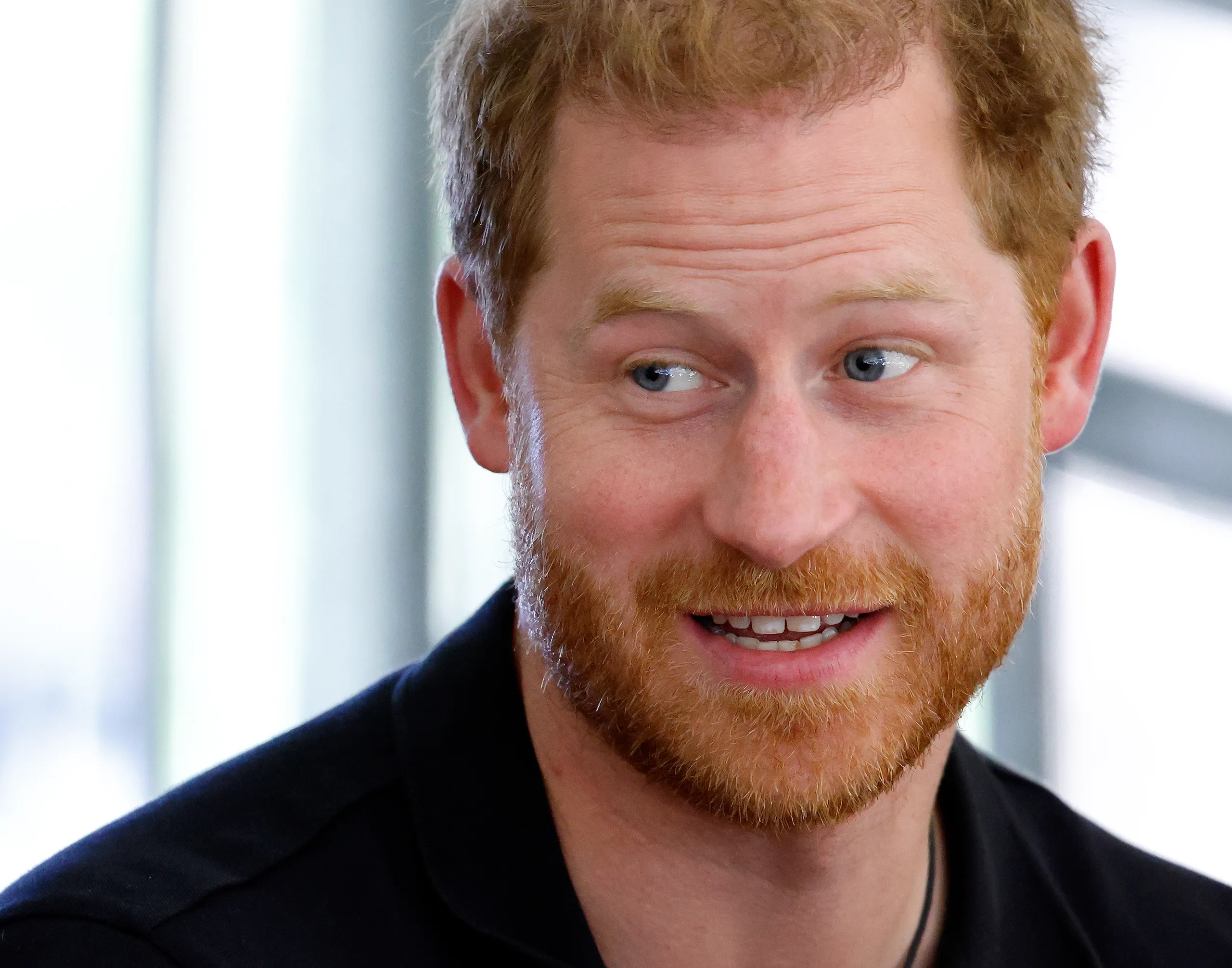
The High Court loss is severe, the costs potentially enormous and the criticism of his legal team unusually sharp. But Prince Harry’s battle with the British press is not necessarily over.
By Law & Society Magazine Legal & Public Policy Bureau
Prince Harry has suffered one of the most serious legal defeats of his long-running campaign against the British press, but reports suggesting that the judgment has brought the entire battle to an end go too far.
There is still a possible route to the Court of Appeal.
The more difficult question is whether Harry and the other claimants can persuade an appellate court that Mr Justice Nicklin was wrong in law or that there is some other compelling reason for his decision to be reconsidered.
That will not be easy.
The judgment followed an 11-week trial in which Harry, Sir Elton John, Baroness Doreen Lawrence and four other claimants sought to establish that Associated Newspapers, publisher of the Daily Mail and Mail on Sunday, had been responsible for unlawful information-gathering practices.
They failed.
The judgment delivered in July rejected their claims. The costs ruling that followed on August 21 made the defeat considerably more painful, with Nicklin ordering that the defendant’s recoverable costs should be assessed on an indemnity basis and directing the claimants to make an interim payment of £9.54 million.
The judge’s criticism was not confined to the fact that the claimants had lost.
He was highly critical of the manner in which the litigation had been conducted, including the continued reliance on allegations whose evidential foundation had become problematic, the handling of evidence from private investigator Gavin Burrows, allegations made against journalists and executives, and the way parts of the case changed during the trial.
That is what makes the judgment particularly damaging for Harry and his legal team.
There may still be an appeal
The High Court’s decision does not, by itself, close the door on further litigation.
Harry and the other claimants can seek permission to appeal. An appeal, however, is not an opportunity to start the case again from scratch.
The Court of Appeal would be looking for an appealable error. The applicants would need to demonstrate that the High Court decision was wrong in law or that there was another compelling reason for the matter to be heard again.
That presents a substantial obstacle.
Nicklin heard the witnesses, examined the documents and spent weeks considering the evidence. Appellate courts are generally cautious about overturning a trial judge’s findings of fact, particularly where those findings depend upon an assessment of evidence heard directly by the judge.
Harry’s lawyers may nevertheless argue that the judge applied the law incorrectly, misunderstood particular evidence or reached conclusions that cannot properly stand.
Whether those arguments are strong enough to secure permission to appeal is a matter for the appellate courts.
Until that process is exhausted, it would be premature to describe the litigation as completely finished.
The costs are another battle
The £9.54 million figure now circulating should also be understood correctly.
It is an interim payment on account of costs, not necessarily the final amount that will be recovered by Associated Newspapers.
The publisher has put its costs at about £34.5 million, but the final recoverable figure will have to be determined through the costs process.
That distinction is important because headlines suggesting that Harry has already been ordered personally to pay £34.5 million would be misleading.
There were seven claimants.
There are also questions concerning insurance arrangements and how the financial liability will ultimately be distributed.
The costs judgment nevertheless creates a serious financial problem for the group and gives Associated Newspapers considerable leverage as the costs process continues.
Why the Burrows evidence mattered
One of the most damaging features of the case concerned Gavin Burrows, the private investigator whose evidence was expected to play an important role in supporting the claimants’ allegations about unlawful information gathering.
His original witness statement contained serious allegations.
The problem was that Burrows later repudiated the substance of that evidence, saying that his statement had been fabricated and denying that he had carried out the illegal activities attributed to him on behalf of Mail journalists.
The claimants nevertheless continued with their case.
That decision became central to the judge’s criticism.
The problem for Harry was therefore not simply that one witness had become unreliable. It was what the court thought the claimants and their advisers should have done once the evidential difficulty became apparent.
The judge’s answer was clear: allegations that could no longer properly be supported should have been narrowed, withdrawn or abandoned.
But Harry’s wider complaint about the press has not been erased
This is where some of the reporting surrounding the judgment risks becoming overly simplistic.
Harry’s failure to prove his case against Associated Newspapers does not mean that unlawful conduct by British newspapers was invented.
Britain’s phone-hacking scandal was real. It produced criminal prosecutions, convictions, civil claims and the Leveson Inquiry.
Harry himself has also won a significant privacy case against Mirror Group Newspapers.
In that litigation, the High Court found that his phone had been targeted unlawfully and awarded him damages.
He has therefore not spent years complaining about press misconduct without ever proving anything in court.
His legal record is mixed.
Some claims have succeeded. This one failed.
That is the more accurate picture.
The Sherborne factor
The judgment is also a major setback for David Sherborne, one of Britain’s best-known media lawyers and the principal figure behind Harry’s legal campaign against sections of the British press.
Sherborne has built an formidable reputation representing celebrities and public figures in privacy and media litigation. He has also secured important victories against newspaper publishers.
That record makes the Associated Newspapers defeat particularly striking.
The question now being asked in legal circles is not simply why the claimants lost, but why such a broad case continued to trial after serious problems had emerged with parts of the evidence.
Nicklin’s costs judgment will inevitably become part of that discussion.
It would nevertheless be premature to write Sherborne’s professional obituary on the strength of one case, however severe the criticism.
Successful advocates have lost important cases before. The consequences here are more serious because the criticism concerns the conduct and management of the litigation, rather than the result alone.
And what does this mean for Harry?
For Harry, the immediate problem is both legal and financial.
The High Court has rejected his claims against Associated Newspapers. The court has also imposed an unusually severe costs consequence.
If permission to appeal is granted, he still has another opportunity to challenge the judgment.
If an appeal fails, the position becomes considerably harder.
But there is something else at stake.
Harry has presented his confrontation with the British press as a long-running struggle over privacy, accountability and the abuse of power. This judgment does not establish that every concern he has raised about the media is unfounded.
It establishes something narrower, but important: Harry and his co-claimants failed to prove the particular allegations they brought against Associated Newspapers, and the judge considered aspects of the way those allegations were pursued sufficiently serious to justify indemnity costs.
That is a substantial defeat.
It is not, however, necessarily the end of the story.
The next chapter may be written in the Court of Appeal.
And if Harry goes there, he will no longer be asking a trial judge to accept his account of what happened. He will have to persuade appellate judges that the High Court got the law, the evidence or both sufficiently wrong to warrant intervention.
That is a much harder argument to win — but it remains an argument he is entitled to make.