- Download Full Panel Report
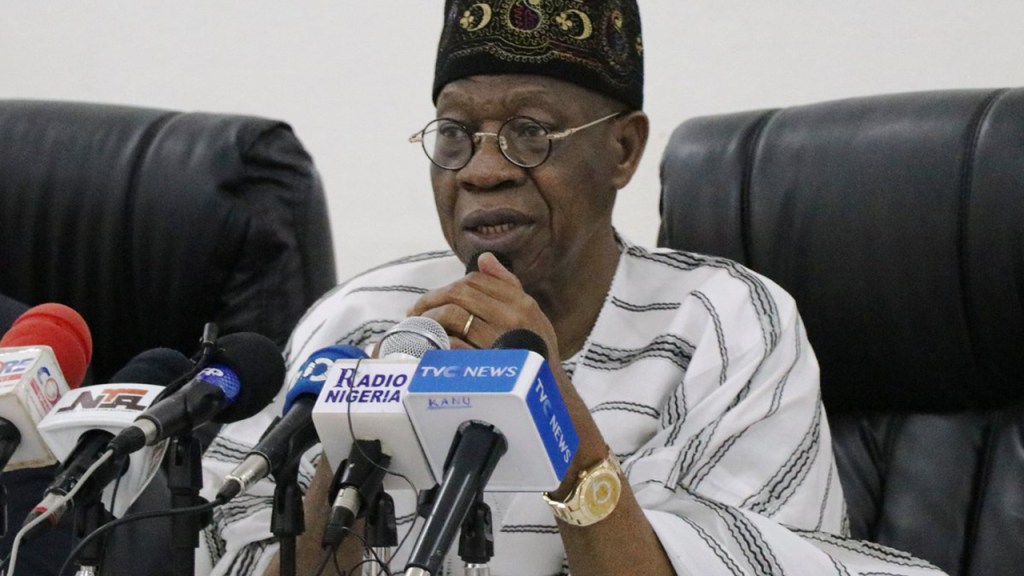
Former Nigerian Information Minister Lai Mohammed has again rejected claims that soldiers used live ammunition during the October 2020 Lekki Toll Gate protest.
His remarks come despite a 2021 Lagos State Judicial Panel report that indicted the Nigerian Army and Police for killing unarmed protesters.
The panel report described the incident as a massacre, citing the scale and nature of the force used.
Speaking Monday on Channels Television’s Sunrise Daily, Mohammed insisted that soldiers deployed to Lekki carried only blank bullets.
He said the Federal Government possessed classified security information unavailable to the public at the time.
“We at the Federal Government level had access to information no one else had,” Mohammed said.
He claimed he maintained constant contact with the Chief of Army Staff and Chief of Defence Staff during the operation.
Mohammed maintained that no live rounds were fired and denied that a massacre occurred at the toll gate.
“I know for a fact that soldiers were issued blank bullets,” he said.
The ex-minister challenged those alleging deaths to identify victims publicly.
“Tell me one person who can say my child was shot and killed at Lekki,” Mohammed said.
The comments have revived public debate over the findings of the Lagos judicial panel.
In its executive summary, the panel concluded that soldiers shot, injured and killed unarmed protesters on October 20, 2020.
The report said protesters were peaceful, waving Nigerian flags and singing the national anthem, but were met with brute force, leading to a massacre.
The panel also found that soldiers blocked ambulances from reaching injured protesters.
It said the Army violated its own rules of engagement during the operation.
The report further accused police officers of shooting protesters and attempting to cover up evidence.
According to the panel report, officers removed spent bullets from the scene to conceal their actions.
Investigators also faulted the Lekki Concession Company for obstructing the inquiry.
The panel further disclosed that the company failed to release key evidence and manipulated CCTV footage, adding that Lagos State invited the military to Lekki before soldiers were deployed.
The panel reported that the protest site was cleaned shortly after the incident, hindering investigations.
In total, the panel issued 32 recommendations.
These included sanctions against culpable soldiers and police officers.
It also called for comprehensive police reforms and improved engagement between government and youth.
The panel recommended public apologies, compensation for victims, memorialisation of the Lekki incident, and awarded N410 million in compensation to 70 victims of police brutality.
The report was submitted to Lagos State Governor Babajide Sanwo-Olu in November 2021, who pledged appropriate action, saying history would judge the state’s response, but that pledge remains to be seen.
Senior Advocate Ebun-Olu Adegboruwa, who was a member of that, warned against suppressing the report.
He said the panel worked independently and based its findings on evidence.
Adegboruwa threatened to publish the full report if the government commitments were not honoured.
Meanwhile, former Works Minister Babatunde Fashola said he did not know the whereabouts of a video camera recovered at Lekki.
Speaking on Arise Television, Fashola said he handed the camera to Lagos State officials.
“You have the tapes showing I handed it over,” he said.
The renewed controversy underscores unresolved questions surrounding one of Nigeria’s most contentious human rights cases.
Click here to download the report.
Report-of-Judicial-Panel-of-Inquiry-on-Lekki-incident-investigation-of-20th-October-2020