


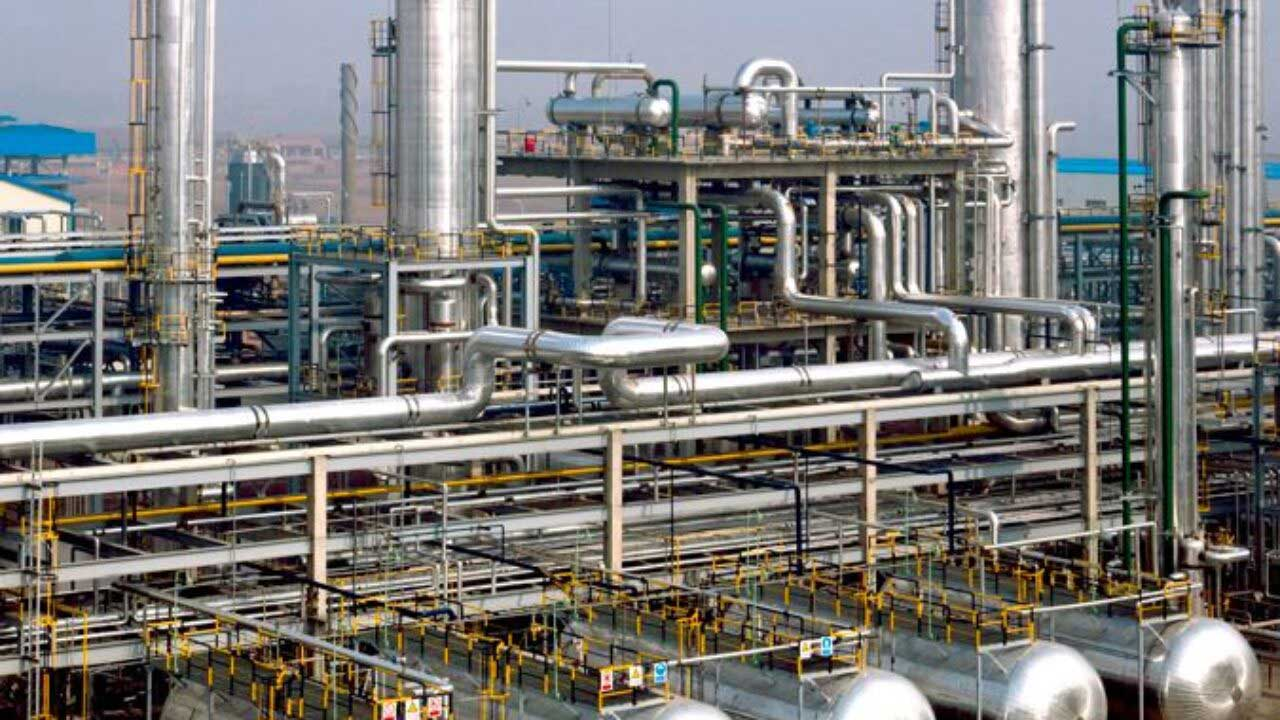
The state of the Nigerian National Petroleum Corporation Ltd (NNPCL)-owned refineries has always been a recurrent bother. This has over the years been accentuated by the perceived deliberate efforts by the NNPCL itself, in cahoots with the government, to put a shroud on the state of the refineries. Recently, there was renewed concern over what actually transpires within the corporation.
As he hosted members of the Global CEO Africa from the Lagos Business School after they toured the Dangote Petroleum Refinery in Lekki, Lagos, President of the Dangote Group, Alhaji Aliko Dangote, stirred the muddy waters of the refineries. At that forum, Dangote said he doubted the possibility of the state-owned Port Harcourt, Warri, and Kaduna refineries ever functioning again. Dangote stated that the infamous refineries had gulped up to $18bn of Nigerians’ hard-earned money, yet remained comatose.
According to Dangote, his own 650,000-capacity Dangote Refinery, constructed after late President Umaru Yar’Adua aborted his acquisition of the government refineries, now has over 50 percent of its output dedicated to petrol. Conversely, said Dangote, the government-owned refineries committed a mere 22 percent of their production to refining petrol. The industrialist recalled how he and his team had no option but to return the refineries to the Yar’Adua government after the cancellation of their purchase just a few months after the exit of the government headed by former President Olusegun Obasanjo in 2007. A consortium of Nigerian companies, namely Blue Star, Zenon Oil, Dangote Oil and Gas & Transnational Corp, had outbid the UK-based Indian steel baron, Lakshmi Mittal, for the Port Harcourt Refinery, which offered $550 million. The Dangote-led Blue Star paid $561 million for the acquisition of 51 percent of the government-owned stake in the refinery. Two other bidders, Oando Plc and Sahara Energy, in alliance with the Refinee PetroPlus, were disqualified in a Bureau of Public Enterprises (BPE)-conducted process. Bluestar went a step higher with its buy-in of the Port Harcourt refinery and acquisition of a 51 percent stake in the Kaduna Refining Company.
Dangote noted, perhaps with regret, that the former managers of the refineries had ostensibly misinformed the late president that the Obasanjo government had sold the refineries at give-away prices to Dangote and his team, as a parting gift from the exiting president. Instructively, President Obasanjo has always regretted the Yar’Adua government’s cancellation of that bid. In an interview, Obasanjo said: “The refineries are old and Dangote and some investors paid $750 million for two of the refineries. My successor came to office and reversed the sale. He even refunded the money they paid. So I went to him and asked him why he did this. He said it was because of pressure. I wondered if the pressure by some people was more important than the interest of the whole nation.”
Basing his decision to sell the refineries on a professional advice given him by Shell, Obasanjo was persuaded that the state-owned refineries would not work again. He said: “I was told not too long ago that since that time, more than $2 billion has been squandered on the refineries and they still will not work. If a company like Shell tells me what they told me, I will believe them. But here we are with over $2 billion squandered, and the refineries still won’t work.” Since the botched sale of the refineries, they have gone through various Turn Around Maintenance (TAM) exercises that have woefully failed to turn their destinies around.
Nigerians were excited when, in November 2024, the NNPCL declared the Port Harcourt refinery operational after a rehabilitation project which gulped a huge sum. But some were still sceptical. While the refinery initially operated at 70 percent of its installed capacity, the NNPCL said it had plans to increase its capacity to 90 percent. At the time, the corporation and Obasanjo were embroiled in an exchange of words. Responding to Obasanjo’s pessimism about the refineries’ resuscitation, NNPCL’s Chief Corporate Communications Officer, Olufemi Soneye, extended an invitation to the former president to tour the refineries. That invitation was perceived to be demeaning.
As if justifying the former president’s pessimism, no sooner had a loud applause been given by optimists than the Port Harcourt Refinery faced a one-month shutdown. As of this month of July 2025, the refinery is yet to begin operations. It has apparently exceeded the initially announced date for the restart of operations. The old Port Harcourt Refinery, which had undergone a significant rehabilitation project, was reported to have gulped $1.5 billion. Recently, however, the NNPC indicated that selling the country’s refineries was a possibility. The corporation’s Group Chief Executive Officer, Bayo Ojulari, acknowledged that the rehabilitation efforts on the refineries had proven to be more complex than anticipated, stating that the sale of the refineries was “not off the table”. He also said that all options were being reviewed. Ojulari’s announcement came after many had vociferously argued that the state-owned refineries were no longer viable, linking this to a history of mismanagement and the challenges posed by attempts to modernise their aging infrastructure.
Over the decades, Nigeria has continued to oscillate in a vicious circle on the apparent moribund refineries. This is why, at this stage, especially after the confirmation of their state by its GCEO, the NNPCL needs to come clean on the condition of the refineries. For years, the refineries have served as a conduit-pipe through which NNPCL officials drained scarce resources. The company’s activities in the oil industry are mired in controversy. That explains its persistent face-off with the National Assembly. The Ojulari-led management owes Nigerians the duty of going beyond rhetoric on the refineries’ state of health. That will prove crucial in righting the wrongs of the past. It will also save the country serial haemorrhage. Ultimately, those found guilty must be made to face the music.




“The NNPC refinery saga is a whole mess! Billions spent on rehabilitation, yet still not functioning optimally. Transparency and accountability are sorely needed in Nigeria’s oil sector 💸”