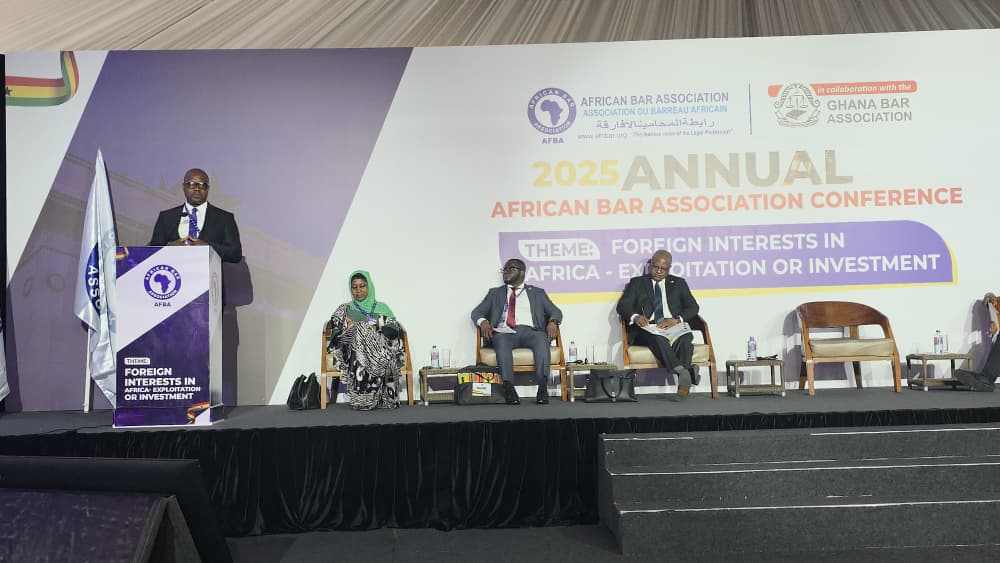
Accra, Ghana — Legal scholar and taxation expert Dr. Chinedu Obienu has called for urgent reforms to address deep-rooted customs and taxation bottlenecks hindering trade across Africa.
Speaking at the AFBA 2025 Conference held at the Labadi Beach Hotel, Dr. Obienu, Principal Partner at Zest Partners, Abuja, analyzed structural inefficiencies within African ports, customs operations, and tax systems. He emphasized that bureaucracy and overlapping agencies remain major obstacles to efficient trade facilitation.
Multiple Agencies at African Ports
Dr. Obienu noted that excessive agency presence slows port operations across Africa.
In Nigeria, several agencies operate simultaneously, including Customs, Immigration, NPA, NIMASA, Police, DSS, and NDLEA.
He said overlapping roles create confusion, duplication, and corruption at entry points.
Similarly, South Africa hosts multiple port bodies like TNPA, TPT, SAMSA, and SARS.
In Ghana, he identified the Ghana Ports and Harbours Authority, GRA, and GSA as key players with overlapping mandates.
According to him, multiple agencies demand separate documentation, which delays cargo clearance and raises transaction costs.
Delays in Cargo Clearance
Dr. Obienu explained that excessive documentation and manual processes cause significant clearance delays in African ports.
In Nigeria, bureaucracy and constant policy changes disrupt port efficiency.
In South Africa, centralized customs under SARS remains rigid and over-regulated.
He linked delays to strikes, outdated technology, and weak coordination among agencies.
In Ghana, new systems like UNIPASS and Ghanalink were introduced without adequate consultation.
He said such disruptions, coupled with high import duties, hurt traders and economic growth.
Free Trade Zones and Porous Borders
Dr. Obienu highlighted that multiple Free Trade Zones (FTZs) have become loopholes for smuggling and tax evasion.
He noted that weak customs oversight allows goods meant for export to enter domestic markets duty-free.
Inconsistent FTZ regulations, he added, cause confusion and encourage revenue losses.
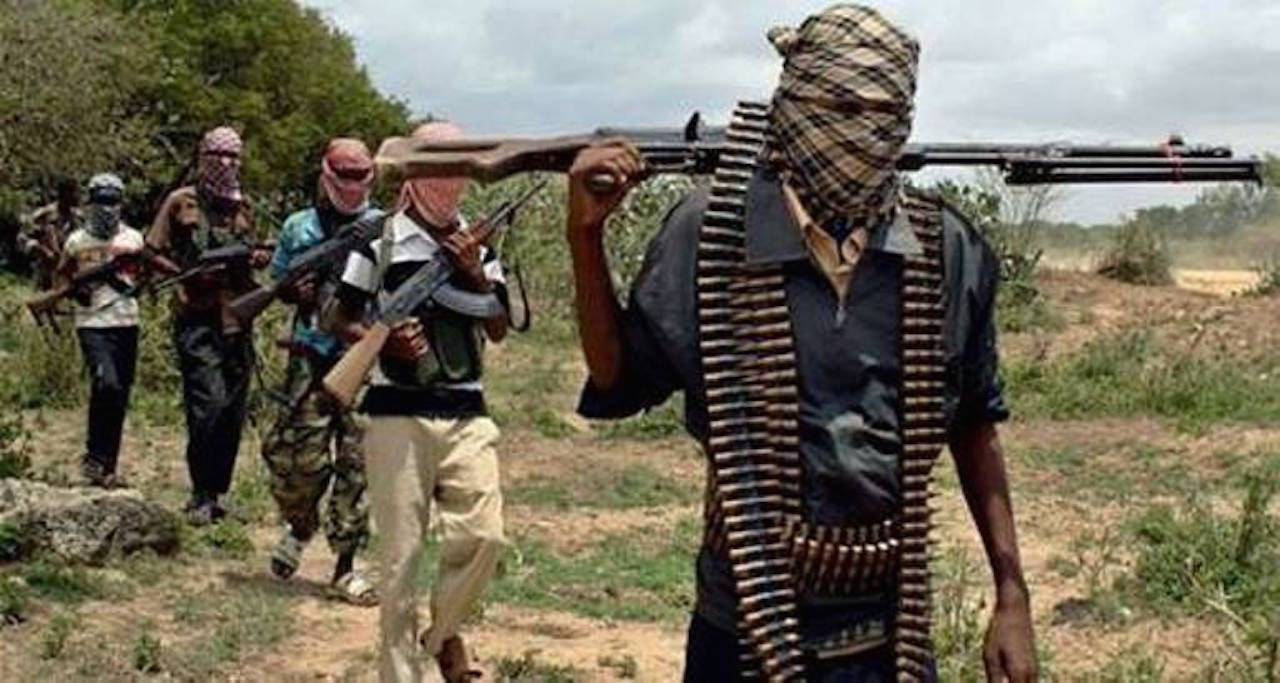
He further warned that porous borders across Africa enable smuggling, under-declaration, and inflow of counterfeit goods and weapons.
These practices, he said, undermine local industries and threaten national security.
Rent-Seeking and Political Waivers
Dr. Obienu described rent-seeking as an entrenched form of corruption within customs systems.
He stated that importers often pay “facilitation fees” for faster clearance, creating dual clearance systems.
He also condemned political duty waivers, calling them tools of economic sabotage.
Stressing that politically motivated waivers deprive governments of revenue and weaken local industries, he urged African leaders to separate economic policy from political patronage.
Excise and Taxation Challenges
Dr. Obienu observed that excise administration in Africa faces similar challenges as customs.
He cited policy instability, weak institutions, and low public awareness as key barriers.
Frequent, uncoordinated policy changes discourage investment and increase uncertainty for businesses.
He also criticized inconsistent excise regimes within ECOWAS and SADC for promoting smuggling and tax evasion.
On taxation, he decried overlapping regimes, double taxation, and lack of bilateral tax treaties.
He said these factors reduce investor confidence and limit regional integration.
AfCFTA and the Path Forward
Turning to the African Continental Free Trade Area (AfCFTA), Dr. Obienu called it a bold but fragile initiative.
He noted that AfCFTA aims to eliminate tariffs on 90% of goods and promote free movement of goods and services.
However, he warned that customs inefficiencies and inconsistent national laws threaten its success.
He urged African states to modernize customs systems, simplify procedures, and enhance cooperation.
He emphasized that AfCFTA’s vision requires harmonized taxation, transparent excise systems, and strong institutions.
Recommendations for Reform
Dr. Obienu proposed concrete measures to overcome trade bottlenecks.
He advocated port automation to eliminate manual interference and reduce corruption.
He urged investment in industrial scanners to enhance inspection and speed up cargo clearance.
He called for the abolition of political waivers and the enforcement of stable economic policies.
He also recommended border demarcation, digital surveillance, and collaboration among neighboring customs agencies.
Furthermore, he insisted that Africa must build strong institutions rather than rely on “strong individuals.”
He emphasized that accountability, training, and internal audits are key to sustainable reform.
Africa’s Trade Future
In conclusion, Dr. Obienu questioned whether African nations are truly ready to trade freely.
He noted that while 54 countries have signed the AfCFTA, most remain hesitant about full liberalization.
He urged African leaders to invest in Africa, reduce reliance on foreign investors, and promote intra-African trade.
He said domestic investment would create jobs, strengthen industries, and reduce economic vulnerability.
Dr. Obienu ended by stressing that Africa’s prosperity depends on commitment, cooperation, and institutional integrity.