By Chidi Anselm Odinkalu
1993 was the year that changed Nigeria’s judiciary. Over a period of a mere five months, the military in that year contrived to overthrow government twice. First, in June, Ibrahim Babangida, the army General who was Nigeria’s military ruler at the time, nullified an election organized to determine who would succeed him. Five months later, in November of the same year, another General and then Defence Minister, Sani Abacha, overthrew the Interim National Government (ING) installed in the aftermath of Babangida’s shameful abdication from power. On both occasions, the judiciary authored the overthrow.
At the end of an interminable transition, the ballot to elect a civilian successor to Babangida was scheduled to occur on 12 June 1993. But two days before the vote, on 10 June, the regime procured a group known as Association for Better Nigeria (ABN) to secure a court order prohibiting the National Electoral Commission (NEC) from undertaking the election.
The defendants included the NEC and its chairman, Humphrey Nwosu, a professor of political science; as well as Babangida and his federal Attorney-General, Clement Akpamgbo, a Senior Advocate of Nigeria (SAN). Rather unusually, both Babangida and Akpamgbo failed to enter appearance or contest the case. Lawyers from the Federal Ministry of Justice who usually represent them in such cases unusually were missing in action. Omo Omoruyi, a close adviser to Ibrahim Babangida at the time recalled that “this ambivalent position of the President and the Attorney-General has never been explained.”
According to Professor Omoruyi, the judge, Bassey Ikpeme, “was mobilized to commit (mischief) in the name of the judiciary.” He does not disclose by whom, but it was known that Bassey Ikpeme had worked in the law office of Clement Akpamgbo. Bassey Ikpeme decided to issue what was described as a “candle-light judgment” because she delivered her judgment “between 9 p.m. and 10 p.m. on the day of judgment.” Those are not court hours.
In her decision, Bassey Ikpeme observed that “the planned election can no longer be free and fair.” With no need to say why or how so, she casually restrained the NEC “from conducting the presidential election pending the determination of the substantive suit before the court.” The military decrees under which the election was to be organised expressly prohibited such orders.
A coincidence of public pressure and disagreement among members of the ruling Armed Forces Ruling Council (AFRC) stayed the hand of the regime, allowing voting to proceed as originally scheduled. But, four days after the vote, while the NEC was busy collating the returns, the ABN returned to court in Abuja, the Federal Capital Territory and secured another court order prohibiting the Commission from continuing with the collation and declaration of the results.
10 days after the ballot, on 22 June 1993, the regime announced the annulment. The following day, Ibrahim Babangida issued two military decrees effectively terminating the transition to civil rule. In their official explanation, the regime claimed it took these steps to save the country from “judicial anarchy” and “rescue the judiciary from…. an unfortunate and unwarranted situation which is fast eroding the esteem, honour and confidence with which the public holds the nation’s judiciary.”
The nullification of that election terminated the raison d’être of the Babangida regime. Civic unrest thereafter forced him to “step aside” on the eighth anniversary of his regime on 27 August 1993. The day preceding his departure from power, however, Babangida issued four decrees. Among these, Decree No. 59 terminated his rule while Decree No. 61 instituted an Interim National Government (ING). On 10 November 1993, the High Court of Lagos ruled that having abrogated his power to rule by Decree No. 59 of 26 August, Ibrahim Babangida lacked the power thereafter to institute the ING by Decree No. 61. The result, the Court held, was that the ING was illegal and void. Seven days after this judgment, Sani Abacha toppled the ING and installed himself the military ruler.
Three things were significant about the judicial interventions that created these outcomes. First, all the decisions and orders came from high courts. They may not have required the actions that followed but it was sufficient that their orders created chaotic disorder that abhorred political vacuum. Second, these developments crystallized the political relevance of judges whether acting alone or in cahoots with those in power. Third, if judges could be used to terminate power in this manner, it was only a matter of time before they could become themselves the explicit authors or determinants of who took or seized it.
The return of Nigeria to civil rule turned over to politicians the levers of control over these logics. Kano State provides a recent theatre of the politics of judicial anarchy. When the Government of the State decided to engineer succession to the stool of the Kano Emirate in 2024, the matter quickly evolved into a legal dispute. A chieftaincy matter such as this was ordinarily one for the High Court of Kano State but one judge of the Federal High Court chose to invent federal jurisdiction over it.
By himself, this judge confectioned a succession of bizarre orders that could only exist in the realm of judicial sorcery. His profusion of court orders saddled Kano with two Emirs presiding over one Emirate; one under the authority of the State government and another under the authority of the Federal High Court. For his efforts, the judge involved would get elevated to the Court of Appeal and may even have come within a hair’s breadth of becoming Chairman of the Independent National Electoral Commission (INEC).
The latest site of judicial disorder appears to be the political timetable for Nigeria’s 2027 elections. On 20 May, Mohammed Garba Umar, a judge of the Federal High Court, nullified substantial parts of the guidelines and timetable released by the INEC for the election. The judge held that the powers of the Commission “do not extend to fixing or prescribing the timetable within which political parties may conduct their primary elections for the purpose of nominating candidates for the 2027 general elections.” He also ruled that the Commission cannot “lawfully abridge or limit that statutory period” of 120 days to the election by which time the Electoral Act 2026 requires the parties to submit the personal details of their candidates.
Six days later, James Omotosho, another judge of the same court, hit back, ruling that “the timetable and schedule of activities for the conduct of the 2027 General Election issued by the [INEC] is valid and legally issued.” He held that the parties must comply with INEC’s abridged timetable for the conduct of primaries but ordered the Commission to adjust its timelines for submission of candidates’ information to comply with the statutory 120 days under the Electoral Act. Like the federal judge who gave Kano two Emirs for one stool, this judge has given the parties two timetables for one election. He has also been recently named for elevation to the Court of Appeal.
The real question for the judges was whether INEC could lawfully compress the time within which the parties must organize their primaries. The Commission’s time-table insists this must be completed by the end of May. That begs the question why they must wait until September or October to submit the names of their candidates to the INEC candidates’ portal. From one court, two different cases have produced two mutually contradictory answers to this question. Instead of clarity, the Federal High Court offers confusion to the candidates and their parties.
The convenient answer from lawyers is that this confusion will be remedied on appeal. By the time that happens, however, the parties, candidates and citizens would have made massive commitments in resources and emotions. If the issues get resolved after the elections, they could even alter the destination of electoral outcomes. Such a result could be more than an injustice. It could also produce political instability.
In 1993, the country escaped ruination by the skin of its teeth. That would have been a prohibitive price to pay for what the soldiers indelicately called “judicial anarchy”. Whether it will be as lucky in 2027 could be a matter for the sorcerers.
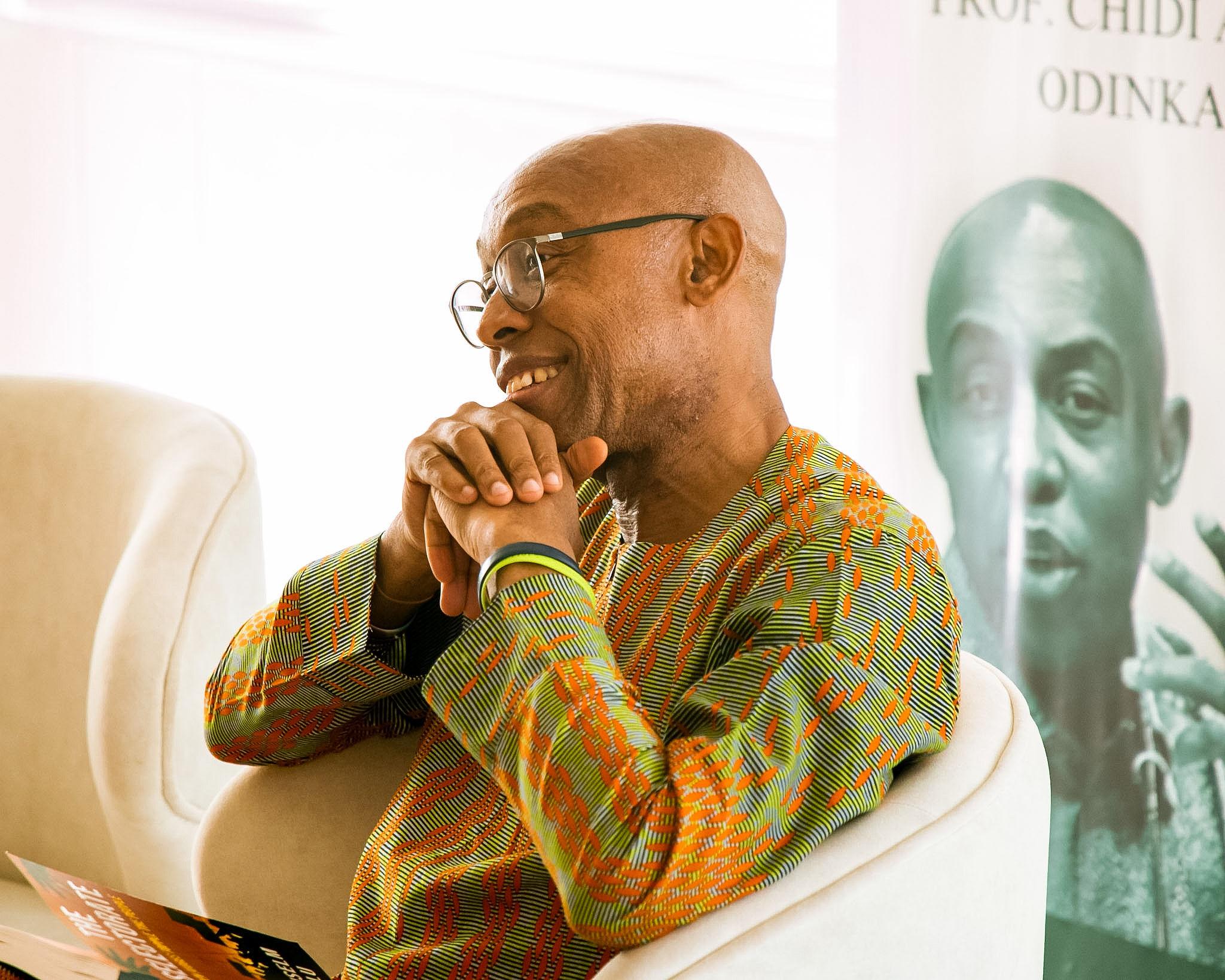
A lawyer and a teacher, Odinkalu can be reached at [email protected]
The views expressed by contributors are strictly personal and not of Law & Society Magazine.