Home Blog Page 994

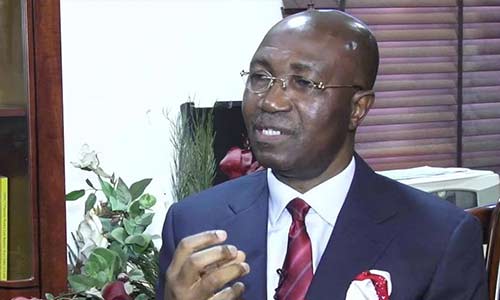
‘How The Rich Can Reduce Poverty’ — Olanipekun (SAN)

A former Nigerian Bar Association (NBA) President, Chief Wole Olanipekun (SAN) has admonished the rich to cultivate the spirit of giving to the less-privileged as a way to reduce national poverty.

Olanipekun, who lamented the hardship many Nigerians face coupled with the economic instability caused by the COVID-19 pandemic, said helping help the poor was for the good of all.

He spoke in Lagos at the inaugural lecture and launch of an autobiography in honour of a philanthropist and Chief Executive Officer of International Alpha Ltd group of companies, Dr (Mrs) Oluwaseye Yomi-Sholoye.

The book, ‘Blessed are the compassionate’ was launched by Energy Traders and Services Ltd technical director, Mr Niyi Afolabi.

On why she published the book, Yomi-Sholoye said it was to capture the comfort, laughter, joy, confidence and hope given to the needy who could not pay her back.

She called on the well-to-do to support government poverty alleviation programmes to enable the limited resources go round.

The highlight of the event was the testimony from beneficiaries of the Yomi-Sholoye Foundation both within and outside the country.

One of the beneficiaries who identified herself as Rebecca Michael said; “I call her my comforter because she’s been like a mother to me; paying my school fees and putting smiles on my face. My endless appreciation goes to Yomi-Sholoye for her motherly care.”

Kidnapping And Closure Of Schools: Surest Bomb For The Destruction Of Nigeria

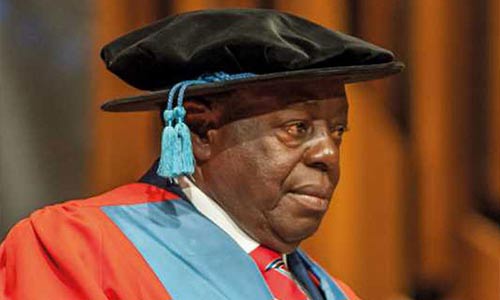
By Aare Afe Babalola, SAN

IN recent times, news media across the country have been replete with stories of incessant kidnappings and closure of schools. From these reports, it is clear that students and teachers at all levels of education – primary, secondary and tertiary – are not immune from the danger posed byarmed invaders. Right from the widely-reported kidnapping of female students in Chibok communityby members of the Boko Haram terrorist group on 15th April 2014, it does not seem that the incidents of kidnappings are waning in the country.Due to this, many state governments have resorted to the closure of schools as the first and immediate response to kidnappings. Therefore, in this edition, I will consider some of the reported incidents of kidnapping and schools’ closure, and the effect on education and the country.

Some reported incidents of kidnapping and school closure

PM News edition of 11th March 2021 gave a caption as follows – Kidnapping: Niger Government Closes All Public Secondary Schools. It reported thus: ‘The Niger Ministry of Education has directed the closure of all public secondary schools for two weeks to enable the state government asses security threats and its impact on schools. The schools would be closed between Friday, March 12 and Friday, March 27, according to the state Commissioner of Education, Hajiya Hannatu Salihu. The commissioner noted that the closure will give relevant security agencies the time and opportunity to conduct a comprehensive risk assessment of all public secondary schools in the state. The decision to close schools in the state came after an emergency consultative meeting with the leadership of the Association of the Proprietors of Private Schools (NAPPS), Association of Model Islamic Schools (AMIS), Executive Chairman, Niger State Universal Basic Education Board (NSUBEB), Heads of Education Agencies, Directors of the Ministry and other stakeholders of the sector. The closure of schools came in the light of recent abduction of students at the Government Science College, in Kagara community of the state few weeks ago.

On 17th March 2021, Withinnigeria News reported a caption – Kidnapping: Kaduna Closes All Schools in Kajuru LGA. It reported thus: “Kaduna has ordered the closure of all public and private schools in Kajuru Local Government Area of the state following continuous attacks on schools by bandits… Last Thursday, 39 students were abducted when gunmen invaded the Federal College of Forestry Mechanisation in Afaka, Igabi LGA of the state.The students were later seen in a video clips receiving heavy beatings from their abductors, calling on government to pay the ransom to secure their release.”

Another report, Newdawnngr, gave the following caption on 27th February 2021 – Kidnapping/Abduction: Zamfara Govt Orders Closure of Boarding Schools. It reported that:  “The governor of Zamfara State, Bello Matawalle, on Friday, ordered the immediate closure of all boarding secondary schools in the state following the abduction of 317 female students in Talata Mafara Local Government Area. The governor gave the directive in a special state broadcast on the abduction of the students at Government Girls Secondary School, Jangebe, saying it is a trying moment for the state. “I wish to assure everyone that we are wholly committed to ensuring a speedy rescue of our dear schoolgirls and reuniting them with their families,” the governor said. He said police helicopters and other search and rescue operatives have been deployed to the area where the abducted girls are believed to be, adding that members of the public, and most especially the parents and guardians of the students, would be kept informed of developments in the efforts to rescue them. “As we are making efforts to strengthen security around our schools, I have directed the immediate closure of all boarding secondary schools across the state.”

The effect of kidnapping and school closure on education

As I earlier observed, there seems to be no reduction in the reports of kidnapping, so much that experts have predicted a rise in the number of out-of-school children due to incessant attacks on schools particularly in the North Central and Northwestern Nigeria. According to a report by Blueprint, an expert noted thus: “Never in history has the education industry in Nigeria being so threatened by insecurity like its current state. The attacks on schools often have adverse effects not only on students, educators, parents and educational institutions, but also on the government and the society at large. The rising cases of kidnapping incidents at schools in Nigeria show how vulnerable schools in northern Nigeria have become for bandits and kidnappers. It means that kidnappers, bandits, terrorists or whatever name they are called, have declared war on the education sector in the North and in extension on the future of our students and country. When a teacher goes to school and is not guaranteed of his safety, it will affect his performance. Schools being shut down completely will impact negatively on the education sector, the system. The number of out-of-school children will continue to rise because parents whose children are back from bandits will begin to think otherwise and will not want them to go to school. The children will then begin roaming the streets and in the future, these children will be recruited into criminal activities. More proactive steps have to be taken to secure schools from bandit or terrorist attacks and to stop the kidnapping of students. This is because if the emerging trend of kidnappings, especially students’ abductions are allowed to continue, it will not only consume our education sector, but also the future of our country. Our children and teachers deserve to learn and teach under a peaceful atmosphere devoid of any form of fear or intimidation either by kidnappers, bandits or terrorists.

In another interview, Blueprint also reported thus: “Everyone has the right to education.It is unfortunate that the fragility in the north is derailing education which is fundamental to the socio-economic growth and development of the region and its ability to compete in the global economy. Following the incessant attacks on schools in the northern part of the country, certainly, the gains of the past in term of enrolment, retention and completion or graduation are being eroded. It will balloon the outrageous figure of out-of-school children in Nigeria. This is because no one wants to suffer the trauma of having his/her children abducted in the name of getting education. The number of street children/Almajiri will also increase. Child marriage will automatically rise with its nasty attendant implications like VVF and maternal mortality and morbidity among other issues. Unfortunately, with this trend, Nigeria cannot actualize the SDGs 2030 target.

Another expert noted thus:  “Given the pace at which bandits attack schools, government and private proprietors will be forced to shut down schools, intermittently, and then for much longer. Parents on the other hand will also be reluctant to send their wards and children to school; while teachers and other caregivers will be reluctant to report for work.The overall consequence will be empty schools, and gap in the education of children. Children will be left idle, and restless, since they cannot even be engaged with the livelihood practices of their parents due to insecurity. Poverty will increase, social cohesion within the homes and the communities will be stretched, and there will be increase in anti-social behaviour among children, with both children and their parents developing mental health issues. All of these will make recovery more tedious, and take longer even when security and safety are restored. Unfortunately, the impact will not just be on the North-west, or North-central; the impact will eventually be national and nationwide. People will tend to leave insecure places for relatively more secure places, and the inequality with respect to the conditions of living and existence of residents and the new influx of those seeking refuge from insecurity will potentially be destabilising for their new place of refuge as well.

To be continued…

AARE AFE BABALOLA, SAN, OFR, CON, FNIALS, FCIArb., LLD.

The Verdict : When Judiciary Goes on Trial

By Olusegun Adeniyi

Following the 5th December 2020 Imo North Senatorial by-election to replace the late Benjamin Uwajumogu, the Independent National Electoral Commission (INEC) declared victory in favour of the All Progressives Congress (APC) without proclaiming a winner. This was due to a multiplicity of cases by APC members claming to be the party’s candidate and the various reliefs they were able to procure from different courts. But in a recent petition signed by the party’s acting National Chairman and governor of Yobe, Mai Mala Buni, APC accused Supreme Court Justices Mohammed Dattijo, Abdu Aboki and Helen Ogunwumiju of conspiring with the People’s Democratic Party (PDP) to deliver the senate seat. This grave allegation has already elicited a response from the apex court with dire implications for the people of Imo North and democracy in Nigeria.

Announcing the suspension of proceedings in the appeal by Chukwuemeka Ibezim regarding his dispute with Ifeanyi Ararume, Justice Mohammed Dattijo—who led a five-member panel of the apex court—said APC has called to question his integrity and that of two colleagues. “Let me confirm to all counsel in this matter that the Interim National Chairman of APC had written a petition against me and two other Justices of this court, namely Helen Ogunwumiju and Abdu Aboki” said Dattijo. “They alleged that my humble self had led my two brothers to attend a meeting with members of the PDP to strategize on how to subvert the outcome of this case. I must say that this is most unfortunate and my heart bleeds for this country. This is a reckless and irresponsible statement. If they have honour, let them substantiate their allegations and I will not stay a day longer in this court. So, this matter is adjourned sine die,” meaning indefinitely.

The problem began on 5th September last year when factions emerged from the seven-man committee established by the APC to conduct primaries for Imo North senatorial election. Chaired by Senator Ajibola Bashiru with Samuel Ogbuku as Secretary, other committee members included Jibrin Gada, Bello Kumo, Umar Gana, Mohammed Saba and Godfrey Ejim. At the end of the exercise, two APC senatorial candidates emerged. While Bashiru led the secretary and two other members to declare Ibezim winner, the remaining three committee members gave victory to Ifeanyi Ararume. The party headquarters threw its weight behind Ibezim and submitted his name to INEC. But several politicians, including those from parties that ordinarily had no dog in the fight, went to court with all manner of cases. That was how the judiciary became a pawn in the political chess game.

In the Nigerian legal system, there is only ONE Federal High Court. There is also only ONE Court of Appeal. That has not stopped our politicians from instituting cases involving same parties at different locations of the same court. On 6th November 2020, the Federal High Court sitting in Owerri disqualified Ibezim and declared Ararume the APC candidate in a case filed by Lady Uchenna Ubah. This case proceeded to the Court of Appeal and Supreme Court and both overturned the verdict which then left the coast clear for Ibezim. But in a case filed by Tony Elebeke on 4th December 2020, another Federal High Court sitting in Abuja disqualified Ibezim, thus technically giving the ticket to Ararume 24 hours to the election. This judgement was affirmed by the Court of Appeal sitting in Abuja. However, we must remember that the Owerri panel of the Court of Appeal (in the case filed against APC by Lady Ubah) had earlier upheld the election of the same Ibezim. Were different facts presented before the two panels? Similarly, the Supreme Court that had earlier validated the election of Ibezim in the Ubah case against APC disqualified him on this latter case thus effectively giving the ticket to Ararume. Were different facts presented before the Supreme Court too?

That of course was not the end of the court drama. On 8th March 2021, an interim order was sought at the FCT High Court to compel INEC to recognize Chief Emmanuel Okewulonu, the PDP candidate, winner of the election. This is forum shopping by another politician who had actually filed a similar case at the Election Petition Tribunal that is still pending. However, the Judge was also clever. Apparently in a bid to buy time for the matter to be decided either by the Supreme Court or the Election Tribunal, he adjourned the case. On 18th March, 2021, without waiting for the appeal pending at the Supreme Court, a Federal High Court sitting in Abuja declared Ararume winner of the election. On the same day, an Interim Injunction was obtained from the High Court of Imo State, restraining INEC from recognizing Ararume as the candidate for the election. Curiously, the case was filed by a member of the All Progressives Grand Alliance (APGA). What is APGA’s interest in APC internal issues? Obviously a case of hand of Esau, voice of Jacob!

Interestingly, before the Imo North Senatorial contest became enmeshed in litigation, the APC screening committee had disqualified Ibezim and the decision was upheld by the party’s appeal panel. Somehow, somehow as we say in Nigeria, it was the name of this same disqualified aspirant that the party sent to INEC as APC candidate. With that, the commission is helpless because by design, our politicians have protected themselves, regardless of how they circumvent their own internal processes. Section 31 of the Electoral Act says that once a party submits the list of candidates, INEC has no power to reject or disqualify “for any reason whatsoever”.

As sordid as the foregoing may appear, nobody should imagine this is only an APC problem. Internal democracy is alien to all our political parties as can be glimpsed from a similar problem in Cross River State involving the PDP. In a split decision of four to three, the supreme court on 17th February dismissed the appeal filed by Stephen Odey challenging the judgement of the Court of Appeal which declared Agom Jarigbe the validly-nominated candidate for Cross River Senatorial District. But the role played by the judiciary was, to put it mildly, very suspicious. Why, for instance, was Jarigbe’s case filed before the Federal High Court sitting in Port Harcourt, rather than in Calabar, the capital of Cross River State where the contentious PDP primary was held and the venue of the by-election? Then there is a glaring abuse of court processes by the use of interim exparte orders.

As its name implies, an ‘interim’ order is a temporary order but has long become a potent tool in the hands of Nigerian politicians to checkmate being denied justice or compel compliance with a ruse. As absurd as it may sound, however, we should not blame Jarigbe. He evidently won the primaries but the PDP panel gave victory to his opponent, apparently to appease a powerful man in the state. Jarigbe may therefore have reasoned that those behind his travail were in control of the judicial arm in Calabar, including the Federal High Court. So, at the end, what saved the day for him was the curious judgement he got from Port Harcourt. In a dramatic development on 17th December last year, just 24 hours after the Clerk of the National Assembly had sworn-in Odey as a Senator, the Court of Appeal sitting in Abuja declared Jarigbe the duly nominated PDP candidate for the electon. And that has been affirmed by the apex court. How do you run a country like that?

The challenge at hand is the absence of internal party democracy. In fact, the most lucrative enterprise for party members is to be saddled with the assignment of primaries in the states. This explains why most election cases are those that challenge the conduct/management of the nomination of candidates. Party primaries are replete with manipulation of membership registers, total disregard for their own constitutions and guidelines as well as blatant corruption and imposition of candidates, especially by governors.

That Nigerian politicians refuse to see the danger of subverting democracy is very clear. Where they don’t resort to litigation, they disrupt well organized elections by INEC, using thugs as it happened in Ekiti State two weeke ago. What is sad about Ekiti is not just that lives were lost but also that the constituency (Ekiti East 1 State Constituency) is one of the smallest in Nigeria. It covers half of just one local government with only five Wards, 39 polling units and 23,670 registered voters. If this trend continues unchecked, one can only imagine what will happen during the governorship election next year or in the 2023 general election involving the entire country.

Meanwhile, INEC has been statutorily restrained by the provision of Section 31(1) of the Electoral Act from exercising any discretion on the candidates being sponsored by a party. This is to ensure that INEC is apolitical. Fine. But the spurious court verdicts don’t help the commission either. Sadly, the Supreme Court which ordinarily has the duty to hammer against judicial rascality in lower courts has been dragged into the mess by its own internal contradictions. We now have a situation where people who come fourth in elections are able to become governors by the benevolence of judicial officers. Or as it is the case with Imo North Senatorial District, thousands of people will turn out to vote yet four months after, they would have no representation at the National Assembly. It is getting to a point in which Nigerians will begin to ask themselves, why bother to vote?

In the course of interrogating this same vexatious issue last year, I made allusion to why democracy, according to Ross Feingold, is considered the most legitimate form of government, essentially because the power of choice rests with the people. “But when this power dynamic is altered and citizens lose their influence, the legitimacy of the system is threatened.” In a situation where politicians no longer campaign but rely on the court to get to power, that is no longer democracy. Both the National Judicial Commission (NJC) and the Nigerian Bar Association (NBA) as well as other critical stakeholders should work together to save our judiciary from this shameful conduct. To file frivolous cases, lawyers after filthy lucre will breach civil procedural demands and get such cases assigned to and heard by their accomplices on the bench. While we must put an end to such unholy alliances, there is also an urgent need to bring post-party primaries litigations under the electoral law. This will eliminate forum shopping and also deal with the issue of proliferation of orders and judgments emanating from different courts of coordinate jurisdiction.

While political parties must wean themselves of bad behaviour in the conduct of their primaries to nominate candidates for elections, both the Constitution and the Electoral Act require amendment. We cannot continue with a situation in which Judges veto the choices of the electorate on the basis of technicalities such as how names are written on certificates. If this democracy is to survive, it is imperative that the judiciary as an institution and judges as individuals are not only impartial to those who appear before them but also that the wider public have the confidence that cases affecting their well-being will be decided fairly and in accordance with the law.

As a cornerstone of democracy, any judiciary that doesn’t serve constitutional goals is a problem for the society. It’s worse when Judges are perceived as not acting fairly, reasonably, and in preservation of public trust in the rule of law. That sadly is the state we are in Nigeria today and it calls for a lot of soul searching by judicial officers. Proliferation of court cases with similar cause of action at different locations of courts of coordinate jurisdiction indicates forum shopping and may point to the fact that justice is now cash and carry. This can only encourage jungle justice. However, the greater responsibility lies with the political class. Which is why the APC, as the ruling party, should be restrained in making claims it cannot substantiate against judicial officers at the apex court. In their own enlightened interest, they must begin to accord the judiciary the respect and dignity necessary for judges to do their work without being dragged into partisan politics or having their reputation sullied.

Despite protestation from my friend, Waziri Adio who has been her greatest supporter and encourager right from the beginning, I had warned my wife when this whole idea started three years ago that on no account should it get to the media. I promised financial support and when necessary rally close friends but it should always be our own way of giving back to the society in a quiet way. When Ms Tolu Salami, a Masters degree holder and job seeker, joined to assist in managing the ‘school’, I should have seen a red flag with the opening of a Twitter account. But with a followership of just 75 comprising family and friends, I never thought much of it. Then the photograph of Amatala, a two-year old who was in the habit of loitering around the ‘school’ premises with book in hand, changed everything!

MEET THE TENACIOUS LITTLE AMATALA MUSA! AMATALA IS NOT OUR STUDENT, HER SIBLINGS ARE BUT EVERY NOW AND AGAIN WE WOULD NOTICE HER HANG AROUND SCHOOL PREMISES UNDER THE SUN WITH A BOOK, WE HAVE SPOKEN TO HER MOM ABOUT THIS. PLEASE NOTE; WE ARE NOT CURRENTLY ADMITTING STUDENTS. PIC.TWITTER.COM/7EEMILF5SL

— NFISCHOOL (@NFISCHOOL) MARCH 26, 2021

Within a few hours, the Twitter account had attracted more than a thousand followers with many people asking how they could support the initiative. When Waziri told me he was going to blow my cover about the project as a follow up to the tweet, I really couldn’t care anymore. But I have so many people to thank for the way my wife is gradually transforming the lives of 54 children, 17 young adults and their parents through an informal project she was compelled to register and now goes by the name Not Forgotten Initiative (NFI).

It’s a long story but let me share the key points. There were many ramshackle shanties around our house in Asokoro with inhabitants whose children were just roaming the area. On a particular day in 2018, a pregnant woman flagged down my wife as she drove past, asking for help. Her husband had asked her to move her things from their abode and she needed someone to intervene. Upon investigation, the conflict stemmed from her refusal to give him the N5,000 she had saved from her petty trading to send Haruna, her first son whose father is late, to school. She was looking to get the savings to N15,000 to register the boy in school and here she was, about to be kicked out of her matrimonial home.

When my wife discussed the matter with me, she followed up with a proposition: Why don’t we take up Haruna’s education? I agreed instantly. Then she added, ‘What about the other kids? We need to do something about them as well.’ She told me she had discussed with parents and they expressed willingness to have their children (14 at the time) in school but had no money. I told her to go ahead with whatever she planned, promising to provide the financial resources. I know I have good friends I can always count on.

My wife took my word as a license to construct two classrooms in a make-shift structure on an empty land within the area. But the moment the 14 pupils were enrolled and one teacher employed, we had many children showing up, looking all scruffy and tattered. And we could not turn them back. We hired two more teacers. Just as I was getting worried by the financial implications as the number of pupils kept increasing, my friend, Folorunsho (Foli) Coker, added a new idea. Following his appointment as Director General of Nigerian Tourism Development Corporation (NTDC), Coker arrived Abuja in 2017 to take accommodation beside the ‘school’. He fell in love with the children and inquired about people behind the idea. When he got to know I was involved, Foli called me to suggest, “Segun, your wife has to go beyond teaching those children. They deserve at least one meal a day. I will support you.” That was how meal became part of the project.

We soon introduced the ‘extension school’ with the sole purpose of providing after school support to struggling students from government owned secondary schools, particularly in Mathematics, English and basic science. We also serve them lunch and the number grew from the initial eight to 17. One of them emerged the president of his school’s mathematics club, another became the best overall student in mathematics. It was like a dream come true when we offered a full boarding scholarship to two of them who recently completed their junior WAEC and others are working so hard to benefit from this opportunity. We have since extended the ‘school’ from two to seven classrooms, five teachers, several volunteers. And from the beginning, we promised that we would give those kids the best education so they undertake excursion visits, have movie days and many professionals come in from time to time to fire their imaginations. But the most fulfilling for me is that our three children love the idea and treat those NFI children, all of whose names they know (I know only a few) like siblings.

For proper documentation, my wife was advised to register the ‘school’. It was at the point of registration that she was told that if we were providing uniforms, bags, shoes, socks, stationary, one meal a day and everything, we couldn’t register it as a school. They said it had to be registered as an NGO. That was how the Not Forgotten Initiative (NFI) came to be. There are currently 54 registered pupils but there are 83 more on the ‘Waiting List’ (those that could not be accommodated) and 17 ‘extension school’ students.

During the pandemic, it was impossible to transition to digital learning, so my wife and children dropped off homework and relief materials to their houses for the children and families. A young lady named Mariam joined our evening tutorial programme for secondary school students. Then the story emerged that her mother was planning to give her away in marriage. After investigation, we realised that the mother wanted to take advantage of an offer of 150,000 Naira from a suitor to marry her off. My wife spoke to the mother, auntie and the brother in law, and they agreed to cancel the marriage if NFI would cater for Mariam’s education. We gladly accepted the deal. Another young lady, Nana Usman was brought to us to be a cleaner because the family could no longer cater for her education. We also accepted responsibility for her education. She has just completed her junior WAEC as well.

But not all stories are pleasant. Very recently, two NFI pupils, ages 8 and 5, witnessed the rape of their two-year-old sibling in their home. We sought help from the good people of Cece-yara foundation and all three kids are getting therapy and the culprit is currently in police custody, because he was actually caught in the act. The story of Amatala has resonated but there is still trouble in her home. Her father, who had abandoned their mother since last year, walked into NFI two weeks ago and asked to withdraw his four children and take them to the village. We thought by putting Haruna (whose father is late) in boarding school, the man would relent but he is fighting back through the children enrolled in NFI, including Amatala! Incodentally, part of the programme include persuading difficult parents like him and building a support system that can pressurise them into pursuing the best interests of their children.

The NFI experience has been an exciting journey and hopefully, one day I will tell the complete story. The aim is to help these children and young adults to become the best they can possibly be and break the cycle of poverty in heir families. My wife is a chartered insurer (ACIIN) and a chartered accountant (with both ICAN and ACCA). But she stopped her business to devote all her attention to running the ‘school’. We started with a 6/6 feet structure in December 2018. Then expanded the structure to 12/12 feet in March 2019. And built another in January this year. All these structures are on a land whose owner we still don’t know and from whom we never secured any permission in the first place. I suspect that the owner is aware of what we are doing and is probably watching.

It is interesting that we have become like foster parents to these children whose parents are also to us almost like families. To all of them, I am daddy and my wife, mummy. But we could not have come this far without the support of very good people. Waziri and Sandra Adio as well as Mustapha and ‘Sweetheart’ Onoyiveta have been wonderful and so have been Mrs Sylvia Garuba (I will tell her story one day) and Mrs Ibilola Essien. We appreciate the many people who have supported us either in cash or in kind. To Mr Nduka Obaigbena, Ms Jacqueline Farris, Father George Ehusani, Pastor Tunde Olorunwunmi, Mrs Maryam Uwais, Mrs Mosunmola Jegede, Dr (Mrs) Ngozi Azodoh, Mrs Yoyinsola Makanjuola, Mr Ferdinand Agu, Mr Olawale Banmore, Pastor Martins, Mrs Funke Abegunde, Mrs Ebere Ihedioha, Pastor Niyi Ajibola, Mrs Tinuke Kuti, Malam Musa Bello, Ms Liz Ekpenyong, Mrs Chinwe Umeh-Ujobuona, Dr (Mrs) Rosemary Nwokorie, Mr Mohammed Bello Adoke, SAN, Prof Mahmood Yakubu, Dr Iko Ibanga, Mr Kayode Komolafe, Mrs Koyinsola Dickson, Mrs Maria Uwalla, Mrs Tosin Dokpesi, Mr Ubile Lawson, Mrs Florence Egopija, Mr Simon Kolawole, Mrs Toyosi Ahmadu, Mr Ola Awoniyi, Mrs Aisha Coker, Mrs Obiageli Obianozie, Mr Bamidele Okunowo, Mrs Taiwo Ojo, Pastor Dayo Kayode, Pastor (Mrs) Elsie Otegbade, Mr Ismaila Lawal, Mr Bunmi Thomas and several others who support the project without any solicitation from us, I say a very big thank you.

I am of the firm conviction that the issue of millions of out-of-school children is something that should concern not only the government but the larger society. Together, we can collectively tackle this menace.

You can follow me on my Twitter handle, @Olusegunverdict and on www.olusegunadeniyi.com

UMAR, CCT CHAIRMAN: HOW NOT TO BE A PUBLIC SERVANT

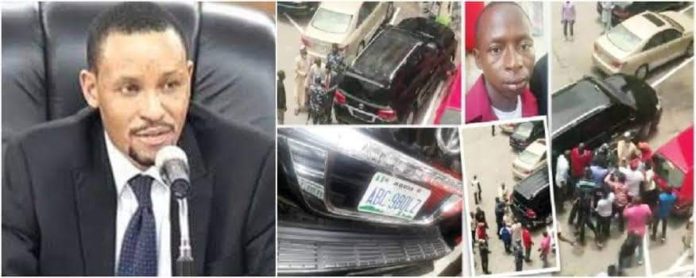
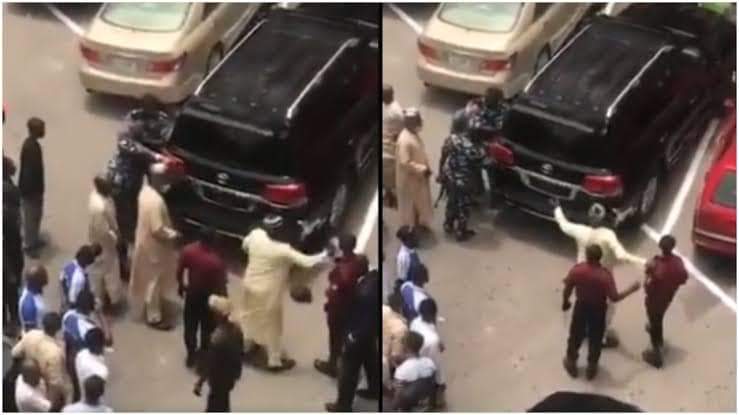
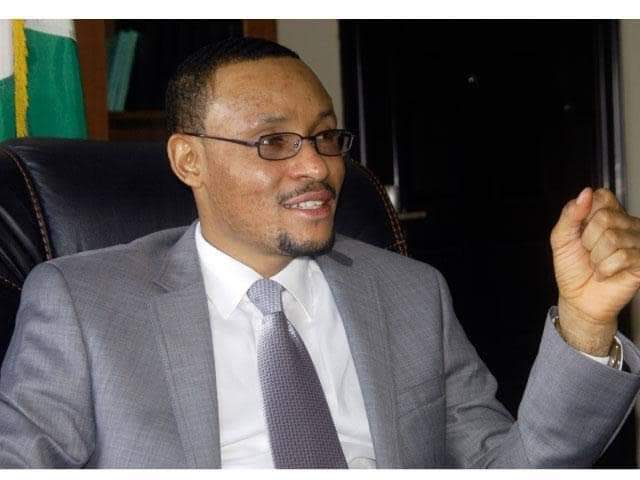
As outrage welcomed the viral video of the Chairman of the Code of Conduct Tribunal, Justice Umar Danladi, the man caught in the shameful show at Banex Plaza Abuja on Tuesday later confirmed exactly what he is made of through a crappy and terribly written press statement.
In the viral video, the security guard was slapped, kicked, pulled down and inflicted with injuries by the power-drunk CCT Chairman, before he was restrained and led into his car by police officers.
But the following day, a press statement meant to deny the allegation or incident eventually confirmed it beyond an iota of doubt that the public officer is actually conversant with indiscretion.
A public officer caught in such embarrassing situation, rather than apologize, showed more of his disregard for rules and unqualified lawlessness.
Otherwise, how could even a junior officer as low as a cleaner have okayed that poorly written and heavily loaded prejudiced statements be sent out?
The statement okayed by his office placed a seal on the man’s intolerance and inept manners that doesn’t even know how to pretend about his hatred for other Nigerians.


We still wonder if the author of that trashy piece is paid by Nigeria for such horrendous grammar?
Worst of all, his boss, the CCT Chairman after his Banex Plaza tout outing okayed that gutter piece for public consumption with the profiling.
So how else would Justice Danladi confirm beyond doubt that he really assaulted the poor Nigerian at his duty post because he is BIAFRA BOY, who refused to bow at the presence of a god?
According to the grammar challenged press statement, the CCT Chairman has been using that Plaza for his services in the past 20 years and suddenly yesterday realized the people there that should be assaulted as lower caste humans are BIAFRA BOYs?
It’s quite unthinkable how privileged members of the society reason just because they hold public posts
These are proofs of how incompetent and unqualified most managers of Nigeria are and why we are where we are.


The only option left for Justice Danladi to take is tender public apology and resign for assaulting a helpless Nigerian on the street and profiling other Nigerians for his crude act
Danladi beyond doubt abused his office and should not remain there any longer.

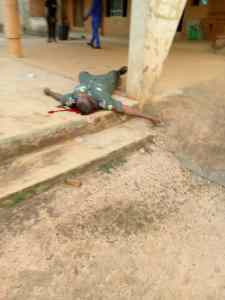
Breaking: Two Policemen Shot Dead As Unknown Gunmen Attack Soludo In Anambra

One of the policemen killed at Isuofia today by unknown gunmen

A couple of minutes ago, unknown gunmen disrupted an interactive session between Isuofia youths and a former Governor of the Central Bank of Nigeria, Prof Chukwuma Soludo at the town’s civic centre. Two policemen were reportedly shot dead.

There is a serious stampede now in Afuzo area of Isuofia which is in Aguata LGA of Anambra state. Eye witnesses told NewsProbe that two of Soludo’s security details were killed. Unconfirmed reports also have it that the state Commissioner for Public Utilities, Engineer Emeka Ezenwanne, was taken away.

Soludo, who is from Isuofia and a leading aspirant in the November 6 governorship election in the state, is said to be safe. As at press time, his whereabouts remain unknown.

Details later…

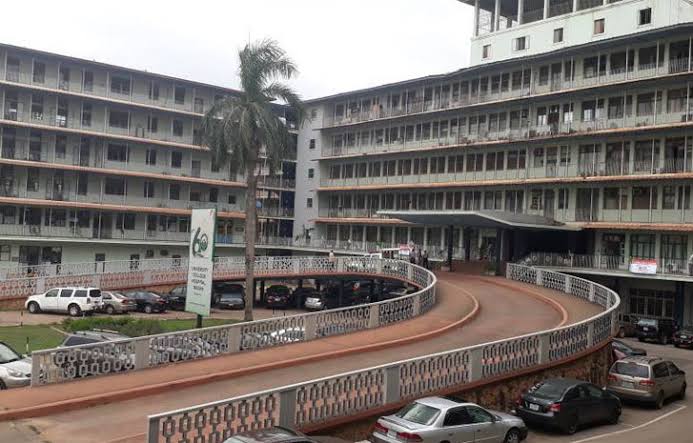
Surgeries Postponed After 4-day Water Scarcity At UCH

A scarcity of water at the University College Hospital (UCH), Ibadan since last Saturday is causing the postponement of some surgeries,  FIJ can report.

According to a source, the officials claim the water scarcity is due to some ongoing major repairs within the hospital, but the problem is now affecting patients’ access to healthcare.

In fact, surgeries are currently being postponed as a result of this development.

“I was supposed to be in theatre this week but the surgery has now been postponed by two days because of this water crisis,” a patient told FIJ.

“It is so bad that patients now buy sachets of water to bathe and defecate.”

Water crises in UCH are frequent occurrences, although they happen in parts of the hospital rather than the whole.

In November, jounalist ‘Fisayo Soyombo tweeted about the water crisis in the hospital. However, Toye Akinrinlola, Head of the Hospital’s Public Relations Department, subsequently denied the crisis during a phone-in programme on TVC, despite the availability of video evidence.

The development at the UCH comes after President Muhammadu Buhari embarked on yet another trip to the United Kingdom for a “routine medical check-up”.

The phone number of Professor Jesse Otegbayo, Chief Medical Director of the Hospital, was unreachable as of press time, while Akinrinlola did not answer his calls. (Oyoinsight)

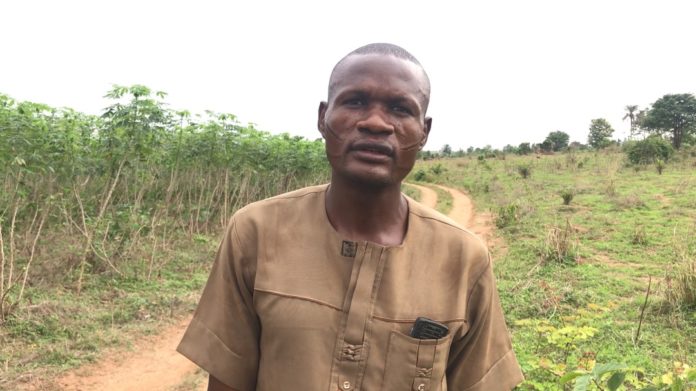
Herdsmen uprooted my N5m cassava farm for their cows to eat –Oyo farmer

Olalekan Tajudeen

A farmer in the Akinyele Local Government Area of Oyo State, Olalekan Tajudeen, has narrated his ordeal in the hands of nomadic herdsmen including how they uprooted his N5m cassava farm for their cows to feed on.

Tajudeen, who said he obtained a loan of N5m to start his farming business in the Akinyele Local Government Area, said the herders have since denied him of a fruitful venture.

The farmer in his late 40s spoke when The PUNCH team visited the Ibaayin, Elekuro, Ejitolu, Meele, Idi Osan, Akala, Oja Ode and Alaja villages in the Akinyele LGA recently.

The PUNCH team had visited the villages following reported cases of herdsmen oppression; invasion of farmlands, kidnappings, killings, amongst others.

“I took a loan of N5m to begin my farm business, now the cows have eaten up all the crops on the farm. Please help us, help us tell the government our plight, government officials can come and inspect the destruction if it appears a lie,” Tajudeen told The PUNCH.

“The herdsmen uprooted my cassava farm for their cows to graze,” he cried out.

According to the farmer, the herdsmen move with guns, cutlasses and other dangerous weapons.

“The issue started two years ago, I came to the farm with my wife that day.

“On our way home, the herders waylaid me and went away with my bike and the N700,000 I made from my tractor and the cassavas I sold that day.

“I was beaten mercilessly and I wanted to show to them that I am a fortified Yorùbá man but my wife was with me. If I had tried to overpower them with my strength, what about my wife? That was why I released the money to them that day.

“Ever since, it has been from one destruction of farmland to another. We want the government to come to our rescue assists us, may God not ruin you, we are tired of farming,” Tajudeen said. (Punchng)

Detention Of Patients In Hospitals

Sonnie Ekwowusi 

writes that the detention of patients by hospitals is wrong

Last week I found myself in a certain big hospital in Lagos (name withheld) trying to assist a terminally-ill patient who had been detained by the hospital for non-payment of hospital bills. That was not the first time I was encountering such a patient being maltreated by a hospital. Over the years I have been encountering patients who had been detained by hospitals for non-payment of bills. Increasingly hospital managers in Nigeria are detaining their patients for their inability to pay hospital bills. As far as the managers of these hospitals are concerned, the most effective way of compelling poor patients to pay their hospital bills is to detain them at the hospital immediately after treatment or midway during treatment. Que barbaridad!

The dying patient who solicited my assistance last week underwent a major surgery at the hospital. Prior to the surgery, the patient, with the assistance of many charities and generous public donors, paid the hospital in question a gargantuan sum of N17.5 million. The sum covered all pre-surgical and surgical expenses. But unfortunately the surgery was unsuccessful. Before he was wheeled into the hospital operating room he wasn’t experiencing any severe pains in his stomach. But since he underwent surgery he had in the last one month been writhing in great pain. As at last week, the patient could hardly eat, let alone sleep at night due to the intense pain. Not even his wife, children, brother and friends frequenting the hospital to accompany him could console him or cheer him up. The pain seems unbearable. The pathetic aspect is that the hospital is unsure of the time the patient would be relieved from the intolerable pain. To add insult to injury, the hospital had slammed additional N6.2 million post-surgery bills on the patient. To avoid incurring more hospital bills and expenses, the family and friends of the patient had applied last week to the hospital to temporarily discharge the patient from the hospital so that he could go home and be attending hospital from home. The hospital turned down the application. Instead of acceding to the application, the hospital insisted that the patient must pay at least 50% of the N6.2 million additional post-surgery bills. Before I left the hospital last week the patient was still being detained despite all pleadings. I even had a meeting with the hospital management wherein I pleaded with them to allow the dying patient to go home. As we struggle to live with multiple perceptions of the truth, we should aim at building one world rooted in common humanity in which care for the sick occupies a primordial place. The sick are always with us and we cannot afford to remain in our respective cocoons unmindful of their plight.

Clearly the detention of the patient by the hospital is unconstitutional and illegal. By placing the patient under a false imprisonment for non-payment of bills, the hospital had flagrantly violated his right to freedom of movement and right to human dignity as enshrined in our 1999 Constitution and African Charter on People’s and Human Rights. Secondly, by acting as the offended party, complainant, accuser, prosecutor and the judge in their own case, the hospital had violated the rule of natural justice expressed in the well-known Latin maxim Nemo judex in causa sua.

You see, two wrongs cannot make a right. If the hospital was aggrieved that the patient had not settled his hospital bills before applying to leave the hospital, all it could have done was to request the patient or his relatives to enter into a written undertaking agreeing to the mode of and precise date of settling the bills. Subjecting the patient, who had earlier paid the hospital a whopping sum of N17.5 million, to psychological torture and humiliation simply because he was unable to pay his post-surgery bills is, in my humble view, inhumane. More importantly, recourse to force and self-help in settling disputes is a recipe for chaos and anarchy. A hospital not governed by the rule of law poses great danger to society. This probably explains why the law court has been vested with the jurisdiction to determine or settle all matters relating to the civil rights and obligations of the citizens.

Consequently, Nigerian hospitals should stop detaining patients for non-payment of bills. Aggrieved patients should approach the law court to seek remedy. Nigeria and Cameroun, I gather, are holding the world record as countries with hospitals where patients are routinely detained for non-payment of hospital bills. Why is Nigeria always featuring bad things? I also gather that some Nigerian pregnant women who had been detained in some hospitals for non-payment of hospital bills had died. Remember Mrs. Folake Oduyoye, a pregnant lady who was detained at the Lagos University Teaching Hospital (LUTH) for non-payment of her hospital bills despite the entreaties of her husband that the bills would be paid in due course? Sad to say, Mrs. Oduyoye eventually died at LUTH on December 13, 2014 while still in detention.

It is high time Nigerian governments understood that access to affordable health care is no longer a privilege: it is a human right of the citizenry. Nigeria’s greatest challenge over the years is making basic primary health care accessible to her citizenry. Come to think of it, provision of basic primary health care is no rocket science. All it takes the government to achieve that laudable goal is for it to get its priorities right. For example, instead of wasting $2 billion in constructing a railway line from Kano to Niger Republic, the Buhari administration should have spent the aforesaid amount in re-equipping public hospitals in Nigeria or providing affordable public health Insurance for Nigerian citizens. After assuming power in 2015 President Buhari promised that he would ensure that many Nigerians had unimpeded access to primary health care services. In one speech, President Buhari said: “Our goal of revitalizing the Primary Health care Centres is to ensure that quality basic health care services are delivered to the majority of Nigerians irrespective of their location in the country”. Till date, the President has not fulfilled this promise and other promises.

Beyond the government, the citizens cannot turn their back on their fellow citizens who are sick. To achieve this goal, it is imperative that we establish a broader consensus about the meaning of humanitarianism, and about its role in the promotion of human welfare. We need to identify common values from which to erect an ethical framework for human solidarity. In identifying this ethical framework, the pitiable situation of the sick particularly merits top priority. The citizens should build a strong solidarity for the welfare of the sick. We must set out in earnest to set up formidable blocks of social institutions to alleviate the sufferings of the sick in our midst. No man is an island unto himself. We cannot live in our little cocoons unmindful of the plight of the sick in our midst.

Umahi is shedding crocodile tears over killings by herders – Intersociety; Senators ask Police to catch attackers

Governor David Umahi of Ebonyi State has condemned the attack on some communities in Ebonyi State, but a civil society group is not impressed with his response.

Umahi expressed sadness over the gruesome attack that erased at least 15 lives, maiming of others destruction of homes and properties, as well as looting.

However, the International Society for Civil Liberties and Rule of Law described as ‘medicine-after-death’, the visit and ‘mourning’ by Governor Dave Umahi to the scenes of the Monday night attacks, killings and destruction of property against defenseless rural Christian dwellers in Nkalaha, Obegu, Amazu, Nkalagu and Umuhuali Communities in Ishielu Local Government Area of Ebonyi State.

Intersociety said that Umahi who visited the affected communities reportedly in mourning mood, is clearly shedding crocodile tears.

An angry Umahi had visited the communities and charged the security agencies to go after the perpetrators in order to bring them to justice.

His words: “I got very shocking news this afternoon about the attack on about four communities in the state.

“We feel so sad that this kind of thing should happen in Ebonyi.

“We feel so worried for our country Nigeria and we are short of words.

“We condemn this attack because it is capable of causing very serious killings, if allowed to continue this way.”

He appealed calm and advised the people not to seek vengeance, assuring that the criminals will be caught.

It is “a clear case of a Governor who conspiratorially and vicariously signed away personal, collective and territorial security and safety of his own people and put them in present and future dangers by having them handed over to jihadist entities, done in return for being in office as two term Governor of Ebonyi State,” it said in a statement.

It adds, “Under Governor Dave Umahi as Ebonyi Governor and Chairman of the Southeast Governors Forum, the Southeast geopolitical zone and Igbo enclaves in neighboring Benue and Kogi States, and faith security of the homeland Igbo people have grown porously and become gravely at risk and endangered.

“The Igbo ethnic nationality, apart from their 1967-70 Civil War insecurity and other safe conditions, have never been so threatened and endangered. The present ‘Southeast Governors Forum’ involving Governor Dave Umahi as its chair and Governors of Anambra, Enugu, Imo and Abia States is the weakest in Nigeria and a threat to future security and safety of the Igbo.”

The group alleges that rather than governing and leaving leadership imprints in their respective States, the Governors of the Southeast are not nothing to write home, and also entered their names in the “negative book of posterity.”

In the statement by the trio of Emeka Umeagbalasi, Obianuju Igboeli, Chidimma Udegbunam and Samuel Kamanyaoku, the group alleges that by watching over the destructive invasion of the Southeast and invocation of religious war against the zone under the guise of ‘inter-regional cattle grazing’, the Southeast Governors chaired by Engineer Dave Umahi have also become what it termed conspiratorial “importers of radical Islamism” against their own people.

Intersociety said its research showed that prior to 2015, there was little or no number of Fulani cattle herders’ settlements in forests, bushes and farmlands in the South-eastern flank of the country “except in urban centers or their outskirts occupied by Hausa natives, later joined by some Fulanis, most of whom were sedentary Fulanis,” adding that “cattle herders then were involved in making seasonal ‘travel-and-return-trips’ southwards or in rainforest regions.”

However, the group claims that hundreds of settlements have sprung up in the forests, bushes and farmlands of the Southeast.

It claims that the five years old violent settlements, started in 2016, and were done with full approval of the present Southeast Governors led by Gov Dave Umahi of Ebonyi State.

Meanwhile , the South East Caucus of the Senate has charged the Inspector-General of Police, Mr. Mohammed Adamu and heads of the nation’s security agencies to expeditiously fish out those responsible for the recent killing of natives in Ebonyi State communities, insisting it must not go unsolved and unpunished like others before it.

The Caucus spoke vide a statement by the Caucus Leader and former Deputy President of the Senate, Senator Ike Ekweremadu, in Abuja on Wednesday, describing the act as unfeeling.

“This act is most unfeeling and gruesome; and we condemn it in totality. But more importantly, this must not go unpunished like others before it.

“It is imperative to warn that the Nigerian state is fast delegitimising itself by its failure to discharge the primary purpose of government, which is security and welfare of the people, as clearly prescribed in Section 14 of the 1999 Constitution.

“The widespread killings and all manner of violent crimes across the country have continued to worsen because the perpetrators walk away with their crimes, never arrested or brought to book.

“Therefore, this is particularly a call on the Inspector General of Police and the heads of security agencies to bring the perpetrators of the Ebonyi killing to book expeditiously. To do otherwise will amount to further loss of government’s exclusive power of coercion to non-state actors and brigands, leaving citizens and constituent parts of the country with no option than to further resort to self-help” they stated.

The Caucus also condoled with the Government and people of Ebonyi State on the sad development.

“We stand in sympathy and solidarity with the Government and people of Ebonyi State over this dastardly incident and will give every necessary support to ensure that the perpetrators are brought to book”, the statement concluded. (Everyday)

NAPTIP launches policy document to tackle gender-based violence

The National Agency for the Prohibition of Trafficking in Persons (NAPTIP) on Tuesday launched a policy document aimed at tackling all forms of Gender Based Violence (GBV) in the country.

Hajia Sadiya Umar-Farouk, Minister of Humanitarian Affairs, Disaster Management and Social Development, said in Abuja that the document was to institutionalise an internal gender mainstreaming strategy in NAPTIP.

Umar-Farouk said that it was also targeted at giving proper operation to GBV issues and address gender gaps by contributing to the realisation of eliminating the menace.

“I believe that the launch of this NAPTIP’s gender policy will complement the agency’s operational strategies to curb gender-based violence and address gender gaps.

“It will also chart a new course in the management of the agency’s relationships with its various partners and clients,’’ she said.

Umar-Farouk called on policy makers to analyse the society critically in order to recognise the discriminatory practices against women in particular, as well as men.

The minister called on Ministries, Departments and Agencies (MDAs) to adopt and strengthen measures to mainstream gender concerns in all their activities and programmes.

Earlier, NAPTIP Director General, Imaan Sulaiman-Ibrahim, stated that the policy document was produced in collaboration with some foreign organisations.

According to her, it was produced under the two years programme on prevention of forced migration and trafficking in women and girls in Nigeria.

She said the document would provide the platform that would guide NAPTIP work in gender secure response.

Sulaiman-Ibrahim added that it would promote gender sensitive environment that would address forced migration, trafficking and other GBV crimes.

“Women equality and empowerment, being one of the 17 Sustainable
Development Goals (SDGs), is integral to all dimensions of inclusive and sustainable
development.

“Of particular reference is SDG five, which is aimed at eliminating all forms of discrimination and violence against women in the public and private spheres.

“Gender equality is not only a fundamental human right, but a necessary foundation for a peaceful, prosperous and sustainable world,’’ she stated.

Sulaiman-Ibrahim said that the document would strengthen gender clauses and mainstreaming of gender into policies, legislations, programmes and operations of NAPTIP.

“It will assist in the prosecution of male and female offenders, with attention to their gender needs, strengthening the network of stakeholders, groups, and individuals at all levels in Nigeria,’’ she added.

Ms Comfort Lamptey, UN Women Country Representative for Nigeria and ECOWAS, pledged to support Nigeria in the area of protection of women’s rights.

Lamptey called on the Federal Government and other stakeholders to take necessary steps to implement the policy.

She commended NAPTIP for coming up with such a policy document as well as government for the political will to end human trafficking.

“The achievement of gender equality and protection of women’s rights is critical if Nigeria is to meet its deepest aspirations in this decade of action as we race to attain the SDG targets,’’ Lamptey said. (NAN)

TIPS