Home Blog Page 986

How To Prove Gifts In Nigeria.

How To Prove Gifts In Nigeria. Daily Law Tips (Tip 772) by Onyekachi Umah, Esq., LL.M, ACIArb(UK)

Introduction:  

If giving is a vital part of living, then, gifts are evidence of life. In life and death, human beings offer gifts to themselves and this has enormous legal implication. Gifts can be made orally or in writing, however, it is common to find givers who deny their own acts of giving. Also, you can find families/associates who deny the gifts of their members as well as strangers who make claims to property under gift. In this generation, there are too many cases of ex-husbands recovering their gifts of expensive cars and jewelries from their ex-wives. There are also cases of religious followers seeking to recover their gifts from clergies and religious organizations. For this and many more reasons, gifts may end up as disputes in courts, during and even after the lives of the purported givers and the receivers.

Hence, proving gifts has become an important skill in the keeping, using and management of gifts. So, here is “How to Prove Gifts in Nigeria. The steps/procedures shown below, are as explained by the Supreme Court of Nigeria and the Court of Appeal of Nigeria. The judgments of the Supreme Court of Nigeria are final and unquestionable. Hence the position of the Supreme Court on this issue are unquestionable. Gifts and making gifts are allowed in Nigeria, so far as one does not gift a prohibited item or make gift to influence the actions/inactions of public officers and other regulated persons/event (like elections). 

First of all, the Supreme Court of Nigeria, defined “GIFT Inter Vivos” in these words; “A gift inter-vivos is an act whereby something is voluntarily transferred from the true possessor to another person with full intention that the thing shall not return to the donor, and with the full intention on the part of the receiver to retain the thing entirely as his own without restoring it to the giver. See Halsbury’s Laws of England. 3rd Edition. vol. 18, page 364 at para 692. The essential thing to consider is that the gift is complete when the donee has accepted it. If that condition is satisfied the donor has no right to revoke the gift. See Dewar v. Dewar (1975) 2 All E.R. 728 at 732.” Per UTHMAN MOHAMMED ,J.S.C ( Pp. 23-24, paras. F-B ). Quotation from the case of ANYAEGBUNAM v. OSAKA & ORS (2000) LPELR-508(SC). Click to access my earlier works on gifts.

Proof of Gift and Proving a Gift:   

It is the duty of a recipient/receiver (donee) of gift or his beneficiary (dependents) to always prove that the receiver was truly granted a gift and that the receiver truly accepted the gift. Gifts are often sources of litigations, where the giver (donor) is dead, insane or suddenly regretting his gifting. Whatever be the case, there are ways to establish and proof that one was given a gift. It may be by written documents (especially for lands in cities or under statutory ownership) or by eye witnesses that were present when a person received a gift (especially for lands in rural places or under customary ownership). Below are the words of Justices of appellate courts on this issue; 

  1. “The law is settled that a gift of interest on land must be backed with written document or evidence of witnesses in cases of customary law gift else, the gift when seriously challenged as its validity devolves to the estate of the giver. It is duty of a beneficiary of the gift to prove the existence of such gift especially where the owner, who made such gift is dead and he is survived by heirs who must inherit the property. Alienation or transfer of interest absolute over a family land where the founder is deceased cannot be valid unless done by the head of the family with the consent of principal members of the family. See AGU V ODOFIN (1992) 3SCNJ 161; AJIBADE V PEDRO (1992) 5 NWLR (PT. 241); AMAKOR V OBIEFUNA (1997) ALL NLR 119.” Quotation is from the case of CHIBUZOR & ANOR v. CHIBUZOR (2018) LPELR-46305(CA); 
  2. In recent case of 2020, the Supreme Court of Nigeria held that; “The simple truth is that it was the said appellants who affirmed, positively, that there was such a gift. They, thus, had the burden, both on the pleadings and on the evidence, to prove their assertion…The consequence is that, that claim of gift failed in the absence of any credible evidence to sustain it…” Per CHIMA CENTUS NWEZE ,J.S.C ( Pp. 61-63, paras. E-B ) Quotation from the case of EKWEOZOR & ORS v. REG. TRUSTEES OF THE SAVIOUR’S APOSTOLIC CHURCH OF NIG (2020) LPELR-49568(SC)
  3. “A gift inter vivos must be made openly. There must be evidence of actual handing over of the land and acceptance thereof in the presence of witnesses under native law and custom. In Madam Alice Orido v. Theophilus Akinlolu, CA/B/253/2004 delivered on 29th March, 2012, Iyizoba JCA held as follows: “Customary law requires no writing for the transfer of land whether upon sale or by way of gift. In lieu of writing however, there must be actual handing over of the land to the donee in the presence of witnesses and the acceptance by him of the gift. Acceptance is as much as customary law as the delivery of possession in the presence of witnesses; without it the gift is invalid, such acceptance must be made with as much publicity as possible….. Actual delivery is not mere evidence of the gift but is part of the gift itself.” Quotation if from the case of ENADEGHE v. EWEKA (2014) LPELR-24479(CA)
  4. “Now, for the Respondent who relied on gift from his father of the land in dispute, he carried the burden of proving by credible evidence the following two essential facts, namely:(a) The fact of the gift inter vivos to him by his father. (b) The title of his father to the land in dispute which he transferred to him by gift inter vivos.” Per BIOBELE ABRAHAM GEORGEWILL ,J.C.A ( P. 50, paras. B-C ). Quotation is from the case of GABDO v. USMAN (2015) LPELR-25678(CA)
  5. “…In other words, where a Plaintiff had relied, as in the instant case gift of the land inter vivos by his father, he must first prove this fact of gift and the most crucial fact of title in his father before he can rely on acts of ownership and possession. In the event of failure to prove the root of title pleaded, the Respondent cannot turn round to rely merely on acts of ownership and possession, no matter how long…” Per BIOBELE ABRAHAM GEORGEWILL ,J.C.A ( Pp. 54-56, para. A). Quotation is from the case of GABDO v. USMAN (2015) LPELR-25678(CA)
  6. “None of the Plaintiff’s Witnesses witnessed the gift from Chief Agunbiade to the Appellant’s father. There was no member of both the Appellant’s family and the family of Chief Agunbiade who witnessed this gift. It is true that a gift inter vivos like the Appellant claimed is valid in all cases. However, the burden of proving by credible evidence is on the Appellant who relies on the gift. In GABO V USMAN (2015) LPELR 25678, the Court held that the person who relies on such gift has to prove two (2) essential facts, namely, the fact of the gift inter vivos to his father. (2) the title of the donor to the land in dispute. See also ENADEGHE V EWEKA (2014) LPELR 24479 where the Court held that: ‘A gift inter vivos must be made openly. There must be evidence of actual handing over of the land and acceptance thereof in the presence of witnesses under native law and custom’.” Per UZO IFEYINWA NDUKWE-ANYANWU, J.C.A ( Pp. 22-24, para. C ). Quotation from the case of OLAJIDE v. AKINBOBOYE (2018) LPELR-46166(CA)
  7. “The issue was dealt with by Professor Nwabueze in his book “Nigerian Land Law” (1992) Nwamife Publishers Ltd, Enugu PP 367-369 referred to by learned counsel for the appellant at page 13 of his brief of argument. The learned author observed:- “Customary law requires no writing for the transfer of land whether upon sale or by way of gift. In lieu of writing, however there must be actual handing over of the land to the donee in the presence of witnesses and an acceptance by him of the gift.” Per CHINWE EUGENIA IYIZOBA ,J.C.A ( Pp. 16-18, paras. A-C ). Quotation from ORIDO v. AKINLOLU (2012) LPELR-7887(CA)
  8. “It is clear therefore that to prove gift of land inter vivos, there must be evidence of actual handing over of the land and acceptance thereof in the presence of witnesses. See also Ayinke v. Ibidunni (1959) 4 FSC 280 @ 282 where Ademola CJF observed:- “I also find myself in agreement with the learned trial judge that there are means whereby a man may dispose of certain properties before his death in accordance with native law and custom. It is my view that disposition of properties could be made under native law and custom by a gift followed by a transfer of the property, or a declaration by a man on his death bed in the presence of witnesses.” (Underlining mine). The absence of writing in these transactions under native law and custom make the presence of witnesses to the transactions a necessity.” Per CHINWE EUGENIA IYIZOBA ,J.C.A ( Pp. 16-18, paras. A-C ). Quotation from ORIDO v. AKINLOLU (2012) LPELR-7887(CA)
  9. “In the case of FOLARIN vs. DUROJAIYE (1988) NSCC 255 AT 265, the Supreme Court, per OPUTA, JSC while, making as reference to customary transfer, the sage said: “To transfer an absolute title under customary law, it ought to be pleaded and proved that the gift was made in the presence of witnesses. To that effect, names of those witnesses should also be pleaded as well as the fact that they witnessed the actual delivery or handing over of the land to the purchaser or donee.” Per FREDERICK OZIAKPONO OHO ,J.C.AÂ ( Pp. 26-27, para. A ). Quotation from the case of EZENWORA & ORS v. EZENWORA (2018) LPELR-43944(CA)
  10. “…there was no clear-cut evidence that the alleged gift of the property was made in the presence of witnesses to make it a good/perfect and valid gift vide the cases of Ayinke v. Ibidunni (1959) SCNLR 666 at 669, Orido v. Akinlolu (2012) 9 NWLR (pt. 1305) 370 at 387 to the effect that to prove a gift of property inter-vivos there must be evidence of actual handing over of the land or property or declaration of the gift by the owner of the property and its acceptance thereof in the presence of witnesses.” Per JOSEPH SHAGBAOR IKYEGH ,J.C.A ( P. 13, paras. D-F ). Quotation from the case of DAVIES v. RAHMAN-DAVIES & ANOR (2018) LPELR-46557(CA)

Conclusion: 

With little or no reliable records across Nigeria, proving gifts can be a daunting task. Hence there is an obvious need to learn and understand how to establish the existence of gifts. Gifts once accepted are gone and irredeemable, unless where the gift was made out of force, fraud or for a limited period. However, it is the duty of the recipient of a gift to prove that the gift was offered to him and that he did accepted the gift. This can be proven through documentary evidence (photos, emails, videos, WhatsApp messages, oral recordings, deed of gift, letters and any other permanently records”. Also, gift can be proven through the testimonies of witnesses (persons that truly witnessed the giving and not persons that merely heard about it). Inability to prove the existence of gift may cost a recipient his gift.

My authorities, are:

  1. Sections 1, 2, 3, 4, 5 and 6 of the Constitution of the Federal Republic of Nigeria, 1999.
  2. Sections 124 and 158 of the Electoral Act, 2010.
  3. The judgment of the Supreme Court of Nigeria (on the meaning of Gift Inter Vivos) in the case of ANYAEGBUNAM v. OSAKA & ORS (2000) LPELR-508(SC)
  4. The judgment of the Supreme Court of Nigeria (on the revocation of Gift) in the case of IMAH & ANOR v. OKOGBE & ANOR (1993) LPELR-1497(SC).
  5. The Supreme Court’s decision (on effect of “Acceptance” to a gift) in the case of ANYAEGBUNAM v. OSAKA & ORS (2000) LPELR-508(SC)
  6. The Supreme Court’s decision (on whether a gift can be rejected) in the case of EBOSIE v. PHIL-EBOSIE & ORS (1976) LPELR-994(SC)
  7. The judgment of the Supreme Court of Nigeria (on proving Gift) in the case of EKWEOZOR & ORS v. REG. TRUSTEES OF THE SAVIOUR’S APOSTOLIC CHURCH OF NIG (2020) LPELR-49568(SC)
  8. The judgment of the Supreme Court of Nigeria (on proving Gift) in the case of UGHUTEVBE v. SHONOWO & ANOR (2004) LPELR-3317(SC)
  9. The judgment of the Supreme Court of Nigeria (on proving Gift) in the case of  ANYAEGBUNAM v. OSAKA & ORS (2000) LPELR-508(SC)
  10. The judgment of the Supreme Court of Nigeria (on proving Gift) in the case of  IMAH & ANOR v. OKOGBE & ANOR (1993) LPELR-1497(SC)
  11. The judgment of the Supreme Court of Nigeria (on proving Gift) in the case of  OKWUWA v. STATE (1964) LPELR-25195(SC)
  12. The Court of Appeal’s decision (on meaning, nature and effect of gift inter vivos) in the case of ABAH v. OGBE (2012) LPELR-14842(CA)
  13. The judgment of the Court of Appeal (on proving Gift) in the case of CHIBUZOR & ANOR v. CHIBUZOR (2018) LPELR-46305(CA);
  14. The judgment of the Court of Appeal (on proving Gift) in the case of IGBOZURUIKE & ANOR v. ONUADOR (2015) LPELR-25530(CA)
  15. The judgment of the Court of Appeal (on proving Gift) in the case of ISIOHIA & ORS v. ELECHI (2018) LPELR-44988(CA)
  16. The judgment of the Court of Appeal (on proving Gift) in the case of DAVIES v. RAHMAN-DAVIES & ANOR (2018) LPELR-46557(CA)
  17. The judgment of the Court of Appeal (on proving Gift) in the case of ABAH v. OGBE (2012) LPELR-14842(CA)
  18. The judgment of the Court of Appeal (on proving Gift) in the case of JOVINCO NIGERIA LTD & ANOR v. IBEOZIMAKO (2014) LPELR-23599(CA)
  19. The judgment of the Court of Appeal (on proving Gift) in the case of GABDO v. USMAN (2015) LPELR-25678(CA)
  20. The judgment of the Court of Appeal (on proving Gift) in the case of SAFETI & ORS v. SAFETI & ANOR (2006) LPELR-7579(CA)
  21. The judgment of the Court of Appeal (on proving Gift) in the case of ORIDO v. AKINLOLU (2012) LPELR-7887(CA)
  22. The judgment of the Court of Appeal (on proving Gift) in the case of ENADEGHE v. EWEKA (2014) LPELR-24479(CA)
  23. The judgment of the Court of Appeal (on proving Gift) in the case of OLAJIDE v. AKINBOBOYE (2018) LPELR-46166(CA)
  24. The judgment of the Court of Appeal (on proving Gift) in the case of EZENWORA & ORS v. EZENWORA (2018) LPELR-43944(CA)
  25. The judgment of the Court of Appeal (on proving Gift) in the case of DASHE & ORS v. JATAU & ORS (2016) LPELR-40180(CA)
  26. The judgment of the Court of Appeal (on proving Gift) in the case of YESUFU & ORS v. OKE BAALE (OSOGBO) NUT CO-OPERATIVE INVESTMENT AND CREDIT SOCIETY LTD & ANOR (2014) LPELR-22102(CA)
  27. The judgment of the Court of Appeal (on the revocation of Gift) in the case of GABDO v. USMAN (2015) LPELR-25678(CA)
  28. The judgment of the Court of Appeal (on the revocation of Gift) in the case ofThe Court of Appeal’s decision in the case of ABAH v. OGBE (2012) LPELR-14842(CA)
  29. Onyekachi Umah, “Acceptance of Gift and Effect of Failure to Accept Gift” (LearnNigerianLaws.com, 20 August 2020) <https://learnnigerianlaws.com/acceptance-of-gift-and-effect-of-failure-to-accept-gift/> accessed 9 April 2021 
  30. ”Onyekachi Umah, “Who Can Make Gifts And What Are His Powers?” (LearnNigerianLaws.com, 1 May 2020) <https://learnnigerianlaws.com/who-can-make-gifts-and-what-are-his-powers-daily-law-tips-tip-560-by-onyekachi-umah-esq-llm-aciarbuk/> accessed 9 April 2021
  31. Onyekachi Umah, “It Is An Offence To Give Gifts And Money For Election In Any Part Of Nigeria”(LearnNigerianLaws.com, 21 February 2019) <https://learnnigerianlaws.com/daily-law-tips-by-onyekachi-umah-esq-tip-273-it-is-an-offence-to-give-gifts-and-money-for-election-in-any-part-of-nigeria/> accessed 9 April 2021
  32. Onyekachi Umah, “Can An Inheritance Under A “Will” Be Rejected?” (LearnNigerianLaws.com, 6 May 2020) <https://learnnigerianlaws.com/can-an-inheritance-under-a-will-be-rejected-daily-law-tips-tip-563-by-onyekachi-umah-esq-llm-aciarbuk/> accessed 9 April 2020)
  33. Onyekachi Umah, “Abolishment Of Custom Where Daughters Are Forced Not To Marry In Order To Perpetuate Their Fathers’ Lineages” (LearnNigerianLaws.com, 12 March 2020) <https://learnnigerianlaws.com/abolishment-of-custom-where-daughters-are-forced-not-to-marry-in-order-to-perpetuate-their-fathers-lineages-daily-law-tips-tip-524-by-onyekachi-umah-esq-llm-aciarbuk/> accessed 9 April 2021.

Sabi Law Projects:

#SabiLaw

#DailyLawTips

#SabiBusinessLaw

#SabiElectionLaws

#SabiHumanRights

#SabiLawOnTheBeatFm

#SabiLawLectureSeries

#CriminalJusticeMonday

#SabiLawVideoChallenge

Speak with the writer, ask questions or make inquiries on this topic or any other via [email protected], [email protected] or +2348037665878 (whatsapp). To receive free Daily Law Tips, join our free WhatsApp group via https://chat.whatsapp.com/L7h4f1exItZ38FeuhXG4WN or Telegram group, via the below link: https://t.me/LearnNigerianLaws

To keep up to date on all free legal awareness projects of Sabi Law Foundation, follow us via

Facebook Page:@LearnNigerianLaws,

Instagram:@LearnNigerianLaws,

Twitter: @LearnNigeriaLaw,  

YouTube: Learn Nigerian Laws

WhatsApp Groups via (https://chat.whatsapp.com/L7h4f1exItZ38FeuhXG4WN),

Telegram Group: (https://t.me/LearnNigerianLaws),

Facebook group: (https://www.facebook.com/groups/129824937650907/?ref=share)

or visit our website: (www.LearnNigerianLaws.com)

Please share this publication for free till it gets to those that need it most. Save a Nigerian today! NOTE: Sharing, modifying or publishing this publication without giving credit to the author or Sabi Law Foundation is a criminal breach of copyright and will be prosecuted. This publication is the writer’s view not a legal advice and does not create any form of relationship. You may reach the writer for more information.

This publication is powered by www.LearnNigerianLaws.com {A Free Law Awareness Program of Sabi Law Foundation, supported by the law firm of Bezaleel Chambers International (BCI).} Sabi Law Foundation is a Not-For-Profit and Non-Governmental Legal Awareness Organization based in Nigeria. For sponsorship and partnership, contact: [email protected], [email protected] or +234 903 913 1200.

NCC sensitises telecom consumers at 2021 Enugu international trade fair

The Nigerian Communications Commission (NCC), in line with its tradition of exploring avenues to engage with telecom consumers, has taken advantage of the opportunity of this year’s edition of the Enugu International Trade Fair to enlighten telecom consumers on their rights and privileges within the telecommunications sector.

Addressing a large audience of telecom consumers during the NCC Special Day held recently at the 32nd Enugu International Trade Fair organised by the Enugu Chamber of Commerce, Industry Mines and Agriculture (ECCIMA), the Executive Vice Chairman (EVC) of the Commission, Prof. Umar Garba Danbatta, said events of this nature provided the opportunity for NCC, as a telecom regulator, to interact with consumers and attend to their service-related concerns.

In attendance at the NCC Special Day were the Director, Public Affairs, NCC, Dr Ikechukwu Adinde; Director, Consumer Affairs, Mr. Efosa Idehen; Zonal Controller, NCC Enugu Zonal Office, Mr. Ogbonnaya Ugama, and executive members of ECCIMA.

Represented by the Director, Public Affairs, NCC, Dr Ikechukwu Adinde, Danbatta, who spoke around the theme of the Fair: “Promoting New Technologies, Business Ideas and Strategies for Rapid Economic Growth and Development in Nigeria,” highlighted some of the regulatory initiatives emplaced by the Commission for protecting, informing and educating the consumers.

These initiatives include the NCC Emergency Toll-free Number 112; the NCC Consumer Complaint Toll-Free Number 622; the Do-Not-Disturb (DND) Short Code 2442, the Regulation on Forceful Subscription and measures put in place to check cases of pre-registered Subscriber Identity Module (SIM) cards.

Danbatta emphasised the importance of the ongoing National Identity Number (NIN)-SIM data linkage exercise, in order to ensure credible citizen database for improved national security. He stressed the need for consumers to be cybersecurity-conscious while online and to always ensure efficient management of e-waste for a safer environment, noting that this year’s World Consumer Rights Day (WCRD), which was observed on March 15, 2021 focused on ‘Tackling Plastic Pollution’ in line with the e-Waste Regulation being pursued by the Commission.

Danbatta praised the efforts of Chamber at sustaining the Fair over the years, pointing out that it remains the largest and most important business event Southeast of the country.

“The Fair is pivotal to bolstering the economic and industrial transformation of the region in view of its enormous business potential,” Danbatta said.

In attendance during the NCC Day at the Fair were Executive members of the ECCIMA. Earlier in his welcome address, the President of the Chamber, Emeka Nwandu, who was represented by the Chamber’s Deputy President, Jasper Nduagwuike, extolled the role of the Chamber in the facilitation and promotion of robust exchange of business engagements in the South-East region of the country over the years through various initiatives, such as the Trade Fair.

During an interactive executive session with the ECCIMA executives at the Commission’s pavilion, Adinde and Idehen fielded questions ranging from consumer complaints management, the recent Unstructured Supplementary Service Data (USSD) policy, NIN-SIM linkage exercise and other industry related issues.

The event attracted many multinational, international and national exhibitors, who took advantage of the Fair to reach out to their customers in the Southeast and South-South zones of the country.

The NCC has, over the years, been a regular participant at international trade fairs across the country and has been consistent in its participation at the Enugu International Trade Fair. (Theconclaveng)

Gov. Sule Swears In First Nasarawa Female Chief Judge

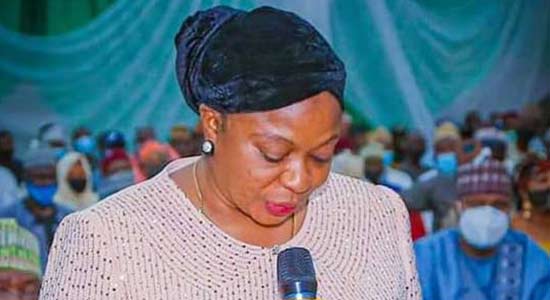
Nasarawa State Governor, Abdullahi Sule, has sworn in the state’s first female Chief Judge, Justice Aisha Bashir-Aliyu.

Her swearing-in is coming after her confirmation by the Nigeria Judicial Council and screening by the State House of Assembly.

She had worked as an acting Chief Judge for three months.

Speaking further, Governor Sule asked the new Chief Judge to see her appointment as a litmus test, urging her to bring her wealth of experience to bear in the discharge of her onerous task.

“As a Chief Judge you must realise that this is a call to serve the people and in carrying out your duties, I urge you to let the fear of God and public interest take precedence over personal preferences and inclinations,” he said.

After administering the oath of office on the new Chief Judge, Governor Sule reiterated his administration’s resolve to provide the needed impetus to strengthen relationships among organs of government.

The governor said he will continue to support the judiciary towards the quick dispensation of justice, disclosing that the government has okayed the increase in subvention of the judiciary to allow for the implementation of the harmonization law, as well as enhance allowances of magistrates and judges of Area Courts.

He also appealed to members of the Judicial Staff Union currently on strike, to return to work in the interest of the people. (Thenigerialawyer)

Child Naming & Birth Registration By Single Mothers

Daily Law Tips (Tip 774) by Onyekachi Umah, Esq., LL.M, ACIArb(UK)

Introduction:
Although, it takes a man and a woman to make and have a child, the society frowns and often abuses single mothers. Our judgmental society expects every mother to have a husband and every child to have a father and mother. Unfortunately, the realty remains that there will always be single mothers and single fathers, too. Although marriage is a not a condition for pregnancy and birth of a child, most children of single parents (especially single mothers) suffer great discrimination from birth. For example, single mothers are often rejected by landlords; clergies are often reluctant to conduct naming ceremonies for children of single mothers; many private schools reject children of single mothers and many caregivers /teachers look down on single mothers, the list is endless. However, single fathers have little or no discrimination in the Nigerian society. The focus here is on the growing discrimination of single mothers and their children with respect to child naming, contrary to the position of the law.

Child Rights to Name & Registration:
You probably will be surprised to learn that Nigeria has laws focusing on child naming. This surprise is not strange, since child naming is in the present-day Nigeria, almost a big religious feast. In many parts of Nigeria, the feast of child naming is often officiated by religious practitioners or heads of families, in the midst of family members and well-wishers. Well, it is rarely flamboyant for children of single mothers, if at all they are privileged to have a feast. However, this present day practise of child naming is far away from the simple legal process and procedure for child naming.

Among the rights of a child is the right to have a name. Yes, every child in Nigeria must have a name. The name of a child is a right and not a privilege. Hence, a federal law (the Child’s Rights Act) and similar laws across states in Nigeria mandate every child to be given a name at birth or at such other date as the culture of the parents or guardian of the child may permit. The said laws, also acknowledge that the birth of very child be registered in line with the Birth, Death, etc. (Compulsory Registration) Act, 1992. At this point, it is obvious that it takes a parent/guardian of a child to name a child. There is also no statutory style for child naming. Hence, a single mother can name her child, she does not need a man for such. She does not need a clergy, head of family, villagers, government or friends for a child naming.

A visit to another federal law (the Birth, Death, etc. [Compulsory Registration] Act) reveals that every child that is born in Nigeria must be registered. Births are to be registered within sixty (60) days of birth of a child by the parents/guardian. It is the duty of a father or a mother to register the birth of a child. Hence, this allows single mothers to register the birth of their children at the nearest office of the National Population Commission (NPC) or its registration center.

Where there is need to change the name of a child after registration of the birth of the child or to state the name of the child after such registration, any parent/guardian of the child can apply to the NPC for such, within 12 months of the registration of the birth of the child. The law expressly stated that a single mother does not need the father of her child for there to be a registration of the birth of her child. As such, in the register of births, there will be no need for the “… name of any person as the father of the child” of a single mother. However, where a father wants his name in the register as the father of a child born out of wedlock, the said father and the mother of the child will have to sign the register jointly. Also, such a father can sign the register, at the request of the mother of the child, with a declaration made by the said mother of the child or a statutory declaration made by the said father of the child.

Upon registering a live birth, the Registrar at the registration centre of NPC must deliver to the informant (single mother) free of charge, a certificate of birth for the child and a certificate of registration of birth. Failure/refusal of a parent (including a single mother) to register the birth of a child is a criminal offence. It is an offence punishable with fine of Fifty Naira (N50) or imprisonment for one month or both.

Conclusion:
The name of child and the naming of a child as well as the registration of the birth of a child are all the rights of a child. A child should not be denied of such rights. Being a single mother is not an offence in any part of Nigeria. Single mothers can name their children and register the birth of their children, freely without any form of discrimination. Discrimination is a violation of fundamental human rights and a breach of the Constitution of Nigeria. Where there is a violation of any human rights of a single mother, the single mother and or her well-wishers should report to the National Human Rights Commission or seek legal remedies in court.

The federal legislators should amend the Births, Deaths, etc. (Compulsory Registration) Act, 1992. The fines contained in the said law are too poor. Fine of Fifty Naira (N50) is ridiculous and cannot deter offenders or prospective offenders, in a nation where the minimum national wage is Thirty Thousand Naira (N30,000.00). The imprisonment term of one (1) month should be increased to a minimum imprisonment term of one (1) year in order to increase compliance. There should also be a strong partnership between the National Population Commission (that handles registration of births, deaths and marriages) and the National Identity Management Commission (that manages the National Identification Numbers and database) to improve data cleaning, sharing and reliability. No national can develop without data, so Nigerians must be encouraged and forced to freely deliver data on births, deaths and marriages, among other issues.

My authorities, are:

1. Sections 1, 2, 3, 4, 5, 6 and 42 of the Constitution of the Federal Republic of Nigeria, 1999.
2. Sections 1, 7, 8, 9, 10, 11, 12, 48, 50 and 52 of the Births, Deaths, etc. (Compulsory Registration) Act, 1992
3. Sections 1, 5, 277 and 278 of the Child Rights Act, 2003.
4. Regulations 1, 8, 10, 14, 16, 19, 51 and 52 of the Births, Deaths, etc. (Registration) Regulations, 1996
5. Onyekachi Umah, “Deadline for Registration of Births in Nigeria” (LearnNigerianLaws.com, 13 November 2018) accessed 13 April 2021.
6. Onyekachi Umah, “What is The Approved Time for Child Naming in Nigeria” (LearnNigerianLaws.com, 24 January 2020) accessed 13 April 2021

Sabi Law Projects:
#SabiLaw
#DailyLawTips
#SabiBusinessLaw
#SabiElectionLaws
#SabiHumanRights
#SabiLawOnTheBeatFm
#SabiLawLectureSeries
#CriminalJusticeMonday
#SabiLawVideoChallenge

Speak with the writer, ask questions or make inquiries on this topic or any other via [email protected], [email protected] or +2348037665878 (whatsapp). To receive free Daily Law Tips, join our free WhatsApp group via https://chat.whatsapp.com/L7h4f1exItZ38FeuhXG4WN or Telegram group, via the below link: https://t.me/LearnNigerianLaws

To keep up to date on all free legal awareness projects of Sabi Law Foundation, follow us via
Facebook Page:@LearnNigerianLaws,
Instagram:@LearnNigerianLaws,
Twitter: @LearnNigeriaLaw,
YouTube: Learn Nigerian Laws,
WhatsApp Groups via (https://chat.whatsapp.com/L7h4f1exItZ38FeuhXG4WN),
Telegram Group: (https://t.me/LearnNigerianLaws),
Facebook group: (https://www.facebook.com/groups/129824937650907/?ref=share)
or visit our website: (www.LearnNigerianLaws.com)

Please share this publication for free till it gets to those that need it most. Save a Nigerian today! NOTE: Sharing, modifying or publishing this publication without giving credit to the author or Sabi Law Foundation is a criminal breach of copyright and will be prosecuted. This publication is the writer’s view not a legal advice and does not create any form of relationship. You may reach the writer for more information.

This publication is powered by www.LearnNigerianLaws.com {A Free Law Awareness Program of Sabi Law Foundation, supported by the law firm of Bezaleel Chambers International (BCI).} Sabi Law Foundation is a Not-For-Profit and Non-Governmental Legal Awareness Organization based in Nigeria. For sponsorship and partnership, contact: [email protected], [email protected] or +234 903 913 1200.

NAPTIP returns trafficked children to parents, arraigns suspect

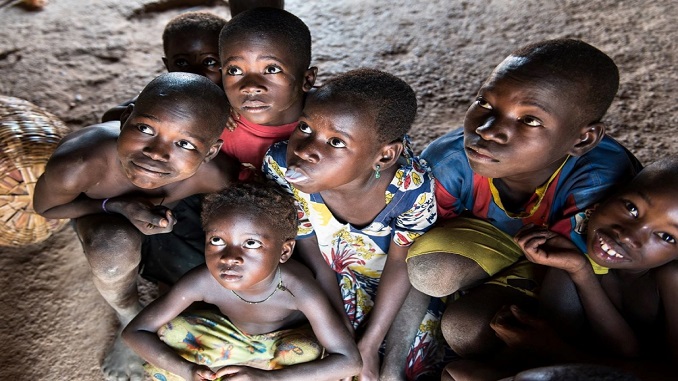
The National Agency for the Prohibition of Trafficking in Persons (NAPTIP) on Monday reunited five rescued children with their parents.

The children, under the age range of 4-7, were abducted at various times by one 32 year old Musa Abdulrahman and sold to unsuspecting women in different parts of the country in the guise of adoption.

Handing over the children to the very happy parents at the Headquarters of NAPTIP, the Director General, Imaam Sulaiman – Ibrahim, called on parents to ensure adequate protection of their children to avoid incidents of kidnapping, abduction, trafficking and other crimes against children.

The Conclave

Job & Numbers: 2 Bible Books That Swayed Supreme Court Ruling On Female Inheritance


By John Chuks Azu

Years after the Supreme Court nullified the customary practice of not according inheritance to female children by their family in Igboland, the lead justice in the case has explained the main reason for the decision.

Justice Bode Rhodes-Vivour, who retired from the Supreme Court on March 22 after clocking the statutory age of 70, revealed how he arrived at the widely hailed judgement, which tried to change the customary practice.

In affirmation of an earlier ruling in August 2020, the Supreme Court held that the age-long tradition which denied females any inheritance from their fathers was discriminatory and contravenes Section 42(1)(a) and (2) of the Nigerian Constitution, 1999.

The matter was commenced by Gladys Ada Ukeje, the daughter of late Lazarus Ogbonna Ukeje in 2004 over her family’s decision to deny her inheritance in her father’s estate based on the Igbo native law and custom.

After she won at the high court, the widow of her father, Mrs Lois Ukeje, and her son, Enyinnaya Ukeje, appealed the ruling at the Court of Appeal – wherein the earlier decision was upheld. Thereupon, the family further appealed to the Supreme Court.

The decision was taken in 2014 by a five-member panel of justices – Walter Onnoghen, Clara Ogunbiyi, Kumai Bayang Akaahs, and John Inyang Okoro, while the lead judgment was read by Justice Vivour.

“No matter the circumstances of the birth of a female child, such a child is entitled to an inheritance from her late father’s estate,” he said.

“Consequently, the Igbo customary law, which disentitles a female child from partaking in the sharing of her deceased father’s estate is a breach of Section 42 and (2) of the Constitution, a fundamental rights provision guaranteed to every Nigerian,” he added.

Explaining the rationale for the judgment, Justice Vivour said the biblical injunctions in the following chapters: Number 27:7, which reads, “The daughters of Zelophehad speak right. Thou shall surely give them a possession of an inheritance among their father’s brethren; and shalt cause the inheritance of their father to pass unto them”

And Job 42:15 thus: “And in all the land were no woman found fair as the daughters of Job and their father gave them inheritance among their brethren.”

“Women are Heads of State in several countries. See our own Okonjo-Iweala. Once you give a girl education, she would achieve enviable heights. So, a girl child should be treated equally as the boy child,” he further explained.

Speaking about his personal convictions, Justice Vivour said: “Most articles I read about me, describe me as conversative. I think I am conservative. But what I know about myself is that I don’t know how to dance around the correct position of things; and people tell me that I say it as it is. That is how I know how do it. I don’t know how to go about bending what is so obvious. If it is obvious, you say it and get out of the place or you keep quiet. That is how I see it.”

He declared therefore that female children are entitled to an inheritance.

Justice Vivour also explained that we should no longer rely so much on the doctrine of judicial precedent because some of them do not make sense and may no longer serve the ends of justice.

He said some of those decisions are outdated and should be laid to rest and never followed, although stare decisis implies that judges must “stand by your decisions and the decisions of your predecessors, however wrong they are and whatever injustice they inflict.”

Justice Rhodes Vivour joined the bench as a judge of the Lagos State High Court on 18th February, 1994. He was elevated to the Court of Appeal in 2005, from where he joined the Supreme Court on September 16, 2010.

Credt:https://dailytrust.com/how-scripture-aided-supreme-court-decision-in-female-inheritance-case

Six months pregnant lawyer kicked to death by Husband

As Narrated by Barrister Chukwudi Iwuchukwu on his Facebook page

Another Beautiful Soul Lost To Domestic Violence

When Barrister Adaeze Destiny Ikpeama got married to Anthony Elvis Ikpeama in 2014, little did she know that the institution she looked forward to enjoying would cut her life journey short.

Immediately the marriage was sealed, the man Adaeze got married to immediately turned into a beast by turning the Madonna trained lawyer into a punching bag.

Even when relatives from both sides intervened several times by pleading with Anthony to stop beating his wife, if not for anything, she is the mother of his kids ahd his partner, man was obtuse as he continued to beat the poor girl any time he was not in a good mood.

The late Barrister Adaeze Destiny Ikpeama

Covid 19 and the subsequent lockdown of staying at home made the domestic violence worse as it now became a daily ritual.

Two days ago, another round of beating started and this time around, it was very intense which eventually ended up taking her life.

That Adaeze was 6 months pregnant was not enough to stop him in his track rather it intensified the beating of the poor girl.

His focus was the tummy as he was punching her 6 months pregnant tummy with righteous anger and all the energy he could muster.

He did not stop till she gave up and went into a coma but that is not the full story.

When Adaeze went to a coma and was rushed to the hospital by her good neighbours who came to her aid, Anthony followed them to the hospital and immediately she was admitted and oxygen was placed on her to resuscitate her, the husband went to her bedside and then removed the oxygen mask.

That was how Adaeze suffered cardiac arrest and died.

A Good Samaritan alerted Madonna trained lawyers based in Lagos of what had befallen one of their own and mentioned that the vile husband is in hiding after killing his wife.

Husband, Anthony Elvis Ikpeama and their baby

My good man Okekearu Chukwuezugo Kingsley swung into action by rallying our colleagues in Lagos immediately the sad news was relayed to them, to get justice for one of us who was brutally murdered by the husband.

Police AIG in charge of Lagos was informed and Oga AIG was gracious enough to provide policemen that assisted in arresting the alleged murderer.

Happy to announce that Anthony Ikpeama was arrested this morning around 2.00 a.m after he was tracked to his hideout in Ajah Lagos where he was hiding.

Such a sad story and I hope that the husband who killed her will be sentenced to death.

Beautiful Adaeze left behind, two handsome boys who are still young to understand or comprehend what happened to their mother.

May her soul Rest In Peace

Meanwhile

Mr Tony Ikpeama, the wife beater who allegedly killed his wife has been released from police custody.

He was granted bail this morning by the men of Nigerian police under the pretense that his 2 kids at home are too young to be left alone without any supervision.

He promised to come back to the police station but has failed to do so.

But here is one interesting thing; the wife beater has money to throw around and who knows, money to buy justice so he is using the money to influence final outcomes to his advantage.

From procuring a fake doctors report to exonerate himself that he was not the one that killed his wife rather she died a natural cause to bribing the policemen at the station where he was detained to allow him to go this morning.

The deceased family especially the Mum that she left behind is clueless what to do and where to go from here.

The doctor’s report

64-Year-Old Man Slumps, Dies During A Brawl With Girlfriend

Commissioner of Police Lagos State

The Lagos State Police Criminal Investigation Department in Panti, Yaba is currently investigating the death of a 64-year-old man who reportedly slumped and died after a brawl with his female lover.

Reports had it that the chaos started after Osita Anwuanwu (the deceased) visited his partner, Juliet Eguebor to challenge over suspicious infidelity at a bar owned by her ally Ngozi Emezue.

Naija News understands that the argument between the two lovers later resulted in a fight at the bar located in the Ikotun area of Lagos.

Confirming the incident, the state police spokesman, Muyiwa Adejobi, said the police had immediately rescued the man Anwuanwu who was later certified dead at the Igando General Hospital.

A statement issued by Adejobi read, “Operatives of the Lagos State Police Command have again arrested two suspects for the alleged killing of one Osita Anwuanwu, m, 64, at Arida area of Ikotun Lagos State on 8th April 2021, at 8.45 pm.

“The daughter of the deceased, Linda Anwuanwu of Temitope street, off Governor’s Road, Ikotun, Lagos State, reported to the police at Ikotun Division that she was informed that her father, one Osita Anwuanwu, 64, same address, was lying down in a bar at Arida after he had a misunderstanding with one Ngozi Emezue, f, 38, and Juliet Eguebor, f, 35. The police operatives at Ikotun Division raced to the scene and rescued the deceased to the General Hospital, Igando where he was certified dead.

“According to a preliminary investigation by the police, the deceased had gone to check his lady friend, Juliet, whom he had not seen for some time, at Ngozi’s bar, where he engaged the duo in a hot argument and physical assault before he slumped.

“The two (2) suspects have been transferred to the State Criminal Investigation Department, Panti, Yaba for proper investigation into the circumstances surrounding the death of Mr Osita Anwuanwu.”

Naija News 

Nigeria: The making of world’s largest aircraft cemetery

By passenger traffic or flight movements, Nigeria ranks nowhere near the world’s top aviation countries. But the country has an odd record in the number of unserviceable and dead airplanes competing for space with serviceable ones at airports nationwide. WOLE OYEBADE examines why the mortality rate for airplanes is high without consideration for revenue-earning secondary value. However, stakeholders are unanimous that a complement of realistic business models, better efficiency in maintenance culture, after-service storage programmes, and development of aviation-based tourism and hospitality outlets could change the narrative.

Descending the final approach into Runway-18 Right of Murtala Muhammed International Airport (MMIA), Lagos, the “Lady Bird” could hardly be missed. On the ground, she is as big as a house with imposing elegance that beautifies skylines. But there she has been in the last four years, idle and with love unrequited.

When Arik Air purchased the massive Airbus 340-542 aircraft in 2008, it embossed on it “Our Lady of Perpetual Help” – a moniker to signify a piece of equipment on a mission. It was the talk of the town; the flagship, and the best thing in local aviation for many. It was also a grave error.

Running on fuel-guzzling four engines that were fast becoming old-fashion in commercial aviation, the craft did few Lagos-New York, Lagos –London, and Lagos-Johannesburg trips before calling it a day.

When the Asset Management Corporation of Nigeria (AMCON) in 2017 took over the ownership Arik Air and management, the 30-aircraft fleet airline (and the then biggest carrier in West and Central Africa), it met about five aircraft in operations.

Valuers later alleged that majority of the airplanes were “just empty casings,” and on their way to the graveyard, including “Our Lady of Perpetual Help,” which had equally become helpless. Very little has changed in the fortunes of the airline since AMCON acquired both assets and liability of over N300b.

Before Arik Air, was Slok Air that was registered in 1996. The airline registered and got approval to bring in two B737-200 aircraft to begin scheduled services. In place of two, four arrived – a violation of extant rules. The airline’s certificate of operation was suspended in March 2004 and the assets rot away.

The airline immediately reopened in the Gambia as Slok Air Gambia Limited in 2004. It recorded several restarts until it grounded operations in 2009. Two of its B737-200 aircraft are still on the ground at the Banjul International Airport, Gambia.

Way back in the 1990s and in the twilight of Nigeria Airways, Okada Air was a household name in international and local passenger scheduled services. The company was disestablished in 1997. To date, its Boeing727 aircraft and 11 BAC-One-Eleven-300 airplanes constitute an “eyesore” at the Benin Airport.

Records at the Nigeria Civil Aviation Authority (NCAA) show that more than 50 registered airlines have closed shops in the last three decades, leaving behind a cocktail of derelict airplanes in the manner akin to Arik, Slok and Okada cited above.

It, therefore, came as no surprise to stakeholders when Nigeria was ranked top among countries with the highest number of unserviceable aircraft in global commercial aviation.

Findings by The Guardian showed that the high toll of abandoned or retired aircraft at airports nationwide, without proper storage to suggest a return to service in the future, earned Nigeria the unenviable spot. Besides the misfortunes of the likes of Slok, Okada, Kabo, Chanchangi, and so on in the 90s and their sudden collapse, the current operators’ penchant for the middle-range jet engine aircraft type, which often turns out to be a wrong choice in the long-run, and lack of maintenance facility to support the aircraft locally, are also adding to the number of unserviceable airplanes in the fold.

Experts did not spare the quality of regulatory oversight and wrong business models used by some operating carriers for the waste. They also queried the regulatory body for not, as a policy, insisting on smaller aircraft-type that fits the peculiarity of the Nigerian environment, over the popular middle-range jets that are most ideal for regional operations. Most disturbing is the fact that the country has not developed the modern culture of aviation tourism and hospitality, where decommissioned airplanes and scraps can still yield extra revenue even in their ‘after-life’.

An Oddly Familiar Image Gains Global Attention
CH Aviation, a Swiss-based firm that specialises in data and information gathering for global aviation operators, estimates that Nigeria, with a small aviation industry, now ranks higher than Germany, United Kingdom, Argentina, and Malaysia as the top country with highest number of retired airplanes, in comparison with those in operation.

The 2021 CH Aviation report of 10 countries with the most unserviceable aircraft has Nigeria polling 69.2 per cent. Next is German that recorded 51.2 per cent. Others include the United Kingdom, Argentina, and Malaysia.

Indeed, modern airplanes cost a fortune and are designed to egg on a lifetime. Hence, the global surprise that they unusually age faster in Nigeria and are readily disposed of in prodigal fashion.

Experts are unanimous that an airplane can last for as long as the maintenance requirements and the rising cost are met. Planes operate longer than automobiles, even though it is the older the aircraft, the higher the cost of maintenance. Short-haul aircraft have an average of 25 years. It is 35 years for long-haul aircraft and between 40-50 years for general aviation airplanes.

These days, older long-haul aircraft are retiring earlier as newer aircraft offer lower operating costs, in particular fuel costs, which are very important to long-haul airlines. So, boneyards of the world are getting filled up with 747s and A340s, while airlines are queuing up to buy the latest crafts like B777–300ERs, B777-X, A350, and 787s.

It would be recalled that in 2002, the Nigeria Civil Aviation Authority (NCAA) placed a ban on BAC-One-Eleven airplanes’ operations in Nigeria, following a series of crashes and serious incidents by the aircraft type. The series was the most popular among operating carriers then. That decision meant a death knell for several airlines and grounding of all BAC airplanes.

Operators that were caught in the web included, ADC, Albarka Air services Limited, Argonaut Airlines, Chanchangi, Chrome Air Services, Comet Airlines, EAS Airlines, Fassey Royal Limited, GAS Airlines, Hold-Trade Air Services, International Air Tours, Nigeria Airways, Oriental, Savannah, Wind, Kabo Air, and Okada. That singular decision by the NCAA formed the genesis of noticeable graveyards in local aviation.

Airport Regional Manager (South West), Federal Airport Authority of Nigeria (FAAN), Victoria Shin-Aba, had hinted how some of the inactive aircraft compete for parking space in places like Lagos Airport, to warrant an urgent review of extant bye-laws on parking rights and charges for local operators.

Shin-Aba, during a tour of the facility in 2019, complained how some of the aircraft, though still in service, had been parked for more than five years and got the facility overstretched.

“We are reaching out to the airlines. Not all the aircraft that are on the apron are unserviceable, some are very serviceable. We are talking to them and some are seeing reason and we hope to continue the overture. This is why FAAN is willing to waive payment for them if they agree to take their parked aircraft to airports with less traffic,” she said.

Poor Funding, Wrong Equipment To Blame For The Woes
THE Minister of Aviation, Hadi Sirika, who also registered his displeasure at the CH Aviation report recently, said that poor funding of airlines, poor administration, and inability to carry out costly maintenance as at when due is one of the reasons the country has more airplanes in the graveyard than in the skies.

Sirika stressed that poor funding, which is more or less the norm is responsible for aircraft that are due for maintenance and engine change being on the ground for months without end.

Addressing a gathering of operators recently, he noted that the choice of equipment that is deployed, employment of professionals and allowing them to work as they should, all determine the profitability and sustenance of the business, “both of which are rare in the local operating environment.

“There is no way you (operators) can compete and compare yourself with airlines that are properly kitted with the right type of equipment – talk of aircraft that consumes less fuel, does less maintenance, the cheaper premium on insurance, and quite simpler to operate for the pilot when you do not have the right type of aircraft.

“My request is, those of you that decide to put your money in civil aviation, kindly seek professional advice and invest your money where you will be properly advised. It is not as easy as you see it. Aviation is not 140 passengers by N40, 000 to Kano. No!

“This is a precise industry with minimum margin, and highly volatile. It is an industry that you need to understand. Being a pilot or an engineer like me does not give you the right to understand the market, the business, and civil aviation. You need to partake, acquire the knowledge, feel it, eat it and live it. So, please, live aviation happily, with knowledge.”

Regulators, Wrong Business Models As Obstacles
THE deregulated Nigerian commercial aviation industry provides a free entry and free exit for investors. In other words, it allows all comers insofar as they meet the basic requirements. The result of this is a high toll of dropouts.

The local scheduled carriers, of which nine are in operation today, operate more Boeing737 aircraft series that are arguably not the most suitable, or profitable for the Nigerian environment.

According to experts, the Boeing series are middle-range aircraft that do better on regional two-to-four hours flight-cycle. (A cycle is the operation of an engine from take-off to landing). But given the proximity of Nigerian states and comparative low traffic, the maximum flight time is about one hour per cycle.

“But because a second-hand B737 aircraft of 140 seats are far cheaper compared to a 50-seater Embraer jet, some of the operators are buying them. Imagine getting the 737 for less than $2m. It looks like a good bargain. But when it is due for C-check about 18-month later, you will get a bill of $3m, which is more expensive than the purchase cost. At that point, some operators will rather go for another aircraft than repair the old one,” a chief operating officer (COO), who prefers anonymity offered.

The former president of the National Association of Aircraft Pilots and Engineers (NAAPE), Isaac Balami, affirmed that Nigerian carriers have been using medium-range aircraft for short-haul domestic flights, describing it as the bane of unaffordable cost of maintenance, business failure and a high number of unserviceable aircraft.

Balami, an engineer and CEO of 7 Stars Global Hangar, said he was not surprised by the rating, given that Nigeria accounts for 80 per cent of all aircraft in the West and Central African region, the majority of which are the Boeing series.

“The problem with that is the flight-cycle and maintenance requirement. The aircraft engine and maintenance schedule are measured by the flight-cycle. Lagos-Abuja is less than one hour, compared to other countries that use Boeing737 for three or four-hour flight duration. I was on a Boeing jet engine from Abuja to Jos, which is a 21-minutes flight cycle. And once you have reached your flight-cycle number, irrespective of the hours flown, or passenger traffic, you must go for maintenance.”

An airline like Overland Airways uses small aircraft like the ATR turboprop aircraft, which is deemed the right type for local operations. Aero Contractors and Arik Air have some Dash-8 and turboprops. Air Peace is acquiring Embraer 145 jets of about 50 passenger seats – all of which are the right equipment for short-hauls and easy to fill up on low-traffic routes.

Balami observed that part of the problem is that the average Nigerian traveller is over-pampered with the more comfortable Boeing jets than less-fancied smaller aircraft that are the norms in domestic operations globally.

“First Nation (now defunct) was operating the one-hour Lagos-Abuja flight with Airbus that ordinarily should do an average of four or five-hour flight non-stop. By the time maintenance is due, there is a big problem. I think Nigerians should get used to the smaller aircraft types like the ATR. They are safer and cost-effective than Boeing.

“In the days of Nigeria Airways, pilots were type-rated on Boeing737 and people also got used to jet engines. It was okay to fly Boeing then because Nigeria Airways had no competition so it was profitable. Private airlines came on stream after Nigeria Airways poached pilots that had already been trained on Boeing. So, they went for such aircraft-type too. On Boeing, if you have 50 per cent load factor, you are running at a loss, but on the likes of Embraer-145, Dash 8 and ATR, you are just fine and in business.”

Balami said further that it was regrettable that the government has not deemed it fit to establish a Maintenance Repair and Overhaul (MRO) facility 60 years after independence.

He said efforts by the private sector to establish the critical facility to support both airlines and the industry have been frustrated by government policies and the refusal of banks to support the venture.

The Chairman of Air Peace, Allen Onyema, said his preference for Embraer 145 and brand new E195-E2 jets was not to imply that used-aircraft were unsafe but to meet emerging local and regional demands.

Onyema said that the main problem of airline operators is the high cost of aircraft maintenance, to which he proffered an adjustment in the applicable regulation.

“The burden of maintenance is enormous and the capital flight is huge, depleting the resources of the country. I would like to appeal for a review of the regulations on C-checks because the manufacturers go by hours – 4, 000 hours before you go for maintenance. In Nigeria they will tell you 18 months, or at most 24 months. That is not good enough for aircraft utilisation when it is by hours flown elsewhere,” he said.

An aviation security consultant, Group Capt. John Ojikutu (rtd), said the oddly familiar rating was an indictment on the regulatory agencies that have a statutory responsibility to safety and routine audit of all operators, including aircraft flown by carriers.

Ojikutu said there were about 100 aircraft in the local industry that would require a yearly audit, maintenance and inspections. “But does the regulator have sufficient manpower to do this and even ensure that they (operators) are not cutting corners? In the past, Dr. Harold Demuren (the former NCAA DG) had to look for professionals from outside to do this for him and establish the true state of things.

“For me, the solution is with the NCAA. Air Peace is doing the right thing with the acquisition of Embraer jets. The industry should leverage on this right path and get things right,” Ojikutu said.

Airplanes And Their Final Resting Place
UNLIKE the Nigerian experience where geriatric airplanes litter airport grounds, they are carefully put away in other climes. That is why graveyards or boneyards are traditionally a part of aviation. Aging aircraft go there either to retire permanently, or for long-term storage and return to service in the future. Since the outbreak of Coronavirus and aviation downtime, many airlines have sent aircraft to these graveyards for retirement, or long-term storage.

There are aircraft graveyards all over the world, with some packed to the brim. Most are located in desert or semi-desert environments. The lack of rain and moisture offers the best conditions for the storage of aircraft, reducing damage and corrosion to the airframe and other aircraft components.

Some of the most popular graveyards include the Mojave Desert in Arizona, the United States, which is home to 4,500 old commercial airliners, pending the determination of their fate. Davis-Monthan, near Tucson, Arizona, also in the United States, is home to the U.S. military’s 309th Aerospace Maintenance and Regeneration Group (AMARG). Phoenix Goodyear Airport (GYR) once stored over 5, 000 aircraft.

Tarmac Aircraft Boneyard at Teruel Airport, Spain, is the biggest aircraft boneyard in Europe, and it is designed to handle 250 large planes.

When aircraft are no longer wanted, or retired, they are usually taken apart and scrapped off their over 350, 000 individual components for sale. The remains are melted for scrap metal, so nothing is allowed to waste. More advanced options, including keeping the plane fairly intact, and recycle for tourism and hospitality purposes.

A Swedish businessman, for instance, turned a Boeing 747 into a hotel in a parking lot at Arlanda Airport in Stockholm, Sweden. The hotel has 25 rooms and one suite in the cockpit.

There are more examples across the globe. A vintage 1965 Boeing 727 airplane lately found a new destination when it was converted into a luxury hotel suite at the Manuel Antonio National Park in Costa Rica.

Made from the body of an old 1954 Fairchild C-123, “El Avion” restaurant and bar in Puerto Rico, offers a lot of interesting aviation-related entertainment for visitors. “While having drinks in the cockpit, you can live out your fantasies of becoming a pilot,” the restaurant enthused.

In Florida Waterways, in the United States, is a boat named “The Cosmic Muffin,” made from the front-end of an old Boeing 307 Stratoliner that retired in 1969.

Francie Rehwald of Malibu decided to have an unusual design house whereby the basic building material is parts of Boeing 747. What is interesting is the house roof, which is made of airplane wings, and had to be registered with the FAA for pilots flying overhead to not mistake it for an in-service aircraft.

The Headteacher, Gari Chapidze, bought a retired Yakovlev Yak-42 from Georgian Airways and transformed it into a kindergarten classroom. He renewed the interior of the airplane with educational equipment, games and toys, but he left the cockpit intact so that the children could use it as play tools and pretend to be pilots.

Adding Value, Creating Wealth From Retired Aircraft
A LEADING consultant in African Travel and Tourism, Ikechi Uko, reckoned that there is an abundance of value to sift from disused aircraft, which litter airports, but for want of readiness on the part of authorities.

Uko noted that it is not out of place to use abandoned aircraft in building aviation museums, educational facilities, hotels and restaurants.

“When I did the first Seven Wonders of Nigeria in 2010-2012, I applied to the Ministry of Aviation and FAAN for access to those aircraft to use them for the Aviation Museum. I was invited by FAAN and I was told that if I could take the aircraft outside of the airport vicinity immediately, they would be happy. Their reason was that they had become security threats and they were not thinking about any other thing, but to grind them out of the place.

“If I may quote the man I met: ‘If it is possible to just chew the thing and they just disappear, that is fine.’ So, nobody was interested in harnessing those aircraft for economic prospects. I exclaimed and said we could actually create a successful international aviation museum with what we have in Lagos or even Benin, where we have all the airplanes from Okada Air. But the response was ‘no. We just want to dispose of the aircraft.’ Then, it was lucrative for people to chop-off the aircraft and use the scraps for aluminum. I saw them tear apart an old Nigeria Airways aircraft.

“The point is that the environment has not looked at the economic utilisation of those aircraft. They could be turned into museums, restaurants, used for training purposes, tourism and educational purposes among others. They are just occupying space, and the grass is growing all over them, and I’m sure reptiles now live in them because they are not properly mothballed like those you have in Mojave Desert in America, where the aircraft are well preserved and welcome tourists. So, if they turn it over to people, we could put it to good use and bring revenue to the airport. Where they are, they are useless, constitute an eyesore, and of no value to anybody,” Uko said

Aware that some of the “assets” are subject of knock-down-drag-out litigations, he reasoned that those aircraft are occupying FAAN’s land and have acquired sufficient packing fees over the years, enough for the owners to abandon them as bad debt.

“So, I don’t think anybody else but FAAN owns the aircraft. FAAN can go to court and get a judgment, invoice them and possess all the aircraft. FAAN itself can build an aviation museum. Some of us are available to help them on how to turn those things into economic assets.

“There is no aviation museum in our neighbourhood. If you count the number of children coming to the airport to see aircraft (on excursion), it is huge. Out of the 27 million people in Lagos, how many have entered an aircraft in their life? I flew to Houston and the National Aeronautics and Space Administration (NASA) to see what a Spacecraft looks like. If we turn those places (graveyards) around and shield them from the runway, they can become viable.

“You can create an aviation mentality among children. The value of a museum is not just aesthetics, but also educational. At NASA, they brought people from all manner of schools and did competition among them. That is how to excite the imagination of an American child in space technology. So, there is a lot we can achieve. We can also create restaurants like BAC 100 restaurant, ATR, and B727-classic restaurants. Those are unique things we can do. How many young people in this generation have seen a B727 before?”

A member of the Aviation Safety Round Table Initiative (ASRTI), Olumide Ohunayo, agreed with Uko that there are several secondary options for retired aircraft, which also include, aluminum parts and complimentary furniture purposes to attract people to the industry.

Ohunayo, however, regretted that prolonged litigation procedure had kept the assets in the graveyard longer than normal.

“What we have here is that most of the abandoned aircraft are under litigation with the banks or between the lessor and the lessee. They tend to rot away until when the case is determined. Knowing the judicial process here, it can take donkey years because someone will also appeal the case. That is why you see that those aircraft cannot be touched because of litigation.

“I know two or three old aircraft that are being used for hospitality purposes right now. One is at the beach. The other has to travel by road and outside Lagos for hospitality. Another was used to complete a house. Those are the things people are doing and not that we don’t have an idea of what to do with them. Even the décor are things that can be reused as seats and tables. But that is when the aircraft has been permitted to be decommissioned by the owner and authorities around it,” Ohunayo said.

As of now, Arik’s “Lady Bird” is down, but she needs not be completely out of aviation like the BACs and others before them. Properly packaged, it can find a good resting place and back in the curve exciting the imagination of younger Nigerians to be aviators. She can also tell stories of the fading fame and fortunes of the country’s aviation industry, as well as get stakeholders to learn from past mistakes and avert bad reputation in the global aviation community.

Credit: https://guardian.ng/saturday-magazine/cover/nigeria-the-making-of-worlds-largest-aircraft-cemetery/

‘All Dogs Go To Heaven’

By Ayo Adene

You know just yesterday, mum was telling me about this family that has 2 kids living abroad, and both kids have become estranged, and now the parents are praying about it, and asking other people to pray along.

The news was that one of the kids was on drugs, and the other had joined bad gang.

Bad gang? What is that? I think, it’s mostly code-speak from parents when they know they’ve fucked up but prefer to project their inability to secure their child emotionally and morally on to others.

See?
A bad gang is a group of broken kids who stand up for each other when nobody else does.
They are family when there’s none else.

Yes there’s a lot of toxic habits going on in these alternative families we call bad gangs, but nothing the bad eggs didn’t learn from home or society, and nothing that isn’t really an adaptation to the harm that was caused in the first place, to make them unsafe at home.

No prizes for guessing who causes the harm that makes children unsafe at home, and become vulnerable to the open arms of alternative families, even bag gangs, so called.

Soon as mum shared that story, my bullshit detector switched on. I instinctively knew this was likely about parenting.
I reminded mum how too many parents replace the closeness, care and communication a child depends on to survive, with providing school fees and other material needs.

Broken parents who hardly love their own selves and so can not truly love another soul, but are forced to raise kids because parent is a degree like PhD, an emblem of arrival, instead of a task like mechanic, or pilot, or some high-stakes work that needs competence and training.
Imagine your pilot learning on the job.

No wonder so many human souls are falling out of the turbulent sky of real life. Yet human beings are more complex than planes.

There are too many stories like these around us, and every time, the narrative is that the kids have gone wrong.
It is never the parents fault.

In the case above, the praying mother has already sent something-million naira to the child to make them come home.
Only increases the odds that money was the original glue in that broken relationship.
But there are many things not even money can buy.

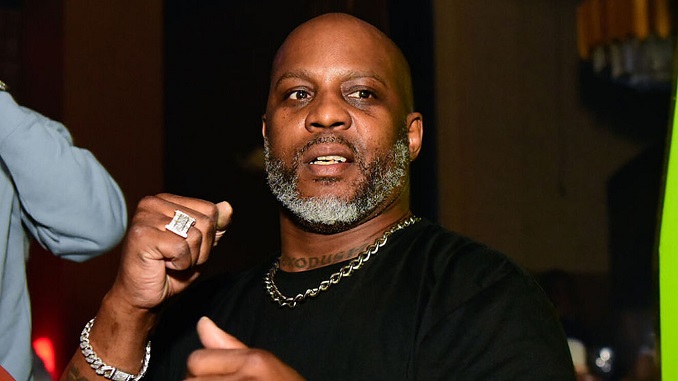
As for DMX, he was just a child when his own mum told him she was taking him somewhere. They were going to visit a place where children were kept.
It was a children’s home.
DMX’s mum took him there, left him there, and never came back.

The existential scream that emerged from deep inside the soul of that abandoned child is the gritty sound you hear on every single DMX rap. The ear piercing noise of painful rejection grew into a signature throaty snarl, and that was the discord he was trying to silence in his soul a few days ago when he was finally admitted into emergency care and placed on life support, for overdosing on drugs.

The first time DMX escaped that painful reality was when a trusted older companion laced a cigarette with both marijuana and cocaine.
The older friend who was influential at the music label coerced the up-and-coming rapper to try a cigarette. The teenaged DMX declined saying he never smoked.

As broken people break others, the adult companion insisted until DMXs defenses broke down just enough to try a manly puff of a harmless looking cigarette.

Whatever ecstasy the fledgling rapper entered into in that brief moment became the first time in his young life that he was devoid of pain in his soul.

It was a relief he needed.

Since the feeling didn’t last, he needed it again and again, until it needed him more than he needed it.
Many years later DMX broke down and cried for the first time on camera, when he remembered how a lifelong drug dependency had all begun.

You don’t know what it feels like to search for peace if you’ve never struggled to keep it.
You don’t know how precious joy is until you’ve lost yours.
You don’t know you can be scared to be alone, until being alone becomes the trigger for your demons, or bad habits, to return and haunt you to near death, or madness.

Til you’re no longer sleeping at night cos you’ve become too scared to close your eyes for too long, too scared to be defenseless and vulnerable, cos too many times in the past, bad things have happened in those closed eyed moments and you couldn’t rise up to defend yourself.

Now you’re defensive as fuck, and people interpret that as some kind of anger on your part, not knowing you’re just trying to stay alive and protect yourself from a tape of the past that never keeps playing in the present.

This is why people stay in church. Especially black people.
Religion is typically the only answer they know, and the education or medical systems are too colonial to be the cure.

Even therapy. Much of it is built around unrelatable paradigms opaque to the black soul.

According to his family and friends, DMX himself had a lot of therapy, but there are places in the soul buried so deep, it takes a complex series of rare coincidences to even bring them up.

Most times, ingrained trauma can’t be reached, and becomes personality, and then recurrent circumstance.

The fighting to stay alive, and adaptation to that, become the habits that people see and label as this or that.
The most practical advice is to prevent these things from happening in the first place.

Many of us are raising children, either ours or seeing other people raise theirs.
Too many grown ups are still using the wrong lessons they haven’t unlearned to raise one more generation.
These little DMXes in the making will grow up to be CEOs, leaders , pastors, maybe even millionaire rappers, or just somebody’s husband or wife, or a colleague in the office.
And broken.

Now is the time to stop breaking people. And the first step to not break others is to fix your own goddamn self do you don’t keep being toxic to the lives in your care.

And if you see someone being broken by someone else who hasn’t taken the time to fix themselves, say something.
If you have to, take that child away, and save the world one more generation of brokenness.

Know that there isn’t enough money, power, fame, success, not even religion in the world, to mend a broken heart.

So, I watched the press describe the death of the rich old white man who was the husband of England’s queen yesterday. There were endless suffusions of praise and accolades, even a humanizing story about a tough childhood including civil war, refugee status, abandonment and adoption.

A bit of common ground there, between the Duke of Edinbra and the Dark Man with an Unknown and Indefinable Identity, X.
But that’s where the similarity ends.
Philip grew up in palaces, profiting off untold and mostly stolen wealth, while spewing toxic racist & sexist filth, among other elite people just like him.

But DMX was raised by the street, and like many other severely traumatized persons, adopted an alter ego to escape from self: a rapping dog with a rough rasp, who hurtled to royal heights on the strength of his lyricism, delivery, relatability & sheer grit.

Good rappers come and go.
Only a handful leave god-like impressions in the souls of people who’ve never even met them.
Like Tupac. Like DMX.

There’s something inside these few that all of us, no matter how different we are, can feel, and identify with.
When they rap, they infuse their raw emotions into their music, and that translates into a truly personal message, in any language.

Everybody who knew DMX personally says the same thing: how warm and loving he was in person.
One tweet says it best. A junkyard dog on the streets, a stuffed puppy in real life.

His split personality was also why he was stellar in his movie roles, including Belly and Romeo Must Die. DMX could switch bodies at the speed of thought, from real self to stage persona.

Split identities are talent, but also a regular adaptation to trauma.
DMX lived life like a survivor on the ocean of mixed currents, longing for an oasis of peace.
Sometimes the winds blew too hard, and he struggled, maybe even sank a bit, but he kept on moving.
The waves were rough, as was his rap, but whenever DMX came up for air, he sounded exuberant.

The people who knew him and felt his embrace said he was full of enthusiasm. He was also angry a lot.
Extremes of emotional energy are a sign of the dysregulation we learn from surviving childhood patterns of constantly longing for & seeking care.

On Friday April 9th, as the waves of drug abuse and the years of abandonment beneath bobbed and smashed against his feisty face, DMX gave up the good fight, to go down for the last time, and never come up for air, again.

Now that he’s gone to sleep, away from this side of forever, I hope he’s found the peace he was searching for in every song, and like every dog, he’s running free.

From a Facebook post

TIPS