Home Blog Page 985

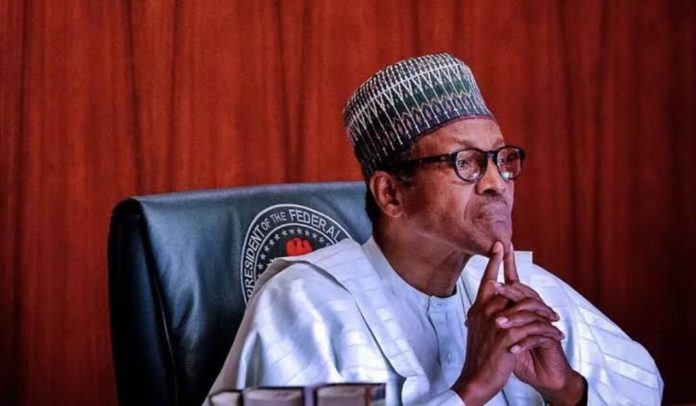
Medical Trip: 16 Days after! No Date Yet for Buhari’s Return as Presidency Keeps Mute

The Federal Government on Wednesday kept mute on the actual date President Mohammadu Buhari will return to the country.

Buhari had on Tuesday, 30 March, 2021 departed Nigeria for the United Kingdom for a routine medical checkup.

Special Adviser on Media and Publicity, Femi Adesina, had in a statement penultimate Monday said President Buhari is due back in the country during the second week of April, 2021.

The President had met with Security Chiefs first in the morning, after which he embarked on the journey.

“He is due back in the country during the second week of April, 2021,” Adesina had said in the statement.

However, Minister of information and Culture, Lai Mohammed, when asked if the President was expected back into the country this week, retorted, “Today is Wednesday, this week finishes on Saturday. So, what’s the big issue in that one?
Mohammed spoke to newsmen after wednesday’s Federal Executive Council (FEC) meeting presided over by Vice President Yemi Osinbajo.

According to him, the government was currently more concerned with the issue of the dwindling security bedevilling the country.

On the 7th anniversary of the abduction of Chibok girls and what the government is going about it, Mohammed said the Buhari’s administration has through 18 town hall meetings across the country with various stakeholders demonstrated commitment to tackle the issue of security.

Meanwhile, the 41st Federal Executive Council (FEC), presided over by Vice President Yemi Osinbajo, approved a total of N20,114,002871 for the acquisition of various operational equipment for the Nigerian Customs Service (NCS).

The Minister of Finance, Budget and National Planning, Zainab Ahmed, disclosed this to State House Correspondents after the meeting, in the Presidential Villa, Abuja.

She said Council also approved the sum of N539,277,673 for the construction of the Federal Inland Revenue Service (FIRS) building at the Ilupeju Medium and Small Taxpayers’ office.

A total of 427 operational vehicles, worth N14.55 billion and nine assorted gunboats worth N5,564,002,871 were all approved for Customs.

Ahmed said: “The ministry also presented, on behalf of the Nigerian Customs Service, a memo that was seeking for Council’s approval for the design, construction and supply of two NC36M patrol boats, in favour of Messrs of Boat Plus Limited, in the sum of N5,062,530,400, inclusive of 7.5% VAT with a delivery period of 12 months and council approved our request.

“We also presented a memo, again on behalf of the Nigerian Customs Service, for the approval of Council for the design, construction and supply of seven fast assault patrol boats and seven regular patrol boats, in favour of Messrs Siwa West Africa Limited, in the sum of N501,472,471.08, inclusive of 7.5% VAT with a delivery period of eight weeks.

“The purpose of the purchase of these two types of petrol boats is to enhance the efficiency and effectiveness of operations of the Nigerian Customs Service in its bid to control smuggling and also ensure enhanced efficiency in all customs duty operations in the Marine Unit of the Nigerian Customs Service.

“We also presented, again on behalf of the Nigeria Customs Service, a request for Council’s approval and council approved the procurement of 427 operational vehicles for the Nigerian Customs Service operations in favour of various contractors in the combined sum of N14.55 billion, inclusive of 7.5% VAT with a delivery period of four weeks”, she said.

Council also approved a project for the extension of the University of Ibadan’s library at the sum of N532 million.

The Minister of Information and Culture Lai Mohammed, who spoke on behalf of the Minister of State for Education, Emeka Nwajiuba, said: “The Minister of Education also presented a memo for the award of contract for the construction and furnishing of the extension of the library of the University of Ibadan. The memo, which was approved, is at the cost of N532,609,000 and with a completion period of 48 weeks.

“It was a memo that was very well received because of the need to actually extend the library facility in the University. For many years, the library of the University of Ibadan had needed real extension, given surge of the student population”, he said. (Metrowatchonline)

OPINION | Chibok Schoolgirls: Pause as a Parent, Imagine 2,549 Days of Pains, By Prof. Babagana Zulum

As a father of daughters, I can’t even imagine the pains of having one’s daughter held by terrorists for as long as seven whole years.

However, I urge parents, especially anyone with a female child to pause for a while, no matter how brief, to imagine how it might feel to have one’s daughter abducted and held for more than 2,549 days so far. Imagine how parents and relations of these girls have been feeling in each of these days.

Certainly, the mental torture of not knowing the fate of one’s daughter in the hands of Boko Haram is far worse than losing a child.

No parent can ever lose hope in a missing child and having that hope comes with so much pains of anxiety and depression.

Parents of Chibok schoolgirls have been devastated yet they have demonstrated faith and strength in the hope of reconnecting with their missing daughters. They deserve our continued empathy, our compassion, our support and most importantly, sharing their optimism.

As a father of all sons and daughters of Borno, I haven’t lost hope that our remaining Chibok schoolgirls and other abducted persons will be safely recovered.

From my series of interactions with the President, Commander in Chief, Muhammadu Buhari, I have seen in him that he is as concerned as the parents of the Chibok girls and all of us.

Countless times, the President has shown me that he is not losing hope on the Chibok girls. He says to me although a number of our girls were reunited with their parents and are being catered for by the Federal Government, he is not happy until the remaining girls are freed.

I believe the President and I urge everyone in Borno to sustain prayers for those girls and everyone in abduction to be safely freed, and for peace to be fully and permanently restored in Borno.

I pray that Allah in His infinite mercy answers our prayers and grant us the peace we have been so desperate to gain in almost 12 years now.

While we pray, our prayers are being combined with relentless support for security agencies and funding thousands of our recruited volunteers, as we all remain determined in our shared goal to free Borno and all its people.

*Zulum is governor of Borno State.

Metrowatchonline

Testing times for Nigeria

By Sonnie Ekwowusi

A country divided by totalitarian nepotism, ethno-religious politicization, communal injustice, treachery, deceit, betrayal, fraud, sponsored murder and bloodletting cannot stand. Viewed against the backdrop of the oddities in Nigeria today this assertion becomes truer for us in Nigeria. Although like Pontius Pilate many people of our time still ask the sobering question; what is truth? But the truth resides in the sanctuary of every human heart. Starved of the truth the human heart takes revenge in making the human being restless. Compelled by the escapable natural law in his or her heart, every human being is inclined to sit in judgment on his actions. A guilty person might escape human justice; he might take flight from his guilt through ingenuous human rationalization, but he cannot escape the inescapable penetrating judgment of his conscience.

Last week the Hon. Minister of Information and Culture Lai Mohammed tried to come to terms with the pangs of his conscience or discharge a heavy moral burden reposed on him by his conscience on the stewardship of the Buhari government. In trying to do as aforesaid Lai publicly admitted that Nigeria is heading for extinction. He uttered this self-indicting confession in his letter inviting prominent Nigerian stakeholders for a town hall meeting in Kaduna last week to discuss collapsing Nigeria especially the heightened state insecurity in the country, secessionist sing-songs across the country, incessant kidnapping of Nigerians, hired assassinations, gun-running and gun-toting in the country and so on.

In the said letter, Hon. Minister Lai stated, inter alia, as follows: “As you may observe, Nigeria has failed to manage its diversity. Despite huge human and material resources the country is heading for the brink and there is an urgent need to pull it back from this catastrophe. Increasingly, we are seeing this lack of capacity to manage our diversity manifesting in a general state of insecurity as witnessed in the incidences of farmers/herders clashes, Boko Haram insurgency, banditry, ethno-religious clashes and intolerance, cultism, drug addiction and kidnapping. Closely tied to all these are the dangerous threat to the unity of the country and its continued existence as one indivisible nation. But the story of Nigeria has not always been this negative. How did we get here and what can we do to change the narrative to present our country in the best of light? This requires teamwork, reflecting all diversities, leveraging on all our collective creativity to pursue with diligence the project of rescuing Nigeria.’’

Lai is not lying. He speaks the truth. This is the first time a Buhari irredentist; loyalist or confidant is publicly acknowledging the fall of Buhari. Buhari’s fall was predicted in 2015 after he was unable to form his cabinet six months after he took power. And from 2015 to date the man has been floundering and floundering with power. The truth that Shehu Garuba and the Presidency cannot tell Lai Mohammed is telling without batting an eyelid. Perhaps they may say, only one man is falling. Nigeria is not falling. She is only chastened, not brought to nought. No injury is done to Nigeria because only one man has fallen. It may be so; Nigeria is not falling; only one man has fallen. Buy don’t forget that the men who built Nigeria laid one stone upon the order in order to fortify her and make her strong. Now one man is constantly removing one stone after another from Nigeria in order to weaken it and bring about her final collapse. What many men had labored over the last 60 years to build one man is destroying with reckless alacrity. Lai laments that the failure to manage Nigeria’s diversity resulting in the reign of anarchy-herders clashes, Boko Haram insurgency, banditry, ethno-religious clashes and intolerance, cultism, drug addiction and kidnap in Nigeria-is a big threat to “the unity of the country and its continued existence as one indivisible”

Lai is right. No authority on earth can stop us or hinder us from speaking the truth we see and experience every day. Nigeria has become a massive killing field. Secessionist threats, incessant kidnap of Nigerians, hired assassinations; Gun-running and gun-trotting are presently the order of the day in Nigeria. Kidnap in particular has assumed a disturbing monstrous proportion. For instance, last week an Imo State traditional ruler and his entire cabinet chiefs were kidnaped by dare-devil kidnappers. To worsen matters, the unity of Nigeria is in jeopardy at the moment. Drumbeats of war and separatism resound loudest today than in the past. Far off now are the days when peace reigns in Nigeria either in people’s hearts or in the polity. Today there is no peace in Nigeria, only a caricature of peace. Why? Because peace reigns in the crannies of justice. But unfortunately communal justice has been taken away from Nigeria. And communal justice having been taken away what is Nigeria but open robberies as St. Augustine would say?.

I agree with Lai Mohammed that “the story of Nigeria has not always been this negative”. For instance, despite the palpable failures and weaknesses of the Jonathan government the government never permitted the AK-47 wielding Fulani herdsmen to be freely invading the nooks and crannies of Nigeria and killing and maiming their victims. Under the Jonathan government the farmlands of the people of South-West were never trespassed on let alone confiscated by the ravaging Fulani herdsmen.

Under the Jonathan government the country was contending with probably only the Indigenous People of Biafra (IBOP). But today under Buhari’s watch the country is battling all sorts of secessionist groups. In fact Nigeria is facing a monumental existential threat at the moment probably the deadliest since the Nigerian Civil War. Is it Sunday Igboho’s Oduduwa Republic? Is it Asari Dokubo’s New Biafra government? Is it Pedro Obaseki’s Midwest? Is it the Arewa Youth Assembly giving Yorubas or Igbos in the North quit notices to vacate the North? Or, is it the Oodua Action Movement/Oduduwa Grand Alliance For Independence is agitating for one thing or the other. So, whichever way you turn to in Nigeria today it is the secessionist sing-songs all the way. More importantly, unlike former President Jonathan, Buhari subscribes to and implements totalitarian nepotism. 90% of Buhari’s political appointees comes from his own side of the country in violation of the Federal Character Principle enshrined in our 1999 Constitution.

So, my dear Hon. Minister Lai Mohammed, to answer your question “How did we get here and what can we do to change the narrative to present our country in the best of light?”, I would say that we got here simply because President Buhari has refused to correct the palpable lopsided political appointments in Nigeria. We got here because Mr. President does not see the whole country as his constituency. In other words, we got here because Mr. Buhari refused to give true federalism a chance to thrive in Nigeria. Failed federalism breeds secessionist agitations while successful federalism breeds unity and strength. Unity has a price tag. It is not something imposed from the top through executive fiat. You cannot decree that the unity of Nigeria is not negotiable while at the same time putting obstacles to the unity of Nigeria. Insecurity of lives and property in Nigeria has worsened today because it was compromised right from the outset. How many Fulani herdsmen murderers and kidnappers have been arrested and prosecuted in the law court?. None or may be a handful.

As regards the escalating Boko Haram insurgency, the Buhari government lacks the untrammeled poise, avowed determination and doggedness to dislodge Boko Haram. Mere braggadocio and grandstanding cannot defeat Boko Haram. Is it true that Boko Haram has infiltrated the Nigerian army and the Nigerian army has infiltrated Boko Haram? If true, an army divided against itself cannot stand. “What can we do to change the narrative to present our country in the best of light?”. Balanced political appointments, communal justice, true federalism, equity and fairness to all.

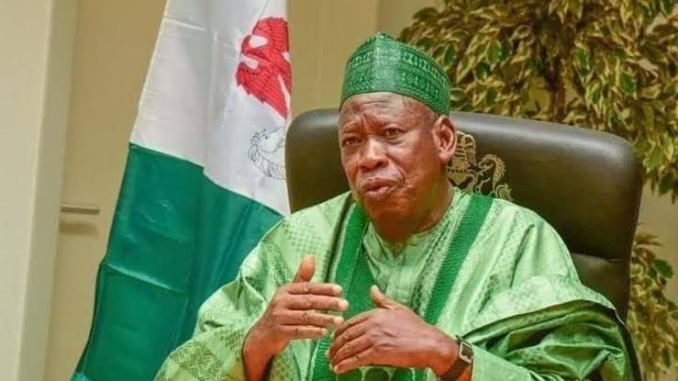
A warning to Governor Ganduje and those who think like him, By Femi Fani-Kayode

Kano State Governor Abdullahi Ganduje

It is a glaring fact that Northerners occupy over 80 percent of Nigeria population and that is primarily why other minority tribes like Igbo and Yoruba should respect them for that. The insecurity everybody is talking about is everywhere. Before Nigerians particularly Igbos and Yorubas use to think that insecurity exist only in the North but today, insecurity in those tribes today is on the increase. Igbos and Yorubas are busy agitating for freedom, thereby creating their own insecurity with the establishment of IPOB and Oduduwa Republic which are now terrorizing the entire nation. My advice to every Nigerian is to support President Muhammadu Buhari in moving this country forward. He has achieved so much for the country and must be commended” – Governor Abdullahi Ganduje.

This is one of the most shameful, insulting, specious, irresponsible, pernicious, perfidious and disrespectful statements that I have heard in years. It is also reflective of the author’s debilitating, deafening, gut-wrenching and mind-blowing ignorance.

Governor Ganduje is nothing but a decrepit old relic from the distant past and a fading and toothless old dinosaur who has not only lost touch with reality but who has also lost touch with common sense. Simply put he is either totally and completely insane or he is suffering from strong delusions of grandeur.

To him Southerners are like the Lilliputians from Gulliver’s Travels that are little better than field hands, slaves and serfs whilst Northerners are the “master race” who “own Nigeria” and who are “born to rule”.

Yet to Southerners he and the tiny group of little monkeys and excitable chimpanzees that think like him are nothing but a vulgar, primitive and crass dying breed of vandals, vagabonds, barbarians, bozals and lazy thinkers who believe that the shedding of human blood, brute force, conquest and violence is the answer to everything and who have no culture, no history, no heritage, no decency and no humanity.

Thankfully he does not represent anyone in the North but himself and this small handful of irritants and primitive thinkers and even more thankfully few of those that think like him still remain on the earthly plain.

He says Northerners own Nigeria and that they constitute 80% of the Nigerian people! Permit me to ask, which “North” is he talking about?

Is it the North West, the North East or the Middle Belt because these are three distinct and separate entities which are all manned and filled with people from different tribes and religious faiths.

The old North that Ganduje craves for and appears to be trying to invoke and resurrect is long gone, dead and buried.

For the last few weeks and months I have been at the forefront of those advocating for the building of bridges and understanding between the regions, zones, tribes, religious faiths and political parties in Nigeria. However statements like Ganduje’s make this appear to be an exercise in futility.

That we want to keep the peace, build bridges, enhance national unity, re-establish national cohesion and ensure that our country does not end up fighting a second civil war or engage in a second round of fratricidal butchery does not mean that we are weak, cowardly, scared, perturbed or living in trepidation of the North and neither does it mean that we have lost our testicular fortitude and capitulated to the archaic, anachronistic, godless and unacceptable philosophy and irreverent logic of ‘born to rule’.

It just means we are decent, civilised, restrained, mature and responsible leaders and people who hate bloodshed, who value peace, who seek to avoid conflict, who insist on ensuring that good sense prevails and who recognise the fact that war is the greatest evil that one can possibly imagine and that we must avoid it at all costs.

Despite our pacifist disposition it must also be clearly understood that there is a limit to our sense of restraint, patience and understanding and that limit is a clear understanding and acknowledgement of the fact that peace cannot come at the expense of Southern and Middle Belt liberty, dignity, self-respect, freedom and pride. Simply put we will not sacrifice our civil liberties, human rights and right to exist as freeborn citizens on the alter of one Nigeria.

It is either that Nigeria regards us as equals before God and the law and as freeborn and independent citizens or to hell with her and her much-touted, vainglorious and illusionary unity which cannot possibly be sustained into the distant future without making the necessary changes, sacrifices and concessions.

The slightest suggestion or suspicion that Southerners and Middle Belters are slaves, are a minority or are second class citizens in this country will deafen the ears and silence the tongues of even the moderates in our ranks and ultimately result in a brutal, violent and protracted conflict in which millions of people on both sides of the regional divide will die.

This is the sad and bitter truth and I see it coming so clearly unless we work hard to avoid it. This is why we need to be careful what we say and do these days because tempers are running high and the lid is about to blow off. In the South particularly people are just fed up and are no longer prepared to be restrained or reasonable.

They believe that they are under siege and they are facing an existential threat from hordes of barbarous, bloodthirsty and savage terrorists from outside our shores who seek to steal, kill and destroy and whose sole objective is to establish a permanent army of occupation and colonise the entire region.

Those of us that have been appealing to them to be restrained and not to perceive every Hausa Fulani person as an enemy are having a very hard time indeed and are more often than not viewed with suspicion and described as collaborators.

Whilst we are not deterred or concerned about such erroneous and absurd characterisations which are clearly not rooted in truth any further provocation may have the effect of setting aside reason and rationality and ultimately result in the eruption of a massive cauldron of fire and the release of death, destruction and the dogs of war.

Governor Ganduje has stoked the fire, increased the temperature, shaken the fragile table and added to the palpable tension that already exists in the nation by articulating his self-serving and nonsensical diatribe and his words have proved to be not only irresponsible but also utterly reprehensible.

Worse still this is the second attack by a prominent northern leader on Southerners in the last one week and this has not gone unnoticed in many quarters.

Is it all being orchestrated in order to push the South to the brink or bully us into submission? I really do wonder but if that is the idea it will not work. As a matter of fact it will have the opposite effect and it will provoke us to rise up to the occassion, pick up the gauntlet and resist the attempt to silence, subjugate and intimidate us.

Let me serve notice to Governor Ganduje and all those that think like him. If you continue to talk like this we will not attempt to build that bridge of peace anymore but rather we will burn it and damn the consequences.

Every day we receive insults from our own people in the South and Middle Belt for not going on the offensive and for urging  them to remain calm and sheath their swords.

Instead of respecting and reciprocating our efforts Ganduje and a few others in the North are provoking our people all the more with their nonsensical, puerile and infantile statements.

We worked with some prominent and responsible northerner and Middle Belt leaders, like Governor Yahaya Bello of Kogi state and Comrade Awwal Abdullahi of the Northern Consensus Movement, just a few weeks ago during the food embargo against the South and together we ensured that our country pulled back from the brink and did not end up in war.

That was a great achievement and it proved that if we all choose to be reasonable, treat each other with respect and work together we can make things work in Nigeria and get rid of these divisions.

As a consequence of those efforts and the patriotic stance if many of the stakeholders that were involved in the discussions and negotiations lives were saved and we found a way forward. And the fact that President Buhari directed, backed and commended that effort says a lot for him.

Governor Ganduje and those that share his primitive and antedelluvian mindset should not spoil all that good work by insulting Southerners and compelling us to go back to the trenches. If he does both he and those that think like him do will ultimately regret it deeply.

The South is NOT occupied territory, she is NOT conquered land and she is NOT your vassal state. Southerners are NOT slaves, Nigeria is not owned by Northerners and neither can Southerners or Middle Belters be treated with levity, contempt and disdain any longer.

The Nigeria of 2021 is very different to the Nigeria of 1966 and the leaders and youths of the South are not as accommodating or pliant as the leaders and youths of yesteryear.

The calls for Biafra and Oduduwa are compelling and they have massive support in their respective zones. This cannot be wished away or easily dismissed and it cannot be underestimated.

The Igbo and the Yoruba particularly will be your worse nightmare if you continue to call us out, push us to the wall, insult us with reckless abandon, kill our people or spit in our faces.

I advise you and those that that think like you to mind  your words or prepare for a cataclysmic and jaw-breaking response and reaction which may ignite our country into the greatest display of lethal fireworks in the history of Africa.

I also advise you to borrow a leaf from the millions of  Northerners and the new generation of respectable and responsible northern leaders, like Shettima Yerima and Nastura Ashir Sharif, who do not share your shameful views and who see themselves as equal partners with their counterparts from the South.

We can be friends and brothers and we can work together to enhance national unity and better the collective future of our people but there is one condition: the South will NEVER be your slaves. Rather than that we will go our separate ways. (Sundiatapost)


How To Certify Documents & Make Affidavits Without Courts


Most Nigerians will only visit a court of law, when in need of an affidavit or to authenticate a power of attorney/land document. With the growing call for the declaration of assets of pubic officers and employees of financial institutions, the need for Commissioner for oaths in courts have increased, tremendously. Also, the demand for affidavits of loss by telecommunication companies before reissuing lost telephone numbers as well as the demand for affidavits of facts by dispute resolution centers have equally increased the demand for Commissioners for oaths. Many school applications, job applications, loan applications and contract bidding forms all require declaration to be taken before Commissioner for Oaths, among other persons. Hence, aside dispute resolution (litigations), the Nigerian courts play vital role in the ease of doing business and in the everyday lives of Nigerians.

Like any other government institution/sector in Nigeria, the courts (judiciary) are not beyond temporal blackouts/strikes. Like in the Nigerian educational and health sectors, the judiciary (especially, court staff) often have to embark on a nationwide strike before federal or state governments will listen to their demands for their earned benefits. One wonders the fate of disputants and prisoners, whenever the courts are shutdown. Also, what is the fate of many Nigerians, who wrongly believe that oaths, affidavits and authentication of documents can only be made in courts by the commissioners for oath, during such strikes?

Well, this work will expose the alternatives (licensed persons) that can perform the duties of Commissioners for Oath at all times, whether there is strike or not. These are persons that are permitted by the laws in Nigeria to administer oaths, swear-in public officers, sign affidavits, authenticate and certify documents across Nigeria, just like the courts and their Commissioners for Oath.

Alternatives to Courts and Commissioners for Oath:
Nigeria is a country created by law and governed by law. All persons and offices that perform official roles are also created by law and bound their respective laws. To ensure people state only facts, people are made to make affidavits. To ensure that documents are not forged or made out of fraud, documents are required to be certified and authenticated. Then, to administer oaths, swear-in public officers, sign affidavits, authenticate and certify documents across Nigeria, the laws in Nigeria have empowered some classes of persons to perform such duties.

1. Here are persons that can administer oaths, swear-in public officers and sign affidavits in any part of Nigeria; “… the Chief Justice of Nigeria, a Justice of the Supreme Court, the President and Justices of the Court of Appeal and any judge of the Federal High Court, a Notary Public, and any Commissioner for Oaths”. So, where there is a strike or shutdown of courts, it may affect judges and Commissioners of Oath, since there may not be able to access their offices/instruments and to perform their roles. However, at all times Notaries Public are available at their respective offices and homes, and never affected by court strikes. Click this link to learn more about Notaries Public; <https://learnnigerianlaws.com/requirements-for-a-lawyer-to-be-appointed-as-a-notary-public-for-nigeria/>.
2. Here are persons that can administer oaths, swear-in public officers and sign affidavits outside Nigeria; “Every Nigerian official of the rank of Secretary or above in a Nigerian Embassy or delegation may in any country where he exercises his functions, administer any oath and take any affidavit and also do any notarial act which a notary public can do within Nigeria.” So, where the Judges, Notaries Public and Commissioners for Oaths are not accessible in Nigeria, one can visit any Nigerian Embassy in any country to access such services. Also, for persons outside Nigeria, there is no need to send documents to Nigeria, simply stop by the nearest Nigerian embassy.
3. Here are persons that can authenticate and certify documents (power of attorney) in any part of Nigeria; “… a notary public or any court, judge, magistrate, consul or representative of Nigeria or, as the case may be, of the President …”. Generally, when a power of attorney is executed (signed) before any of the listed persons and authenticated by such person, the power of attorney is presumed by court to have been truly signed by the parties that claimed to have signed it. This is the simple reason that make many persons to rush to courts and Notaries Public to authenticate their power of attorney. A detailed work on this issue can be accessed via link; <https://learnnigerianlaws.com/effect-of-power-of-attorney-not-executed-before-a-notary-public/>.

Conclusion:
The strike by court workers and the total shutdown of courts across Nigeria has a huge implication, however, it is for the greater good of democracy and the entire country. Judiciary must be truly independent (including, financially), for it to be impartial. While the courts are shutdown, Judges and Commissioner for Oaths may not be able to administer oaths, swear-in public officers, sign affidavits, authenticate and certify documents across Nigeria.

Since the laws in Nigeria will never allow a vacuum to exist in any office or role, the shutdown of courts does not mean there are no alternatives to courts and Commissioner for Oaths. The Notaries Public (senior legal practitioners that have been sworn-in as Notaries Public) across Nigeria, in their law firms, offices, homes and even remotely, are always available to administer oaths, swear-in public officers, sign affidavits, authenticate and certify documents across Nigeria. Whatever a Commissioner of Oath can do, can also be done by a Notary Public and even more.

My authorities, are:

1. Sections 1, 2, 3, 4, 5 and 6 of the Constitution of the Federal Republic of Nigeria, 1999.
2. Sections 1, 10, 12 of the Oaths Act, 1963
3. Sections 1 and 2 of the Notaries Public Act, 1936
4. Section 1, 258 and 259 of the Evidence Act, 2011
5. The Judgment of the Supreme Court of Nigeria (on the functions of Notary Public for Nigeria) in the case of Buhari V. INEC & ORS (2008) LPELR-814(SC)
6. The Judgment of the Supreme Court of Nigeria (on the effect of Power of Attorney not Executed before a Notary Public) in the case of MELWANI V FIVE STAR INDUSTRIES LTD (2002) 1 SC 120
7. The Judgment of the Court of Appeal (on the effect of Power of Attorney not Executed before a Notary Public) in the case of CHIEF G.N. OKOYE v. MR. NONSO DUMEBI (2014) LPELR-24155(CA)
8. Onyekachi Umah, “Effect of Power of Attorney Not Executed Before a Notary Public” (LearnNigerianLaws.com, 23 March 2021) <https://learnnigerianlaws.com/effect-of-power-of-attorney-not-executed-before-a-notary-public/> accessed 14 April 2021
9. Onyekachi Umah, “You Don’t Need To Register Any Agreement In Courts or With A Notary Public” (LearnNigerianLaws.com, 2 December 2020) <https://learnnigerianlaws.com/you-dont-need-to-register-any-agreement-in-courts-or-with-a-notary-public/> accessed 14 April 2021
10. Onyekachi Umah, “How To Make Power Of Attorney To Be Genuine And Acceptable.” (LearnNigerianLaws.com, 16 April 2019) <https://learnnigerianlaws.com/how-to-make-power-of-attorney-to-be-genuine-and-acceptable-daily-law-tips-tip-312-by-onyekachi-umah-esq-llm-aciarb-uk/>  accessed 14 April 2021
11. Onyekachi Umah, “Agreements in Nigeria Do Not Require Signatures of Notaries Public or Magistrates or Court Staff to be Legal and Binding” (LearnNigerianLaws.com, 13 January 2018) <https://learnnigerianlaws.com/daily-law-tips-by-onyekachi-umah-esq-tip-121-agreements-in-nigeria-do-not-require-signatures-of-notaries-public-or-magistrates-or-court-staff-to-be-legal-and-binding/> accessed 14 April 2021
12. Onyekachi Umah, “Stamps and Seals of Courts and Commissioners for Oath Are Not Needed for Agreements To Be Valid.” (LearnNigerianLaws.com, 8 June 2018) <https://learnnigerianlaws.com/daily-law-tips-by-onyekachi-umah-esq-tip-118-stamps-and-seals-of-courts-and-commissioners-for-oath-are-not-needed-for-agreements-to-be-valid/> accessed 14 April 2021
13. Onyekachi Umah, “Requirements For A Lawyer To Be Appointed As A Notary Public For Nigeria” (LearnNigerianLaws.com, 3 June 2020) <https://learnnigerianlaws.com/requirements-for-a-lawyer-to-be-appointed-as-a-notary-public-for-nigeria/> accessed 14 April 2021
14. Onyekachi Umah, “It Is Not “Notary Public Of Nigeria” But  “Notary Public For Nigeria” (LearnNigerianLaws.com, 30 January 2020) <https://learnnigerianlaws.com/it-is-not-notary-public-of-nigeria-but-notary-public-for-nigeria/> accessed 14 April 2021
15. Onyekachi Umah, “Power Of Attorney Can Not Transfer Ownership/Title Of A Property” (LearnNigerianLaws.com, 19 July 2018) <https://learnnigerianlaws.com/daily-law-tips-by-onyekachi-umah-esq-tip-145-power-of-attorney-can-not-transfer-ownership-title-of-a-property/?> accessed 14 April 2021
16. Onyekachi Umah, “Contents of a Valid Affidavit of Change of Name” (LearnNigerianLaws.com,17 May 2018) accessed 14 April 2021
17. Onyekachi Umah, “Things that Cannot Be Contained In An Affidavit” (LearnNigerianLaws.com, 15 May 2018) <https://learnnigerianlaws.com/daily-law-tips-by-onyekachi-umah-esq-tip-101-things-that-cannot-be-contained-in-an-affidavit/> accessed 14 April 2021

Sabi Law Projects:
#SabiLaw
#DailyLawTips
#SabiBusinessLaw
#SabiElectionLaws
#SabiHumanRights
#SabiLawOnTheBeatFm
#SabiLawLectureSeries
#CriminalJusticeMonday
#SabiLawVideoChallenge

Speak with the writer, ask questions or make inquiries on this topic or any other via [email protected], [email protected] or +2348037665878 (whatsapp). To receive free Daily Law Tips, join our free WhatsApp group via https://chat.whatsapp.com/L7h4f1exItZ38FeuhXG4WN or Telegram group, via the below link: https://t.me/LearnNigerianLaws

To keep up to date on all free legal awareness projects of Sabi Law Foundation, follow us via
Facebook Page:@LearnNigerianLaws,
Instagram:@LearnNigerianLaws,
Twitter: @LearnNigeriaLaw,
YouTube: Learn Nigerian Laws,
WhatsApp Groups via (https://chat.whatsapp.com/L7h4f1exItZ38FeuhXG4WN),
Telegram Group: (https://t.me/LearnNigerianLaws),
Facebook group: (https://www.facebook.com/groups/129824937650907/?ref=share)
or visit our website: (www.LearnNigerianLaws.com)

Please share this publication for free till it gets to those that need it most. Save a Nigerian today! NOTE: Sharing, modifying or publishing this publication without giving credit to the author or Sabi Law Foundation is a criminal breach of copyright and will be prosecuted. This publication is the writer’s view not a legal advice and does not create any form of relationship. You may reach the writer for more information.

This publication is powered by www.LearnNigerianLaws.com {A Free Law Awareness Program of Sabi Law Foundation, supported by the law firm of Bezaleel Chambers International (BCI).} Sabi Law Foundation is a Not-For-Profit and Non-Governmental Legal Awareness Organization based in Nigeria. For sponsorship and partnership, contact: [email protected], [email protected] or +234 903 913 1200.

2 VITAL THINGS TO NOTE WHEN DOING BUSINESS WITH FAMILY

Your family, nuclear and extended, are permanent members of your life and history. The kind of relationship built within the blood relationship, determines the strength of the bond that will exist in reality.

When doing any form of business transaction with a family member, there is the usual tendency to “loose-guard.” This often comes with its own consequences, the gravity of which depends on the kind of business arrangement. Suffice it to say that in really low-risk transactions, there’s often no need to lose sleep. But even at that, factors that are capable of triggering legal liabilities are limitless.

Below are the two things to note before you set out with a family member on a business venture.

1. Formalise the process

Formalising the process chiefly involves documentations. You run a high risk if the essential parts of your business engagement with any person, including a family member, are not reduced into writing. In law, documentary evidence is regarded as the best evidence. This is what is known as the “Best Evidence Rule”. Although the law recognises oral contracts, written contracts are the best, because they are easier to prove. In oral agreements, you mostly rely on evidence of circumstances to support your claims. In some cases, you may be tempted to call the omnipresent and omniscient Supernatural to come to your aid. If the matter proceeds to Court, you leave the Judge with the herculean task of evaluating the oral evidence to determine where the truth lies or whose oral evidence is more believable.

Aside written understanding exchanged electronically by email or texts, ensure that hardcopy documents are duly executed when and where necessary.

Breaching oral agreements may not be necessarily fuelled by mischief. It may be as a result of honest mistake due to communication gaps which could have been avoided if the terms were written. In the same way, oral agreement makes it easy for a mischief-maker to take advantage and exploit the situation to your detriment.

Thus, avoid the urge of assuming that reducing vital details of the contract into writing amounts to an “attack” on the integrity of the family bond. You need to understand that proper documentation helps for record-keeping purposes too. More so, when third parties are involved, documents will protect the interests of all parties better. Examples abound. For instance, where a married couple both contributed significantly to the purchase of a landed property, let the names of both couples feature in the Deed of Assignment as assignees. In a partnership, ensure a proper Partnership Deed is executed. In floating a company, ensure that the necessary incorporation documents are adequately filled, executed and filed. In employment, it is not out of place to issue your family relative an employment contract with the agreed terms spelt out. Where you let your family member into possession of your property as a tenant or licensee, let there be documentary proof. If you grant a lease of property like a vehicle or equipment, whether or not on hire-purchase, let there be written proof of the basis for the lease. Where you engage your family member as your agent, you may consider issuing an express letter of instruction and a power of attorney (in deserving cases), spelling out the limits of his or her power as your agent.

From the examples identified above, it is clear that the role of solicitors are nearly indispensable. So too are other professionals as we shall see in the second notable point below.

2. Engage professionals

In appropriate cases, engage professionals and experts like accountants, financial advisers, solicitors, e.t.c.in your business arrangement with a family member.

When you do this, you can bask in the assurance that you will not miss any essential information for successful conclusion of the contract. Furthermore, every party will promptly appreciate the seriousness of the engagement and take nothing for granted.

Again, if the stakes are too high, do not engage a family member simply for the reason of the blood ties. But let competence define the process. Otherwise, you may count your losses. In worse cases, you may become exposed to third parties in liabilities.

For purely family business

The points identified above are essential in businesses established as a purely family business. But there are more critical considerations. In explaining strategies to prevent family business heartbreaks, Robert Sher identified the importance of honouring choice and independence; insistence on performance-based pay; enviable culture “that prizes fairness and trust, and opportunities for meaningful work and career development”; employing emotional intelligence and creating clear family goals. According to Sher, 

Leaders of family businesses must manage three conflicting demands:

  • What the business needs and wants to thrive;
  • What the family needs and wants as a whole (for example, cohesiveness and closeness) and
  • What each family member needs and wants to thrive.

By this, better results are guaranteed. 

Conclusion

Whether in engaging a family member for a business transaction, or for businesses being run as a family business, the points highlighted above a sacrosanct. Settling cases involving family members may sometimes pose more difficulties due to the natural emotional connections that often accompany such situations. However, avoiding or untying the knots may be easier if you abide by the points noted above. (Stephenlegal)

Debunking Myths Relating to Bankers Declaration of Assets Law.

Debunking Myths Relating to Bankers Declaration of Assets Law. Daily Law Tips (Tip 773) by Onyekachi Umah, Esq., LL.M, ACIArb(UK)

 Introduction:  

Several myths and conspiracy theories have been birthed around the Bank Employees, etc. (Declaration of Assets) Act, since the recent order from the Economic Financial Crimes Commission (EFCC). The EFCC had on 16 March 2021, ordered all employees of financial institutions (including banks) in Nigeria to declare their assets before 1st June 2021. It claimed to have made the “EFCC Order) in line with the provisions of the Bank Employees, etc. (Declaration of Assets) Act. (Free copy of this law is accessible via https://learnnigerianlaws.com/wp-content/uploads/2021/04/BANK-EMPLOYEES-ETC.-DECLARATION-OF-ASSETS-1986.pdf )

Expectedly, the “EFCC Order” has since been opposed by organized pressure groups of bankers and other employees of financial institutions. Considering the age of the Bank Employees, etc. (Declaration of Assets) Act and its unpopularity, many stakeholders have expressed and popularized their wrong understanding of the Bank Employees, etc. (Declaration of Assets) Act. This has created several myths and conspiracy theories around the “BEDA Act”. Hence, this work is designed to save the day, by “Debunking Myths Relating to Bankers Declaration of Assets Law”. A version of this work was earlier published on ThisDay Newspaper (a national daily) on 6 April 2021, under the title “Legality Of The EFCC Order on Bank Employees Declaration of Assets” on its hard copy at page 8 and online copy at <https://www.thisdaylive.com/index.php/2021/04/06/legality-of-the-efcc-order-on-bank-employees-declaration-of-assets/amp/>.

The Bank Employees, etc. (Declaration of Assets) Act (“BEDA Act”) is a federal law made in September 1986. The “BEDA Act” mandates all employees and former employees of the Nigeria Customs Service, the Central Bank of Nigeria, Banks, Bureau de Change, Cryptocurrencies operators and all other financial institutions in Nigeria or in foreign branches to declare their assets annually and to continue to do so even 2 years after termination of the employment. It also, allows the President of Nigeria to add more persons to the list of persons to be bound by the law to declare their assets. 

Myths and Conspiracy Theories about the “BEDA Act”:

Below is an attempt to debunk some of the popular myths and conspiracy theories about and around the Bank Employees, etc. (Declaration of Assets) Act (“BEDA Act”). 

1.1 Prior to 16 March 2021, most Nigerians were only aware of the declaration of assets by public officers (government workers) under the Code of Conduct.  This is easily justifiable, since public officers mingle with public funds and trust, so there is need to track their personal assets. Hence, there was or is a popular assumption among many Nigerians, that private persons and businesses have no duty to declare their assets. Well, this assumption has been wrong since 26 September 1986, when the “BEDA Act” was made to compel private citizens employed in the financial sector of the economy to declare their assets.  

 1.2 “BEDA Act” is not a creation of the EFCC or President Muhammed Buhari. Rather, “BEDA Act” is a thirty-Five (35) years old existing federal legislation that has rarely been enforced in Nigeria. The law was made on 26 September 1986.

1.3 An aide of President Muhammed Buhari of Nigeria (Lauretta Onochie) was reported by the International Centre for Investigative Reporting (ICIR) to have while relying on the “BEDA Act” and the “EFCC Order”, twitted that; “Lifestyle audit is now legal in Nigeria. Those who flaunt lifestyles they cannot afford, can now be investigated by any of the anti-graft agencies to produce evidence of the sources of their wealth. You can now be called upon to explain how you acquired certain properties.”. It is important to note that the “BEDA Act” does not affect persons that are not employees under the “BEDA Act”. Only the following persons are under the “BEDA Act”; the employees and former employees of the Nigeria Customs Service, the Central Bank of Nigeria, Banks, Bureau de Change, Cryptocurrencies operators and all other financial institutions in Nigeria or in foreign branches. Although, section 7 of the “BEDA Act” creates the offence of “Unjust Enrichment” it focuses/applies only to employees that are under the “BEDA Act”. The offence is clearly defined to cover only an employee that is under the “BEDA Act”, that “… owns assets in excess of his legitimate, known and provable income and assets”. The “BEDA Act” does not by any chance create room for lifestyle auditing of all Nigerians. However, by a combination of some existing laws in Nigeria, lifestyle auditing can be conducted on any person in Nigeria by some national security agencies.

1.4 Chief Dele Momodu asked some questions in response to the “EFCC Order” and the “BEDA Act”, which seems to represent views of some Nigerians. Chief Dele, asked; “Are we in a military regime? Why not start with government agencies and politicians? Banks belong largely to the private sector.” In response to his question; it is important to note that the “BEDA Act” is an existing federal government law and not a presidential order. By the “BEDA Act” some specific private persons are to declare their assets and the President of Nigeria can also increase the categories of persons that must make such assets declaration. So, Nigeria is not under a military regime but under a democracy, and under the democracy is a democratic legislation that mandates certain private persons to declare their assets annually. Also, Government workers and public officers are to declare their assets under the Code of Conduct. However, as rightly pointed out by Chief Dele, there is need for the President of Nigeria to exercise his powers under the “BEDA Act” and enlist politicians into the list of private persons that should declare their assets annually.  

1.5 The Association of Senior Staff for Banks, Insurance and other Financial Institutions (ASSBIFI) was reported to have objected to the “EFCC Order” and its President was reported to have said, “EFCC has the right to investigate the top management and board of directors of banks but ordinary workers who are diligently carrying out their responsibilities as professionals should be exempted.” In response to his statement, it must be emphasized that the “BEDA Act” has not exempted any bank or financial institution worker from making declaration of assets. The “BEDA Act” covers all workers in the financial sector, from drivers, gardeners to top executives and from permanent staff to adhoc/part-time staff. Hence, the EFCC and even the President of Nigeria lacks the power to remove or exempt any person listed in the “BEDA Act”.  

1.6 The National Union of Banks, Insurance and Financial Institutions Employees (NUBIFE) in communicating its displeasure, stated through its Deputy General Secretary, that, “Another thing is that they said bank workers. Now, who are the bank workers? They should go to CBN (Central Bank of Nigeria) and ask who are the bank workers? The CBN has said that about 90 per cent of those working in banks are not bank workers. So, if you are saying tellers, marketers and others are not bank workers, then fine. In that case, they (EFCC) should focus on the MDs (managing directors) of banks.” The “BEDA Act” has gone ahead of the growing confusion on the status of bank workers and bank casual/part-time workers. The “BEDA Act” expressly stated that all manner, title and types of workers in the bank and financial institutions are to declare their assets. The “BEDA Act” covers all employees of financial institutions in Nigeria and those in their foreign branches, from the bank executives to cleaners, drivers, messengers and security men. 

1.7 It has also been canvassed by some persons that the Central Bank of Nigeria (CBN) collects assets declaration from top executives of financial institutions and as such that the “BEDA Act” and the “EFCC Order” are not necessary. This conclusion is wrong. Whatever assets declaration that the CBN collects is good and commendable. However, the “BEDA Act” is specific on how assets declaration forms are to be completed, submitted, delivered, timelines and the relevant person to receive such forms. Under the “BEDA Act” the CBN is not a collector of assets declaration forms rather it is the Secretary to the Federal Government of Nigeria or its agents. The CBN rather is expected to ensure that its employees declare their assets and that the Governor of the CBN delivers such declarations to the Secretary to the Federal Government. 

Conclusion: 

Although the ignorance of law is not an excuse, government owes a duty to the citizens, to ensure that laws are gazetted and even popularized. Government must support free legal awareness in order to increase access to justice. The unpopularity of the thirty-five (35) years old “BEDA Act” has further deepened the ignorance of Nigerians on the provisions of the “BEDA Act”. Hence, when the EFCC mentioned the “BEDA Act” in March 2021, several baseless objections were raised by many stakeholders. As opinion makers/pilots, the defective positions of most stakeholders on the “BEDA Act” are now popular myths across Nigeria. The myths threaten compliance and enforcement of the “BEDA Act” and calls into action the services of legal myth busters. (Free copy of this law is accessible via <https://learnnigerianlaws.com/wp-content/uploads/2021/04/BANK-EMPLOYEES-ETC.-DECLARATION-OF-ASSETS-1986.pdf>).

My authorities, are:

  1. Sections 1, 2, 3, 4, 5 and 6 of the Constitution of the Federal Republic of Nigeria, 1999.
  2. Sections 1 to 14 of the Bank Employees, etc. (Declaration of Assets) Act 1986. (Free copy of this law is accessible via <https://learnnigerianlaws.com/wp-content/uploads/2021/04/BANK-EMPLOYEES-ETC.-DECLARATION-OF-ASSETS-1986.pdf
  3. The Supreme Court judgment on “Meaning of Regulation” in the case of AG LAGOS STATE v. EKO HOTELS LTD & ANOR (2006) LPELR-3161(SC)
  4. The Court of Appeal judgment on “Meaning of Executive Order/Regulation” in the case of ELEPHANT GROUP PLC v. NATIONAL SECURITY ADVISER & ANOR (2018) LPELR-45528(CA)
  5. The Supreme Court judgment on “Policy Documents/Guidance” in the case of COMPTROLLER GENERAL OF CUSTOMS & ORS v. COMPTROLLER ABDULLAHI B. GUSAU (2017) LPELR-42081(SC).
  6. The Supreme Court judgment on “Policy Documents/Guidance” in the case of UNION BANK OF NIGERIA PLC & ANOR. v. IFEOLUWA NIG. ENTERPRISES LTD (2007) 7 NWLR (Pt.1032) 71 at 84.
  7. Onyekachi Umah, “Unlawfulness of the EFCC Order on Bankers Declaration of Assets” (LearnNigerianLaws.com, 8 April 2021) <https://learnnigerianlaws.com/unlawfulness-of-the-efcc-order-on-bankers-declaration-of-assets/> accessed 12 April 2021
  8. Onyekachi Umah, “Legality of the “EFCC Order” on Bank Employees Declaration of Assets” (ThisDay, 6 April 2021) <https://www.thisdaylive.com/index.php/2021/04/06/legality-of-the-efcc-order-on-bank-employees-declaration-of-assets/amp/> accessed 7 April 2021. 
  9. Onyekachi Umah, “The Minimum Financial Threshold for EFCC Cases.” (LearnNigerianLaws.com, 1 September 2020) <https://learnnigerianlaws.com/the-minimum-financial-threshold-for-efcc-cases/> accessed 2 April 2020
  10. Onyekachi Umah, “Can the Central Bank of Nigeria blacklist a Bank Employee?” (LearnNigerianLaws.com, 29 March 2021) <https://learnnigerianlaws.com/can-the-central-bank-of-nigeria-blacklist-a-bank-employee/> accessed 2 April 2021
  11. Onyekachi Umah, “Duty of Care Owed By Banks in Nigeria.” (LearnNigrianLaws.com, 1 April 2021) <https://learnnigerianlaws.com/duty-of-care-owed-by-banks-in-nigeria/> accessed 2 April 2021
  12. Onyekachi Umah, “The Central Bank of Nigeria Notices on Cryptocurrencies; a Ban or a Banger?” (LearnNigerianLaws.com, 9 February 2021) <https://learnnigerianlaws.com/the-central-bank-of-nigeria-notices-on-cryptocurrencies-a-ban-or-a-banger/> accessed 2 April 2021
  13. Onyekachi Umah, “Who Are The Shareholders Of The Central Bank Of Nigeria” (LearnNigerianLaws.com, 7 February 2019) <https://learnnigerianlaws.com/daily-law-tips-by-onyekachi-umah-esq-tip-263-who-are-the-shareholders-of-the-central-bank-of-nigeria/> accessed 2 April 2021
  14. Onyekachi Umah, ”How To Prove That A Bank Is Licensed In Nigeria” (LearnNigerianLaws.com, 30 March 2019) <https://learnnigerianlaws.com/how-to-prove-that-a-bank-is-licensed-in-nigeria-daily-law-tips-tip-300-by-onyekachi-umah-esq-llm-aciarb-uk/> accessed 2 April 2021 
  15. Onyekachi Umah, “Nigeria Has No Law Against Public Gathering During Covid-19 Era” (LearnNigerianLaws.com, 14 April 2020) <https://learnnigerianlaws.com/nigeria-has-no-law-against-public-gathering-during-covid-19-era-daily-law-tips-tip-547-by-onyekachi-umah-esq-llm-aciarbuk/> accessed 2  April 2021
  16. Deji Elumoye, “EFCC Directs Bankers to Declare Assets by June 1” (ThisDay, 17 March 2021) <https://www.thisdaylive.com/index.php/2021/03/17/efcc-directs-bankers-to-declare-assets-by-june-1/> accessed 2 April 2021
  17. Wasilat Azeez, “EFCC orders bank workers to declare assets, sets June 1 deadline” (theCable, 16 March 2021) <https://www.thecable.ng/efcc-orders-bank-workers-to-declare-assets-sets-june-1-deadline> accessed 2 April 2021
  18. Chike Oliseh, “EFCC gives all bankers ultimatum to declare their assets” (Nairametrics, 17 March 2021) <https://nairametrics.com/2021/03/17/efcc-gives-all-bankers-ultimatum-to-declare-their-assets/> accessed 2 April 2021. 
  19. Fikayo Olowolagba, “We’re not in military regime – Momodu reacts as EFCC orders bankers to declare assets” (Daily Post, 16 March 2021) <https://dailypost.ng/2021/03/16/were-not-in-military-regime-momodu-reacts-as-efcc-orders-bankers-to-declare-assets/> accessed 2 April 2021
  20. Comms Week, “Bankers Protest EFCC’s Order to Declare Assets” (Nigeria Communications Week, 22 March 2021) <https://www.nigeriacommunicationsweek.com.ng/bankers-protest-efccs-order-to-declare-assets/> accessed 2 April 2021
  21. Ibrahim Yusuf, “Protests greet EFCC asset declaration order to banks” (TheNation, 21 March 2021) <https://thenationonlineng.net/protests-greet-efcc-asset-declaration-order-to-banks/> accessed 2 April 2021
  22. Gabriel Ewepu, “CISLAC hails EFCC’s order to bankers on asset declaration” (Vanguard, 19 March 2021) <https://www.vanguardngr.com/2021/03/cislac-hails-efccs-order-to-bankers-on-asset-declaration/“> accessed 2 April 2021
  23. Wale Odunsi, “Bankers help fraudsters – CHRSJ backs EFCC on asset declaration” (DailyPost, 29 March 2021) <https://dailypost.ng/2021/03/29/bankers-help-fraudsters-chrsj-backs-efcc-on-asset-declaration/> accessed 2 April 2021
  24. The Editorial Board, “Assets declaration should be all embracing” (Business Day, 26 March 2021) <https://businessday.ng/editorial/article/assets-declaration-should-be-all-embracing/> accessed 2 April 2021
  25. Dipo Olowookere, “Bank CEOs, Others Jittery Over EFCC Asset Declaration Directive” (Business Post, 17 March 2021) <https://businesspost.ng/banking/bank-ceos-others-jittery-over-efcc-asset-declaration-directive/> accessed 2 April 2021
  26. Fakoyejo Olalekan, “EFCC amends charge against ex-Intercontinental Bank MD, Erastus Akingbola” (Nairametrics, 14 March 2019) <https://nairametrics.com/2019/03/14/efcc-amends-charge-against-ex-intercontinental-bank-md-erastus-akingbola/> accessed 2 April 2021. 
  27. Thisday, “EFCC Arraigns BDC Operators for Laundering $1.6m” (Thisday, 30 June 2020) <https://www.thisdaylive.com/index.php/2020/06/30/efcc-arraigns-bdc-operators-for-laundering-1-6m/> accessed 2 April 2021
  28. Ann Godwin, “Banks becoming money laundering institutions, EFCC boss alleges” (Guardian, 6 April 2019) <https://guardian.ng/news/banks-becoming-money-laundering-institutions-efcc-boss-alleges/> accessed 2 April 2021
  29. Kunle Sanmi, “Bank worker, wife arrested over alleged $1.49 million money laundering” (Premium Times, 4 November 2019) <https://www.premiumtimesng.com/news/more-news/360933-bank-worker-wife-arrested-over-alleged-1-49-million-money-laundering.html> accessed 2 April 2021
  30. Ihuoma Chiedozie, “Lifestyle audit: Nigerians with ‘unexplained wealth’ to lose assets to FG” (ICRC, 27 March 2021) <https://www.icirnigeria.org/lifestyle-audit-nigerians-with-unexplained-wealth-to-lose-assets-to-fg/> accessed 2 April 2021.
  31. Pic credit: third-stage consulting

Sabi Law Projects:

#SabiLaw

#DailyLawTips

#SabiBusinessLaw

#SabiElectionLaws

#SabiHumanRights

#SabiLawOnTheBeatFm

#SabiLawLectureSeries

#CriminalJusticeMonday

#SabiLawVideoChallenge

Speak with the writer, ask questions or make inquiries on this topic or any other via [email protected], [email protected] or +2348037665878 (whatsapp). To receive free Daily Law Tips, join our free WhatsApp group via https://chat.whatsapp.com/L7h4f1exItZ38FeuhXG4WN or Telegram group, via the below link: https://t.me/LearnNigerianLaws

To keep up to date on all free legal awareness projects of Sabi Law Foundation, follow us via

Facebook Page:@LearnNigerianLaws,

Instagram:@LearnNigerianLaws,

Twitter: @LearnNigeriaLaw,  

YouTube: Learn Nigerian Laws

WhatsApp Groups via (https://chat.whatsapp.com/L7h4f1exItZ38FeuhXG4WN),

Telegram Group: (https://t.me/LearnNigerianLaws),

Facebook group: (https://www.facebook.com/groups/129824937650907/?ref=share)

or visit our website: (www.LearnNigerianLaws.com)

Please share this publication for free till it gets to those that need it most. Save a Nigerian today! NOTE: Sharing, modifying or publishing this publication without giving credit to the author or Sabi Law Foundation is a criminal breach of copyright and will be prosecuted. This publication is the writer’s view not a legal advice and does not create any form of relationship. You may reach the writer for more information.

This publication is powered by www.LearnNigerianLaws.com {A Free Law Awareness Program of Sabi Law Foundation, supported by the law firm of Bezaleel Chambers International (BCI).} Sabi Law Foundation is a Not-For-Profit and Non-Governmental Legal Awareness Organization based in Nigeria. For sponsorship and partnership, contact: [email protected], [email protected] or +234 903 913 1200.

FROM AMOTEKUN TO EBUBE AGU: WHY SOUTHERNERS TURNED TO LEOPARDS FOR THEIR SECURITY

Nigeria is plagued by insecurity. In the light of recent developments, it appears that even our security agents including the Police and the armed forces are in need of security. 

Amotekun

In response to the insecurity situation, sometime ago, Governors of the South-West (made up of people of the Yoruba tribe) formed a joint security outfit codenamed, Amotekun (meaning a Leopard). Larry Malemi gave a detailed account and an opinion on the Amotekun formation. He concludes that:

Amotekun is a masterstroke and the boldest statement any region in Nigeria has ever made to the Federal Government in recent times, devoid of violence or even a public protest. It is a carefully thought protest mechanism against the Government for its inability to tackle insecurity squarely, which have been an infinite continuum. Amotekun is not a cause rather it’s a cure. Amotekun is not an ailment rather it is an antidote. Amotekun is not a problem rather it is a solution. Amotekun is not a noise, it is a sound that is understood by a majority of Westerners.

ESN

In the South-East (made up of people of predominantly Igbo origin), while the Governors appeared too slow to respond in a similar fashion, the Indigenous People of Biafra (IPOB) formed a security organization known as Eastern Security Network (ESN). Just like its parent body, IPOB, ESN has been a torn in the flesh of the Federal Government of Nigeria. Understandably, IPOB clamours for self-determination. Thus, the armed security formation is perceived as an “army” assembled for the purpose of the breakaway agitation rather than for the protection of the South-East as claimed. The South-East Governors rejected ESN.

Ebube Agu

From the reports, South-Eastern Governors had since distanced themselves from ESN. After protracted effort, the Governors of the South-East has now formed the region’s security outfit known as Ebube Agu, which literally means, “Glory of a Leopard”. Ebube means, “Glory”, while Agu means Leopard. Many Igbos use the word, Agu, to mean lion or Tiger. But lion in Igbo means Odum. Anozie Awambu explains reasons for the confusion here.  

But why Leopard?

The Learned writer, Larry Malemi, also explained the distinctive and attractive features of the Leopard thus:

Leopards have very unique characteristics. First, Leopards do not need much water as they survive from the moisture they get from consuming their prey. Second, they can run up to 36 mph (58 kph), jump forward 20 feet (6 meters) and leap 10 feet (3 m) straight up. Third, their ear can hear five times more sounds than that of the human ear. Fourth, Because of its adapted retinas, leopards can see seven times better in the dark than humans. Leopards are carnivores, but they are not picky eaters. They crouch low to sneak up to their prey and pounce before it has a chance to react. A leopard will kill its prey with one swift bite to the neck, breaking it. The Leopard refrains from fighting just anybody, it chooses its prey carefully in the thick of the night when other animals are far too asleep to do a thing. The Leopard makes a variety of sounds which includes: a territorial hoarse, a raspy cough, a contended purr and a threatened hiss. However, more interesting is the fact that a leopard barks when it needs to make a bold statement. Unlike a dog, the barking of a leopard is accompanied with an innate and ferocious desire to devour, annihilate and subdue prey with precision rather than permutation and with the requisite mens rea and actus reus to bring its intention to fruition.

Shege Ka Fasa

Early in 2020, a group (Coalition of Northern Groups) in the Northern part of Nigeria formed a regional security organization known as Shege Ka Fasa for the purpose of tackling kidnapping and banditry in the region. Shege Ka Fasa is an Hausa expression which means “I dare you”. It is not precisely clear who is the subject of the dare. But what was clear was that the Northern Governors rejected the outfit. 

Unlike the Leopards used as symbol in the South, the symbol of Shege Ka Fasa is a lion, obviously signaling bravery.

The Law

There is no doubt that in line with Items 38 and 45 of the Second Schedule to the 1999 Constitution (as amended), the Constitution placed the power to make laws for security formations in the country in the Exclusive List, under the control of the National Assembly. In furtherance of this, the Constitution established the armed forces (comprising the Army, Navy and Airforce) as well as the Police and other government security services established by law.

Section 14(2)(b) of the Constitution provides that “The security and welfare of the people shall be the primary purpose of government.”

By this provision, there is a constitutional duty on the Governors of the thirty six States of the Federation to secure their respective States. In the current outlook, The Governors are expected to work closely with the security agencies formed by the Federal Government. However, it is doubtful whether this arrangement is totally in accord with the spirit of true federalism. 

While we watch to see where the development leads, it appears the idea of restructuring is becoming inevitable.

It is doubtful how well the Federal and State Governments have worked for the promotion of national integration in the country, as mandated by Section 15(3) of the Constitution. Promoting national integration entails providing adequate facilities for and encouraging free mobility of people, goods and services throughout the Federation; securing full residence rights for every citizen in all parts of the Federation; encouraging inter-marriage among persons from different places of origin, or of different religious, ethnic or linguistic associations or ties; and encouraging formation of associations that cut across ethnic, linguistic, religious or other sectional barriers. 

Importantly, Section 15(4) provides that “The State shall foster a feeling of belonging and of involvement among the various peoples of the Federation, to the end that loyalty to the nation shall override sectional loyalties.”

Beyond the clamour for security, a close observation of the turnout of events would reveal that Nigeria is currently terribly divided along ethnic lines. There is so much bloodshed fuelled by animosity and lack of peaceful coexistence. 

From Amotekun to Ebube Agu, Southerners have now turned to “Leopards” for their security. It remains to be seen how well these formations will wade off kidnappers, robbers, bandits and other killers terrorising the regions. 

Although the North appears to be in control of the national security agencies, Northerners equally feel insecure. Reports from Borno, Zamfara, Kaduna and other areas are sickening. No one precisely knows at the moment where their fate lies, whether in lions, pythons or crocodiles. (Stephenlegal)

Equipment leases in Nigeria: What every business owner should know

At the beginning of the journey of building your business, purchasing the equipment to compete within your market may not be an option, majorly because of funding. And that is where an equipment lease comes to the table.

Equipment Leasing is an arrangement where a person known as the lessor gives temporary possession of an equipment to another person or body known as the lessee for an agreed period of time and under agreed terms and conditions.

Equipment lease agreement is therefore a contractual agreement between a lessor and lessee to use an equipment for specified period in exchange for periodic lease payments.

The Equipment Leasing Act, 2015 (ELA) is the extant law regulating equipment leasing in Nigeria and it has defined an equipment as any movable or immovable equipment howsoever described. This may include motor vehicle or bike, aircraft, ship, plant and machinery, and office equipment like computer, air-conditioning units, etc.

equipment lease agreement

Types of Equipment Leases: The two most common types of lease are:

  1. Financial (or Capital) Leases: These are long term and non-cancellable before expiration of the lease period leases usually used by businesses that intend to use expensive equipment over a long period of time. Here, the lessee is usually responsible for maintaining and insuring the equipment as well as paying taxes associated with the equipment. For this type of lease, the lessor gives lessee the option to purchase the equipment at the end of the lease term. This type of lease is best for business owners who are renting expensive equipment that they may not have the funds to purchase immediately.
  2. Operating Leases: these are short term leases cancellable before expiration of the lease period, where the lessor usually bears all the risks in the agreement, such as maintenance, insurance, repairs, etc. This is best for businesses in need of equipment for short period of time.

Terms of Equipment Leases include:

  1. Lease Duration.
  2. Compensation – lease payments to be made, timelines on payments, etc.
  3. Renewal Options – the renewal options provide guidelines on the renewal process at the expiration of the lease agreement.
  4. Cancellation Provision.
  5. Market Value of the equipment.
  6. Tax and insurance Responsibility, where applicable.
  7. Remedies for breach of agreement, etc.

One key benefit of Equipment Leasing is that, it serves as a convenient source of business financing or capital acquisition without breaking the bank. Business owners who are unable to out rightly purchase equipment they need may opt for an equipment lease instead, where they get to use needed equipment without having to purchase them, and save funds while at it.

Equipment leasing should thus provide lessees with full financing and flexible payment schedules. For the lessor, equipment leasing is an alternative to borrowing money seeing as it yields a higher return on investment than lending out money, also the lessor retains ownership rights to the equipment, so if the lessee defaults any of the agreed terms, the lessor has the right to repossess the equipment.

Another benefit of Equipment Leasing is that it guides against obsolescence. In a rapidly evolving technological market, using short term equipment lease allows businesses replace or exchange old and outdated equipment for new and improved ones.

Credit:alukoadeyemiandassociateslawfirm

Choosing a Nigerian Arbitral Institution: Guidance for Businesses on Costs

When drafting arbitration agreements, businesses rarely set out detailed rules and procedures to match their particular needs. Indeed, during negotiations, businesses are reluctant to consider the possibility that things will not work out as planned. They, therefore, base their decision to include an arbitration clause with limited background information. This note aims to prevent a rude awakening by providing guidance on the cost structures of leading arbitral institutions in Nigeria. We have selected four institutions, which we believe represent a good mix regarding their reputation and geographic location, namely:

  • the Lagos Court of Arbitration (LCA);
  • the Lagos Chamber of Commerce International Arbitration Centre (LACIAC);
  • the Regional Centre for International Commercial Arbitration, Lagos (RCICAL);
  • the Janada International Centre for Arbitration and Mediation (JICAM).

Components of Arbitration Costs

Arbitration costs are comprised of two broad elements. The first element (beyond the scope of this note) includes the expenses that parties incur in presenting their cases, such as legal representation costs, witnesses and party-appointed experts. The second element, on which this note focuses, concerns the arbitration’s procedural costs, including the arbitrators’ fees and expenses, and institutional administrative fees.

Comparison of the Costs

LCA Arbitration

The LCA bases its calculation of the administrative fees on the amount in dispute (ad valorem system) and the arbitrator’s fee either based on time (a daily rate of NGN 800,000 or an hourly rate of NGN 100,000) or ad valorem.

For the arbitrator’s fee under the ad valorem system, the LCA Rules set a minimum and maximum amount. The LCA determines the exact fee by considering the arbitration’s specific circumstances, such as the complexity of the case, the arbitrator’s experience and the scheme under which a party initiates the arbitration (i.e., the Small Claims, Expedited or Standard). Where the tribunal involves three members, the arbitrator’s fee is multiplied by three.

The LCA’s administrative charges are based on a fixed percentage of the disputed amount.

The chart below demonstrates how the disputed amount affects the costs under LCA’s Standard Scale. As is common with the ad valorem system, the higher the disputed amount, the slower the cost increase.  Therefore, arbitration under the LCA Rules appears to be more economically viable when the disputed amount is particularly high.

CriteriaNGN 30m disputeNGN 40m disputeNGN 50m dispute
Administrative fees (NGN)650,000900,0001,010,000
Min / MaxMin / MaxMin / Max
Arbitrator’s fees (NGN)1,243,000 / 4,361,4001,426,770 / 5,317,7851,555,560 / 6,009,435
LACIAC Arbitration

As with proceedings under the LCA Rules, LACIAC’s arbitrator fees and administrative charges depend on the disputed amount. Where the tribunal involves three members, the arbitrator’s fee is multiplied by three. The LACIAC Rules differ in that they do not set a minimum and maximum amount for the arbitrator’s fees.

Administrative charges consist of the Secretariat’s ad valorem charges, a non-refundable registration fee (USD 250) and, unless the parties agree otherwise, an additional fee for LACIAC’s registrar services (USD 1,500).

LACIAC designates its fees and costs in USD. The Rules clarify that parties can make payments in NGN at the relevant Central Bank of Nigeria (CBN) exchange rate on the payment date (the chart below uses an exchange rate of NGN 380 to USD 1).

CriteriaNGN 30m disputeNGN 40m disputeNGN 50m dispute
Administrative fees (NGN)950,000950,000950,000
Arbitrator’s fees (NGN)1,499,9931,999,9972,500,001
RCICAL Arbitration

The RCICAL calculates the arbitrator’s fees and administrative charges using the ad valorem system. Unlike the LCA and LACIAC, RCICAL appears to use separate scales for sole arbitrators and tribunals involving multiple arbitrators. The Rules set minimum and maximum fees in this regard.

RCICAL’s administrative charges consist of a registration fee (USD 1000) and ad valorem Secretariat fees.

As with LACIAC, RCICAL designates its fees and costs in USD. Parties may presumably make NGN payments at the relevant CBN at the payment date (the chart below uses an exchange rate of NGN 380 to USD 1).

CriteriaNGN 30m disputeNGN 40m disputeNGN 50m dispute
Administrative fees (NGN)899,995.801,199,998.201,500,000.60
Min / MaxMin / MaxMin / Max
Arbitrator’s fees (NGN)1,140,000 / 3,990,0001,439,998.60 / 5,189,994.401,640,000.20 / 5,990,000.80
JICAM Arbitration

JICAM oped its doors in the fourth quarter of 2018. Under its arbitration rules, the arbitrator’s fees and administrative charges depend on the amount in dispute. The arbitrator may also base his or her fees on time (a daily rate of USD 2000 for the hearing and an hourly rate of USD 250 for preliminary matters). Where there is a tribunal involving three members, the arbitrator’s fee is multiplied by three.

As with LACIAC and RCICAL, JICAM states its fees and costs in USD. Parties may presumably make NGN payments at the relevant CBN at the payment date (the chart below uses an exchange rate of NGN 380 to USD 1 and is based on JICAM’s Standard Scale).

CriteriaNGN 30m disputeNGN 40m disputeNGN 50m dispute
Administrative fees (NGN)654,996.50904,998.50987,000.22
Min / MaxMin / MaxMin / Max
Arbitrator’s fees (NGN)1,216,550.41 / 4,326,290.901,380,832.48 / 5,189,879.601,509,623.51 / 5,881,535.13

Factors that businesses should bear in mind

Set out a budget for the arbitration

When a party refers a dispute to an arbitral institution, the institution will, in addition to a filing fee, require the party to make advance payments. These advance payments may make up a large proportion of the total arbitration costs. It is, therefore, desirable to set aside a budget for the arbitration.

It is customary for both parties to share the advance costs equally. However, one party (usually the respondent) may refuse or fail to pay its share. When this occurs, the other party may be called upon to make the advance payments fully, to continue with the proceedings.

The numbers in the charts above do not give the full picture

The total costs of arbitration proceedings will exceed the arbitrator’s fees and administrative charges. Other expenses may include costs for room hire, transcriptions, the arbitrator expenses, etc. There will also be legal fees, which can become a major cost driver.

Consider the best institution for the dispute in hand

Cost is important, but it is not everything. This is reflected by the fact that although the LCA tends to be the most expensive institution in Nigeria, according to the 2020 Arbitration in Africa Survey, it is one of the most popular.

Naturally, when drafting arbitration agreements, businesses should always bear in mind the cost of arbitration if things go wrong. Nevertheless, the important question to ask is—do the benefits of that particular arbitration institution outweigh its costs? We will, in a subsequent post, explore differences in institutional arbitration rules, and how these may affect the choice of an arbitration clause.← Nigerian Supreme Court upholds ‘pathological’ arbitration clauseIsaiah Bozimo to present on the challenges of organising remote proceedings →

If you have any questions from this article or how we can assist you in arbitration proceedings, please reach out to the contacts below.

Isaiah Bozimo

Isaiah Bozimo

Partner

Christopher Awodimila

Christopher Awodimila

Associate

Credit:broderickbozimo.com

TIPS