Home Blog Page 987

NIN registration: NIMC is liable to 10 million Naira fine for any data leak – Tech Attorney

An attorney with an eye for the big picture and details, Stephen Azubuike’s legal expertise and interdisciplinary approach to problems puts him in a class of his own.  A lawyer with expertise in commercial dispute resolution, technology law practice and many more, he is a partner at Infusion Lawyers and creator of the popular legal blog stephenlegal.ng where he dissects legal, national and sundry issues. Stephen Azubuike in this interview with Lillian Okenwa addressed some nagging question about the on-going national identity number registration with particular focus on data protection and remedies.

L&S: As Nigerians hastened to get registered following the Federal Government’s December 15,  2020 statement to the effect that SIM cards not registered with valid NINs on the network of telecommunications companies by December 30, 2020 would be blocked, a viral message on social media announced that those who had BVN already have NIN. The implication was that they do not need to register for NIN.  But a tweet from NIMC said NIN registration must be completed despite NIN generation through BVN. What do you think about this confusion?

Answer: I consider the confusion unfortunate. This is because the confusion appears to reinforce the concern Nigerians have been expressing about the country’s failure to not only collect citizen’s data for the purpose of a reliable and secure national identity database but also the lack of integration of data collected via various channels. As I understand it, there was no time the custodian of BVN, the Nigerian Interbank Settlement System (NIBSS), created or issued NIN to Nigerians. NIN was issued by and continues to be issued by the NIMC. The BVN-generated NIN in question therefore is not a creation of NIBSS but that of NIMC. So when I read the Tweet from NIMC warning that BVN-generated NIN is invalid, the first thing that came to my mind was, is it really a BVN-generated NIN that we are talking about here or an already NIMC-generated NIN that is retrievable simply by dialling *346#? I believe it is the latter.  By commanding that code on your phone, it pops up your NIN because the phone number with which you did the registration captures your NIN. How then would such NIN be declared invalid?

So, for me I think the NIMC should have been more cautious about its declaration via a tweet particularly in the second wave of Covid-19 pandemic. The NIMC cannot renounce the NIN retrieved from the BVN records or whatever in their view came from the BVN without challenging its authenticity. That is how I see it. NIMC is not saying they have record that the NIN that comes from a person’s phone number, which incidentally is also connected to the BVN, is invalid or that they have discovered some lapses in the process. They haven’t said that.  Instead they just came up to say that they are not accepting BVN-generated NINs. So, if independently I generated my NIN using the USSD code provided or even through my BVN, do I go about announcing to them where I retrieved my NIN from? Thus, so far, we don’t have any report of any invalidity in the NINs that are connected to the BVN.

L&S: If NIMC had in time past captured some Nigerians and generated NINs for them, why the inconvenience of asking them to do it all over again? I’m aware that a couple of years back, people’s data were captured under a different exercise that was eventually cancelled. What then is the essence of the previous exercise? I still have a 2003 National Identity card issued during a much earlier exercise.

Answer: Apart from the obvious inefficiency in the system, NIMC’s position that BVN-generated NIN are invalid makes Nigerians wonder whether the NIMC is just out to frustrate Nigerians or there are problems the NIMC may be having with the integrity and reliability of these NINS. Sincerely, the way some of our government agencies pilot their affairs and implement their programmes and policies leave much to be desired. On the lips of an average Nigerian, you would hear that the government likes to “punish people.” That seems to be the modus operandi of the government. They seem to always come up with implementation procedures that put the masses under avoidable stress and problems. You can imagine in a period when the government is trying to get people to observe COVID-19 protocols and social distancing, and in the same breath asking them (the people) to go all out and register for their NINs.

At the same time information pops up that appears a successful synchronization had been done such that you can now track your NIN using your BVN details as it were, and government just jumps out to say it’s invalid without interrogating the process to confirm if truly this can ease off the stress in the public space. That is not encouraging. The closest thing to an explanation that the NIMC has dropped out there is that the reason why BVN-generated NINs are invalid is because they must be updated at the NIN Enrolment Centre. If NIMC wishes to have NIN-carrying Nigerians update their data, this should not warrant a declaration of the NIN already issued as invalid. Data update is a continuing process. If the NIMC puts a more efficient NIN registration and NIN-update mechanism in place, I don’t see why the country should be experiencing this challenge in the first place.

L&S: Some private companies have been recruited by government to register Nigerians for the NIN. It is believed that that will speed up the registration process but about data protection and privacy? What are the legal implications?

Answer: On the first note, the NIMC is principally responsible for data collection and protection for the fulfilment of their mandate, which primarily is to ensure that the National Identity Management process is well taken care of. So, in trying to execute that mandate, if NIMC deems it fit to recruit third parties, whether local or foreign companies to carry out that mandate, nothing stops them from doing so.

On a general note, that is not really where the problem lies, because, for instance, the NDPR (Nigeria Data Protection Regulation) captures the fact that third parties may at some point get involved with the data that a particular agency or organization may be collecting. So, there are procedures for ensuring that third-party participants in the process observe the laid down regulations. It is basically the duty of the NIMC to ensure that they (the third) parties observe those regulations.

On the question of data protection, the risks are there. That is why the NIMC as an agency of the Federal Government is not immune from the obligations of observing the regulations as contained in the NDPR (Nigerian Data Protection Regulation). Engaging anybody to help with the process only further puts them (the NIMC) on the spot to ensure that all those guidelines and regulations are not breached. The NDPR have all these in sight in making the provisions as contained therein.

L&S: Are there remedies for any infraction of the NDPR provisions?

Answer: The NDPR provides remedies for violation of the data privacy of any citizen. NIMC is the data controller here. Specifically, the NIMC shall be liable to a fine of 2% of its Annual Gross Revenue of the preceding year or payment of 10 million Naira, whichever is greater. With NIMC’s decision to recruit private companies to also get involved in collecting the personal data of Nigerians, NIMC as well as these recruited private companies must be extremely cautious. Should there be infractions, data subjects are entitled to seek redress. Recently, we saw some early lapses when the NIMC abandoned the initial issuing of manual ID cards, saying they were going all digital. Some civil rights organizations even took the NIMC to court to challenge the NIMC’s actions, arguing that there were lots of data leaks. According to the claimants, the personal data of private individuals were being leaked and that there was no adequate protection for Nigerians who may be coming on board to use the App NIMC was said to have developed. So all parties must not only respect data privacy but must also put administrative and technical measures in place to ensure data security and integrity. If we get this right once and for all, we won’t have embarrassing situations such as the case where the US questioned the security and integrity of Nigeria’s national identity database. Think about it. If NIMC itself is questioning the validity of its own NIN, who wouldn’t?

The Power of Jesus’ resurrection

By Buti Sam Kputu

KNOWING JESUS CHRIST and The POWER of His RESSURECTION was Apostle Paul’s chief ambition and pursuit; something for which he was willing to give his all (Philippians 3:10,11)

What was it about these that made Paul both desperate for it and effective in it?

¶ KNOWING JESUS CHRIST is all about our experiencing and appropriating the benefits of the Cross: redemption, justification, restoration, healing and the hope of glory. Eternal life is to know you, the only true God, and Jesus Christ, whom you sent (John 17:3)

¶ THE POWER OF HIS RESSURECTION is experiencing and appropriating the benefits of Pentecost: power, renewal, glory, victory over sin, the flesh and satan. “If the Spirit of God, who raised Jesus from death, lives in you, He will also give life to your mortal bodies” (Romans 8:11)

Knowing Jesus Christ gives us the benefits of salvation. Knowing The Holy Spirit empowers us to fulfil the responsibilities of our redemption.

© Buti Sam KPUTU

Obasanjo, Ribadu And Ikoyi Houses Scandal

By Tony Eluemunor

This is for those who have questioned why I have been focusing on the anti-corruption hypocrisy exhibited by former President Olusegun Obasanjo and his so-called anti-corruption tsar, Mr. Nuhu Ribadu. 

Consider this, from THISDAY newspaper of 3 April 2005, “Uncovering Osomo’s Dirty Deal” by Olawale Olaleye. 

It began authoritatively: “Barely two weeks after the N55 million bribery scandal which rocked the executive and legislative arms of government, President Olusegun Obasanjo, has again uncovered another deal that runs contrary to the transparency posture of the present administration. 

“The Housing Minister, Mrs. Mobolaji Osomo, has been found to be less than transparent in the sale of the Federal Government landed property in Ikoyi, Lagos State. This report chronicles the series of war against graft in the country and the latest action of Osomo. 

There is no doubt that the writer was taken in by the hypocrisy inherent in the Obasanjo administration, and blamed a hapless Mrs. Osomo, a woman who was totally blameless. But he was not alone, most journalists and most media houses were equally deceived. Some persons though were induced. 

This is exactly what happened. President Olusegun Obasanjo was in Asaba, Delta state capital, for his much planned and much postponed official visit when a fax message arrived. It was a statement from a media aide of Vice President Atiku Abubakar. The statement had contradicted the government’s release on the sale of government Houses in Ikoyi, making it clear that Atiku was not a beneficiary as the President’s office release had claimed. 

The aide who signed Atiku’s statement, the late Dr. Adinoyi Onukaba Ojo, was a journalist that knew his reportorial onions. He did not just stop at saying that Atiku did not buy the Vice President’s official residence in Lagos, the release said Atiku was actually the one who blew the whistle on the deals. Ojo was not done yet; he said that “Atiku alerted the President to the unacceptable moral burden the deals could bring on the government, if the sales were allowed to go on like that.” Then he went on to mention Atiku’s belief in transparency and accountability in such matters as the sale of government houses. 

Atiku’s belief in transparency and accountability? And what about the implication that by allowing the sales, Obasanjo may have lacked transparency and accountability? 

In just a few paragraphs, and with very few words, Ojo was showing the world another picture of Atiku, one different from a grab, grab insatiable man aquiver with covetousness. Some presidential aides have spent the better part of the last six years trying to paint a contrary picture of Atiku. 

Right there in Asaba, Obasanjo called on Atiku to sack Ojo. That call would be repeated severally times. Again and again, Atiku pleaded with Obasanjo to save Ojo’s job. At last, Obasanjo threatened “If you refuse to do it, I’ll sack him on Monday”. By mid afternoon on Monday, newspapers Editors were calling on their Abuja Correspondents to confirm if Ojo had received the sack. 

That afternoon, Ojo wrote out his letter of resignation and handed it to his principal, Atiku. The Vice President took it with him when he went to visit the President that night. In the end, Atiku succeeded in delaying his loss of staff by just a day. 

Ordinarily, that press statement would not have raised any dust. But in Aso Rock, these were not ordinary times, and even mundane things were given critical meanings as far as Obasanjo/Atiku relationship was concerned. 

As usual, it began from some tale-bearing aides with some scores to settle. Thus, Ojo’s press statement got to Asaba within an hour after it was issued. And it was interpreted in such a manner that Obasanjo would not spare Ojo. The plot worked and Atiku lost yet another media aide. 

The questions are, was the Vice-President made the offer to buy his Lagos lodge? And did he turn down the offer? Presidency sources said yes, and that Atiku not only rejected it but told the Chief of Staff that it was immoral to sell such a building that should be kept for the use of future Vice-Presidents. That was in February 2005. This is a fact, and I challenge any of Obasanjo’s former or present aides to refute it. 

Yet, the Guardian newspapers of the Monday after Ojo was fired referred to a letter dated March 17 from the COS to Atiku where Abdullahi Mohammed conveyed to Atiku a message from Obasanjo to Atiku. What was the message? That Atiku should not buy the VP’s Lagos lodge but that another should be allocated to him. 

Obasanjo might not yet have seen the implication of that letter that was leaked to the Guardian. It meant that Obasanjo was in the picture all the while and that he Obasanjo actually partook in the allocations. Also, if the President had directed that another building was to be found for Atiku “nearby”, why was that order disobeyed? In the end, no building was allocated to Atiku. 

Did the Chief of Staff actually sign that letter? Then, there was no need to crucify the Housing Minister, Mobolaji Osomo. No wonder she wept very profusely when she received the sack. Yes, I visited her house at Abuja and she was lamenting her fate, especially as the widow was not ready to call a press conference and tell the world the truth about the sordid events. She was hoping to get a reprieve from Obasanjo. I left her knowing Obasanjo would never do that, instead, he would rather push her into a hot water. 

Why did Obasanjo react so drastically to such an innocuous press statement from Ojo, a man he had mentored? And why the sledge hammer on Osomo? The answer: 1. There are many things wrong with this latest wave of anti-corruption crusade. 2. At the time the events took place, especially on the Monday, the Chief of Staff made his explanations; Obasanjo was a worried man, very and visibly worried. 

For once, the names of his children and close aides were mentioned as having something to do with unwholesomeness. The state governors very close to him were involved too while those he chose to deride as corrupt were not mentioned in the house purchase. The hypocrisy was beginning to end. 

Obasanjo spent that night worried about what to do if the scandal developed a life of its own and if it was proven that either any of his children or the First Lady, seven of whose family members that benefited from the sales was directly implicated. He mulled with the options including that of sacking of all the ministers and aides involved. 

He needed not have worried; the “boys” would take care of the problem by Tuesday. And thus, a release came from the Office of the Secretary to the Government of the Federation sacking the Housing and Environments minister on the very day she was to address a press statement, saying that those who received allocations applied for the very buildings allocated to them. Her personal aides said she had a heap of those applications still in the files. 

Then, to finally bury the scandal and to forever hide the truth, the press statement apologised to the government officials involved in the deal, as according to the statement, they were allocated buildings they never applied for. And that ended this wave of anti-corruption fight with an apology from the Federal Government. 

How many people were allocated buildings without their asking for it and how many applied? Who owned the corporate bodies that were allocated buildings in direct contravention of the rules guiding such sales? 

It is true that the sale of those Ikoyi houses were discussed and approved at a Federal Executive Council meeting. It is also true that the Minister was never given a free hand to dispose of them as she deem fit and to whoever she fancied. Instead, a committee was set up in which the SGF had a representative. He was supposed to brief the SGF who in turn was to brief the President on all developments on that front. 

The rules were supposed to be clear; that in the sale of government property, occupiers were to be offered the first choice. If they could not pay and the property went to a public bidding, the occupier still had the option of first payment. But in the Ikoyi houses, most of the buyers never occupied those buildings, yet they got them without going through a public bidding. 

Put simply, the Obasanjo administration that sang the transparency and due process mantra, refused to look the way of due process in the sale of Ikoyi Houses. 

The names of his close aides were nearly all there. The deal gave a picture of a “business as usual in government”. 

Well, Ojo and Osomo lost their jobs. Osomo was denied the chance of giving her own side of the story. 

In the end Nigeria is the ultimate loser: the truth was not looked for and so was never found because the EFCC never picked up interest in the matter. Who applied and who did not apply for the Ikoyi Houses? Who owned those business names that received allocations? How come state governors received applications of buildings that were meant for Civil Servants? How much of the allegations were true and how much were lies? Did Obasanjo’s family members apply for the buildings? 

The truth may never be found. And Nigeria and the anti-corruption crusade have lost another opportunity to straighten things up. For Obasanjo, he has acquired another question mark that may go with him all through life; just like the rigging of the 2003 elections. 

And that is not just tragic for a supposed moral crusader, and the country that was unlucky to have him as President. 

There are just a few questions left to be answered on the Ikoyi properties sale scandal. How much did President Olusegun Obasanjo know, when did he know it and what did he do when he knew it? Same goes for his principal staff aides; the Chief of Staff (COS) Gen. Abdullahi Mohammed (rtd) and the Secretary to the Government of the Federation Chief Uffot Ekaite. 

Yet, there is this other question; is it true that when the President announced the revocation of the sales, he was merely taking the wind off the sail of the House of Representatives members who have uncovered the deal and were hell-bent in using it against Obasanjo in the Presidency versus National Assembly face-off they wanted to champion when they returned from 2005 Easter recess? 

An Osita Izunaso-led House of Reps committee had uncovered some shady deals concerning the sale of Federal Government houses in Lagos. One of such deals concerned the sale of 1004 Flats complex. Then, surprisingly, Izunaso’s name featured in the National broadcast where the fallen Senate President, Adolphus Wabara, the sacked Education Minister, Prof. Fabian Osuji and others were mentioned in a bribery scandal. 

The following day, Izunaso, refusing to be frightened, said that no security agent, whether from the Police, State Security Services (SSS) or the Economic and Financial Crimes Commission (EFCC) had ever invited him for any interrogation. So, how did his name get into the list of disgraced and disagreeable persons the President presented to the entire nation that evening? Grand hypocrisy was in full sail! An attempt to blackmail Izunaso and certain others into recoiling from the exposition they had wanted to do on the Lagos land deals, including the Ikoyi houses, was on. 

This injustice which happened to Osomo, and which caused Atiku to state his innocence, and for which Ojo was sacked, also happened to some other persons such as Chief James Onanefe Ibori, the former Governor of Delta State. Some persons were simply targeted for annihilation for reasons far from corruption and journalists joined in their high-tech lynching. 

‘AS BUHARI LOSES STEAM TO CHASE HISTORY’

‘nside Stuff With Martins Oloja

On July 10, 2019, a veteran journalist and former governor of Ogun state, Aremo Olusegun Osoba, not noted for frivolities disclosed to the nation that Nigeria’s leader generally believed to be foot-dragging on restructuring had at last, endorsed the 2018 report on restructuring Nigeria, presented to him by the Governor Nasir el-Rufai-led All Progressives Congress (APC) committee.

Aremo Osoba, a chieftain of the ruling APC, who disclosed the development to State House correspondents after meeting with the President behind closed doors at the Presidential Villa, on that Wednesday July 10, enthused that he is an ally of the President. The journalist-turned politician appealed to Nigerians, especially statesmen and other activists agitating for restructuring of the country, to be patient with the President and the APC, saying that steps would be taken to get the National Assembly to start work on legalising the relevant aspects of the report.

Osoba, a former Managing Director of ‘Daily Times’ said he was at the State House to present his book – ‘Battle lines: Adventures in Journalism and Politics’ – to Buhari, who featured in it prominently. He said that the ruling APC even had restructuring as devolution of powers from the Federal Government to States, enshrined in its manifesto. According to him: “I am part of the presidency because the President is our President. I can tell you, all this noise about restructuring, we APC put devolution of power, true federalism in our manifesto and we have moved far from there to where a committee was set up, headed by the governor of Kaduna state, Nasir El-Rufai. “That committee has submitted its report: that report has been presented to us in the caucus and the President was there. The president endorsed the outcome. I want Nigerians to please, give us time. I hope and pray that at the right time, the government or the party would send that report to National Assembly for debate….”

Although there is still no art to find the mind’s construction in the face, there is a sense in which it can be said that Aremo Osoba, would not have been a happy man last Thursday April 8 when the publisher of ‘The Guardian’ Lady Maiden Alex-Ibru told the Vice President Professor Yemi Osinbajo who graced the pubic presentation of a book on her newspaper to note that the governing party had not fulfilled the promise Aremo Osoba, claimed the President was willing to fulfil – since 2019. The reason for this is that, the publisher of ‘The Guardian’ who was so grateful to the Vice President for honouring the invite to the book presentation in honour of the memory of her husband, Mr Alex Uruemu Ibru told Professor Osinbajo:

‘…The Vice President is here with us. We are very grateful for your presence despite the fact you are busy at this time that the President is not in the country. I would like to reiterate a few points we have repeatedly made in some of our editorials. First, we would like the President and his men and women to note that restructuring of the federation in the context of federalism is an idea whose time has come and no politics can repel that idea. That is why we have been committed to a weekly commentary on the front page of ‘The Guardian’ on the issue. We do this every Thursday. As you may have seen, today is the 24th edition of our ‘Federalism is the answer, after all’ serial. We would like our President to note that a return to true federalism will solve most our security and economic challenges. It is not new. The issue of restructuring is one of the promises that the administration of President Buhari hasn’t kept. It is part of the APC manifesto and there is a report of the el-Rufai committee that the party received since 2018. There have been many more reports on this including a 2014 report on restructuring from the political conference the Jonathan administration handed over to President Buhari. We are also aware of other challenges including rampaging corruption at all levels. We know about the debt burden and ticklish but controversial fuel subsidy that have always made nonsense of our budget expectations. There are many more including health-care infrastructure challenges but the most urgent issue our leader should address at this time is ‘Nation Building…’

That is why our big daddy, Aremo Osoba should take the bold message of the publisher of the newspaper he helped in founding to our leader and leader of Osoba’s party, president Buhari who promised us through him since 2019 that he would be committed to federalism through restructuring.

Sadly, barely two years after our Osoba the Great had raised our optimism on the point at issue, ‘federalism’, the body language of the president has not indicated any enthusiasm that he is ready to make history, in this regard. This is yet another dilemma in the black race’s most populous nation.

That is one other reason we need to remind the president what the oracle here noted in 2017 that he (PMB) might not go far in fighting corruption and insecurity, after all. Our president should therefore conquer himself, renew his mind about restructuring of the federation, meet with the national assembly leaders now and lobby them to fast track an executive bill on federalism.

That is the only ‘weapon of mass disruption’ of the lie that we call our constitution. As it has been repeated here several times, that is the only way President Buhari can make history, after all.

And failing to do that sooner than later will confine him to the dark corners of history of those who indeed under-developed Nigeria.

Ronald Reagan who has been quoted here twice once mused: “The greatest leader is not necessarily the one who does the greatest things. He is the one that gets the people to do the greatest things”. In the light of the above powerful words of one of America’s greatest leaders, Ronald Reagan, I would like to join good people who have been encouraging our leader and a General, Buhari to make history by getting good people around him to do one of the greatest things – to make history: That is to set up a genuine presidential committee on restructuring of the federation that is moribund on his watch.

Behold, the first thing is how to renew his mind, rally his governing party and citizens (behind him) to restructure Nigeria without dividing it.

This is possible only with a sincerity of purpose as the driving force. This is what drives me to think that at the moment, our president needs encouragement more than condemnation from any quarters: He is surrounded at the State House by only his kinsmen most of whom would not like to tell him what he could do to leave Nigeria better than he met it.

Specifically, in the beginning, as I was saying here, those who helped him to make his cabinet did not assist him in making a great cabinet. It is quite obvious that those who helped him shape the presidential bureaucracy and the cabinet in 2015 failed to realise that no leader can do well in office with a mediocre presidential bureaucracy and cabinet. This is without prejudice to the few good ones who have been unequally yoked with mediocrities (not mediocres, please) that abound in the place. We are just discussing simple points in nation building within the context of the new world that social and digital technologies daily disrupt and shape. Yes, only leaders who surround themselves with very smart managers can make history in the new world of business and politics.

It is obvious that our president has compressed his own agenda to fighting corruption and insecurity. But there are no indications yet that the taciturn leader who is in London at the moment for some medical examination and rest can make history with fighting corruption and insecurity, even in the North East and North West zones where the evil ones are resident. His reputation managers may not agree but that truth can’t be hidden in a grave anymore.

What is worse, the military establishment that we used to be proud of appears to have lost its mojo. Even the presidency doesn’t believe in operational efficiency of the police force anymore. We see the spirit of errors everywhere, especially in the northeast where the Air Force once erroneously bombed an IDP camp. How reliable is an Army that would declare an open association a terrorist organisation and proscribe it in a democracy?

Let’s look at the machinery for fighting corruption. There are three agencies comprising the Economic and Financial Crime Commission (EFCC), Independent Corrupt Practices and Other Related Offences Commission (ICPC) and Code of Conduct Bureau (CCB). The arrowhead here has always been the EFCC. But the President’s men sabotaged confirmation of the former EFCC acting Chairman, Ibrahim Magu, nominated since November 2015. The Senate could not confirm Magu for almost six years. He was disgraced out of office barely two months ago on corruption charges. How else does one understand the politics in the presidency where the secret service director-general twice wrote to the Senate that Magu should not be confirmed? How can the president make history through his war against corruption when Magu too was saying openly that he too was losing the war? Even the ICPC leadership is somewhat in a hibernation mode: The ICPC has released so many comprehensive reports of massive corruption in the federal bureaucracy but there has been no arrest of even one suspect in any of the several organisations implicated in such reports. Where do we go from here? How would history judge the Buhari administration on war against corruption and insecurity? How can the president make history with this kind of executive inertia and ad-hocism?

Can there be history making in fighting official graft without reforming the oil and gas industry, the focal point of corruption?

That is why I feel we should begin to encourage the President to pay due attention to the Committee his party, the APC has set up to prepare a blueprint on the hurricane called restructuring. There is some sense in that critical national assignment at this time. That is the only legacy he can leave: restructuring of the federation to reflect the pre-1966 mode, which developed the country. Our leader should not pay attention to the analysts in his domain who have been linking genuine restructuring to dismantling of the federation. Federalism, the centre-point of restructuring can be organised to strengthen the same federation. It is running away from it that can dismantle the beautiful federation, after all. I believe, in the main, that the President can make history if he can restructure Nigeria to run as a federation where the present states can leverage on the endowments in their areas to create wealth. I invite our leader to listen to iconic Dolly Parton who once noted that, “If your actions create a legacy that inspires others to dream more, learn more, do more and become more, then you are an excellent leader”.

Mr. President, be of good courage! You are on the verge of becoming a significant history maker through commitment to regaining our paradise lost – federalism.

The Guardian

UNILAG don Wins ₦958 Million Grant From Bill Gates Foundation

A Nigerian professor, Bosede Afolabi has made the country proud by winning the Bill and Melinda Gates Foundation Grant.

The University of Lagos (UNILAG) gynecologist was awarded a research grant of $2,518,474.00 (N958,908,975.50).

Her project is titled Intravenous Versus Oral Iron for Iron Deficiency Anaemia in Pregnant Nigerian Women (IVON).

The disclosure was made by UNILAG, which celebrated the Nigerian professor on its LinkedIn page.

According to the UNILAG website, Professor Bosede Afolabi is internationally recognised for her research in sickle cell pregnancy.

Her project, which is titled, ‘’Intravenous Versus Oral Iron for Iron Deficiency Anaemia in Pregnant Nigerian Women {IVON}”, is sponsored to the tune of $2, 518, 474.00 of the IVON Project.

As Principal Investigator, Professor Afolabi will lead a multicentre study which will run for 3 years (November 1, 2020 – October 31, 2023). The study will be conducted in 10 hospitals within Lagos and Kano States and it will recruit a total of 1,056 women at 20-32 weeks gestational age, who are diagnosed as having anaemia at the antennal clinics of the hospitals.

In addition to the international collaborations and partnerships which the study will facilitate between UNILAG and other Universities in the US and Europe, it will also contribute to local human capacity development with the sponsorship of junior faculties for postgraduate trainings (M.Sc. and PhD).

Professor Bosede Afolabi is internationally recognized for her research in sickle cell pregnancy. Her interests are in maternal and fetal medicine, minimal access (laparoscopic) Surgery and Maternal education. She is a fellow of the Royal College of Obstetricians and Gynaecologists UK, West African College of Surgeons, and the National Postgraduate Medical College of Nigeria.

NORTH HAS SUNK LOWER UNDER BUHARI, NEF, ACF, CNG, OTHERS LAMENT


Seventeen famous Northern groups, including the Northern Elders Forum (NEF) Arewa Consultative Forum (ACF) and Coalition of Northern Groups (CNG) have lamented the region is worse off under President Muhammadu Buhari.
This was one of the major outcomes after a two-day Northern People’s Summit in Kaduna.
The groups, in a communiqué read by Professor Doknan Sheni, said: “The North invites the attention of President Muhammadu Buhari, Northern Governors and legislators to the fact that under their watch the North has sunk lower in all indices of human existence.”
They lamented the region has been overtaken by insurgents, bandits and poor governance, urging political actors to change the narratives.
The group added: “Delegates at the summit commit to continuously engage in searching for solutions, as well as raising their voices against poor governance, corruption and absence of commitment to deal with insecurity, poverty and hopelessness among Northerners.”
While asking the government to show effective presence in all ungoverned spaces in the North, they said: “The North resolves that there should be government-backed negotiations and dialogue with the bandits, Boko Haram and affected communities for effective peace in the North.”
-The Nation

Almost every parent in Nigeria is in violation of the NIMC Act – Sabi Law Expert

Onyekachi umah
  • Says voter registration should be continuous, not election year affair  

Onyekachi Umah is a private Legal Practitioner with amazing experience in human right, criminal law and civil law including; pre-trial detention, human rights, intellectual property, transaction and regulatory advisory, corporate, commercial and investment law and energy law as well as litigation and arbitration arising from them. A Legal Awareness Expert, Certified Arbitrator both in Nigeria and the United Kingdom, Umah is managing partner of Bezaleel Chambers International and founder/President of Sabi Law Foundation with a free law awareness program known as www.LearnNigerianLaws.com. This Sabi Law aficionado has written over 700 free to access articles and materials on law with a desire to enlighten the public. In this interview with Lillian Okenwa, he bares his heart on the National Identity Number registration debacle.

L&S: Do you suppose there is any justification for Nigeria’s government to put its citizens under pressure to get national identification numbers considering there was no prior awareness creation in this regard?

Answer: There’s no need for the panic we’re having today. The problem we’re having is that the institutions we have refused to work. The institution is failing Nigerians because all along there should have been massive awareness allowing people to register. Now you don’t need to be 18 years to register. A father and a mother for instance have the responsibility to register a baby once it is born. The question is – in how many hospitals do we have the NIMC (National Identity Management Commission) posts in? It’s Simple. If you’re giving birth to a child in a hospital let’s say in Abuja for instance, there should be a NIMC post there. The NIMC post there allows the father or the mother of the child to enrol and obtain a NIN (National Identification Number). Let’s say it’s not convenient at that point. When this child is brought for postnatal care, you register him or her. The law gives 18 months grace to stay without registering a child. The point is -almost every parent in Nigeria is in violation of the NIMC Act without knowing it.

The law provides that every parent must register his or her child at birth. Now the law did not say that NIMC must have desks in all the hospital. It doesn’t have to. The law says it has the power to do any other thing that is incidental to its work, to perfecting their duties. Part of the things that will be incidental to perfecting their duties is to have as many offices as possible. No one knows the exact population of Nigerians are but let’s say we have over 200 million Nigerians. You have NIMC offices in respective schools, universities and the rest. Now you also have that in malls; shopping malls. Look at the telecommunications companies for instance. Prior to the directive to discontinue SIM registration, if you want to buy an MTN card and get registered, you simply walk down the street. Before you walk a hundred yards, you’ll see their umbrella. So why don’t we have that?

I recently misplaced my debit card and went to the bank to get a replacement. It didn’t take 30 minutes and another card had been printed for me. It is same with every commercial bank. You can walk into any of their branches and have your debit card replaced in minutes if you request for it. When I did my NIN registration, what I was given was a temporary card not the real thing. I was told that the actual National Identity Card will be ready at a future date. With all the resources that have been deployed into this business and for an agency that has been in existence since 2007 why can’t people register and have their cards printed right away? Mind you these debit cards which banks print out in minutes can be used for transactions locally and internationally the instant they are issued. These are people that mean business. Same can be done with NIN if the authorities in charge decide to.

Take INEC for instance, nobody is doing voter’s registration now as if it’s an affair for election year. It should be a continuous affair. This is the time to do the registration. Have the registration units and booths. The realisation on the ground has made the government to keep pushing the closing date for National identity card registration, because you can’t just shut people out. Have you done what you’re supposed to do? If you look at it on one hand, the SIM card is a private property. It’s also a regulated property. Lands are regulated, cars are regulated but the ownership of those things will lie with those who purchase them. Why would you just wake up for instance and say ownership of lands in Nigeria would be revoked unless you register your land within three days from today? That is asking for impossibility. We are making mockery of ourselves. It’s only now with the pressure and noise about deadlines and blocking SIM cards that Nigeria suddenly became awash with getting a NIN as if it’s something new. The law has been there since 2007 but there was no sensitisation. Awareness creation is key.

L&S: At some point people were paying to have accelerated services on account of the crowd. Despite the Covid-19 challenge that’s still taking its toll, NIMC didn’t seem to have bothered about the crowd; the challenges beating their initial and even subsequent deadlines would create.

Answer: It is almost impossible to register Nigerians without creating a proper awareness within a very short time, without giving room for people to breach those protocols. That means we are the ones enabling and promoting corruption. I watched a video skit online. One man said he had to pay so that he’ll register for his national identification number. The other said no you don’t have to pay, you just have to queue on the line. One said if I queue on the line to do this, I’ll die there and even if they took my corpse to the hospital, the corpse will also queue to be attended to. So you look at the impossibility that we create. It’s just lack of proper management. A 2007 law and in 2021 we’re still battling with it. That’s like 14 years. If you do a random sample you’ll find that people think this is a Buhari led administration project but it a 2007 law. The year 2007 is when we’re supposed to have started all the awareness that is needed.

If you go to the NIMC website, you’ll find out that between 2007 and 2019, NIMC has been calling out to people to go and register. Is that how to create awareness? How many people go to websites not to talk of NIMC website? How many people are even aware of the meaning of NIMC?  Enough funds should be deployed for awareness creation. There should be enough awareness. Create more registration booths, create jingles. Reach out to people. You can’t have things on the official gazette, the Federal Gazette or a few newspapers and you feel you’ve raced out to people. Anyone who is not wearing a face mask in any public place can be arrested. How many Nigerians were aware of this until recently that people started being publicly arrested and shown on TV?

Imagine setting an initial December 31 deadline for people either obtain a NIN or have their SIMs blocked. With all the emphasis on Covid-19 protocols, the timing for is the wrong and the rush is unnecessary. This is the worst time for you to have such an affair. In a country where you’re not certain of reliable medical procedures or network of hospitals, you’re calling people to come together at this time when we’re talking of the Corona virus. That’s on one hand. The same government that fought corona virus by shutting down schools and places worship is the same government that is calling for people to congregate and do their national Identity card. Is Nigeria shutting down? Why the hurry?

L&S: So what could these problems be attributed to? Poor governance or failure of law?

Answer: Some people think it’s the failure of law. We have all the awesome laws here but we don’t have institutions. Permit me to digress. On Wednesday January 27 this year, President Muhammadu Buhari signed the Covid-19 Health Protection Regulations 2021. This 2021 law is actually a rehash of a 1926 law and the penalty for persons caught not wearing nose masks is N200. In April 2020, I wrote series of articles on the Quarantine Act and I kept hammering that the National Assembly must as matter of urgency amend this Quarantine Act of 1926. Nothing has happened. Today instead of going about with a nose mask for instance you’d rather have N200 in your pocket because the moment you’re caught, the court after trail can say we’re giving you a fine of N200. There and then you pay and go. Are we not making a mockery of ourselves? We’re going in circles. At it is happening in the telecommunication sector, it’s affecting the health sector and it’s affecting education. Same with the oil sector.

I wrote about the Petroleum Industry Bill (PIB) as a student in 2008. I wrote about it as a student in my final project then and till today it’s still a bill not a law. People have fought physically over that bill at the National Assembly. Legislators! It was on TV and social media. Nothing has come out of it. But for how long?  The NIN is good initiative. When it’s finally sorted out, you can’t have people call with unknown numbers. Kidnaping schemes, fraudsters, and online fraudsters will abate but the way we’re going… And you see the way these things are going, you’ll find that some people didn’t register well. Some used fake names and all.

At some point a top immigration officer was asked, how do you know one is a Nigerian and he said, once you look at the person you’ll know. With what we’re seeing now, in the next 100 years, this same problem will still be there if we don’t have strong institutions. Using a 1926 Act to regulate events of 2021 is bizarre.

We have the highest paid federal legislators in the world and what work are they doing? What other time will they remember the quarantine Act and amend it other than a time like this when health, and epidemic and pandemic are the key words across the world. If no other time, this is the time to actually work on the Act. Someone told me they will not do it because there is no money share in it. If the Act is to create a quarantine commission where there will be money and people to hold offices, immediately they would have amended that law but what do they stand to benefit? Are they even taking the corona virus serious?

Inside Nigeria’s Passport Offices Of ‘Extortion’

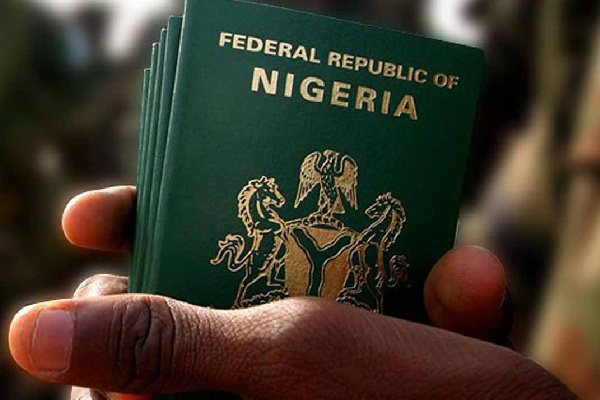
Getting the Nigerian International Passport is now shrouded in corruption, racketeering and irregularities that see Nigerians paying 100 per cent more than the official fee, investigations by Daily Trust have shown.

Some immigration officers use the shortage of passport booklets to extort applicants as checks at the Nigeria Immigration Service (NIS) passport offices in some states and the Federal Capital Territory (FCT) showed.

It was also gathered that there are administrative bottlenecks allegedly created by the officers to exploit Nigerians, while those willing to go through the official channels are frustrated.

Some immigration officers involved in the extortion were unapologetic and rude about it.

Our correspondents report that there are syndicates in the state offices that ensure that the passports of those willing to pay the extra charges, which go into their pockets are fast-tracked and delivered promptly.

NIS spokesmen in the states declined to comment saying it was a federal issue, while the Public Relations Officer of the Nigeria Immigration Service (NIS) Sunday James, said he would not respond to the allegations until the investigation is published.

“You have done your investigations; if your reports are true, we will read them in the newspapers and respond appropriately. You will not get any reaction from me for something I don’t know because I didn’t commission anybody. It’s you who commissioned people to go out. When we see it, if it is true, fine; if not, we will see the kind of reaction we will give to you,” he said.

In Abuja, two locations are available for International Passport applicants to apply for the document – the passport office of the (NIS) headquarters in Sauka and the Federal Capital Territory (FCT) Command of the NIS in Gwagwalada.

Most applicants prefer to use the office in Gwagwalada to process their passports with one applicant who only gave his name as John, saying it was “easier to runs things there.”

According to them, getting things done through the backdoor is easier at the FCT Command of the NIS.

Without the documents required for the application, which include local government letter of identification, birth certificate/age declaration and guarantor’s form sworn to before a Commissioner of Oaths/Magistrate/High Court Judge, one could easily pay extra N10, 000 and within 48 hours, he will have his international passport, Daily Trust gathered.

Checks also showed that some applicants are willing to cut corners to avoid going through the official channels.

For the enhanced electronic passport, applicants are to apply online at https://portal.immigration.gov.ng by clicking on the type of passport application they want before completing the online application form.

They are to select a passport office in the state they wish to obtain the passport, proceed to make payment online and obtain reference and application ID numbers.

After that, they are to proceed to the Passport Office selected during the online application with relevant requirements including evidence of payment made.

However, most applicants are not ready to go through such process. They would rather pay extra money to corrupt personnel to fast-track the process.

At the NIS Headquarters, only the enhanced e-passport is available which sometimes takes up to three weeks to process because the National Identity Number (NIN) is required.

For the enhanced E-Passport, 32-Page 5-year standard passport costs N25, 000 but applicants pay as much as N40, 000 to corrupt personnel to help fast-track the process.

Our reporter, who monitored the process at the NIS Headquarters Passport Office, discovered that there are well-structured syndicates within the system who perpetuate the corrupt act.

When the applicant pays the extra money, his file is quickly moved and approved by the superior officers as everyone involved in the passport process have their share of the extra money paid by the applicants.

The only aspect the syndicate cannot control is the NIN verification stage where the National Identity Management Commission (NIMC) is required to verify the applicant’s NIN. This could take up to a week.

All the applicants that spoke to Daily Trust said they prefer to pay extra cost charged by the officers to get the application process fast-tracked.

“If you don’t bribe them, your application could take up to a month. They only treat your file when they are done with those who bribed. So, my brother, I will rather bribe and get out of here as soon as possible,” an applicant who pleaded anonymity told one of our correspondents.

In Kano, many officers and men of the NIS have been transferred to other places with credible sources saying the reason was to “disband a cartel.”

A source at the NIS at Amana House, Zaria Road, said, “The office was recently reorganised based on the order of the CG. Nearly all staff except 5 were transferred to different places after the leadership of the branch was found to be ‘involved in passport racketeering.’”

He said they were accused of delaying applications by ordinary Nigerians and prioritizing those of VIPs or those ready to pay extra money.

Daily Trust learnt that while it took weeks to process an application of the ordinary Nigerian, VIPs get theirs within 24hrs.

“The branch had about 80 staff, but they have all been transferred out of Kano, including the Passport Control Officer (PCO). Only six staff run the branch now and nothing is said to be happening because all passport operations have been postponed,” the source said.

However, some junior staff alleged that they were unjustly punished because only senior officers were responsible for passport racketeering.

Even though the Amana House branch is notorious for passport racketeering, the problem is not limited to them as similar activities also take place at another Kano branch located at Farm Centre.

A visit to the office revealed a nearly empty facility because there were no booklets to produce passports for applicants.

A source within the passport unit said a new passport cost N25,000 while renewal cost less.

“We don’t have booklets for now to produce the passports and we don’t know when the booklets will be supplied. You may wish to wait until we get booklets,” he said.

Asked how long it will take before the booklets would be available, he said, “I don’t know, but maybe you can check in May, after Eid-Fitr. As we speak, we have no idea when we would get it, which is why the place looks empty,” he said.

Fresh allegations of extortion have continued to trail officials of the NIS working in Lagos and Ogun states.

Daily Trust investigations revealed that applicants either trying to renew or obtain fresh passports at the NIS offices in Lagos are ripped off.

The NIS office in Ikoyi charges N5,000 as compliance fee, which is neither approved by the Comptroller-General nor the Ministry of Interior.

Some of the applicants said immigration officers at FESTAC, Ikoyi, and Alausa offices demand as much as N20, 000 from applicants, under the pretence of trying to facilitate the process after the payment of the official amount of N25, 000 to the approved banks.

An applicant at the FESTAC office of the Service alleged that she was asked to pay N2, 000 when her passport was ready for collection.

“I was shocked when the officer refused to hand over my passport until I gave him the sum of N2, 000. I cannot remember the total amount I spent when I came for capturing,” the applicant, who refused to be named, said.

Another applicant, Taju Ajayi, alleged that he has been going to the Ikoyi Passport Office for over a week to get a passport because he wanted to travel out of the country.

He said he was first told that the fee is N25, 000 for a 32-page passport that would last five years. “But the officer suddenly said I would have to pay N50, 000, saying the additional cost was to help fast-track the process.”

According to him, right from the waiting room outside, one officer would come pretending to be of assistance in an attempt to extort applicants, adding that extortion starts from the gate.

Another applicant, Helen Chijoke, was at the Alausa Passport Office to renew her passport. She said, “An officer asked me to pay a compliance fee. When I requested to know what it was for, the officer just turned to another applicant,” she said.

The situation is not better in Ilorin, Kwara State as there are sharp practices and underhand deals going on in the process to secure international passports at the NIS state headquarters, Ilorin.

Daily Trust findings showed that the last set of passports issued from the Ilorin office was on December 2, 2020.

It was also gathered that while the official rate for a 32-page passport is N25, 000, applicants pay as high as N60, 000 to get it depending on who they know in the office. Sharp practices are rife when booklets are available.

Officers allegedly approach applicants seeking patronage, assuring that the process could be fast-tracked once there is “willingness on their part.”

According to one of them, “Official rate is about N30, 000 when relevant documents are provided but failure to provide the documents, including birth certificate, citizenship and date of birth, would lead to an increase in price.”

Another staff of the NIS told our reporter that contrary to what the federal immigration boss earlier announced that passports can now be secured within two days after application, the opposite is the case.

“The statement is an unfortunate one because it does not reflect the true reality of what is on ground. For instance, the last passports we issued from this office were on December 2, 2020, almost five months ago, and to make matters worse, our boss here in Ilorin just came back from Abuja on Monday without any passport booklet. So, those that have already been captured will have to wait until there are booklets.

“I have over 70 clients that have been captured but yet to get booklets,” the official added.

But one of the applicants, who pleaded anonymity, said he had been captured and presented with a slip containing his particulars. He said he was introduced to one of the immigration officials by a travel agent.

He said, “I paid N60, 000 for my passport yesterday and I was told that it will be ready in two days. As you can see, I have been captured and they have given me a slip. So, I am waiting.”

Negotiation commences immediately immigration officers at the NIS passport office in Port Harcourt discover the intentions of visitors to the office. Kaki Dumolu (not real name) encountered such officers of the service when he visited the office to renew his international passport.

Soon after he stepped into the building located opposite the popular Mile one flyover, Port Harcourt, he was confronted by an officer who volunteered to assist him to obtain the passport in the shortest possible time.

Dumolu said the personnel would help him obtain the 32-page passport issued officially at a cost of N25, 000 for N65, 000 while the 64 pages passport obtained at N35, 000 would cost him N75, 000.

He said that the officer promised to assist him to get the passport within 48 working hours.

“I was in the office to renew my passport but was accosted by a young man who promised to help me obtain the passport at what I considered an outrageous price. I was surprised at the price he quoted because I know the official rates at which passports are issued. So, when I told him that what he asked me to pay was unimaginable, he said if I prefer to follow the right channel, it will take more than a month to get the passport but if I want it fast, it will cost me more,” he said.

A source, who preferred anonymity, said that he was asked to pay N70, 000 to obtain a 32-page passport within three working days.

“I needed it urgently but what I was asked to pay was very high though it will be fast, but if I follow the normal process, it will take me weeks to obtain the passport,” he said.

Another source who also preferred anonymity alleged that the officers of the service operate a ring at the office.

He said those involved in the ring have collaborators in different departments who help facilitate the processes of obtaining an international passport, so they charge huge sums of money to enable them ‘tip’ those who help facilitate the process.

Insider sources at the Passport Control Office in Calabar said International Passport is issued to applicants for between N40, 000 and N50, 000 as against the official price.

An investigation showed that few of the applicants who got their passports did not obtain them at official cost.

Silas Ugochukwu, a sports promoter, who wanted to renew his passport, complained of extortion, saying, “The report that passport booklets were not available in Calabar was rarely heard of. If you walk in, within a couple of hours, image capturing is done and you return with your passport.

“I understand that because passports were issued within the same day, applicants flock into Calabar from surrounding states for their passports,” he said.

Governor Ben Ayade and his wife were very pleased with the quick delivery of their passports two years ago when they applied. This led to his donation of an expansive land in the central axis of the state to NIS to build their offices.

Mr James Ezeugwu, the comptroller of the NIS in the state, denied the allegations of corrupt practices in the state, saying since his assumption of duties over two years ago, there has been huge turn around with impressive revenues and that allocation of passport booklets were well documented.

At the immigration office in Jos, the Plateau State capital, people were coming in trickles for their international passport collection, complaints, or inquiry.

The officers at the gate refer applicants to another person at the gate where required documents and payments are negotiated. Fresh applications and renewals cost N25, 000 according to the officer instead of the N19, 000 official price.

A source at the passport officer said a minimum of N2, 000 is usually added as a processing fee to meet up with the overwhelming demand on the passport unit/the exigencies of the office.

Apart from the money charged for the processing fee, another N2, 000 is set aside for a company contracted for verifying each applicant and subsequently delivering the passport to them at the end of processing.

According to the source, the imprest for the passport unit comes quarterly, yet it is meagre. Nonetheless, they must continue to run the affairs of the office including powering the generator and miscellaneous activities.

In Kaduna, one of the applicants who simply identified himself as Sama’ila said he wanted to renew his passport but was told to pay N40, 000 if he wanted it urgently.

According to him, he was equally told that there were no booklets in the Kaduna office which means if he needed it urgently, it would be done outside the state.

“They told me there was no booklet in Kaduna office but if I can provide N40, 000, they can get the passport done for me in Abuja. I can get the passport within a week but from Abuja or any other state,” he said.

In Ebonyi State, an applicant seeking to obtain the International Passport is expected to pay N45, 000 at the NIS office in the state aside from paying N900 to the officers to photocopy the booklets.

The immigration officers, as learnt by our correspondent, also charge applicants to get them a guarantor and other requirements that they do not have.

Some Nigerians at the NIS passport office in Bayelsa State said officers charge exorbitant prices to fast-track the process. Those who fail to comply are delayed from getting their passports for weeks despite having all the required documents.

When Daily Trust visited the NIS office along Road Safety Road in Yenagoa, an officer said the International Passports would cost between N45, 000 and N50, 000 depending on the “urgency from the applicants.”

According to her, if an applicant needs the passport within one-week interval, he pays N50, 000 while those who need it within two- or three-weeks interval pay N45, 000.

The ‘ring’ at the office ensures that applicants are approached at the gate and handled appropriately, for those willing to comply with their terms.

An applicant, Preye Charles, said after applying for the International Passport with all the necessary documents, he was not called for biometric data capturing for about one month until an immigration officer ‘helped’ him after paying N45,000. After the payment, he did his biometric data capturing and is now expecting his passport.

He said: “Many people you are seeing here have been on this passport issue for a long time. The only way to get it is to have an insider here working for you. Just look for one official and arrange your thing if you want to get it quickly, because if you want to follow the proper way, they will delay you.”

The Public Relations Officer of the Akwa Ibom NIS office, Ottor Benson, said the process of getting passport was not tedious and denied the unavailability of booklets.

He explained that once an applicant fills the application form on the NIS website, and pays the required sum of N19, 500 in the bank, processing of the passport would be seamless.

An applicant in Uyo, who did not give his name, said he got his passport after paying N30, 000. The applicant rsaid he was in Uyo after a failed attempt to renew his passport in Port Harcourt and Abuja.

(ElombahNews)

Divergence Ethnical Rules For Counsel In International Arbitration

By Okpi Bernard Adaafu Esq

OBJECTIVE

This paper will examine the rules of ethics applicable to Counsel in International Commercial Arbitration, the dilemma of applying divergence rules of ethics and provide recommendations on the way forward.

INTRODUCTION

Regulating Counsel ethics has been a burning issue in the realm of international arbitration. Primarily, lawyers are regulated by the rules of ethics at the place they are licensed to practice. A seat of arbitration may be different from the jurisdiction where a lawyer is licensed to practice. It is difficulty therefore to determine which law should regulate lawyers’ conduct in arbitration; should it be the domestic regulation or the ethics obtainable at the seat of arbitration, or institutional rules or a new uniform rules. Often times, parties in arbitration are represented by non-lawyers, the question then is should the rules of ethics for lawyers apply to non-lawyers? These have led to the application of conflicting rules and norms in international arbitration. This paper will address these questions.

LAWYERS ETHICS IN INTERNATIONAL COMMERCIAL ARBITRATION

In the words of Mosk, “Parties in arbitrations can represent themselves or can be represented by lawyers, legally trained representatives or non-lawyers, such as corporate officers and technical advisors. Generally, except for small or specialized commercial arbitrations, parties in international arbitrations have legal representation. Some national laws require parties in international arbitration to establish that counsel is authorized to act on their behalf. This was the practice of the Iran-United States Claims Tribunal”.

As it can be seen above both lawyers and non-lawyers are eligible to represent parties in an arbitration proceedings. Just like in national courts where conducts of lawyers are regulated with respect to the mode of tendering evidence, courtesy and respect to court, cross-examination etc, it is pertinent also to regulate the conduct of lawyers in arbitration proceedings. The violation of the code of ethics by a lawyer in a court attracts sanction but the soft rules issued by arbitrators during preliminary stage lack ability to sanction disobedience.

Mosk noted that;

“Legal representation in international arbitration can involve the same ethical issues that arise in legal representation in other matters; for example, conflicts of interest, incompetence, lack candor, dishonesty, communications with opposing parties and arbitrators, improper compensation arrangements, and privileges. Different regimes have a variety of rules or laws applicable to these issues. The extent to which choice of law principles can govern professional conduct issues is not easily determined”.

It is important to regulate lawyers conduct in international arbitration but a code of ethics for counsel will have little impact on the segment of international arbitrations in which there is no counsel or the party representatives are non-lawyers. Industry arbitrations, such as commodities arbitrations, conduct their proceedings without counsel and governments are not always represented by attorneys

WHAT IS THE POSSIBILITY OF APPLYING UNIFORM RULES AND NORMS IN INTERNATIONAL ARBITRATION?

The dilemma of the application of divergence rules and norms in international arbitration was captured by Mosk when he stated that;

Ethical norms do not exist as to many areas of behavior. There are some basic rules accepted almost everywhere. Examples include courtesy and respect for the tribunal members and opposing counsel, honesty and integrity, and the avoidance of unnecessary conflicts. Commonly, ethical precepts vary greatly from state to state. A uniform code may diverge from the standard of professional ethics in the country where the international arbitration is located, and the standard of professional ethics in the jurisdiction in which lawyers are licensed. Even within a state, codes of ethics are not easily administered. Within the United States, state codes may vary among themselves and with the American Bar Association code of ethics”.

As noted above it not is not enough to formulate uniform rules of ethics, a coordinated effort is needed to create an institution to enforce the rules. What is the essence of formulating rules without prescribing sanctions and taking further steps to create enforcement agency? Any rules of ethics for party representation without definite sanction is nothing but soft rules that is only persuasive.

According to Professor Garry Born;

“…when each state applies its own disciplinary rules, counsel may be unfairly subject to different standards in the same proceeding. But to relieve a lawyer of ethical obligations by the standards of the organization under which the lawyer is licensed to practice also is not workable. Relying on the rules in place at the seat of arbitration is not satisfactory; counsel generally are not familiar with the rules of conduct where the arbitration takes place…. The best resolution of this subject would be through the development of uniform international rules of professional conduct, applicable to counsel in international arbitral proceedings”.

The above view supports the uniform rules and norms set out as guidelines for party representation in international arbitration by the International Bar Association (hereinafter referred to as IBA).

The preamble to the IBA Guidelines on party representation captured the difficulty faced by counsel subject to different rules of ethics in international arbitration. The preamble stated thus;

“…The mandate of the Task Force was to focus on issues of counsel conduct and party representation in international arbitration that are subject to, or informed by, diverse and potentially conflicting rules and norms. As an initial inquiry, the Task Force undertook to determine whether such differing norms and practices may undermine the fundamental fairness and integrity of international arbitral proceedings and whether international guidelines on party representation in international arbitration may assist parties, counsel and arbitrators…. Unlike in domestic judicial settings, in which counsel are familiar with, and subject, to a single set of professional conduct rules, party representatives in international arbitration may be subject to diverse and potentially conflicting bodies of domestic rules and norms…”

RECOMMENDATIONS

The possible recommendations to the dilemma of applying divergence rules of ethics for counsel in international arbitrations are;

  1. Formulation of a uniform ethical code. This means involving an independent third party to formulate a uniform code of ethics for counsel. The most fruitful attempt thus far is the IBA Guidelines on Party Representation in International Arbitration or
  2. Institution-specific codes of conduct. This entails arbitral institutions themselves coming up with codes of conduct.

CONCLUSION

From the foregoing is obvious that, the proceeding in international arbitration is similar to that of national court’s proceeding and it should be regulated in the same way national courts are regulated. However, the challenge is based on the fact that domestic rules and norms regulates counsel behaviour and the seat of arbitration may be different from the jurisdiction where counsel practice. The rules of ethics that apply to counsel varies from one jurisdiction to another thus making it difficult for counsel to abide by different set of rules. It is therefore important to formulate uniform rules to arrest the ugly situation. Even though some writers opined that “the difficulty with such a regulatory framework is that any guidelines issued would “sit on top of” national ethical standards that apply to counsel. In that sense a uniform ethical code adds to, rather than cuts through, the morass of rules that counsel faces”

By Okpi Bernard Adaafu Esq, LL.B, B.L, LL.M (in view). Twitter: @OkpiBernard , Email: okpibernardadaafu@gmail

References

  1. See the Preamble to “IBA Guidelines on Party Representation in International Arbitration” Adopted by a resolution of the IBA Council 25 May 2013 International Bar Association < https://www.ibanet.org > accessed on 4th April, 2021.
  2. Mosk Richard. M. “Attorney Ethics in International Arbitration” (2019) <https://www.bjil.typepad.com> accessed 2nd April 7, 2021.
  3. Mosk Richard. M. “Attorney Ethics in International Arbitration” (2019) <https://www.bjil.typepad.com> quoting R. Mosk & T Ginsburg “ Evidentiary Privileges in International Arbitration”  (INT’L & COMP. L.Q. publication 2001)
  4. Mosk Richard. M. “Attorney Ethics in International Arbitration” (2019) <https://www.bjil.typepad.com> quoting  Gary Born “International Commercial Arbitration” ((3d . 2009).

Current Trends In Artificial Intelligence And Business Disruption

By Oyetola Muyiwa Atoyebi, SAN

INTRODUCTION

One of the most exciting and promising frontiers of technology today is Artificial Intelligence (AI). Any conversation around technology is incomplete without a reference to AI. While the term AI has been around for decades, in recent times, its application across industries, from healthcare, business and education to banking, among others, is changing the way we live and work both remotely and in the traditional sense.

The increasing ubiquity of AI can be attributed to greater processing power and the declining cost of achieving these tasks at increased speeds. The adoption of AI has been so rapid that stakeholders and market leaders in technology across industries can no longer ignore it for long-term and sustained financial growth.

DEFINITION OF TERMS

Artificial Intelligence (AI) refers to the simulation of human intelligence in machines that are programmed to think like humans and mimic their actions. AI is intelligence, demonstrated by machines, unlike the natural intelligence displayed by humans and animals, which involves consciousness and emotionality.

Artificial intelligence (AI) is a wide-ranging branch of computer science concerned with building smart machines capable of performing tasks that typically require human intelligence. In simpler terms, it is making computers think like humans. The term is used to describe machines that mimic cognitive functions such as learning and problem solving.[1]

Business disruption refers to any innovation within an industry that radically and lastingly changes the way all companies in that industry operate. Disruption in business causes radical shifts in industries by offering unique, niche, more affordable, or untapped solutions to old or new problems. Sometimes, disruption upends existing markets; other times, it creates entirely new ones.

If you have ever thought about a piece of popular new software, app, or tech-based product that has skyrocketed in use recently, it’s likely that at some point, “you encountered it being described as “disruptive”. An example that will readily come to mind is Netflix, all other streaming services which are in the process of an ongoing disruption in the entertainment industry which are largely influenced by the slow extinction of video rental stores and are now responsible for the ever-growing cancellation of cable subscriptions worldwide.

CURRENT TRENDS IN ARTIFICIAL INTELLIGENCE

Technology has proven time and time again that it has come to stay, from the advent of computers, to mobile phones, to digitalization and now to Artificial Intelligence. The industry has gone through various degrees of failures and successes and it has finally picked up to the extent that it has started to affect and transform our way of doing business.

AI has begun already to reshape our modes of doing business in every major sector. AI is already being put to use to help with making data based decisions and synthetization on a scale much larger and faster than the human brain could accomplish. It has come to assist and aid with easier and faster ways of running the business and to increase productivity. Some of the ways AI is disrupting business and increasing value are:

  1. Data Access

Data is allowing AI be more adaptable. Data access enabling universality is one of the recent Artificial Intelligence revolutions. Reliable and accurate information helps businesses shift to AI-powered automated decision making. It has helped to cut cost of operation, labor saving processes, and improved the research capacity of organizations.

Data management systems and AI work hand in hand. When AI becomes fixed within and throughout the system, it has the potential to improve database query accuracy and performance, and to make maximum use of system resources, it is not limited. By executing queries in a more efficient manner, enterprises can lower the time taken to generate insight and improve business decisions.

For example, developers of the autonomous car software can access a lot of driving data without driving the vehicles. Soon, we will witness a drastic increase in the application of Artificial Intelligence in real-world situations. As AI becomes more sophisticated, it will cause cost-effective and widespread availability of crucial data.[2]

AI also helps in metadata repositories, that is the repository that provides a consistent and reliable means of access to data. AI powered programs can actively learn from expert user input and suggest terms based on previous human actions. The system can recognize the similarity between items in the data catalog and make suggestions on business terms to be assigned.

  1. Market Prediction

Artificial Intelligence is going to assist businesses in the use of information to prepare for outcomes and behaviors thus being more proactive. The biggest AI trend in marketing in 2020, is increasing focus on providing personalized services.

One of the most common ways that AI can do so, is through analysis of the activity of individuals online by the use of keywords. A business owner, for instance, may need insight on those in a certain area who search for the services they provide.

One of the primary benefits AI offers in these scenarios is the capability to provide real-time updates about your audience, allowing you to better personalize the way you target them.

  1. Customization and Marketing

The use of AI is helping companies and business to be able to personalize their services to their customers and to understand clients and their preferences more, due to the use of data. One of the primary benefits of AI, is that it is capable of providing real time information about your clientele which would allow you as a business owner to have more effective ways of targeting them.[3]

One of the most common ways that AI can do so, is through analyzing the online activity of individuals who search for certain keywords. A restaurant, for instance, may need insight on the demographic information associated with local customers who search for foods they provide.

One of the primary benefits AI offers in these scenario is the capability to provide real-time updates about your audience, allowing you to better personalize the way you target them. Citing Netflix again as an example, the streaming outlet uses AI to keep their customer base interested by making movie recommendations for their customers using their watching history or search history.

  1. Boost Cybersecurity

AI could soon be integrated with Cybersecurity, enabling better defense of data and networks from attacks and security solutions for end-users. The ability of AI to analyze a lot of information over a short period of time means threats can be detected a whole lot faster and more accurately. From tracking and preventing phishing, AI technology will boost the security abilities of all systems. In the future, AI will be able to predict if a transaction is fraudulent or not, thus preventing all types of cybercrimes, and increasing the system’s vigilance.[4]

The ability to analyze massive amounts of data using AI can pave a way for the development of systems capable of reducing cyber- attacks. Some AI programs can be used to identify unwanted data and noise which aid security experts to understand the cyber environment in order to detect and correct abnormal activity.

Similarly, the implementation of AI for cyber security solutions will help to protect organizations from existing cyber threats and identify new types of malware.

This has become even more important given the fact that, majority of our transactions are done over the internet, and it has become essential that adequate tools are employed to prevent data breach and protect our information.

CONCLUSION

These are some of the ways AI is causing disruptive innovation. It is clear that, there is a disruption of what the market used to be and creation of whole new market. Given a few years and not only with the value given by AI have improved, it would also drastically have changed the mode of operating businesses, delivering services and customer relationship. It is important that as business owners and professionals we begin to adapt and adopt the changes.

If left unchecked, these disruptions caused by AI may have enormous consequences for societies. This is enough reason for policymakers to look closely at technological progress; what it means for their countries and how best to intervene. Policies are needed to help workers adapt to the new reality and to ensure their participation in the benefits arising from technology.

However, despite continuing advances in computer processing speed and memory capacity, there are yet no programs that can match human flexibility over wider domains or in tasks requiring much everyday knowledge.

Mr. Oyetola Muyiwa Atoyebi, SAN is an exceptional Technology lawyer and thought leader with over a decade’s worth of experience in legal Practice and technology. He has facilitated numerous transactions and given countless legal opinions as regards tech in Nigeria, his outstanding performance has attracted international recognitions and awards. He is the youngest lawyer in Nigeria’s history to be conferred with the highly coveted rank of a Senior Advocate of Nigeria (SAN).

He is the Managing Partner of OMAPLEX Law Firm, an established law firm driven by Technology innovation. As an expert in emerging areas of law practice, he has core competence in information technology, cyber security, Fintech, Robotics and Artificial intelligence. He is described to be the go-to person when it comes to issues around tech.

The learned silk is best characterized as a diligent, resourceful and yet humble individual who is revered for his highly analytical and pragmatic approach to solving legal problems as well as an unwavering commitment to achieving client goals. Indeed, his hard work and dedication to his clientele sets him apart.

Beyond his interests in law, the learned silk is an avid golfer and a tech enthusiast.

[1] https://www.webopedia.com/definitions/ai/

[2] https://www.analyticsinsight.net/artificial-intelligence-trends-in-2020/

[3] https://www.analyticsinsight.net/artificial-intelligence-trends-in-2020/

[4] https://www.ibm.com/downloads/cas/MGJ2DLQV

TIPS