Home Blog Page 979

Social media and mob justice: We’re all potential victims, By Fredrick Nwabufo

I once witnessed a macabre execution – early 2000s. It was a quotidian day in Onitsha – except for a sudden alarm jarring everyone grinding away in the day’s humdrum. Thief! Thief! Swiftly, commuters, traders and idlers became vigilantes. They encircled a young man and bludgeoned him until he was lifeless. No questions asked. No trial. No justice – but jungle injustice. 

There is a ‘’SARS’’ in some Nigerians; reservoirs of cynicism, misanthropy and bigotry.  These ones see other people through the bifocals of their own vile existence. Just like SARS, the notorious but disbanded police unit, profiles young Nigerians with tattoo branding and dreadlocks, this category of Nigerians reduces every individual to an offender. You are guilty without charges, convicted and summarily sentenced – by the self-appointed rogue jury!

That predilection for exacting jungle (in)justice on alleged offenders in the streets is very much the same on Nigeria’s social media platforms – where you expect to find refined people above the stratum of ‘’agberos’’. It is all the same – in the streets and on social media district. Nigerian Twitter, in particular, is a toxic locale – defiant to order and devoid of joy. There is that proclivity for ‘’gotcha gotcha’’. It is always about ‘’dragging this person or that person’’. I must say, very angry creatures take residence there. 

It may be fun and games until you are a victim of this ferocious social media mob. I recall when Segun Adeniyi, senior journalist and author, was a casualty of this ruthless horde over a book he wrote. He was tyrannised until he apologised and withdrew copies of the book. There have been many other victims but some felt so overwhelmed that they took an exit from humanity. 

I recall the story of Ariyo Olanrewaju Taiwo – a man who suffered depression – in 2017. He expressed suicidal thoughts on Facebook but was bullied and taunted. He committed suicide afterwards. Social media, which ordinarily should be a crucible for ideas, conviviality, networking, and seminal exchanges, has become a belvedere where some people exhibit their hate, bigotry, insecurities, and prejudices with disinhibition. 

A few days ago, Japheth Omojuwa, the digital media entrepreneur, was the whipping boy of these internet infestations. They clobbered, scratched and gored him with pitchforks and daggers, even throwing dynamites into the mix. Much of their grouse with the gentleman was the side he chose to support in the 2015 election. They seized a moment to creep out of their crevices and forgotten neck of the woods to extract a toll. I have never seen such virulence and turpitude on social media before. 

I have been a casualty of this brood of calumniators myself. I am unfazed by the trolling on social media. I have developed impermeability to ‘’praises and curses’’ on social media. I am comatose to what happens there.  But somehow, these maligners find my mobile phone number and keep me under siege for hours and days with a fusillade of attacks and curses. This bothers me because it is an intrusion of my personal space. I wake up at 4am deleting hate messages.

We are a nation of extremists.  A violent people. When you stray from the single narrative promoted by some compromised persons, you become an enemy pencilled down for demolition. Is this not a tyranny of opinion? How did we become so vile, unfeeling, and sadistic? The beauty of intellection is in the variety and robustness of opinions. Why must everyone submit to a lone account – even if it is falsehood? Why should everyone hold the same opinion? 

What is happening on Nigerian social media is akin to the Dark Ages where people were hanged for having contrary opinions. And the Dark Ages was a blot on humanity – because knowledge was forbidden.  We are in an era of intellectual darkness in Nigeria where all opinions must be unitary and must conform to certain ethnic and religious prejudices. 

Some of the loudest voices accusing others of extremism are themselves extremists, who ambush and savage contrary opinions. It must be their way or the Milky Way to assaults and threats. 

How did we become so pugnacious that we will tear anyone and anything that does not agree with us? 

I think we need to be having conservations on ways of mitigating the perils of this Frankenstein technology. Opinions on social media can be bought and ammunitioned against anyone. We cannot discount the veritable place of social media but the evolving trend of sponsored prejudiced opinions is leading to a dictatorship of narratives. 

We are all potential victims of mob (in)justice. The mob runs Nigeria’s social media. You either fall in line with the governing narrative or risk violence. This mob rule has to end. 

Twitter @FredrickNwabufo

11 farmers shot dead while asleep in Nasarawa

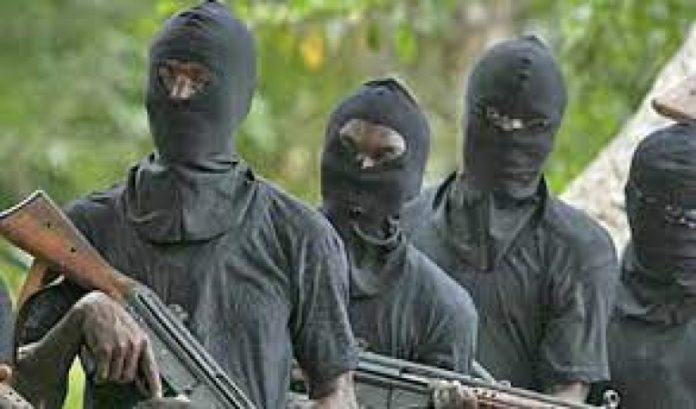
 Gunmen have killed eleven farmers in Ajimaka village, a Tiv settlement of Ekye Development Area in Doma Local Government Area of Nasarawa State.
 
The President of Tiv Development Association (TIDA), Peter Ahemba told Channels Television that the gunmen invaded the community in the early hours of Saturday when the villagers were deep asleep shooting sporadically, resulting in the killing of 11 persons and many others injured.
 
“Some gunmen suspected to be Fulani herdsmen invaded Ajimaka community, as at the last count, eleven corpses have been recovered including women and children,” he said.
 
He added that no fewer than 10,000 farmers fled the area, taking refuge in Kadarko, Doma, Ekye, and Rukubi communities in the state.
 
The Nasarawa State Police Command is however yet to confirm the attack.
 
When contacted, Police Public Relations Officer in the state, Rahman Nansel, said the command does not have details of the attack yet. (Channels TV)

People Are Reporting Killings As If It Had Never Happened Before – Garba Shehu

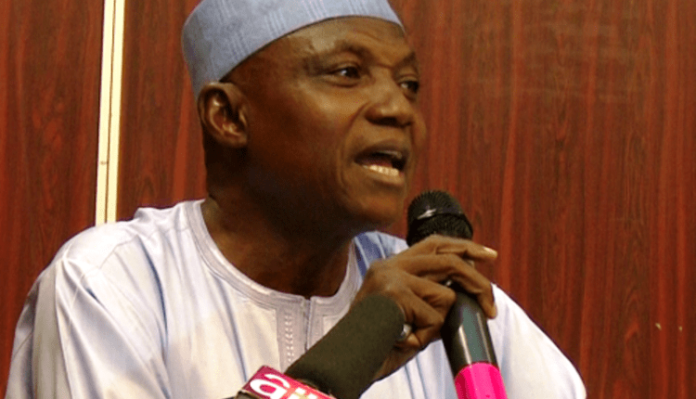
President Muhammadu Buhari Senior Special Assistant to President, Garba Shehu, on Friday said Nigerians are reporting death under his principal’s administration like it had never happened before.

The Presidential aide in his statement said killings had been in existence since and President Buhari seems to be a target in the way it is being reported now.

Recall that Shehu on Friday compared the certificate forgery case of ex-minister of Finance, Kemi Adeosun, to the earlier support for terror groups expressed by Pantami.

He stated that President Muhammadu Buhari’s response “would have been different” if Pantami had forged his certificate as Adeosun did.

Shehu said Pantami’s case only involved people probing his thoughts during the said lectures.

Source: Newspot

World Bank Report: Nigeria Overtakes Congo in Poor Accessibility to Electricity

In a virtual engagement with reporters in Abuja on the Power Sector Recovery Programme (PSRP), the bank officials said 25 per cent of Nigeria’s population do not have access to electricity supply.

The Word Bank also stated that many of the over 200 million Nigerian population with access to electricity had battled prevalent blackouts and defective electricity supply for years.

“Nigeria now has the largest number of unelectrified people globally, and the trend is worsening; of the electrified, the supply is very unreliable with widespread blackouts,” it said.

The financial institution observed that the electricity supply had risen from 1.1 per cent yearly since 2010 but at a slow pace compared to the population growth of three per cent annually.

“Nigeria now has 25 per cent more unelectrified people than the second most unelectrified country (DRC – in absolute terms). For the bottom, 40 per cent of the population (mostly rural), access to grid electricity is even lower at about 31 per cent nationwide. Regionally, only South-West has access of over 50 per cent (except Kano),” it said.

In his presentation, Ashish Khanna, the WBG Practice Manager, West, and Central Africa Energy, noted, “The power sector is operationally inefficient with unreliable supply exacerbated by high losses and lack of payment discipline.”

Mr Khanna explained that many businesses had lost their prospects due to the erratic power supply in Africa’s most populous country.

“Businesses in Nigeria lose about $29 billion annually because of unreliable electricity while Nigerian utilities get paid for only a half of electricity they receive,” he added.

The bank further stated that 80 per cent of grid-connected households have less than six hours of electricity daily, while 40 per cent of those with access to power depend on other means.

It, however, pointed out that the PRSP intended to foster a change in the electricity situation while disclosing that $1.25 billion was approved by the board between June 2020 and February 2021 to reset the power sector.

Credit:sundiatapost

Garba Shehu: Things would have been different if Pantami forged certificate like Adeosun

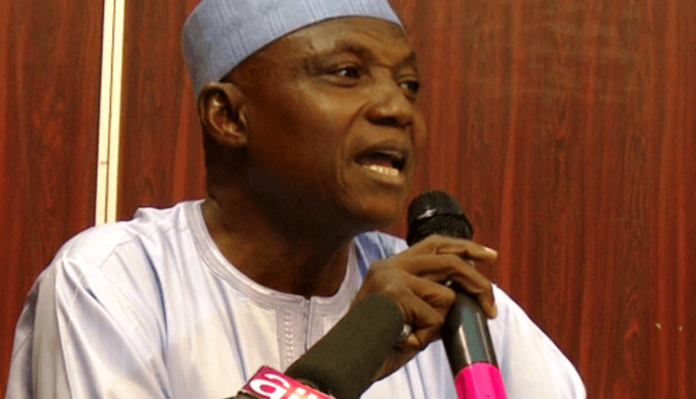
Garba Shehu, presidential spokesman, has argued that the certificate forgery by Kemi Adeosun, ex-minister of finance, cannot be compared with the earlier views on terror groups expressed by Isa Pantami, minister of communications and digital economy.

Speaking during a Channels TV programme on Friday, Shehu said the presidency’s response “would have been different” if Pantami had forged his certificate like Adeosun did.

Adeosun resigned as minister in September 2018 after it was reported that her National Youth Service Corps (NYSC) exemption certificate was forged to bypass Nigerian laws that mandate public officials to undergo the one-year service.

Pantami, on his part, had expressed extremist views in support of ideologies of terror groups such as Al-Qaeda and Taliban during his lectures as an Islamic scholar in the 2000s.

Although he has recanted the views, there have been heightened calls for his dismissal, with some Nigerians arguing his position as minister of communications is a sensitive one.

The presidency, however, defended him on Thursday, accusing the minister’s enemies and some information and communications technology (ICT) companies of being behind the “smear campaign” against him.

Asked why the presidency let Adeosun go but was quick to defend Pantami, Shehu said the latter’s case only involved people probing his thoughts during the said lectures.

“In the second case which is that of Pantami, you are probing the thoughts, what is called ‘McCarthyism’; you search the inner recesses of the minds of individuals, bring out things they have said, or they are about to say, or you think they would say, and use that against them,” he said.

“If Pantami had forged certificate before coming into office, the attitude (of the presidency) would have been different.

“We don’t remain in the same position. Don’t assume that things cannot change. If the one who created you gives it to you that from being bad, you can become good, what says you should deny some other persons this right?”

The presidential spokesman dismissed claims that the presidency’s support for Pantami suggests how the current administration tolerates violent religious extremism.

He said, instead, that those making such claims are “the problems of the society” for their unwillingness to forgive Pantami.

“Those people who stand in criticism of a man who has said he had wronged and society, he has apologised and changed, and they are not willing to forgive him to move on, they are the ones who are the problem. They are the ones who are deeply intolerant,” he said.

Credit:TheCable

Live for something greater than yourself

‘Unless a kernel of wheat is planted…it remains alone.’
John 12:24 NLT

Jesus said, ‘Unless a kernel of wheat is planted in the soil and dies, it remains alone. But its death will produce many new kernels.’ Someone has estimated that one kernel of wheat will produce a stalk bearing three heads of wheat. In each head there are fifteen to thirty-five kernels, altogether producing close to a hundred kernels from a stalk. After they are planted, these kernels will produce ten thousand kernels. When those are replanted, they will produce a million kernels. And if you keep going, you will cover the whole earth with wheat!

It’s amazing what one person can do when they commit their life to Christ and start where they are. D.L. Moody once said, ‘The world has yet to see what God can do through a man who is yielded to him.’ He decided to be that person and ended up impacting the world for Christ. When Peter, James, and John met Jesus, their goal in life was to make a living. Then Jesus invited them to follow Him and make a difference. And today He’s inviting you to do the same thing. He’s inviting you to find a need that no one is meeting and give yourself to it. He’s asking you to find a cause greater than self-interest, namely His cause, and pour your life into it. When Jesus asked the disciples to leave their jobs and their security, He was turning their world upside down. But when they said yes to Him, they became so successful that their enemies accused them of ‘turning the world upside down’ (see Acts 17:6).

Bible in a Year: 1 Sam 7-9, John 10:1-21

Credit: The Word for Today

The Power to Change

‘I will strengthen you and help you.’
Isaiah 41:10 NIV

We go to seminars and conferences looking for a painless cure by which our lives can be zapped and changed. We go on diets. We join health clubs and our enthusiasm runs strong for about two weeks. Then we fall back into the same old rut. We don’t change. We read self-help books, but the problem with self-help books is that they tell us what to do but can’t give us the power to do it. We are told things like: ‘Get rid of all your bad habits. Be positive; don’t be negative.’ But how? Where do we get the power to change? The word ‘power’ occurs fifty-seven times in the New Testament. It is used to describe the most powerful event that ever happened – the resurrection of Jesus Christ from the dead. And that resurrection power is available to change your life today.

The most important thing in life is knowing Christ and experiencing the power of His resurrection. Paul writes, ‘I want to know Christ…to know the power of his resurrection’ (Philippians 3:10 NIV). Again he writes, ‘I pray that you will begin to understand how incredibly great His power is to help those who believe in Him. It is that same mighty power that raised Christ from the dead’ (Ephesians 1:19-20 TLB). The Greek word for ‘power’, which is dunamis, can be translated in two ways: 1) ‘dynamite’, which is an explosive force, or 2) ‘dynamo’, which is a constant flow of power. And in Christ, you have both. Through Him you can break the chains that bind you and the limits that constrain you, and walk victoriously in His power today. Amen.

Bible in a Year: 1 Sam 4-6, John 9:24-41

Credit: The Word for Today

Obasanjo And Buhari: The Messiahs’ Greatest Failures

By Tony Eluemunor

They say if you have a fight in you, don’t waste it on a paper tiger; save it for the dragon. 

Unfortunately, the two “messiahs” Nigeria has had, former President Olusegun Obasanjo and President Muhammadu Buhari, fought paper tigers, leaving the lions, real sabre-tigers, bears, crocodiles and black mambas to roam freely and continue their unchecked devastation of Nigeria. 

Messiahs? I pray that after our two experiences with messiahs, not only self-proclaimed but so tagged by a large proportion of the populace, Nigeria should kill and bury that title. Yes, individuals can save societies, but such individuals are so few and far between that if every nation depends on them, only one or two countries can make real progress at any given time. We have so much focused on leaders and leadership that we have totally failed to notice the dreary followership that has bedeviled administrations in this country. 

The result of Nigeria’s dependency on messiahs looms the largest in the petroleum sector. That is natural because Nigeria is a mono-product economy. The way the crude petroleum market goes is exactly the way Nigeria goes. But most importantly, the way the petroleum industry is run is actually the way Nigeria is run: simplicita. So, it should follow that anti-corruption and reform-minded presidents should banish all opacity from all aspects of the crude petroleum industry. How many barrels of crude oil that we produce daily, weekly, monthly, and yearly should be ironclad, and not be a matter for conjecture. Right? Well, since 1999 (and the administrations of the country’s two messiahs fall with this Godforsaken time frame), Nigeria does not know its exact oil production at any given time. 

On April 16, 2021, this tear-inducing news item mocked Nigeria: “We Don’t Know Exact Quantity Of Crude Oil Nigeria Produces — NEITI Boss”. 

Various versions of the story ran thus: “The Executive Secretary of the Nigeria Extractive Industries (NEITI), Ogbonnaya Orji, has stated that the exact quantity of crude oil produced in the country is unknown. He said this during a courtesy visit to Mansur Liman, director general of the Federal Radio Corporation of Nigeria (FRCN). 

“According to Orji, the lack of information has persisted due to the absence of meters at wellheads and the inability to monitor deep offshore fields. 

“We do not have the capacity to go deep shores to know how much we are producing. As we speak, it is very difficult for any Nigerian to ascertain how much actually we are producing,” he said. 

He added: “This is one of the challenges that NEITI is dealing with because if you do not know how much you are producing, how would you know how much you are expected to earn? 

“The companies that go deep shore that are involved in offshore exploration, none of them are indigenous Nigerian companies and they cannot really protect the interest of the country as much as Nigerians can. 

“But we must concede to those companies, they are doing a great job here because without them there will be no oil industry.” 

“The NEITI boss said the agency has consistently recommended that meters be placed on oil wellheads to measure the volume of crude oil produced in the country, in all its oil and gas audit reports. 

“According to him, efforts to reform the oil sector have not been successful because those who benefit from the outdated law governing the sector are hindering the passage of the petroleum industry bill (PIB).” 

Now, here is the part that actually enraged me. This is the part that truly insulted our intelligence as a people: Orji said: “The only law that governs the oil and gas industry in Nigeria currently is the Petroleum Act of 1958. 

“If you use this law in computations of taxes and royalties based on a very old rate, Nigeria loses a lot of revenue. 

“He noted that the country’s failure to update its laws in the sector means when prices go up, the country is unable to derive maximum benefit from the situation.” 

The stark facts are these: Nigeria has no meters to enable it to know exactly the number of barrels of oil loaded onto crude petroleum freighters to buyers abroad, on any given day. So, Nigeria simply accepts as concrete facts whatever the oil majors, the producers, tell us that they have produced. Yes, our Nigerian National Petroleum Corporation is being busy being big and strong and unnationalistic and paying hefty salaries to its staff. 

Yet, who should we blame? The reform-minded late Gen. Murtala Muhammed died after just 200 days in office, two hundred days with immediate effect, in which what some administrations have not achieved in eight years were packed into just 200 days. And the man lived in his own house and drove his own personal car. So, the cost of maintaining a Head of State must have been the lowest under Murtala. May his name endure. 

Then in stepped the Obasanjo-era of that Murtala-Obasanjo administration on 13 February, 1976, when a beer-loving Lt. Col. Buka Suka Dimka assassinated Murtala. In more than a million instances, Murtala’s successor, Gen. Olusegun Obasanjo (rtd), has boasted about his remarkable achievements for Nigeria in that gone-by era. So, too, Gen, Muhammadu Buhari (rtd), that era’s Petroleum Minister. Yes, they built some refineries. 

Yet, should anyone be wrong to ask why any of them has not built one refinery despite Obasanjo’s eight years in office as civilian President and Buhari’s six out of a possible eight years? 

Beyond that, just as Obasanjo was President cum Petroleum Minister, so is Buhari. They had had an uncommon focus on the oil industry from 1976 to 1979, so why did Nigeria not gain any profit from their past experiences? Or put it in another way, why did they insist on being their own Petroleum Ministers, if they had nothing to offer? The real offering they could ever have given to Nigeria would be to make the oil industry transparent. And such transparency should begin from Nigeria’s knowing how much oil the country produces at any given moment. And only meters installed at the relevant loading points could ever give the right answers. Yet, those meters were not installed by … our messiahs. Why then did we tag them, and do still tag them, as messiahs? 

I know that Orji said that the laws governing the industry were made in 1958. Yes, 1958. Even if a cabal had ensured that no new laws were passed to regulate the oil sector, that should not, in any way, have stopped the purchase and installation of meters in the relevant points. 

Just a few weeks ago, I wrote in this column about the efforts of the 1999-2003 House of Representatives under the Speakership of Ghali Umar Na’Abba, over the non-transparency in the oil industry. With the help of documentary evidence, I showed that the members of the House of Representatives of that era were bent on cleaning up the NNPC. But that was the time Obasanjo was strutting on the stage as President and Nuhu Ribadu was the so-called anti-corruption tsar. Both Obasanjo and Ribadu were praised to high heavens. Mr. Azu Ishiekwene and many others wrote Ribadu-boot-licking books. Others fell over themselves in praising “hurricane Obasanjo” who fought corruption. Anyone who opposed Obasanjo, and for whatever reason, was demonised as terribly corrupt. 

The powers that be ensured that in the 2003 election, those members of the House of Representatives that were seen as Obasanjo’s opponents were denied re-election. And Nigerians clapped. Our leading columnists have written millions of scripts eulogising Obasanjo and Ribadu. To them the only people that deserved to be crucified on the anti-corruption gibbet were the state governors such as James Onanefe Ibori, who were not in the “I like master too much” Obasanjo boys camp. 

Yet, all the while, nobody knew how many barrels of petrol Nigeria was producing daily. And Obasanjo was the Oil Minister. And that was not, and is not, and may never become, an evidence of ridiculous failure. Remember that Nigeria has remained a mono-product economy. So, if corruption reigns within the garden of the goose that lays the golden egg, how could anybody claim to have fought corruption in Nigeria? Instead of fighting corruption, Ribadu was playing stark politics and the so-called leading journalists were falling over themselves to pay tribute to him and to acclaim him as though he was an Angel doing a duty tour of Nigeria. And those journalists have not seen it fit to apologise to Nigerians. They were and remain conscience-less bullies who corrupted the minds of the simple Nigerians. They wrote nonsense, launched their useless books, made their money, and were regarded as heroes. But they had simply spewed outright falsehoods. 

As though the Obasanjo disaster was not unkind enough, we were informed that another messiah was on his way, and his name: Buhari. Trumpeters mounted their pulpits. Six years later, the most important jobs that Nigeria demands, the metering of the crude petroleum that is loaded into the freighters bound for foreign markets, have still not been installed. And Buhari, just like Obasanjo, has been his own Oil Minister. This becomes more irritating, infuriating and even maddening when we recall that Buhari had actually been an Oil Minister in the mid to late 1970s. 

Ensuring that Nigeria gets every kobo from the crude oil that the oil majors lift from Nigeria, should have been the first task for Buhari as he was assuming office as President and Oil Minister. But has he done it? 

And this is what makes the matter more disappointing. This opaqueness relating to the amount of crude oil that Nigeria produces has been decried before. For instance, the same NEITI cried out on May 14, 2017, over the same accursed issue, “How Nigeria lost N2 trillion to poor metering of oil wells in two years”. 

That was four years ago. Buhari was in government then. He is still in power now. And the greatest anti-corruption fight has not taken place. 

Unfortunately, the House of Representatives of today cannot take the stout and nationalist and independent stand which the 1999-2003 one assumed. Today’s National Assembly sees itself as part of the Executive. Even as Nigeria reels drunkenly under its incapacitating debt load, neither the Executive nor the Legislature has for once thought of lessening the cost of governance and thus loosening the burden on the average citizen. Instead, the government keeps increasing the load on the citizens through tax increases (VAT), petrol pump price, etc. Abuja is re-introducing street parking payment just for the heck of it, because there is money to be made by milking the citizenry the more. 

One day, we have to internalise the lessons other people have since learnt; that when you have strengthened a nation’s crucial political and administrative and security institutions, that nation does not need messiahs. A goat could be American president and, yet, the US would not falter beyond a certain point. 

So, let anyone who is contemplating how to designate anyone as the people’s messiah come 2023, please perish the thought. 

In UK’s “Largest Divorce” Case, Son Ordered To Pay $100 Million To Mom

Azerbaijan-born Farkhad made much of his wealth from the sale of his stake in a Russian gas producer in November 2012 for $1.4 billion.

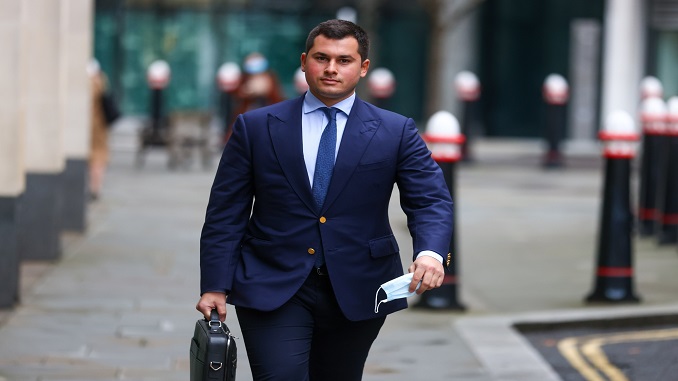
The son at the center of the U.K.’s largest divorce lost a London court ruling over his role in hiding assets from his mother with a judge calling him “a dishonest individual who will do anything to assist his father.”

Temur Akhmedov worked with his billionaire father, Farkhad Akhmedov, to do “all he could” to stop his mother from obtaining a 450 million-pound ($627 million) court-approved divorce payout, Judge Gwynneth Knowles said in a ruling Wednesday. The judge ruled Temur should pay his mother more than $100 million.

The trial attracted scrutiny after Temur revealed he’d lost more than $50 million day trading while a college student. He’d argued that far from hiding his father’s money from his mother, he’d instead lost some of it with bad trades.

“Temur has learned well from his father’s past conduct and has done and said all he could to prevent his mother receiving a penny of the matrimonial assets,” the judge said.

Temur’s mother, Tatiana Akhmedova, wants the keys to a luxury apartment overlooking London’s Hyde Park in a bid to recover some of the cash.

Azerbaijan-born Farkhad made much of his wealth from the sale of his stake in a Russian gas producer in November 2012 for $1.4 billion. But the oligarch has refused to make any divorce payments, leaving Tatiana, backed by litigation funder Burford Capital Ltd., to pursue cases in at least six countries.

“Entirely predictably, given its original wrong and misguided judgment, the London court has ruled in favor of visiting ‘the sins’ of the father on an innocent and loyal son,” Farkhad said in a statement.

The fight has led to Tatiana’s so-far unsuccessful legal attempts to seize a 115-meter (377-foot) superyacht once owned by Roman Abramovich that is currently in Dubai, and a collection of modern art worth more than $140 million in a secure storage facility in Liechtenstein known as the “Treasure House.”

Farkhad moved to Russia after the initial divorce order in 2016. But by getting an English ruling against Temur, a U.K. resident, it’ll be easier for his mother to obtain his local assets.

At the trial last year, Temur said his father made his own decisions. He said his mother’s choice to draw him into the litigation has been “tremendously upsetting and in many ways quite frightening.”

He said in a statement that while he disagreed with the ruling, “he would consider it a price worth paying for should it lead to a reasonable settlement between the parents he both loves.”

Tatiana said during the trial that her relationship with her eldest son “is now very strained.” She said she felt she had no choice but to sue him.

“I always knew that my strength would prevail through the smoke and mirrors as presented by Farkhad and his circus of illusionists,” Tatiana said in a statement after the ruling.

Temur said at the trial that he’d had some initial success trading stocks, only to hit a losing streak while studying at the London School of Economics. When he tried to make back the money, “convinced this loss was just bad luck,” he increased his risk exposure and lost everything, he explained in court.

The judge rejected Temur’s explanation that his mother knew about his trading, saying the transfer of millions of dollars from his father’s account was in fact designed to put it out of her reach. That he’d then racked up losses was beside the point, she said.

“All happy families are alike, each unhappy family is unhappy in its own way,” Knowles said in her judgment. “With apologies to Tolstoy, the Akhmedov family is one of the unhappiest ever to have appeared in my courtroom.”

Credit: NDTV

Photo Credit: Bloomberg.com

A Bigot as Born-Again

By Tunde Olusunle

Isa Ali Ibrahim, equally referred to as “Sheikh Pantami” comes to you as what the “soro soke” generation will call a “fresh boy.” From what you see in his most frequently used media photograph, he is fair complexioned, has chubby cheeks, wears a smile and adorns a thin-rimmed pair of glasses. He is a young man as well, having been born in 1972.

His profile would also, most probably impress you. He obtained a university degree in the much sought-after Computer Science course in 2003, before adding a masters in the same institution and capping these with a doctorate from Robert Gordon University, Aberdeen, Scotland. He subsequently attended short courses in a number of universities and institutes in the United States of America, USA; Switzerland and the United Kingdom, UK.

Relatively unknown, he stepped on the national political stage, when he was appointed Director-General and Chief Executive of the National Information Technology Development Agency, NITDA, September 26, 2016. Just about three years after cutting his teeth in public service, he was appointed a Member of the Federal Executive Council, FEC, following his call-up as Minister in the reconfigured Federal Ministry of Communications and Digital Economy.

If Pantami was previously anonymous in the crowd of public servants jostling for media attention in Nigeria, however, he has been a more visible subject of public discourse in recent weeks, for the wrong reasons. The fossils of his ideological constitution as a longstanding bigot, an unconscionable religious demagogue, an irredeemable dogmatist, are in the public space for discussion and dilation.

A publication by an online media, associated Pantami with the erstwhile leader of Boko Haram, Mohammed Yusuf. The terrorist organisation has held Nigeria by the jugular in the last decade, upstaging peace in the North East, precipitating random lethal attacks in the region, engendering civilian and military casualties and causing severe dislocations and refugee crisis in the zone. The online publication under discussion, also insinuated that Pantami had been placed on the terror watch-list of the USA.

The allegation by the online medium, opens a pandora box, with allusions to audio reports of Pantami delivering lectures sympathetic to Boko Haram, and archival tapes of the young minister expressing support to the Taliban and Al-Qaeda back in 2004. Pantami in a 2006 speech, also mourned the death of the Al-Qaeda leader in Iraq, Abu Musab al-Zarqawi. There are indeed, viral videos of his virulent speeches and engagements.

Pantami has attempted to pour cold water on these allegations. He claims he harbours no hatred for Christians, as evidenced by the fact that some of his staff are of the Christian faith. On April 17, 2021 in what seemed like a recant, Pantami proferred that: “Some of the comments I made years ago that are generating controversies now, were based on my understanding of religious issues at the time and I have changed several positions taken in the past, based on new evidence and maturity.” In a manner of speaking, Pantami wants us to understand and accept that he is “born again.”

Pantami has forgotten, however, that there is blood on his hands. Back in 2004 when he was Chief Imam of the mosque of the Abubakar Tafawa Balewa University, ATBU, Pantami issued a virtual fatwa on 17 year old Sunday Nache Achi, a leader of the student ministry of the Evangelical Church Winning All, ECWA, in the institution. The young Achi’s father, Prof Samuel Achi in an interview, volunteered that in response to preachments by Pantami during a service in the mosque, his late son was dragged from his room on the campus and taken to the university mosque where Pantami was presiding. He was strangled to death and his body thrown outside the mosque. He was alleged to have distributed religious tracts which content allegedly defamed Prophet Muhammad, a proposition punctured by the older Achi.

Sunday Achi’s parents had to go through the tortuous motions of reaching out to Ahmed Makarfi, governor of Kaduna State at the time, to admonish his counterpart in Bauchi State, Adamu Muazu, to facilitate the release of the body of the young Achi to his family for internment. Pantami has forgotten, time has not. If the young Sunday Achi hadn’t been so wickedly murdered, he would have been 34 years of age this year, contributing his quota to national, nay global development.

Pantami has been sighted elsewhere on the internet, leading prayers and describing the opposition, the Peoples’ Democratic Party, PDP, as an agglomeration of infidels. Should he have the powers, Pantami would most probably subject such “infidels”, most probably to the Sunday Achi treatment.

March 20, 2020, the same Pantami at the commissioning of the annex of the Nigeria Communications Commission, NBC, in Jabi, Abuja, ejected reporters from the African Independent Television, AIT; Raypower radio and Punch newspapers, before the start of the event. He labelled them unfriendly to the administration of President Muhammadu Buhari who was scheduled to commission the project. That other media houses did not walk out of the ceremony in solidarity with their colleagues who were so humiliated and boycott its coverage, continues to amaze me. They needed to make a serious point and vindicate the saying of the legendary Afrobeat musician, Fela Anikulapo Kuti, who sang “Everybody get im power.”

The minister’s spin doctors who initially alleged that their boss was being harangued by those opposed to the ongoing registration of telephone lines against national identification numbers by Pantami’s ministry, have since taken a few steps back in recent days.

That Isa Pantami had such a controversial past, calls to question, the thoroughness, the rigour which characterises the screening of nominees for political appointment. The security services by the way, characteristically, make heavy metal of the process of “checking out” nominees for appointive offices. So how come an Isa Ali Pantami was not found out for who he is, first when he was appointed DG of NITDA in 2016, and subsequently, when he was nominated Minister in 2019?

We recall for instance that back in 2015, four years before Pantami was appointed into the federal executive council, it was a long waiting game for Nigerians as they eagerly awaited the constitution of government’s apparachik by Buhari. The famous alibi at the time as propounded by defenders of the administration was that the nominees were being subjected to rigorous security search-light. When the cabinet was eventually constituted six months into the life of the regime, however, there were no surprises whatsoever.

And just in case screening is usually truly thorough and forensic, how come the results did not turn out an overtly extremist, dangerously radicalised and latently bigoted Pantami in the interrogation process? To make assurance doubly sure, Pantami was actually dismissed from his job as a cleric, by the authorities of ATBU, for incendiary preachments and religious incitement capable of breaching public peace, which is a major blot on his curriculum vitae.

Dennis Amachree a retired Assistant Director with the Department of State Services, SSS, has opined in an interview with Punch newspapers, that much as Pantami was screened following the submission of his name for appointment as minister by the President, the final decision on his eventual appointment, resides in the appointing authority.

Pantami’s resume includes the facts that he was educated by scholars who included Muhammad Umar Fallatah, Muhammad Ibn Al Uthaymeen and Abdulmuhsin Ibn Abbad. Who are they? What was the course content of his engagements with these intellectuals? With the race to succeed Buhari hotting up ahead of 2023, have we envisioned the possibility of having a president in the mould of Pantami?

Elsewhere, Pantami will simply tow the path of honour, file in his letter of resignation and move on. People like him have no place as public officials and policy makers, especially at the level which impacts the collective wellbeing of citizens of a secular society. It is indeed immoral for him to continue being remunerated remuneration, from the taxes of Nigerians, many of whom are of the religion he loathes so bitterly.

Should he fail to throw in the towel, like the archetypal Nigerian public servant who has no scruples about anything, he should be booted out through the window, like a bad habit.

The point has been repeatedly made of the imperative for a more painstaking process leadership recruitment process in Nigeria, against the backdrop of the recurring emergence of motley characters, whose lack of substance, aptitude and capacity, continues to drag the nation down. Pantami’s trajectory is a huge lesson for those who think their past can be buried in the sands of time. Time, indeed never loses its sense of memory.

  • Dr Tunde Olusunle writes from Abuja.

TIPS