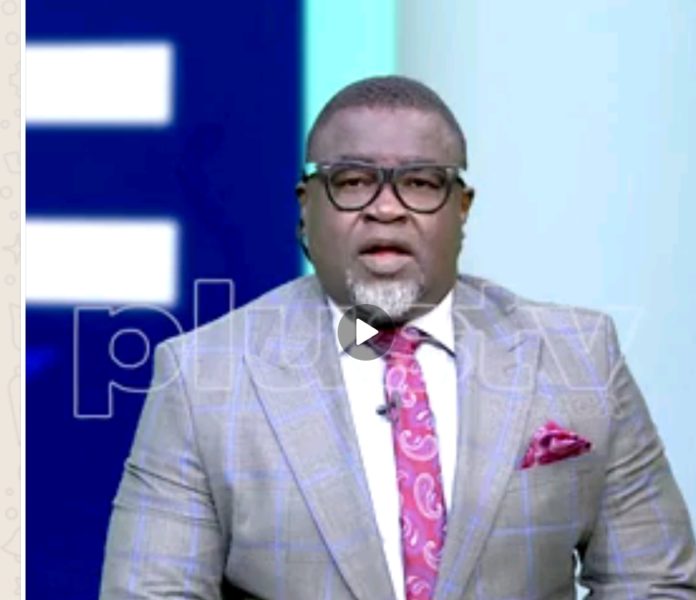
- Says – Kill Terrorists not innocent Nigerians
– God is not happy with our leaders

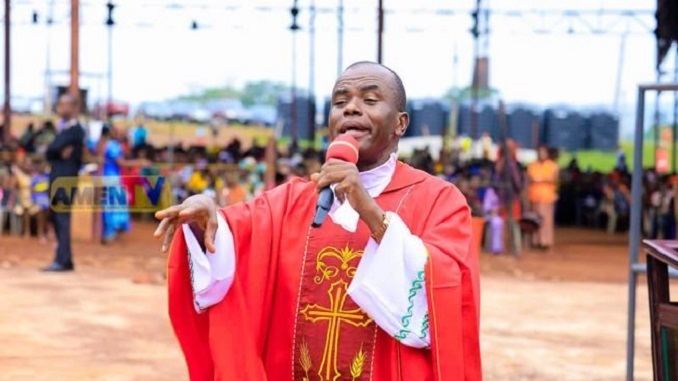
– God is not happy with our leaders
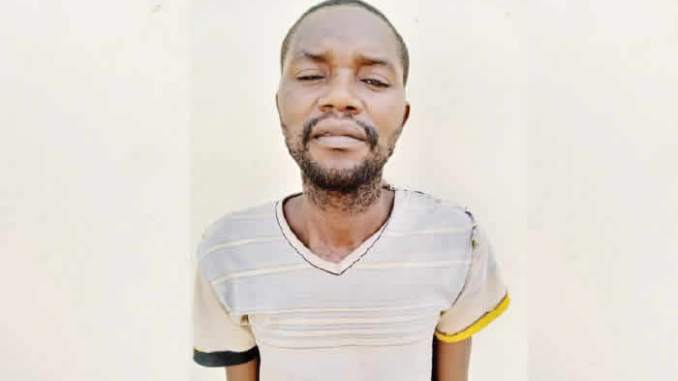
Abuja (Sundiata Post) – A suspected member of a kidnap gang, Bello Mohammed, has been held for the abduction and killing of a businessman, one Osondu Nwachukwu, who operated a sachet water factory in Lafia, Nasarawa State.
Mohammed and four other members at large identified simply as Maikano, Dogo, Hassan and Jubril reportedly carried out the act.
He was arrested on March 11 by operatives of the Inspector-General of Police Intelligence Response Team after the case was reported to the police.
City Round learnt that the gang kidnapped Nwachukwu from his house and contacted his wife to pay N5m ransom.
The wife reportedly appealed to them to collect N40,000 and was told to drop the money at a designated point in the bush.
“Before she could deliver it, they butchered her husband and put his corpse in a sack,” a police source said.
The suspects were about to dispose of the remains in a bush in the Bukan Koto area along Makurdi Maraba-Ankunza road when some men, who were going to a mosque to pray, saw them conveying the sack in a wheelbarrow.
They reportedly abandoned the sack and ran away when the worshippers, who were suspicious of the gang, demanded to know the content.
The source added, “They saw the corpse of the victim and reported the matter to the police. Acting on credible intelligence, detectives were able to arrest one Bello Mohammed, a native of Lafia Local Government Area, Nasarawa. He confessed to the crime and said that he is part of a kidnapping and cattle rustling gang.”
Mohammed, 37, a farmer married with two wives and eight children, said his brother-in-law, Dogo, persuaded him to join the kidnap gang when he (Mohammed) complained that things were hard for him.
He explained that an unnamed Igbo man in Lafia contracted the gang to kidnap Nwachukwu.
Mohammed stated, “He told us that the man owned sachet water business but was stingy. He assured us that the man would pay at least N10m because he was rich. He gave us all the details about his movement and advised that the best place to abduct him was his house.
“We went into his house on three motorbikes around 8.30pm and loitered around his compound. Meanwhile one of us waited for him at the factory area and followed him home. It was the gang member who alerted us that they were on the way to the house.
“As soon as he drove into his compound around 9pm, we followed and overpowered him. We searched his house for valuables and dragged him along. We carried him on our bikes and threatened to kill him if he raised the alarm. When we got to a spot, we stopped and trekked for hours into Bukan Koto forest in Lafia.”
He said while at their camp, the mastermind phoned in and they told him Nwachukwu’s wife said the family could not raise the N10m ransom.
The suspect stated, “He said the wife was lying and not serious to save the life of her husband. Unfortunately, the man overheard our conversation and was able to identify the person that gave us the job. The man told us to kill him after collecting the money.
“We were ready to spare him but his wife was not making any serious effort. So Dogo got angry and said that he was no longer interested in the job. He used his machete to cut off the man’s head.”
“Dogo butchered him and packed his remains in a sack. Two other members of the gang and I were given the body to dispose of it at the nearest river. We used a wheelbarrow to carry the butchered body but we were stopped by some Fulani men returning from the mosque. We all left the corpse and ran away. I guess they were the ones who reported the matter to the police.”
The deceased’s wife, who spoke on condition of anonymity, said she was at home with her husband and their children on November 30, 2019 when the kidnappers struck and abducted him.
The mother of six stated that later she received a call from the kidnappers, demanding N40m ransom from her if “I want to see my husband alive.”
She said, “I pleaded with them to have mercy as it was Friday and banks had closed. They asked me how much I had and I told them N40,000. They asked me to bring the money which I did that night.
“I was waiting for them when I received a call that I should not bother again because my husband is dead. I was told that the person that arranged his abduction is from the East but I did not suspect anyone at all. God will punish the person behind his kidnapping and death.”
Banks Should Not Refuse Affidavits/Documents Made By Notaries Public. Daily Law Tips (Tip 784) by Onyekachi Umah, Esq., LL.M, ACIArb(UK).
Introduction:
Some documents will never have value or be presumed to be valid until there are made before a Notary Public for Nigeria or some other specific persons. A Notary Public for Nigeria is a senior lawyer, that has been authorized to administer oath to persons and to certify documents in any part of Nigeria. Once a document is made before a Notary Public, the document is presumed to be legally and lawfully made.
To ensure people state only facts, people are made to make affidavits. To ensure that documents are not forged or made out of fraud, documents are required to be certified and authenticated. Also, to administer oaths, swear-in public officers, sign affidavits, authenticate and certify documents across Nigeria, the laws in Nigeria have empowered Notaries Public and some other persons to perform such duties.
However, some banks in Nigeria seem to think otherwise. Following protests from some Nigerians, that some banks in Nigeria are not accepting affidavits and documents made before Notaries Public, I reached my contacts in the banking sector. I was shocked, when it was confirmed that some banks in Nigeria prefer affidavits and documents made in courts and before Commissioners for Oath to documents made by Notaries Public for Nigeria.
Notaries Public and the Nigerian Banks:
Nigeria is a country made and guided by laws. The Banks in Nigeria are licensed and permitted to operate by the Central Bank of Nigeria and under its supervision. The Central Bank of Nigeria is a creation of a federal law (the Central Bank of Nigeria Act). Nigerian banks are highly regulated (may be highly in terms of existing regulations and not necessarily compliance), from job titles, dressing codes to operational mandates.
Notaries Public for Nigeria are created and empowered by a federal law (the Notaries Public Act, 1936). Notaries Public for Nigeria are senior lawyers appointed by the Supreme Court of Nigeria through the Chief Justice of Nigeria, to perform the duties of a Notary Public. They are sworn in by the Chief Judges their States of legal practise, on the instructions of the Chief Justice of Nigeria. The duties of Notaries Public for Nigeria, includes; the administration of oaths and certification of documents. This empowers a Notary Public in any part of Nigeria to certify and authenticate documents, as well as to administer oaths (affidavits and statements on oaths).
Clearly, the works of a Notary Public are based on the Notaries Public Act. The works of a Notary Public are valid in every part of Nigeria and even beyond Nigeria. Hence, it is unjustifiable for any bank, person or institution in Nigeria to reject any document made by a Notary Public for Nigeria. It questions the powers of Notaries Public and as such undermines the Notaries Public Act.
Furthermore, choosing documents made by Commissioners for Oaths over those made by Notaries Public is laughable and a clear sign of engraved ignorance. Although both a Notary Public and a Commissioner for Oaths can administer oaths and sign to affidavits, only a Notary Public can authenticate documents (Powers of Attorney), among them. Authentication of documents (Power of Attorney) makes a Power of Attorney to be presumed by any court of law, to have been properly executed, if authenticated by a Notary Public or any Court, Judge, Magistrate, Consul or Representative of Nigeria or the President of Nigeria.
Clearly, in section 150 of the Evidence Act, Commissioners for oath are omitted from the list of persons that can authenticate documents (Power of Attorney) for such document to be presumed to be properly made. It is pitiable that some banks in Nigeria prefer documents (Power of Attorney) executed before and authenticated by a Commissioner for oath, instead of a Notary Public.
As at today, there is no known order from the Central Bank of Nigeria, authorizing or permitting banks to choose whether to honour works of Notaries Public or not. More importantly, since Notaries Public for Nigeria are created by a federal law, no federal or state institution can tamper, bend, twist, deny or reject the powers or works of a Notary Public. Rather, any person that is not pleased with the Notaries Public, may approach the National Assembly (federal legislature) and seek for a legislative amendment.
Conclusion:
Banks in Nigeria are like any other business entities in Nigeria and should not pretend to be more. Banks are not lawmakers or courts. Banks have no powers to reject affidavits or documents made by or before a Notary Public. Notaries Public are created by a federal law, just like the regulator of the banks (the Central Bank of Nigeria). Banks cannot choose to administratively invalidate or violate a federal law. Banks are by law mandated to accept and honour all documents from a Notary Public.
Documents from a Notary Public are as valid as documents from the Chief Justice of Nigeria, a Justice of the Supreme Court, the President and Justices of the Court of Appeal, Judge of the National Industrial Court and any Judge of the Federal High Court, or any Commissioner for Oaths in any part of Nigeria. In the hierarchy/list of persons that can administer oath, by section 10 of the Oaths Act (a federal law on oath/affidavits), a Notary Public comes immediately after the Judges but before any Commissioner for oaths. Also, Commissioners for oath are not mentioned as persons that should authenticate documents (Power of Attorney) for such documents to be presumed to have been properly made. It is unbelievable, how and why some banks choose documents made by Commissioners of Oath over those made by Notaries Public.
Bank customers that have their documents and affidavits rejected by banks, merely because such documents were made by a Notary Public have legal remedies. Such bank customers should endeavour to have the banks put their rejections in writing. Where banks refuse to write their rejection, another way around it, is to record the transaction/conversation. With such proof, the concerned customers should engage the services of their lawyers.
The Nigerian Bar Association (NBA) is by this work alerted and beckoned to investigate the alleged attitude of some Nigerian banks towards the works of Notaries Public. The NBA should also remember that some years back, a commercial bank in Nigeria, advertised and paraded itself as having powers to render legal services to the public. There is need for the NBA to work hard and ensure that the services of Notaries Public are not relegated and trivialized in any part of Nigeria. #NotariesPublicMatter
My authorities, are:
Sabi Law Projects:
#SabiLaw
#DailyLawTips
#SabiBusinessLaw
#SabiElectionLaws
#SabiHumanRights
#SabiLawOnTheBeatFm
#SabiLawLectureSeries
#CriminalJusticeMonday
#SabiLawVideoChallenge
Speak with the writer, ask questions or make inquiries on this topic or any other via [email protected], [email protected] or +2348037665878 (whatsapp). To receive free Daily Law Tips, join our free WhatsApp group via https://chat.whatsapp.com/L7h4f1exItZ38FeuhXG4WN or Telegram group, via the below link: https://t.me/LearnNigerianLaws
To keep up to date on all free legal awareness projects of Sabi Law Foundation, follow us via
Facebook Page:@LearnNigerianLaws,
Instagram:@LearnNigerianLaws,
Twitter: @LearnNigeriaLaw,
YouTube: Learn Nigerian Laws,
WhatsApp Groups via (https://chat.whatsapp.com/L7h4f1exItZ38FeuhXG4WN),
Telegram Group: (https://t.me/LearnNigerianLaws),
Facebook group: (https://www.facebook.com/groups/129824937650907/?ref=share)
or visit our website: (www.LearnNigerianLaws.com)
Please share this publication for free till it gets to those that need it most. Save a Nigerian today! NOTE: Sharing, modifying or publishing this publication without giving credit to the author or Sabi Law Foundation is a criminal breach of copyright and will be prosecuted. This publication is the writer’s view not a legal advice and does not create any form of relationship. You may reach the writer for more information.
This publication is powered by www.LearnNigerianLaws.com {A Free Law Awareness Program of Sabi Law Foundation, supported by the law firm of Bezaleel Chambers International (BCI).} Sabi Law Foundation is a Not-For-Profit and Non-Governmental Legal Awareness Organization based in Nigeria. For sponsorship and partnership, contact: [email protected], [email protected] or +234 903 913 1200.
New Punishment for Political Violence. Daily Law Tips (Tip 783) by Onyekachi Umah, Esq., LL.M, ACIArb(UK)
Introduction:
Proliferation of small arms and light weapons has been identified as a major catalyst of violence in Nigeria. Nigeria is estimated to have about 350,000,000 illicit and unregistered firearms, according to GunPolicy.org. There has really not been any general election in Nigeria without election violence since 1999. Human Rights Watch, cited the report by SBM Intelligence, and stated that; “… that 626 people were killed during the 2019 election cycle, starting with campaigns in 2018.” Hence, political violence is common in Nigeria.
Political Violence:
Political violence is any act or attempted act of violence perpetrated in the course of political activities, like elections. Violence itself is an act or attempted act that may cause any person; any physical, emotional, psychological, sexual, verbal or economic harm, whether it occurs in private (family setting) or public. So, political violence is the violence that occurred or attempted to occur in the course of politics. The acts and forms of political violence, include; thuggery, mugging, disruption of meetings/events and the use of dangerous weapons.
Sanction for Political Violence:
Like any other crime, there is a severe punishment for political violence. Political violence is punishable with not more than 4 years imprisonment or fine of N500,000.00 or both. Punishment for attempting such offence or assisting and aiding an offender is imprisonment for not more than 2 years or fine of #300,000.00 or both. This is according to the Violence Against Persons (Prohibition) Act 2015 and similar laws in states across Nigeria.
Conclusion:
Political violence is a major feature of politics, generally, in all parts of Nigeria. With too many illicit guns and very weak security institutions, Nigeria and Nigerians must wake up, else violence may consume the nation. No form of violence is permitted in the law books, from domestic violence to
political violence. While the regular criminal laws across states in Nigeria already provide for most forms of violence, the focus on political violence by law makers is commendable.
My authorities, are:
Sabi Law Projects:
#SabiLaw
#DailyLawTips
#SabiBusinessLaw
#SabiElectionLaws
#SabiHumanRights
#SabiLawOnTheBeatFm
#SabiLawLectureSeries
#CriminalJusticeMonday
#SabiLawVideoChallenge
Speak with the writer, ask questions or make inquiries on this topic or any other via [email protected], [email protected] or +2348037665878 (whatsapp). To receive free Daily Law Tips, join our free WhatsApp group via https://chat.whatsapp.com/L7h4f1exItZ38FeuhXG4WN or Telegram group, via the below link: https://t.me/LearnNigerianLaws
To keep up to date on all free legal awareness projects of Sabi Law Foundation, follow us via
Facebook Page:@LearnNigerianLaws,
Instagram:@LearnNigerianLaws,
Twitter: @LearnNigeriaLaw,
YouTube: Learn Nigerian Laws,
WhatsApp Groups via (https://chat.whatsapp.com/L7h4f1exItZ38FeuhXG4WN),
Telegram Group: (https://t.me/LearnNigerianLaws),
Facebook group: (https://www.facebook.com/groups/129824937650907/?ref=share)
or visit our website: (www.LearnNigerianLaws.com)
Please share this publication for free till it gets to those that need it most. Save a Nigerian today! NOTE: Sharing, modifying or publishing this publication without giving credit to the author or Sabi Law Foundation is a criminal breach of copyright and will be prosecuted. This publication is the writer’s view not a legal advice and does not create any form of relationship. You may reach the writer for more information.
This publication is powered by www.LearnNigerianLaws.com {A Free Law Awareness Program of Sabi Law Foundation, supported by the law firm of Bezaleel Chambers International (BCI).} Sabi Law Foundation is a Not-For-Profit and Non-Governmental Legal Awareness Organization based in Nigeria. For sponsorship and partnership, contact: [email protected], [email protected] or +234 903 913 1200.

In myriads of cases, the Nigerian Supreme Court has had to deal with appeals relating to cases of child molestation. The apex Court has consistently expressed deep concern and condemned the act in strong terms. For instance, in the case of Boniface Adonike v. The State [2015] 7 NWLR (Pt. 1458) 237 at 266, Okoro, JSC lamented:
Imagine the trauma (both physical and mental) the young girl was subjected to as a result of the insatiable urge of the Appellant for mischief which he has invoked from the pit of hell. Violating a girl of just five years by the Appellant in the manner he did is condemnable, barbaric, immoral and is devoid of any reasoning whatsoever.
In his contribution, Muntaka-Coomassie, JSC had this to say (at pages 283-284):
The Appellant, a pedophile, deserved no less than to be kept out of circulation for a while, so that his pedophile instinct may cool off. He is of dangerous specie and of low moral pedigree. The conduct of the Appellant herein is as bad as that of the appellant in Akindine v. The State (2012) 16 NWLR (Pt. 1326) 318, so I need re-echo what his Lordship, Muhammad J.S.C. said at page 331 of the report, to wit: “The facts revealed in this appeal are sordid and can lead to a conclusion that a man can turn into a barbaric animal. When the appellant was alleged to have committed the offence of rape, he was 32 years. His two young victims: Ogechi Kelechi, 8 years old and Chioma Kelechi, 6 years old were, by all standards, underaged. What did the appellant want to get out of these under-aged girls? Perhaps the appellant forgot that by nature, children, generally are like animals. They follow anyone who offers them food. That was why the appellant, tactfully induced the young girls with ice cream and zobo drinks in order to transfer his hidden criminal intention to reality, damning the consequences. Honestly, for an adult man like the appellant to have carnal knowledge of under aged girls such as appellant’s victim is very callous and animalistic. It is against God and the state. Such small (under-aged) girls and indeed all females of acts of age need to be protected against callous acts of criminal minded people of the appellant’s class. I wish the punishment was heavier so as to serve as deterrent.”
The Supreme Court has said it all. Parents must not relent in their efforts to protect their children adequately.
Meanwhile, it has been found that pedophilia and child sexual abuse are two different things, and that conflating both is not a very good idea. According to Dr. James Cantor, an Associate Professor of Psychiatry at the University of Toronto (and an international expert on pedophilia):
It is extremely important not to confuse pedophilia—meaning the sexual interest in children—with actual child molestation. Not every person who experiences sexual attractions to children acts on those attractions. People who are pedophilic but who work to remain celibate their entire lives are being increasingly recognized as needing and deserving all the support society can give them.
Pedophilia is said to be a psychiatric disorder. Thus, those with pedophilic tendencies need to seek treatment to enable them to keep clear of sexually abusing or molesting children. In acknowledging the distinction, Brian D. Earp (an American bioethicist, philosopher, and interdisciplinary researcher) concluded thus:
If the goal is to protect children from harm, as it should be, then we should stop stigmatizing pedophilia per se and start stigmatizing (or keep stigmatizing) those who actually sexually abuse children for whatever reason, whether they happen to be pedophiles or not. In other words, non-offending pedophiles should not be stigmatized so long as they do not offend, nor mistaken for sexual abusers. Instead, they should be encouraged to seek treatment for their disorder before they cause harm to children…
This article was first published April 28, 2021 on https://stephenlegal.ng/child-molesters-are-barbaric-animals-of-dangerous-species-supreme-court/ by Stephen Azubuike a lawyer with expertise in Commercial Dispute Resolution and Technology Law practice. He is a Partner at Infusion Lawyers. He has successfully argued cases from the High Courts of various jurisdictions to the Appellate Courts on behalf of financial institutions, other corporate bodies and multinationals. He has worked with a number of startup tech companies. He tweets @siazubuike.
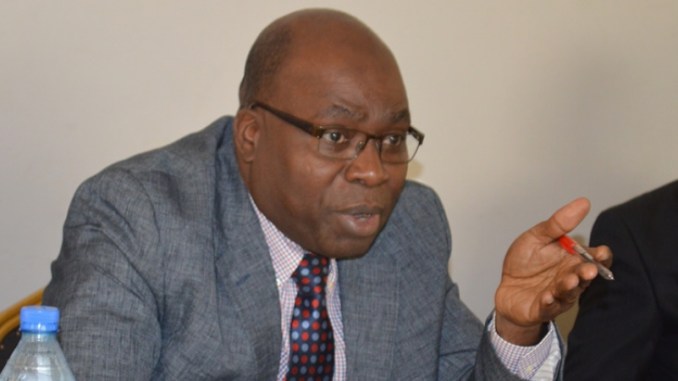
•ICPC Chairman, Prof. Owasanoye
By PHILOMINA ATTAH
Mathew Page, an associate fellow of Chatham House, London, has said that Nigerian politicians own 800 properties worth $400m in the United Kingdom and United Arab Emirates. He advised Independent Corrupt Practices and Other Related Offences Commission (ICPC) investigators to focus on real estate and education sectors, when tracking illicit financial flows and money laundering.
He gave the advice in a paper he presented entitled “IFFs through the Real Estate and Education Sectors: Implications for Investigators” at a capacity building forum for ICPC investigators on investigating Illicit Financial Flows (IFFs), on Tuesday, in Abuja.
Page stressed that focusing on the two sectors had become necessary as IFFs had provided opportunities for politically exposed persons (PEPs) in Nigeria to launder money through real estate and education sectors.
“Most of the property held by Nigerian politicians in London and Dubai are held by proxies, family and shell companies.
“Over 800 property worth over $400 million have been linked to Nigerian PEPs,” Page said.
Speaking earlier, Prof. Bolaji Owasanoye, the ICPC Chairman, said that the capacity building programme would help investigators to track illicit financial flows, money laundering and other areas the government was losing revenue and recover such funds.
“The loss of revenue is a major challenge to developing countries, particularly Nigeria.
“The meeting is therefore designed to build the capacity of our investigators to enable them trace the areas in which the government is losing money.
“One of the takeaways from here is the kind of question an investigator needs to ask in tracking IFFs and money laundering,” Owasanoye explained.
“Also, to look for the likely places people hide money, stop the illicit financial flows, and recover the funds.
“We are already working with the FIRS and getting a lot of tax evaders and defaulters into the nation’s tax net”, he added.
He stressed the need to widen the revenue base, improve tax collection, combat tax evasion and illicit financial flows, as well as asset recovery to improve the country’s finances.
Fielding questions from journalists at the end of the forum, Owasanoye said that the commission had dragged about 2000 corporate entities into the country’s tax net, following investigations it conducted and that the names of the entities had since been forwarded to the Federal Inland Revenue Service (FIRS) for profiling.
“Some of these entities are not registered and do not pay tax, while others are registered but still do not pay tax.
“The ICPC has been able to recover significant amounts in taxes for the government,” he said.
The Chairman of the Inter-Agency Committee on stopping IFFs from Nigeria, Dr. Adeyemi Dipeolu, assured that the committee was working assiduously to curb the menace from the country.
“We know the challenge and negative impact of IFFs in Nigeria and Africa. The Federal Government established the committee towards promoting financial transparency and accountability.
“It was in line with the recommendations of the findings of a high level Africa Union Panel on Illicit Financial Flows (IFFs) led by former South African President, Thabo Mbeki.
“The findings also include coordinating and tracking progress in stemming illicit financial flows from Nigeria.
“The Committee is establishing cooperation amongst relevant agencies in order to substantially reduce and eventually eliminate illicit financial flows from Nigeria.
“And to make recommendations to the Federal Government on required improvements in legislation, rules and processes for the purposes of tackling illicit financial flows from Nigeria amongst others.”
He advised African countries to build the capacity of their investigators in tracking illicit financial flows in order to curb annual revenue losses.
The News Agency of Nigeria (NAN) reports that besides Page, two other resource persons, Prof. Melvin Ayogu of Emory University, and Matthew Gbonjubola of the Federal Inland Revenue Service, presented papers at the forum. (NAN)

“Allocutus”, as defined in Earl Jowitt: The Dictionary of English Law, is what the convict has to say why the court should not proceed to sentence him. That is, what the convict shows “Why the sentence should not be passed.” The convict, not the defence Counsel, pleads his allocutus. In other words, it is for the convict himself to show cause why the prescribed sentence for the offence he was convicted of be not passed or imposed on him.
Apart from using the plea of allocutus to seek that sentence should not be passed, the essence of the plea also goes to appeal to the emotions of the court (even though the court is said to have none) to possibly declare a lighter sentence, subject to statutory provisions and within the legally allowed boundaries of exercise of discretion in sentencing.
What the Supreme Court appears to be saying by the above pronouncement is that the plea of allocutus is strictly reserved for the person already found guilty of the offence charged and duly convicted. In other words, while the role of the defence counsel as a hired advocate is appreciated, counsel’s advocacy ends the moment there is a conviction. While as counsel, he is hired to plead the cause of his client (the defendant), he is not permitted to plead for leniency in sentencing by way of allocutus. At the stage of allocutus, a convicted person who feels he has something to say to the court in persuasion should do so by himself or herself. The court might appear to be more interested in listening to the voice of the convict, rather than the voice of counsel.
Although the position of the Supreme Court on allocutus accords with the tradition in criminal prosecution, it however appears to go against what has become the norm, especially in Nigeria today. Oftentimes, Judges entertain allocutus by lawyers on behalf of their convicted clients. The practice has never really posed any problems. Thus, what was the problem in the above case that led to the position taken by the Supreme Court?
In Francis v. FRN, the Appellant (Nweke Chibueze Francis) was convicted on 7 December 2009 by the Federal High Court, Lagos for dealing in cocaine. The Appellant’s Counsel sought an adjournment to enable her tender some materials in court in support of a plea for leniency (allocutus). The prosecuting counsel did not object to the application. But the Court refused the application and thereafter invited the Appellant to present his allocutus before sentence would be passed. Counsel stood up and rendered the following plea (at page 411 of the report):
The convict is the first offender who has not wasted the time of this Court in going through the whole trial of the charge. He is the bread winner of the family, with an aged mother in the village to take care of. He has been in detention since 14/5/2009 without any financial assistance from anybody. He is a young man of 25 years old. If given a further opportunity (he) would be useful to the society at large and to himself. The essence of sentencing has been decided in plethora of authorities is not to punish an offender but to rehabilitate and reform the offender, especially when the offender has pleaded guilty. The convict has no previous record known to me. Based on this, I humbly urge the Court to be lenient while pronouncing sentence. I urge the Court to temper justice with mercy.
The learned trial Judge, Abang J., was unmoved. His Lordship sentenced the Appellant to imprisonment for life, being the maximum sentence prescribed by Section 11(b) of the National Drug Law Enforcement Agency Act.
The Appellant appealed to the Court of Appeal on the grounds that the trial Court was wrong to have refused the application for adjournment sought to enable Counsel present materials for allocutus. Also, it was argued that the life imprisonment passed was excessive. The appeal was dismissed. A further appeal to the Supreme Court was struck out for being incompetent. This was on 22 May 2020. The apex Court also considered the merits of the appeal and found no merit in it.
Still on allocutus, the Supreme Court further observed (at page 411 of the report) that the allocutus by Counsel to the Appellant is an act contrary to Rule 20 of the Rules of Professional Conduct for Legal Practitioners, 2007 (RPC) which prohibites a lawyer from acting as a witness for the client. Thus, the Court considered most aspects of the plea by Counsel (quoted above) as amounting to a witness’ testimony.
The big lesson is that, going by the position of the Supreme Court, lawyers must be mindful during the stage of allocutus. The ideal thing to do is to prepare the defendant for such exercise. The Court would appreciate listening to the voice of the defendant upon conviction, searching for compelling points that could sway the mind of the Court. The Court would love to see genuine remorse and sincerity that flows from the heart.
After the presentation, Counsel may further amplify what the convict had said to the Court, using persuasive skill that proves him or her a true and worthy advocate. Advocacy skill sometimes appears inborn, but could also be learnt. Proper use of words is key. In preparing the client for allocutus and in amplifying the plea of his client, Counsel needs to be creative, avoiding the usual lines often used by others but without necessarily advancing falsehood. Counsel should ensure that the distinctive points peculiar to his client are presented.
The Courts are urged never to shut Counsel from addressing the Court at the stage of allocutus, notwithstanding the position of the Supreme Court. This is especially where the ears of the Court yearns for more information before sentence could be passed. It is respectfully submitted that doing this does not amount to an affront on the authority of the Supreme Court. Amplifying what the convict had said is the distinguishing factor. Some persons may have speech impediment manifesting in different forms. Thus, trial courts should be mindful while following the Supreme Court’s guide.
Credits: This article was first posted April 26, 2021 on https://stephenlegal.ng/supreme-court-forbids-lawyers-from-pleading-allocutus/ by Stephen Azubuike a lawyer with expertise in Commercial Dispute Resolution and Technology Law practice. He is a Partner at Infusion Lawyers. He has successfully argued cases from the High Courts of various jurisdictions to the Appellate Courts on behalf of financial institutions, other corporate bodies and multinationals. He has worked with a number of startup tech companies. He tweets @siazubuike.

The Nigerian Army blows hot against sharing of graphic pictures of members of the armed forces who die in battle. Below is the statement seen on the Nigerian Army’s Facebook page:
PROTEST AGAINST INDISCRIMINATE AND INSENSITIVE SHARING OF GRAPHIC PICTURES OF KILL-IN-ACTION SOLDIERS ON SOCIAL MEDIA
The Nigerian Army condemns in the strongest term possible, the indiscriminate sharing on social media of graphic pictures of personnel who paid the supreme price in the cause of defending and protecting the country from its adversaries.
This act is not only unpatriotic but very insensitive and utterly reprehensible.
Officers and soldiers of the Nigerian Army deployed to various theatres of internal security operations are on legitimate duties and are in the harm’s way to defend and protect the country from those who are intent on destroying it.
In the course of carrying out this constitutional mandate, troops put their lives on the line to ensure that innocent citizens and institutions of the state are protected from violent criminals. In some cases, these gallant officers and soldiers are meted with the worst form of savagery by the heartless adversaries whose intent is to instill fear on of the citizenry.
While the Nigerian Army and its personnel understand the nature of the noble calling and are ever ready to confront any danger of adversity on the way, what is most unfathomable is the glee with which some people share the gory pictures of officers and soldiers who are either killed-in-action or Wounded-in-action in the media.
These unpatriotic acts are often done without any modicum of consideration for the memories of the departed personnel or their family members. In some cases, their loved ones do find out about their unfortunate death in such callous manner before they are even contacted by the military authorities. One can only imagine the trauma and pain such families go through waking up to see the gory pictures of their loved ones splashed on the social media.
The Nigerian Army consider this despicable and unpatriotic act totally unacceptable and will henceforth take legal actions to protect troops who die in action from being ridiculed on social media or any platform.
Mohammed Yerima
Brigadier General
Director Army Public Relations
27 April 2021
Indeed, the sentiments expressed by the Nigerian Army are understandable and Nigerians are urged to comply.
Nonetheless, the Nigerian Army must thread with caution in handling issues concerning any non-compliance with the above directive. We run a constitutional democracy founded on the bedrock of the rule of law. All intended consequential actions must be taken in accordance with the law. Beyond issuing threats of legal action, the Nigerian Army may consider further educating the public on the legal position regarding the actions it condemns and also address the position of journalists and traditional media outfits who also operate within the social media space.
Credits: This article was published April 27, 2021 on https://stephenlegal.ng/beware-nigerian-army-blows-hot-against-sharing-of-graphic-pictures-of-soldiers-killed-in-battle/ by Stephen Azubuike a lawyer with expertise in Commercial Dispute Resolution and Technology Law practice. He is a Partner at Infusion Lawyers. He has successfully argued cases from the High Courts of various jurisdictions to the Appellate Courts on behalf of financial institutions, other corporate bodies and multinationals. He has worked with a number of startup tech companies. He tweets @siazubuike.l

My journey in creating SuperCAI — A superconductor simulation model to advance quantum computing, superconductor, and mechanical industries
After being “super” interested and doing a bunch of research on quantum hardware, I found that the concept of conductors was important, and critical to my quantum computing proposition. As I was completing even more AI projects, it got me thinking: Could AI possibly help to develop quantum computers?
What part of quantum computers would this artificial intelligence algorithm be used for?
Then THAT got me to realize the answer: – Superconductors!! 🥳🥳🥳
But then I started asking the how. Artificial intelligence has been used for “super” things before, including artificial intelligence algorithms that could test for aging and lifetime in supercapacitor cells. However, supercapacitors and superconductors are not the same thing. I knew I had my work cut out for me, and I knew that this journey would be exceedingly confusing, but I wanted to successfully complete this project.
Before I had even started my focus in AI, I already knew what I wanted to do.
I learned even more about the math and intuition behind AI. To do so,
and though, it does not seem like a lot of items, they are hours and hours of stuff.
Interesting stuff, but still 100+ hours.
Then I stumbled upon the realm of superconductors, and their intersection with artificial intelligence.
Superconductors

Superconductors – Let us take a small journey in conductivity because conductivity leads us to superconductivity.
Superconductors are materials that are very conductive, with a capital r. They are far more conductive than semiconductors.
Conductivity describes the ability of a material to allow energy pass through it with a certain amount of resistance, which is a measure of opposition to the energy being passed. Though when we hear conductivity, we always think electricity, conductors can cOnDuCt, a variety of energy types:
Conduction is one of the most commonly taught and learned energy transfer types, and one of three of the fundamental heat transfer methods (the other two being convection and radiation). Below are some animated images of conduction, feel free to find and view more on the internet.

Conduction!

More conduction

More conduction!
For heat, conduction is described as

Where q is local heat flux density (how fast heat goes), –k is the measure of conductivity (how conductive it is), and ∇T (read: nabla T) is the temperature gradient, which describes the direction and change in temperature, much like how its cousin delta describes change.
For electrolytic conductivity (conduction of electricity), the formula is

Where R = resistance, A = material area (how much space does the material take up on the inside), l = distance, and ρ (read: rho), is the specific resistance. Specific resistance, on a high level, is the level of conductivity based on a unit of the material when there is an applied voltage (when it gets shocked with ⚡️).
There are two types of conduction: transient and steady state.
Steady state conduction deals heavily with heat transfer (which it is typically applied to). It basically means that the conduction is at equilibrium, or its unchanging, even when heat is being passed through the material. The distribution of heat just tends to remain unchanged, which defines steady state conduction.
Transient conduction is literally the opposite. So much so that it is sometimes referred to as non-steady-state conduction. It essentially means that there are spatial temperature changes due to the heat transfer at different times during the conduction process.
Oftentimes the conductive material is at equilibrium, but what happens is that an environmental change or ambient temperature difference, or really any type of interference thrusts the process into transience. This means that transient conduction makes temperature depend on material position and time.

So, let’s get back to what a superconductor is.
Now that you know all about conductors, you should understand this.
A superconductor is a material that is superconductive 🤯!!
Just kidding, I am going to tell you what superconductivity is right now!
Superconductors are materials that can pass energy through them with 0 resistance. In fact, in science, super often means no resistance, like how a superfluid is a fluid material with no resistance to flow (resistance to flow = a property called viscosity).
Anyway, superconductors are really, really, important. Le us run through a number of exciting reasons why.
Have you heard of a hyperloop? Well, after chatting with the amazing Meit Shah [see my notes linked on his name or reach out via LinkedIn Okezue Bell] on magnetic levitation (among other cool hyperloop things 😎), guess what could power them? If you guessed Superconductors, you are right!
Superconductor properties allow for magnets to levitate on them!
In fact, if we model superconductors properly, we can make the hyperloop travel with 0 friction between the “wheels” and the track 🚅💨.
How about Google’s quantum computer?
It runs off of superconducting electronic circuits.
If superconductors are modeled well, there could be huge advancements in reducing negative effects of quantum decoherence and other issues by using new superconductive materials.
What about qubits?
Transmons are some of the best qubits around, and they are used in superconducting quantum computing, and they are superconductive!!
Electromagnets?
Make strong ones with superconductors.
SQUIDs 🦑?
Superconductors.
WAIT, wait, wait, wait…not that type of squid!!!
SQUIDs. Superconducting Quantum Interference Devices, I mean this type of squid. They are super powerful electromagnet systems that can detect even extremely weakened magnetic field signals.
Motors?
More efficient with superconductors.
High speed magnetic levitation trains?
More efficient with superconductors.
More efficient transmission and voltage transfer for communication? Ha!
More efficient with superconductors.
How about a really, good generator for the next storage devices
More efficient with superconductors.


These illustrate just a small gallery of things that superconductors can accelerate.
Yeah… big flex with the superconductors.
So clearly superconductors have a lot of uses. But why model them with AI?
Because superconductors are expensive and time-soaking to test. Therefore, by using AI, we’re able to cut down trial costs. Not only that, but superconductors have problems. They act weird in certain environments.
For example, they can do all of these somewhat negative (-) things:
However, with computational chemistry and AI, I aim to stop this. My product uses state transformations to convert superconductor electromagnetic simulations to classical computational electromagnetic (CEM) problems.
A more common example:
conductivity = MattisBardeenSuperconductorConductivity(gap_energy, conductivity_1)result = conductivity.evaluate(temperature, frequency)
print(f”sigma = {result}”). In addition, my algorithm can calculate degradation and lifetime in superconductors and superconductor coils (which can be up to 100,000). Wait, instead of taking this route of explanation, I’ll just show you some graphs, and use bullets 🧠
My Algorithm(s) / Project
After reading this paper by Kam Hamidieh: A Data-Driven Statistical Model for Predicting the Critical Temperature of a Superconductor https://arxiv.org/abs/1803.10260
I was able to comprehend temperature predictions in R, too.
This project was able to:
Here are some photos from the simulations:

Temperature and frequency graphical simulations

Lifetime, Frequency, and complex electromagnetic simulation

Transmon superconducting qubit simulations
Summary.
AI is probably the most important opportunity to learn about superconductors and to get close to the potential of their applications. What I have shared is by no means comprehensive but nonetheless some really interesting stuff, and I definitely recommend looking into my website for more. My SuperCAI website is https://conductai.netlify.app (now called ConductAI). Also feel free to share your work and ideas, invite me to speak at your conference or institution; we can learn from each other! Hey if anything here, created more questions than answers, that is great…it is supposed to!
•Okezue Bell is an artificial intelligence and biology/biotechnology developer. Okezue has been recently sponsored by companies to build brain-controlled prosthetics, and generate electricity using cells. He is also engaged in the cellular agriculture space, where he is working with American companies such as Aleph Farms and Perfect Day to build new products. Find him at Okezuebell.com or via LinkedIn

Law & Society Magazine is a general interest magazine with a bias for law and its effects on the society
Contact us: [email protected]
© 2025 Copyright - Law & Society Magazine