Home Blog Page 975

About 65 communities in Niger State negotiate N20m peace deal with Boko Haram

Following the confirmation of the presence of Boko Haram in Niger State by Governor Abubakara Bello, it has been gathered that about 65 communities in Niger State have resorted to negotiating and signing a peace deal with the insurgent to avoid future raids.

This development came few days after the terror group displaced more than 5,000 villagers from their homes in some local government areas in the state.

Though, the Nigerian Army, said it was unaware of Boko Haram’s incursion into Niger State. While, the police spokesperson in the state, Wasiu Abiodun, said he could not dispute Bello’s claim about the influx of the terrorist group into the state.

He said, “The executive governor is the chief security officer of the state. Are you expecting the police to dispute or go against the pronouncement of the executive governor?”

Punch reliably gathered that communities in Gurmana, Manta, Bassa and Kukoki distrists in the Shiroro area of the state had negotiated with the terrorists for a peace deal after reaching an agreement to pay certain amount of money.

The communities were said to have also purchased at least six motorcycles worth N500,000 for the terrorists.

Yusuf Sani, the co-convener of Concerned Shiroro Youth, said, “This is what most of the communities are resorting to. By my records now, communities that have signed the peace deal with the terrorists are more than 40.

“While some communities have already sealed up deals for ceasefire with the terrorists and are currently reaping the benefits, others are on the verge of finalising theirs.”

Sani also said the communities had paid “not less than N20 million to sign the peace deal with the terrorists.”

Punch

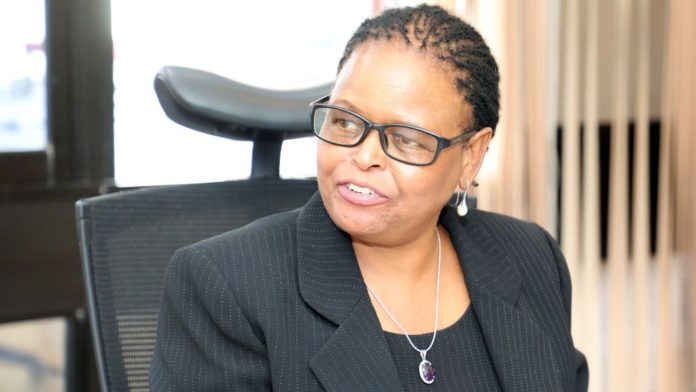
Martha Koome: How Kenya’s female justice overcame the odds

ZAKHEEM RAJAN

Martha Koome is expected to make history in the coming weeks by becoming Kenya’s first female chief justice.

The 61-year-old came top of 10 candidates interviewed in front of live television audience by Kenya’s Judicial Service Commission (JSC).

“This woman is a breath of fresh air. She answers questions the way they have been asked and actually puts her own professional stamp on them,” one person commented on YouTube about her performance.

During her interview she referenced her difficult experience growing up in Meru in rural eastern Kenya in a polygamous family – she was born in 1960, three years before the end of colonial rule.

“I am a villager in the truest sense. My parents were peasant farmers and we were 18 children from two mothers. So, for all of us, especially girls – it was a struggle to overcome the odds.”

And she has overcome more odds to reach chief justice as she was not favourite, with pundits putting their money on Fred Ngatia to be the winning candidate as he had represented President Uhuru Kenyatta in the dispute over the 2017 election.

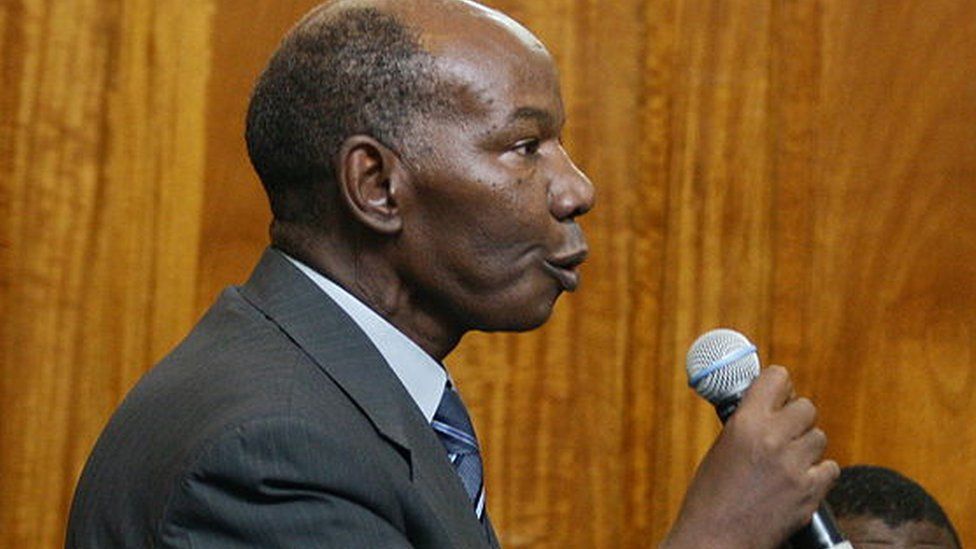
Fred Ngatia in 2013
Fred Ngatia, who has represented the president, was Martha Koome’s main rival

The Supreme Court annulled Mr Kenyatta’s victory in August that year, citing irregularities. A new vote was ordered, which Mr Kenyatta went on to win amid an opposition boycott.

Mr Ngatia may not have wonthe president’s election case, but his fluency and elucidation of legal jurisprudence on the floor of the court at the time earned him top marks in the eyes of Kenyans across the divide.

However Justice Koome was calm, confident and measured during her four-hour grilling – and her record on children and gender rights as well as her role in drafting Kenya’s 2010 constitution, in particular the Bill of Rights, stood out.

She spoke with pride about how the constitution now outlaws gender discrimination unlike the old one which “outrightly discriminated against women”.

“They could not confer citizenship, it allowed customary practices to prevail… such as child marriage, and FGM. We’ve come a long way,” she told the interview panel.

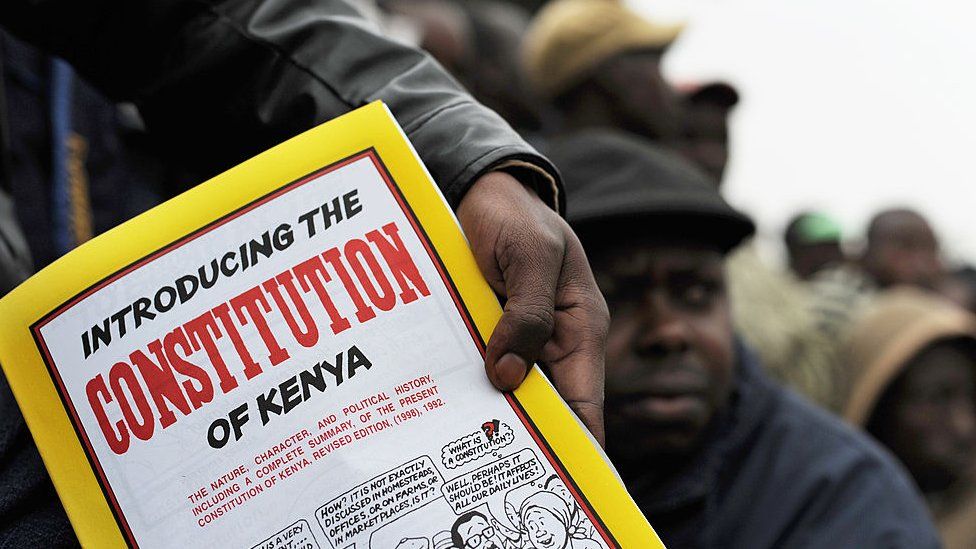
A draft copy of Kenya's constitution - 2010
image caption: Martha Koome helped draft Kenya’s new constitution, which was adopted after a referendum in 2010

Last year, Justice Koome was a runner-up for the UN’s Kenya Person of the Year Award “for her advocacy of the rights of children in the justice system”.

She has also served as a commissioner on the African Union’s Committee on the Rights and Welfare of Children.

‘Firebrand’ reformer

Married with three children, she has an impressive career spanning three decades after graduating in law from University of Nairobi in 1986 – and has earned various other degrees over the years.

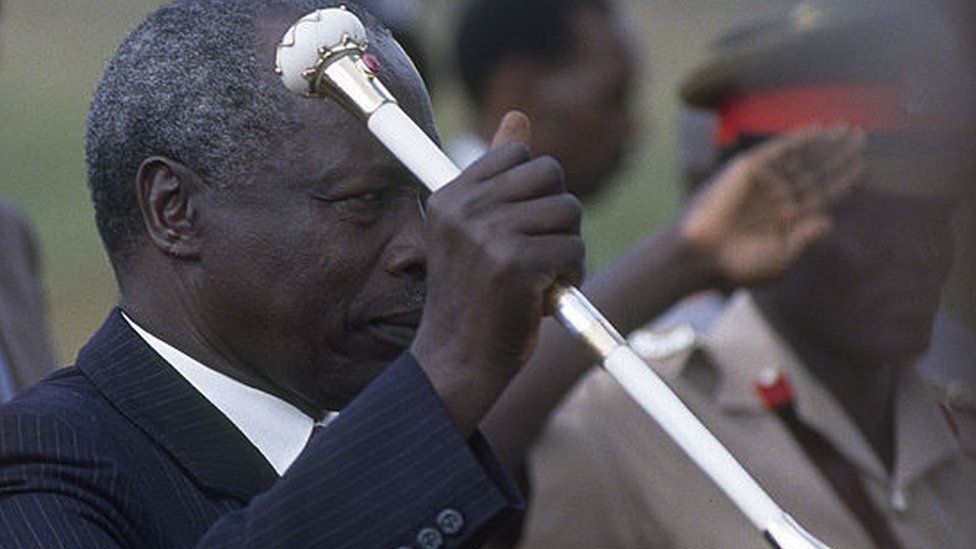
Daniel arap Moi in 1989
image caption: President Daniel arap Moi made Kenya a one-party state in 1982

The graduate started as a legal associate in 1988, before forming her own law firm as managing partner in 1993. During her private practice, she became famous for her defence of human rights, representing political detainees during the regime of President Daniel arap Moi.

She was among the lawyers involved in the clamour in the 1980s to repeal Section 2A of the constitution which made the country a one-party state.

Often her colleagues would not want to represent female clients, so she took on their cases and came to see how difficult to it was to get justice for women in the courts when it came to property rights within marriage and inheritance as the law was “dominated by the patriarchy”.

This spurred her on to seek reforms to ensure the law “took care of families because families are the foundation of society”, Justice Koome said in her interview.

She became what she called “a firebrand” in her activism – and was a founding member of the Federation of Women Lawyers (Fida), which has since become synonymous with pro-bono representation of victims of gender and sexual violence in Kenya.

In 2003, the seasoned lawyer joined the bench when then-President Mwai Kibaki appointed her a High Court judge.

For the next eight years she headed the land and environmental courts as well as the family division in Nairobi.

She also served in satellite courts where she credited herself with clearing a massive backlog of cases at a pace she said had not been done before on the continent.

Promoted to the Court of Appeal in 2012, four years later she applied unsuccessfully to be a Supreme Court judge.

Unflustered

Her biggest challenge during her JSC interview was defending her part in an emergency Court of Appeal hearing on the eve of the election re-run in 2017.

A High Court judge had ruled on a case that day that all returning electoral officers and their deputies had been illegally appointed.

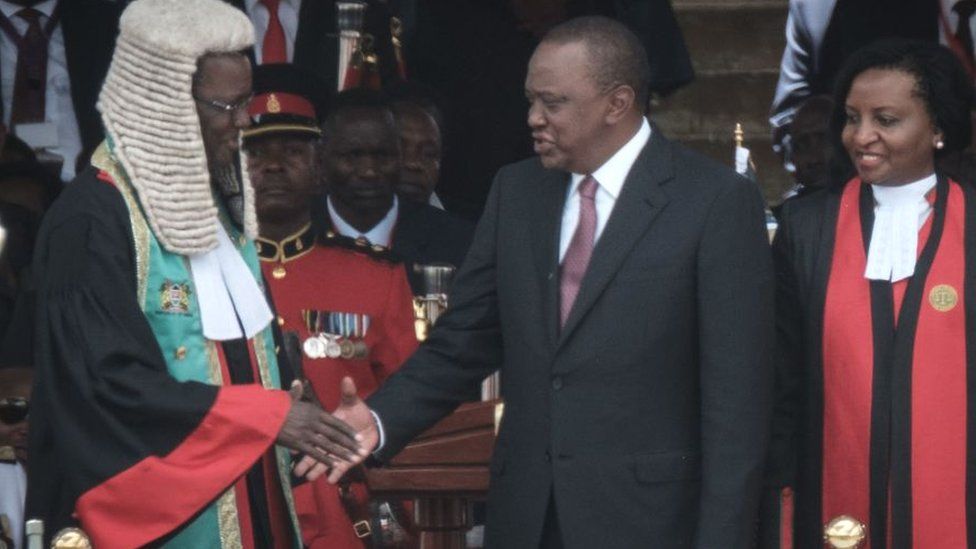
Kenya's President Uhuru Kenyatta (C) shakes hands with Kenyan Chief Justice David Maraga (L) after taking oath of office during the inauguration ceremony at Kasarani Stadium in Nairobi, Kenya - 28 November 2017
image caption: After his inauguration in November 2017 President Kenyatta (C) shook hands with David Maraga (L), who has now retired as chief justice

Justice Koome and two other appellant judges overturned this, allowing the vote to go ahead – an interim order to avert a constitutional crisis, she said.

At issue for the interview panel was the fact that the ruling was made after official working hours and without all parties present – not the decision itself.

An unflustered Justice Koome explained that in extraordinary circumstances of national importance the appeal court could do so – and repeated several times that the Supreme Court had subsequently found there had been no problem with the returning officers and the suit had been null and void from the beginning.

‘Lunch can mend fences’

Martha Koome is set to become the 15th head of Kenya’s highest court since independence.

President Kenyatta has accepted the nomination, and will forward her name to parliament for approval. There are reports that parliament is keen to fast-track her vetting, so Kenya could have its first female Chief Justice much earlier than the 28 days provided for in parliament.

It’s worth noting how swiftly her name was forwarded by President Kenyatta, who refused to swear in 41 judges nominated by the JSC in 2019.

Even a court order declaring his refusal unconstitutional has not made him budge. The president maintains that some of the judges on the list have questionable integrity, although critics wonder whether this is part of his public declaration to “fix” the judiciary after his election was nullified in 2017.

Justice Koome insists she is a good team player – and won’t hesitate to pick up the phone to the president as chief justice to talk things through if need be.

This she believes is the best method for ending confrontation – helped by food.

When asked how she would deal with her fellow Supreme Court judges if there was friction, lunch was her solution.

“Food helps people talk nicely… so we will have a couple of retreats, eating [there] to understand what is the problem.”

Credit:BBC

UN Principles And Financial Autonomy For The Nigerian Judiciary..

John Aku Ambi, Esq,

In November 1985 the United Nations General Assembly endorsed the UN Basic Principles on the Independence of the Judiciary. The principles were formulated to assist Member States of the UN in their task of securing and promoting the independence of their judiciary. Consequently, governments of UN Member States were enjoined to respect these principles and accommodate them in their national laws and practice. Naturally as a Member State of the UN, Nigeria has taken several steps to ensure the independence of its judiciary. The most important of these steps, is the insertion of Section 17(e) into the 1999 Constitution of the Federal Republic of Nigeria (as amended) which guarantees the independence, impartiality and integrity of the Nigerian judiciary.

The on-going strike by the Judiciary Staff Union of Nigeria (JUSUN) has once again brought to the fore the inadequacies of Nigeria’s federalism, which has been characterised by constituent parts’ (the States), non-compliance with constitutional provisions-which often times, are products of Nigeria’s commitment to international conventions, protocols and treaties. Such actions or inactions sadly portray Nigeria as a violator of the international law principle of pacta sunt servanda (a Latin phrase meaning-agreements must be kept)

JUSUN’s strike which commenced on 6th April 2021 is intended to press home their demands for the enforcement of financial autonomy in the judiciary, particularly at the state level. The union is simply demanding that the executive arm of the government henceforth (which in most states is the custodian of all funds generated by and accruable to all arms and tiers of government) credit heads of courts with such funds standing to the credit of the judiciary from the Consolidated Revenue Fund of the states and nothing more. This demand is neither convoluted nor avaricious but premised on the provisions of Section 121(3) of the Constitution and the following judicial decisions which unequivocally confirmed the autonomy of the judiciary in line with the spirit and letters of the 1999 constitution: Judiciary Staff Union of Nigeria Vs National Judicial Council and Governors of The 36 States (Suit No: FHC/CS/667/13), Olisa Agbakoba Vs Federal Government of Nigeria, The National Judicial Council and The National Assembly (Suit No: FHC/CS/63/2013) and Olisa Agbakoba Vs Attorney-General Ekiti State & 2 Others (Suit No: NAD/56/2013)

As a result of these judicial decisions, JUSUN entered into Memorandum of Understanding (MOU) with the relevant stakeholders, where the union obtained assurances of the federal and state governments’ commitment to complying with the judicial pronouncements. While the Federal Government eventually complied, the state governments reneged.

On 20th May 2020, President Muhammadu Buhari signed Executive Order No.10 whose provisions amongst others, provided for the treatment of funds accruable to state judiciaries as first-line charge and requiring such funds to be directly paid to the heads of state courts. The execution of this Order was greeted with a negative reaction by the state governors who described it as unconstitutional. Though not holding brief for the union, it is safe to say that this strike became inevitable as a result of the inability of these judicial and presidential interventions to change the stand of the State Governors.

This industrial action by JUSUN has brought renewed focus on the need for all tiers of governments in Nigeria to keep faith with the UN General Assembly Resolutions 40/32 of September 1985 and 40/146 of 13 December 1985 which places an incumbent duty on all governments and institutions in Nigeria to respect and observe the independence of the judiciary. Member States are equally obligated to provide adequate resources to enable their judiciaries function properly. Needless to say, the absence of adequate resources means an incapacitated and a dependent judiciary. Therefore, the need for a financially autonomous judiciary cannot be overemphasised.

The Nigerian Governors Forum, after series of meetings with relevant stakeholders, offered a self-serving concession which would only see to the monthly payment of certain minimum amounts to the judiciaries for their operations instead of direct allocations which is what the constitution envisages. Thankfully this offer was rejected by the union.

The Nigerian Bar Association (NBA) in consonance with the aims and objects of its constitution which includes the defence of the independence of the judiciary has resoundingly declared its total support for the cause of the union. Consequently, it has directed all branches nationwide to mobilise members and pay visits to state governors in order to press home the demand for the implementation of financial autonomy for the state judiciaries.

Borrowing from the biblical injunction in Mark 12:17 where Jesus Christ, in replying to a hypocritical and mischievous question asked by the Pharisees and Herodians, enjoined them to ‘Give back to Caesar what is Caesar’s and to God what is God’s’; yours truly dares to say that it is high time the Nigerian Governors Forum gave to Caesar what is Caesar’s

John Aku Ambi, Esq, is a legal practitioner resident in Kaduna

‘Follow Me To The Market…’ By Azu Ishiekwene

Azu Ishiekwene

Everyone has their meal of the day, and mine happens to be dinner. Having dinner, for me, is a ritual, but one that has evolved over the years.

Back in the day, I would not dare have dinner without first taking my bath. My mother said it was “unclean” to eat before brushing your teeth in the morning and taking your bath; or to have dinner before taking your bath, as if you had just been rescued from the pits or planned to eat with all parts of your body.

I didn’t understand it but asking Mama too many questions was not the way we were brought up. You just did what you were told as you were told – or risked Mama beating sense into your head.

As I grew older and became more independent, I found my way around Mama’s maze of inexplicable rules. I just followed my heart. That included discarding the maternal canon of bathing before dinner; but believe me, I still keep short hair because she said long hair – my own long hair – had the tendency to grow into my mouth.

As for my dinner habit, that has evolved. After a long, exhausting day at work, water-splashing can wait until I have grabbed something to eat. It’s a sacred thing; dinner is a moment of conversation between my hand and my mouth, a responsive journey of discovery as my strength is renewed. 

At this time, I set aside all distractions – except the self-inflicted one of watching the TV perfunctorily – while everything else waits. That was the moment on Monday when my wife chose to strike, when I was most vulnerable.

I ignored her at first, too lost in my sacred ritual to pay attention or even care. But she repeated it: “You’ll have to follow me to the market next time!”

I sent daggers from the corner of my eyes, but they didn’t deter her. Again, she said that I would follow her to the market next time. Why? 

She said if the country didn’t erupt in protest over astronomically high food prices in the next few days, then nothing would move the country ever again. Not famine, not pestilence, not bad governance. Nothing. 

She was as determined to disrupt my moment of pure culinary ecstasy as I was determined not to be distracted.

“Do you know what is going on with prices out there, I mean in the market?”, she asked again.

“What’s going on?”, I replied absent-mindedly.

Then her stream of questions became a torrent, and the torrent, a dam of JAMB-like question and answer. Mackerel, popularly called Titus fish, that was N800 per kilo only last year is now N2,000; a loaf of bread that was N500 is now N700; a measure of garri has gone from N300 to N500; the price of 50kg bag of rice has risen from N18,000 about two years ago to N30,000; the prices of other grains such as corn, millet and guinea corn have doubled, as have prices of spices and vegetables. One bottle of groundnut has gone from N500 to N700.

She was making digestion a bit difficult for me, but somehow, I managed to continue hearing her without listening. 

Then she told me that at the market, after exhausting the money she took from home, she sat down at a shed and began to add up everything she had bought on the suspicion that she may have been swindled. 

She added and subtracted and added and subtracted and multiplied but kept getting the same total. Nothing was missing. Her money was spent. If she wanted to buy anything more, she would need to use the ATM or POS or whatever. But that’s it. She was spent – and so was her money.

But knowing she had told me this kind of story over and over in the past and I didn’t pay attention, she made up her mind this time that only a spousal rebellion would get my attention: she is happy to go to the market any day, but I would follow her and pay as she shops!

At this point, she got my attention. Not in form of compliance yet, but by way of explanation. I was getting to the end of my dinner and could now think and see more clearly. I explained that what is happening in the market is not an accident. Inflation doesn’t just happen; it doesn’t come without notice. 

Often, it’s the invited guest of poor monetary and fiscal management, among other things. If money supply is too far ahead of the ability of producers to keep up with the supply of goods and services, inflation sets in, although at different degrees on different price fronts. 

But in the market, this English does not substitute the price of fish. Nor will it quell domestic rebellion. But here is what has happened. An agrarian economy like ours is particularly vulnerable to price inflation. When the farms are hit, everything goes haywire. 

In the last couple of years, farming has been a particularly risky venture because of rising insecurity and deadly conflicts between farmers and herders. Only on Monday, for example, the press reported that 50,000 farmers in 13 villages in Nasarawa State had been displaced by herdsmen some of who also complained that Boko Haram had displaced them and rustled their cows. 

The International Crisis Group reported that since January 2018 when country-wide violence escalated, 300,000 people have fled their homes. If you add that to the disruption by the COVID-19 pandemic and the radical escalation of violence this year that has left scores dead, then you’ll begin to understand why one finger of bell pepper which sold for N200 last year has nearly doubled.

And, while food prices have risen, wages and salaries have remained stagnant or have been significantly cut down in a number of cases, again following the impact of the pandemic. The remnant of a fragile middle class is now buried under a deluge of desperate text messages for help with assorted account numbers attached.

As my wife raged about prices gone out of control, I wondered what Marie Antionette, the wife of Louis the XVI, infamously maligned for stoking the French revolution would have done if she were alive today and a Nigerian queen. 

On the verge of the French Revolution when prices were out of control, Antionette was mischaracterised as telling the French to eat cake, if they couldn’t afford bread. With prices of flour and baking powder beyond reach, Antionette might have advised Nigerians, a very religious lot, to eat prayers.

But it’s not funny. Not a laughing matter at all, except if you work in Aso Rock where the food budget was steady at roughly N150m in 2019 and 2020, and is up by about 30 percent (N195m) this year or in any of the 36 state government houses where appropriation for food has defied inflation.

The whole point of Monday’s disruptive dinner table conversation was to get me to pay more for food. I had hoped that my clever economics would buy me an escape route, a reprieve. But it didn’t work. Nor did my subsequent attempt to improvise another topic by sweeping the matter under the rug. 

I’m not sure I’m prepared to follow anyone to the market yet; not even if they invented #FollowMeToTheMarket. I might as well accept an invitation to my own funeral. Right now, I’m quite busy – watching market forces, keenly aware that in domestic affairs, what goes up stays up. 

Ishiekwene is the Editor-In-Chief of LEADERSHIP

They are angry, we are angry, who is thinking?

By Leonard Karshima Shilgba

When they attack those we consider “innocent”, we get angry. They (who attack) are angry too; but why?
When they kidnap people from whom they assume ransom can be forced, we are angry. Why do they attack?
When our farmers are attacked, killed or wounded, we get angry. But why do they attack?

We call them “terrorists”, but what accounts for this transformation, or were they born so? If this is a transformation, not congenital, who are the artists, the architects, and the general craftsmen?
Why do they attack our institutions: the prisons, the traditional security agencies, the legislative buildings, religious centres, our schools and universities, etc? Can we decode their coded message?
Why don’t we seek to learn their language; why do we seem unable to learn; why are we not thinking?

Why do we assume there can be external help at no price? Why do we act like the price can be afforded; why do we seem to prefer a “cure” that shall worsen the disease? Why do we assume the profiteers are not the saboteurs?
Why can’t we acknowledge that it is time for the troubled nation to hold a family meeting?
Is it not time for a sovereign national conference?

They want to break out, we want to break out too. They accuse us, we accuse them too. They are angry, we are angry too. Then, let us sit down and talk frankly, openly, and unconditionally. But to talk profitably is to first think deeply and soundly. Can we start thinking?
Are you afraid of talking? Are you afraid of losing some? Would you lose all then? That is the fate if you lose faith in me. I own this troubled nation as much as you do. If you don’t trust me, why should I trust you?

The centre is giving way; the boundaries can’t hold either. If we can’t fix the national ailment, we can’t fix the sectional ones either. There is no help from the US AFRICOM. The big man of the troubled nation should desist. His Macedonian call is fraught with secondary crises.
INEC is only doing its duty; it has proposed a timetable for the ritual. But the ritual for 2023 should not be the priority for the troubled nation. We must talk first. The legislature must work for this, prepare the legislative framework for a Sovereign National Conference (SNC) instead of calling for some nebulous “Emergency” in Nigeria’s security processes.

Let us start thinking. Let us start the serious talk to rescue the troubled nation.
We are all angry, but are we thinking?

© Shilgba

Photo Credit: The Guardian Nigeria

Foundation on drive for I,500 Nigerians to sign petition against release of Baba Ijesha

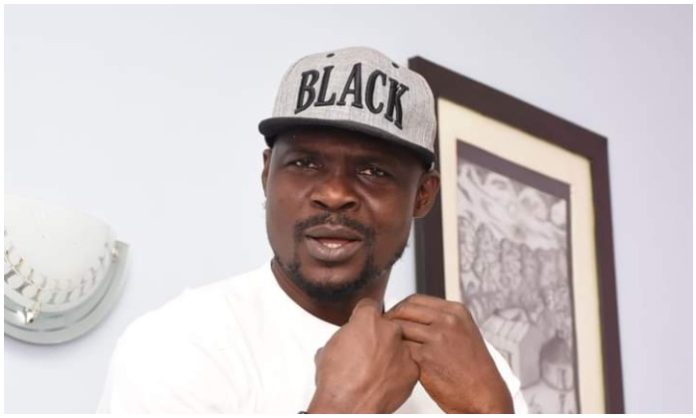
Aunt Landa Bethel Foundation is in the driver’s seat mobilising Nigerians to sign up a petition to the authorities against the planned release of embattled actor, Olanrewaju James a.k.a Baba Ijesha, from detention.

The Foundation is targeting 1,500 signatories, but has, so far, according to reports, collected 1,200. The petition is doing the round on the social media.

Baba Ijesha, was arrested last week, after he was reported by the foster mother of a teenager, popular comedienne, Princess, that he molested the girl when she was seven years old.

Consequently upon his arrest last Tuesday, the Police Public Relations Officer in the state, Muyiwa Adejobi, said there was considerable evidence against the actor as he was caught in the act on Closed Circuit Television, CCTV.

In a twist of narrative, a senior police officer said that the actor might be released on Friday. (April 30, 2021)

The source said the move was due to the ongoing strike by members of the Judicial Staff Union of Nigeria, fircinh the courts to shut down.

He said the suspect could not be detained ad infinitum without trial as it was against the provisions of the Constitution.

The petition drafted by the Aunt Landa’s Bethel Foundation, on behalf of the teenager’s foster mother, Princess, has urged 1,500 Nigerians to sign against the release of the Yoruba actor, Baba Ijesha.

Dr Yolanda N George-David, who signed the petition, said it was embarrassing to know the Nigeria Police Force were trying to grant the actor bail.

Read her: “We seek full justice for the young child. It is embarrassing to know Nigeria Police Force are trying to grant Olanrewaju James Omiyinka bail today at Panti Police station, Lagos state, Nigeria.

“I want to remind the Nigeria Police Force that Section 218 of the Criminal Code Act provides that any person who has unlawful carnal knowledge of a girl under the age of thirteen is guilty of a felony and is liable to imprisonment for life with or without caning.

:This law should be excise and thorough investigation is required with evidence already been submitted by the child guidance.” (theconclaveng)

Senate issues summonses on Monguno, Zainab, another over N7.5bn withdrawal from treasury

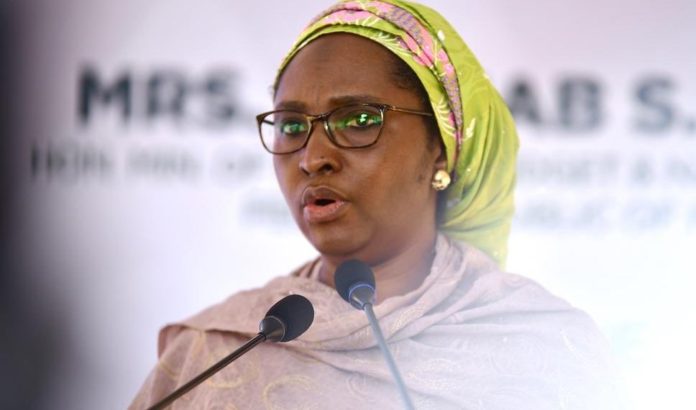
Minister of Finance Budget and National Planning Zainab Ahmed.

The Senate on Wednesday summoned the National Security Adviser, Babagana Monguno, Finance Minister Zainab Ahmed, and Accountant General of the Federation, Ahmed Idris, to appear by next Tuesday.

The Senate wants them to speak on secret withdrawal of N7.5billion from the treasury.

The money is two percent of the National Automotive Council Design and Development Council (NADDC) levy account domiciled with the Central Bank of Nigeria (CBN).

NADDC Director General, Jelani Tukur said the agency had written to Ahmed and Idris for clarifications.

He mentioned the withdrawal of N3.7billion as loan to NAFCON, withdrawal of N3.8billion for security personnel car loan scheme, and another withdrawal of N2.3billion as loan to Steyrs Nigeria Limited.

The DG said a letter of reminder was sent to Niger Insurance Plc on the agreement reached on July 9th 2020 as ordered by the committee.

Tukur disclosed that letters were written to the Minister and the Accountant General on April 23 April, 2021.

Chairman, Committee on Public Accounts, Senator Matthew Urhoghide insisted that all parties involved in the withdrawal must appear.

“They should bring evidence of the approval when they are coming on Tuesday.

“The money must be returned otherwise, the committee will take a drastic action on the issue,” Urhoghide said. (Theconclaveng)

CBN queries First Bank for change in management without approval

The Central Bank of Nigeria (CBN) has queried the Board of the First Bank of Nigeria Plc for removing Dr Adesola Adeduntan, the Managing Director/Chief Executive Officer, without regulatory approval.

The query is contained in a letter dated April 28, 2021 signed by the CBN Director, Banking Supervision, Mr Haruna Mustafa, and obtained by the News Agency of Nigeria (NAN).

The letter was addressed to the bank’s Chairman, Mrs Ibukun Awosika.
Mustafa said that the action was taken without due consultations with the regulatory authorities, especially given the systemic importance of the commercial bank.
He noted that the tenure of Adeduntan has yet to expire.

“The CBN was not made aware of any report from the board indicting the managing director of any wrongdoing or misconduct; there appears to be no apparent justification for the precipitate removal.

“We are particularly concerned because the action is coming at a time the CBN has provided various regulatory forbearances and liquidity support to reposition the bank, which has enhanced its asset quality, capital adequacy and liquidity ratios amongst other prudential indicators.

“It is also curious to observe that the sudden removal of the MD/CEO was done about eight months to the expiration of his second tenure which is due on Dec.  31, 2021,” he added.

Mustafa noted that the removal of a sitting MD/CEO of a systemically important bank was not good.

“The removal of a sitting MD/CEO of a systemically important bank that has been under regulatory forbearance for five to six years without prior consultation and justifiable basis has dire implications for the bank and also portends significant risks to the stability of the financial system.

“In light of the foregoing, you are required to explain why disciplinary action should not be taken against the board for hastily removing the MD/CEO and failing to give prior notice to the CBN before announcing the management change in the media.

“In the meantime, you are directed to desist forthwith from making any further public/media comments on the matter. Your comprehensive response on the foregoing should reach the Director, Banking Supervision Department, on or before 5p.m. on April 29, 2021,” he said.

NAN reports that First Bank on Wednesday announced the appointment of Mr Gbenga Shobo as the new Managing Director and Chief Executive Director.
Awosika said that the appointment was subject to all regulatory approvals.
She said that Shobo succeeds Adeduntan who would be leaving the bank in accordance with the bank’s term limit for its chief executive after successfully leading the bank since January 2016.
These decisions will take effect from today, April 28, 2021,” Awosika said.

“We are proud to announce Gbenga Shobo as our new Managing Director/Chief Executive Officer.

“His appointment has proven our resilience of our succession planning mechanisms and the value we place on our long-standing corporate governance practices, which underpin the institution’s enduring sustainability and 127-year legacy.

“Shobo has had a successful career in the bank and elsewhere culminating in his appointment as the deputy managing director in 2016 prior to his appointment as the managing director.

“The board is confident that Shobo has the experience and the understanding of the bank and the know-how to lead the bank through this next phase of growth, which is focused on positioning First Bank as the preeminent bank in our chosen market, delivering value to our stakeholders,” she added.

Awosika said that the bank also appointed Mr Abdullahi Ibrahim as the Deputy Managing  Director.

According to her, Mr Ini Ebong, Mr Segun Alebiosu, Mr Seyi Oyefeso and Mrs Bashirat Odunewu were also appointed as executive directors.

She noted that these decisions were subject to all regulatory approvals. (NAN)

JUSUN STRIKE AND GOVERNORS’ LAWLESSNESS

By Sonnie Ekwowusi

It is a pity that over the years Nigeria has been moving in a concentric circle with little or no progress. Same vomit. Same faultlines. Same road travelled. Same judiciary workers’ strike. Same disobedient of court orders by State governors. Same injustices. Same woeful stories. Same everything. Nothing has changed. Who would have thought six years ago that the judiciary workers would be staging another strike in 2021 to press home their demand that State governors should obey constitutional provisions and court judgments and grant financial autonomy to the judiciary? But that is the reality unfolding before our eyes today. The ongoing indefinite nationwide strike of the Judiciary workers of Nigeria under the aegis of the Judiciary Staff Union of Nigeria (JUSUN) results from the stiff-necked and stubborn refusal of State governors to obey the constitutional provisions and court judgments granting financial autonomy to the judiciary at both the state and federal levels. In essence, the ongoing judiciary workers’ strike is a strike against governors’ lawlessness.

Why the same vomit year after year? You will recall that in 2013 both JUSUN and Dr. Olisa Agbakoba SAN had, in their respective suits, dragged the federal government, state governments and others to court over the non-affirmation of the constitutional provisions on fiscal autonomy for the judiciary both at the federal and state levels in pursuant to sections 81(3), 161 (9) and 121(3) of the 1999 Constitution, In their respective considered judgments, the courts ruled in favour of both JUSUN and Agbakoba, to wit, that the federal and States governments should obey the constitutional provisions and grant financial autonomy to the judiciary. Specifically in its judgment in the suit filed by JUSUN, Justice Adeniyi Ademola had on January 13, 2014 held that the provisions of Sections 83(1), 121(3) and 162(9) of the Constitution remained sacrosanct, unassailable and unambiguous and therefore both the federal and State governments should comply with the aforesaid sections of the Constitution. In fact Justice Ademola said in that judgment: “The Attorney General of the Federation and the states should act responsibly and promptly to avoid constitutional crisis in this country, by ensuring financial autonomy for the judiciary… having regard to the provisions of sections 81(3), 84(2) (3) (4) (7), 121(3) and 162(9) of the Constitution “funds/amount standing to the credit of the judiciary in the Federation Account/Consolidated Revenue Fund of the federal and states shall be paid directly to the heads of courts concerned.”

Similarly, in its judgment in one of the law suits filed by Olisa Agbakoba SAN, the court held that by virtue of section 81(2) and Section 84 (1), (2), (3), (4) and 7 of the Constitution the remuneration, salaries, allowances and recurrent expenditures of the judiciary being constitutionally guaranteed charges (or “ First Charge”) on the Consolidated Revenue Fund of the Federation does not form part of the estimates to be included in the Appropriation Bill. The court also held that by virtue of the constitutional guarantee of independent funding of the judiciary under Section 81(1), (2) and (3) (C) and Section 84 (2),(3), (4) and (7) of the Constitution, the National Judicial Council (NJC) ought not to send its annual budget estimates to the Budget Office of the executive arm of government or any other executive authority but to send the estimates directly to the National Assembly for appropriation. The court also held that in order to avoid underfunding of the judiciary, poor and inadequate judicial infrastructure, low morale among judicial personnel, corruption in the judiciary, delays in the administration of justice and judicial services delivery and generally low quality and poor output by the judiciary, any amount standing to the credit of the judiciary in the Consolidated Revenue Fund of the Federation ought not to be released to the judiciary in warrants or other means or through the Federal Ministry of Finance, the Budget Office or the Office of the Accountant General of the Federation or any other person or authority in the executive arm but should be paid directly to the National Judicial Council (NJC) for disbursement to the judiciary.

.Expectedly, the State governors have till date refused to obey the aforesaid court orders. In his effort to ensure the implementation of the financial autonomy for the judiciary, President Buhari, in exercise of his power under section 5 of the Constitution which includes affirming the enforcement of the court aforesaid orders on autonomy for the judiciary, had in March 2019 set up the Presidential Implementation Committee on Autonomy of the State Legislature and State Judiciary.. Sequel to the recommendations of the committee President Buhari had on May 20 2020 issued an Executive Order 10 on the implementation of financial autonomy of the state legislature and state judiciary. But in kicking against the Order 10, State governors are accusing the federal government of shirking its constitutional responsibilities to the judiciary and leaving only the State governments to shoulder huge capital and recurrent expenditures on the judiciary which in their view, is a big drain on their finances. Consequently JUSUN had on April 6 2021 embarked on another nationwide strike to press home for financial autonomy for the State judiciary.

The State governors should obey the Constitution and the court orders against them. Fragrant disobedience to court orders is a recipe for anarchy. State governors should be reminded that the judiciary is not an appendage of State governments: it is a veritable third arm of government charged with the gravest responsibility of dispensation of justice. So the rule of law ought to reign supreme above any capricious and arbitrary exercise of governors’ powers. The paradox is that some of these governors now rubbing shoulders with the judiciary became governors through liberal court judgments. Those whose palm kernels have been cracked for them by a benevolent spirit should not forget to be humble. At the time of writing, the court gates were still locked. Sad. The closure of courts is tantamount to closure of justice. But justice cannot be in limbo otherwise there would be reign of anarchy and mayhem in the country. With the courts completely shut down, many aggrieved persons might resort to violence, intimidations, extra-judicial killings or other nasty forms of self-help in the settlement of their civil disputes. Most cases pending in courts especially the cases of awaiting-trial-inmates and suspects in police custody are stalled.

Having said this, JUSUN should learn to sheath the sword. Agreed, strike is a legitimate weapon of collective bargaining. However, JUSUN should be reminded that the use of this weapon each time there is a breakdown in dialogue between JUSUN and the government is unacceptable. Continuous dialogue that does not disrupt court activities is the bedrock of successful trade unionism. This is because dialogue creates the enabling environment for the settlement of disputes no matter how intractable such disputes might appear to be. By embarking on a series of strikes over the years, JUSUN has succeeded in denying litigants including JUSUN members access to justice in our courts. Justice delayed is justice denied. On the other hand, State governors should learn to obey court orders. Any society bereft of the Rule of Law is heading for anarchy. Closure of the country’s courts is an invitation to chaos, disorder, anarchy and doom.

Some lucky Greenfield University students narrate how they escaped being kidnapped

Some of the students of Greenfield University Kaduna, who escaped being abducted by bandits during an invasion of the institution on April 21, have narrated how they escaped being kidnapped

They spoke at the funeral of Dorathy Yohanna, who was abducted but later killed by the kidnappers.

A 200-level International Relations student, Jesse Jakiri, at the funeral, which held at the ECWA Goodnews Church, Narayi High Cost, Kaduna said: “We hid ourselves on top of the wardrobe of our hostel to avoid being kidnapped when the bandits stormed our school.”

Jakiri said the attack was traumatic for students and the university community.

According to him: “The bandits shot sporadically to the air and went from one room to the other in search of students to carry away.

“Around 8:30pm, we were in the hostel when we heard gunshots. We then came out to see what was happening only for us to see our porter dragging (struggling for control of) the door with the bandits.

“That was when they shot him on the leg and they followed him inside and shot him again on the chest.

“We rushed into our rooms, locked the door and climbed the wardrobe to hide ourselves.

“Meanwhile, there was this door that many students ran into; unfortunately, it was the door the bandits attacked.

“They broke the door and picked some students.

“After the incident, we came out when we heard soldiers came in to our rescue. It was then we discovered that they broke into the girls’ hostel and went away with all the girls. They would have gone with all of us too.”

Lemuel Adamu, a 200 level student of Cyber Security, who also escaped the attack, said he and three of his friends had to hide inside the wardrobe for almost an hour before they came out.

He said: “The bandits came knocking on our door and asked us to open the door but we maintained silence and hid inside the wardrobe, three of us. After some persistence, they went away.”

Ge said the bandits operated for between 45 minutes and one hour before the military came to the rescue.

The kidnappers have resorted to killing the kidnapped students in installments.

They killed three in the first instance, including Dorathy, whose funeral ceremony the students attended, followed by another two.

They have threatened to kill more if ransom was not paid. They had demanded the School authorities to pay a ransom of N800 million for the release of the kidnapped students.

Credit:theconclaveng

TIPS