Home Blog Page 959

Man defiles own underage daughters

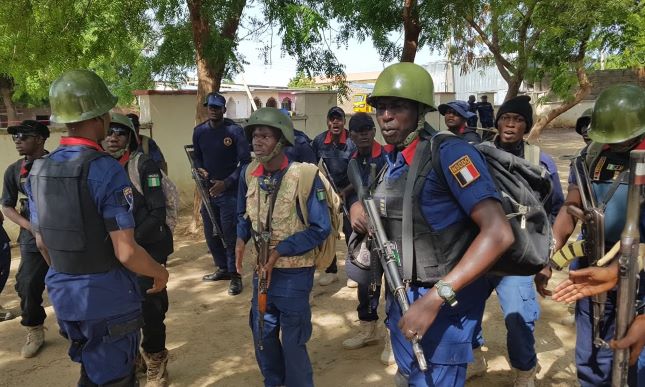
The Nigeria Security and Civil Defence Corps (NSCDC) in Anambra has presented a 48-year old plumber, Thomas Igbo, for allegedly raping his three underage daughters.

The ages of the three defiled children are eight years, three years, and one and a half years.

Mr David Bille, the commandant of the corps, in the state equally presented one Solomon Isaac for jumping into the NSCDC premises at the night hours.

Bille told journalists on Thursday in Awka that some civil society opetatives on May 25, reported that Igbo was defiling his three underage daughters.

“When we got the report, we arrested one Thomas Igbo, a plumber, residing in Enugwu-Ukwu town in Njikoka area of the state.

“Our medical professionals later conducted test and uncovered that the children were been abused sexually.

“The suspect confessed to the crime and very soon, we will conclude investigation and arraign the suspect”, Billie said.

He said that he only had carnal knowledge of the eight year-old daughter once and used his fingers to penetrate others at different times.

“I had sex once with my eight years old daughter; others I only used my fingers to penetrate their private parts when I am bathing them,” he said.

Igbo, from Ikoloani Igboetiti area of Enugu State, claimed that he was under the influence of alcohol the day he slept with the daughter.

On the case of 28-year old Solomon Isaac, Billie said he was arrested for jumping in the premises of NSCDC
state headquarters, Awka on May 24.

But Isaac, a native of Ejuleala Ofulg area of Kogi, claimed he was being pursued by cultists about 8 p.m. on the day he was arrested, saying: “I jumped into the place for safety.”

Mrs Laura Ugwuanyi, the state Coordinator of National Human Right Commission, who was at NSCDC office during the presentation of the suspects, expressed worry over the upsurge in rape cases in the state in recent times.

She advised residents to always report such ills whenever they got to know about as a way of fighting the menace.(NAN)

When “Executive Immunity” Shields Liars in Government, By Reuben Buhari

On May 18, 2021, Governor El-rufai said a report from Barau Dikko Teaching Hospital disclosed that some identified nurses disconnected the oxygen supply of a two-day-old baby on Monday, 17th May, 2021. He added that the names of the three nurses from the Special Care Unit have been forwarded to the Kaduna Ministry of Justice to “initiate prosecution for attempted murder or even murder if we lose the child,” said the governor, through a statement.

Two days later, the National Association of Nigerian Nurses and Midwives said it was a lie. They added that the nurses even helped by pleading with the generator technician not to switch off the light because of the child. The father and the mother of the child also countered the Governor, adding that the nurses, rather, helped them.

Was it a deliberate and calculated lie from El-rufai meant to discredit the NLC strike? I think so. But El-rufai has been telling terrible and barefaced lies for years.

Some few examples;

1. In June 2012 he told the BBC that President Jonathan sponsored Boko Haram to cover up his corruption.

2. On January 5, 2014, he alleged that he and some people were on the list of people to be killed by the Jonathan government. He even said he was number 7 on the list.

3. On September 8, 2014, he alleged that Jonathan funded Boko Haram with N50 billion.

4. On October 1st 2015, Governor El-rufai tweeted that the Jonathan administration spent 64 billion naira for the Independence Day celebration for five years. It was found out to be a lie when the Buhari-led FG, through the Office of the Secretary-General of the Federation (OSGF), in a letter dated October 12, 2015, showed that the Jonathan administration spent only N333, 600, 000 for four years for Independence Day celebrations. That no fund was even spent in 2011, the year El-rufai said that N13 billion was spent.

Fast forward: El-rufai has made various lies since becoming Governor, mostly against the Southern Kaduna people through several interviews on channels TV. The most recent was;

5. On the 9th of February, 2017, when he appeared on a Channels TV programme and alleged that church leaders in Southern Kaduna were fueling the crisis because they are getting foreign dollars to bury their members and rebuild thousands of burnt churches.

6. On August 17, 2020, the governor, during a Channels TV programme (Sunday Special), alleged that Southern Kaduna people were the ones organizing the killings of their people so that they would be called and given money.

Contrary to the executive immunity that El-rufai enjoys, I have a list of several individuals that have been arrested and locked up since El-rufai became governor of Kaduna state, on allegations of telling lies. I am just wondering what would have happened to El-rufai in a society that operates on rule of law and where morality is institutionalised. Lastly, the least Gov el-rufai could do now is to apologise to the Nurses in Kaduna state for lying against three of their members.

▪︎Buhari is a journalist and former SSA media to late Governor Yakowa of Kaduna State

How to Report and Discipline Police Officers.

How to Report and Discipline Police Officers.  Daily Law Tips (Tip 797) by Onyekachi Umah, Esq., LL.M, ACIArb(UK)

Introduction:

According to Transparency International (a global coalition against corruption), Nigeria is rated 149 out of 180 countries on the 2020 Corruption Perceptions Index, with the least being New Zealand and the worst being Somalia at position 179. Its Global Corruption Barometer reports that 44% of public service users in Nigeria paid a bribe in the last 12 months, since 2019. The Police Corruption Perceptions Index ranked Nigeria Police Force as having 7.83 corruption on a scale of 10, with Danish Police having 1.86 and Finland 2.04. 

In a publication of The Global Anticorruption Blog, Marvellous Iheukwumere, reported that; “Nigeria has a serious problem with police corruption, at all levels. At the top, senior police officials embezzle staggering sums of public funds. To take just one example, in 2012, the former Inspector General of Police, Sunday Ehindero, faced trial for embezzling 16 million Naira (approximately US$44,422). Meanwhile, at the lower levels, rank-and-file police officers regularly extort money from the public, and crime victims must pay bribes before the police will handle their cases.” 

Whether or not anyone agrees with the above data and trusts their owners, the Nigeria Police Force has corrupt officers and has been reprimanded several times by courts in Nigeria. The recent protests (#EndSARS) across Nigeria, for the disbandment of a department of the Nigeria Police Force, known as Special Anti-Robbery Squad (SARS), is a validation of level of corruption and indiscipline in the Nigeria Police Force. There is corruption and indiscipline in every arm of government and institution in Nigeria, including; the judiciary, institutions of higher learning and religious centers. Well, this work reveals how a corrupt or unprofessional police officer can be reported and disciplined according to the federal law that regulates Nigeria Police Force (the Nigeria Police Act, 2020).

Reporting Police Officers for Misconducts: 

Nigerians and foreigners in Nigeria are to be protected by the Nigeria Police Force, with the tax payers’ fund. Statutorily, the Nigeria Police Force is to protect lives and properties for free, since the police is funded by government. In reality, many persons in Nigeria have been forced to pay for police services or rather extorted by officers of the Nigeria Police Force. Instead of protecting lives and properties, many lives have been lost and properties damaged by some officers of the Nigeria Police Force and other law enforcement agencies. 

This work categories all ill-mannered police officers and their conducts as misconduct, to stay in tune with the diction of the Nigeria Police Act. This covers corruptions, torture, extortion and all other crimes perpetrated or believed to have been perpetrated by a police officer. Since no man-made system is perfect, the law-makers in drafting the extant Police law (the Nigeria Police Act, 2020), also made room for the reporting, investigation and discipline of unprofessional police officers for their misconducts. 

By section 131 of the Nigeria Police Act, the Inspector General of Police (the highest police officer in Nigeria and head of the police) is to create a Police Complaints Response Unit at the headquarters of the Nigeria Police Force. He is to also have the in every Police Command in each state in Nigeria and in the Federal Capital Territory. The Police Complaints Response Unit is to be under the Public Relations Section of the Nigeria Police Force. 

The Police Complaints Response Unit is to receive complaints or information on the misconducts of police officers, from the general public and from police officers too. The complaints may include; misconducts of police officers that resulted to death or grievous body injury of any person or a violation of human rights of any person. Complaints may also show that a police officer may have committed a criminal offence or be engaged in any form of professional misconduct. So, any complaint against a Police Officer in any part of Nigeria, should be sent to the Police Complaints Response Unit in the headquarters of police or in the nearest Police Command. 

Investigating Complaints of Misconducts Against Police Officers: 

The Police Complaints Response Unit is to investigate every complaint received from any person, against a police officer. During investigations of the Police Complaints Response Unit, the police officer that has a complaint against him, should be allowed to defend himself. The Police Complaints Response Unit is by law to complete its investigation within 21 days from the day that the complaint was made. 

At the completion of an investigation, the Police Complaints Response Unit is to forward its report and recommendations to the Inspector General of Police or the Commission of Police in the State, through the Force Public Relations Officer or the Public Relations Officer in the State or in the Federal Capital Territory, respectively. 

The Inspector General of Police or the Commission of Police in the State, upon receiving the investigation report and recommendations, is to send a copy of them to the appropriate disciplinary authority, to discipline the concerned police officer, where the police officer is found to have violated the Nigeria Police Act or its regulations. Where a false complaint if made against a police officer, the complainant will be prosecuted.

Conclusion: 

Aside prosecuting a police officer for misconduct in a court of law, a police officer can be reported to the Police Complaints Response Unit of the Nigeria Police Force. The Police Complaints Response Unit has a statutory duty to accept and investigate every complaint made against a Police Officer in any part of Nigeria. The Police Complaints Response Unit is to complete its investigation within 21 days from the date a complaint is received. 

The Police Complaints Response Unit is located in the headquarters of the Nigeria Police Force in Abuja, and also in all the States in Nigeria and the Federal Capital Territory. The Police Complaints Response Unit and its investigations does not affect the rights of any person to approach a court of law or the National Human Rights Commission to seek legal remedies against a police officer. 

In the Nigerian court system where there is perpetual and enormous delay, engaging the Police Complaints Response Unit may be a good alternative or complement. At this time, when the Nigerian courts have been closed for eight weeks, due to failure of the State Executive Governments to grant financial autonomy to courts, the Police Complaints Response Unit should be fully utilized. 

My authorities, are:

  1. Sections 1, 2, 3, 14, 16, 17, 33 to 45, 214, 215, 216, 318 and 319 of the Constitution of the Federal Republic of Nigeria, 1999.
  2. Sections 1, 2, 3, 4, 5, 31, 90, 96, 131, 132, 133, 134 of the Nigeria Police Act, 2020.
  3. Sections 2, 7, 8, 13 and 14 of the Anti-Torture Act, 2017. 
  4. Police Corruption Perceptions Index <https://www.indexmundi.com/surveys/results/1> accessed 25 May 2021
  5. Corruption Perceptions Index <https://www.transparency.org/en/cpi/2020/index/nga#> accessed 25 May 2021
  6. Marvellous Iheukwumere,, “Fighting Police Corruption in Nigeria: An Agenda for Comprehensive Reform” (GAB, 6 September 2019) <https://globalanticorruptionblog.com/2019/09/06/fighting-police-corruption-in-nigeria-an-agenda-for-comprehensive-reform/> accessed 25 May 2021.
  7. Onyekachi Umah, “Warrant of Arrest: Contents and Issuance” (LearnNigerianLaws.com, 19 April 2021) <https://learnnigerianlaws.com/warrant-of-arrest-contents-and-issuance/> accessed 25 May 2021.
  8. Onyekachi Umah, “12 Situations Where Police Officers Can Arrest Without Warrant” (LearnNigerianLaws.com, 18 June 2019) <https://learnnigerianlaws.com/12-situations-where-police-officers-can-arrest-without-warrant/> accessed 25 May 2021.
  9. Onyekachi Umah, “An Ordinary Person Can Arrest A Criminal Suspect Even Without A Warrant In Nigeria” (LearnNigerianLaws.com, 17 July 2018) <https://learnnigerianlaws.com/an-ordinary-person-can-arrest-a-criminal-suspect-even-without-a-warrant-in-nigeria/> accessed 25 May 2021.
  10. Onyekachi Umah, “When Can Police Search A House Without A Warrant” (LearnNigerianLaw.com, 11 March 2019) <https://learnnigerianlaws.com/when-can-police-search-a-house-without-a-warrant/> accessed 25 May 2021.
  11. Onyekachi Umah, “The Right Of Police To Break/Damage Any House In Search Of Suspects Even Without Warrant To Search” (LearnNigerianLaws.com, 18 February 2019) <https://learnnigerianlaws.com/the-right-of-police-to-break-damage-any-house-in-search-of-suspects-even-without-warrant-to-search/> accessed 25 May 2021.
  12. Onyekachi Umah, “Contents of Police Monthly Reports To Magistrates” (LearnNigerianLaws.com, 17 November 2020) <https://learnnigerianlaws.com/contents-of-police-monthly-reports-to-magistrates/> accessed 25 May 2021.
  13. Onyekachi Umah, “Qualifications for an Inspector General of Police” (LearnNigerianLaws.com, 4 February 2021) <https://learnnigerianlaws.com/qualifications-for-an-inspector-general-of-police/> accessed 25 May 2021.
  14. Onyekachi Umah, “Can the Appointment of an Inspector General of Police be Extended?” (LearnNigerianLaws.com, 2 February 2021) <https://learnnigerianlaws.com/can-the-appointment-of-an-inspector-general-of-police-be-extended/> accessed 19 April 2021.
  15. Chris Admin, “Onyekachi Umah Speaks To ChannelsTv On SARS & The New Police Act” (LearnNigerianLaws.com, 9 November 2020) <https://learnnigerianlaws.com/onyekachi-umah-speaks-to-channelstv-on-sars-the-new-police-act/> accessed 25 May 2021.
  16. Onyekachi Umah, “Minimum Information That Must Be In Database Of All Arrested Persons At Federal And State Levels In Nigeria” (LearnNigerianLaws.com, 16 September 2019) <https://learnnigerianlaws.com/minimum-information-that-must-be-in-database-of-all-arrested-persons-at-federal-and-state-levels-in-nigeria-daily-law-tips-tip-415-by-onyekachi-umah-esq-llm-aciarb-uk > accessed 25 May 2021.
  17. Onyekachi Umah, “Head of a Police Station Must Make Monthly Report of Arrests to a Magistrate” (LearnNigerianLaws.com, 24 August 2020) <https://learnnigerianlaws.com/head-of-police-station-must-make-monthly-report-of-arrests/ > accessed 25 May 2021. 
  18. Onyekachi Umah, “Police Stations Now Have Supervising Magistrates” (LearnNigerianLaws.com, 9 October 2020) <https://learnnigerianlaws.com/police-stations-now-have-supervising-magistrates/ > accessed 25 May 2021.
  19. Onyekachi Umah, “Is Nigerian Police to Investigate Cases of Missing Persons After 24 hours?” (LearnNigerianLaws.com, 11 May 2021) <https://learnnigerianlaws.com/is-nigerian-police-to-investigate-cases-of-missing-persons-after-24-hours/> accessed 25 May 2021.
  20. Onyekachi Umah, “An Alternative to Courts for Human Rights Cases” (LearnNigerianLaws.com, 14 May 2021) <https://learnnigerianlaws.com/an-alternative-to-courts-for-human-rights-cases/> accessed 23 May 2021. 
  21. Onyekachi Umah, “Stripping Suspects Naked is Torture and it’s a Crime” (LearnNigerianLaws.com, 16 February 2021) <https://learnnigerianlaws.com/stripping-suspects-naked-is-torture-and-its-a-crime/> accessed 23 May 2021
  22. Onyekachi Umah, “Can Police Punish Unlawful Protesters?” (LearnNigerianLaws.com, 15 February 2021) <https://learnnigerianlaws.com/can-police-punish-unlawful-protesters/> accessed 23 May 2021
  23. Onyekachi Umah, “When Can A Protest Become A Riot?” (LearnNigerianLaws.com, 6 November 2020) <https://learnnigerianlaws.com/when-can-a-protest-become-a-riot/> 23 May 2021
  24. Onyekachi Umah, “#EndSarsNow: Punishment For Police (SARS) Torture” (LearnNigerianLaws.com, 6 October 2020) <https://learnnigerianlaws.com/endsarsnow-punishment-for-police-sars-torture/> accessed 23 May 2021
  25. Onyekachi Umah, “#EndSarsNow: Nigeria Police Lacks Power To Punish” (LearnNigerianLaws.com, 7 October 2020) <https://learnnigerianlaws.com/endsarsnow-nigeria-police-lacks-power-to-punish/> accessed 23 May 2021
  26. Onyekachi Umah, “#EndPoliceBrutality: How To Sue the Nigeria Police Force and Police Officers” (LearnNigerianLaws.com, 14 October 2020) <https://learnnigerianlaws.com/endpolicebrutality-how-to-sue-the-nigeria-police-force-and-police-officers/> accessed 23 May 2021
  27. “Demand justice for Police Brutality in Nigeria” (Amnesty International) <https://www.amnesty.org/en/get-involved/take-action/nigeria-end-impunity-for-police-brutality-end-sars/> accessed 23 May 2021
  28. Onyekachi Umah, “Who Can Be Lawfully Killed In Nigeria?” (LearnNigerianLaws.com, 26 October 2020) <https://learnnigerianlaws.com/who-can-be-lawfully-killed-in-nigeria/ > accessed 23 May 2021
  29. Femi Falana, “Police Permit Not Required For Rallies in Nigeria” (Premium Times, 23 January 2014) <https://www.premiumtimesng.com/opinion/153860-police-permit-required-rallies-nigeria.html> accessed 23 May 2021
  30. Onyekachi Umah, “Can A Person With A Nigerian Flag Be Shot Or Killed?” (LearnNigerianLaws.com,23 October 2020) <https://learnnigerianlaws.com/can-a-person-with-a-nigerian-flag-be-shot-or-killed/ > accessed 23 May 2021
  31. Onyekachi Umah, “#EndPoliceBrutality: When & How Can Government Prohibit Protest In Nigeria?” (LearnNigerianLaws.com, 19 October 2020) <https://learnnigerianlaws.com/when-and-how-can-government-prohibit-protest-in-nigeria/ > accessed 23 May 2021
  32. Onyekachi Umah, “#EndPoliceBrutality: The Right To Protest Is A Human Right.” (LearnNigerianLaws.com, 15 October 2020) <https://learnnigerianlaws.com/endpolicebrutality-the-right-to-protest-is-a-human-right/ > accessed 23 May 2021
  33. Onyekachi Umah, “#EndPoliceBrutality: Do You Need A Police Permit To Protest?” (LearnNigerianLaws.com, 16 October 2020) <https://learnnigerianlaws.com/endpolicebrutality-do-you-need-a-police-permit-to-protest/> accessed 23 May 2021
  34. Onyekachi Umah, “Does The President/Governors Have Powers To Lockdown Any Part Of Nigeria Or Restrict Human Rights?” (LearnNigerianLaws.com, 31 March 2020) <https://learnnigerianlaws.com/does-the-president-governors-have-powers-to-lockdown-any-part-of-nigeria-or-restrict-human-rights-daily-law-tips-tip-537-by-onyekachi-umah-esq-llm-aciarbuk/ > accessed 23 May 2021
  35. Onyekachi Umah, “Human Rights That Can Never Be Restricted Even In War, Pandemic or State of Emergency (LearnNigerianLaws.com, 2 April 2020) <https://learnnigerianlaws.com/human-rights-that-can-never-be-restricted-even-in-war-pandemic-or-state-of-emergency-daily-law-tips-tip-539-by-onyekachi-umah-esq-llm-aciarbuk/> accessed 23 May 2021
  36. Onyekachi Umah, “Duty of Government to Pay Compensation for Damages Caused By Riot.” (LearnNigerianLaws.com, 4 November 2020) <https://learnnigerianlaws.com/duty-of-government-to-pay-compensation-for-damages-caused-by-riot/> accessed 23 May 2021
  37. Onyekachi Umah, “Who Pays For Properties Damaged or Lost In A Riot In Nigeria” (LearnNigerianLaws.com, 6 August 2018) <https://learnnigerianlaws.com/daily-law-tips-by-onyekachi-umah-esq-tip-157-who-pays-for-properties-damaged-or-lost-in-a-riot-in-nigeria/ > accessed 23 May 2021
  38. Onyekachi Umah, “List of Fundamental Human Rights In Nigeria.” (LearnNigerianLaws.com, 22 October 2020) <https://learnnigerianlaws.com/list-of-fundamental-human-rights-in-nigeria/> accessed 23 May 2021
  39. Chris Admin, “Onyekachi Umah Speaks To ChannelsTv On SARS & The New Police Act” (LearnNigerianLaws.com, 9 November 2020) <https://learnnigerianlaws.com/onyekachi-umah-speaks-to-channelstv-on-sars-the-new-police-act/> accessed 23 May 2021
  40. Onyekachi Umah, “What Is The Punishment For Any Person Including Police Officers That Tortures Another Person” (LearnNigerianLaws.com, 18 December 2018) <https://learnnigerianlaws.com/daily-law-tips-by-onyekachi-umah-esq-tip-251-what-is-the-punishment-for-any-person-including-police-officers-that-tortures-another-person/> accessed 23 May 2021
  41. Onyekachi Umah, “Is Obeying “Orders From Above” a Defence for Torture in Nigeria” (LearnNIgerianLaws.com, 7 September 2019) <https://learnnigerianlaws.com/is-obeying-orders-from-above-a-defence-for-torture-in-nigeria-daily-law-tips-tip-409-by-onyekachi-umah-esq-llm-aciarb-uk/> accessed 23 May 2021
  42. Onyekachi Umah, “Being Present During Torture Without Participating In It, Is A Crime” (LearnNigerianLaws.com, 25 November 2019) <https://learnnigerianlaws.com/being-present-during-torture-without-participating-in-it-is-a-crime-daily-law-tips-tip-464-by-onyekachi-umah-esq-llm-aciarb-uk/> accessed 23 May 2021
  43. Onyekachi Umah, “New Punishment for Security Officers Involved in Torture in Nigeria.” (LearnNigerianLaws.com, 27 August 2017) <https://learnnigerianlaws.com/new-punishment-for-security-officers-involved-in-torture-in-nigeria-daily-law-tips-tip-401-by-onyekachi-umah-esq-llm-aciarb-uk/> accessed 23 May 2021
  44. Onyekachi Umah, “Watching Torture but not Participating in it, is Torture.” (LearnNigerianLaws.com, 19 November 2019) <https://learnnigerianlaws.com/watching-torture-but-not-participating-in-it-is-torture-daily-law-tips-tip-460-by-onyekachi-umah-esq-llm-aciarb-uk/> accessed 23 May 2021
  45. Onyekachi Umah, “Any Security Agency’s Manual/Protocol that Allows Torture Even for National Security Cases is Unlawful and its Officers are Liable.” (LearnNigerianLaws.com, 11 September 2019) <https://learnnigerianlaws.com/any-security-agency-s-manual-protocol-that-allows-torture-even-for-national-security-cases-is-unlawful-and-its-officers-are-liable-daily-law-tips-tip-412-by-onyekachi-umah-esq-llm-aciarb-uk/> accessed 23 May 2021

Sabi Law Projects:

#SabiLaw

#DailyLawTips

#SabiBusinessLaw

#SabiElectionLaws

#SabiHumanRights

#SabiLawOnTheBeatFm

#SabiLawLectureSeries

#CriminalJusticeMonday

#SabiLawVideoChallenge

Speak with the writer, ask questions or make inquiries on this topic or any other via [email protected], [email protected] or +2348037665878 (whatsapp). To receive free Daily Law Tips, join our free WhatsApp group via https://chat.whatsapp.com/L7h4f1exItZ38FeuhXG4WN or Telegram group, via the below link: https://t.me/LearnNigerianLaws

To keep up to date on all free legal awareness projects of Sabi Law Foundation, follow us via

Facebook Page:@LearnNigerianLaws,

Instagram:@LearnNigerianLaws,

Twitter: @LearnNigeriaLaw,  

YouTube: Learn Nigerian Laws

WhatsApp Groups via (https://chat.whatsapp.com/L7h4f1exItZ38FeuhXG4WN),

Telegram Group: (https://t.me/LearnNigerianLaws),

Facebook group: (https://www.facebook.com/groups/129824937650907/?ref=share)

or visit our website: (www.LearnNigerianLaws.com)

Please share this publication for free till it gets to those that need it most. Save a Nigerian today! NOTE: Sharing, modifying or publishing this publication without giving credit to the author or Sabi Law Foundation is a criminal breach of copyright and will be prosecuted. This publication is the writer’s view not a legal advice and does not create any form of relationship. You may reach the writer for more information.

This publication is powered by www.LearnNigerianLaws.com {A Free Law Awareness Program of Sabi Law Foundation, supported by the law firm of Bezaleel Chambers International (BCI).} Sabi Law Foundation is a Not-For-Profit and Non-Governmental Legal Awareness Organization based in Nigeria. For sponsorship and partnership, contact: [email protected], [email protected] or +234 903 913 1200.

Upgrading And Downgrading Of Air Tickets

#OBSCURELEGALFACTS BY AROME ABU

In Nigeria, where an airline operator places a passenger in a class higher than that for which the ticket was purchased, the passenger will not be liable to make any supplementary payment.

Also If an airline operator places a passenger in a class lower than that for which the ticket was purchased, it shall reimburse the difference to the passenger in accordance with the mode of payment within 30 days from the date of travel.

COMPENSATION
In addition, the passenger shall be entitled to 30% of the price of the ticket, if the ticket is for a domestic flight and 50% of the price of the ticket, if the ticket is for an international flight.

SEE SECTION 19.11 OF THE NIGERIA CIVIL AVIATION REGULATIONS

Arome Abu is the Managing Partner of TCLP.

Military onslaught in Southeast is diversionary

By Ikechukwu Amaechi              

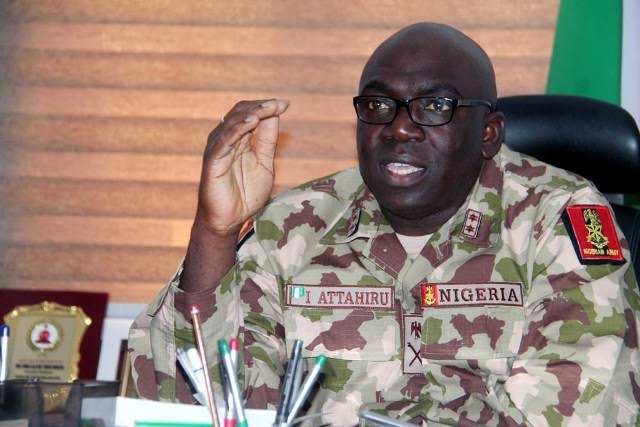
In normal climes, it will be odd for a columnist to comment on any issue this week other than the plane crash that claimed the lives of the Chief of Army Staff, Lt. General Ibrahim Attahiru, and 10 other officers – and the fallouts, including President Muhammadu Buhari’s “heartless felt condolences” expressed by the Minister of Defence, Maj. Gen. Bashir Magashi (rtd).

But Nigeria is a study in abnormality.

Writing on Attahiru’s death, as tragic as it is (he was only 54 years and appointed Army Chief five months ago), or Buhari’s inexplicable refusal to attend the burial ceremony at the National Military Cemetery in Abuja, about 18 minutes’ drive from Aso Rock, would be tantamount to chasing rodents when one’s house is on fire.

Alaigbo is on fire and no conscientious objector can be silent on the war of attrition since Buhari approved new security measures for the South East and South South, as disclosed on May 11 by the acting Inspector General of Police, Usman Baba.

Baba has since ordered police officers to carry out extra-judicial killings in the South East.

While launching ‘Operation Restore Peace’ in Enugu on May 18, 2021, he declared: “Don’t mind the media shout; do the job I command you. If anyone accuses you of human rights violations, the report will come to my table, and you know what I will do. So, take the battle to them wherever they are and kill them all. Don’t wait for an order.”

That is reckless and frightening. And the order has gone into full force with the collateral damage mounting.

On Monday, I received a telephone call from a friend in Owerri and the message was ominous.

“Iyke, please, I am pleading with you in the name of God, something serious is going on in Imo State and the whole world must hear about it,” my friend, a university lecturer, blurted out as soon as I picked his call.

Ordinarily a sedate person, I have never seen him as exasperated and desperate. The urgency in his voice alarmed me.

He narrated an encounter between him and a senior police officer of Igbo extraction a few minutes before he called.

The officer told him how policemen, in the name of hunting down Independent People of Biafra (IPOB) activists accused of killing police officers and burning down police stations, swoop on bus-stops in the early evenings, arrest youths and detain them. And without charging anyone to court, every night, about 10 are taken out to be summarily executed.

“What is going on here is genocide and the whole world needs to know about it. Please, use your voice. Don’t be silent,” my friend pleaded.

I have always worried that the worsening security situation in the South East will boil down to this. Any attack on security infrastructure in the South East, and, indeed, anywhere else is condemnable. Killing of policemen is an egregious act that must be punished in accordance with the laws of the land.

But every well-meaning Nigerian must be horrified by the Federal Government’s hardly disguised desire to turn the South East into a war zone rather than seek for its peace, stability and development.

The only reason why the Nigerian state will declare war against Ndigbo, which is what Baba’s murderous mandate to officers amounts to, is because some people in government, especially Buhari, view the old Eastern Region from the prism of a conquered territory under occupation since the end of the civil war in 1970. People in occupied territories ought not to be seen, not to talk of being heard. But trust Ndigbo, they must be seen and heard no-matter their circumstance. They cannot be caged unless they decide out of their own volition to be silent. That is one lesson Buhari is yet to learn. Pity!

But, is it not possible that IPOB may not be the culprits in these attacks against police in the South East and South South?

Imo State Governor, Hope Uzodimma, has no sympathy for IPOB, neither do they have for him. The hatred is mutual. But this week, his Chief Press Secretary, Oguwike Nwachuku, issued a statement, reported by the News Agency of Nigeria (NAN), saying that no fewer than 400 people who carried out recent attacks in Imo have been arrested and charged to court.

“The good thing,” Nwachuku said, “is that over 70 per cent of them are not Igbo.”

So, what does that say about the crisis in the region? Since there are no Hausa, Fulani or Yoruba members of IPOB, does that not suggest that Igbo youths may not be behind the violence in the region?

Could there be fifth columnists and agent-provocateurs? Shouldn’t the government be interested in Uzodimma’s disclosure rather than levying war on an otherwise peaceful region?

The problem is that when it comes to dealing with the Igbo, Buhari’s deep animosity tears down the ramparts of rationality, which explains why the hawks in Abuja are right now baying for the blood, to borrow a French idiom, of their bête noire – Ndigbo.

But one thing is certain, if the shoot-at-sight order is to arm-twist Ndigbo into surrendering their ancestral lands to Fulani herdsmen, it will fail.

As Rotimi Akeredolu, Governor of Ondo State, pointedly told Garba Shehu, presidential spokesperson, on Tuesday, “no inch of the space delineated and known, currently, as South West, and indeed the whole South, will be ceded to a band of invaders masquerading as herdsmen under any guise.” This is one battle Buhari cannot win. He will lose in the South, just as the plot will surely meet its waterloo in the North Central.

In case Buhari does not know, of the over 70 million Igbo living at home and in the Diaspora, every one of them, including those in his cabinet, is a Biafran.

But there are two groups of Biafrans right now. There is a vocal, fanatical minority led by the likes of Nnamdi Kanu that subscribes to a territorial Biafra; and there is a silent majority that subscribes to what Emeka Odumegwu Ojukwu referred to, in his twilight, as the ‘Biafra of the mind.’

Ojukwu’s Biafra of the mind is a metaphor for justice, equity and fair play. While not pursuing territorial space as it was the case in the late 1960s, Biafra of the mind is a clarion call on Ndigbo and, indeed, all oppressed Nigerians to stand up against repression, tyranny and cruelty.

Biafrans in the second category are willing to live in Nigeria as Nigerians and contribute to building and nursing it to prosperity. But they will only do that as freeborn.

Nothing suggests that even those in the first category may not drop their demand for a territorial Biafra and join hands in building Nigeria. After all, it is the lack of justice that is spurring the rebellion.

But nothing also says that those currently in the second category may not be forced into Nnamdi Kanu’s column. Sadly, Buhari is doing everything possible to achieve this p[articular result with dire consequences.

A Nigeria that will get the buy-in of ‘Biafrans of the mind’ cannot be one where an Igbo pupil who scores 150 in a Common Entrance Examination into Unity Colleges is denied admission but a Northern pupil who scores 25 is chosen based on ethnicity or religion.

No!

That Nigeria must not be one where an Igbo must change his state of origin, religion or adopt a strange surname to stand a fair chance of being employed in a federal parastatal or secure a government contract.

That country must be one where competence trumps nepotism, the signature tune of the Buhari presidency, in determining who gets what.

Sadly, the absence of equity, justice and fair play makes the argument for the ‘Biafra of the mind’ rather tenuous.

And guess what? Buhari is the most effective promoter of the quest for territorial Biafra. He is Nnamdi Kanu’s biggest enabler. Buhari’s single-minded pursuit of Fulani supremacist agenda is IPOB’s most effective membership recruitment tool.

A Buhari that believes it is illegal for Southern governors to call for an end to open grazing but sees nothing wrong in Sharia police, Hisbah, confiscating and destroying 8,400 bottles of beer in Kano, cannot be part of the solution to Nigeria’s current woes.

On Tuesday, the Commander-General of Kano State Hisbah Board, Dr. Harun Ibn-Sina, said he confiscated 8,400 bottles of beer in Dawakin Kudu and Kura LGAs because “Hisbah Board has prohibited the sale of beer in the state to avoid being intoxicated.”

To rub in the insult, he said the “suspects” would be charged to court once investigation was concluded.

Yet, Kano with 44 local governments gets the lion’s share of revenue from Value Added Tax (VAT) which Abuja collects from all states. That is the crux of the matter and why agitation for dismemberment of the country may not abate soonest.

A brutal war of attrition in the South East is not a solution. It is a mere distraction from the crisis of legitimacy that Nigeria faces under Buhari’s watch.


Do what God called you to do

‘I have brought you glory on earth.’
John 17:4 NIV

Joseph’s brothers despised his dream, so they threw him into a pit. Jesus’ family didn’t understand His calling; one time they actually thought He was mad.

Yet, when He reached the end of His life, He could say, ‘I have brought you glory on earth by finishing the work you gave me to do.’ If you wait for everybody to understand and agree with you, you’ll never do what God called you to do.

In the latter part of the nineteenth century when the Methodists were holding a denominational convention, one leader stood up and shared his vision for both the church and society at large.

He told his fellow ministers how he believed that someday men would fly from place to place instead of travelling on horseback. It was a concept too outlandish for many in the audience to handle.

One man, Bishop Wright, stood up and furiously protested: ‘Heresy! Flight is reserved for the angels!’ He went on to say that if God had intended man to fly, He would have bestowed him with wings.

Clearly the bishop was unable to envision what the speaker was predicting. When he finished his protest, he collected his two sons, Orville and Wilbur, and left the auditorium.

That’s right – his sons were the famous Orville and Wilbur Wright! And several years later on 17 December 1903, they did what their father had declared impossible; they recorded the first human flight.

Understand this: many people prefer the comforts of the past to the risks of the future. If you need their support and approval, you’ll never do what God called you to do. .

Bible in a Year: 1 Kings 16-18, Acts 7:1-22

The Word for Today

Photo Credit: Dr. Michelle Bengtson

Iniubong Umoren: In a game of conscience and wits, alleged killer pleads self-defence

By: Stephen Azubuike

The news of the death of Iniubong Umoren, the young Nigerian lady allegedly killed in cold blood while in search of a job, has remained one of the most unfortunate incidents in these trying times in Nigeria.

A young man, Uduak Frank Akpan, currently “cooling off” in the Police net at Akwa Ibom State has reportedly owned up to the killing of Iniubong. This was in a fresh press release that followed the agitation that Uduak had possibly committed suicide while in police custody. But news of the said suicide has now been confirmed as untrue. 

In his admission, Uduak claimed that the killing of Iniubong was unintentional, as it was in the process of self-defence. Hear him:

I invited her for a job and I asked her whether she can work in a farm as a secretary. I told her that I wanted to sleep with her first. She agreed on a condition that I will use condom which I also agreed to. She became furious when I started removing the condom, and she attacked me. I was bleeding so I needed to defend myself by hitting her which led to her death…

Unfortunately, Iniubong is no longer here to narrate her own side of the unfortunate story, so as to possibly debunk Uduak’s account laden with lies or half truths.

In this game of wits, the Police needs to determine the profile of Uduak as a job provider and his history of “helping the country in reducing unemployment rate by the alleged job provision.” The story of Blessing Godwin is absolutely useful. Blessing’s story fingers Uduak for attempting to provide her with a “job”.

From Uduak’s own narrative, a decent mind will not find it hard to at least realise that Iniubong wasn’t going to give in, or die without a fight. Uduak’s belief appears to be an attempt to convince the public that Iniubong consented to his sexual advances by asking for condom. But a thinking mind understands that the young lady needed to appear to have agreed, so as to gain some advantage in her plan to stop the unholy bargains of Uduak. But little did she know she was up against a fine boy with the swag of a ruthless killer. Written on the shirt Uduak was seen putting on at the press conference reads “The Mudder Squad.” Was that his shirt or the police wore him that? It’s unlikely the Police did, though.

Self-defence

Self-defence is one of the defences available to a person charged with offences relating to criminal assault, murder and the likes. The law understands that it is only a tree that hears it would be cut down but stands to watch.

However, to sustain the plea of self-defence, there are several principles to consider. One of them is that the degree of blow or effort used to defend oneself must be contemporaneous to the forthcoming or perceived attack. Thus, if a slap was heading to your face, you can’t defend that with a gunshot. Self-defence won’t avail you if the person dies of gunshot injury or sustains grievous bodily harm.

In the case of Uduak, the Court must critically access the alleged attack by Iniubong on Uduak. Again, we must not lose sight of the fact that the alleged attack likely resulted from her attempt to stop Uduak from his sexual advances. No lady who willingly consents to sex would immediately launch an attack. Her alleged consent was clearly no consent. Uduak failed to see through that in dishing out that part of the narrative.

Subject to further thorough evaluation of the entire circumstances, it is sufficient to mention that Uduak has a huge task in this game of conscience and wits.

There’s need to critically interrogate the issues pointing to a possible case of premeditated murder of Iniubong. There was nothing in Uduak’s narrative showing that Iniubong was aware of the fact that she was being invited for a sex romp like the “fearless” ladies found on dating apps. She was seeking for a job. Real job. According to Uduak, he presented her with the position of a secretary at a farm. But his intention was to illegally plough in her field instead. This is like the common practices of many employers of labour today in Nigeria who subject our women to sexual demands before employing them. The difference is that in Uduak’s case, there is doubt whether there was even any job for Iniubong in the first place. More so, those employers who demand for sex present the bargain like a standard form contract of take it or leave it. They usually don’t turn violent or kill and bury ladies in shallow graves if they refuse. Their actions remain condemnable, regardless. 

So, Iniubong allegedly objected to Uduak’s sexual advances with a blow and his best reaction was to end her life and bury her in a shallow grave without honour.

A man whose heart could not melt to show mercy, looking at the pretty face of Iniubong, deserves not the mercy of the law.

Photo credit: The Sun Nigeria

This article was first published on May 14, 2021 by https://stephenlegal.ng/iniubong-umoren-in-a-game-of-conscience-and-wits-alleged-killer-pleads-self-defence/

AUTHOR:STEPHEN AZUBUIKE is lawyer with expertise in Commercial Dispute Resolution and Technology Law practice. He is a Partner at Infusion Lawyers. He has successfully argued cases from the High Courts of various jurisdictions to the Appellate Courts on behalf of financial institutions, other corporate bodies and multinationals. He has worked with a number of startup tech companies. He tweets @siazubuike.

Supreme Court lashes a lawyer who sought to ‘recover’ his client’s N150M already paid to the client to his knowledge

By: Stephen Azubuike

Passco Int’l Ltd v. Unity Bank Plc [2021] 7 NWLR (Pt. 1775) 224 (SC)

Passco Int’l Ltd (The Appellant) informed its bank, Unity Bank Plc (The Respondent), that it had concluded plans for the sale of its property in Lagos State and of its intention to transfer the proceeds of the sale to the United Kingdom to enable it facilitate its investment in Dubai, United Arab Emirate. To this end, the Appellant instructed the Bank to transfer the sum of N150 Million in the Appellant’s current account with the Bank to the Appellant’s account in the UK. The Appellant’s case was that the transfer wasn’t done. It sued the Bank to recover the money.

The Appellant’s bank mandate required that instruction for any transfer of fund should be in writing with the Appellant’s seal. However, it was in evidence that the Appellant’s Chairman and Chief Executive, and sole signatory to the Appellant’s account, verbally requested that the transfer of the N150 Million should be undertaken by the Bank without necessarily following the requirements of the mandate. The Bank obliged, acting on the verbal instruction by the Chairman/CEO of the Appellant.

In one of the proceedings at the trial Court, Counsel to the Appellant admitted in open court that the said sum of N150 Million was already paid to the Appellant’s UK account by the Bank.

If the disputed sum of N150 Million was already transferred to the Appellant’s account in the UK, why are parties in Court, you might ask.

The Appellant and its Counsel had a mission. The mission was to reap where they did not sow. While the Appellant was hoping to be credited in its account in Nigeria with another N150 Million, the Appellant’s Counsel was looking forward to 10% of that sum, which was claimed by the Appellant as the cost of litigation. 

Thus, the Appellant’s Counsel argued that the purported transfer of the N150 Million was null and void for lack of proper authority, on the ground that the Appellant’s mandate to transfer ought to be in writing and not verbal. In essence, the Appellant was seeking to recover money already sitting in its bank account in the UK as desired. The Appellant’s Counsel sought to use the instrumentality of the law to recover money not missing, money not lost, money already in his Client’s possession, simply because the mandate relied on by the Bank in making the transfer was verbal not written. No harm or injury came to the Appellant.

The Appellant was determined to dig gold but the Court stood in the way, as the trial Court and the Court of Appeal dismissed the action for being frivolous and lacking in merit.

At the Supreme Court, the Appellant’s Counsel relied on Section 47(1)(c) of the Banks and Other Financial Institutions Act and other sections, including relevant provisions of the Money Laundering (Prohibition) Act 2011 in advancing his misguided arguments that the transfer based on verbal mandate instead of written instruction was illegal. The issue of illegality was raised for the first time at the Supreme Court.

The Supreme Court proved that the law is not an ass. It dismissed the appeal on 19 February 2021. The apex Court upheld the Court of Appeal’s position that it was unconscionable for the Appellant to cause the transfer on its behalf of the sum of N150 Million by the Respondent to its account in the United Kingdom and then turn around to allege illegalities to impugn the transaction.

The Supreme Court was utterly infuriated. In dismissing the appeal, Saulawa, JSC had no mercy on the Appellant’s Counsel. At page 260 of the report, his Lordship brutally condemned Counsel’s conduct as follows:

Before placing the very last dot to the instant judgment, I have deemed it expedient to allude to the unbecoming and rather reprehensive attitudinal disposition of the learned Counsel to the Appellant, Chuka Efezue Esq. in the course of the trial of the suit vis-a-vis the appeals. In my considered view, the Appellant’s learned Counsel, Efezue Esq. having expressly admitted at the trial that the sum of N150 Million (the subject matter of the suit) had actually been effectively transferred and paid by the Respondent into the Appellant’s Union Bank Plc UK Account, he ought to have hearkened to the voice of wisdom to honourably withdraw from the case.

The conduct of the Appellant and especially his Counsel is, perhaps, one of the most outrageous instances of abuse of court process.

The Supreme Court went to town in reminding the Appellant’s Counsel and lawyers generally that (at pages 261-262):

The legal practice is a very serious business exclusively undertaken by responsible, honourable, and serious minded practitioners… A legal practitioner must at all times consider himself as a minister in the hallowed temple of justice, who has a duty not only to his client but to the Court, and the nation at large. He should be patriotic, honest, and avoid any temptation to be swayed by momentary consideration or selfish interest. 

Photo Credit: Law Truly

This article was first published on May 27, 2021 by https://stephenlegal.ng/supreme-court-lashes-a-lawyer-who-sought-to-recover-his-clients-n150m-already-paid-to-the-client-to-his-knowledge/

AUTHOR: STEPHEN AZUBUIKE is lawyer with expertise in Commercial Dispute Resolution and Technology Law practice. He is a Partner at Infusion Lawyers. He has successfully argued cases from the High Courts of various jurisdictions to the Appellate Courts on behalf of financial institutions, other corporate bodies and multinationals. He has worked with a number of startup tech companies. He tweets @siazubuike.

*FROM MALAMI TO ATTAHIRU – By Dike Chukwumerije*

_”Malami did not compare oranges with oranges. If the Southern Governors had banned cattle herding, he would have a point. But what they banned was open grazing – which is one way of herding cattle. That is like saying you cannot sell spare sparts on the roadside. Or you cannot sell spare parts in the fruits and vegetables market. It is like saying you cannot drive okada in Asokoro or Maitama. You can drive it in Nyanya, but not in Central Area. It is like saying painted taxis cannot come into this estate. Or you cannot set up a disco club in a residential area. Or you cannot have a church with outside speakers inside a GRA.”_

_”These are all different ways organizations are regulated for security reasons, and to minimize the risk of conflict. For, you see, no human right is absolute. No. Yours ends where mine begins, mine ends where yours begins. And it is the duty of the State to moderate these fluid boundaries. From Zamfara to Bayelsa, the open grazing of cattle is leaving in its wake a trail of blood. And I believe there are two main reasons the Attorney General struggles to accept this. Firstly, because open grazing is predominantly done by the Fulani – an ethnic group indigenous to his region of the country. Secondly, (and more importantly) because this particular challenge to open grazing is coming from the South. You see? It is like Chelsea playing Tottenham, or Man U playing Man City. A goal is always a bitter pill to swallow, but even worse when it happens in a derby.”_

_”I tell you, there are many similarities between ethno-centric people and football fans. They both always cheer for their sides. Yes. No fan will rush into the pitch to argue with the referee that the goal just awarded to his team is actually off-side. No. The more decent ones will not celebrate it too much. They will say to themselves, and their friends from the opposing team, ‘na true, referee no suppose allow that goal, e no see am well, na true’ – but they will, nevertheless, take the goal – thank you very much. This is normal. This is part of what it means to be human – this passion and pride, and natural desire to advance your side. But when that desire progresses to the point where you would rather see the stadium burn down than watch your side lose – then you are no longer a fan, you are now a fanatic. For your love for team has started to threaten the beautiful game itself. You see? When we say tribalism is wrong, this is what we are referring to. Not the passion with which ethnic pride pursues a win, but the lengths to which fanaticism will go – the warnings it will ignore, the rules it will break, the ethics it will push aside – to force one. Like love and obsession, it is a difference of degrees.”_

_”For, I tell you, had it been Ganduje that came out publicly to oppose open grazing (has he not?) it would not irritate Malami so. But tell me does the soundness of a fact change depending on the ethnicity or religion of the person who speaks it? This is how tribalism can numb our objectivity. For, suddenly, the Northerner who sees clearly the carnage open grazing is causing in Zamfara will not understand why people are wary of it in Akure. This is how tribalism can numb our humanity. For, suddenly, the Southerner who lets out a loud cry of grief at news of a plane crash in Owerri is indifferent to news of a plane crash in Kaduna. But, tell me, does the sadness of tragedy change depending on the ethnicity or religion of the person to whom it occurs?”_

_”No. It is human to share in this grief. For no matter how different we think we are, this is one thing we have in common – death. Like this, the death of another will always remind me of the relentless approach of mine. Like this, the sight of a newly dug grave, or a freshly covered one, must draw the soul into contemplation – no matter how brief. And this is not a bad thing. If it were, the Good Book would not teach us that it is better to go to a house of mourning than a house of feasting. For Death is the destiny of every man. And, I tell you, there is no true clarity about purpose – no true wisdom about life – that does not begin with this knowledge.”_

_”And, so, to the brave and gallant, of every tribe and tongue, who signed up to a job different from every other – and, in the line of duty, paid the supreme price… For the essence of the soldier’s job is death – redemptive death – to leave behind his own children so that you may have the opportunity to watch yours grow. To those without whose sacrifice ISWAP would today be setting up central command in Nasarawa as opposed to northern Bornu… To those who have put their bodies between us and extremism…  To the fallen soldier… May God not judge you according to your iniquities. And in the resurrection, lion-heart, may your courage and self-sacrifice in this life count.”_

_”For, I tell you, the darkness cast over our lives by fanaticism today cannot be countered by resorting to a deeper darkness ourselves. No. My friend, do not be deceived, the real battle is not between North and South, Christian and Muslim, Igbo and Fulani. No. The real battle is between love and hate, between extremism and tolerance, between meritocracy and privilege, between a dynamic view of culture and a static one, between a vision of society predicated on the innate superiority of one ethno-religious group over the other, and a vision of society that accepts that, ultimately, we all – North and South – are children of God. These are the real sides in this game. I have chosen mine. And like a true fan will always, always cheer for it.”_

Stripping and Flogging of Workers In Nigeria.

Stripping and Flogging of Workers In Nigeria.  Daily Law Tips (Tip 796) by Onyekachi Umah, Esq., LL.M, ACIArb(UK)

Introduction:   

Nigeria is the most populated black nation in the world. It is home to the richest black man (Aliko Dangote) and more than 82 Million Nigerians that live on less than a dollar. There is a huge gap between the poor and the rich in Nigeria. This imbalance is worse in the employment sector, where the employers (often the rich) enslave the employees/workers (often the poor). Many workers, especially the workers in the private sector, are often maltreated, flogged, surcharged, defamed, stripped naked or tortured. Even police officers and other government staff that are assigned to government officials, get tortured by their principals, who often force them to play domestic roles. 

Flogging and stripping a worker are torture and a violation of human rights as well as a criminal offence. There is no justification for torture by an employer, and not even a law enforcement agent is permitted to torture any person. With very low literacy level (62.2% in 2018) and unimaginably poor legal literacy level, victims of torture, prefer to be silent or are too scared to report their perpetrators or are ignorant of their rights. By the way, with weak institutions, the rich Nigerians are never arrested, investigated or prosecuted, even where there are overwhelming evidence. Hence, there is a surge in the torture of workers in the private sector by their employers. 

Employment and Torture: 

Employment is regulated in Nigeria by a federal law (the Labour Act). This means that no state government, local government, international employer or local employer can setup employment terms and policies that conflict with the federal employment law. The Labour Act regulates employment from how to write employment letter to the duration of maternity leave. Some of the provision of the Labour Act, are; workers are not to be forced to patronise a particular supermarket/business/school; workers’ wages/salaries are not to be fined, deducted or surcharged apart from deductions allowed by law; workers are not to be paid in kind but in cash and workers are entitled to a 12-day sick leave with pay, in any one calendar year (January to December). 

Employment is not a reformatory session, where workers are to be subjected to reformatory punishments. A worker is not a student or a prisoner. A worker is a human being with all fundamental human rights that are equal to that of his employer and that must be respected by all persons and processes. A worker offers his resources for a fee and not his life and human rights. Above all, no employer should tamper with the fundamental human rights of a worker, no matter the position, age, race, colour, religion, height or class of the worker. 

Torture is when pain or suffering, whether physical or mentally is knowingly inflicted on any person to obtain information, punish, intimidate or force such person or any other person by or at the orders of a public official or any person acting on official capacity without lawful sanction/authority. Torture can be physical, mental or even both. 

Torture includes; beatings, food deprivation, rubbing of pepper/chemicals, assuming of stressful bodily positions, rape, exposure to cold/sunlight, use of drugs, blindfolding, threat, prolonged interrogation, unscheduled transfer of persons, secret detention, denial of sleep, shaming, stripping naked and parading in public places. Torture is a violation of fundamental human rights. Depending on the nature of the torture, it could affect one or several human rights. The violation of human rights or attempt to violate or the fear of such violation, are violation of human rights and the courts will not hesitate to punish the offenders. 

Torture aside being a violation of human rights, is also a violation of criminal law. All forms of torture are offences under the criminal laws in the states across Nigeria. Also, the federal legislature (the National Assembly) has gone on to enact a federal law on torture (Anti-Torture Act) which prohibits and criminalise all forms of torture. So, where there is a torture, the offender can also be prosecuted under a criminal law, aside a prosecution under the fundamental human rights. 

Aside prosecuting an employer for torture, under criminal law or the fundamental human rights, there is a third option. An employer can also be sued in a civil court for tort. This could be for the actions of the employer that led to; assault, battery, defamation, economic loss, trespass, emotional stress, invasion of privacy, false imprisonment, employment discrimination, unlawful demotion, wrongful failure to promote and wrongful termination. 

Conclusion: 

Under any form of employment, where there is torture, the victim or the well-wishers of the victim have a right to report the employer to the Nigeria Police Force. Aside reporting to the police (and as is often the case, while the police delays) the same case can be taken to a civil court for enforcement of human rights and to seek damages under tort. The failure of police to prosecute a criminal case or the success of police, does not affect or stop a victim of torture or his well-wishers from seeking justice in a civil court. 

A victim that cannot engaged the services of a legal practitioner, should rush to the nearest office of the National Human Rights Commission (NHRC) for free legal services. Here is a link to the offices of the National Human Rights Commission; <https://learnnigerianlaws.com/details-of-state-offices-of-national-human-rights-commission/>. Also, there are several non-governmental and not-for-profit organisations that could offer free legal services; search the internet and speak with your lawyer for such contacts. 

An employer that tortures a worker or attempts to torture or threatens to torture a worker should be ready for criminal and civil prosecutions. Litigations can run down businesses, nothing slumps wealth like litigation and sickness. Employers must be trained to control their emotions and be law-abiding at all times. 

My authorities, are:

  1. Sections 1, 2, 3, 14, 16, 17, 33 to 45, 318 and 319 of the Constitution of the Federal Republic of Nigeria, 1999
  2. Sections 1, 2, 6, 21, 91 and 92 of the Labour Act of 1971.
  3. Sections 2, 7, 8, 13 and 14 of the Anti-Torture Act, 2017. 
  4. Michael Ndu-Okeke, “There are only 15 black billionaires in the world, here are the top 10” (Nairametrics, 23 April 2021) <https://nairametrics.com/2021/04/23/there-are-only-15-black-billionaires-in-the-world-here-are-the-top-10/> 23 May 2021
  5. World Bank, “Nigeria releases new report on poverty and inequality in country” (WorldBank, 28 May 2020) <https://www.worldbank.org/en/programs/lsms/brief/nigeria-releases-new-report-on-poverty-and-inequality-in-country> accessed 23 May 2021
  6. Akintunde Akinleye, “Forty percent of Nigerians live below the poverty line: Report” (Aljazera, 4 May 2020) <https://www.aljazeera.com/economy/2020/5/4/forty-percent-of-nigerians-live-below-the-poverty-line-report> 23 May 2021
  7. Nigeria Literacy Rate 1991-2021 <https://www.macrotrends.net/countries/NGA/nigeria/literacy-rate
  8. Onyekachi Umah, “Details of State Offices of National Human Rights Commission” (LearnNigerianLaws.com, 27 October 2020) <https://learnnigerianlaws.com/details-of-state-offices-of-national-human-rights-commission/> accessed 14 May 2021
  9. Onyekachi Umah, “Places, Workers Cannot Be Paid Salaries In Nigeria” (LearnNigerianLaws.com, 27 February 2019) <https://learnnigerianlaws.com/daily-law-tips-by-onyekachi-umah-esq-tip-277-places-workers-cannot-be-paid-salaries-in-nigeria/ > accessed 23 May 2021
  10. Onyekachi Umah, “It Is Illegal For Workers To Be Told Where And How To Spend Salaries” (LearnNigerianLaws.com, 20 February 2019) <https://learnnigerianlaws.com/daily-law-tips-by-onyekachi-umah-esq-tip-272-it-is-illegal-for-workers-to-be-told-where-and-how-to-spend-salaries/ > accessed 23 May 2021
  11. Onyekachi Umah, “An Employment without a Written Employment Agreement is an Offence” (LearnNigerianLaws.com, 30 April 2018) <https://learnnigerianlaws.com/daily-law-tips-by-onyekachi-umah-esq-tip-91-an-employment-without-a-written-employment-agreement-is-an-offence/ > accessed 23 May 2021
  12. Onyekachi Umah, “Fines And Deductions From A Worker’s Salary Are Illegal” (LearnNigerianLaws.com, 15 July 2020) <https://learnnigerianlaws.com/fines-and-deductions-from-a-workers-salary-are-illegal-daily-law-tips-tip-610-by-onyekachi-umah-esq-ll-m-aciarbuk/ > accessed 23 May 2021
  13. Onyekachi Umah, “Sacking Of A Private Sector Worker With Or Without Reason” (LearnNigerianLaws.com, 8 May 2020) <https://learnnigerianlaws.com/sacking-of-a-private-sector-worker-with-or-without-reason-daily-law-tips-tip-565-by-onyekachi-umah-esq-llm-aciarbuk/ > accessed 23 May 2021
  14. Onyekachi Umah, “Can Workers Be Paid Salaries With Relief Materials And PPES?” (LearnNigerianLaws.com, 17 April 2020) <https://learnnigerianlaws.com/can-workers-be-paid-salaries-with-relief-materials-and-ppes-daily-law-tips-tip-550-by-onyekachi-umah-esq-llm-aciarbuk/ > accessed 23 May 2021
  15. Onyekachi Umah, “Duration Of Sick Leave With Pay In Nigeria” (LearnNigerianLaws.com, 24 March 2020) <https://learnnigerianlaws.com/duration-of-sick-leave-with-pay-in-nigeria-daily-law-tips-tip-532-by-onyekachi-umah-esq-llm-aciarbuk/ > accessed 23 May 2021
  16. Onyekachi Umah, “Who Must Pay The Cost Of Medical Examination Of All Workers In Nigeria” (LearnNigerianLaws.com, 23 March 2020) <https://learnnigerianlaws.com/who-must-pay-the-cost-of-medical-examination-of-all-workers-in-nigeria-daily-law-tips-tip-531-by-onyekachi-umah-esq-llm-aciarbuk/ > accessed 23 May 2021
  17. Onyekachi Umah, “List Of Things That Must Be In An Employment Letter/Agreement” (LearnNigerianLaws.com, 28 January 2020) <https://learnnigerianlaws.com/list-of-things-that-must-be-in-an-employment-letter-agreement-daily-law-tips-tip-492-by-onyekachi-umah-esq-llm-aciarbuk/ > accessed 23 May 2021
  18. Onyekachi Umah, “Oral Employment Agreement Is Illegal In Nigeria” (LearnNigerianLaws.com, 23 January 2020) <https://learnnigerianlaws.com/oral-employment-agreement-is-illegal-in-nigeria-daily-law-tips-tip-489-by-onyekachi-umah-esq-llm-aciarbuk/ > accessed 23 May 2021
  19. Onyekachi Umah, “DEDUCTION OF INTERESTS, DISCOUNTS AND SIMILAR CHARGES FOR “SALARY ADVANCE” IS ILLEGAL” (LearnNigerianLaws.com, 20 September 2019) <https://learnnigerianlaws.com/deduction-of-interests-discounts-and-similar-charges-for-salary-advance-is-illegal-daily-law-tips-tip-418-by-onyekachi-umah-esq-llm-aciarb-uk/> accessed 23 May 2021
  20. Onyekachi Umah, “WHEN IS IT ILLEGAL FOR A WORKER TO DEMAND OR BE PAID “SALARY ADVANCE” (LearnNigerianLaws.com, 4 September 2019) <https://learnnigerianlaws.com/when-is-it-illegal-for-a-worker-to-demand-or-be-paid-salary-advance-daily-law-tips-tip-407-by-onyekachi-umah-esq-llm-aciarb-uk/> accessed 23 May 2021
  21. Onyekachi Umah, “COMPULSORY PERIOD OF GRACE BEFORE EMPLOYER CAN DEMAND RECOVERY OF SALARY ADVANCES IN NIGERIA” (LearnNigerianLaws.com, 26 August 2019) <https://learnnigerianlaws.com/compulsory-period-of-grace-before-employer-can-demand-recovery-of-salary-advances-in-nigeria-daily-law-tips-tip-399-by-onyekachi-umah-esq-llm-aciarb-uk/> access 23 May 2021
  22. Onyekachi Umah, “IT IS ILLEGAL TO PAY A WORKER MORE THAN 1 MONTH ADVANCE IN NIGERIA” (LearnNigerianLaws.com, 5 July 2019) <https://learnnigerianlaws.com/it-is-illegal-to-pay-a-worker-more-than-1-month-advance-in-nigeria-daily-law-tips-tip-367-by-onyekachi-umah-esq-llm-aciarb-uk/> accessed 23 May 2021
  23. Onyekachi Umah, “PLACES, WORKERS CANNOT BE PAID SALARIES IN NIGERIA” (LearnNigerianLaws.com, 27 February 2019) <https://learnnigerianlaws.com/daily-law-tips-by-onyekachi-umah-esq-tip-277-places-workers-cannot-be-paid-salaries-in-nigeria/> accessed 23 May 2021
  24. Onyekachi Umah, “IT IS ILLEGAL FOR WORKERS TO BE TOLD WHERE AND HOW TO SPEND SALARIES” (LearnNigerianLaws.com, 20 February 2019) <https://learnnigerianlaws.com/daily-law-tips-by-onyekachi-umah-esq-tip-272-it-is-illegal-for-workers-to-be-told-where-and-how-to-spend-salaries/> accessed 23 May 2021
  25. Onyekachi Umah, “CAN A WORKER/STAFF IN NIGERIA BE PAID IN KIND INSTEAD OF WITH MONEY?” (LearnNigerianLaws.com, 9 November 2018) <https://learnnigerianlaws.com/daily-law-tips-by-onyekachi-umah-esq-tip-224-can-a-worker-staff-in-nigeria-be-paid-in-kind-instead-of-with-money/> accessed 23 May 2021
  26. Onyekachi Umah, “It Is A Crime To Run Recruitment and Employment Consultancy Services Without A License In Nigeria” (LearnNigerianLaws.com, 17 August 2018) <https://learnnigerianlaws.com/daily-law-tips-by-onyekachi-umah-esq-tip-165-it-is-a-crime-to-run-recruitment-and-employment-consultancy-services-without-a-license-in-nigeria/> accessed 23 May 2021
  27. Onyekachi Umah, “An Employment without a Written Employment Agreement is an Offence” (LearnNigerianLaws.com, 30 April 2018) <https://learnnigerianlaws.com/daily-law-tips-by-onyekachi-umah-esq-tip-91-an-employment-without-a-written-employment-agreement-is-an-offence/> accessed 23 May 2021
  28. Onyekachi Umah, “An Alternative to Courts for Human Rights Cases” (LearnNigerianLaws.com, 14 May 2021) <https://learnnigerianlaws.com/an-alternative-to-courts-for-human-rights-cases/> accessed 23 May 2021. 
  29. Onyekachi Umah, “Stripping Suspects Naked is Torture and it’s a Crime” (LearnNigerianLaws.com, 16 February 2021) <https://learnnigerianlaws.com/stripping-suspects-naked-is-torture-and-its-a-crime/> accessed 23 May 2021
  30. Onyekachi Umah, “Can Police Punish Unlawful Protesters?” (LearnNigerianLaws.com, 15 February 2021) <https://learnnigerianlaws.com/can-police-punish-unlawful-protesters/> accessed 23 May 2021
  31. Onyekachi Umah, “When Can A Protest Become A Riot?” (LearnNigerianLaws.com, 6 November 2020) <https://learnnigerianlaws.com/when-can-a-protest-become-a-riot/> 23 May 2021
  32. Onyekachi Umah, “#EndSarsNow: Punishment For Police (SARS) Torture” (LearnNigerianLaws.com, 6 October 2020) <https://learnnigerianlaws.com/endsarsnow-punishment-for-police-sars-torture/> accessed 23 May 2021
  33. Onyekachi Umah, “#EndSarsNow: Nigeria Police Lacks Power To Punish” (LearnNigerianLaws.com, 7 October 2020) <https://learnnigerianlaws.com/endsarsnow-nigeria-police-lacks-power-to-punish/> accessed 23 May 2021
  34. Onyekachi Umah, “#EndPoliceBrutality: How To Sue the Nigeria Police Force and Police Officers” (LearnNigerianLaws.com, 14 October 2020) <https://learnnigerianlaws.com/endpolicebrutality-how-to-sue-the-nigeria-police-force-and-police-officers/> accessed 23 May 2021
  35. “Demand justice for Police Brutality in Nigeria” (Amnesty International) <https://www.amnesty.org/en/get-involved/take-action/nigeria-end-impunity-for-police-brutality-end-sars/> accessed 23 May 2021
  36. Onyekachi Umah, “Who Can Be Lawfully Killed In Nigeria?” (LearnNigerianLaws.com, 26 October 2020) <https://learnnigerianlaws.com/who-can-be-lawfully-killed-in-nigeria/ > accessed 23 May 2021
  37. Femi Falana, “Police Permit Not Required For Rallies in Nigeria” (Premium Times, 23 January 2014) <https://www.premiumtimesng.com/opinion/153860-police-permit-required-rallies-nigeria.html> accessed 23 May 2021
  38. Onyekachi Umah, “Can A Person With A Nigerian Flag Be Shot Or Killed?” (LearnNigerianLaws.com,23 October 2020) <https://learnnigerianlaws.com/can-a-person-with-a-nigerian-flag-be-shot-or-killed/ > accessed 23 May 2021
  39. Onyekachi Umah, “#EndPoliceBrutality: When & How Can Government Prohibit Protest In Nigeria?” (LearnNigerianLaws.com, 19 October 2020) <https://learnnigerianlaws.com/when-and-how-can-government-prohibit-protest-in-nigeria/ > accessed 23 May 2021
  40. Onyekachi Umah, “#EndPoliceBrutality: The Right To Protest Is A Human Right.” (LearnNigerianLaws.com, 15 October 2020) <https://learnnigerianlaws.com/endpolicebrutality-the-right-to-protest-is-a-human-right/ > accessed 23 May 2021
  41. Onyekachi Umah, “#EndPoliceBrutality: Do You Need A Police Permit To Protest?” (LearnNigerianLaws.com, 16 October 2020) <https://learnnigerianlaws.com/endpolicebrutality-do-you-need-a-police-permit-to-protest/> accessed 23 May 2021
  42. Onyekachi Umah, “Does The President/Governors Have Powers To Lockdown Any Part Of Nigeria Or Restrict Human Rights?” (LearnNigerianLaws.com, 31 March 2020) <https://learnnigerianlaws.com/does-the-president-governors-have-powers-to-lockdown-any-part-of-nigeria-or-restrict-human-rights-daily-law-tips-tip-537-by-onyekachi-umah-esq-llm-aciarbuk/ > accessed 23 May 2021
  43. Onyekachi Umah, “Human Rights That Can Never Be Restricted Even In War, Pandemic or State of Emergency (LearnNigerianLaws.com, 2 April 2020) <https://learnnigerianlaws.com/human-rights-that-can-never-be-restricted-even-in-war-pandemic-or-state-of-emergency-daily-law-tips-tip-539-by-onyekachi-umah-esq-llm-aciarbuk/> accessed 23 May 2021
  44. Onyekachi Umah, “Duty of Government to Pay Compensation for Damages Caused By Riot.” (LearnNigerianLaws.com, 4 November 2020) <https://learnnigerianlaws.com/duty-of-government-to-pay-compensation-for-damages-caused-by-riot/> accessed 23 May 2021
  45. Onyekachi Umah, “Who Pays For Properties Damaged or Lost In A Riot In Nigeria” (LearnNigerianLaws.com, 6 August 2018) <https://learnnigerianlaws.com/daily-law-tips-by-onyekachi-umah-esq-tip-157-who-pays-for-properties-damaged-or-lost-in-a-riot-in-nigeria/ > accessed 23 May 2021
  46. Onyekachi Umah, “List of Fundamental Human Rights In Nigeria.” (LearnNigerianLaws.com, 22 October 2020) <https://learnnigerianlaws.com/list-of-fundamental-human-rights-in-nigeria/> accessed 23 May 2021
  47. Chris Admin, “Onyekachi Umah Speaks To ChannelsTv On SARS & The New Police Act” (LearnNigerianLaws.com, 9 November 2020) <https://learnnigerianlaws.com/onyekachi-umah-speaks-to-channelstv-on-sars-the-new-police-act/> accessed 23 May 2021
  48. Onyekachi Umah, “What Is The Punishment For Any Person Including Police Officers That Tortures Another Person” (LearnNigerianLaws.com, 18 December 2018) <https://learnnigerianlaws.com/daily-law-tips-by-onyekachi-umah-esq-tip-251-what-is-the-punishment-for-any-person-including-police-officers-that-tortures-another-person/> accessed 23 May 2021
  49. Onyekachi Umah, “Is Obeying “Orders From Above” a Defence for Torture in Nigeria” (LearnNIgerianLaws.com, 7 September 2019) <https://learnnigerianlaws.com/is-obeying-orders-from-above-a-defence-for-torture-in-nigeria-daily-law-tips-tip-409-by-onyekachi-umah-esq-llm-aciarb-uk/> accessed 23 May 2021
  50. Onyekachi Umah, “Being Present During Torture Without Participating In It, Is A Crime” (LearnNigerianLaws.com, 25 November 2019) <https://learnnigerianlaws.com/being-present-during-torture-without-participating-in-it-is-a-crime-daily-law-tips-tip-464-by-onyekachi-umah-esq-llm-aciarb-uk/> accessed 23 May 2021
  51. Onyekachi Umah, “New Punishment for Security Officers Involved in Torture in Nigeria.” (LearnNigerianLaws.com, 27 August 2017) <https://learnnigerianlaws.com/new-punishment-for-security-officers-involved-in-torture-in-nigeria-daily-law-tips-tip-401-by-onyekachi-umah-esq-llm-aciarb-uk/> accessed 23 May 2021
  52. Onyekachi Umah, “Watching Torture but not Participating in it, is Torture.” (LearnNigerianLaws.com, 19 November 2019) <https://learnnigerianlaws.com/watching-torture-but-not-participating-in-it-is-torture-daily-law-tips-tip-460-by-onyekachi-umah-esq-llm-aciarb-uk/> accessed 23 May 2021
  53. Onyekachi Umah, “Any Security Agency’s Manual/Protocol that Allows Torture Even for National Security Cases is Unlawful and its Officers are Liable.” (LearnNigerianLaws.com, 11 September 2019) <https://learnnigerianlaws.com/any-security-agency-s-manual-protocol-that-allows-torture-even-for-national-security-cases-is-unlawful-and-its-officers-are-liable-daily-law-tips-tip-412-by-onyekachi-umah-esq-llm-aciarb-uk/> accessed 23 May 2021
  54. Pic credit: Primecommunications

Sabi Law Projects:

#SabiLaw

#DailyLawTips

#SabiBusinessLaw

#SabiElectionLaws

#SabiHumanRights

#SabiLawOnTheBeatFm

#SabiLawLectureSeries

#CriminalJusticeMonday

#SabiLawVideoChallenge

Speak with the writer, ask questions or make inquiries on this topic or any other via [email protected], [email protected] or +2348037665878 (whatsapp). To receive free Daily Law Tips, join our free WhatsApp group via https://chat.whatsapp.com/L7h4f1exItZ38FeuhXG4WN or Telegram group, via the below link: https://t.me/LearnNigerianLaws

To keep up to date on all free legal awareness projects of Sabi Law Foundation, follow us via

Facebook Page:@LearnNigerianLaws,

Instagram:@LearnNigerianLaws,

Twitter: @LearnNigeriaLaw,  

YouTube: Learn Nigerian Laws

WhatsApp Groups via (https://chat.whatsapp.com/L7h4f1exItZ38FeuhXG4WN),

Telegram Group: (https://t.me/LearnNigerianLaws),

Facebook group: (https://www.facebook.com/groups/129824937650907/?ref=share)

or visit our website: (www.LearnNigerianLaws.com)

Please share this publication for free till it gets to those that need it most. Save a Nigerian today! NOTE: Sharing, modifying or publishing this publication without giving credit to the author or Sabi Law Foundation is a criminal breach of copyright and will be prosecuted. This publication is the writer’s view not a legal advice and does not create any form of relationship. You may reach the writer for more information.

This publication is powered by www.LearnNigerianLaws.com {A Free Law Awareness Program of Sabi Law Foundation, supported by the law firm of Bezaleel Chambers International (BCI).} Sabi Law Foundation is a Not-For-Profit and Non-Governmental Legal Awareness Organization based in Nigeria. For sponsorship and partnership, contact: [email protected], [email protected] or +234 903 913 1200.

TIPS