Home Blog Page 958

Igbo, Nigeria and the month of May

By Lasisi Olagunju

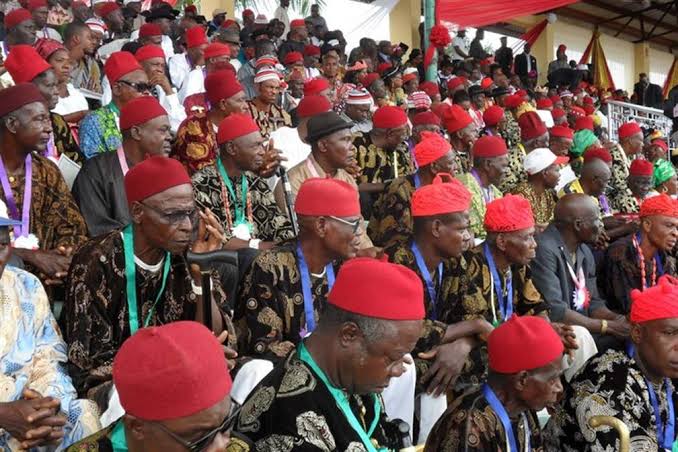
There is an undeclared war going on in the South East. The headlines, in frightening details, painted the lurid portrait yesterday: “Gunmen kill 7 military men, raze police stations;” “Gunmen raze courts in Imo, Abia CID building burnt down;” “IPOB’s stay-at-home order: Tension in Ebonyi, Imo, others.” Then the big one: “Ahmed Gulak shot dead in Owerri.” We should be worried.

Today is the last day of May 2021. It has been a full month of violent deaths, tragic crashes and clashes. The fact that things appear reaching a climax in May smells deja vu. General Abdulsalami Abubakar has not told us why he chose May 29, 1999 as the commencement date for this democracy. Was it a code? A decision that canceled October 1, our Independence Day, from our political diary must be very significant to those who took it. Nigeria’s structural problem started on May 24, 1966 when JTU Aguiyi Ironsi abolished the regions and centralized the country’s administrative structure. In quick forward march from that misadventure was the May 29, 1966 deadly reactions from the north. It was called the May Pogrom, an organized massacre of helpless people – and it claimed hundreds of Igbo lives. Then came the counter killings in the east and the May 30, 1967 declaration of the Republic of Biafra – all cascading into a 30-month civil war that killed about 100,000 soldiers and two million civilians. The crisis which threatens to climax today is, therefore, not just a reaction to the present systemic injustice, it is also of historical nostalgia. Other parts of Nigeria clink glasses every May 29 celebrating democratic civilian rule; reflective, sad, angry Igbo families see the celebrations as mocking them, their defeat. They spend the day to remember the dead, count and recount losses – and get restive in their blood-soaked enclave.

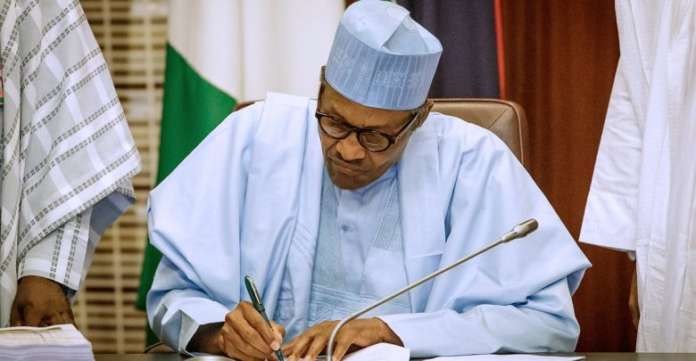
Has Nigeria decided to fight yet another war in that corridor? Three weeks ago, President Muhammadu Buhari met with his security chiefs where he “approved new measures” to deal with the “growing insecurity” in the south east and the south south. The security measures, according to the Inspector General of Police, Usman Baba, would not be disclosed to the public. Briefing journalists after the meeting, Mr Baba said “we have some measures which we have outlined and have been approved by the council and we will see how we can change the narrative within the quickest possible means to restore law and order and restore peace in that area. We solicit all law-abiding citizens to work with us to identify and deal with the situation. That is that; I may not go into the details of how we will do that.” The National Security Adviser, Babagana Monguno also told journalists that there were those he described as enablers of crime who would be dealt with while there was the need to find quick responses that would mitigate the growing threats to the nation and its stability. “These enablers are discussed in detail and Mr President has already given direction on how to deal with them,” he said. What were those measures?

Some felons, valorized as “unknown gunmen”, have been killing poor security operatives in the east. Most of the murdered were Igbo officers and men. The gunmen have been setting on fire symbols of state power – most of the burnt structures were Igbo assets. The birds of the felons are defiling their own nest. But, the state, just like it did with Boko Haram, has responded like the blind shooting into the marketplace. The attackers are seldom hit; it is the Igbo earth that is scorched in regrettable deaths and destruction. I am not exactly a fan of the Igbo as a body of political people. They, like any other ethnic group, have their stock excesses – but their elites are the very worst in befriending their tormentors and abandoning their chi and their backers. Their goats run after any palm frond, no matter who is holding it. They forget that when the palm wine tapper allows his hemorrhoid to be seen while atop the raffia palm tree, what he taps no longer appeals to anyone. They do that repeatedly- even Emeka Ojukwu came back from exile and joined the ultra-northern NPN. But, then, among them, there are wonderful persons I always know that one could fight shoulder-to-shoulder with and who won’t desert the front in hot pursuit of looted power. The ordinary Igbo man is that honourable person. And he is the one bearing the brunt of today’s madness.

The Igbo say water has bones, if you do not chew it, you won’t know. The Nigerian state appears determined not to take any prisoner in Igboland. It appears doing more than police action there. There are soldiers on the street enforcing compliance with Nigeria’s ‘non-negotiable’ unity. But here is where the bone in the water comes in: the Igbo response has not been less lethal. An American soldier was asked why a Vietnamese village was bombed out of existence. He told the Associated Press: “We had to destroy Ben Tre in order to save it.” Both sides in the Abuja vs Igbo conflict, like the unnamed US soldier in Vietnam, appear intent on destroying the land as an acceptable price for its safety.

Is Nigeria answering the Igbo question right? We have learnt no lessons. Declaring a full-blown war on the south east in addition to the interminable ones with terrorists in the north east and the north west and parts of the north central cannot end in praise. We do not have a history of learning from past errors. From the middle belt to the south, repetitive afflictions rise and rebound to our shame. For instance, in Benue, the Nigerian government is tying down the Tiv lion for the feline Fulani to eat in bits. We read of horrendous killings and hear grating cries of per-second bereavement. Forty-two persons were reportedly murdered there as last week was preparing to close. But how far can the murderers do that without consequences? There was the tragic Tiv riot of 1964 and its lingering aftermath. Whatever happened that time has not taught those wielding power in Abuja lessons. Seeking to overrun Tivland failed in 1964; it will fail even in more catastrophic degrees today. I can read the same in the blood-soaked soil of south eastern Nigeria.

If there are prancing leopards everywhere in the south today, who is to blame? Blame the north and the incumbent president, both of whom have become potent threats to the south in all existential ways. Can you force someone to love you – especially when your eyes wear the colours of hatred? The Igbo, for historical reasons, resent their Nigerianness. Yes. That is very apparent. They fought a civil war with Nigeria. Yes. But was it not the same Igbo that soon after the war provided a deputy for President Shehu Shagari? They forgot everything – the war, the pogroms and whatever else they suffered. They moved on with ‘One Nigeria’, earning their living, eating, compromising until this government happened to the country and quarantined them like lepers. The Igbo, after the civil war, interred all cries and whispers of secession. It appeared all they desired from Nigeria was fair treatment and justice. Then, Buhari, the conquistador, came with his Bayajidda sword and started giving them the snake treatment. We should be worried. The boys munching peace in Igboland today are not the old boys defeated in 1970. Nigeria cannot win this war. It should negotiate the future with everybody, including the Igbo.

Back to May 29.
Democracy clocked 22 years on Saturday, May 29, in Nigeria. If you ask the person next to you, they may likely say it has been all air, no substance. The deregulated disaster of recent years has particularly put a question mark on the popular definition of that form of government. On Saturday, I read Benue, Plateau, Zamfara and Niger folks who stressed that it has been about pains and deathly pangs all the way. One said he was “living like a refugee;” another said his loss of all his three buildings was his gains from this democracy; yet there was the one who agonized that “tears, hunger and bloodshed” had been the lot of the people. “I can no longer visit my village because it has been taken over by the Fulani” was the experience of a retired Controller of Prisons from Benue.

Now to something positive.
This democracy, warts and all, is not completely about dream killers and mass murders. If the eyes can look well enough, it should see its neighbour, the nose. There has been some progress made in certain areas. And we have our governors, not Abuja, to thank. Each of them, in their own ways, has struggled to fill gaps. They plug holes that were dug in the highways of their people by the progressively failing Nigerian State.

I live in Ibadan, Oyo State, so I can speak on what I see. And I am citing just one instance. Three years ago, I had a reason to go to the NYSC Orientation Camp in Iseyin. The road to take was the 65km Moniya (Ibadan)-Iseyin road. I was on that road as a reporter in 1996 or ’97 when it was reworked and commissioned by Col. Ahmed Usman, now late. Twenty-three years after that reportorial experience, I met a road that was more ghastly than horror. As I groaned in the car, I pitied others, including poor, fragile corps members in creaky buses. There was also the ever-present fear of the grim terrain presenting a perfect field of play for marauding herdsmen. It was a 40-minute trip that took three hours; a journey I wouldn’t wish for my enemy. So, when in 2019, Governor Seyi Makinde said he would reconstruct the road and deliver it in 18 months, I laughed and simply glazed his words in cynical frames. But, today, the road is ready, rebuilt and it is marvelous in our eyes. If I had not been a victim, perhaps I would be on the other cynical, sniggering side. But I suffered it, and I am bold to state that because of a decision that was right, a million others won’t go through what I went through.

Now, have you asked why the 127km Lagos-Ibadan Expressway is an endless construction site with no delivery date? Why has Abuja not completed one road in six years and governors are inaugurating roads every year? Ask please. Oyo has benefited from a positive change of guards – in the governor’s office and on the reconstructed road. I could see that the governor has serially cut himself off from a past of jinxes and has breathed fresh air into what he has had to do. I see what has happened to that Iseyin road as a metaphor for what can happen to Nigeria and its democracy if the head is right. That is why we won’t stop demanding a structural rebirth of the negotiated Nigeria that existed before Aguiyi Ironsi and his May 24, 1966 unification tragedy. We can recreate our nation; we can rescue our lives from the pains of Nigeria without going through another civil war. We can, only if we are audacious enough to confront the principals and principalities. And we will, God willing.

EXCLUSIVE: Army, Police Invade Enugu Church, March 50 Members Away Over Alleged IPOB Membership

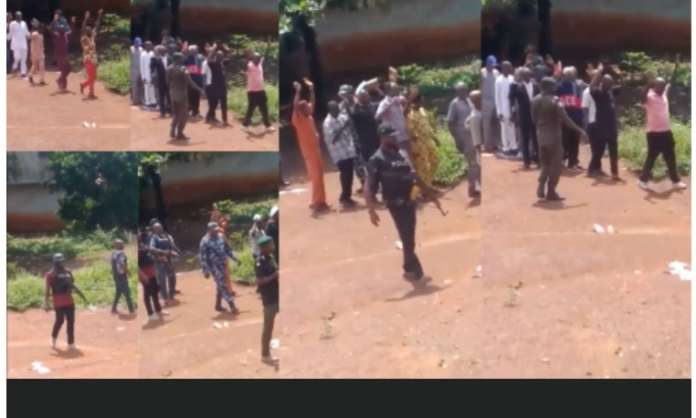
SaharaReporters obtained a video of the incident which showed the operatives in commando style, molesting the members as they raised their two hands and were searched.

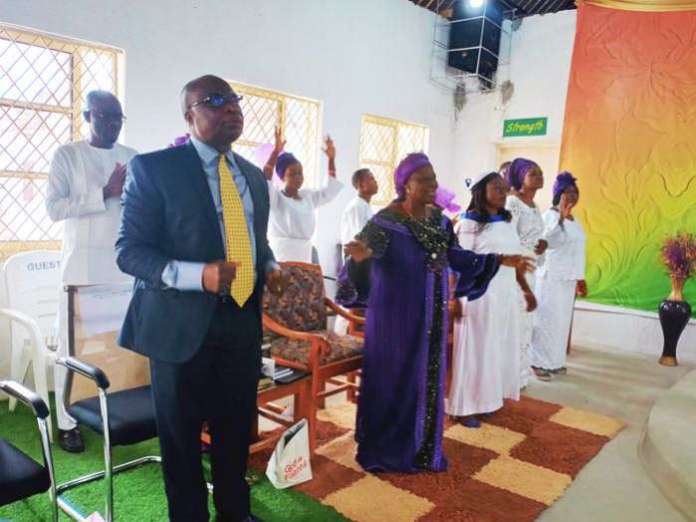
Nigerian Army and police operatives in the early hours of Sunday stormed a church on Owerri Road, Enugu State, marching away over 50 members over their suspected membership of the Indigenous People of Biafra (IPOB).

SaharaReporters obtained a video of the incident which showed the operatives in commando style, molesting the members as they raised their two hands and were searched.

The church service came to an abrupt end.   

“The Nigeria police and military have just stormed a church in Owerri Road, Enugu State, molesting over 50 men, both old and young while matching them to an unknown destination.

“We are bringing this to the attention of the world. The lives of these men should not be wasted for no crime committed. They were only at a place of worship today being Sunday the 30th of May 2021 and no arms were found with them,” a source said.

SaharaReporters had on Wednesday reported how army and police operatives had been raiding communities in the South-East region, including the Orlu, Njaba, Oru East and Orsu Local Government Areas of Imo State; Ihiala and Nnewi South local government areas of Anambra State.

Others are Ohaji/Egbema Local Government Area of Imo State and communities of Ebonyi State.

A coalition of civil societies also mentioned Iriebe and Obigbo communities as well as Port Harcourt and Borokiri in Rivers State and communities in Akwa Ibom and Cross River states.

They had said, “Among the Eastern communities physically and psychologically targeted and attacked since January 2021 by soldiers of the Nigerian Army, Air Force and the Nigeria Police Force are communities of Ubokoro-Atta, Okporo, Uda Orsuihiteukwa and Okwudor and others located in Orlu, Njaba, Oru East and Orsu LGAs in Imo and Orsumoghu, Lilu, Ukpor, Unubi, etc in Ihiala and Nnewi South LGAs of Anambra State.

“Others raided and attacked in April 2021 include Ohaji, Osu, Agwa and Izombe, etc in Ohaji/Egbema LGA of Imo and between April and this month of May 2021, Onicha-Igboeze community and neighboring others in Ebonyi State and Etche,  Iriebe and Obigbo communities as well as Port Harcourt and Borokiri in Rivers State and several others in Akwa Ibom and Cross River states have come under heavy military and police attacks including killings and late night abduction of dozens of defenseless citizens.

“Few days ago, there were reports of resumption of military air bombardments and ground troops’ killings and abductions in the Communities of Amuzi and Odenkwume and other neighboring communities in Ihite/Uboma LGA as well as Arondizogu and neighboring others in Ideato North LGA, all in Imo.” (SaharaReporters)

NBA Abuja lawyers hike: A time of exercise, fun and networking

By Rahila Dauda


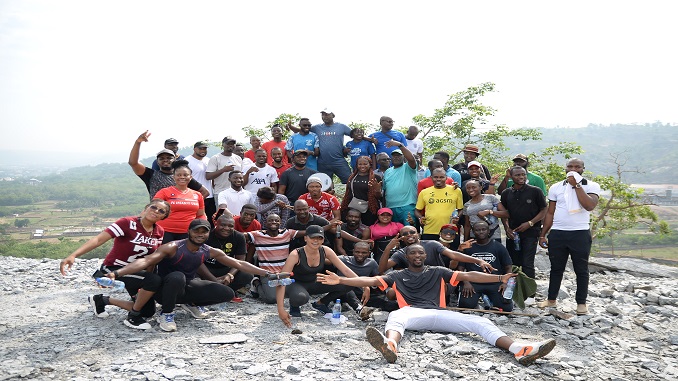
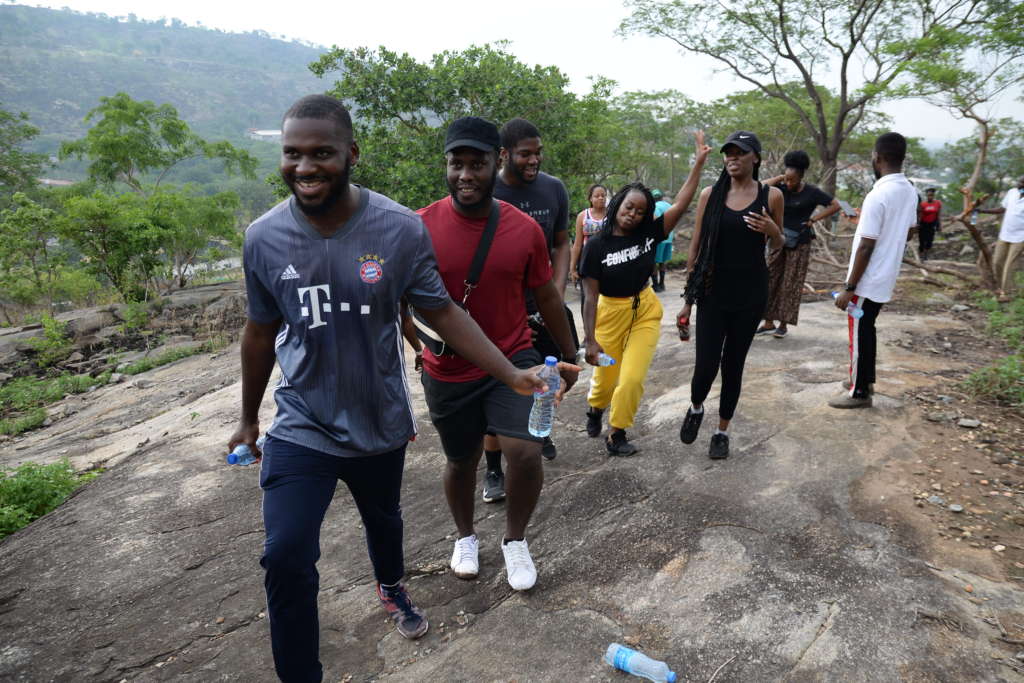
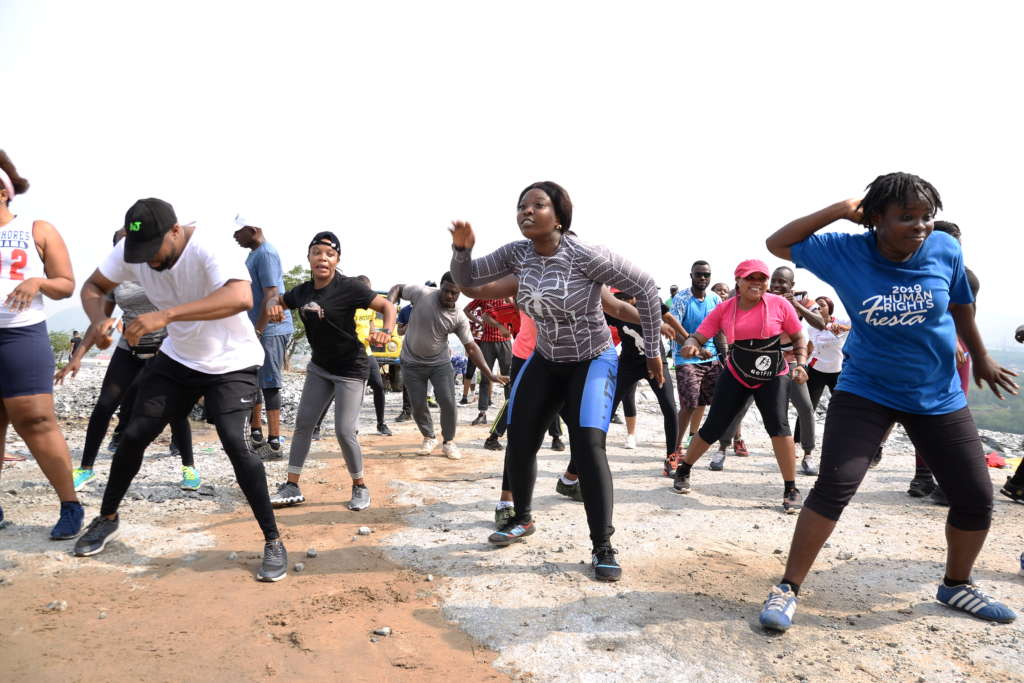
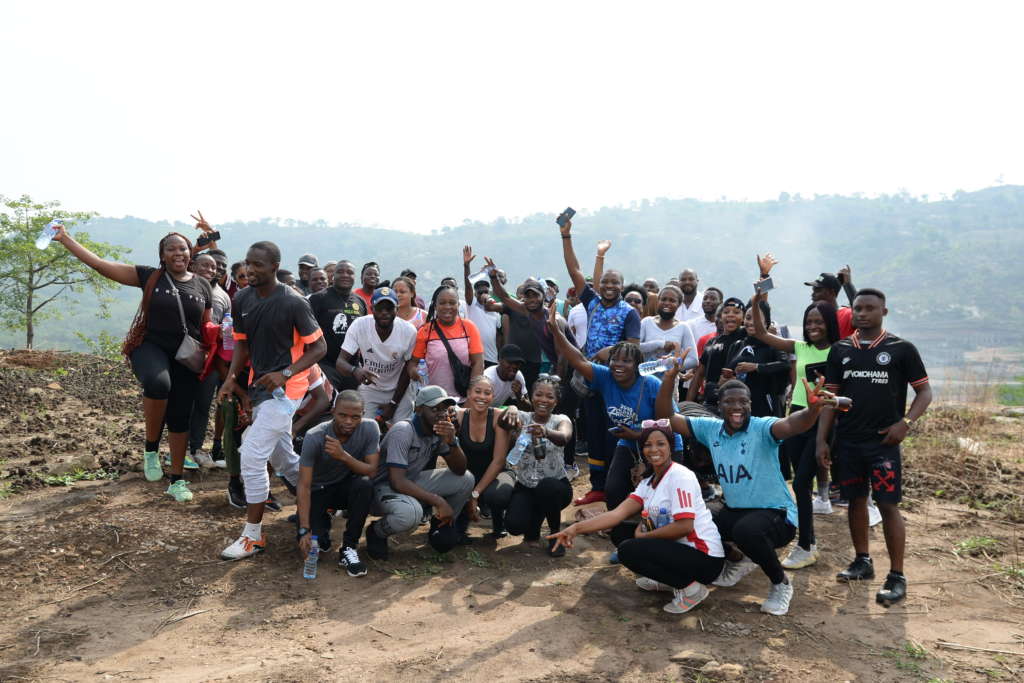
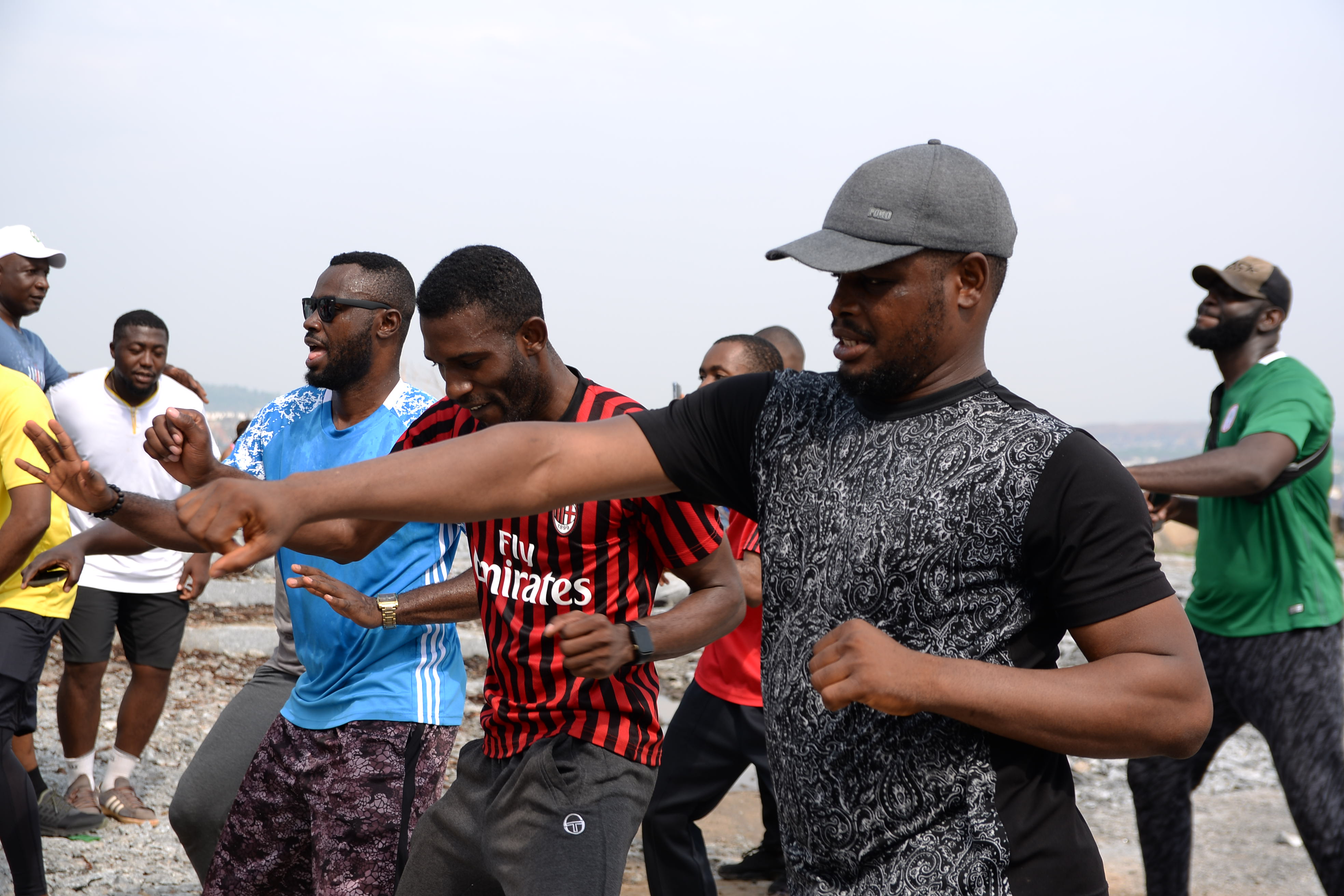
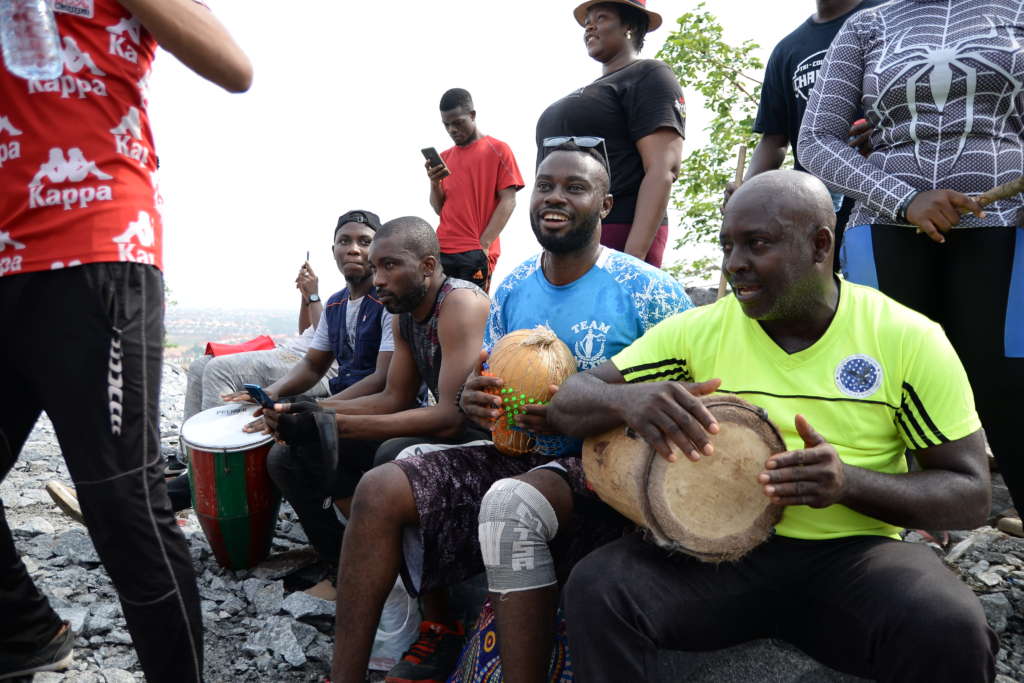
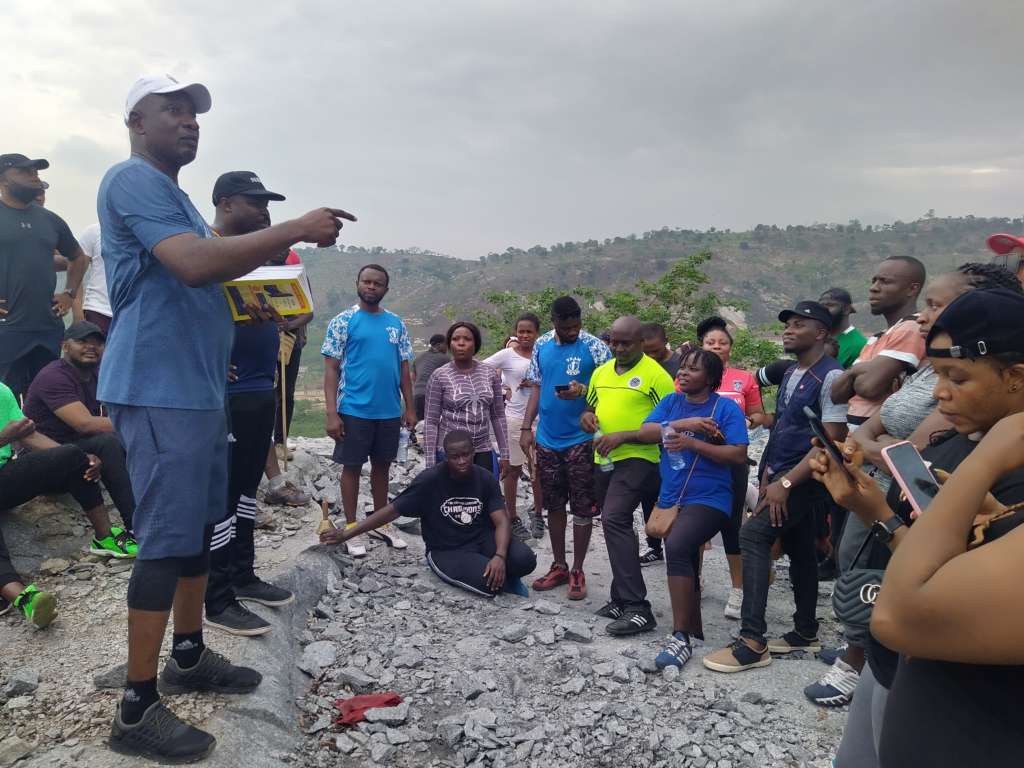
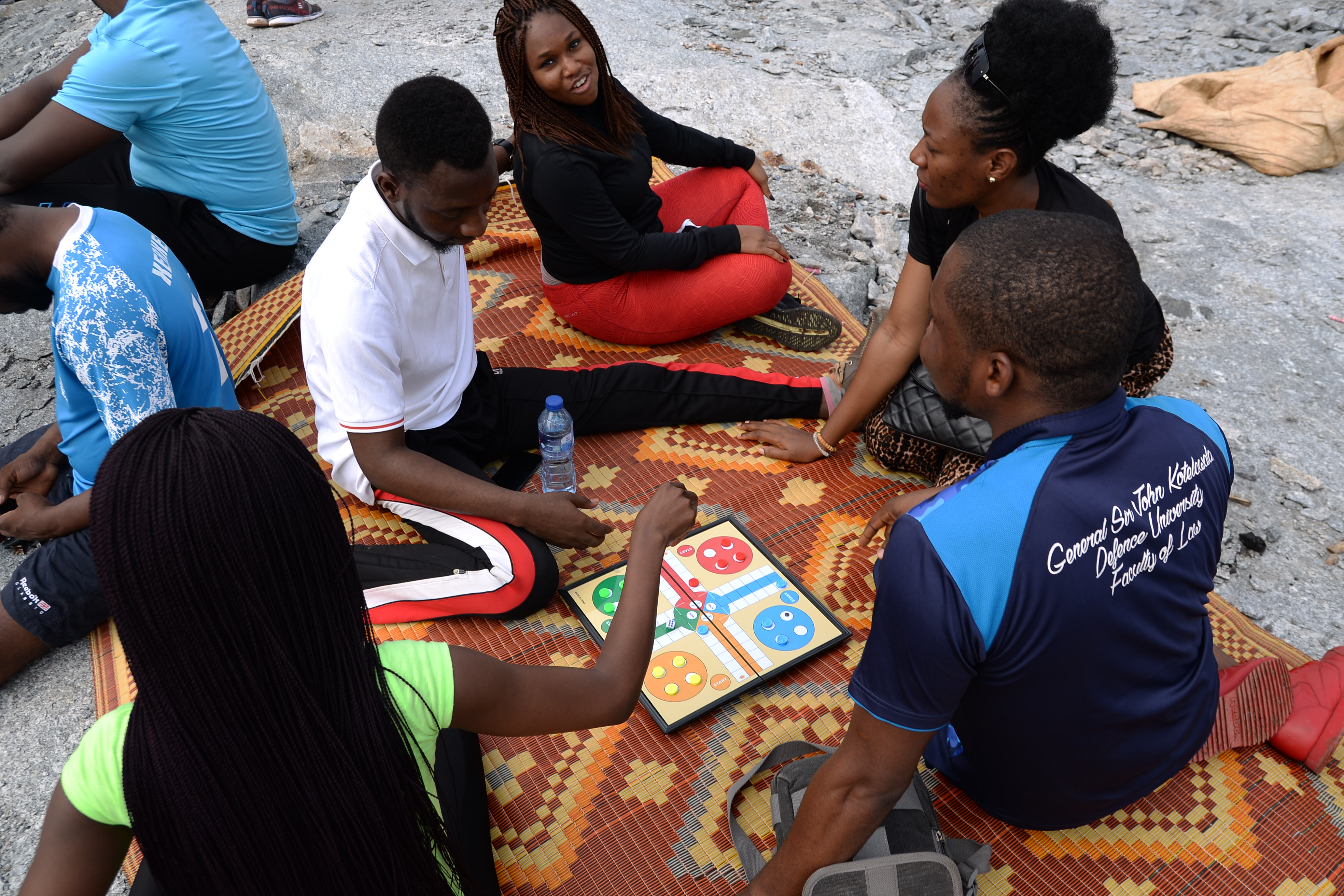
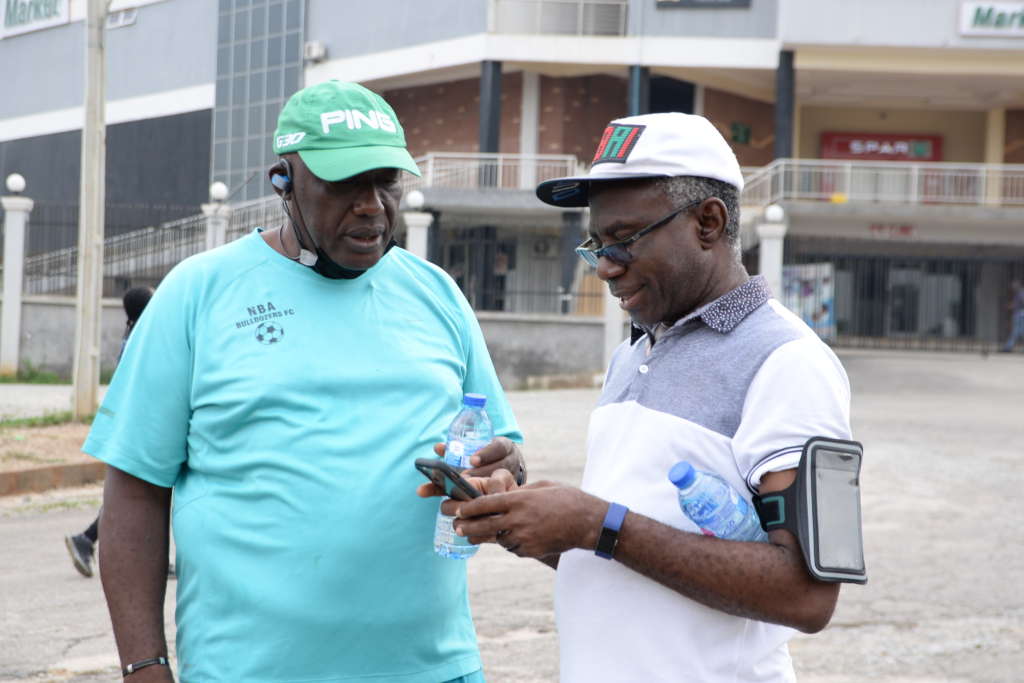
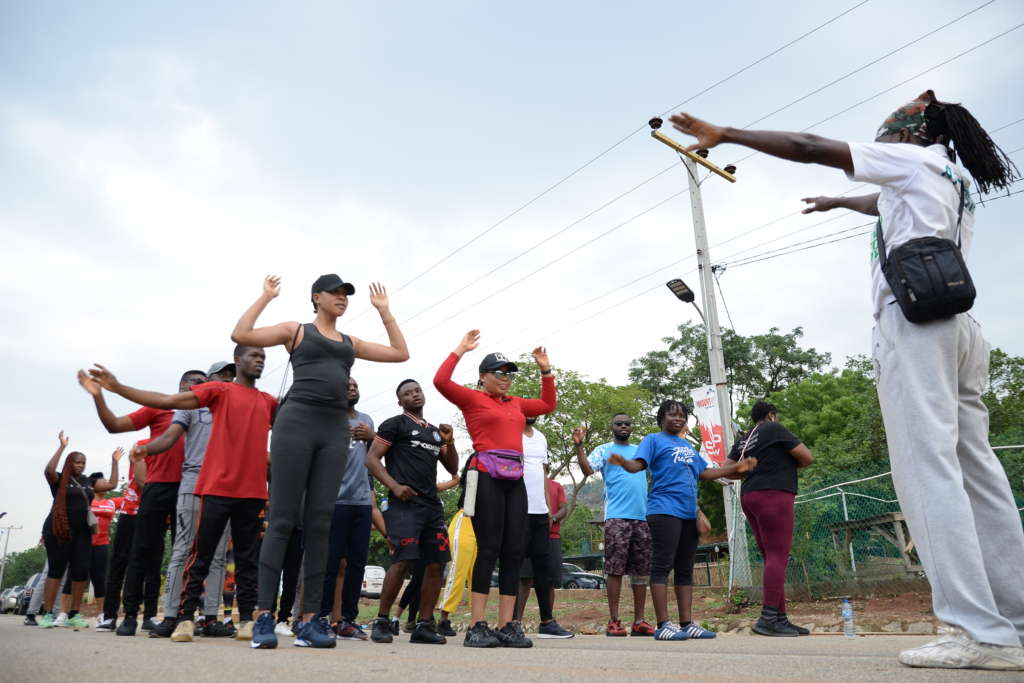
It was a time of mingling, merrymaking and keeping fit as the the Sports Committee of the Unity Bar (NBA Abuja) held its second edition of the lawyers hike.

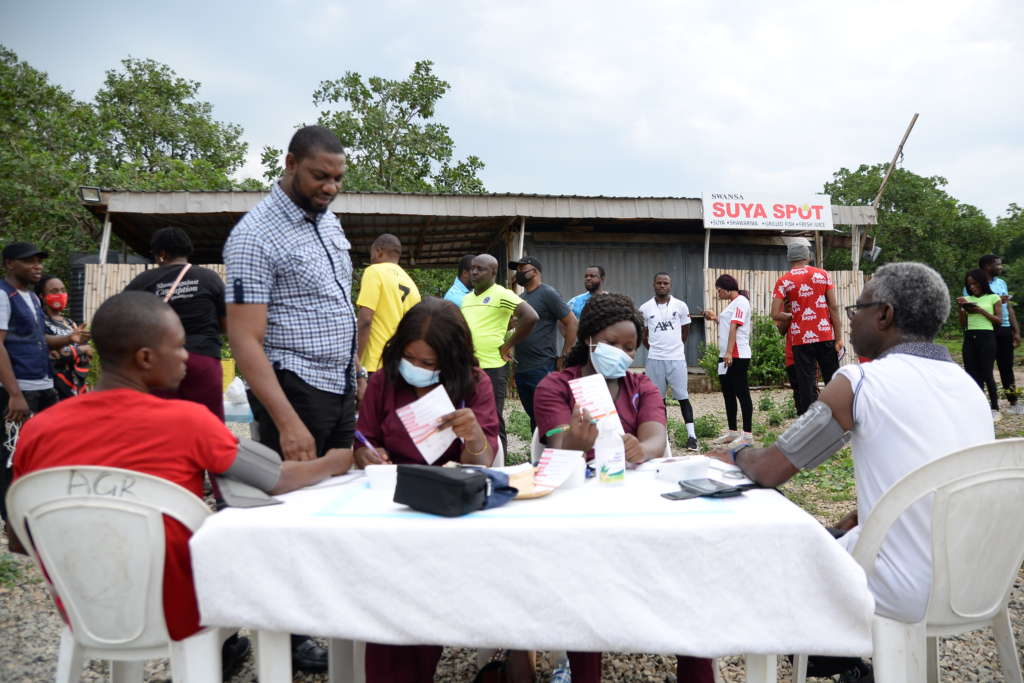
The hike which witnessed a raffle draw for young lawyers with prizes like sports watches, law reports and many more won, equally came with free health check. Tests for high blood pressure, blood sugar level, hepatitis B and HIV were carried out for all members present.

This edition equally of the hike came with free health check. Tests for high blood pressure, blood sugar level, hepatitis B and HIV were carried out for all members present.

The elated Committee Chairman, Mr Afam O. Okeke, who expressed happiness over the turn out and success of the event said the hike is part of the mandate of the sports committee to ensure that lawyers in Abuja keep fit and maintain a healthy lifestyle. He particularly thanked all participants of the hike and assured them of more activities will involve keeping fit, lots of fun and networking.

The Branch chairperson who was represented by the branch secretary Prince Adebiyi Adetosoye, encouraged members to take advantage of events as this and fully participate. He also assured that more of similar activities will be initiated.


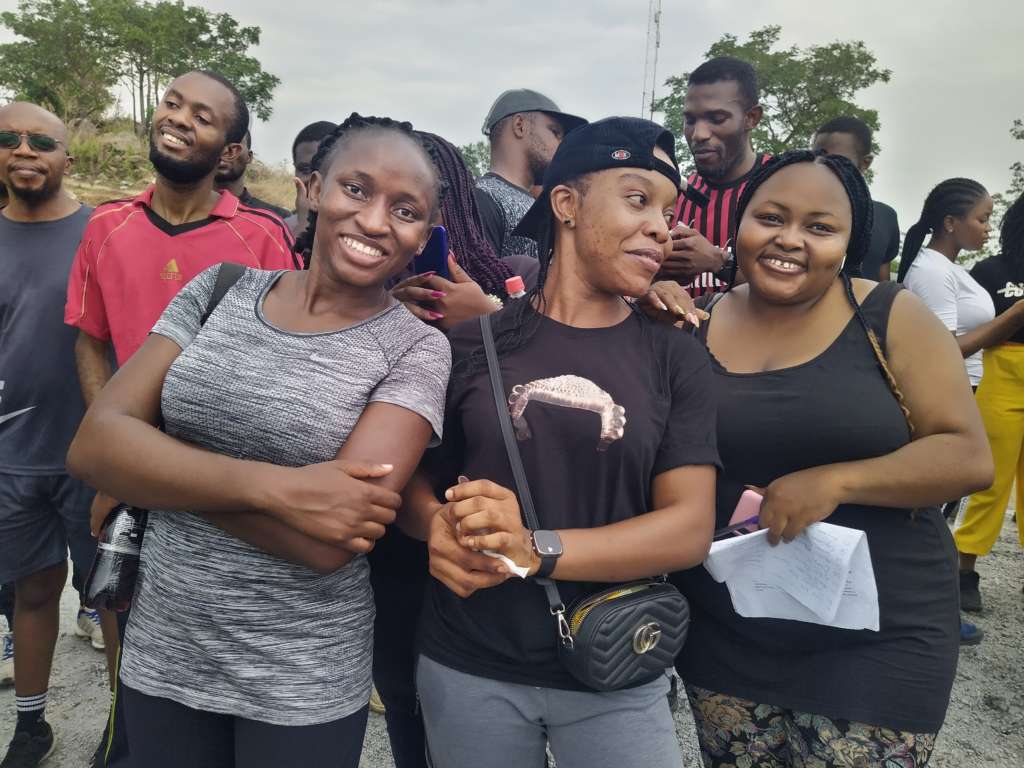
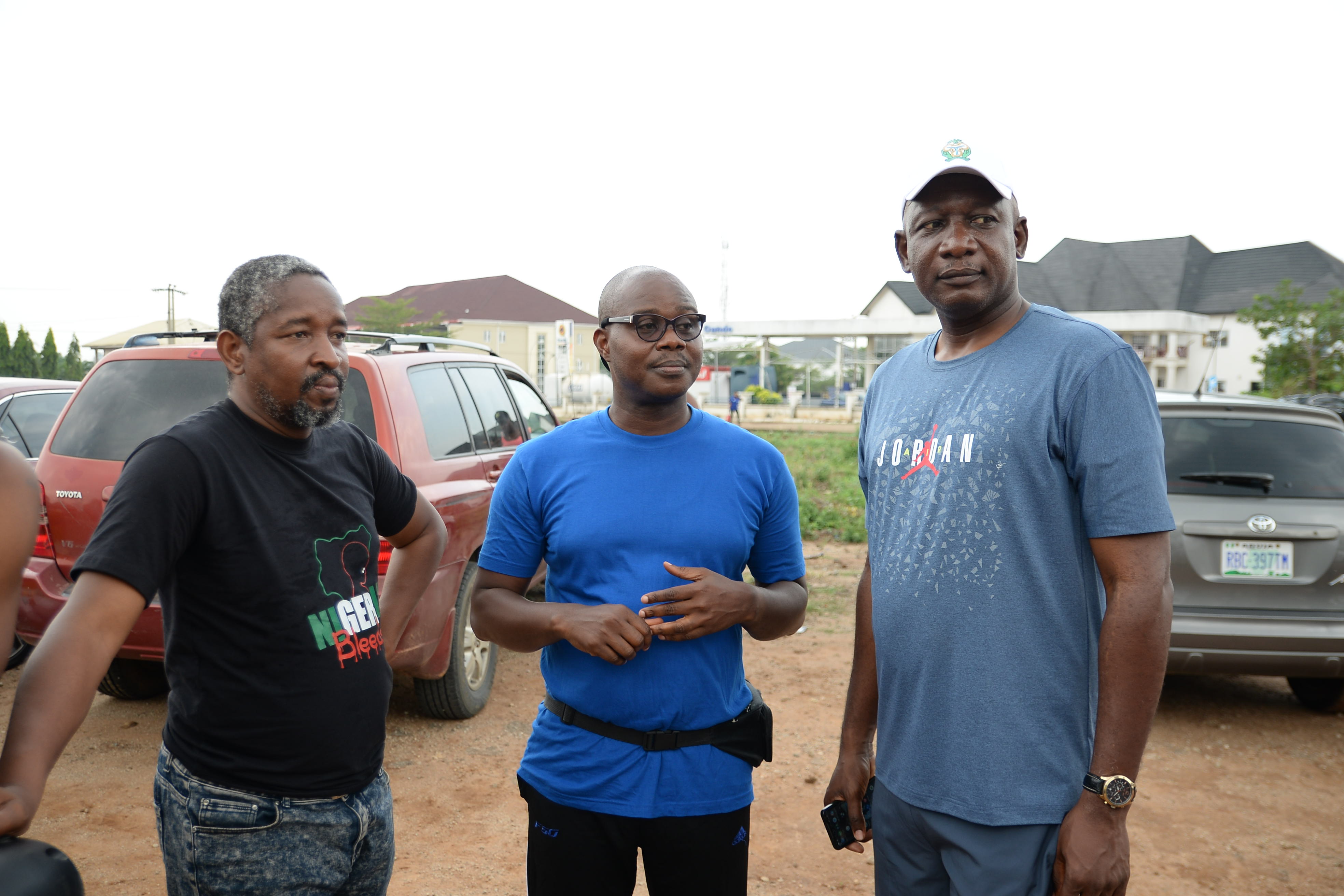
Some of the dignitaries at the event are: Chief J-K Gadzama (SAN) and Dr. Sunny Ajala, (SAN). Thereafter participants were treated to a reception courtesy of Mr Tobechukwu Nweke Esq. Below are some of the photographs from the event:

Nigerian Air Force and its crashing planes, By Reuben Abati

The Nigerian Air Force is the youngest arm of the Nigerian military having been established only on April 18, 1964. In the course of its 57 years of operation, defending the air space of Nigeria and the country’s territorial integrity, the NAF has seen action in many theatres of operation: the Nigerian Civil war, Liberia, Sierra Leone, Mali, the Gambia and Nigeria’s zone of terror, the North East, producing in the process some of the finest officers that have served their country in the best traditions of military service. Modern warfare is no longer all about boots on the ground or physical combat. Advancements in technology and Artificial Intelligence have motivated more countries to invest more in technology, brain power and air power, in the same manner in which having a large Navy was the fashion at the turn of the 19th Century.

In terms of military aircraft strength, Nigeria is ranked 65 out of 140 countries in a 2021 Global Firepower Index, far behind Egypt (10), Algeria (22). Morocco (40), Sudan (51), Tunisia (58) and Kenya (59). But whereas it is generally agreed that Nigeria needs to re-tool, fund, and re-position its military, especially in the face of the spread of terrorism, the more urgent concern is the manner in which Nigerian Air Force aircraft have been crashing from the skies. The Nigerian Air Force operates Nigeria’s Presidential Fleet. Either now or in the past, whenever an aircraft under the control of the Air Force crashes, much anxiety is necessarily expressed about an arm of the Nigerian military whose motto is “Willing…Able..Ready”. The question is reasonably asked: how able or ready is the Nigerian Air Force?

Air accidents no doubt occur, and there have been over 60 of such accidents in Nigeria since 1925 when the first aircraft flew across Nigerian skies. This could be due to technical error, sabotage, inclement weather, or an act of God. Where a military aircraft is involved, conspiracy theories are generated. A quick look at the history of air mishaps involving the Nigerian military indicate until now, a pattern of occasional, even if tragic occurrences. On September 26, 1992, a Nigerian Air Force Hercules C-130 crashed just a few minutes after taking off from the Lagos Airport, leading to the death of all 158 persons on board. On September 12, 1997, a Dornier 228-212 belonging to the NAF also crashed with 10 persons on board. Nobody survived. Nine years later, precisely on September 17, 2006, a Dornier 228 military plane crashed at Vandekiya, Benue State killing 14 military officers including 10 Generals. In August 2015, another Dornier 228-212, NAF 030 crashed in Kaduna, all seven on board died. On September 28, 2018, a Nigerian Air Force Pilot died after two aircraft crashed around Katampe Hill, Abuja, while rehearsing for the nation’s 58th Independence Day celebrations. In each of these incidents, valuable men were lost; families were thrown into sorrow. In at least two incidents, it was widely speculated that the officers who lost their lives were victims of sinister power play within the military. Each time such an accident occurs, the public is told that investigations would be conducted and that the Accident Investigation Bureau had taken charge of the famous “Black Box”. But nobody ever shares the “secrets” in that Black Box with the public, whether the air mishap was civilian or military.

There is however a need to insist on transparency. Air mishaps involving the Nigerian military have now become so regular, so unbelievable. The latest occurred on Friday, May 21, 2021 when a Beechcraft KingAir 350i, NAF 203 crashed near Kaduna International Airport. Eleven military officers, including the Chief of Army Staff, Lt. General Ibrahim Attahiru, lost their lives in that mishap. General Attahiru assumed office on January 26, 2021. He was appointed by the President along with the current Chief of Defence Staff, General Lucky Irabor, Chief of Naval Staff – Rear Admiral Awwal Gambo, Chief of Air Staff – Air Marshall Oladayo Amao. The Irabor squad hit the ground running, with Attahiru visiting the war front immediately to address his troops. He was a hands-on General, He had fire in his belly. His voice echoed the amplitude of his position. It was as if he needed to prove a point having been removed previously, rather unceremoniously, as Commander, Operation Lafiya Dole by the man he succeeded, that is his former boss, now retired Gen. Tukur Buratai.

With Attahiru in that ill-fated aircraft was Brigadier General Abdulkadir Kuliya, then acting Chief of Military Intelligence described by his colleagues as a detribalised Nigerian with a kind heart, Acting Provost Marshall of the Army, Brigadier General Olatunji Olayinka, Chief of Staff to the COAS, Brigadier-General Mohammed Abdulkadir, Aide-De-Camp to the COAS, Major Lawal Aliyu Hayat, Major Nura Hamza and the pilots. Flt Lt. Taiwo Olufemi Asaniyi was looking forward to his wedding. Flt. Lt. A.A. Olufade got married only two months ago! Sergeants O.I. Adesina, Umar Saidu and ACM Olamide Oyedepo also had a bright future ahead of them. Sgt Opeyemi Adesina of Iddo Community, Egbedore LGA, Osun State died three weeks after his daughter’s dedication. But now all that is ended. Gone. Flt Lt. Olufade’s father is devastated. Who wouldn’t be? Asaniyi’s fiancée has posted a touching tribute on social media. It is heart-breaking. Hopes aborted. Potentials unfulfilled.

Nigerians are outraged that the Federal Government did not handle the tragedy well. They expected the President to attend the funeral. He wasn’t there. They thought if the President could not make it, then the Vice President would show up. Here, the problem is that the Vice President can only represent the President if he is directed to do so. He cannot go on a frolic of his own without the President’s permission. The President sent the Minister of Defence, General Bashir Magashi to represent him, but this particular representative only ended up adding petrol to public anger. General Magashi could not deliver a written speech in a fluent manner. He expressed displeasure on behalf of the President. Displeasure that a funeral ceremony was taking place? He mixed up titles in a rather windy protocol list. He ruined it all by conveying “heartless felt condolences” on behalf of the President. Heartless! Magashi obviously was not prepared. He probably did not read the script. People find themselves in important positions in line with Peter’s principle and when they do not rehearse before engaging in the task of public communication, they stutter and descend to lower depths. Magashi is a lawyer and a distinguished soldier in his earlier career. But all geriatics in government who may have issues reading prepared speeches should just be allowed to speak vernacular going forward. General Magashi could just have spoken Hausa, Igbo or Yoruba and have someone translate it for him. Hausa, Igbo and Yoruba languages are officially recognized in the Nigerian 1999 Constitution in Section 55. Why struggle with the English language under difficult circumstances when you can just speak one of the three languages recognised by the Nigerian Constitution! As if that was not enough, it took the Federal Government till Monday, May 24 to direct that the Nigerian flag should be flown at half mast in honour of the dead. The gesture was so belated, it was seen as an afterthought. And then the President declared a May 24 holiday for men of the Nigerian Air Force in the middle of a war in the North East. Nigeria is probably the only country where a whole division of the Armed Forces would be directed to go on holiday for 24 hours!

One of the spokespersons for President Buhari has offered the explanation that the President could not attend the funeral ceremonies for the fallen officers for security reasons. We have been told that the President needs 48 hours’ notice before he can move from the Villa. Are we being told that the President is now being held hostage? Or what? He is Commander in Chief of the Armed Forces, for crying out loud. He has an entire Brigade of Guards protecting him and the FCT. What 48-hour security clearance does the President require to protect his movement between the Villa and the National Cemetery to honour his own troops who fell while on official duty? It also took the Vice President more than 24 hours to issue a condolence message via Twitter. Was that also for security reasons? Governance is about substance, symbols and gestures. The consensus among Nigerians is that the President showing up at the funeral ceremony would have been a morale booster for the military. I think so too.

We had a guest on The Morning Show, Arise TV on Monday, May 24, Retired Air Commodore Abayomi Balogun, NAF pilot for more than 30 years. He was of the firm opinion that nobody should worry about the morale of the troops. Soldiers he said know what they signed up for. They are ever prepared to pay the ultimate sacrifice. And whether or not the President attends a funeral of fallen men, the task of defending Nigeria goes on. Commodore Balogun is a very articulate man who knows his field like the back of his hands. That was how he came across. But upon further reflection on his views, I disagree with him. Loyalty to one’s country, serving and dying for it, is not an automatic obligation. Soldiers are human beings. They also have families. They expect to be appreciated for their sacrifice. That is why recently, they have been bold enough to complain about welfare, rebel against their commanders, and post uncomplimentary videos on social media about the Nigerian military. A strong morale emboldens the soldier. We need to be more sensitive to their needs, feelings and concerns.

And this: While the big men dropped the ball, their wives picked it up. We must commend Mrs Aisha Buhari and Mrs. Dolapo Osinbajo for their empathy, compassion, and beyond the-other-room responsible citizenship. Mrs. Osinbajo, the Vice President’s wife visited the wives of all the 7 Abuja-based officers from Niger Barracks to NAF Base. She was accompanied by Senator Remi Tinubu and others. First Lady, Mrs Buhari also visited the wife of the late Chief of Army Staff. She was accompanied by her children and others. President Buhari has now made phone calls to some of the affected families. We are glad he finally got security clearance for that.
Beyond our review of responses to this tragedy, what remains is to raise questions about what needs to be done to check the crisis of repeated crashes afflicting the Nigerian Air force. Three aircraft belonging to the military have been involved in accidents within the last 90 days, this year alone. The affected aircraft were not involved in combat. They did not crash in a theater of war. They were engaged either in a reconnaissance operation or utility transportation. Three months ago, that is on February 21, 2021, a Beechcraft KingAir B350i plane belonging to the NAF developed engine failure on its way to Minna. It was asked to return to the Nnamdi Azikiwe International Airport, Abuja, from where it commenced its journey. It crashed on its way back. All seven personnel on board died. On March 31, 2021, NAF Alpha Jet 475 on a reconnaissance mission was declared missing. Its wreckage was later found in Bama, Borno State. The body of one of the pilots (Flt, Lt. Chapele Ebiakpo) was found intact. The other pilot (Flt. Lt. John Abolarinwa) could not be found. Two months later, there has been no word from the Air Force authorities.

In Nigeria, accident peril is treated as top secret. This must stop. Secrecy in matters involving loss of human lives breeds distrust against the system, and promotes speculations. The May 21 crash that took the life of the former Chief of Army Staff Ibrahim Attahiru has been linked to the self-immolation, a few days earlier, by Abubakar Shekau, leader of the Boko Haram who was reportedly cornered and ambushed by the rival Islamic State of the West African Province, and who chose to commit suicide. Could the NAF plane crash of May 21 be a form of reprisal attack? Did the Nigerian military know anything about the reported death of Abubakar Shekau? The Presidency said President Buhari had to stay away from the funeral of the dead officers for security reasons. Is there something we should know that no one is willing to tell us?

Whatever anyone is thinking, nobody can live forever. There will be people today who will be calling the former Chief of Army Staff, General Tukur Buratai, to congratulate him on his good luck of having been removed from office. Attahiru and his team were on their way to Kaduna to attend the Passing Out Parade (POP) of recruit officers. That could indeed have been Buratai performing the same function. That is life. Exits and entrances. Each man at his own time. But one thing: Attahiru and his crew would not have died in vain if every effort is made to check the emerging trend of Air Force planes crashing in non-combatant situations. Not even in Colombia do military aircraft drop from the skies like this! The Nigerian Government must institute an independent inquiry and review beyond the preliminary findings of the Accident Investigation Bureau which appears to be part of an entrenched culture of secrecy.
The standard response from the Nigerian military is to deny any wrong-doing. Spokesperson of the Nigerian Air Force, Commodore Edward Gabwet has said that the aircraft involved in the 2021 mishaps were all brand new. Really? Is he sure? New things can crash, yes, but how new? We would like to know. Safety is the first consideration in aviation. How safe are the NAF planes? How often are they maintained? It is not enough to blame the weather, the most convenient fall-guy in situations like this. How well does the NAF maintain its aircraft? How capable are its personnel? Is the NAF “willing…able..and ready?”
Finally, the coffins of the fallen soldiers had not yet been sealed before those interested in their positions began to jostle for space and opportunity, with stories and permutations – ethnic, class and religious – about who should emerge as the next Chief of Army Staff. It is the prerogative of the President to choose his own lieutenants. He should act swiftly, decisively and wisely. Our heartfelt condolences to the families of the deceased.(theconclaveng)

We gave N180 million & 10 motorbikes to get our children freed – Parents of Greenfield University students

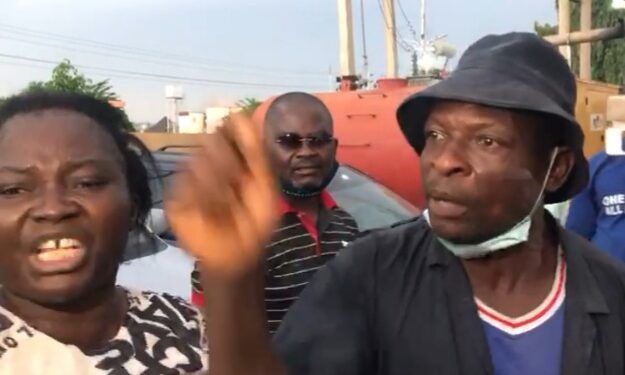
A video making the rounds from an interview by a television station, TVC, has given a peep into how parents of Greenfield University got their children and wards released by paying a staggering N180 million and giving 10 motorcycles ransom to the abductors.

One of the parents, who spoke to the TV station, but did not identify himself in the short video clip, lamented that the government and the Police did not assist in bringing their children home.

An agitated female bystander, perhaps a parent or stakeholder, disclosed that they also gave 10 motorbikes.

Recall that of the students kidnapped from the school 41 days ago, 14 were set free on Saturday

Three of the abducted students’ bodies were discovered on April 23 in Kwanan Bature hamlet, adjacent to the campus. On April 26, the Kaduna government announced that the kidnappers killed two more students.

However, the Kaduna State government which played no role in negotiating for the release of the students based on its policy of nom-negotiation with bandits, issued a statement in which its head, Governor Nasir el Rufai, Governor Nasir El-Rufai welcomed the news of the students’ release, and conveyed solace and encouragement to them following their harrowing ordeal.

He assured them that the bitterness of the last few weeks, now over, would set the backdrop for positive achievements in their lives, as he wished them well for the future.

The KDSG Security Update for Saturday 29th May 2021, reads in full: ,”Abducted Greenfield University students regain freedom.

1. The kidnapped students of the Greenfield University who had been held hostage by armed bandits, have been released by their abductors.

2. This was reported to the Kaduna State Government by security agencies. According to the reports, at about 2:00PM today, Saturday, the hostages were found released along the Kaduna-Abuja road.

3. Fourteen persons were released in total, comprising students and staff.

4. It would be recalled that they were abducted by armed bandits in April and had been in captivity since then. Five students were gruesomely killed by the bandits in the period.

5. Governor Nasir El-Rufai welcomed the news of the students’ release, and conveyed solace and encouragement to them following their harrowing ordeal.

6. He assured them that the bitterness of the last few weeks, now over, would set the backdrop for positive achievements in their lives, as he wished them well for the future.” (Everyday)

Justice Adah: Nigerians must work hard to ensure the country remains one

A legal luminary in the Court of Appeal, Abuja Division, Justice Steve Adah, has stressed the need for all Nigerians to work hard to ensure that the country remains one indivisible entity.

Justice Adah who stated this on Saturday at the 35th anniversary celebration of the Faith Women Fellowship in Makurdi, Benue State capital recalled that on May 29, 1999, Nigeria returned to democratic rule but has had little or nothing to show for it 22 years after.

While speaking on the theme, “Defy Limitations to Soar Higher”, Adah noted that God had ordained Nigeria as the most populous black nation in the world to remain one indivisible country despite the numerous tribes, religion and political affiliation of the people.

‘May 29th of every four years, our presidents take oath of office. This is a day of destiny for Nigeria and we must deal with Nigeria’s limitations so that this country can soar higher.’

He lamented that Nigerians have continued to fail in the area of speaking positively about their country and working assiduously to see that the nation succeeds.

‘The unfortunate thing is that we are failing in showing passion for our country. We must stop speaking evil of our country. We are a nation that is lacking in Nationality. Some of us are habouring evil people in our homes yet we are not reporting such people to the authority.’

Drawing his text from Ephesians chapter 6 verse 12, the cleric maintained that there was need for Nigerians to reawaken to fight for, and do their best for their country to overcome all the spiritual wickedness that have gathered to assault the people.

‘We must also pray for our leaders because we owe the leadership the responsibility to pray for them. What is confronting us as a nation is not flesh and blood but spiritual wickedness coming from the realm of the spirit to assault us.

‘If anything happens here, it is we (Nigerians) that will be affected. Hence the need for us to wage war against those spiritual wickedness. When we call on the name of the Almighty God, He will answer us and heal our land.

‘Nigeria needs healing, Benue needs healing and the only Healer that we know that is above all healers is God. All that we need now is peace, progress and advancement. The solution to Nigeria problem is in our hands. For though we walk in the flesh, we do not war in the flesh,’ Adah said.

On her part, Founder of the Ministry, Evangelist Lydia Idoko, expressed the assurance that Nigeria cannot disintegrate because God is committed to ensuring the country’s unity despite the divisiveness that had plagued it in recent times.

‘Nigeria can’t be divided because God reigns over this country. It is an indivisible country. I’m so convinced about that. The reign of terror is for a while. We are praying, the people of God are praying and Nigeria shall surely overcome its current limitations and soar higher.’

Idoko, who is wife of the late Chief Judge of Benue State, Justice Alhassan Idoko, described her late husband as a prophet and teacher of the word of God who also wrote many books.

The cleric, who maintained that her husband was an incorruptible judge who served God all the days of his life, disclosed that a library would be opened in his memory where all his judgements could be accessed by younger lawyers. (Today.ng)

CoAS Appointment As Missed Opportunity For Unity

By Farooq Kperogi

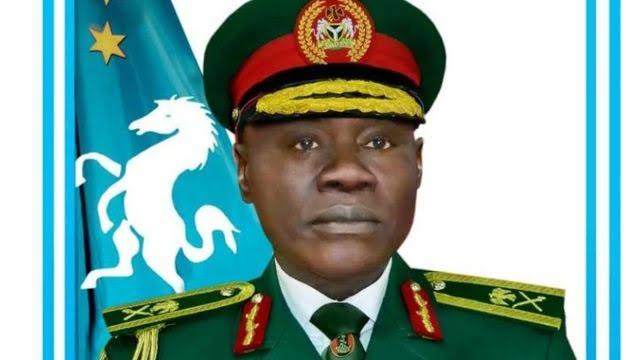
The appointment of my namesake, Major General Farouk Yahaya, as Chief of Army Staff to succeed the late Lieutenant General Ibrahim Attahiru who died in a plane crash on May 21 is yet another tone-deaf but entirely predictable mismanagement of Nigeria’s diversity at a time it desperately needs to be cared for with deliberate symbolic nourishment.

There is no question that General Yahaya is qualified for the job. His CV shows evidence of immense professional and academic preparedness for the position. But the alternatives to him are just as qualified, so this is never about competence for the job. It’s about symbolism and the politics of representation at a time of heightened national storm and stress.

Many people had hoped that the regime would appoint Major General Benjamin Ahanotu from Anambra State as Attahiru’s successor both to water the perishingly shriveling tree of national unity in the country and to pacify the Southeast whose sense of alienation in the last five years is resurrecting the ghost of Biafra secessionist agitations.

Since Ahanotu is just as professionally and academically prepared as Yahaya is, a lot more would have been gained in symbolic and substantive terms if the regime had chosen to not appoint another Northern Muslim to succeed a northern Muslim who succeeded a previous northern Muslim.

In no previous civilian administration has this ever happened. Former President Shehu Shagari had ethnic and religious diversity in his choice of Chief of Army Staff. He started with Lieutenant General Ipoola Alani Akinrinade, then appointed Lieutenant General Gibson Jalo, and finally Lieutenant General Mohammed Inuwa Wushishi.

Although Obasanjo’s choices of Chief of Army Staff didn’t reflect religious diversity, they reflected regional and ethnic diversity. Goodluck Jonathan also chose only Christians from the South-South and the Southeast, which we condemned, but his security council was more broad-based than Buhari’s is.

Many well-placed northern politicians who are disturbed by the widening intensity of fissiparity in the Nigerian polity told me they intervened to ensure that the regime appointed someone other than a northern Muslim as Chief of Army Staff. One man told me he was part of a group that reached out to Professor Ibrahim Gambari, Muhammadu Buhari’s Chief of Staff, to persuade him to advise his boss to appoint Ahanotu—or another qualified southerner—as Chief of Army Staff.

Perhaps, that was where the group erred. Gambari has no powers to influence consequential policy decisions in this regime. A personage who is intimately familiar with the workings of the Presidential Villa told me a few days ago that Gambari was recently caught dozing off in the waiting room of Sabiu “Tunde” Yusuf, the 30-something-year-old cousin of Buhari’s who is also his special assistant.

The man said the fact of Gambari drifting off in Yusuf’s waiting room was indicative of the extended minutes, perhaps hours, that he had been waiting for the young man. But, for me, it emblematizes Gambari’s powerlessness and lack of access to the man he is supposed to be Chief of Staff to.

As dramatic as this revelation was, it wasn’t shocking to me. I have always known that Sabiu “Tunde” Yusuf, whose highest work experience prior to joining his cousin’s government was a phone recharge card seller, is the real successor to Abba Kyari.

In my November 23, 2019 column titled “Government of Buhari’s Family, By His Family, and For His Family,” I described him as “one of the most powerful people in Nigeria today. He determines who sees and who doesn’t see Buhari. Only Mamman Daura and Abba Kyari can overrule him.”

I also pointed out in my May 16, 2020 column titled “Real Reason the Buhari Cabal Picked Gambari as CoS” that Gambari’s linguistic “handicap” in the Hausa language would ensure that he isn’t sufficiently close enough with Buhari to have any meaningful interpersonal relationship with him. That, I said, would whittle away the influence of his office.

A May 25, 2020 exclusive Daily Trust story titled “How Buhari’s Chief of Staff, Gambari facilitated removal of TCN boss” proved me right. “The Special Assistant to the President (President Secretariat), Sabi’u Yusuf, the same day, wrote a letter referenced PRES/65-I/COS/3/750, addressed to the CoS, Prof. Gambari, conveying Buhari’s approval of his earlier memo,” the story said.

So, unlike Abba Kyari who had a direct access to Buhari and whom Buhari said all ministers should meet if they wanted anything from him, Gambari has an intermediary between him and Buhari, and that intermediary is a blood relative of his planted there by Mamman Daura, his Trinity College, Dublin-educated nephew on whom he has always been emotionally and intellectually dependent.

As I pointed out in my May 30, 2020 column titled, “Gambari: Embrace and Alienation of an Outsider on the Inside,” “The real Chief of Staff to Buhari is Sabi’u ‘Tunde’ Yusuf (of course, acting on Mamman Daura’s behalf) while Ibrahim Gambari is only the public face of the office— with some legroom to do the most obvious official requirements of his job.”

I’ve gone to this length to rejig the reader’s memory just to make the case that anyone who wanted to influence the appointment of the new Chief of Army Staff should have gone to Mamman Daura who is the real, even if unofficial, president of Nigeria. But Daura has a really retrograde and fossilized understanding of Nigeria’s ethnic and religious diversity.

Nonetheless, in case people who can influence Daura are reading this, he should be made self-aware that in moments such as Nigeria is going through now, even little symbolic acts of inclusion go a long way. At the twilight of his life, he has become the luckiest Nigerian alive. He has unofficial presidential powers without winning or rigging an election, staging a coup, or even being appointed. Even for the sake of his grandchildren, he should snap out of his provincial cocoon and save the country from avoidable implosion.

Nigeria’s chance for continued existence going forward will be dependent on intentional symbolic gestures that nurture national cohesion. National cohesion doesn’t magically emerge out of thin air because people who are luxuriating in the decadent orbits of power facilely proclaim Nigeria’s unity to be “settled” and “non-negotiable.” Nation-building is never “settled”; it is always in a state of negotiation and renegotiation.

Unity is not an article of faith to be internalized and accepted unquestioningly. It is consciously sowed, watered, and nourished by acts of kindness to the disadvantaged, by equity and justice to all, by consensus-building, by deliberate healing of the existential wounds that naturally emerge in our interactions as constituents of a common national space, and by acknowledging and working to cover our ethnic, religious, regional, and cultural fissures. The efforts will never be perfect or fool-proof but doing something about a problem is always better than complacency and smug self-satisfaction.

Most progressive Muslim northerners I know are embarrassed to no end by the extreme and unprecedented Arewaization of appointments in this regime. They are embarrassed and worried because the lopsidedness of the appointments invites unearned hate to innocent northerners who don’t materially benefit from them, line the pockets of a privileged few, and alienate our compatriots from the South. That’s not sustainable if we still want a country.

Stripping and Flogging of Workers In Nigeria.

Stripping and Flogging of Workers In Nigeria.  Daily Law Tips (Tip 796) by Onyekachi Umah, Esq., LL.M, ACIArb(UK)

Introduction:   

Nigeria is the most populated black nation in the world. It is home to the richest black man (Aliko Dangote) and more than 82 Million Nigerians that live on less than a dollar. There is a huge gap between the poor and the rich in Nigeria. This imbalance is worse in the employment sector, where the employers (often the rich) enslave the employees/workers (often the poor). Many workers, especially the workers in the private sector, are often maltreated, flogged, surcharged, defamed, stripped naked or tortured. Even police officers and other government staff that are assigned to government officials, get tortured by their principals, who often force them to play domestic roles. 

Flogging and stripping a worker are torture and a violation of human rights as well as a criminal offence. There is no justification for torture by an employer, and not even a law enforcement agent is permitted to torture any person. With very low literacy level (62.2% in 2018) and unimaginably poor legal literacy level, victims of torture, prefer to be silent or are too scared to report their perpetrators or are ignorant of their rights. By the way, with weak institutions, the rich Nigerians are never arrested, investigated or prosecuted, even where there are overwhelming evidence. Hence, there is a surge in the torture of workers in the private sector by their employers. 

Employment and Torture: 

Employment is regulated in Nigeria by a federal law (the Labour Act). This means that no state government, local government, international employer or local employer can setup employment terms and policies that conflict with the federal employment law. The Labour Act regulates employment from how to write employment letter to the duration of maternity leave. Some of the provision of the Labour Act, are; workers are not to be forced to patronise a particular supermarket/business/school; workers’ wages/salaries are not to be fined, deducted or surcharged apart from deductions allowed by law; workers are not to be paid in kind but in cash and workers are entitled to a 12-day sick leave with pay, in any one calendar year (January to December). 

Employment is not a reformatory session, where workers are to be subjected to reformatory punishments. A worker is not a student or a prisoner. A worker is a human being with all fundamental human rights that are equal to that of his employer and that must be respected by all persons and processes. A worker offers his resources for a fee and not his life and human rights. Above all, no employer should tamper with the fundamental human rights of a worker, no matter the position, age, race, colour, religion, height or class of the worker. 

Torture is when pain or suffering, whether physical or mentally is knowingly inflicted on any person to obtain information, punish, intimidate or force such person or any other person by or at the orders of a public official or any person acting on official capacity without lawful sanction/authority. Torture can be physical, mental or even both. 

Torture includes; beatings, food deprivation, rubbing of pepper/chemicals, assuming of stressful bodily positions, rape, exposure to cold/sunlight, use of drugs, blindfolding, threat, prolonged interrogation, unscheduled transfer of persons, secret detention, denial of sleep, shaming, stripping naked and parading in public places. Torture is a violation of fundamental human rights. Depending on the nature of the torture, it could affect one or several human rights. The violation of human rights or attempt to violate or the fear of such violation, are violation of human rights and the courts will not hesitate to punish the offenders. 

Torture aside being a violation of human rights, is also a violation of criminal law. All forms of torture are offences under the criminal laws in the states across Nigeria. Also, the federal legislature (the National Assembly) has gone on to enact a federal law on torture (Anti-Torture Act) which prohibits and criminalise all forms of torture. So, where there is a torture, the offender can also be prosecuted under a criminal law, aside a prosecution under the fundamental human rights. 

Aside prosecuting an employer for torture, under criminal law or the fundamental human rights, there is a third option. An employer can also be sued in a civil court for tort. This could be for the actions of the employer that led to; assault, battery, defamation, economic loss, trespass, emotional stress, invasion of privacy, false imprisonment, employment discrimination, unlawful demotion, wrongful failure to promote and wrongful termination. 

Pursing a case against an employer under civil or criminal or both of them, have varying benefits. The good news is that they all can run concurrently. A case under the criminal law focuses on the imprisonment of employer, payment of fine to government and in rare cases payment of compensation to the victim. Under the civil court, a fundamental human rights case can order an employer to write an apology and pay huge compensations running into millions of Naira for violation of human rights. Also, in the civil court, a case of tort, can make an employer to even pay more compensations, running into mega millions of Naira. A good lawyer will assist victims in proper legal diagnosis and in making the right choice in accessing justice. 

Conclusion: 

Under any form of employment, where there is torture, the victim or the well-wishers of the victim have a right to report the employer to the Nigeria Police Force. Aside reporting to the police (and as is often the case, while the police delays) the same case can be taken to a civil court for enforcement of human rights and to seek damages under tort. The failure of police to prosecute a criminal case or the success of police, does not affect or stop a victim of torture or his well-wishers from seeking justice in a civil court. 

A victim that cannot engaged the services of a legal practitioner, should rush to the nearest office of the National Human Rights Commission (NHRC) for free legal services. Here is a link to the offices of the National Human Rights Commission; <https://learnnigerianlaws.com/details-of-state-offices-of-national-human-rights-commission/>. Also, there are several non-governmental and not-for-profit organisations that could offer free legal services; search the internet and speak with your lawyer for such contacts. 

An employer that tortures a worker or attempts to torture or threatens to torture a worker should be ready for criminal and civil prosecutions. Litigations can run down businesses, nothing slumps wealth like litigation and sickness. Employers must be trained to control their emotions and be law-abiding at all times. 

My authorities, are:

  1. Sections 1, 2, 3, 14, 16, 17, 33 to 45, 318 and 319 of the Constitution of the Federal Republic of Nigeria, 1999
  2. Sections 1, 2, 6, 21, 91 and 92 of the Labour Act of 1971.
  3. Sections 2, 7, 8, 13 and 14 of the Anti-Torture Act, 2017. 
  4. Michael Ndu-Okeke, “There are only 15 black billionaires in the world, here are the top 10” (Nairametrics, 23 April 2021) <https://nairametrics.com/2021/04/23/there-are-only-15-black-billionaires-in-the-world-here-are-the-top-10/> 23 May 2021
  5. World Bank, “Nigeria releases new report on poverty and inequality in country” (WorldBank, 28 May 2020) <https://www.worldbank.org/en/programs/lsms/brief/nigeria-releases-new-report-on-poverty-and-inequality-in-country> accessed 23 May 2021
  6. Akintunde Akinleye, “Forty percent of Nigerians live below the poverty line: Report” (Aljazera, 4 May 2020) <https://www.aljazeera.com/economy/2020/5/4/forty-percent-of-nigerians-live-below-the-poverty-line-report> 23 May 2021
  7. Nigeria Literacy Rate 1991-2021 <https://www.macrotrends.net/countries/NGA/nigeria/literacy-rate
  8. Onyekachi Umah, “Details of State Offices of National Human Rights Commission” (LearnNigerianLaws.com, 27 October 2020) <https://learnnigerianlaws.com/details-of-state-offices-of-national-human-rights-commission/> accessed 14 May 2021
  9. Onyekachi Umah, “Places, Workers Cannot Be Paid Salaries In Nigeria” (LearnNigerianLaws.com, 27 February 2019) <https://learnnigerianlaws.com/daily-law-tips-by-onyekachi-umah-esq-tip-277-places-workers-cannot-be-paid-salaries-in-nigeria/ > accessed 23 May 2021
  10. Onyekachi Umah, “It Is Illegal For Workers To Be Told Where And How To Spend Salaries” (LearnNigerianLaws.com, 20 February 2019) <https://learnnigerianlaws.com/daily-law-tips-by-onyekachi-umah-esq-tip-272-it-is-illegal-for-workers-to-be-told-where-and-how-to-spend-salaries/ > accessed 23 May 2021
  11. Onyekachi Umah, “An Employment without a Written Employment Agreement is an Offence” (LearnNigerianLaws.com, 30 April 2018) <https://learnnigerianlaws.com/daily-law-tips-by-onyekachi-umah-esq-tip-91-an-employment-without-a-written-employment-agreement-is-an-offence/ > accessed 23 May 2021
  12. Onyekachi Umah, “Fines And Deductions From A Worker’s Salary Are Illegal” (LearnNigerianLaws.com, 15 July 2020) <https://learnnigerianlaws.com/fines-and-deductions-from-a-workers-salary-are-illegal-daily-law-tips-tip-610-by-onyekachi-umah-esq-ll-m-aciarbuk/ > accessed 23 May 2021
  13. Onyekachi Umah, “Sacking Of A Private Sector Worker With Or Without Reason” (LearnNigerianLaws.com, 8 May 2020) <https://learnnigerianlaws.com/sacking-of-a-private-sector-worker-with-or-without-reason-daily-law-tips-tip-565-by-onyekachi-umah-esq-llm-aciarbuk/ > accessed 23 May 2021
  14. Onyekachi Umah, “Can Workers Be Paid Salaries With Relief Materials And PPES?” (LearnNigerianLaws.com, 17 April 2020) <https://learnnigerianlaws.com/can-workers-be-paid-salaries-with-relief-materials-and-ppes-daily-law-tips-tip-550-by-onyekachi-umah-esq-llm-aciarbuk/ > accessed 23 May 2021
  15. Onyekachi Umah, “Duration Of Sick Leave With Pay In Nigeria” (LearnNigerianLaws.com, 24 March 2020) <https://learnnigerianlaws.com/duration-of-sick-leave-with-pay-in-nigeria-daily-law-tips-tip-532-by-onyekachi-umah-esq-llm-aciarbuk/ > accessed 23 May 2021
  16. Onyekachi Umah, “Who Must Pay The Cost Of Medical Examination Of All Workers In Nigeria” (LearnNigerianLaws.com, 23 March 2020) <https://learnnigerianlaws.com/who-must-pay-the-cost-of-medical-examination-of-all-workers-in-nigeria-daily-law-tips-tip-531-by-onyekachi-umah-esq-llm-aciarbuk/ > accessed 23 May 2021
  17. Onyekachi Umah, “List Of Things That Must Be In An Employment Letter/Agreement” (LearnNigerianLaws.com, 28 January 2020) <https://learnnigerianlaws.com/list-of-things-that-must-be-in-an-employment-letter-agreement-daily-law-tips-tip-492-by-onyekachi-umah-esq-llm-aciarbuk/ > accessed 23 May 2021
  18. Onyekachi Umah, “Oral Employment Agreement Is Illegal In Nigeria” (LearnNigerianLaws.com, 23 January 2020) <https://learnnigerianlaws.com/oral-employment-agreement-is-illegal-in-nigeria-daily-law-tips-tip-489-by-onyekachi-umah-esq-llm-aciarbuk/ > accessed 23 May 2021
  19. Onyekachi Umah, “DEDUCTION OF INTERESTS, DISCOUNTS AND SIMILAR CHARGES FOR “SALARY ADVANCE” IS ILLEGAL” (LearnNigerianLaws.com, 20 September 2019) <https://learnnigerianlaws.com/deduction-of-interests-discounts-and-similar-charges-for-salary-advance-is-illegal-daily-law-tips-tip-418-by-onyekachi-umah-esq-llm-aciarb-uk/> accessed 23 May 2021
  20. Onyekachi Umah, “WHEN IS IT ILLEGAL FOR A WORKER TO DEMAND OR BE PAID “SALARY ADVANCE” (LearnNigerianLaws.com, 4 September 2019) <https://learnnigerianlaws.com/when-is-it-illegal-for-a-worker-to-demand-or-be-paid-salary-advance-daily-law-tips-tip-407-by-onyekachi-umah-esq-llm-aciarb-uk/> accessed 23 May 2021
  21. Onyekachi Umah, “COMPULSORY PERIOD OF GRACE BEFORE EMPLOYER CAN DEMAND RECOVERY OF SALARY ADVANCES IN NIGERIA” (LearnNigerianLaws.com, 26 August 2019) <https://learnnigerianlaws.com/compulsory-period-of-grace-before-employer-can-demand-recovery-of-salary-advances-in-nigeria-daily-law-tips-tip-399-by-onyekachi-umah-esq-llm-aciarb-uk/> access 23 May 2021
  22. Onyekachi Umah, “IT IS ILLEGAL TO PAY A WORKER MORE THAN 1 MONTH ADVANCE IN NIGERIA” (LearnNigerianLaws.com, 5 July 2019) <https://learnnigerianlaws.com/it-is-illegal-to-pay-a-worker-more-than-1-month-advance-in-nigeria-daily-law-tips-tip-367-by-onyekachi-umah-esq-llm-aciarb-uk/> accessed 23 May 2021
  23. Onyekachi Umah, “PLACES, WORKERS CANNOT BE PAID SALARIES IN NIGERIA” (LearnNigerianLaws.com, 27 February 2019) <https://learnnigerianlaws.com/daily-law-tips-by-onyekachi-umah-esq-tip-277-places-workers-cannot-be-paid-salaries-in-nigeria/> accessed 23 May 2021
  24. Onyekachi Umah, “IT IS ILLEGAL FOR WORKERS TO BE TOLD WHERE AND HOW TO SPEND SALARIES” (LearnNigerianLaws.com, 20 February 2019) <https://learnnigerianlaws.com/daily-law-tips-by-onyekachi-umah-esq-tip-272-it-is-illegal-for-workers-to-be-told-where-and-how-to-spend-salaries/> accessed 23 May 2021
  25. Onyekachi Umah, “CAN A WORKER/STAFF IN NIGERIA BE PAID IN KIND INSTEAD OF WITH MONEY?” (LearnNigerianLaws.com, 9 November 2018) <https://learnnigerianlaws.com/daily-law-tips-by-onyekachi-umah-esq-tip-224-can-a-worker-staff-in-nigeria-be-paid-in-kind-instead-of-with-money/> accessed 23 May 2021
  26. Onyekachi Umah, “It Is A Crime To Run Recruitment and Employment Consultancy Services Without A License In Nigeria” (LearnNigerianLaws.com, 17 August 2018) <https://learnnigerianlaws.com/daily-law-tips-by-onyekachi-umah-esq-tip-165-it-is-a-crime-to-run-recruitment-and-employment-consultancy-services-without-a-license-in-nigeria/> accessed 23 May 2021
  27. Onyekachi Umah, “An Employment without a Written Employment Agreement is an Offence” (LearnNigerianLaws.com, 30 April 2018) <https://learnnigerianlaws.com/daily-law-tips-by-onyekachi-umah-esq-tip-91-an-employment-without-a-written-employment-agreement-is-an-offence/> accessed 23 May 2021
  28. Onyekachi Umah, “An Alternative to Courts for Human Rights Cases” (LearnNigerianLaws.com, 14 May 2021) <https://learnnigerianlaws.com/an-alternative-to-courts-for-human-rights-cases/> accessed 23 May 2021. 
  29. Onyekachi Umah, “Stripping Suspects Naked is Torture and it’s a Crime” (LearnNigerianLaws.com, 16 February 2021) <https://learnnigerianlaws.com/stripping-suspects-naked-is-torture-and-its-a-crime/> accessed 23 May 2021
  30. Onyekachi Umah, “Can Police Punish Unlawful Protesters?” (LearnNigerianLaws.com, 15 February 2021) <https://learnnigerianlaws.com/can-police-punish-unlawful-protesters/> accessed 23 May 2021
  31. Onyekachi Umah, “When Can A Protest Become A Riot?” (LearnNigerianLaws.com, 6 November 2020) <https://learnnigerianlaws.com/when-can-a-protest-become-a-riot/> 23 May 2021
  32. Onyekachi Umah, “#EndSarsNow: Punishment For Police (SARS) Torture” (LearnNigerianLaws.com, 6 October 2020) <https://learnnigerianlaws.com/endsarsnow-punishment-for-police-sars-torture/> accessed 23 May 2021
  33. Onyekachi Umah, “#EndSarsNow: Nigeria Police Lacks Power To Punish” (LearnNigerianLaws.com, 7 October 2020) <https://learnnigerianlaws.com/endsarsnow-nigeria-police-lacks-power-to-punish/> accessed 23 May 2021
  34. Onyekachi Umah, “#EndPoliceBrutality: How To Sue the Nigeria Police Force and Police Officers” (LearnNigerianLaws.com, 14 October 2020) <https://learnnigerianlaws.com/endpolicebrutality-how-to-sue-the-nigeria-police-force-and-police-officers/> accessed 23 May 2021
  35. “Demand justice for Police Brutality in Nigeria” (Amnesty International) <https://www.amnesty.org/en/get-involved/take-action/nigeria-end-impunity-for-police-brutality-end-sars/> accessed 23 May 2021
  36. Onyekachi Umah, “Who Can Be Lawfully Killed In Nigeria?” (LearnNigerianLaws.com, 26 October 2020) <https://learnnigerianlaws.com/who-can-be-lawfully-killed-in-nigeria/ > accessed 23 May 2021
  37. Femi Falana, “Police Permit Not Required For Rallies in Nigeria” (Premium Times, 23 January 2014) <https://www.premiumtimesng.com/opinion/153860-police-permit-required-rallies-nigeria.html> accessed 23 May 2021
  38. Onyekachi Umah, “Can A Person With A Nigerian Flag Be Shot Or Killed?” (LearnNigerianLaws.com,23 October 2020) <https://learnnigerianlaws.com/can-a-person-with-a-nigerian-flag-be-shot-or-killed/ > accessed 23 May 2021
  39. Onyekachi Umah, “#EndPoliceBrutality: When & How Can Government Prohibit Protest In Nigeria?” (LearnNigerianLaws.com, 19 October 2020) <https://learnnigerianlaws.com/when-and-how-can-government-prohibit-protest-in-nigeria/ > accessed 23 May 2021
  40. Onyekachi Umah, “#EndPoliceBrutality: The Right To Protest Is A Human Right.” (LearnNigerianLaws.com, 15 October 2020) <https://learnnigerianlaws.com/endpolicebrutality-the-right-to-protest-is-a-human-right/ > accessed 23 May 2021
  41. Onyekachi Umah, “#EndPoliceBrutality: Do You Need A Police Permit To Protest?” (LearnNigerianLaws.com, 16 October 2020) <https://learnnigerianlaws.com/endpolicebrutality-do-you-need-a-police-permit-to-protest/> accessed 23 May 2021
  42. Onyekachi Umah, “Does The President/Governors Have Powers To Lockdown Any Part Of Nigeria Or Restrict Human Rights?” (LearnNigerianLaws.com, 31 March 2020) <https://learnnigerianlaws.com/does-the-president-governors-have-powers-to-lockdown-any-part-of-nigeria-or-restrict-human-rights-daily-law-tips-tip-537-by-onyekachi-umah-esq-llm-aciarbuk/ > accessed 23 May 2021
  43. Onyekachi Umah, “Human Rights That Can Never Be Restricted Even In War, Pandemic or State of Emergency (LearnNigerianLaws.com, 2 April 2020) <https://learnnigerianlaws.com/human-rights-that-can-never-be-restricted-even-in-war-pandemic-or-state-of-emergency-daily-law-tips-tip-539-by-onyekachi-umah-esq-llm-aciarbuk/> accessed 23 May 2021
  44. Onyekachi Umah, “Duty of Government to Pay Compensation for Damages Caused By Riot.” (LearnNigerianLaws.com, 4 November 2020) <https://learnnigerianlaws.com/duty-of-government-to-pay-compensation-for-damages-caused-by-riot/> accessed 23 May 2021
  45. Onyekachi Umah, “Who Pays For Properties Damaged or Lost In A Riot In Nigeria” (LearnNigerianLaws.com, 6 August 2018) <https://learnnigerianlaws.com/daily-law-tips-by-onyekachi-umah-esq-tip-157-who-pays-for-properties-damaged-or-lost-in-a-riot-in-nigeria/ > accessed 23 May 2021
  46. Onyekachi Umah, “List of Fundamental Human Rights In Nigeria.” (LearnNigerianLaws.com, 22 October 2020) <https://learnnigerianlaws.com/list-of-fundamental-human-rights-in-nigeria/> accessed 23 May 2021
  47. Chris Admin, “Onyekachi Umah Speaks To ChannelsTv On SARS & The New Police Act” (LearnNigerianLaws.com, 9 November 2020) <https://learnnigerianlaws.com/onyekachi-umah-speaks-to-channelstv-on-sars-the-new-police-act/> accessed 23 May 2021
  48. Onyekachi Umah, “What Is The Punishment For Any Person Including Police Officers That Tortures Another Person” (LearnNigerianLaws.com, 18 December 2018) <https://learnnigerianlaws.com/daily-law-tips-by-onyekachi-umah-esq-tip-251-what-is-the-punishment-for-any-person-including-police-officers-that-tortures-another-person/> accessed 23 May 2021
  49. Onyekachi Umah, “Is Obeying “Orders From Above” a Defence for Torture in Nigeria” (LearnNIgerianLaws.com, 7 September 2019) <https://learnnigerianlaws.com/is-obeying-orders-from-above-a-defence-for-torture-in-nigeria-daily-law-tips-tip-409-by-onyekachi-umah-esq-llm-aciarb-uk/> accessed 23 May 2021
  50. Onyekachi Umah, “Being Present During Torture Without Participating In It, Is A Crime” (LearnNigerianLaws.com, 25 November 2019) <https://learnnigerianlaws.com/being-present-during-torture-without-participating-in-it-is-a-crime-daily-law-tips-tip-464-by-onyekachi-umah-esq-llm-aciarb-uk/> accessed 23 May 2021
  51. Onyekachi Umah, “New Punishment for Security Officers Involved in Torture in Nigeria.” (LearnNigerianLaws.com, 27 August 2017) <https://learnnigerianlaws.com/new-punishment-for-security-officers-involved-in-torture-in-nigeria-daily-law-tips-tip-401-by-onyekachi-umah-esq-llm-aciarb-uk/> accessed 23 May 2021
  52. Onyekachi Umah, “Watching Torture but not Participating in it, is Torture.” (LearnNigerianLaws.com, 19 November 2019) <https://learnnigerianlaws.com/watching-torture-but-not-participating-in-it-is-torture-daily-law-tips-tip-460-by-onyekachi-umah-esq-llm-aciarb-uk/> accessed 23 May 2021
  53. Onyekachi Umah, “Any Security Agency’s Manual/Protocol that Allows Torture Even for National Security Cases is Unlawful and its Officers are Liable.” (LearnNigerianLaws.com, 11 September 2019) <https://learnnigerianlaws.com/any-security-agency-s-manual-protocol-that-allows-torture-even-for-national-security-cases-is-unlawful-and-its-officers-are-liable-daily-law-tips-tip-412-by-onyekachi-umah-esq-llm-aciarb-uk/> accessed 23 May 2021
  54. Pic credit: Primecommunications

Sabi Law Projects:

#SabiLaw

#DailyLawTips

#SabiBusinessLaw

#SabiElectionLaws

#SabiHumanRights

#SabiLawOnTheBeatFm

#SabiLawLectureSeries

#CriminalJusticeMonday

#SabiLawVideoChallenge

Speak with the writer, ask questions or make inquiries on this topic or any other via [email protected], [email protected] or +2348037665878 (whatsapp). To receive free Daily Law Tips, join our free WhatsApp group via https://chat.whatsapp.com/L7h4f1exItZ38FeuhXG4WN or Telegram group, via the below link: https://t.me/LearnNigerianLaws

To keep up to date on all free legal awareness projects of Sabi Law Foundation, follow us via

Facebook Page:@LearnNigerianLaws,

Instagram:@LearnNigerianLaws,

Twitter: @LearnNigeriaLaw,  

YouTube: Learn Nigerian Laws

WhatsApp Groups via (https://chat.whatsapp.com/L7h4f1exItZ38FeuhXG4WN),

Telegram Group: (https://t.me/LearnNigerianLaws),

Facebook group: (https://www.facebook.com/groups/129824937650907/?ref=share)

or visit our website: (www.LearnNigerianLaws.com)

Please share this publication for free till it gets to those that need it most. Save a Nigerian today! NOTE: Sharing, modifying or publishing this publication without giving credit to the author or Sabi Law Foundation is a criminal breach of copyright and will be prosecuted. This publication is the writer’s view not a legal advice and does not create any form of relationship. You may reach the writer for more information.

This publication is powered by www.LearnNigerianLaws.com {A Free Law Awareness Program of Sabi Law Foundation, supported by the law firm of Bezaleel Chambers International (BCI).} Sabi Law Foundation is a Not-For-Profit and Non-Governmental Legal Awareness Organization based in Nigeria. For sponsorship and partnership, contact: [email protected], [email protected] or +234 903 913 1200.

Every Child has a Right to Rest and Play.

Every Child has Right to a Rest and Play. Daily Law Tips (Tip 798) by Onyekachi Umah, Esq., LL.M, ACIArb(UK)

Introduction:    

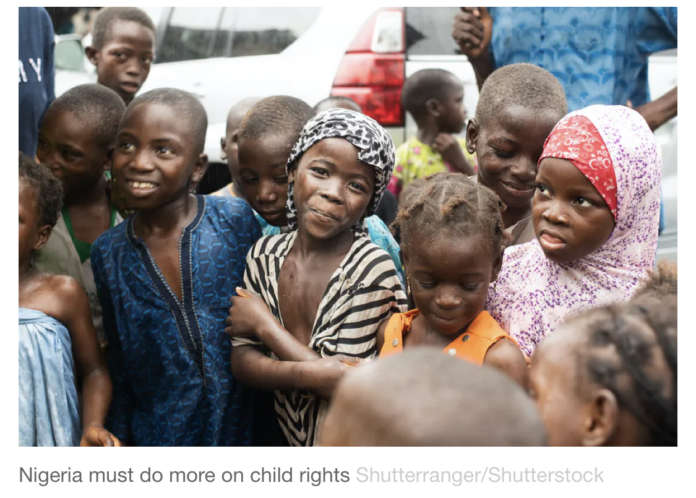
In Nigeria, a child is a person that is less than 18 years. Like any other person, children have fundamental human rights and some other special rights; Child’s Right. Nigeria has a federal law on the rights of children in Nigeria (the Child’s Right Act) and similar laws (the Child’s Right Laws) in many states in Nigeria. As Nigeria celebrates its annual Children’s Day (27 May 2021), this work focuses on one of the many rights of children; the right to rest and play. It also exposes the list of states in Nigeria that have failed and refused to enact a Child’s Right Law to protect children, and thereby allow children to be publicly abused, forced to marry and treated as mere properties. 

The Realities of the Nigerian Children: 

Violence against children occurs in homes, families, schools, communities and other places where children should feel safe. Abuse in all its forms are a daily reality for many Nigerian children and only a fraction ever receive help. Six out of every 10 children experience some form of violence – one in four girls and 10 per cent of boys have been victims of sexual violence. Of the children who reported violence, fewer than five out of a 100 received any form of support.” UNICEF

“A pilot survey of street children revealed that more than 50 per cent of street children covered in the three pilot states were reportedly living with Malams (Islamic teachers) while 17.6 per cent lived under the bridge. Those found living or staying in their parental homes were between 6 to 10 per cent. These children (23.4 per cent) were found to have stayed on the street for up to 6 months; whilst less than 10 per cent of them had stayed between 3 to 4 years on the street. The major problems faced by street children were trafficking, automobile accidents, kidnapping and ailments such as fever, skin diseases and hunger. About 80 per cent of street children were faced with the problem of arrest/harassment with sexual harassment being a major issue in Lagos State.”  UNCRC.

“Nigeria has the largest number of child brides in Africa with more than 23 million girls and women who were married as children, most of them from poor and rural communities.” UNICEF

“The 2008 Nigerian Demographic and Health Survey estimated that 48% of girls in northern Nigeria were married off by the age of 15, while 78% were married before their 18th birthday. The survey put the median age of marriage in the north-western region at 15.2 years of age.” Soyinka.

Child’s Right Act (2003) is the law that guarantees the rights of all children in Nigeria. So far 24 out of 36 states of Nigeria have adopted the CRA as a state law. There are therefore twelve (12) states in Nigeria that are yet to adopt the CRA in their laws of the 36 states of the federation.” National Human Rights Commission (NHRC)

According to Child Rights Act Tracker of the Partners West Africa Nigeria, the following states in Nigeria are yet to enact a Child’s Right Law for their state; Since 2003, only 25 states in Nigeria out of 36 states, have adopted the Child’s Right Act while 11 states have rejected the Child’s Right Act. The 11 states that have refused the adoption of the Child’s Right Act are Adamawa, Bauchi, Borno, Gombe, Jigawa, Kano, Katsina, Kebbi, Sokoto, Yobe and Zamfara states. 

“The Gombe State Co-ordinator, National Human Rights Commission (NHRC), Mohammed Ayuba, made the appeal in an interview with News Agency of Nigeria (NAN) in Gombe State; “He said the dignity of every girl child was at stake if this menace was not properly addressed with the right laws in place, saying “convicting culprits is difficult because of the absence of the Act. According to him, child rape is becoming alarming and a major concern for NHRC in Gombe State. “The government should for the sake of the girl child domesticate the child rights act. This act will go a long way to address the threats against the girl child that are being almost endangered.” Premium Times

The Right to Rest and Play:

Every child in Nigeria has a right to rest and leisure and to engage in play, sport and recreational activities appropriate to his age. It is a statutory right enshrined in the Child’s Right Act and its equivalents in some states across Nigeria. Hence, no child should be denied adequate rest and play. However, a child should be monitored to ensure that he engages in play, sport and recreational activities, that are appropriate for his age. 

Every government, person, institution, service, agency, organization and body responsible for the care and welfare of a child, has a duty to ensure adequate opportunities are provided for children to enjoy their rights to rest and play. Parents and schools should ensure that children are not over labored with academic exercises, house chores and religious engagements, to the extent that their right to rest and play are violated. Rest and Play are important in rising a balanced child.  

Conclusion:

There is no better way to celebrate children’s day than to enact state laws that protect the rights of children and reassure children of their future. Children do not need to engage in match pass to salute executive governors of states, in marking a Children’s day. Rather children need legislative protection in all states in Nigeria. Children need to be safe in “… homes, families, schools, communities and other places …”. 

Also, children should be allowed to play and rest, they should be excused from the often-excessive academic training, chores and talent hunts in Nigeria. Holidays are for children to relax, play and rest, they are not for lessons and summer-schools.  The future of Nigeria will be perpetually dim, unless the children of Nigeria are safe and sound. Happy children’s day to our children. 

My authorities, are:

  1. Sections 1, 2, 3, 4, 5, 6, 33 to 45, 318 and 319 of the Constitution of the Federal Republic of Nigeria, 1999.
  2. Sections 1, 2, 3, 4, 12, 277 and 278 of the Child’s Right Act and the Child Rights Laws in states in Nigeria. 
  3. UNICEF, “Child Protection” (UNICEF) <https://www.unicef.org/nigeria/child-protection> accessed 27 May 2021
  4. “Committee on Rights of Child examines report of Nigeria” (ReliefWeb, 26 May 2010) <https://reliefweb.int/report/nigeria/committee-rights-child-examines-report-nigeria> accessed 27 May 2021.
  5. Daniel Ogunniyi,“There are still huge gaps in Nigeria’s efforts to protect children” (theconverstion, 24 November 2019) <https://theconversation.com/there-are-still-huge-gaps-in-nigerias-efforts-to-protect-children-127031> accessed 26 May 2021
  6. National Human Rights Commission, “Child Rights” (NHRC) <https://www.nigeriarights.gov.ng/focus-areas/child-rights.html> accessed 26 May 2021
  7. “States That Have Passed the Child’s Right Law In Nigeria” (PartnersGlobal) <https://www.partnersnigeria.org/childs-rights-law-tracker/> accessed 26 May 2021.
  8. Segun Awofadeji, “Non – domestication of The Child Rights Act By 11 Northern States Worries UNICEF” (ThisDay Newspaper, 24 November 2020) <https://www.thisdaylive.com/index.php/2019/11/24/non-domestication-of-the-child-rights-act-by-11-northern-states-worries-unicef/ > accessed 26 May 2021.
  9. Femi Bolaji, “Urges Adamawa, Bauchi, Gombe to domesticate Child Rights Act” (Vanguard Newspaper, 16 June 2020) <https://www.vanguardngr.com/2020/06/unicef-urges-adamawa-bauchi-gombe-to-domesticate-child-rights-act/ > accessed 26 May  2021.
  10. NAN, “Child rape ‘becoming alarming’ in Gombe – Human Rights Commission” (Premium Times, 19 October 2019) <https://www.premiumtimesng.com/regional/nnorth-east/358146-child-rape-becoming-alarming-in-gombe-human-rights-commission.html > accessed 26 May  2021. 
  11. Deji Elumoye, “Adamawa, Bauchi, Gombe, 8 Other States Reject Child Rights Act, Says Minister” (ThisDay Newspaper, 15 October 2020) <https://www.thisdaylive.com/index.php/2020/10/15/adamawa-bauchi-gombe-8-other-states-reject-child-rights-act-says-minister/ > accessed 21 May 2021. 
  12. Onyekachi Umah, “Child Marriage/Abuse Is A Crime (Rape): An Exposé On Laws Prohibiting Child Marriage” (LearnNigerianLaws.com, 22 June 2020) <https://learnnigerianlaws.com/child-marriage-abuse-is-a-crime-rape-an-expose-on-laws-prohibiting-child-marriage-daily-law-tips-tip-593-by-onyekachi-umah-esq-llm-aciarbuk/ > accessed 20 April 2021
  13. Onyekachi Umah, “Forced Marriage Is An Offence In Nigeria.” (LearnNigerianLaws.com, 21 October 2020) <https://learnnigerianlaws.com/forced-marriage-is-an-offence-in-nigeria/ > accessed 20 April 2021
  14. Onyekachi Umah, “An Alternative to Courts for Human Rights Cases” (LearnNigerianLaws.com, 14 May 2021) <https://learnnigerianlaws.com/an-alternative-to-courts-for-human-rights-cases/> accessed 23 May 2021. 
  15. Onyekachi Umah, “Stripping Suspects Naked is Torture and it’s a Crime” (LearnNigerianLaws.com, 16 February 2021) <https:// 1 National Human Rights Commission, ‘State Offices” (NHRC) <http://www.nhrc.gov.ng/index.php/regional-offices#zamfara > accessed 27 October 2020
  16. Onyekachi Umah, “Details of State Offices of National Human Rights Commission” (LearnNigerianLaws.com, 27 October 2020) <https://learnnigerianlaws.com/details-of-state-offices-of-national-human-rights-commission/> accessed 14 May 2021
  17. Onyekachi Umah, “Does The President/Governors Have Powers To Lockdown Any Part Of Nigeria Or Restrict Human Rights?” (LearnNigerianLaws.com, 1 October 2020) <https://learnnigerianlaws.com/does-the-president-governors-have-powers-to-lockdown-any-part-of-nigeria-or-restrict-human-rights-daily-law-tips-tip-537-by-onyekachi-umah-esq-llm-aciarbuk/ > accessed 14 May 2021
  18. Onyekachi Umah, “Human Rights That Can Never Be Restricted Even In War, Pandemic or State of Emergency (Daily Law Tips [Tip 539]) <https://learnnigerianlaws.com/human-rights-that-can-never-be-restricted-even-in-war-pandemic-or-state-of-emergency-daily-law-tips-tip-539-by-onyekachi-umah-esq-llm-aciarbuk/> accessed 14 May 2021
  19. Onyekachi Umah, “States & Areas Offices of Public Complaints Commission” (LearnNigerianLaws.com, 20 November 2020) <https://learnnigerianlaws.com/states-areas-offices-of-public-complaints-commission/> accessed 14 May 2021
  20. Onyekachi Umah, “Complaints That The Public Complaints Commission Can Handle” (com, 30 October 2020) <https://learnnigerianlaws.com/complaints-that-the-public-complaints-commission-can-handle/> accessed 14 May 2021
  21. Stephen Ubimago, ‘Legal Aid Council: Facing Challenge Of Relevance Amid Poor Funding’ (Independent, 27 October 2020) <https://www.independent.ng/legal-aid-council-facing-challenge-of-relevance-amid-poor-funding/ > accessed 14 May 2021
  22. Onyekachi Umah, “Abandonment Of Wife/Husband, Children Or Dependants Is A Crime” (LearnNigerianLaws.com, 3 December 2019) <https://learnnigerianlaws.com/abandonment-of-wife-husband-children-or-dependants-is-a-crime-daily-law-tips-tip-470-by-onyekachi-umah-esq-llm-aciarb-uk/> accessed 20 April 2021
  23. Onyekachi Umah, “How Lagos State Is Legislatively Ahead Of Other States” (LearnNigerianLaws.com, 30 September 2020 <https://learnnigerianlaws.com/how-lagos-state-is-legislatively-ahead-of-other-states/ > accessed 20 April  2021
  24. Onyekachi Umah, “The First Virtual Court Hearing Was In Borno State And Not In Lagos State.” (LearnNigerianLaws.com, 1 June 2020) <https://learnnigerianlaws.com/the-first-virtual-court-hearing-was-in-borno-state-and-not-in-lagos-state-daily-law-tips-tip-579-by-onyekachi-umah-esq-llm-aciarbuk/ > accessed 20 April 2021
  25. Onyekachi Umah, “Emotional, Verbal And Psychological Abuse Is Now Criminal Offences” (LearnNigerianLaws.com, 3 September 2019) <https://learnnigerianlaws.com/emotional-verbal-and-psychological-abuse-is-now-criminal-offence/> accessed 28 April 2021
  26. Onyekachi Umah, “Forcing Wife to Stop Work is Now A Crime” (LearnNigerianLaws.com, 21 April 2021) <https://learnnigerianlaws.com/forcing-wife-to-stop-work-is-now-a-crime/https://learnnigerianlaws.com/forcing-wife-to-stop-work-is-now-a-crime/> accessed 26 April 2021
  27. Onyekachi Umah, “It Is Now An Offence To Force Wife/Husband To Stop Working” (LearnNigerianLaws.com, 28 May 2019) <https://learnnigerianlaws.com/it-is-now-an-offence-to-force-wife-husband-to-stop-working-daily-law-tips-tip-340-by-onyekachi-umah-esq-llm-aciarb-uk/> accessed 20 April 2021
  28. Onyekachi Umah, “Seizing or Destroying the Property of a Spouse is a Crime” (LearnNigerianLaws.com, 2 March 2021) <https://learnnigerianlaws.com/seizing-or-destroying-the-property-of-a-spouse-is-a-crime/> accessed 20 April 2021
  29. Onyekachi Umah, “Hiding/Concealing Domestic Violence Is A Crime” (LearnNigerianLaws.com, 11 December 2020) <https://learnnigerianlaws.com/hiding-concealing-domestic-violence-is-a-crime/> accessed 20 April 2021
  30. Onyekachi Umah, “Domestic Violence Is A Crime Not A Family Dispute” (LearnNigerianLaws.com, 10 December 2020) <https://learnnigerianlaws.com/domestic-violence-is-a-crime-not-a-family-dispute/ > accessed 20 April 2021
  31. Onyekachi Umah, “Why Lagos State Needs A VAPP/SGBV Law” (LearnNigerianLaws.com, 26 January 2021) <https://learnnigerianlaws.com/why-lagos-state-needs-a-vapp-sgbv-law/> accessed 20 April 2021
  32. Onyekachi Umah, “Lagos State Has No VAPP/SGBV Law !” (LearnNigerianLaws.com, 8 December 2020) <https://learnnigerianlaws.com/lagos-state-has-no-vapp-sgbv-law/> accessed 20 April 2021
  33. Onyekachi Umah, “An Access To Criminal Laws In Nigeria” (LearnNigerianLaws.com, 4 December 2020) <https://learnnigerianlaws.com/an-access-to-criminal-laws-in-nigeria/ > accessed 20 April 2021
  34. Onyekachi Umah, “8 New Things About Rape Laws In Nigeria” (LearnNigerianLaws.com, 3 December 2020) <https://learnnigerianlaws.com/8-new-things-about-rape-laws-in-nigeria/ > accessed 20 April 2021
  35. Onyekachi Umah, “ChannelsTv Interviews Onyekachi Umah on Rape and the Laws.” (LearnNigerianLaws.com, 20 November 2020) <https://learnnigerianlaws.com/channelstv-interviews-onyekachi-umah-on-rape-and-the-laws/ > accessed 20 April 2021
  36. Onyekachi Umah, “Can A Woman Be Charged With Rape” (LearnNigerianLaws.com, 24 June 2020) <https://learnnigerianlaws.com/can-a-woman-be-charged-with-rape-daily-law-tips-tip-595-by-onyekachi-umah-esq-ll-m-aciarbuk/ > accessed 20 April 2021
  37. Onyekachi Umah, “Can A Husband Rape His Wife” (LearnNigerianLaws.com, 19 June 2020) <https://learnnigerianlaws.com/can-a-husband-rape-his-wife-daily-law-tips-tip-592-by-onyekachi-umah-esq-llm-aciarbuk/ > accessed 20 April 2021
  38. Onyekachi Umah, “When Is Seduction Or Indecent Dressing A Justification For Rape In Nigeria?” (LearnNigerianLaws.com, 18 June 2020) <https://learnnigerianlaws.com/when-is-seduction-or-indecent-dressing-a-justification-for-rape-in-nigeria-daily-law-tips-tip-591-by-onyekachi-umah-esq-llm-aciarbuk/ > accessed 20 April 2021
  39. Onyekachi Umah, “New Punishment For Rape In Nigeria” (LearnNigerianLaws.com, 23 June 2020) <https://learnnigerianlaws.com/new-punishment-for-rape-in-nigeria-daily-law-tips-tip-594-by-onyekachi-umah-esq-llm-aciarbuk/ > accessed 20 April 2021
  40. Onyekachi Umah, “Rape Cannot Be Settled Out Of Court (No Room For Pay-Off/Forgiveness/Withdrawal Of Complaints” (LearnNigerianLaws.com,26 June 2020) <https://learnnigerianlaws.com/rape-cannot-be-settled-out-of-court-no-room-for-pay-off-forgiveness-withdrawal-of-complaints-daily-law-tips-tip-596-by-onyekachi-umah-esq-llm-aciarbuk/ > accessed 20 April 2021
  41. Onyekachi Umah, “A Female Too, Can BE Guilty Of Rape” (LearnNigerianLaws.com, 13 December 2018) <https://learnnigerianlaws.com/daily-law-tips-by-onyekachi-umah-esq-tip-248-a-female-too-can-be-guilty-of-rape-in-nigeria/ > accessed 20 April 2021
  42. Onyekachi Umah, “Ages At Which Sexual Intercourse With Consent Will Amount To Rape” (LearnNigerianLaws.com, 20 February 2020) <https://learnnigerianlaws.com/ages-at-which-sexual-intercourse-with-consent-will-amount-to-rape-daily-law-tips-tip-509-by-onyekachi-umah-esq-llm-aciarbuk/> accessed 20 April 2021
  43. Onyekachi Umah, “How To Prove Rape In Nigeria).” (LearnNigerianLaws.com, 2 July 2019) <https://learnnigerianlaws.com/how-to-prove-rape-in-nigeria-daily-law-tips-tip-363-by-onyekachi-umah-esq-llm-aciarb-uk/ > accessed 20 April 2021
  44. Onyekachi Umah, “Can a Married Woman Inherit Her Parents’ Property?”, (LearnNigerianLaws.com, 27 March 2020) <https://learnnigerianlaws.com/can-a-married-woman-inherit-her-parents-property-daily-law-tips-tip-535-by-onyekachi-umah-esq-llm-aciarbuk/ > accessed 20 April 2021
  45. Onyekachi Umah, “Female Genital Mutilation/Cutting/Elongation, Breasts Ironing And Forced Marriage Are Now Criminal Offences In Nigeria” (Daily Law Tips [443]) <https://learnnigerianlaws.com/female-genital-mutilation-cutting-elongation-breasts-ironing-and-forced-marriage-are-now-criminal-offences-in-nigeria-daily-law-tips-tip-443-by-onyekachi-umah-esq-llm-aciarb-uk/ > accessed 20 April 2021
  46. Onyekachi Umah, “Harmful Widowhood Practices (Traditions) Are Illegal In Nigeria” (Daily Law Tips [Tip 589]) <https://learnnigerianlaws.com/harmful-widowhood-practices-traditions-are-illegal-in-nigeria-daily-law-tips-tip-589-by-onyekachi-umah-esq-llm-aciarbuk/ > accessed 20 April 2021
  47. Onyekachi Umah, “Forceful Isolation/Separation Of Family Members/Friends Is Now An Offence In Nigeria” (Daily Law Tips [356]) <https://learnnigerianlaws.com/forceful-isolation-separation-of-family-members-friends-is-now-an-offence-in-nigeria-daily-law-tips-tip-356-by-onyekachi-umah-esq-llm-aciarb-uk/ > accessed 120 April 2021
  48. Onyekachi Umah, “Abolished Anti-Women Custom of Onitsha People of Anambra State, Nigeria” (LearnNigerianLaws, 10 March 2020) <https://learnnigerianlaws.com/abolished-anti-women-custom-of-onitsha-people-of-anambra-state-nigeria-daily-law-tips-tip-522-by-onyekachi-umah-esq-llm-aciarbuk/ > accessed 20 April 2021
  49. Onyekachi Umah, “Citizen By Marriage Is Discriminatory and Against Nigerian Women”, (LearnNigerianLaws.com, 14 September 2020) <https://learnnigerianlaws.com/citizen-by-marriage-is-discriminatory-and-against-nigerian-women/ > accessed 20 April 2021
  50. Onyekachi Umah, “Abolished Anti-Women Custom of Yoruba People of Nigeria”, (LearnNigerianLaws.com, 11 March 2020) <https://learnnigerianlaws.com/abolished-anti-women-custom-of-yoruba-people-of-nigeria-daily-law-tips-tip-523-by-onyekachi-umah-esq-llm-aciarbuk/ > accessed 20 April 2021
  51. Onyekachi Umah, “Can a Married Woman Inherit Her Parents Property?” (LearnNigerianLaws.com, 27 March 2020) <https://learnnigerianlaws.com/can-a-married-woman-inherit-her-parents-property-daily-law-tips-tip-535-by-onyekachi-umah-esq-llm-aciarbuk/ > accessed 20 April 2021
  52. Onyekachi Umah, “Approval For Marriage Of Female Officers/Staff Is Unconstitutional and Discriminatory”, (LearnNigerianLaws.com, 23 September 2020) <https://learnnigerianlaws.com/approval-for-marriage-of-female-officers-staff-is-unconstitutional-and-discriminatory/ > accessed 20 April 2021
  53. Onyekachi Umah, “It Is An Offence To Chase Out Wife/Husband From A Home Or Even Attempt To Do So” (LearnNigerianLaws.com, 17 May 2019) <https://learnnigerianlaws.com/it-is-an-offence-to-chase-out-wife-husband-from-a-home-or-even-attempt-to-do-so-daily-law-tips-tip-333-by-onyekachi-umah-esq-llm-aciarb-uk/> accessed 20 April 2021
  54. Onyekachi Umah, “Examining Brutalization of House Helps in Nigeria. (An Exposé on Anti-Cruel Labour Laws in Nigeria)” (LearnNigerianLaws.com, 3 August 2020) <https://learnnigerianlaws.com/examining-brutalization-of-house-helps-in-nigeria-an-expose-on-anti-cruel-labour-laws-in-nigeria-daily-law-tips-tip-623-by-onyekachi-umah-esq-ll-m-aciarbuk/> accessed 27 April 2021

Sabi Law Projects:

#SabiLaw

#DailyLawTips

#SabiBusinessLaw

#SabiElectionLaws

#SabiHumanRights

#SabiLawOnTheBeatFm

#SabiLawLectureSeries

#CriminalJusticeMonday

#SabiLawVideoChallenge

Speak with the writer, ask questions or make inquiries on this topic or any other via [email protected], [email protected] or +2348037665878 (whatsapp). To receive free Daily Law Tips, join our free WhatsApp group via https://chat.whatsapp.com/L7h4f1exItZ38FeuhXG4WN or Telegram group, via the below link: https://t.me/LearnNigerianLaws

To keep up to date on all free legal awareness projects of Sabi Law Foundation, follow us via

Facebook Page:@LearnNigerianLaws,

Instagram:@LearnNigerianLaws,

Twitter: @LearnNigeriaLaw,  

YouTube: Learn Nigerian Laws

WhatsApp Groups via (https://chat.whatsapp.com/L7h4f1exItZ38FeuhXG4WN),

Telegram Group: (https://t.me/LearnNigerianLaws),

Facebook group: (https://www.facebook.com/groups/129824937650907/?ref=share)

or visit our website: (www.LearnNigerianLaws.com)

Please share this publication for free till it gets to those that need it most. Save a Nigerian today! NOTE: Sharing, modifying or publishing this publication without giving credit to the author or Sabi Law Foundation is a criminal breach of copyright and will be prosecuted. This publication is the writer’s view not a legal advice and does not create any form of relationship. You may reach the writer for more information.

This publication is powered by www.LearnNigerianLaws.com {A Free Law Awareness Program of Sabi Law Foundation, supported by the law firm of Bezaleel Chambers International (BCI).} Sabi Law Foundation is a Not-For-Profit and Non-Governmental Legal Awareness Organization based in Nigeria. For sponsorship and partnership, contact: [email protected], [email protected] or +234 903 913 1200.

The Buhari Govt. at six: Administration officials flaunt stewardship

•President Muhammadu Buhari

INFRASTRUCTURE

-Presidential approval, in 2020, for the establishment of InfraCo Plc, a world class infrastructure development vehicle, wholly focused on Nigeria, with combined debt and equity take-off capital of N15 trillion, and managed by an independent infrastructure fund manager.

– Establishment in 2020 of the Presidential Infrastructure Development Fund (PIDF), with more than $11Billion in funding so far.

– The Nigerian Sovereign Investment Authority (NSIA) has seen total additional inflows from the Government of around US$2 billion under the Buhari Administration – since the original US$1 billion which the Fund kicked off with in 2012.

– Launch of the Nigeria Innovation Fund, by the NSIA, to address investment opportunities in the domestic technology sector: data networking, datacenters, software, Agri-tech, Bio-tech, etc.

RAIL

– 156km Lagos-Ibadan Standard Gauge Rail nearing completion

– 327km Itakpe-Warri Standard Gauge Rail completed and commissioned 33 years after construction began.

– Abuja Light Rail completed in 2018.

– Ground-breaking done for construction of Kano-Maradi Standard Gauge Rail, and revamp of Port-Harcourt-Maiduguri Narrow Gauge Rail.

– Financing negotiations ongoing for Ibadan-Kano Standard Gauge Rail project

ROADS

– Presidential Infrastructure Development Fund (PIDF), investing over a billion dollars in three flagship projects: Lagos-Ibadan Expressway, Second Niger Bridge, Abuja-Kaduna-Zaria-Kano Expressway.

– Executive Order 7 mobilizing private investment into the development of key roads and bridges like Bodo-Bonny in Rivers and Apapa-Oshodi-Oworonshoki-Ojota in Lagos

– Highway Development and Management Initiative (HDMI), a public-private partnership program to mobilise, in its first Phase, over a Trillion Naira in private investment into the development and maintenance of 12 Roads, amounting to 1,963km in length.

– More than 360 billion Naira worth of Sukuk Bonds raised since 2017 for dozens of critical road projects across all six geopolitical zones.

PORTS

– Completion of New Terminals for International Airports in Lagos, Abuja, Kano and Port Harcourt

– Construction of New Runway for Abuja and Enugu International Airports

– Presidential approval for four International Airports as Special Economic Zones: Lagos, Kano, Abuja and Port Harcourt.

– Approval for new private-sector funded deep sea ports: Lekki Deep Sea Port (Construction already well underway, for completion in 2022); Bonny Deep Sea Port (Ground-breaking done in March 2021); Ibom Deep Sea Port; and Warri Deep Sea Port

– Development of capacity at the Eastern Ports:

o In December 2017, Calabar Port commenced export of bulk cement to Tema Port in Ghana

o In 2019, three container ships berthed at Calabar Port, for the first time in eleven years

o Dredging of Warri Port (Escravos Bar—Warri Port channel) completed in 2018

o On October 30, 2019, an LPG Tanker operated by NLNG, berthed in Port Harcourt – the first time ever an LPG ship berthed in any of the Eastern Ports

o On December 8, 2019, Onne Port received JPO VOLANS (owned by Maersk), the FIRST gearless and largest container vessel (265.07 metres) to call at any Eastern Port in Nigeria.

o On August 1, 2019, Onne Port’s Brawal Terminal received MSC GRACE, its first container vessel since 2012.

POWER

Energizing Education Programme: Taking clean and reliable energy (Solar and Gas) to Federal Universities and Teaching Hospitals across the country. Four Universities completed and commissioned already: BUK (Kano), FUNAI (Ebonyi), ATBU (Bauchi) and FUPRE (Delta); others ongoing.

Energizing Economies Programme: Taking clean and reliable energy (Solar and Gas) to markets across the country. Completed projects include Sabon-Gari Market in Kano, Ariaria Market in Aba, and Sura Shopping Complex in Lagos.

National Mass Metering Programme: Nationwide rollout of electricity meters to all on-grid consumers, launched in August 2020. The Central Bank of Nigeria is providing 60 billion Naira for the first phase, with a target of 1 million meter installations. So far more than 500,000 meters have been delivered to the Discos, and more than 280,000 installed.

Solar Power Naija: Launched in April 2021 to deliver 5 million off-grid solar connections to Nigerian households. The program is expected to generate an additional N7 billion increase in tax revenues per annum and $10 million in annual import substitution. In May  2021, the Rural Electrification Agency announced the planned deployment of solar-powered grids to 200 Primary Health Centres (PHC) and 104 Unity Schools nationwide.

Presidential Power Initiative (PPI), aka Siemens Power Program: A Government-to-Government initiative involving the Governments of Nigeria and Germany, and Siemens AG of Germany, to upgrade and modernize Nigeria’s electricity grid. Contract for the pre-engineering phase of the Presidential Power Initiative (PPI) was signed in February 2021, following the 2020 approval for the payment of FGN’s counterpart funding for that phase.

Nigeria Electrification Project (NEP) has provided grants for the deployment of 200,000 Solar Home Systems, impacting one million Nigerians. The NEP is also delivering mini-grids across the country.

HOUSING

– The Family Homes Fund Limited (FHFL), incorporated by the Federal Government of Nigeria in September 2016, is the implementing agency for the Buhari Administration’s National Social Housing scheme.

– More than two thousand (2,000) hectares of land with titled documents have been given by 24 States for the Buhari administration’s Social Housing programme, with the capacity to accommodate about 65,000 new homes.

– Under the National Social Housing programme, Nigerians will be given at least a 15-year period with a monthly payment at 6 percent interest rate, to pay for each housing unit. The Central Bank of Nigeria is providing a N200 Billion financing facility, with a guarantee by the FGN.

OIL AND GAS

The Buhari Administration has declared this decade the “Decade of Gas.”

– Ground-breaking on 614km Ajaokuta-Kaduna-Kano Gas Project.

– Successful completion of Nigeria’s first Marginal Field Bid Round in almost 20 years, expected to raise in excess of half a billion dollars, and open up a new vista of investment in oil and gas.

– Launch of National LPG Expansion Programme (including Removal of VAT from the domestic pricing of LPG)

– Financial close and signing of contract for NLNG Train 7, which will grow Nigeria’s production capacity by about 35%

– Nigeria and Morocco have in 2021 signed an agreement to develop a US$1.4 billion multipurpose industrial platform (Ammonia and Di-Ammonium Phosphate production plants) that will utilize Nigerian gas and Moroccan phosphate to produce 750,000 tons of ammonia and 1 million tons of phosphate fertilizers annually by 2025. It will be located in Ikot-Abasi, Akwa-Ibom State.

– Commissioning, in December 2020, of the new NPDC Integrated Gas Handling Facility in Edo State, the largest onshore LPG plant in the country, with a processing capacity of 100 million standard cubic feet of gas daily, producing 330 tonnes of LPG, 345 tonnes of propane and 2,600 barrels of condensate, daily.

– Establishment of a $350m Nigerian Content Intervention Fund, to finance manufacturing, contracts and assets in the oil and gas industry

– Financial Close on the following NNPC-involved projects:

o A 10,000 tonnes per day methanol plant and a 500 million standard cubic feet per day gas processing plant, in Odeama, Brass, Bayelsa State.

o The ANOH gas processing plant, with a processing capacity of 300 million standard cubic feet of gas, in Imo State. It is a Joint Venture between Seplat Petroleum  Development Company and the Nigerian Gas Company, a wholly owned subsidiary of Nigerian National Petroleum Corporation (NNPC). It also has the potential to deliver 1,200MW of power when completed.

o Comprehensive Rehabilitation of the Port Harcourt Refinery (PHRC). Sign-off Ceremony of Engineering, Procurement & Construction (EPC) Contract held in April 2021, marking the commencement of site handover and full monilization to site.

– Policy, Regulatory and Funding Support for the establishment of Modular Refineries across the Niger Delta. When the Administration took office in 2015 Nigeria had only one functioning Modular Refinery. Today there are at least six ongoing brownfield and greenfield Modular Refinery Projects across the Niger Delta. In 2020 President Buhari commissioned the first phase of the Waltersmith Modular Refinery, in Imo State.

– Launch of the Nigerian Upstream Cost Optimization Programme (NUCOP), to reduce operating expenses through process enhancement and industry collaboration.

AGRICULTURE

– Anchor Borrowers Program (ABP): The Anchor Borrowers Programme (ABP) of the Central Bank of Nigeria, launched by President Muhammadu Buhari on November 17, 2015, has made more than 300 billion Naira to more than 3.1 million smallholder farmers of 21 different commodities (includong Rice, Wheat, Maize, Cotton, Cassava, Poultry, Soy Beans, Groundnut, Fish), cultivating over 3.8 million hectares of farmland.

– Presidential Fertilizer Initiative: Launched as a government-to-government partnership between the Nigerian and Moroccan Governments, in December 2016, the Presidential Fertilizer Initiative (PFI) produced ~12million 50kg bags of NPK 20:10:10 equivalent in 2020, bringing total production since inception to over 30 million 50kg bags equivalent; and number of participating blending plants increased to 44 from three at inception.

– Special-Agro Industrial Processing Zones (SAPZ) Programme: A partnership between FGN, AfDB Group, and other stakeholders including IFAD and BOI. Under the SAPZ programme, agro-processing centres will be established across the country. The agro-processing centres will be provided with basic infrastructure such as water, electricity and roads as well as facilities for skills training. Seven (7) States and the FCT selected for the pilot phase, due to commence 2021: Ogun, Oyo, Imo, Cross River, Kano, Kaduna, Kwara.

– The Green Imperative – a Nigeria-Brazil Agricultural Mechanisation Programme aimed at boosting agricultural production in Nigeria. The National Assembly has approved a loan for the financing of the program, which will involve the development of 632 privately-operated primary production (mechanisation) Service Centers and 142 Agro processing (value addition) service Centres across the 774 LGAs, and the reactivation of 6 privately owned partially-operational or moribund tractor assembly plants nationwide. It will also train 100,000 new extension workers.

SOCIAL INVESTMENT AND POVERTY ALLEVIATION

– In 2016, President Buhari launched the National Social Investment Programme, currently the largest such programme in Africa and one of the largest in the world. Currently, the National Social Register of poor and vulnerable Nigerians (NSR) has 32.6 million persons from more than 7 million poor and vulnerable households, identified across 708 local government areas, 8,723 wards and 86,610 communities across the 36 States of the country and the FCT.

– From this number, 1.6 million poor and vulnerable households (comprising more than 8 million individuals, in 45,744 communities from 5,483 Wards of 557 LGAs in 35 states and the FCT are currently benefiting from the Conditional Cash Transfer (CCT) program, which pays a bimonthly stipend of N10,000 per household.

– In January 2019, President Buhari launched Nigeria’s Micro-Pension Scheme – which allows self-employed persons and persons working in organisations with less than 3 employees to save for the provision of pension at retirement or incapacitation.

– Establishment of Survival FundNational Youth Investment Fund, and National Special Public Works Program (774,000 beneficiaries across 774 LGAs nationwide), and the Central Bank’s Covid-19 300 billion Naira Targeted Credit Facility (TCF) – more than 150 billion Naira disbursed so far – to support millions of small businesses, households and young people, with federal grants, loans and stipends.

– The Buhari Administration’s Survival Fund has provided its grants (Payroll Support, Artisan and Transport Sector grants, and General MSME grants) to more than 800,000 beneficiaries, since the last quarter of 2020. It has also provided free business registration to more than 200,000 MSMEs across the country.

– Presidential approval for the establishment of the Nigeria Investment and Growth Fund (NIG-Fund), in 2021.

– As at the end of 2020, Development Bank of Nigeria (which commenced operations in 2017) had disbursed 324 billion Naira in loans to more than 136,000 MSMEs, through 40 Participating Financial Institutions (PFIs). (57% of the beneficiaries are women-owned MSMEs while 27% are youth-owned).

– Bank of Industry has disbursed more than 900 billion Naira in loans to over 3 million large, medium, small and micro enterprises, since 2015.

– In January 2019, President Buhari launched Nigeria’s Micro Pension Scheme – which allows self-employed persons and persons working in organisations with less than 3 employees to save for the provision of pension at retirement or incapacitation.

EDUCATION AND HEALTH

– Since assuming office, the Buhari Administration has committed more than N1.7 trillion of capital intervention to Nigeria’s tertiary institutions, through various means, including TETFund – with the universities taking the lion share of the total amount.

– The Federal Government has disbursed more than 170 billion Naira in UBE Matching Grants to States and the FCT since 2015, 8 billion Naira in Special Education Grant to States and private providers of Special Education, and 34 billion Naira from the Teachers Professional Development Fund to States and the FCT.

– Launch of the Alternate School Programme (ASP), designed to ensure that every out-of-school child in Nigeria gains access to quality basic education, irrespective of social, cultural or economic circumstance, in line with the aspirations of Sustainable Development Goal 4 (SDG-4).

– Presidential approval for a new (extended) Retirement age of 65 and Length of Service of 40 years for Teachers in Public Basic and Secondary Schools in Nigeria (both effective January 1, 2021), as well as a new Special Teachers Salary Scale (effective January 1, 2022), and also a new Special Teachers Pension Scheme.

– Reduction in number of out-of-school children, by 3,247,590, as at 31st December, 2020, achieved through a World-Bank financed program known as ‘Better Education Service Delivery for All’ (BESDA). 1,792,833 of that number achieved through formal schools while 1,454,757 are through non-formal interventions such as Almajiri, Girl-Child, Nomadic/Migrant and IDPs Education).

– Under the World Bank-supported Innovation Development & Effectiveness in the Acquisition of Skills (IDEAS) Project, approved in 2020, US$200m will be invested in 6 participating States (Abia, Benue, Ekiti, Gombe, Kano, Edo) as well as 20 Federal Science and Technical Colleges nationwide. Implementation will be stepped-up in 2021 to afford millions of Nigerian youths the opportunity to acquire hands-on skills to effectively contribute to national development.

– Presidential approval for the establishment of the following:

o Federal Maritime University, in Delta State

o Nigerian Army University, in Borno State

o Six new Colleges of Education (one per geopolitical zone: Odugbo, Benue State; Isu, Ebonyi State; Ekiadolor, Edo State; Gidan Madi, Sokoto State; Jama’are, Bauchi State; and Iwo, Osun State).

o Six new Federal Polytechnics in Kaltungo, Gombe State; Ayede, Oyo State; Daura, Katsina State; Shendam, Plateau State, Ohodo, Enugu State; and Ugep, Cross River State.

o Under the phased implementation of the National Youth Policy, 6 Federal Science & Technical Colleges (FSTC) were established in 2020, as follows: FSTC Ogugu, Kogi State; FSTC Hadeija, Jigawa State; FSTC Umuaka, Imo State; FSTC Igangan, Oyo State; FSTC Ganduje, Kano State; FSTC, Amuzu, Ebonyi State. Five (5) additional Federal Science and Technical Colleges (FSTC) will come on-stream in 2021, and will be located in Bauchi, Plateau, Sokoto, Enugu and Cross River States.

– Grants to State Governments: At least $2.5 million disbursed to each State of the Federation and the FCT, under the Saving One Million Lives (SOML) initiative, to improve health outcomes.

– Basic Health Care Provision Fund (BHCPF): For the first time since the National Health Act was passed in 2014, the Federal Government in 2018 began including the 1% minimum portion of the Consolidated Revenue Fund – amounting to 55 billion Naira in 2018 – to fund the Basic Health Care Provision Fund (BHCPF). The Fund is designed to deliver a guaranteed set health services to all Nigerians, through the national network of Primary Health Care centers.

– Passage of enabling legislation for the Nigeria Center for Disease Control (NCDC), for the first time since it was founded in 2011. President Buhari approved a grant of 5 billion Naira for the NCDC in March 2020, as part of the response to the Coronavirus pandemic.

– Tertiary Healthcare Upgrade Programme: A number of key Federal Hospitals across the country are being upgraded to effectively manage cancer and other major health challenges. Cancer Radiotherapy machines and other equipment are being provided to these hospitals. The National Hospital in Abuja has already received two LINAC (cancer treatment) machines.

– Nigeria Sovereign Investment Authority (NSIA) in March 2018 invested US$10m to establish a world-class Cancer Treatment Center at the Lagos University Teaching Hospital (LUTH), and US$5m each in the Aminu Kano University Teaching Hospital and the Federal Medical Centre, Umuahia, to establish modern Diagnostic Centres. These Centers have all been completed and are now operational.

– Launch in 2019 of a Cancer Treatment Support Programme, ‘Chemotherapy Access Partnership’, as a public-private partnership between the Federal Government of Nigeria and a Private Sector coalition, to enable Nigerians access lower-cost, high-quality medications for the treatment of several types of cancer.

CREATIVE INDUSTRY AND SPORTS

SPORTS

– Long overdue renovation of the Lagos and Abuja National Stadiums kicked off in 2020, ahead of concessioning for private management.

– In 2018, the National Sports Festival held for the first time since 2012.

– Nigeria national U-17 football team, the Golden Eaglets, won the FIFA U-17 World Cup for the fifth time, in 2015. Their first ever win was 30 years earlier, in 1985, when President Buhari was military Head of State.

– Nigeria’s participation at the 2016 Paralympic Games yielded her best gold medal result since Nigeria started taking part in the Games in 1992.

– D’ Tigress, Nigeria’s Female National Basketball Team won the 2017 FIBA Africa Women’s Championship, the continental championship Cup, for the first time in 12 years, and earned qualification for its first FIBA Women’s World Cup appearance since 2006.

– In 2018, D’ Tigress, Nigeria’s Female National Basketball Team earned its first-ever in at the FIBA Women’s World Cup, and went on to advance to the quarterfinals. The Team finished in 8th place – the best ever performance by an African Team.

– In 2019, D’ Tigress successfully defended its 2017 Afro Basketball Women Championship Title.

– In 2020, D’ Tigress became the only female African Team to qualify for participation in the 2020 Summer Olympic Games.

– Nigeria’s Women’s Football Team, the Super Falcons, won the African Women Cup of Nations (AWCON) in 2016 and 2018.

– In 2018, Nigeria hosted a FIFA Executive Football Summit, one of twelve worldwide.

– In 2019, the Super Falcons advanced to the group stage of the Women’s World Cup, for the first time in 20 years.

– In 2019, Nigeria won its first Athletics World Championship Medal in six years.

YOUTH AND CREATIVE INDUSTRY SUPPORT

– Establishment of the 75 billion Naira National Youth Investment Fund (NYIF), approved by President Buhari in 2020

– Establishment of the Creative Industry Financing Initiative (CIFI), by the Central Bank of Nigeria (CBN) in collaboration with the Bankers’ Committee, to provide single-digit financing to young Nigerians in the fields of Fashion, Film, Music and Information Technology.

– In 20197, the Federal Government added Creative Industries to the list of qualifying sectors for ‘Pioneer Status’ Incentives – which grants relief from Corporate Income Tax for a specified period of time.

– Presidential Approval for the handover of the National Theatre, Lagos, to the Central Bank of Nigeria and the Bankers Committee, for redevelopment into a world-class Creative Park serving the theatre, film, fashion, music, and ICT sectors. The handover has been done, and redevelopment work (valued at about 20 billion Naira) has now kicked off.

FISCAL, TRADE, MONETARY AND INVESTMENT REFORMS

– The Nigerian Investment Promotion Council (NIPC) in 2017 completed a long-overdue revision of the list of activities that can benefit from Nigeria’s Pioneer Status Incentive, which grants beneficiary companies a 3 to 5-year tax holiday. The revision, done more than 10 ten years after the last one, has modernized the List, expanding the tax holiday incentives to qualifying companies in E-commerce, Software Development, Animation, Music, Film and TV.

– Restoration of Federal Budget to January-December cycle, with the 2020 Budget, for the first time in 12 years.

– Introduction, since 2020, of annual Finance (Reform) Bills to accompany the annual Federal Appropriation Bill

– Negotiation of the billions of dollars in arrears of Cash Calls we inherited when the administration assumed office, resulting in an agreement for a significant discount of more than a billion dollars. Since 2017 the NNPC has commenced payment of the arrears to the Oil Companies. As at Q4 2020, more than $3 billion of the ~$5 billion arrears had been cleared.

– Launch of a Visa-on-Arrival Policy, as part of Ease of Doing Business Reforms. In addition, a comprehensive reform of the existing Visa Regime, leading to the rollout in 2020 of a new and enhanced Visa Policy for Nigeria (including expansion from 6 visa categories to 79; each tailored to a specific type of traveller – 36 Temporary Residence Visas, 15 Permanent Residence Visas, 24 Short Visit Visas, etc.

PRESIDENTIAL ASSENT TO LEGISLATIVE BILLS

– Deep Offshore and Inland Basin Production Sharing Contracts Act, 1993 (Amendment) Act, 2019, which will deliver increased revenues to the Federation.

– Federal Competition and Consumer Protection Commission (FCCPC) Bill, the first legislation in Nigeria’s history focused on curbing anti-competition practices; establishing the Federal Competition and Consumer Protection Commission.

– Nigeria Center for Disease Control (NCDC) Establishment Act, 2018

– Mutual Assistance in Criminal Matters Bill, an Executive Bill, signed into law in 2019. The Bill facilitates the identification, tracing, freezing, restraining, recovery, forfeiture and confiscation of proceeds, property and other instrumentalities of crime, as well as the prosecution of offenders in criminal cases regardless of where in the world they might be.

– Bill establishing the Police Trust Fund, which will significantly improve funding for the Nigeria Police Force (2019).

– Nigeria Police Act, 2020 – the first comprehensive reform of Police legislation since the Police Act of 1943.

– Repeal and Re-Enactment of the Companies & Allied Matters Act (CAMA), 2020 – the first comprehensive reform since 1990.

– Not Too Young to Run Bill (2018) – a Constitution Amendment Bill, to reduce the age of eligibility for running for elective office in Nigeria.

– Nigerian Correctional Services Bill, 2019 – the first comprehensive reform of prison legislation in close to five decades

– Suppression of Piracy and other Maritime Offences Bill, 2019 – the first anti-piracy legislation in West Africa.

– A Bill to grant financial autonomy to States’ Houses of Assembly and States’ Judiciary (2018)

– Banks and Other Financial Institutions Act (BOFIA) 2020

– Finance Act 2019 and 2020

– The Discrimination Against Persons with Disabilities (Prohibition) Act, 2018.

EXECUTIVE ORDERS

– The Buhari Administration has, since 2017, issued a number of landmark Executive Orders:

o Executive Order on Promotion of Transparency and Efficiency in the Business Environment (2017)

o Executive Order on Promoting Local Procurement by Government Agencies (2017)

o Executive Order on Submission of Annual Budgetary Estimates by all Statutory and non-Statutory Agencies, including Incorporated Companies wholly owned by the Federal Government of Nigeria (2017)

o Executive Order on the Voluntary Assets and Income Declaration Scheme (2017)

o Presidential Executive Order on Planning and Execution of Projects, Promotion of Nigerian Content in Contracts, Science, Engineering and Technology (2018)

o Executive Order (and Amendment) on the Voluntary Offshore Assets Regularization Scheme (VOARS) (2018)

o Executive Order on Road Infrastructure Development and Refurbishment Investment Tax Credit Scheme (2019)

o Executive Order Implementing Financial Autonomy of State Legislature and State Judiciary (2020)

SUPPORT TO STATES

– The Buhari Administration has extended more than N2 Trillion Naira in bailout packages to State Governments, to enable them meet their salary and pension obligations, especially in the face of dwindling oil revenues in the first 3 years of the Administration. The support has come in the form of the following:

– Budget Support Facility (Total of 614 billion Naira extended to the States.

– Paris Club Refunds ($5.4 billion)

– Infrastructure Loans & Refunds: More than 700 billion Naira in refunds for Federal Road projects embarked upon by State Governments.

– Loan Restructuring for Facilities with Commercial Banks:In 2015, the DMO restructured Commercial Bank loans with a total value of N575.516 billion for 23 States to reduce the debt service burden on the states. In exchange for their loans to State Governments, the banks were issued 20-year FGN Bonds at a yield of 14.83% per annum. The Restructuring Exercise benefited the States through:

o Reduction in the monthly debt service burden of States from between 55% to 97% for various States;

o Interest rate savings for the States ranging from 3% to 9% per annum;

o Longer repayment period for the loans now converted into Bonds; and,

o Freeing up of needed cash to run the machinery of Government.

NIGER DELTA

– Take-off of the Nigerian Maritime University in Okerenkoko, Delta State. The University was granted approval in January 2018 by the National Universities Commission (NUC) to commence undergraduate degree programmes effective 2017/18 session, and commenced academic activities on April 12, 2018.

– Resumption of work on the 337km East-West Road project, originally awarded in 2006. The Buhari Administration expects to complete the project by Q1 2022.

– President Buhari approved 5 billion Naira in take-off grant for the Maritime University.

– Ogoni Clean-Up: Setting aside of US$170m seed funding for the Ogoni Clean Up, in an Escrow Account established for that purpose. The Escrow Agreement Signing Ceremony took place in April 2018. The Clean-Up commenced in January 2019, with the handover of the first batch of 21 sites to the selected remediation firms, after a painstaking procurement process. As of March 2021, 16 of the first 21 sites had been certified cleaned.

– Approvals for the establishment of private-sector-led Modular Refineries across the nine States of the Niger Delta – the first three Refineries have now been completed, while construction is ongoing on others.

ANTI-CORRUPTION AND TRANSPARENCY

EXPANSION OF TSA AND IPPIS COVERAGE

– On August 7, 2015, President Buhari issued a directive to all Ministries, Departments and Agencies (MDAs) to close their accounts with Deposit Money Banks (DMBs) and transfer their balances to the Central Bank of Nigeria on or before 15th September 2015.

– The TSA system was launched in 2012, but failed to gain traction until President Buhari’s executive order in August 2015. The TSA system has now been implemented in more than 90 percent of all Federal MDAs.

– This decision to fully operationalize the Treasury Single Account (TSA) system—a public accounting system that enables the Government to manage its finances (revenues and payments) using a single/unified account, or series of linked accounts domiciled at the Central Bank of Nigeria — has resulted in the consolidation of more than 17,000 bank accounts previously spread across DMBs in the country, and in savings of an average of N4 billion monthly in banking charges.

– In spite of great opposition, the Buhari Administration has expanded IPPIS coverage to the Armed Forces, as well as Federal Universities and other academic institutions.

BVN DEPLOYMENT FOR SOCIAL INVESTMENT PROGRAMMES AND OTHERS: 

– Considering that personnel costs are the Federal Government’s largest expenditure line, the Federal Government has given priority to the deployment of the BVN for payroll and pension audits. The use of BVN to verify payroll entries on the Integrated Personnel Payroll Information System (IPPIS) platform has so far led to the detection of 54,000 fraudulent payroll entries.

– The Federal Government has also ensured the deployment of BVN system to serve as the verification basis for payments to beneficiaries and vendors in the Anchor Borrowers Programme (ABP), the N-Power Scheme and the Homegrown School Feeding Programme (HGSFP)

OPEN GOVERNMENT PARTNERSHIP

– In May 2016, President Buhari attended and participated in the International Anti-Corruption Summit organised by the UK Government. At that Summit he pledged that Nigeria would join the OGP, an international transparency, accountability and citizen engagement initiative.

– In July 2016, Nigeria became the 70th country to join the OGP. Following this, Nigeria constituted an OGP National Steering Committee (NSC), which went on to develop a National Action Plan (2017–2019) that aims to deepen and mainstream transparency mechanisms and citizens’ engagement in the management of public resources across all sectors.

– In 2018, Nigeria was elected to lead the OGP, alongside Argentina, France, and Romania. All four new members of the OGP Steering Committee will serve for three years starting on October 1, 2018.

ASSET RECOVERY

– Presidential Advisory Committee Against Corruption (PACAC) has helped anti-corruption agencies devise clearer strategies for obtaining forfeiture of assets suspected to have been acquired fraudulently, mainly from State Coffers, before prosecuting suspected culprits. Part of this work has involved painstakingly reviewing existing Laws (like the Money Laundering Act, 2004, the EFCC Act, 2004 and the ICPC Act, 2000), to identify and highlight sections directly conferring powers of forfeiture on Nigeria’s anticorruption agencies. This advocacy has led to a significant increase in the use of Non-Conviction Based Asset Forfeiture Mechanisms by anti-corruption agencies

– ICPC scrutiny of practices, systems and procedures of MDAs’ personnel cost from 2019 to 2020, yielded 189 billion Naira in recoveries from inflated personnel budgets.

– In 2019 alone ICPC also recovered 32 billion Naira worth of Land, Buildings and Vehicles.

– ICPC’s audit of Constituency Projects covering 2015 to 2018 helped recover 2 billion Naira of diverted funds and assets.

SECURITY AND JUSTICE REFORM

– Nigerian Air Force has acquired 26 brand new aircraft since President Buhari assumed office in 2015, and is expecting another 12 (the twelve Super Tucano currently on order from the United States Government, due for delivery starting July 2021). The NAF is also locally re-activating several previously unserviceable planes.

– The Nigerian Navy has acquired close to 400 new platforms since 2015, including 172 Riverine Patrol Boats (RPBs), 114 Rigid- Hull Inflatable Boats (RHIBs), 2 Seaward Defence Boats (SDBs), 12 Manta Class/Inshore Patrol Craft (IPC), 3 Whaler Boats, 4 Barges / Tug Boats, 22 Fast Attack Boats, 14 Unmanned Aerial Vehicles (UAVs), 4 Helicopters, 14 River Town Class, 14 House Boats and 4 Capital Ships.

– In line with the President’s directive, the Nigerian Navy has established a Naval Base Lake Chad in Baga, Borno State, as well as deployed 14 Naval Security Stations along the nation’s coastline in areas prone to criminal activity.

– President Buhari signed into law, in 2019, the Bill establishing the Police Trust Fund, which will significantly improve funding for the Nigeria Police Force.

– Nigeria Police Force launched a new National Command and Control Center in Abuja in 2019

– As part of Criminal Justice Reforms, President Buhari in 2020 granted amnesty to 2,600 prisoners nationwide, representing about 3.5 percent of all inmates, in a bid to decongest Nigeria’s prison population. The beneficiaries were those 60 years and above; those suffering from ill-health that might likely lead to death; convicts serving three years and above and have less than six months to serve; inmates with mental health defect; and inmates with a pending fine not exceeding N50,000 and with no pending cases.

– Presidential approval for commencement of Community Policing Programme nationwide, and release of take-off funding. The Community Policing Programme has now been enshrined into the Police Act, 2020.

– The Nigerian Immigration Service (NIS) is deploying a Migration Information and Data Analysis System (MIDAS) at five International Airports. MIDAS is a global real-time border management system developed by International Organization for Migration (IOM), and is linked to INTERPOL & other watchlists. The implementation of MIDAS at the International Airport in Abuja was described by the IOM as “the largest deployment of MIDAS at any airport globally, to date.”

DIPLOMACY AND INTERNATIONAL RELATIONS

Re-establishment of Nigeria’s position and influence in the regional and global arena. Fragile/broken relations with the United States, United Kingdom, South Africa, and with neighbouring countries (Chad, Niger, Cameroon) have been revived and strengthened since June 2015.

Major outcomes/results/manifestations of Nigeria’s renewed visibility and respect on the International Stage include:

– The positions of Deputy Secretary-General of the United Nations, Director-General of the World Trade Organization, Secretary-General of the Organization of Petroleum Exporting Countries (OPEC), African Development Bank, and African Export–Import Bank are all currently held by Nigerians.

– The signing, in August 2016, of an MoU with the UK Government on modalities for the return of Nigeria’s stolen assets in the UK.

– The establishment of a Global Forum for Asset Recovery (GFAR), hosted by the governments of the US and UK in December 2017, to focus on assisting Nigeria and three other countries to reclaim their stolen assets.

– Nigeria joined the Open Government Partnership (OGP) in 2016 and developed a National Action Plan, which is already being implemented.

– In 2016 Nigeria signed an Agreement on the identification and repatriation of Illicit Funds with the United Arab Emirates during President Buhari’s Visit to that country.

– The Federal Government under President Buhari has successfully engaged the governments of Switzerland, Jersey Island, United States, United Arab Emirates, and Liechtenstein among others, in an effort to ensure the repatriation of Nigeria’s stolen assets.

– A total of US$622 million in looted Abacha funds repatriated to Nigeria in two tranches in December 2017 and April 2020. The first tranche ($322m) is being disbursed as part of the Buhari Administration’s Social Investment Programme interventions, while the second tranche ($311m) is being invested in the Presidential Infrastructure Development Fund (PIDF), managed by the Nigeria Sovereign Investment Authority (NSIA).

– Under President Buhari’s watch, Nigeria has been playing an active and stabilizing role in OPEC. In 2017 Nigeria was able to successfully negotiate a vital exemption from production cuts agreed at the time, a move that helped shore up revenues and foreign reserves.

– The Buhari Administration has mobilized International Support for the War against Boko Haram, forging strong partnerships with key countries, including the United States, the United Kingdom, France and Germany, ECOWAS, the AU, the UN, and others. After years of stalemate, the United States finally agreed to sell – and has sold – weapons to Nigeria (12 Super Tucano Aircraft)

– Revamp of the Multinational Joint Task Force (MNJTF) comprising troops from Nigeria and Chad, Niger, Cameroon and Benin.

– The designation of President Buhari as the African Union (AU) Anti-Corruption Champion for 2018

– The designation of President Buhari by ECOWAS Heads of State as West Africa’s Covid-19 Champion in 2020.

– President Buhari’s interventions have helped restore and strengthen democracy in The Gambia and Guinea Bissau. He authorized the deployment of troops, fighter jets and warships to The Gambia during the impasse that followed the December 2016 Presidential elections.

– Successful evacuation and repatriation of more than 10,000 Nigerian migrants from Libya, with the support and partnership of the International Organization for Migration (IOM).

BILATERAL RELATIONS:

CHINA

– Billions of dollars in concessional infrastructure funding for critical road and rail projects. President Buhari’s April 2016 official visit to China has unlocked billions of dollars in infrastructure funding, primarily for road, rail and port projects;

– Implementation of a Chinese Yuan (CNY) 15 billion Currency Swap Agreement between the Peoples Bank of China and the Central Bank of Nigeria.

GERMANY

– Support for the Presidential Power Initiative (PPI), six-year Programme to modernise Nigeria’s electricity grid, under a Government-to-Government framework between the Nigerian and German Governments; to be managed and implemented by Siemens AG.

– Signing of a Memorandum of Understanding (MoU) between Nigeria Incentive-Based Risk Sharing System for Agricultural Lending (NIRSAL) and Petkus Technologie of Germany, aimed at significantly reducing the incidence/impact of post-harvest losses in Nigeria’s Agriculture Value Chain.

– Signing of a MoU with Volkswagen of South Africa (VWSA) to develop a joint vision for an automotive hub in Nigeria.

UNITED STATES (USA)

– Renewed cooperation in Security and Anti-Corruption. The US Government has approved the sale of 12 Super Tucano Aircraft to Nigeria, as well as repatriation of recovered looted monies and assets stashed in the US. In 2020 the United States and the Bailiwick of Jersey repatriated $311 million to Nigeria

– Nigerian and U.S. militaries collaborated to host, April 2018 in Abuja, the 2018 African Land Forces Summit, the largest gathering of African Army chiefs, to discuss cooperation aimed at improving security on the continent.

UNITED KINGDOM (UK)

– 2018: Nigeria commenced the implementation of Automatic Exchange of Tax Information (AETI) protocol with the United Kingdom. This Protocol will provide the Nigerian Government with data on bank accounts, property and trusts held in the UK by Nigerian nationals, and will support the Voluntary Assets and Income Declaration Scheme (VAIDS) by allowing Nigerian tax authorities to check the accuracy of declarations received regarding overseas assets and income.

– 2018: Launch of a UK-Government funded £13 million education programme that will provide training for teachers, school equipment, and security for schools, for 100,000 children living in parts of the Northeast affected by Boko Haram.

– 2021: Repatriation by the United Kingdom of GBP 4.2 million being recovered loot from the Ibori family, to Nigeria.

SOUTH AFRICA

– The SA-Nigeria Bi-National Commission was in 2019 elevated from Vice Presidential to Presidential Level, as a symbol of a renewed commitment to cooperation between Africa’s two largest economies.

MOROCCO

– The Presidential Fertilizer Initiative, PFI (which involves a partnership with the Government of Morocco, for the supply of phosphate, as well as technical assistance), has resulted in the revitalization of more than 40 blending plants across Nigeria.

– As part of the PFI, in 2018 Nigeria and Morocco signed a Memorandum of Understanding (between OCP of Morocco and the Nigeria Sovereign Investment Authority) on the establishment of a Basic Chemicals Platform, specifically to develop a significant Ammonia Production Plant in the Niger Delta. In March 2021, contracts were signed by NSIA and OCP for land acquisition, joint venture equity investment, and gas supply for the project.

RUSSIA

– Government-to-Government Arms Deal involving the supply of 12 Attack Helicopters to Nigeria

– Resuscitation Deal for the Ajaokuta Steel Rolling Mill, agreed by Presidents Buhari and Putin, during the Russia Africa Summit in 2019. The Russian Government has agreed to support the completion and full operationalization of the plant.

UNITED ARAB EMIRATES (UAE)

– Nigeria has signed and ratified an Extradition Treaty with the United Arab Emirates that allows extradition of Nigerians who flee to the UAE after committing crimes in Nigeria.

SAUDI ARABIA

– During the Future Investment Initiative (FII) in 2019, President Buhari met separately and held extensive talks with the King Salman bin Abdulaziz, and his son, Crown Prince Mohammed bin Salman, MBS; as well as the leadership of ARAMCO and the Saudi Sovereign Wealth Fund.

– One of the outcomes of the Saudi Visit was the agreement by the two governments to set up a joint Saudi-Nigeria Strategic Council, made up of government officials and businessmen from both countries, and which will focus on economic growth and development, investments in oil and non-oil sectors, and security cooperation.

INTERNATIONAL APPOINTMENTS HELD BY NIGERIANS

– Designation of President Buhari as the African Union (AU) Anti-Corruption Champion for 2018, and by ECOWAS Heads of State as West Africa’s Covid-19 Champion in 2020.

– Amina Mohammed, Deputy Secretary-General of the United Nations (UN), appointed 2017

– Ngozi Okonjo-Iweala, Director General of the World Trade Organization (WTO) (first African and first woman to hold the position, elected 2021)

– Akin Adesina, President of the African Development Bank, elected in 2015 and re-elected 2020.

– Benedict Oramah, President of African Export-Import Bank (Afreximbank), re-elected for a second term in 2020

– Mohammad Sanusi Barkindo, Secretary-General of the Organization of Petroleum Exporting Countries (OPEC); elected 2016, re-elected 2019.

– Chile Eboe-Osuji, President of the International Criminal Court (ICC), 2018–2021.

– Tijjani Muhammad-Bande, President of the 74th Session of the United Nations General Assembly, 2019–2020.

– Bankole Adeoye, Commissioner, African Union Commission’s Department for Political Affairs & Peace and Security, elected 2021

CORONAVIRUS RESPONSE

“In Nigeria, we are taking a two-step approach. First, to protect the lives of our fellow Nigerians and residents living here and second, to preserve the livelihoods of workers and business owners to ensure their families get through this very difficult time in dignity and with hope and peace of mind.” – President Buhari

– The President in March 2020 set up an Economic Sustainability Committee chaired by Vice President Osinbajo, to develop a comprehensive economic plan to respond to the disruptions and dislocations caused by the COVID-19 pandemic.

– The ESC produced an Economic Sustainability Plan (ESP) that is being implemented and has been credited with helping Nigeria exit the Covid-induced recession faster than expected.

– The President in March 2020 set up a Presidential Task Force on Covid-19, chaired by the Secretary to the Government of the Federation, to coordinate Nigeria’s multi-sectoral inter-governmental approach to COVID-19. The PTF has since April 2021 transitioned into a Presidential Steering Committee (PSC) on Covid-19

President Buhari also approved the following, in 2020:

– Establishment of a 500 billion Naira COVID-19 Crisis Intervention Fund, for the upgrading of health facilities nationwide, finance a national Special Public Works Programme, as well as any other interventions that may be approved in the future.

– Launch of the Export Expansion Facility Programme, designed to ameliorate the impact of the pandemic on exporting businesses. The goals are market development (22 identified export markets), capacity building, export aggregation, and trade facilitation.

– Release of special intervention grants of 10 billion Naira and 5 billion Naira to the Lagos State Government and the Nigeria Center for Disease Control (NCDC) respectively, to facilitate the Covid-19 Response.

– A three-month repayment moratorium for all Social Investment Programme microcredit loans (TraderMoni, MarketMoni and FarmerMoni), with immediate effect.

– A three-month moratorium for all Federal Government funded loans issued by the Bank of Industry, Bank of Agriculture and the Nigeria Export Import Bank.

– Presidential approval for Expansion of National Social Register (official database for implementation of the Conditional Cash Transfer programme) by 1 million additional households. (Theconclaveng)


TIPS