Home Blog Page 960

The Emergence of Transparency Under the Current Administration of the NNPC

By Divine Jude Okeke

It has become apparent that resource rich and resource dependent countries could significantly benefit from the effective management or governance of petroleum resources in achieving economic growth and mitigating the resource curse.

In this regard, transparency has been touted as a significant contributor to achieving an effective resource governance regime. These conversations has led to the emergence of accountability initiatives like ‘Publish what you pay,’ ‘The Kimberly Thought Process’ and most popular amongst them, the ‘Extractive Industries Transparency Initiative’ (EITI). These initiatives were set up to encourage the publishing of financial transactions between a country’s government and oil multinational companies.

Nigeria voluntarily joined the global EITI in 2003 and inaugurated the Nigeria Extractive Industries Transparency Initiative (NEITI) to promote prudent management of revenues from its abundant natural resources to reduce poverty and ensure sustainable development. NEITI in that regard posed itself to be the Nigerian national sub-set of the global EITI.

The NNPC towers had long cut the image of an opaque, dingy glass house where corruption had become institutionalised. The KPMG, back in 2012, investigated finances of the corporation and exposed massive financial malfeasance and monumental corruption. Understandably, many had given up on the possibility of salvaging the corporation from the firm grip of financial iniquities and operational lethargy, such that public cynicism had always greeted every appointment or reorganisation in the corporation.

Since its establishment, NEITI was construed to act as a watchdog in attacking the oil corporation and ensuring maximum levels of compliance with the transparency initiatives. However, the harmonisation and compliance NEITI has set the corporation to comport itself to, has left most stakeholders bewildered. Since the appointment of the GMD, Sir. Mele Kyari, it has been no surprise to see that the government has set out to transform the operations of the oil corporation. 

But since his appointment positive changes have become noticeable. Large-scale institutional reforms which rolled the NNPC into seven independent business units to make it a more efficient corporation; The business environment was also liberalised, and it became an enabler for the introduction of new business models which drastically reduced the losses recorded by the NNPC in the past. These reforms in the petroleum sector in the last four years has yielded over $30 billion foreign investments and commitments aimed at growing the sector.

These reforms also yielded positive results in the area of personnel integrity, and nowhere is this demonstrated more than the emergence of a management staff as the GMD of the corporation. Kyari personifies the fruits of those reforms and his sub appointments was a grandeur endorsement of the current management of the NNPC as professionals who work to make operations in the oil and gas sector more transparent and accountable.

Some of these notable achievements were seen when, the Federal Government through the Minister of State for Petroleum Resources; Chief Timipre Sylva, Sir Mele Kyari and Sir Adokiye Tombomieye inaugurated the crude oil cost optimization programme which was one of the top priority areas given to the Ministry of Petroleum Resources under the Next Level agenda of Mr President in ensuring reduction of the price of the crude oil extraction costs. Additionally,  the domestic gas consumption got a boost as the NPDC completed its gas plant, and grand above all was NNPC BECOMING AN EITI SUPPORT COMPANY.

Despite the above achievements of the NNPC, there are some criticisms. One of such criticisms is that while the EITI relies on government and companies to report financial transactions, it is unable to ‘monitor or track illicit financial flows – that is money that benefits a select group of elites’. This means that it does not have the mechanism to identify and report illegitimate transfers that are diverted for private benefit. Also, another perceived weakness of the EITI is its voluntary nature. The Federal Government and companies are only encouraged to adhere to the EITI principles but are not under any obligation to do so.

Another criticism is that, although there is increased transparency, the overarching societal expectation that improved transparency will lead to greater governance and socio-economic transformations remains unachieved. It is therefore suggested that while EITI implementation fosters transparency, accountability remains a concern. Hence, the reason why corruption persists. It therefore implies that ‘the EITI or the NEITI being its subset on its own cannot completely be said to be a panacea for good governance and sustainable development’ of petroleum resources for oil-rich countries.

Strengthening Transparency: Moving Towards a Robust Petroleum Resource Governance Framework

While countries remain the entities with significant governance authority, there are several actors with equally important roles. Some are Non-governmental organisations (NGOs), corporations and international organisations and even the citizens. The interactions between these complex interlinkages at an international, national and local level could lead to positive solutions.

There are several requirements to ensuring a robust petroleum governance framework and the role of transparency cannot be over emphasised. As a response to the challenges caused by the opacity of the petroleum industry, some analysts propose that perhaps “shining the light” could be beneficial. The idea was that through transparency, institutional mechanisms that make government more accountable will be strengthened.

This was further strengthened by the idea that perhaps through the transparent management of natural resources, government corruption, institutional erosion, civil conflicts and economic challenges will be resolved. Unfortunately, several years after, these concerns persist despite the popularity of transparency initiatives like the NEITI. It is therefore suggested that while efforts are made to further strengthen the NEITI, there should be a shift towards a broader petroleum resource governance framework. It is in this regard that the Natural Resource Charter is instrumental.

The Natural Resource Charter could complement the efforts of the NNPC’s implementation of the NEITI’s policies in achieving a comprehensive natural resource governance framework. The Charter provides a practical advice for governments, societies and the international community on how best to manage resource wealth. The Charter contains twelve precepts.

The first 10 precepts provides guidance on how a government might manage its natural resources while the last two other precepts such as extractive companies are those responsible for international governance. These twelve precepts are expected to assist governments develop a governance regime that could assist in transforming extractive wealth to sustained prosperity as government will be able to make and implement good policy decisions with support and oversight from citizens and international community.

The NEITI and NNPC must be commended on the basis of its core objective of providing reliable extractive industry financial information so as to provide a platform for dialogue and an opportunity for citizens and NGOs to hold governments accountable. But the idea that transparency alone can somehow lead to greater governance, accountability and strengthened institutions, which will in turn lead to resource prosperity, is unsustainable.

As shown above, key advocates of the NEITI are beginning to acknowledge that such over-expectation is only unrealistic. It is for this reason that scholars are advocating for a shift to natural resource governance which led to the development of the Natural Resource Charter. The concern is that even such commendable gestures remain a challenge to fragile countries that have been plagued by conflicts and weak institutions. In this regard, greater responsibility is placed on the governments to muster the necessary political will that can lead to the change and growth they seek. Otherwise, all these discussions will be nothing but fruitless academic exercises. This means that the responsibility rests with governments to adopt and implement these initiatives.

Divine C. Jude-Okeke Esq., an Oil & Gas Law Governance enthusiast is an Abuja based lawyer. He can be reached on: 08126667321


The power of influence (1)

‘They took note that these men had been with Jesus.’
Acts 4:13 NIV

To be ‘under the influence’ means to be controlled by something or someone other than yourself. Who you are, what you are, and where you are today is because you were under the influence of certain people. The company you keep influences your thinking, your thinking influences your actions, your actions influence your character, and your character determines your destiny. Influence is impossible to escape. It’s like the weather – always there to be reckoned with. That’s why it’s essential to monitor your children’s use of the internet, what they watch on television, and the company they keep because these things can influence them for good or evil. And if you’re really wise, you’ll spend time under the influence of Jesus. You’ll read His Word and spend time with Him in prayer. Indeed, the more time you spend with Him, the more you’ll become like Him. When the disciples were filled with the Holy Spirit on the day of Pentecost, they were transformed to the extent that some people thought they were drunk. But Peter said: ‘These people are not drunk, as you suppose. It’s only nine in the morning! No, this is what was spoken by the prophet Joel: “In the last days, God says, I will pour out my Spirit on all people”’ (Acts 2:15-17 NIV). Two chapters later, we read this: ‘When they saw the courage of Peter and John and realised that they were unschooled, ordinary men, they were astonished and they took note that these men had been with Jesus’ (v. 13 NIVUK). And today the Holy Spirit, who is simply the influence of Christ, can transform your life too.

Bible in a Year: Luke 9:18-36, Psalms 51-53

The Word for Today

Photo Credit: YouTube

Appeal Court voids EFCC’s seizure of Mike Ozekhome’s professional fees

  • Says a lawyer is entitled to his professional fees

The Court of Appeal, Lagos Judicial Division has affirmed that legal practitioners are entitled to fees for professional services and that it is not a requirement of the law for them to go into inquiry of the source before receiving fees from a client.

In a well-considered judgement delivered Friday, May 14, 2021, the appellate court dismissed an appeal filed by the EFCC against the judgement of Justice Abdulazuz Anka of the Federal High Court, Lagos, delivered in favour of Chief Mike Ozekhome, SAN in 2017.

Justice Anka had unfreezed Ozekhome’s blocked account in Guaranty Trust Bank and vacated the interim ex parte order he earlier placed on the funds of Mike Ozekhome’s Chambers, at the instance of the EFCC.

The EFCC had obtained the interim ex parte order of forfeiture to freeze the money for 120 days, arguing that the N75m transferred to the account was proceed of unlawful activity, because it was paid to Ozekhome by the then sitting Governor of Ekiti State, Mr Ayodele Fayose, whom it said it was investigating.

The Appeal Court in dismissing the appeal brought by the EFCC on behalf of the Federal Republic of Nigeria (FRN), held that the EFCC had wrongfully obtained the ex parte order to freeze the account as the lower court lacked the jurisdiction to grant same and as the defendant could not have committed any infraction to warrant his account being blocked and frozen.

The court after hearing arguments from U. U. Buhari for the Appellant (FRN) and Ejieke Onuoha (for Ozekhome), held that there was uncontradicted evidence shown in invoices and receipts issued by Ozekhome to Fayose that the said sum represented part payment of his professional fees in the handling of various cases for Fayose across Nigeria.

It would be recalled that sometime in 2016, the EFCC had, through Justice I.B.M Idris, then of the Federal High Court, Lagos, frozen Governor Fayose’s accounts, accusing him of allegedly keeping proceed of unlawful activity. Fayose immediately engaged Ozekhome’s legal services and he approached the Federal High Court, Ado Ekiti, presided over by Justice Taiwo Taiwo, and challenged the ex parte freezing order granted by Justice Idris.

In a judgement delivered by Hon Justice Taiwo Taiwo, the Judge had found that the freezing order had been improperly granted and without jurisdiction in the first place, and upon suppression of material facts.

After the judgement, Fayose went to his bank and withdrew N5 million naira from his unfreezed account for himself, while transferring 75m to Ozekhome, as part payment of his professional fees.

Though the EFCC appealed this judgement, they still went ahead and froze Ozekhome’s account, insisting that the N75m paid to his chambers by Fayose as professional fees for legal services rendered was proceed of unlawful activity. Ozekhome filed a motion before the Federal High Court, Lagos, urging it to set aside its earlier order freezing his chambers’ account.

He alleged misrepresentation, nondisclosure, suppression of material facts and noncompliance with the rules of the lower court and judicial authorities regulating the grant of ex parte applications by the Appellant.

Justice Anka after hearing arguments from Ozekhome and Mr Rotimi Oyedepo for the EFCC vacated the ex parte order and unfreezed his account with GTBank. It was this judgement that the EFCC appealed to the Court of Appeal.

However, in an unanimous judgement delivered by the presiding Judge, Hon Justice Chidi Nwaoma Uwa, with Justices Tunde O. Awotoye and James Gambo Abundaga, JJCA, concurring, the Court of Appeal dismissed the appeal and found as of fact that the bank account from which Fayose paid the fees was unencumbered as at the time he did having been unfreezed by Justice Taiwo of the Federal High Court, Ado Ekiti.

The court found and held that the said order of Justice Taiwo which had vacated the order of Justice Idris (a court of equal and coordinate jurisdiction (as permitted by the Supreme Court under certain conditions), remained the extant law as it was still valid, subsisting and binding, having not been set aside by an appellate court or by the trial court itself.

The Court of Appeal also agreed with the lower court and held that from available evidence on record, the disputed amount having already been dissipated by the Respondent as at the time it was frozen by the lower court at the instance of the EFCC, the lower court did not have the requisite jurisdiction to have granted such freezing order in the first case.

The court also held that the said sum of N75m was lawful proceed for legal services duly rendered to Fayose by Ozekhome, and not proceed of unlawful activity.

The Court of Appeal also agreed with the lower court, relying on the case of Registered Trustees of The Nigerian Bar Association v. AG. Federation & CBN, decided in 2015, by the Hon Justice Gabriel Kolawaole (then of the Federal High Court, Abuja), and later upheld by the same Court of Appeal in appeal No. CA/A/202/2015 (CBN v. Registered Trustees of The NBA), that Legal Practitioners are excluded and exempted from the definition of “DESIGNATED NON-FINANCIAL INSTITUTIONS”, as contained in section 25 of the MONEY LAUNDERING (PROHIBITION) ACT, 2011.

The section had been declared invalid, null and void, being inconsistent with the overriding section 192 of the Evidence Act. The Court of Appeal held this remains the extant law.

The court also agreed with the finding of the lower court and held that the failure of the EFCC to give security or undertaking to pay damages as one of the conditions precedent to the grant of an interim injunction, as held by the Supreme Court in Koyoye V CBN was fatal to its case.

The court dismissed the Federal Government’s contention that it was not afforded fair hearing before the lower court vacated its freezing order.

The Court of Appeal held that it was rather the Respondent (Ozekhome) that was denied fair hearing before the order affecting him was made ex parte. Consequently, the Respondent was perfectly entitled to have the order reviewed by the trial court before the expiration of its life span of 120 days, by putting forward his uncontradicted facts and exhibits, as he did.

The appellate court further held that an ex parte order is expected to be short as an interim measure, and that the lower court was right to have discharged the order it earlier made before its lifespan of 120 days, having found that it had been misled in granting same, based on suppression of material facts by the EFCC. On whether a legal practitioner is legally obliged to begin to ask a client for the very source of his money from which the client desired to pay lawyer, the court said there was no such requirement known to law.

It held that: “A Legal Practitioner is entitled to his fees for professional services and such fees cannot be rightly labelled as proceeds of crime… It is not a requirement of the law that a legal Practitioner would go into inquiry before receiving his fees from his client, to find out the source of the fund from which he would be paid.”

Abubakar Malami: A Beer Parlour Logician?

By Dr. Ugoji Egbujo

And that was the benign picture. Someone said he saw a bigot.

Another saw an ethnic jingoist. My grandmother had warned us not to prattle. That way, we could hide our ignorance from the world. That way, we would not soil ourselves in public with bitterness in our hearts.

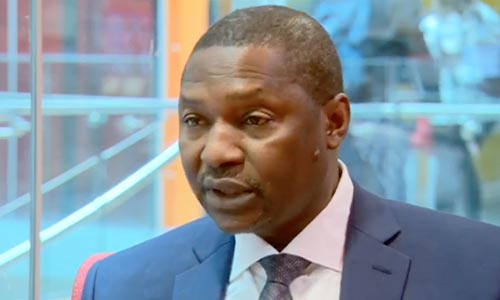
By Clever Advertising Now Malami, Senior Advocate of Nigeria, thinks that a ban on open grazing is akin to a ban on sales of motor spare parts. And he said it, gesticulating like Aristotle. Tomorrow, those naughty Ghanaians will start mocking Nigeria again.

I had once told a few friends to spare Malami, cut him some slack. Brilliant people can suffer stage fright. We had watched him during the first senate screening. Tense, rigid, voluble and loud. His composure and elocution were that of a clumsy secondary school student floundering in a debating competition, lobbing jargons and ill-fitted sentences at his audience.

An amateurish and futile eagerness to come across as intelligent. That day, I stood by Malami and reminded my friends he was a learned Senior Advocate of Nigeria. There have been occasions when these friends came back to mock me.

They knocked me the day Malami sweated profusely and mopped his brows with his bare hands while being badgered by a house committee investigating the smuggling of human contraband, Abudulrasheed Maina, back into the civil service.

They ridiculed me when Malami started chasing Magu with the kitchen sink. Now they are back at me. That Malami’s motor-spare-parts performance on television was like a child appearing at a party, dancing excitedly with his shoes mixed up, on the wrong feet. Ebullience without grace and rhythm.

He could have quietly sent one brilliant young lawyer to convey his ethnic bias. Ministers and Governors have many of these special assistants who cover their asses. Someone praised Malami for being himself. An adult doesn’t try to be himself by baring his anus to the world. Okay, take away the animosity for the Igbo hidden in the “motor spare parts” analogy. What shall we do with the puerility of his logic. Malami appeared like a representative of Miyetti Allah, overcome by emotions.

A Chairman of Miyetti Allah Cattle Breeders Association might be forgiven for thinking that the state governments cannot regulate the movement of cattle. I have heard some of them say it’s their culture. Their ancestors might have misinformed them that the forests belonged to them.  But I am optimistic that even Miyetti Allah wouldn’t liken open grazing to the sales of motor spare parts. Because the sales of motor spares should be the equivalent of sales of cattle and onions.

Miyetti wouldn’t make such pedestrian arguments. Miyetti should have the experiential knowledge that marching around thousands of kilometers  on  foot  with  cattle  in  2021 is inhuman and degrading punishment for the herders and cruelty to the animals.

A knowledge that might be lost on even a former cattle herder who has come by buttered living. Malami sleepwalked on television. The constitution guarantees the right of freedom of movement. That right is for humans. And not for chickens and goats. But even that human right is not absolute. That right can be abridged for the right reasons. The right reasons include the attainment of stated national security or public health goals.

Every cobbler knows the government can regulate the movement of persons for the right reason. Our governments routinely restrict movements on election days. Governments can place curfews. Governments locked down entire nations during the COVID pandemic. Malami should know that the constitutional freedom to move from place to place isn’t absolute, inviolable freedom. That was why watching Malami discuss basic constitutional rights like a novice made a hard watch. The southern governors placed a ban on open grazing. The states would enact local laws to enforce the ban.

The role of a peeved federal Attorney General would be to challenge the constitutionality of those laws in court. Nigeria is a federation. Cattle do not enjoy the rights granted to humans under the constitution. If they did, we wouldn’t be killing and eating them as we like. The proposed ban on open grazing by the southern governors is moral and lawful because it is a non-discriminatory minimum measure necessary to achieve a stated public security objective.

[ALSO READ] Attacks on INEC offices acts of democratic, economic sabotage, Yiaga laments Malami had watched open grazing occasion massacre after massacre.

He didn’t flinch. He forgot that as the nation’s chief law officer, he had a duty to promote and protect justice, justice for those who were being slaughtered. Perhaps, he didn’t know that prevention of crime is justice. Open cross country grazing has fostered cattle rustling, the militarization of cattle herding, the proliferation of militias, clashes and massacres with a wanton waste of lives and property. Where has Malami been? What were the Justice Minister’s answers to the Criminal Justice questions asked by open grazing? The open grazing ban didn’t fall from the sky. Northern governors proposed an open grazing ban in the south three months ago. They did it to safeguard national unity while Malami was slumbering. The Attorney General’s office should have grazed on the relevant jurisprudence and saved the Attorney General from the constipation he suffered in public. Many of our lawyers detest philosophy and often march around the field of legal theory with mental handicaps. But this wasn’t complex. Okadas have been banned in many places for many good reasons. Street hawking has been banned in many well-run cities to curb road traffic accidents, crime and littering of public spaces. These didn’t need constitutional amendments. Cows are cows; they are no Sacred Cows. The constitution aside, Malami’s hypocrisy is startling. Malami knows that alcohol movement has been prohibited in many places in northern Nigeria. The reason was to service religion through sharia. Malami knows there are no compelling reasons for that particular ban. That ban is therefore unconstitutional. But the ban has stayed. Why hasn’t Malami told the northern governors and their Hisbah commanders destroying beer bottles that they needed a constitutional amendment to deter bottles of beer from flowing from place to place? The alcohol ban is unconstitutional, yet he allowed it. Open grazing ban is constitutional, yet he is conjuring inane bigoted analogies to oppose it. A chief law officer doesn’t need brilliance to be sensitive. The country is tense. Yet, Malami chose a childish and divisive analogy that could pass for a dog whistle. His gesticulations made him look like he was warning the south to desist, or a certain southern ethnic group associated with plying the spare parts trade could be chased away from a section of the country. Sometimes ignorance could be criminal. Malami’s wayward analogy made him sound like an advocate of trouble. And what could be worse? Now adept at scoring own-goals, the federal government has lost the initiative to the governors. Akeredolu, a Senior Advocate Of Nigeria, chairman of the southern governors’ forum, who belongs to the same party as the Attorney General, described Malami’s logic as embarrassingly shallow. Ordinarily dogs don’t eat dogs. And Alsatians  should never eat  Alsatians. I feel for Malami. I wish there were a way he could say he was quoted out of context. The southern governors must pay no heed to Malami. Not to his ignorance, not to his mischief, not to his belligerence. Open cross-country grazing is antediluvian. Malami doesn’t understand the times. Law is interpretive. But suppose anything in the constitution is misconstrued to support Malami’s beer parlour logic, that provision of the constitution will fall into immediate abject redundancy in the south because the people have already moved on. Yeah, half of the country has moved. No open grazing!

Dissecting Malami’s spare parts logic, by Simon Kolawole

According to Mallam Abubakar Malami, LLB, BL, the attorney-general of the Nigerian federation, minister of justice, senior advocate of Nigeria and member of the Nigerian bar, banning open grazing is the rough equivalent of banning trading in spare parts. Let me take that again. When you say herders and their cattle should be legally restrained from invading people’s farmlands, destroying people’s crops, ruining people’s livelihoods and pouring petrol on the inferno that is fast burning the nation’s delicate fabric, it is as good as saying people should stop selling spare parts in shops and markets. Do you understand Malami’s logic? You don’t understand it? Neither do I.

Reacting to the resolution of southern governors to ban open grazing as a result of security concerns, Malami said freedom of movement is guaranteed in the constitution and cynically asked the governors to seek an amendment. Listen to him, up close: “It is about constitutionality within the context of the freedoms expressed in our constitution. Can you deny the rights of a Nigerian? For example, it is as good as saying, perhaps, maybe, the northern governors coming together to say they prohibit spare parts trading in the north. Does it hold water? Does it hold water for a northern governor to come and state expressly that he now prohibits spare parts trading in the north?”

From where I am sitting, I can see at least a thousand and one flaws in Malami’s spare parts analogy. The fundamental one is a well-known fallacy called “false equivalence” in logic — a flawed reasoning also referred to as “fallacy of inconsistency”. We often call it “comparing apples and oranges” in everyday argument. It works by comparing two things based on a faulty criterion. For example, arguing that since it is illegal for individuals to have bombs, it should also be illegal to have Christmas bangers because both are explosives. A banger is not a bomb, for Pete’s sake! It is a desperate and disingenuous way of advancing an argument in which two disparate items are made to look alike!

In what ways would anyone liken open grazing to trading in spare parts? Open grazing means herding your cattle in locations that do not belong to you.

That means you are encroaching on private or public property without authorisation. It involves feeding freely on pasture that was not willingly donated to you. It also involves destroying people’s farmlands and ruining their livelihoods. How on earth can anyone compare that to selling spare parts in shops where traders pay rent? Do spare parts shops use free utilities same way cattle eat free grass unauthorised? Do spare parts sellers encroach on private or public property in the course of exercising their freedoms as traders?

If we are to advance a proper logical argument, we should compare those who operate in a similar field — animal husbandry. So, let us compare cattle farming with poultry and piggery. Those who run poultries and piggeries buy the feeds and the water and pay the rent if they do not own the land. They are no less of business people than the herders. They are no less citizens of Nigeria, with constitutionally guaranteed rights, than the herders. Why should herders be treated any differently? Open grazing is not only outdated, as we can see from modern global practices, it has become so politically explosive in Nigeria that anyone who loves peace will only seek a permanent solution.

Since Malami mentioned “constitutionally guaranteed” freedoms, I want to guess that he is talking about the right of every Nigerian to live and do business anywhere in the federation.

If my assumption is right, then his problem is bigger than I originally thought. Even a law undergraduate, much less a SAN, knows that there is no absolute right anywhere. Your rights and the rights of others have boundaries. Your right to do business cannot override my right to private property. John Locke, the highly influential English philosopher and “Father of Liberalism”, wrote in 1689: “Being all equal and independent, no one ought to harm another in his life, health, liberty, or possessions.”

While I have argued before, and will argue again, that southern governors cannot ban open grazing overnight, I also know that they did not just wake up one day to take the decision because everything was going well. It was not as if open grazing was winning gold medals for Nigeria and the governors decided to rain on the parade. We have a serious challenge that has unsettled everybody across the country, not just the south. Even northern governors issued a statement in February admitting that open grazing was no longer sustainable, promising to promote ranching. And unlike Malami, they did not suggest that spare parts trading was posing a similar challenge up north.

I was in a team of journalists that toured Jigawa state in 2005 when Alhaji Saminu Turaki was the governor. We were shown a ranch he was building, complete with something called “rain harvest”. During the rainy season, water would be stored in an underground system. Then in dry season, it would be pumped to nurture the pasture. Turaki said this would guarantee fresh pasture all year round and address the frequent clashes between the itinerant herders and farmers in the state. He imported cattle breeds, and I think it was an Argentinian expert that was managing the ranching project. That is how to solve a problem. I never heard Turaki complain about spare parts traders.

But banning open grazing “with immediate effect” — as the southern governors want to do — can only worsen our security challenges. That is my point of departure. You cannot make herders disappear overnight, neither can you change from an open grazing culture to a ranching one within the twinkle of an eye. We need to plan, to engage, to reach a consensus, to have timelines, to transition. Otherwise, there would be unintended consequences. This is no longer a pure agricultural problem but some significant political, ethnic and religious sensitivities which can explode in our faces if we do not apply wisdom. But then, the peerless Malami has suddenly emerged on the scene.

Aside his classic ill logic — “the herder has a right to do business; the spare parts seller has a right to do business; therefore, it is wrong to ban open grazing” — there are far more troubling undercurrents in Malami’s pronouncements. They give away a lot about mindsets inside the Buhari administration. Anyone preaching national peace and unity should be very disturbed. It would appear that as many Nigerians are trying to de-escalate the tensions in the land, some hardliners are trying to worsen matters. As the Mandators sang in 1988, ‘Some are trying to find solutions to all the problems we have/Some are making it impossible for the problems to be solved.’

I smelt, in Malami’s words, a trivialisation of the security challenges posed by the activities of the herders. Of course, I do not belong to the group of people who hold the herders responsible for every crime committed in southern Nigeria. I also do not believe in the conspiracy theories — the herders had been giving farmers hell (including up north) long before President Muhammadu Buhari came to power in 2015. But no honest observer can deny that the activities of some herders have been a threat to national peace in recent years and the government has definitely failed to address the issue decisively. To compare herders to spare parts traders is to turn the whole thing into a joke.

Malami’s choice of “spare parts” as an analogy is an undeniable underhand reference to the Igbo who overwhelmingly control that line of business. The 17 southern governors are from the three geo-political zones and cut across ethnic groups and party lines. Malami’s preference for “spare parts” trading can only be interpreted one way: that he is picking on the Igbo. Is this a fightback at the framing of herders as “Fulani terrorists” since Buhari came to power in 2015? If this was Malami’s intention, I would say it was a poor one. A minister of the federal republic must resist the urge to play the ethnic card, no matter the temptation, no matter the urge. It is just too low.

While having prejudices and biases is only human, you need to summon all the restrain and maturity possible and rise above ethnic sentiments in your pronouncements when you occupy government positions. I find it difficult to understand how many people in government see themselves, first and foremost, as ethnic champions who are in power to defend the interests of members of their ethnic groups. This mindset, or line of thinking, is not only regressive and unhelpful, it is also very dangerous and harmful to the cause of national reconciliation, integration, peace and unity. Our inability to distill our emotions is hurting efforts to tackle challenges that are dragging us backward.

Malami’s pronouncements are all the more worrisome because ethnic champions usually begin to display their biases openly only after they have left government — not while still active service. We know many people who held top government positions and even aspired to be president but end up as leaders of one ethnic association or the other. You can guess that when they were in government, they must have been promoting one policy or the other meant to give advantage to their parts of the country. It could be in recruitment and promotion. It is normally after they have left government that they start wearing their ethnic badges everywhere. Malami cannot even wait for that long.

What Nigeria needs today is statesmanship. We need men and women who will say and do things that will reduce the tensions in the land, heal the wounds and chart a path to peace and progress. Although southern governors have controversially resolved to ban open grazing because of the crisis that has engulfed many communities, they also provided a leeway in their communique by saying the federal government should support “willing” states to develop an alternative and modern livestock management system. Federal government should take a more constructive look in that direction. Nigeria urgently needs problem solvers, not rabble rousers. We need peace, not war.

AND FOUR OTHER THINGS…

RIP, ATTAHIRU

The death of Lt Gen Ibrahim Attahiru, chief of army staff, and 10 other military officers in an air mishap in Kaduna on Friday was so devastating. It is one of those things about life we can never understand. He was appointed army chief only in February — and three months later, he is gone. We must continue to ask questions about air safety in Nigeria. If military aircraft can be dropping from the skies at this rate — whether or not it is as a result of human error, bad weather, poor maintenance, whatever — the fact is that something is just not right. Attahiru had reinvigorated the war on terror and it looked like we were going somewhere. And then this. What a loss. Tragic.

SICK TROLLS

Many of my friends were so worried — disgusted is the word — over the jubilant reactions of some Nigerians to the death of Lt Gen Ibrahim Attahiru, chief of army staff, on Friday. Twitter, in particular, was full of nasty trolling, with some falsely quoting him as saying over his dead body would Nigeria break up. While mocking the dead is disgusting, it is no longer surprising. It has become a new culture and should now be regarded as a stage in the post-humanity era that we are moving into, enabled by the social media. Unfortunately, those celebrating Attahiru’s death are still unable to see that it would not solve their problem, whatever their problem may be. Sickening.

DEAD AND ALIVE

Reports yet to be refuted indicate that Abubakar Shekau, the leader of Boko Haram, is finally dead. We are being cautious because he had been reported dead many times and he would do a video to laugh off the reports. He is said to have committed suicide after being attacked by members of the Islamic State in West Africa (ISWAP), an offshoot of Boko Haram. Whatever the case is, we cannot celebrate yet. Shekau had reportedly become marginalised over the years, so his Boko Haram has not been our major headache in recent times. The real problem is ISWAP and they are believed to be the ones behind the banditry and kidnappings. Shekau is dead but terror is still alive. Vigilance.

COVID CAUTION

As COVID-19 continues to devastate India, I have been very worried for Nigeria. It took a third wave for India to crack and the dead bodies are piling up badly by the day. We just have to take precaution and stop peddling fables that we have natural immunity in Nigeria. Some Nigerian pastors have blood on their hands as they continue to mislead their congregation into the path of ignorance, even though you have to also question how church members can so easily submit themselves to the manipulation. We don’t all have to take the vaccine since the anti-vax propaganda appears to have worked very well, but we can at least keep to basic safety measures. Caution.

In Four Months, Nigeria Loses 340 Security Personnel to Armed Attacks

Global Rights accuses govs of paying criminals to buy peace

• Says impunity now motivation for criminal activities

Gboyega Akinsanmi

No fewer than 340 operatives of the defence and security services died during separate armed attacks that took place nationwide between January and April 2021, Global Rights, an international human rights organisation based in Washington D.C., has revealed in a new report.The report, which covered the violent incidents nationwide, also revealed that the numbers of lives lost between January and April, painted a dreary picture of the declining state of security and increase in human rights infractions across the federation.

The incidents were revealed in the Mass Atrocities Casualties Tracking Report, a publication of Global Rights, obtained by THISDAY at the weekend, signposting unprecedented deterioration in the state of security when compared with the previous year.

In its 2020 report, for instance, Global Rights claimed that Nigeria’s sub-national governments had lost confidence in the capacity of the federal government to provide security amid rising cases of mass atrocities that claimed 4,558 lives nationwide in 2020.

It had also claimed that the reported cases of mass atrocities in 2020 represented a 42.9% increase above 3,188 incidents recorded nationwide in 2019, thereby making 2020 a brutal year for most Nigerians amid the outbreaks of COVID-19 and the eruption of #EndSARS protests

It had revealed that mass atrocities-related killings by region affected no fewer than 1527 (33.5%) in the Northwest with Katsina, the home state of President Muhammadu Buhari, recording second highest after Kaduna; 1508 (33.08%) in the Northeast, 685 (15.03%) in the North-central, 443 (9.72%) in the South-south, 231 (5.07%) in the South-west and 162 (3.55%) in the South-east

However, according to the update released to THISDAY by the organisation, the country’s defence and security services incurred loss of 340 security personnel fatalities nationwide between January and April 2021 alone.

Of the 340 security personnel fatalities, the report revealed that the Nigerian Army lost 193 officers to violent incidents; the Nigeria Police 131; the Nigeria Navy four; the Nigeria Customs Service (NCS) three; the Nigeria Security and Civil Defence Corps (NSCDC) three and the Nigerian Correctional Service two and Civilian JTF four.

While the report put the security personnel fatalities at 340 between January and April 2021, it revealed that violent killings claimed 2,260 lives nationwide within the same timeframe equivalent to 50.4% of total fatalities that occurred in 2020.

Based on geo-political zones, according to the report, 989 violent fatalities were recorded in Northwest; 332 in Northeast; 331 in North Central; 256 in Southeast; 191 in Southwest and 161 South-south.

Global Rights, in a remark by its Executive Director, Abiodun Baiyewu, concluded that Nigeria “is clearly a fragile state, and remains vulnerable to combustion from several forms of atrocities. The question to ask is: what are its government and citizens doing to stem the tide?”

With the huge records of unresolved crimes, the organisation observed that Nigeria’s penchant of covering multitudes of crimes with the blanket of impunity and amnesty does not augur well for the country.

Rather, according to the Washington-based rights organisation, the reign of impunity has emboldened perpetrators to increase their activities and serves as a motivation for other actors to cash in on the monopoly of violence.

It, therefore, noted that lack of trust in the government to ensure justice “is a motivation for reprisal attacks by aggrieved persons and communities.

“In spite of the hundreds of armed pillages that have occurred in the North, security agents have barely been able to make arrests. There have been no prosecutions for these crimes. The same lens would apply to kidnaps, and communal conflicts.”

In spite of its continued denial, the organisation noted that several sources “have documented attempts by some state governors to placate organized criminal groups – paying fat ransoms to kidnappers and offering cashback to bandits in exchange for their weapons and assurance of security.”

It, however, warned that huge ransoms paid “to kidnappers by the government sets a dangerous precedent that will encourage criminality rather than quell it.

“Organised criminal groups who maim people, rape women, destroy properties and cause severe humanitarian crises should be made to face the wrath of the law rather than be mollycoddled,” the organisation recommended.

It added that the latest mass kidnapping from schools in recent weeks called to question the implementation of the “Safe School Initiative” which was launched with millions of Naira invested, after the Chibok girls were abducted to bolster security in schools in the Northeast.

It said Nigeria’s perpetual battle against insecurity “is at a high cost, with both security operatives and civilians paying with their lives. That cost continues to be too high.

“According to S 14(2)(b) of the 1999 Constitution, the primary objective of the government is to ensure the security and welfare of citizens.

“Despite the government’s claim of being on top of the security situation in the country, the spread and context of insecurity have metastasized and shown no signs of abating, blackholing the enormous budgetary allocation to security.”

The organisation, therefore, observed that it would take more than security hardware to end insecurity across the country.

“At the core of the various forms of mass atrocities in Nigeria is impunity and at the core of impunity is the failure of state institutions to ensure the safety and security of all Nigerians, as well as justice for crimes perpetrated”, the group added.

On these grounds, the organisation recommended that Nigeria would need “an effective long-term investment in a holistic security architecture that should comprise the efficiency of all aspects of governance and the promotion of human rights.

“The state’s continued failure to proactively fulfil and respect human rights has led to mass grievances that are compounding the nation’s insecurity and jeopardizing its peace and security,” the organisation suggested. (Thisdaylive)

How a Crypto crash wiped out $1 trillion this week

Wild, stomach-churning moments are part of the experience when you buy a ticket to the crypto circus. But the past week’s volatility was enough to make some of the crypto faithful wonder whether they’ve been bamboozled.

On Wednesday, a broad crypto crash wiped out about $1 trillion in market value — a staggering drop from $2.5 trillion just a week ago. Bitcoin, which accounts for more than 40% of the global crypto market, nosedived 30% to $30,000 on Wednesday, its lowest point since January. 

By Friday, bitcoin had rebounded slightly, to around $37,000 — bruised by continued regulatory concerns, and far off its all time high above $64,000 that it hit a month ago. 

This week, a combination of factors, including government warnings about increased regulation and tweets from influential market mover Elon Musk, added fuel to an already jittery market. 

What happened?

The crypto market had been especially shaky for about a week before the crash on Wednesday. 

On May 12, bitcoin fell 12% after Elon Musk walked back Tesla’s commitment to accept bitcoin as payment, citing concerns over the crytocurrency’s massive carbon footprint. Musk added to investor anxiety last weekend with a pair of seemingly contradictory tweets about bitcoin that left investors scratching their heads. 

Then the big crash came Wednesday, after Chinese officials signaled a crackdown on crypto use in the country. The central bank issued a warning to Chinese financial institutions and businesses not to accept digital currencies as payment or offer services using them. 

The threat of increased regulation triggered a panic, and bitcoin plunged before rebounding slightly and leveling off. Other cryptocurrencies also tanked: Ethereum fell more than 40%, while dogecoin and binance lost around 30%. 

By Thursday, bitcoin had recouped some losses and was back above $41,000. But a Friday statement from Chinese officials reiterating the need to crack down on cryptos beat bitcoin back down. It was trading around $37,000 on Friday afternoon. Other cryptos were also in the red. 

Regulatory concerns

China has long had limits around crypto trading within its borders. Officials declared in 2013 that bitcoin was not a real currency and banned financial and payment institutions from using it. Individuals can hold or trade cryptocurrencies, but major exchanges in mainland China have been shut down. 

On the surface, this week’s statements simply underscored China’s suspicion of cryptocurrencies generally. But they sent a clear signal that Beijing is not loosening its grip on the market anytime soon. Authorities are also launching a state-backed digital yuan that would keep money flows under strict oversight. 

And it’s not just China. On Thursday, Federal Reserve Chairman Jerome Powell warned about potential risks cryptocurrencies pose to the financial system. Powell also said the central bank would publish a paper this summer that will explore the implications of the US government developing a digital currency of its own. 

A potential central bank digital currency “could serve as a complement to, and not a replacement of, cash and current private-sector digital forms of the dollar, such as deposits at commercial banks,” Powell said

The Treasury Department is also turning its attention to the crypto space. On Thursday officials said any transfer of digital currency valued at $10,000 or more must be reported to the Internal Revenue Service. 

“Cryptocurrency already poses a significant detection problem by facilitating illegal activity broadly including tax evasion,” the Treasury said in a statement. “Despite constituting a relatively small portion of business income today, cryptocurrency transactions are likely to rise in importance in the next decade, especially in the presence of a broad-based financial account reporting regime.”

Bitcoin had been up nearly 6% Thursday but pared its gains after the statements from US officials, according to Bloomberg

The future of cryptos

The week’s wild swings were a test for cryptocurrency fans. True believers tend to take the long view: At the start of 2020, bitcoin was trading around $7,000 a coin, which means it’s still up more than 400% in that time, even after crashing this week. 

“We all tend to focus on day-by-day, week-by-week,” said William Quigley, managing director at crypto-focused investment fund on Wednesday. “But that’s not how most people buy cryptocurrencies, or even stocks. 

Is it a bubble? Probably, according to ethereum co-creator Vitalik Buterin. In an interview with CNN Business this week, Buterin said he wasn’t surprised by the crash, because he’s seen it all before. 

“We’ve had at least three of these big crypto bubbles so far,” he said. “And often enough, the reason the bubbles end up stopping is because some event happens that just makes it clear that the technology isn’t there yet.”

CNN

‘LASU: BEFORE POLITICS DESTROYS ITS BRAND’

Inside Stuff With MARTINS OLOJA

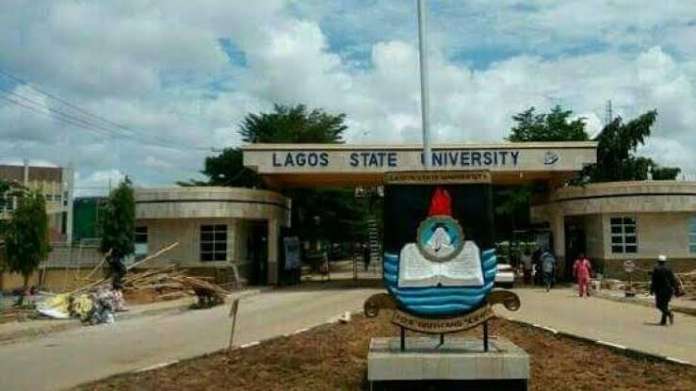
There have been so many issues in the news that should be discussed here this week even without suspending my theme for this month: ‘Six years of excuses, 22 years of locusts’. I have to suspend the theme to address what I have considered a weightier matter of the law and governance: politics of appointing a new Vice Chancellor for the Lagos State University(LASU). Barely two months ago, I celebrated the university’s achievement here.

It is very difficult, for instance, to ignore the fact that Nigeria is losing more soldiers and policemen in its war theatres. We lost our new army chief, some generals and top air-force officers who were in pursuit of our peace at the weekend. This is a perilous time. Is it easy to ignore the careless and toxic statement of our attorney general of the federation on southern governors’ ban open grazing? It is fitting that a ‘more learned’ legal luminary and governor of Ondo state, Arakunrin Rotimi Akeredolu, an emerging clear leader, has remarkably hacked Abubakar Malami ‘for his bad verses’. One can only say that Governor Akeredolu’s consistency and candour in these times have been helpful in deconstructing the curiously perilous times in our country.

‘LASU Again’

Let’s discuss the Lagos State University’s current leadership succession crisis. I think the LASU’s current challenge should not be left to the devices of political leaders who have not been explaining the complexity of the crisis arising from complicated processes of appointing a vice chancellor of the university that has just been rated by a global body as second to only the Nigeria’s premier university in Ibadan. I am quite concerned about the image of the university, which should not be tampered with at this time. I am not a product of LASU but as I noted in a recent comment here, the Lagos State University is beginning to make a significant point for federalism. And so that should form the basis for why all old students of the university and citizens of Lagos state and indeed all public intellectuals should be interested in happenings there at this time.

At the weekend, the Lagos State Governor, Babajide Sanwo-Olu endorsed the recommendations of the visitation panel to the university including the dissolution of the institution’s Adebayo Ninalowo-led governing council.
Mr Sanwo-Olu, who had been in dilemma since the panel, headed by the Pro-Chancellor of the Ekiti State University and former Vice-Chancellor of Obafemi Awolowo University, Ile-Ife, Professor Bamitale Omole, submitted its report on May 10, took the decision on Friday.

Other members of the visitation panel are a former vice-chancellor of the University of Port Harcourt, Joseph Ajienka; a political scientist, Professor Ayo Olukotun; former Lagos Solicitor-General, Lawal Pedro; former Registrar of University of Ibadan (UI), Olujimi Olukoya, and a director in the state’s public service, Funmilola Olajide, who functioned as the panel’s secretary.

In a statement by the commissioner for information, Mr. Gbenga Omotosho, the governor listed six adopted recommendations to include governing council dissolution, cancellation of the second selection process, exemption of members of the university’s senate who participated in the failed processes from taking part in the new processes. In the same vein, the university’s registrar, Olayinka Amuni, has also been asked to embark on compulsory leave pending the conclusion of a new process.
According to reports, Mr. Amuni is being punished for alleged failure to guide the governing council to adhere strictly to the laws in the selection process in the appointment of the institution’s 9th substantive vice-chancellor.

Also, the panel, in its three-volume report, has recommended the constitution of another “full-fledged visitation panel to the university,” and the governor has also endorsed the recommendation.

‘Reminiscence’:

Five years after relative peace returned to the university, LASU is again attracting public attention for the wrong reasons. It is beginning to appear that the unending controversies over the appointment of a successor for the institution’s 8th substantive VC, Olanrewaju Fagbohun, may have taken the shine off the university’s recent gains, which threw it up as Nigeria’s second-best university in the last two years consecutively. After rejecting the first nominations by the university’s governing council earlier in the year because of complaints by some applicants and others, Mr. Sanwo-Olu ordered a fresh process by the same selection committee of the governing council. But the council had consistently ranked a professor of public health and director of the university’s research and innovation unit, Olumuyiwa Odusanya, first in its recommendations. A former chairperson of the university’s branch of the Academic Staff Union of Universities (ASUU), Kabir Akinyemi, ranked second in the first exercise, a former deputy vice-chancellor, Sena Bakre, was ranked third.

However, in March, after another round of rigorous selection processes, a fresh recommendation was made to the governor with the best three: professor Odusanya, who scored 87.94 per cent; a professor of public health at Usmanu Danfodio University, Sokoto, Mohammed Ibrahim, who scored 80.95 per cent, and a professor of public mental health and incumbent acting provost of the university’s college of medicine, Abiodun Adewuya, with 76.61 per cent, taking first, second and third positions respectively. There have been allegations of compromise against the governing council, and particularly the institution’s joint senate and council selection committee.
But the development at the weekend has sent signals of imminent crisis at the Lagos State University unless it is well managed and justice is served.

In a Sunday March 14 article titled, ‘Lagos State University’s Rating Beautifies Federalism’ here, yours sincerely wrote, among others:

‘Let’s for a moment leave the meretricious story of a nation celebrating release of kidnapped school children every week while other nations are celebrating enterprise, entrepreneurship and scientific discoveries. Let’s discuss a testimony of a university that has risen from obscurity to significance within the context of federalism, an idea whose time has come for the people but which our leaders would not like anyone to talk about. I would like to draw attention to lessons we can learn from a recent consistency, efficiency and organisational excellence from the Lagos State University, which was clearly underrated a few years ago. Today, in terms of global rating, the State University is sandwiched between two indisputable federal giants, the Universities of Ibadan and Lagos. This is not a construct we should just ignore because Lagos and Abuja curiously hate each other for political reasons. This is a story that defines development. This is a contextual reporting of federalism, a concept most hypocrites and power elite would not like the media to mention. Let’s celebrate the powers that have rebuilt the Lagos State University (LASU) from grass to grace.

Here is the latest news item: The University of Ibadan, Lagos State University, University of Lagos, and Covenant University have ranked among the top 1,000 universities in the world. This was contained in the 2021 Times Higher Education World University Ranking released last Wednesday. THE ranked UI, LASU, UNILAG as first, second, and third respectively in Nigeria. In the same vein, privately-owned Covenant University (CU), Ota, Ogun State, was ranked fourth; ahead of Federal Government-owned University of Nigeria, Nsukka, which came fifth and Obafemi Awolowo University (OAU) sixth in Nigeria. The University of Oxford tops the rankings for the fifth consecutive year, while mainland China’s Tsinghua University becomes the first Asian university to break into the top 20 under the current methodology (launched in 2011).
As usual, the United States claims a record eight places in the top 10, after the University of California, Berkeley, climbed six places to seventh, but US universities outside the top 200 show signs of decline, according to THE, which enjoys global recognition too.
There were 141 first-time entrants in the rankings this year, topped by France’s recently merged Paris-Saclay University (joint 178th).
India has the highest number of new entries (14) and as a result, boasts a record number of ranked institutions (63). A breakdown of the ranking further shows that University of Ibadan rose to the 401- 500 bracket to overtake Covenant University, which witnessed a drop from 2018’s 636 position to remain at the top 1,000. Covenant University was ranked as Nigeria’s best university in THE’s 2020 report after usurping UI since 2018.
Lagos State University (LASU) placed between 501 and 600 bands, while UNILAG ranked 601–800. UNN and OAU are placed on figures exceeding 1,000. The same Lagos State University had, in 2020, been celebrated as the Second Best University in Nigeria as ranked by the same Times Higher Education (THE) World University ranking…’

This is the profile of LASU whose brand reputation is about to be damaged because of carelessness and what appears to be a celebration of politics over corporate governance process. And so here is the thing, the Lagos State Governor, Visitor to the Lagos State University has a lot to borrow from the way the university of Lagos was recently saved from some spoilers and political actors who wanted to damage the brand equity of the great University of Lagos, Akoka. The president, Muhammadu Buhari managed the crisis well as justice was served.

The Governor of Lagos and his people need to explain quickly to the people why two processes have to be discarded like that. There have been dark hints about some new NUC processes on how professors of medical sciences who didn’t obtain organic doctorate degrees cannot be vice chancellors in this country. There have also been hushed talks about curious desperation to guide a new Governing Council and a selection team to select a particular female professor to be vice chancellor. People who should know are saying to people who need to know that stakeholders should wait for the eventual ‘anointing’ of the female professor who must be crowned vice chancellor at all cost. These are not good speculations for LASU, which should be developed to a world-class university that should really drive development of a state that aspires to be the third largest economy in Africa.

In this digital age when world-class universities are producing professors of practice among professionals and experts who didn’t obtain doctorate degrees, people need to know why even the National Universities Commission should insist that professors of medical sciences who didn’t obtain doctorate degrees cannot be vice chancellors. But the conclusion of the whole matter is that Governor Sanwo-Olu who is fast emerging as a quiet operator and a go-getter should not allow any externality and indeed little minds to trigger processes that can damage the reputation of the emerging power house, the Lagos State University. The conundrum about the selection processes of the new vice chancellor must be explained to the people to deepen understanding of the current crisis (of confidence) in the University.

Understanding the ECOWAS Protocols on Free Movement.

Understanding the ECOWAS Protocols on Free Movement. Daily Law Tips (Tip 795) by Onyekachi Umah, Esq., LL.M, ACIArb(UK)

 Introduction:   

Economic Community of West African States (ECOWAS) is a regional economic community of the countries on the western part of Africa. ECOWAS is created to promote economic integration and cooperation among the countries on the west of Africa, since 1975.  The ECOWAS countries are Benin, Burkina Faso, Cabo Verde, Cote d’Ivoire, The Gambia, Ghana, Guinea, Guinea-Bissau, Liberia, Mali, Niger, Nigeria, Senegal, Sierra Leone, and Togo. In 2002, Mauritania, a founding member of the ECOWAS exited in 2002. 

This work is designed to expose the benefits of the ECOWAS protocols on free movement of Persons, Residence and Establishment to Nigerians and other citizens of the ECOWAS. On the Nigerian boarders and that of other ECOWAS countries, Nigerians and migrants are forced to pay for trips that are supposed to be free by law. Also, due to poor legal awareness, many Nigerians seek illegal routes to ECOWAS countries, countries that they really do not need visa to enter.  

The ECOWAS Free Movement Protocol: 

To promote and achieve economic integration and cooperation in West Africa, four years after the formation of the ECOWAS, on 29 May 1979 member states adopted a Protocol for the Free Movement of Persons, Residence and Establishment within the region. The 1979 Protocol A/P.1/5/79 and its four (4) supplementary Protocols, make up the body of regional law on ECOWAS Free Movement of Persons, Residence and Establishment. 

On 29 May 2019, the ECOWAS celebrated the 40th anniversary of the Protocol and its advancement of intra-regional mobility and economic development. In 9 days from today, the 1979 Protocol will be 42 years. The 1979 Protocol and its supplementary Protocols will be considered in brief. 

  1. 1979 Protocol A/P.1/5/79 relating to Free Movement of Persons, Residence and Establishment: 

The 1979 Protocol initiated the right to community citizens of ECOWAS to enter, reside and establish economic activities in the territory of member states (it abolished visa). Under this, citizens where only required to enter any ECOWAS country with valid travel and health documents. However, a member state has right to refuse the admission of community citizens that are deemed inadmissible under the domestic laws of the member state. This protocol also made the conditions for expulsion of a community citizen.

  1. 1985 Supplementary Protocol A/SP.1/7/85 on the Code of Conduct for the implementation of the Protocol on Free Movement of Persons, the Right of Residence and Establishment:

This Mandates member states to provide travel documents for their citizens. It creates additional requirement for the better treatment of persons being expelled. Also it creates protections for illegal immigrants and provides sub-regional co-operation for the purpose of preventing or reducing the flow of illegal immigrants. 

  1. 1986 Supplementary Protocol A/SP.1/7/86 on the Second Phase (Right of Residence): 

This protocol further mandates member states to grant right of residence to community citizens to seek and maintain income yielding employments. It Condemns mass expulsion of community citizens; however, it allows individual expulsion on certain conditions; like national security, public order, public health and breach of essential residence conditions.  

  1. 1989 Supplementary Protocol A/SP.1/6/89 amending and complementing the provisions of Article 7 of the Protocol on Free Movement, Right of Residence and Establishment: 

This amended Article 7 of the 1979 Protocol, to now allow member states to amicably resolve disputes by direct agreement, where dispute is arising from the Protocol on free Movement. However, where there is a failure to resolve dispute amicably, it mandates a fact-finding mission of 3-member states to investigate the complaint and send report with a view of finding solutions. 

  1. 1990 Supplementary Protocol A/SP.2/5/90 on the Implementation of the Third Phase (Right to Establishment): 

This defines the right of establishment, allowing community citizens and their businesses to be established in territories of the member states, without discrimination from such member states. It prohibits nationalization and confiscation of property of community citizens and then guarantees compensation. The exception to this, is where there are issues of public health, security or public order. 

Conclusion: 

The ECOWAS free movement is to allow free entry, residence and establishment of citizens of the ECOWAS in any ECOWAS country. By it, all citizens of the countries in the ECOWAS are free to move and visit any of the ECOWAS Countries, without VISA. All that the citizens need, are travel documents and health clearance documents (a passport/travel card and a Yellow Fever Certificate) to stay freely for 90 days without visa in any of the ECOWAS Countries. Once again, the ECOWAS countries are; Benin, Burkina Faso, Cabo Verde, Cote d’Ivoire, The Gambia, Ghana, Guinea, Guinea-Bissau, Liberia, Mali, Niger, Nigeria, Senegal, Sierra Leone, and Togo. 

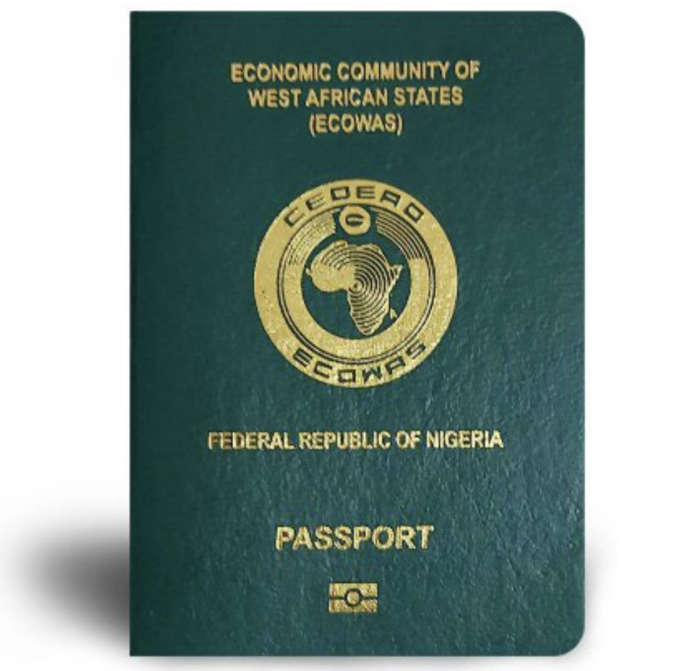
It is the duty of the government of Nigeria and every other ECOWAS Country, to provide travel documents (passports) for the citizens, to enable their citizens travel, explore, get employed, set up businesses and be established in any of the ECOWAS countries. Nigeria and other ECOWAS member states, have a duty to promote free legal awareness to ensure citizens are aware of their rights and

duties. This will reduce the unnecessary use of illegal boarders and routes by Nigerians in accessing other ECOWAS countries, that they are ordinarily free to access without Visa. Free legal awareness will reduce the extortions of Nigerians and immigrants on borders by some staff of government agencies, even when such travellers are not to pay a kobo to access any ECOWAS Country. 

My authorities, are:

  1. Sections 1, 2, 3, 4, 5, 6, 12, 33 to 45, 318 and 319 of the Constitution of the Federal Republic of Nigeria, 1999.
  2. Articles 1, 2, 12, 15, 57, 76, 77, Economic Community of West African State (ECOWAS) Revised Treaty, 1993.
  3. 1979 Protocol A/P.1/5/79 relating to Free Movement of Persons, Residence and Establishment
  4. 985 Supplementary Protocol A/SP.1/7/85 on the Code of Conduct for the implementation of the Protocol on Free Movement of Persons, the Right of Residence and Establishment
  5. 1986 Supplementary Protocol A/SP.1/7/86 on the Second Phase (Right of Residence)
  6. 1989 Supplementary Protocol A/SP.1/6/89 amending and complementing the provisions of Article 7 of the Protocol on Free Movement, Right of Residence and Establishment
  7. 1990 Supplementary Protocol A/SP.2/5/90 on the Implementation of the Third Phase (Right to Establishment)
  8. Onyekachi Umah, “An Alternative to Courts for Human Rights Cases” (LearnNigerianLaws.com, 14 May 2021) <https://learnnigerianlaws.com/an-alternative-to-courts-for-human-rights-cases/> accessed 19 May 2021. 
  9. Onyekachi Umah, “How and When Nigeria Can Exit the AFCFTA” (LearnNigerianLaws.com, 16 March 2021) <https://learnnigerianlaws.com/how-and-when-nigeria-can-exit-the-afcfta/> accessed 19 May 2021.
  10. Onyekachi Umah, “ECOWAS Court as a Weak Alternative to Nigerian Courts” (LearnNigerianLaws.com, 20 May 2021) <https://learnnigerianlaws.com/ecowas-court-as-a-weak-alternative-to-nigerian-courts/> accessed 19 May 2021. 

Sabi Law Projects:

#SabiLaw

#DailyLawTips

#SabiBusinessLaw

#SabiElectionLaws

#SabiHumanRights

#SabiLawOnTheBeatFm

#SabiLawLectureSeries

#CriminalJusticeMonday

#SabiLawVideoChallenge

Speak with the writer, ask questions or make inquiries on this topic or any other via [email protected], [email protected] or +2348037665878 (whatsapp). To receive free Daily Law Tips, join our free WhatsApp group via https://chat.whatsapp.com/L7h4f1exItZ38FeuhXG4WN or Telegram group, via the below link: https://t.me/LearnNigerianLaws

To keep up to date on all free legal awareness projects of Sabi Law Foundation, follow us via

Facebook Page:@LearnNigerianLaws,

Instagram:@LearnNigerianLaws,

Twitter: @LearnNigeriaLaw,  

YouTube: Learn Nigerian Laws

WhatsApp Groups via (https://chat.whatsapp.com/L7h4f1exItZ38FeuhXG4WN),

Telegram Group: (https://t.me/LearnNigerianLaws),

Facebook group: (https://www.facebook.com/groups/129824937650907/?ref=share)

or visit our website: (www.LearnNigerianLaws.com)

Please share this publication for free till it gets to those that need it most. Save a Nigerian today! NOTE: Sharing, modifying or publishing this publication without giving credit to the author or Sabi Law Foundation is a criminal breach of copyright and will be prosecuted. This publication is the writer’s view not a legal advice and does not create any form of relationship. You may reach the writer for more information.

This publication is powered by www.LearnNigerianLaws.com {A Free Law Awareness Program of Sabi Law Foundation, supported by the law firm of Bezaleel Chambers International (BCI).} Sabi Law Foundation is a Not-For-Profit and Non-Governmental Legal Awareness Organization based in Nigeria. For sponsorship and partnership, contact: [email protected], [email protected] or +234 903 913 1200.

Malami is trying to dog-whistle his people against Igbos – Odinkalu

By Lillian Okenwa

  • Says the idea that freedom of movement granted to people in the constitution is a right granted to cows and cattle too is just despicable.
  • For a public servant like the AGF to begin to dog-whistle on race is as low you’re likely to get in public office.
  •  Boko Haram is spreading its tentacles and territorial spread in the country but they are more interested in annihilating and liquidating Igbo youths.

The statement of Nigeria’s Attorney General, Shehu Malami SAN on national television comparing open cow grazing with Motor spare parts trading has continued to generate debates. Among the first to counter him was Ondo State Governor Oluwarotimi Akeredolu, a fellow Senior Advocate of Nigeria. The Governor in a statement told his brother Silk that:

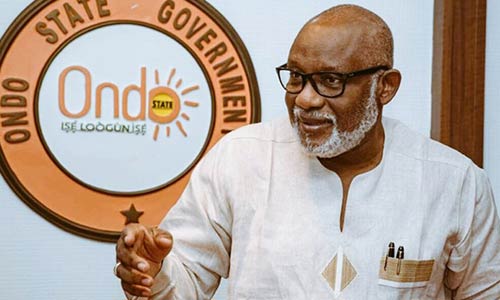
Governor Rotimi Akeredolu, SAN

“It is most unfortunate that the AGF is unable to distill issues as expected of a Senior Advocate. Nothing can be more disconcerting. This outburst should, ordinarily, not elicit response from reasonable people who know the distinction between a legitimate business that is not in any way injurious and a certain predilection for anarchy. Clinging to an anachronistic model of animal husbandry, which is evidently injurious to harmonious relationship between the herders and the farmers as well as the local populace, is wicked and arrogant…The decision to ban open grazing stays. It will be enforced with vigour.”

Weighing in on the issue, Chidi Odinkalu, a past Chairman of the National Human Rights Commission (NHRC) who spoke with Lillian Okenwa noted: “Governor Akeredolu has responded to him well, but I will just improve on what he said particularly on the point of arrogance betraying a mind-set.

“Malami is not stupid but he is being deliberate and wilful. What he said basically was a dog-whistle. He is trying to dog-whistle his people against Igbos, the decision to ban open grazing was taken by the 17 governors of the South, and not the Igbos. In fact, five out of 17 is a minority so when he talks the way he talks knowing fully well that the people who do auto spare parts are Igbos, he knows what he was doing and that was really vile. And for a public servant like the AGF to begin to dog-whistle on race is as low you’re likely to get in public office. So he is likely to create a mind-set and there is nothing more to describe than being vile. This is what this regime has brought to us. Also the idea that freedom of movement granted to people in the constitution is a right granted to cows and cattle too is just despicable.

Odinkalu linked the AGF’s inciting statement to that of Danladi Umar, Chairman, Code of Conduct Tribunal (CCT), who in a bid to absolve himself from the accusation of assaulting a security guard launched into a strange defence. Umar claimed that a mob of ‘Biafran boys’ came to the guard’s rescue and attacked him. The ‘Biafran boys’ label is an obvious depiction of Igbo people of the southeast of Nigeria. But the former National Human Rights Commission Chair disagrees with the word ‘strange’ being attributed to the two men’s statements.

“It’s not strange, I don’t know why you people think all these actions are not considered and well thought out. These are people running the country. I mean you go to public offices in Abuja, all federal establishments and the lingua franca is Hausa. If you don’t speak it you’re tossed. This is a mind-set that is not only portraying the identity of one particular ethnic group but it is a cause directing vile hatred against a particular ethnic group. I mean you saw what the acting IGP did recently. He basically ordered the extermination of young people who are Igbos in the East meanwhile his village in Geidam, Yobe State have been taken over by Boko Haram, and nothing has been done. Much of borno state is now under the control of Boko Haram and a good chunk of Niger north is also under the control of Boko Haram. Boko Haram is spreading its tentacles and territorial spread in the country but they are more interested in annihilating and liquidating Igbo youths. What they are doing is not strange. It is very deliberate and intentional.”

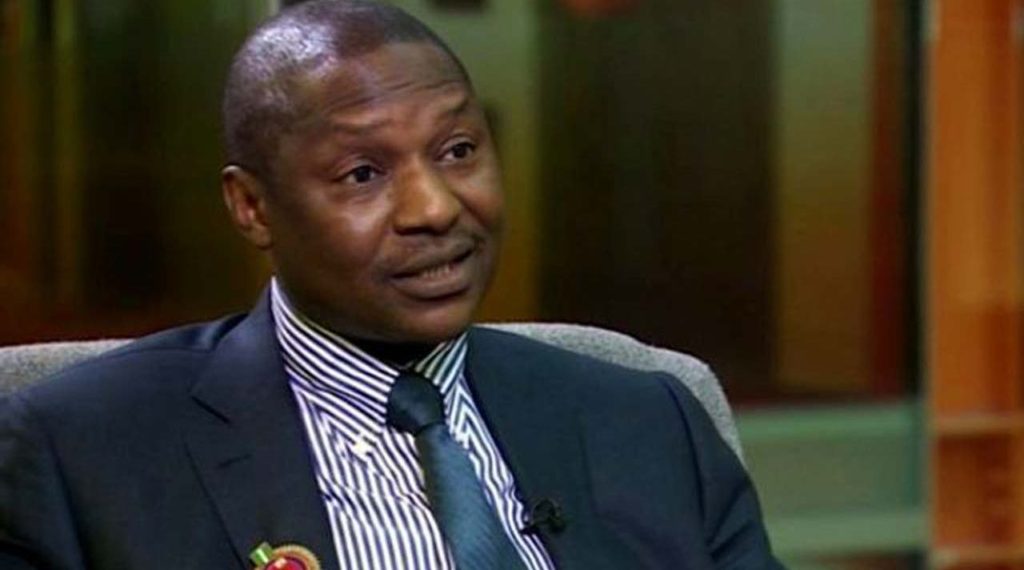
AGF Abubakar Malami, SAN

It is interesting to note that in the course of countless uprisings in the north, vehicle spare parts shops, other businesses of Igbos and other southerners are targeted and destroyed. Yet they keep trudging on, and no compensation has ever been contemplated by the government whether at the state level or federal level. Nobody has ever been arrested or prosecuted on account of these evils. Conversely, during the recent food boycott to the south by the Amalgamated Union of Foodstuffs and Cattle Dealers in Nigeria (AUFCDN), the Federal Government agreed to pay them N4.75 billion for losses after they called off the nationwide strike.

In response to this thought, Odinkalu retorted: “Is that not part of a pattern? We are still talking about the same thing, same behaviour by the regime. There is a pattern of misconduct by the regime which is designed to favour one part of the country and direct hate and vile towards another part. That in my view is very clear.”

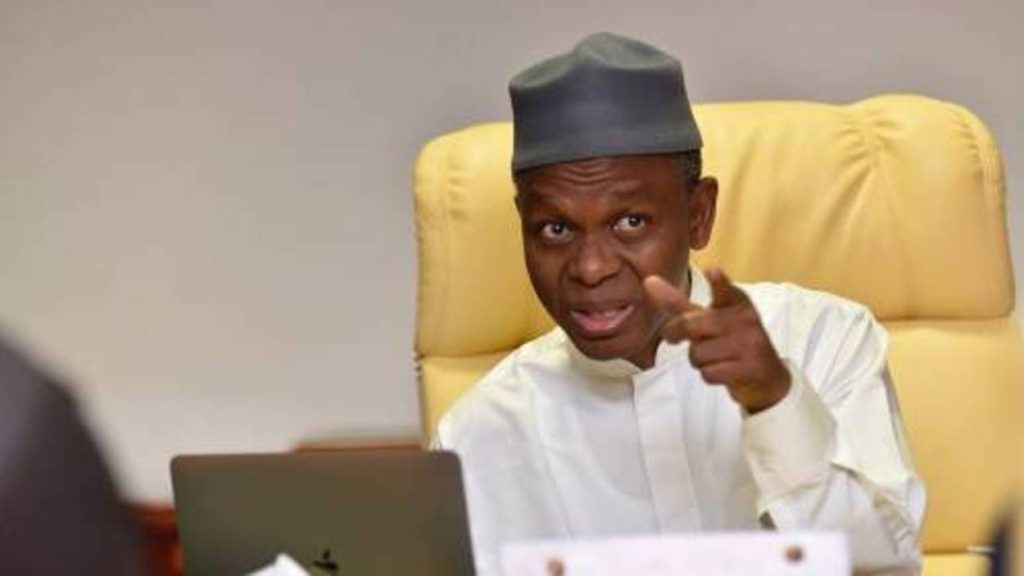
Speaking on the industrial action in Kaduna which the state Governor Nasir El-Rufai described as economic sabotage, the Law Professor said: “The man has a monopoly of knowledge and intellect, I heard that he read law somewhere in the Netherlands. What they probably didn’t teach him is that economic sabotage in Nigeria is a federal crime under a federal act and the last I checked he does not have any fiat from the federal government to prosecute any economic sabotage.

Governor Nasir El-Rufai

“Secondly, governors cannot declare anyone wanted and thirdly, warrant for that purpose is issued by courts which at the moment are not in session, so it is only a kidnapper at the moment that can declare anyone wanted. All he is interested in is looking for who to kidnap next. He is using the methods of a kidnapper just that he is a governor with an elected mandate.”

After levelling accusations of economic sabotage against the President of Nigeria Labour Congress (NLC), Aliyu Waba who he said plotted with union members to incapacitate the state, Governor El-Rufai unleashed thugs on the peaceful protesters, a rehash of what was witnessed during the end SARS protest.

Just in: El-Rufai declares Aliyu Wabba, other labour leaders wanted - The  NEWS

On this subject Professor Odinkalu remarked: “He didn’t only unleash thugs but unleashed more than thugs and this is not the first time he has done this. I mean APC stakeholders were visited with thugs. When Suleiman Hunkuyi and Shehu Sani tried to address a press conference about three years ago or thereabout they were visited with thugs. I mean that’s his style. The man is using the methods of kidnappers. It is not by accident that Kaduna is becoming the headquarters of kidnapping the governor is himself a bandit.

“Who is it that resorted to hire thugs to go and disturb a peaceful protest or attack a group of political leaders? That clearly is banditry, or who is it that will go to Lagos and abduct a person because you don’t like the person and take them to Kaduna or go to Port Harcourt and abduct someone because you don’t like him? That is banditry. The man is a bandit.

PHOTOS: Armed thugs disrupt Kaduna NLC protest - Vanguard News

“He is the one that declared the NLC president wanted and put a bounty on the man’s head. Yet the NLC president was in Kaduna when El Rufai declared him wanted. He stayed in Kaduna and conducted a rally. The governor actually drove by the NLC President and made a detour; so the man is a coward. You think that governance is done by making Molotov cocktail? It is irresponsible for the governor to go and be declaring what he cannot do. You don’t run government by releasing Molotav cocktail all the time. You’re not in charge if all you do is declaring things you cannot do. El-Rufai knows he could not arrest the NLC president in Kaduna. He could not.”

TIPS