Home Blog Page 956

The place of Ndigbo in Nigeria, By Dike Chukwumerije

For anyone who believes in Nigeria, particularly those of us Igbos who do, there can be no days tougher than the ones we are currently living in. I tell you, between the growing radicalism at home and the rigid parochialism at the centre, we are caught between a rock and a very hard place. In a way, it feels like a set up. On one hand, those Igbos, hell-bent on secession, taking the actions and inactions of a transient government, as if these actions negatively affect Igbos alone, as an excuse to launch a violent, Igbo-only, struggle against the State. And, on the other, those in government whose minds are still stuck in the Civil War, eager to use the actions of one Igbo group as an excuse to turn loaded guns on all Igbos. Yes. It feels like a set up between two groups hell-bent on re-enacting the Civil War.

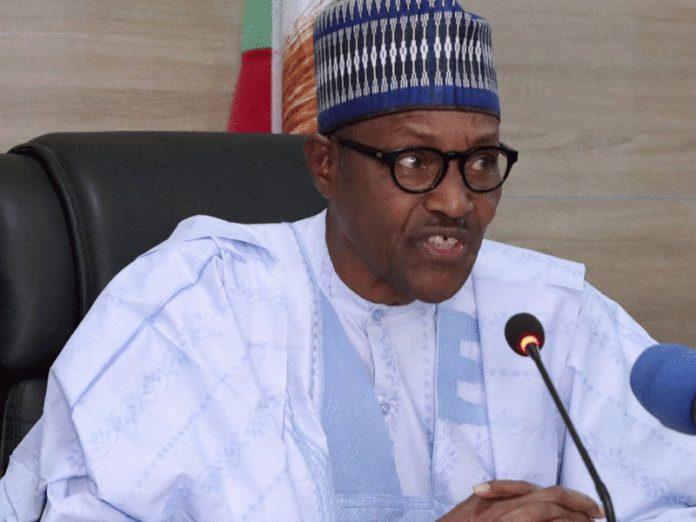
Tell me, how did we get to this? Yes. No use tongue-biting. No. It was clear from Day One what sort of government Muhammadu Buhari would run. No use tongue-biting. But there is nothing he has done in office till date that can justify a violent call for secession. Yes, he has been terribly lop-sided in his appointments. Yes, he has poorly managed both pandemic and economic recession. Yes, he has failed to stem the tide of insecurity across the country. But I have never once heard him refer to Igboland as a ‘zoo’, or openly call for the killing of Ndigbo. So, against what exactly are we calling to arms, Ndigbo? Against a government that has religiously followed the Federal Character principle in the distribution of unemployment and insecurity around the country? But instead of couching our struggle in terms that allow common victims – from Zamfara to Bayelsa – to stand together, we offer our heads alone for the gods to use in breaking their cursed palm kernels? Why? As if the fact that, since the War, an Igbo man has never been President, or only once being appointed COAS, has stopped Innoson or Air Peace, or silenced Ochanja, or prevented Achebe from leading to Adichie. Tell me, are we to sacrifice all this – that on any developmental index you choose, the South East is out-performing the North – just to find out whether, if the Civil War is fought again, we will win?

Why? Tell me, why should we risk our present economic and socio-cultural dominance in the world’s largest black nation for an Igbo state – landlocked and, by virtue of our cantankerous exit, surrounded by enemies? No. We belong in Nigeria. I say this without equivocation. We have never had an Igbo state. We have never needed one. Our so-called ‘lack of unity’ has never stopped us from rising like the dust in harmattan. Because of our hard work and enterprise, our curiosity and creativity, our industry and ingenuity, we will always make the first eleven – no how. This is our strength. I tell you. I do not understand this sudden desire to copy the methods of Boko Haram in struggle, or duplicate the Sokoto caliphate in political organization, instead of continuing to hold onto, and build on, our own traditional republicanism.

To say we are better than the nomadic Fulani and yet are here copying what we say are his methods to advance our struggle? How? To abandon the altar of our own prime ancestor, Nnamdi Azikwe, and be scrambling to re-define ourselves only in the image of conflict and tragedy? No. We belong in Nigeria. We were here when its foundations were laid. Yes. Our blood join. And leveraging on the opportunities Nigeria has given us to live and trade through its length and breath, we have risen – enemies or no enemies – to formidable heights. I tell you, there is nothing we want in the future – including a State of our own (if you insist) that is on peaceful terms with its neighbours – that we cannot get with the same doggedness that has brought us this far. But WAR IS NOT AN OPTION.

Do you hear? Those misadvising the President to declare martial law. Telling the world that his government has been ‘magnanimous’ in respecting Human Rights. Imagine? It appears you have still not learned from Fela, that ‘human rights na my property, so therefore, you cannot [be magnanimous in giving me] my property’. Imagine? Whoever it was that tweeted that there is a language from the War era that government can speak to silence a dissent that is, ultimately, rooted in glaring injustices everywhere. Imagine? It appears you have still not learned the correct lessons from the hanging of Saro Wiwa, or the murder of Mohammed Yusuf. Please, carry out proper investigations. Anyone who has murdered – or tried to murder – an agent of the state, burnt down – or tried to burn down – an office of the government, broken into – or tried to break into – a government prison, upon such persons bring down the full weight of the Law. But do not, for one second, think that the indiscriminate killing of the innocent, or the extrajudicial killing of the guilty, will kill off a mass movement. No. Listen to Burna Boy please. It will only create monsters.

Yes. Let us – in this hour of our deepest trial – keep faith with Chapter IV of our Constitution. For it is the heart and soul of our humanity.

(Sundiatapost)

Scarcity of Passport and the Government’s Violation of the Right of Movement

Scarcity of Passport and the Government’s Violation of the Right of Movement. Daily Law Tips (Tip 801) by Onyekachi Umah, Esq., LL.M, ACIArb(UK)

 Introduction:    

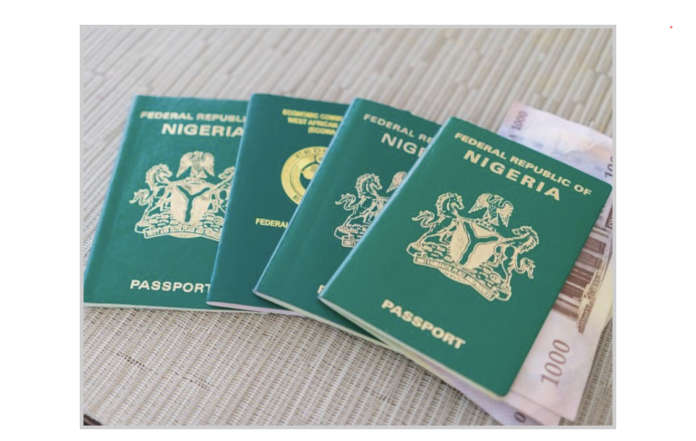
Nigeria is a sovereign democratic state that makes its own laws. By the laws in Nigeria, the Federal Government of Nigeria handles issues of passports (travel document and immigration). It is part of the duties of the Federal Government of Nigeria to provide passport for Nigerians. One of the fundamental; human rights of Nigerians is the right to freedom of movement. 

Movement here, includes entrance and exit from Nigeria, as well as trips to foreign countries. However, nations of the world require travelers to hold travel documents (passports) and health clearance documents (like, the yellow fever cards), while on transit. So, unless the government of Nigeria provides passports, Nigerians cannot exercise their right to freely move and travel out of Nigeria and to explore the world. 

Among other things, the Government of Nigeria has failed in providing passport to Nigerians, with government reporting scarcity of passport booklets. Many Nigerians have been reportedly stranded in foreign countries, for failure of Nigerian embassies to provide passports to Nigerians abroad. Also, many Nigerians are grounded in Nigeria, with no passport to lawfully leave Nigeria, even after months of paying for passports.

This work focuses on the duty of the Government of Nigeria to provide passports to Nigerians. It reveals the failure of government in providing passports and how this violates the fundamental human rights of Nigerians across the world. It also provides pathways to legal remedies for Nigerians that their rights to movement have been violated, attempted to be violated or threatened to be violated by the failure of government to provide passports.  

The Passports and the Right to Freedom of Movement:

The greatest of all laws in Nigeria is the Constitution of the Federal Republic of Nigeria. The Constitution of Nigeria recognizes the status of a Nigerian Citizen. It creates the duties of citizens, which includes, the duty to respect national ideas, institutions and authorities. Among the institution of Nigeria is the National Assembly (the federal legislature) empowered to make laws for Nigeria. Among the laws made by the federal legislature is the Immigration Act 2015. 

The Immigration Act 2015 establishes the Nigeria Immigration Service and empowers it to be responsible, for; (a) the control of persons entering or leaving Nigeria; (b) issuance of travel documents, including Nigerian passports, to bonafide Nigerians within and outside Nigeria; (c) issuance of residence permits to foreigners in Nigeria; (d) border surveillance and patrol; (e) enforcement of laws and regulations with which they are directly charged; and (f) performance of such para-military duties within or outside Nigeria as may be required of them under the authority of this Act or any other enactment. 

Section 9 of the Immigration Act 2015, provides that the power to issue Nigerian Passports is resting on the Comptroller-General of the Nigeria Immigration Services and that the Nigerian Passports must be issued only to bona fide Nigerians, within and outside Nigeria. It went further to define “Passport” as “a document of protection and authority to travel issued by the Nigeria Immigration Service to Nigerians wishing to travel outside Nigeria, and includes, the following; (a) a Standard Nigerian Passport; (b) a Nigerian Diplomatic Passport; (c) a Nigerian Official Passport; (d) a Nigerian Pilgrim’s Passport; and (e) a Seaman’s Passport or Seaman’s Certificate of Identity.   

By the sections 14, 15, 17, 18, 19 of the Immigration Act, any person entering or leaving Nigeria must present himself to an immigration officer and will also present his passport and any other information, except where such a person enjoys some form of immunity/exemption. Hence, passport is the most important condition for any Nigerian to easily leave and enter Nigeria as well as to travel to other countries, in exercise of the right of movement.   

Also, regional conventions (like the ECOWAS 1979 Protocol A/P.1/5/79 relating to Free Movement of Persons, Residence and Establishment), mandates Nigerian government to issue passports and travel documents to Nigerians, ahead of their tips into Nigeria or out of Nigeria. Specifically, 1985 Supplementary Protocol A/SP.1/7/85 on the Code of Conduct for the implementation of the Protocol on Free Movement of Persons, the Right of Residence and Establishment; mandates member states to provide travel documents for their citizens. It creates protections for illegal immigrants and provides sub-regional co-operation for the purpose of preventing or reducing the flow of illegal immigrants.

Sections 33 to 45 of the Constitution of Nigeria provides the fundamental human rights, which are the natural entitlements of persons in Nigeria. Among the fundamental human rights are the Right to Life, the Right to Dignity of Human Person, the Right to Personal Liberty, the Right to Fair Hearing, the Right to Private and Family Life, the Right to Freedom of Thought, Conscience and Religion, the Right to Freedom of Expression and the Press, the Rights to Peaceful Assembly and Association, the Right to Freedom of Movement, the Right to Freedom from Discrimination and then, the Right to Acquire and Own Immovable Property anywhere in Nigeria. 

The Right to Freedom of Movement empowers all Nigerians to move freely and reside in any part of Nigeria. It also includes the right of Nigerians to be allowed to enter or leave Nigeria for any other country. It is in exercise of this right that Nigerians are issued passports to enable them travel the world as citizens of Nigeria, with the protection and authority of Nigeria. So, the Immigration Act supports the right to movement, by the authorities of the Comptroller-General of the Nigeria Immigration Services to issues passports. Also, refusal and failure to issue passport to a bonafide Nigeria, unless where there is a statutory justification for such, is rather a clear threat to the right of free movement. This is discussed in details in the next sub-heading. 

Violation of Right to Freedom of Movement through Scarcity of Passport: 

Scarcity of passport is an issue of fact, which needs to be proved before any person can seek relief based on it. Since it is the right of a citizen of Nigeria to freely travel into Nigeria and out of Nigeria, then the Government of Nigeria must protect such right. Protecting and aiding the right to freedom of movement will include the timely provision of passports in Nigeria and in embassies of Nigeria across the world. 

Where passports are delayed or not issued due to no fault of the applicants/citizen, arguably, the Government of Nigeria has failed in providing passport and thereby limiting the right of movement of the citizens. Below are reports in public domain, on the scarcity of passports in Nigeria and in embassies of Nigeria across the world. 

“Scarcity of Passport Booklets: Notification. This is to inform the general public that due to temporary shortage of booklets, it is not possible to issue the passport the same day. From Monday, 23rd November, 2020 the Embassy will not be able to process applications beyond capturing. Note, this is only a temporary situation which will change as soon as booklets are available. Thank you very much for your cooperation. Passport section, Embassy of Nigeria Berlin, Germany. 19/11/2020.” Embassy of Nigeria Berlin, Germany. 

“The lack of passport booklets at the nations’ immigration offices has reached a crisis point and something needs to be done urgently, without further delay, to redress the ugly situation. Despite the copious denial by the Nigeria Immigration Service (NIS), sometime in April last year (2019), that there is no shortage of passport booklets in the country, indications at passport offices across the country is that there are no passport booklets. This is highly regrettable and embarrassing. I spoke with a top immigration officer to know exactly why passport booklets are not available. He said that the reason is that Nigeria’s passport booklets are produced in Malaysia; and that the contract or deal was sealed when the exchange rate of the Naira was low. Given the high exchange rate of the Naira, the immigration, he said, is finding it very difficult to meet up with the demand for the passport booklets by Nigerians, especially as the cost of passport has not been increased to reflect the high exchange rate.” Luke Onyekakeyah, TheGuardian Newspaper. 

“The protests and petitions have been deafening over the failure of the Nigerian Immigration Service (NIS) to promptly issue passports to Nigerians who have applied and paid for them. At the Federal Capital Territory and in Lagos, there are many applicants who have waited for months for the passport, which they had applied and paid for and had also, been captured in the data base, but they could not obtain their passports because there are no booklets.” Chiendu Eze, ThisDay Newspaper.

“To end the incessant complain of ‘no booklet’ at passport offices across the country, the House of Representatives has asked the Ministry of Interior to review existing agreements with the Nigerian Security Printing and Minting Company Plc and IRIS Smart Technologies Ltd for the production of passport booklets. Nigerians who have applied for international passports and fulfilled all the requirements are constrained to wait endlessly for their international passports.” Premium Times

“Civil society groups have condemned the scarcity and racketeering of passports by some Nigerian Immigration Service officials and their collaborators at the various NIS offices and commands nationwide. The Executive Director, United Global Resolve for Peace, Olaseni Shalom, argued that the passport scarcity was artificial and meant to subvert due process and enrich the pockets of a few corrupt officers.” Adelani Adepegba, The Punch Newspaper. 

“As stated earlier, some persons who spoke to THISDAY, alleged that there are booklets which senior officials use as bargaining chips for favours and for monetary reward, noting that, “some people will go there and come back with their new passport. THISDAY learnt that in some passport offices in Lagos before an applicant’s file is treated he or she must pay N5, 000 in addition to the cost of the passport and when it is paid the applicant’s file is signed with green biro.” Chiendu Eze, ThisDay Newspaper. 

“International passport is one of the rights enjoyed by citizens all over the world. And in other countries, international passports are obtained with ease as they are issued immediately upon application and therefore Nigerians should not be made to suffer before their rights are given to them.” Premium Times

“House of Representatives has asked the Nigeria Immigration Service to, within 72 hours, issue International Passports to thousands of Nigerians who have applied, paid, captured but were yet to be given their booklets. The ultimatum followed the consideration of a motion titled ‘Call for an End to the Scarcity of International Passport Booklets at Immigration Offices’, moved by Hon. Ugonna Ozurigbo at the plenary.”  Levinus Nwabughiogu, Vanguard Newspaper. 

Conclusion: 

Although the Constitution of Nigeria clearly provides certain limited conditions for the lawful restriction of some fundamental human rights, the scarcity of passport is not one of them. Government of Nigeria must channel the taxpayers fund in meeting up its obligations to Nigerians. It is the duty of government to issue passport and promote the use of lawful boundaries and entry points. Where government fails in this duty, the fundamental human right of Nigerians (particularly, the right to freedom of movement) is or will be violated. 

For every legal wrong, there is a legal remedy. Where government or any person violates, attempts to violate or threatens to violate the fundamental human rights of any Nigerian, the Nigerian has the right to seek legal protection and remedies. Among the spots for legal remedies are; the courts of law and the National Human Rights Commission (NHRC). The courts of law include; the State High Courts, the Federal High Courts and the ECOWAS Court of Justice. Nigerians must hold the Nigerian government accountable at all times, to ensure accountability and transparency. Persons suffering or that have suffered from the failure of the government of Nigeria to provide passports to them, should engage their lawyers in pursuit of justice. 

My authorities, are:

  1. Sections 1, 2, 3, 4, 5, 6, 14, 16, 17, 33 to 45, 214, 215, 216, 318 and 319 of the Constitution of the Federal Republic of Nigeria, 1999.
  2. Sections 1, 2, 14, 15, 17, 18, 19, 116 and 117 of the Immigration Act 2015
  3. Articles 1, 2, 12, 15, 57, 76, 77, Economic Community of West African State (ECOWAS) Revised Treaty, 1993.
  4. 1979 Protocol A/P.1/5/79 relating to Free Movement of Persons, Residence and Establishment
  5. 985 Supplementary Protocol A/SP.1/7/85 on the Code of Conduct for the implementation of the Protocol on Free Movement of Persons, the Right of Residence and Establishment
  6. 1986 Supplementary Protocol A/SP.1/7/86 on the Second Phase (Right of Residence)
  7. 1989 Supplementary Protocol A/SP.1/6/89 amending and complementing the provisions of Article 7 of the Protocol on Free Movement, Right of Residence and Establishment
  8. 1990 Supplementary Protocol A/SP.2/5/90 on the Implementation of the Third Phase (Right to Establishment)
  9. Embassy of Nigeria  Berlin, “SCARCITY OF PASSPORT BOOKLETS: Notification” (Embassy of Nigeria, 19 November 2020) <https://nigeriaembassygermany.org/SCARCITY-OF-PASSPORT-BOOKLETS_n172-197.htm> accessed 31 May 2021
  10. Luke Onyekakeyah, “The unending scarcity of passport booklets” (TheGuardian,28 January 2021) <https://guardian.ng/opinion/the-unending-scarcity-of-passport-booklets/> accessed 31 May 2021
  11. Chinedu Eze, “Why Nigerian Passport is Scarce” (ThisDay, 30 April 2021) <https://www.thisdaylive.com/index.php/2021/04/30/why-nigerian-passport-is-scarce/> accessed 31 May 2021
  12. Premium Times, “Reps ask Immigration Service to end ‘no booklet’ at passport offices” (Premium Times, 29 April 2021) <https://www.premiumtimesng.com/news/more-news/458389-reps-ask-immigration-service-to-end-no-booklet-at-passport-offices.html> accessed 31 May 2021
  13. Levinus Nwabughiogu, “Reps give Immigration Service 72 hours to issue international passports to owners” (Vanguard, 30 April 2021) <https://www.vanguardngr.com/2021/04/reps-give-immigration-service-72-hours-to-issue-international-passports-to-owners/> accessed 31 May 2021
  14. Adelani Adepegba, “End scarcity, passport racketeering now, CSOs tell FG” (Punch, 21 April 2021) <https://punchng.com/end-scarcity-passport-racketeering-now-csos-tell-fg/> accessed 31 May 2021.
  15. Onyekachi Umah, “MARRIED WOMEN AND THE NEED FOR HUSBAND’S CONSENT FOR INTERNATIONAL PASSPORT” (LearnNigerianLaws.com, 16 April 2020) <https://learnnigerianlaws.com/married-women-and-the-need-for-husbands-consent-for-international-passport-daily-law-tips-tip-549-by-onyekachi-umah-esq-llm-aciarbuk/> accessed 31 May 2021
  16. Onyekachi Umah, “Drug Test of Ladies before Wedding is Unlawful” (LearnNigerianLaws.com, 28 August 2020) <https://learnnigerianlaws.com/drug-test-of-ladies-before-wedding-is-unlawful/> accessed 31 May 2021 
  17. Onyekachi Umah, “NIGERIAN CUSTOMS CANNOT CHARGE IMPORT DUTIES ON A PERSONAL LUGGAGE” (LearnNigerianLaws.com, 28 May 2020) <https://learnnigerianlaws.com/nigerian-customs-cannot-charge-import-duties-on-a-personal-luggage/> accessed 31 May 2021
  18. Onyekachi Umah, “An Alternative to Courts for Human Rights Cases” (LearnNigerianLaws.com, 14 May 2021) <https://learnnigerianlaws.com/an-alternative-to-courts-for-human-rights-cases/> accessed 23 May 2021. 
  19. Onyekachi Umah, “Details of State Offices of National Human Rights Commission” (LearnNigerianLaws.com, 27 October 2020) <https://learnnigerianlaws.com/details-of-state-offices-of-national-human-rights-commission/> accessed 14 May 2021
  20. Onyekachi Umah, “How to Report and Discipline Police Officers” (LearnNigerianLaws.com, 25 May 2021) <https://learnnigerianlaws.com/how-to-report-and-discipline-police-officers/> accessed 27 May 2021
  21. Onyekachi Umah, “Warrant of Arrest: Contents and Issuance” (LearnNigerianLaws.com, 19 April 2021) <https://learnnigerianlaws.com/warrant-of-arrest-contents-and-issuance/> accessed 25 May 2021.
  22. Onyekachi Umah, “12 Situations Where Police Officers Can Arrest Without Warrant” (LearnNigerianLaws.com, 18 June 2019) <https://learnnigerianlaws.com/12-situations-where-police-officers-can-arrest-without-warrant/> accessed 25 May 2021.
  23. Onyekachi Umah, “An Ordinary Person Can Arrest A Criminal Suspect Even Without A Warrant In Nigeria” (LearnNigerianLaws.com, 17 July 2018) <https://learnnigerianlaws.com/an-ordinary-person-can-arrest-a-criminal-suspect-even-without-a-warrant-in-nigeria/> accessed 25 May 2021.
  24. Onyekachi Umah, “When Can Police Search A House Without A Warrant” (LearnNigerianLaw.com, 11 March 2019) <https://learnnigerianlaws.com/when-can-police-search-a-house-without-a-warrant/> accessed 25 May 2021.
  25. Onyekachi Umah, “The Right Of Police To Break/Damage Any House In Search Of Suspects Even Without Warrant To Search” (LearnNigerianLaws.com, 18 February 2019) <https://learnnigerianlaws.com/the-right-of-police-to-break-damage-any-house-in-search-of-suspects-even-without-warrant-to-search/> accessed 25 May 2021.
  26. Onyekachi Umah, “Contents of Police Monthly Reports To Magistrates” (LearnNigerianLaws.com, 17 November 2020) <https://learnnigerianlaws.com/contents-of-police-monthly-reports-to-magistrates/> accessed 25 May 2021.
  27. Onyekachi Umah, “Qualifications for an Inspector General of Police” (LearnNigerianLaws.com, 4 February 2021) <https://learnnigerianlaws.com/qualifications-for-an-inspector-general-of-police/> accessed 25 May 2021.
  28. Onyekachi Umah, “Can the Appointment of an Inspector General of Police be Extended?” (LearnNigerianLaws.com, 2 February 2021) <https://learnnigerianlaws.com/can-the-appointment-of-an-inspector-general-of-police-be-extended/> accessed 19 April 2021.
  29. Chris Admin, “Onyekachi Umah Speaks To ChannelsTv On SARS & The New Police Act” (LearnNigerianLaws.com, 9 November 2020) <https://learnnigerianlaws.com/onyekachi-umah-speaks-to-channelstv-on-sars-the-new-police-act/> accessed 25 May 2021.
  30. Onyekachi Umah, “Minimum Information That Must Be In Database Of All Arrested Persons At Federal And State Levels In Nigeria” (LearnNigerianLaws.com, 16 September 2019) <https://learnnigerianlaws.com/minimum-information-that-must-be-in-database-of-all-arrested-persons-at-federal-and-state-levels-in-nigeria-daily-law-tips-tip-415-by-onyekachi-umah-esq-llm-aciarb-uk > accessed 25 May 2021.
  31. Onyekachi Umah, “Head of a Police Station Must Make Monthly Report of Arrests to a Magistrate” (LearnNigerianLaws.com, 24 August 2020) <https://learnnigerianlaws.com/head-of-police-station-must-make-monthly-report-of-arrests/ > accessed 25 May 2021. 
  32. Onyekachi Umah, “Police Stations Now Have Supervising Magistrates” (LearnNigerianLaws.com, 9 October 2020) <https://learnnigerianlaws.com/police-stations-now-have-supervising-magistrates/ > accessed 25 May 2021.
  33. Onyekachi Umah, “Is Nigerian Police to Investigate Cases of Missing Persons After 24 hours?” (LearnNigerianLaws.com, 11 May 2021) <https://learnnigerianlaws.com/is-nigerian-police-to-investigate-cases-of-missing-persons-after-24-hours/> accessed 25 May 2021.
  34. Onyekachi Umah, “Stripping Suspects Naked is Torture and it’s a Crime” (LearnNigerianLaws.com, 16 February 2021) <https://learnnigerianlaws.com/stripping-suspects-naked-is-torture-and-its-a-crime/> accessed 23 May 2021
  35. Onyekachi Umah, “Can Police Punish Unlawful Protesters?” (LearnNigerianLaws.com, 15 February 2021) <https://learnnigerianlaws.com/can-police-punish-unlawful-protesters/> accessed 23 May 2021
  36. Onyekachi Umah, “When Can A Protest Become A Riot?” (LearnNigerianLaws.com, 6 November 2020) <https://learnnigerianlaws.com/when-can-a-protest-become-a-riot/> 23 May 2021
  37. Onyekachi Umah, “#EndSarsNow: Punishment For Police (SARS) Torture” (LearnNigerianLaws.com, 6 October 2020) <https://learnnigerianlaws.com/endsarsnow-punishment-for-police-sars-torture/> accessed 23 May 2021
  38. Onyekachi Umah, “#EndSarsNow: Nigeria Police Lacks Power To Punish” (LearnNigerianLaws.com, 7 October 2020) <https://learnnigerianlaws.com/endsarsnow-nigeria-police-lacks-power-to-punish/> accessed 23 May 2021
  39. Onyekachi Umah, “#EndPoliceBrutality: How To Sue the Nigeria Police Force and Police Officers” (LearnNigerianLaws.com, 14 October 2020) <https://learnnigerianlaws.com/endpolicebrutality-how-to-sue-the-nigeria-police-force-and-police-officers/> accessed 23 May 2021
  40. “Demand justice for Police Brutality in Nigeria” (Amnesty International) <https://www.amnesty.org/en/get-involved/take-action/nigeria-end-impunity-for-police-brutality-end-sars/> accessed 23 May 2021
  41. Onyekachi Umah, “Who Can Be Lawfully Killed In Nigeria?” (LearnNigerianLaws.com, 26 October 2020) <https://learnnigerianlaws.com/who-can-be-lawfully-killed-in-nigeria/ > accessed 23 May 2021
  42. Femi Falana, “Police Permit Not Required For Rallies in Nigeria” (Premium Times, 23 January 2014) <https://www.premiumtimesng.com/opinion/153860-police-permit-required-rallies-nigeria.html> accessed 23 May 2021
  43. Onyekachi Umah, “Can A Person With A Nigerian Flag Be Shot Or Killed?” (LearnNigerianLaws.com,23 October 2020) <https://learnnigerianlaws.com/can-a-person-with-a-nigerian-flag-be-shot-or-killed/ > accessed 23 May 2021
  44. Onyekachi Umah, “#EndPoliceBrutality: When & How Can Government Prohibit Protest In Nigeria?” (LearnNigerianLaws.com, 19 October 2020) <https://learnnigerianlaws.com/when-and-how-can-government-prohibit-protest-in-nigeria/ > accessed 23 May 2021
  45. Onyekachi Umah, “#EndPoliceBrutality: The Right To Protest Is A Human Right.” (LearnNigerianLaws.com, 15 October 2020) <https://learnnigerianlaws.com/endpolicebrutality-the-right-to-protest-is-a-human-right/ > accessed 23 May 2021
  46. Onyekachi Umah, “#EndPoliceBrutality: Do You Need A Police Permit To Protest?” (LearnNigerianLaws.com, 16 October 2020) <https://learnnigerianlaws.com/endpolicebrutality-do-you-need-a-police-permit-to-protest/> accessed 23 May 2021
  47. Onyekachi Umah, “Does The President/Governors Have Powers To Lockdown Any Part Of Nigeria Or Restrict Human Rights?” (LearnNigerianLaws.com, 31 March 2020) <https://learnnigerianlaws.com/does-the-president-governors-have-powers-to-lockdown-any-part-of-nigeria-or-restrict-human-rights-daily-law-tips-tip-537-by-onyekachi-umah-esq-llm-aciarbuk/ > accessed 23 May 2021
  48. Onyekachi Umah, “Human Rights That Can Never Be Restricted Even In War, Pandemic or State of Emergency (LearnNigerianLaws.com, 2 April 2020) <https://learnnigerianlaws.com/human-rights-that-can-never-be-restricted-even-in-war-pandemic-or-state-of-emergency-daily-law-tips-tip-539-by-onyekachi-umah-esq-llm-aciarbuk/> accessed 23 May 2021
  49. Onyekachi Umah, “Duty of Government to Pay Compensation for Damages Caused By Riot.” (LearnNigerianLaws.com, 4 November 2020) <https://learnnigerianlaws.com/duty-of-government-to-pay-compensation-for-damages-caused-by-riot/> accessed 23 May 2021
  50. Onyekachi Umah, “Who Pays For Properties Damaged or Lost In A Riot In Nigeria” (LearnNigerianLaws.com, 6 August 2018) <https://learnnigerianlaws.com/daily-law-tips-by-onyekachi-umah-esq-tip-157-who-pays-for-properties-damaged-or-lost-in-a-riot-in-nigeria/ > accessed 23 May 2021
  51. Onyekachi Umah, “List of Fundamental Human Rights In Nigeria.” (LearnNigerianLaws.com, 22 October 2020) <https://learnnigerianlaws.com/list-of-fundamental-human-rights-in-nigeria/> accessed 23 May 2021
  52. Chris Admin, “Onyekachi Umah Speaks To ChannelsTv On SARS & The New Police Act” (LearnNigerianLaws.com, 9 November 2020) <https://learnnigerianlaws.com/onyekachi-umah-speaks-to-channelstv-on-sars-the-new-police-act/> accessed 23 May 2021
  53. Onyekachi Umah, “What Is The Punishment For Any Person Including Police Officers That Tortures Another Person” (LearnNigerianLaws.com, 18 December 2018) <https://learnnigerianlaws.com/daily-law-tips-by-onyekachi-umah-esq-tip-251-what-is-the-punishment-for-any-person-including-police-officers-that-tortures-another-person/> accessed 23 May 2021
  54. Onyekachi Umah, “Is Obeying “Orders From Above” a Defence for Torture in Nigeria” (LearnNIgerianLaws.com, 7 September 2019) <https://learnnigerianlaws.com/is-obeying-orders-from-above-a-defence-for-torture-in-nigeria-daily-law-tips-tip-409-by-onyekachi-umah-esq-llm-aciarb-uk/> accessed 23 May 2021
  55. Onyekachi Umah, “Being Present During Torture Without Participating In It, Is A Crime” (LearnNigerianLaws.com, 25 November 2019) <https://learnnigerianlaws.com/being-present-during-torture-without-participating-in-it-is-a-crime-daily-law-tips-tip-464-by-onyekachi-umah-esq-llm-aciarb-uk/> accessed 23 May 2021
  56. Onyekachi Umah, “New Punishment for Security Officers Involved in Torture in Nigeria.” (LearnNigerianLaws.com, 27 August 2017) <https://learnnigerianlaws.com/new-punishment-for-security-officers-involved-in-torture-in-nigeria-daily-law-tips-tip-401-by-onyekachi-umah-esq-llm-aciarb-uk/> accessed 23 May 2021
  57. Onyekachi Umah, “Watching Torture but not Participating in it, is Torture.” (LearnNigerianLaws.com, 19 November 2019) <https://learnnigerianlaws.com/watching-torture-but-not-participating-in-it-is-torture-daily-law-tips-tip-460-by-onyekachi-umah-esq-llm-aciarb-uk/> accessed 23 May 2021
  58. Onyekachi Umah, “Any Security Agency’s Manual/Protocol that Allows Torture Even for National Security Cases is Unlawful and its Officers are Liable.” (LearnNigerianLaws.com, 11 September 2019) <https://learnnigerianlaws.com/any-security-agency-s-manual-protocol-that-allows-torture-even-for-national-security-cases-is-unlawful-and-its-officers-are-liable-daily-law-tips-tip-412-by-onyekachi-umah-esq-llm-aciarb-uk/> accessed 23 May 2021
  59. Onyekachi Umah, “Every Child has Right to a Rest and Play” (LearnNigerianLaws.com, 27 May 2021) <https://learnnigerianlaws.com/every-child-has-a-right-to-rest-and-play/> accessed 30 May 2021
  60. Onyekachi Umah, “Child Marriage/Abuse Is A Crime (Rape): An Exposé On Laws Prohibiting Child Marriage” (LearnNigerianLaws.com, 22 June 2020) <https://learnnigerianlaws.com/child-marriage-abuse-is-a-crime-rape-an-expose-on-laws-prohibiting-child-marriage-daily-law-tips-tip-593-by-onyekachi-umah-esq-llm-aciarbuk/ > accessed 20 April 2021
  61. Onyekachi Umah, “Forced Marriage Is An Offence In Nigeria.” (LearnNigerianLaws.com, 21 October 2020) <https://learnnigerianlaws.com/forced-marriage-is-an-offence-in-nigeria/ > accessed 20 April 2021
  62. Onyekachi Umah, “Stripping Suspects Naked is Torture and it’s a Crime” (LearnNigerianLaws.com, 16 February 2021) <https:// 1 National Human Rights Commission, ‘State Offices” (NHRC) <http://www.nhrc.gov.ng/index.php/regional-offices#zamfara > accessed 27 October 2020
  63. Onyekachi Umah, “Details of State Offices of National Human Rights Commission” (LearnNigerianLaws.com, 27 October 2020) <https://learnnigerianlaws.com/details-of-state-offices-of-national-human-rights-commission/> accessed 14 May 2021
  64. Onyekachi Umah, “Does The President/Governors Have Powers To Lockdown Any Part Of Nigeria Or Restrict Human Rights?” (LearnNigerianLaws.com, 1 October 2020) <https://learnnigerianlaws.com/does-the-president-governors-have-powers-to-lockdown-any-part-of-nigeria-or-restrict-human-rights-daily-law-tips-tip-537-by-onyekachi-umah-esq-llm-aciarbuk/ > accessed 14 May 2021
  65. Onyekachi Umah, “Human Rights That Can Never Be Restricted Even In War, Pandemic or State of Emergency (Daily Law Tips [Tip 539]) <https://learnnigerianlaws.com/human-rights-that-can-never-be-restricted-even-in-war-pandemic-or-state-of-emergency-daily-law-tips-tip-539-by-onyekachi-umah-esq-llm-aciarbuk/> accessed 14 May 2021
  66. Onyekachi Umah, “States & Areas Offices of Public Complaints Commission” (LearnNigerianLaws.com, 20 November 2020) <https://learnnigerianlaws.com/states-areas-offices-of-public-complaints-commission/> accessed 14 May 2021
  67. Onyekachi Umah, “Complaints That The Public Complaints Commission Can Handle” (com, 30 October 2020) <https://learnnigerianlaws.com/complaints-that-the-public-complaints-commission-can-handle/> accessed 14 May 2021
  68. Stephen Ubimago, ‘Legal Aid Council: Facing Challenge Of Relevance Amid Poor Funding’ (Independent, 27 October 2020) <https://www.independent.ng/legal-aid-council-facing-challenge-of-relevance-amid-poor-funding/ > accessed 14 May 2021
  69. Onyekachi Umah, “Abandonment Of Wife/Husband, Children Or Dependants Is A Crime” (LearnNigerianLaws.com, 3 December 2019) <https://learnnigerianlaws.com/abandonment-of-wife-husband-children-or-dependants-is-a-crime-daily-law-tips-tip-470-by-onyekachi-umah-esq-llm-aciarb-uk/> accessed 20 April 2021
  70. Onyekachi Umah, “How Lagos State Is Legislatively Ahead Of Other States” (LearnNigerianLaws.com, 30 September 2020 <https://learnnigerianlaws.com/how-lagos-state-is-legislatively-ahead-of-other-states/ > accessed 20 April  2021
  71. Onyekachi Umah, “The First Virtual Court Hearing Was In Borno State And Not In Lagos State.” (LearnNigerianLaws.com, 1 June 2020) <https://learnnigerianlaws.com/the-first-virtual-court-hearing-was-in-borno-state-and-not-in-lagos-state-daily-law-tips-tip-579-by-onyekachi-umah-esq-llm-aciarbuk/ > accessed 20 April 2021
  72. Onyekachi Umah, “Emotional, Verbal And Psychological Abuse Is Now Criminal Offences” (LearnNigerianLaws.com, 3 September 2019) <https://learnnigerianlaws.com/emotional-verbal-and-psychological-abuse-is-now-criminal-offence/> accessed 28 April 2021
  73. Onyekachi Umah, “Forcing Wife to Stop Work is Now A Crime” (LearnNigerianLaws.com, 21 April 2021) <https://learnnigerianlaws.com/forcing-wife-to-stop-work-is-now-a-crime/https://learnnigerianlaws.com/forcing-wife-to-stop-work-is-now-a-crime/> accessed 26 April 2021
  74. Onyekachi Umah, “It Is Now An Offence To Force Wife/Husband To Stop Working” (LearnNigerianLaws.com, 28 May 2019) <https://learnnigerianlaws.com/it-is-now-an-offence-to-force-wife-husband-to-stop-working-daily-law-tips-tip-340-by-onyekachi-umah-esq-llm-aciarb-uk/> accessed 20 April 2021
  75. Onyekachi Umah, “Seizing or Destroying the Property of a Spouse is a Crime” (LearnNigerianLaws.com, 2 March 2021) <https://learnnigerianlaws.com/seizing-or-destroying-the-property-of-a-spouse-is-a-crime/> accessed 20 April 2021
  76. Onyekachi Umah, “Hiding/Concealing Domestic Violence Is A Crime” (LearnNigerianLaws.com, 11 December 2020) <https://learnnigerianlaws.com/hiding-concealing-domestic-violence-is-a-crime/> accessed 20 April 2021
  77. Onyekachi Umah, “Domestic Violence Is A Crime Not A Family Dispute” (LearnNigerianLaws.com, 10 December 2020) <https://learnnigerianlaws.com/domestic-violence-is-a-crime-not-a-family-dispute/ > accessed 20 April 2021
  78. Onyekachi Umah, “Why Lagos State Needs A VAPP/SGBV Law” (LearnNigerianLaws.com, 26 January 2021) <https://learnnigerianlaws.com/why-lagos-state-needs-a-vapp-sgbv-law/> accessed 20 April 2021
  79. Onyekachi Umah, “Lagos State Has No VAPP/SGBV Law !” (LearnNigerianLaws.com, 8 December 2020) <https://learnnigerianlaws.com/lagos-state-has-no-vapp-sgbv-law/> accessed 20 April 2021
  80. Onyekachi Umah, “An Access To Criminal Laws In Nigeria” (LearnNigerianLaws.com, 4 December 2020) <https://learnnigerianlaws.com/an-access-to-criminal-laws-in-nigeria/ > accessed 20 April 2021
  81. Onyekachi Umah, “8 New Things About Rape Laws In Nigeria” (LearnNigerianLaws.com, 3 December 2020) <https://learnnigerianlaws.com/8-new-things-about-rape-laws-in-nigeria/ > accessed 20 April 2021
  82. Onyekachi Umah, “ChannelsTv Interviews Onyekachi Umah on Rape and the Laws.” (LearnNigerianLaws.com, 20 November 2020) <https://learnnigerianlaws.com/channelstv-interviews-onyekachi-umah-on-rape-and-the-laws/ > accessed 20 April 2021
  83. Onyekachi Umah, “Can A Woman Be Charged With Rape” (LearnNigerianLaws.com, 24 June 2020) <https://learnnigerianlaws.com/can-a-woman-be-charged-with-rape-daily-law-tips-tip-595-by-onyekachi-umah-esq-ll-m-aciarbuk/ > accessed 20 April 2021
  84. Onyekachi Umah, “Can A Husband Rape His Wife” (LearnNigerianLaws.com, 19 June 2020) <https://learnnigerianlaws.com/can-a-husband-rape-his-wife-daily-law-tips-tip-592-by-onyekachi-umah-esq-llm-aciarbuk/ > accessed 20 April 2021
  85. Onyekachi Umah, “When Is Seduction Or Indecent Dressing A Justification For Rape In Nigeria?” (LearnNigerianLaws.com, 18 June 2020) <https://learnnigerianlaws.com/when-is-seduction-or-indecent-dressing-a-justification-for-rape-in-nigeria-daily-law-tips-tip-591-by-onyekachi-umah-esq-llm-aciarbuk/ > accessed 20 April 2021
  86. Onyekachi Umah, “New Punishment For Rape In Nigeria” (LearnNigerianLaws.com, 23 June 2020) <https://learnnigerianlaws.com/new-punishment-for-rape-in-nigeria-daily-law-tips-tip-594-by-onyekachi-umah-esq-llm-aciarbuk/ > accessed 20 April 2021
  87. Onyekachi Umah, “Rape Cannot Be Settled Out Of Court (No Room For Pay-Off/Forgiveness/Withdrawal Of Complaints” (LearnNigerianLaws.com,26 June 2020) <https://learnnigerianlaws.com/rape-cannot-be-settled-out-of-court-no-room-for-pay-off-forgiveness-withdrawal-of-complaints-daily-law-tips-tip-596-by-onyekachi-umah-esq-llm-aciarbuk/ > accessed 20 April 2021
  88. Onyekachi Umah, “A Female Too, Can BE Guilty Of Rape” (LearnNigerianLaws.com, 13 December 2018) <https://learnnigerianlaws.com/daily-law-tips-by-onyekachi-umah-esq-tip-248-a-female-too-can-be-guilty-of-rape-in-nigeria/ > accessed 20 April 2021
  89. Onyekachi Umah, “Ages At Which Sexual Intercourse With Consent Will Amount To Rape” (LearnNigerianLaws.com, 20 February 2020) <https://learnnigerianlaws.com/ages-at-which-sexual-intercourse-with-consent-will-amount-to-rape-daily-law-tips-tip-509-by-onyekachi-umah-esq-llm-aciarbuk/> accessed 20 April 2021
  90. Onyekachi Umah, “How To Prove Rape In Nigeria).” (LearnNigerianLaws.com, 2 July 2019) <https://learnnigerianlaws.com/how-to-prove-rape-in-nigeria-daily-law-tips-tip-363-by-onyekachi-umah-esq-llm-aciarb-uk/ > accessed 20 April 2021
  91. Onyekachi Umah, “Can a Married Woman Inherit Her Parents’ Property?”, (LearnNigerianLaws.com, 27 March 2020) <https://learnnigerianlaws.com/can-a-married-woman-inherit-her-parents-property-daily-law-tips-tip-535-by-onyekachi-umah-esq-llm-aciarbuk/ > accessed 20 April 2021
  92. Onyekachi Umah, “Female Genital Mutilation/Cutting/Elongation, Breasts Ironing And Forced Marriage Are Now Criminal Offences In Nigeria” (Daily Law Tips [443]) <https://learnnigerianlaws.com/female-genital-mutilation-cutting-elongation-breasts-ironing-and-forced-marriage-are-now-criminal-offences-in-nigeria-daily-law-tips-tip-443-by-onyekachi-umah-esq-llm-aciarb-uk/ > accessed 20 April 2021
  93. Onyekachi Umah, “Harmful Widowhood Practices (Traditions) Are Illegal In Nigeria” (Daily Law Tips [Tip 589]) <https://learnnigerianlaws.com/harmful-widowhood-practices-traditions-are-illegal-in-nigeria-daily-law-tips-tip-589-by-onyekachi-umah-esq-llm-aciarbuk/ > accessed 20 April 2021
  94. Onyekachi Umah, “Forceful Isolation/Separation Of Family Members/Friends Is Now An Offence In Nigeria” (Daily Law Tips [356]) <https://learnnigerianlaws.com/forceful-isolation-separation-of-family-members-friends-is-now-an-offence-in-nigeria-daily-law-tips-tip-356-by-onyekachi-umah-esq-llm-aciarb-uk/ > accessed 120 April 2021
  95. Onyekachi Umah, “Abolished Anti-Women Custom of Onitsha People of Anambra State, Nigeria” (LearnNigerianLaws, 10 March 2020) <https://learnnigerianlaws.com/abolished-anti-women-custom-of-onitsha-people-of-anambra-state-nigeria-daily-law-tips-tip-522-by-onyekachi-umah-esq-llm-aciarbuk/ > accessed 20 April 2021
  96. Onyekachi Umah, “Citizen By Marriage Is Discriminatory and Against Nigerian Women”, (LearnNigerianLaws.com, 14 September 2020) <https://learnnigerianlaws.com/citizen-by-marriage-is-discriminatory-and-against-nigerian-women/ > accessed 20 April 2021
  97. Onyekachi Umah, “Abolished Anti-Women Custom of Yoruba People of Nigeria”, (LearnNigerianLaws.com, 11 March 2020) <https://learnnigerianlaws.com/abolished-anti-women-custom-of-yoruba-people-of-nigeria-daily-law-tips-tip-523-by-onyekachi-umah-esq-llm-aciarbuk/ > accessed 20 April 2021
  98. Onyekachi Umah, “Can a Married Woman Inherit Her Parents Property?” (LearnNigerianLaws.com, 27 March 2020) <https://learnnigerianlaws.com/can-a-married-woman-inherit-her-parents-property-daily-law-tips-tip-535-by-onyekachi-umah-esq-llm-aciarbuk/ > accessed 20 April 2021
  99. Onyekachi Umah, “Approval For Marriage Of Female Officers/Staff Is Unconstitutional and Discriminatory”, (LearnNigerianLaws.com, 23 September 2020) <https://learnnigerianlaws.com/approval-for-marriage-of-female-officers-staff-is-unconstitutional-and-discriminatory/ > accessed 20 April 2021
  100. Onyekachi Umah, “It Is An Offence To Chase Out Wife/Husband From A Home Or Even Attempt To Do So” (LearnNigerianLaws.com, 17 May 2019) <https://learnnigerianlaws.com/it-is-an-offence-to-chase-out-wife-husband-from-a-home-or-even-attempt-to-do-so-daily-law-tips-tip-333-by-onyekachi-umah-esq-llm-aciarb-uk/> accessed 20 April 2021
  101. Onyekachi Umah, “Examining Brutalization of House Helps in Nigeria. (An Exposé on Anti-Cruel Labour Laws in Nigeria)” (LearnNigerianLaws.com, 3 August 2020) <https://learnnigerianlaws.com/examining-brutalization-of-house-helps-in-nigeria-an-expose-on-anti-cruel-labour-laws-in-nigeria-daily-law-tips-tip-623-by-onyekachi-umah-esq-ll-m-aciarbuk/> accessed 27 April 2021
  102. Onyekachi Umah, “11 States That Do Not Protect Children In Nigeria” (LearnNigerianLaws.com, 31 May 2021) <https://learnnigerianlaws.com/11-states-that-do-not-protect-children-in-nigeria/> accessed 31 May 2021
  103. Pic Credit: Travelstartblog

Sabi Law Projects:

#SabiLaw

#DailyLawTips

#SabiBusinessLaw

#SabiElectionLaws

#SabiHumanRights

#SabiLawOnTheBeatFm

#SabiLawLectureSeries

#CriminalJusticeMonday

#SabiLawVideoChallenge

Speak with the writer, ask questions or make inquiries on this topic or any other via [email protected], [email protected] or +2348037665878 (whatsapp). To receive free Daily Law Tips, join our free WhatsApp group via https://chat.whatsapp.com/L7h4f1exItZ38FeuhXG4WN or Telegram group, via the below link: https://t.me/LearnNigerianLaws

To keep up to date on all free legal awareness projects of Sabi Law Foundation, follow us via

Facebook Page:@LearnNigerianLaws,

Instagram:@LearnNigerianLaws,

Twitter: @LearnNigeriaLaw,  

YouTube: Learn Nigerian Laws

WhatsApp Groups via (https://chat.whatsapp.com/L7h4f1exItZ38FeuhXG4WN),

Telegram Group: (https://t.me/LearnNigerianLaws),

Facebook group: (https://www.facebook.com/groups/129824937650907/?ref=share)

or visit our website: (www.LearnNigerianLaws.com)

Please share this publication for free till it gets to those that need it most. Save a Nigerian today! NOTE: Sharing, modifying or publishing this publication without giving credit to the author or Sabi Law Foundation is a criminal breach of copyright and will be prosecuted. This publication is the writer’s view not a legal advice and does not create any form of relationship. You may reach the writer for more information.

This publication is powered by www.LearnNigerianLaws.com {A Free Law Awareness Program of Sabi Law Foundation, supported by the law firm of Bezaleel Chambers International (BCI).} Sabi Law Foundation is a Not-For-Profit and Non-Governmental Legal Awareness Organization based in Nigeria. For sponsorship and partnership, contact: [email protected], [email protected] or +234 903 913 1200.

What is the endgame in Nigeria’s South East? By Azu Ishiekwene

Nigeria has been struggling with insecurity for over a decade. Against reasonable expectations six years ago when President Muhammadu Buhari was voted in, things have worsened. 

Compared with a number of other hotspots around the world in December 2020, however, Nigeria was not even among the three riskiest places. 

According to global medical and security specialists, International SOS, Libya, Syria and Afghanistan were the deadliest places to be. The group also projected that these places would retain the record by the end of 2021.

It seemed so. In April, for example, the United Nations reported that in the first quarter of the year in Afghanistan extremist attacks caused close to 1,800 casualties including 573 deaths, a 29 percent increase compared with the same period last year. 

Syria, Libya and Yemen, too, are also haunted by a legacy of sectarian violence that appears to have exhausted the world’s care and attention.

But the picture in Nigeria has changed dramatically in six months. Nigeria, with nearly four times the populations of Syria, Libya and Yemen combined, appears to have joined the race to the bottom. Events since January could force a reassessment of the global insecurity map, with Africa’s most populous country firmly in contention for the bloodiest title. 

The Council on Foreign Relations reported that in the last five months of this year, 3,915 persons have been killed in violent attacks across Nigeria mostly in herder-farmer clashes and what, quite frankly, now appears to be killing for sport. The Northern states of Kaduna, Katsina, Kebbi, Niger, Borno, Yobe, Zamfara and Benue have recorded staggering casualties. 

No part of the country has been spared. While a common thread of insecurity runs through, each of the three main regions appears to have its own peculiar franchise: banditry, farmer-herder clashes and kidnapping for ransom in the North; kidnapping and deadly herder-farmer clashes in the South West; and in the South East, random killings and systematic attacks on police stations, personnel and state institutions, including courts and electoral commission offices.

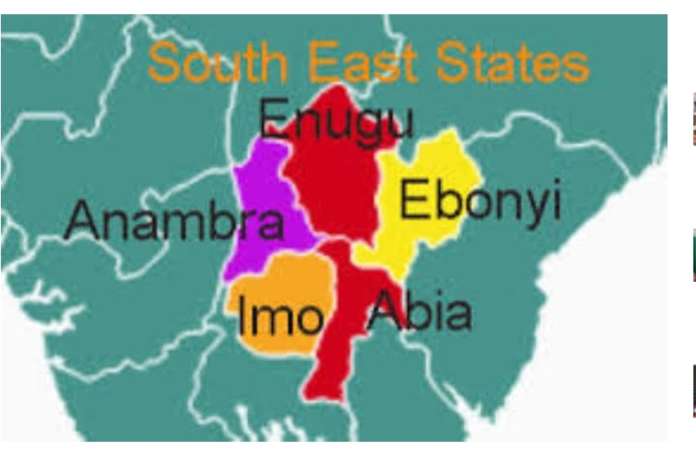
The situation in the South East, also the hotbed of resurgent separatist agitations in the last few years, has deteriorated so sharply that the five states in the region, home to Nigeria’s third largest ethnic nationality, have virtually become a war zone.

Only this week, a former presidential adviser and Northern politician, Ahmed Gulak, who was visiting the East, was murdered in daylight, raising ethnic tensions. The murder has also lengthened the list of unresolved violent murders in a region where at least 127 police and security personnel have been killed this year and extra-judicial killings of innocent civilians have become rampant.

Two states, Imo and Anambra (the most populous states in the region), have witnessed the most brazen and extraordinary assaults by “unknown gunmen”, the latest official description for violent criminals who have overwhelmed the security forces. The dangerous anti-North rhetoric by the Indigenous People of Biafra (IPOB) has inflamed passions and inspired the brutal murders of innocent residents from the North.

Yet, even indigenes have not been spared. One widely circulated and verified video last week showed gunmen in Enugu State dragging a man out of his car in daylight at a road junction in the city centre. They gunned him down with automatic weapons and then casually drove off. 

The man whose life was so casually and bestially taken, was a retired judge of the Enugu High Court, Justice Stanley Nnaji. The “unknown gunmen” are still at large and still unknown.

A cross-section of the elite in the region has blamed the rising violence on three major factors: a) the ascendancy of illegitimate politicians installed by hook and crook b) the tone-deafness of Buhari’s administration and his politics of spite and, c) the irresponsible conduct of leaders from the region, who have mismanaged the resourcefulness and energy of the teeming youths.

It’s difficult to say which factor has been the most telling. When the leadership of the political parties, especially the ruling All Progressives Congress (APC), was selling party positions to the highest bidders before the last general elections, most sensible people feared there would be consequences but didn’t know when or how. 

The cohorts bought party tickets and wherever they could not buy votes during the election, bullied or suborned their way to office. Now the fruit of their corrupt harvest is keeping the region’s teeth on edge. Also, the boys used as electoral fodder by politicians have not only become men; they have become monsters.

Buhari’s tone-deafness and insensitivity have not helped matters. He has mismanaged the country’s ethnic diversity so badly that however loudly other nationalities may complain, none has been treated as shabbily, unfairly and disdainfully as the Igbo. 

It’s been argued in some quarters that the Igbo have no reason to complain because Nigeria gave them extraordinary opportunities before the civil war. That’s nonsense. The Igbo earned what they got before the war on merit and bona fides. After the war, they fought to re-establish themselves by the straps of their own shoes. They are not asking for quota or preferential treatment, but justice and equity.

Yet, whether it’s a minor communal clash, some misguided youths waving the Biafra flag or Nnamdi Kanu sharing his mad fantasy about the so-called Buhari double from Sudan, this government’s response has been fairly standard: it deploys a venom of force and language that suggests that whatever his claim to the contrary, Buhari still holds the Igbo in scorn and suspicion 51 years after the civil war.

Of course, the President insists that he has nothing against Igbos and invokes his government’s infrastructure record as witness. Yet what he does by soft power – like passing over the Igbo man who is the next most qualified general after the death of the former army chief or his recent tweet which evokes unpleasant memories of the civil war – makes it difficult to believe him. 

To make matters worse, Buhari does not seem to make a distinction between extremists and their sympathisers on the one hand, and on the other, South Easterners genuinely alarmed and repulsed by the mayhem being unleashed on the region. 

The region’s elite have not helped matters. They have preyed on the youth with their politics of opportunism and mismanaged the legacy of enterprise and industry inherited from their past. They have squandered state resources on a scale that defies belief. Perhaps the icon of this madness was former Governor Rochas Okorocha of Imo State, who built a statue to every known god of profligacy. 

Nnamdi Kanu has only cynically exploited the catastrophic gaps in the failure of leadership at the national and state levels. 

What is the endgame? It depends. For Buhari’s government, it’s obviously to crush and bury opposition and whip the remnant in line. But that would only produce the peace of the graveyard.

For the elite, the endgame is to exploit the violence in the South East to secure a place in the next election cycle. Politicians, being politicians, crisis is the currency of relevance. And they won’t waste this one. The problem is that they can’t be too sure that the flame from the current blaze won’t catch the hem of their pants before they have had time to escape the crime scene. 

And IPOB? It’s actually sold on the delusion that the South East can secede with Nnamdi Kanu as president-in-waiting. For the last four years or so, IPOB has been working closely with a fairly well-funded separatist movement in the North West and South West regions of Cameroon which has the ambition of a breakaway Ambazonia.

In April, Foreign Policy reported that Nnamdi Kanu and Ambazonian leader, Cho Ayaba, held a live-streamed joint conference to join forces, an indication that they’re taking themselves seriously. 

That’s a clear and present danger, but it would take more than one live-streamed fantasy to secure a separatist homeland. Catalonia is an example of how long it could take; and South Sudan, a nearby example of how to be careful what you wish for.  

The current strategy that treats the South East as hostile territory, deploying gross, indiscriminate and heavy-handed force would only lead to further alienation in the region. Nnamdi Kanu’s goal may be to secure a territory, but he won’t get one, because Biafra is not a tangible space – it’s an idea, a heartfelt cry for justice, equity and fairness.

That, quite frankly, should be the endgame.

Ishiekwene is the Editor-in-Chief of LEADERSHIP 

Police and Gulak’s ‘Onions assassins

Late Ahmed Gulak

By Abimbola Adelakun

The so-called investigation by the Nigeria Police Force over the assassination of former presidential aide, Ahmed Gulak, is highly unsatisfying. Their synopsis of what transpired is riddled with so many holes and hardly sensible. The NPF’s reports are customarily frustrating to read. They are habitually riddled with typos and flawed logic. Read their statement describing an accident, and you will be amazed by how many laws of physics they break through an illogical description of events. Their rehashing of Gulak’s murderers’ “arrest” is no different, and that shoddiness does not bode well for a country going through tense times. Demonstrations of a lack of integrity in the operations of organisations like the NPF only exacerbate distrust in the government and its institutions.
 There were too many strange things about the NPF’s closure that are not typically Nigerian but also very Nigerian in its extreme shadiness. From the warp speed response to the distress summons, trailing the alleged assassins, ambushing them, exhibiting the bodies of some of the young men they had killed with guns strategically positioned on their chests, closing the case, and sealing their victory with a chest-thumping account of incidents, everything proceeded too efficiently.
Bala Elkana, Imo State NPF’s spokesperson, stated that as soon as they received a distress call about Gulak’s murder, they swung into action via a “Police Special Forces” composed of Intelligence Response Team, Police Mobile Force, and Tactical Units from the state command, deployed to the scene of the assassination at Obiangwu Junction, Ngor Okpala LGA. The PSF got eyewitness accounts, “especially” from the driver of the vehicle conveying the late Gulak to the airport who “gave a vivid description of the assailants and the vehicles they used in carrying out the attack.” At this point, the police started losing me.
If I were an investigating officer and I interviewed an eyewitness to an assassination, and that person -despite having gone through a harrowing experience- could still describe the attackers, four vehicles with details that include the makes, models, years and colours of the cars, I would consider them a person-of-interest and run a background check on them promptly. Elkana even hinted that the eyewitness provided plate numbers of the vehicles. That kind of memory is too rehearsed for post-incident police questioning to be considered reliable. One would expect an assassination’s witness to be shell-shocked, not to be an efficient note-taker.
But the eyewitness’ fantastic memory is not all where the problem was with the police account.
The police added that “with further leads,” they ascertained the location of the suspects and ambushed them in Aboh Mbaise LGA where these fleeing “hoodlums” were distributing onions to locals from a trailer they commandeered. According to them, “the onions were from the Northern region of Nigeria.” First, because Elkana was not specific on the details, one could only speculate how much time passed between when the incident happened and when they confronted the supposed killers. Google maps give the distance between both locations at around 17 kilometres and maybe, a 30-minute drive. What kind of assassins were they that left a crime scene – they did not hurt any of the eyewitnesses, remember? – and rather than return to their base to lie low, twiddled to share “onions from the Northern region of Nigeria” on the street?
It was precisely at the point of “onions from the Northern Region” that I nearly lost it. Why include this detail? Did the origin of the onions aid their investigation in any way? We casually say “the North” in our regular conversations, but northern Nigeria is not monolithic. It is an extremely diverse place. So, if not a chance to plant mischief and misdirection, why sneak in the loose detail about the supposed assassins sharing onions from the same part of Nigeria their victim had originated from? What is the NPF insinuating? Even if the truck containing the onions was coming from northern Nigeria, does that make it an enterprise run by a northerner? The vehicle could have belonged to local businesspersons and who might not even be Igbo since people from different parts of Nigeria trade in the East. Why bring up this vague detail in their narration of events when it has no bearing on the issue at hand?
 You see, the sentence about “onions from the North” is more telling than anything else packed into their rambling statement. On the surface, it looked innocent, but it is not harmless. They are priming the public to make associative links between the murder and the malice of destroying a produce business- deranged easterners who have not only killed a northerner but are also trying to destroy their businesses. You do not have to look hard to see that this mischief is a recrudescence of the narratives of easterners killing northerners that goes as far back as 1966. In case you were still wondering if Gulak’s death was truly meant to be an attack on the North or just another political assassination, the NPF’s sleight of the tongue about “onions from northern Nigeria” was to convince you, beyond any reasonable doubt, of an organised Igbo malice. Please, file “onions from the North” under the growing instances of official bigotry that now includes Danladi Umar’s “Biafra Boys” and Abubakar Malami’s “Spare parts trader.”
 Next time another air-headed politician begins to pontificate about “hate speech” and “social media,” we will remind them that hate and violence in Nigeria have less to do with the prejudices that ordinary Nigerians exchange. Hostility in Nigeria is systematically engineered by the government, and their officials give that away all the time. Please also note that this machination of animosity is not new. In 2016, the Department of State Services announced they discovered 55 shallow graves in Umunya Forest in Abia State that had supposedly been dug by members of the Indigenous Peoples of Biafra. The DSS, acting out a macabre script, posited that it identified five of the bodies as those of Hausa-Fulani residents in Imo State. At the time, this column challenged them to come up with the names and identities of the other 50 before concluding ethnic malice, but nobody has heard back from them! Yes, that was a whole DSS, an organisation that supposedly works based on intelligence, pushing a tendentious and poorly-thought-out spiel to the public.
 Unfortunately for the NPF and all of us, they could not establish any motives of the onion assassins as all bar none was gunned down. Even their cars were burned, leaving not much for even forensic analysis. They have not even given us the names and identities of those they branded as assassins and killed in that operation. We have nothing to hold on to; we can only speculate what truly happened to Gulak. Now that everyone involved in the incident is supposedly dead, the police have more or less closed the case. Gulak was a politician who had a history with his fellow politicians in Imo State during the last election. His death could have also been organised by his peers, but the police are no longer looking. They have clinked glasses to celebrate their own gallantry. At this rate, any politician who wants to assassinate their opponent only needs to send them to Imo and accompany their trip with a trailer of onions. You can bet the case will investigate itself.
 When an institution like the police cannot get its story right, they also display the degree of contempt they have for the public. They assume people are too dim to see through their poorly-contrived accounts. Such sloppiness also gives away their lack of investigative capability and professional integrity. The difference between police officers who investigate crimes methodically and the ones who torture out the information they need from suspects is perhaps best reflected when they need to tell lies to cover up crimes. Even when being dishonest, police officers well-trained in the art of investigation can properly reverse-engineer the process of unfurling a crime and make the account pass the smell test. You cannot say the same of those that captured Gulak’s onions assassins.

Copyright PUNCH.

GULAK ASSASSINATION

punchng.com ©️ 1971-2021 The Punch Newspaper

PRESIDENT BUHARI’S DRUMS OF WAR AND TWITTER’S REACTION.

BY: CHIEF MIKE OZEKHOME, SAN, OFR, Ph.D.
The most trending issue of the moment involves Twitter’s deletion of President Buhari’s threats to some Nigerians whom he described as “many people misbehaving today were too young to remember the deaths and destruction from the civil war “.
He then threatened, “those of us who went through the war will treat them in the language they understand”. INTERPRETED: “we shall give them the ‘death and destruction’ from the civil war” because “that is the language they understand”. Shocked and angry Nigerians rose up in unison to condemn this brazen act of a president publicly threatening his own citizens with genocide.
Twitter through which the incendiary and inflammatory words were uttered was equally not amused at all. It reacted by promptly polling down the offensive and provocative words. It also suspended Buhari’s account for 12 hours. The Twitter social media company said the post violated its ‘abusive behaviour’ policy. As expected, Information Minister, Lai Mohammed moaned, contending that Buhari had every right to “express his dismay at violence being perpetrated by a banned organization”. Lai accused Twitter of bias, double standards and support of the looting and destruction of public and private properties during the End SARS protests last year. When such “happened on the capitol, it became insurrection. You see, we are not going to be fooled by anybody”. Lai wondered why Twitter did not also act against other Nigerians who had also stringently encouraged attacks on symbols of authority, such as Police Stations, Correctional centres; kill Policemen warders, etc. Everyone knew he was referring to IPOB, the influential South East-based organisation clamouring for Self-determination. Nigerians are now used to this government being intolerant of plurity of views or critisms. When you criticize them for fighting corruption lopsidedly, they respond by saying “corruption is fighting back”. Such simplistic illogicality! I am particularly disturbed about the president’s banal overreaction, because he has neither banned, nor ever reacted with such vehemence or threats against the killer terrorist squad of Boko Haram, which is rated one of three dead list terrorist groups in the world; and against ravaging armed bandits, vicious kidnappers and different murderous squads that have had a free rein on Nigeria, turning Nigeria into a sprawling field of blood bath.
The President did not only overreact, his action actually showed his great disconnect with the people he was elected to govern. He can only beguile some die-hard loyalists by playing victimhood when his actions in the last six years signpost an uncaring and indifferent president who has since lost touch with his electors. What did u expect Lai Mohammed to say? Go against his president’s utterances even if offensive and insensitive to the people’s feelings? He would never dare! Like Hitler’s Goebel, Lai is paid to carry out propaganda and defend the president, the Federal Government and their actions, at all cost no matter how oppressive, illegal and inane such defence is. How can Buhari be belly-aching over Nigerians’ reactions to his poor governance style when, as Commander-in-chief, he has lost grip of governance, especially on security, economy and corruption matters. Recall that these constituted the tripodal linchpin that propelled Buhari to the presidency He has failed woefully on all of them. And you didn’t expect reactions from citizens being mauled down every day by a vicious Army of occupation that cannot take on Boko Haram, armed bandits and kidnappers? What manner of president is this? I cannot understand. Or, can you? That Twitter closed down President Buhari’s account is to me no big deal. It is a business organisation that regulates how its products are used. It has the right to punish or delete any erring subscriber. If it could happen to President Donald Trump, the then loquacious and narcistic because President of the greatest democracy in the world (the USA), when he instigated a mob to descend on the Capitol in January this year, why not our President who is actually threatening his own citizens with violence and death? Here is a President we have not seen for years empathising or sympathising with beleaguered Nigerians brutally maimed, raped, violated and murdered in their homes, farms, or the roads, schools, markets, offices, mosques and churches, suddenly coming out of his cocoon to threaten his own citizens with fire and brimstone, for merely agitating for freedom, liberation and independence from neocolialism. It is simply incredible! Let president Buhari be told clearly that asking for self-determination is a right recognised by the UNO, the African Charter on Human and People’s Rights and other international instruments. Buhari should let Nigerians be, at least to breath the (God-given) air of freedom, even if he can’t help, protect, defend or feed them. Nigerians can’t wait to see the end of his last two years in office. Or, can you?
General Buhari’s inciting and highly unpresidential tweet is a most unfortunate war mongering and a clear admission that he has failed abysmally to address Nigeria’s mounting problems which have leapt geometrically since he became President. When a President resorts to scare-mongering and unorthodox arm-twisting tactics against his own citizens, threatening them with conquest, bloodbath and genocide, then you know he has run out of all ideas and has become desperate. I don’t believe in heaping the blame on his assumed rabble rousing social media handlers as many are want to do because they believe Buhari cannot manage his twitter handles. Said Harry Truman, former American President, “the buck stops here”. Buhari cannot make other Nigerians, including his personal aids bear the brunt of his inefficiency and get them suffer his headache by proxy. His presidency will forever be judged as Buhari’s presidency, for good or for bad. And he has just two years left of his lack-luster and highly clannish reign as a dictator and an unfeeling Emperor Nero.
Since President Buhari appears tired of Nigerian citizens that he sought to govern in three earlier failed attempts (and even wept openly), he has one option: dissolve the Nigerian people and elect or appoint another of his choice.

Ozoemena, not another war!

Ozoemena, not another war!

Is another war for ‘Biafra’ inevitable?

Ikechukwu Amaechi

By Ikechukwu Amaechi

As Thomas Paine, the English-born American philosopher, once wrote, there are times that try men’s souls. Nigeria is in the throes of such debilitating times, more so for Ndigbo.

It has never been this bad since the end of the civil war in January 1970. What is needed to pull the country back from the brink is a leader with empathy, a leader who inspires and uplifts. Unfortunately, President Muhammadu Buhari does not fit that mould.

After reading his comment on the crisis in the Southeast on Tuesday, I simply came to the inexorable conclusion that he does not get it. Or worse, he is an inveterate sadist.

 Buhari is not a social media aficionado. Granted, he has a verified Twitter handle – @MBuhari – but he is not a Donald Trump, the former U.S. President. Buhari rarely tweets. But when he does, it underscores the importance he attaches to an issue. And he did so on Tuesday.

“Many of those misbehaving today are too young to be aware of the destruction and loss of lives that occurred during the Nigerian Civil War. Those of us in the fields for 30 months, who went through the war, will treat them in the language they understand,” he tweeted after a meeting with the chairman of the Independent National Electoral Commission (INEC), Prof. Mahmood Yakubu.

So offended was Twitter that it deleted the tweet. What a shame. Our President has joined the infamous club of world leaders in Twitter’s Hall of Infamy, sanctioned for conducts that fan genocidal embers.

Buhari’s tweet was a triumphal act which he relishes anytime he is dealing with Ndigbo. He just reminded restive Igbo youths that he conquered their fathers in a civil war and is prepared to crush them once again if they dare him. But he is addressing the wrong crowd. Igbo youths under the age of 50 don’t count themselves as part of the crowd Buhari and his ilk conquered in a war half a century ago.  They are irrepressible.

Of course, the president is entitled to his fantasy, but he misses the point. Ordinarily, his age should afford him the ample opportunity to introspect. If Buhari was someone given to solipsism, he should be asking himself why Nigeria loses its soul anytime he is in power. Blaming others for his self-inflicted leadership woes is a sign of weakness.

Reacting to the president’s tweet, @DrOlufunmilayo said: “When Buhari speaks to bandits, he begs them. He appeals to them. But when Buhari speaks to citizens, he threatens us. He uses language that can be used to justify harm, violence and massacre against the same people he swore to protect.”

@UNCLE_AJALA said: “Civil war that killed plus or minus 3m Igbos 51yrs ago, and still hurting so many people is what President Buhari is using to threaten people in 2021, while Boko Haram members are getting rehabilitated … it’s so unbelievable.”

This is the crux of the matter. Reminding Igbo youths how over 3 million of their folks were slaughtered just a day after the remembrance of the holocaust smacks of lack of emotional intelligence. It is callous. 

Why does Buhari loathe Ndigbo so much? His supporters accuse the Igbo of hating him. So, whatever crime he is committing against them is a well-deserved comeuppance. Those who propagate this harebrained notion hinge their ludicrous argument on the fact that Ndigbo have consistently rejected him at the polls even when he picked two of their sons – Dr Chuba Okadigbo and Chief Edwin Ume-Ezeoke – as running mates in the 2003 and 2007 presidential elections.

While it is true that Ndigbo are never enamoured of Buhari’s leadership qualities and, therefore, serially rejected him at the polls – and they have been vindicated by his woeful performance – it doesn’t translate to hatred.

After all, one of the most revered Igbo leaders, Dim Chukwuemaka Odumegwu Ojukwu, contested both elections on the platform of the All Progressives Grand Alliance (APGA) and his party also lost in the Southeast just as Buhari’s All Nigeria Peoples Party (ANPP) did. Does that mean Ndigbo hated Ojukwu?

Some others say Ndigbo hate Northerners. Some who want to be more mischievous narrow it to hatred for the Fulani. But they forget that Buhari is not the first Nigerian president of Fulani extraction.

In 1979, just nine years after the civil war, Shehu Shagari, scion of the Sokoto Caliphate, was elected president with Dr. Alex Ekwueme as his deputy. In that government, Ume-Ezeoke was Speaker of the House of Representatives and Dr. Joseph Wayas, was Senate President. Ndigbo worked well with Shagari. The same applies to President Umaru Yard’Adua, also a Fulani.

Those who accuse Ndigbo of hating the North are deliberately mischievous. I am writing this piece from my hotel room in Kano where I attended the 2021 biennial convention of the Nigerian Guild of Editors. I can say without equivocation that there are more Igbo entrepreneurs in Kano than the indigenous population. And Kano is not an exception. Ndigbo are in all the nooks and crannies of northern Nigeria, doing their legitimate businesses, contributing to the growth of the local economy. They build homes, not just houses, in their communities of residence. They pay their taxes and other development levies. Some are the reason why there is electricity in their adopted communities. It is on record that some Igbo people in the north have singlehandedly constructed roads in the communities where they live. These are not signposts of hatred.

So, Buhari should introspect. Rather than pointing fingers of blame at imaginary enemies, he should purge himself of animosity. It is abhorrent for a president to deploy state resources in inciting violence against an ethnic group. That gambit worked in 1966. It will fail in 2021.

Buhari’s recourse to chest-thumping, always waving the civil war flag to remind Ndigbo that he conquered them is ridiculous. The president is not the only Nigerian military officer who fought the war. He was only a Lieutenant then and there is no record of his outstanding exploits in that war of attrition. So, why is he behaving as if he single-handedly extinguished the Biafran flame?

As I noted recently, Ndigbo are not Nigeria’s problem. Declaring war against them at the drop of a hat is unconscionable. Today, soldiers have been deployed to the Southeast with a clear presidential mandate to kill. And what a great job they are doing. Innocent youths are mowed down on the streets. Young men are yanked off the embrace of their weeping mothers and taken away. Most of them are murdered in cold blood by what has become an army of occupation.

There is no accountability. Thousands have disappeared as soldiers carrying out the explicit orders of their Commander-in-Chief storm students’ hostels and churches to whisk away youths in the name of hunting down Indigenous People of Biafra (IPOB) activists.

Alaigbo is in turmoil. Sadly, this war is not inevitable. All that was needed is a leader with character, sobriety and an acute sense of justice. Unfortunately, Buhari is not such a leader. But genocidal leaders will always pay a steep price.

In the Southeast, we have a wimpy political class. The governors are not only mortally afraid of speaking truth to power but also willing to throw their own people under the bus if only to appease an unappeasable emperor.

Since nature abhors a vacuum, the yawning leadership void has been filled by an irascible non-state actor, Nnamdi Kanu, who has effectively stepped up to the plate and impressionable Igbo youths in search of a hero have found in him the superman they have been looking for.

As I noted recently, there is no Igbo leader today that has as much hold on Igbo youths as Kanu. Such enormous power should come with great responsibility. That seems not to be the case. Biafra or no Biafra, Ndigbo need to be alive. Brainwashing Igbo youths to confront soldiers that have no respect for any rules of engagement is suicidal.

Today, some Igbo are as afraid of Kanu as they are of Buhari. This my way or the highway philosophy of IPOB detracts from the struggle. Threats against those who do not necessarily disagree with the struggle but have a different idea of how things can be done without bloodshed smacks of a budding autocracy. Blood is sacred in Igboland and any strategy that will orchestrate the wanton spilling of precious Igbo blood should be reevaluated.

Mass self-immolation, which is what I am seeing in this “it is either Biafra or war” battle cry of IPOB is not a sign of bravery. It is a red flag of a society on the path of self-destruction.

You don’t wage a war against a bull in a China shop, because even if you win, you risk losing all. You deploy tact and wisdom in guiding the bull out of the shop. That is not cowardice. Ndigbo who are calling for restraint are neither fraidy-cats nor quislings.

Calling Nnamdi Kanu out if he errs is not an act of betrayal and, therefore, does not deserve a fatwa. With the way things are panning out, particularly the stratification of Alaigbo along the lines of those who are for and against Kanu, we risk Igbo on Igbo violence. It is a slippery slope.

Ndigbo don’t need to fight another war even for the sake of a territorial Biafra. Buhari is a rampaging bull who has no qualms replicating the tragedy of the late 1960s. Playing into his hands is foolhardy. This war is not inevitable.

Weak Scorecard and Failing Social Contract

Ayo Olukotun

Almost overshadowing what was billed as a celebration of democracy day were two high profile assassinations as well as the deleting by twitter of the President, Major General Muhammadu Buhari (retd)’s statement about teaching those destroying public property the lesson of their lives, ‘in the language that they understand’. The politicians murdered are Ahmed Gulak, a member of the All Progressive Congress and former political adviser to former president Goodluck Jonathan, as well as Christopher Dega, a retired Police Officer and until his death, Senior Special Assistant, to Benue state Governor, Samuel Ortom. Both of them were shot by unknown gunmen in Owerri and Jos respectively. Buhari’s strongly worded remarks which included an ominous reference to the civil war is still generating ripples even after twitter deleted it. Needless to add that the sensational murder of the two politicians, represents only a tip of the iceberg of pervasive bloodletting in different parts of the country.

However, let it be noted that there are differential perceptions concerning how Buhari has fared in the last two years and in the last six years respectively. A fact sheet released by government publicists last week enjoined Nigerians ‘to count their blessings one by one’ arguing that Buhari’s achievements are legendary and are on such a scale as to ‘make Nigerians proud’. On the other hand, a more sober and scientific assessment contained in a recent report by the African Development Bank, describes the Nigerian economy as one characterized by high unemployment, worsening poverty rate, high debt service obligations, low external financial flows, and one in which the modest projected growth of 1.5% for 2021 and 2.9% for 2022 can easily be reversed by oil price upset, escalating insecurity, massive flooding, and a possible surge in the outbreak of new variants of COVID 19 pandemic.

A careful examination of the fact sheet by government spokespersons reveals that it conflates the initiation or flag off of new projects with groundbreaking achievements. To give an example, listed in the ‘blessings’ for which Nigerians should be thankful is the Solar Power Naija initiated in April 2021 and is projected if it succeeds to provide 5million households with off grid power. For Nigerians, who are putting up with the woes of rising cost of electricity and virtually stagnant distribution of power, the project must be regarded tongue-in-cheek as a marvelous blessing indeed. So much for publicists and their whitewashing antics.

One of the goals of a truthful assessment of governance records is to consider how far and how fast we have moved in the direction of building a Nigerian state that works for all or that works for the majority of citizens. This is another way of examining to what extent particular governments are fulfilling or failing to fulfill the social contract between government and the governed. One apt expression that comes to mind employed recently, by former presidential aspirant, Dr. Kingsley Moghalu is ‘politics without governance’. The ramifications of the coinage are many and include, for instance, why some governors are crossing over to the ruling party and politicians are traversing the length and breadth of the country in coded campaigns at a time when the fate of Nigeria truly hangs in the balance.

It is no exaggeration that the scale and depth of insecurity of lives and property as well as apprehensions for the future, have produced a climate of fear, uncertainty and perilous times. Nonetheless, our politicians fixated on the next elections are busy at their game of seeking power without purpose and entrenching a democracy without the people. That said, it is possible to recognize that despite a recession, and the devastation of the COVID 19 pandemic, some progress had been made in the area of infrastructure with the commencement of new rail routes in some parts of the country. True, some of these projects were begun in the previous administration, but Buhari can claim credit for completing them and for initiating new ones which are however yet to begin. The rail route between Kaduna and Abuja became very busy recently when bandits turned the road travel into a nightmare as they occupied several parts of the road. Although the raging insecurity tends to loom larger than any possible achievements, the management of COVID 19 fallouts by the Presidential Taskforce and the health ministry may have helped somewhat in minimizing thus far the lurking danger of widespread outbreak.

To be counted too among the little mercies is the completion at some of our international airport of new terminals, though again, the projects were dreamed and commenced earlier. Similarly, in the area of education, about which little attention is characteristically paid except when new institutions are being built mainly for political reasons, there is a smattering of achievements. In this respect, the provision of Solar and gas power to some federal universities and Teaching Hospitals can be counted among these. That notwithstanding, there are huge areas of neglect crying for attention in that sector, especially in our universities whose global rating slides downwards by the day.

Returning now to basic issues of governance, it is noteworthy that Buhari himself provided the template for assessing him when he promised during his campaign to focus on the overriding topics of corruption, insecurity, and the economy. Notwithstanding that issues of governance are interconnected we can spend some time pondering how well the administration has done in the last two years which constitutes a mid-term. Beginning with corruption, the enthusiasm of the earlier years appeared to have waned as revelations of public theft rose to a crescendo now and then. The Ports Authority, the Niger Delta Development Commission, the Pension Commission as well as the alleged re-looting of looted funds are some of the areas affected. Worse still, it will appear that some of the scandals were treated as light entertainment for the public rather than issues requiring firm legal sanctions and deterrent rebukes. Overall, the momentum and gravitas once attached to the anti corruption struggle appeared to have been lost.

Insecurity constitutes a serious problem area as it holds the key to declining or enhanced productivity in agriculture, trade, manufacturing, foreign investment, and more importantly, the safety and well being of Nigerians. For as long as bloodletting becomes the new normal so long will Nigerians continue to cry for help or leave the country in droves. The recent alert by some Yoruba groups and leaders of a possible invasion by killer herdsmen of their territory can only compound an already desperate situation. The economy as mentioned at the outset touches a raw nerve as it connects with livelihood, lifespan, and virtually every area of governance. Performance ranges from dismal to mediocre as policy continues to go back and forth like a yo-yo.

Overall, and inspite of little strides which are few and far between, the governance scorecard remains weak, and in need of substantial upgrade. No doubt the election season will reduce the space for governance mark up as politics and over politicization swing into the mainstream. That means that Buhari has only one year to improve his score card that began with great expectation but has become diminished. It will matter how he manages that narrow space

Ayo Olukotun is a director at the Oba (Dr.) S.K Adetona Institute of Governance Studies, Olabisi Onabanjo University, Ago-Iwoye

The woman who gave God a name (2)

Evangelist (Mrs) Bella Rhodes Vivour-Nwaogu

By Evangelist (Mrs.) Bella Rhodes Vivour-Nwaogu

                     Jehovah El Roi

The sun has a way of shining and giving hope. As Hager made her return journey, she questioned within her the role Abraham had taken. After all she was better than Sarah and should be the preferred one now.

The community was silently in support of the unborn child. Not because of Hager, but for the joy of seeing that their benefactor has an heir to his wealth. Abraham was a good man and this caused him to have his servants and slaves stay.

At the birth of Ishmael, pride and arrogance were on display. Hagar could not hide her disdain for barren Sarah. But her plans and joy were quickly stunted as she came to realise that the battle line was drawn between her and her mistress. The stronger was to win. Without being elevated in status, her hopes were completely ruined. She had failed to collect the reins of power and control as a partaker in the splendour, wealth and admiration of the father of her son. Broken hearted, she opened herself up to hate and anger, as she proceeded to poison Ishmael’s heart against his step mum.

She felt abandoned by Abraham as he did not call for her to have another child. She knew she was not loved. She became bitter and vengeful. Years went by and suddenly, the time and season for Sarah came.

The old flame was there as Abraham searched his wife’s face seeing the sadness in those eyes. He embraced her. This time a seed was planted. Procreation was about to start. To the shock and consternation of all who had long given up on her, Sarah conceived. As the weeks of gestation progressed, the gossip quietened. It had been rumoured that she had an ailment. But then, she was old and might be on her way to her maker, some suggested. She thinks she’s pregnant others whispered, she must be day dreaming. But it was a gift from Jehovah. 

Joy unspeakable in the community as Abraham gave orders for the very best for his wife as her pregnancy progressed. Laughter returns; tears of joy; her beauty got restored as her skin took on a new hew bringing out her complexion. Her grey hair shone as peace radiated around her. The mockery is over.

To be continued…

The power of influence (2)

‘But the fruit of the Spirit is…’
Galatians 5:22 NIV
.
Everybody has influence over somebody. It’s what you do with that influence that determines whether it’s negative or positive. Sociologists tell us that over a lifetime even the shyest and most introverted person will influence about ten thousand people.

Every interaction you have with another person enriches or impoverishes them. Influence is never neutral. And you can’t turn it off, because it’s built into the structure of life itself. Furthermore, it doesn’t matter what your title is.

Ultimately, your character will determine if the title fits you. The Bible says, ‘The fruit of the spirit is love, joy, peace, patience, kindness, goodness, faithfulness, gentleness, [and] self-control’ (Galatians 5:22-23 NASB).

When you have those qualities, people will line up to help you, love you, and follow you. You ask, ‘How can I display all these qualities?’ Humanly speaking, you can’t. That’s the bad news. But the good news is that it’s not only a possibility but a distinct reality – when you’re under the influence of God’s Spirit.

The story is told of a little boy who kept falling out of bed each night and waking his mother up with his crying. One night after tucking him in yet again she asked, ‘How come you keep falling out of bed?’ He thought about it for a minute and then said, ‘I guess I just stayed too close to where I got in.’

Salvation is the starting point, but unless you spend time each day under the influence of Jesus, you won’t mature, you won’t maximize the spiritual gifts He has given you, and you won’t discover and fulfill your God-given assignment in life.

Bible in a Year: 1 Kings 12-13, Acts 5:21-42

The Word for Today

Photo Credit: Pexels.com

TIPS