Home Blog Page 955

The woman who gave God a name (3)

Evangelist (Mrs) Bella Rhodes Vivour-Nwaogu

By Evangelist (Mrs.) Bella Rhodes Vivour-Nwaogu

                     Jehovah El Roi

Isaac was born into the arms of excitement. Joy, dancing, the partying knew no end. The prince is born. They came from far and near. Delegations came with gifts to pay homage to Abraham. It was the story on caravan routes and at oasis towns along the desert way. Abraham the Hebrew has got an heir from his aged wife Sarah.

In the shadows was Hagar. The last blow has been struck. Suddenly reality hit fantasy as man’s plans are submerged under God’s divine plan. Two women’s destinies are altered by the finger of God. Great is thy faithfulness Jehovah, keeping times and seasons. Sending your word to perform and accomplish that which you have spoken.

Ishmael now a teen, his heart corrupted by Hagar carried out her bidding. He mocked and made fun of Isaac. Sarah could no longer take it. She feared for her child. Ishmael’s brooding hate for his younger brother was not hidden. Her female intuition told her danger was ahead. As any mother would, she arose to preserve her baby boy.

She executed her plan with evidence. Abraham had no choice but to turn to his friend on the matter. Jehovah assured him of the child’s blessings but instructed that he be sent away with his mum. In obedience he had the odious task of dispatching mother and son away. The parting was extremely sad but Hager was now seeing the result of her actions. In disbelief, confused with nowhere to go, little food, little water, little money, and tears of sorrow they wandered in the desert. Seeing their lives were about to end, she prepared to die. But Destiny had another chapter, for El Roi the God that sees me had arisen to pilot her, to her new abode .He had heard the cry of the child. Divine provision was made for both of them as they travelled to a new place arranged by Jehovah for them.

Epilogue 

When God gives a plan for your life, wait for the vision. It will come to pass. The seed of the fruit needs time to germinate and then grow. In the process of growth it must be cared for by constantly weeding and, watering. So it is with the vision. The seeds of faith, patience and other fruits of the spirit need to be nurtured in you as you run with the vision.

Seasons and times will always change. Ours is to ask for divine speed that will accelerate the change we need. In relationships, we can never vouch for others in spite of our knowledge of their character. It is therefore wise to ask God for wisdom and a discerning spirit.

Emotions should not be the bed on which we take decisions. There is a Grace we need from the throne room to enable us take critical decisions that will affect our lives. Emotions are POWERFULL, controlling and can be dangerous. The mastery of the flesh as we seek the fruits of the Holy Spirit to rule in our lives is the game changer. Sarah acted out of emotions. She wanted to help secure her husband’s lineage but did not seek God’s consent before taking action. That is where the gift of discernment comes in. She acted out of emotions but discernment and seeking God’s face in the matter would have revealed that things are not always what they seem. Some people appear humble but their true nature manifests when they taste power. A seemingly humble slave girl transformed into a total stranger when she achieved what madam could not achieve.  Both women lived with regrets and you can be sure they wished the clock could have been turned back.

Never try to help Jehovah. Rather prevail in prayer on the issue. Do not despise the anointed or the messenger. Never sit in the usurper’s seat. It only brings misery, torture, sadness and shame. Encourage yourself in the Lord while you wait and obediently follow His instructions. Rest in Him as you abide in His presence. He will teach you. El Roi sees, knows, and feels what you are going through. He will not fail you. Wait for the vision. Your time and season will come.

Shalom.

Evangelist (Mrs.) Bella Rhodes Vivour-Nwaogu is General Overseer of Worship Center International Church and Camp En-Gedi prayer ground, Ogun State, Nigeria. She also heads Deborah Court Ministry which handles Crusades and the International Conference of the African woman (ICAW). she ministers within her country Nigeria and internationally. A legal practitioner of many years at the Bar with an MBA, Rhodes Vivour-Nwaogu worked for several years in the country and with an international Organization before going into full time ministry.

‘TWITTER AND THE ILLITERATE OF THE 21ST CENTURY’

Inside Stuff With MARTINS OLOJA

I was reflecting at the weekend on how to expand my view that we should not push buttons on balkanisation of our great country because of the many troubles with our president, Muhammadu Buhari when the federal government announced indefinite suspension of Twitter operations in this our country of anything-is-possible.

It will be recalled that, ‘Let’s Not Break Up Nigeria Because of Buhari’ is a subtitle in my article titled, ‘Let’s keep Nigeria together for Mandela (2)’ here last week. I still believe in the substance of the argument that we should not champion a cause to break up this beautiful country because of poor leadership we are experiencing at the moment. I believe that under a good leader, the country has the dynamic capability to be the authentic leader of the black race and become part of the First World.
Part of what I wrote last week:

‘…But let’s organise to isolate all these dealers who masquerade as leaders especially since 1966. We the younger ones who have tolerated them thus far should not allow the destruction they have callously unleashed on this beautiful country to provoke us into break-up warfare. Yes, they don’t care if Nigeria comes to harm. We elected them to improve the economy. Our leaders, sorry our dealers looted the treasury and then cried foul and set up anti-graft agencies to search and try mainly petty thieves. They have ignored what a foreign policy expert and journalist, Sarah Chayes, calls “thieves of states”. We elected them to improve education standard but they destroyed the schools and set up their own schools and universities with their loot that anti-corruption agencies can’t detect. We elected them to provide good roads. They have looted road infrastructure funds to buy private jets to fly over our bad roads. Nigeria’s wicked power elite know that Nigeria can work, but not under them. The world powers too know that Nigeria can be great and become a big player on the world stage. The seven big men in suits (G-7 powers) know enough to know that Nigeria has inestimable brainpower that can be harnessed to be one of the greatest powers on earth. They all know from White House though Kremlin to Whitehall that Nigeria is Africa’s Power House. They have not forgotten that it was Nigeria that (spoke for Africa) in January, 1976 looked them in the face and told them point blank, ‘Africa has come of age…’

Yes, they know more than Mandela that Nigeria is the face of Africa and indeed the black race. That is why they can sell even deadly weapons to insurgents that can fast track Nigeria’s failure….’

The power elite would like to cause distractions from our discussion points on nation building every week: One week, one trouble, one distraction. I think most of us should continue to stay on the narrative that Buhari our leader should be encouraged to complete his term peacefully so that we can enter a new phase of national development plans in this country. We should concentrate on and work against the shenanigans and peccadillos of those who packaged him for us in 2015. Instead of lamenting on the incompetence and mediocrity that have characterised the last six years, we should encourage enough-is -enough Movements against all the enemies of the people who are masquerading as leaders now. I mean instead of agonising a great deal about the consequences of indefinite suspension of Twitter in Nigeria, we should be resourceful in organising and encouraging those who would like to run the country after the Buhari’s historic but didactic administration.

Here is the thing, we have read the beautiful reportage of global outrage over the federal government’s suspension of Twitter operations. United Kingdom, the U.S, Canada, Swedden, among other world powers have expectedly warned against rights violation. NBA, SERAP and other civil society organisations have cried foul and threatened court actions. These are positive responses to yet another tragic errors in this government. Even what Hurricane Donald Trump could not do to Twitter when it suspended his account, Nigeria’s government has done. Oh Power. Raw power! Where is thy powerlessness?

Where can I get a copy of a review of Dr. Fidelis Amatokwu’s book in those days by Prince Tony Momoh, the reviewer titled, ‘The Ignorant Tyrant’? The book by the then mass communication lecturer at the University of Lagos was torn to pieces through a quite objective review when the reviewer called the author an ‘ignorant tyrant’ as a result of too many errors of parallax and avoidable slips including ‘Nigerian Union of Journalists’ instead of ‘Nigeria Union of Journalists’. May we not be taught and led by ignorant tyrants in this perilous time!

Now that what we have feared most – attack on free press – has come upon us, we need to continue to reflect on President Barack Obama’s observation that ‘elections have consequences’. We need to note that we are still facing the dire consequences of our choice in 2015, which has become an eye opener, a testimony of some sort, after all as I noted here the other day.

We need to have some introspection on the fact that if no one from the kitchen to the legal cabinet could tap the leader of this country on Friday June 4, 2021 that indefinite suspension of Twitter, a micro-blogging platform where the old and the young meet to express themselves and even conduct their businesses, where the federal government even announced the ban was going to set Nigeria back, we should note that there is no need to sing any redemption songs for this administration.

How can the leader of Africa and the black race take that kind of rash decision in 21st century?
We, the people indeed need some introspection on the way they once were in South Africa where an iconic author Alan Paton wrote a classic, ‘Cry, the Beloved Country’ from which we need to borrow some brilliance.

Throughout the novel, (‘Cry, the Beloved Country’) one of the major themes is the contrast between hope and fear, light and darkness. The author, Paton juxtaposes these contrasting ideas by using literary devices, such as vivid imagery and rich dialogue. Personification, similes, repetition, diction, symbolism, antitheses, dramatic irony, and allusions also supply the varying moods of the novel and distinguish the “light” of hope from the “darkness” of fear. This story, set in South Africa, is about how two fathers, Jarvis and Kumalo, and how their lives intertwine. It is also about how fear and hope are inseparable parts of life. Kumalo is a black minister in a small, poor town. Jarvis is a richer, white man who lives on the hill. This novel also has many allusions to the Bible. These allusions signify both fear and hope. One allusion that signifies both fear and hope is on page 62, when Kumalo prays: “Oh God, my God, do not Thou forsake me. Yea, though I walk through the valley of the shadow of death, I shall fear no evil, if Thou art with me.” This quote is both desperate and fearful, but it is also hopeful at the end when it says: “I shall fear no evil, if Thou art with me.”

Dialogue is a compelling device used to contrast hope and fear or desperation, as on page 108: “Sorrow is better than fear. Fear is a journey, a terrible journey, but sorrow is at least an arriving.” (Father Vincent) And where have I arrived?” (Kumalo) “When the storm threatens, a man is afraid for his house. But when the house is destroyed, there is something to do. About a storm he can do nothing, but he can rebuild a house.” (Father Vincent)…

That is where we should be: about the storm that is blowing now we can do nothing but we can rebuild our fallen houses and broken walls. Let us encourage our young and old civil liberty organisers and young politicians and even young journalists not to fear evil. They should brace up to say enough-is-enough. There is nothing we can do about the present darkness in the land. We all conspired with the corrupt political class to enthrone this governing party in 2015. Even the Letter-Writer-General of the Federation and the Nobel laureate in Abeokuta failed to see through the façade in the 2015 candidates. They too were naïve and we all followed them. We need to know that the evil geniuses who artfully designed the present darkness in which no one is safe at the moment are re-organising again. They have warehoused the Project 2023 war chest, though they are men without chests. They are strategising to confuse us again with their artistry and stratagem. Let us not be carried away by some naivety that Ministers Lai Mohammed and Abubakar Malami, for instance are the problem. They are not the real problem. They are part of a system that doesn’t work. Let’s look at the larger picture of the systemic failure that has heightened insecurity and food crisis at the moment. The leadership that appointed these people should be the focal point of discussion. The way the president, the governors and even the national and state assembly leaders emerged should be discussion and planning points. The role of money in our electoral process should be discussed now. How can the country recruit its leaders without moneybags and unpatriotic godfathers? We need to get those who will like to run the country to come out now to tell the nation how they intend to confront the present darkness and rebuild the broken country. Doubtless, this requires national re-awakening, lest we will regret again and wait for Godot that won’t come, after all. Let’s create our Godot today.

Meanwhile, the Buhari administration should not celebrate the arbitrary suspension of Twitter operations, which has been interpreted to mean war on the media and the youth. It is Pyrrhic victory, (which takes a heavy toll that negates any true sense of achievement or damages long term progress). The administration’s reputation managers should advise the presidency not to allow the world to address Nigerians and their leaders as the illiterates of the 21st century who cannot learn, unlearn and relearn.

I have quoted Alvin Toffler, an American writer, futurist and former associate editor of ‘Fortune’ (magazine) several times here and this administration needs his brilliance now. To him (Toffler), ‘The illiterate of the 21st century will not be those who cannot read and write but those who cannot learn, unlearn and relearn. I am afraid, in this digital switch over (DSO) age, in this century that information and social technologies disrupt daily, a leader who authorises suspension of a popular micro-blogging platform and social networking service provider, Twitter will be regarded simply as ‘an illiterate of the 21st century’. Our leader should, therefore, swallow this pride and vanity and allow Twitter continue in Nigeria today. The journalism genre they practise isn’t a crime. It nourishes participatory democracy and has made journalism to be an enjoyable conversation. It is a significant part of progress and digital revolution Nigeria shouldn’t disrupt.
##

Nigeria: Just before the lights are turned off! – By Kayode Ogundamisi

The primary responsibility of the government is to protect its citizens, failing to do that, every other achievement can be wiped out by just 2 days of war. Clearly, from the North to the South the State has lost it’s monopoly of violence and a clear strategy on how to retain control on behalf of the citizens.
None State actors can not bring stability. They can deliver blood, the temporary feeling of victory in revenge and counter revenge until the last person standing falls.
It is ONLY the State that should restore its authority by gaining the confidence of the citizens in a war situation. Be consistent in reactions to all the conflicts without any hesitations and resort less on knee jack responses.
The escalation of the conflict in Nigeria will only produce one resolution, endless carnage that will make the Liberian, Syria Leone and Biafra 1 Wars look like a child’s play.
From President Buhari (Who has thus far failed with regards to dealing with insecurity).)to state Governors, local government officials, lawmakers (who pretend like they are not also charged with the responsibilities to create an enabling environment to improve security) to the least person in government across the political and regional divide, a decision needs to be made, to either continue to politicise the crisis, do nothing and wishing the situation will improve or putting differences aside, doing something and putting the safety of the people and Nigeria over and above everything else or watch Nigeria slide into a war that no one can win. Sadly, after the fog of war, it is the very poor in all the nooks and cranny of the country that will end up being sacrificed as they are being sacrificed at present.
In the absence of the State, the people are already resorting to self help, enemies are defined in blury lines and crisis entrepreneurs in government, civil society, religious organisations are smiling to the bank.

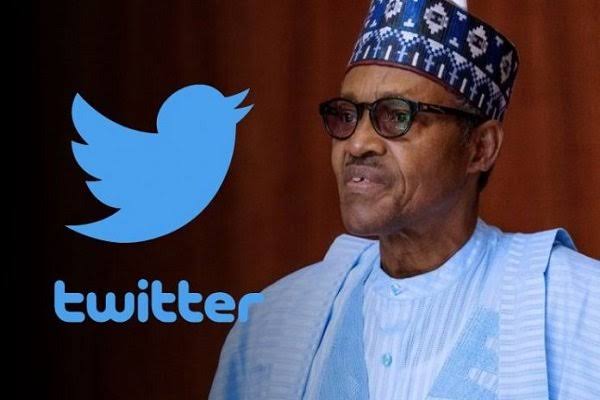
[Pendulum] President Buhari And His War Against Twitter

By Dele Momodu

Fellow Nigerians, I had planned to write on a different topic today, but man proposes and God disposes. Nigeria has become such a rollercoaster that it is very difficult to catch up with news and events. Since President Muhammadu Buhari and his acolytes took power six years ago, our country has known no respite from news of gloom and doom. Where we had looked forward to the easing of our pain, what we got was a dissipation and destruction of our gain. It has been one day, one fight. Even a world heavyweight boxing or wrestling champion who fight for fun and for finance will ordinarily get tired at some point and decide to retire, but not these ones.

Where there is no fight, they will find it and create one, making sure it is bigger and more violent and virulent than the last. There is a sense in which you are made to feel that those in charge of this government thrive only in chaos and confusion. They seem to get off on playing to the gallery and practising dangerous brinksmanship. And so, the country lurches from one foreseen disaster to another unforeseen problem and then back to another foreseen calamity and the orgiastic cycle and circle of a litany of woes continues and persists forever.

We had been warned, long before President Buhari finally won the Presidential election at the fourth attempt, that he was too rigid, pugilistic, dictatorial, vindictive, divisive, venomous, fundamentalist, unbending, unyielding, and all that, but we dismissed all those allegations as belonging in his past. I was one of those who repackaged him as a People’s General, a veritable, certified, dyed in the wool democratic who had become a true friend of the lumpen proletariats, the most honest and frugal gentleman alive. We had good reason for reaching what has now turned out to be a highly fallacious conclusion. We had been led to believe that the President had turned over a new leaf and had imbibed democratic principles and in the process jettisoning everything regimental, military and authoritarian. The General certainly spoke the language of politicians, he even renounced his past toga of a high-ranking military officer and instead embraced politics like one who had always been a politician of the Nigerian hue. He probably had become better than them, playing them at their own game, like the military strategist and tactician that he has always been, when he stooped to conquer. Sometimes this President, feigns ignorance, plays possum or fakes diverse maladies, merely to get out of a tight situation.

Deniability and a willingness to abdicate responsibility are the hallmarks of this regime. I am beginning to think that it is no longer coincidence that the President is always absent when urgent matters affecting the national discourse and the nation’s future and destiny are at stake and being discussed. When it comes to matters which he holds dear and are closest to his heart like the issue of cattle and Fulani nomads from neighbouring countries, the President is astute, engaging and articulate. I do not believe in selective amnesia. It is a mere tool of manipulation and I am starting to feel that the President has worked it out to a Tee. Indeed,, when one critically examines the President’s posture and position on certain matters, it becomes as clear as day that we are being had and taken for a ride. Those matters which directly affect and concern the President and his constituents are usually swiftly dealt with. Outside of this, the President is characterised by snail-like speed, indecisiveness, bumbling and failure to interact with colleagues, and others, with any degree of process and precision.

It was not to say that we didn’t know his major shortcomings, which would always include his taciturnity, bad temper, reclusiveness, modest education, antiquated worldview, and so on. But we were so sure that his deficiencies would be protected and covered by a more cosmopolitan, cerebral, mild-mannered, affable, genial Vice President, Professor Yemi Osinbajo. Sadly, we were dead wrong, and the error was absolutely brutal and fatal. Not only were things worse than imagined, as these vices held sway and appeared to hold the person and his office with a vice like grip, but they were also beginning to give rise to fatalism and morbidity. Under Buhari’s government, the falcon can no longer hear the falconer and things have absolutely fallen apart.

So here we are begging our leader to have mercy upon us and get a few necessities of life right for the general good of us all. I do not know why it has been impossible to reduce the spate of highly violent insecurity in the land. When Buhari came, insecurity was mainly volatile in the North East but today it has spread, uncontrollably, rapidly, and sporadically, across the length and breadth of Nigeria. What makes it so strange is the fact that Buhari retired as a Major General in the Nigerian Army and he was expected to be more competent than regular politicians in matters of insurgency. But that has not been the case. Instead, insurgency, militancy, insurrection, banditry and kidnapping have been on the rise. The perpetrators have become bolder and more brazen. Their exploits seem to be achieving greater superlative status by the day. Despite this fact, the government appears tepid, even timid, in its response. It is definitely afraid to engage these hoodlums, some say, for fear of offending their beloved kinsmen. After all, the speed and rate at which the Government tries to put down and supress innocent protests in the South East will seem to suggest that the Government can be actively proactive and decisive whenever it pleases the President to doo so.

Anyway, all that have become sorry tales. They have merely given rise to a feeling of helplessness and hopelessness in the people. Nowadays, Nigerians merely shrug their shoulders and roll their eyes as if to say, “what’s new”.

What has made matters worse is the glaring nepotism that exists and the manner some people from certain parts of Nigeria believe they are being treated like second class and third-class citizens in their own country. Many sections of the country have virtually given up on President Buhari ever changing his ways or style. Time and time again, the President is presented with opportunities for directing a new beginning, at least in the area of appointments. At reach turn, the President has spurned the opportunity and instead repeated that which makes it easy for his traducers and detractors to remark that a leopard cannot change his spots.

The most recent is the opening, and avenue, for the President to appoint a new Chief of Army Staff from the South East, or the South generally, with the untimely and tragic demise of the former Chief of Army Staff, the late Major General Attahiru Ibrahim. Instead, President Buhari went back to his tested, tried and trusted method of making such a high-profile appointment from the North. When he appointed Major General Farouk Yahaya, many concluded all hope for any salvation or redemption for President Buhari was lost. All entreaties to change have fallen on deaf ears.
The President has not hidden his disdain for the people of the South East in particular. Any time the Igbo people chose to protest the injustices and marginalization meted to them; President Buhari has always responded with brute force. He sent in the army and crushed any act of rebellion mercilessly. In interviews and in general speeches, Buhari left no one in doubt that he was never a fan of the Igbo people.

As if this was not bad enough, the President made a major gaffe this week when he brazenly and defiantly threatened to deal ruthlessly with the young people who must have been too young during the last civil war. He promised, emphatically, to handle them in the language they understand, thus invoking the sad spirit of a genocidal war that claimed millions of lives. The President’s media team compounded the problem by acting ignorantly, about the social mores and rules of engagement of social media, when they put such a direct act of threat and intimidation on social media: “Many of those misbehaving today are too young to be aware of the destruction and loss of lives that occurred during the Nigerian Civil War.
“Those of us in the fields for 30 months, who went through the war, will treat them in the language they understand.”

Unknown to them, the world has since moved far away from the kind of maximum rulership that Major General Buhari enjoyed as Head of State from 1984-85. Nigerians promptly protested against this level of intolerance from their democratically elected President. The terrible news, of ethnic bias and racial intolerance and abuse, instantly attracted world attention. Social media was on fire and there were many protest tweets to Twitter to delete Buhari’s unfortunate tweet and suspend his account. Before one could say Jack Robinson, Twitter had responded in kind by deleting the odoriferous tweet and suspending the recalcitrant account. Of course, President Buhari’s ego was critically bruised.

Of course, it was not in the character of a pseudo-democratic government to let such a simple and straightforward matter pass without rancour or much ado. Alhaji Lai Mohammed, the Minister of Information and Culture, wasted no time in coming out to offer a blistering criticism of the action of Twitter, naming it as being “suspicious!” My very dear Alhaji must have forgotten that Nigeria’s gra gra has its limitations, and that Twitter is an institution far more powerful than gods with feet of clay. The same Twitter that yanked off the most powerful President on earth, Donald Trump, is the same one that the President of a country, in search of loans from wherever it can get it, wants to take on by embarking on reciprocal activity.

You must give something to us Nigerians. We are good actors; the reason Nollywood is very successful. Vehemently rebuking Twitter for disrespecting our President is folly when you have absolutely nothing to back your sabre rattling. Nevertheless, Lai Mohammed felt that this was the path to thread, in a bid to demonstrate how farcical and unserious our leaders have become. Many people were even surprised the Government did not accuse Twitter of being bribed by some corrupt politicians to tarnish the wonderful image of a saintly leader. I thought the inane press conference would have sufficed. However, trust the Nigerian government to go for the jugular of Twitter, it announced yesterday that it has suspended Twitter operations:

“The Federal Government has suspended indefinitely the operations of the microblogging and social networking service Twitter in Nigeria. The Minister of Information and Culture, Alhaji Lai Mohammed, announced the suspension in a statement issued in Abuja on Friday, citing the persistent use of the platform for activities that are capable of undermining Nigeria’s corporate existence. It distresses me that a learned person like Lai Mohammed would make such a feeble, woeful statement, knowing it is a futile one.

The Minister said the Federal Government has also directed the National Broadcasting Commission (NBC) to immediately commence the process of licensing all OTT and social media operations in Nigeria.

Ironically, the announcement of Twitter’s retaliatory suspension was made on the Twitter page of the Federal Ministry of Information which generated some comic relief for millions of Twitter addicts globally.

This news was greeted with incredulity across the civilized world, wondering why a President Buhari would feel superior and untouchable if President Donald Trump could be sanctioned, and all he could do was to sulk and whine in one corner of the White House. And that was a President whose life was totally dependent on Twitter and who could actually tweet directly without the assistance of aides and did so.

With this draconian development, it is obvious that Nigerians should brace up for full-blown dictatorship which we thought had long been put behind us in 1999. The Buhari government have now come full cycle and is no longer comfortable with criticism. It has started a blistering war of attrition on its critics through the unfortunate retaliation against Twitter. How this would be managed, let alone achieved, would be seen in the days ahead!


THE MEANING OF “NEXT OF KIN”*

The term “Next Of Kin” simpliciter, does not confer the right of inheritance on the person so named. If so, of what use is the term?”

INTRODUCTION

The meaning and the legal implication of the term “next of kin” have been constantly misunderstood by the ordinary public. It appears, though erroneously, that many people think that once you are appointed the next of kin of a person, it automatically gives you the right to inherit the person’s estate upon his demise. In fact, many people think that, a next of kin gives an exclusive right over a person’s property.

The above erroneous belief and understanding of the term next of Kin has made many people to shy away from the need to make a Will. This is because, they think appointing a Next of Kin, is a way of naming your beneficiary. However, the above assumption is not in conformity with the law. It must be noted that, ignorance of the law is not an excuse.

WHAT THEN IS THE MEANING OF THE TERM “NEXT OF KIN”?

The term, next of Kin has been described as the nearest blood relative of a person. See JOSEPH v FAJEMILEHIN O.O & Anor (2012) LPELR-9849(CA). The term can also refer to a person who can be contacted or notified in cases of emergencies or eventualities. For instance, one of the forms that is usually filled while on transit, requires the information of next of kin. This is needed in case of any accident. In other words, where there is an accident involving that person, his next of kin shall be notified or informed.

Also, the term is constantly put into use by hospitals. In this case, next of kin means a person who can make medical decisions for a person who is incapacitated or unable to do so, during emergencies.

The term is also frequently used in financial documents by banks and other financial institutions. In this instance, next of kin means a person who can ensure that the proper steps are taken towards the recovery of the money held at the bank, at the demise of the owner. In other words, being a next of kin of a person, as regards his money in the bank, does not give a right to inherit such money, either partly or as a whole.

WHAT IS THE LEGAL IMPLICATION OF THE TERM NEXT OF KIN AS IT RELATES TO THE LAW OF SUCCESSION?

It must be noted that appointment of a next of Kin is not a substitute to the making of a valid WILL. The reason is because, when a person dies testate (that is, the person made a valid Will), the matter of next of kin is of no relevance. The estate of a deceased person who dies testate is distributed strictly according to the Will. Thus, his next of kin will only be entiled to his estate, if the WILL says so.

On the other hand, in a situation where the deceased died intestate (that is, without making a valid Will), the question of the distribution of his estate is governed by the law. The customary law/Islamic law or the Administration of Estate Law will apply depending on the kind of marriage contracted by the deceased. In other words, if the deceased contracted a statutory marriage (popularly known as court marriage), the distribution of his estate shall be governed by either the English Law or the Administration of Estate Law. See OBUZEZ V OBUZEZ (2007) 10 NWLR (Pt.1043) 430. It must be noted that the Administration of Estate Law provides for the order of inheritance which must be complied with strictly and a next of kin, is not among the categories of those entitled to inheritance in this instance.

In other words, Succession is regulated by law. It is only those entitled by law to inherit a deceased person’s estate that can do so. A next of Kin is not one of such persons. However, this is without prejudice to his right to inherit on a personal ground. Thus, if the person so named as a next of kin is the son of the deceased, he is entitled to inherit, not as a next of kin, but because he is the legitimate son of the deceased. Also, if the person so named as a next of kin, is also named in a valid Will made by the deceased, he is entitled to an inheritance not because he is a next of kin, rather, because, he is named in the WILL.

CONCLUSION

A next of kin, who is usually a blood relative, though not always, has no legal right of inheritance by virtue of his status as a next of kin simpliciter. However, it must be noted that the appointment of a next of kin is not a means or method of naming an heir. A next of Kin is not recognised as an heir under the Nigerian law of succession.

Therefore, next of kin, stricto sensu, does not by any stretch of imagination, entitle the person so named an automatic right of inheritance. If the person so named as a next of kin is not entitled either by the WILL or by other laws of inheritance, to inherit, he cannot be conferred with the right of inheritance by the mere fact that he is named as a next of kin.

It is hereby submitted that when it comes to the law of succession, the term next of kin has no legal implication. It therefore does not confer the right of inheritance. Thus, it is erroneous and unlawful for anyone to claim any inheritance on the singularly reason that he is named as a next of kin. Such claims have no legal bases and are unfounded.

To SHOCK And AWE!

By Wole Soyinka

We heard it last during the heydays of Donald Rumsfeld under George Bush – and judge in what condition it has left that part of the world, and beyond. Rumsfeld’s namesake – a sobering coincidence – also spat the same gung-ho rhetoric. That Donald once ordered his uniformed forces to “go out there” and “dominate the environment”, following civilian protests at extra-judicial killings of blacks by state police. Soon enough, leaving nothing to chance, that Donald II seized on the first opportunity to personally mobilize a mob to “dominate” Capitol Hill, his own seat of government that was clearly slipping from his control.
Optimists are free to underplay that threat to the much-acclaimed democratic beacon. Study that scenario carefully however, and you find It is not a question of: it could never have succeeded. Such surmises are wrong, It COULD HAVE SUCCEEDED, albeit with unpredictable consequences for America and the world. And so, when the elected head of a democratic state like Nigeria, not perched precariously on the knife edge of power but with a couple more years in the kitty, threatens to “shock” dissidents, we should indeed be shocked out of any complacency. Even if History has been deliberately eliminated from the school’s curriculum, Memory suffices to jerk us into a watchful, precautionary alert.

I hold no brief for those who resort to burning down police stations, slaughter their occupants simply for the crime of earning a measly monthly pittance, torch electoral offices, assassinate politicians in calculated effort to set sections of the country against others in the promotion of their own political goals. These are largely nihilists, psychopaths and/or criminal lords, soul mates of Boko Haram, ISWAP, Da’esh and company, not to be confused with genuine liberators. All over the world, throughout history, elections are denounced, boycotted, and generally delegitimized without recourse to wanton butchery.

When, however, a Head of State threatens to “shock” civilian dissidents, to “deal with them in the language they understand”, and in a context that conveniently brackets opposition to governance with any bloodthirsting enemies of state, we have to call attention to the precedent language of such a national leader under even more provocative, nation disintegrative circumstances. What a pity, and what a tragic setting, to discover that this language was accessible all the time to President Buhari, where and when it truly mattered, when it would have been not only appropriate, but deserved and mandatory!

When Benue was first massively brought under siege, with the massacre of innocent citizens, the destruction of farms, mass displacement followed by alien occupation, Buhari’s language – both as utterance and as what is known as “body language” – was of a totally different temper. It was diffident, conciliatory, even apologetic. After much internal pressure, he eventually visited the scene of slaughter. His language? Learn to live peacefully with your neighbours. The expected language, rationally and legitimately applied to the aggressors, was exactly what we now hear – “I shall shock you. I shall deal with you in the language you understand”. That language was missing at the moment that mattered most. It remained “missing in action” for years until a belated “Shoot at sight” outburst. Too late, and of course, inappropriately phrased. The precedent had been set, the genie let out of the bottle, consolidating a culture of impunity that predictably spread its bloody stain all over the nation.

Buhari’s recent deployment of this language is thus wrongly targeted, and tragically untimely. Even while he was threatening dissidents, an agenda of both secessionism and alien occupation was taking place not too distant from Aso Rock. ISWAP was taking over the already excised territories of Shekau’s Boko Haram, appointing new warlords of the occupational forces, sectioning Nigeria into vassal states and unfurling their replacement flags of domination. Soon, logically, ISWAP’s letters of diplomatic accreditation will be presented in Aso Rock?

We must however backtrack a little – that is the function of memory. It would be false to suggest that these eggs of impunity are newly laid. They have been incubating in loathsome hatcheries of power and domination for years, even decades, and now the raptors have been hatched and taken wings. The political culture of the devil’s bargain, of denial, evasion, avoidance of constitutional mandates, the culture of “appeasement of the unappeasable” – to quote myself – in order to gratify the vested interests of a narrow, power obsessed elite has blossomed. Finally, the chickens have come home to roost.

The evocation of the Civil War, where millions of civilians perished, is an unworthy emotive ploy that has run its course. In any case – and this has been voiced all too often, and loudly – the nation is already at war, and of a far more potentially devastating dimension than it has ever known. Every single occupant of this nation space called Nigeria has been declared potential casualty, children being pushed to the very battlefront, without a semblance of protective cover. We have betrayed the future. We need no breast beating about past wars. The world has moved on, so have nations. Some, however, prefer to move backwards. The continent is full of these atavists. In Nigeria, powerful cliques of this persuasion still roam the corridors of power We are indeed at war. It does not take the formal declaration of hostilities, with or without lethal bombardments, for a nation to find itself shell-shocked. The populace of this nation is already in that shell-shocked condition. So, what is there left to shock?

It is time to think “outside the box”. That many, in so doing, find no landing place except dissolution, is not a crime. It is not peculiar to any peoples, and is embedded in the ongoing history of many, and not only on this continent. It is their natural right as free citizens, not slaves of habit and indoctrination. Where disillusion rides high, sentiment tumbles earthwards, and the only question becomes: what can be salvaged? It thus remains the responsibility of leadership to persuade them, through both discourse and remedial action, that there are other options. Attempted bullying is not a language of discourse, nor the facile ploy of tarring all birds with the same feather.

I shall end on a personal note. It was not intended but, in view of breast thumping rhetoric by one president after the other over military sacrifice – undeniable, certainly – such recalls should be considered salutary. The heroic exploits of our military in confronting some of the deadliest internal forces of dehumanization deserve their place of honour, not only in history, but in contemporary consciousness. However, let not the military fail to take its place centrally in the nation’s ongoing, unavoidable soul searching. And so to an instructive intervention by this “bloody civilian”, in what should be an exclusionary portfolio of the keepers of a nation’s mandate for secure existence.

It took months for me to effect a meeting, agreed in principle, with a former National Security Adviser. It took that long only because I refused to meet him within the country, since it had become clear that the security forces, in addition to high levels of governance, had become infiltrated by the very vicious elements that have fully established and sustained a lethal dimension. I was not about to let myself be “sold out” to unseen forces in my eagerness to sound an oppressive warning. We eventually met in London. The records, I am certain, will be found in the National Security files and, in any case, I went accompanied. My mission was straightforward – to let him know that the nation was under siege, that the nomadic herdsmen that then threaded the forests were of a different breed from those whom we normally encountered in that environment that was also close to second home to some of us. We met. That National Security Adviser assured me that the military was aware of this, and that his mission to the United States was to negotiate the purchase of spotter planes to patrol the forest routes. I retreated, satisfied, to my normal preoccupations. No, not entirely true – I did take other supplementary steps internally, including meetings with high level state officials in the West.

Now comes the rub! imagine the chagrin, this past week or two, as revelations emerged, ten years after that meeting, of humungous amounts from oil resources being found in the US off-shore accounts of that pivotal figure of any nation’s security architecture! Is that an exceptional tale? Not in the least! He is not the first multi-starred general to be thus exposed, some even brought to trial. While Boko Haram was consolidating, a Nation’s Security Czar was also consolidating his nest egg with funds meant for elimination of a national scourge.

Shock? No. Civil Society already has a superabundance of the military shock treatment!

‘Fulanisation’ of the North by the South, By Farooq Kperogi

Nigerian Television Authority’s boss, Yakubu Ibn Mohammed, is also on the list of “Fulani” appointees of strategic government agencies, but he is ethnically Jukun from Taraba State who grew up in Plateau State.

NNPC boss Mele Kyari has also been assigned a “Fulani” ethnicity even though he is a straight-up Kanuri man from Borno.

The only linguistically and culturally Fulani people on the list are FCT minister Mohammed Musa Bello and UBEC boss Hammed Bobboyi who are both from Adamawa State.

A reporter from the South recently interviewed me for a personality profile, and although one of the issues we discussed during the interview was the robust diversity of northern identities and how people mistake me for Fulani, Hausa, “Hausa-Fulani” or Nupe even though I am actually Baatonu from Kwara State, he still went ahead and described me as “Fulani” in his story. This shows how our preconceptions can sometimes distort our perceptions.

I corrected his unintentional mischaracterisation of my ethnicity because he was kind enough to let me have a pre-publication readback of his story.

In other words, the South is relentlessly rhetorically Fulanising the North, particularly the Muslim North, just to fertilise and sustain a simplistic narrative of superhuman Fulani domination. One of my Fulani friends from Adamawa by the name of Idirisu Alkali tells me he is often simultaneously amused and flattered by the prodigious capacities that southerners endue on his people.

The Fulani are now lionised in the South as the lifeblood of the North and the sole designers of all that is ill with

But at the core of this sociologically impoverished monomaniacal fixation with the Fulani is a deep-seated but unacknowledged inferiority complex, which is fully realised in the tendency to describe as “Fulani slave” anyone who expresses opinions that depart from the forced and false consensus of the Fulaniphobes in the South.

Since only “masters” can have “slaves,” people who call others “Fulani slaves” have clearly accepted the Fulani as “masters,” indicating that they have also internalised their own inferiority before the Fulani.

But the truth is that the Fulani are just as human as anyone else. They are not a stagnant, undifferentiated, unthinking human monolith with no dissensions. They have the same fears, anxieties, and pains as anybody else. They have both good and bad people like other groups. There’s no conspirative conclave where Fulani people meet and plot to dominate everyone else. They battle disunity within their ranks like all ethnic groups. In fact, like the Igbo, they agonize over the progressive erosion of their language and culture in much of Northern Nigeria.

Muhammadu Buhari on whose account the Fulani are ceaselessly dehumanised and vituperated is, in fact, not culturally or linguistically Fulani. In other words, although he traces patrilineal descent from the Fulani, he doesn’t understand or speak Fulfulde (as the language of the Fulani is called) and has no experience with Fulani culture.

Buhari’s father, Adamu Bafallaje, who was an ardo (as Fulani community elders are called), died in his real hometown of Dumurkul in the Daura Emirate of Katsina State when Buhari wasn’t old enough to know him, so Buhari was brought up by his maternal relatives in Daura. His maternal relatives are ethnically Kanuri people who are nonetheless culturally and linguistically Hausa.

As Mamman Daura’s daughter, Fatima Daura, wrote on the occasion of her father’s 80th birthday, Mamman Daura is Kanuri from both his paternal and maternal sides. The family’s forebears migrated from Borno to a town in what is now Niger Republic and finally to Daura. Note that Mamman Daura’s father, Dauda Daura, shares the same mother (but different fathers) with Buhari. So Buhari’s mother, Hajia Zulaiha, was Kanuri.

Not having grown up with his father and knowing next to nothing about the Fulani, Buhari idealised not just his absent Fulani father but the Fulani people. This is a well-known psychological phenomenon that is encapsulated in the folk wisdom that says, “absence makes the heart grow fonder.” Barack Obama, for instance, idealised his absent Kenyan father—and his Luo people— with an intensity he would never have had if he’d grown up with him.

Buhari’s idealisation of his absent Fulani father inspires an exaggerated identification with the Fulani in ways that alienate others and expose innocent Fulani people to unjustified animosity. That’s why I called him the “single greatest threat to the Fulani” in a July 6, 2019 column.

I also pointed out in a January 12, 2019 column that “People who are on the edge of an identity tend to be more exaggeratedly aggressive in their assertion of the identity than those who are—or see themselves as being—in the mainstream of the identity.

“For instance, when there was a butcherly communal turmoil that pitted Bororo Fulani cattle herders against Yoruba farmers in the Oke-Ogun area of northern Oyo State in October 2000, Buhari led a group of ‘Fulani’ northerners to Ibadan to meet with the late Governor Lam Adesina where he told Adesina, among other things, ‘your people are killing my people.’ A Fulani person from the northeast is unlikely to say that.”

Nothing in what I’ve said is intended to mitigate the injustice of Buhari’s preferentialist style of governance. I started calling out what I called the “undisguised Arewacentricity” in Buhari’s appointment since 2015 when most people were scared to criticise the regime (read, for instance, my September 5, 2015 column titled “Buhari is Losing the Symbolic War”), but to put the entire moral weight of his wrongheaded choices on the Fulani and proceed to demonise them without let is both reprehensible and unconscionable.

There’s no denying that northern Muslim elites have benefitted disproportionately in choice appointments in this regime, but “northern Muslim elite” isn’t synonymous with “Fulani.”

An honest, empathetic role play would probably help. Imagine being from an ethnic group that’s perpetually slandered, maligned, reviled, and vilified as a national pastime because you share ethnic identity with someone—or some people—whose boneheaded policies smolder you like they do your traducers. How would you feel?

Demonising people based on invariable attributes that are incidental to their humanity, such as their ethnicity or race, is akin to condemning them even before they were born. Malcolm X once called that the worst crime that can ever be committed. Let the toxic, hateful ignorance stop already!

WHEN A TOTTERING GOVERNMENT TWIDDLES TWITTER

By CHIEF MIKE A.A OZEKHOME, SAN, OFR, FCIArb, LL.M, Ph.D, LL.D.

Today the Nigerian Government through the Information Minister, Mr Lai Mohammed, suspended indefinitely, operations of the Micro-blogging and social networking service, Twitter, in Nigeria. It was a retaliatory action against Twitter for humiliating President Buhari based on his incendiary statement against protesting Nigerians.

Well, I am not surprised that the Federal Government has suspended twitter operations in Nigeria. Are you? I have always said that this Government has a very thin skin for criticism. It is a government that cannot take punches, but delights in always giving punches to adversaries, real or imaginary.

What does Nigerian government think Twitter loses by being suspended? It is just the Nigerian people that will suffer, in the same way the Government has been punishing Nigerians in the last six years. Twitter will not even bother whether Nigerians use Twitter or not. We are 210million people in Nigeria. Of this number, only about 33million Nigerians are active on social media. Less than 15 million of these are on twitter.   On the other hand, there are well over 300 million people across the world that use twitter. So twitter will not feel it. It is just like a drop of water in an oasis. Twitter will not even know that a country has suspended it. So, it is the same beleaguered Nigerian people that will suffer, not the Federal Government or Twitter, because the Federal Government is a minute minuscule aspect of the Nigerian society, made up of only a few selected elite that do not care about the common man.

The Government knows that Nigerians now resort partly to twitter to express their dismay and dissatisfaction with its mis-governance; its opaqueness; its lack of responsibility, transparency, accountability and commitment to the Nigerian people. The Government knows that Nigerians now express their resentment and protest through Twitter, by telling the whole world how Nigeria has been turned into a corruption haven, and a sprawling field of butchery, extra-judicial executions and slaughtering. Those in Government do not want the world to hear about their atrocities. So, they just gleefully tell the world that they have suspended twitter, and that they would soon license other OTT and social media operations. These people in Government know that Nigerians have been reaching out to the whole world; and they are very embarrassed that the breeze has been blowing, and the smelly backside of the fowl is always being opened for the whole world to see and smell its odorous side. This is the same Government that undeservedly rode to power using the same twitter and other social media platforms it now detests.  My humble appeal to this Government is that it should go further than this. It should actually suspend or dissolve the Nigerian people which it has become so allergic to and no longer wants to see or hear about. Then, it can now go ahead to elect or select another people in place of the present Nigerians who appear to have become a nuisance to it. I am very ashamed of this government. This government knows no shame at all. This government has no integrity at all; no honour; no dignity; no capacity to govern; no pretensions to democratic nuances. I am greatly disappointed about this government round and round. I feel very sad as a Nigerian being led by a Government of one scandal per day.

Is The Case Of Missing Person To Be Reported Only After 24 Hours?

Daily Law Tips (Tip 804) by Onyekachi Umah, Esq., LL.M, ACIArb(UK)

Introduction:  

The public view in Nigeria is that a case of a missing person can only be reported to the Nigeria police after 24 hours of disappearance of the suspected missing person. Also, many police officers and law enforcement officers have been reported to reject complaints of missing person made within 24 hours. A clear example is the case of Ms. Iniobong Uworen, who got missing in Akwa Ibom State, while on a job interview. The Nigerian Police allegedly refused to attend to the complaint on the disappearance of Ms. Iniobong Uworen, rather the Police ordered the complainant to return the next day. Upon the intervention of the police the following day, Ms. Iniobong Uworen was not only missing but was found dead. Many believe that Ms. Iniobong Uworen could have been rescued alive, if the police officers had accepted the complaint and intervened within 24 hours. This invoked the pubic call for thorough investigations via the hashtags; #JusticeForHinyUmoren and #JusticeForIniobongUworen.

The believe that a complaint on a missing person should not be reported to the police until after 24 hours and that the police cannot investigate such cases until after 24 hours has caused many lives in Nigeria. This public view if unknown to all laws in Nigeria and as such wrong. Everyday Nigerians suffer from the huge gap in information between Nigerians and the Nigerian laws. This work reveals the true legal position on the time for reporting of cases of missing persons, the duty of police to assist every missing person and the punishment for police officers that fail to assist missing persons.

Complainant on Missing Persons; the Public Views Vs. the Law.

Nigeria is a democratic stated governed by written laws and not by personal beliefs, public views, public opinions, street gist and religious creeds. Nigerian laws are made by the legislature and not by gossipers. Public views are not laws, rather mere perceptions of the people. Public views do not affect laws rather public views bow to legal views and laws (although public views are considered in law making). Persons in Nigeria are bound by the laws in Nigeria and not by public views. When there is a law, there is no discretion.

The greatest of all laws in Nigeria is the Constitution of Nigeria and the Constitution creates the Nigeria Police Force. Furthermore, the federal legislature (the National Assembly) made a federal law (the Nigeria Police Act, 2020) to govern the Nigeria Police Force and its officers. It is the responsibility of the Nigeria Police Force to protect lives and properties in Nigeria. Where there is a case of a missing person, it is the duty of Nigeria Police Force to investigate and rescue the missing person. A copy of the Nigeria Police Act 2020, can be accessed for free via this link: https://learnnigerianlaws.com/free-copy-of-the-police-act-2020/

Contrary to public opinion and views, every case of a missing person must be reported to the Nigeria Police Force within 24 hours and not after 24 hours. Section 90 of the Nigeria Police Act, creates a duty on every person in Nigeria, to report to the Nigeria police any case of a missing person within 24 hours. The person in charge of a missing person must report such case to the nearest police station within 24 hours. This means that immediately there is an information that a person is missing or may be missing, the case should be reported to the Nigeria Police Force.

There is no law that requires 24 hours to pass before a case of a missing person can be reported to the Nigeria Police Force. It is against the Nigeria Police Act for any person to delay, fail or refuse to report the case of a missing person to the Nigeria Police within 24 hours of such incidence. At this point, it is unlawful for any police officer to refuse or fail to receive a complaint on a missing person and to order that the complaint be postponed till after 24 hours.

At all times, the Nigeria Police Force has the mandate to protect lives and properties. So, once there is complaint on a missing person, the Nigeria Police must get down to work to rescue the missing person, immediately. Specifically, section 31 of the Nigeria Police Act, provides that the Nigeria Police Force has a duty to investigate in accordance with due process, all allegations and complaints brought to it. Due processes of investigation cannot include the refusal of complaints brought to the Nigeria Police Force, without an investigation.

Punishment for Police Officers That Fail to Rescue Missing Persons:

Since it is not unusual to find unscrupulous police officers, the Nigeria Police Force went on to prescribe punishment for any police officer that fails to assist any person in distress, including missing persons. The failure of a police officer to investigate and to assist a person in distress (including a missing person) is an offence and the police officer is to be investigated, prosecuted and punished.

Section 96 (1) (g) of the Nigeria Police Act, states that the offences of police officers, include; failure of a police officer to come to the aid or assistance of any person in need of assistance at the time of distress. It further provides that such a non-assisting police officer should be disciplined and dismissed from the Nigeria Police Force, as well as prosecuted thereafter in a court of law.

Conclusion:

There is a clear division of labour in Nigeria and it is the responsibility of the Nigeria Police Force to protect lives and properties. Delaying or refusing to rescue missing persons, is a failure of the Nigeria Police in its statutory duties. It is the duty of every police officer to quickly investigate all complaints and then intervene. It is unprofessional for a police officer to waive away any complaint (especially a complaint on a missing person) without an investigation. Consequently, the punishment -dismissal from the police force and subsequent prosecution- awaits any unprofessional police officer that fails to assist missing persons.

There is no law in Nigeria that state that the case of a missing person cannot be reported to the Police within 24 hours from the time of the suspected disappearance. There is also no law that provides that such cases cannot be investigated by the police until after 24 hours. Rather, the Nigeria Police Act mandates all persons to report all cases of missing persons within 24 hours. Also, the same law compels the Police to immediately investigate and intervene. Any police officer that delays or refuses to assist any case of a missing person has committed an offence and could be dismissed from the Nigeria Police Force and then prosecuted in a court of law.

My authorities, are:

  1. Sections 1, 2, 3, 4, 5, 6, 214, 215, 216, 318, 319 and 320 of the Federal Competition and Consumer Protection Act, 2019.
  2. Sections 1, 2, 3, 4, 5, 31, 90, 96 of the Nigeria Police Act, 2020 and a copy is downloadable via https://learnnigerianlaws.com/free-copy-of-the-police-act-2020/
  3. BBC News, “#FindHinyHumoren: Iniobong Umoren wey disappear for Akwa Ibom no dey alive again” (BBC, 2 May 2021) <https://www.bbc.com/pidgin/tori-56955222> accessed 3 June 2021
  4. Onyekachi Umah, “Is Nigerian Police to Investigate Cases of Missing Persons After 24 hours?” (com, 11 May 2021) <https://learnnigerianlaws.com/is-nigerian-police-to-investigate-cases-of-missing-persons-after-24-hours/> accessed 25 May 2021.
  5. Onyekachi Umah, “How to Report and Discipline Police Officers” (com, 25 May 2021) <https://learnnigerianlaws.com/how-to-report-and-discipline-police-officers/> accessed 27 May 2021
  6. Onyekachi Umah, “Warrant of Arrest: Contents and Issuance” (com, 19 April 2021) <https://learnnigerianlaws.com/warrant-of-arrest-contents-and-issuance/> accessed 3 June 2021
  7. Onyekachi Umah, “Warrant of Arrest: Contents and Issuance” (com, 19 April 2021) <https://learnnigerianlaws.com/warrant-of-arrest-contents-and-issuance/> accessed 25 May 2021.
  8. Onyekachi Umah, “12 Situations Where Police Officers Can Arrest Without Warrant” (com, 18 June 2019) <https://learnnigerianlaws.com/12-situations-where-police-officers-can-arrest-without-warrant/> accessed 19 April 2021
  9. Onyekachi Umah, “An Ordinary Person Can Arrest A Criminal Suspect Even Without A Warrant In Nigeria” (com, 17 July 2018) <https://learnnigerianlaws.com/an-ordinary-person-can-arrest-a-criminal-suspect-even-without-a-warrant-in-nigeria/> accessed 19 April 2021
  10. Onyekachi Umah, “When Can Police Search A House Without A Warrant” (com, 11 March 2019) <https://learnnigerianlaws.com/when-can-police-search-a-house-without-a-warrant/> accessed 19 April 2021.
  11. Onyekachi Umah, “The Right Of Police To Break/Damage Any House In Search Of Suspects Even Without Warrant To Search” (com, 18 February 2019) <https://learnnigerianlaws.com/the-right-of-police-to-break-damage-any-house-in-search-of-suspects-even-without-warrant-to-search/> accessed 19 April 2021
  12. Onyekachi Umah, “Contents of Police Monthly Reports To Magistrates” (com, 17 November 2020) <https://learnnigerianlaws.com/contents-of-police-monthly-reports-to-magistrates/> accessed 19 April 2021
  13. Onyekachi Umah, “Qualifications for an Inspector General of Police” (com, 4 February 2021) <https://learnnigerianlaws.com/qualifications-for-an-inspector-general-of-police/> accessed 19 April 2021
  14. Onyekachi Umah, “Can the Appointment of an Inspector General of Police be Extended?” (com, 2 February 2021) <https://learnnigerianlaws.com/can-the-appointment-of-an-inspector-general-of-police-be-extended/> accessed 19 April 2021.
  15. Chris Admin, “Onyekachi Umah Speaks To ChannelsTv On SARS & The New Police Act” (com, 9 November 2020) <https://learnnigerianlaws.com/onyekachi-umah-speaks-to-channelstv-on-sars-the-new-police-act/> accessed 19 April 2021.
  16. Onyekachi Umah, “Minimum Information That Must Be In Database Of All Arrested Persons At Federal And State Levels In Nigeria” (com, 16 September 2019) <https://learnnigerianlaws.com/minimum-information-that-must-be-in-database-of-all-arrested-persons-at-federal-and-state-levels-in-nigeria-daily-law-tips-tip-415-by-onyekachi-umah-esq-llm-aciarb-uk > accessed 19 April 2021.
  17. Onyekachi Umah, “Head of a Police Station Must Make Monthly Report of Arrests to a Magistrate” (com, 24 August 2020) <https://learnnigerianlaws.com/head-of-police-station-must-make-monthly-report-of-arrests/ > accessed 19 April 2021.
  18. Onyekachi Umah, “Police Stations Now Have Supervising Magistrates” (com, 9 October 2020) <https://learnnigerianlaws.com/police-stations-now-have-supervising-magistrates/ > accessed 19 April 2021
  19. Onyekachi Umah, “12 Situations Where Police Officers Can Arrest Without Warrant” (com, 18 June 2019) <https://learnnigerianlaws.com/12-situations-where-police-officers-can-arrest-without-warrant/> accessed 25 May 2021.
  20. Onyekachi Umah, “An Ordinary Person Can Arrest A Criminal Suspect Even Without A Warrant In Nigeria” (com, 17 July 2018) <https://learnnigerianlaws.com/an-ordinary-person-can-arrest-a-criminal-suspect-even-without-a-warrant-in-nigeria/> accessed 25 May 2021.
  21. Onyekachi Umah, “When Can Police Search A House Without A Warrant” (com, 11 March 2019) <https://learnnigerianlaws.com/when-can-police-search-a-house-without-a-warrant/> accessed 25 May 2021.
  22. Onyekachi Umah, “The Right Of Police To Break/Damage Any House In Search Of Suspects Even Without Warrant To Search” (com, 18 February 2019) <https://learnnigerianlaws.com/the-right-of-police-to-break-damage-any-house-in-search-of-suspects-even-without-warrant-to-search/> accessed 25 May 2021.
  23. Onyekachi Umah, “Contents of Police Monthly Reports To Magistrates” (com, 17 November 2020) <https://learnnigerianlaws.com/contents-of-police-monthly-reports-to-magistrates/> accessed 25 May 2021.
  24. Onyekachi Umah, “Qualifications for an Inspector General of Police” (com, 4 February 2021) <https://learnnigerianlaws.com/qualifications-for-an-inspector-general-of-police/> accessed 25 May 2021.
  25. Onyekachi Umah, “Can the Appointment of an Inspector General of Police be Extended?” (com, 2 February 2021) <https://learnnigerianlaws.com/can-the-appointment-of-an-inspector-general-of-police-be-extended/> accessed 19 April 2021.
  26. Chris Admin, “Onyekachi Umah Speaks To ChannelsTv On SARS & The New Police Act” (com, 9 November 2020) <https://learnnigerianlaws.com/onyekachi-umah-speaks-to-channelstv-on-sars-the-new-police-act/> accessed 25 May 2021.
  27. Onyekachi Umah, “Minimum Information That Must Be In Database Of All Arrested Persons At Federal And State Levels In Nigeria” (com, 16 September 2019) <https://learnnigerianlaws.com/minimum-information-that-must-be-in-database-of-all-arrested-persons-at-federal-and-state-levels-in-nigeria-daily-law-tips-tip-415-by-onyekachi-umah-esq-llm-aciarb-uk > accessed 25 May 2021.
  28. Onyekachi Umah, “Head of a Police Station Must Make Monthly Report of Arrests to a Magistrate” (com, 24 August 2020) <https://learnnigerianlaws.com/head-of-police-station-must-make-monthly-report-of-arrests/ > accessed 25 May 2021.
  29. Onyekachi Umah, “Police Stations Now Have Supervising Magistrates” (com, 9 October 2020) <https://learnnigerianlaws.com/police-stations-now-have-supervising-magistrates/ > accessed 25 May 2021.
  30. Onyekachi Umah, “Stripping Suspects Naked is Torture and it’s a Crime” (com, 16 February 2021) <https://learnnigerianlaws.com/stripping-suspects-naked-is-torture-and-its-a-crime/> accessed 23 May 2021
  31. Onyekachi Umah, “Can Police Punish Unlawful Protesters?” (com, 15 February 2021) <https://learnnigerianlaws.com/can-police-punish-unlawful-protesters/> accessed 23 May 2021
  32. Onyekachi Umah, “When Can A Protest Become A Riot?” (com, 6 November 2020) <https://learnnigerianlaws.com/when-can-a-protest-become-a-riot/> 23 May 2021
  33. Onyekachi Umah, “#EndSarsNow: Punishment For Police (SARS) Torture” (com, 6 October 2020) <https://learnnigerianlaws.com/endsarsnow-punishment-for-police-sars-torture/> accessed 23 May 2021
  34. Onyekachi Umah, “#EndSarsNow: Nigeria Police Lacks Power To Punish” (com, 7 October 2020) <https://learnnigerianlaws.com/endsarsnow-nigeria-police-lacks-power-to-punish/> accessed 23 May 2021
  35. Onyekachi Umah, “#EndPoliceBrutality: How To Sue the Nigeria Police Force and Police Officers” (com, 14 October 2020) <https://learnnigerianlaws.com/endpolicebrutality-how-to-sue-the-nigeria-police-force-and-police-officers/> accessed 23 May 2021
  36. “Demand justice for Police Brutality in Nigeria” (Amnesty International) <https://www.amnesty.org/en/get-involved/take-action/nigeria-end-impunity-for-police-brutality-end-sars/> accessed 23 May 2021
  37. Onyekachi Umah, “Who Can Be Lawfully Killed In Nigeria?” (com, 26 October 2020) <https://learnnigerianlaws.com/who-can-be-lawfully-killed-in-nigeria/ > accessed 23 May 2021
  38. Femi Falana, “Police Permit Not Required For Rallies in Nigeria” (Premium Times, 23 January 2014) <https://www.premiumtimesng.com/opinion/153860-police-permit-required-rallies-nigeria.html> accessed 23 May 2021
  39. Onyekachi Umah, “Can A Person With A Nigerian Flag Be Shot Or Killed?” (com,23 October 2020) <https://learnnigerianlaws.com/can-a-person-with-a-nigerian-flag-be-shot-or-killed/ > accessed 23 May 2021
  40. Onyekachi Umah, “#EndPoliceBrutality: When & How Can Government Prohibit Protest In Nigeria?” (com, 19 October 2020) <https://learnnigerianlaws.com/when-and-how-can-government-prohibit-protest-in-nigeria/ > accessed 23 May 2021
  41. Onyekachi Umah, “#EndPoliceBrutality: The Right To Protest Is A Human Right.” (com, 15 October 2020) <https://learnnigerianlaws.com/endpolicebrutality-the-right-to-protest-is-a-human-right/ > accessed 23 May 2021
  42. Onyekachi Umah, “#EndPoliceBrutality: Do You Need A Police Permit To Protest?” (com, 16 October 2020) <https://learnnigerianlaws.com/endpolicebrutality-do-you-need-a-police-permit-to-protest/> accessed 23 May 2021
  43. Onyekachi Umah, “Does The President/Governors Have Powers To Lockdown Any Part Of Nigeria Or Restrict Human Rights?” (com, 31 March 2020) <https://learnnigerianlaws.com/does-the-president-governors-have-powers-to-lockdown-any-part-of-nigeria-or-restrict-human-rights-daily-law-tips-tip-537-by-onyekachi-umah-esq-llm-aciarbuk/ > accessed 23 May 2021
  44. Onyekachi Umah, “Human Rights That Can Never Be Restricted Even In War, Pandemic or State of Emergency (com, 2 April 2020) <https://learnnigerianlaws.com/human-rights-that-can-never-be-restricted-even-in-war-pandemic-or-state-of-emergency-daily-law-tips-tip-539-by-onyekachi-umah-esq-llm-aciarbuk/> accessed 23 May 2021
  45. Onyekachi Umah, “Duty of Government to Pay Compensation for Damages Caused By Riot.” (com, 4 November 2020) <https://learnnigerianlaws.com/duty-of-government-to-pay-compensation-for-damages-caused-by-riot/> accessed 23 May 2021
  46. Onyekachi Umah, “Who Pays For Properties Damaged or Lost In A Riot In Nigeria” (com, 6 August 2018) <https://learnnigerianlaws.com/daily-law-tips-by-onyekachi-umah-esq-tip-157-who-pays-for-properties-damaged-or-lost-in-a-riot-in-nigeria/ > accessed 23 May 2021
  47. Onyekachi Umah, “List of Fundamental Human Rights In Nigeria.” (com, 22 October 2020) <https://learnnigerianlaws.com/list-of-fundamental-human-rights-in-nigeria/> accessed 23 May 2021
  48. Chris Admin, “Onyekachi Umah Speaks To ChannelsTv On SARS & The New Police Act” (com, 9 November 2020) <https://learnnigerianlaws.com/onyekachi-umah-speaks-to-channelstv-on-sars-the-new-police-act/> accessed 3 June 2021
  49. Onyekachi Umah, “What Is The Punishment For Any Person Including Police Officers That Tortures Another Person” (com, 18 December 2018) <https://learnnigerianlaws.com/daily-law-tips-by-onyekachi-umah-esq-tip-251-what-is-the-punishment-for-any-person-including-police-officers-that-tortures-another-person/> accessed 23 May 2021
  50. Onyekachi Umah, “Is Obeying “Orders From Above” a Defence for Torture in Nigeria” (com, 7 September 2019) <https://learnnigerianlaws.com/is-obeying-orders-from-above-a-defence-for-torture-in-nigeria-daily-law-tips-tip-409-by-onyekachi-umah-esq-llm-aciarb-uk/> accessed 3 June 2021
  51. Onyekachi Umah, “Being Present During Torture Without Participating In It, Is A Crime” (com, 25 November 2019) <https://learnnigerianlaws.com/being-present-during-torture-without-participating-in-it-is-a-crime-daily-law-tips-tip-464-by-onyekachi-umah-esq-llm-aciarb-uk/> accessed 3 June 2021
  52. Onyekachi Umah, “New Punishment for Security Officers Involved in Torture in Nigeria.” (com, 27 August 2017) <https://learnnigerianlaws.com/new-punishment-for-security-officers-involved-in-torture-in-nigeria-daily-law-tips-tip-401-by-onyekachi-umah-esq-llm-aciarb-uk/> accessed 3 June 2021
  53. Onyekachi Umah, “Watching Torture but not Participating in it, is Torture.” (com, 19 November 2019) <https://learnnigerianlaws.com/watching-torture-but-not-participating-in-it-is-torture-daily-law-tips-tip-460-by-onyekachi-umah-esq-llm-aciarb-uk/> accessed 3 June 2021
  54. Onyekachi Umah, “Any Security Agency’s Manual/Protocol that Allows Torture Even for National Security Cases is Unlawful and its Officers are Liable.” (com, 11 September 2019) <https://learnnigerianlaws.com/any-security-agency-s-manual-protocol-that-allows-torture-even-for-national-security-cases-is-unlawful-and-its-officers-are-liable-daily-law-tips-tip-412-by-onyekachi-umah-esq-llm-aciarb-uk/> accessed 3 June 2021

Sabi Law Projects:

#SabiLaw

#DailyLawTips

#SabiBusinessLaw

#SabiElectionLaws

#SabiHumanRights

#SabiLawOnTheBeatFm

#SabiLawLectureSeries

#CriminalJusticeMonday

#SabiLawVideoChallenge

Speak with the writer, ask questions or make inquiries on this topic or any other via [email protected], [email protected] or +2348037665878 (whatsapp). To receive free Daily Law Tips, join our free WhatsApp group via https://chat.whatsapp.com/L7h4f1exItZ38FeuhXG4WN or Telegram group, via the below link: https://t.me/LearnNigerianLaws

To keep up to date on all free legal awareness projects of Sabi Law Foundation, follow us via

Facebook Page:@LearnNigerianLaws,

Instagram:@LearnNigerianLaws,

Twitter: @LearnNigeriaLaw,

YouTube: Learn Nigerian Laws,

WhatsApp Groups via (https://chat.whatsapp.com/L7h4f1exItZ38FeuhXG4WN),

Telegram Group: (https://t.me/LearnNigerianLaws),

Facebook group: (https://www.facebook.com/groups/129824937650907/?ref=share)

or visit our website: (www.LearnNigerianLaws.com)

Please share this publication for free till it gets to those that need it most. Save a Nigerian today! NOTE: Sharing, modifying or publishing this publication without giving credit to the author or Sabi Law Foundation is a criminal breach of copyright and will be prosecuted. This publication is the writer’s view not a legal advice and does not create any form of relationship. You may reach the writer for more information.

This publication is powered by www.LearnNigerianLaws.com {A Free Law Awareness Program of Sabi Law Foundation, supported by the law firm of Bezaleel Chambers International (BCI).} Sabi Law Foundation is a Not-For-Profit and Non-Governmental Legal Awareness Organization based in Nigeria. For sponsorship and partnership, contact: [email protected], [email protected] or +234 903 913 1200.

‘I suddenly remembered why I fell in love with the President’, By Femi Adesina

President Muhammadu Buhari spoke on Tuesday, warning troublemakers in the country that the picnic was over, and the next day, I saw this comment online from a Buharist, as lovers and admirers of the President are known.

“I just finished watching the President on TV reading the riot act to troublemakers, and I couldn’t be prouder of the President. I suddenly remembered why I fell in love with the President.”

That respondent sure spoke the minds of millions of Buharists in Nigeria and the Diaspora. The man we fell in love with is of iron and steel, one ready and willing to knock sense into contumacious heads, whipping everyone into line. And being kind to us in the process. A kind bully, if you like the oxymoron.

How did things unfold that Tuesday afternoon, that led President Buhari to make the speech that is perhaps the most epochal in recent times?

Chairman of Independent National Electoral Commission (INEC), Prof Mahmood Yakubu, had led top guns of the electoral body into the meeting room with the President, shortly before the scheduled time of 3 pm.

Like clockwork, President Buhari came in at the dot of the appointed time. He never misses it. And Prof Yakubu began his briefing. What were the main points?

*The spate of attacks on INEC’s offices and facilities nationwide has grave implications for elections and electoral activities in Nigeria.

*So far, there have been 42 of such attacks across the country since the 2019 General Election. The incidents occurred in 14 states for a variety of reasons, including bandit attack, 1, Boko Haram, 1, EndSARS protest, 18, post-election violence, 4, thuggery during elections, 6, unknown gunmen and hoodlums, 12.

*Thirty out of the 42 or 71% of the attacks happened in the last 7 months. They appear to be targeted at future elections, with the intention to incapacitate INEC, undermine democracy, and precipitate a national crisis.

The INEC Chairman enumerated the immediate implications of the development, unfolded actions taken by the Commission, and asked for the intervention of Mr President and Commander-in-Chief of the Armed Forces.

Confronted by such graphic display of anarchy, what should a President do? Throw up his hands in surrender, acquiesce, and tell everyone to go home in defeat and capitulation?

Remember how we started this piece. President Muhammadu Buhari (PMB) was once General Muhammadu Buhari (GMB), the army commander who gave Chadian forces who made incursion into Nigerian territory a bloody nose. He dealt with Maitatsine religious fanatics. He gave a red card to hard drug traffickers, who were executed by firing squad. He introduced War Against Indiscipline, and generally attempted to make us prim and proper. He was succeeding, before hidden, hostile hands terminated the regime. Thirty years later, Nigerians yearned for that GMB, and massively voted him back to power.


The response of the President to INEC elicited different kinds of reactions from different people and groups. What did he say?

*Those behind the attacks on national assets want the Administration to fail, and enough is enough. Soon, they will receive the shock of their lives.

*Many of those misbehaving today were too young to know the destruction that attended our Civil War (1967-1970), but those of us that were in the fields, fighting to keep the country together, won’t just fold our arms. We’ll rather speak to them in a language they would understand.

*I lead the country according to our Constitution, and anyone who wants to destroy the country would answer for it.

*We are expending resources to build infrastructure, and we won’t allow anyone destroy them. We will be harder on troublemakers.

*We have changed the Service Chiefs and Inspector General of Police. We will give them all the resources they need, and then demand security from them.

*We will give INEC all the resources required to conduct elections, so that no one would accuse us of not wanting to leave office, or that we want a 3rd term.

In reaction to what the President said, I also saw this comment online: “His followers are reinvigorated. They are buzzing.”

True. What our country needs at this time is iron and steel. An alchemy of GMB and PMB. We are in a democracy, yes, but democracy is no byword for lawlessness. If anybody misbehaves in any part, repeat, ANY PART, of the country, they need to be whipped into line. The nation needs not go into a tailspin because some people bear giant sized grudges in their hearts. By the way, is there any part of the country that does not have one grievance or the other? Is the next option then to capsize the boat of the country? Any leader that has sworn to uphold the Constitution would not open his eyes, and see it happen.

Leaders must do whatever they should do to maintain peace and tranquility in their countries. Their intentions will always be misinterpreted and misrepresented. No matter. The good of the larger majority must be considered at all times. North, South, East, West, anarchy should never be condoned, no matter what some people may say.

I like how Moyosore Oyetunji, a passionate Buharist on Facebook summarized latest developments: “When he pleaded with you to eschew violence, you accused him of becoming a motivational speaker, instead of the General that he is. Now he has decided to be it, you are crying. Please, what exactly do you want from him?”

President Buhari is not genocidal, and can’t ever be accused of such intentions. But a leader worth his salt cannot look on, and watch law and order break down irretrievably. It is not about a people, or region. It is about the country he took an oath to keep together.


Every region has one grouse or the other against the state of our union. But murder and mayhem should never be an option in resolving matters. That is the message of President Buhari, and it should be the message of every good Nigerian.

Source

TIPS