Home Blog Page 954

One-sided report on Igbos: A Fulani woman’s dilemma, By Zubaida Baba Ibrahim

There is a school of thought that writer’s block comes from having no ideas at all. I like to refer to it as the ‘creative juices’ not flowing enough or even at all. Others say it comes from an overflow of ideas when there is a clash of interests that your mind cannot narrow it down to one.

However, my experience with writer’s block was different, stemming up from the fear of not being able to pen down what I most needed to write.

A crippling unease invades my psyche; I begin to wonder if there is a moral code for writing about other people that have different life experiences than I do.

A week ago, I wrote an opinion piece titled “Is IPOB AGovC Alliance a Terrorism Ploy?” and newspapers of great repute such as Daily Trust, Premium Times, Vanguard and Daily Post and more that had published my articles prior to that gave it a cold shoulder.

I found the experience absolutely strange, but eventually, the reason for the snub would surface after The Guardian published it and cleaned off every issue I made against the pro-Biafra group, Indigenous Peoples of Biafra (IPOB) and their hostilities. It seemed like my opinion had hit a nerve, but then flaying IPOB does not equate to me flaying the entire Igbos or Igboland and what it stands for.

As a Fulani woman of Fulani descent hailing from Yola-North, Adamawa state where the majority ethnicity is the Fulbe/Fulani, does condemnation to vile Fulani-herdsmen mean an attack on my entire ethnicity? Or does casting aspersion on Boko Haram which is Nigeria’s radical Islamist group a jab at my entire religion? Absolutely not.

As a lover of good literature, some of the group of people who make me accept who I am as a Nigerian, apart from great Northerners include Igbo writers like Buchi Emecheta, Flora Nwapa and the great Chinua Achebe. In fact, as I write this I remember from my secondary school days how my usually boring literature class would come alive when discussing Chinua Achebe’s Things Fall Apart. The novel is not only a significant book in literature because of its disparity from the ‘relatable/likeable protagonist’ trope. It is also a significant book in history because it tells the story of African colonization from the African perspective.

It is also through their inks I learnt about the Nigerian civil war of 1967 and the strong-willed people of Biafra.

Though I do not think it is fair to affiliate a group of people by their misfortune and tragedies, sometimes the necessity to do so arises in order to truly appreciate the strengths of the Igbo people.

I know people hear the phrase “Civil War” and think it happened centuries back whereby only our ancestral fathers witnessed it. It actually happened some 50 years ago and our parents including some of our immediate aunties and uncles were alive and had experienced it.

Conversely, one thing I want to cast light on is that during the war Nigeria had changed its currency and so after the war. The Igbos who came out of the battle alive were homeless and unemployed. Those that still had the old currency couldn’t utilise it and were left without means or financial resources.

To rectify the issue, the Federal Government gave each Igbo citizen 20 Nigerian Pounds regardless of what the person had prior to the war.

It was also at that time that the Nigerian Indigenisation Decree was implemented. This ‘Nigerianization’ policy as it was popularly known forced foreign companies to sell their shares to Nigerians. Since the Igbos had that 20 Nigerian Pounds to their names they couldn’t benefit from said shares.

Today the wealthiest demographic in Nigeria is arguably the Igbos who acquire their wealth from sheer sweat and determination. This wealth can actually be traced back to that 20 Nigerian Pounds and how they managed to achieve this is by creating generational wealth.

Apart from the Southeasterner’s ability to persevere, another thing that is of great admiration is their unique entrepreneurialism that integrates a form of all-for-one-and-one-for-all empowerment known as the ‘Nwa Boy’.

This concept is an Igbo mentoring business that is in a form of apprenticeship that entails the youth sacrificing early marital life for servitude to their mentors who are successful entrepreneurs and this earns the young men business skills and financial support to establish their own small scale enterprise and at that process of time another set of young men will be introduced to the former mentee to become a mentor himself, and the circle goes on.

The ‘Nwa Boy’ scheme has been in existence for a long time in the southeastern region and can be said to be responsible for the root of many successful ventures.

Pondering on my favourite Nigerian author, Chimamanda Ngozi Adichie’s TED Talk speech titled “The dangers of a single story” which is the most-watched TED talk video on YouTube by the way, I want to point out how the media influences our beliefs.

It is unfortunate to say that the way we view ourselves as people of different ethnic groups in Nigeria is highly impacted by the media. The media’s social mechanism has an indirect influence on those that feast on it and this is due to the fact that the mode of delivery is usually public.

I understand that the media is a powerful tool to educate, inform and entertain in a positive light and enhance coordination on a norm or action through creating common knowledge.

Still, some of the information disseminated over a period of time causes us all to update our beliefs be it shared or personal.

Most of us will find out that what we think we know about a person or a group of persons is through the media’s counsel. An example is the stereotyping of Igbos as only electronic merchants and stereotyping of anyone named Musa to be a gateman.

Sometimes instead of the media being catalysts for peaceful coexistence and national unity, they end up confusing those who look up to them and serve as ethnocentric champions promoting primordial and secessionist agenda.

Asking my Igbo friend, Chukwukadibia Echefu, who we simply call ‘Cef’ his views on IPOB. He explained to me that the ideology behind the group was set to be rather reactive to evil elements than to instigate. Before I could ask if violence was the best method to respond to said elements, he condemned the criminal components of the group and of the society at large. We ended the conversation agreeing that Nigeria as a unit could benefit from the strengths of its mix of colourful ethnicities when combined in harmony.

From the foregoing, I have nothing against the peace-loving Igbos, as a Fulani woman but the IPOB militants who are seeking a secession through violent means.

•Zubaidah, a graduate of Mass Communication is a Staff Writer with PRNigeria Abuja

Digital authoritarianism and the echoes of Decree 4, By Bámidélé Adémólá-Olátéjú

The trend of increasing censorship embraced by authoritarian regimes is not only dangerous, it can also lead to a future never before envisaged, where leaders of countries distort reality and determine what view of internet their citizens have. In the wake of looming social unrest, flares of insecurity, the ghost of Decree 4 appears with new laws in the making…

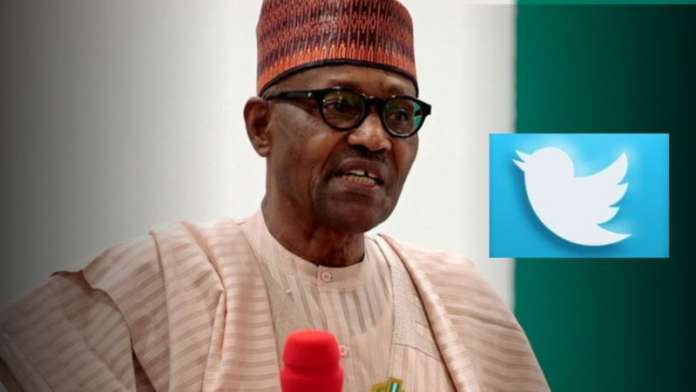
An autocrat is an autocrat. There is nothing like a reformed autocrat or a recovering autocrat, after all, a leopard never changes its spots. We should have known it would come to this, Buhari’s #Twitterban. In 1984, Buhari passed the infamous Protection Against False Accusations Decree, dubbed Decree 4. Till date, it is still the most repressive press law ever enacted in Nigeria. Buhari has never hidden his disdain for freedom and contempt for those outside his clan. It beggars belief that an elected leader would make the kind of genocidal statement that earned him the Twitter censure. The signs were there from the beginning. Immediately Buhari was sworn in, we learnt about his digital foot soldiers called BMC – the Buhari Media Centre. The BMC is a loose federation of trolls, influencers and ready for hire near illiterates, whose low income and deft use of  social media platforms make them generally well suited for professional trolling. They cheer every sentence from the administration, steal online pictures from other countries, pass it off as Buhari’s achievement, smear critics, spread disinformation and create barely sensible updates in support of government for monthly pocket money. The cascading insecurity and a gloomy economy has caused the government’s manipulation of social media to wear thin. The BMC have met their match in frustrated Nigerians who take the battle to them and call them out.

Unfortunately, we are in for the long haul. It will get worse before it gets better. Why? We are saddled with  a conduit House of Representatives, a mailbox Senate and a drunk Malami cabal. The secret memo that Malami wrote and feebly denied tells us to brace up for the last two years of Buhari. From now onwards, we should expect orchestrated actions from the Federal Government, which is designed to undermine democracy, the rule of law, and the protection of fundamental rights. Actually, with the exception of international disinformation campaigns, the four elements of the autocrat’s playbook has been unleashed. Announcing the #Twitterban, Lai Mohammed said that it was a reaction to the, “persistent use of the platform for activities that are capable of undermining Nigeria’s corporate existence”. That is straight from the autocrat’s playbook. Autocratic governments often appeal to national sovereignty when confronted by the people. They make constitutional identity a fetish by taking it out of context, claiming the abuse of power as part of a constitutional identity. In addition, they plead national security in harassing the media and non-government organisations. We should ask Mr. Lai Mohammed if terrorism, banditry, kidnapping, killings by herdsmen, are not undermining Nigeria’s cooperate existence.

Buhari administration’s recourse to digital authoritarianism of state-controlled Internet and unprecedented high-tech repression, reliance on China for loans and infrastructure, gives a peep into his stunted view of the future. Beyond the current noise, these convergence of Chinese interests in Nigeria should worry every Nigerian.

After the #Twitterban, it was reported that the Federal Government and China’s Cyberspace Administration office discussed plans of building a Nigerian internet firewall. What that means is that the government is seeking to use digital information technology to surveil, repress, and manipulate us. Buhari’s plan is the textbook definition of Digital Authoritarianism, of which China and Russia are the gatekeepers. Hours after the Buhari #Twitterban, RT, the Russian state-controlled international television went agog. Writers for RT online praised Buhari. One of them wrote; “Nigeria is a far more serious and “based” country than the US, at least if President Muhammadu Buhari’s response to Twitter censorship – compared to that of Donald Trump’s – is anything to go by….The Nigerian government also missed an easy opportunity to clobber Twitter with its own wokeness cudgel and accuse CEO Jack Dorsey of being racist and Islamophobic – considering Buhari is both African and Muslim.” How is that?

President Buhari’s mentors in digital authoritarianism have created, mastered and exported technology-driven playbooks for authoritarian rule. Moscow is adept at repressing opposition at home and undermining democracy abroad using digital disinformation tools. The world saw what they did in the United States, leading to the election of Donald Trump. China, who Lai Mohammed et al. are looking up to for salvation from prurient critics, is the pioneer of digital age censorship through their “Great Firewall”. They are the supplier of choice for budding autocratic regimes looking to deploy their own surveillance systems. So far, they have exported surveillance and monitoring systems to many countries. Nigeria is looking to be their biggest customer yet. Buhari administration’s recourse to digital authoritarianism of state-controlled Internet and unprecedented high-tech repression, reliance on China for loans and infrastructure, gives a peep into his stunted view of the future. Beyond the current noise, these convergence of Chinese interests in Nigeria should worry every Nigerian.

The world is heading down a slippery slope if the free world is not united at sanctioning digital authoritarianism and companies that supply them with equipment. The time is ripe for the United Nations to develop a digital governance charter.

Those of us who have the unique privilege of being on the internet at its infancy in the mid-nineties are learning the real meaning of unintended consequences as the internet is being used to advance and undermine humanity simultaneously. The internet was imagined as a global web (World Wide Web) of communication where anyone can access any resource. Censorship was inadvertently aided by the United States government when the net neutrality law was repealed. It created an ecosystem of interference for the internet service providers to interfere or block internet traffic. The trend of increasing censorship embraced by authoritarian regimes is not only dangerous, it can also lead to a future never before envisaged, where leaders of countries distort reality and determine what view of internet their citizens have. In the wake of looming social unrest, flares of insecurity, the ghost of Decree 4 appears with new laws in the making, to gag Nigerians and prosecute them for exercising their rights to free speech and association.about:blank

It is not too late for the United States and other liberal democracies to tighten export controls on technologies that advance digital authoritarianism. The world is heading down a slippery slope if the free world is not united at sanctioning digital authoritarianism and companies that supply them with equipment. The time is ripe for the United Nations to develop a digital governance charter.

Bámidélé Adémólá-Olátéjú a farmer, youth advocate and political analyst writes this weekly column, “Bamidele Upfront” for PREMIUM TIMES. Follow me on Twitter @olufunmilayo

AVOID TAKING THE SLIPPERY SLOPE PATH TO CONSTITUTIONAL REVIEW

By Prof Auwalu H Yadudu

Permit me to present to your august body some ideas, suggestions and
recommendations which l hope will help you in carrying out the processes the two
wings of the National Assembly have embarked upon for the alteration of the 1999
Constitution. Although l have read the 17-item lists of issues you invited comments
on from members of the public, l wish, if you permit me, to address only four issues
that speak to some of items directly and others consequentially.

Firstly I intend to dwell on the constitutional validity, practicality and feasibility of
referendum as a mechanism for the adoption of either an altered version of the
existing document or of a wholly new one. Secondly l shall briefly address some of
challenges associated with the vexed issue of devolution of powers by reference to
how to juggle the legislative lists. Thirdly, l will speak to the controversial matter of
State Police and the place of Local Government system. In all these instances l shall propose some recommendations.

ON REFERENDUM

Of recent, it has become fashionable to lay all the evils bedeviling our polity, society,
the economy etc at the door of the 1999 constitution, the authorship of which has
gratuitously been ascribed to me personally. My attitude to this ‘donated’ honour or
infamy, defending on how you view it, is to laugh it off or humbly state that it is
unearned. Viewed differently, It is ideal talk engaged in by lazy commentators and, in
some cases, otherwise distinguished Elder Statesmen and e-warriors.

A motley of critics of all hue and cries have disparaged the 1999 constitution for
telling a blatant lie when it claims in its preamble to have derived its authority and
sovereignty from “we the people” when in fact it is the creature of a military decree.
To remove the imprimatur of personalities from its vestiges and cure it of the fib,
there have been varying calls for the emergence of wholly new constitution on which the “people” will confer legitimacy with its adoption through a referendum.
Regrettably, such calls have not come only from ‘separatist’ elements. Some clever
chaps attempted to hoist the idea on the nation by calling for the adoption of a new
constitution which they surreptitiously cooked during the National Conference of 2014. A legal icon, a National leader of the Bar and an Elder Statesman, has thrown his weight behind the idea by calling for the outright rubbishing of the 1999 Constitution and its substitution with the 1963 via the instrumentality of referendum.

One must observe that, apart from being subversive of existing constitutional and
legal order from which all institutions and offices of the Nation derive their legitimacy, such calls have tended to obfuscate issues and ignore facing basic questions of the legality, practicality and feasibility of conducting a referendum.

As a participant at the National Conference, 2014 l had occasion to address the issue
of the use of referendum. I consider it pertinent to reiterate the views l expressed
then and to make own recommendations on the subject matter as follows..
It is incontrovertible that the Constitution of the Federal Republic of Nigeria, 1999
contains, very clear provisions, under section 9, and has spelt out explicit rules to
govern specific steps to follow to alter its provisions, including the adoption of an
entirely new Constitution if deemed desirable,
I am satisfied that the procedure for any alteration does not envisage or recognize “referendum” as a mechanism for bringing about any change to the existing Constitution or the adoption of a new one.

Moreover, for any alteration to the constitution to be legitimate or credible, it must
be validated by the concurrent adoption of the National Assembly and the resolution
in support of 2/3 (24) of the Houses of Assembly of the States where this is assented to by the President.

Today, many are vigorously urging for the adoption of the Report and Draft
Amendments to the 1999 Constitution as proposed by the National Conference, 2014
for a restructured Nigeria via referendum. This recommendation is faulty for many
reasons.

Which of the over 600, often conflicting and many of them of a policy nature,
recommendations do they want adopted? On whose mandate can the Conference
members rely to hoist such set of documents on the nation? Which institution has the
mandate to conduct the referendum? Under what legal or constitutional cover? Since
a referendum is designed to present two clear choices of ‘Yes’ or ‘No’, What issue or
issues will be canvassed for adoption or rejection during the referendum? Are we
going to put Nigerians to a choice between the much touted 1963 Republican constitution, with its Westminster parliamentary system and four regions, against the 1999 Constitution? Or do we put them the choice to accept the amorphous, albeit discredited, policies and recommendations contained in the 2014 National Conference Report as against the 1999 Constitution? Proponents of referendum, as a panacea for all the ills of the 1999 Constitution, have avoided facing up to these and many unexplored and unresolved questions squarely. But we are entitled to ask them and to demand clarity before embarking on the slippery slopes to anarchy, political
uncertainty and constitutional crises.

While we are it, one needs not be reminded that the National Conference comprised
unelected members – however dignified or experienced they may be in their
individual capacities – and, consequently, it lacked the powers of a constituent
assembly, in the exercise of which it may propose or adopt a new constitution. In
other words, the Confab, being unelected, does not derive its mandate from the
sovereign will of the people and cannot claim to be speaking for them. For such a
defective Confab to assume such a role or purport to adopt a new constitution, as
representatives of the people or under any guise, would amount to the usurpation of
powers it does not possess. It cannot discharge or exercise a mandate not conferred on it by law.

If the Confab, whose members lack popular mandate and whose composition is
undemocratic having been assembled in a very skewed manner by the use of a
template of dubious legal or constitutional basis, purports to promulgate “a new
constitution” the constitutional document thereby produced would tell even a bigger
lie than is being leveled against the 1999 Constitution which is being disparaged as
the handiwork of the military.

It should also be pointed out that there does not exist any Act of parliament or Rules
of Procedure in Nigeria that would enable any organ or under which to conduct a
referendum and no agency of government is empowered by law to carry out same.

For the avoidance of any doubt the Confab, whether at plenary or committee stages
of its work, never tasked any members to propose a “draft constitution” which may
be considered for adoption by “referendum” or in total disregard of the existing constitutional or legal order. As the Deputy Chairman of the Conference Committee on Law, Judiciary, Human Rights and Law Reform, I can, with humility, claim to know that we were not mandated to and none of our recommendations were couched or
reduced into a new constitution. On the contrary, our clear and unambiguous
recommendations on the matter, which Conference had adopted, was for any
resolutions requiring constitutional changes to be channeled through the NASS. In
anticipation of that we even urged the President to “initiate an interface” with
members of the NASS to facilitate that. How the Secretariat came up with the scenario
of “ a new constitution” must raise some serious question.

Recommendations
The foregoing is my critique of the sort of constitutional, legal, practical and
legitimacy challenges associated with referendum as a mechanism for resolving
political-cum-constitutional questions. Clearly, in my view, there is no basis for it to
feature in your deliberations or to give your committee sleepless nights. Your
mandate to alter the existing document or replace it entirely must be undertaken in
accordance with the provisions contained in and procedures envisioned by the 1999
Constitution.

Should you be persuaded to consider the use of referendum for the future, then you
do need to amend the said constitution to address the many questions l raised above.
You do need an enabling Act to spell out what sort of questions to submit for
resolution via referendum, who is invested with power to conduct it, using what
voters’ register, who is eligible to participate in it etc.

In 2018, the APC at National level established what it termed as the “Restructuring
Committee, under the Chairmanship of Governor Nasir El Rufai. It came out with its
report containing far-reaching recommendations on various aspects of the
Constitution, including accompanying draft Bills for the NASS to give effect to its
recommendations with enabling Laws. I had occasion to express my views on the El
Rufai APC Ad Hoc Committee on Restructuring as it relates to Referendum,
Devolution of powers, State Police, the place of Local Government system etc and wish
to share them with your Committee. As you are urged to adopt its various
recommendations, l wish to reiterate my observations and recommendations for
your consideration.

ON STATE POLICE

The report canvasses for the creation of State Police and has proposed what it has
considered necessary amendments to achieve this. The strongest argument in
support of this position is that the introduction of State police will augur well for
effective community policing, accords well with our federal system and will help fill
the gap in the gross inadequacy of the federal police in numbers and funding. In any
event, advocates argue, currently a heavy financial burden is borne by States in
support of the NIGERIA Police in a manner that is unaccountable. Those who oppose
State Police point to the grave dangers of abuse of the institution, as experienced in
the past. They harvour apprehension of its susceptibility to being manipulated to
harass political opponents, ethnic minorities etc. They caution against the emergence
of militias controlled, armed and funded by States. Given our precarious situation in
inter-ethnic and inter-religious relations, opponents of State Police fear that local
warlords may hijack it to further aggravate the precarious security situation in
various community across the nation. The foregoing appear to summaries the
powerful arguments for and against the establishment of State Police. Mallam Tanko
Yakasai, a veteran NEPU activist who had been on the receiving end of the Native Police Yan Doka and who had made powerful submission against State Police, appears
to be the lone voice which has been drowned by a crescendo of its support.

I would personally recommend the retention, maintenance and enhancement of the
NIGERIA Police. However in light of its inadequacy to provide effective policing in the face of the multi-faceted security and law and order challenges facing all communities
across the nation, l would urge for the acceptance, in principle, of a community
policing system with the following safeguards and guarantees:

  1. Constitutional and strong federal legislative guarantees are needed to specify
    the extent and limit of community policing powers, the roles and mandate
    allowed for States and how the new institution will interface with federal
    police, other State Police commands and other securities agencies in its
    command and control structure and operations.
  2. The federation shall retain the power to specify which types of arms and
    ammunitions the community police may bear and veto powers as to
    deployment.
  3. recruitment of low and middle cadres of the Nigeria Police to be from locality
    and every effort must be made to ensure inclusiveness in recruitment.
  4. Allow for the establishment of a community police force or the conversion of
    existing local institutions which must meet the stipulations contained above.
  5. Limit community policing to detection and investigation of crimes defined
    under local legislation, assistance with criminal justice system at community
    level, provide alternative dispute resolution mechanism etc.
  6. Consider converting FRSC, Civil Defence Corps, Road Traffic Wardens to form
    part of the community police.
    RECOMMENDATION:
    The relevant sections of the 1999 Constitution and the Police Act will need to be
    amended to allow for the establishment of State Police. An Act of the NASS will need
    to be passed to embody the preconditions specified above and any other incidental
    matters. The Police will need to be transferred from the Exclusive to Concurrent List.

ON DEVOLUTION OF POWERS

The Committee has not fully articulated its idea of devolution of powers. It merely
went ahead to transfer some items from the Exclusive Legislative list to Concurrent
List. In my considered view, this amounts to no more than allowing the two tiers to
share such powers subject to the doctrine of covering the field which renders State
Laws subservient to Federal Acts. This means if you merely transfer a power from
Exclusive to Concurrent, the State legislature’s power to make laws in respect of
matter is subject to and limited by the federal exercise.

I have noted the lists the Committee recommended for transfer. Consequently, one views this to be a misconception of devolution as, in reality, powers simply “shared”
are not “devolved” or “transferred”. In reality the mere act of transfer of list leaves
matters where they belong. In place of transfer of any number of lists l would
recommend that the idea of creating a third legislative list, to be called the State List,
be seriously considered. In a way this new list will belong to States exclusively.
There is need for serious and dispassionate discussion by all stakeholders, not the
NASS alone, to reach consensus as to what such will comprise.

Be that as it may, l endorse the transfer of some but have serious reservations against
transferring others. I certainly do not support Arms and ammunitions, foods, drugs &
poison, census, ownership and operation of shipping, to be put on concurrent or the
new State List.

RECOMMENDATION

I recommend the thorough reexamination of the Second Schedule, both Parts l and ll
to the 1999, to arrive at firm consensus of all stakeholders as what items will form
part of the new State List and what items will remain on the Exclusive and Concurrent
Lists.

ON DELETION OF LOCAL GOVERNMENT COUNCILS FROM CONSTITUTION (LGC)

While wrongly equating the LGC system to be third federating unit, the report
recommends for the deletion of LGC’s from mention anywhere, particularly section
3(6), the first and fourth schedules, in the constitution and section 162 which makes
provision for them in the revenue sharing formula.
I strongly oppose the deletion of LGC’s from the Constitution.

I consider these recommendations to be totally unjustifiable.

First, LGC’s participate
in revenue sharing not because they are a federating unit. But they are considered as
a local administrative tier the establishment of which section 7 has guaranteed and
which the framers of the constitution deem worthy of funding. The said section 7
seeks to ensure their establishment, protect their democratic nature and enhance their autonomous existence.

Secondly, they are the closest units of governance to the
grassroots which, if properly protected, can serve as veritable institutions for local
mobilization and socio-economic development. Lastly, deleting them will further
undermine their autonomy and political independence what with the nationwide
perversion of the electoral processes at that level by every State government which
has conducted.

RECOMMENDATIONS:

Consequent upon foregoing observations, l would urge for the retention of all
provisions made in the 1999 Constitution in respect of LGC’s so as to ensure their
existence and enhance their autonomy.

We should do nothing to undermine that. If
any problems exist pertaining to how they are created, their number, funding and
structure, we should amend the identified sections as appropriate but not delete the
institution of the Local Government entirely from the constitution.


Can Notice To Quit Be Issued During Court Strike?

Daily Law Tips (Tip 805) by Onyekachi Umah, Esq., LL.M, ACIArb(UK)

Introduction:   

It is not new that the Nigerian courts have been closed since 6th April 2021. This has halted the services of courts in Nigeria. Among the common services of Nigerian courts are; certification of documents, making of affidavits and issuance of Notice to Quit on behalf of landlords. The strike is greatly strangulating access to justice, even as louts are profiting from illegal judicial services their offer around courts gates and car parks across Nigeria. My earlier work, titled; “Unknown-Court-Staff & the Affidavits Obtained During Court Strike” covers this issue.

The ongoing judiciary strike, prompted a question from a participant on our free Daily Law Tips forum. His question was, “Can Notice to Quit Be Issued During Court Strike?” and this work answers the question. It creates awareness on the nature of a notice to quit and the persons that can issue a notice to quit.

Notice to Quit; What is it and Who Can Issue it?

Like every other relationship, there are laws regulating tenancy relationships. Most states in Nigeria have their own Landlord and Tenancy State Laws, regulating landlords and tenants in their states. The Federal Capital Territory, Abuja has the “Recovery of Premises Act, 1945” to guide landlords and tenants in Abuja. Generally, all the respective landlord and tenant states laws of the States and the FCT, will be referred to as the “Tenancy Laws” in this work. A free copy of the Recovery of Premises Act for Abuja can be download here.

Owners of landed property (landlords) are free to rent their property to willing occupiers (tenants). At all times, a landlord can recover his property from a tenant but in accordance with the laid down legal procedures to avoid punishments. You can learn more on this issue via; Tenants & Squatters Can Sue Landlords For Violation of Human Rights”. Generally, recovery of rented property starts with the issuance of a notice to quit to the tenant from the landlord or is agent or a court of law. A notice to quit is a written statutory reminder issued by a landlord or his agents or a court to a tenant, reminding the tenant of the expiration of the tenant’s tenancy and giving the tenant a statutory period or agreed period to vacate the property or be sued in a court of law. On the effect of a notice  to quit, read this title; Effect Of A Notice To Quit In Nigeria”.

A notice to quit can be issued by a landlord himself or by the agent of a landlord or a court of law. A landlord with appropriate skill can write a notice to quit by himself and serve it on his tenant without the services of a lawyer. The appropriate skill is important to ensure that the mandatory contents of a valid notice to quit are sufficiently provided in a notice to quit. A defective notice to quit is an invalid notice to quit and has no legal powers on a tenant.

To ensure that a notice to quit is rightly made, a landlord should engage the services of his agent to write a Notice to quit and serve it on a tenant. The agent of a landlord for the purposes of a notice to quit and other tenancy documents can only be a legal practitioner. By section the Legal Practitioners Act, only legal practitioners can act as agents of landlords and tenants in preparation of documents. Any other person in Nigeria that acts as an agent of a landlord or tenant cannot charge any fee and if any fee is charged the fee can be recovered from such person and the culprit prosecuted. It is a criminal offence for a non-lawyer to perform the works of a lawyer. My earlier works, titled; Estate Surveyors and Valuers Cannot Prepare Tenancy/Land Documents  and It Is An Offence For Non-Lawyer To Prepare Any Document/Agreement Relating To Rent, Buildings, Land Or Mineral Resources are detailed on this.

The third and last person that can issue a notice to quit is the court of law. The courts in Nigeria can be approached by a landlord for a notice to quit to be issued and served on his tenant. The courts of law that offers such services are often the Magistrate Court and the State High Courts. In practice, it is the court staff in courts that often draw up and issue notices to quit and not the Judges and Magistrates. The judiciary staff strike has made it impossible for courts to issue Notices to Quit. However, the strike does not affect the powers and rights of landlords to issue notice to quit by themselves or through their lawyers.

Conclusion:  

Notice to quit is germane in the recovery of premises. Although, many landlords rush to courts to obtain notices to quit, a notice to quit can be written and issued by a landlord or by a lawyer to the landlord. It is not mandatory that a notice to quit must come from court, since a landlord can write a notice to quit and also a lawyer can do same. Hence, to the question; “Can Notice to Quit Be Issued During Court Strike?”; yes, a notice to quit can be issued during a court strike through the hands of a landlord or the lawyer to a landlord. Courts cannot issue notice to quit during court strike but a landlord can at all times write and issue a notice to quit for his tenant or engage a lawyer to do so.

My authorities, are:

  1. Sections 1, 2, 3, 6, 33, 34, 35, 36, 37, 38, 39, 40, 41, 42, 43, 44, 45 and 46 of the Constitution of the Federal Republic of Nigeria, 1999.
  2. Sections 1, 2, 4, 6, 7, 8, 9, 10, 13, 19, 20 and 27 of the Recovery of Premises Act 1945, Laws of the Federation of Nigeria (ABUJA) and other similar tenancy laws across the states in Nigeria.
  3. Sections 2, 22(1)(d), 22(2), 22(4), 22(5), 22(6), 22(7), 24 and 25 of the Legal Practitioners Act, 1975
  4. Onyekachi Umah, “Punishment for Tenant that Forces Landlord Out.” (LearnNigerianLaws, 19 March 2021) <https://learnnigerianlaws.com/punishment-for-tenant-that-forces-landlord-out/> accessed 7 June 2021
  5. Onyekachi Umah, “What Happens To Tenants When Property Is Sold?” (com, 4 March 2021) <https://learnnigerianlaws.com/what-happens-to-tenants-when-property-is-sold/> accessed 7 June 2021
  6. Onyekachi Umah, “Can Money Spent on Repairs be Recovered from Rent?“ (com, 25 February 2021) <https://learnnigerianlaws.com/can-money-spent-on-repairs-be-recovered-from-rent/> accessed 7 June 2021
  7. Onyekachi Umah, “Punishments For Landlords and Tenants In Nigeria” (com, 1 February 2021) <https://learnnigerianlaws.com/punishments-for-landlords-and-tenants-in-nigeria/> accessed 7 June 2021
  8. Onyekachi Umah, “Why Tenant Should Accept Letters & Notices From Landlord” (com, 20 January 2021) <https://learnnigerianlaws.com/why-tenant-should-accept-letters-notices-from-landlord/> accessed 7 June 2021
  9. Onyekachi Umah, “Tenants & Squatters Can Sue Landlords For Violation of Human Rights” (com, 18 September 2020) <https://learnnigerianlaws.com/tenants-squatters-can-sue-landlords-for-violation-of-human-rights/> accessed 7 June 2021
  10. Onyekachi Umah, “Should Landlord Stop Rent-Owing Tenants from Moving Out?” (com, 26 August 2020) <https://learnnigerianlaws.com/should-landlord-stop-rent-owing-tenants-from-moving-out/> accessed 7 June 2021
  11. Onyekachi Umah, “Covid-19 and Landlords: Can Government Force Landlords not to Eject Tenants?” (com, 15 April 2020) <https://learnnigerianlaws.com/covid-19-and-landlords-can-government-force-landlords-not-to-eject-tenants-daily-law-tips-tip-548-by-onyekachi-umah-esq-llm-aciarbuk/> accessed 7 June 2021
  12. Onyekachi Umah, “House Rent and COVID-19: Can Landlords Evict Tenants?” (com, 7 April 2020) <https://learnnigerianlaws.com/house-rent-and-covid-19-can-landlords-evict-tenants-daily-law-tips-tip-542-by-onyekachi-umah-esq-llm-aciarbuk/> accessed 7 June 2021
  13. Onyekachi Umah, “Landlords Are Entitled To Rent Sum Even Where Notices To Quit Are Served On Tenants“ (com, 23 October 2018) <https://learnnigerianlaws.com/daily-law-tips-by-onyekachi-umah-esq-tip-211-landlords-are-entitled-to-rent-sum-even-where-notices-to-quit-are-served-on-tenants/> accessed 7 June 2021
  14. Onyekachi Umah, “Rights of Tenants and Landlords in Nigeria” (com, 2 September 2018) <https://learnnigerianlaws.com/rights-of-landlords-and-tenants-in-nigeria/> accessed 7 June 2021
  15. Onyekachi Umah, ““After A Property Occupied By Tenants Is Sold, Who Should Such Tenants Hold Responsibile?” (com, 16 July 2018) <https://learnnigerianlaws.com/daily-law-tips-by-onyekachi-umah-esq-tip-142-after-a-property-occupied-by-tenants-is-sold-who-should-such-tenants-hold-responsibile/> accessed 7 June 2021
  16. Onyekachi Umah, “Estate Surveyors and Valuers Cannot Prepare Tenancy/Land Documents” (com, 30 November 2020) <https://learnnigerianlaws.com/estate-surveyors-and-valuers-cannot-prepare-tenancy-land-documents/> accessed 7 June 2021
  17. Onyekachi Umah, “How To Prove Payment of Rent and Who Must Prove It.” (com, 1 October 2020) <https://learnnigerianlaws.com/how-to-prove-payment-of-rent-and-who-must-prove-it/> accessed 7 June 2021
  18. Onyekachi Umah, “Can a Landlord Increase Rent During Economic Hardship?” (com, 8 September 2020) <https://learnnigerianlaws.com/can-a-landlord-increase-rent-during-economic-hardship/> accessed 7 June 2021
  19. Onyekachi Umah, “Should a Landlord Remove Roof of a Tenant For Failure to Pay Rent/Pack out?” (com, 3 August 2020) <https://learnnigerianlaws.com/should-a-landlord-remove-roof-of-a-tenant-for-failure-to-pay-rent-pack-out-daily-law-tips-tip-624-by-onyekachi-umah-esq-ll-m-aciarbuk/> accessed 7 June 2021
  20. Onyekachi Umah, “Should a Landlord Lock Gates/Doors of a Tenant for Failure to Pay Rent/Pack Out ?” (com, 29 July 2020) <https://learnnigerianlaws.com/should-a-landlord-lock-gates-doors-of-a-tenant-for-failure-to-pay-rent-pack-out-daily-law-tips-tip-620-by-onyekachi-umah-esq-ll-m-aciarbuk/> accessed 7 June 2021
  21. Onyekachi Umah, “Should a Landlord Cut-off Tenant from Water/Electricity Supply for Failure to Pay Rent/Pack Out?” (com, 17 July 2020)  <https://learnnigerianlaws.com/should-a-landlord-cut-off-tenant-from-water-electricity-supply-for-failure-to-pay-rent-pack-out-daily-law-tips-tip-612-by-onyekachi-umah-esq-ll-m-aciarbuk/> accessed 7 June 2021
  22. Onyekachi Umah, “Can a Landlord Increase Rent Without Consent of his Tenant?” (com, 9 June 2020) <https://learnnigerianlaws.com/can-a-landlord-increase-rent-without-consent-of-his-tenant-daily-law-tips-tip-585-by-onyekachi-umah-esq-llm-aciarbuk/> accessed 7 June 2021
  23. Onyekachi Umah, “How To Legally Make Landlord Pay Back Or Deduct From Rent, Money Spent On His Property By Tenant” (com, 9 November 2019) <https://learnnigerianlaws.com/how-to-legally-make-landlord-pay-back-or-deduct-from-rent-money-spent-on-his-property-by-tenant-daily-law-tips-tip-454-by-onyekachi-umah-esq-llm-aciarb-uk/> accessed 7 June 2021
  24. Onyekachi Umah, “The Making of a Hybrid Tenancy/Lease Agreement; a Guide for Lawyers and Landlords in Nigeria.” (com, 6 July 2019) <https://learnnigerianlaws.com/the-making-of-a-hybrid-tenancy-lease-agreement-a-guide-for-lawyers-and-landlords-in-nigeria/> accessed 7 June 2021
  25. Onyekachi Umah, “Effect Of A Notice To Quit In Nigeria.” (com, 3 August 2018) <https://learnnigerianlaws.com/daily-law-tips-by-onyekachi-umah-esq-tip-156-effect-of-a-notice-to-quit-in-nigeria/> accessed 7 June 2021
  26. Onyekachi Umah, “Rights of a Tenant In Nigeria.” (com, 11 March 2016) <https://learnnigerianlaws.com/rights-of-a-tenant/> accessed 7 June 2021
  27. Onyekachi Umah, “Rights of a Landlord In Nigeria” (com, 11 March 2016) <https://learnnigerianlaws.com/rights-of-a-landlord/> accessed 7 June 2021

Sabi Law Projects:

#SabiLaw

#DailyLawTips

#SabiBusinessLaw

#SabiElectionLaws

#SabiHumanRights

#SabiLawOnTheBeatFm

#SabiLawLectureSeries

#CriminalJusticeMonday

#SabiLawVideoChallenge

Speak with the writer, ask questions or make inquiries on this topic or any other via [email protected], [email protected] or +2348037665878 (whatsapp). To receive free Daily Law Tips, join our free WhatsApp group via https://chat.whatsapp.com/L7h4f1exItZ38FeuhXG4WN or Telegram group, via the below link: https://t.me/LearnNigerianLaws

To keep up to date on all free legal awareness projects of Sabi Law Foundation, follow us via

Facebook Page:@LearnNigerianLaws,

Instagram:@LearnNigerianLaws,

Twitter: @LearnNigeriaLaw,

YouTube: Learn Nigerian Laws,

WhatsApp Groups via (https://chat.whatsapp.com/L7h4f1exItZ38FeuhXG4WN),

Telegram Group: (https://t.me/LearnNigerianLaws),

Facebook group: (https://www.facebook.com/groups/129824937650907/?ref=share)

or visit our website: (www.LearnNigerianLaws.com)

Please share this publication for free till it gets to those that need it most. Save a Nigerian today! NOTE: Sharing, modifying or publishing this publication without giving credit to the author or Sabi Law Foundation is a criminal breach of copyright and will be prosecuted. This publication is the writer’s view not a legal advice and does not create any form of relationship.

Buhari, Twitter, Ali and the Angel

By Lasisi Olagunju

(Published in the Nigerian Tribune on Monday, 7 June, 2021)

The president tweeted a promise of war. Twitter deleted the promise. The government banned Twitter. It has also promised to jail anyone found in bed with Twitter. The Buhari government’s role models on this road to infamy are North Korea, Iran and China. The list is that short. I laugh at Nigerians who say they are shocked because the president sold himself to them in 2015 as a democrat. I laugh at such simple people; they should know better – and they did. Pepper, no matter how much you pamper and temper it, won’t ever lose its smarting character. You know what a Ponzi scheme is? Anyone who has read the life history of an Italian man called Charles Ponzi, or of the more successful American, Bernard Madoff, should understand what has happened to Nigeria. Ponzi and Madoff were the reality version of a character called Ali in my primary school New Oxford English Course story book.

Ali was a merchant of tricks who conned whole villages, kings, chiefs and commoners. He was flat broke and so thought of a scam that would fetch him cool, large cash. Ali told the village that he had brought an angel into town, housed him in his bedroom and asked people to come see the celestial being for a fee. But, he warned, only clean people without sin would see the angel. Who would not want to see an angel and be saved? Again, who would refuse to see this angel and be dubbed ungodly, a sinner? So, soon, a queue formed in front of Ali’s house, and, one by one the villagers, including the king, went in, saw nothing apart from a pair of shoes placed in front of an empty chair. But, one by one, they all came out and announced how well the angel received them, shook their hands – and even prayed for them.

At another time, Ali’s house got burnt and while his people were consoling him, Ali was thinking deeply on how he could convert his loss to wealth. He soon travelled far from home until he got to a village that took tea without sugar. Ali gave them real sugar for their tea. They tasted it and chorused that it was good and great. They wanted more. He said they had to buy. Why not? Bring it, the villagers placed their orders. Ali went back home and packed the ash of his burnt house into sacks. He got back to his mugu village and sold them ash as sugar in their tea. Some attempted to complain that this did not taste sweet (as the sample was). They were promptly branded as faithless, sinful wailers. Did Ali get away with all his scams? I think you should go read the stories again. What I know is that Ali, the salesman, was so successful he came into Nigeria in 2015 and sold the nation ash labeling it ‘Change’.

The All Progressives Congress (APC) did a great job six years ago. It gathered all marketers of trash from the four walls of the world and shipped them into the life of Nigeria. They did so well convincing the children of Nigeria to drop the bean cake in their hand for some invisible honey. They bought dollar from Nigerians in May 2015 at N197 and resold it to the nation in May 2021 at N500. They rode the horse of social media’s Twitter to power in 2015; fed it richly again in their renewal war in 2019; but in June 2021, the APC slaughtered Twitter, their old war horse, to appease their god. Twitter is not the first and only casualty. Millions queued to enjoy the blessings of that angel in 2015. How many of them have since not fallen unmourned at the hands of pampered bandits of the angel?

Angelic Buhari last week vowed to treat “misbehaving” Igbos in “the language they understand.” To misbehave, my dictionary says, is to fail to function correctly. It also means to fail to act in an acceptable way; it means to behave badly. By now the president must have realized how ironic his statement was. So he knew misbehavour deserved consequences? You saw how Twitter, in its characteristic irreverence, buried its claws in our president’s pride? The president is angry now because Twitter gave him a slap on the wrist. He is teaching Twitter a lesson no black man has ever dared do. His lion is prancing from the forests of the south east to the south west thickets feeding his rage with the fundamental rights of all. Alaafin Sango at the height of his misrule did same. He complained of everyone’s behaviour. He emitted fire and fury; he silenced both city dwellers and the yokel on the farm. His dazed people, in helpless anger, watched as he worked his way to Koso, his place of hanging, derisive rest.

APC sold Nigerians a manifesto of peace, prosperity, freedom and justice. It promised that it would “restructure Nigeria to achieve devolution of power.” The authors of APC’s manifestoes knew what they wrote was not an article of faith. They knew it was an article of fakery, a Ponzi scheme. And they got the unwary to invest in the hollow pledge of their scam. The promiser got what he wanted; he has now turned his AK-47 at the scammed for whining and grumbling at the point of redemption. The APC and its operatives now criminalise all acts directed at making the ruling clique to pay their debts of restructuring and good governance. The bangle is firmed fixed on the wrist of the chief priest; who will remove it now? Our Federal Government is also insisting that it is doing well; that only blind wailers would not see how great it had performed since Muhammadu Buhari happened to Nigeria six years ago. A friend was angry and wondered if “these people think we have sawdust as brain.” I laughed and asked if he had forgotten the ‘Ali and the Angel’ story (and other Ali stories) in the New Oxford English Course story book we used in primary school. Sinners (and wailers) are forbidden from seeing angels and their performance.

Meanwhile, who really is the sinner here? Between the northern Araba (separation) headmasters and the Igbo secessionist students that are being given the civil war treatment, who is better in behaviour? Let me cite a case. Because the political north lost power in 1999, very early in year 2000, its famished leaders contrived a religious (sharia) crisis in Kaduna in which more than 2,000 people were murdered. The damage was so much on the Igbo that a flickering Emeka Ojukwu had to come out in anguish. He wept and wailed and said: “we are now forced again, to ask, how much more sacrifice do we have to make before we can be embraced as equal citizens of one Nigeria.” But the leaders of the north basked in the sun of their working strategy. They tightened the noose and the orgy of killing continued. It was a whole month of mayhem. President Olusegun Obasanjo did not send any python to dance in Kaduna. He avoided the trap. Instead, the police were used to quell the riots. Obasanjo’s Federal Government soon felt there should be a nationally acceptable solution to the crisis. He summoned a meeting of the National Council of State for Tuesday, February 29, 2000 with him presiding. The meeting resolved to go back to the Penal Code and put implementation of sharia on hold. And it was so announced with all the northern governors and leaders, including General Muhammadu Buhari in attendance. The following day, the north made a U-turn, denied ever discussing the matter at the meeting and invoked the principles of federalism to query where the Obasanjo Federal Government got the powers to suspend laws validly made by the northern states. Alhaji Shehu Shagari came out from retirement that day to issue a statement on behalf of the north attacking the Federal Government. He said the decision undermined the federalist character of the constitution. Shagari wrote: “in the democratic system which we now operate, the federal government has no right to direct the state governments to suspend or rescind any laws which they have enacted through the normal democratic processes of the presidential system of government.” General Buhari was even firmer and more frontal in his own offering. He told the BBC the same day Shagari spoke that “if we as Muslims want amputation or death penalty, we said we want it because it is our religion and the constitution of the country has agreed that everyone has the right to practise the religion of his choice.” Yet, another frontline northern leader, Datti Ahmed’s federalist answer to the (political) sharia question was that under our constitution “If any individual feels too uncomfortable with any setup established by the majority in any state, the person has the right to choose another state.” All these northern leaders had no word of sorry to console the victims. So, again, let me ask: between today’s very bad boys of the east who kill and maim and the very bad elders of the north who killed and maimed, who is clean? The one who should be sold to raise money to buy a lantern must not be allowed to praise-sing himself as the ultimate bearer of light.

With the Twitter ban and the other misbehavours of our government, Nigeria will soon become a leper. The appropriate word is ‘pariah’ in international relations. A pariah is the unsanitary somebody who is rejected soundly by the community of good people. He is an outcast; someone whose ways bought for it disgust and disdain. He is that person who is despised and avoided because of his bad ways. Dirty Nigeria wore that horrible garment before May 1999. It had no friend, no lover, no suitor. One of the early gains of this democracy was the Obasanjo government curing the country of the pariah status Abacha bought for us. Now, is Abacha back? I ask because we are almost there again with the sad, shocking events of the last few days. The whole civilized, democratic world now slaps us with one rebuke and/or the other because of the autocratic, Internet-restricting choices our government is making.

Yet, the magisterial president asked if he was not ruling us in accordance with the constitution. From what you and I know of how we are being governed, should we not just ask what language the president himself understands? We need to know the language so we use it to “treat” and persuade him to let us live as a civilized people. Buhari heads a Federal Government that is anything but ‘federal’ and ‘government’. A government that deplumes the peacock of others to beautify his vulture. He presides over a one-sided behemoth with no redeeming contrition; a system which administers pain, and even death, as medicine. A system that misbehaves with impunity. And he and his court and courtiers say: “So what?”
Twitter or Nigerians: Who offended Buhari? By Fredrick Nwabufo

Government is a relationship – between the leadership and the governed. A democratic government, in particular, should not operate in vacancy of citizens’ imprimatur. A government needs the trust, support and goodwill of its citizens. Legitimacy is the reward for good governance. Any government, which by intransigence severs the funiculus that links it with the citizens, is taking the highroad to oblivion.

Really, most people will not remember the infrastructure and extraordinary projects executed by an administration. But they will remember how secure they felt and the freedom they enjoyed under that government.  General Abacha is reputed to have executed some of the sterling infrastructure projects in Nigeria. In fact, some of the roads his regime through PTF built are still sturdy to date. But how is he remembered today? He is remembered as a murderer and a violator of human rights

Our leaders should learn from the ruins of others before them. Power is situational. What we do with it when we possess it will live with us, and even with our relics and generations to come. At this point, what I believe should be elemental for President Buhari is his legacy. He should not let ‘’power hawks’’ carnivorise what is left of his substance. 

The suspension of Twitter by the Nigerian government is a jackboot experiment. It cannot be defended, rationalised or excused in anyway. Internet freedom is as basic as the right to life and the right to freedom of expression. 

Naturally, some notable Nigerians and organisations have condemned this insidious attempt at absolutism. The Newspaper Proprietors’ Association of Nigeria (NPAN) led by Kabiru Yusuf said lucidly ‘’the suspension of Twitter’s operation by Nigeria is wrong and an overreaction’’. Babajide Sanwo-Olu, governor of

Lagos state, and member of the APC – the president’s party – is of the opinion that the federal government should have managed the situation better. 

The federal government can handle this a lot better — because of the number of ecommerce; the number of youths doing digital stuff on the internet, and we cannot throw that away and say it’s not happening. I believe there could be a lot of restraint and better management from both sides,” the governor said.

Nigeria is said to lose N2.18 billion per day owing to the Twitter shutdown — according to NetBlocks, a data-driven online service. We do not need an Okonjo-Iweala to divine for us the cost of this folly. Many youths and businesses rely on Twitter for oxygen. And the federal government just pulled the plug — in a country with 40 million unemployed people, blistering inflation and insecurity. 

Toiling Nigerians lose more in this dogfight between the Nigerian government and Twitter. Twitter loses nothing in the short and in the long run. So, who offended Buhari and who should be writhing from the economic perils of his ban? Well, if the government is deploying this as a gambit to asphyxiate dissenting voices on social media it will be a futile performance. Only good governance can silence the noise on social media

Citizens from all strata have been giving the government a dressing down in the past few days. As expected, the US, the UK, Canada and EU did not equivocate in expressing disappointment at this punitive approach to an issue that could have been resolved through other channels. The condemnations are in order. 

What is very annoying is the threat by Abubakar Malami, attorney-general of the federation, to arrest and prosecute anyone circumventing the ban to gain access to Twitter. This is farcical. Why is this man making a spectacle of Nigeria in the public square? I think we have enough comedians in the country already. 

However, there is the pesky issue of hate speech, fake news, misinformation and disinformation on social media — particularly on Twitter and Facebook? How do we address this problem? We cannot look away and pretend that this creeping monster does not portend enormous danger for Nigeria. 

Some countries like India, even the US and the UK, have set these tech leviathans to task regarding sanitising their social media space. We cannot suspend our hands and watch Nigeria burn. 

As Kadaria Ahmed, top journalist, said while reacting to the ‘’decree’’ of the National Broadcasting Commission to broadcast stations to deactivate their Twitter accounts, ‘’the government (must) go back and engage with experts many of whom abound in the country on how to fight hate speech, misinformation and disinformation while respecting and upholding the rights that are fundamental in a democracy’’.

The Buhari government must redeem itself. Nigeria is still a democracy. 

Twitter @FredrickNwabufo

The problem with development in Nigeria is that most of our leaders are not wholly citizens – Sam Amadi

“If you look at the present National Assembly, most of their families are 100% citizens elsewhere. They themselves are citizens of whether it is Dubai, Saudi Arabia, US or UK or France or anywhere.

“How do public officers whose children, wives or husbands, as citizens of other countries really maintain the passion to invest their time in building their country?” These are some of the posers raised by Dr. Sam Amadi, Public Affairs Analyst, Lawyer, Pastor, Associate Professor at Baze University, Abuja and a former Chairman of the Nigerian Electricity Regulatory Commission (NERC) while speaking with Lillian Okenwa about insecurity in Nigeria, absence of leadership, #Endsars, Pastor Paul Adefarasin’s call for a Plan B amongst other issues.

Amidst the unrest and growing insecurity in different parts of the country, Senior Pastor of the House on the Rock Church Lagos, Pastor Paul Adefarasin recently urged his members to have an alternative plan.

“I bring you greetings from Pastor Ifeanyi who is busy taking care of the frontier of our world and preparing our escape route. If you don’t have a plan B – I know you have faith, but I have faith too but I have a plan B,” the clergyman told his congregation.

Dr. Sam Amadi

Different lines of arguments have ensued since he made that statement. Dr Sam Amadi however, observed that the discourse perhaps have been handled in a superficial manner, pointing out that the clergyman merely echoed what many have secretly concluded.  His words:

“Many have attacked him, many have supported him for being truthful unlike, other pastors who are simply collecting tithes and saying nothing. Some have accused him of lacking spirituality by encouraging his congregation to throw in the towel; to flee in the face of danger and so to say, abandon the cross of Christ. But I think the two positions are wrong. First, we must say that the pastor was much more forthright by saying what many Nigerians are doing. Many of the pastors, and their congregations have made provisions for their families outside the country. So, basically, there are few people who don’t have Plan B like me.

“When I was a student at Harvard, I did an article in ThisDay newspaper called: ‘Who is a Nigerian?’ That article was informed by my observations. Many people I met in Harvard then were children of politicians. A daughter of the Minister of Education then was with us. She had gone to City University of New York for her first undergraduate degree. After that, she stayed back in the US till today, married with children. I know many Senators whose children went to High School and university there in the US. So I was just thinking, how do public officers whose children, wives or husbands, as citizens of other countries really maintain the passion to invest their time in building their country? Then I discovered the problem with development in Nigeria. The problem is that most of our leaders are not wholly citizens.

“They have plan B already, because they hold dual passports. We had Saraki as Senate President who had a British passport. If you look at the present National Assembly, most of their families are 100% citizens elsewhere. They themselves are citizens of whether it is Dubai, Saudi Arabia, US or UK or France or anywhere. That means they lose nothing. If your child is not in Nigeria, are you really concerned about high infant mortality? If your wife, your children and family are residents in the US, are you really concerned about dilapidated health care, about light, to the extent that you invest extraordinarily in seeking solutions? So Pastor Adeferasin merely reminded us of what we know already; that many Nigerians have Plan B. That it is few of us who are stuck; who don’t have Plan B. What the pastor is telling them is, please do everything possible to have your Plan B, because I have it already.

“Beyond the call for Plan B, the dangerous part of his message, and what he is telling us that the state failure, the state collapse of Nigeria is no longer a preposition. It’s not even a prediction anymore. It is now a reality. It has come. This is really like a bare knuckle punch at the illusion that somehow we are getting out of this trouble. So he is saying look guys, you’re stuck, this is like the Titanic. It’s sinking. The captain has done the Yeo man’s job to see if he can steer the ship ashore, and it’s looking like the shore is still 100 nautical miles up there, and the thing is collapsing. And he says, guys take your life buoys and pray to God. Just jump in. If a whale swallows you like Jonah and vomits you, you are lucky. Otherwise, we are dead. So in a sense, we don’t need to begrudge him and say, this is unpatriotic or this is lack of faith. I don’t blame the pastor for the realism, but behind that realism is fatalism that we can’t change anything.

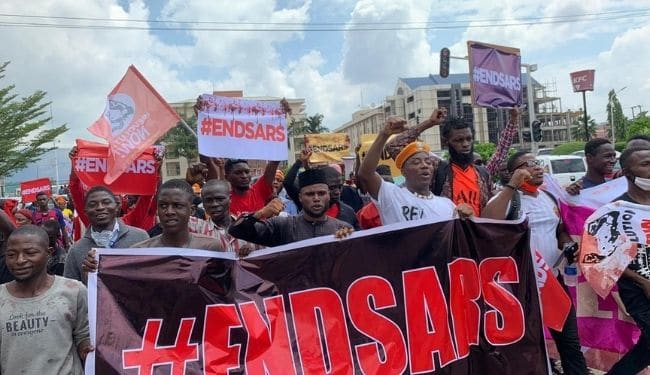
“You may blame the pastor for giving up but don’t forget or diminish the moral burden he has. This is a pastor leading young people. He watched Endsars end in brutal killings. Sees how the politicians are not responding to the signals of dangers everywhere. They are still doing 2023 politics when they should be talking about a National Conference, a National dialogue. Instead of reacting to a country that is overrun by criminality; bare criminality and brigandage. This pastor is saying ‘look guys, I don’t want to deceive you guys in the last minute. I’m just being honest, I have a plan B. By the way, he didn’t say abandon the work. He’s only saying that this house is falling, has fallen basically, I’m seeing that builders are asleep and I’m seeing that builders do not want to wake up, so I’m afraid, guys that nobody will rebuild this house, so while we stay in this house, get ready to also save yourself. He was not selfish.

“These criminals, who are in power, are not ready to solve the problem because they also have plan B and think about the North East. When we talk about the North East how many of the political leaders including Senate President Lawan, including all those leaders in the Senate, have children in the North East? Which legislator or villa official has a son and daughter living and working in the local government area in Adamawa, Borno, Gombe, Yobe now? They are here in Abuja, London, Saudi anywhere. They are not there. So they are not concerned about ending Boko Haram.  In fact they are fuelling it. They are actually gaining from it.

“Look at it. Nigeria has spent over a trillion fighting Boko Haram. Have you done any audit on that amount, do you know, there is a scandal, a story from a foreign country about emergency contractors all over Abuja, throwing around proposals for gadgets? Gadgets that don’t work. It is typical in Nigeria. Right from Goodluck Jonathan and Obasanjo, Nigerian security crisis has generated big wealth to Nigerian leaders. War creates wealth for companies and that’s why somebody will deduce that the focus on fighting wars is by what we call, military industrial complex. They are the ones who always provoke wars because they produce aeroplane, they are making money. Defence projects don’t go through proper procurement process because of emergency; because of security issues around them.

Massacre in Nigeria Spurs Outcry Over Military Tactics - The New York Times

“Take for example a state like Borno. Since 2014, there is no local government that is working in Borno State, but local government allowance has always been collected. Think about it. Most of these local governments are not working. They are dead. People are in IDP camps, yet the allocations to local government from FAAC, still goes to the Governor. These Governors are richer and they have no obligation. They don’t pay staff. There are no employees anymore. They are not paying teachers. Schools have closed. So you can see how war, insecurity, destruction can benefit political leaders and therefore, deprive them of the incentive to do something to fix the problem.”

Dr. Sam equally spoke about the #Endsars protests which came with so much expectations, the angry youths and caring leaders.

“Firstly, we should know the Nigerian crisis of incentives meaning that many people in power are benefitting from Nigeria. In 2009, I wrote a back page article in ThisDay where I had an issue with the then Senate President, David Mark over some repressive comments, and I said: “That Nigeria is not working is beneficial to David Mark.” It’s not personal to him, but to their class. It is only in Nigeria that these people will have the kinds of benefits they are getting. What that means is that the battle over Nigeria is a stiff battle until God sends His strong hand.

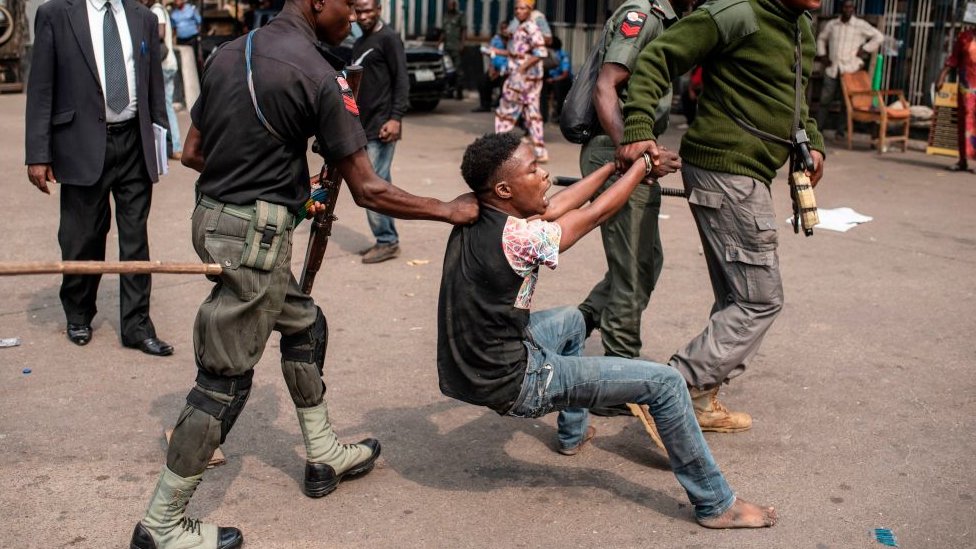
“It’s a country embedded in violence. Look at the killings going on now in the South East. Look at wall the crisis that’s happening in Nigeria. Whether it’s in Ogoni, in Benue, in Zaki Biam, Odi, South East now, anywhere in the country, you see indiscriminate waste of lives, arrest, detention, killings. If you look at the Newspapers, you’ll see stories about killings of persons who may not be involved in any criminal activity or criminality. The Nigeria State is a colonial state. It is structured to respond to any thing with threat; to respond to elite interests, and that’s why we have the Government Reserved Areas, (GRA). The police in colonial times was designed to kill natives who are restive. To keep them in check and that’s what it has been. I was a consultant to the National Assembly with Cleen Foundation, to redesign the Police Act.

“We argued for a new Nigerian Policing, meaning we have to change the DNA. Just like a human being is recreated by re-writing the DNA, there is need to recreate the police, because it has the DNA of repression, a DNA of protecting the rich against the poor. The Nigerian Police represents the Nigerian state, a repressive elitist, Neo Feudal state, that is not focusing on democratic citizenship. If you look at the Nigerian constitution, it is still the same crisis. Chapter 4 talks supposedly creates the Fundamental Human Rights but the drawbacks are several. It keeps equivocating, qualifying those rights in a manner that suggests the Nigerian state is not really keen about protecting the freedom of citizens. It’s more keen about preserving the status quo. For example, Right to Life. The Constitution says it can be taken away in defence of property. So flimsy.

SARS killing in Nigeria" and police brutality provoke Naira Marley, Wizkid,  Davido, Teni, Psquare as Nigerians demand #EndSarsNow - BBC News Pidgin

“Days back we heard that Columbian Police stations were burnt but no casualties like citizens being killed. That is because their rights are strongly protected. It can only be taken when the life of the police officer is directly at risk of being attacked or killed or badly harmed. But the Nigerian Constitution allows the police to fire into a crowd and kill unarmed protesters. The Nigerian state was conceived colonially to protect the privileged. In this Postcolonial era, we have continued with the privileges and elitism.

“The point therefore is #EndSars was a signal protest to highlight the rigging in the Nigerian institution, perpetuated by the police, the key law enforcements and other institutions that the citizens engage. It was a call to reform the Nigerian state to respond more to citizens’ rights and demands. The point I’m making is that, this struggle will be more intense before it can produce results, because, the Nigerian foundation is built, locked in, built with big columns like ancient Roman structures on privileges. Then military rule re-enforced that foundation because military rule is essentially a rule of violence against the civil authority. After military rule, we didn’t exorcise the demon of militarism. That’s why we are being classified officially, globally as hybrid democracy. Democracy that is both authoritarian and democratic in terms of institution, but the values are that of authoritarian governance. All they care about is protecting the president and so a low level Presidential Aide can instruct them to go and wipe out a community. #EndSars was a very radical statement but it has to be re-enforced before it can cause a shift.”

Who Takes Over the Properties of Unmarried Lovers After a Breakup?

Who Takes Over the Properties of Unmarried Lovers After a Breakup?    Daily Law Tips (Tip 803) by Onyekachi Umah, Esq., LL.M, ACIArb(UK)

Introduction:

Love is a beautiful thing and one of the most powerful forces on earth. The popular international award-winning musician (David Adeleke), popularly known as “Davido”, sang in his song (“Assurance”), that; “Love is sweet, oh … when money enter, love is sweeter”. The artist in his masterpiece dedicated to his erstwhile unmarried lover (Ms. Chioma), explains the influence and role of wealth in every relationship.

Wealth is one of the lubricants for the expression of love and often leads to massive acquisition of properties (movable and immovable properties). However, love does not often lead to marriage or last forever. So, unlike in marriages, where after a divorce there is a laid down procedure for sharing and settlement of property, what happens where there is no marriage. Who Takes Over the Properties of Unmarried Lovers After a Breakup?

Sharing of Property of Unmarried Lovers After a Breakup:

If it is true that, for everything that has a beginning, there must be an end, then love cannot be an exception. Love will end in a breakup or death of a partner, before or after marriage. So, what happens to the property acquired during the love? The focus here, is on separated (former) lovers that were never married and the fate of their properties. My earlier work, titled; “Who Takes Over the Property After Divorce?” < https://learnnigerianlaws.com/who-takes-over-the-property-after-divorce/> focused on the sharing and settlement of marital property of married lovers after their marriage.

Often there are properties (moveable and immovable) that lovers exchange among themselves, until their love hits a rock. Some lovers may fight themselves over gifts that they exchanged. It is important to mention that; gifts are free and voluntary donations made by a person to another, which becomes final and irreversible the moment the gift is received. Generally, a gift is always a gift. On this premises, a person cannot recover properties gifted to his/her ex-lover. However, there are few exceptions to this definition, and they make up the circumstances for a gift to be revoked, reversed and recalled.

Among the few circumstances that allow gifts to be reversed, recalled and recovered, are; where a gift was obtained by fraud, force or on a condition that was never fulfilled. However, it is safer to attempt to recover a gift through a court of law, to avoid violating any law. My earlier works on gifts have treated in detail, the issues of gifts in Nigeria and are accessible via; “How To Prove Gifts In Nigeria“; “Acceptance of Gift and Effect of Failure to Accept Gift“;  Who Can Make Gifts And What Are His Powers?”;  It Is An Offence To Give Gifts And Money For Election In Any Part Of Nigeria” and Can An Inheritance Under A ‘Will’ Be Rejected?.

When love goes south, unmarried lovers may wish to share and settle certain properties that they purchased and owned together. So, the focus here is how such properties are to be shared among unmarried lovers in Nigeria. Recently, the Nigerian court had an opportunity to rule on this issue in the case of DANIEL EHOHAN OGHOYONE V. PATIENCE ADESUA OGHOYONE (2010). Reliance will be placed only in the decision of the Court of Appeal in this case on the subject matter.

The Court of Appeal in the case of DANIEL EHOHAN OGHOYONE V. PATIENCE ADESUA OGHOYONEwas to rule on the ownership of a property (Plot L Block 26 Amuwo Odofin Scheme) that was being contested by ex-lovers (DANIEL EHOHAN OGHOYONE and PATIENCE ADESUA OGHOYONE). Arguments were made that the ex-lovers were not married and as such were merely co-habiting and living together as friends. As such, the male lover argued that the female lover should not make claims to the property, since both were not married. However, the female lover had proofs of her contributions to the construction of the property and as such claimed that she is a co-owner of the property. This meant that the court was to rule, on “Who Takes Over the Properties of Unmarried Lovers After a Breakup?”. Below are the words of the court:

“The learned trial Judge had a duty to make a pronouncement on what becomes of the property after the marriage had been declared void. Section 17 of the married women’s property Act confers on the Judge power to make orders in respect of property in dispute as he thinks fit and such on order must be fair, just and equitable. That the parties share proceeds of the sale equally is what is expected in equity.”

“If on the other hand the fact that the marriage is void means no property rights accrue, then the parties were simply living together as friends or in a similar manner. What then becomes of property they both claim to have contributed to purchase? Surely such property can only be addressed in the way the learned trial Judge has done.”

“I am satisfied that the order of the learned trial Judge on Plot L Block 26 Amuwo Odofin Scheme was fair, just and equitable. It would be unconscionable for any party to claim exclusive ownership. Bearing in mind the changing social and economic realities, a Judge is to ascertain the parties shared intentions, actual, inferred with respect to the property in the light of their conduct. In that light I am satisfied that when the going was good the parties made contributions to ensure that the hand good living accommodation. When the going turns bad it is only right and equitable that each side recoups its contribution and call it a day.”

In summary, the Court of Appeal emphasized that where lovers are not married, rather were living together, if their love vanishes, their property will be shared among them. Gone are the days that men took over the properties they purchased and owned together with their ex-lovers, merely because they were men. Unmarried lovers are free to recover their contributions in a love affair at any time, so far as they were not gifts. Every person in Nigeria has equal rights to own property. If love does not work, then each lover is to leave with his/her contributions to the love, so far as the contribution was not a gift. Gifts are gifts forever, after all, “Love is sweet, oh … when money enter, love is sweeter”.

Conclusion:

Love provokes giving and some giving can be gifts, loans, grants and contributions. The nature of the giving of unmarried lovers determines the fate of their giving, when love is over. Unlike any other giving, GIFT is irreversible, not recoverable, not recallable, not revocable, except for some few exemptions, shown above. For this reason, movable and immovable properties gifted to any person or lover (married or unmarried) are gone forever and belongs to the receiver of the gift.

The contributions and loans of unmarried lover are reversible, recoverable, recallable and revocable. Unmarried lovers can recover any contribution, loan, property or items exchanged (but not gifted) among themselves at any time. Unmarried people are merely co-habiting and living together (even making babies) and are not married.

Cohabiting and living together as mere friends are dangerous affairs, that may affect the rights of the lovers, beyond their imagination. It is advisable to be very intentional in the type of relationship one joins and the nature of giving one makes.

My authorities, are:

  1. Sections 1, 2, 3, 4, 5, 6, 33 to 45, 318 and 319 of the Constitution of the Federal Republic of Nigeria, 1999.
  2. The judgment of the Supreme Court of Nigeria (on the meaning of Gift Inter Vivos) in the case of ANYAEGBUNAM v. OSAKA & ORS (2000) LPELR-508(SC)
  3. The Supreme Court’s decision (on effect of “Acceptance” to a gift) in the case of ANYAEGBUNAM v. OSAKA & ORS (2000) LPELR-508(SC)
  4. The Supreme Court’s decision (on whether a gift can be rejected) in the case of EBOSIE v. PHIL-EBOSIE & ORS (1976) LPELR-994(SC)
  5. The judgment of the Supreme Court of Nigeria (on proving Gift) in the case of EKWEOZOR & ORS v. REG. TRUSTEES OF THE SAVIOUR’S APOSTOLIC CHURCH OF NIG (2020) LPELR-49568(SC)
  6. The judgment of the Court of Appeal (on the revocation of Gift) in the case of GABDO v. USMAN (2015) LPELR-25678(CA)
  7. The judgment of the Court of Appeal (on the sharing of properties of unmarried lovers after a breakup) in the case of DANIEL EHOHAN OGHOYONE V. PATIENCE ADESUA OGHOYONE (2010) LCN/3530(CA)
  8. Onyekachi Umah, “How To Prove Gifts In Nigeria” (LearnNigerianLaws.com, 9 April 2021) <https://learnnigerianlaws.com/how-to-prove-gifts-in-nigeria/> accessed 2 June 2021
  9. Onyekachi Umah, “Acceptance of Gift and Effect of Failure to Accept Gift” (com, 20 August 2020) <https://learnnigerianlaws.com/acceptance-of-gift-and-effect-of-failure-to-accept-gift/> accessed 2 June 2021
  10. ”Onyekachi Umah, “Who Can Make Gifts And What Are His Powers?” (com, 1 May 2020) <https://learnnigerianlaws.com/who-can-make-gifts-and-what-are-his-powers-daily-law-tips-tip-560-by-onyekachi-umah-esq-llm-aciarbuk/> accessed 2 June 2021
  11. Onyekachi Umah, “It Is An Offence To Give Gifts And Money For Election In Any Part Of Nigeria”(com, 21 February 2019) <https://learnnigerianlaws.com/daily-law-tips-by-onyekachi-umah-esq-tip-273-it-is-an-offence-to-give-gifts-and-money-for-election-in-any-part-of-nigeria/> accessed 2 June 2021
  12. Onyekachi Umah, “Can An Inheritance Under A “Will” Be Rejected?” (com, 6 May 2020) <https://learnnigerianlaws.com/can-an-inheritance-under-a-will-be-rejected-daily-law-tips-tip-563-by-onyekachi-umah-esq-llm-aciarbuk/> accessed 2 June 2021
  13. Onyekachi Umah, “Abolishment Of Custom Where Daughters Are Forced Not To Marry In Order To Perpetuate Their Fathers’ Lineages” (com, 12 March 2020) <https://learnnigerianlaws.com/abolishment-of-custom-where-daughters-are-forced-not-to-marry-in-order-to-perpetuate-their-fathers-lineages-daily-law-tips-tip-524-by-onyekachi-umah-esq-llm-aciarbuk/> accessed 2 June 2021
  14. Pic Credit: betterhelp.com

Sabi Law Projects:

#SabiLaw

#DailyLawTips

#SabiBusinessLaw

#SabiElectionLaws

#SabiHumanRights

#SabiLawOnTheBeatFm

#SabiLawLectureSeries

#CriminalJusticeMonday

#SabiLawVideoChallenge

Speak with the writer, ask questions or make inquiries on this topic or any other via [email protected], [email protected] or +2348037665878 (whatsapp). To receive free Daily Law Tips, join our free WhatsApp group via https://chat.whatsapp.com/L7h4f1exItZ38FeuhXG4WNor Telegram group, via the below link: https://t.me/LearnNigerianLaws

To keep up to date on all free legal awareness projects of Sabi Law Foundation, follow us via

Facebook Page:@LearnNigerianLaws,

Instagram:@LearnNigerianLaws,

Twitter: @LearnNigeriaLaw,

YouTube: Learn Nigerian Laws,

WhatsApp Groups via (https://chat.whatsapp.com/L7h4f1exItZ38FeuhXG4WN),

Telegram Group: (https://t.me/LearnNigerianLaws),

Facebook group: (https://www.facebook.com/groups/129824937650907/?ref=share)

or visit our website: (www.LearnNigerianLaws.com)

Please share this publication for free till it gets to those that need it most. Save a Nigerian today! NOTE: Sharing, modifying or publishing this publication without giving credit to the author or Sabi Law Foundation is a criminal breach of copyright and will be prosecuted. This publication is the writer’s view not a legal advice and does not create any form of relationship. You may reach the writer for more information.

This publication is powered by www.LearnNigerianLaws.com{A Free Law Awareness Program of Sabi Law Foundation, supported by the law firm of Bezaleel Chambers International (BCI).} Sabi Law Foundation is a Not-For-Profit and Non-Governmental Legal Awareness Organization based in Nigeria. For sponsorship and partnership, contact: [email protected], [email protected] or +234 903 913 1200.

Onoja, SAN donates classrooms to Community

Chief Ogwu James Onoja, SAN, Chairman and Co-Founder, Deacon Job & Mrs Omada Onoja Foundation (Djmoof), at the weekend donated a furnished block of three classrooms to Adumu Community Secondary School, Ogugu, Kogi State.  

At the event which took place on Saturday, 5th June, 2021, the learned Senior Advocate said the project is in honour of his wife, Mrs. Rosemary Onoja, her family and community of Adumu in Ogugu, Kogi State.

Expressing his appreciations to the board and executives of Adumu Development Association for giving the foundation “the opportunity to make a modest contribution to your growing community”, the implementation Committee members for working tirelessly ensure the completion of the project, Chief Onoja who is Principal Partner of O.J. Onoja, SAN & Associates, and Publisher/Editor – in – Chief of Bar and Bench Publishers Limited said: The money spent to actualize this project will mean nothing compared to the sacrifices of those who diligently applied them to achieve the positive results witnessed here today.”

The Foundation, abbreviated as “Djmoof”, is a non-political platform that Chief Onoja jointly envisioned with his wife in honour and memory of his late parents to assist the indigents in their communities. Consequently, the foundation has over the years ameliorated the lives of many awarding scholarships to students of tertiary institutions, payments of school fees including NECO registration fees, sinking of boreholes, road repairs, hosting of sporting activities, amongst others without any donation from government, individuals or organizations. Adumu Football team is also a registered participant in the annual Unyi Ogugu Football Tournament.

Represented at the occasion by his wife, Mrs. Rosemary Onoja, Chief Onoja in his speech remarked that: “While Ogugu people are all related by blood, I am a proud and special son of Adumu London by virtue of love; that is, my marriage to Rosemary 24 years ago, precisely on the 31st March, 1997. I am here because my heart is planted here. It is in honour of my beloved Wife, Rosemary, who is incidentally the Co-Founder of this foundation, and my five lovely children who are also proud indigenes of this growing and very enterprising community, that this project was initiated, nurtured, completed and to be commissioned today.”

Below are photos of the event.

Chief Ogwu James Onoja, SAN
Mrs. Rosemary Onoja displaying her award plaque at the event

The country needs to reassess what it’s doing in the South East and Nigeria in general – Ernest Ojukwu, SAN

Public Affairs Analysts have in different ways described the Nigerian Senate as lazy, avaricious and with little interested in law making. Recently they came under attack for prescribing 15 years jail term for persons found to be negotiating with bandits for the release of loved ones. Curiously, they were silent on the bandits who are the perpetrators. Prof Ernest Ojukwu, SAN in this conversation with Lillian Okenwa bared his mind on this, the indiscriminate killing of young men by security operatives in the South East, and other burning issues noting that: “The reason for our incapacity is that the foreign investors that have that capacity are reluctant to come.”

“I think they have misunderstood what it means to be relevant,” the former Deputy Director General of the Nigerian Law School, Enugu Campus began, as he addressed the approach of Nigeria’s federal legislators.

Abducted Greenfield University Student Reunited with family

“You cannot legislate against payment to bandits or terrorists. It’s not something you can criminalise, because a person paying a ransom is a victim. You cannot make him a criminal. I think they have misunderstood what it means to legislate for the country. There are so many aspects of our governance that needs legal intervention and reforms but they are not vocal on those issues.”

Speaking on the IGP’s shoot at sight order, turning Eastern Nigeria into a war zone with young men being indiscriminately arrested, killed and branded members of Eastern Security Network (ESN) or the proscribed Indigenous People of Biafra (IPOB), the Senior Advocate popularly called Teacher said:

“The most important thing is to identify the scourge of extra judicial killings. No democratic environment or open society will tolerate extra judicial killings. So it is highly condemnable to kill people around. The reason why we said people should be subjected to a judicial process is to avoid indiscriminate lawlessness because there is no way you can guarantee that people who are killed by extra judicial means have any connection with the crime. It is important to let the law enforcement agencies know their duties to the state and responsibilities to human rights and good governance. If you have any person you accuse of committing a crime you should do anything within your power to bring that person to court so that we can openly try the person and know if the person is guilty or not.

“It is an aberration to go to a city and start shooting people. Such decisions might even be elevated to an international crime at some stage. As such, anybody who gave such order and those that obeyed might be subject to an international inquiry later in relation to massive abuse of human rights. There is some misunderstanding by the state apparatus on how to tackle terrorism or high criminality that is rearing its head, from different perspectives in the country.  Criminal activities do not have the same pattern in all parts of Nigeria. So if we have a professional law enforcement and security agency, they will surely know how to tackle this upsurge of crime from their different backgrounds and not just to enter streets to arrest just anybody especially young people.

“People in the East see this activity against people branded ESN or IPOB as discriminatory and that is a delicate situation if people you claim to be protecting see your activities as undermining their security and human rights. The country need to reassess what it’s doing in the South East and Nigeria in general. There is no way we will allow a handful of people take about 200 million Nigerian hostage in broad day light across the country. Government has failed in the security of the country and a sensible government will step back and readdress the situation.”

Again he addressed the statement of the Commissioner of Police, Lagos State who made a public revelation that IPOB was planning to attack Lagos. Without a doubt, one cannot help but wonder if such an announcement does not amount to ethnic profiling and incitement. Moreover, if IPOB was planning to attack Lagos, should a Commissioner of Police not be more tactful? Would proper intelligence instead of alarming citizens not have been a better approach?

In his response, Professor Ojukwu said: “Those are clear signs of a failed state and failed governance, where our security agencies have turned into tribal organisations, trying to use the media against one tribe and the other, instead of managing the security. An organised security outfit must have very standard organised intelligence network and once that fails no security agency will survive. It seems our security apparatus has collapsed; that’s why a Commissioner of Police will say such openly. In a sane clime such commissioner of police would have been fired. But we have not had any statement condemning what he said. Such person ought to have been fired within 24 hours.”

On the Minister of Information’s statement that government knows where the kidnappers and bandits are, he said: “We all seem to know where they are.”

“For example just a few days ago we read in the media about ISWAP and Boko Haram fighting in Sambisa forest. Two terrorist groups fighting over a territory in a country where we have a president, legislature and judiciary governing us and no information reached out to us that the security used the weakness in their ranks to attack those two groups in Sambisa forest. Rather we saw the military in the media warning people in the area about the surge in terrorism due to the overpowering of Boko Haram by ISWAP in the territory. You can see that the country has almost totally collapsed. So if the minister says what we all know, it shows clearly that government has lost control of governance in the country.”

But to the average Nigerian, if government has lost control of governance, it does not seem like it’s keen on regaining it. On top of the banditry, terrorism and kidnappings, the activities of killer Fulani herdsmen in the South and in Benue state has led to the death of millions. Yet, when Governors in the South took a unanimous decision to ban open grazing to curb bloodletting, the Attorney General of the Federation (AGF), Abubakar Malami withstood them appearing to be on the side of the now emboldened killer herdsmen. Incidentally, Northern Nigeria has been running a parallel government with their own police since 2003. The media is awash with reports of alcohol laden trucks being destroyed by Hisbah Police notwithstanding that these states receive revenues from the production of alcohol in other parts of the country.  

To Ojukwu: “It is a legal issue and the AGF misunderstood the law in what he is saying. It has nothing to do with control of territory. It does not matter who owns a land, whether it is South or North. We have the Land Use Act which has been made a part of the Constitution. Under the Land Use Act, all lands have been given to the state and the issue is clear. If you want to use a land, you apply for it. If you want to transfer a land, you must get the governor’s consent. There is no part of the Constitution that allows anybody to go into a State and take a land without consent. Clearly what the governors need to do is to set a law that anybody engaged in open grazing should be criminalised. You don’t have a right to walk into any land to seize it. But the Land Use Act on its own does not make it a crime. What the state needs to do is to criminalise it. Some northern governors have banned open grazing so the southern governors are not the first to ban open grazing. The statement of the AG made shows clearly that he is playing politics with the lives of many Nigerians.
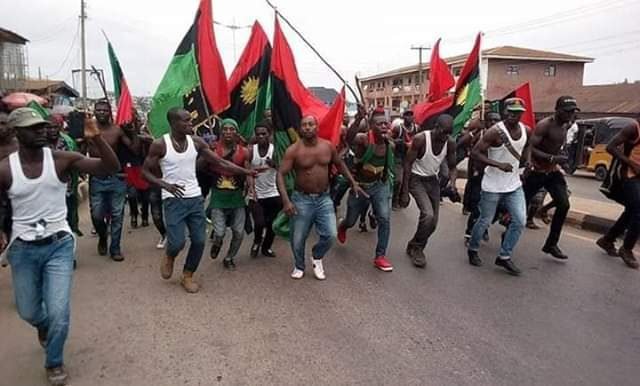
Attorney-General of the Federation, Abubakar Malami, SAN

“When responsible leaders come publicly and show dishonesty by fanning tribal wars, these are signs of a failed state. The law is against open grazing. Property ownership is against it. Livelihood is against it.”

Undeniably the Southern States Governors were not the first to speak against open grazing and the ban. The Governor of Kano State, Alhaji Abdullahi Umar Ganduje is one of those who did. What then is the difference between what the Southern Governors said and that of some Northern Governors who earlier spoke against open grazing?

Another issue that has dominated public space over the years is removal of petroleum subsidy. Amidst the hardships Nigerians are going through, State Governors are said to be proposing a hike in the price of fuel to over 400 naira per litre. Here are the Professor’s reactions.

“The problem is complex. It’s not as simple as that. The background to the Governors decision is straight. The country is down economically and financially. We have a regime of subsidising petroleum products in the country and if you listened to the former CBN governor Sanusi where he gave us facts and figures on how much the country spends on payment of subsidy and importing petroleum products. It shows that about 70% of the funds don’t go into supporting subsidy and the country is draining. The dilemma is that there is economic hardship. If you do not plug those corrupt holes through which the funds are siphoned, we may not have the infrastructure, employment and a revamped market. It is better in my own view to cut short and close those gaps where our funds are corruptly siphoned and divert it to proper use. Let the market take care of the petroleum products. The money can be utilised properly for our economic development. The states as at today can’t pay salaries. Some for a year and that’s subsidy money.”

But Prof, what you said is exactly what we have been told countless times there has been fuel hike, this reporter countered. We have heard of subsidy being removed over and over again. That has been a consistent excuse to increase cost of petroleum products at different times. Yet, it does seem that in spite of increase at various times and promises to channel the difference to developmental projects, subsidy has never been removed.

Cutting in, Ojukwu said: “It is the reality of the system. It shows there is a complaint against the removal of fuel subsidy. Labour unions have always put pressure against that short term plan or long term plan and so government caves in, in order to maintain its political base but it has never been removed. They continue to subsidise petroleum price and each time they want to remove it labour comes in. The reality is that if we are refining most of the products we use without subsidy, the effect on the pump price will be minimal.

“Unfortunately over 80% of the petroleum we use is imported, whereas we are the 6th or 10th most producing oil country in the world. And so the imported product can only be sold in Nigeria in accordance with the market price. Our money has been devalued more than 300% and once you devalue, it means the cost of your importation will be higher. So if for example they are importing the products at 100 naira, with this devaluation, it means a litre of petrol will now cost 300 naira and the price has not changed in the stock market at the international community. So if the government was paying 20 naira on subsidy, and be able to sell it at 150 or 145 they were only able to maybe subsidise at 20 naira out of the 150 or 145, though it’s now 300 but it is still being sold at 145. At 300 based on the devalued currency, it means now that government is subsidising the petrol at about 155 naira. So each time our naira devalues the subsidy increases, it is not a static thing.

“What the governors are proposing now for me is also not good enough. What they are proposing is a subsidy regime. They have agreed to move the price a little closer to the market price. There will still be some money that government has to pay otherwise you can’t plan it. At whatever price they are putting it, there is no profit. And so if government takes its hands off completely, the price of petrol will be fluctuating until it stabilises based on demand and supply. Importation is the problem and there has been so many opposition to establishing our capacity to produce and refine for ourselves.

“That money government is using to pay for subsidy would have been utilised to make us refine our petrol. So in the long run we will never solve that problem of shifting the price of petrol and get the capacity to produce our petrol. We will continue to suffer it and the value of our currency depreciates. Yet we won’t have our refinery, we won’t create employment and we will not build infrastructure.”

That said, countless reports have shown that our refineries are moribund and beyond redemption. There have been many turnarounds maintenances running into billions of naira that could build new refineries. Rather than build modular refineries our government prefer turnaround maintenances that are not working. They chose to repair refineries that have long been pronounced dead. Government even gave support to Dangote, a private individual to build his refinery rather than construct its own. It is hard to understand. It is also mind boggling that somebody can refine crude and produce fuel in his backyard in the Niger Delta but the country cannot build a modular refinery.

In his response, Ojukwu said: “That is corruption. This is who we are and that is why we have bad governance. If we had a government we would have settled this issue. There is no government anymore in the country. The reason for our incapacity is that the foreign investors that have that capacity are reluctant to come. This is because if you are putting price tag on the products they are producing, there is no way they can make profit. The system must be changed and subsidy removed. That is why subsidy must go. Once you pull out and say subsidy must go, the price of petrol must be decided by demand and supply you will find investors coming.

“Dangote a single individual may have succeeded where government failed but it is not his fault that he has been given monopoly. It is the fault of us and our leaders to allow one person to have such monopoly. But I know that if we don’t have the subsidy regime, a lot of investors will come in. There is a control price on the final product and that control price cannot work. The cost of production is even double what we buy petrol and so nobody will bring his money to do that. No serious person will do that.

“It is clear government cannot run business in Nigeria. Even in small things like alcoholic breweries. Our factories are closed down. Textile mills in all states failed. We failed in hotel management, our airlines, even our secondary schools, and universities. We failed in all of these simple things that don’t need any scientific capacity. Refinery will not work. It has to go to private enterprises and with the state of our nation; the security situation, the subsidy corruption regime all these are things that will prevent investors from investing in our country.

TIPS