Home Blog Page 953

Now that Twitter is banned, will kidnapping of Nigerian students stop? By Olabisi Deji-Folutile

For the first time in a long while, the Nigerian government suddenly came alive after Twitter deleted President Muhammadu Buhari’s tweet on civil war. As many Nigerians were still wondering if the news report was fake or real, Information Minister Lai Mohammed accused the micro-blogging platform of being selective and bias. Shortly after that, government announced the suspension of Twitter operations in Nigeria. Before people could get out of the shock, government came up with a directive to all broadcast organisations in Nigeria to deactivate their Twitter handles immediately. Before then, the Attorney General and Minister of Justice had said that any Nigerian that used Twitter would be prosecuted.

Almost simultaneously, Foreign Affairs Minister invited all the envoys of the countries that issued a joint statement to condemn the Federal Government’s action, to a meeting in Abuja. Everything has been happening at a fast pace. It’s so interesting that a government that has hitherto been accused of being indifferent especially to critical national issues could be so swift in galvanising major government organs at different levels to speak on a mere social media platform. In less than 72 hours, the ministers of information and foreign affairs had reacted; the Director General of the National Orientation Agency spoke, the Acting Director General of the National Broadcasting Corporation issued a release as pro-government apologists dominated different social media platforms justifying government’s action.

From the way this government and its aides have been talking, it seems Twitter is the beginning and the end of Nigeria’s security problems. Twitter is probably behind the high level of insurgency in the country, who knows, the platform could be fuelling series of abductions and kidnappings that have become the lot of Nigerians in recent times. Some government officials have even gone to the extent of saying that it is better not to be on Twitter than to lose Nigeria. They said Twitter was out to dismantle the Nigerian entity. This line of argument is the one that sounds most intriguing to me most. I am like if Twitter is strong enough to dismantle Nigeria, shouldn’t that suggest that we probably didn’t have a country in the first instance?

Anyway, the lesson from all of this is that this government is not as deaf and dumb as some people think it is. Rather, it decides what is important to it and it treats such based on its own definition and understanding alone. Banditry and kidnapping has become the biggest criminal enterprise across Nigeria with hundreds of Nigerian students being kidnapped. From reports, between December 2020 and May 2021, almost one thousand students have been kidnapped from their schools. More than 300 boys were kidnapped in December from a school in Kankara, Katsina, President Buhari’s home state; 279 schoolgirls were kidnapped from Jangebe village in Zamfara State in February; 42 people, including 27 students, were kidnapped from aGovernment Science College, Kagara in Niger State in February,39 students were taken away from Federal College of Forestry Mechanization, Afaka, Igabi LGA, in Kaduna State on March 11; 20 students of Greenfield University and two members of staff were kidnapped on April 20,2021, in Kasarami village, in Chikun LGA of Kaduna State: and the latest is the abduction of about 200 children from the Salihu Tanko Islamic school in Niger State.

Parents of students of the Greenfield University said they paid N180 million and bought 10 motorcycles for the bandits before their children were released after about six weeks in captivity. Apparently, the Nigerian government did not consider this to be an important issue worthy of its attention as Twitter’s. The kidnapped students’ parents said government did nothing to secure their children’s release. They narrated how they had to borrow money and sell their property to get their children released.

Nobody is even talking about the 200 or is it 135 schoolchildren kidnapped in Niger State on May 30. The Federal Government has not even uttered a word on the abduction. Our schools are not safe but our government prefers to talk about Twitter than address the real problems confronting the nation. Of course, these are diversionary tactics – how they think all Nigerians are fools still surprises me though.

Yet in the midst of this sorry state of Nigerian schools, we are being told that Nigeria provides the highest number of students in universities and colleges across America compared to other African countries. According to Susan Tuller, the US mission country consular coordinator, Nigeria ranks 11th on the list of countries with the highest number of students in the US with over 13,000 Nigerians studying in the United States.

Some people will argue that this should be expected after all Nigeria is the largest country in Africa. But it goes beyond that. Besides, such argument would have been tenable if our educational system has been something to write home about. However, we all know that Nigeria’s public school system is a sham. Today’s working class Nigerians are struggling to fix their children in private institutions. Come to think of it, how many middle class Nigerians, if they still exist, can afford to send their children abroad with an exchange rate of over N500 to $1?

Truth be told, most Nigerians studying abroad are children of politically exposed parents. A February 2021 report from an American foundation, Carnegie Endowment states that Nigerian politicians are training their children in UK schools with stolen public funds. According to the report, Nigerian politicians and civil servants whose children are paying about £35,000 per year in UK private boarding schools don’t even earn such money. So, how did they get their money? The report further states that many of the students in the UK schools are children of Nigerians that have either been indicted for corruption or being prosecuted for same.

Can anyone fault this report? It is common knowledge that many people that call themselves politicians in Nigeria today are rogues, same for many senior civil servants. Many of them have gone beyond stealing to looting of public money and pillaging our resources. This is a country where a governor could be denied a second term for failing to give opportunity for political jobbers to fleece his state. Without any iota of shame, Nigerians were told that the governor was good in terms of performance but was a bad politician. In other words, he was too stingy. He didn’t allow the state resources to be shared. What a country!

We destroy our own educational facilities and other countries are taking advantage of our precarious situation to make money for themselves. The average cost of college in the United States is $35,720 per student, per year.According to Times Higher Education, Tuition fees could be up to $50,000 per year. Which university in Nigeria charge this kind of exorbitant tuition? What stops Nigeria from attracting foreign students too? Why can’t we work towards marketing our own education to other countries?

Before our own eyes, other countries are showing us how foolish we are and we are not bothered. While we are busy fighting Twitter, these countries are busy looking for ways to make us bring our money to their shores. They have studied us and realised that we are selfish; our leaders and their allies would rather steal from government coffers to guarantee a space for their children in schools abroad than to develop a system for the good of all. The United Kingdom, Canada, US and many of these countries have turned their education to exports targeting Africa. As usual, Nigeria is the main target and we have not disappointed them.

All that the United States is doing is marketing its schools to Nigerians. The US mission has said that it would continue to prioritise Nigerian students with admission to schools in the US because it knows the implication of such influx of money to its economy.

The pandemic which has affected visa appointments notwithstanding, the US Mission in Nigeria is saying it would continue to offer interviews to every single Nigerian who’s been approved at a US university or college. In 2021 alone, the US embassy in Abuja and the Consulate General in Lagos have interviewed over 5,000 Nigerian students. This shows that America will do everything possible to get its own fair share of Nigerian students in its schools.

Which is more expensive? Overseas education for just a few, payment of ransom, or developing and securing Nigerian schools? My humble advice to the Nigerian government is that they should leave Twitter alone and concentrate on solving the security challenges confronting the nation which has made Nigeria an unattractive destination to the rest of the world. It should work on making its educational system world class so as to attract others to its shores. Honestly, being the country with the highest number of international students in US in Africa can only be a thing of pride if we also have Americans studying in Nigerian universities. Anything short of that is simply a proof of our country’s foolishness!

Olabisi Deji-Folutile (PH.D) is the editor-in-chief,franktalknow.com and member, Nigerian Guild of Editors. Email:[email protected]

The premeditated killings in Alaigbo must stop

By Ikechukwu Amaechi

“When Ahmed Gulak, former political adviser to former President Goodluck Jonathan, was brutally murdered in Owerri, Uzodimma insisted it was political assassination.

There is no love lost between Uzodimma and IPOB and he is not saying that because he wants to save their skin. So, why is nobody listening to him?

Assuming without conceding that the unknown gunmen are indeed IPOB activists, does that mean that every Igbo youth is a felon that must be gunned down on the street?

Was businessman Oguchi Unachukwu – who was killed by an Air Force officer on his way to Sam Mbakwe International Cargo Airport, Owerri on May 31, 2021 – a member of the Eastern Security Network?

The Catholic Archbishop of Owerri Archdiocese lamented in a video recently that he counted 35 corpses of Igbo youths dumped at the Federal Medical Centre (FMC) Owerri mortuary. Who killed them? For what crime?

“How can Buhari rationalise the fact that over 90 per cent of Igbo youths brutally gunned down on the streets are neither members of IPOB nor ESN.

Mr. President, these premeditated murders in the South East must stop. Ndigbo don’t want a war.

They only demand justice, fairness and equity in a country where they are equal stakeholders. That is not a crime, not to talk of one deserving of capital punishment.”

Please click on the link below to read the full article

The premeditated killings in Alaigbo must stop

Fulani are not the problem of Nigeria: An Igbo woman’s perspective – A rejoinder, By Chisom Omeokachie

Before our dear government bans opinion writing and blogging in Nigeria, a beautifully written piece titled ‘One-Sided Report on Igbos: A Fulani Woman’s Dilemma,’ by Zubaida Baba Ibrahim, caught my attention and I couldn’t resist responding to it swiftly.

Chisom Omeokachie

At a time of uncertainty, insecurity, civil unrest and injustice, one must commend those who are brave enough to speak up loudly and clearly. That was what, Zubaida, a young Fulani woman from Northern Nigeria did eloquently and courageously with her article.

As a young Igbo woman living in Nigeria, I have family and friends who lived through the civil war and several ethnic clashes across Nigeria and I join my brothers and sisters to say “Ozo Emena”.

I have also seen in real-time how destructive Fulani herdsmen can be and totally condemn it. However, I know that not all Fulani are destructive and it is an unfortunate case of very few bad eggs.

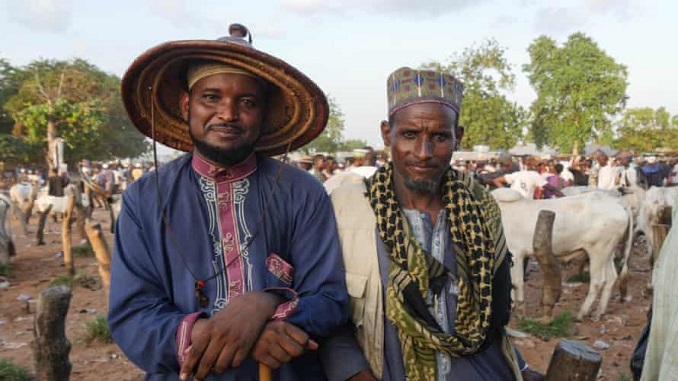
While it is true that most herdsmen are of the Fulani tribe, and the nomadic lifestyle is an integral part of the Fulani history and culture, there is more to the Fulani than cattle raring and trading.

The Fulani are also known for being great artists and are primarily known for decorated gourds, textiles, hairstyles and personal adornment. Important collections of Fulani art appear at the Fowler Museum at UCLA in USA, the Musée de Bamako in Mali, among other great museums.

The Fulani also have great Islamic and scientific scholars throughout history like Muhammad Ibn Muhammad Al-Fulani Al-Kishwani, an early 18th century Fulani mathematician, astronomer, mystic, and astrologer from Katsina, present-day Northern Nigeria.

The late President Umaru Musa Yar’adua, one of the best performing Presidents of Nigeria was also of the Fulani tribe. He championed peace, unity and innovation during his time. His policies on the economy, education, infrastructure, among others, still remain fresh in the hearts of many Nigerians, which is why he was widely accepted in all the regions of the country. He only spent three years in office but those three years were considered more or less the best in Nigeria’s democratic history. To him, it was always country first.

Personally, I too have witnessed the accommodating and respectful nature of the Fulani having worked very closely with some of them at PRNigeria Centre, Abuja where I was groomed in the arts and science of public relations and journalism as a mass communication Student back 2017. Working as an intern in the firm owned by a northerner I am not surprised that Zubaida is a staff writer in that communication firm where the owner taught us patiently and showed us the ropes in PR and critical writing. The staff and family members made us (interns from different tribes and religions) feel at home, working together and eating together as proud Nigerians.

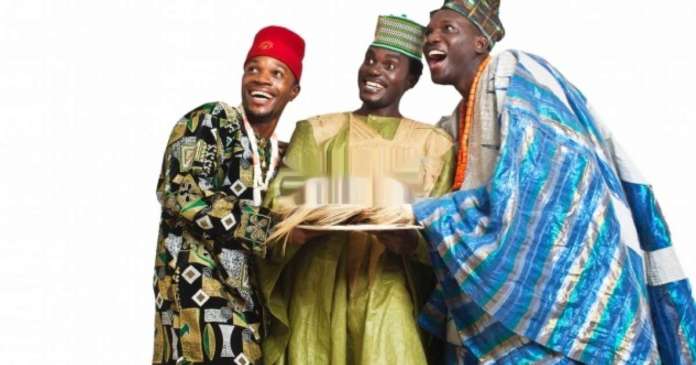
Every region of Nigeria is endowed with great and brilliant minds from the Hausa/Fulani of the North East and North West, to the Igbo and Yoruba of the South East and South West to the over 300 ethnic groups in between. We have the human and natural resources to build a country that we all can be proud of, instead, we are occluded by tribalism and religious differences.

There must never be a time when the majority should pay for the crimes of a few members of their group. It is unjust and uncivilised. With the menace of the Fulani herdsmen ravaging farmlands and crops of fellow Nigerians, one may be tempted to classify all Fulani as hostile and irrational people but that would be a grossly false narrative.

It is also unfortunate that the current administration seems to have done nothing to mitigate the ongoing conflict between farmers and herdsmen through a mutually benefiting solution. This has only worsened the widely held opinion in some quarters that they are a Fulani administration rather than a Nigerian qdministration.

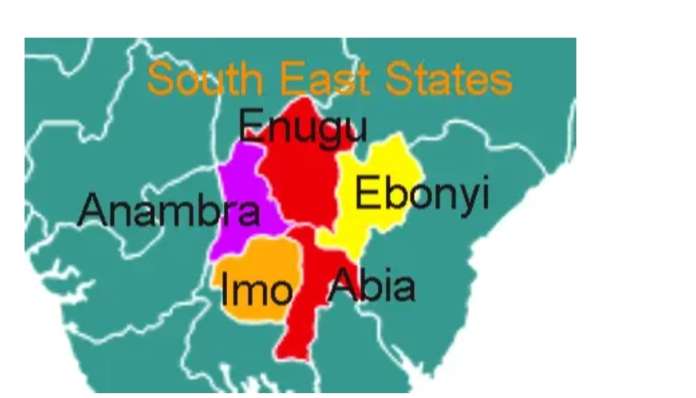
In recent times, due to distasteful politics at all levels, there is loud agitation for secession in the southern part of Nigeria by the South East (Biafra) and South West (Oduduwa).

Perhaps one day, the European marriage of Nigeria will be annulled and we may all go our separate ways, but in the meantime, we are one country and it is in our own best interest to coexist in respect for one another and in peace.

We must restructure for the sake of peace and progress. It is pertinent that every Nigerian feels like a Nigerian with all privileges as well as the responsibility of other Nigerians irrespective of tribe and religion.

It takes ordinary people like my new sister, Zubaida of Adamawa State, and I, Chisom of Anambra State to rise up and resist the divisive messages and policies of people bent of pinning us against one another. Our generation of Nigerians are saying enough and we must act upon it.

Like Barrack Obama said, “In the face of impossible odds, people who love this country can change it.”

•Chisom Omeokachie, a graduate of Mass Communications writes from Awka

Obasanjo, the Apostle of one Nigeria, Repudiates Unity at any Cost

By Ayo Olukotun

“I am a strong believer in one Nigeria but not one Nigeria at any cost but one Nigeria where every Nigerian can feel proud that he or she has a stake in this country”. Former Head of State, Gen. Olusegun Obasanjo (retd), Channels T.V June 9, 2021.

The reportorial and editorial crafts are obviously agenda setting ones. Consider, for a moment, how vast the powers of reporters and their editors are. Between them, they decide what is newsworthy, what and what is to be ‘buried’ deep inside the news train. No less importantly, and as theorists of news framing tell us, they select or even pre-select the degree of prominence to give particular news items, they ask and answer questions such as, should this be positioned on the front page or even ignored altogether?

Former President Olusegun Obasanjo

Why are these ruminations necessary, the readers may ask? Precisely because in the story under consideration which narrates Obasanjo’s chiding of agitators for secession there was an important caveat quoted in the opening paragraph which ought perhaps to have provided the headline for an account published on Thursday by virtually all newspapers. Let me explain. Obasanjo’s position and posture as an apostle of national unitys is familiar. In one of his books he revealed that even as military president and as a southerner, he rooted for visibility and importance to the then number 2 man, General Shehu Yar’Adua in order to achieve ethnic and religious balance in a divided nation. As civilian president, using the same tactic Obasanjo devolved a lot of power to Abubakar Atiku as Vice-President until the parting of ways when Atiku nearly ruined his chances for election for a second term. In other words, both in precept and action, Obasanjo has carved a niche for himself as perhaps the leading exponent of Nigerian unity through balancing and harmony among the country’s combustible ethno-religious mix. What is novel, therefore, in the wake of renewed calls by some ethnic groups for secession is that Obasanjo gave minimum conditions for achieving Nigerian unity, while amplifying that his advocacy for national unity is not one of stupidity or docility which accepts meekly what it calls unity at any cost. For this writer, this is the central thrust or should have been made the central thrust of Obasanjo’s most recent intervention.

Regrettably, however, reporters and editors settled for what is already well known about Obasanjo’s views and admonitions on unity and secession. This leads us to question whether the campaigners for national unity realize why the agitation for secession has come up so truculently in this season. Far from being morons, idle minds or mischief makers, those advocating secession (not to be equated with war mongers) are doing so as the Ekiti state governor Kayode Fayemi recently posited ‘out of frustration’. Frustration with what? There is widespread belief that several of the underpinnings which kept our federation in relative harmony and balance have been in the last few years dismantled. A few examples will make the point. In contrast to the Obasanjo doctrine of mainstreaming a Yar’Adua, a northerner and a Muslim to counterbalance a Christian and Southern President even under a military regime the circumstance today is, sad to say, extremely different. Do a quick headcount of the major holders of executive and legislative power and you will come up with a preponderance of one religion over another. Not just that alone, everyone knows about the marginalization, deliberate or not, of the vice president, Prof. Yemi Osinbajo. There also is the much talked about imbalance almost deliberately carried out in federal appointments, the most conspicuous of which is in the area of national security where a particular ethnic group and religious identity predominate. That is another way of saying that in semi-authoritarian style, the logic of Nigerian federalism, federal character, and consociational imperatives as well as the inclusive mandate of the 1999 constitution; flawed as it is have been more or less brushed aside.

True, these sins of commission and omission are mitigated a little by party politics in which the ruling party to stay afloat and in deference to its founding obligations has allowed a measure of balancing. But no one is left in doubt who pays the piper and dictates the tune. So, it is not just that we have an over centralized constitution but politicians have become steadily more loyal to their ethnic and religious affiliations.

Furthermore, in a season of raging insecurity, almost every part of the country suffers. But some suffer more than others. Earlier this week to cite an instance, The Punch in an editorial entitled, Banditry: Benue State under siege lamented as follows: “a horrible time, killings that mimic ethnic cleansing are escalated. The bloodletting is traced mainly to daring killer Fulani herdsmen and local militias fighting for communal control”.

The editorial, not the first of its type, went on to document instances where officialdom has looked the other way while Benue state became and still remains a killing field. Benue is of course not the only tormented area in the current dispensation. Fresh in our minds are the murder and mayhem at Igangan, Oyo State in which prominent Fulani leaders were fingered with some justifying the killings as reprisals. For me, this is the second important reason why the agitation for secession outcry is escalating. Citizens have the feelings that they have lost control of a state which is not only increasingly capricious but whose preferences more and more coincide with that of a particular ethnic extraction. To be remembered in this connection is the famous thesis by General T.Y Danjuma (retd) that ‘the military is not neutral’.

The Yorubas have a wisecrack that roughly translates ‘orisa if you cannot favour me, kindly just leave me the way you met me and do not destroy me.’ In the current delicate situation of Nigeria, what some calling for secession are saying is that if they will not be advantaged by the federal might, that power should at least not be deployed to destroy them or put them miserably perpetually on edge. Obviously too there is the logic of weak governance performance which makes everyone except the most privileged extremely unhappy and unable to actualize their dreams. It is not enough for the apostles of unity to shout mantra-like ‘the unity of Nigeria is not negotiable’ or ‘to hell with secessionists’. They must seek to understand why the groundswell is fast becoming a deafening clamor and with that understanding, they should then begin to adjust their behavior, policies and attitudes to incorporate the disaffected instead of further alienating them.

There is merit in the view point once espoused by comparative politics scholar, Prof. Eghosa Osaghae that if the 1999 constitution is faithfully implemented Nigeria would have concluded a round of restructuring. We may debate the point of view but it at least shows us how much we have meandered from that which the constitution stipulates. Above all, the current custodians of state power should do more listening than talking or labeling. That will be more in conformity with democratic ethos than what will appear to be ‘in your face’ disposition and attitude.

Prof. Ayo Olukotun is a Director at Oba (Dr.) Sikiru Adetona Institute of Governance Studies, Olabisi Onabanjo University, Ago-Iwoye

Looming genocide in South East

By Ochereome Nnanna
Over the past weekend, there were heavily alarming stories of the arrival of several military transport aircraft at the Sam Mbakwe Airport, Owerri. They brought war equipment shortly after President Muhammadu Buhari threatened to “speak to” the Igbo people of the South East “in the language they understand”.

Unless sanity comes into play, the systematic slaughter of innocent, unarmed people and the destruction of their properties will commence in the heart of Igboland soon. I have two questions: what did the Igbo people do wrong? What offence did they commit against Nigeria? Before this government came to power, South East was the most peaceful part of Nigeria. Wars, insurgencies, militancy, terrorism and banditry were reported in other parts of the country but not the South East.

So, why has the relationship between the Federal Government and the Igbo nation within six years, deteriorated to the point where a second civil war is being talked about?

Looking at Buhari’s six years in power, did the Igbo nation make a mistake in withholding their votes from him? Did they not vote for Shehu Shagari, Olusegun Obasanjo, Umaru Yar’ Adua and Goodluck Jonathan who were not their kinsmen as a patriotic expression of their Nigerianness?

Is it possible that Igbo rejection of, and resistance to Fulanisation is at the root of the problem? They said “no” to Ruga and every effort to take their land and give to the Fulani pastoralists who have been killing and destroying farmlands without the Federal Government raising a finger to stop them. Why would the South East, which is smaller in landmass than most states in the North but with over 40 million people, yield the little they have to violent strangers and foreigners? If the situation were turned the other way round, would the president and his people accept the medicine they are forcing down other people’s throats?

Another “sin” of the Igbo was that the Indigenous People of Biafra, IPOB, which the Federal Government has popularised among the Igbo youth and elders alike, formed the Eastern Security Network, ESN, to guard their forests where no less than 350 herdsmen camps were identified immediately after the COVID-19 shutdowns last year. ESN has never attacked law-abiding and peaceful Northerners or anyone in Igboland. Even Mazi Nnamdi Kanu strictly forbids attacks on law abiding and peaceful Northerners residing in the South East.

They are strictly in the forests protecting the land and the people because the law enforcement agencies refused to do their job. Instead, they allowed these cancerous elements to flood Southern forests during the lockdowns. Self- defence is the first law of nature. Can you fault Igbo people for developing a template for self-defence?

Yet another “sin” is the activities of the so-called unknown gunmen. I can never excuse the activities of these terror gangs who have been killing law enforcement officers and destroying police and security establishments and electoral edifices. How I wish we knew who these people were! The security and law enforcement agencies should do their work.

There is always the temptation to blame Igbo youth for the activities of the unknown gunmen, but strangely, Governor Hope Uzodimma, an arch enemy of IPOB, has disclosed that 70 per cent of people arrested for the attacks in Imo State “are not Igbo”! Who are they? Is it possible that some of the attacks were sponsored by enemies of the Igbo nation as a pretext to punish them for their above-mentioned “sins”? Nobody is talking about the senior Presidency official Ahmed Gulak fingered as his assailant in a voice note circulating on the internet before he was assassinated in Owerri.

We have shouted ourselves hoarse that if Buhari means well towards Igbo people, he can still solve the security situation in the South by tackling it at the roots. He keeps asking: “What do these people want”? We (Nigerians) want him to end his extreme nepotism and bring back our Nigeria. It is not true that Nigeria belongs to the Fulani; it can NEVER happen. Nigeria belongs to all of us! We want this Fulanisation agenda dropped immediately. It will not work. It will only expose innocent people to danger and destruction. There is enough land in the North where the Fulani are indigenous to, for the establishment of countless Ruga and all its romanticised benefits. Don’t force it on those who don’t want it.

Why doesn’t the Federal Government Northern political leaders consider the question of a referendum? It is a democratic and peaceful demand. A referendum will give the Minorities of the South-South the opportunity to reject Biafra. It will also enable the Igbo people who have property all over Nigeria to shun Biafra. But if they opt for a tiny, landlocked Biafra where (as we hear) they will starve, kill themselves and perish, why not let them? Those who hate them will achieve their objective of Igbo extermination by letting them go into Biafra and perish. Why not allow nature to do your dirty work for you?

May I sound a note of warning. Those who are watching with excitement the deployment of the military against fellow Nigerians, the unarmed Igbo population, should get ready. Whatever goes round comes round. Fulanisation is not only aimed at Igbo land. They also want yours. They are also killing you. The difference is that, unlike the Igbo people, you are crying and expecting your prospective conquerors to save you!

NIGERIA AS A FAILED STATE

By Sonnie Ekwowusi

After initially taunting Nigeria as a weak State or a falling State confronted with doom and gloom and existential threats, the international community has now affirmed that Buhari’s Nigeria has cascaded into the abyss as a full-fledged failed State. At present, Nigeria exhibits the major symptoms or features of a failed State-wooden-headed and stiff-necked incestuous tyrannical political leadership; erosion of authority of the government to make collective decisions; incapacity of President Buhari to defend and maintain Nigeria’s territorial sovereignty as well as secure the borders of Nigeria from internal and external violation in consonant with sections 1 (2) and 2(1) of the 1999 Constitution; suppression of freedom of expression such as banning the use of Twitter in Nigeria and threats to prosecute Nigerians using Twitter; inability of President Buhari, pursuant to section 14 (2) (b) of the 1999 Constitution, to protect lives and property of the citizenry and to suppress internal insurrection, banditry, secession threats, murder, anarchy, tension, fear, suspicion, disorderliness, hatred and chaos everywhere in Nigeria. The impression one gets wittingly or unwittingly on listening to Mr. President is that he is confused or that he has lost control of the state of affairs in Nigeria.

It is sad that like Somalia, Democratic Republic of the Congo, Yemen, Central African Republic and Myanmar Nigeria has become a full-fledged failed State. Nigeria can no longer guarantee the safety of her citizens. Nigeria is unsafe. Nigeria has weak rule of law. Foreign investors are scared stiff coming to Nigeria. Foreign investors already in Nigeria are contemplating quitting Nigeria. Many young Nigerians are freeing Nigeria and becoming citizens of other countries. The Central Bank policies are erratic as much as they constitute a barrier to investment in Nigeria. Nigeria borders are porous. Boko Haram insurgents, bandits and all sorts of gun men are infiltrating Nigeria through her porous borders. All failed States harbor violence, internal rebellion and insurrection and different forms of violent internal strife. At present, Nigeria harbours different forms of internal insurrection.

It is obvious that the Buhari government is incapable of providing peace and stability to the people of Nigeria. In the past the mass killing, banditry, kidnap, assassination and internal insurrection were restricted to only North Eastern Nigeria. Now the whole country is engulfed with violent killings, insurrections and mayhem. For example, hardly any day passes in Nigeria these days without some Nigerians in different parts of the country being killed or mowed down or kidnapped or abducted or willfully assassinated. We have lost count of the serial abduction of school children. In fact parents whose children are in boarding houses in secondary schools are contemplating withdrawing them from there to save them from being abducted.

The latest abduction at the time of writing was the abduction of over 200 Islamiyya school children of Islamiyya School located at Tegina in the Rafi Local Government Area of Niger State. This testifies that Nigeria is a failed State. How can abductors abduct over 200 students from a school without any security personnel or onlookers noticing it and raising an alarm? Besides, how can abductors abduct over 200 school pupils at a go? With trailers, trucks or what?. Or, with luxurious buses? Mind you, this is not the first time we are witnessing such a mass abduction of school children. On February 26 2021 barely 9 days after abduction occurred in Niger State, 317 girls were abducted from a government girls’ secondary school in the Jangebe area, Zamfara State. On April 20 2021, abductors abducted about 22 students and staff of Greenfield University. Five of the students and one staff member have been killed by the abductors. The abductors demand for N160 million ransom for the release of the students.

But the most tragic of them all depicting Nigeria as a failed State is the on-going extra-judicial killings and gross human rights abuses being perpetuated in South Eastern Nigeria by the Nigeria police and Nigerian army. Under the guise of conducting house-to-house raids to smoke out IPOB and ESN members from their hideouts in the South-East, the Nigerian Army and the Nigeria Police, abandoning the Rules of Engagement (ROE), have been killing and injuring unarmed civilians in the South-East. It is amazing that anti-Igbo sentiment and Igbo hatred are yet to fizzle out 51 years after the Civil War. You can see how Igbo are continuously being made the escape goats of the simmering Nigerian political crises. For example, rebels, killers, abductors, arsonists, kidnappers, secession sayers and doomsayers abound in different parts of the country at the moment. In Northern they are freely killing Nigerian and destroying public facilities for years under the watch of the Nigerian army. The Fulani herdsmen have been freely going about killing and maiming their victims. The Nigerian army does not crush them. Miyetti Allah, Sheikh Ahmed Gumi and others have been inciting the citizens and making utterances that verge on treasonable felony. They get away with them. They are untouchable. Igbo are the targets. You can see how they are taking advantage of the recent violent killings and destruction of public facilities in Igbo land to re-enact or fan the embers of pre-Civil War Igbo prejudice and pre-pogrom hatred towards the Igbo people. President Buhari has just reminded the Igbos that he massacred them for 30 months during the Civil War and he would not hesitate to massacre them again at this time. Sad. Meanwhile fully-armed Nigerian soldiers are being dispatched to Igbo land to crush the people there. I have nothing against bringing Igbo arsonists, violent brewers, public property destroyers and trouble makers to justice. But what is detestable is the maligning of the entire Igbo race. Why the name-calling? Why continuously harbor hatred against the Igbos? Why contemptuously label Igbos as secessionists when there are secessionists across the ethnic groups in Nigeria? Why kill or maim unarmed innocent Igbo civilians? Must the truth offend? After 51 years, why can’t they forgive the Igbos?

It is unfortunate that President Buhari has squandered the confidence and trust reposed in him by his former admirers. The last six years of his reign as civilian President have been six years eaten by locusts. It is difficult to pinpoint one singular achievement of the Buhari government in the last six years. The government came to power on the mantra of fighting corruption. Now, six years on, it is obvious to all and sundry that the Buhari government itself is corruption writ large. Perhaps one achievement of this government in the last six years is to drag Nigeria into the membership of failed States. Imagine the most populous and most richly endowed African country joining insignificant countries such as Yemen, Democratic Republic of Congo, Central African Republic, Somalia, South Sudan and Myanmar as a full-fledged failed State. Buhari’s Nigeria has failed on all fronts-politically, economically, socially, culturally, intellectually and morally. Consequently in the media, beer parlours, pulpits, lecturer rooms, market places, stadia and other fora, Nigerians soberly ask the following questions: What does the future hold for us and our children under Buhari? Where is hope? And President Buhari is not helping matters. He is unrepentant. He is becoming more tyrannical. He is violating the right to freedom of expression of Nigerians. His managers should properly advise him if he cares to listen to them.

Nigeria and the Standing Fan Metaphor

By Olusegun Adeniyi

The irony of life is that sometimes we find wisdom in the most unlikely places. And often from the most unlikely persons. That precisely was the point of a tweet last week and two of the responses that followed. First, from @nzesylva: “Cab guy just dropped an epic proverb: ‘This world na standing fan. If e blow you small. E go blow another person small.” As profound as that may have sounded to the hearer, @ChrisVogue looked at it in a different context: “Nigerian fan can’t relate. The rotation button don spoil, blowing the same thieves since independence.” Apparently to validate that point and expand on the thesis, @izzo_1X added: “and instead of fixing the rotation button, everybody is struggling to stand in front of the fan.”

I have reflected on those profound tweets in the past few days because they sum up the tragedy of Nigeria. While the cab driver spoke to the ideal, it is difficult to fault the argument that the preoccupation of most Nigerians is not how to fix the problem but rather how to position themselves to be at the helm of “sharing the national cake” at practically all levels of public engagement. Which then explains why, from the economy to governance and national security, Nigeria is today a country besieged. Rather than look for solutions, everybody is pointing fingers or positioning themselves and their families for a spot in front of the standing fan.

To understand our national dilemma, here are facts that should compel sobriety. As at April 1980 during the Second Republic (41 years ago), a barrel of oil was selling for $37.24 and we were pumping 2.2 million barrels into the international market daily. The population of the country at that time was 73.44 million. Even with tell-tale signs that things were going awry, a prominent politician boasted that Nigerians had not started to ‘eat from dustbin’ in what has turned out to be a self-fulfilling prophecy. Today, the price of oil is about $69 and we are pumping roughly 1.47 million barrels a day. Based on Worldometer elaboration of the latest United Nations data, Nigeria’s population as at yesterday was 211,400,708. The implication is that while our population has almost tripled, our earnings have not changed since we still rely on oil to run our economy. And we are not even managing that oil asset well.

In the same week last month that the Nigeria National Petroleum Corporation (NNPC) wrote the Accountant General of the Federation about the financial implications of the subsidy regime we refuse to let go, Shell was raising dividends for its shareholders for a second time in six months. First-quarter earnings exceeded forecasts by a whooping sum of $100 million—from $3.1 billion to $3.2 billion. The contrast between Shell and NNPC could not have been starker. But the real challenge is in the implication of the NNPC letter. According to year 2020 statistics on the Federation Account Allocation Committee (FAAC) receipts as a percentage share of their total revenue, more than 30 of the 36 states will simply crumble if there is no oil money to share in Abuja at the end of every month. In fact, in nine states, 90 percent and above of their total earnings are FAAC allocations.

While agriculture has slowed down significantly in the country, especially in the past three years—essentially due to criminal activities by bandits, kidnappers, and insurgents—”nearly a quarter of the work force (in the country) was unemployed in 2018; and another 20 percent under-employed”, according to the World Bank. “With 3.9 million net entrants into the labor force (now 90.5 million people) during 2018.” The situation has since worsened. According to the National Bureau of Statistics (NBS) Labour Force Survey for 2020, the unemployment rate in the country was four percentage points higher than the figures recorded in the third quarter of 2018.

Whichever direction you look, the prognosis is not good for Nigeria. As at last December, according to the United Nations High Commissioner for Refugees (UNCHR), there were 2.1 million displaced Nigerians and 304,562 refugees. Not only is Nigeria reputed to have the largest population of out-of-school children in the world, but the federal ministry of education also stated in March that within the last one year, more than three million children have been added to these shameful statistics.

From the foregoing, it is evident that the button on the standing fan has long stopped working. This results in ventilation reaching only a very few. The challenge, however, is that the blades are also getting weak with the possibility that the fan could pack up altogether. When some of us therefore talk about restructuring Nigeria, it is not about partitioning the country for ethnic entrepreneurs. Rather it is to make the system work for all citizens. That of course would require effort, time, patience, sacrifice and trust in whoever leads the charge. That there are no efforts in that direction beyond cold calculations and permutations about 2023 is the main concern for me.

Sometime in 2008, my late boss, President Umaru Musa Yar’Adua commissioned a study on ‘subsidies and tariffs in Nigeria’ in five critical sectors: Electricity, Petroleum, Education, Health and Agriculture. The main objectives were to determine the effectiveness of the subsidies in these sectors, examine the need or otherwise for continuity and finally, suggest a new framework for a gradual elimination of a patently corrupt and inefficient subsidy regime with the overall aim of improving the general welfare of Nigerians. I am going to be relying on that report (submitted shortly before Yar’Adua fell ill in 2009) very soon to engage why we need a change of approach in Nigeria before this proverbial standing fan stops working, including for those who can muscle their way to the front of the line.

Meanwhile, I have in recent weeks spoken and written about how we have instituted a system in which, having destroyed public utilities and social services, Nigerians have been conditioned to supply their own electricity for power supply, erect their own boreholes for water, pay for their own security and sundry other services that government should ordinarily provide. On top of that, we have built a social security system around the most financially secure person in a household. Yet, as the Yoruba adage teaches, ‘Olowo kan, otoshi mefa; Otoshi ni gbogbo won’ (a well-to-do individual among poor family members is just another poor person).

The security situation is worse. Now we have of Judges being abducted right in the courtroom! If you apply the law of the jungle when competing for scarce resources, exemplified by the desperation to stand in front of the standing fan, you should expect high levels of insecurity. Since the beginning of the year, the recurring news in our country is that of killings as criminals have overpowered the capacity of the state. Not only is the list of victims (including personnel of police, military, and other armed services) very long, but there are also thousands of others across the country who have been in prolonged captivity and whose ordeals are heart-wrenching for their families.

Unfortunately, members of the Nigerian political and business elite have been conditioned to believe they live separate lives without realizing that it is in shared prosperity that we progress as a nation. Hijacking a comfortable space for themselves and families in front of a lone standing fan without minding the structural social inequities this breeds may usher in temporary relief. But it cannot endure. If we don’t improve the living conditions of the majority already condemned to suffer without ventilation and narrow the gaps between those with capacity to muscle their way to the front of the fan, we are courting trouble. In the fullness of time, forces within the majority could begin to push off the privileged, damage the fan and in the process, make efforts towards its repair impossible. Some may argue that we are already there!

I understand many Nigerians romanticize the fact that we are a master of brinksmanship. And there have been situations in the past when it would seem we would go under, yet survived. This much was attested to on 20th November 2006 by former Commonwealth Secretary General, Chief Emeka Anyaoku in a speech delivered in London. He said: “The foundations of a strong nation are never built overnight and never run a soft course. The great virtue is to recognise, accept and address the challenge, recognising that, in our fast-moving global setting, no nation can afford to be left behind and each must play to its best advantage. While there have been occasions when some feared that the unrelenting force of tyranny and ungovernable greed might wreck all that had been built over the decades, and the occasional moment of despair when it seemed that calculations or realpolitik staved the hands of those best placed to exercise healthy leverage, divine Providence came through for Nigeria thus enabling it to survive the scare.”

While the standing fan is still working and everybody scrambles to position themselves in the direction of the blades, I hope we will not push our luck too far!
Value of Human Life
He arrived Nigeria from his base in the United Arab Emirates to celebrate with the graduating students he sponsored through school. The ceremony over, the pastor in charge of the Celestial Church of Christ (CCC) asked the philanthropist to kneel for prayers while he held lighted candles amid seven elders. Before invoking the name of God to bless their guest, the pastor decided to spray perfume on him, oblivious to the fact that the highly flammable liquid poses a serious fire risk if exposed to a flash source (in this case, sticks of candle). What followed was an explosion that resulted in the death of a philanthropist at the Imole Parish of the CCC in the Alagbado area of Lagos State.

Although the leadership of the CCC has issued a warning on the “incessant abuse of spiritual perfumes within the church” with instructions that henceforth it be “diluted with water”, the tragedy speaks to the way death has become available on demand in Nigeria today. On the same day the tragedy was reported, at least 28 persons died in a boat mishap in Niger State. The unfortunate backstory is that most of the victims died when their canoe hit the stump of a tree 50 metres to its destination while running away from bandits who had invaded their villages. On Eid el Fitr celebration day last week, terror was unleashed on Iseyin, Oyo state, when personnel of the Nigeria Customs Service who were in hot pursuit of some smugglers killed six innocent people within the community.

What these tragic incidents (including the bestial killings by bandits, kidnappers and insurgents that define this season) point to is the value we place on human lives in Nigeria. Yet the right to life remains the most basic and fundamental of all rights. Indeed, according to Pope John Paul II, “only respect for life can be the foundation and guarantee of the most precious and essential goods of society, such as democracy and peace.”

▪︎Man O’ War @ 70

When you hear Citizenship and Leadership Training Centre (CLTC), it will probably not sound familiar until you hear Man O’ War. But as the Centre celebrates its 70th anniversary today with the launch of its book in Abuja, it has a lot to roll out the drums for. Incidentally, my review of their book will be presented by a colleague because I am currently in Ilorin, Kwara State where I will be keynote speaker this morning at the Rotary Nigeria, District 9125 (comprising all the 19 Northern States, FCT as well as Oyo, Osun, Ondo and Ekiti States). The mix-up in dates was not my fault. But the CLTC Director General, Mr Jonah Bawa knows I support the centre whose training programmes have impacted millions of Nigerians either directly or indirectly.

The story of the CLTC, one of the few surviving pre-independence institutions, is quite interesting. What started out as a community development experiment in Southern Cameroon (while it was still part of Nigeria) quickly morphed into a full-blown centre for the training of personnel required by the Home Government (British Empire) to service the various governments and Institutions within the countries colonized by Britain. The term “Man O’ War” was a Royal Navy expression used to describe a powerful warship or frigate from the 16th to the 19th century. The Man O’ War Bay in Southern Cameroon was so called because it was the area where British ships were docked waiting to intercept criminal slave traffickers. Although it started with the name, ‘Man O’ War’, it became the CLTC at independence in 1960 and a parastatal of the government, under the Ministry of Youth and Sports.

Designed as a short but intensive training for a maximum of four to six weeks, not only was the CLTC instrumental to the drawing up of the National Youth Service Corps (NYSC) curriculum at formation in 1973, but it has also continued to post its staff and Man O’ War officers to NYSC Orientation Camps every year.
Core mandates of the centre include creating opportunities for character development and positive attitudinal change; providing avenues for young people to discover themselves in challenging surroundings so as to build their physical and mental fitness; inculcating in participants the positive values of self-reliance, self-discipline and selfless service through the acquisition of relevant skills in the vocations and communal services and promoting entrepreneurship and leadership skills among the youth. Some of the prominent products of the centre include President Muhammadu Buhari, General Yakubu Gowon, former Vice President Atiku Abubakar, Sultan of Sokoto, Muhammadu Sa’ad Abubakar, former Independent National Electoral Commission (INEC) Chairman, Prof Attahiru Jega, Director General, Budget Office of the Federation, Mr Ben Akabueze, Minister of Women Affairs, Mrs Paulen Talen, Niger Delta Minister, Mr Godswill Akpabio, Katsina State Governor, Alhaji Aminu Bello Masari, former Chief of Defence Staff, General Abayomi Olanisakin, former Inspector General of Police, Mr Sunday Arase and several others.

The book being presented today documents the history of the Centre and its achievements. If you excuse its long title, ’70 Years of Creating Good Citizens and Responsible Leaders: The Story of Citizenship and Leadership Training Centre (Nigeria’s Foremost Outward Bound and Experimental Education Agency)’, the publication is a resource material for those who seek to know the history of Man O’ War in Nigeria. More significantly, at a period when we need to inculcate the values of responsible Nigerian citizenship, it is important to empower institutions like CLTC that have the knowledge and competencies for such assignment.

▪︎You can follow me on my Twitter handle, @Olusegunverdict and on www.olusegunadeniyi.com

Nigeria: Just before the lights are turned off! – By Kayode Ogundamisi

The primary responsibility of the government is to protect its citizens, failing to do that, every other achievement can be wiped out by just 2 days of war. Clearly, from the North to the South the State has lost it’s monopoly of violence and a clear strategy on how to retain control on behalf of the citizens.

None State actors can not bring stability. They can deliver blood, the temporary feeling of victory in revenge and counter revenge until the last person standing falls.
It is ONLY the State that should restore its authority by gaining the confidence of the citizens in a war situation. Be consistent in reactions to all the conflicts without any hesitations and resort less on knee jack responses.

The escalation of the conflict in Nigeria will only produce one resolution, endless carnage that will make the Liberian, Syria Leone and Biafra Wars look like a child’s play. From President Buhari (Who has thus far failed with regards to dealing with insecurity) to state Governors, local government officials, lawmakers (who pretend like they are not also charged with the responsibilities to create an enabling environment to improve security) to the least person in government across the political and regional divide, a decision needs to be made, to either continue to politicise the crisis, do nothing and wishing the situation will improve or putting differences aside, doing something and putting the safety of the people and Nigeria over and above everything else or watch Nigeria slide into a war that no one can win.

Sadly, after the fog of war, it is the very poor in all the nooks and cranny of the country that will end up being sacrificed as they are being sacrificed at present. In the absence of the State, the people are already resorting to self help, enemies are defined in blury lines and crisis entrepreneurs in government, civil society, religious organisations are smiling to the bank.

Harmony at home (1)

‘Patiently put up with each other and love each other.’
Ephesians 4:2 CEV

Building a good relationship at home is like building a wall: It’s done brick by brick. And the mortar that holds it together is unconditional, uncondemning, unselfish love. The only way you’ll know how good a job you’ve done is when it’s tested by the storms of life. One of the most important keys to succeeding at home is – communication. So:

1) Become creative. Spend time together as a family. Call your mate during the day and try to meet sometimes for lunch. Drive your kids to school or extracurricular activities so you can talk to them. Communication can happen anywhere, but it won’t happen unless you make it a priority.

2) Identify communication killers. Internet, mobile phones and TV are the chief culprits. The average couple spends less than one hour a week in meaningful communication; they spend five times more each day watching television. This is a ‘screen test’ you’ll have to pass if you want to succeed at home.

3) Encourage every member to speak their mind. And when they do, don’t criticise or retaliate. Differences of opinion are healthy. Handled right, they can make things better.

4) Be conscious of how you interact with your family. You may have unwittingly adopted a style that stifles communication. Stop and consider; do you:

a) retaliate – that has a degrading effect

b) dominate – that has an intimidating effect

c) isolate – that has a frustrating effect

d) cooperate – that has an encouraging effect.

If you’re in the habit of using any communication style other than a cooperative one, start working immediately to change it. You’ll have to, if you want to build a good relationship with your family.

Bible in a Year: 2 Kings 24-25, Acts 13:26-52

The Word for Today

The Sad Chronicles Of a Failed ‘Messiah’ by Nosa Igiebor


Even his most rabid critics could not have imagined that he would reduce Nigeria to a failed state. Six years on, Muhammadu Buhari has achieved the feat with outstanding ease, as the country has, literally and factually, become one whose defining dynamic is anarchy unbound in all its terrifying ramifications.

As the country steadily dissolves into unrelenting chaos, the president, who’s really not a president, continues to channel Emperor Nero of the ancient Roman Empire, who cruelly fiddled while his beautiful capital city was burning.

Buhari has made our worst nightmare about him come true. Those who really knew him had always readily bracketed his name with incompetence and parochialism. But none of them could have thought that Nigeria would become an expansive killing field, painted with the blood of thousands of innocent Nigerians, under his ill-starred, befuddled leadership.

Back in 2015 during his first inauguration as president, he had declared that, “I belong to no one, and I belong to everybody.” That declaration was tangibly hollow even then, which made the inherent falsehood most galling.

Those were not his words because they never came from his heart. They sounded good and noble, and projected a false determination to be a leader of all Nigerians. They were woven into his address to reinforce the myth that he was truly a changed man. One whose notorious dictatorial instincts had morphed to some grudging acceptance, if not admiration, of the beauty of democracy despite its inherent flaws.

But he has since been found out, not by those who knew him, but those who had elevated him to the status of a messiah who would come to rescue and regenerate Nigeria. They have lost patience with his unapologetic fealty to crude nepotism and extreme nativism, as he has presided over the diminution of the country in every respect.

To be fair to him, he never pretended to be, or pronounced himself a messiah. Those who sold his candidacy and swore that he was the answer to our problems, particularly insecurity and corruption, tagged him as the messiah. To every legitimate question about his capabilities and preparedness for the office, they had a robust riposte: “Is that the issue? It doesn’t matter.”

The country is being held hostage by viral insecurity to which the federal government has no solution. The economy is in complete shambles. And corruption is now flying supersonically.

What mattered more to them was ending the presidency of Goodluck Jonathan whom the then leading opposition party, APC, had, through brilliant propaganda, tarred as “clueless” and, therefore, didn’t merit another term in office.

Nonetheless, Buhari basked in the glow of his elevation and celebration as a god. Even the man, who affects the air of asceticism, wasn’t immune to the irresistible draw of intoxicating flattery.

As we all now know, the god has been disrobed. Aso Rock has never hosted a messiah since May 29, 2015, and won’t host any in the next two very challenging years of Buhari’s presidency. Ironically, as the country is drowning in despair and desperation and his star has dimmed considerably, that of the man he succeeded hasn’t stopped rising and glowing.

With his messianic complex stripped bare by his own catastrophic failings as president, the Buhari we see is irredeemably ugly. One who’s mortgaged his presidency to the defense and protection of Fulani militants of all stripes. He speaks for them. He pampers them. He even bribes them with multi-billion naira schemes like RUGA (rural grazing areas) and National Livestock Transformation Plan.

He’s proven beyond any doubt that those noble words he proclaimed at his first inauguration were alien to him. He’s president of only those he identifies with, and who see him as exclusively their own. How else could Miyetti Allah be so emboldened to constantly stoke the fires of ethnic strife and threaten anyone who stands in their way without even a mild tap on the wrist by the presidency?

Just months after he uttered those words that excited the faithful and gave false hope to the borderline sceptics, he disowned them. At a media briefing during one of his foreign trips, he complained of the unfairness of being required to treat all Nigerians equally. He said he shouldn’t be expected to treat ‘those who gave me 97 percent support like those who gave five percent’. It was at that moment the real Buhari emerged again, and he’s never looked back since then.

As more and more Nigerians, disgusted by his utter lack of leadership in any sense of the term, round up on him, he’s retreated further and further into himself. Occasionally, he emerges from his cocoon for photo-ops with local and foreign dignitaries and to meet with some of his officials. He doesn’t live with us or among us. He lives above us, splendidly ensconced in his intellectual and moral vacuity.
No one can seriously argue anymore against the overwhelming evidence of his failure and unfitness for the office he had craved for so long. The country is being held hostage by viral insecurity to which the federal government has no solution. The economy is in complete shambles. And corruption is now flying supersonically. All we hear from the presidency are numbing platitudes about intention with no effective, remedial actions to stem the country’s implosion on all fronts.

Buhari and his party promised ‘change’ in 2015 and ‘next level’ of the same change in 2019. But what we’ve got in the last six years is all-round regression and more of the president’s debilitating inertia and deplorable incompetence. His lack of any serious engagement with the challenges that have powered the country to the valley of a failed state, has continued to plumb new embarrassing depths. And there’s no reprieve in sight for a despoiled nation and his battered people.

“We’re fucked!”, as one prominent Nigerian said in exasperation after he met with the president in 2017, and came out completely deflated and alarmed by his remoteness and poor mental capacity.

So as we assess the last six and contemplate the next two years of the worst government Nigeria has ever had, we can only hope it survives all the mortal blows being ceaselessly inflicted on it. And Nigerians don’t ever forget to learn useful lessons from the sad chronicles of the failed ‘messiah’.

Any nation that has the misfortune of being led by an insular, mendacious president with a provincial mindset inevitably ends up in existential crises, as Nigeria has experienced in the past six years. President Barack Obama had warned, “elections have consequences.” Nigeria is today a clear manifestation of that timeless maxim.

First Published in TELL Magazine

TIPS