Home Blog Page 949

HOW TO GET A LAWYER INVOLVED IN A CASE YOU SEE ON SOCIAL MEDIA

By Firsts Baba Isa

Most times, I get tagged on trending issues on social media where the tagger feels that my legal services will be needed either on paid or pro bono basis.

The last time I met my friend and brother Inibehe Effiong, in Abuja, we discussed about this. He also gets tagged a lot on social media on issues where they think his legal expertise is needed. I believe most lawyers get these tags too.

Sincerely, I appreciate these tags. I even take them as a huge compliment. However, this is not how to get a lawyer involved in a case. When you tag us like this, we can do little or nothing to help the victim or person you want us to help.

If you see a case where you want a lawyer to render legal services, what you should do is to reach out to the victim or relative of the victim to reach out to the lawyer immediately. If you are close enough to speak for the victim, then reach out to the lawyer privately and properly brief him to take up the case.

It is highly unprofessional and against the rules of our professional conduct for a lawyer to be the one to reach out to a person and offer to take up his case. There might be some exceptions to this but those exceptions do not include following up a tag on social media to reach out to a victim and offer to take up his case.

Your first job should be trying to get in touch with the victim or someone close to the victim, then convince them to talk to that lawyer you think can handle the case. Most times, while you are busy tagging your favourite lawyer, the victim and his people have gotten another lawyer who is on the case. So, imagine your favourite lawyer diving headfirst into a case just to find out there is a lawyer on it already. That is very embarrassing and unprofessional.

So, while tagging us is good; do more than tagging.

I’m writing this not to discourage you from tagging lawyers to such posts, but to understand when we just read and do nothing. We do nothing because we have not been properly briefed. The legal profession frowns at soliciting for cases. We can only act when we are properly briefed.

Chelsea won the Champions League.

Is Chelsea winning the Champions League related to this post in anyway? No! But I have said it.

Leave me alone, please, I’m not feeling fine.

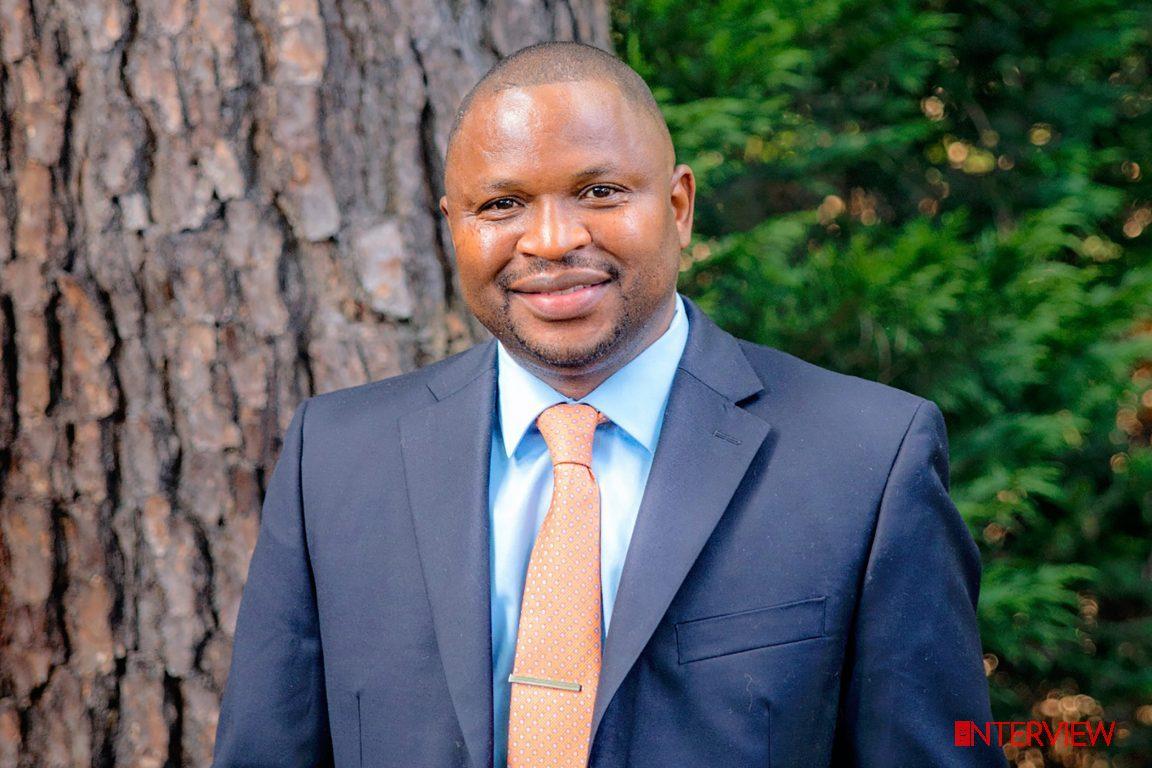
Written by Firsts Baba Isa (FBI), a Legal Practitioner, based in Abuja.

Ango Abdullahi, Northern Nigerian Colonial Economy and Niger Delta Oil

By Farooq A. Kperogi, _Ph.D.

In my May 6, 2017 column titled “Top 8 Popular National Lies that Won’t Die in Nigeria,” I called attention to out-and-out historical lies that vast swathes of Nigerians treasure and reproduce intergenerationally, and that are, I said, almost “impossible to uproot.”

One of such lies, I pointed out, is the idea, popular among northern Nigerians, that the Northern Region’s resources financed oil exploration in the Niger Delta. I wrote: “Professor Ango Abdullahi actually repeated this lie recently. He said this, ironically, while exhorting Emir Sanusi II to ‘go and read history.’ The truth is that not a dime of northern Nigeria’s money contributed to oil exploration in the Niger Delta.

“When oil was discovered in commercial quantities in Oloibiri in 1956, Shell bore the financial burden for the exploration. Other Euro-American oil companies later joined in oil exploration. It wasn’t until 1973 that the Nigerian federal government acquired 30 percent shares in oil companies. By 1973, Northern Nigeria had ceased to exist….

“In any case, colonial records show that the biggest motivation for amalgamating northern and southern Nigeria was because northern Nigeria wasn’t financially self-sustaining and the British Imperial Government said it would never subsidize colonial administration anywhere in Africa. So Lord Lugard amalgamated the two regions and used the surplus from the south to sustain the north. It’s illogical to say that a region that wasn’t financially self-sustaining financed oil exploration in the Niger Delta.”

Of the eight historical lies I pointed out, this was the stickiest among historically challenged northerners. I use the term “historically challenged” advisedly because several northern Nigerian professional historians called or emailed me to confirm that what I wrote was a basic fact that every beginning undergraduate in Nigerian economic history knows. They wondered why someone of the stature of Professor Ango Abdullahi would ridicule himself by repeating discredited and falsifiable lies. I told one of them to write a guest column to educate our people on the economic history of the region. “I am not as brave as you are,” he said. But when did educating people with the facts become bravery?

I am a northerner with as much stake in the region as anybody else, but I am also a truth-seeking academic who isn’t held back from telling the truth by maudlin sentimentality or fear of emotive pushback from the vulgar herd. I go where the truth leads me, even if it is to facts that cause me personal discomfort. That’s how my dad raised me, and no amount of emotional blackmail will stop that.

Several of the readers who continue to angrily react to my column say I didn’t provide any proof for my assertions. So, here we go. In an 89-page report for the British Parliament titled, “Amalgamation of Northern and Southern Nigeria, and Administration, 1912-1919,” Frederick D. Lugard clearly said two reasons informed his proposal to amalgamate the North and the South: finance and railways. On finance, he wrote:

“In 1906 a further step in amalgamation was effected in the South. Southern Nigeria and Lagos became one Administration under the title of the Colony and Protectorate of Southern Nigeria. From this date the material prosperity of the South increase with astonishing rapidity. The liquor duties—increased from 3s. in 1901 to 3s. 6d. in 1905—stood at 5s. 6d. a gallon in 1912, and afforded an ever-increasing revenue, without any diminution in the quantity imported. They yielded a sum of £1,138,000 in 1913.

“The North, largely dependent on the annual grant from the Imperial Government, was barely able to balance its budget with the most parsimonious economy, and was starved of the necessary staff, and unable to find funds to house its officers properly. Its energies were concentrated upon the development of the Native Administration and the revenue resulting from direct taxation. Its distance from the coast (250 miles) rendered the expansion of trade difficult. Thus the anomaly was presented of a country with an aggregate revenue practically equal to its needs, but divided into two by an arbitrary line of latitude. One portion was dependent on a grant paid by the British taxpayer, which in the year before Amalgamation stood at £136,000, and had averaged £314,500 for the 11 years ending March, 1912” (p. 7; view the PDF of the entire report here).

Again, a 1935 report by colonial government statistician S.M. Jacob, titled The Taxation and Economics of Nigeria, gives a vivid account of the immense disparities in the revenues between the North and the South. It shows, for instance, that one of the reasons the North was financially disadvantaged was that agricultural produce from the region had less economic value in the international market than agricultural produce from the South.

There is also a 202-page record of the correspondence between colonial administrators in Nigeria and their home government in Britain on the necessity of amalgamating the North and the South. Copious references were made to the North’s economic disadvantage and to the economic lifeline the region needed from the South to survive. The record of the correspondence, which took place between May 15, 1913 and January 27, 1914, is held in the British National Archives, and can be accessed with the following reference number: CO 879/113/3.

But two things need to be made clear. First, the North’s economic disadvantage relative to the South wasn’t a consequence of the South’s superior work ethic—or the North’s laziness. It was because, being close to the coast, the South had (still has) ports, which brought foreign goods that attracted hefty tax revenue. It was, in fact, Lagos that almost singlehandedly gave the South its economic advantage. Lagos still accounts for more than half of Nigeria’s IGR.

Second, it also so happened that the cash crops that the colonialists introduced to the South—cocoa, palm oil, kernels, rubber—had more economic value in the international market than Northern Nigeria’s cash crops such as groundnuts and cotton. In terms of quantity, the North produced substantially more agricultural produce than the South but, by a twist of circumstances, the North’s crops didn’t have as much economic value as the South’s.

This isn’t something to be proud or ashamed of. We are talking here of naked colonial exploitation of our people for the benefit of Britain. It means, in effect, that the colonial conquerors exploited the South more thoroughly than they did the North. That’s neither a cause for pride nor a reason to be ashamed. In my undergraduate days, I recall getting a kick out of Lord Salisbury’s angry description of my part of northern Nigeria, that is, Borgu, as “a malarious African desert…not worth a war.” As a starry-eyed Marxist then, I took delight in the knowledge that imperialists didn’t find my place worthy of economic exploitation.

Anyway, if the North wasn’t economically self-sustaining, how could it possibly finance oil exploration in the Niger Delta? That’s a wild leap of logic. Plus, it’s a well-known fact that it was Shell, not the Nigerian government, that bore full financial responsibility for oil exploration in the Niger Delta.

As George G. Frynas points out in his Oil in Nigeria: Conflict and Litigation between Oil Companies and Village Communities, Shell spent more than 6 million pounds of its own money between 1937 and 1953 before striking oil in Akata, near Eket, in non-commercial quantities. After spending some more millions, it found oil in commercial quantities in Oloibiri in 1956. Neither the Nigerian government nor the northern Nigerian government made any financial contribution to Shell’s exploration activities.

Farooq A. Kperogi

Open Grazing: Buhari, Presidency And The Rest Of Us

By Ebun-Olu Adegboruwa, SAN

Very recently, President Muhammadu Buhari shocked many people with his multiple interviews, his many official outings and his addresses to the nation. However, it would seem that the President would have done better by maintaining his preferred silence than the seeming disaster of these outings, especially the media engagements.

In retrospect, the whole essence of these media chats was purely to defend open grazing and to perpetuate the status quo, pure and simple. The President was deliberate in choosing his time to intervene in all the boiling national issues. He waited till the National Assembly Committees working on the amendment of the Constitution had travelled round the country to collate the views of citizens across board, before throwing in his hat in the ring of discourse. It was thus totally unpatriotic, for the President to declare his personal opposition to restructuring for instance, knowing well the present National Assembly of ‘yes’ men and women, would not dare enact any amendment for which the President has declared his opposition.

Nobody forced the President when he was campaigning in 2015, to make a solemn declaration in support of true federalism, the President was not compelled to travel all the way to London, to address stakeholders at Chatham House, on his avowed commitment to restructuring and devolution of powers, with a promise to operate as a repented democrat, upon assumption of office. Further to this, his own political party, the All Progressive Congress, APC, released a Manifesto, wherein it promised to amend the Constitution to achieve devolution of powers, state police, resource control and true federalism. Both personally and collectively through his political party therefore, the President is bound by his solemn undertaking to achieve true federalism and restructuring, through devolution of powers. The President cannot now shift this great burden, as he purported to do with the governors, in seeking to push the responsibility for security of lives of the people to those who have no control over the law enforcement agencies. The National Assembly is under the firm grip of the President and his party, APC. How they will mobilize their legislators to amend the Constitution is not the headache of the people of Nigeria. All we ask for is true federalism.

Six years down the line, the President is yet to fulfill his promise of fundamental constitutional amendment to achieve devolution of powers, to the citizens and instead of apologizing for this abysmal failure, the President has turned around to attack the people, in describing those agitating for restructuring and true federalism as being ignorant and lacking in knowledge. It would then mean that the APC too, as a political party, is totally ignorant and lacking in knowledge, when it purported to set up its Committee on Restructuring headed by the Governor of Kaduna State, Mallam Nasir El-Rufai. That Committee travelled all over Nigeria, claiming to collate the views of the people on restructuring and it indeed submitted its report to the President. What this means is that the President and his party deceived Nigerians and indeed the whole world, with their Manifesto. And it is no wonder that the APC has not been able to find its bearing, even as the ruling party in power. Since the inglorious exit of its erstwhile National Chairman, Comrade Adams Oshiomole, through a coup d’etat that was stage-managed by the President right in his office, the party has remained comatose ever since, as if under some kind of spell. It has not been able to organize any convention to elect its national officers, it has no enduring party structure and it is being administered by interim officers who have spent well over one year in office, without accountability or control.

The concept of open grazing, which the President is propagating with all his energy, is totally outdated. If the President had summoned the same zeal with which he has granted several media chats in support of open grazing, if the President had mobilized the same strength with which he is presently pursuing the recovery of the so-called grazing routes, to tackle insurgency and the invasion by bandits, Nigeria would have been a peaceful place to live in. According to Wikipedia, grazing is “a method of animal husbandry whereby domestic livestock are allowed outdoors to consume wild vegetation in order to convert grass and other forages into meat, milk, wool and other animal products, often on land unsuitable for arable farming.” In Nigeria, the animals being referred to are the cows, assembled together by herdsmen who are itinerant livestock farmers. From the Wikipedia definition, the grass to be grazed is usually on land not suitable for arable farming. This then takes us to the very important question of ownership of land.

Generally, grazing is not expected to be a free for all exercise embarked upon openly and with reckless abandon, not giving care to ownership of land and farmlands. This is the major difference between the position of the President and the people of Nigeria. Open grazing simply means that herdsmen will be free to trespass upon land anywhere and at any time, with their cattle, whether or not that may lead to destruction of crops on farmlands is immaterial. On the other hand is the Land Use Act, which has vested all land in the Governor of the State on behalf of the people, since 1978. In order to preserve its provisions, the said Land Use Act has been inserted into the 1999 Constitution as one of the laws that cannot be easily amended. Under and by virtue of section 34 of the said Land Use Act, those who are in possession of land prior to its commencement are conferred with a deemed right of occupancy, over all land already occupied before the enactment of the Act. This right has been held to be sacrosanct, by the Supreme Court and it cannot be overreached even by the Governor, without following due process of law in proper acquisition and compensation. If the Governor cannot take over land without following due process of law, how will it be possible for herdsmen to take over people’s land without their consent and even proceed to destroy their crops, at will and unquestioned? This is what the President is defending, with the votes entrusted to him twice now in 2015 and 2019.

It is not just that the President is unjustifiably advocating and defending an outdated open grazing policy, he is equally amassing all arsenals of state power, in aid of this sinister agenda, that blows ill wind everywhere. His aides, especially his media aides, are daily falling over themselves to attack, abuse and insult the people of Nigeria and their elected representatives, who dare to raise their voices in opposition. Seventeen Governors of the Southern part of Nigeria met in Asaba a few weeks back to voice their opposition to open grazing. They were rudely chastised by one particular Garba Shehu, who does not carry the mandate of the people, in very pedestrian and childish language. The Governors of the opposition People’s Democratic Party, PDP, met in Uyo to demand true federalism, state police and transparency in the management of our national resources. The same aide of the President reigned invectives upon them uncontrollably. Mr. Femi Adesina, another media aide to the President, has since joined the inglorious fray, not sparing even the elders and describing patriots and genuine activists as anarchists. Thus, the Presidency has become more of an albatross to the people of Nigeria, operating in totalitarian tendencies which pitch the President against the rest of us.

This is certainly not the Nigeria of our dreams, where life is no longer safe, where terrorists and bandits hold sway, where the cost of living has become totally unbearable, where unemployment has climbed the roof and where we have descended into the Hobbesian state of sheer brute and naked force. The President cannot claim to have been elected into office simply to divide the people into tribal and religious clans or to ruin the economy, such that survival has become a nightmare for a greater percentage of the populace. Surely and certainly, we did not elect the President to trample upon the fundamental rights of the people in curtailing the exercise of their freedom of expression and we did not elect the President to relegate the Constitution into permanent oblivion, in the daily rigmarole of his officers, in their warped and subjective interpretation and application thereof. Rather, the President was elected to achieve peace, progress, unity and prosperity for the people, to respect and promote the fundamental rights of the people, to uphold the Constitution at all times and at all costs and to galvanize the people to achieve national cohesion through deliberate inclusive policies.

From all indications, the President and the Presidency are totally ensconced in cocoons of their comfort and allure of power, as to place themselves above the people that they govern. It is stated in section 14 of the Constitution that:

14 (1) The Federal Republic of Nigeria shall be a State based on the principles of democracy and social justice.

(2) It is hereby declared that –

(a) sovereignty belongs to the people of Nigeria form whom government through this Constitution derives all its powers and authority;

(b) the security and welfare of the people shall be the primary purpose of government; and

(c) the participation by the people in their government shall be ensured in accordance with the provisions of this Constitution.”

According to the Constitution in the sections quoted above, there is no government without the people, there is no government in the absence of security and welfare of the people and the government cannot claim to function in the absence of active participation by the people. One then wonders where the President and the Presidency derived the power to impose open grazing on the people, the source of the unguarded utterances of the media aides of the President and the rationale for silencing all voices of dissent through scaremongering and unprovoked verbal assaults. The government cannot be greater than the people, or seek to lord its unpopular policies over them willy-nilly, in a nation that is based on democracy and social justice. That cannot and should not happen, especially for the propagation of an agricultural policy that has become archaic universally.

Nigerians want restructuring, we want true federalism, devolution of power, resource control and other fundamental policies that will guarantee a united Nigeria. Nigerians are all opposed to the illegal idea of open grazing and they are all unanimous in this, save the President and the Presidency. If what we practice is democracy, the President has to yield to the reasonable demands of the people of Nigeria, in the interest and for the common good of all.

#lifewithoutChristiscrisis

The story of war – How one author reveals the truth about turmoil, By Okezue Bell

Book Review Time! Though this is different from what I typically talk about, I thought that with Juneteeth happening just yesterday (in the US), it would be awesome to educate and learn about other amazing events that happened to black people. Enjoy!

A Long Way Gone is a biographical memoir written by Ishmael Beah, an author from Sierra Leone and previous child soldier during the Sierra Leone Civil War that began in March of 1991; well known for the heinous acts of violence committed by both Joseph Momoh’s government forces, whom Beah fought for, and the well-equipped Revolutionary United Front’s (RUF) guerilla warfare coalition, which intended to overthrow the government due to its corrupt infrastructure that depleted Sierra Leone’s resources and instituted an unforgiving dictatorship. 

The narrative depicts the many horrors of war, more specifically the brutalisation of individuals on opposing sides, and the psychological ramifications it has. As Beah is thrust into the stark and grotesque reality of warfare in pursuit of vengeance for his family’s murder, he is still young and impressionable, and shocked at the sight of a man spilled guts or a corpse, but as time progresses, he rapidly matures – or rather, hardens -, becoming capable of torture and nauseating killings. Based on Beah’s true story, the book reflects many contemporary truths; its profound nature, however, comes from how its dynamics interlace with past revolutions in history. A Long Way Gone shows how violence is consistently used by those in power and leadership during revolutions as a means of control, a vengeful display of power, and demonstrates a blatant indifference for the lives of others, which is reaffirmed by both the Haitian Revolution and the Taiping Rebellion respectively.

A primary theme determined by violence in A Long Way Gone is the principle of control. From Beah’s perspective, and the perspective of the Sierra Leone government, this conflict with the RUF is not only about the party that is in command of the blood diamonds, but also their future. After the death of a comatose partner, Ishmael narrates, “I know that the chances of coming back to the village were slim, as we had no control over our future. We know only how to survive”. This quote tells much about the raw aftermath of violence psychologically and its relationship with control. Although Beah did  not describe a gruesome scene, he nevertheless reveals how experiencing death so often as a result of the power battle between the RUF and government has caused Beah and his companions’ to become apathetic, as they have been stripped of their control by the vicious cycle of war. As their morals have been torn down and they have buried their coma-stricken friend, their autonomy has been engulfed as well, not only by their enemies but also by the government and the anger that led them to war. For them, life has become binary: death or survival. Those in the government have felt that their control has been threatened by the RUF, and they, therefore, commit the vulnerable to savagery and stoicism to retaliate. As a result, the vulnerable individuals, especially the children, who are deployed have their beliefs and ethical constructs shattered as collateral damage, and replaced with a “rule is to kill or be killed,” as Ishmael states. This same essence appeared during the Haitian Revolution beginning in 1791, where slaves – all of which were people of colour – fought for mental and physical liberation from their captivity by French colonial rule in Saint Domingue, where a similar impulse in the uprising emerged as a result of the many bloody murders and losses both sides of the war committed and endured.

A large part of the way control was exerted by both the Momoh-led Government and the RUF was through their terrifying acts of violence left behind, typically inspired by the desire to avenge a lost comrade. This is an especially significant element in revolutions that ties back to the fundamental struggle over control. Oftentimes in war, control is achieved through the party whose display of vengeance is grandest. Interestingly, it seems that the pursuit of control through violence by higher powers is less productive than perceived. 

Sierra Leone’s authority attempts to prey on the hatred of those who have lost due to the war, such as Beuh and his teammates, using their fear and anger as fodder to regain control. However, Beuh himself comes to realise the destructive nature of this tactic, explaining that “[He’s] come to learn that if [he is] going to take revenge, in that process [he] will kill another person whose family will want revenge; then revenge and revenge and revenge will never come to an end,” resulting in an intractable cycle of death. His perspective is proven true and can be seen during the 15-year Taiping rebellion between the 20 million to 30 million pseudo-religious rebellious civilians and the Qing Dynasty, in which the rebellion took no prisoners due to so much resentment for the Dynasty being cultivated over time, as the Dynasty excluded poorer individuals from its bureaucracy, and created unfair policies in China. The rebellion’s leader, Hong Xiuqian, felt that his position in China was threatened by the Qing, and used the desperation of the poor to his advantage. Notwithstanding the Qing Dynasty’s success in thwarting the rebellion, the war was one of the bloodiest in history, and China was thrust into an economic crisis when the Qing Dynasty fell after being exhausted and forever scarred by Xiuqian’s coup. The recurring theme of using military force by employing exploitable individuals is an unfortunate behaviour exhibited by both the rebellion and government in revolutions and often leads to an inauspicious conclusion.

    The overarching theme that encompasses the significance of authoritarian powers exhibiting control through fear via violence is the inhuman lack of regard for innocent lives by leaders as a response to an opposing threat. Not only is the Sierra Leone government a proponent of this behaviour, but they also condition young individuals for it. Beah recounts his experiences, saying that “[he] would come back hours later after killing many people and continue the movie as if [he] had just returned from intermission. We were always either at the front lines, watching a war movie, or doing drugs.” This  sporadic response from powers also led those on the front lines to mature too quickly, forcing them to get used to the sight of a mutilated body, alongside many other gory sights. Similar instances occurred during both the Taiping and Haitian revolutions, respectively. During the Taiping rebellion, Hong Xiuqian and his other leaders would capture Qing members and mutilate them, rape them, or stab them multiple times as a means of exacting their revenge, and displaying their lack of care for the lives of their enemies. The civilians as part of the rebellion were said to have become ruthless, much like the fighters during the Haitian revolution, who massacred the French whites and slave owners, and later committed a post-war genocide. 

The propensity to extreme violence by leaders during rebellions, such as in the Sierra Leone Civil War, the Haitian Revolution, and the Taiping Rebellion is the result of a complex dynamic with no objectifiable ‘good’ side, or perhaps even intentions. Instead, it is unambiguous that a common impetus for violence is control, which is succeeded by incessant revenge, resulting in a swath of issues, the ultimate and exhaustive one being a disregard for human lives, including innocent ones, positioned on the side of the opposition, and the perceived expendable nature of those fighting as allies. The result of war may be prosperity, but war itself is an ugly event and one that which people, children especially, cannot thrive in, as depicted in A Long Way Gone by the experiences of Ishmael Beah and his fellow soldiers.

Before you go…

My name’s Okezue, a developer and researcher obsessed with learning and building things, especially when it involves any technology or science. Check out my socials here, or contact me: [email protected].

I write something new every day/week, so I hope to see you again soon! Make sure you comment, and leave some claps on this too — especially if you liked it! I sure enjoyed writing it!

Credit: This article was originally published by Sundiata Post

7 Steps to a healthier life

Did you know that:

  • Stress can harm the area of the brain that’s key for memory?
  • Preserving muscle mass helps stop a trip from turning into a fall but also lowers your risk for heart disease?
  • Women may have a heart attack even though their arteries are clear?
  • High calcium intake may not help your bones and could raise your risk of kidney stones?
  • Exercise can help ease arthritis pain and help you move more easily?
  • Getting sufficient sleep — from seven to nine hours a night — will not only boost your energy but also help you lose weight and keep it off?
  • Women who exercise regularly are less likely to feel depressed and anxious and less likely to develop a host of chronic debilitating conditions?

Photo Credit: RODNAE

The secret to surviving hard times

’Nothing is as wonderful as knowing Christ.’
Philippians 3:8 CEV

The secret to surviving hard times doesn’t lie in what you know, but who you know. You say, ‘Right now I’ve got more troubles than Job.’ Well, when the bottom dropped out of Job’s world, he said: ‘He knows the way that I take; when he has tested me, I will come forth as gold. My feet have closely followed his steps; I have kept to his way without turning aside. I have not departed from the commands of his lips; I have treasured the words of his mouth more than my daily bread’ (Job 23:10-12 NIV).

And Paul’s life wasn’t a picnic either: ‘I have been in danger from rivers…from bandits…from my fellow Jews…from Gentiles; in danger in the city…in the country…at sea; and in danger from false believers. I have laboured and toiled and…often gone without sleep; I have known hunger and thirst and…often gone without food; I have been cold and naked. Besides everything else, I face daily the pressure of my concern for all the churches’ (2 Corinthians 11:26-28 NIVUK).

Reading that list makes us ask the question, ‘How did he do it?’ Paul knew the secret to surviving hard times. What was it? He allowed his troubles to drive him closer to the Lord: ‘I will boast all the more gladly about my weaknesses, so that Christ’s power may rest on me.

That is why, for Christ’s sake, I delight in weaknesses, in insults, in hardships, in persecutions, in difficulties. For when I am weak, then I am strong’ (2 Corinthians 12:9-10 NIV). Do you want what Job and Paul had? Then draw closer to the Lord – that’s the secret!

Bible in a Year: 1 Chronicles 7-9, Acts 15:22-41

The Word For Today

Photo Credit: https://www.pexels.com/

‘DOES GOD STILL RULE IN NIGERIA’S AFFAIRS?’

Inside Stuff with MARTINS OLOJA

I was considering a suspension of this column at the weekend when I got a message from a ‘still small voice’ that I should not give up yet. I wanted to suspend the column because it has become clear that the society we write for, the authorities and duty bearers we monitor, hold to account and most times set agenda for are no longer listening to any voice of courage and reason. They don’t know even the provisions of the organic law of the land, the constitution they have sworn to defend. They now do what they like. They are looking for ways and means to gag the press even as they artfully plan their propaganda in this age that has hidden so many digital ears in the walls.

It is clear that they are seriously planning more bills to limit the freedom of the press. They want to plan a coup against freedom of expression, the most valuable dividend of democracy. They want to manipulate the fault-lines that can easily destroy the complex diversity that they can’t manage. They want to tax your garrulousness on telephone. They don’t want us to discuss on telephone. They want to increase data cost through taxation – the ultimate strategic power to destroy. They are exploiting poor capitalisation of the media in this place to propagate their lies and exaggerate their under-achievements nurtured by mediocrity and crass incompetence. They read you and curse you. They declare media outfits that don’t use their frivolous events well on the front pages and prime time as public enemies! Their media aides can’t stop abusing editors and what’s more scary, their private legal advisers and consultants write weekly to warn editors and proprietors even when they know that our facts are accurate. Facts are no longer sacred and comment is no longer free in Nigeria, our Nigeria.

So, I had felt that writing in the mass media is no longer worthwhile at this perilous time that tries even good men’s souls. I wasn’t going to mind what people would say: that I have been paid to give up ‘Inside Stuff.’, after all. I was drafting an article to suspend the column when the still small voice nudged me:
‘My son, don’t give up yet… You and your people have to pass through this wilderness, endure some shame and hardship before getting to your promised land…Don’t give up. Haven’t you listened to my son, Bongos Ikwe’s ‘Still Searching’: that nothing ‘good comes easy’? The voice asked me to reflect on the advice of Citizen Mordecai to Queen Esther that, ‘If you give up on helping your nation, God will raise another helper; you are (t)here for such a time as this. The voice revealed to me that I should not consider life in the valley as the end. I was told to ‘calm down’ that God still rules and will continue to rule in the affairs of Africa’s most populous country. And He will not leave or forsake Nigeria, I am also assured, will fulfill destiny.

As I was in deep thought of the message, I got a WhatsApp video message from an old friend and behold the message was a 2002 song of iconic Dolly Parton, ‘Hello God!’ I instantly felt I was operating under an open heaven and so the lyrics of the inspirational song you can enjoy below capture my mood and what I wanted to give up my column for. I had quietly felt that God had abandoned my country to her devices as the wicked even in power seem to be waxing stronger and their followers prospering every day. I had also thought that God has been too quiet about bloodthirstiness that nurtures the spectre of insecurity here. I thought, though I had the courage but not the talent of Dolly Parton – to challenge God. But here we are with the lyrics, which speak volumes to my country’s situation.

‘Hello God’!
Dolly Parton

Hello, God?
Are You out there?
Can You hear me?
Are You listenin’ anymore?
Hello, God?
If we’re still on speakin’ terms
Can You help me like before?
I have questioned Your existence
My resistance leaves me cold
Can you help me go the distance?
Hello God?
Hello?
Hello?
This old world has gone to pieces
Can we fix it?
Is there time?
Hate and violence just increases
We’re so selfish, cruel, and blind
We fight and kill each other
In Your name defending You
Do You love some more than others?
We’re so lost and confused
Hello, God?
Are you out there?
Can you hear us?
Are you listenin’ anymore?
Hello, God?
If we’re still on speakin’ terms
Can You help us like before?
Oh, the free will You have given
We have made a mockery of
This is no way to be livin’
We’re in great need of Your love
Hello, God?
Hello, God?
Can You grant us
Love enough to make amends?
(Hello, God)
Is there still a chance
That we could start again?
Hello, God?
We’ve learned our lesson
Dear God, don’t let us go
(Hello, hello)
More than ever
Hello God?
Hello?
Hello?
Hello, God?
We really need You
We can’t make it without You
(Hello, God)
We beseech You
In the name of all that’s true
Hello, God?
Please forgive us
For we know not what we do
Hello, God?
Give us one more chance
To prove ourselves to You
Hello, God?
Hello, God’

After the Dolly-Parton download, the voice directed me to stand as a pen-power ambassador and a soldier for journalism at this time. I was pronto referred to a classic, ‘Hold The Fort’ inspired by a civil war battle in the United States where in God they still trust as written in their currency: ‘In God We Trust’.

‘Hold The Fort’ is a Christian Hymn, an inspiration from Allatoona Pass, you will understand shortly.

The Battle of Allatoona Pass was fought in Bartow County, Georgia, on October 5, 1864. It was signals sent before the first gun was fired, however, that inspired one of America’s most beloved Christian hymns (Hold The Fort).

Hold the Fort! was written in 1870 by Philip Paul Bliss, an evangelist and composer, after he heard the story of the Union defence of Allatoona Pass told in a Sunday School class. The use of signal flags to send messages from Kennesaw Mountain near Atlanta to the threatened garrison holding Allatoona Pass was held forth as an example of how Jesus Christ signals Christians to hold strong to their beliefs, for “He is coming.”

The meeting attended by Bliss took place in Rockford, Illinois, on a Thursday and Friday, April 28-29, 1870. Among the speakers was Major Daniel Webster Whittle, who told how on the day before the battle, General William Tecumseh Sherman had sent messages by signal flag to urge the garrison at Allatoona to hold out. Whittle remembered the message as saying, ‘Hold the Fort; I am coming!’ His telling of the story so inspired Bliss that he based a hymn on the story of Allatoona Pass:

Ho, my comrades, see the signal,
Waving in the sky!
Reinforcements now appearing,
Victory is nigh.

“Hold the fort, for I am coming,”
Jesus signals still;
Wave the answer back to heaven,
By thy grace we will.”

See the mighty host advancing,
Satan leading on,
Mighty men around us falling,
Courage almost gone!

“Hold the fort, for I am coming,”
Jesus signals still;
Wave the answer back to heaven,
By thy grace we will.”

See the glorious banner waving,
Hear the trumpet blow!
In our Leader’s name we’ll triumph,
Over every foe.

“Hold the fort, for I am coming,”
Jesus signals still;
Wave the answer back to heaven,
By thy grace we will.”

Fierce and long the battle rages,
But our help is near,
Onward comes our great Commander,
Cheer, my comrades, cheer.

“Hold the fort, for I am coming,”
Jesus signals still;
Wave the answer back to heaven,
By thy grace we will.”

The song has been sung and played in Christian churches for more than a century and is loved by many. Curiously, a version with different words is used as a rally song by Labour unions in Great Britain and the Carribean.

Philip Paul Bliss and Daniel Webster Whittle travelled through great areas of the country over the years that followed the publication of ‘Hold the Fort’. They served as traveling evangelists, speaking to crowds large and small and carrying the story of the signals to Allatoona Pass and the song with them.

In 1876, they actually visited Georgia and climbed to the top of Kennesaw Mountain. There they saw the ruins of the Civil War signal tower and in the distance could see the Allatoona Mountains. It was a moving moment for both men and after kneeling in prayer, they sang ‘Hold the Fort’ together. Bliss told a friend that he almost expected to see Jesus returning in the sky at that moment. Bliss was called to glory on December 29, 1876.

No incident of the war illustrates more thrillingly the inspiration imparted by the knowledge of the presence of the Commander; and that he is cognizant of our position; and that, doing our utmost, he will supplant our weakness by speedy reinforcements.

Doubtless, the message of Sherman to the soldiers of Allatoona becomes the message of the Great Commander, who signals ever to all who fight life’s battle, “Hold The Fort.”

So, this piece from the ‘still small voice’ is a message to all of us Nigerians that we should not give up because the God of creation as it is written in our national anthem, never dozes off as we often do. He will continue to ‘direct our noble cause’. He is saying to Dolly Parton and Nigerians, ‘Yes I can still help you like before. Don’t question my existence because your country has gone to pieces. Don’t mind what Dolly is saying about increasing ‘hate and violence’. That can be fixed by my grace. Don’t be lost and confused. Listen to my son, Philip, Paul Bliss and ‘Hold The Fort’. Listen to my daughter, Dolly Parton who says, love enough to make amends. Don’t destroy your country with hatred and violence. Love and pray even for your enemies.

The conclusion of the whole matter is: as Bliss counsels, though we seem to be seeing the mighty host (enemy) advancing, with Satan leading on, even as the mighty ones around us seem to be falling, courage almost gone, we should ‘Hold The Forte’ because Nigeria will shine again after the present darkness. Just believe. Don’t agonise anymore for God is sovereign. He knows about wickedness in Nigeria. Hold The Fort!

Abati, Arise TV’s PR show and Buhari’s dementia; By Farooq Kperogi

That even the vaguest pretense to traditional watchdog journalism is in throes of death in Nigeria’s institutional news media was instantiated by the interview Arise TV’s crew had with Muhammadu Buhari last week. It was out and away a PR job that masqueraded as journalism.

The questions were feeble, obvious follow-up prompts were ignored, the questioners were diffident, and the viewer is left scratching their head about what they had just watched. It was the journalistic equivalent of a bad circus.

I am glad famous Punch columnist Sonala Olumhense clinically dissected the interview in his Sunday column and showed what a tragic professional theater the interview was. Even though I was initially inclined to comment on the poor quality of the conduct of the interview, I chose to cut the interviewers some slack because I thought managing to get reclusive and tight-lipped Buhari to talk after nearly six years of ignoring the domestic news media was praiseworthy.

But Reuben Abati’s cloying, self-aggrandising, and mind-bendingly eulogistic post-interview column removed all doubts that Arise TV was merely conscripted as an instrument of presidential propaganda and mind management in the aftermath of growing global reprobation that Buhari’s ill-thought Twitter ban has activated. Who better to recruit for the job than two previous presidential propagandists and mind managers?

So, in retrospect, it makes sense that the “interview” did not have the haziest resemblance to a professional journalistic interview. It was a predetermined, duplicitous public relations performance that stole and wore the garbs of journalism to give it undeserved professional legitimacy.

Now let’s look at the print version of Abati’s presidential propaganda project that he called a column. Although the interview was clearly pre-recorded and edited, which gave Buhari more verbal clarity than we have become accustomed to lately, he was still repetitive, cracked the same humorless jokes, avoided questions that required him to demonstrate familiarity with the nitty-gritty of contemporary events like the Twitter ban, and gave and got away with puzzlingly off-centre responses to questions he was asked.

Yet Abati wants Nigerians to disbelieve what they saw, transport themselves to an alternate universe, and persuade themselves that Buhari was “alert, alive, informed, confident, relaxed, witty and capable of disarming humour” during the interview. This is classic gaslighting. Many people who read Abati’s column were compelled to re-watch the interview to see what they missed. They found that they were being psychologically manipulated by a professional mind manager.

The presidential propaganda project won’t be worth its while if it wasn’t deployed to impugn the growing evidence that Buhari is held hostage by dementia, which I have called attention to since 2018.

Abati wrote: “Commentators like Farooq Kperogi, claiming insider knowledge of Aso Villa and its actors, in seductive prose, told Nigerians many tales about how their President had succumbed to a combination of dementia and senility and government had been taken over by unscrupulous persons who call the shots in the President’s name.”

I know Abati is earning his pay, which is fine by me, but he should not promote ignorance in the process of doing so. A choreographed one-hour interaction isn’t what you need to disprove that someone has dementia. The doctor who met Buhari and alerted me to his dementia years ago also has a father with dementia. He reached out to me because he read my June 20, 2015 column titled “Criticizing Buhari Over ‘President Michelle of West Germany’ Gaffe is Ignorant.”

He said contrary to what I wrote, Buhari’s gaffes during his trip to Germany (or, as he called it, “West Germany”) wasn’t age-induced memory lapse, which everyone over the age of 40 is apt to suffer occasionally, but dementia. He listed signs to look out for, which I did and chronicled in many columns (see, for instance, my January 19, 2019 column titled “Buhari’s Physical and Mental Health is Now a National Emergency”). So, it wasn’t based on “tales” but on observations.

If Abati has no idea what dementia means, he should look it up on the web. He might learn a thing or two. Dementia doesn›t mean people who suffer it can’t grant an interview. But it means even when they grant one, they can’t answer the questions they’re asked if the questions are very current, as Buhari often does.

The short-term memory of people with dementia is often weak and unreliable, so they rely on old memories, which makes them boringly repetitive. That›s why Buhari keeps saying the same things since 2016.

In 2020, when a journalist asked him in an impromptu interview about the probes of the EFCC and the NDDC, he started talking about  Treasury Single Account. Garba Shehu was caught on camera frantically telling the journalist who interviewed Buhari to cut the interview. It wasn’t a “tale.” It did happen. And the evidence exists on the Internet. There were many such examples even in his Arise TV interview.

Having dementia also means that while the sufferers may have occasional moments of clarity, they are usually mostly lost. And that describes Buhari. Why do you think he failed to show up at Government Science Secondary School in Kankara in the aftermath of the kidnap of schoolboys there even though he was in Katsina at the time?

Why do you think he failed to show up at the funeral of the Chief of Army Staff even though he had no other engagement that day and was only a few minutes away from the venue of the funeral?

When COVID-19 became a pandemic in March 2020 and there was public pressure for Buhari to address the nation, he was absent. When his minders couldn’t resist the pressure any longer, they pre-recorded a speech that lasted only a couple of seconds in which Buhari mispronounced COVID-19 as “Kovik one nine”! As I pointed out at the time, there was no sentient, living being on this earth— and certainly no world leader—who didn’t know that there was a global pandemic tipping over the world that was called the new coronavirus or COVID-19.

Again, during the #EndSARS revolt, which convulsed the foundations of Nigeria, Buhari was absent. Then on October 13, 2020, a video surfaced on the Internet of Lagos State governor Jide Sanwo-Olu briefing Buhari on what the Inspector General of Police was doing about the EndSARS protests. Buhari stood like a breathing, insentient mannequin and intermittently laughed vacuously.

More disturbingly, when Sanwo-Olu said the IGP recommended that governors set up commissions of inquiry into SARS brutality, Buhari interrupted him. “I said that,” he said and looked at Ibrahim Gambari, his Chief of Staff, for assurance. “I said that in my speech.” He hadn’t given any speech at the time.

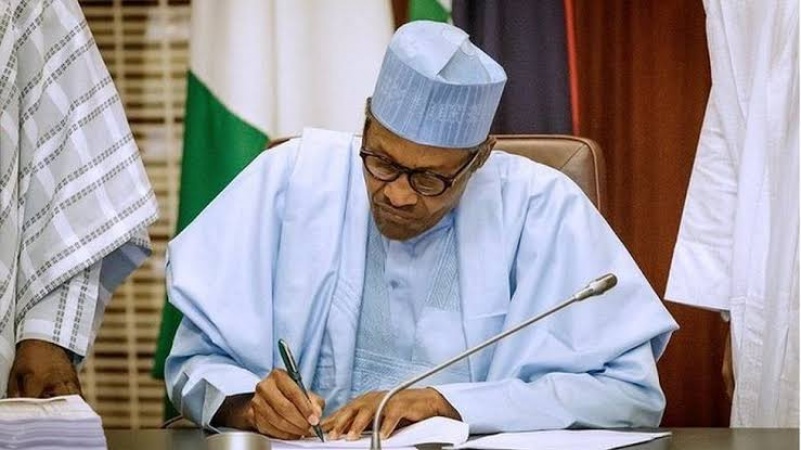
Recall, too, that when Buhari visited the family house of the late President Shehu Shagari to commiserate with them over the death of their patriarch, he didn’t have the presence of mind to write anything on the condolence register; he just signed his name and couldn’t even get the date right.

And he also appended his signature to a memo to then Senate President Bukola Saraki appointing two justices to the Supreme Court in which his first name was spelled as “Muhammdu.” People who are close to Buhari know he has (or used to have) an obsessive-compulsive urge to spell his name as “Muhammadu.” That he missed the misspelling of his name and appended his signature to it pointed to diminished sentience.

Plus, dementia also sometimes comes with a degeneration of the muscles, which explains why Buhari falls without explanation, as we saw during the 2019 campaigns in Lokoja and in Kaduna. His close aides who caught him when he fell in Lokoja didn’t seem shocked, which indicated that they were already habituated to it.

A 45-minute propaganda interview can’t erase all the evidence of dementia we see in Buhari.

Anyone who wants to believe that Buhari has no dementia and that he is the picture of perfect mental and cognitive health because he didn’t drool during a choreographed PR show called an interview is free to do so. But it takes nothing from the truth of his progressive mental degeneration and his unfitness to be president of a complex, developing country like Nigeria with no solid institutions to withstand a dementia-plagued president.

Nigeria’s oligarchs and the golden fish metaphor, By Osmund Agbo

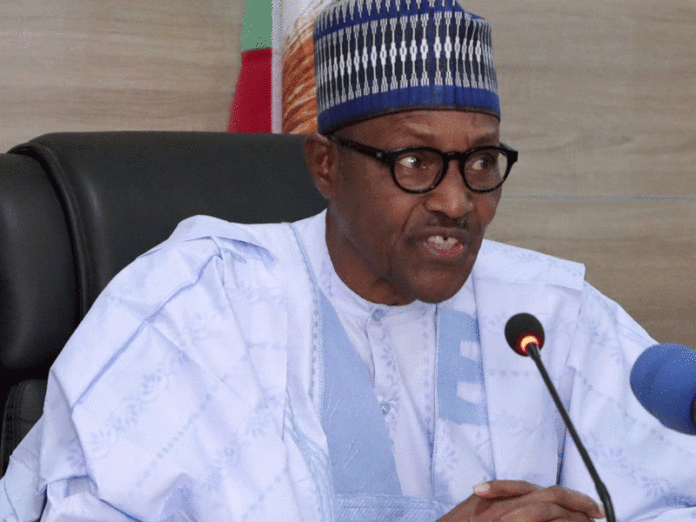
•President Muhammadu Buhari

Open grazing is another topical issue and most agree that it has now become an unsustainable practice. Opinion leaders drawn from across our geographical and ethnic divide now advocate ranching in line with best practices of animal husbandry that obtains all over the world. Even Governor Aminu Masari of President Buhari’s home state of Katsina, was quoted to have said that open grazing is un-Islamic and not the best for herders. The only little problem is that the oligarchs in control of the levers of power have no intention of listening to anyone but themselves.

Within the ranks of the Nigerian oligarchs, especially from the north, there seems to be this gross misconception that restructuring is some kind of cold-war the south is openly waging against the Arewa house. Or how else to explain Attorney General Abubakar Malami’s diatribe against proponents of restructuring. For many like him, that word is only but a smokescreen used to conceal a sinister motive which is to permanently wrestle power and resource control from the north and has nothing to do with the overall health and well being of this republic

But it’s not only with restructuring; even the issue of Boko Haram is another area where the fight against the deadly terror group is hampered by the warped perceptions of some critically important stakeholders. Part of the greatest impediment to defeating the insurgency is that some Hausa-Fulanis in the Moslem north see the fight against insurgency as some sought of religious war. 

Both President Buhari and his current Minister for Communication and Digital Economy, Sheikh Isa Ali Pantami, at various times have both been quoted to have made statements that seemed to suggest having soft spot for the terror group. “Our Muslim brothers did not deserve to be killed like pigs”, the minister reportedly said. And by Muslim brother, he meant battle-hardened Boko Haram terrorists. 

Just recently, Bukar Tanda, a legislative aid to Abdulkadir Rahis, the member of the House representing the Maiduguri Metropolitan Council, was booted out over his Facebook post about Abubakar Shekau. He was reported to have described the erstwhile blood-thirsty Boko Haram leader as courageous, saying he lived a life of a hero and died a true hero. Really?

The Nigerian house is being consumed by a raging inferno but instead of looking for ways to quench it, the landlords of Aso Rock are busy standing guard at the door with rifle in hand and shooting at some phantom targets. In the end, when the house gets razed to the ground, they will realise that, all along they have been fighting an imaginary war.

The biggest threat to restructuring is that humans generally detest any action that could potentially whittle down their power for any reason. This predilection for territorial protection is not unique to leaders of northern extraction but also shared with their southern counterparts. It doesn’t even matter that such action would in the long run serve their interest better or make way for a greater societal good. Except of course, if your are a Mikhail Gorbachev and in love with such fancy terms as Perestroika and Glasnost.

Humans naturally are about that power grab and even not long ago we heard the story of a certain Attorney General who advised his principal, an elected civilian president to suspend the constitution and roll out marshal laws. The chief law officer of the land urging the one who swore to protect the constitution to break the law. Only in Nigeria!

President Jonathan would have gone ahead with implementing the 2014 confab recommendation but instead kicked the can down the road, hoping to win the second term. We can only speculate what would have been the fate of our country had his government acted fast and decisively. Even Obasanjo before now was not a big fan of restructuring. In fact, a Vanguard newspaper article of July 8th, 2017 quoted him as being against restructuring, stating that what needed restructuring was the mindset of Nigerians.

Today most of the oligarchs resisting the needed structural changes to make Nigeria work cannot even travel back to their village, let alone spend a night in their stately but lizard-infested mansions. Instead, they have become unfortunate inmates in the high walls of their Abuja prisons. These people are so drunk with money, power and privilege which they traded with personal freedom and mortgaged their country’s future. Like the golden fish, they have fed fat on Nigeria till their stomach ripped apart and it’s easy to tell that these emperors have no clothes.

Dr. Agbo, a public affairs analyst is the coordinator of African Centre for Transparency and Convener of Save Nigeria Project. Email: [email protected]

The Ethnic Victory of 2015 And An Apology

By Moses E. Ochonu

It is now quite clear that what happened in Nigeria in 2015 was not a revolution but a scam of historic proportion. To be more specific, it was, as University of Texas Professor and Punch columnist, Adunni Adelakun, put it, a “tribal victory.” How so?

A core group of politicians and intellectuals from the Northern and Southwestern parts of the country successfully repackaged a former military dictator who had two years earlier been universally reviled as unelectable. A man whose only distinction up to that point was his draconian approach to governance as Head of State in the 1980s as well as his belief that repression and coercion represented an all-purpose solution to all of Nigeria’s problems.

How they were able to successfully re-inflict him on Nigeria and give the rebranded dictator purchase with Nigerians will preoccupy future historians who will extend their inquiry beyond Buhari’s own personal con in declaring himself a born-again democrat.

On the political side, the most recognizable faces of this ethnic coalition were Bola Tinubu and Nasir El-Rufai. On the intellectual side, there was an army of Northern and Southwestern intellectuals and learned folks who strategically but disguisedly lent their persuasive intellects to the cause and obscured its essentially ethnic character.

This ethnic collective then successfully coopted many intellectuals and politicians and youths from all regions and religions of Nigeria into the project, advancing it as a last-ditch effort to wrestle the nation from 16 years of the PDP’s predatory rule, never mind that the emerging coalition was animated and financed by disgruntled PDP members.

The ethnic battalion behind then candidate Muhammadu Buhari manipulated the naïve youths of Nigeria and the opportunism and naivety of intellectuals and politicians from other regions, harvesting their energies into the political effort that ousted Goodluck Jonathan. Their rhetoric of revolution, reclamation, and their fiction of integrity and ethical cleansing found a receptive audience desperate for change and thus willing to overlook the contradictory records of the messengers.

The core of the 2015 coalition remained decidedly ethnic in composition and ideology. The inner circle never believed in changing Nigeria. They only believed in changing its leadership. For the Southwestern elite, it was about getting back in power through the backdoor of a Buhari presidency. For the North, it was obvious: they looked upon Jonathan as a usurper, as the man who had purportedly taken their turn at the presidency. They wanted back in. This was the foundational premise of regime change in 2015. Everything else was a sophisticated marketing gimmick. But it was gimmickry at its most disarming.

Buhari had proclaimed publicly that late dictator Sani Abacha had not stolen any money from Nigeria and has not retracted that claim despite Nigeria taking possession of multiple streams of Abacha’s cash stash. In spite of that, and in spite of presiding over a cesspool of corruption and waste at the defunct Petroleum Trust Fund, the ethnic coalition settled on the theme of integrity as their point of departure for their campaign.

Even Buhari’s record of parochial insularity was magically transformed into a story of redemptive self-reinvention. He had learned from his failed previous effort to secure the presidency on the misguided premise that support from the north alone could deliver it to him, we were told. This presidential run, the ethnic propagandists claimed, was different from previous ones. They claimed that Buhari was cultivating a broad based national coalition, had shed his northern provincialism, and had embraced a cosmopolitan, ecumenical agenda.

And yet the evidence of Buhari’s dangerous, obstinate investment in parochial endeavors and claims was inescapable.

It was Buhari who said an attack on Boko Haram was an attack on the north. It was he who said Boko Haram was fighting injustice and that it was wrong to unleash the military on them while conferring amnesty and patronage on Niger Delta oil militants.

It was Buhari who encouraged Northern Muslims to vote only their kind. It was he who led a delegation of Fulani leaders to former Oyo State Governor Lam Adeshina, asking him “why are your people killing my people?” It was Buhari who declared that he would work for the implementation of Sharia, the Islamic legal system, across Nigeria in disregard of Nigeria’s plural religious heritage.

This was the same Buhari who ruled with an iron fist as military dictator, locking up journalists and critics and presiding over an inept and misguided pseudo-nationalist economic policy that worsened scarcity, drove up inflation, and killed economic ingenuity.

This was the real Buhari. But the ethnic coalition capitalized on disenchantment with Goodluck Jonathan’s corruption-ridden administration to claim otherwise or to cast him as remorseful for his past misdeeds, a wiser old man with a different temperament.

Many Nigerians outside the core ethnic constituencies of the coalition fell for this scam. The youths of Nigeria, betrayed by decades of misrule, of which ironically Buhari was a part, fell even harder. They went all in on the sexy message of change.

Ensconced in power, it did not take long for old, familiar Buhari to reemerge. Within a few months of winning the election, both his ethnic insularity and his governing deficits were on full display.

Even before he was sworn in, he introduced a new, quantified doctrine of 97/5 percent into our political lexicon, indicating that the Igbo, who in his reckoning supplied only five percent of his votes totals in the election, should not expect to be treated in the same way as the regions that gave him “97 percent.” The mathematical fallacy of 97/5 aside, Buhari signaled that he was the same old retired dictator whose only post-retirement claim to fame had been a series of insensitive and downright chauvinistic statements privileging the north and Islam above other regions and religious communities.

More reiterations of Buhari’s provincial insensitivity followed. Asked about the Igbo complaints of marginalization in a televised interview, Buhari screamed, “What do the Igbos want?” and proceeded to patronizingly lecture IPOB Biafra agitators about his role in the civil war and about how, as small boys, they had no understandings of the danger of war.

When Benue was attacked by armed herdsmen resulting in many deaths, instead of mourning with the Benue delegation which visited him in Aso Rock, Buhari paternalistically and insultingly admonished them to go and live in peace with their neighbors. He then followed it up by absolving the armed herdsmen of blame, saying that their grazing routes had been blocked. The coup de gracewas his declaration, repeated in a recent television interview, that more people had been killed in Zamfara than in Benue and Taraba states combined. This was a macabre, self-indicting comparison of questionable veracity and an insulting trivialization of deaths outside his natal Northwest zone.

Buhari’s problem is not merely one of cultural insensitivity but one of a lifelong immersion in the comfort of familiar ethno-religious surroundings and a concomitant aversion to associating, except when duty and ambition required it, with people, ideas, and influences from Nigeria’s other regions.

On the economic front, old Buhari reemerged with a vengeance as though he had unfinished business from his truncated dictatorship. As soon as he took over, he decreed a ban, 1984-style, on the importation of tens of goods and declared that the naira must be defended at all costs, including by imposing restrictions on foreign exchange and raiding reserves to prop up a currency weakened by falling oil prices and the resulting slowdown in the economy.

This was economic stupidity underwritten by Buhari’s old 1980s brand of economic nationalism, which sees the economy as yet another realm of national life to be tightly controlled, disciplined, and leveraged for national pride. In this backward, outmoded economic thinking, it did not matter that such a policy of tight controls in a monoculture economy is usually the fastest route to a recession. Predictably, Buhari took an admittedly weak economy into a severe, prolonged recession, with double digit inflation, 11 millions jobs lost, and thousands of bankrupt businesses as the outcome.

He had promised to never pay subsidy on petrol but to fix the refineries to provide access to cheap and abundant fuel. He reneged on that promise. Instead, he increased fuel price by about 70 percent and yet his administration now pays more in subsidy than the Jonathan administration ever paid when fuel sold for 87 naira a liter. By what mathematical logic is this subsidy figure possible when crude prices have tumbled? We are told that somehow, between 2015 and 2018, Nigeria’s fuel consumption jumped from about 9 million metric tons to about 15 million metric tons! When challenged to account for this abracadabra, the Buharists’ answer consist of two words: Next level.

Other promises made during the grand ethnic deception of 2014/2015 lay in ruins, disowned and disavowed by the president and his henchmen.

We are told that the Federal Inland Revenue Service now generates more than 5 naira trillion in revenue, and that the Customs for its part adds several more trillions to the federal treasury. However, in 2018, despite Nigeria making about 12 trillion naira from crude oil sales, at least 7 trillion from taxes and duties, and an undisclosed amount from non-oil exports, the country still borrowed 1.6 trillion naira to support a 2018 budget of N9.12 trillion naira!

This arithmetic sleight of hand is the latest evidence of the gargantuan corruption proliferating in Buhari’s administration. The difference is that much of this corruption occurs through the legal appropriations process.

But that’s not to say that it’s the only form of corruption. Buhari has not only tolerated graft, he even wrote to the national assembly in the case of his ex-SGF Babachir Lawal to argue his exoneration only to be trumped and shamed by the overwhelming evidence against the man. Although relieved of his position, Babachir has yet to be prosecuted in accordance with the report of the National Assembly panel that investigated his shady dealings. In fact, he continues to work informally for the president, boasting recently that he has unfettered access to the Buhari and is helping his reelection campaign.

Buhari superintended and approved the reinstatement of pension fugitive, Abdulrasheed Maina, and has failed to order and investigation into corruption allegations against his chief of staff, his army chief, and his minister of internal affairs — the last two accusations involving the acquisitions of properties overseas.

These are all evidence of the old Buhari reasserting himself and refusing to act according to the script written for him by the 2015 ethnic coalition. The selective morality, the exoneration of corrupt loyal allies, the bigotry and parochialism, the economic illiteracy, the absence of intellectual curiosity, the malicious insensitivity to Nigeria’s complex ethnoreligious mix, and the lack of a national frame of sociopolitical frame of reference. All these tendencies never went away. They were cleverly disguised behind the rhetoric of change deployed to harness the nervous, desperate energies of unsuspecting citizens in 2015.

This is a rather circuitous way of saying that Buhari’s ethnic coalition got away with arguably the biggest political scam in Nigeria’s history, managing to recruit many unsuspecting Nigerians into what they knew to be an ethnic agenda to capture power.

I was one of those who almost believed their pitch. I maintained a studious, skeptical neutrality until the last few weeks before the election of 2015, having previously declared that I could not support the profligate and weak administration of Jonathan for another term and that I had too many concerns about Buhari, based on his history. I interrogated the rhetoric of the Buhari coalition and pointed out the incongruity between it and Buhari’s own record, his history.

Then, when the election was weeks away, some of my social media followers urged me to get off the fence and take a stance because, in their words, that election was too important to be neutral.

I am ashamed to say that I allowed myself to be persuaded by these pleadings and my own emotional, a tad irrational, desire for Nigeria to chart a new course away from that path it was on. In this emotional state, I stated that as a diaspora Nigerian I did not have a vote but that if I could vote I would hold my nose and vote for Buhari, but only as a gamble for change since there was nothing in the man’s record to inspire confidence.

Mine was a tepid, reluctant, and half-hearted endorsement if you could call it that. It was a non-endorsement endorsement. But it still was a public declaration of reluctant hypothetical support.

Even for this weak, late, and qualified acceptance of a deeply flawed candidate, I am now ashamed and feel a need to apologize to my inner, skeptical self, and to my compatriots who are now groaning under the jackboot of the resurgent dictator.

I should have maintained my neutrality. As a historian and as someone who had written on Buhari’s extensive baggage prior to 2015, I should have known that it was almost impossible for an old man to leave his checkered past behind and reinvent himself in both temperament and capacity. I should have known that, as the popular cliché says, the past is usually a prologue to what to expect, what is to come.

In shedding my usual skepticism and critical distance, I became one of those who unwittingly joined and bolstered what has now unraveled to everyone’s notice: an ethnic coalition that produced an ethnic victory, leading to disillusionment among those who were coopted, seduced, or otherwise tricked into believing in the genuineness of the change movement.

I now know that Jonathan was not ousted for being incompetent, weak, or corrupt but for losing the support of Tinubu and the Southwestern political elite who consider him their leader. He lost the presidency because the North always regarded him as a usurper who was enjoying a presidential mandate stolen from them. When these two forces converged, Jonathan could not survive the resulting onslaught. Support from the countervailing ethnic constituencies of the Southeast and South-South was simply not enough to keep him in power. That is the story of 2015, stripped of the pretentious rhetorical nonsense.

Many of those who did not join the coalition for ethnic reasons have since deserted it. Others who remain in the camp have replaced their initial aspirations with opportunistic self-interest. This latter group is small, however. What remains of the 2015 ethnic coalition is largely the original ethnic nucleus of Southwestern and Northern elites — political and intellectual — united only by their thirst for power and its perks.

As for me, the lesson has been internalized for future referencing. I was never a Buharist in the traditional sense but I should have done more to puncture the case for him in 2014/15. More importantly, I should never have yielded to pressure to abandon my neutrality in favor of an endorsement of Buhari, however qualified and half-hearted that endorsement may have been.

I am sorry.

Professor Ochonu can be reached at [email protected]

TIPS