Home Blog Page 950

Nigeria’s unity and all the Iberiberism, by Femi Adesina

Which one is Iberiberism again o? What kind of English shall we not hear in this?

Well, the word is not regular English language, neither is it my creation. The copyright belongs to former Imo State governor, Rochas Okorocha, who created something being fast accepted in English from the Igbo word, Iberibe, meaning foolery, trickery, or stupidity. It is the act of being deceitful or untrue.

Okorocha engaged in neologism when he created the word Iberiberism, and used it to describe political foolery and trickery or stupidity.

Let’s divert a bit. There was another Imo manwho was a master neologist. His name was Chief Ozuomba Mbadiwe, man of timber and caliber, pillar and caterpillar, the political juggernaut. He would tell us that “come would soon come to become,” and other such ticklish expressions.

I once interviewed Chief Greg Iheanacho Mbadiwe, who regaled me with his father’s ability to create words. He said as a boy, he was struggling with another young boy in his father’s compound, not knowing that the father was watching with keen interest from upstairs.

When the tussle became too long, Chief Ozuomba Mbadiwe bellowed: “Iheanachooooo. Will you slap that boy, and let him be seconsaimabalism.”

Holy Moses! What does the word mean? You will search all the dictionaries in the world, including the ones that have not been compiled, and you will never find the word seconsaimabalism. It’s a creation of Chief Mbadiwe, just as Okorocha created Iberiberism.

Now, back to the main issue. The sabre-rattling about Nigeria’s unity and the possibility of disintegration has got to the point of Iberiberism. Some people have no other business than doomsday predictions of a crumbled, collapsed Nigeria, as if they actually fast and pray for that eventuality.

When Chief Olusegun Obasanjo was President between 1999 and 2007, they predicted that he was going to be the last President of a united Nigeria. It didn’t happen. When Umaru Yar’Adua came, they said he was too sick to hold Nigeria together. The country stood. Under Goodluck Jonathan, they said the man was too weak, and different components of the country would soon say, ‘to your tents oh Israel.’ Nigeria survived. And for six years under Muhammadu Buhari, they have not changed their songs. The Somaliasation of Nigeria was on the way. The Fulanisation of the country would be the final death knell. But Nigeria lives. It trudges on from day to day, month to month, and will surely survive.

Veno Marioghae (by the way, where is she?) got it right in her hit song of the 1980s, when she said:

If them thief our oil o

Even if them burn the oil o

(Nigeria go survive)

I say if them drink the oil o

No matter how them try o

(Nigeria go survive)

Our roots them strong for ground o

Ancestors no go gree ooo (Nigeria go survive)

The god of thunder and lightning

United shield Nigeria

(Nigeria go survive)


Nigeria go survive

Africa go survive

My people go survive o

Nigeria go survive.

Yes, sing it from Abeokuta to Kaura Namoda, from Isokoland to Brass, from Orlu to Nsukka, Nigeria will survive. To, therefore, continue to wail about disintegration is now bordering on Iberiberism. We need to change our tongue, and our song. Nigeria go survive.

Why do some people always dwell on the negative? They have been seeing nothing but negative for decades, but Nigeria remains sturdy and steady. Yes, countries do fail, collapse, crumble, but Nigeria will survive. Let them change from malediction to benediction. It will be well with this country.

Some fathers of the land will not fold their hands and see Nigeria go down. Fortunately, we have one of them as President now. The young Muhammadu Buhari spent 30 months in the frontlines as a young army officer, fighting the war of unity. And he has said it: we will not be around and watch Nigeria go down. Never. We will rather speak to insurrectionists in the language they understand.

And what of Olusegun Obasanjo, a civil war hero. Despite all that he has contributed to the current upheavals by his actions and inactions, words and bile, he says it is idiotic to wish Nigeria disintegration now. Good. But let us put our money where our mouth is. Let Baba mind his thoughts, and his language.

Last Saturday, as Nigeria celebrated Democracy Day, some people wanted to stoke protests, riots and destruction. Did the system allow it? Not at all. Should it have been allowed? Not when there is still law and order in the land. Only anarchists would set the country on fire in the name of Democracy Day protests. And it was sad, tragic, to hear some so-called activists asking the police to apologize to Nigerians, for not folding their arms, and allowing the country to go into a tailspin. Anarchists masquerading as activists. And they would be the first to show a clean pair of heels when things go awry, leaving innocent people to suffer. Kudos to our law enforcement agents for being professional. It’s the way to go.

There cannot be development without peace. Nigeria, despite severe security challenges, is taking giant strides in development, particularly infrastructure. President Buhari was in Lagos last week to commission Lagos-Ibadan rail project, a maritime security project, Deep Blue, costing millions of dollars, and to handover massive security equipment to the Nigeria Police. This week, he has been in Maiduguri, Borno State, to also commission landmark projects. Nigeria is making progress, despite all the odds.

Next year, the last full year of the current administration in power, the country, by the grace of God, will witness the commissioning of legacy projects. Roads, bridges, gas projects, many others. Why then would anybody wish the country death? That would be Iberiberism at its height, and such people should stop it. They should begin to speak peace, rather than discord, they should begin to speak the language of God, rather than that of the accuser of the brethren. Nigeria will survive.

Some weeks back, when I wrote that Nigeria was like the testicles of a ram, which only sways from side to side as the animal runs, and would never fall off, some idle hateful hearts deliberately attempted to turn what I said upside down, and were ‘dragging’ themselves on the now rusticated Twitter. One simply ignored them. And to show that I stand by what I wrote, I repeat it again: “This country is like the testicles of a ram, which gyrates from side to side, as the animal runs. However fast the speed of the ram, have you ever seen the testicles fall off? Or when a woman runs, and holds her breasts, is it for fear that those tender parts will fall off? It never happens.”

Nigeria will survive. The polity will endure. And the component parts will live together in amity and brotherhood. Any other option is Iberiberism.

*Adesina is Special Adviser to President Buhari on Media and Publicity

Source

Samuel Zibiri on life, work and excellence

By Lillian Okenwa

He bustles into the office reception that Friday morning with a breezy smile apologizing that he got the timing for the interview mixed up. With a note of apology in his voice, he tells me to give him a little time to settle down in his office and pray. It wasn’t long before I was ushered into his warm and very unpretentious office. In his usual hearty custom, he stood up to welcome me noting that it’s been years we met since my ThisDay Newspaper days. After a brief chit chat we launched into the business of the day.

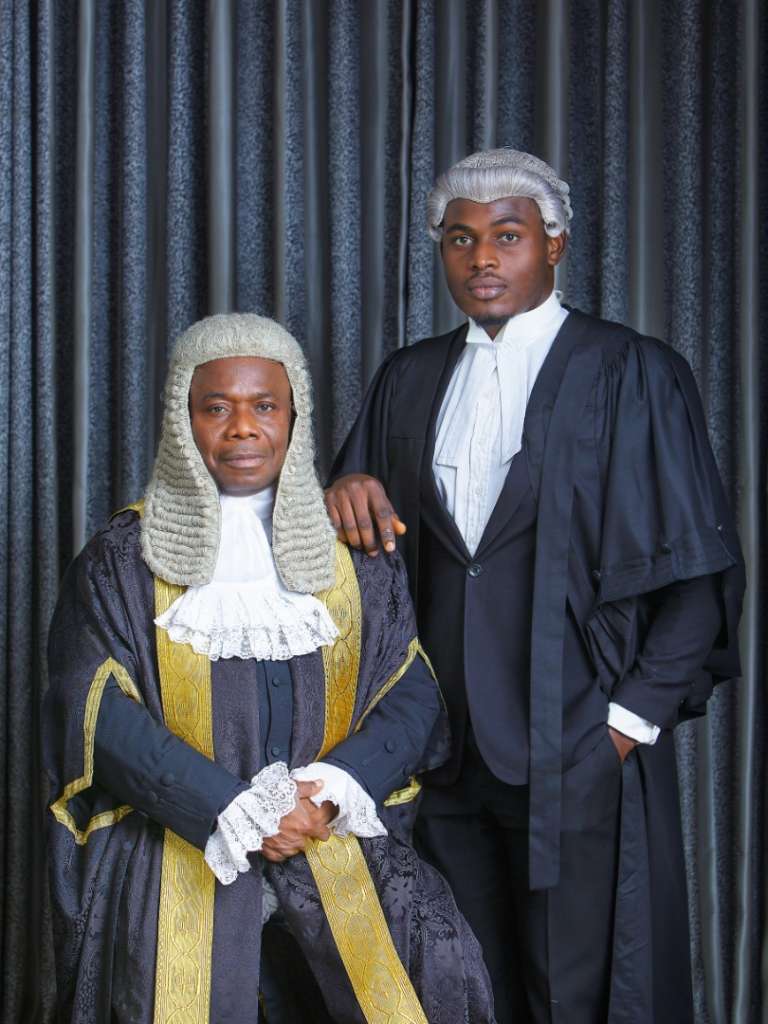
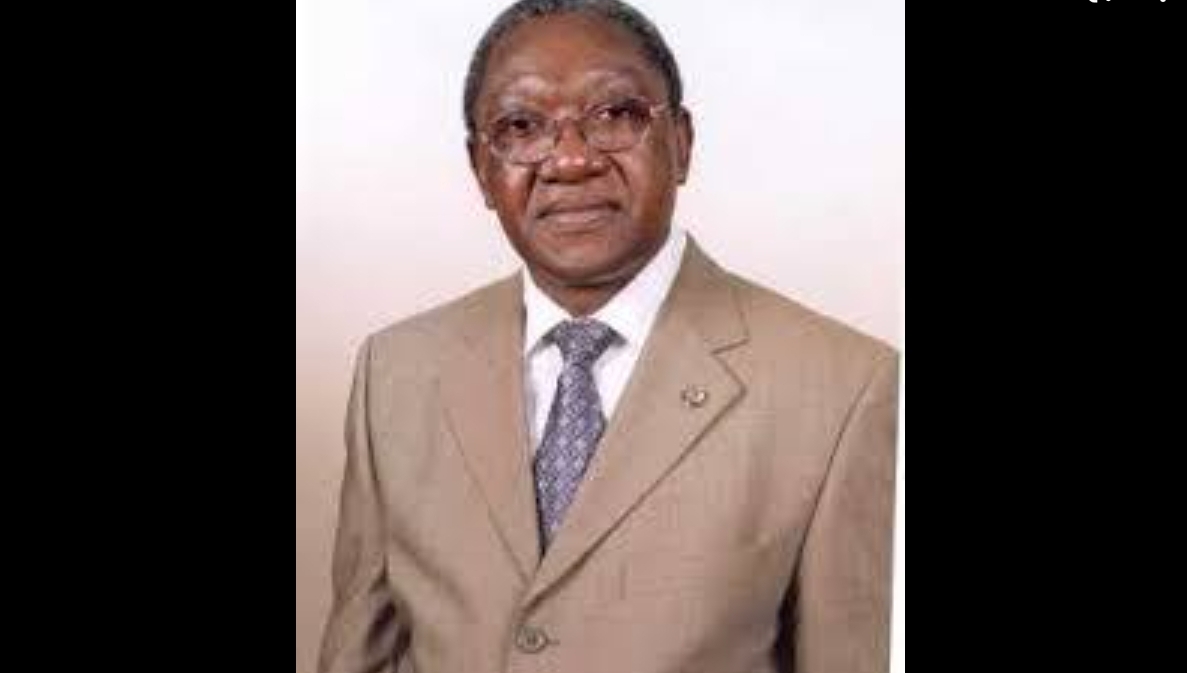
Samuel Zibiri, SAN

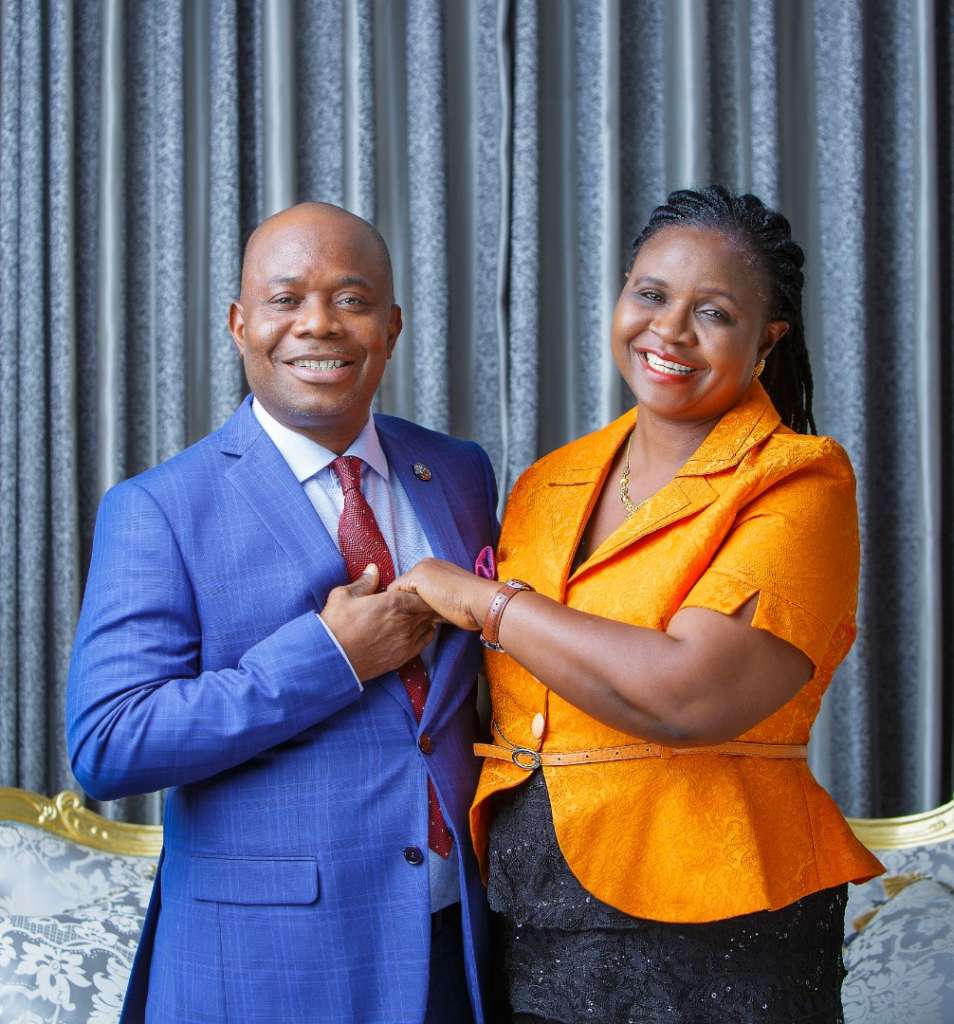
Samuel Otseilu Zibiri Senior Advocate of Nigeria, (SAN), an Abuja private legal practitioner was called to the Nigerian Bar in 1987. He graduated from Ahmadu Bello University (ABU) Zaria in 1986 and did the mandatory National Youth Service in Abeokuta, Ogun State with Chief B. K. Ashade. After Youth Service, he joined Cosmic Chambers in Minna, Niger State in 1989 where after a few months, his principal set up a branch for him in Kaduna to manage. Six months later, there was an opening in the Abuja office and he was transferred to Abuja to head the office.

In the 1980s, the property market in Abuja was in full bloom. Most lawyers in the city were into the business and so by 1989 when Zibiri came to Abuja, very few lawyers were in active legal practice. But he was determined to be different. “I remember Karina Tunyan, SAN. We call him the doyen of Abuja lawyers because most junior lawyers run to him. Whenever I had a problem I went to him, so basically he was my mentor. I stayed in Cosmic Chambers for twelve years or thereabout. Since then I have been in private practice.”

His toughest case

The case of Charles Okah, a former militant leader, sentenced for life after being found guilty of plotting the 2010 Independence Day bombing that left at least 12 people dead in Abuja, remains the most difficult case Samuel Zibiri ever handled.

“FRN vs. Charles Orkar was my toughest case, and the case was quite technical. The public had already convicted him because of circumstances behind the case itself. We had every reason as far as I am concerned for him to have been discharged and acquitted, but on a second thought I have my reservations.

I became so close to Charles. He was like my brother and I preached to him. I didn’t know if he believed in God that time, so I was like a mentor and I felt bad with the judgment. I did it probono and I wanted going on appeal but it’s like the family did not appreciate what I did so I didn’t want to have any problem with the family so I withdrew from the matter.

I put in my best but maybe for lack of understanding, he didn’t trust any lawyer. He said he needed an SAN to do his matter because an SAN was prosecuting. But Legal Aid Council assured him and six months into the matter I became an SAN, so he became very relaxed. But that’s not the issue. I felt a lot of things were there that would have gotten him released. I don’t like talking about cases but I was pained.

Zibiri, SAN

Some challenges in litigation

“You know the Evidence Act said other than the primary evidence which is the original, you cannot tender any public document that is not certified. The problem here is that, let’s use FCDA for example; you sue FCDA and tell them to produce the original document. They will not. Even to bring the certified true copy, they still will not. If you issue a summons, they’ll appear in court. But tell them to produce the file, they tell you they don’t have the file. What then do you do?

“The Evidence Act states that when you give a notice to a person to produce an original document and he fails, you can tender the photocopy. But most judges have a problem with that and say it does not apply to public documents. That has been a major problem and frustrating. I remember a matter I had before the Late Justice Jude Okeke. I informed him that I have issued FCDA notice to produce a document but that they didn’t comply. I wanted to tender a photocopy in accordance with the Evidence Act. Unfortunately, he insisted that it’s not the case with public documents. Though I had the photocopies, I couldn’t get them certified. We summoned FCDA but they didn’t provide the file. That was how I lost the case.

R-L: Zibiri, SAN, Gordy Uche SAN, Chief Mike Ozekhomhe, SAN, Dr Wole Olanipekun, SAN  and Patrick Okolo, SAN

 “On ACJA; it is a good thing when ACJA provides that criminal cases should be treated day to day. But imagine if we treat criminal cases day to day at the detriment of other cases. Actually some judges enforce it. Often you see lawyers withdrawing from the matters because other matters are suffering. These are some of the little challenges we are facing. Others are natural. The issue of delaying justice except all judges become computer literate, the hand writing is tiring and some judges consider it as double job on them because after taking those notes they will go home and look at them.”

Becoming an SAN

Unlike many lawyers whose ultimate dream is to become SAN, Samuel Zibiri didn’t see the importance. It took a jolting experience to spur him into action.

The SAN

“Actually I never had the intention of becoming Silk. A lot of people thought it’s political but I did not consider it as political. I don’t get into politics. I just face my work. But my opinion about it changed one day. Someone introduced me to an organisation to apply as one of their external Solicitors, so I went there to submit my CV. The man in charge looked at it and said I was qualified but that they only give briefs to SANs. That challenged me. I always believed that not being an SAN does not stop you from excelling. It’s all about knowing the law but, that was a challenge to me. From that office I went straight to the Supreme Court to get the guidelines on becoming an SAN. When I returned to the office, I instructed my secretary to open files for all Supreme Court and Court of Appeal cases. When she did, I realized that I was even qualified. So I made the first application that year (2011) but I was disqualified after office inspection. I wasn’t told the reason though.  The next year I applied but there was a professor from my state who was my senior and it was given to him. The following year, another colleague who had been applying for seven years got it. It was at my fourth attempt that I got it, which means if I had tried earlier on I would have gotten it. 2015.”

Early years

Zibiri was born in Chachanga, Niger State on 26th May, 1963. He attended LEA Primary school at Gwari road, Kaduna. “I grew up with my elder brother in Kaduna. My father had 20 of us. It was a polygamous home. My mum had eight while my step mum had 12. I should be number nine or 10 over all but the 5th of my mother’s.

A Younger Zibiri

“I went to secondary school in Edo State. St John’s College in Edo state. Then I came back to the north, attended School of Basic Studies (SBS); went to ABU Zaria where I studied law and the Nigerian Law School. Since then I have been in practice. My late principal during my service year, Chief Ashade, gave me the opportunity to learn because he had a lot of experience. He was a retired magistrate and he had a lot of experience in land matters. Funny enough he didn’t look at me as a Corps member. He was giving me assignments. As a Youth Corper, I was going to Court of Appeal. What he does was that in the morning he would come and say, ‘lawyer today you would go to court’. We had a rooster in the office for all cases and one must have studied all the files before then. I learnt it from him.  Every Thursday in my firm, the rooster must be out, and I ask the lawyers questions on Friday to ensure they have studied it. We hold conferences and all participate so in case Mr A is sick, Mr B can handle the case.

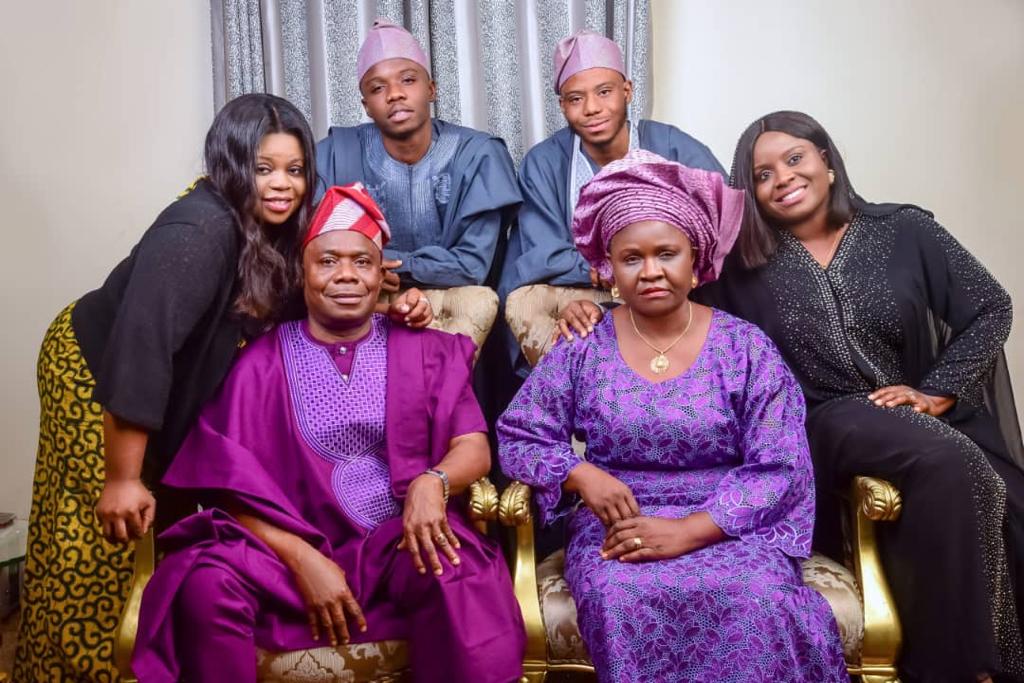
The Zibiri family

“I also learnt that in some offices juniors don’t sign processes. My juniors sign processes. I allow them to handle files. It’s all about trust. Nobody will ask you to show your credentials before giving you a brief so I allow them access. I equally, assign clients to them. When they finish discussing, they revert back to me. Sometimes they do the negotiations and come back brief me because they know how I charge. They even know how much I charge.

“During the lockdown, I learnt some lawyers were laid off, but I took it as a challenge and trusted God and we were paying salaries. It might interest you to know that during the lockdown we increased their salaries to meet up with the transport fare. We have an office car that conveys staff to work daily but for those that could not meet up, we gave them transport allowance in order to pay for the extra space as a result of social distancing.

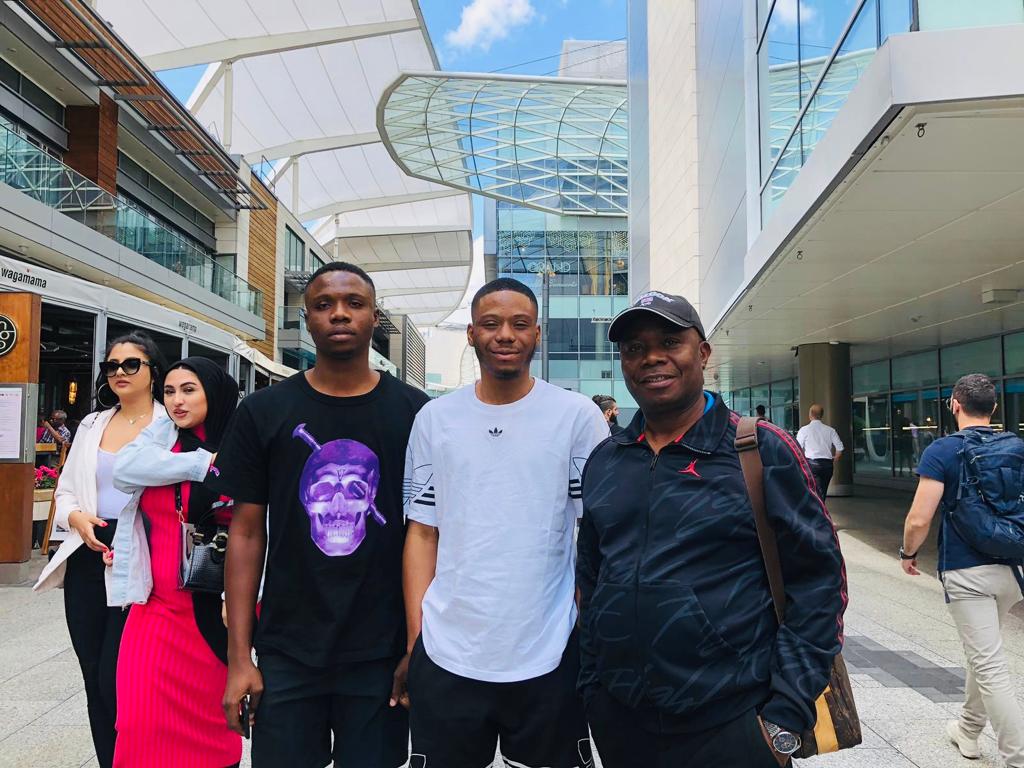
R-L: Zibiri, SAN, sons Manasseh Zibiri who just wrote his LLB exams at Afe Babalola University and Miracle Zibiri an Engineering undergraduate student at the same university.

There’s this gate man who has been with me for a long time. When he got married, I needed to help him so we promoted him from a gate man to cleaner so as to be able to see his family. One day during our office fellowship which we have on Fridays in the office, he gave a testimony expressing gratitude to God for this Chambers because his children are always the first to pay their school fees. I felt touched. It means is that, that N40, N30 you pay your staff is something. I always think that if I lay them off, how will they cope with their families? No staff was retrenched in all this and God is still blessing us.”

Money’s not everything

This learned Senior Advocate who describes himself as a devout Christian said he “operates side by side with the Word of God.”

“Let me give you an instance. There was a case I handled in Sokoto. I didn’t start the case and it really looked bad. I took it up, did the necessary amendments. We lost at the lower tribunal but despite my client’s doubts and worries we won all the way from the Court of Appeal to the Supreme Court. So there are times when losing a case is God preparing to bless you. The only challenge to me is when a case takes too long. In some cases I use my money to finish it, because I don’t review my fees once I take up a case no matter how long it takes. Even when I become an SAN I maintained my fees for my regular clients except a new brief. I don’t do consultation fees.

“I always tell my juniors money is not everything.  For instance when my daughter who is a medical doctor in Canada fell very ill and I could not immediately go to Canada. It was people I assisted while they were here in Nigeria that helped her. My friend in Switzerland, someone I had helped went all the way to Canada, took her to UK where she received the requisite treatment and recovered. This shows it’s not about money. For me becoming an SAN is not about making money. It’s about touching lives.”

Lawyers in the family

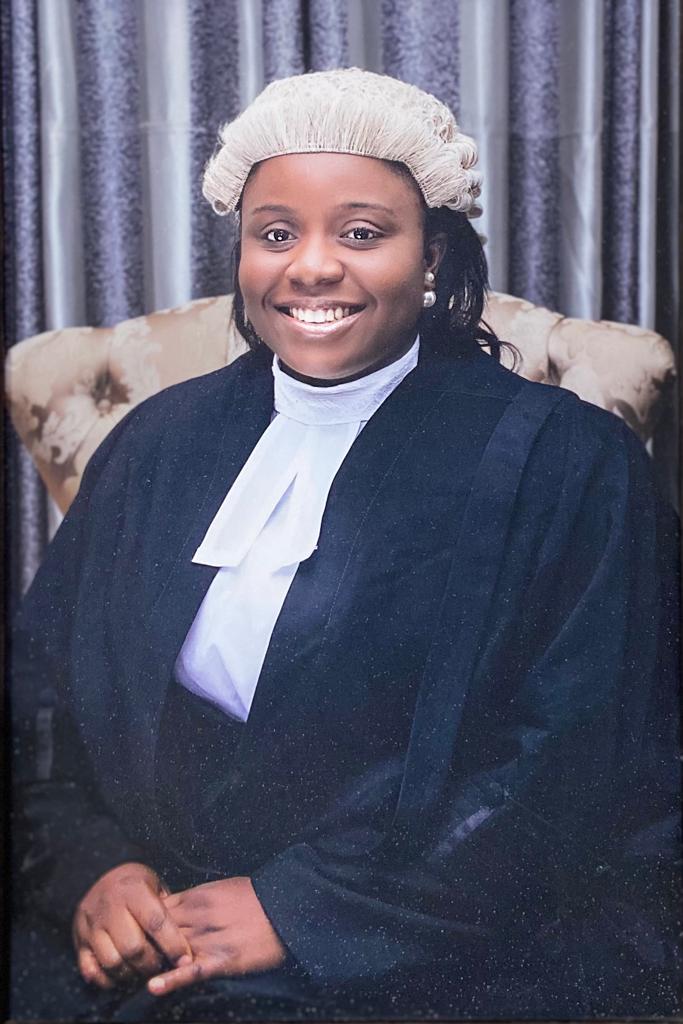
Daughter, Mrs Samvina Amusa Alemoh nee Zibiri

“My first daughter is a lawyer. She was called 5 years ago but does not practice. She works with a government parastatal.  My first son is studying law at Afe Babalola University and in his final year.

With nephew Michael Isokpehi

Then I have a nephew working with me. He was called in 2019.”

Advice to upcoming lawyers

“When you come into the legal profession, and I say it to junior lawyers in the law firm, those that come for internship, and Youth Corps members. Money is not everything in this profession. When you build your profession money will come. If you put money first you will run into trouble. I have a lot friends who from the beginning were driving SUVs; who were keener on chasing money at that time. Now they want to come back to the profession. I think we should be rooted in the profession first. I tell juniors that if you wake me from sleep and tell me to draft an agreement, I can do it by heart. This is due to constant practice.

“Another thing is tutelage. Some of our junior lawyers are in a hurry. I stayed in Cosmic Chambers for 12 years. Some of my colleagues were telling me to start my own practice. I just told them that at the right time I would. I just felt I needed the experience and I was grounded. I served my principal like no one could do and when it was time I left. That is why some people will start their office and they cannot draft simple pleadings. To me, the least period a junior should stay with a principal is 5 years. When I started my practice, my principal did not pay me salary. Whatever I generate at the end of the month I was paid. I remember I was once paid 500 naira. My foundation was favourable though tough. I remembered I would go to the secretary and ask her for 100 naira and that would be what would sustain me.

“On the other hand, some junior lawyers are not trustworthy. One for instance printed my office receipts and was using it to divert business from the office despite the fact that I don’t delay salary. I pay on the 28th of every month. He was collecting money from a client and issuing the receipts he printed. On top of that, he was not even doing the job but he was eventually exposed.

“I didn’t do that to my boss. My boss liked me so much that he didn’t want me to go. As the Abuja branch grew, most clients didn’t know him. But then I am a believer and don’t believe in cheating people. When I left, I wrote to the bank in which I was a signatory to and informed them I have resigned and ceased to be a signatory. I left without removing a dime or any file.

Mrs. Samuel Zibiri SAN and Mrs Victoria Zibiri

My wife would say don’t touch another person’s money.

“Meanwhile someone gave me a computer to start with. One day a man walked into the office and said someone referred him to me. He wanted me to do an agreement for him. He asked me the charges. I didn’t even know how to charge so I just told him anything and the man paid me N500, 000. I didn’t sleep that night.

“I tell my juniors if after 5 years you are not able to start your own office, then you are not serious. There is none that worked here I don’t communicate with anymore; even the one that printed my receipts.”

The past is the way forward: Ireti Bakare Yusuf, Fola Fagbule discuss the making of Nigeria

Did you know that Usman dan Fodio educated his daughters? And that Nana Asmau Usman wasone of the leading persons in her father’s court? Did you also know that Lugard was overly propped by the media, no thanks to a newspaper editor named Flora Shaw? In this conversation, Ireti Bakare-Yusuf, theatre producer, award nominated- documentary film-maker, feminist, radio & TV broadcaster began the maiden journey of her show, Danfo Conversations on Nigeria Info – 99.3 FM with Fola Fagbule, co-author of the book: Formation- The Making of Nigeria, From Jihad to Amalgamation. In this extremely revealing journey Ireti and Fagbule took co-travellers to fascinating points in Nigeria’s history as captured in the book.

Formation: The Making of Nigeria from Jihad to Amalgamation | Rovingheights  Books

Ireti: Uthman Dan Fodio led the Fulani jihad back then. He had such large impact on the shaping of Northern Nigeria. We start from 1904, and then we go forward. There was a particular woman who was part of the jihad; Nana Usman, who I would like us to talk about.

Ireti Bakare-Yusuf

Fagbule: Prior to the formation, the caliphate was multiple city states that spoke the same language; the Hausa language. And they have similar traditions and culture. They also had similar religion, in terms of Islam, but they were fundamentally independent city states. The first time they became a loose federation was during the jihad that was led by Usman Dan Fodio, which started in 1804.

We talked about that jihad because if those states had not been consolidated into Sokoto Caliphate, there would not have been an entity for the British to come in and conquer and utilize as an administrative frame work to use as Northern Nigeria. So we talked about the origins of the Fulani Jihad, about the key protagonists, the battle that happened, the political environment, and we talked about the impact on the ordinary people.

Ireti: Tell us about Usman Dan Fodio, his family, what he was like. We’ve all heard about him but when we look back on history, we will like to know about the character of the person.

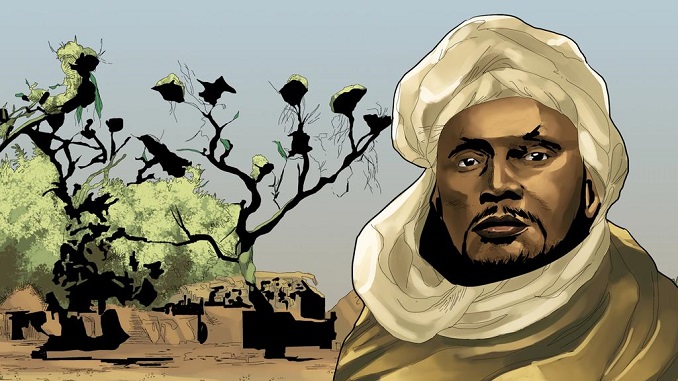
Fagbule: He was from what you will today call a middleclass family that were part of the elite class in one of the old Hausa States called Gobir. He was like the most educated. He learned the Koran from a very young age, reciting it at home with his parents. His father was a very educated, respected, learned person. He came to be known as: “Usman the son of the Jurist.” It was because of his father who was a well-known, well-educated individual in Gobir. And so he learned the Koran at home and then continued his study of Islamic jurisprudence and understanding of the history of Islam prior to Caliphates and Emirates elsewhere in the world.

Usman dan Fodio

He had understanding of the essence of the religion, and the meaning of Sharia and all of that. Then he began to make use of his knowledge to speak to others and to preach in his neighbourhood and to gather followership. He was articulate. He was eloquent and he had a lot to say. He was a charismatic preacher who built up a followership, the same way you will find charismatics even today. He began to build up a populace. People who admired his lifestyle and what he had to say about social justice of the inequalities and injustice the people were facing in the Hausa City States.

Trade and Investments, a way out of Nigeria's economic troubles - Fola  Fagbule | Nairametrics
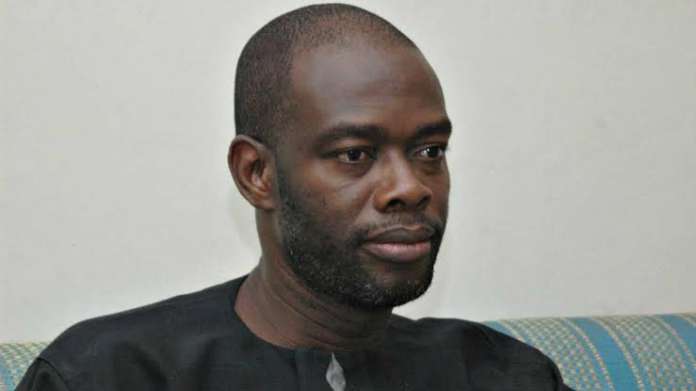
Co-author, Fola Fagbule

He began to grow and became so notable that even the ruling elite and the kings of the state in which he lived wanted to meet and spend time with him in their courts. He was providing advice to them. As it turned out, he was quite strict and rigid to his adherence to Islam and he was focused on following the pure Islam, which was not the case with the ruling elite at that time. And so he fell out over a period of time with the king of his country and he departed from the court. Eventually, tension began to build up between his followers and those of the traditional rulers in the Hausa states. Since he was Fulani by ethnicity, a lot of his supporters and followers were amongst the Fulani elites in the state. They were among the merchants and the educated class, the ones who had some means and were among the important people in the society. They began to probably see an opportunity to take over the states.

Caller: You’ve been talking about Usman Dan Fodio, of the Jihad wars and all. Is the war still on in Nigeria or is it still going on under a different guise?

Fagbule: It’s an interesting question. Part of the reason we wrote this book is because we want people to understand the beginning of things. One of the quotes that we like of Chinua Achebe says: “You have to know from where the rain began to beat you, if you want to get dry.’’ It’s important to understand where the rain began to beat you in the first place. We wanted to go back to the beginning, and it is true that many of the crisis and the conditions we have in Nigeria today began in pre-colonial Nigeria. We talked a lot about crisis, about access to water, access to land, access to grazing fields and so on and so forth, that continue to disturb us today, and many of these had their origin in pre-colonial Nigeria, the formation.

Ireti: We’ve been talking of Usman Dan Fodio. Let’s talk about Nana Asmau Usman.

Fagbule: She was one of his daughters. She was well educated. She was very important and one of leading persons in the court of Usman, son of Fodio, who became the first Caliph of the Sokoto Caliphate. She was extremely important in the area of education; women education in particular. She was a writer, an author and a custodian of a lot of the history of the caliphate. In fact, a lot of the information we have today, we only have because of the archival work that she did. A lot of writings that she put together. She was an extremely influential figure in the early Sokoto Caliphate. We describe her and her husband as the “hands of the king.” They were very important in assisting the king in ruling a very large state, which was the largest state at that time that existed in this part of the world.

ThrowBack Thursday: Nana Asma'u – The 19th Century Scholar Who Became A  Forerunner of Gender Equality • Connect Nigeria
Nana Asmau Usman

Ireti: Is it safe to say, Usman Dan Fodio was a male feminist back in that time? Because people say we don’t have feminists in Nigeria at that time and here we are talking about Nana Asmau who was very educated and who went about educating and empowering women with knowledge.

Fagbule: I wouldn’t go as far as calling Usman Dan Fodio a male feminist. He certainly did have what you would call liberal views at that time about the role of women in the society. At that time it was not always the case that people understood the importance of the fact that women ought to have to have the kind of roles in the society as anyone else. So, for example he gave the women education. Several of his daughters were educated. As we point out in the book, his only requirement was that male and female sat separately, while he taught all of them at the same. So you can say liberal attitude for the time, but I would not call him a feminist.

Ireti: There is a verse ‘Buhari versus Atiku.’ You said the first contest between two men named Atiku Abubakar and Muhammadu Buhari over the highest office in Nigeria, took place in 1837 following Sultan Bello’s death. Later, Atiku came out on top, succeeding his brother as the Sultan of Sokoto.  

Fagbule: To this particular fact, we owe it to Feyi’s (co-author) eyes for spotting this in the many history books we were reading. We found it as an interesting fact that two individuals with the exact same names had vied for the highest office in their country which was to become the 2nd Caliph in the Sokoto Empire in 1837 and Atiku won that. It is a very interesting coincidence for the names.

Feyi Fawehinmi | The Guardian Nigeria News - Nigeria and World News — The  Guardian Nigeria News – Nigeria and World News
Co-author Feyi Fawehinmi

Ireti: Can you suggest ways our younger generation can preserve their history?

Fagbule: I think it is easier for history to be preserved these days because of social media and a lot of work we’re doing is being recorded real time. But that’s not sufficient. I think we should be deliberate in curating the experience of the present generation. A lot of work needs to go into that. We need culture curators; folks who are attentive to study the way things are changing, why it is changing, how things are changing. And the thinking of young people is influencing the evolution of the society. I think that’s a huge amount of work.

Ireti: What effect does the removal of history from the school curriculum have on the Sore Soke (speak louder) generation? (Yemisi Ransome Kuti sends in a message) Please ask the author what is the effect of climate change in Nigeria particularly with reference to the current unrest around Fulani herdsmen?

Fagbule: We wrote a bit about her ancestor – Olufunmilayo Ransome Kuti. It was fascinating just tracing their evolution as a family from way back. To her question, it’s an interesting question. One of the things we spotted in The Formation, is the state of Lake Chad in the 19th Century and we did quote some first-hand account of what the aquatic environment was like on Lake Chad when it was visited by foreigners for the first time sometime the 1800’s.

We also talked of the impact of the beginning of desertification even at that time, in the Sahel region, from the Sahara all the way down to the middle of Nigeria. We talked about the impact of that on resource availability, on the communities, crisis in the communities. That crisis didn’t begin today. That’s a part of history of Nigeria and it has accelerated obviously with climate change. It might continue to accelerate not just with climate change, but with urbanization and the change with the structure of the economy from being focused on agriculture to other means by which money can be made and exports generated. The problem is multifaceted. It’s not only climate change, but the economic structure of the country.      

Ireti: When people talk about the Fulani herdsmen issue right now, if you mention climate change, the cause and effect, people tend to dismiss it. Can you bring that in as a historian, having written this?

Answer: I can only talk about what we came about in history. I am not an expert in security matters or what is happening in the North of Nigeria today. I can’t speak specifically on that but I do know that from what we saw in the history there were indications of the beginnings of this kind of crisis. I always say that it’s not one thing. But it’s not and it’s always dangerous when you oversimplify something and call it the result of just one factor. Because there are many factors including, governance and economic structure which I mentioned earlier, including historical antagonism between communities and so on that have played a role and are playing a role.

Ireti: Let’s talk about the chapter you named the “Glorious Incompetence.” I will read some few lines. “Early in December 1901, nearly hundred years after the first white man appeared on the Niger, the first invasion of Biafra began. More than 80 heavily armed Europeans organized into four separate columns, supported by more than 2100 black equipment carriers, and 1550 soldiers commenced an expedition into the heart of the densely forested enclave, hinterland adjacent to Eastern bank of Niger….”

British Vs Igbo: The Worst Mistake Igbos Made That Caused Their Defeat  Against British Soldiers - Naturenex News

Fagbule: We called this the first invasion of Biafra, obviously acknowledging the subsequent invasion of Biafra that happened more than sixty years later. We find this very interesting because what had existed in that part of the country prior to this invasion were independent communities living in relative independence; in relative isolation, from the rest of the country, and they had lived in that manner for hundreds of years.  They have a highly developed cultural system by which they operated. They had their judicial system, they had their oracle. The Arochukwu oracle was extremely important. They had a system of government that was dominated by the Aro confederacy and they existed for hundreds of years. They were extremely influential in the slave trade. We described the state of affairs in the Igbo country. This was the first time outsiders were forcing their way into the country. So we talked about the back story of how that invasion was possible, what made it possible; the economic and whole factors that affected the situation, the character of the individuals particularly the British administrators that were making the decisions to invade this previously independent country.

Lord Lugard and his dirty shoes | The Guardian Nigeria News - Nigeria and  World News — Opinion — The Guardian Nigeria News – Nigeria and World News
Lord Frederick Lugard

We called them the ‘Glorious Incompetents’ because a lot of their decision making were extremely poor. A lot of the things they did were quite unnecessary and considered quite unnecessary even by contemporary observers. It’s not just about Feyi and I. Reports and enquiries by superiors, contemporaries and watchers questioned their actions. So invasion of Biafra, Benin Empire, Benin City was one of those we talked about. We focused on how disastrous those invasions were and how terribly incompetent a lot of their actions and decisions were.

Ireti: I’d like you to talk about the Oyo Empire and the Desirable or Undesirable Fredrick Lugard.

Fagbule: Wetalked about the Oyo Empire just the way we talked about the Caliphate because it was an important existing organization that influenced the structures of modern Nigeria. In fact, what you had in the Sokoto Caliphate was a consolidation of previously independent people that influenced the creation of Nigeria. The case of the Oyo Empire was the disintegration of a previously centralized governing authority into multiple competing powers in the Yoruba country. All these influenced Nigeria in the evolution of British influence. We talked about the spectacular secession of Afonja from the Oyo Empire. Of how Afonja the ruler of Ilorin, seceded from the country that his ancestors had helped to build; the economic and political factors that led to that secession. We talked about Ilorin, the most powerful state, besides the Oyo Empire at that time, how that secession triggered a huge crisis across all aspects of Oyo Empire. If you think about it, a most powerful sub-state decides to go on its own, not only decided to go on its own, but decided to ally with people from another country. It has a huge impact on your ability to remain in control of the places, that you previously controlled and that’s exactly what happened to the Oyo Empire. It disintegrated and there was a lot of infighting and wars, and ultimately Ilorin itself, which had aligned with Sokoto Caliphate in order to wrestle itself from, Oyo rule, was itself dominated and incorporated into the Sokoto caliphate.

It became one of the last places to be added to the Sokoto Caliphate alongside the Nupe later on. So, we saw how that the disintegration of Oyo led to the evolution of a city state called Abeokuta, who were previously themselves subjects of Oyo, but became independent after the secession of Ilorin, and we saw how they quickly set up themselves to be allied with the British because it was extremely important. It was an existential issue for them. They were surrounded by enemies in Dahomey, enemies in Oyo, enemies among the Ijebus. So if they were going to survive, they needed allies with a very strong foreign power and the British fulfilled that role for them.

Ireti: One of the things that I love in the book is how you talked about trade; the three types of trade that took place. The human trade that took place in 1770; the palm oil trade which is 1870 and today’s crude oil which was found in 1917. Where do we go in 2070? But before we even get there, let’s talk about Lugard.

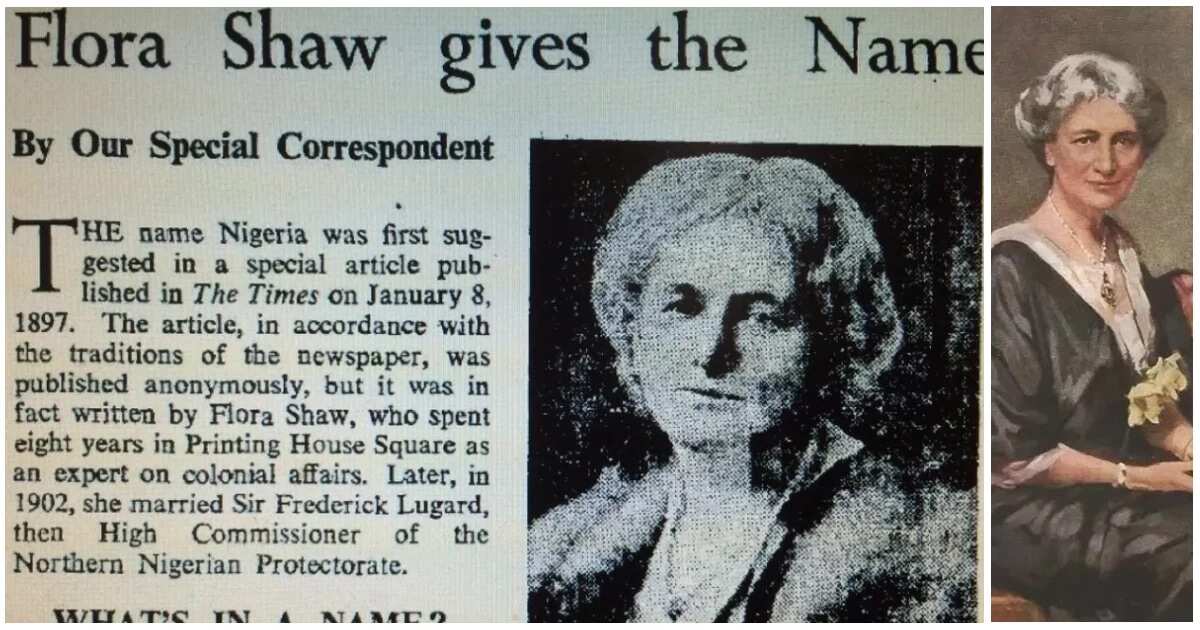
Fagbule: Lugard was a British administrator who in our view, has gotten far more credit than he deserved as far as the Nigerian story is concerned. The reason for that was that he was married to a Newspaper editor named Flora Shaw. She was an extremely important and influential person in the UK, in the British media system. She was highly connected to a lot of people, she was friends with George Goldie, who was the one who employed Lugard to come to Nigeria in the first place. She was a lover of George Goldie as we pointed out in the book. She was very close to Winston Churchill, who at that time was a very young, upcoming politician in the British politics. She was very close to all the leading players and so, because of this and partly because of his own strong and stubborn character and the fact that he was a relentless self-promoter, Lugard elevated himself into, in theory of being the most knowledgeable person about Nigeria and all things about Nigeria, as far as the British were concerned. And then he burnished those credentials when he was sent out to do something called the “West African Frontier Force.” He burnished his credentials by being a very strong, disciplined soldier. He was also a good writer. He wrote about everything that he did. That was also very good for him. When he ultimately was given the support and mandate by the British government to go and take over what was historically a private company called, the Royal Niger Company in modern day Nigeria, he went there and from his own initiative began to conquer adjacent States; previously independent states like the Sokoto Caliphate. 

He was quite an ambitious person. He was an imperialist and believed that it was a their right to conquer anyone that they could in that area. And so, he did conquer the Sokoto Caliphate and created the country that became known then as Northern Nigeria, and that became his most important achievement until the time in his life. We talked about how ultimately he was removed from northern Nigeria by the actions of the indigenous people who revolted against British rule. And we talked about circumstances that led to Lugard’s departure from Northern Nigeria. But because he was such a relentless self-promoter and had an influential wife, he continued to be relevant and ultimately, when the decision was made to consolidate and form a country that is called the protectorate of southern Nigeria, to amalgamate that with Northern, the decision was taken to appoint him as the individual who would do that. He came back to Nigeria after a period of time as the governor of Hong Kong. And then we talked about the rest of his career and how he was removed from Nigeria for the second time by a strong opposition, a violent opposition to his rule in Nigeria. So we tried to re-contextualize the life of Lugard in Nigeria, because we did think that he got more credit than he deserves in Nigeria.

Ireti: An argument came up on twitter about how it was flora Shaw who gave the name Nigeria to Nigeria. How did we end up with the name?

Fagbule: Nigeria is named after the River Niger. I think that we are clear and that it is not debateable. The question is – how did Nigeria get its name? Flora Shaw was the first person in a newspaper article that she wrote in the late 1800s in which she referred to this “Niger area” as Nigeria, “which we may now properly call Nigeria.” But there were evidence that, that was not the first time that people will refer to this area as “Niger area.” She wrote that in a newspaper in 1896 or so. The importance of this is that she wrote it down and it was published, and she was acknowledged as one of the first persons to start using that term. But the term was already being used by other people; perhaps, people not as prominent as flora Shaw. She is being credited because of the newspaper article as being the one who named Nigeria. The name Niger goes way back into antiquity. Even before the slave trade; even before significant interactions between the Europeans and Africans. Information goes back to Tuareg expression, “River of rivers” because the river was so large and important in the lives of the people around it. So Niger means in ancient language, River of rivers. And then that became the dominant name for that river and then ultimately as I said, Flora Shaw was the first person to call the place, “Niger area” and more properly, known as Nigeria in writing.

Who named Nigeria and in what year? ▷ Legit.ng

Ireti: Nigeria is now formed. Tell us how events outside of Nigeria, helped in the formation of Nigeria, including the world wars.

Fagbule: World War 1 changed the world entirely in so many ways… Nigeria was not different from other parts of the world. Nigeria was seriously impacted. From being barely conquered by the British and most of the people that were required for conquering of this new British territory, had to go and fight in Europe against the Germans and against all the powers that were contending for global supremacy at the time. And so the local people looked around them and noticed that the oppressors and conqueror is busy with other things; is occupied and is not powerful any more. They began to revolt. That’s how revolts began to break out in the country, multiple revolts. I don’t think we did justice to it in the book in terms of the number revolts that broke up across the country, because the local people figured out that the Europeans were weak and they actually did try to get rid of them in their entirety.

It is one of those interesting things in history to say, if they have been weakened any further in that war, what would have happened in a place like Nigeria? In time they were able to rally and organise to put down these revolts. There were certain consequences. For example, Lugard’s departure from Nigeria was on account of one of these revolts which were bloody and his bosses were not happy with him. One of those revolts was triggered by him introducing a new tax system, that he was warned against introducing, because it was foreign; it was alien to the area and it is not how the people did things. He introduced it and that created a lot of crisis which led to a violent revolt that ultimately ended up with him being removed from Nigeria.

THE JUNE 12 PROTESTS

  By Sonnie Ekwowusi

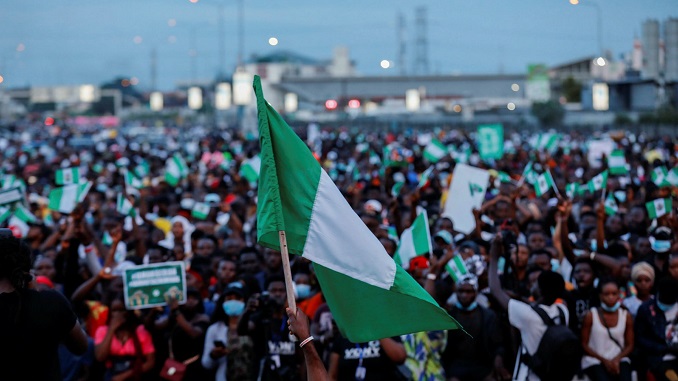
What would have been the June 12 Democracy Day Celebration last Saturday was marred or scuttled by the Buhari-must-go protests. By midday last Saturday different anti-Buhari protesters across the country had staged tumultuous nationwide protests tagged #June12protests. The protesters were demanding that President Buhari should quit power because he has failed to put the country on the path to political, economic, social, cultural progress. Despite the spirited efforts of the Nigerian security forces to intimidate, threaten or scare away the protesters to abandon their protests, the protesters were undeterred in their resolve to exercise their right to peaceful protest.

This is the first time June 12 celebration has sparked off nationwide protests against a sitting President. The previous June 12 celebrations were marked with flowery speeches on the imperative of triumph of democracy in Nigeria. But this year’s June 12 Celebration took a different turn last week. It was marred with different protests rocking the different parts of the country. Some of the peaceful protesters were waving colourful placards some of which bore the following messages: “Buhari Must Go!”, “Say No to Government Funding Terrorism”, “#BuhariMustGo Protest is a fundamental right. All illegally detained citizens must be released unconditionally”.

But some young protesters in Kwara State went too far. They carried a mock coffin of Mr. President and were parading it on the streets whilst chanting the song “Buhari must go”. This is too bad. There is a right to peaceful protest but there is no right to mock Mr. President. Whoever organized those young persons in Kwara last week to mock the President did something very bad. There were also anti-Buhari protesters in the streets of London last week. Similar Anti-Buhari protesters waving ‘Buhari must go’ placards were sighted in Toronto, Canada, Texas, USA and other countries. Of course there was the pro-Buhari crowd apparently rented by the Presidency to neutralize the Anti-Buhari protest. But unfortunately the anti-Buhari protesters overpowered the pro-Buhari rented crowd to the extent that the impact of the latter could hardly be felt. Each of the pro-Buhari protesters was paid N1,000 to carry out the pro-Buhari protest. But not all of them got N1,000. Those who did not get the N1,000 dramatically staged protests in front of camera last Saturday and vowed that they would not embark on any pro-Buhari protest. In London the Anti-Buhari protesters were seen chasing away the pro-Buhari protesters at the Abuja House, London.

If President Buhari had been promoting the welfare of the people in the last years the people would not have organized protests last Saturday to demand that he must quit power. As far as about 85% of Nigerians are concerned, the Buhari government is synonymous with failure, under-performance and cluelessness. At least under the Jonathan government the people could eke out a living. Now under the present Buhari government the living condition of the average Nigerian has been appalling. Small wonder the people are clamouring that President Buhari should quit power so that there will be a new dawn of peace, stability, security and economic prosperity in Nigeria. If you listen carefully as you read this you will hear the following prayers of frustrated Nigerians to the Almighty God. “The Buhari government has failed us. Hear us, O! Lord ! Take this yoke away from us. Listen to your Nigerian children mobbed and murdered by Fulani herdsmen, bandits, unknown gun men, kidnappers and hired assassins. We raise our shackled hand and charge Thee amid the tears of our murdered heroes. Save us, Oh Lord. Make haste and hearken to the assistance of your children drowning in the rivers of blood flowing down the city streets and alleyways of Nigeria. Sit no longer blind, Lord. Lord, let not our cries sink in silence in the midnight. God, thou are the undoer of evil deeds. ‘Vengeance is mine; I will repay’, said the Lord of Host!”.

A successful administration is one with a strong presidential leadership. Weak leadership-or no leadership is often a disaster. One of the great responsibilities and opportunities of the President under Presidential democracy is to lead and inspire the people and public opinion. The words of a President carry great weight. Of course, his acts carry weight. For example, the words of former U.S. President D Roosevelt in his inaugural address did so much to revive the waning spirit of Americans who were at that time of Roosevelt’s Presidency struggling through the depths of an American depression. Roosevelt said; “ the only thing we have to fear is fear itself”. Those words, backed up later by action, restored the faith of Americans in the Roosevelt government.

But unfortunately the present Buhari government is a big disaster. The words of President Buhari do not carry weights. There is no dispute anymore that President Buhari doesn’t inspire anybody. Whenever the President speaks he annoys the people. This is why Nigerians are no longer looking up to him for leadership inspiration. Right from the very day he took power as President of Nigeria he has been performing below expectation. Mr. President lacks the soundness of mind to respond to questions put across to him. If you ask him one question he would disregard it and start talking about something else unrelated to the question. For example, last Thursday Mr. President was asked a question relating to foreign investors in Nigeria and he veered off the question and started quibbling with the last #EndSARS protests and plans to dislodge him from power. The sad aspect is that our dear President is not in touch with reality. For example, Mr. President does not tackle the hydra-headed problems imperiling the country with the urgency and seriousness that they demand. He does not listen to the voice of the people. Whereas about 89% of Nigerians are clamouring for outright restructuring of Nigeria, Mr. President is insisting that only the National Assembly should shoulder the responsibility of restructuring Nigeria and enthroning true federalism and devolution of power of Nigeria in its on-gong Constitutional Review exercise.

Those surrounding Mr. President should let him know that the voice of the people is the voice of Allah. Whoever does not listen to the people does not listen to Allah. The Holy Qur’an itself contains a number of injunctions and warnings on good manners and various aspects of social behavior and attitudes. In their book entitled: Islamic Manners & Social Conduct, Abdullahi Orire, B. Aisha Lemu and Asiya Rodrigo write that the obligation to avoid inflicting either physical or psychological; harm on others is a primary ethical principle in Islam. The Prophet said, “There should be no harming or reciprocating harm” (Sunam Ibn Majah), for “He who causes harm will be harmed by Allah and he who acts in a hostile manner will be treated in a hostile manner by Allah”. (Jami’ al-Tirmidhi No. 1306). One of the wrong assumptions about democracy is that the political officer holders have enough wisdom and virtue to pursue the end of democracy-promotion of the welfare of the people. But viewed against the backdrop of the reign of the Buhari government in the last six years, the political leaders do not have enough wisdom and virtue to pursue the end of democracy. The Buhari democracy attests that democracy is challenged from within by sheer ignorance and pursuit of personal interests at the expense of the common good and welfare of the people.

WHEN SILENCE IS NOT GOLDEN


Jonas Odocha


Human sanity and sincerity of purpose must be predicated on actions and reactions to events and circumstances. It is therefore noteworthy that laughter and tears, sadness and joy, silence and voice, all act as safety valves of human sanity. In safety management therefore, it is admonished to speak up when one encounters unsafe acts or unsafe conditions to prevent harm or injury. In the same manner, as security ensures elimination of risks to loss of life and physical assets, conventional wisdom dictates that voice must accompany threats to life and property.
In Nigeria today insecurity has assumed unprecedented dimensions that we must not play the ostrich but speak up to tackle the root causes, since you cannot conquer what you fail to or cannot confront. Sincerity is the watchword. Today the Southeast region of Nigeria, particularly Imo State, is in the news with regard to insecurity. The decade-long Boko Haram insurgency in the Northeast, the banditry and kidnapping associated with illegal gold mining in the Northwest and the heinous crimes of Fulani herdsmen in the North-central and areas of the South; all these have suddenly taken a convenient back seat. But the news on Channels TV 8pm and 10pm broadcast, Tuesday June 15, 2021; depicting a large number of northern youths, apprehended in Benue State, headed to Imo State, aware of the nebulous situation there, must call for serious interrogation by the Imo State government, the Federal government and the Security agencies.
How were these youths organized and by whom, for this clandestine journey to “security-troubled” Imo State? Who provided them with all the motorcycles, as they claim to wish to begin “Okada business” in the State? Who are stationed there to receive them, and where is the rendezvous, since this wouldn’t have been a “blind date.” It is germane that the Governor of Imo State should assure the people that he has their security concerns as top priority in the face of current happenings in the state.
It is indeed mind-boggling that when States are grappling with the menace of herdsmen invasion of farmlands and the attendant atrocities, that this type of northern youth invasion can be contemplated. But one must not fail to read the body language and utterances of the government at the centre. The Southern governors’ rejection of archaic open grazing for cattle ranching was mischievously regarded as rejecting spare parts trade in the north. The veiled target audience is of course well known. Again their reference to constitutional freedom of movement and the usage of age-old grazing routes must come to all as ingrained mindset on this vexatious invasion of farmlands and territories. He who wears the shoe knows best where it pinches.
SILENCE CAN NO LONGER BE GOLDEN!!!

I’m a proud dot in a circle

By Ikechukwu Amaechi

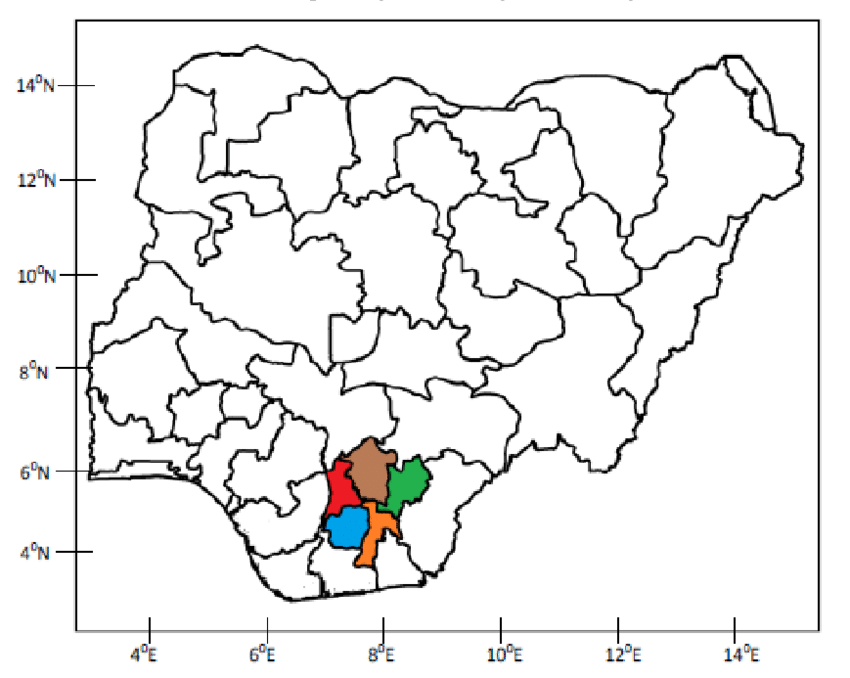
Map of Nigeria showing the Southeast region, the dot in Buhari’s circle

I had no personal relationship with Abba Kyari, a lawyer trained at Cambridge University in England, who amassed more power than any of his predecessors as the Chief of Staff to President Muhammadu Buhari.

So, after his death last year, I reached out to a close friend of his to make sense of all that had been written and said about him.

Was he a victim of blind loyalty, as his friends claimed, or a villain, as popularly believed, who took advantage of the manifest handicaps of Buhari for narrow political gains?

His friend, a power broker in his own right, who had just written a moving tribute to him, gave an unambiguous answer. Kyari, he said, was a good man who, sadly, opted to be servile to a sadist.

If Kyari was such a positive influence, why was he unable to moderate the toxic policies of the government, I probed further.

He was likened to a man who went for a dinner with the devil, leaving his long spoon behind. A damning charge against Buhari, as reflected in my article on April 22, 2020 titled, “Abba Kyari, victim of blind loyalty?”

His friend said: “If you knew Abba, you will understand what I am talking about. The man just couldn’t do anything against the wishes of his boss even if he felt otherwise.

“Take this to the bank, he never did anything without the clearance or directive of the president. The man did nothing that Buhari didn’t ask him to do. He never did anything without the president’s say so or approval.

“The truth is that Buhari is just inherently wicked but Abba was ready to take the bullet for him and he finally did.”

Buhari came back to power in 2015 with an agenda deleterious to the common good. A man with a long list of grudges, he is up to no good. Contrary to the belief in some quarters that he is a puppet, he is, indeed, the puppeteer – a man on top of his game, effectively in charge.

His interview on Arise Television on June 10, another defining moment in this nightmare, confirmed my worst fears. Strategic in its timing and import, the interview was meant to send a clear message to those who challenge his Fulani supremacist agenda, particularly the “troublesome” Igbos.

His acute intellectual vacuity on parade notwithstanding, what came through, most forcefully, is that Buhari does not care a hoot about public opinion and his pathological hatred and frightening disdain for Ndigbo.

The interview provided a window into the dark recesses of his soul. On display was his single-minded determination to consolidate an overt Fulani supremacist agenda clothed in an illusory Northern superiority complex.

His ethnocentric prattle was as benumbing as his nepotistic gobbledygook was frightening, evidenced in his prioritisation of cows over citizens.

This was the reason he told his Attorney General, Abubakar Malami, to dig up a phantom First Republic gazette which purportedly delineated cattle routes and grazing areas across the country.

When the matter has to do with the welfare of cows, Buhari is eloquent and bubbly, just as when discussing the good of his kith and kin in Niger Republic, where his father came from.

On some other issues, he waffles, playing to the hilt his reputation as a Teflon president who never takes responsibility for anything.

But when the issue has to do with his bête noire – Ndigbo – he becomes melancholic. Asked in the interview how the problem in the South East, which he largely created, will be resolved, he immediately adorned his genocidal apparel.

“I was encouraged by what I heard, nobody told me,” he replied.

“Two statements from the South South. One by elderly people. They said, this time around, there will be no access to the sea. I am sure you will understand what they mean. Again, the youths made the same statement. That encouraged me.”

Buhari was happy that Ndigbo are isolated and encircled once again, reminiscent of the Civil War days.

But he wasn’t done with his genocidal taunt.

“So, that IPOB, it is just like a dot in a circle. If they want to exit, there will be no access to anywhere and the way they are spread all over the country, having businesses, having property,” Buhari said.

“I think IPOB doesn’t know what they are talking about. In any case, we said we will talk to them in the language they will understand. We will organise the police and the military to pursue them. That is what we can do and we will do it.”

Buhari’s apologists say he was talking about IPOB and not the Igbos. How disingenuous. The truth remains that in his warped mind, every Igbo is IPOB. And none should be spared in his genocidal onslaught.

I doubt if Buhari ever discussed with any South South leader as he claimed. My guess is that he was simply hallucinating. But assuming he did, what actually was he discussing with them to elicit such a weighty pledge? And what did he promise in return? Since he has less than two years in office, do we take it that these purported negotiations signal effective preparation by the Buhari regime for another ruthless scorched-earth assault against Alaigbo before May 29, 2023? Time will tell!

But while he gloats thinking that he insulted Ndigbo by describing the South East as a dot in a circle, he only manifests his ignorance.

Singapore, a far smaller dot, is one of the greatest success stories in history. Its economic development is the stuff legends are made of, so much so that it is the only Asian country with a higher per capita Gross Domestic Product (GDP) than the United States.

Ndigbo are proud to be the dot in the Nigerian circle. And what a productive, significant dot that space is. Why shouldn’t I be proud when this dot, which has the highest literacy rate and per capital income within the circle called Nigeria, is my heritage?

The only thing stopping this dot, the land of the rising sun, from replicating the Singaporean miracle is that the circle where it is hedged in is ruled by medieval emperors who flaunt brawn as a leadership skill in the age of knowledge.

I don’t know what Buhari intends to achieve by making that sacrilegious comment. But if it is to cow Ndigbo into submission, he has failed, because, rather than being cowed, even those hitherto indifferent are now daring the bully in Aso Rock.

In the last one week, the refrain in the dot has been: Buhari, do your worst.

What else can be worse than the ongoing carnage? The fact that he sees nothing wrong in joining his Northern brethren to remind Ndigbo that they have properties and businesses up north is, indeed, a new low.

Yet, these are the same people who turn around to accuse Ndigbo of all manner of atrocities without any evidence.

Between May and October 1966, more than 30,000 Easterners were massacred in the North. Between October 1966 and June 1967, over 100,000 more were murdered. Pregnant women were killed, and babies pulled out of their wombs and murdered.

Ndigbo are not reputed for such bestiality. So, on what basis are Northerners giving Ndigbo quit notice?

If the killings of the 1960s were a revenge for the January 15, 1966 coup as claimed, what about the pogrom in Jos on June 22, 1945, the first reported genocide against Ndigbo in the North? Did Nzeogwu lead a band of idealistic young military officers to execute a coup then?

What about the mass killings in Kano in 1953, the second recorded genocide in Nigeria. What precipitated it against the Igbos?

So, what charge will Buhari and other Northern elders baying for Igbo blood bring against them this time? Ndigbo are peace loving. They do not conspire to murder their hosts or guests.

Since this herders/farmers conflict engineered by Buhari started, there has not been any premeditated killing of Northerners by Ndigbo. Instead, it is the same Fulani herdsmen that are butchering Ndigbo within their dot in the circle, while Buhari looks away.

Throughout Nigeria’s chequered history, there has never been any incident of lorry loads of corpses of Northerners murdered in Alaigbo parceled back to the North for burial as it is always the case with Ndigbo living in the North.

So, what is this noise about Ndigbo all about? Why is Buhari, whose first cousins from the Sahel have chased away – literally, from his home state of Katsina – vehemently determined to annihilate Ndigbo?

Why would a president who eviscerates governors for not providing security for their people exhume a dead grazing route gazette rather than support Governor Samuel Ortom’s anti-open grazing law, Benue State’s antidote to the menace of herdsmen?

Why would Buhari admonish Benue people to live in peace with their neighbours (their killers) rather than prosecute the terrorists he acknowledges are not Nigerians?

Why is he up in arms against Southern governors for banning open grazing? Why has he not sent soldiers to kill and maim Northerners on the streets as he is doing in the South East since – to borrow his logic – every Northerner ought to be a bandit, the same way all Igbos are IPOB?

Security personnel have been killed in greater numbers in the North than in the South East. And security facilities and other national infrastructure have been attacked in the North.

So, why does Buhari, a tough cookie when dealing with Ndigbo, become a jelly, conciliatory and even apologetic, when confronted with the atrocities of Fulani bandits?  

Nigeria has a president who values his affinity with “first cousins” in a foreign country than with fellow citizens – the reason he is arrogantly deploying Nigeria’s scarce resources to develop infrastructure in Niger Republic. This is perhaps the biggest tragedy that has befallen Nigeria since independence in 1960.

It is only in a Buhari enclave this malady can happen with impunity. In any other country, such a president would have been kicked out.

Imagine an Olusegun Obasanjo plunging Nigeria into debt to develop Benin Republic since many Yorubas have first cousins there, or a President Barack Obama deploying U.S. wealth in Kenya because it is his biological father’s country.

Buhari is Nigeria’s biggest existential threat. But one thing is certain. Nigerians generally, and Ndigbo in particular, will outlive his malevolence.

Human Rights That Are Truly Absolute And Untouchable In Nigeria.

Human Rights That Are Truly Absolute And Untouchable In Nigeria. Daily Law Tips (Tip 808) by Onyekachi Umah, Esq., LL.M, ACIArb(UK)

Introduction:

There several national, regional and international instruments on human rights in Nigeria. However, from Nigerian perspective, the greatest of all laws in the world is the Constitution of the Federal Republic of Nigeria. And as such, arguably, any Nigerian law or international law that conflicts with the constitution of Nigeria is invalid in Nigeria.  The constitution of Nigeria contains the fundamental human rights in Nigeria and declares them, generally inalienable, absolute and unchallengeable.

However, that same constitution of Nigeria went further to give some exemptions to the Federal Government of Nigeria and the Governments of States in Nigeria, for them to suspend, dispense, challenge, limit, derogate and suspend some fundamental human rights. So, by the Constitution of Nigeria, some fundamental human rights are not absolute and can be lawfully violated by government, without any damages or consequences. Government Can Lawfully Violate Human Rights: The Case of Twitter vs. Nigeria.

While there are some fundamental human rights in Nigeria that are not absolute, there are a few fundamental human rights that are truly absolute at all times. The few fundamental human rights are by the Constitution of Nigeria, carefully made untouchable and unchallengeable, by any person/government in all parts of Nigeria. So even in issues of national security, wars, state of emergencies, natural disasters, natural calamities, pandemics and public health crisis, the few fundamental human rights cannot be restricted or violated. This work examines the few fundamental human rights that are truly absolute and can never be suspended or lawfully violated in Nigeria.

Human Rights that are Truly Absolute and Untouchable:

The Constitution of Nigeria that creates the fundamental human rights in Nigeria, also creates the circumstances where some fundamental human rights can be lawfully suspended and violated. It also provides three (3) specific fundamental human rights that can never be restricted, suspended or derogated. Hence, there are three (3) specific fundamental human rights are truly absolute and untouchable. They are the exemptions to the cliché that; “fundamental human rights are not absolute”, because they are truly absolute, according to the Constitution of Nigeria.  “Human Rights That Can Never Be Restricted Even In War, Pandemic or State of Emergency”.

By the constitution of Nigeria, there are three (3) specific fundamental human rights that cannot and will never be restricted, suspended, limited or suppressed by any law, Act, regulation, executive orders, Presidential directives/proclamation, person, court, government, institution, organization or security agency in or outside Nigeria. Even during wars, periods of state of emergencies, natural disasters, natural calamities, pandemics and public health crisis, the three specific fundamental human rights cannot be lawfully violated. There are no justifications for their violation.

The 3 fundamental human rights are: Right to Dignity of Human Persons, Right to Freedom from Discrimination and then, under the Right to Fair Hearing is the Right not to be held guilty of a non-existing offence or to be imposed heavier penalties contrary to law. These fundamental human rights are expressly exempted or omitted from the restrictions and derogation from the fundamental human rights in the constitution of Nigeria.

Conclusion: 

The Constitution of Nigeria is the most important law in Nigeria and it arguably overrules international instruments/laws in the Nigerian courts. To further explain this, there is need for an example; for instance, where the constitution of Nigeria is harsh over an issue and there is a regional or international law that is not harsh on the same issue, the Nigerian courts will stick to the Constitution of Nigeria, the harshness notwithstanding. To this end, the constitution of Nigeria is higher than all Nigerians, persons and governments in all parts of the world. This means that arguably, the Constitution of Nigeria supersedes all other national, regional or international instruments on human rights in Nigeria.

The Constitution of Nigeria declares some fundamental human rights touchable and some other untouchable. The simple reason is that the Federal Republic of Nigeria is greater and higher than some rights and all persons, governments and institution in the world. It is safer for Nigeria to lawfully violate some human rights in Nigeria in order protect Nigeria, during war, state of emergency, natural disaster and public health. Also, some fundamental human rights are higher than

Nigeria and as such, at all times such human rights must be protected and respected, even if Nigeria suffers. So, the above discussed three fundamental human rights are by the Constitution of Nigeria higher than Nigeria and must be respected at all times in Nigeria. There are no justification for a violation of the fundamental human rights;  “Right to Dignity of Human Persons, Right to Freedom from Discrimination and then, under the Right to Fair Hearing is the Right not to be held guilty of a non-existing offence or to be imposed heavier penalties contrary to law”

My authorities, are:

1.Sections 14, 20, 33, 34, 35, 36, 37, 38, 39, 40, 41, 42, 43, 44, 45, 305, 318 and 319 of the Constitution of the Federal Republic of Nigeria, 1999.

2.Article 19 of the Universal Declaration for Human Rights.

3.Sections 6, 7, 8 and 22 of the National Human Rights Commission (Amendment) Act 2010.

4.Sections 1, 2, 5 and 6, the National Human Rights Commission (Amendment) Act 1995.

5.The judgment of the Supreme Court of Nigeria (on meaning and nature of fundamental human rights) in the case of RANSOME-KUTI & ORS v. AG FEDERATION & ORS (1985) LPELR-2940(SC)

6.The judgment of the Supreme Court of Nigeria (on meaning and nature of fundamental human rights) in the case of AGBAI & ORS v. OKOGBUE (1991) LPELR-225(SC).

7.The judgment of the Supreme Court of Nigeria (on when and why fundamental human rights can be restricted/suspended) in the case of DOKUBO-ASARI v. FRN (2007) LPELR-958(SC).

8.The Supreme Court judgment on “Meaning of Regulation” in the case of AG LAGOS STATE v. EKO HOTELS LTD & ANOR (2006) LPELR-3161(SC)

9.The Court of Appeal judgment on “Meaning of Executive Order/Regulation” in the case of ELEPHANT GROUP PLC v. NATIONAL SECURITY ADVISER & ANOR (2018) LPELR-45528(CA)

  1. The Supreme Court judgment on “Policy Documents/Guidance” in the case of COMPTROLLER GENERAL OF CUSTOMS & ORS v. COMPTROLLER ABDULLAHI B. GUSAU (2017) LPELR-42081(SC).
  2. The Supreme Court judgment on “Policy Documents/Guidance” in the case of UNION BANK OF NIGERIA PLC & ANOR. v. IFEOLUWA NIG. ENTERPRISES LTD (2007) 7 NWLR (Pt.1032) 71 at 84.
  3. Nimi Princewill and Stephanie Busari, “Nigeria bans Twitter after company deletes President Buhari’s tweet” (CNN, 5 June 2021) <https://edition.cnn.com/2021/06/04/africa/nigeria-suspends-twitter-operations-intl/index.html> accessed 7 June 2021
  4. Adeyemi Adepetun, Sunday Aikulola, Silver Nwokoro, Nkechi Onyedika-Ugoeze and Nnamdi Akpa, “Adeboye, Kumuyi defend Twitter use as envoys again reject ban” (The Guardian, 8 June 2021) <https://guardian.ng/news/adeboye-kumuyi-defend-twitter-use-as-envoys-again-reject-ban/> accessed 8 June 2021
  5. BBC, “Nigeria’s Twitter ban: Government orders prosecution of violators” (BBC, 6 June 2021) <https://www.bbc.com/news/world-africa-57368535> accessed 8 June 2021
  6. Alfred Olufemi, “After Twitter, Facebook deletes Buhari’s controversial ‘civil war’ post” (PremiumTimes, 4 June 2021) <https://www.premiumtimesng.com/news/headlines/465653-just-in-after-twitter-facebook-deletes-buharis-controversial-civil-war-post.html> accessed 8 June 2021
  7. Anietie Ewang, “Nigeria’s Twitter Ban Follows Pattern of Repression” (Human Rights Watch, 7 June 2021) <https://www.hrw.org/news/2021/06/07/nigerias-twitter-ban-follows-pattern-repression> accessed 8 June 2021
  8. Onyekachi Umah, “Twitter vs. Nigeria; The Human Rights of Twitter Inc. and the Twitter Users” (LearnNigerianLaws.com, 8 June 2021) <https://learnnigerianlaws.com/twitter-vs-nigeria-the-human-rights-of-twitter-inc-and-the-twitter-users/> accessed 9 June 2021.
  9. Onyekachi Umah, “Scarcity of Passport and the Government’s Violation of the Right of Movement” (LearnNigerianLaws.com, 1 June 2021) <https://learnnigerianlaws.com/scarcity-of-passport-and-the-governments-violation-of-the-right-of-movement/> accessed 8 June 2021
  10. Onyekachi Umah, “An Alternative to Courts for Human Rights Cases” (LearnNigerianLaws.com, 14 May 2021) <https://learnnigerianlaws.com/an-alternative-to-courts-for-human-rights-cases/> accessed 23 May 2021.
  11. Onyekachi Umah, “Details of State Offices of National Human Rights Commission” (LearnNigerianLaws.com, 27 October 2020) <https://learnnigerianlaws.com/details-of-state-offices-of-national-human-rights-commission/> accessed 14 May 2021
  12. Onyekachi Umah, “Human Rights That Can Never Be Restricted Even In War, Pandemic or State of Emergency” (LearnNigerianLaws.com, 2 April 2020) <https://learnnigerianlaws.com/human-rights-that-can-never-be-restricted-even-in-war-pandemic-or-state-of-emergency-daily-law-tips-tip-539-by-onyekachi-umah-esq-llm-aciarbuk/> accessed 23 May 2021
  13. Onyekachi Umah, “Does The President/Governors Have Powers To Lockdown Any Part Of Nigeria Or Restrict Human Rights?” (LearnNigerianLaws.com, 1 October 2020) <https://learnnigerianlaws.com/does-the-president-governors-have-powers-to-lockdown-any-part-of-nigeria-or-restrict-human-rights-daily-law-tips-tip-537-by-onyekachi-umah-esq-llm-aciarbuk/> accessed 14 May 2021
  14. Onyekachi Umah, “How to Report and Discipline Police Officers” (LearnNigerianLaws.com, 25 May 2021) <https://learnnigerianlaws.com/how-to-report-and-discipline-police-officers/> accessed 27 May 2021
  15. Onyekachi Umah, “Warrant of Arrest: Contents and Issuance” (LearnNigerianLaws.com, 19 April 2021) <https://learnnigerianlaws.com/warrant-of-arrest-contents-and-issuance/> accessed 25 May 2021.
  16. Onyekachi Umah, “12 Situations Where Police Officers Can Arrest Without Warrant” (LearnNigerianLaws.com, 18 June 2019) <https://learnnigerianlaws.com/12-situations-where-police-officers-can-arrest-without-warrant/> accessed 25 May 2021.
  17. Onyekachi Umah, “Stripping Suspects Naked is Torture and it’s a Crime” (LearnNigerianLaws.com, 16 February 2021) <https://learnnigerianlaws.com/stripping-suspects-naked-is-torture-and-its-a-crime/> accessed 23 May 2021
  18. Onyekachi Umah, “Can Police Punish Unlawful Protesters?” (LearnNigerianLaws.com, 15 February 2021) <https://learnnigerianlaws.com/can-police-punish-unlawful-protesters/> accessed 23 May 2021
  19. Onyekachi Umah, “When Can A Protest Become A Riot?” (LearnNigerianLaws.com, 6 November 2020) <https://learnnigerianlaws.com/when-can-a-protest-become-a-riot/> 23 May 2021
  20. Onyekachi Umah, “#EndSarsNow: Punishment For Police (SARS) Torture” (LearnNigerianLaws.com, 6 October 2020) <https://learnnigerianlaws.com/endsarsnow-punishment-for-police-sars-torture/> accessed 23 May 2021
  21. Onyekachi Umah, “#EndSarsNow: Nigeria Police Lacks Power To Punish” (LearnNigerianLaws.com, 7 October 2020) <https://learnnigerianlaws.com/endsarsnow-nigeria-police-lacks-power-to-punish/> accessed 23 May 2021
  22. Onyekachi Umah, “#EndPoliceBrutality: How To Sue the Nigeria Police Force and Police Officers” (LearnNigerianLaws.com, 14 October 2020) <https://learnnigerianlaws.com/endpolicebrutality-how-to-sue-the-nigeria-police-force-and-police-officers/> accessed 23 May 2021
  23. “Demand justice for Police Brutality in Nigeria” (Amnesty International) <https://www.amnesty.org/en/get-involved/take-action/nigeria-end-impunity-for-police-brutality-end-sars/> accessed 23 May 2021
  24. Onyekachi Umah, “Who Can Be Lawfully Killed In Nigeria?” (LearnNigerianLaws.com, 26 October 2020) <https://learnnigerianlaws.com/who-can-be-lawfully-killed-in-nigeria/> accessed 23 May 2021
  25. Femi Falana, “Police Permit Not Required For Rallies in Nigeria” (Premium Times, 23 January 2014) <https://www.premiumtimesng.com/opinion/153860-police-permit-required-rallies-nigeria.html> accessed 23 May 2021
  26. Onyekachi Umah, “Can A Person With A Nigerian Flag Be Shot Or Killed?” (LearnNigerianLaws.com,23 October 2020) <https://learnnigerianlaws.com/can-a-person-with-a-nigerian-flag-be-shot-or-killed/> accessed 23 May 2021
  27. Onyekachi Umah, “#EndPoliceBrutality: When & How Can Government Prohibit Protest In Nigeria?” (LearnNigerianLaws.com, 19 October 2020) <https://learnnigerianlaws.com/when-and-how-can-government-prohibit-protest-in-nigeria/> accessed 23 May 2021
  28. Onyekachi Umah, “#EndPoliceBrutality: The Right To Protest Is A Human Right.” (LearnNigerianLaws.com, 15 October 2020) <https://learnnigerianlaws.com/endpolicebrutality-the-right-to-protest-is-a-human-right/> accessed 23 May 2021
  29. Onyekachi Umah, “#EndPoliceBrutality: Do You Need A Police Permit To Protest?” (LearnNigerianLaws.com, 16 October 2020) <https://learnnigerianlaws.com/endpolicebrutality-do-you-need-a-police-permit-to-protest/> accessed 23 May 2021
  30. Onyekachi Umah, “Does The President/Governors Have Powers To Lockdown Any Part Of Nigeria Or Restrict Human Rights?” (LearnNigerianLaws.com, 31 March 2020) <https://learnnigerianlaws.com/does-the-president-governors-have-powers-to-lockdown-any-part-of-nigeria-or-restrict-human-rights-daily-law-tips-tip-537-by-onyekachi-umah-esq-llm-aciarbuk/> accessed 23 May 2021
  31. Onyekachi Umah, “Duty of Government to Pay Compensation for Damages Caused By Riot.” (LearnNigerianLaws.com, 4 November 2020) <https://learnnigerianlaws.com/duty-of-government-to-pay-compensation-for-damages-caused-by-riot/> accessed 23 May 2021
  32. Onyekachi Umah, “Who Pays For Properties Damaged or Lost In A Riot In Nigeria” (LearnNigerianLaws.com, 6 August 2018) <https://learnnigerianlaws.com/daily-law-tips-by-onyekachi-umah-esq-tip-157-who-pays-for-properties-damaged-or-lost-in-a-riot-in-nigeria/> accessed 23 May 2021
  33. Onyekachi Umah, “List of Fundamental Human Rights In Nigeria.” (LearnNigerianLaws.com, 22 October 2020) <https://learnnigerianlaws.com/list-of-fundamental-human-rights-in-nigeria/> accessed 23 May 2021
  34. Chris Admin, “Onyekachi Umah Speaks To ChannelsTv On SARS & The New Police Act” (LearnNigerianLaws.com, 9 November 2020) <https://learnnigerianlaws.com/onyekachi-umah-speaks-to-channelstv-on-sars-the-new-police-act/> accessed 23 May 2021
  35. Onyekachi Umah, “What Is The Punishment For Any Person Including Police Officers That Tortures Another Person” (LearnNigerianLaws.com, 18 December 2018) <https://learnnigerianlaws.com/daily-law-tips-by-onyekachi-umah-esq-tip-251-what-is-the-punishment-for-any-person-including-police-officers-that-tortures-another-person/> accessed 23 May 2021
  36. Onyekachi Umah, “Is Obeying “Orders From Above” a Defence for Torture in Nigeria” (LearnNIgerianLaws.com, 7 September 2019) <https://learnnigerianlaws.com/is-obeying-orders-from-above-a-defence-for-torture-in-nigeria-daily-law-tips-tip-409-by-onyekachi-umah-esq-llm-aciarb-uk/> accessed 23 May 2021
  37. Onyekachi Umah, “Being Present During Torture Without Participating In It, Is A Crime” (LearnNigerianLaws.com, 25 November 2019) <https://learnnigerianlaws.com/being-present-during-torture-without-participating-in-it-is-a-crime-daily-law-tips-tip-464-by-onyekachi-umah-esq-llm-aciarb-uk/> accessed 23 May 2021
  38. Onyekachi Umah, “New Punishment for Security Officers Involved in Torture in Nigeria.” (LearnNigerianLaws.com, 27 August 2017) <https://learnnigerianlaws.com/new-punishment-for-security-officers-involved-in-torture-in-nigeria-daily-law-tips-tip-401-by-onyekachi-umah-esq-llm-aciarb-uk/> accessed 23 May 2021
  39. Onyekachi Umah, “Watching Torture but not Participating in it, is Torture.” (LearnNigerianLaws.com, 19 November 2019) <https://learnnigerianlaws.com/watching-torture-but-not-participating-in-it-is-torture-daily-law-tips-tip-460-by-onyekachi-umah-esq-llm-aciarb-uk/> accessed 23 May 2021
  40. Onyekachi Umah, “Any Security Agency’s Manual/Protocol that Allows Torture Even for National Security Cases is Unlawful and its Officers are Liable.” (LearnNigerianLaws.com, 11 September 2019) <https://learnnigerianlaws.com/any-security-agency-s-manual-protocol-that-allows-torture-even-for-national-security-cases-is-unlawful-and-its-officers-are-liable-daily-law-tips-tip-412-by-onyekachi-umah-esq-llm-aciarb-uk/> accessed 23 May 2021
  41. Onyekachi Umah, “Every Child has Right to a Rest and Play” (LearnNigerianLaws.com, 27 May 2021) <https://learnnigerianlaws.com/every-child-has-a-right-to-rest-and-play/> accessed 30 May 2021
  42. Onyekachi Umah, “Child Marriage/Abuse Is A Crime (Rape): An Exposé On Laws Prohibiting Child Marriage” (LearnNigerianLaws.com, 22 June 2020) <https://learnnigerianlaws.com/child-marriage-abuse-is-a-crime-rape-an-expose-on-laws-prohibiting-child-marriage-daily-law-tips-tip-593-by-onyekachi-umah-esq-llm-aciarbuk/> accessed 20 April 2021
  43. Onyekachi Umah, “Forced Marriage Is An Offence In Nigeria.” (LearnNigerianLaws.com, 21 October 2020) <https://learnnigerianlaws.com/forced-marriage-is-an-offence-in-nigeria/> accessed 20 April 2021
  44. Onyekachi Umah, “Stripping Suspects Naked is Torture and it’s a Crime” (LearnNigerianLaws.com, 16 February 2021) <https:// 1 National Human Rights Commission, ‘State Offices” (NHRC) <http://www.nhrc.gov.ng/index.php/regional-offices#zamfara> accessed 27 October 2020
  45. Onyekachi Umah, “Details of State Offices of National Human Rights Commission” (LearnNigerianLaws.com, 27 October 2020) <https://learnnigerianlaws.com/details-of-state-offices-of-national-human-rights-commission/> accessed 14 May 2021
  46. Onyekachi Umah, “Does The President/Governors Have Powers To Lockdown Any Part Of Nigeria Or Restrict Human Rights?” (LearnNigerianLaws.com, 1 October 2020) <https://learnnigerianlaws.com/does-the-president-governors-have-powers-to-lockdown-any-part-of-nigeria-or-restrict-human-rights-daily-law-tips-tip-537-by-onyekachi-umah-esq-llm-aciarbuk/> accessed 14 May 2021
  47. Onyekachi Umah, “States & Areas Offices of Public Complaints Commission” (LearnNigerianLaws.com, 20 November 2020) <https://learnnigerianlaws.com/states-areas-offices-of-public-complaints-commission/> accessed 14 May 2021
  48. Onyekachi Umah, “Complaints That The Public Complaints Commission Can Handle” (com, 30 October 2020) <https://learnnigerianlaws.com/complaints-that-the-public-complaints-commission-can-handle/> accessed 14 May 2021
  49. Stephen Ubimago, ‘Legal Aid Council: Facing Challenge Of Relevance Amid Poor Funding’ (Independent, 27 October 2020) <https://www.independent.ng/legal-aid-council-facing-challenge-of-relevance-amid-poor-funding/> accessed 14 May 2021
  50. Onyekachi Umah, “Abandonment Of Wife/Husband, Children Or Dependants Is A Crime” (LearnNigerianLaws.com, 3 December 2019) <https://learnnigerianlaws.com/abandonment-of-wife-husband-children-or-dependants-is-a-crime-daily-law-tips-tip-470-by-onyekachi-umah-esq-llm-aciarb-uk/> accessed 20 April 2021
  51. Onyekachi Umah, “How Lagos State Is Legislatively Ahead Of Other States” (LearnNigerianLaws.com, 30 September 2020 <https://learnnigerianlaws.com/how-lagos-state-is-legislatively-ahead-of-other-states/> accessed 20 April  2021
  52. Onyekachi Umah, “The First Virtual Court Hearing Was In Borno State And Not In Lagos State.” (LearnNigerianLaws.com, 1 June 2020) <https://learnnigerianlaws.com/the-first-virtual-court-hearing-was-in-borno-state-and-not-in-lagos-state-daily-law-tips-tip-579-by-onyekachi-umah-esq-llm-aciarbuk/> accessed 20 April 2021
  53. Onyekachi Umah, “Emotional, Verbal And Psychological Abuse Is Now Criminal Offences” (LearnNigerianLaws.com, 3 September 2019) <https://learnnigerianlaws.com/emotional-verbal-and-psychological-abuse-is-now-criminal-offence/> accessed 28 April 2021
  54. Onyekachi Umah, “Forcing Wife to Stop Work is Now A Crime” (LearnNigerianLaws.com, 21 April 2021) <https://learnnigerianlaws.com/forcing-wife-to-stop-work-is-now-a-crime/https://learnnigerianlaws.com/forcing-wife-to-stop-work-is-now-a-crime/> accessed 26 April 2021
  55. Onyekachi Umah, “It Is Now An Offence To Force Wife/Husband To Stop Working” (LearnNigerianLaws.com, 28 May 2019) <https://learnnigerianlaws.com/it-is-now-an-offence-to-force-wife-husband-to-stop-working-daily-law-tips-tip-340-by-onyekachi-umah-esq-llm-aciarb-uk/> accessed 20 April 2021
  56. Onyekachi Umah, “Seizing or Destroying the Property of a Spouse is a Crime” (LearnNigerianLaws.com, 2 March 2021) <https://learnnigerianlaws.com/seizing-or-destroying-the-property-of-a-spouse-is-a-crime/> accessed 20 April 2021
  57. Onyekachi Umah, “Hiding/Concealing Domestic Violence Is A Crime” (LearnNigerianLaws.com, 11 December 2020) <https://learnnigerianlaws.com/hiding-concealing-domestic-violence-is-a-crime/> accessed 20 April 2021
  58. Onyekachi Umah, “Domestic Violence Is A Crime Not A Family Dispute” (LearnNigerianLaws.com, 10 December 2020) <https://learnnigerianlaws.com/domestic-violence-is-a-crime-not-a-family-dispute/> accessed 20 April 2021
  59. Onyekachi Umah, “Why Lagos State Needs A VAPP/SGBV Law” (LearnNigerianLaws.com, 26 January 2021) <https://learnnigerianlaws.com/why-lagos-state-needs-a-vapp-sgbv-law/> accessed 20 April 2021
  60. Onyekachi Umah, “Lagos State Has No VAPP/SGBV Law !” (LearnNigerianLaws.com, 8 December 2020) <https://learnnigerianlaws.com/lagos-state-has-no-vapp-sgbv-law/> accessed 20 April 2021
  61. Onyekachi Umah, “An Access To Criminal Laws In Nigeria” (LearnNigerianLaws.com, 4 December 2020) <https://learnnigerianlaws.com/an-access-to-criminal-laws-in-nigeria/> accessed 20 April 2021
  62. Onyekachi Umah, “8 New Things About Rape Laws In Nigeria” (LearnNigerianLaws.com, 3 December 2020) <https://learnnigerianlaws.com/8-new-things-about-rape-laws-in-nigeria/> accessed 20 April 2021
  63. Onyekachi Umah, “ChannelsTv Interviews Onyekachi Umah on Rape and the Laws.” (LearnNigerianLaws.com, 20 November 2020) <https://learnnigerianlaws.com/channelstv-interviews-onyekachi-umah-on-rape-and-the-laws/> accessed 20 April 2021
  64. Onyekachi Umah, “Can A Woman Be Charged With Rape” (LearnNigerianLaws.com, 24 June 2020) <https://learnnigerianlaws.com/can-a-woman-be-charged-with-rape-daily-law-tips-tip-595-by-onyekachi-umah-esq-ll-m-aciarbuk/> accessed 20 April 2021
  65. Onyekachi Umah, “Can A Husband Rape His Wife” (LearnNigerianLaws.com, 19 June 2020) <https://learnnigerianlaws.com/can-a-husband-rape-his-wife-daily-law-tips-tip-592-by-onyekachi-umah-esq-llm-aciarbuk/> accessed 20 April 2021
  66. Onyekachi Umah, “When Is Seduction Or Indecent Dressing A Justification For Rape In Nigeria?” (LearnNigerianLaws.com, 18 June 2020) <https://learnnigerianlaws.com/when-is-seduction-or-indecent-dressing-a-justification-for-rape-in-nigeria-daily-law-tips-tip-591-by-onyekachi-umah-esq-llm-aciarbuk/> accessed 20 April 2021
  67. Onyekachi Umah, “New Punishment For Rape In Nigeria” (LearnNigerianLaws.com, 23 June 2020) <https://learnnigerianlaws.com/new-punishment-for-rape-in-nigeria-daily-law-tips-tip-594-by-onyekachi-umah-esq-llm-aciarbuk/> accessed 20 April 2021
  68. Onyekachi Umah, “Rape Cannot Be Settled Out Of Court (No Room For Pay-Off/Forgiveness/Withdrawal Of Complaints” (LearnNigerianLaws.com,26 June 2020) <https://learnnigerianlaws.com/rape-cannot-be-settled-out-of-court-no-room-for-pay-off-forgiveness-withdrawal-of-complaints-daily-law-tips-tip-596-by-onyekachi-umah-esq-llm-aciarbuk/> accessed 20 April 2021
  69. Onyekachi Umah, “A Female Too, Can BE Guilty Of Rape” (LearnNigerianLaws.com, 13 December 2018) <https://learnnigerianlaws.com/daily-law-tips-by-onyekachi-umah-esq-tip-248-a-female-too-can-be-guilty-of-rape-in-nigeria/> accessed 20 April 2021
  70. Onyekachi Umah, “Ages At Which Sexual Intercourse With Consent Will Amount To Rape” (LearnNigerianLaws.com, 20 February 2020) <https://learnnigerianlaws.com/ages-at-which-sexual-intercourse-with-consent-will-amount-to-rape-daily-law-tips-tip-509-by-onyekachi-umah-esq-llm-aciarbuk/> accessed 20 April 2021
  71. Onyekachi Umah, “How To Prove Rape In Nigeria).” (LearnNigerianLaws.com, 2 July 2019) <https://learnnigerianlaws.com/how-to-prove-rape-in-nigeria-daily-law-tips-tip-363-by-onyekachi-umah-esq-llm-aciarb-uk/> accessed 20 April 2021
  72. Onyekachi Umah, “Can a Married Woman Inherit Her Parents’ Property?”, (LearnNigerianLaws.com, 27 March 2020) <https://learnnigerianlaws.com/can-a-married-woman-inherit-her-parents-property-daily-law-tips-tip-535-by-onyekachi-umah-esq-llm-aciarbuk/> accessed 20 April 2021
  73. Onyekachi Umah, “Female Genital Mutilation/Cutting/Elongation, Breasts Ironing And Forced Marriage Are Now Criminal Offences In Nigeria” (Daily Law Tips [443]) <https://learnnigerianlaws.com/female-genital-mutilation-cutting-elongation-breasts-ironing-and-forced-marriage-are-now-criminal-offences-in-nigeria-daily-law-tips-tip-443-by-onyekachi-umah-esq-llm-aciarb-uk/> accessed 20 April 2021
  74. Onyekachi Umah, “Harmful Widowhood Practices (Traditions) Are Illegal In Nigeria” (Daily Law Tips [Tip 589]) <https://learnnigerianlaws.com/harmful-widowhood-practices-traditions-are-illegal-in-nigeria-daily-law-tips-tip-589-by-onyekachi-umah-esq-llm-aciarbuk/> accessed 20 April 2021
  75. Onyekachi Umah, “Forceful Isolation/Separation Of Family Members/Friends Is Now An Offence In Nigeria” (Daily Law Tips [356]) <https://learnnigerianlaws.com/forceful-isolation-separation-of-family-members-friends-is-now-an-offence-in-nigeria-daily-law-tips-tip-356-by-onyekachi-umah-esq-llm-aciarb-uk/> accessed 120 April 2021
  76. Onyekachi Umah, “Abolished Anti-Women Custom of Onitsha People of Anambra State, Nigeria” (LearnNigerianLaws, 10 March 2020) <https://learnnigerianlaws.com/abolished-anti-women-custom-of-onitsha-people-of-anambra-state-nigeria-daily-law-tips-tip-522-by-onyekachi-umah-esq-llm-aciarbuk/> accessed 20 April 2021
  77. Onyekachi Umah, “Citizen By Marriage Is Discriminatory and Against Nigerian Women”, (LearnNigerianLaws.com, 14 September 2020) <https://learnnigerianlaws.com/citizen-by-marriage-is-discriminatory-and-against-nigerian-women/> accessed 20 April 2021
  78. Onyekachi Umah, “Abolished Anti-Women Custom of Yoruba People of Nigeria”, (LearnNigerianLaws.com, 11 March 2020) <https://learnnigerianlaws.com/abolished-anti-women-custom-of-yoruba-people-of-nigeria-daily-law-tips-tip-523-by-onyekachi-umah-esq-llm-aciarbuk/> accessed 20 April 2021
  79. Onyekachi Umah, “Can a Married Woman Inherit Her Parents Property?” (LearnNigerianLaws.com, 27 March 2020) <https://learnnigerianlaws.com/can-a-married-woman-inherit-her-parents-property-daily-law-tips-tip-535-by-onyekachi-umah-esq-llm-aciarbuk/> accessed 20 April 2021
  80. Onyekachi Umah, “Approval For Marriage Of Female Officers/Staff Is Unconstitutional and Discriminatory”, (LearnNigerianLaws.com, 23 September 2020) <https://learnnigerianlaws.com/approval-for-marriage-of-female-officers-staff-is-unconstitutional-and-discriminatory/> accessed 20 April 2021
  81. Onyekachi Umah, “It Is An Offence To Chase Out Wife/Husband From A Home Or Even Attempt To Do So” (LearnNigerianLaws.com, 17 May 2019) <https://learnnigerianlaws.com/it-is-an-offence-to-chase-out-wife-husband-from-a-home-or-even-attempt-to-do-so-daily-law-tips-tip-333-by-onyekachi-umah-esq-llm-aciarb-uk/> accessed 20 April 2021
  82. Onyekachi Umah, “Examining Brutalization of House Helps in Nigeria. (An Exposé on Anti-Cruel Labour Laws in Nigeria)” (LearnNigerianLaws.com, 3 August 2020) <https://learnnigerianlaws.com/examining-brutalization-of-house-helps-in-nigeria-an-expose-on-anti-cruel-labour-laws-in-nigeria-daily-law-tips-tip-623-by-onyekachi-umah-esq-ll-m-aciarbuk/> accessed 27 April 2021
  83. Onyekachi Umah, “11 States That Do Not Protect Children In Nigeria” (LearnNigerianLaws.com, 31 May 2021) <https://learnnigerianlaws.com/11-states-that-do-not-protect-children-in-nigeria/> accessed 31 May 2021.
  84. Onyekachi Umah, “Government Can Lawfully Violate Human Rights: The Case of Twitter vs. Nigeria” (LearnNigerianLaws.com, 9 June 2021) < https://learnnigerianlaws.com/government-can-lawfully-violate-human-rights-the-case-of-twitter-vs-nigeria/> accessed 9 June 2021
  85. Pic Credit: intervention.ng

Sabi Law Projects:

#SabiLaw

#DailyLawTips

#SabiBusinessLaw

#SabiElectionLaws

#SabiHumanRights

#SabiLawOnTheBeatFm

#SabiLawLectureSeries

#CriminalJusticeMonday

#SabiLawVideoChallenge

Speak with the writer, ask questions or make inquiries on this topic or any other via [email protected], [email protected]  or +2348037665878 (whatsapp). To receive free Daily Law Tips, join our free WhatsApp group via https://chat.whatsapp.com/L7h4f1exItZ38FeuhXG4WNor Telegram group, via the below link: https://t.me/LearnNigerianLaws

To keep up to date on all free legal awareness projects of Sabi Law Foundation, follow us via

Facebook Page:@LearnNigerianLaws,

Instagram:@LearnNigerianLaws,

Twitter: @LearnNigeriaLaw,

YouTube: Learn Nigerian Laws,

WhatsApp Groups via (https://chat.whatsapp.com/L7h4f1exItZ38FeuhXG4WN),

Telegram Group: (https://t.me/LearnNigerianLaws),

Facebook group: (https://www.facebook.com/groups/129824937650907/?ref=share)

or visit our website: (www.LearnNigerianLaws.com )

Please share this publication for free till it gets to those that need it most. Save a Nigerian today! NOTE: Sharing, modifying or publishing this publication without giving credit to the author or Sabi Law Foundation is a criminal breach of copyright and will be prosecuted. This publication is the writer’s view not a legal advice and does not create any form of relationship. You may reach the writer for more information.

This publication is powered by www.LearnNigerianLaws.com  {A Free Law Awareness Program of Sabi Law Foundation, supported by the law firm of Bezaleel Chambers International (BCI).} Sabi Law Foundation is a Not-For-Profit and Non-Governmental Legal Awareness Organization based in Nigeria. For sponsorship and partnership, contact: [email protected], [email protected] or +234 903 913 1200.

PROF AUWALU YADUDU’S SCARE MONGERING: WHY THE NASS MUST IGNORE HIM

I have just read, to my utmost chagrin and dismay, a release authored by Prof. Auwalu Yadudu and currently trending in the social media. Yadudu titled his piece (which apparently represents his memorandum to the NASS Committee on the Review of the Constitution), “AVOID TAKING THE SLIPPERY SLOPE PATH TO CONSTITUTIONAL REVIEW”. Although, I have submitted my personal memorandum to the Constitutional Review Committee after my ex tempore interaction with the chairman and members of the Constitutional Review Committee at the International Conference Centre, Abuja, on Friday 4th June, 2021, I have decided to do this rejoinder to Prof  Yadudu’s poor treatise to set the records straight.

Prof. Yadudu (Yadudu’s) memo is nothing short of a deliberate subterfuge, red-herring and scare mongering carefully designed to frighten the NASS from critically examining the near descent of Nigeria into a failed state, and retrieving her from the nadir under agreed and negotiated terms of co-existence through the promulgation of a new Constitution. By this rejoinder, I hereby call on the NASS to maximally reject and ignore Yadudu and his incoherent thesis. His submissions are neither grounded in law, logic nor in morality and constitutionalism. I have not seen any “slippery slope on the current constitutional review exercise, except in Yadudu’s fertile imagination. The NASS should therefore, discard his recommendations in their entirety. They are meant to nurture the current repressive system of unitarism, social injustice and faulty lines of our fumbling, dawdling and groggy country.

WHY THE FEAR OF A NEW CONSTITUTION AND REFERENDUM?

If I may ask, why is Yadudu, like some people of his ideological persuasion, afraid of a brand new Constitution and a peoples’ Referendum? The three important words that appear to frighten them most are “New Constitution” and “Referendum”. Why do these words frighten them? Do you know? I will tell you anon.Let me therefore regretfully announce to Yududu that he cannot run away from these indispensable words if Nigeria must stay indissoluble and indivisible.

PROF YADUDU WAS A NORTH WEST DELEGATE AT THE 2014 CONFAB

Prof. Yadudu, had represented the North West geopolitical Zone at the 2014 National Conference convoked by the then President Dr Goodluck Ebele Jonathan.

Let me shock Nigerians more.

Prof Auwalu Yadudu was not only a North West delegate to the 2014 National Conference (Confab; National Confab), he was indeed the Deputy Chairman of the Committee on Law, Judiciary, Human Rights and Legal Reforms. I also belonged to this Committee. The Hon Justice George Oguntade, Justice of the Supreme Court (rtd) and erstwhile High Commissioner to the UK, was the Chairman of the Committee.

THE 2014 CONFAB RECOMMENDATION ON LEGAL FRAMEWORK

Yadudu specifically presided on the very day when the modus operandi (Legal framework) of operationalising the entire over 600 recommendations of the 2014 National Conference was hotly debated and agreed upon. Justice Oguntade was unavoidably absent on that particular occasion. I had been appointed to head a compact sub-committee to draft the legal frame work of implementing the entire Confab report. And I did. We debated it. Ideas for ideas. Logic for logic. Wit for wit. We finally arrived at the way forward by proposing a Legal frame work for plenary’s debate and adoption at pages 19 to 20 of our Committee’s report. Pursuant to this, the plenary wholly accepted our committee’s report at pages 230-231 (paragraph 5.8.16) as follows:

“LEGAL FRAME WORK

  • “Policy recommendations arising from the Conference should be implemented by the presidency.
  • Recommendations requiring abrogation or amendment of existing Laws other than the Constitution should be initiated/carried out by the relevant Authorities, Ministerial Departments and Agencies.
  • On recommendations requiring amendments to certain Sections of the Constitution or the emergence of an entirely new Constitution, Conference resolved to draft a Bill to that effect for the president to forward to the National Assembly for further actions. In this regard, a form of interface with the National Assembly  should be initiated by the President; and
  • Conference recommendations should be taken to the Court of public opinion/Referendum, if the need arises”. (Underline supplied for emphasis).

In chapter 7 of the Confab Report (at pages 897-898), critical issues bordering on people’s sovereignty, a new Constitution and referendum of the people were further emphasised by the conference report as follows:

“THE EXERCISE OF PEOPLE’S SOVEREIGNTY

“Delivering his Inaugural Address at the National Conference on 17th March, 2014, President Goodluck Jonathan, GCFR, touched on the inter-relationship between constitution-making and referendum in the following words:

Let me at this point thank the National Assembly for introducing the provision for a referendum in the proposed amendment of the Constitution. This should be relevant for this Conference if at the end of the deliberations, the need for a referendum arises. I therefore urge the National Assembly and the State Houses of Assembly to speed up the Constitutional amendment process especially with regard to the subject of referendum.

“According to section 14(2)(a) of the 1999 Constitution of the Federal Republic of Nigeria, sovereignty belongs to the people. The conduct of a referendum, if the need arises, on the Resolutions of the National Conference can only serve to obtain the approval or endorsement (imprimatur) of the entire citizenry of Nigeria. Notable examples of referendums in Africa include South Africa (1992), Tunisia (2002), Kenya (2005) and Egypt (2011)”.

CHAPTER 7, CONFAB REPORT (PAGES 897-898) CONTINUES:

“DEBATE ON MODALITIES FOR IMPLEMENTATION OF CONFERENCE RESOLUTIONS

“In the course of determining the modalities for the implementation of Conference Resolutions, different shades of opinion emerged from the Delegates, to wit:

  • Amendments to the Constitution which are proposed by the Conference should be embedded into the 1999 Constitution and the resultant document should be regarded as the 1999 Constitution (as amended):
  • The Volume of Amendments embedded in the 1999 Constitution would make it a new document which should be regarded as making it a new constitution.

“If Conference decides that it is a 1999 Constitution (as amended), then the process of bringing it into being will be through the normal constitutional process as envisaged in the 1999 Constitution.

“However, if Conference decides that the resultant document is a brand new constitution, then to bring it into existence will necessitate a referendum.

Conference is still to take a decision on whether it will be a 1999 Constitution (as amended) or a brand new Constitution at the close of plenary on Thursday, 10th July, 2014.” (Underline supplied for emphasis).

Consequent upon its very volatile nature, the above matter was therefore pushed to the NASS whose critical role in the birthing of a new Constitution has never been doubted by me, or any reasonable person. From the foregoing, how could Yadudu so unfairly claim that some “separatist” elements or “some clever chaps” “surreptitiously cooked” up and called for “the adoption of a new Constitution”? Haba!

Indeed, pursuant to paragraph 7.2.2 of plenary decision as stated above, the Conference adopted an annexure titled The Nigeria charter for Nation Reconciliation and Integration”.

This could be found at pages, 716-721 of the Conference report. Article 18, page 720 of this Conference report Charter provides, “The consent to live together in unity and harmony and the principles and purpose of our national co-existence stated heretofore in this charter shall be incorporated into our Constitution upon adoption by the Nigerian people through a referendum”. (Underline supplied for emphasis).

THE COMPOSITION OF THE 2014 CONFAB

There were 492 delegates at this Conference, specially elected or selected by their own people drawn from across Nigeria. Such delegates were put forward directly by the various ethnic nationalities, youth, students, traditional rulers, market women and men, Religious leaders, members of the Military and Police and other security agencies (serving and retired); FIDA, civil society, labour, Diplomatic corps, Nigerians in Diaspora, professional bodies, Elder Statesmen and women, people living with disabilities, private sector, the media, the Academia, State Governments, Social political and cultural groups, geopolitical zones, Federal Government, the Judiciary, present and former political office holders, former LG Chairmen, Political parties, Retired Civil Servants, etc. Yadudu was only one of these distinguished Nigerians. I was also one of them. We all agreed with the above Confab recommendations. These eminent Nigerians converged in Abuja for the Confab which was presided over by late Hon. Justice Idris Legbo Kutigi (a Northerner like Yadudu), who now fights so unfairly diminish the Confab by terming it a “confab whose members lack popular mandate and whose composition is undemocratic having been assembled in a very skewed manner by the use of a template of dubious legal or constitutional basis”.  How unfair and immoral? The Deputy Chairman was renowned Diplomat, Prof Bolaji Akinyemi; with Dr (Mrs) Valerie Azinge, SAN, the Secretary. Yadudu did not object to their positions.

PROF YADUDU LACKS MORAL RIGHT TO QUESTION THE 2014 NATIONAL CONFAB AND ITS RECOMMENDATIONS

It is most heart-rending that Yadudu could question the validity and legitimacy, not only of the 2014 Conference itself, but also its very outcome and recommendations as clearly stated above.

In questioning the legitimacy and legality of the 2014 Confab representatives, Yadudu said, inter alia:

“While we are it, one needs not be reminded that the National Conference comprised unelected members – however dignified or experienced they may be in their individual capacities – and, consequently, it lacked the powers of a constituent assembly, in the exercise of which it may propose or adopt a new constitution. In other words, the Confab, being unelected, does not derive its mandate from the sovereign will of the people and cannot claim to be speaking for them. For such a defective Confab to assume such a role or purport to adopt a new constitution, as representatives of the people or under any guise, would amount to the usurpation of powers it does not possess. It cannot discharge or exercise a mandate not conferred on it by law”

SOME PERTINENT QUESTIONS FOR YADUDU

What was Yadudu doing at the 2014 conference for six months, earning his fat monthly allowances? I had, on my part, told the whole world that I would not reject my allowances, but would use such earnings to help the less privileged and hoi poloi. And I did just that (see the following links of 24th March, 2014 https://premiumtimes.com; https://www.vanguard.com; https://www.247reports.com; https://peoplesdaily.ng.com). The last time I checked, I was never told that Yadudu returned to government coffers any of his monthly earnings he took during the Confab period. Prof Musa Yakubu, now INEC Chairman, was the Assistant Secretary (Finance Administration) at the Confab. He has not told Nigerians that Yadudu ever returned his earnings. My personal checks with relevant government departments did not also show that he returned his huge earnings to the Nigerian people. Upon what basis can he then question a Conference that he voluntarily attended, fully participated in, drew income from, and was actually Deputy Chairman of its very strategic spinal cord Committee that designed the roadmap (Legal framework) for implementing the entire Conference recommendations?

If I may ask, who appointed, elected or sponsored Yadudu to represent the North West geopolitical zone State as a Confab delegate? How did he get there? Who was he representing? On what terms was he representing his zone? If he did not believe in the Conference, its representation and the likely usefulness of its outcome, why did he not do what honourable men normally do in such circumstances by simply declining participation? How can he approbate and reprobate? How can he blow hot and cold simultaneously? Yadudu must be reminded of the doctrine of “collective Responsibility”. If he disagreed, he should have resigned quietly, or even noisily. He also did not, as he was entitled to do, write a minority report as did late cerebral Rights Activist, Oronto Douglas, at the 2005 National Political Reform Conference convoked by the then President, Chief Olusegun Obasanjo.

Yadudu not only participated fully at the 2014 Confab and took its financial benefits, he, actually presided over the debates and recommendations of our sensitive Committee (Law, Judiciary, Human Rights and Legal Reforms). Plenary bought into these critical decisions and based its final recommendations on same. Yadudu does not therefore have the moral, ethical, legal or any other known right howsoever, to publicly denounce and repudiate, through his submission before the Constitutional Review Committee, recommendations he personally facilitated and also helped to midwife and author. It is grossly immoral to do so.

Having said so, let me now tackle him headlong, on some of his fallacious postulations which he adorns with the fake garment of constitutional validity, lest the Constitutional Review Committee gets hoodwinked and misled. I will not bother myself about the issue of State Police and Community Policing, as I believe every Nigerian knows my over four decades of crusading for same. They are not only desirable, but must be provided for immediately in the new constitutional dispensation.

ON LOCAL GOVERNMENT COUNCILS (LGCs)

Prof Yadudu in his memo strongly opposed the deletion of LGCs from the Constitution. Why will he not? He knows that section 162(5), (6), (7), and (8) of the 1999 Constitution partly predicate Nigeria’s distributable account (revenue and income) on the number of LGCs in Nigeria. Yadudu fights to retain the unweildy 774 LGCs under section 3(6) of the Constitution, rather than allow Nigeria to be a two-tier system of government, with the states empowered to merge or create LGCs according to their needs and financial capacity and remove the burden from the Federal Government. After all, there are over 89,000 Local Government Units in America. But, do you know why? I will tell you. Kano State, part of the North West geopolitical zone he represented at the 2014 Confab (a Confab he now surprisingly demonises), has a whopping 44 LGCs and 19 members in the House of Representatives.

Jigawa State alone which was excised from Kano State has 27 LGCs and 11 House of Representatives members. So, as between Jigawa and Kano State (old Kano State), there are 71 LGCs and 40 House of Representatives members at the NASS. This State, while in the old Northern Region (up to January 15, 1966) produced, consumed and sold its famous Kano groundnut pyramids, cotton, hides and skin, according to her needs. Regions at that time paid 30% royalty to the Federal Government under section 140 of the 1963 Republican Constitution for minerals, mining, rents, mineral oils, or other resources extracted from the soil of each region. Such payments by the Federalion to regions were charged on the consolidated Revenue Fund. Nigeria at that time practised true fiscal federalism thus, enabling regions own their resources and pay tax to the Federal Government. Meanwhile, the said distributable revenue (sharing formula under the 1999 Unitary Constitution is now based partly on these 71 LGCs from only one state alone. Yet, Kano and Jigawa do not afford Nigerians any revenue to share. They do not care to know how the National cake is baked, they only share from it. This is the kind of federation Yadudu glamourizes!.

Compare and contrast this with Bayelsa State. Poor Bayelsa, one of the few states from which our monolith product (oil and gas) is derived has only 8 LGCs and 5 Representatives at the NASS. Since oil was discovered in 1956, at Oloibiri (in the present day Bayelsa), the state has been held down by more powerful states whose indigenes (like a rampaging Army of conquest) beat their chest arrogantly to proclaim superiority and a divinely-ordained mandate of expansionism and irredentism. So, while Bayelsa with 8 LGCs takes pittance revenue from the oil she produces, non-product Kano and Jigawa States with 71 LGCs smile to the banks with lion share. Thus, Bayelsa suffers and wallows in self-pity. I cannot remember Kano groundnuts, cotton, hides and skin being shipped through pipelines or trailers to the Niger Delta Region to enhance one Nation. Or, can you? The North today has 19 States, 419 LGCs and 191 Representatives. The South has 17 States, 357 LGCs and 169 Representatives. So, the South has 62 LGCs and 22 Representatives respectively less than North. The entire geopolitical zone of the South East has 95 LGCs, only 24 more than Kano and Jigawa States alone; and 41 Representatives; only 15 more than Kano and Jigawa alone. Thus, any bill that comes before the NASS, no matter how inequitable and unfair to the South South, will easily be resolved in favour of the North once they so decide. You do not run a Federal system that way.

Yadudu does not mind an inequitable perpetuation of this skewed, roguish and extornist system that is alien to all known principles of federalism, because it benefits him and his people (See “Federal Government”, by K. C. Wheare (1946). He does not approve of a new Constitution that will bring about fresh air, true fiscal federalism, massive devolution of powers, egalitarianism, social justice, equity and fair play.

I am surprised he cannot see anything wrong in a lop-sided unitary system of government where the geese that lay the golden eggs (Southern States) have 357 LGCs, 62 LGCs less than the 419 LGCs (I don’t like this number) of the consumers of the already baked National cake (the Northern States). He is obviously not bothered by this sort of master-servant, Freema-vassal relationship, which a brand new Constitution driven by a people’s referendum desires to address and rectify once and for all. So, NASS, please, do not listen to his illusory rhetoric. The NASS should outrightly reject Yadudu’s half-baked postulations and discard the behemoth LGCs system in the Constitution through wholesome amendment.

MY SPECIFIC RECOMMENDATIONS ON LGCs

  1. To properly restructure, we need a fresh people’s Constitution anchored on a six-zonal federal structure; with the present states, still retained as federating units, thus, having a two-tier system of Government. LGCs shall not be a federating unit. While retaining section 7 which guarantees a system of democratically elected LGCs, sections 3 (6) and 162 (4) – (8) of the Constitution should be amended to scrap the State Joint LG Account and allow each state freedom to merge and collapse existing LGCs, or create fresh LGCs, through State Assemblies legislative action, depending on its peculiar needs and financial capacity. Such LGCs shall be made fully autonomous and not dependent on the Federal or State Governors. Their funding shall be derived directly from a percentage of the allocations due to them from their internally generated revenue (IGR). This shall be expressly guaranteed by the Constitution and placed on a first line charge, away from the predatory eyes of State Governors.
  • LGCs shall themselves observe strict transparency, accountability and discipline and eschew corruption in their utilization of their constitutionally allocated percentage from their Internally Generated Revenue (IGR).

HOW TO PROMULGATE A NEW PEOPLE’S CONSTITUTION FOR NIGERIANS: MY SPECIFIC RECOMMENDATIONS

Let me now give a blow-by-blow account on the making of a new Constitution and involving the Nigerian people through a Referendum.

  1. Section 14(2) of the 1999 Constitution provides that sovereignty belongs to the Nigerian people. The present NASS, to abate their fears of being sidelined and rendered irrelevant, shall certainly be involved in igniting and facilitating the process of the emergence of a brand new Constitution and a referendum on same from its present constitutional review exercise.
  • It is true that section 9 allows the NASS to amend the existing 1999 Constitution which provides for the mode of altering its provisions. However, the fundamental challenge here which Yadudu and his school of thought appear oblivious of is that the NASS can only, in futility, employ the said section 9 to amend an inherently illegal, illegitimate and irredeemably incurable militarily-imposed unitary document which falsely masquerades as the present 1999 Constitution. This is because the present Constitution (being merely a Schedule attached to a Military Decree No. 24 of 1999), is not owned by the Nigerian people. Some people may not want to hear about this; but this is the truth. The 1999 Constitution is illegitimate and thus lacks autochthony, credibility and acceptability of the people. Consequently, no amount of limitless amendments or alterations of this illegitimate document of dubious pedigree through the present exercise can cure it of its “original sin” of illegitimacy and imposition on the people; in the same way that you cannot put something upon nothing and expect it to say.

THE UNDOUBTED ROLE OF THE NASS

  • Consequently, for us to create a more viable politically and economically functional country imbued with social justice, equity, unity, mutual respect, egalitarianism and prosperity, the NASS surely, through its present amendment exercise, has a crucial role to play. It has the power under section 4 to ignite and facilitate the process of having a brand new Constitution that is owned by the people with a specific provision for popular referendum of the people.How does the NASS do this? Quite simple: the NASS which is already in place shall resort to section 4 of the Constitution to enact a law that creates a Constituent Assembly of the people. Section 4 certainly gives the NASS Assembly power to make laws for the peace, order and good government of Nigeria or any part thereof. Enacting an Act to facilitate the process of having a Constituent Assembly that will midwife a new Constitution after a referendum is such a Law that will remove the present imbalances and mass disaffection in the Nigerian union.
  • It is this Constituent Assembly thus provided for by an Act of the NASS using section 4 of the Constitution that will debate the collated recommendations of the present Constitutional Review exercise, some acceptable lofty 2014 National Confab recommendations and some relevant provisions of the 1963 Constitution that enthroned true fiscal federalism.
  • This enactment shall also make provisions for a referendum of the people. What the NASS therefore does is to simply make a law that ignites, facilitates and popularizes the entire process of bringing about a Constituent Assembly of the Nigerian people, which will in turn midwife a draft new Constitution, and  which draft  Constitution will be subjected to a referendum of the Nigerian people. This is not rocket science.
  • Provisions of a new draft Constitution shall be voted on by Nigerians in the form of “AYES” or “NAYS”, during a popular referendum. The draft thus becomes the outcome of the will of the people. The matters to be voted upon, the questions to be put, the mode of participation and the template of the entire referendum shall be matters of detail that shall be provided for in the law thus enacted by the NASS.
  • With this credible, transparent and legal process, the new emergent draft Constitution becomes autochthonous, indigenous, legitimate, credible, respectable, believable and owned by the people.
  • All these steps to bring about a people’s new Constitution can be embarked upon and completed within a space of a mere six months. It is known that the NASS had in the past taken drastic steps to carry out first, second and third readings and adoption as law within few days, matters very dear to its heart.
  • The President thereafter PROCLAMS the draft Constitution into law (new Constitution), using his executive powers under section 5 of the 1999 Constitution.
  1. With this, the new Constitution can truly proclaim that, WE THE PEOPLE OF THE FEDERAL REPUBLIC OF NIGERIA DO HEREBY MAKE AND GIVE TO OURSELVES the following Constitution”.
  1. The NASS should therefore eschew fears of being side-lined or marginalized in the emerging scenario. The NASS is actually the main organ that originates, facilitates and drives the entire process of how a Constituent Assembly is birthed; and also how a referendum by the Nigerian people, leading to a brand new Constitution, is achieved.

SOME OTHER COUNTRIES THAT ENACTED NEW CONSTITUTIONS THROUGH THEIR PEOPLES’ REFERENDUM

Kenya (67% of Kenyans, August, 2010); Iraq (2005); South Africa (1999); Morocco (June, 2011); Iran (99.5%, December, 1979); Bangladesh (83.6%, 1991); Egypt (2012); Eritrea (1994); Tunisia (January, 2014); USA (September, 1787). So, dear Professor Auwala Yadudu, having a new Constitution and a referendum driven by the people in Government are not new. It has been done many times over the years. Nigeria also can do it.

ANY NEED TO RESORT TO THE DOCTRINE OF NECESSITY?

I have read some argument to the effect that the NASS should even invoke the “Doctrine of Necessity” to achieve a new Constitution because of Nigeria’s gradual dangerous slide towards balkanization. Such people mean quite well. As a Constitutional Lawyer, I have written severally on this Doctrine of Necessity over the years. So, I know about it very well. It was used in January, 1966 and given judicial imprimatur by the Supreme Court to legalize the relinquishment or obdication of powers by Dr Nwafor Orizu, the then Acting President of the Senate, to General J. T. U. Aguiyi Ironsi, from the Prime Minister Abubakar Tafawa Balewa Government (See LEKANMI V. A. G. (WEST) & ANOR (1970) NSCC 143. It was also invoked in February, 2010, to save Nigeria from the precipice by declaring the then Acting President, Dr Goodluck Ebele Jonathan, substantive President, after the then President, Umaru Yar’Adua had travelled to Saudi Arabia on health grounds without properly handing over to Jonathan in accordance with section 145 of the Constitution. See also the Pakistani case of STATE V. DOSSO (1958) 2 P.S.C.R. 289 AT 58; MADZIMBAMUTO V. EARDUER-BURKE (1969) 1 AC. 645; AND UGANDA V. COMMISSION OF PRISONS, EX PARTE MATOVU (1966) EAST ASWO REPORTS (EA). However, the NASS can surely rely on section 5 to under the present circumstances bring about a new Constitution through a people’s referendum. This extinguishes the existing Constitution; brings about new structures of Government (Legislature, Executive and Judiciary); conduct of fresh elections; introduction of new revenue allocation formula; massive devolution of powers; State ownership of resources and State Police; and indeed a totally new lease of life.

THE 1963 REPUBLICAN CONSTITUTION AND 2014 NATIONAL CONFAB RECOMMENDATIONS

I am not aware of anyone calling for wholesale adoption of the entire provisions of the 1963 Republican Constitution and the over 600 recommendations of the 2014 Confab report as Yadudu postulated. At least, not me. What I understand Nigerians to be saying (which is also my position), is that the best of these two important documents should be taken and merged with fresh thinking of Nigerians under the current Constitutional Review exercise and used as raw materials by an introduced Constituent Assembly. So, Yadudu’s belaboured argument on these two issues is a non-sequitur. He merely made a mountain out of a molehill.

ON REFERENDUM

Mercifully, Yadudu agreed that where the NASS is persuaded to use referendum for the future, then

“ an enabling Act to spell out what sort of questions to submit for resolution via referendum, who is invested with power to conduct it, using what voters’ register, who is eligible to participate in it etc”, need to be passed.

This is the point I have been making. The NASS can use section 5 to actualize it.

Surprisingly again, Yadudu, a Professor of Law, turned around and described Nigerians calling for such a referendum on a New Constitution as “separatist” elements. He even lied that “some clever chaps attempted to hoist the idea on the nation, by calling for the adoption of a new Constitution which they surreptitiously cooked during the National Conference of 2014”(underline supplied for emphasis).

I am alarmed by this infamous claim. As I have copiously shown above, this is, with due respect, a fat lie. No “clever chap” ever attempted what he falsely alleged. No one ever “surreptitiously cooked” up anything during the 2014 National Conference. This claim is therefore not only false and baseless, but also most unfortunate and unfair to the loving memory of all the 492 Nigerian patriots who participated at the 2014 Confab, and many of whom are now dead. May Almighty God rest eternally, the souls of some of these Confab memebers who have since transited to the great beyond- Hon. Justice Idris Legbo Kutigi (Confab Chairman), Prof. Dora Akunyili (former Minister, Hamman Misau, Prof Muhammed Jumare, Magaji Danbatta, Prof Muhammed Nur-Alkali (former VC, University of Maiduguri), Mamman Nasir (former president Court of Appeal),  Ibrahim Coomasie (former IGP), Chief Richard Akinjide (Ex Attorney-General of the Federation and Minister of Justice), etc, etc. 

LAST LINE

I humbly urge the NASS to please take a serious look at the above recommendations which are not merely theoretical, but based on solid practical experiences  over the years as drawn from Nigeria and from across the globe. The above have been done before. They can be done again. Now is the time, as you perch on the threshold of history.

May God guide you in your arduous task of restructuring, re-engineering and overhauling the weak fabric of our dear imperiled, wobbly, groggy and fumbling country called Nigeria.


Constitution Amendment: Reasons Behind Judiciary Reform Proposals

By Ahuraka Yusuf Isah

On June 3, 2021, the Chief Justice of Nigeria (CJN), Hon. Justice Ibrahim Tanko Muhammad submitted some proposals to the National Assembly, ostensibly to alter some provisions of the Constitution concerning the Judiciary Arm of Government. The CJN made this submission in the paper he presented as recommendations of the Judiciary on the occasion of the National Public hearing by Senate Committee on review of the 1999 Constitution, held at the Africa Hall of the International Conference Centre, Abuja.

In a 17-page paper titled “Input by the Judiciary to the Proposed Alteration to the 1999 Constitution (as Amended)’’, the CJN’s submission to the Senate Committee contained 45 constitutional amendment proposals on reforms for the Nigerian Judiciary.

Some of the amendments the CJN proposed threw many stakeholders aback, especially on his reasons behind such a radical departure from the norm, and against positions of the Government that be. Let’s take cursory look at some of the proposals once more.

Pegging the Supreme Court Bench at 16

Section 230 states that the Supreme Court of Nigeria shall consist of the Chief Justice of Nigeria; and such number of Justices of the Supreme Court, not exceeding twenty-one.

Section 230 of the Constitution the CJN states, should be altered by ‘’(a) substituting paragraph (a) of the existing subsection (2) with a new paragraph (a); ‘’(a) The Chief Justice of Nigeria who shall be the head of the Judiciary of the Federation’’.

“(b) Substituting the words “not exceeding twenty-one’’ in lines 1 to 2 of paragraph (b) of the existing subsection (2) with words “not exceeding sixteen’’.

The reduction of the Apex Court Bench to 16, is followed by other proposals to reduce the workload of the Supreme Court. For instance, all the appeals to the Apex Court, would be by leave of the Apex Court. This is like creating toll gate to sieve appeals that can be heard by the Apex Court, invariably reducing several spurious appeals usually sponsored by Lawyers seeking to be elevated to the rank of Senior Advocate of Nigeria, and must appear before the Apex Court.

Again, three Justices of the Supreme Court sitting in the chamber, the CJN said could dispose the application for leave of the court. Besides, a single Justice of the Supreme Court sitting in chambers, could exercise power vested in the Apex Court in some instances. In addition, all the appeals from the Court of Appeal to the Supreme Court, should be by leave of the Supreme Court. No appeal shall lie to the Court of Appeal (and by extension to the Supreme Court) from any decision of an election tribunal, in respect of an interlocutory decision. By this insertions, the proposal for the reduction of the Apex Court Bench, is to larger extent justifiable.

Moreover, several stakeholders have viewed an attempt to appoint more Justices, possibly to make up the Supreme Court Bench to 21, as a drive to turn the Apex Court to Magistrates Court. Whereas, all that the Apex Court requires, is to streamline avalanche of appeals lying before it.

Besides, President Buhari neither increased the N110 billion budget allocation to the Judiciary for 2021 fiscal year, nor provided additional fund to the Supreme Court when he appointed eight justices to the Supreme Court.

However, if the CJN is named as the head of the Judiciary of the Federation in the Constitution, the Judiciary would perhaps assume its rightful position in the order of protocol in the nation. Many legal persons are irked with the CJN being called as the 5th person instead of the 3rd in the Order of the National Protocol. When the Constitution recognises him as the head of the Judiciary, he’s then the head of the Third Arm of the Government, with the President as the 1st, Senate President as 2nd and CJN the 3rd.

Fixing and Periodic Review of Judges’ Salaries

The CJN also asked the National Assembly to alter the Constitution, with the effect that the National Judicial Council (NJC) would fix and review Judges’ salaries every four years.

In item 38 of his submission, the CJN requested Part 1 of the Third Schedule Paragraph 21 to the Constitution be altered to include sub-paragraph ‘h’, to the effect that the NJC should ‘’fix, in conjunction with the Salaries and Wages Commission, Salaries and other emoluments of Judicial Staff; in the case of Judicial Officers, to review such salaries no later than four years from the last exercise’’.

By the dictates of Section 84 (1), the Revenue Mobilisation Allocation and Fiscal Commission (RMAFC) reviewed Judges’ salaries alongside some other public officers through the enactment of, ’’Certain Political, Public and Judicial Office Holders (Salaries and Allowances, etc.) (Amendment) Act, 2008’’ which came into force on February 1, 2007. Since this Act has not been reviewed since 2008, Judges’ salaries have remained the same for about 13 years, with attendant implications. The CJN who now wants to take the bull by the horn; he wants the lawmakers to separate the duty of fixing and reviewing of salaries of both Judges and Staffers in the Judiciary and be done by NJC, following the Salaries and Wages Commission laid down guidelines.

Of course, this is a far reaching instrument, for the Judiciary to take control of its affairs both at the Federal and State levels. Perhaps, this is why he called for the alteration of Section 84 of the Constitution, by deleting the words ‘’other than allowances’’ in line 2 of subsection (3). Ostensibly to protect Judges and the Judiciary Staff, the allowances cannot be altered downwards, once set.

Other Far Reaching Proposals

‘’A person shall not be qualified to hold the office of Chief Justice of Nigeria or a Justice of the Supreme Court, unless he is qualified to practice as a legal practitioner in ,Nigeria and has been so qualified for a period of not less than fifteen years’’.

Also, he called for the number of the Court of Appeal Justices the Constitution pegs at 49 under Section 237, to be amended such that they are not less than 100 Justices.

The NJC should collect, control and disburse all monies, capital and recurrent for the Judiciary.

The CJN said the Constitution should be amended, for the NJC Secretary seat to be at par with that of the Clerk of the National Assembly.

The Judiciary is now to exercise control over the Code of Conduct Tribunal, as the Federal Judicial Service Commission is to advice the NJC in nominating persons for appointment as the Chairman and members of the CCT. This is necessary since the CCT is of coordinate jurisdiction with the High Court. Appeals against its decision, should also lie to the Court of Appeal.

Ahuraka Yusuf Isah, Senior Special Assistant on Media to the Chief Justice of Nigeria

Why Nigerian Government Cannot Prosecute Twitter Users

Daily Law Tips (Tip 809) by Onyekachi Umah, Esq., LL.M, ACIArb(UK)

Introduction:

On 5 June 2021, Twitter was banned in Nigeria for deleting the public messages of the President of Nigeria. According to Twitter Inc., the messages where offensive, while according to Nigeria, the ban was “for activities that are capable of undermining Nigeria’s corporate existence.” Sequel to the ban, many Nigerians have continued the use Twitter through Virtual Private Networks (VPN), even as world leaders and Nigerians condemn the ban as an undemocratic violation of human rights.
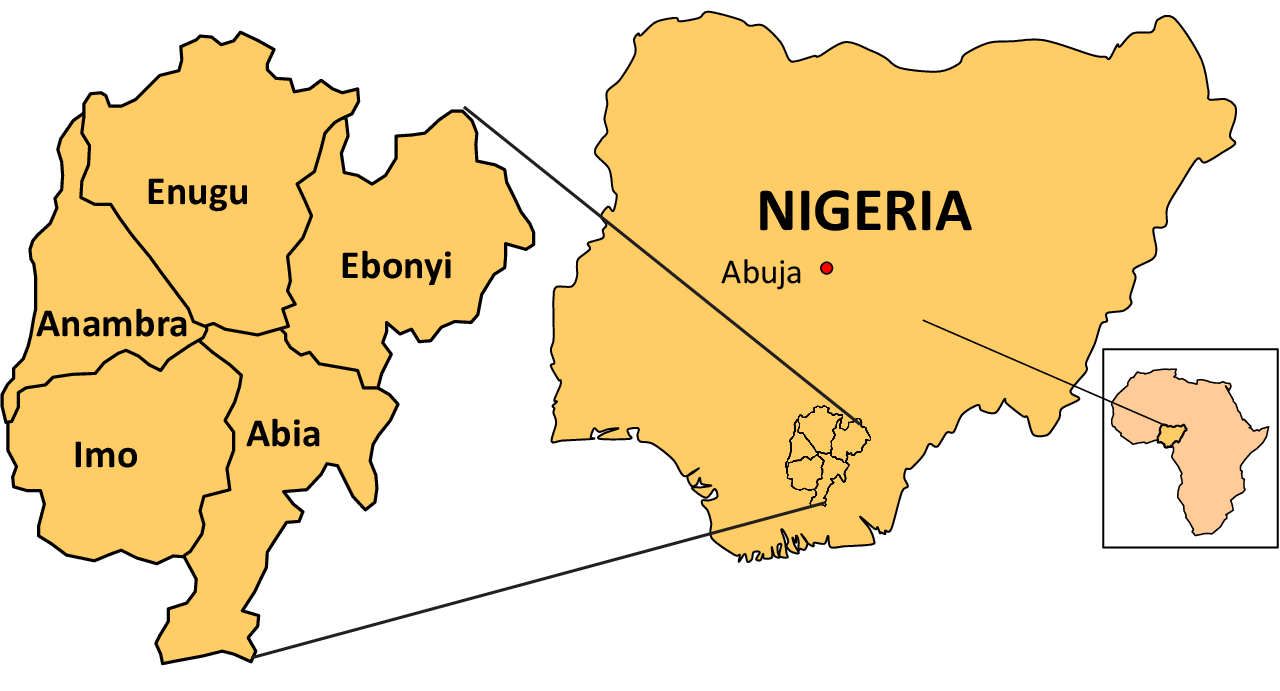
Following the continued use of the banned Twitter by Nigerians, the Attorney General of the Federation (Mr. Abubakar Malami) threatened to prosecute Twitter Users in Nigeria. As reported in the Guardian Newspaper, Umar Jibrilu Gwandu (spokesman to Malami), revealed that; “Malami directed the Director of Public Prosecution of the Federation (DPPF) at the Office of the Attorney General of the Federation and Minister of Justice, to swing into action and commence in earnest the process of prosecution of violators of the Federal Government De-activation of operations of Twitter in Nigeria,”. Mr. Malami is a Senior Advocate of Nigeria and Nigeria’s Chief Legal Officer.

This work analyzes the threat of the Federal Government of Nigeria to prosecute Twitter Users in Nigeria. It questions the powers of government to criminalize actions and inactions, viz-a-viz the fundamental human rights in Nigeria, especially the right not to be prosecuted under a non-existing law. It ultimately reveals the illegalities in prosecuting Twitter Users in courts in Nigeria. In this work, the words/terms; “Lawful Violation” and “Lawfully Violate” are used contextually to refer to rights that can be lawfully suspended, derogated and challenged by government, not minding their grammatical propriety.
Nigerian Human Rights:

There are fundamental human rights in Nigeria and there are contained in the Constitution of Nigeria. The rights are for persons in Nigeria, including businesses, enterprises and corporate bodies. Learn more on this via; “Twitter vs. Nigeria; The Human Rights of Twitter Inc. and the Twitter Users”. Fundamental human rights are basic, elementary, mandatory, compulsory and unshakable entitlements of persons. Fundamental human rights are never purchased rather they are inborn and inbuilt on every person (human being or corporate being). List of Fundamental Human Rights In Nigeria.
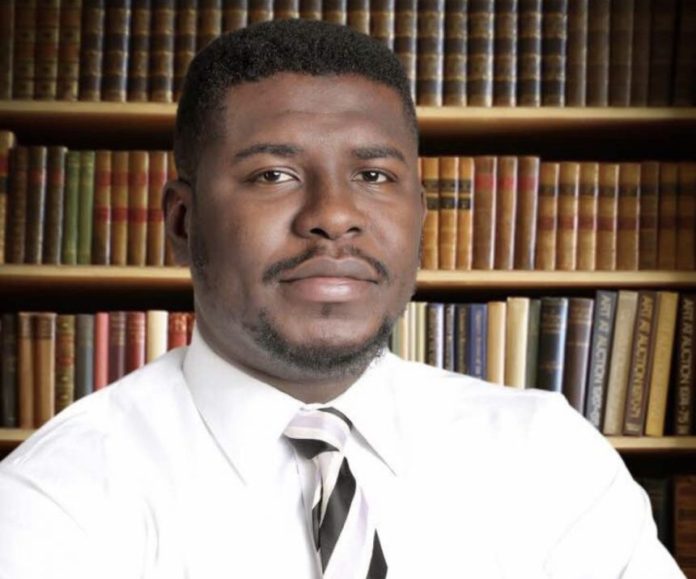

The fundamental human rights contained in the constitution of Nigeria are: Right to Life, Right to Dignity of Human Person, Right to Personal Liberty, Right to Fair Hearing, Right to Private and Family Life, Right to Freedom of Thought, Conscience and Religion, Right to Freedom of Expression and the Press, Rights to Peaceful Assembly and Association, Right to Freedom of Movement, Right to Freedom from Discrimination and then, Right to Acquire and Own Immovable Property anywhere in Nigeria.

Fundamental human rights are sacred, however, some of them can be suspended, limited, derogated and “lawfully violated” by government in Nigeria, without any liabilities. You may read more on this issue, via “Government Can Lawfully Violate Human Rights: The Case of Twitter vs. Nigeria. It is also important to note that a few of the fundamental human rights are absolute, untouchable and unchallengeable by any person or government. The absolute human rights are only about three; learn more on this via; “Human Rights That Are Truly Absolute And Untouchable In Nigeria”.

Human Rights of Offenders & Suspected Offenders:

In Nigeria nothing is a crime, unless there is a written federal or state law that declares the thing (action or inaction) to be a crime. A common example is adultery. There is no general law in Nigeria that makes adultery a crime, however, in some states in the Northern part of Nigeria, adultery is a crime. You may read more on this issue via; “Adultery Is Not An Offence In All States In Nigeria”. 

Laws are made by the federal or state Legislature and not by the Executive or Judiciary. The Executive is to only implement laws, while the Judiciary interprets law. In some cases, to avoid delay (administrative convenience), the Legislature may delegate some powers in writing to the Executive, for the Executive to make some regulations (as subsidiary legislations to the main/parent laws made by the Legislature). This allows the President of Nigeria to rely on a federal law to make Regulations.

Every offender or suspected offender has fundamental human rights, like every other person in Nigeria. Even a man on a death row has human rights and must be respected. A suspect that is arrested for using Twitter has fundamental human rights, including the right to fair hearing. Under the right to fair hearing is the right not-to-be prosecuted or found guilty of a non-existing offence.

Human Rights of Suspected Twitter Users:

Millions of Nigerians have been using Twitter in Nigeria until the Federal Government of Nigeria banned Twitter on 5 June 2021. Following the ban on Twitter, and the continued use of Twitter by Nigerians, the Federal Government of Nigeria threatened to prosecute all Twitter Users. So, the focus here is on the human rights of any suspected Twitter User in Nigeria and this will ultimately reveal whether Twitter Users can be prosecuted in courts in Nigeria.

To prosecute a suspect in Nigeria, the prosecution must prove that the suspect has violated a written criminal law. At the time that Twitter was banned in Nigeria till date, there is no state or federal law that criminalizes the use of Twitter or any social media platform in any part of Nigeria. Also, the President of Nigeria has not signed any Regulation criminalizing the use of Twitter. As such, there is no legal basis for any person in Nigeria to be investigated, arrested or charged to any court for using Twitter.

By the working of the few absolute fundamental human rights, specifically; “Right not to be held guilty of a non-existing offence”, no person in Nigeria can be prosecuted for using the banned twitter or any social media platform. There is no written law that prohibits Twitter in any part of Nigeria, so there is no legal authority for the arrest and prosecution of persons using Twitter in Nigeria. Whether the ban on Twitter is lawful or not, there is no single law that prohibits persons in Nigeria from using Twitter or any other social media platform. So, there is no law for criminal charges on use of Twitter to be prepared and issued against any person in Nigeria. Criminal laws are not made by mere executive television messages of the President of Nigeria or the Attorney General of Nigeria.

Although the Federal Government of Nigeria can lawfully suspend Twitter through a federal law (if the law is democratic and reasonably justifiable in the interest of defence, public good, public health or public safety), presently, there is no such law yet. Also, there is no law criminalizing the use of Twitter in any part of Nigeria.

Conclusion: 

Although the President of Nigeria is the Chief Executive Officer of Nigeria, he is bound by the Constitution of Nigeria. The President of Nigeria and his appointees (including the Attorney General of Federation) are by the Constitution of Nigeria prohibited from investigating, arresting and prosecuting any person in Nigeria for an offence that does not exists. The President and his appointees have not convinced the Legislature to enact a law criminalizing the use of Twitter in Nigeria. Until there is such law, no person can be lawfully arrested and prosecuted for using Twitter in Nigeria.

In the present state of lawlessness and executive impunity in Nigeria, it is not impossible for Twitter Users to be arrested and charged to court for no offence. It will also not be strange to find lawyers and prosecutors, arguing for the guilt of Twitter Users under no known law in a court of law. The processes of such shameful arguments may fetch suspected Twitter Users some weeks, if not months, in the overcrowded Correctional Facilities in Nigeria. Such suspected Twitter Users can stay for years on the notorious Awaiting-Trial Lists of Correctional Centers, until death or political mercy comes. So, although, it is legally wrong for any person to be prosecuted for using Twitter since there is no law against the use of Twitter, it is not impossible to find unscrupulous prosecutors that may seek to prosecute Twitter Users for a non-existing offence.

My authorities, are:

  1. Sections 14, 20, 33, 34, 35, 36, 37, 38, 39, 40, 41, 42, 43, 44, 45, 305, 318 and 319 of the Constitution of the Federal Republic of Nigeria, 1999.
  2. Article 19 of the Universal Declaration for Human Rights.
  3. Sections 6, 7, 8 and 22 of the National Human Rights Commission (Amendment) Act 2010 and Sections 1, 2, 5 and 6, the National Human Rights Commission (Amendment) Act 1995.
  4. Sections 387 and 388 of the Penal Code Act, 1960
  5. The judgment of the Supreme Court of Nigeria (on meaning and nature of fundamental human rights) in the case of RANSOME-KUTI & ORS v. AG FEDERATION & ORS (1985) LPELR-2940(SC)
  6. The judgment of the Supreme Court of Nigeria (on meaning and nature of fundamental human rights) in the case of AGBAI & ORS v. OKOGBUE (1991) LPELR-225(SC).
  7. The judgment of the Supreme Court of Nigeria (on when and why fundamental human rights can be restricted/suspended) in the case of DOKUBO-ASARI v. FRN (2007) LPELR-958(SC).
  8. The Supreme Court judgment on “Meaning of Regulation” in the case of AG LAGOS STATE v. EKO HOTELS LTD & ANOR (2006) LPELR-3161(SC)
  9. The Court of Appeal judgment on “Meaning of Executive Order/Regulation” in the case of ELEPHANT GROUP PLC v. NATIONAL SECURITY ADVISER & ANOR (2018) LPELR-45528(CA)
  10. The Supreme Court judgment on “Policy Documents/Guidance” in the case of COMPTROLLER GENERAL OF CUSTOMS & ORS v. COMPTROLLER ABDULLAHI B. GUSAU (2017) LPELR-42081(SC).
  11. The Supreme Court judgment on “Policy Documents/Guidance” in the case of UNION BANK OF NIGERIA PLC & ANOR. v. IFEOLUWA NIG. ENTERPRISES LTD (2007) 7 NWLR (Pt.1032) 71 at 84.
  12. Nimi Princewill and Stephanie Busari, “Nigeria bans Twitter after company deletes President Buhari’s tweet” (CNN, 5 June 2021) <https://edition.cnn.com/2021/06/04/africa/nigeria-suspends-twitter-operations-intl/index.html> accessed 7 June 2021
  13. Adeyemi Adepetun, Sunday Aikulola, Silver Nwokoro, Nkechi Onyedika-Ugoeze and Nnamdi Akpa, “Adeboye, Kumuyi defend Twitter use as envoys again reject ban” (The Guardian, 8 June 2021) <https://guardian.ng/news/adeboye-kumuyi-defend-twitter-use-as-envoys-again-reject-ban/> accessed 8 June 2021
  14. BBC, “Nigeria’s Twitter ban: Government orders prosecution of violators” (BBC, 6 June 2021) <https://www.bbc.com/news/world-africa-57368535> accessed 8 June 2021
  15. Alfred Olufemi, “After Twitter, Facebook deletes Buhari’s controversial ‘civil war’ post” (PremiumTimes, 4 June 2021) <https://www.premiumtimesng.com/news/headlines/465653-just-in-after-twitter-facebook-deletes-buharis-controversial-civil-war-post.html> accessed 8 June 2021
  16. Anietie Ewang, “Nigeria’s Twitter Ban Follows Pattern of Repression” (Human Rights Watch, 7 June 2021) <https://www.hrw.org/news/2021/06/07/nigerias-twitter-ban-follows-pattern-repression> accessed 8 June 2021
  17. Onyekachi Umah, “Twitter vs. Nigeria; The Human Rights of Twitter Inc. and the Twitter Users” (LearnNigerianLaws.com, 8 June 2021) <https://learnnigerianlaws.com/twitter-vs-nigeria-the-human-rights-of-twitter-inc-and-the-twitter-users/> accessed 9 June 2021.
  18. Onyekachi Umah, “Scarcity of Passport and the Government’s Violation of the Right of Movement” (LearnNigerianLaws.com, 1 June 2021) <https://learnnigerianlaws.com/scarcity-of-passport-and-the-governments-violation-of-the-right-of-movement/> accessed 8 June 2021
  19. Onyekachi Umah, “An Alternative to Courts for Human Rights Cases” (LearnNigerianLaws.com, 14 May 2021) <https://learnnigerianlaws.com/an-alternative-to-courts-for-human-rights-cases/> accessed 23 May 2021.
  20. Onyekachi Umah, “Details of State Offices of National Human Rights Commission” (LearnNigerianLaws.com, 27 October 2020) <https://learnnigerianlaws.com/details-of-state-offices-of-national-human-rights-commission/> accessed 14 May 2021
  21. Onyekachi Umah, “Human Rights That Can Never Be Restricted Even In War, Pandemic or State of Emergency” (LearnNigerianLaws.com, 2 April 2020) <https://learnnigerianlaws.com/human-rights-that-can-never-be-restricted-even-in-war-pandemic-or-state-of-emergency-daily-law-tips-tip-539-by-onyekachi-umah-esq-llm-aciarbuk/> accessed 23 May 2021
  22. Onyekachi Umah, “Does The President/Governors Have Powers To Lockdown Any Part Of Nigeria Or Restrict Human Rights?” (LearnNigerianLaws.com, 1 October 2020) <https://learnnigerianlaws.com/does-the-president-governors-have-powers-to-lockdown-any-part-of-nigeria-or-restrict-human-rights-daily-law-tips-tip-537-by-onyekachi-umah-esq-llm-aciarbuk/ > accessed 14 May 2021
  23. Onyekachi Umah, “How to Report and Discipline Police Officers” (LearnNigerianLaws.com, 25 May 2021) <https://learnnigerianlaws.com/how-to-report-and-discipline-police-officers/> accessed 27 May 2021
  24. Onyekachi Umah, “Warrant of Arrest: Contents and Issuance” (LearnNigerianLaws.com, 19 April 2021) <https://learnnigerianlaws.com/warrant-of-arrest-contents-and-issuance/> accessed 25 May 2021.
  25. Onyekachi Umah, “12 Situations Where Police Officers Can Arrest Without Warrant” (LearnNigerianLaws.com, 18 June 2019) <https://learnnigerianlaws.com/12-situations-where-police-officers-can-arrest-without-warrant/> accessed 25 May 2021.
  26. Onyekachi Umah, “Stripping Suspects Naked is Torture and it’s a Crime” (LearnNigerianLaws.com, 16 February 2021) <https://learnnigerianlaws.com/stripping-suspects-naked-is-torture-and-its-a-crime/> accessed 23 May 2021
  27. Onyekachi Umah, “Can Police Punish Unlawful Protesters?” (LearnNigerianLaws.com, 15 February 2021) <https://learnnigerianlaws.com/can-police-punish-unlawful-protesters/> accessed 23 May 2021
  28. Onyekachi Umah, “When Can A Protest Become A Riot?” (LearnNigerianLaws.com, 6 November 2020) <https://learnnigerianlaws.com/when-can-a-protest-become-a-riot/> 23 May 2021
  29. Onyekachi Umah, “#EndSarsNow: Punishment For Police (SARS) Torture” (LearnNigerianLaws.com, 6 October 2020) <https://learnnigerianlaws.com/endsarsnow-punishment-for-police-sars-torture/> accessed 23 May 2021
  30. Onyekachi Umah, “#EndSarsNow: Nigeria Police Lacks Power To Punish” (LearnNigerianLaws.com, 7 October 2020) <https://learnnigerianlaws.com/endsarsnow-nigeria-police-lacks-power-to-punish/> accessed 23 May 2021
  31. Onyekachi Umah, “#EndPoliceBrutality: How To Sue the Nigeria Police Force and Police Officers” (LearnNigerianLaws.com, 14 October 2020) <https://learnnigerianlaws.com/endpolicebrutality-how-to-sue-the-nigeria-police-force-and-police-officers/> accessed 23 May 2021
  32. “Demand justice for Police Brutality in Nigeria” (Amnesty International) <https://www.amnesty.org/en/get-involved/take-action/nigeria-end-impunity-for-police-brutality-end-sars/> accessed 23 May 2021
  33. Onyekachi Umah, “Who Can Be Lawfully Killed In Nigeria?” (LearnNigerianLaws.com, 26 October 2020) <https://learnnigerianlaws.com/who-can-be-lawfully-killed-in-nigeria/ > accessed 23 May 2021
  34. Femi Falana, “Police Permit Not Required For Rallies in Nigeria” (Premium Times, 23 January 2014) <https://www.premiumtimesng.com/opinion/153860-police-permit-required-rallies-nigeria.html> accessed 23 May 2021
  35. Onyekachi Umah, “Can A Person With A Nigerian Flag Be Shot Or Killed?” (LearnNigerianLaws.com,23 October 2020) <https://learnnigerianlaws.com/can-a-person-with-a-nigerian-flag-be-shot-or-killed/ > accessed 23 May 2021
  36. Onyekachi Umah, “#EndPoliceBrutality: When & How Can Government Prohibit Protest In Nigeria?” (LearnNigerianLaws.com, 19 October 2020) <https://learnnigerianlaws.com/when-and-how-can-government-prohibit-protest-in-nigeria/ > accessed 23 May 2021
  37. Onyekachi Umah, “#EndPoliceBrutality: The Right To Protest Is A Human Right.” (LearnNigerianLaws.com, 15 October 2020) <https://learnnigerianlaws.com/endpolicebrutality-the-right-to-protest-is-a-human-right/ > accessed 23 May 2021
  38. Onyekachi Umah, “#EndPoliceBrutality: Do You Need A Police Permit To Protest?” (LearnNigerianLaws.com, 16 October 2020) <https://learnnigerianlaws.com/endpolicebrutality-do-you-need-a-police-permit-to-protest/> accessed 23 May 2021
  39. Onyekachi Umah, “Does The President/Governors Have Powers To Lockdown Any Part Of Nigeria Or Restrict Human Rights?” (LearnNigerianLaws.com, 31 March 2020) <https://learnnigerianlaws.com/does-the-president-governors-have-powers-to-lockdown-any-part-of-nigeria-or-restrict-human-rights-daily-law-tips-tip-537-by-onyekachi-umah-esq-llm-aciarbuk/ > accessed 23 May 2021
  40. Onyekachi Umah, “Duty of Government to Pay Compensation for Damages Caused By Riot.” (LearnNigerianLaws.com, 4 November 2020) <https://learnnigerianlaws.com/duty-of-government-to-pay-compensation-for-damages-caused-by-riot/> accessed 23 May 2021
  41. Onyekachi Umah, “Who Pays For Properties Damaged or Lost In A Riot In Nigeria” (LearnNigerianLaws.com, 6 August 2018) <https://learnnigerianlaws.com/daily-law-tips-by-onyekachi-umah-esq-tip-157-who-pays-for-properties-damaged-or-lost-in-a-riot-in-nigeria/ > accessed 23 May 2021
  42. Onyekachi Umah, “List of Fundamental Human Rights In Nigeria.” (LearnNigerianLaws.com, 22 October 2020) <https://learnnigerianlaws.com/list-of-fundamental-human-rights-in-nigeria/> accessed 23 May 2021
  43. Chris Admin, “Onyekachi Umah Speaks To ChannelsTv On SARS & The New Police Act” (LearnNigerianLaws.com, 9 November 2020) <https://learnnigerianlaws.com/onyekachi-umah-speaks-to-channelstv-on-sars-the-new-police-act/> accessed 23 May 2021
  44. Onyekachi Umah, “What Is The Punishment For Any Person Including Police Officers That Tortures Another Person” (LearnNigerianLaws.com, 18 December 2018) <https://learnnigerianlaws.com/daily-law-tips-by-onyekachi-umah-esq-tip-251-what-is-the-punishment-for-any-person-including-police-officers-that-tortures-another-person/> accessed 23 May 2021
  45. Onyekachi Umah, “Is Obeying “Orders From Above” a Defence for Torture in Nigeria” (LearnNIgerianLaws.com, 7 September 2019) <https://learnnigerianlaws.com/is-obeying-orders-from-above-a-defence-for-torture-in-nigeria-daily-law-tips-tip-409-by-onyekachi-umah-esq-llm-aciarb-uk/> accessed 23 May 2021
  46. Onyekachi Umah, “Being Present During Torture Without Participating In It, Is A Crime” (LearnNigerianLaws.com, 25 November 2019) <https://learnnigerianlaws.com/being-present-during-torture-without-participating-in-it-is-a-crime-daily-law-tips-tip-464-by-onyekachi-umah-esq-llm-aciarb-uk/> accessed 23 May 2021
  47. Onyekachi Umah, “New Punishment for Security Officers Involved in Torture in Nigeria.” (LearnNigerianLaws.com, 27 August 2017) <https://learnnigerianlaws.com/new-punishment-for-security-officers-involved-in-torture-in-nigeria-daily-law-tips-tip-401-by-onyekachi-umah-esq-llm-aciarb-uk/> accessed 23 May 2021
  48. Onyekachi Umah, “Watching Torture but not Participating in it, is Torture.” (LearnNigerianLaws.com, 19 November 2019) <https://learnnigerianlaws.com/watching-torture-but-not-participating-in-it-is-torture-daily-law-tips-tip-460-by-onyekachi-umah-esq-llm-aciarb-uk/> accessed 23 May 2021
  49. Onyekachi Umah, “Any Security Agency’s Manual/Protocol that Allows Torture Even for National Security Cases is Unlawful and its Officers are Liable.” (LearnNigerianLaws.com, 11 September 2019) <https://learnnigerianlaws.com/any-security-agency-s-manual-protocol-that-allows-torture-even-for-national-security-cases-is-unlawful-and-its-officers-are-liable-daily-law-tips-tip-412-by-onyekachi-umah-esq-llm-aciarb-uk/> accessed 23 May 2021
  50. Onyekachi Umah, “Every Child has Right to a Rest and Play” (LearnNigerianLaws.com, 27 May 2021) <https://learnnigerianlaws.com/every-child-has-a-right-to-rest-and-play/> accessed 30 May 2021
  51. Onyekachi Umah, “Child Marriage/Abuse Is A Crime (Rape): An Exposé On Laws Prohibiting Child Marriage” (LearnNigerianLaws.com, 22 June 2020) <https://learnnigerianlaws.com/child-marriage-abuse-is-a-crime-rape-an-expose-on-laws-prohibiting-child-marriage-daily-law-tips-tip-593-by-onyekachi-umah-esq-llm-aciarbuk/ > accessed 20 April 2021
  52. Onyekachi Umah, “Forced Marriage Is An Offence In Nigeria.” (LearnNigerianLaws.com, 21 October 2020) <https://learnnigerianlaws.com/forced-marriage-is-an-offence-in-nigeria/ > accessed 20 April 2021
  53. Onyekachi Umah, “Stripping Suspects Naked is Torture and it’s a Crime” (LearnNigerianLaws.com, 16 February 2021) <https:// 1 National Human Rights Commission, ‘State Offices” (NHRC) <http://www.nhrc.gov.ng/index.php/regional-offices#zamfara > accessed 27 October 2020
  54. Onyekachi Umah, “Details of State Offices of National Human Rights Commission” (LearnNigerianLaws.com, 27 October 2020) <https://learnnigerianlaws.com/details-of-state-offices-of-national-human-rights-commission/> accessed 14 May 2021
  55. Onyekachi Umah, “Does The President/Governors Have Powers To Lockdown Any Part Of Nigeria Or Restrict Human Rights?” (LearnNigerianLaws.com, 1 October 2020) <https://learnnigerianlaws.com/does-the-president-governors-have-powers-to-lockdown-any-part-of-nigeria-or-restrict-human-rights-daily-law-tips-tip-537-by-onyekachi-umah-esq-llm-aciarbuk/ > accessed 14 May 2021
  56. Onyekachi Umah, “States & Areas Offices of Public Complaints Commission” (LearnNigerianLaws.com, 20 November 2020) <https://learnnigerianlaws.com/states-areas-offices-of-public-complaints-commission/> accessed 14 May 2021
  57. Onyekachi Umah, “Complaints That The Public Complaints Commission Can Handle” (com, 30 October 2020) <https://learnnigerianlaws.com/complaints-that-the-public-complaints-commission-can-handle/> accessed 14 May 2021
  58. Stephen Ubimago, ‘Legal Aid Council: Facing Challenge Of Relevance Amid Poor Funding’ (Independent, 27 October 2020) <https://www.independent.ng/legal-aid-council-facing-challenge-of-relevance-amid-poor-funding/ > accessed 14 May 2021
  59. Onyekachi Umah, “Abandonment Of Wife/Husband, Children Or Dependants Is A Crime” (LearnNigerianLaws.com, 3 December 2019) <https://learnnigerianlaws.com/abandonment-of-wife-husband-children-or-dependants-is-a-crime-daily-law-tips-tip-470-by-onyekachi-umah-esq-llm-aciarb-uk/> accessed 20 April 2021
  60. Onyekachi Umah, “How Lagos State Is Legislatively Ahead Of Other States” (LearnNigerianLaws.com, 30 September 2020 <https://learnnigerianlaws.com/how-lagos-state-is-legislatively-ahead-of-other-states/ > accessed 20 April  2021
  61. Onyekachi Umah, “The First Virtual Court Hearing Was In Borno State And Not In Lagos State.” (LearnNigerianLaws.com, 1 June 2020) <https://learnnigerianlaws.com/the-first-virtual-court-hearing-was-in-borno-state-and-not-in-lagos-state-daily-law-tips-tip-579-by-onyekachi-umah-esq-llm-aciarbuk/ > accessed 20 April 2021
  62. Onyekachi Umah, “Emotional, Verbal And Psychological Abuse Is Now Criminal Offences” (LearnNigerianLaws.com, 3 September 2019) <https://learnnigerianlaws.com/emotional-verbal-and-psychological-abuse-is-now-criminal-offence/> accessed 28 April 2021
  63. Onyekachi Umah, “Forcing Wife to Stop Work is Now A Crime” (LearnNigerianLaws.com, 21 April 2021) <https://learnnigerianlaws.com/forcing-wife-to-stop-work-is-now-a-crime/https://learnnigerianlaws.com/forcing-wife-to-stop-work-is-now-a-crime/> accessed 26 April 2021
  64. Onyekachi Umah, “It Is Now An Offence To Force Wife/Husband To Stop Working” (LearnNigerianLaws.com, 28 May 2019) <https://learnnigerianlaws.com/it-is-now-an-offence-to-force-wife-husband-to-stop-working-daily-law-tips-tip-340-by-onyekachi-umah-esq-llm-aciarb-uk/> accessed 20 April 2021
  65. Onyekachi Umah, “Seizing or Destroying the Property of a Spouse is a Crime” (LearnNigerianLaws.com, 2 March 2021) <https://learnnigerianlaws.com/seizing-or-destroying-the-property-of-a-spouse-is-a-crime/> accessed 20 April 2021
  66. Onyekachi Umah, “Hiding/Concealing Domestic Violence Is A Crime” (LearnNigerianLaws.com, 11 December 2020) <https://learnnigerianlaws.com/hiding-concealing-domestic-violence-is-a-crime/> accessed 20 April 2021
  67. Onyekachi Umah, “Domestic Violence Is A Crime Not A Family Dispute” (LearnNigerianLaws.com, 10 December 2020) <https://learnnigerianlaws.com/domestic-violence-is-a-crime-not-a-family-dispute/ > accessed 20 April 2021
  68. Onyekachi Umah, “Why Lagos State Needs A VAPP/SGBV Law” (LearnNigerianLaws.com, 26 January 2021) <https://learnnigerianlaws.com/why-lagos-state-needs-a-vapp-sgbv-law/> accessed 20 April 2021
  69. Onyekachi Umah, “Lagos State Has No VAPP/SGBV Law !” (LearnNigerianLaws.com, 8 December 2020) <https://learnnigerianlaws.com/lagos-state-has-no-vapp-sgbv-law/> accessed 20 April 2021
  70. Onyekachi Umah, “An Access To Criminal Laws In Nigeria” (LearnNigerianLaws.com, 4 December 2020) <https://learnnigerianlaws.com/an-access-to-criminal-laws-in-nigeria/ > accessed 20 April 2021
  71. Onyekachi Umah, “8 New Things About Rape Laws In Nigeria” (LearnNigerianLaws.com, 3 December 2020) <https://learnnigerianlaws.com/8-new-things-about-rape-laws-in-nigeria/ > accessed 20 April 2021
  72. Onyekachi Umah, “ChannelsTv Interviews Onyekachi Umah on Rape and the Laws.” (LearnNigerianLaws.com, 20 November 2020) <https://learnnigerianlaws.com/channelstv-interviews-onyekachi-umah-on-rape-and-the-laws/ > accessed 20 April 2021
  73. Onyekachi Umah, “Can A Woman Be Charged With Rape” (LearnNigerianLaws.com, 24 June 2020) <https://learnnigerianlaws.com/can-a-woman-be-charged-with-rape-daily-law-tips-tip-595-by-onyekachi-umah-esq-ll-m-aciarbuk/ > accessed 20 April 2021
  74. Onyekachi Umah, “Can A Husband Rape His Wife” (LearnNigerianLaws.com, 19 June 2020) <https://learnnigerianlaws.com/can-a-husband-rape-his-wife-daily-law-tips-tip-592-by-onyekachi-umah-esq-llm-aciarbuk/ > accessed 20 April 2021
  75. Onyekachi Umah, “When Is Seduction Or Indecent Dressing A Justification For Rape In Nigeria?” (LearnNigerianLaws.com, 18 June 2020) <https://learnnigerianlaws.com/when-is-seduction-or-indecent-dressing-a-justification-for-rape-in-nigeria-daily-law-tips-tip-591-by-onyekachi-umah-esq-llm-aciarbuk/ > accessed 20 April 2021
  76. Onyekachi Umah, “New Punishment For Rape In Nigeria” (LearnNigerianLaws.com, 23 June 2020) <https://learnnigerianlaws.com/new-punishment-for-rape-in-nigeria-daily-law-tips-tip-594-by-onyekachi-umah-esq-llm-aciarbuk/ > accessed 20 April 2021
  77. Onyekachi Umah, “Rape Cannot Be Settled Out Of Court (No Room For Pay-Off/Forgiveness/Withdrawal Of Complaints” (LearnNigerianLaws.com,26 June 2020) <https://learnnigerianlaws.com/rape-cannot-be-settled-out-of-court-no-room-for-pay-off-forgiveness-withdrawal-of-complaints-daily-law-tips-tip-596-by-onyekachi-umah-esq-llm-aciarbuk/ > accessed 20 April 2021
  78. Onyekachi Umah, “A Female Too, Can BE Guilty Of Rape” (LearnNigerianLaws.com, 13 December 2018) <https://learnnigerianlaws.com/daily-law-tips-by-onyekachi-umah-esq-tip-248-a-female-too-can-be-guilty-of-rape-in-nigeria/ > accessed 20 April 2021
  79. Onyekachi Umah, “Ages At Which Sexual Intercourse With Consent Will Amount To Rape” (LearnNigerianLaws.com, 20 February 2020) <https://learnnigerianlaws.com/ages-at-which-sexual-intercourse-with-consent-will-amount-to-rape-daily-law-tips-tip-509-by-onyekachi-umah-esq-llm-aciarbuk/> accessed 20 April 2021
  80. Onyekachi Umah, “How To Prove Rape In Nigeria).” (LearnNigerianLaws.com, 2 July 2019) <https://learnnigerianlaws.com/how-to-prove-rape-in-nigeria-daily-law-tips-tip-363-by-onyekachi-umah-esq-llm-aciarb-uk/ > accessed 20 April 2021
  81. Onyekachi Umah, “Can a Married Woman Inherit Her Parents’ Property?”, (LearnNigerianLaws.com, 27 March 2020) <https://learnnigerianlaws.com/can-a-married-woman-inherit-her-parents-property-daily-law-tips-tip-535-by-onyekachi-umah-esq-llm-aciarbuk/ > accessed 20 April 2021
  82. Onyekachi Umah, “Female Genital Mutilation/Cutting/Elongation, Breasts Ironing And Forced Marriage Are Now Criminal Offences In Nigeria” (Daily Law Tips [443]) <https://learnnigerianlaws.com/female-genital-mutilation-cutting-elongation-breasts-ironing-and-forced-marriage-are-now-criminal-offences-in-nigeria-daily-law-tips-tip-443-by-onyekachi-umah-esq-llm-aciarb-uk/ > accessed 20 April 2021
  83. Onyekachi Umah, “Harmful Widowhood Practices (Traditions) Are Illegal In Nigeria” (Daily Law Tips [Tip 589]) <https://learnnigerianlaws.com/harmful-widowhood-practices-traditions-are-illegal-in-nigeria-daily-law-tips-tip-589-by-onyekachi-umah-esq-llm-aciarbuk/ > accessed 20 April 2021
  84. Onyekachi Umah, “Forceful Isolation/Separation Of Family Members/Friends Is Now An Offence In Nigeria” (Daily Law Tips [356]) <https://learnnigerianlaws.com/forceful-isolation-separation-of-family-members-friends-is-now-an-offence-in-nigeria-daily-law-tips-tip-356-by-onyekachi-umah-esq-llm-aciarb-uk/ > accessed 120 April 2021
  85. Onyekachi Umah, “Abolished Anti-Women Custom of Onitsha People of Anambra State, Nigeria” (LearnNigerianLaws, 10 March 2020) <https://learnnigerianlaws.com/abolished-anti-women-custom-of-onitsha-people-of-anambra-state-nigeria-daily-law-tips-tip-522-by-onyekachi-umah-esq-llm-aciarbuk/ > accessed 20 April 2021
  86. Onyekachi Umah, “Citizen By Marriage Is Discriminatory and Against Nigerian Women”, (LearnNigerianLaws.com, 14 September 2020) <https://learnnigerianlaws.com/citizen-by-marriage-is-discriminatory-and-against-nigerian-women/ > accessed 20 April 2021
  87. Onyekachi Umah, “Abolished Anti-Women Custom of Yoruba People of Nigeria”, (LearnNigerianLaws.com, 11 March 2020) <https://learnnigerianlaws.com/abolished-anti-women-custom-of-yoruba-people-of-nigeria-daily-law-tips-tip-523-by-onyekachi-umah-esq-llm-aciarbuk/ > accessed 20 April 2021
  88. Onyekachi Umah, “Can a Married Woman Inherit Her Parents Property?” (LearnNigerianLaws.com, 27 March 2020) <https://learnnigerianlaws.com/can-a-married-woman-inherit-her-parents-property-daily-law-tips-tip-535-by-onyekachi-umah-esq-llm-aciarbuk/ > accessed 20 April 2021
  89. Onyekachi Umah, “Approval For Marriage Of Female Officers/Staff Is Unconstitutional and Discriminatory”, (LearnNigerianLaws.com, 23 September 2020) <https://learnnigerianlaws.com/approval-for-marriage-of-female-officers-staff-is-unconstitutional-and-discriminatory/ > accessed 20 April 2021
  90. Onyekachi Umah, “It Is An Offence To Chase Out Wife/Husband From A Home Or Even Attempt To Do So” (LearnNigerianLaws.com, 17 May 2019) <https://learnnigerianlaws.com/it-is-an-offence-to-chase-out-wife-husband-from-a-home-or-even-attempt-to-do-so-daily-law-tips-tip-333-by-onyekachi-umah-esq-llm-aciarb-uk/> accessed 20 April 2021
  91. Onyekachi Umah, “Examining Brutalization of House Helps in Nigeria. (An Exposé on Anti-Cruel Labour Laws in Nigeria)” (LearnNigerianLaws.com, 3 August 2020) <https://learnnigerianlaws.com/examining-brutalization-of-house-helps-in-nigeria-an-expose-on-anti-cruel-labour-laws-in-nigeria-daily-law-tips-tip-623-by-onyekachi-umah-esq-ll-m-aciarbuk/> accessed 27 April 2021
  92. Onyekachi Umah, “11 States That Do Not Protect Children In Nigeria” (LearnNigerianLaws.com, 31 May 2021) <https://learnnigerianlaws.com/11-states-that-do-not-protect-children-in-nigeria/> accessed 31 May 2021.
  93. Onyekachi Umah, “Government Can Lawfully Violate Human Rights: The Case of Twitter vs. Nigeria” (LearnNigerianLaws.com, 9 June 2021) < https://learnnigerianlaws.com/government-can-lawfully-violate-human-rights-the-case-of-twitter-vs-nigeria/> accessed 9 June 2021
  94. Onyekachi Umah, “Human Rights That Are Truly Absolute And Untouchable In Nigeria” (LearnNigerianLaws.com, 10 June 2021) < https://learnnigerianlaws.com/human-rights-that-are-truly-absolute-and-untouchable-in-nigeria/> accessed 11 June 2021
  95. Onyekachi Umah, “Adultery Is Not An Offence In All States In Nigeria” (LearnNigerianLaws.com, 19 October 2018) <https://learnnigerianlaws.com/daily-law-tips-by-onyekachi-umah-esq-tip-209-adultery-is-not-an-offence-in-all-states-in-nigeria/> accessed 11 June 2021.
  96. Dennis Erezi, “Twitter ban: Nigeria’s attorney general to prosecute offenders” (TheGuardian, 5 June 2021) <https://guardian.ng/news/twitter-ban-nigerias-attorney-general-to-prosecute-offenders/> accessed 11 June 2021

Sabi Law Projects:

#SabiLaw

#DailyLawTips

#SabiBusinessLaw

#SabiElectionLaws

#SabiHumanRights

#SabiLawOnTheBeatFm

#SabiLawLectureSeries

#CriminalJusticeMonday

#SabiLawVideoChallenge

Speak with the writer, ask questions or make inquiries on this topic or any other via [email protected], [email protected]  or +2348037665878 (whatsapp). To receive free Daily Law Tips, join our free WhatsApp group via https://chat.whatsapp.com/L7h4f1exItZ38FeuhXG4WN or Telegram group, via the below link: https://t.me/LearnNigerianLaws

To keep up to date on all free legal awareness projects of Sabi Law Foundation, follow us via

Facebook Page:@LearnNigerianLaws,

Instagram:@LearnNigerianLaws,

Twitter: @LearnNigeriaLaw,

YouTube: Learn Nigerian Laws,

WhatsApp Groups via (https://chat.whatsapp.com/L7h4f1exItZ38FeuhXG4WN),

Telegram Group: (https://t.me/LearnNigerianLaws),

Facebook group: (https://www.facebook.com/groups/129824937650907/?ref=share)

or visit our website: (www.LearnNigerianLaws.com )

Please share this publication for free till it gets to those that need it most. Save a Nigerian today! NOTE: Sharing, modifying or publishing this publication without giving credit to the author or Sabi Law Foundation is a criminal breach of copyright and will be prosecuted. This publication is the writer’s view not a legal advice and does not create any form of relationship. You may reach the writer for more information.

This publication is powered by www.LearnNigerianLaws.com  {A Free Law Awareness Program of Sabi Law Foundation, supported by the law firm of Bezaleel Chambers International (BCI).} Sabi Law Foundation is a Not-For-Profit and Non-Governmental Legal Awareness Organization based in Nigeria. For sponsorship and partnership, contact: [email protected], [email protected] or +234 903 913 1200.

TIPS